21 Small Living Room Ideas That Make Apartments Feel Bigger
Introduction
A small living room can feel crowded even when it only has the basics. The issue is usually not one single piece of furniture. It is the way scale, layout, light, storage, and visual clutter work together in a compact room.
These small living room ideas are designed for apartments, rentals, studios, and smaller homes where every choice has to work a little harder. If you are collecting apartment living room ideas before rearranging or buying anything new, use this as a visual checklist: start with the change that solves your biggest problem first, then layer in the details that make the room feel calmer, taller, brighter, and easier to move through.
If the room feels crowded, start with scale and walkways. If it feels dark, start with windows, mirrors, and lighting. Use the links below to jump to the idea that matches the problem you notice most.
- 1. Slim sofa
- 2. One floating chair
- 3. Round coffee table
- 4. High curtains
- 5. Large rug
- 6. Low storage
- 7. Tall shelf
- 8. Mirror near light
- 9. Nesting tables
- 10. Open frames
- 11. Calm colors
- 12. Texture
- 13. Slim lighting
- 14. Clear walkway
- 15. Vertical art
- 16. Closed baskets
- 17. Storage bench
- 18. Simple TV wall
- 19. Sofa console
- 20. Purposeful corner
- 21. One focal point
1. Choose a Slim Sofa With Visible Legs

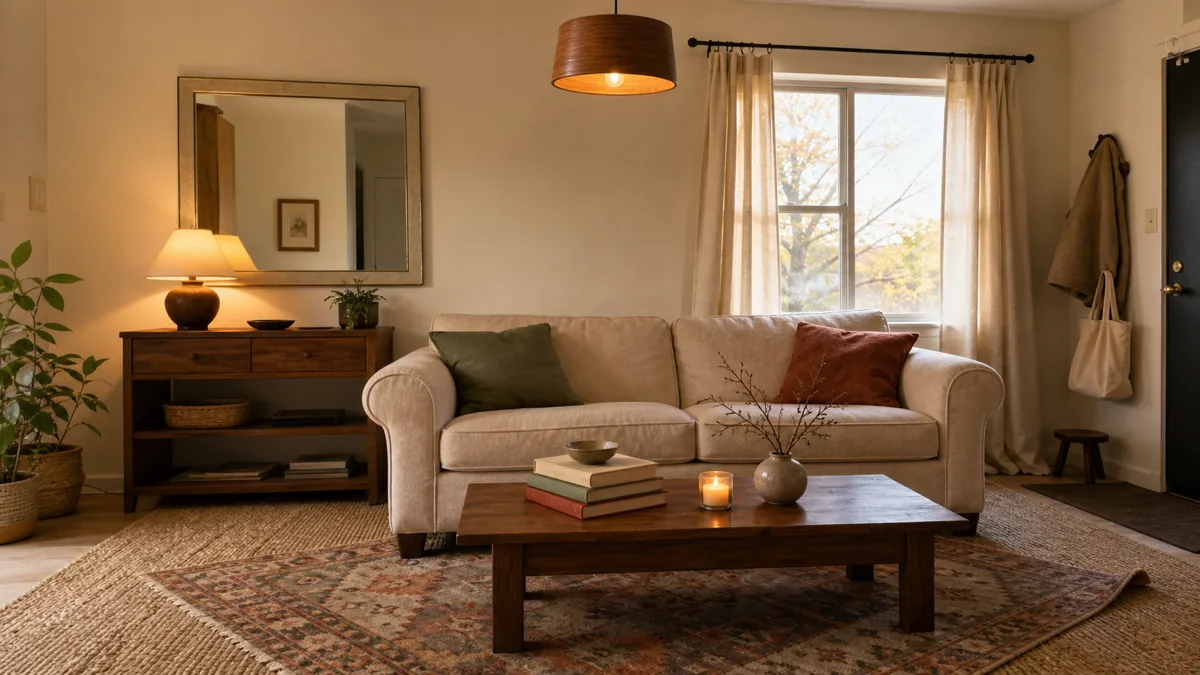
The sofa in this room has a lighter profile because the legs are visible and the arms are not oversized. That small strip of floor underneath matters in a compact living room. It lets the eye keep moving instead of stopping at one heavy block of furniture.
If your current sofa makes the room feel tight, look first at arm width, seat depth, and how much floor it hides. A slim two-seat sofa, low-profile loveseat, or apartment-scale sofa can still feel comfortable without taking over the whole wall.
2. Float One Chair Instead of Adding a Bulky Set

In this studio corner, one angled cane chair does the work of a fuller matching set. The chair creates a conversation spot, but the open frame and diagonal placement keep the living area from feeling boxed in.
In a small apartment living room, one flexible chair is often better than two heavy armchairs. Angle it toward the sofa, leave a clear gap behind or beside it, and make sure it can be moved when the room needs to flex.
3. Use a Round Coffee Table to Soften Tight Walkways

The round coffee table in this bay-window seating area keeps the center of the room usable. There are no sharp corners pointing into the narrow walking spaces between the sofa, chair, and window side.
Round does not have to mean delicate or decorative. A dark wood, stone, or sturdy pedestal table can still anchor the room, as long as the scale leaves room for knees, chair legs, and daily movement.
4. Let Curtains Hang High and Wide

The curtains here are doing more than softening the window. Because the panels hang high and wide, the whole window wall feels taller and more generous than it would with a short rod placed directly above the frame.
For a rental-friendly upgrade, mount the curtain rod close to the ceiling and extend it past both sides of the window. Simple panels that skim the floor will make the room feel more finished without adding visual weight.
5. Add a Large Rug That Reaches Under the Furniture

Here, the larger rug connects the seating pieces before the room starts to feel scattered. The sofa, chair, and table read as one planned zone instead of separate items floating on the floor.
A too-small rug can make a small room look chopped up. If you cannot fit every furniture leg on the rug, aim for at least the front legs of the sofa and chairs. That one adjustment gives the seating area a cleaner outline.
6. Keep Storage Low and Wall-Mounted

The low storage in this room keeps the wall from feeling crowded. The cabinet handles the practical work, while the open space above it lets the room breathe.
The point is not to fill the room with more storage pieces. Keep the visual weight low when you can, choose closed fronts for everyday clutter, and leave enough empty wall around the storage so it does not feel top-heavy.
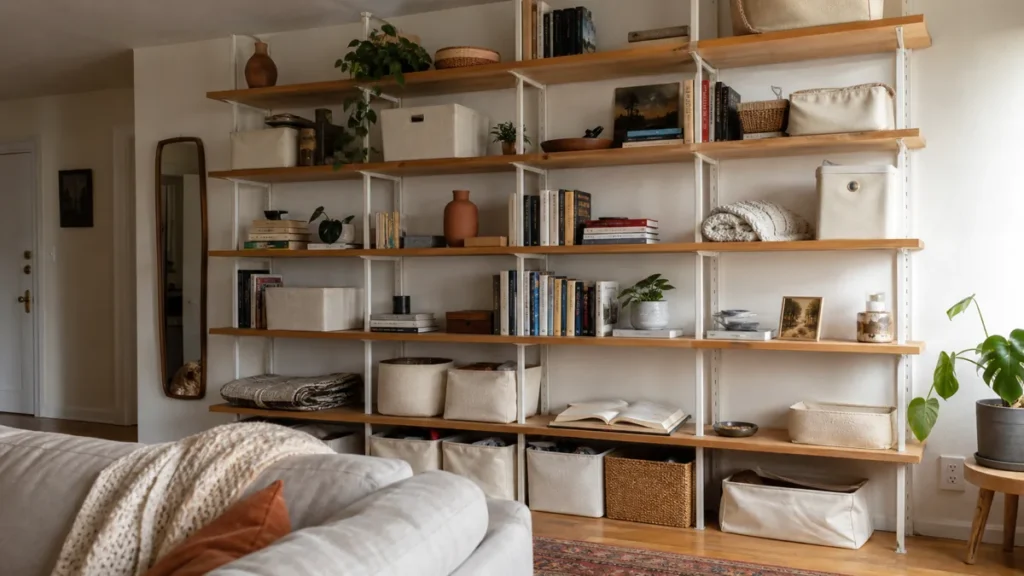
7. Style One Tall Shelf Instead of Several Small Units

One tall shelf gives the room a clear storage destination. In this image, baskets, books, plants, and small objects are grouped in one vertical zone instead of scattered across every surface.
The empty spaces are as important as the objects. Leave a few shelves partly open, keep small items in baskets, and avoid packing every level from edge to edge. A tall shelf should make the room feel organized, not busier.
You do not need to fix every part of the room at once. Match the problem to the first practical move, then come back for the smaller styling details.
8. Place a Mirror Across From Natural Light

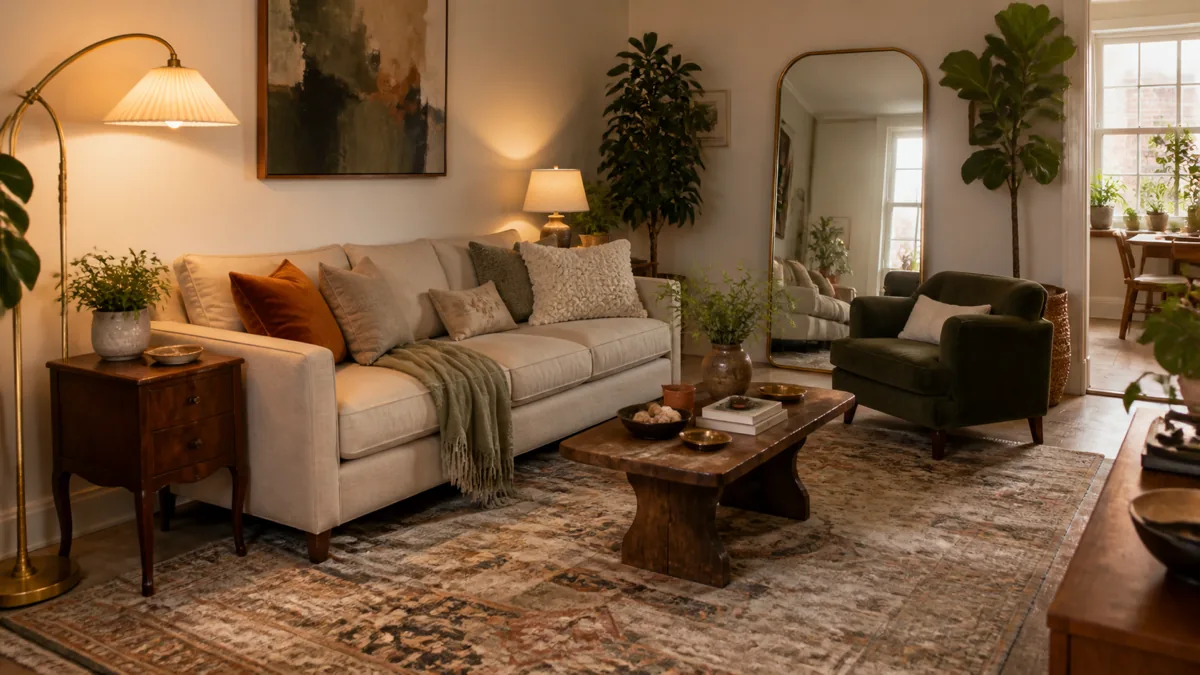
The mirror in this compact room reflects light back into the seating area and gives the wall more depth. It works because it is placed near the window side and reflects a calm part of the room.
Before hanging a mirror, check what it will actually show. A mirror that reflects daylight, curtains, or a clear wall can make the room feel brighter. A mirror that reflects clutter will double the problem.
9. Use Nesting Tables Instead of Extra Side Tables

The nesting tables beside this sofa add surface space without acting like another bulky piece of furniture. When the extra table is not needed, it tucks in and keeps the corner simple.
That flexibility helps in small living rooms where a side table, coffee table, and tray table would be too much at once. Choose slim legs, a quiet finish, and a shape that can move easily around the seating area.
10. Pick Clear or Open-Frame Accent Furniture

The open-frame table and light chair in this room keep the corner from feeling blocked. You can see through and around the furniture, so the room still has a sense of space.
Use this idea in small doses. One cane chair, glass table, slim metal frame, or open side table can lighten the room. Too many thin pieces can start to look busy, so keep the surrounding styling simple.
11. Create One Calm Color Story

In this studio vignette, the colors feel settled because they repeat in a controlled way. The blue-gray seating, warm wood, soft rug, and muted wall art relate to each other without becoming one flat beige room.
For a small living room, choose a short color list before adding decor. One main neutral, one wood tone, and one or two muted accents are usually enough. Repeat them through textiles, art, storage, and small ceramics so the room feels intentional.
12. Add Texture Instead of More Decor

The texture in this image does the work that extra decor might otherwise do. The throw, pillows, basket, rug, and curtains add warmth without filling the room with small objects.
Texture helps most when a compact living room feels plain but already has enough furniture. Add it through soft goods first, then edit surfaces so the room still feels restful.
13. Use Wall Sconces or Slim Floor Lamps

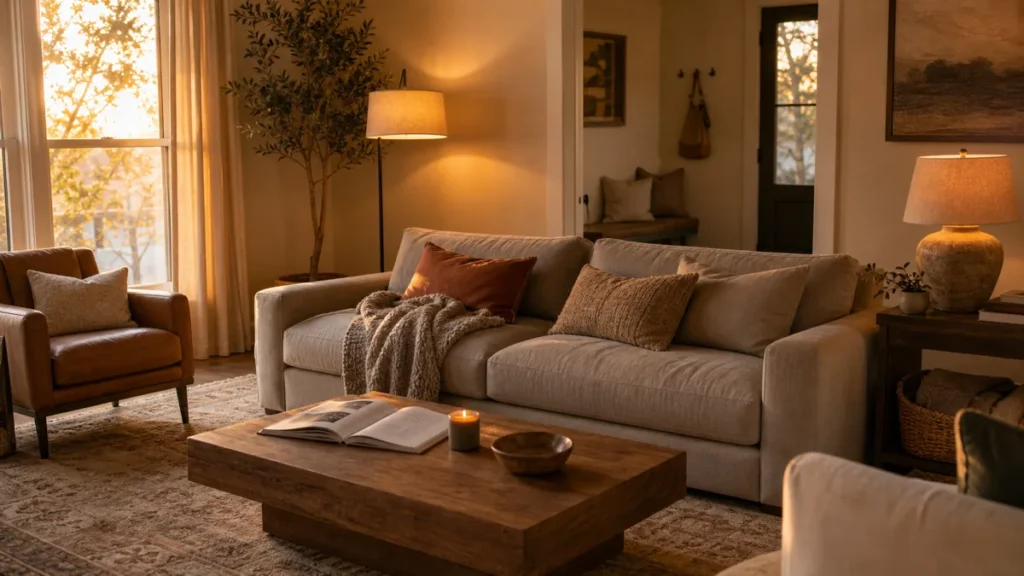
The lighting in this corner makes the room feel warmer without adding a bulky table lamp. A slim floor lamp or plug-in wall sconce can brighten the sofa area while keeping surfaces clear.
Small living rooms often feel cramped when the corners are dark. Add light at more than one height: a floor lamp, wall light, or small lamp on a narrow surface can make the room feel deeper and more usable at night.
14. Leave One Clear Path Through the Room

This narrow room works because there is one obvious path from the entry side toward the window. The sofa stays to one wall, the bench is slim, and the table does not block the center line of the room.
You do not need empty space everywhere. You need one route that feels easy. If the room feels awkward, remove the extra side table, pull furniture tighter to one zone, or switch to pieces with rounded edges and slimmer depths.
Most small living room ideas in this list fit into one of these four moves. Use them together and the room starts to feel calmer without needing more square footage.
15. Choose Art That Pulls the Eye Up

The tall art above this low daybed draws attention upward, which helps the wall feel taller. Because the piece is vertical and simple, it adds height without creating a cluttered gallery wall.
Keep the furniture below low and calm so the art can do the vertical work. Try one tall frame, a narrow textile wall hanging, or a stacked pair of simple prints. Avoid lots of tiny frames if the room already feels visually busy.
16. Hide Everyday Items in Closed Baskets

Closed baskets are doing the practical work in this storage detail. They hide the small things that never look neat for long, while the wood console and lamp keep the storage area feeling like part of the room.
Use closed baskets for remotes, chargers, pet items, toys, throws, or anything that tends to drift onto the sofa. Choose a basket shape and color that matches the room so the storage reads as decor instead of cleanup.
17. Use a Small Bench as Extra Seating and Storage

The bench under this window adds function without adding a bulky chair. It gives the room another place to sit, but it stays tight to the wall and keeps the floor open.
If you use a storage bench, keep it narrow and simple. Cushions make it feel intentional, and a nearby basket or side table can turn the window area into a useful little zone instead of leftover space.
18. Keep the TV Wall Simple

The TV wall here stays calm because the storage below is low, the screen is blank, and the decor around it is limited. The largest dark rectangle in the room is not competing with crowded shelves or visible cords.
Treat the TV wall as an editing project, not just another storage zone. Keep objects low and quiet, hide cables where possible, and leave breathing room around the screen so the wall feels finished rather than noisy.
19. Add a Narrow Console Behind the Sofa

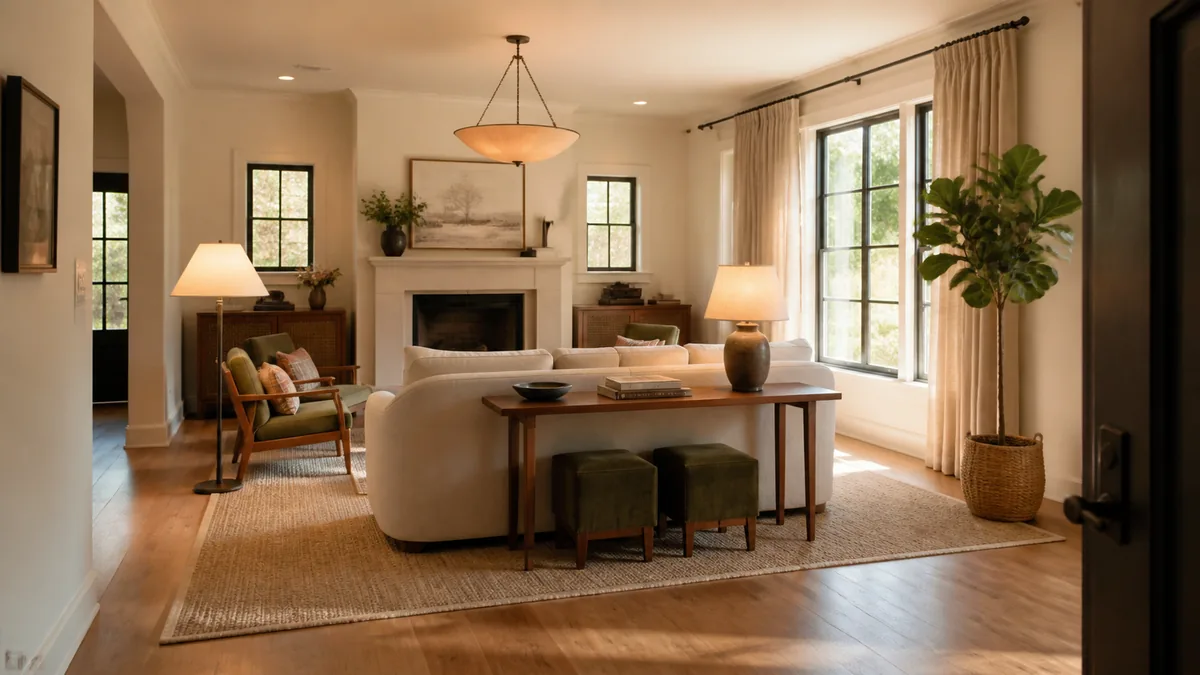
The console behind this sofa creates a useful landing spot without stealing much floor space. It works because the table is narrow, the baskets tuck underneath, and the walkway still stays open.
It is especially useful in studios and open-plan apartments where the sofa floats away from the wall. Use the console for a lamp, a tray, or a small basket, but keep the top edited so it does not become a clutter shelf.
20. Make Corners Work With One Purpose

Here, the corner has one clear job: it is a reading nook. The chair, lamp, side table, and basket all support that purpose, so the corner feels designed instead of random.
Small living room corners often collect whatever does not have a home. Pick one use for each corner, then remove anything that does not support it. A reading chair, plant corner, basket zone, or tiny desk can all work if the purpose is clear.
21. Edit the Room Around One Focal Point

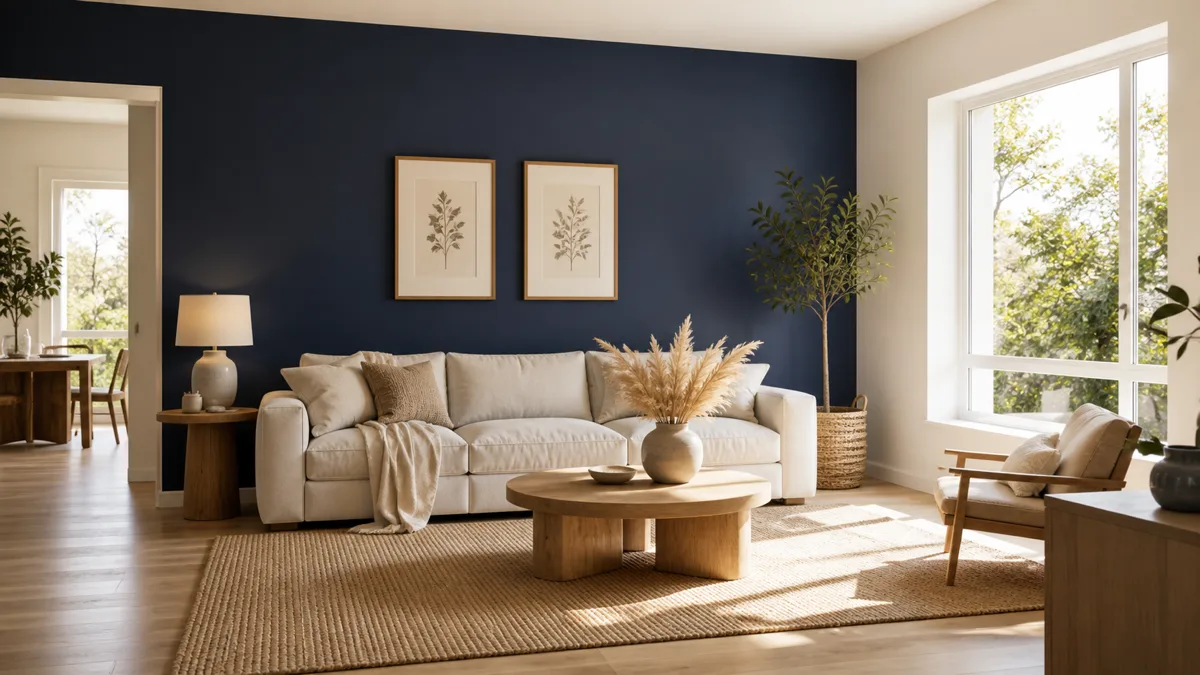
The final room has one calm focal wall. The art, sofa, rug, lamp, and storage all support the same view, so the room feels edited instead of crowded with competing moments.
Choose one main place for the eye to land: a window, sofa wall, fireplace, TV wall, or large piece of art. Then quiet the rest of the room around it. In a small living room, editing is what makes the design feel finished.
Conclusion
The best small living room ideas usually start with editing what is already there. A lighter sofa shape, a larger rug, better lighting, closed storage, and one clear path can change how the room feels before you buy anything new.
Start with the problem you notice most. If the room feels dark, work on light and mirrors. If it feels crowded, work on furniture scale, storage, and walkways. Small rooms feel bigger when every piece has a clear reason to be there.