20 Budget Home Decor Ideas That Look Expensive
Most budget decor advice is a shopping list. Buy this $30 lamp, that $40 mirror, and the result still looks like a budget apartment. The actual look expensive levers are invisible until someone points them out — where you hang the curtain rod, how many lights are in a room, whether your books are grouped by color. None of those cost more. They cost attention.
Here are 20 mechanism-first ideas. Most work with what is already in the house. The rest cost less than a single throw pillow.
Skim the list, jump to the lever you want to try first. Twenty ideas grouped from foundation moves to tactical upgrades — pick one this weekend and add the rest at no schedule.
- 1Curtain rod mounted high
- 2Hardware and switch plate swap
- 3Three light sources per room
- 4Warm 2700K bulb swap
- 5One large thrift mirror
- 6Same-color thrift frame gallery
- 7Free print downloads
- 8Desaturated feature wall paint
- 9Coffee table 3-book stack
- 10Bookshelf color blocking
- 11Coffee table tray
- 12Entry console tray
- 13Two layered rugs
- 14Three-pillow trifecta
- 15Casual throw drape
- 16Three-plant height cluster
- 17Tall vase with free branches
- 18Candle cluster on tray
- 19Vintage thrift light fixture
- 20Hallway runner rug
Hang the curtain rod high — and even a small extension wide changes the room
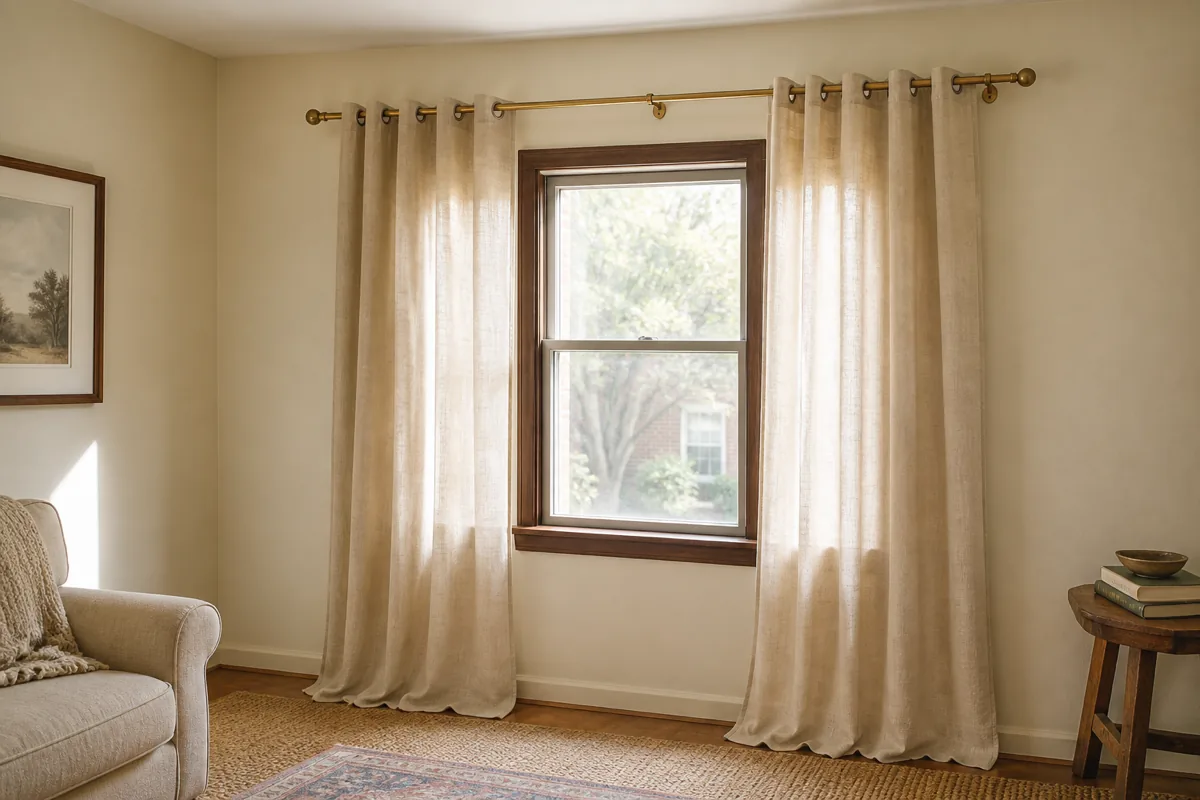
The first lever lives above the window. Most apartments have the rod sitting on the window frame, an inch or two above the glass, with panels just covering the opening. That reads short and rental.
Move the rod up — close to the ceiling, with a clear gap of wall between the rod and the ceiling line — and let the panels graze the floor. The eye reads the whole vertical space as the window’s territory.
Width matters less than height for this lever to work, but a small extension past the frame on each side still helps the panels read as drapery rather than window covering. Mount the rod 4 to 6 inches below the ceiling. Hem the panels long enough to graze the floor. That single move adds visible height to any apartment window without touching the frame.
Swap the builder-grade hardware in one afternoon
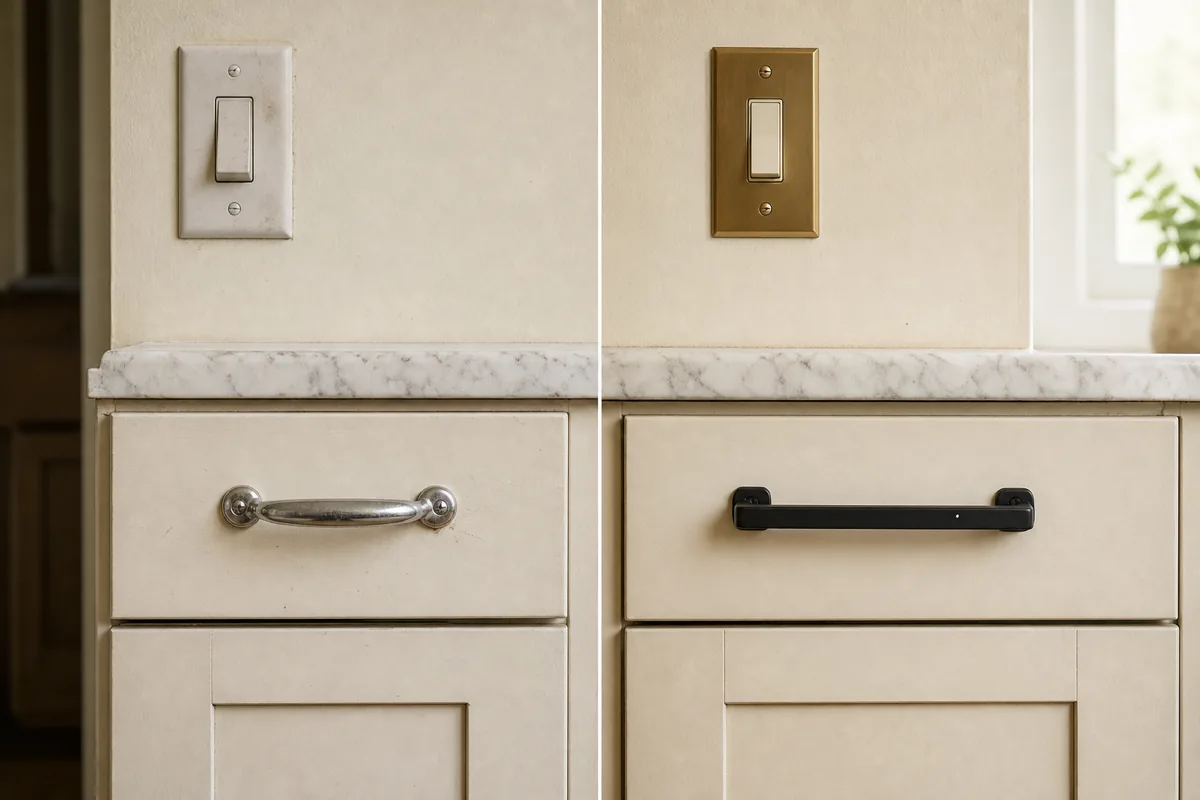
Cabinet pulls and switch plates are the cheapest visual upgrade in any home. The replacements cost between three and twelve dollars apiece. The whole job — kitchen, bathroom, and every switch plate on a main floor — runs an afternoon and a screwdriver.
The keep-it-from-looking-mismatched move is restraint. Pick one finish and use it everywhere a builder picked something cheap. Matte black, brushed brass, or unlacquered brass all read as intentional. Replace every chrome cabinet pull with a matte black or brushed brass bar pull. Swap every plastic switch plate at the same time. Throw the old hardware in a bag and recycle it.
Light every room in three layers
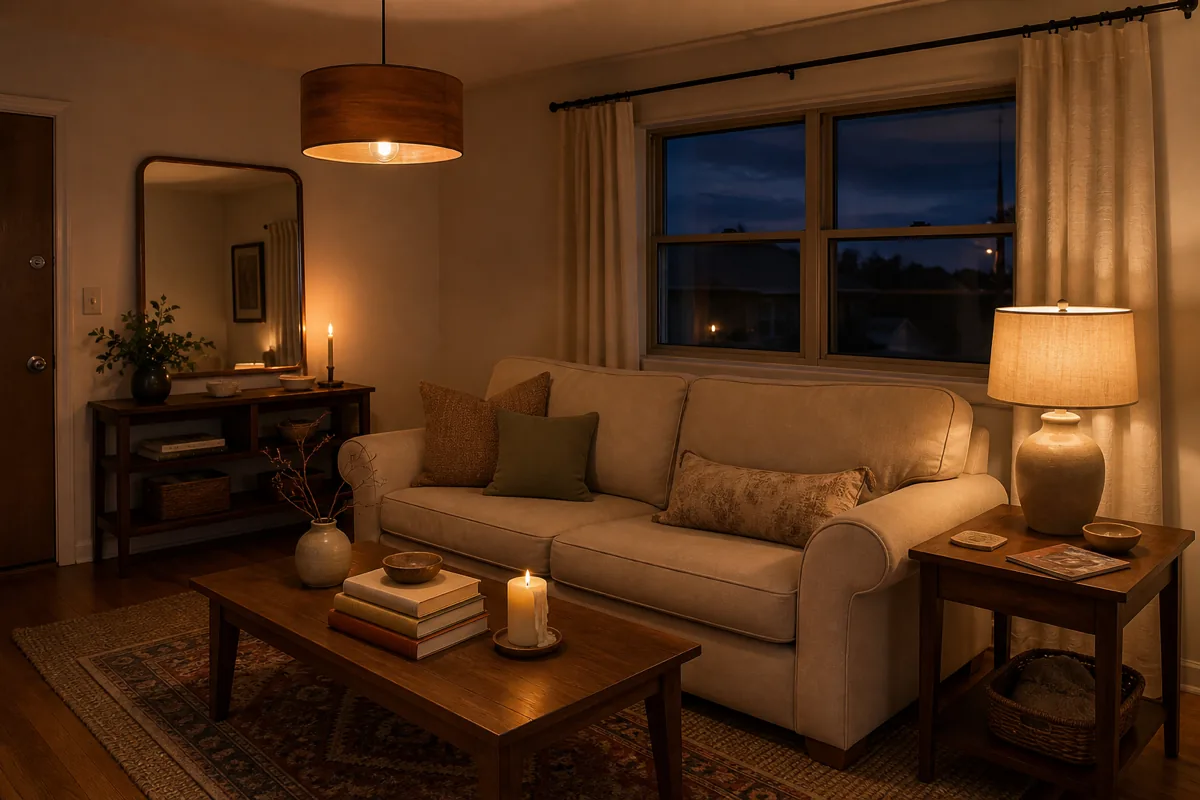
A single overhead bulb is the most common reason a room reads cheap, even when the furniture is fine. Layering solves it — overhead plus a lamp at sitting-eye level plus something ambient at low level. Three sources lit at the same time create the warm pools that magazines spend hours staging.
Bulb color is its own lever inside this one. Replace every 5000K daylight bulb in a living room with 2700K warm white. The room temperature shifts from office to home in the time it takes to unscrew six bulbs. If cozy mood — not just perceived value — is the goal, the cozy living room playbook goes deeper on warmth-specific styling.
- Bulb color is the secondary lever inside lighting. A 5000K daylight bulb makes a $2000 sofa read as a $500 sofa, and a 2700K warm bulb makes a $300 sofa read as a $2000 sofa. The same fixture, the same wattage, a different color reading. Replace cool-white bulbs first; the visual upgrade is immediate.
Budget decor works one room at a time, not all at once. Pick the room you apologize for when company arrives and start there — the other rooms will feel easier after the worst one is fixed.
Hang one large mirror where most people would hang three small
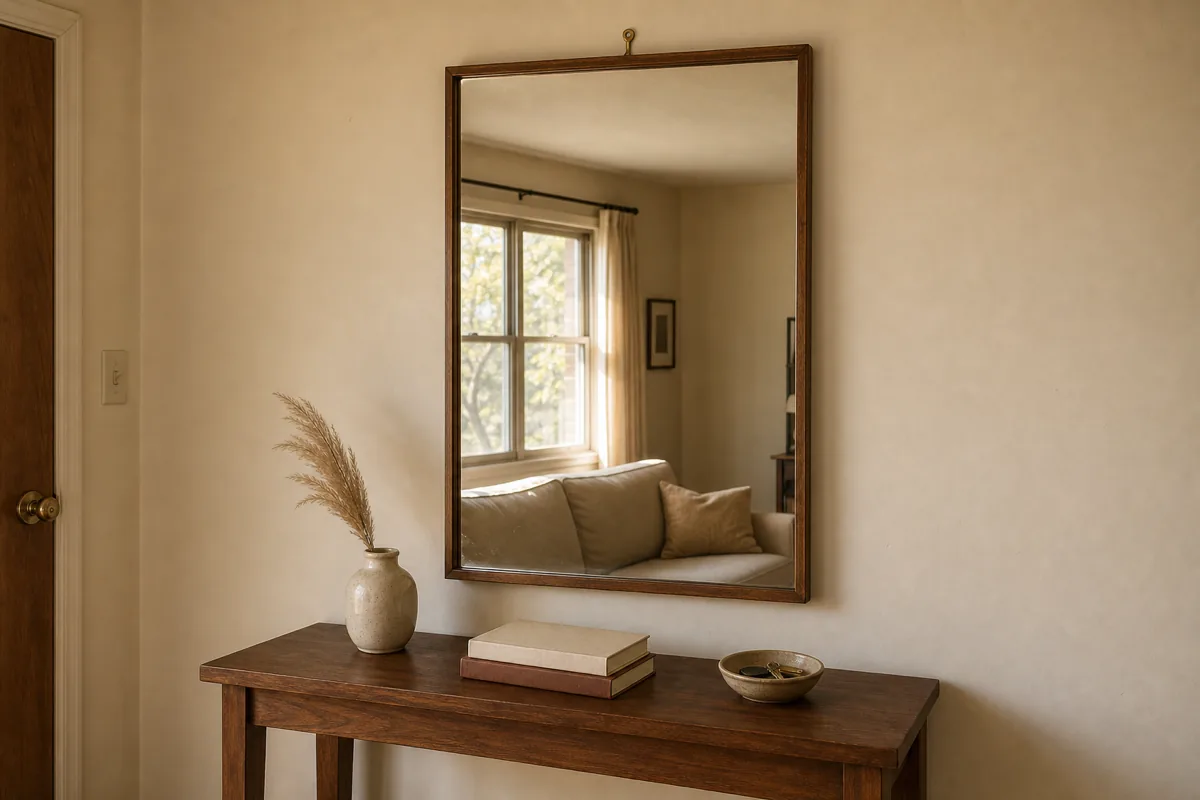
Mirror size is the lever, not mirror price. A thrift-store mirror that is large enough to dominate a wall reads as a statement; three small mirrors in a cluster on the same wall reads as filler. The bigger move is also cheaper — one thrifted large mirror runs $30 to $80, while three small frames add up faster than expected.
Hang it opposite a window if there is one. The reflection doubles the room’s daylight without changing a single light bulb. Find one large thrift-store mirror — 36 inches or larger on the long side — and hang it where it will reflect a window. Leave the surrounding wall empty.
Build a gallery wall from same-color thrift frames
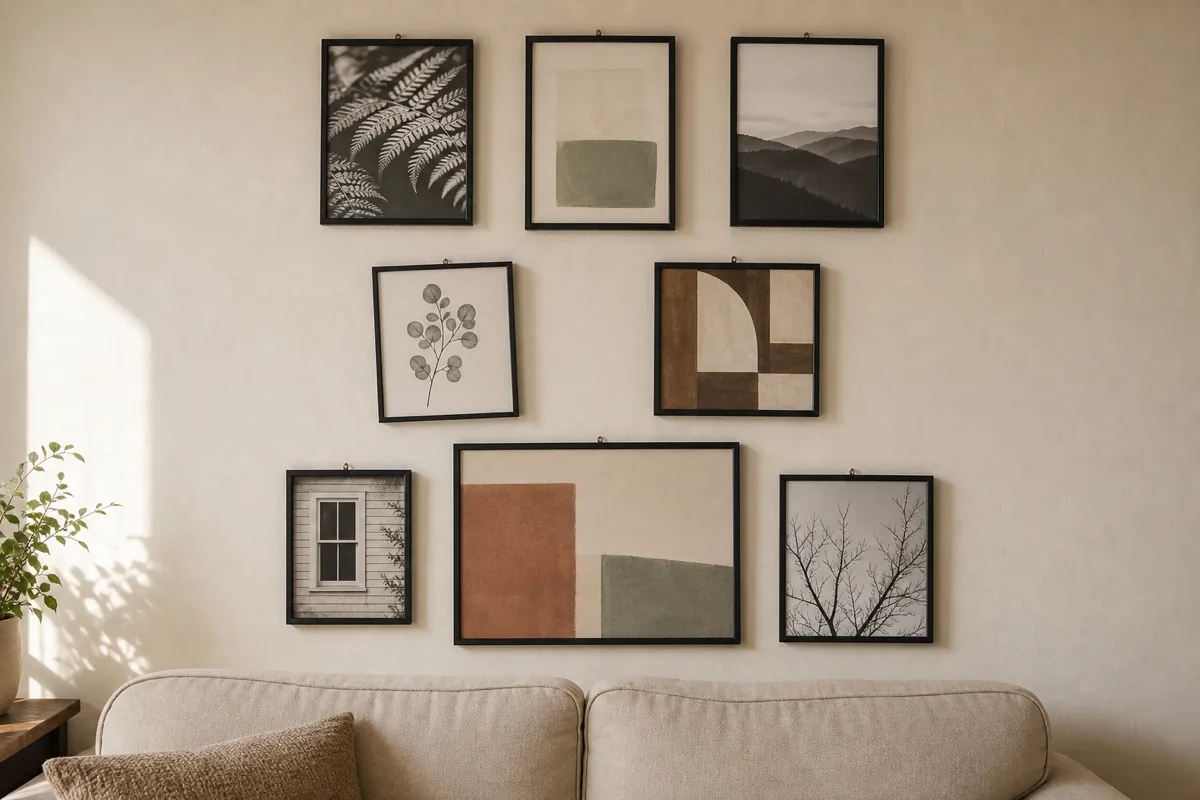
The look-expensive lever in a gallery wall is frame consistency, not art consistency. A cluster of seven frames in different sizes but all the same color reads curated. The same seven frames in mixed gold and black and IKEA-recess looks like a yard sale.
Free art lives in two places — public domain image archives and any black-and-white photo printed off a phone. None of it needs to be expensive or even particularly clever. Botanical illustrations, abstract color blocks, landscape silhouettes all photograph well behind glass.
Build a gallery wall from thrift-store frames in mixed sizes, but spray every single frame the same color before hanging. Matte black is the easiest.
- Fill the frames with free downloads — public domain botanical prints, black-and-white nature photos, line drawings. Skip anything with readable text on it; abstract reads more expensive than worded posters.
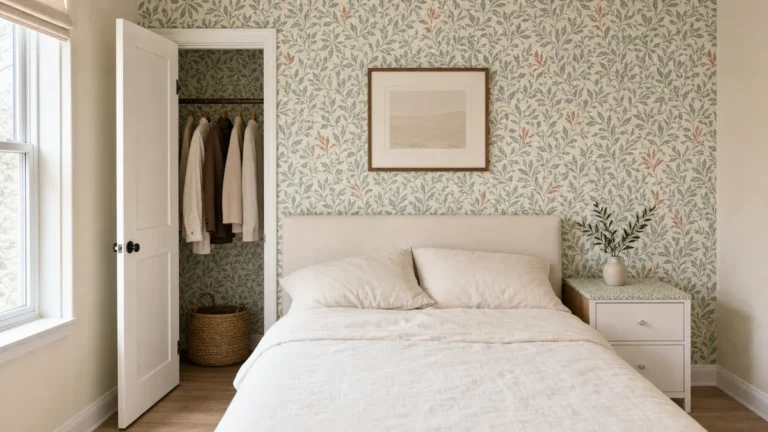
Paint one wall a desaturated warm color
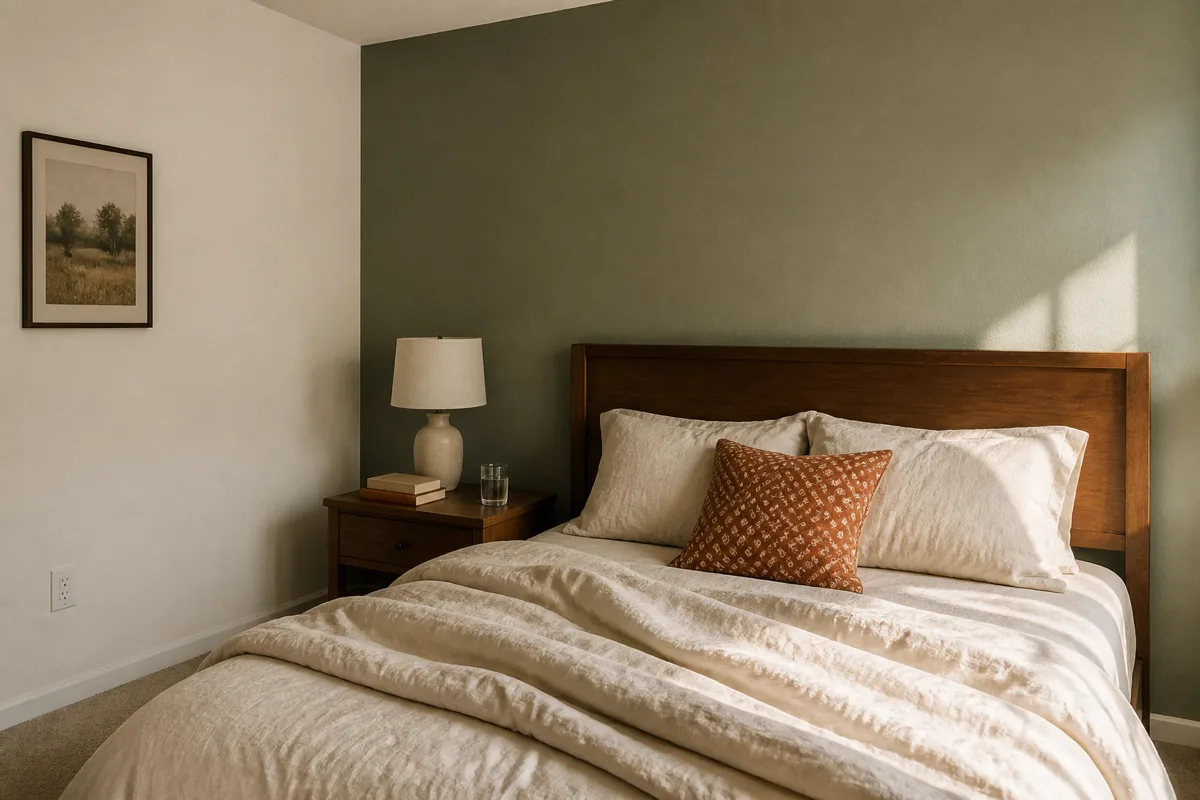
A single feature wall is the most overlooked $30 upgrade in a budget apartment. Skip the rest of the room — paint exactly one wall, in a desaturated warm color, and watch the same furniture read as a different room.
The word desaturated matters. Bright saturated paint reads as a kid’s room. Dusty muted colors — sage, clay, mushroom, smoky blue — read as intentional. Pick a tone that is several shades grayer than what looks good on the swatch and you will not regret it on the wall.
Paint one feature wall — the headboard wall in a bedroom, the sofa wall in a living room — a desaturated warm color. Keep the other three walls warm white.
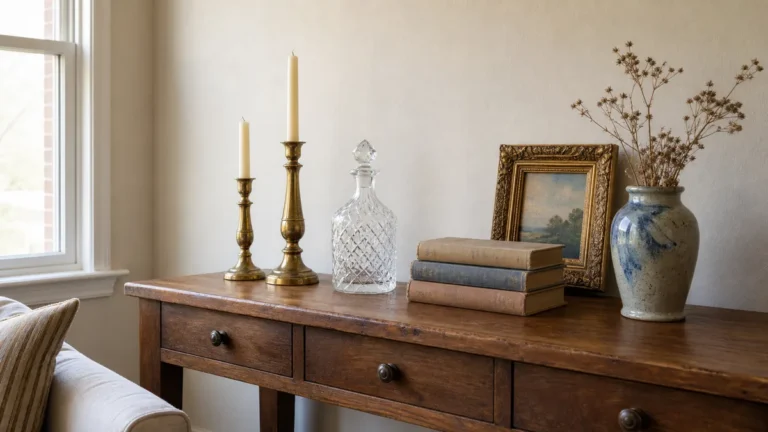
Style every coffee table with the 3-book stack rule
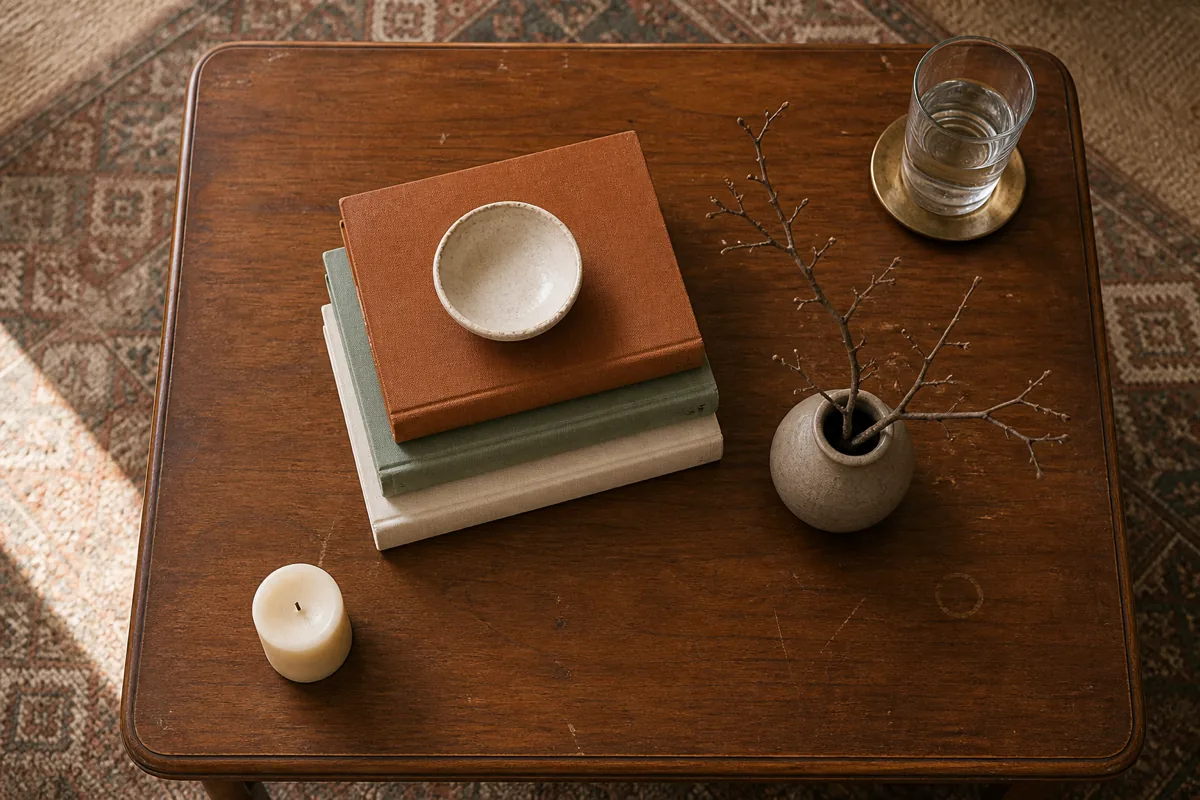
There is a styling convention that designers use without naming it: stack three books, put something small on top, and add something living beside the stack. That is it. The rule works on every coffee table, every console, every nightstand.
Three is the magic number across this article — three light sources, three pillows, three plants in a cluster, three books in a stack. The eye reads odd numbers as composed and even numbers as accidental. Use that.
On every surface that holds decor — coffee table, console, nightstand — build a small composition around three. Three books stacked, a small bowl or object on top, a living thing beside it. That is the whole rule.
Most budget decor advice is a parts list. These four rules are what makes the parts list read as a finished room rather than a yard sale.
Group books by spine color on every shelf
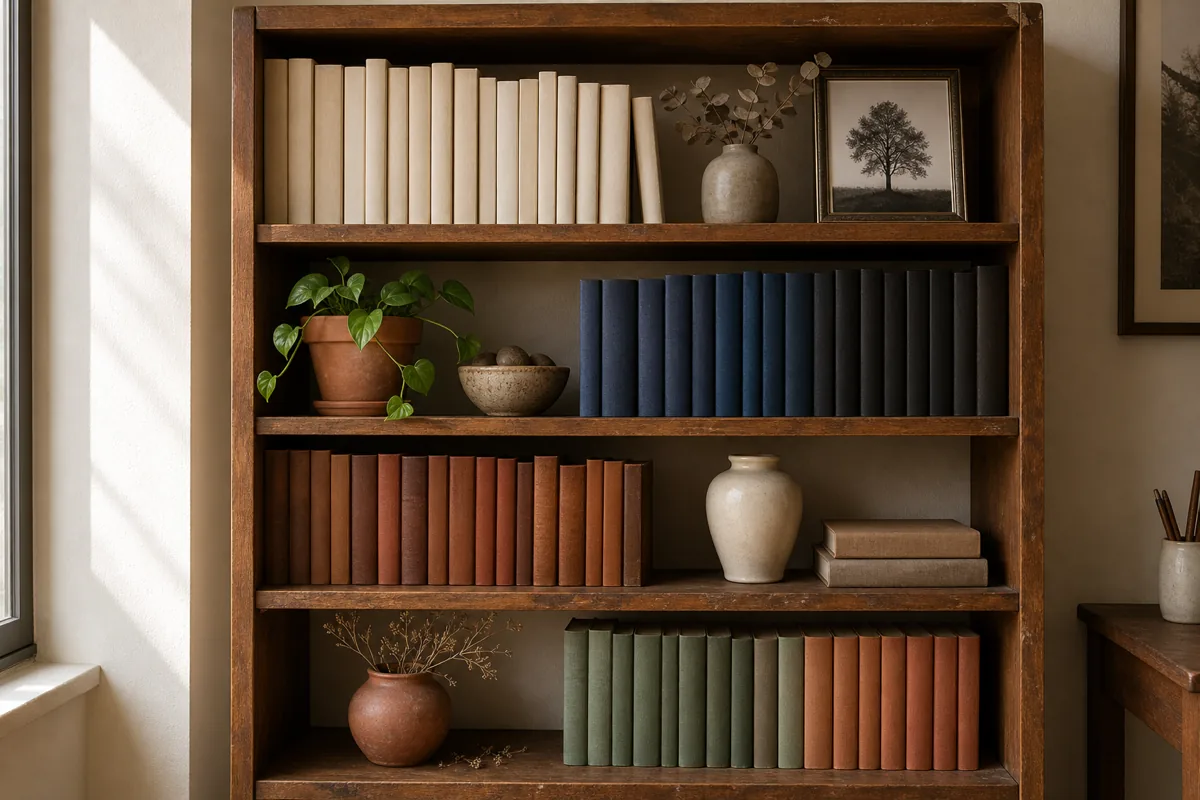
A bookshelf is one of the highest-impact surfaces in any apartment because it covers the most square footage of any single object. The lever here is unexpected: stop alphabetizing or organizing by topic. Group books by spine color.
The shelf becomes a piece of art on its own. Mix in one or two small decor objects per shelf — a ceramic vase, a small plant, a framed photo — at about a 60/40 ratio of books to objects. The decor objects break up what would otherwise read as a library.
Empty every bookshelf and reshelve by spine color, not by topic. Group cream and off-white together, dark blues together, greens together, rust and brown together.
Put everything on a tray to instantly group it
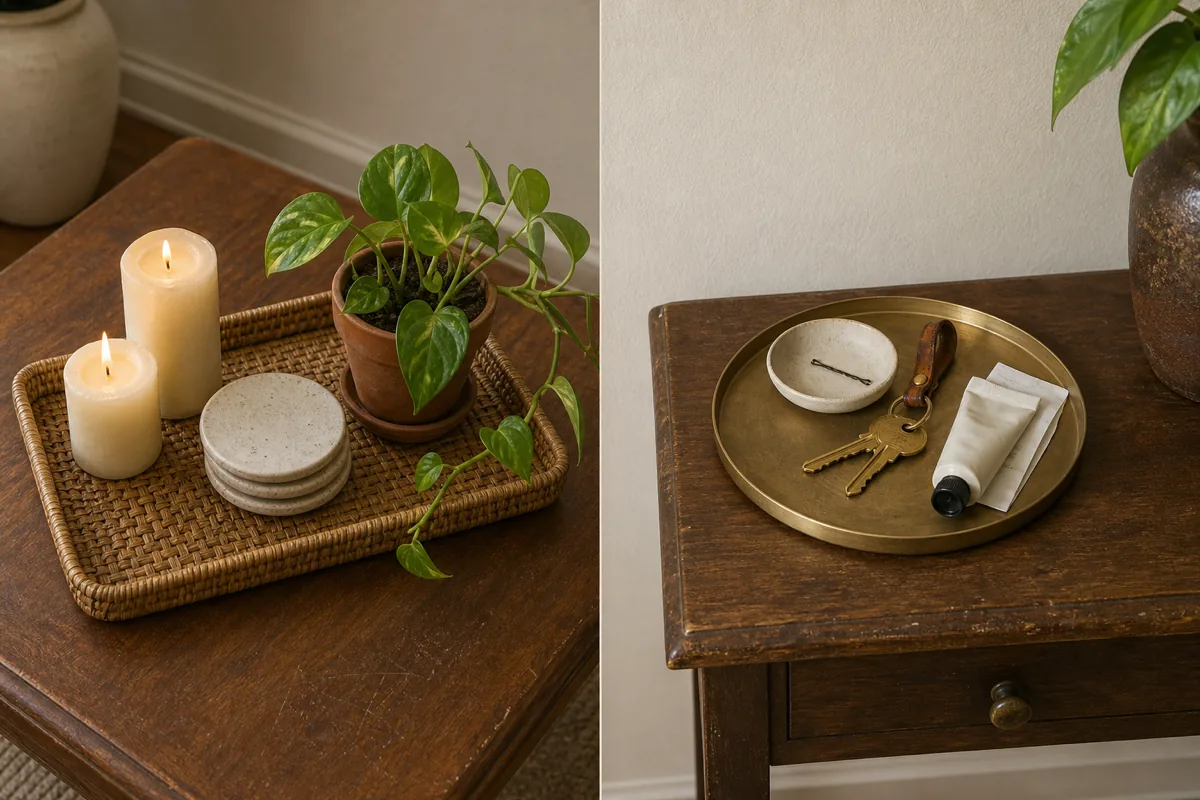
The reason a counter or console table reads cluttered is rarely about how many items are on it — it is about whether the items are contained. A tray is the cheapest fix. The same six objects look chaotic on a bare counter and intentional inside a tray with a visible rim.
Pick one tray per surface, one function per tray. Coffee table tray holds candles and a coaster set. Entry tray holds keys and a small dish for change. Bedroom dresser tray holds jewelry and a hand lotion. The function changes per location but the grouping mechanism is the same.
Put a tray on every surface that holds more than two objects. Rattan on the coffee table, brushed brass at the entry, ceramic on a dresser. The visible rim is the entire mechanism.
- Match the tray to the function, not the room. Coffee table tray for candles and coasters. Entry tray for keys and a small bowl. Dresser tray for jewelry. Same lever applied to different content per room — and the tray reads as the styling decision in every case.
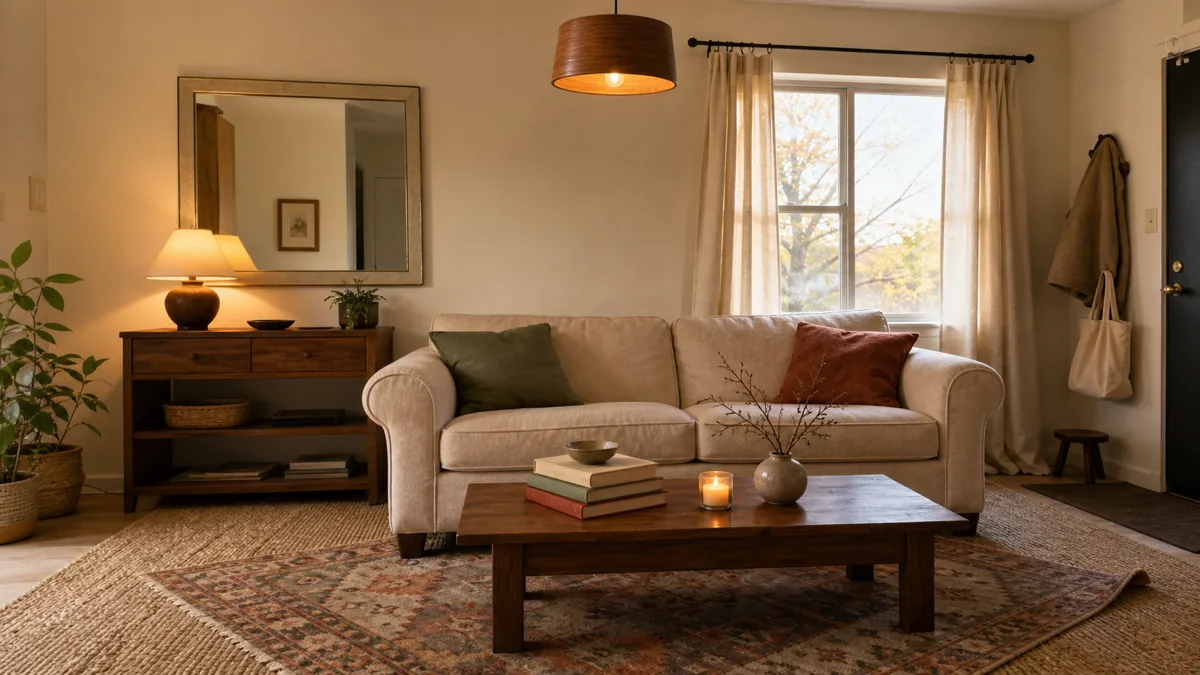
Layer two rugs so a small one becomes a statement
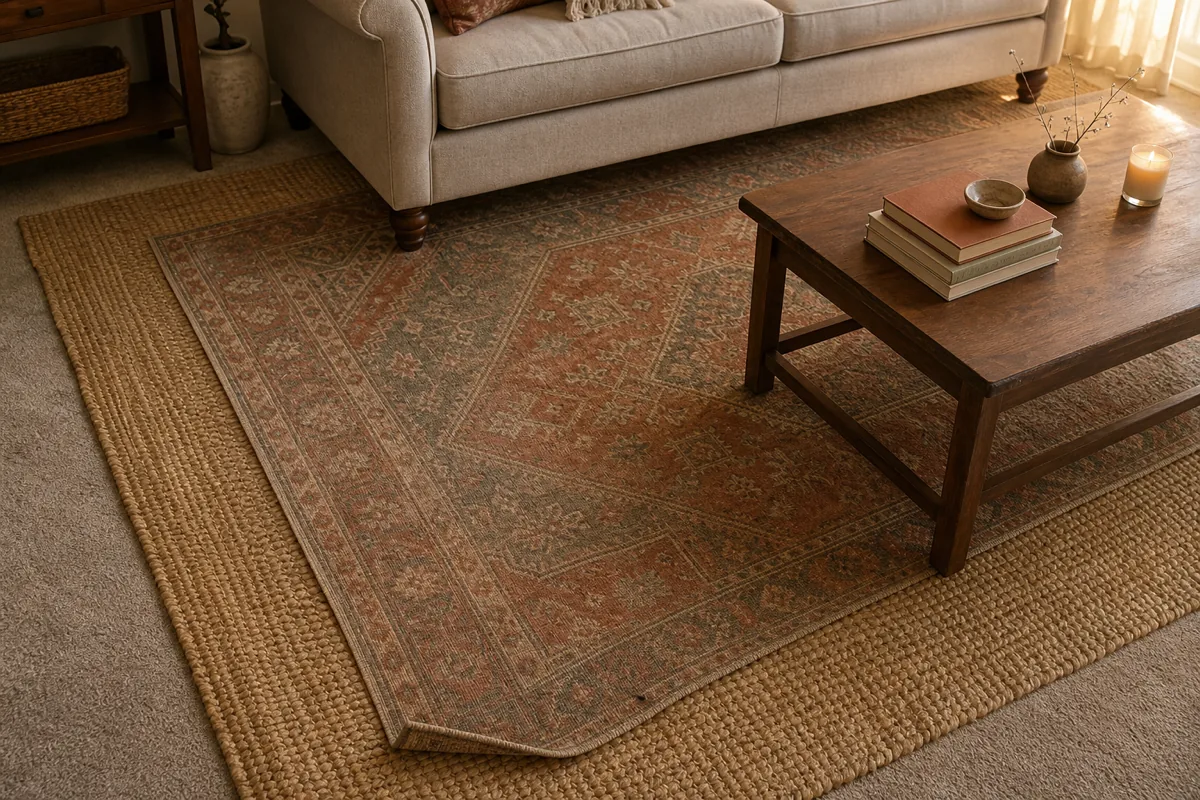
A small rug on a bare floor reads cheap. The same small rug layered diagonally on top of a larger natural-fiber base rug reads intentional. The base does the size work, the top rug does the personality work, and the layering itself proves the styling lever.
The base should be cheap and texturally interesting — jute, sisal, or any natural fiber works. The top rug is where the personality lives. Thrift stores and Facebook Marketplace are full of faded vintage-look rugs in the right palette for under fifty dollars.
For an eclectic styled look applying these same levers, the boho living room playbook works through a full boho-leaning room from start to finish. Start with a large neutral natural-fiber rug as the base. Layer a smaller patterned vintage-look rug on top, slightly off-center.
Build a three-pillow set from one solid, one pattern, one texture
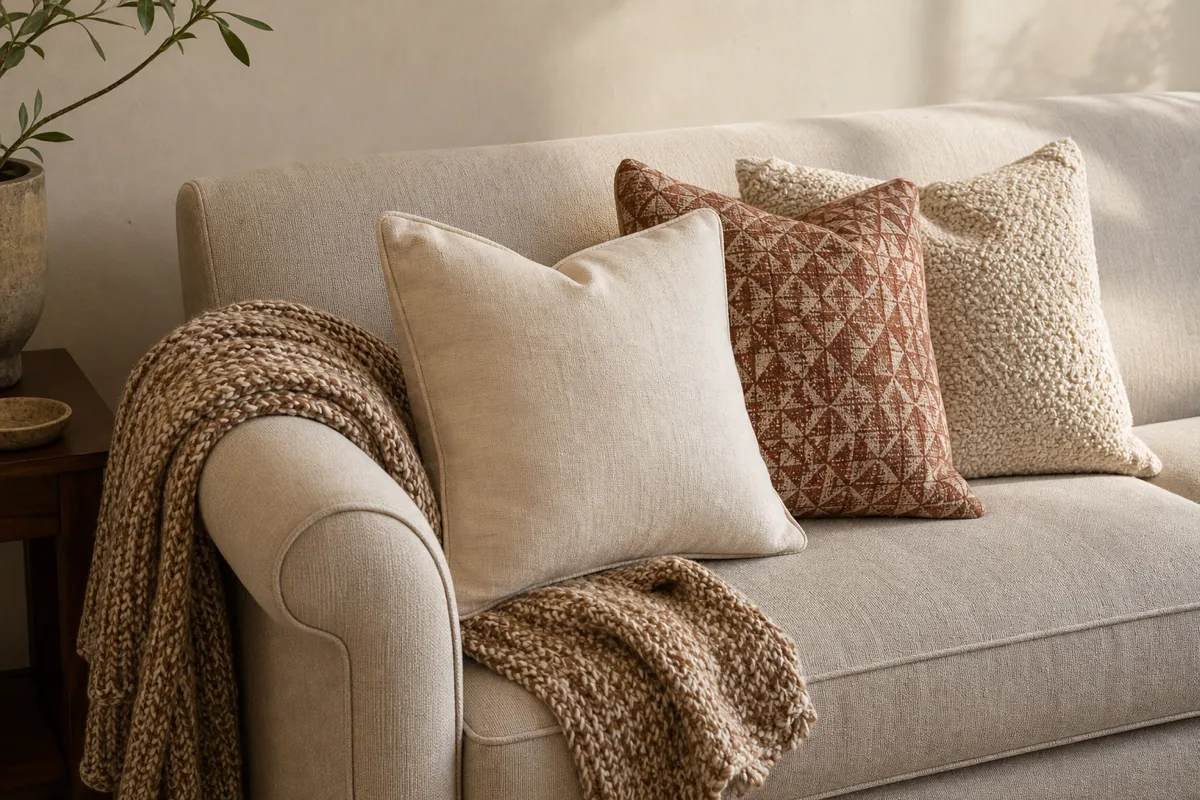
A sofa with three throw pillows is the smallest unit of intentional styling. The combination that works almost every time: one solid pillow, one patterned pillow, one textured pillow. The variety reads layered without being chaotic. Build a three-pillow set on every sofa and bed using the solid plus pattern plus texture rule. Two colors maximum across the set.
- The throw is the secondary lever. Skip the folded-on-the-arm look. Drape it casually with one end falling to the floor and the other resting across the seat. The imperfection is the point — perfectly folded throws read as showroom, casually draped throws read as lived-in. Throw the throw, do not fold it.
The 5-Lever Priority System
- 1Curtains highMove the rod close to the ceiling with a small extension past the frame on each side, panels grazing the floor. The cheapest height upgrade in any apartment.
- 2Three light sourcesOverhead plus a lamp at sitting height plus an ambient candle or low-level lamp. Swap every cool-white bulb for warm 2700K at the same time.
- 3One feature wallPaint exactly one wall in a desaturated warm color — sage, clay, mushroom, smoky blue. Keep the other three warm white. Thirty dollars of paint, one weekend, finished room.
- 4Tray everythingPut a tray on every surface that holds more than two objects. Rattan on coffee table, brushed brass at entry, ceramic on dresser. The rim does the grouping work.
- 5Plant clusters of threeFloor plant, table plant, wall-shelf plant with a trailer. Three different heights together, never solo plants in a corner. The stepped composition does the visual work.
styledhomenotes.com
Cluster plants in threes at varying heights
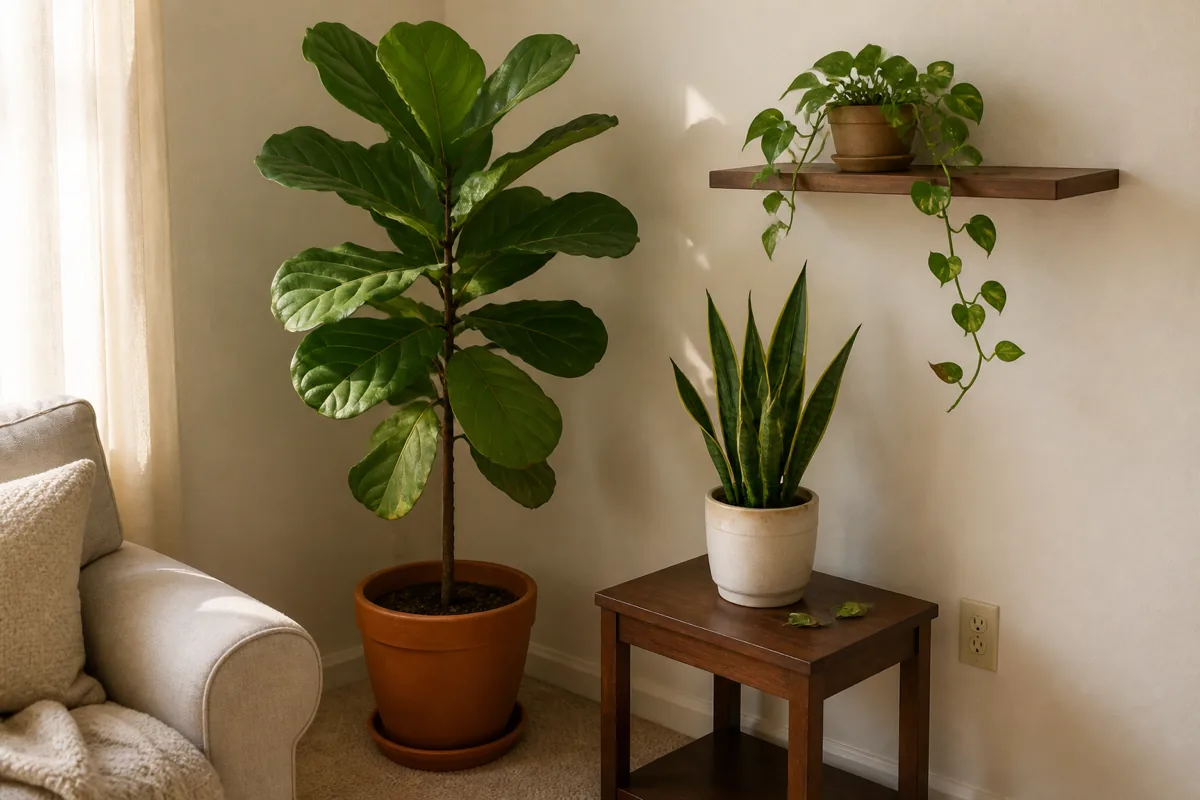
A single plant on a stand reads as someone bought a plant. Three plants of clearly different heights clustered together read as someone with a green thumb who understood composition. The plants themselves can be the cheapest grocery-store options — a fiddle-leaf, a snake plant, a pothos all live happily on $20 starter sizes.
The stepped height composition does the visual work. Floor plant. Table plant. Wall-shelf plant with something trailing down. Never put one solo plant in a room and hope it carries the corner. Group plants in threes at clearly different heights. A floor plant, a table plant, a wall-shelf plant with a trailer.
Add free branches in a tall vase for instant scale
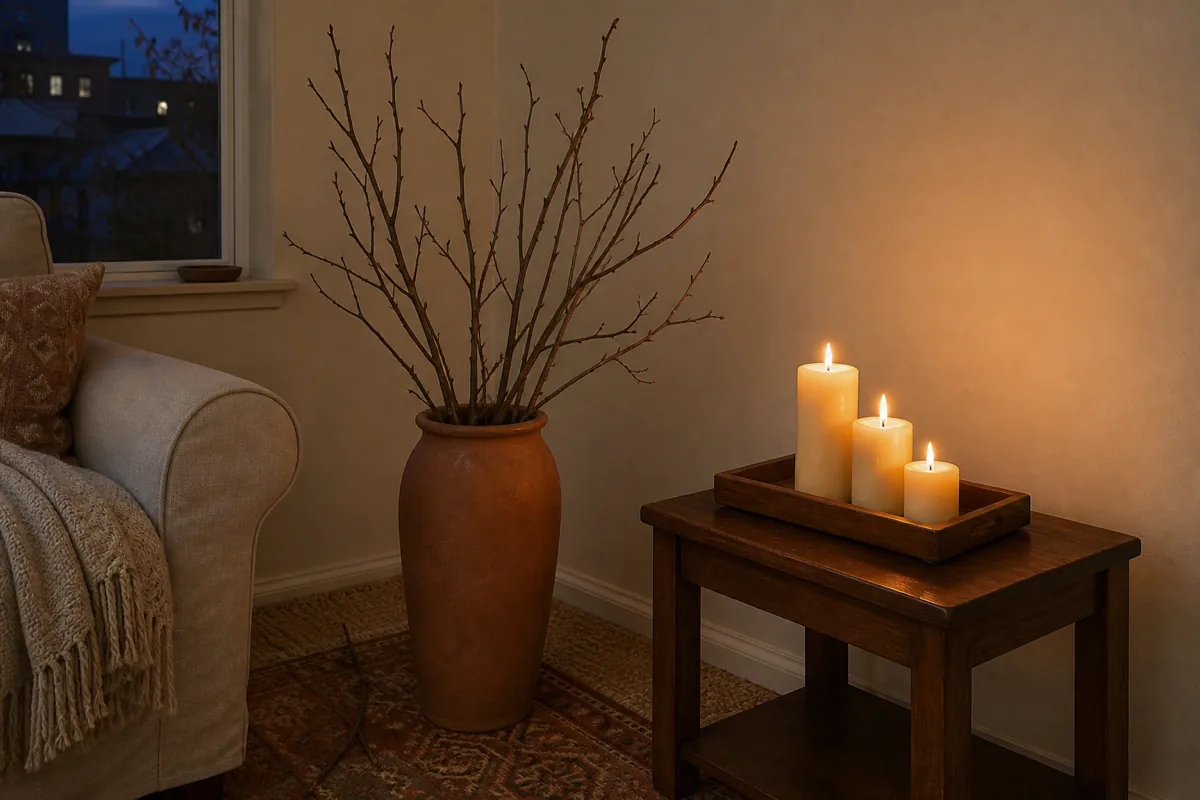
Vertical scale is one of the hardest things to fake in a budget apartment, and one of the cheapest to actually solve. A tall floor vase plus bare branches collected from a yard or a park creates a 50-inch vertical accent for the cost of the vase alone.
The branches should be irregular — real-collected, not professionally-trimmed. One slight bend, one twig stump, one branch thicker than the others. The whole point is that they look free, because they are. Buy a tall floor vase. Walk outside and collect bare branches from a yard or a park. Arrange them irregularly.
- Cluster three pillar candles on a tray near the vase and light them at dusk. The combination of vertical scale and warm low light does work that a $500 floor lamp would have done. Three candles, one tray, free branches in a tall vase — that corner of the room is finished.
Replace one builder light fixture with a thrift vintage one
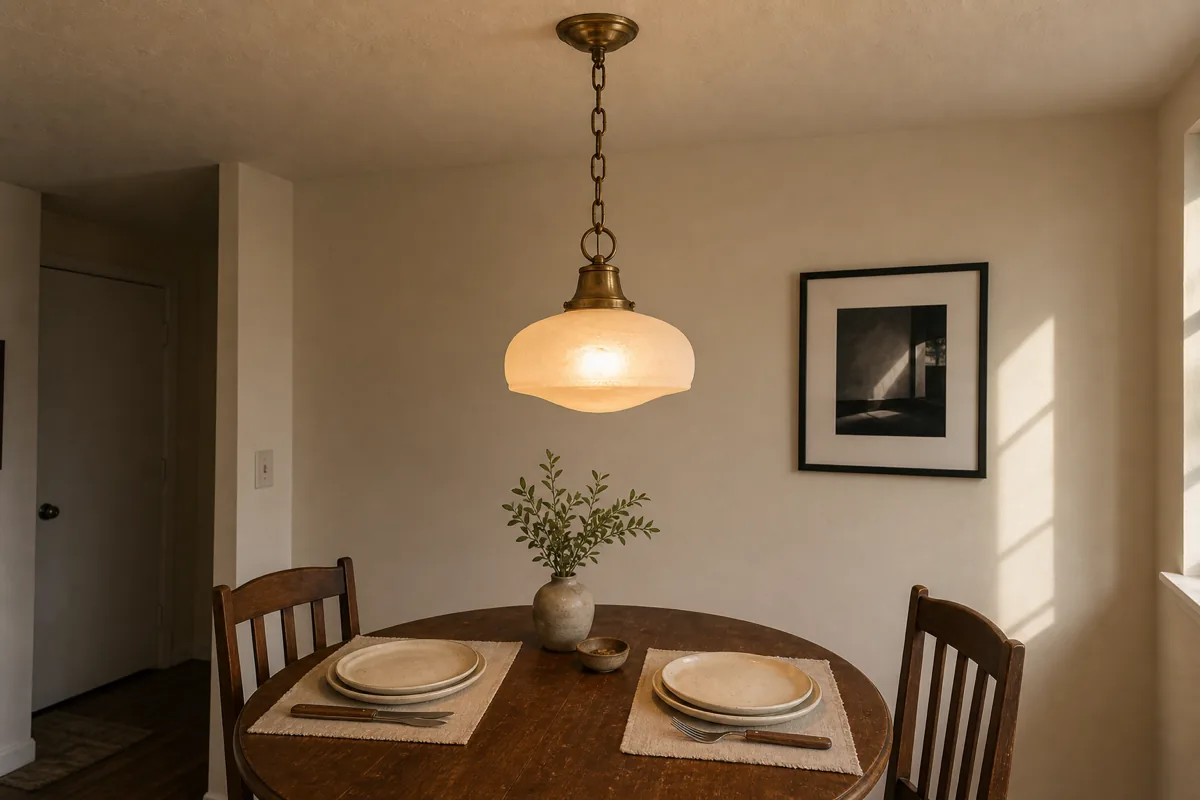
The single ugliest fixture in most apartments is the dining area light. A flush-mount builder boob light, or a basic chandelier, or a generic three-bulb pendant — none of them have any character. Thrift stores, estate sales, and Facebook Marketplace are full of vintage pendants for $40 to $100 that read like character from the first second.
The wiring is the same. A licensed electrician handles the swap in under an hour, or for renters, plug-in pendant kits exist that bypass hardwiring entirely. Replace the dining area light fixture before any other upgrade in the apartment. The fixture is the single most visible piece of character in the room. Thrift it.
Run a runner rug down any hallway or galley kitchen
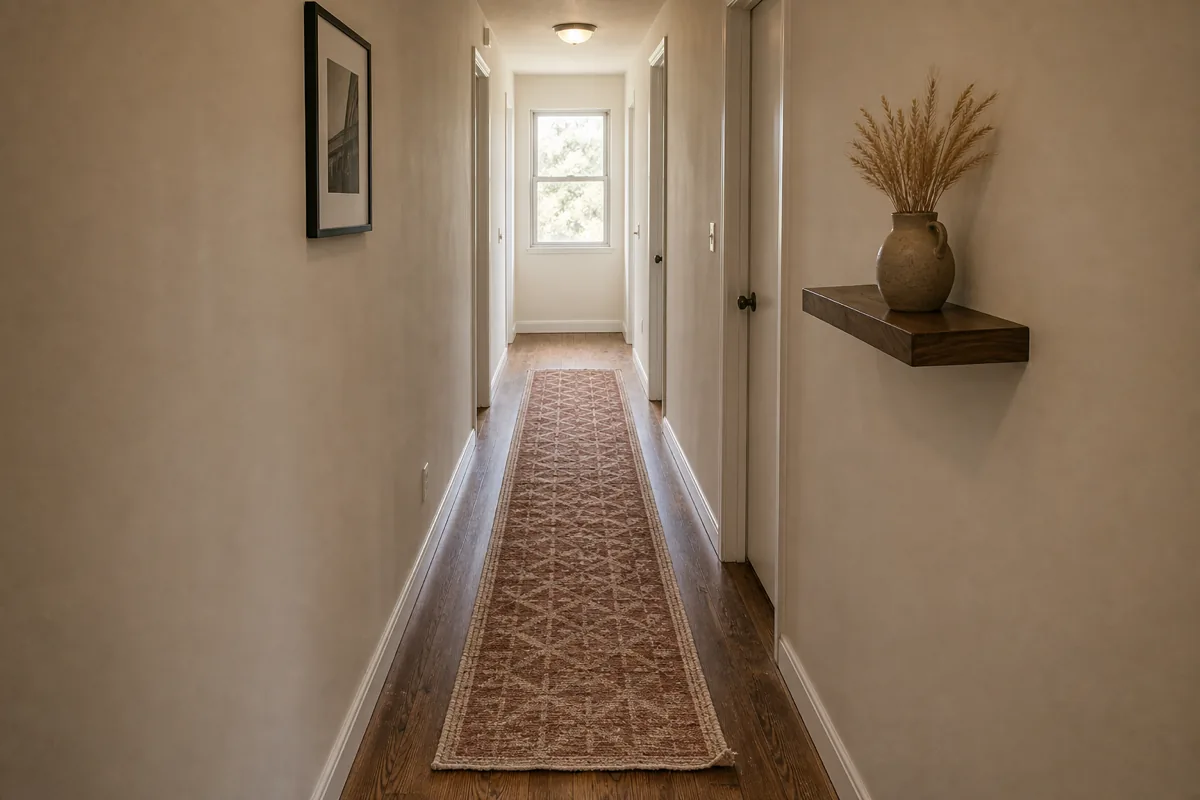
Hallways are the most ignored decor real estate in any apartment, and runner rugs are the cheapest way to claim them. A long narrow rug down the center of a hallway turns the corridor from a transit space into a styled one. The same trick works in a galley kitchen.
The runner should not extend wall to wall — leave several inches of floor visible on each side. The visible edge of bare floor is what proves the runner is a rug, not flooring. Skip the Persian medallion runner.
Stick with faded vintage-look geometric patterns that match the rest of the apartment’s palette. Buy one long narrow runner rug for every hallway and galley kitchen. Center it down the length with bare floor visible on both sides.
If twenty levers is too many to start, the five that move the room hardest in one weekend: rehang the curtain rod high, replace every cool-white bulb with 2700K warm, build a 3-light layered setup in the living room, put a tray on the coffee table and the entry console, and paint one feature wall in something muted. None of those cost more than $80 combined. Most of them are free.
The rest of the levers exist to be added one at a time, on no schedule, when something in a room starts to feel off. Budget decor is mostly attention applied across years, not money spent across one weekend.

Nora Ellis edits Styled Home Notes, where she shares practical decorating, organization, and small-space ideas for creating a more styled and functional home. Every article is reviewed for clarity, usefulness, image sourcing, and Pinterest-to-page alignment before publication. Visit the Nora Ellis author page.