12 One-Bedroom Apartment Ideas to Make Every Room Work
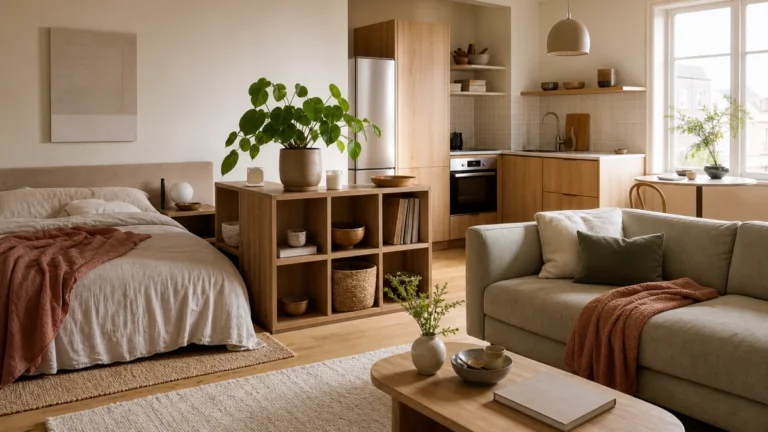
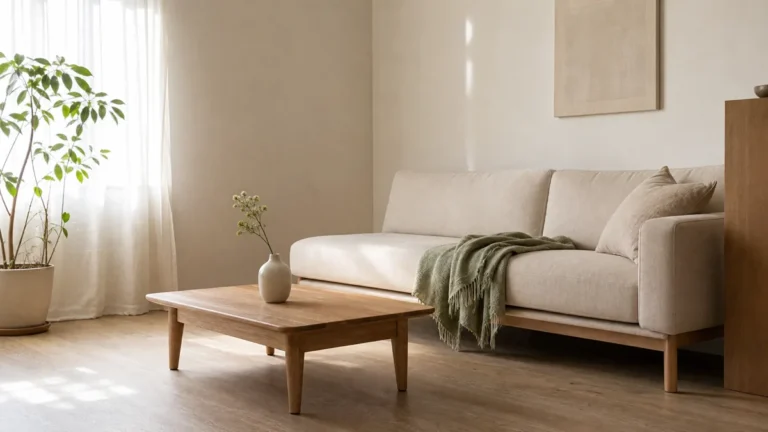
A one-bedroom apartment hands you something a studio never will: a wall, and a door, between where you sleep and where you live. That one wall changes how you should set up every other foot of the place.
The move is to stop spreading every function evenly and start splitting the loads. Let the living room carry every public job, the lounging, the eating, the working, while the bedroom does one thing well.
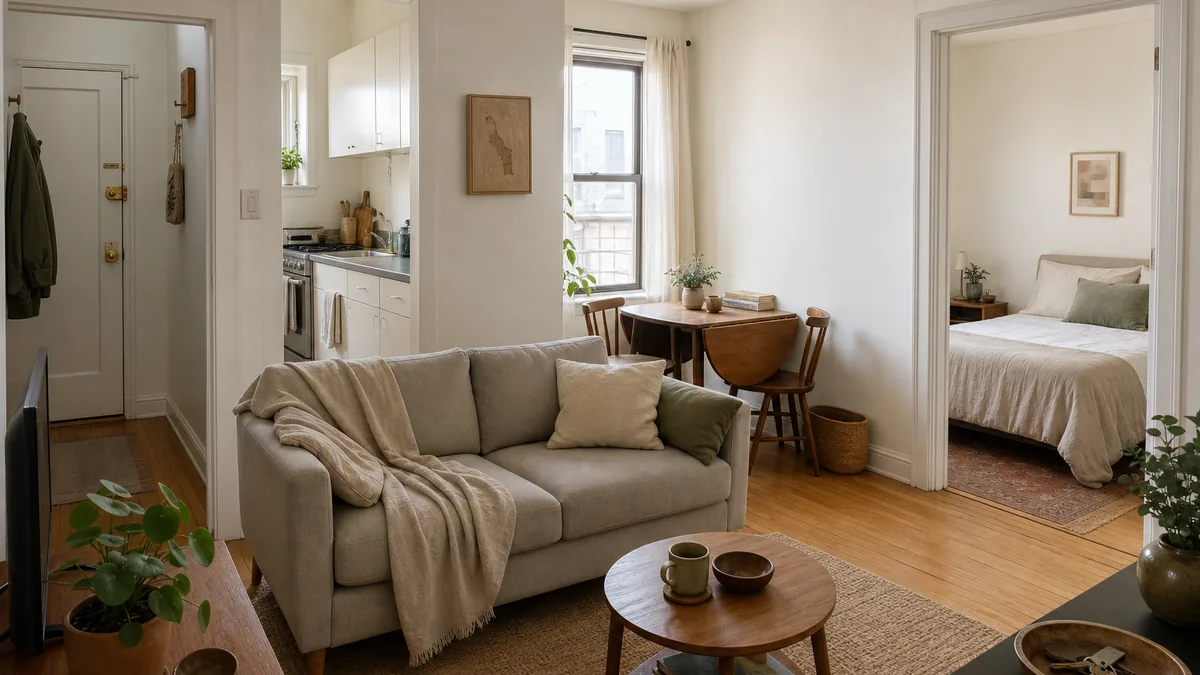
The same tricks that make a small living room feel bigger work across a whole one-bedroom. Here are twelve ways to make every room pull its weight.
From a living room that does three jobs to a bedroom kept calm for sleep, these twelve moves use the one thing a studio never gives you: a wall between living and sleeping. Jump straight to the room you want to fix first.
- 1Give the living room more than one job
- 2Flow one color palette through every room
- 3Use the one wall a studio never gives you
- 4Carve a dining spot out of the living room
- 5Pick furniture that does two jobs
- 6Keep the bedroom a sleep-only calm zone
- 7Steal vertical storage in every room
- 8Build a small desk into the living room
- 9Light each zone, not the whole ceiling
- 10Make the entry the apartment’s handshake
- 11Pull the small kitchen onto its walls
- 12Repeat one material to tie it all together
Give the Living Room More Than One Job
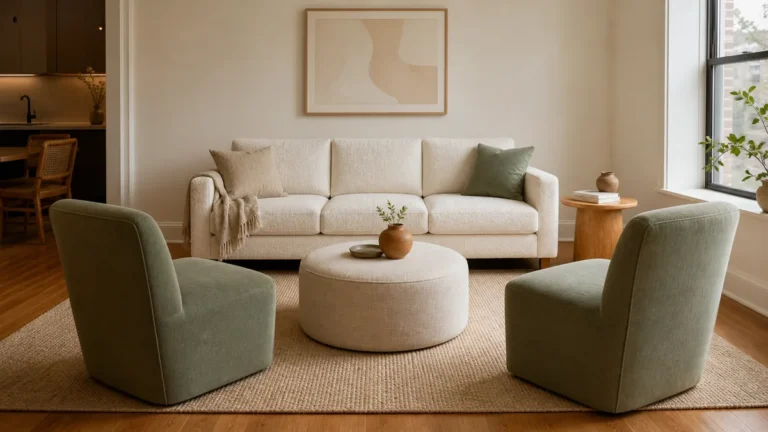
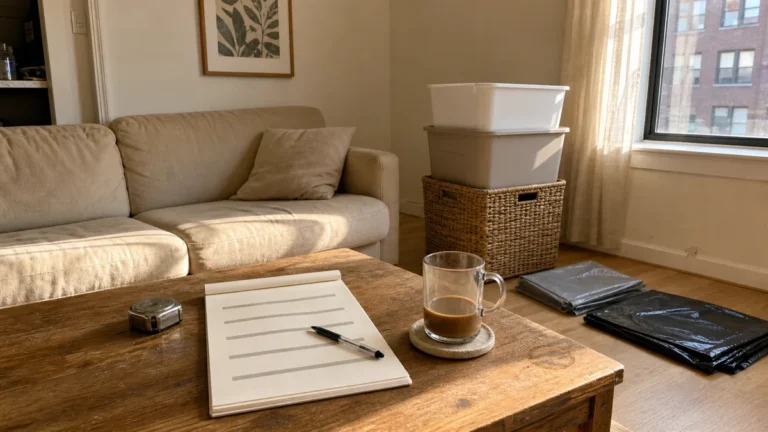
In a one-bedroom, the living room is the lounge, the dining spot, and often the office all at once, so it helps to settle what those jobs are before the furniture goes in. A room asked to do three things at once turns into one cluttered blur unless you give each its own defined corner instead of letting them bleed together.
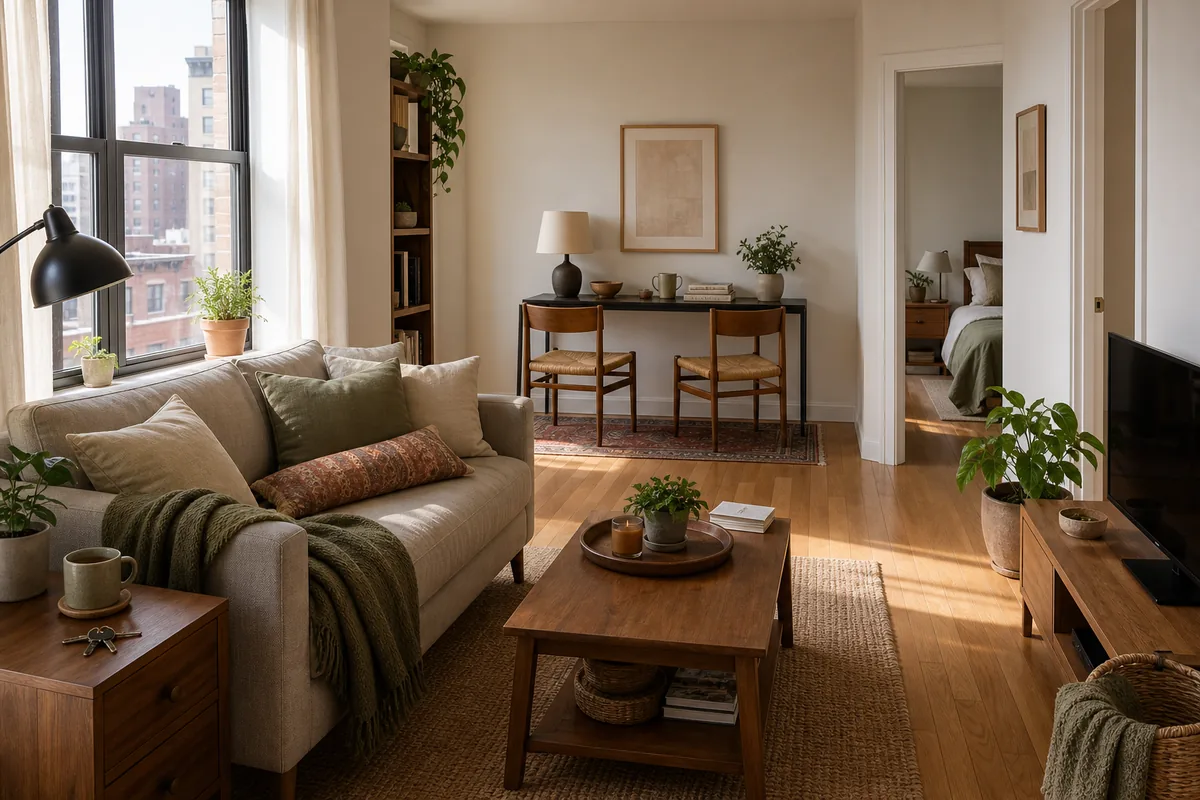
- List the jobs your living room actually has to do before you place anything.
- Anchor each zone with its own rug so the eye reads two or three areas, not one.
- Face the sofa into the lounge and push work or dining pieces to the edges.
- Leave a clear path between zones so the room never feels packed.
- Keep one zone the obvious main one so the room still has a focal point.
Flow One Color Palette Through Every Room
A small apartment reads as one continuous home when the same few colors run from room to room, and as a string of cramped boxes when each room picks its own scheme. One palette is the cheapest square-footage trick there is, because the eye stops counting walls and starts taking the whole place in as bigger than it is.
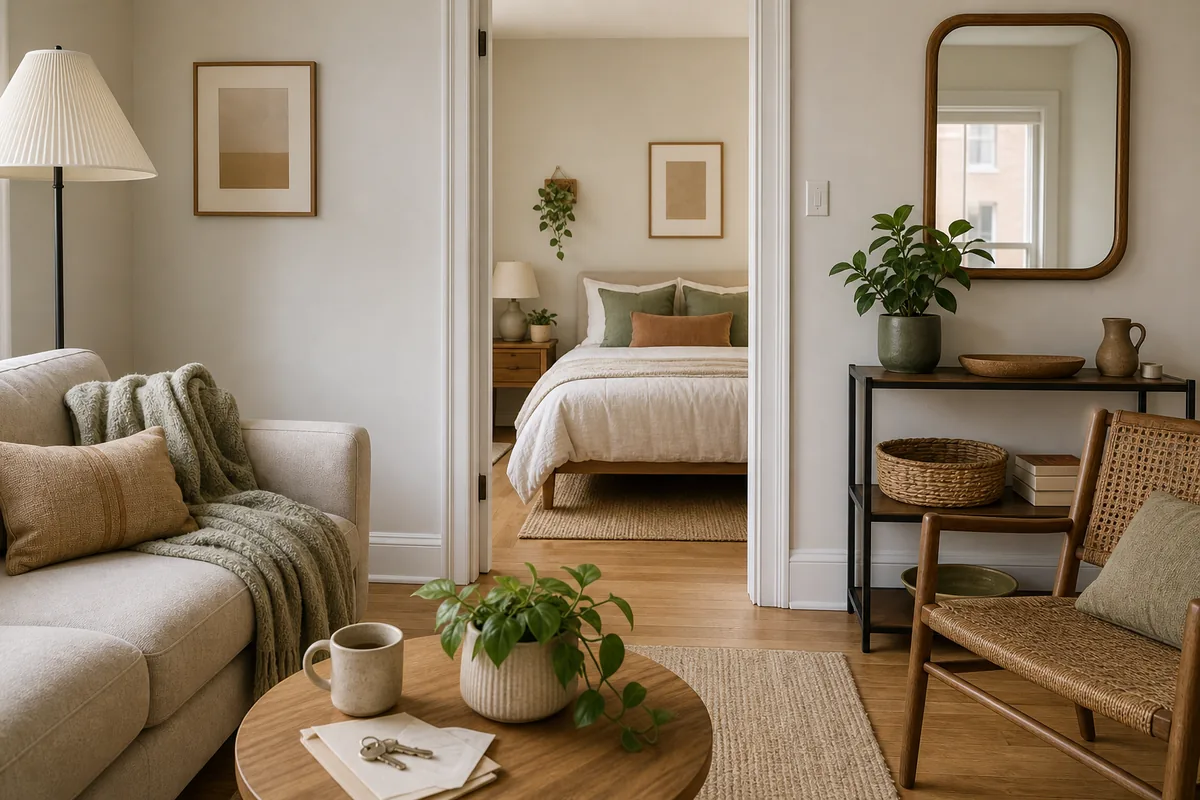
- Choose one palette of three or four colors and use it in every room.
- Repeat each color at least twice per room so nothing looks accidental.
- Carry the same wall color or a close shade through to the bedroom.
- Let textiles, not paint, do the seasonal changing so the base stays calm.
- Keep bold accents to small, movable things you can swap without repainting.
Use the One Wall a Studio Never Gives You
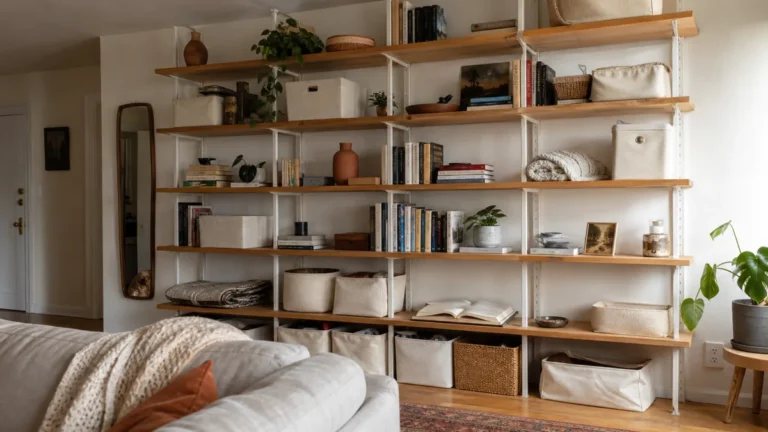
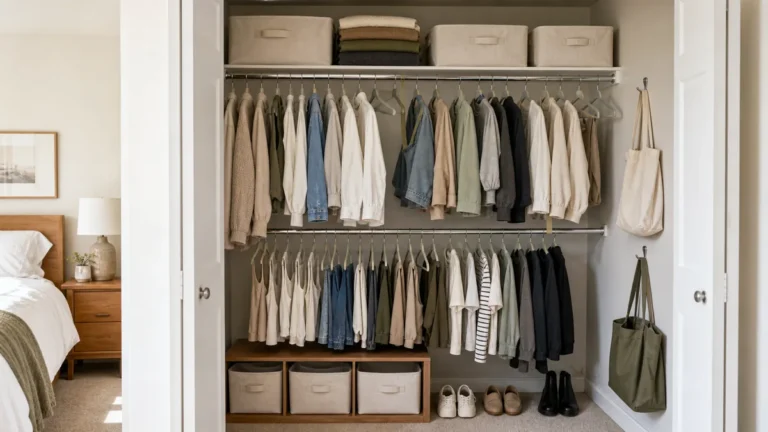
The separate bedroom is the one thing a one-bedroom has that a studio apartment does not, and its best feature is a full wall you can finally fill. A studio makes you tuck storage around a bed sitting out in the open, while here one wall can carry floor-to-ceiling storage and still leave the rest of the apartment clear. That wall often does the work of the closet you do not have.
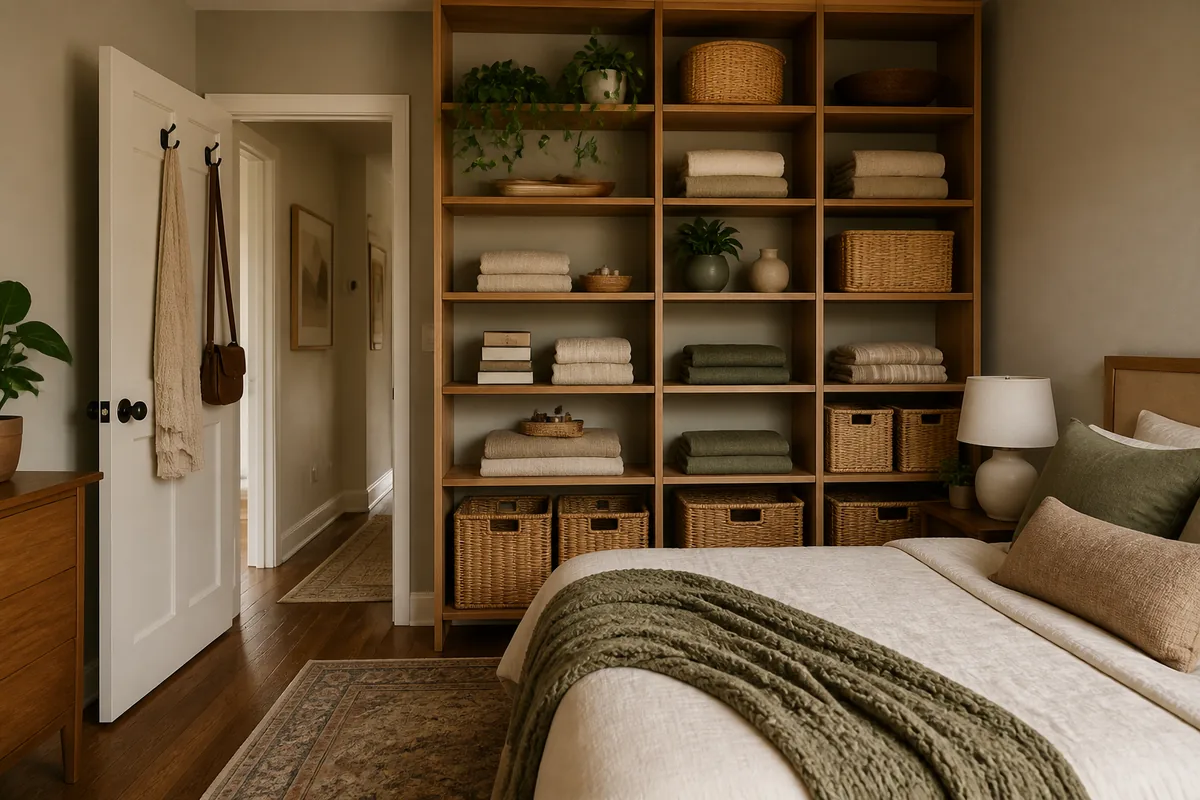
- Run open or closed shelving up one full bedroom wall, floor toward ceiling.
- Reserve the highest shelves for things you rarely reach for.
- Hang hooks or an over-door rack on the back of the bedroom door.
- Use matching baskets on the shelves so the wall reads calm, not busy.
- Keep the storage on one wall so the others stay open and the room breathes.
You will not need all twelve at once. Pick the problem below that matches your apartment right now, and start with those two or three ideas.
Carve a Dining Spot Out of the Living Room
A one-bedroom almost never has a dining room, so a real place to eat has to come out of the living room or the edge of the kitchen, or meals just migrate to the sofa. The answer is a table sized for a corner instead of a room, one that earns its keep every day and opens up when company comes. Even a tiny eating spot beats balancing dinner on your knees.
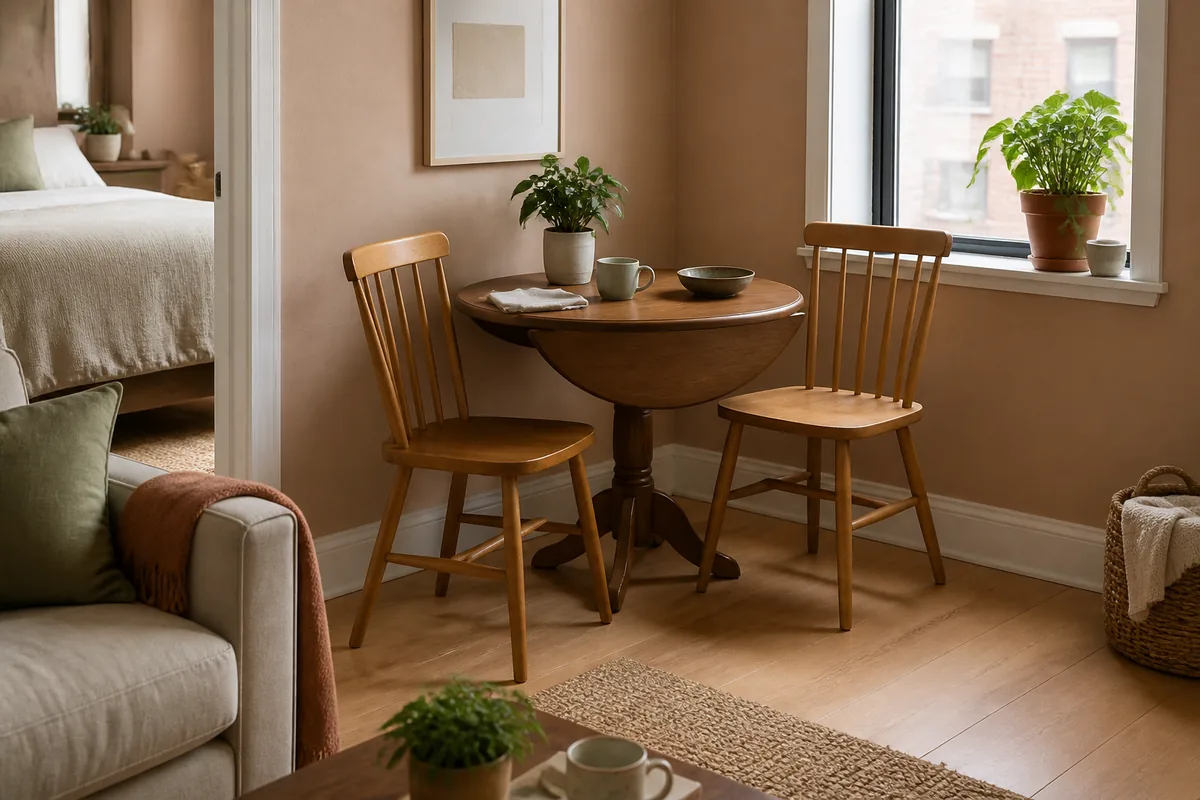
- Pick a drop-leaf or round table small enough for a corner or against a wall.
- Set it by a window so the dining spot gets its own light and view.
- Use chairs that slide fully under the table to keep the walkway clear.
- Add a small rug or a pendant to mark the corner as its own zone.
- Choose a table you can pull out and open up when guests come.
Pick Furniture That Does Two Jobs
When floor space is tight, the pieces worth their spot are the ones that quietly do two jobs at once. A piece that stores while it seats, or converts from one use to another, earns its footprint twice over. Every double-duty piece is one less thing you have to find room for, which is exactly what keeps a one-bedroom from filling up.
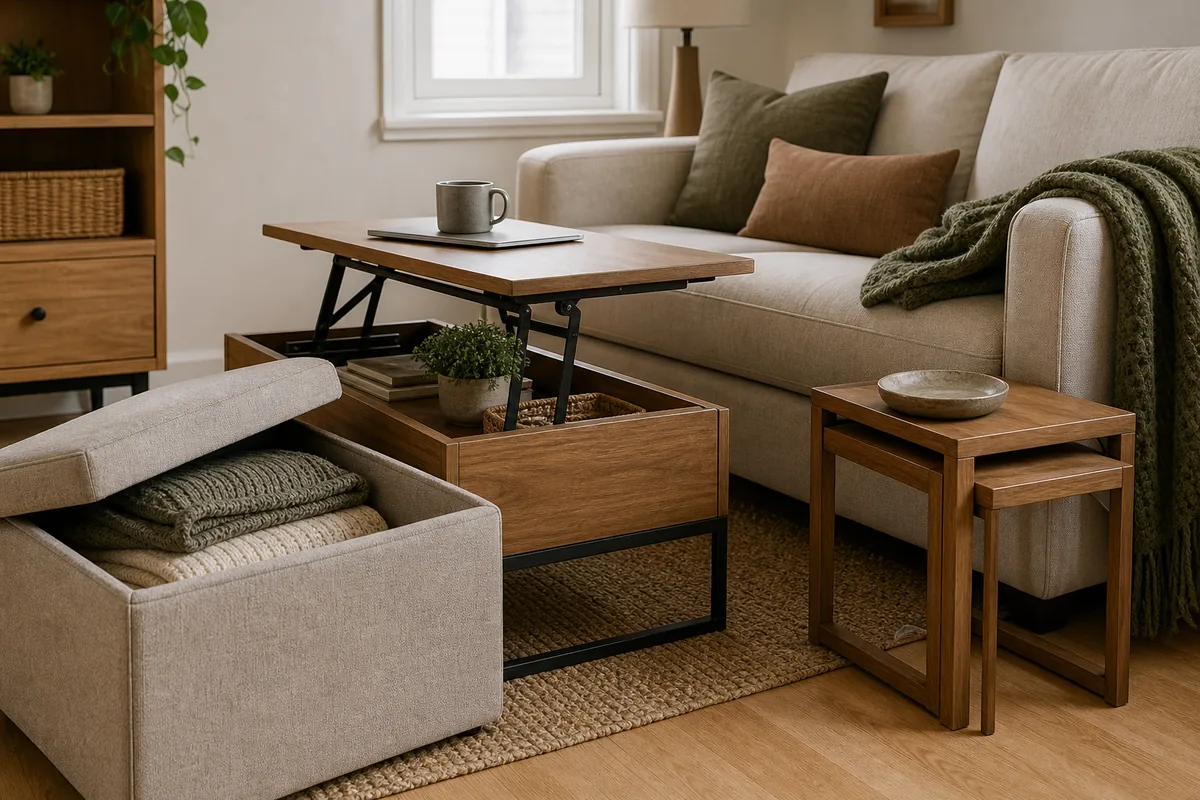
- Choose a storage ottoman that holds blankets and works as a footrest or seat.
- Pick a lift-top coffee table so the surface rises to laptop or dinner height.
- Use nesting tables you can pull apart for guests and stack away after.
- Add a sleeper sofa or daybed if you host overnight guests.
- Look for beds and benches with drawers built into the base.
Keep the Bedroom a Sleep-Only Calm Zone
Because the living room carries every public job, the bedroom gets to do just one thing, which is be a calm place to sleep. That is a freedom a studio never gives you, so it is worth protecting instead of stuffing the room with everything that did not fit elsewhere. A near-empty bedroom feels restful and, in a small apartment, reads bigger than one packed to the corners.
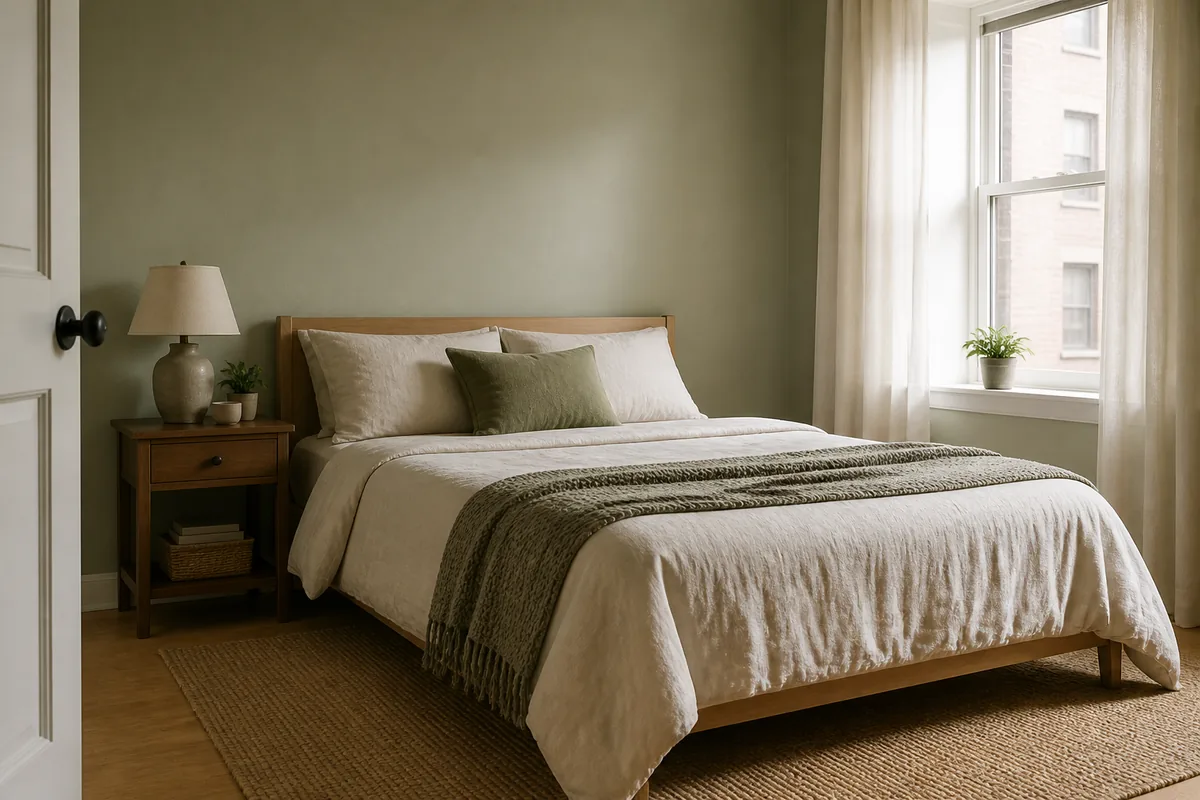
- Keep the bedroom to a bed, bedside storage, and little else.
- Leave the wall above the headboard mostly empty for a calm, open feel.
- Move anything that is not about sleep, like a desk, out to the living room.
- Choose soft, low-contrast bedding so the room stays quiet to the eye.
- Add one lamp for warm light instead of relying on a bright ceiling fixture.
Making a small one-bedroom work is less about square footage and more about giving each room a clear job in the right order. These four rules are what make the twelve ideas come together instead of just filling the rooms.
Steal Vertical Storage in Every Room
A small apartment runs out of floor long before it runs out of wall, so in a one-bedroom the storage has to climb in every room. Going up instead of out adds room without stealing a single step of walkway, the same thinking behind good small-apartment organization. Look up in almost any room and you find a foot or two of height doing nothing.
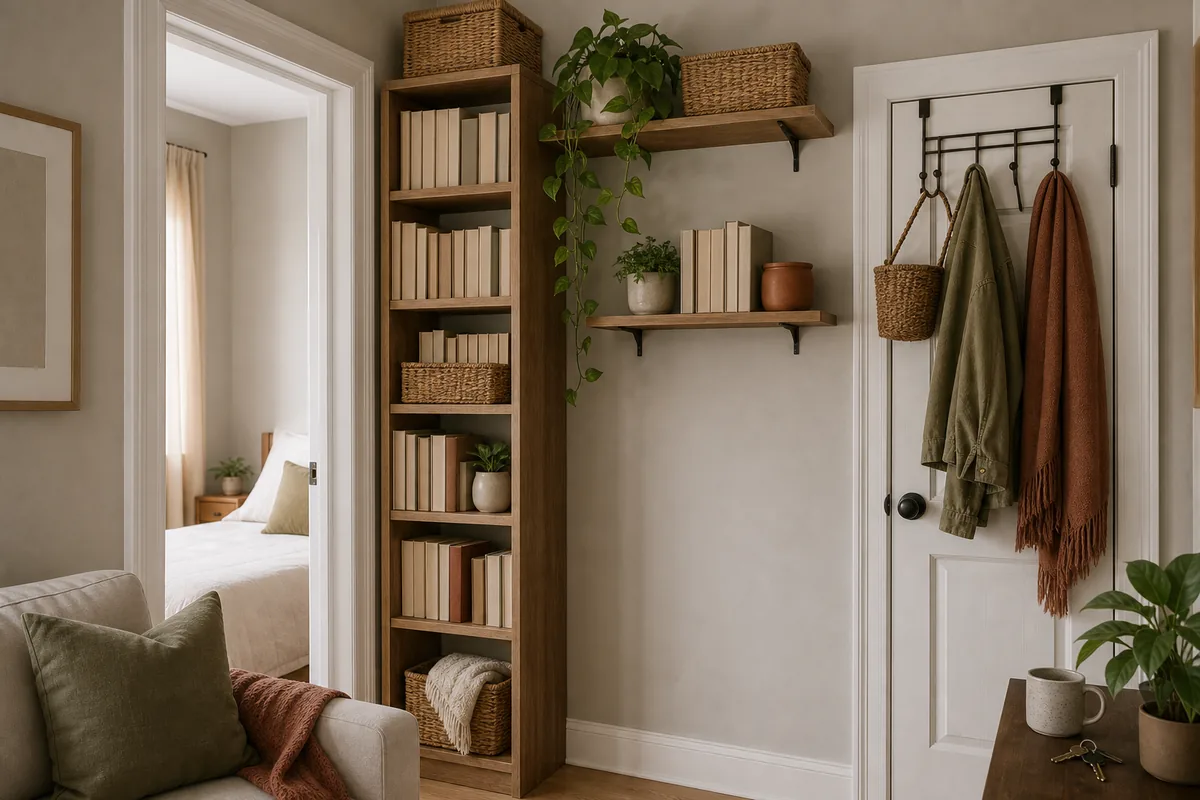
- Add tall, narrow shelving that uses height instead of floor width.
- Mount a shelf above each doorway for things you reach for rarely.
- Use the space above kitchen cabinets and the top of closets.
- Hang over-door racks on bedroom, bathroom, and closet doors.
- Keep heavy items low and light, infrequently used ones up high.
Build a Small Desk Into the Living Room
When the bedroom is too small for a desk and there is no spare room, the work spot has to live in the living room without taking it over. The goal is a workspace that folds back into the lounge the moment the laptop closes, so the room never feels like an office you happen to sleep beside. Keeping it small and tidy is what makes that possible.
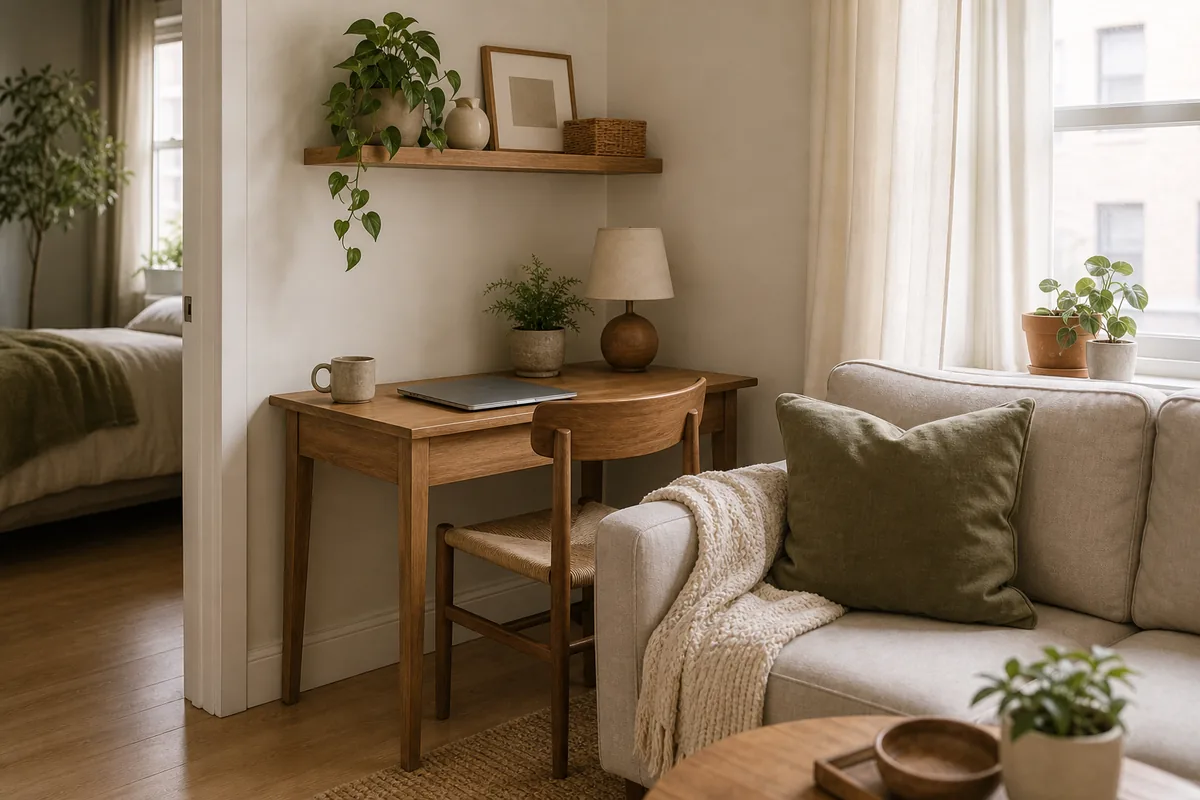
- Slot a narrow desk behind the sofa or into an unused corner.
- Pick a desk shallow enough that it does not crowd the walkway.
- Add a shelf above it so work things go up, not across the surface.
- Use a chair that doubles as extra seating when guests come.
- Clear the desktop each evening so the lounge feels off-duty.
Light Each Zone, Not the Whole Ceiling
One ceiling fixture flattens a whole one-bedroom into a single flat box, while a separate light in each zone tells the eye where the lounge ends and the dining corner begins. Lighting the apartment in pools makes the zones you mapped read as separate after dark, and a warmly lit room feels bigger and softer than a flatly lit one the same size.
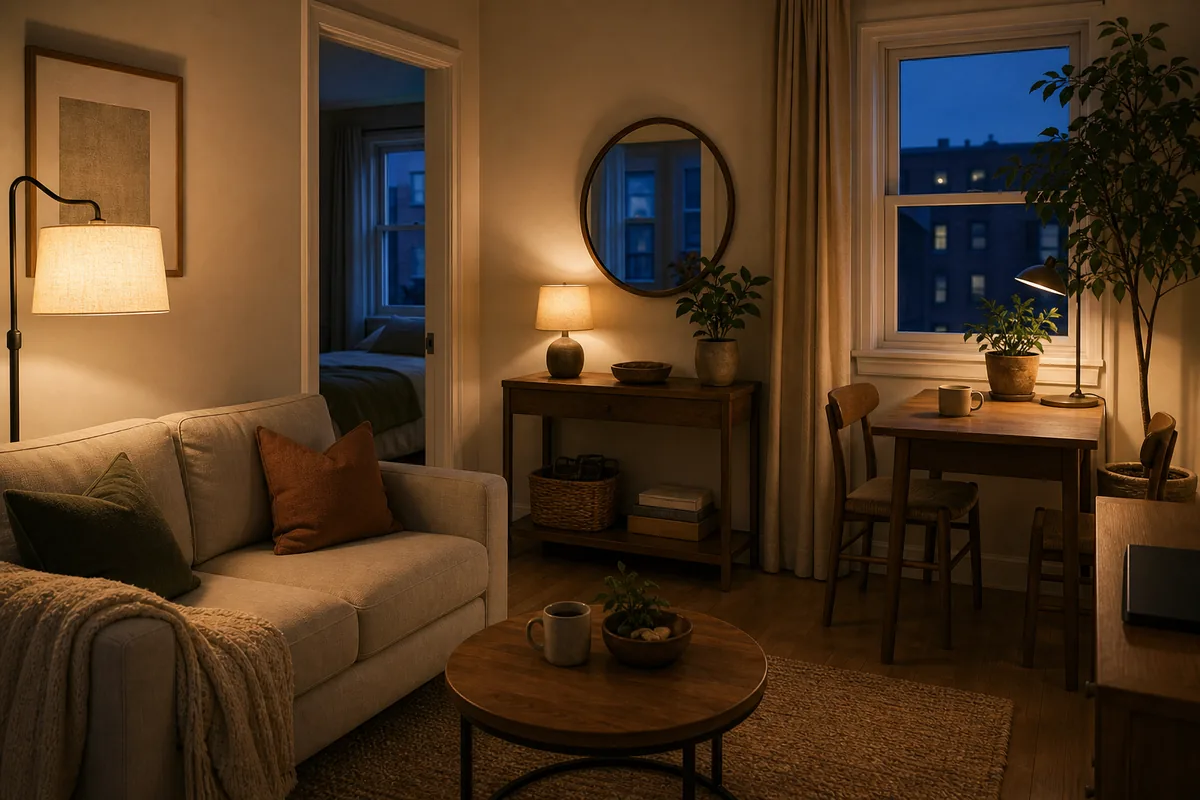
- Put a lamp in each zone: a floor lamp by the sofa, a table lamp on the console.
- Choose warm bulbs so the rooms glow amber instead of glaring white.
- Add a mirror across from a window to bounce daylight deeper in.
- Use a small lamp in the bedroom for soft light instead of the ceiling.
- Leave the overhead off most evenings and let the lamps do the work.
12 One-Bedroom Apartment Ideas to Make Every Room Work
- 1Give the living room more than one jobMap the lounge, dining, and work zones before you furnish, the same space-stretching thinking that helps a small living room feel bigger.
- 2Flow one color palette through every roomRepeat the same three or four colors across the rooms so the apartment reads as one continuous home, not a string of boxes.
- 3Use the one wall a studio never gives youFill the separate bedroom wall floor to ceiling with storage, the square footage a studio apartment never hands you.
- 4Carve a dining spot out of the living roomA drop-leaf table or a banquette corner gives you a real place to eat where a full dining set never fits.
- 5Pick furniture that does two jobsA storage ottoman, a sleeper sofa, and a lift-top table each earn their floor space twice.
- 6Keep the bedroom a sleep-only calm zoneWith the living room carrying the public load, the bedroom can stay spare, restful, and read bigger for it.
- 7Steal vertical storage in every roomRun shelves up high and use over-door space, the same small-apartment organizing logic in every room.
- 8Build a small desk into the living roomA narrow desk tucked behind the sofa gives you a work spot without turning the lounge into an office.
- 9Light each zone, not the whole ceilingA lamp in each zone marks the lounge from the dining corner and makes the rooms feel layered, not flat.
- 10Make the entry the apartment’s handshakeGive the first few feet inside the door a drop spot and a welcome, even when there is no real entryway.
- 11Pull the small kitchen onto its wallsA rail, a shelf, and vertical storage clear the short counter so a tiny kitchen actually works.
- 12Repeat one material to tie it all togetherEcho one wood tone or metal finish from room to room so the apartment feels designed, not furnished piece by piece.
styledhomenotes.com
Make the Entry the Apartment’s Handshake
A one-bedroom’s front door usually opens with no real entryway at all, straight into the living room, so the first few feet need a drop spot and a welcome built in. Without one, keys and coats land on the nearest surface and the apartment greets you with a pile every time. A worked-out threshold sets the tone for the whole place the second the door opens.
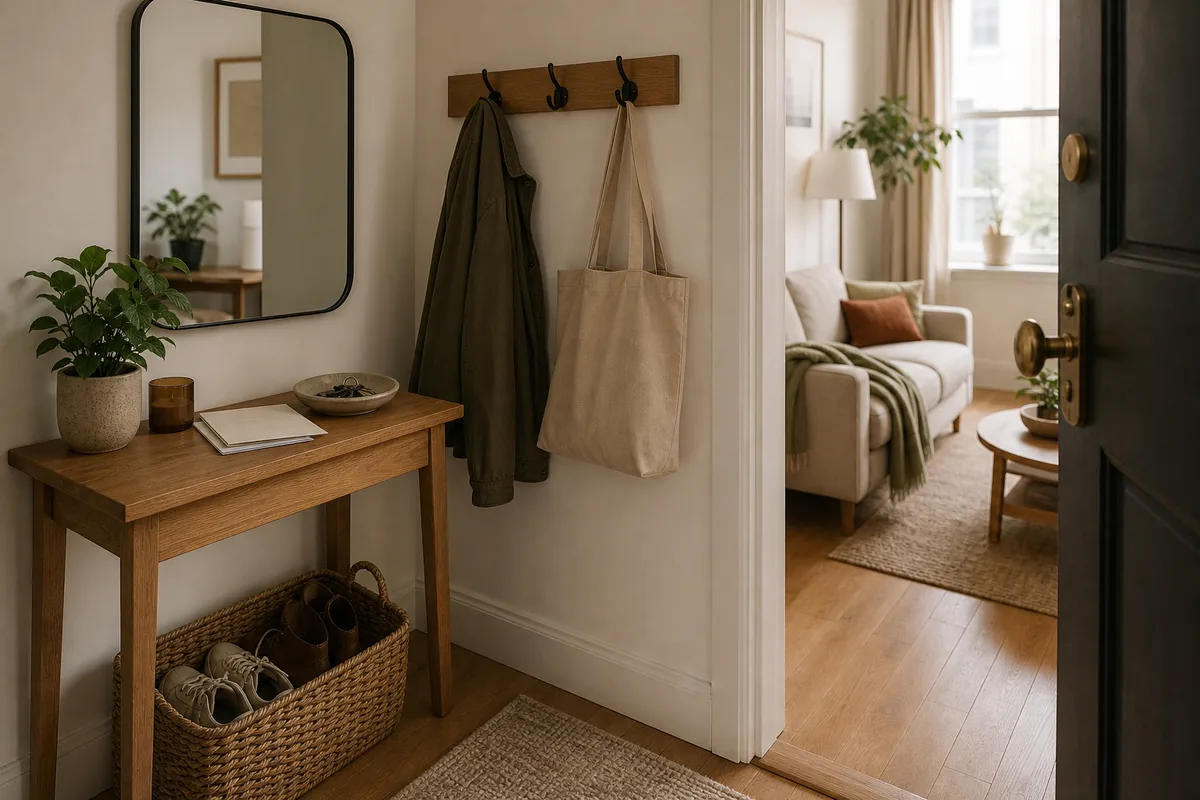
- Set a slim console or a few hooks right by the door for keys and coats.
- Hang a mirror to bounce light and check yourself on the way out.
- Tuck a basket below for shoes so they do not pile by the door.
- Mark the spot with a small rug so it reads as an entry, not just floor.
- Keep it to a few pieces so the narrow threshold never feels blocked.
Pull the Small Kitchen Onto Its Walls
A one-bedroom kitchen is almost always short on counters and cabinets, so anything you can lift off the counter and onto the walls buys back work surface. The wall above the counter is usually the most wasted space in the apartment, and clearing the surface is the difference between a tiny kitchen that works and one that stays buried. Free the counter and the whole kitchen feels twice the size.
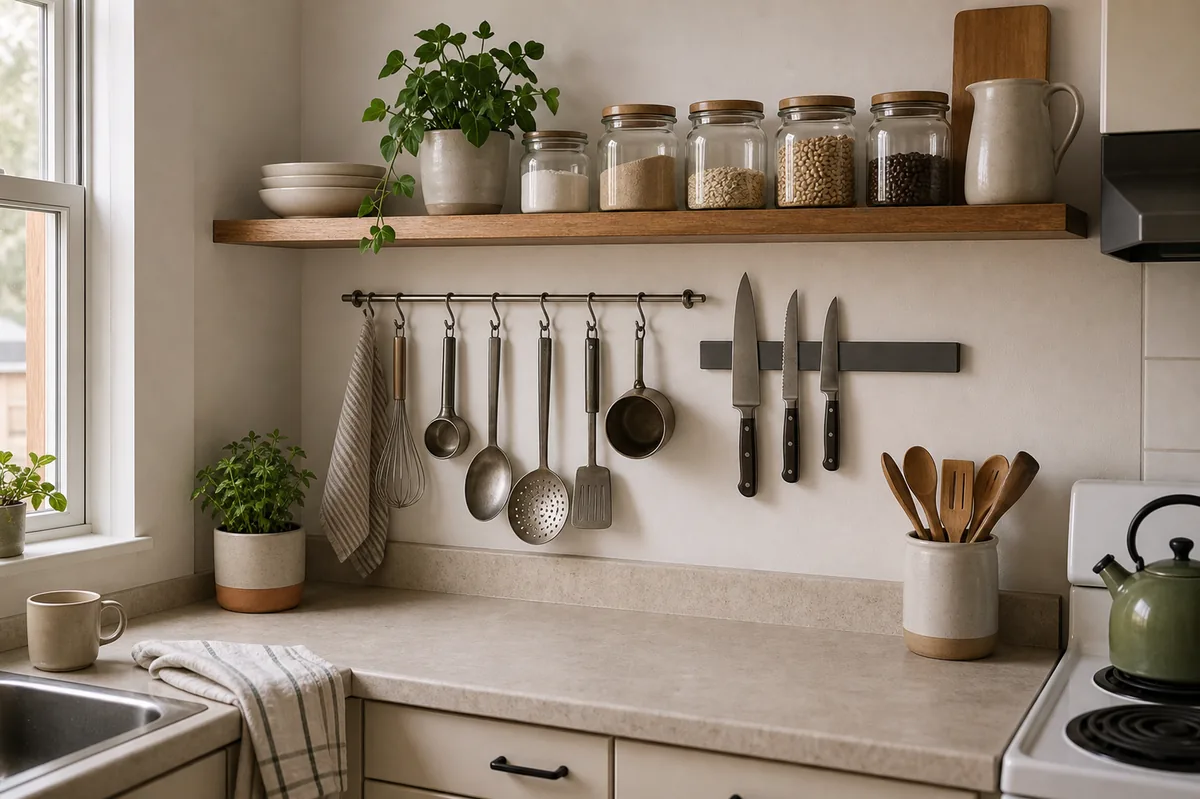
- Hang a rail for utensils and mugs to clear the counter below.
- Mount a floating shelf for everyday jars, oils, and a small plant.
- Add a magnetic strip for knives instead of a counter block.
- Use the wall and the cabinet tops before buying any more counter gadgets.
- Keep only daily-use items out; everything else goes up or away.
Repeat One Material to Tie It All Together
Separate little rooms read as a pile of boxes until one material carries through them and pulls the apartment into a single space. Repeating one warm wood tone or one metal finish from room to room makes the place look chosen instead of furnished piece by piece. It costs nothing; it just means echoing one note across the rooms instead of mixing ten.
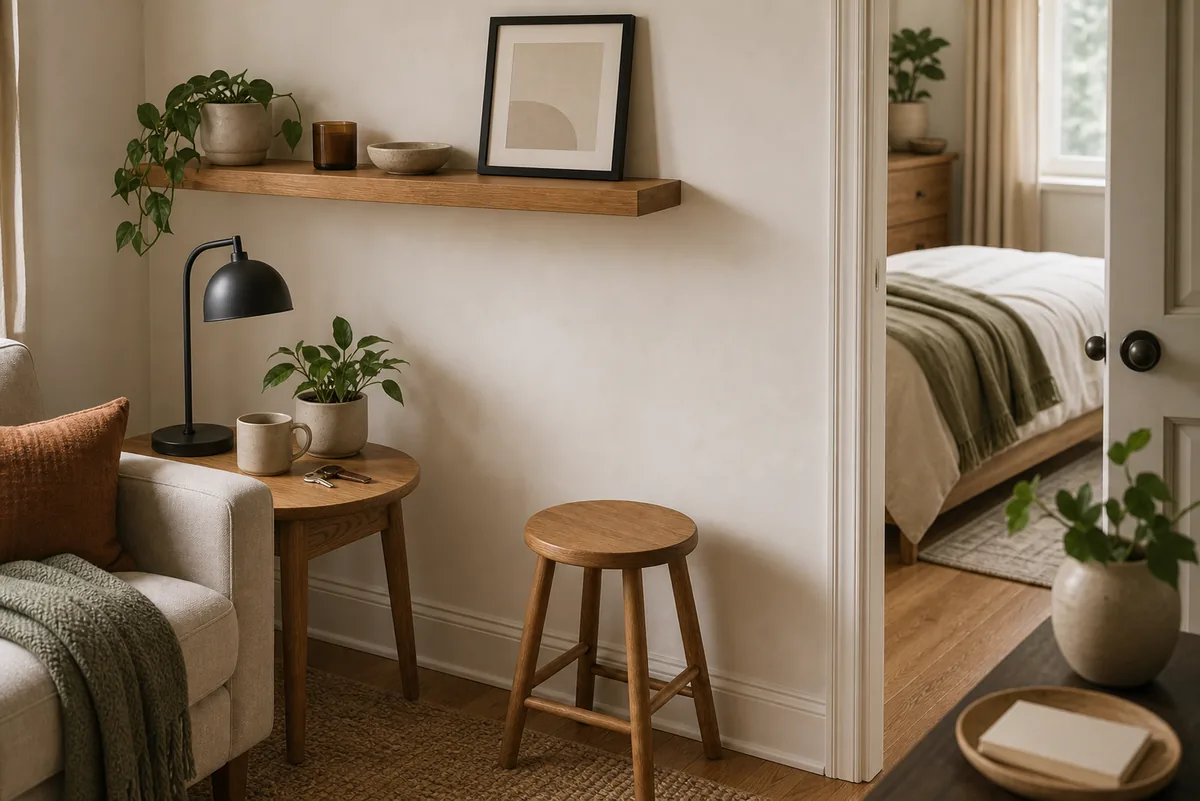
- Pick one wood tone and repeat it in furniture across every room.
- Echo one metal finish in lamps, frames, hardware, and legs.
- Let that repeated material be the thread from the entry to the bedroom.
- Limit yourself to two main materials so the look stays calm.
- Swap mismatched odd pieces for ones in your chosen wood or metal over time.
A one-bedroom apartment works best when you stop fighting its size and lean on its one real advantage, the wall that splits living from sleeping. Give the living room every public job, let the bedroom stay calm, and tie the rooms together so the whole place feels like one home. Start with the room that bugs you most and work out from there.

Nora Ellis edits Styled Home Notes, where she shares practical decorating, organization, and small-space ideas for creating a more styled and functional home. Every article is reviewed for clarity, usefulness, image sourcing, and Pinterest-to-page alignment before publication. Visit the Nora Ellis author page.