21 Small Living Room Ideas That Make Apartments Feel Bigger
Most small living rooms don’t have a furniture problem. They have a proportion problem. The sofa is fine on its own, but it’s three inches too deep for the walkway. The shelf is useful, but it’s crammed so full that the wall feels like it’s closing in. Every piece made sense individually — the room just never got a chance to breathe.
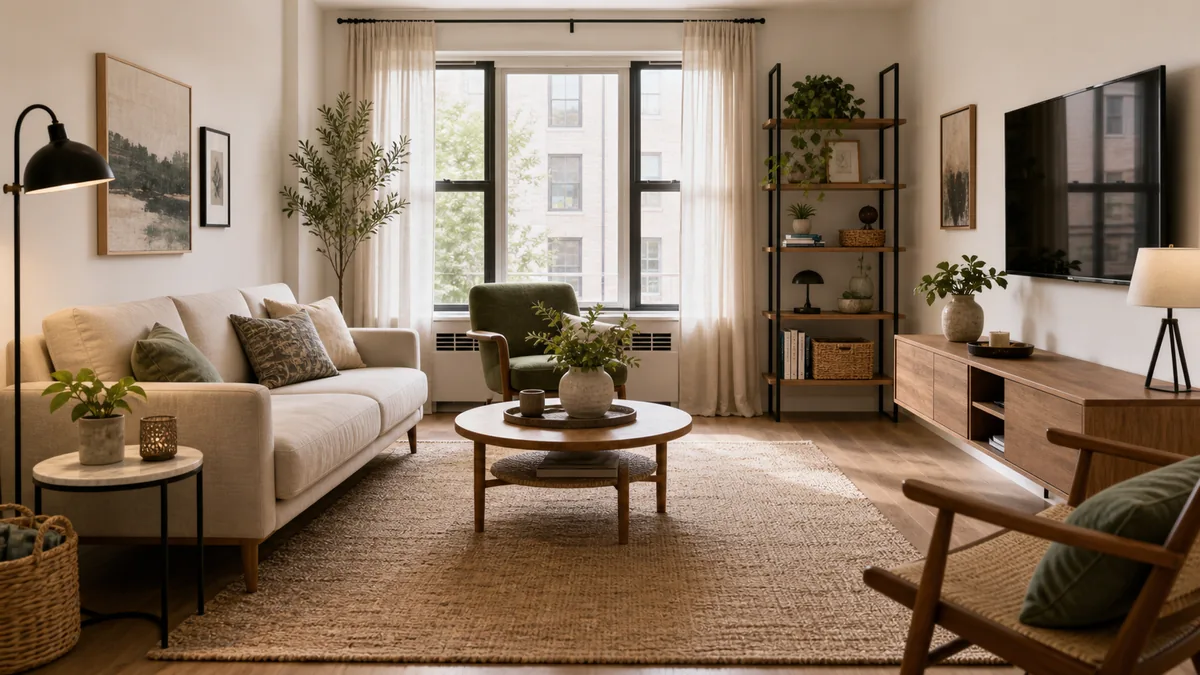
These 21 ideas work for apartments, studios, and smaller homes where one wrong move can make the whole room feel tight. Start with whichever one matches the thing that bothers you most when you walk in the door.
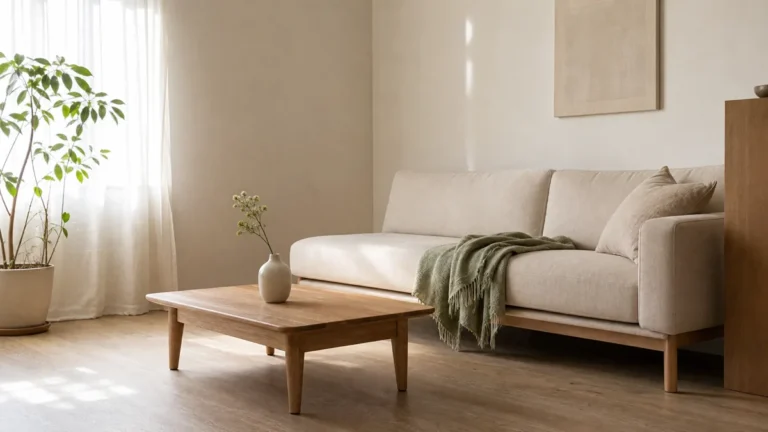
1. Choose a Slim Sofa With Visible Legs
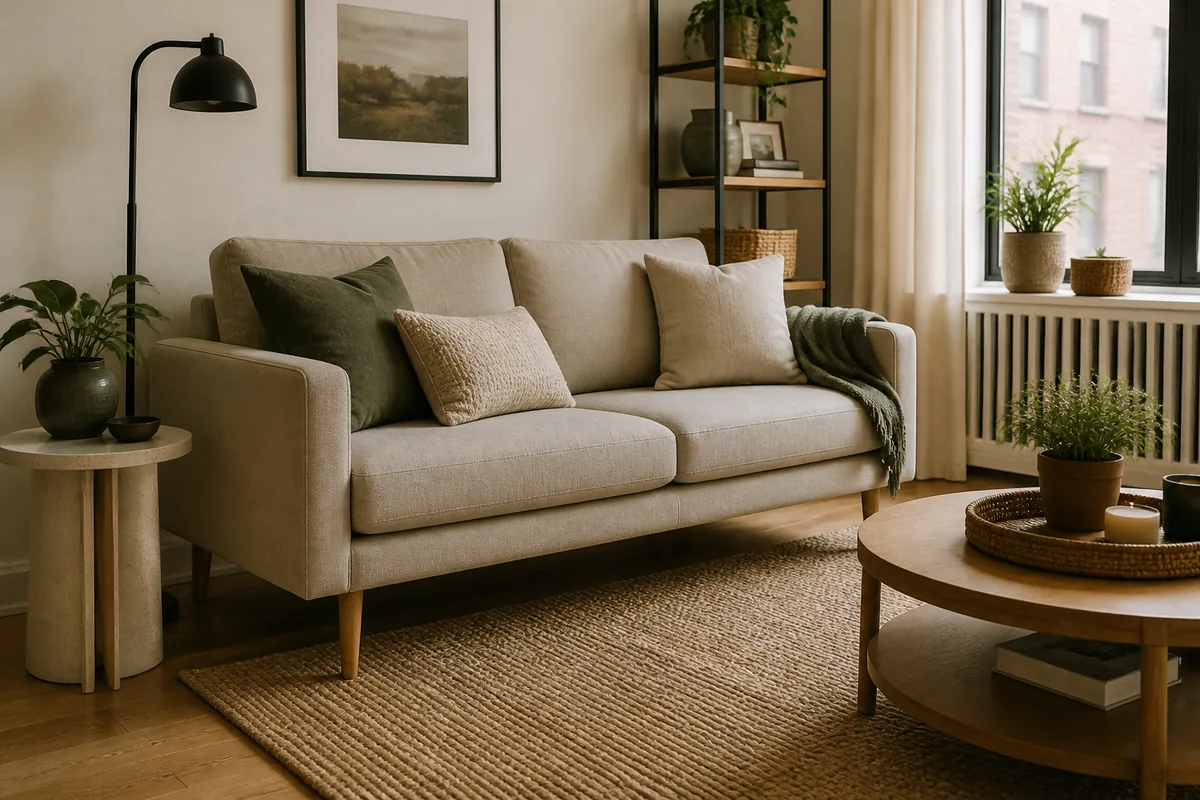
That strip of floor visible under the sofa is doing more work than most people realize. Six inches of clearance between the frame and the rug creates the illusion that the room continues underneath the furniture — instead of stopping at a heavy upholstered wall.
Look for a sofa around 72–78 inches wide with arms under 4 inches. A seat depth of 20–22 inches is comfortable for most people without swallowing the room. And if you’re choosing between two sofas you like equally, pick the one with legs.
If the room feels crowded, start with scale and walkways. If it feels dark, start with windows, mirrors, and lighting. Use the links below to jump to the idea that matches the problem you notice most.
- 1Slim sofa
- 2One floating chair
- 3Round coffee table
- 4High curtains
- 5Large rug
- 6Low storage
- 7Tall shelf
- 8Mirror near light
- 9Nesting tables
- 10Open frames
- 11Calm colors
- 12Texture
- 13Slim lighting
- 14Clear walkway
- 15Vertical art
- 16Closed baskets
- 17Storage bench
- 18Simple TV wall
- 19Sofa console
- 20Purposeful corner
- 21One focal point
2. Float One Chair Instead of Adding a Bulky Set
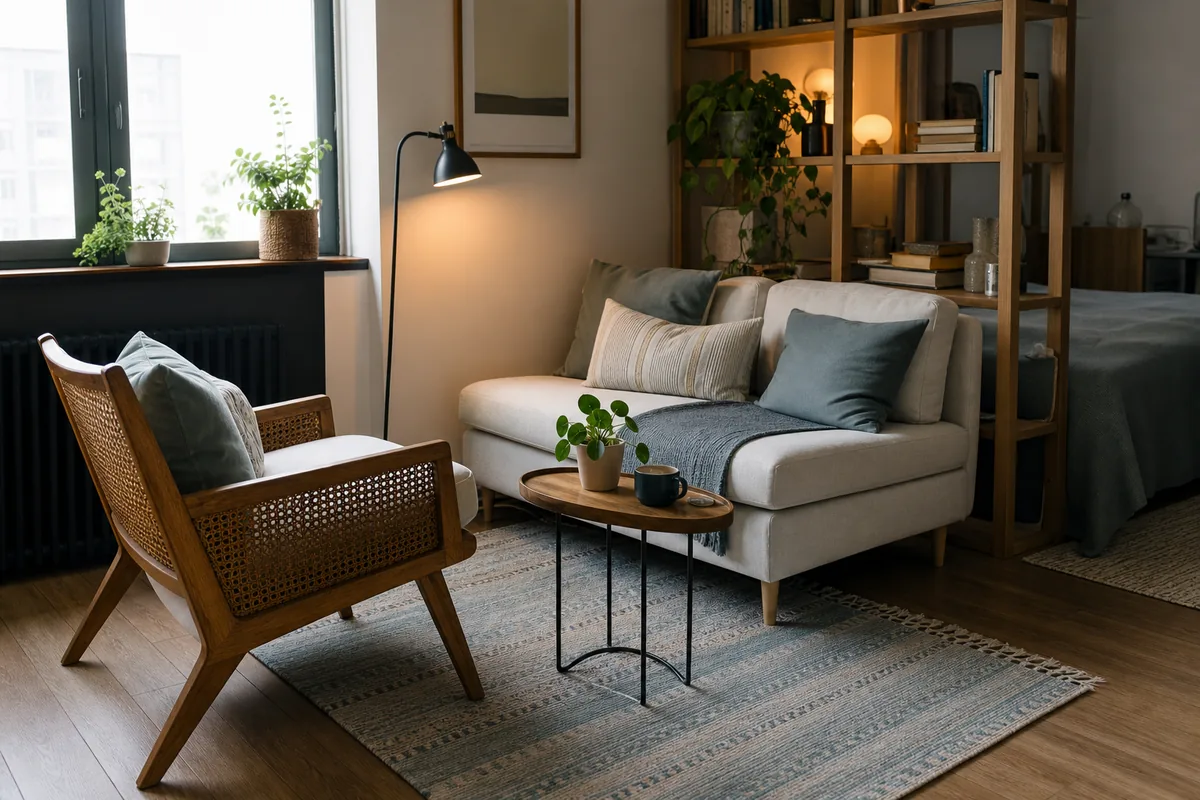
Matching furniture sets were designed for rooms with square footage to spare. In a small apartment, one accent chair angled toward the sofa gives you a real conversation area without the visual weight of a second full-size seat.
Pull it a few inches off the wall and angle it slightly. That diagonal creates depth the room doesn’t actually have.
3. Use a Round Coffee Table to Soften Tight Walkways
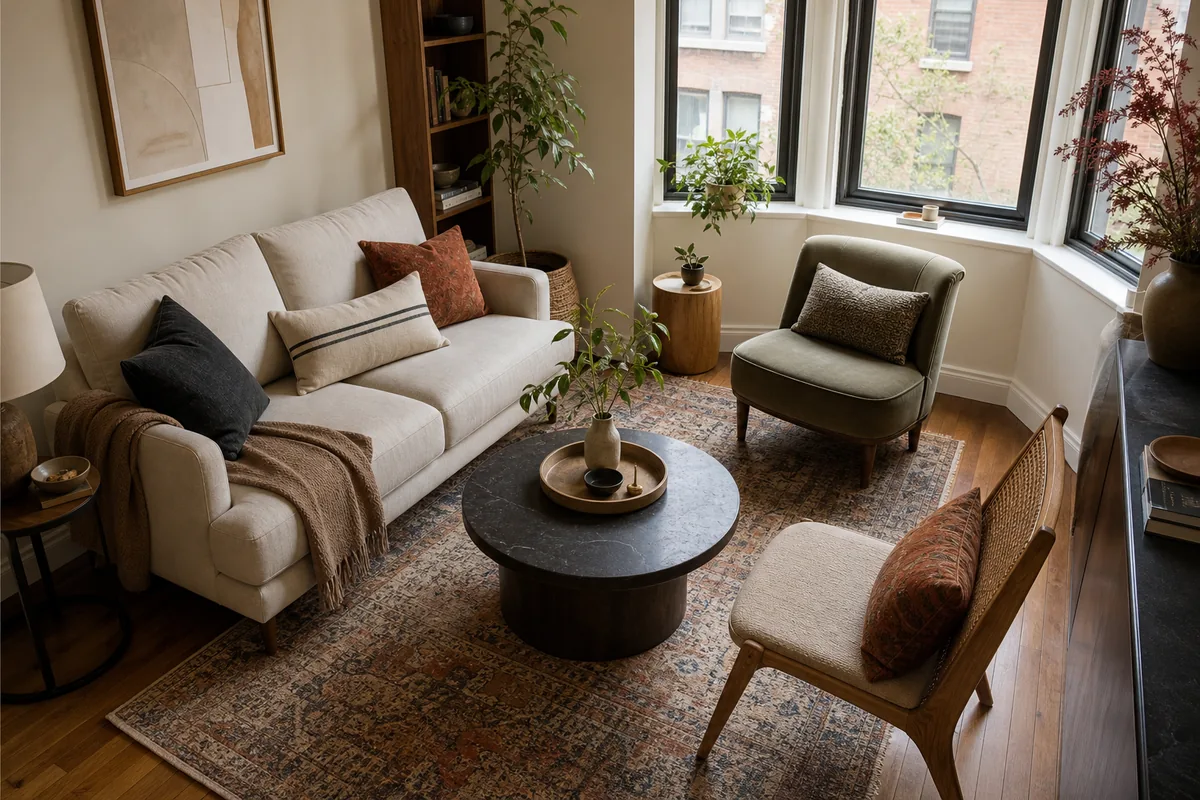
Sharp corners on a coffee table don’t just look heavy — they’re the reason you bruise your shin walking to the kitchen at midnight. A round table with a 28–32 inch diameter gives you usable surface area while leaving the narrow paths between the sofa and chair actually walkable.
Wood, stone, or a solid pedestal base all work. The shape is doing the space-saving; the material just needs to feel anchored enough that the table doesn’t read as flimsy.
4. Let Curtains Hang High and Wide
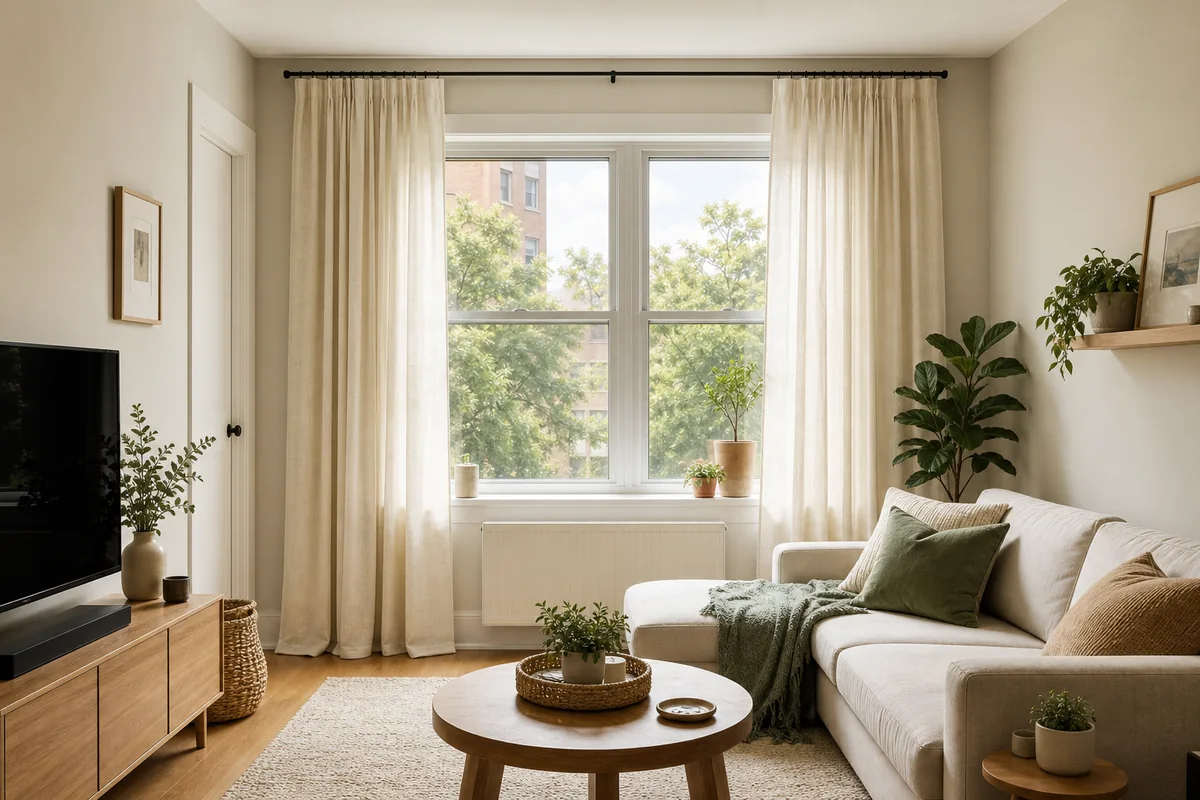
Small living rooms almost always come with small windows — the standard apartment 30 to 36-inch wide opening, often sitting only a foot or two below the ceiling. A rod placed at the top of the window frame only emphasizes how short the window is, and by extension how small the room is.
Mount the rod near the ceiling instead and the eye reads the entire wall — floor to ceiling — as the window’s territory. The window now visually occupies seven feet of vertical space even if its actual glass is only four. In a 100 to 150 square foot living room, that one shift is the difference between feeling like a temporary box and feeling like a real room.
5. Add a Large Rug That Reaches Under the Furniture
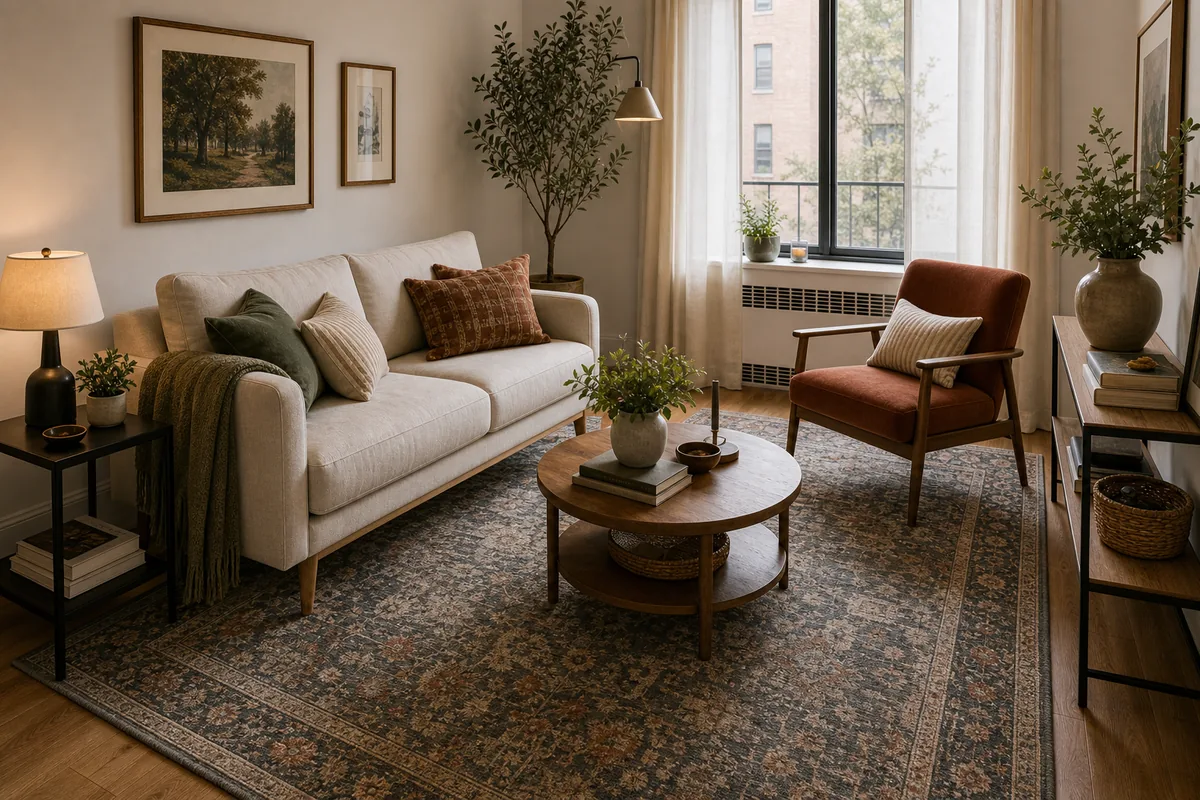
A rug that’s too small for the room is worse than no rug at all. It chops the floor into zones and makes every piece of furniture look like it’s floating in the wrong place.
Go bigger than you think you need. An 8×10 under a standard apartment living room setup, front legs of the sofa and chairs on the rug at minimum. The seating area should feel like one unified zone — not a collection of furniture that happens to be near each other.
You do not need to fix every part of the room at once. Match the problem to the first practical move, then come back for the smaller styling details.
6. Keep Storage Low and Wall-Mounted
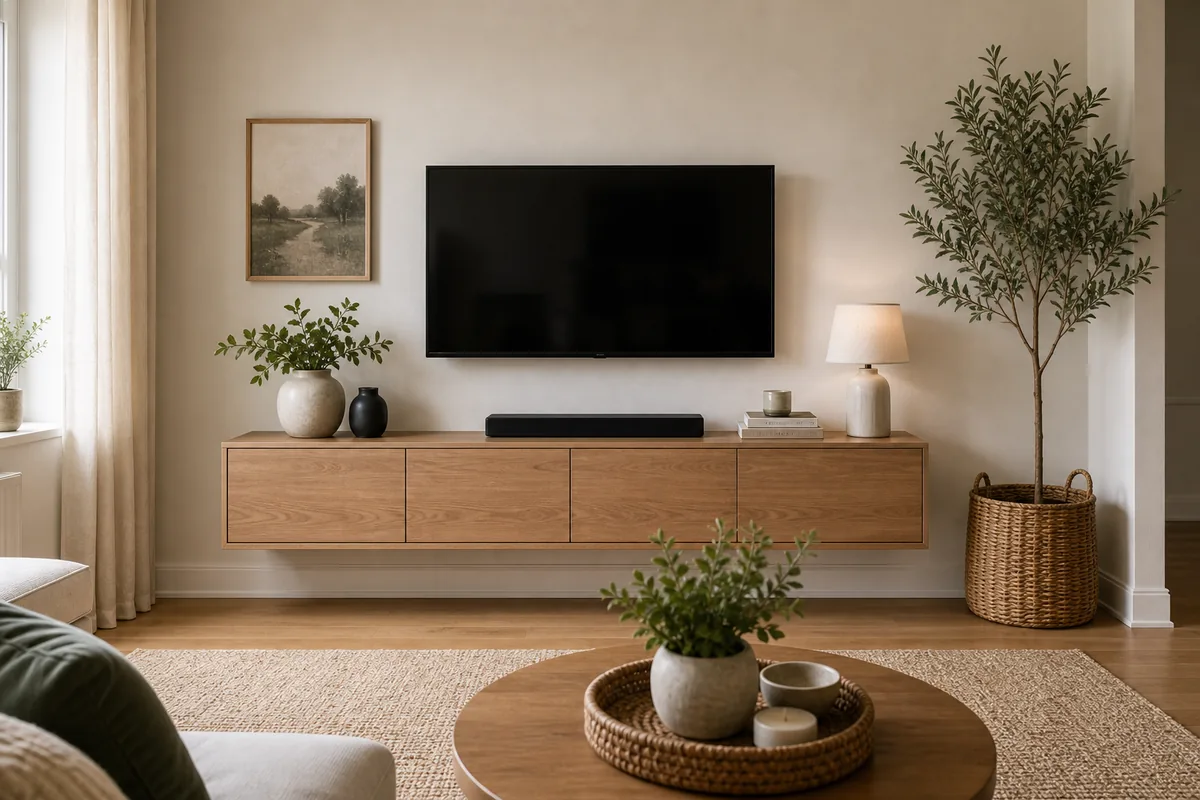
The empty wall above low storage is not wasted space. It’s the reason the room feels calm. A low media cabinet or floating credenza handles remotes, cables, and the visual mess of everyday life while leaving the upper wall open for the eye to rest.
Resist the urge to fill that empty space with more shelves. The breathing room above is doing the same job a high ceiling does — making the walls feel further apart than they are.
7. Style One Tall Shelf Instead of Several Small Units
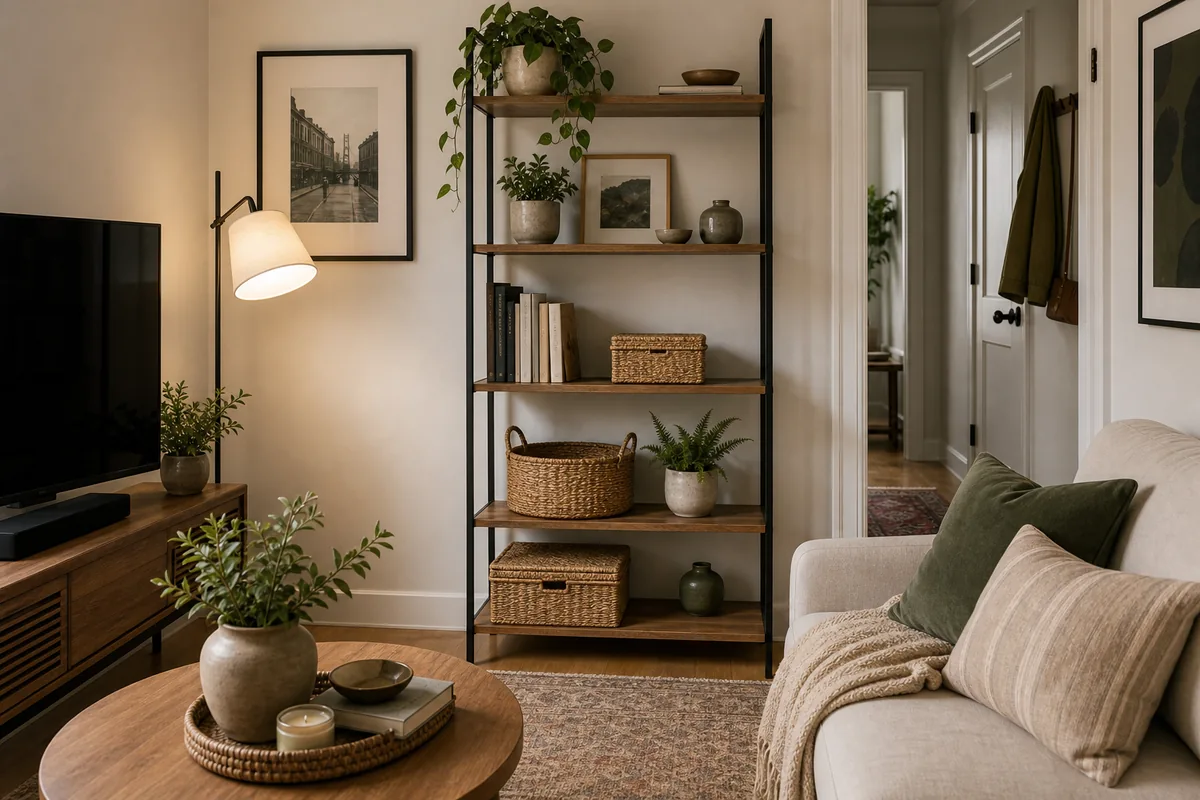
Three small bookcases scattered around the room create three separate visual events. One tall shelf creates one. Consolidate.
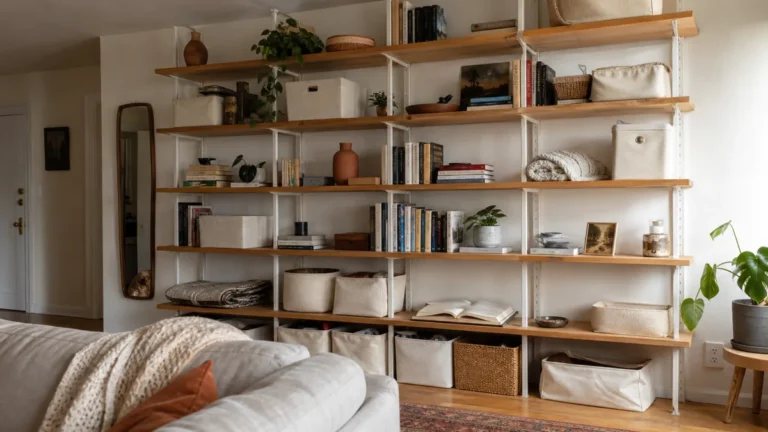
The editing rule: leave 30–40% of each shelf empty. Mix closed baskets with open display. Group small items instead of spacing them evenly. A tall shelf that’s packed edge-to-edge on every level isn’t storage — it’s a wall of visual noise with a frame around it.
8. Place a Mirror Across From Natural Light
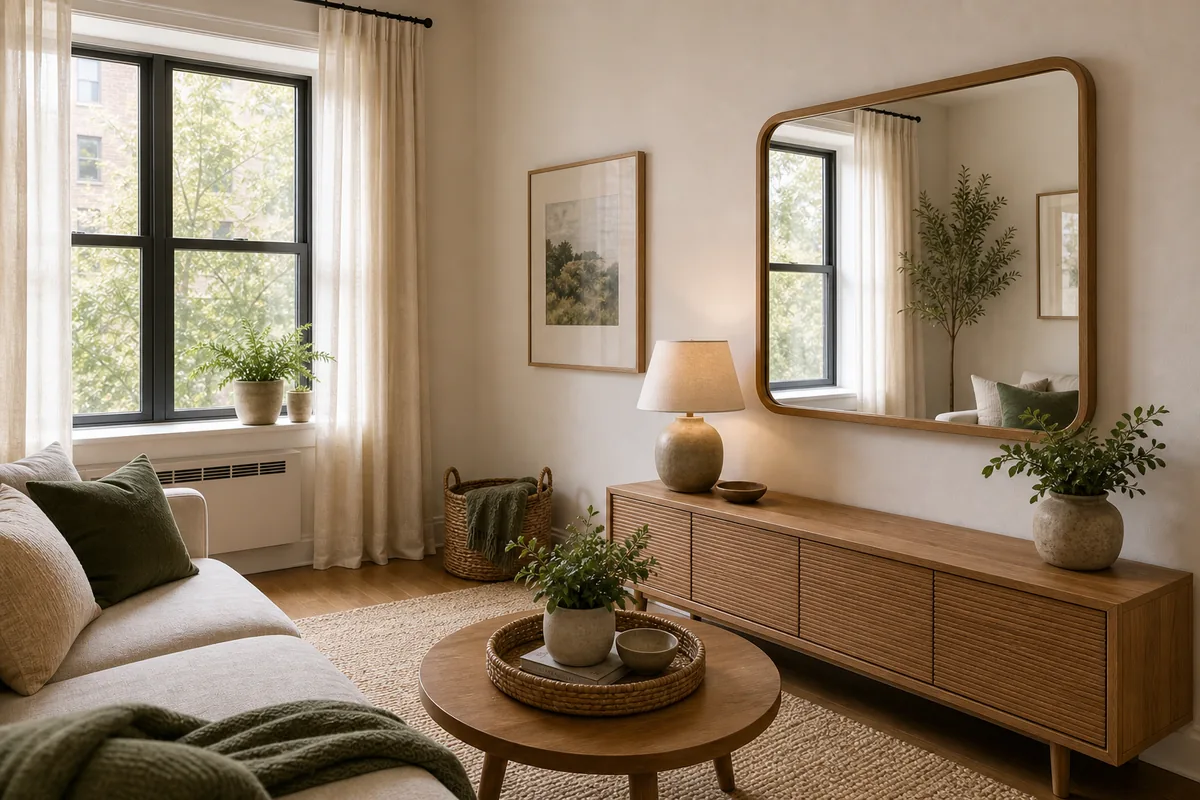
Mirrors are a small-room cheat. The right mirror placed on the wall opposite a window doesn’t just reflect light — it doubles the perceived depth of the room. The eye reads the reflection as additional space behind the mirror, and a 100-square-foot living room suddenly feels much closer to a 200-square-foot one.
Aim for a mirror at least a third the width of the wall it sits on, hung at standing eye level. The frame matters less than the placement. Avoid mirrors that face the entryway or face a cluttered shelf — they’ll reflect the chaos right back. The best small-room placements: opposite a window, opposite a piece of art, or opposite an open doorway leading to another room.
9. Use Nesting Tables Instead of Extra Side Tables
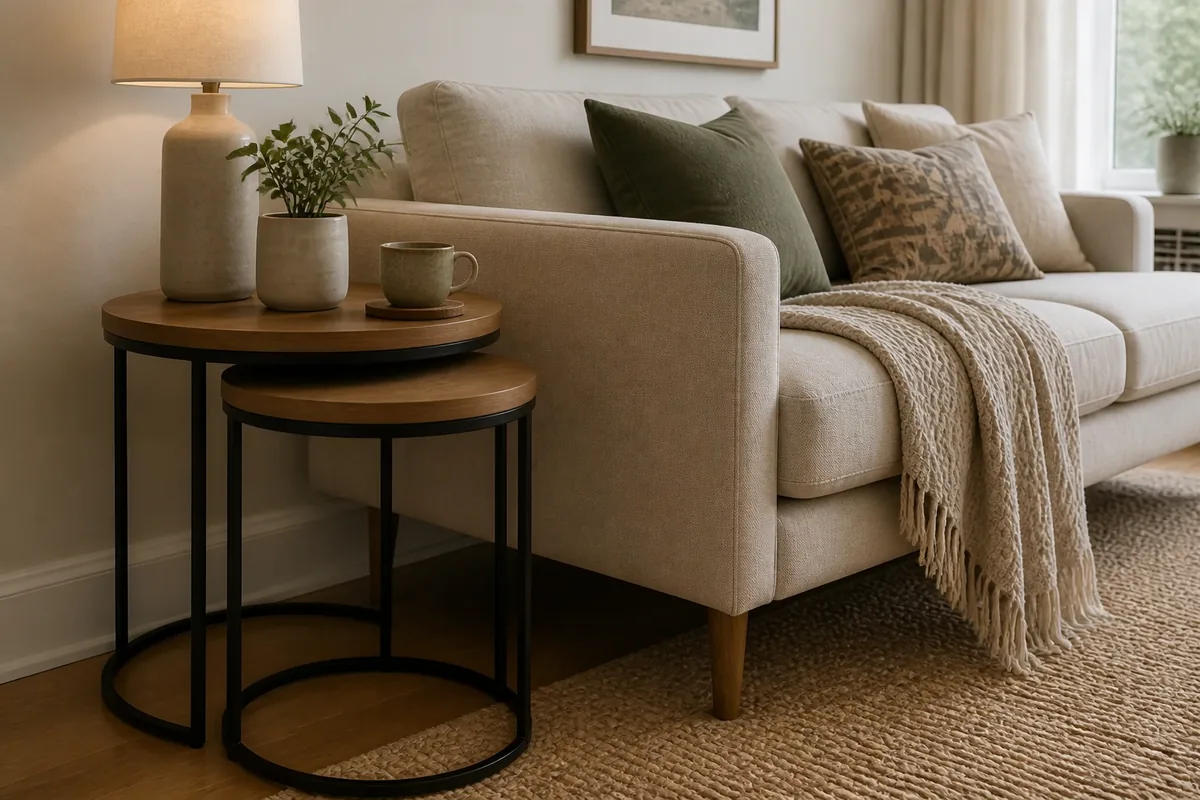
Nesting tables solve the permanent problem of side tables: you need surface space sometimes, but not always, and a fixed table sits there taking up floor area 24 hours a day whether you’re using it or not.
Pull the smaller one out for drinks when friends come over. Tuck it back in the morning. That flexibility is worth more in a 500-square-foot apartment than any clever design detail.
10. Pick Clear or Open-Frame Accent Furniture
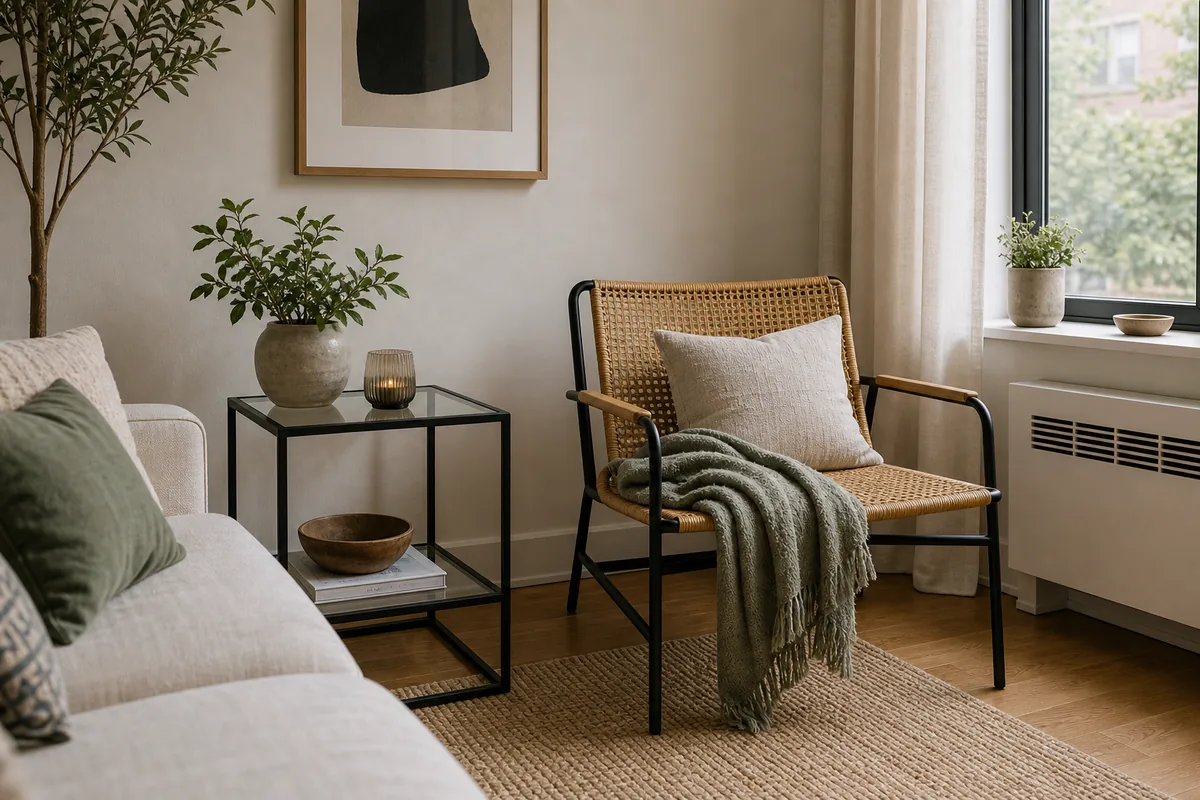
A cane chair, glass side table, or slim metal-frame console lets your eye travel through the piece instead of stopping at it. One or two open-frame items in a small room can make the difference between a space that feels furnished and one that feels packed.
Don’t overdo it. An entire room of see-through furniture starts to feel like a showroom instead of a home. Use open frames as accent pieces alongside one or two solid anchors like the sofa and a closed storage cabinet.
Most small living room ideas in this list fit into one of these four moves. Use them together and the room starts to feel calmer without needing more square footage.
11. Create One Calm Color Story
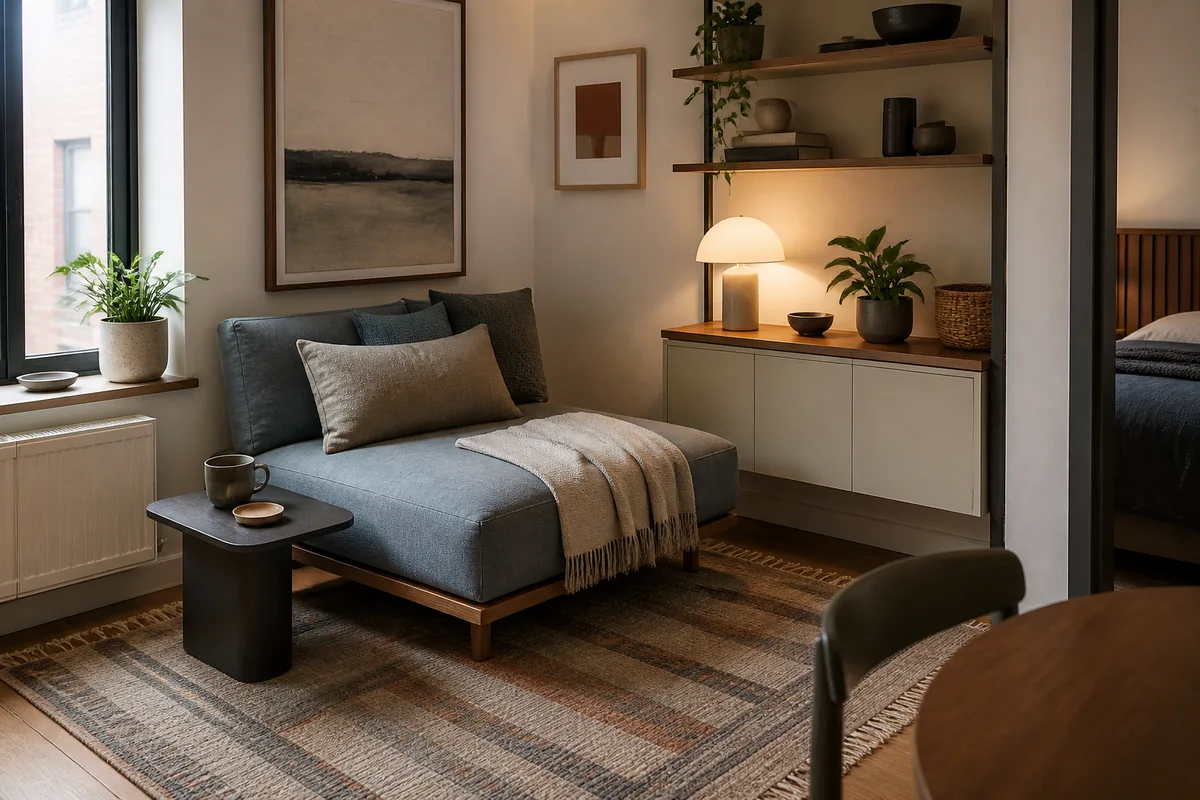
Small rooms amplify color chaos. Five different wood tones, three accent colors, and a patterned rug can make a 200-square-foot living area feel like a flea market.
Pick three: one dominant neutral (walls and large furniture), one warm wood tone (shelves, legs, trays), and one muted accent (pillows, throw, one piece of art). Repeat those three across the room. The repetition is what makes a small space feel designed instead of accumulated.
12. Add Texture Instead of More Decor
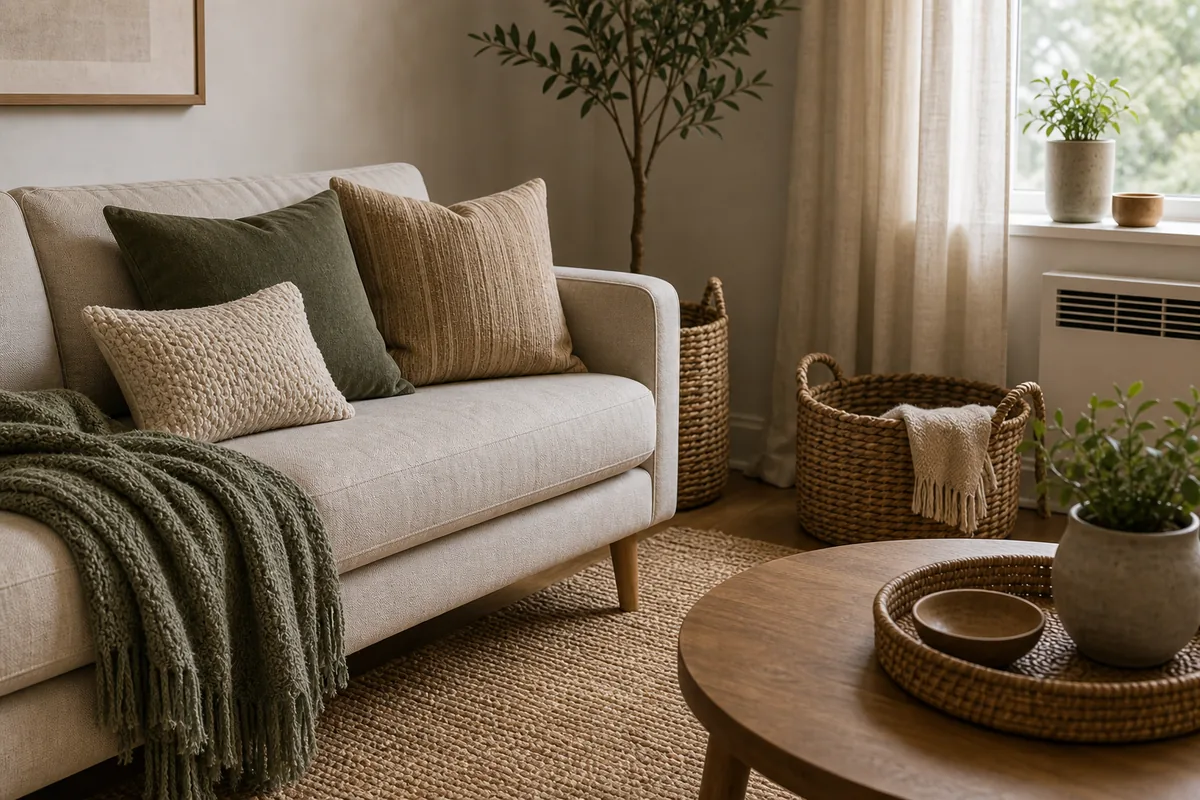
When a room feels flat but you know adding more objects will make it worse, texture is the answer. A linen curtain, a chunky knit throw, a woven basket, a ribbed ceramic vase — these add visual interest without adding visual weight.
Texture works through contrast. Smooth leather next to rough linen. Matte ceramic beside glossy wood. You feel it more than you see it, which is exactly why it works in tight spaces where there’s no room for bold statement pieces.
13. Use Wall Sconces or Slim Floor Lamps
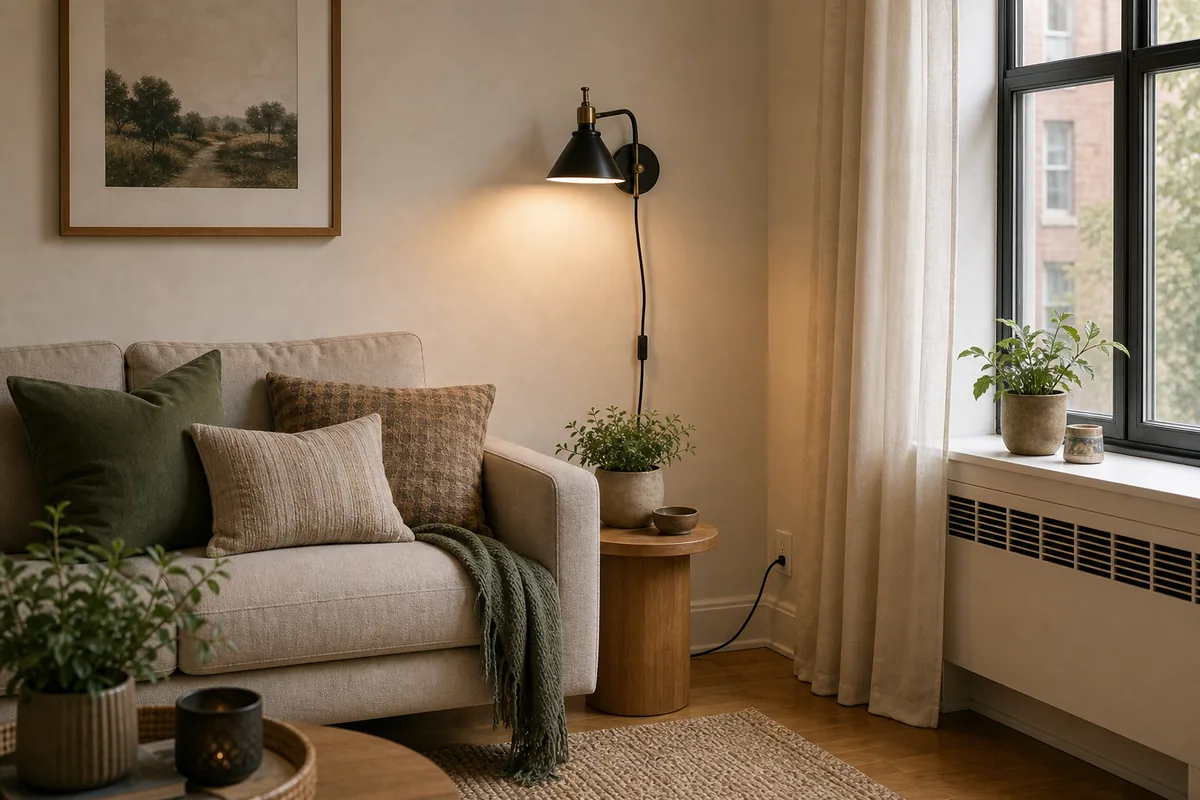
Table lamps eat surface space. In a small living room where every flat surface is already doing double duty, that’s a real cost. A plug-in wall sconce or a slim arc floor lamp puts warm light at the right height without claiming your only side table.
The goal is light at more than one level. Overhead alone makes a small room feel flat and institutional. Add one warm source at eye level and the whole space softens — especially after dark, when overhead lighting makes small rooms feel the smallest.
14. Leave One Clear Path Through the Room
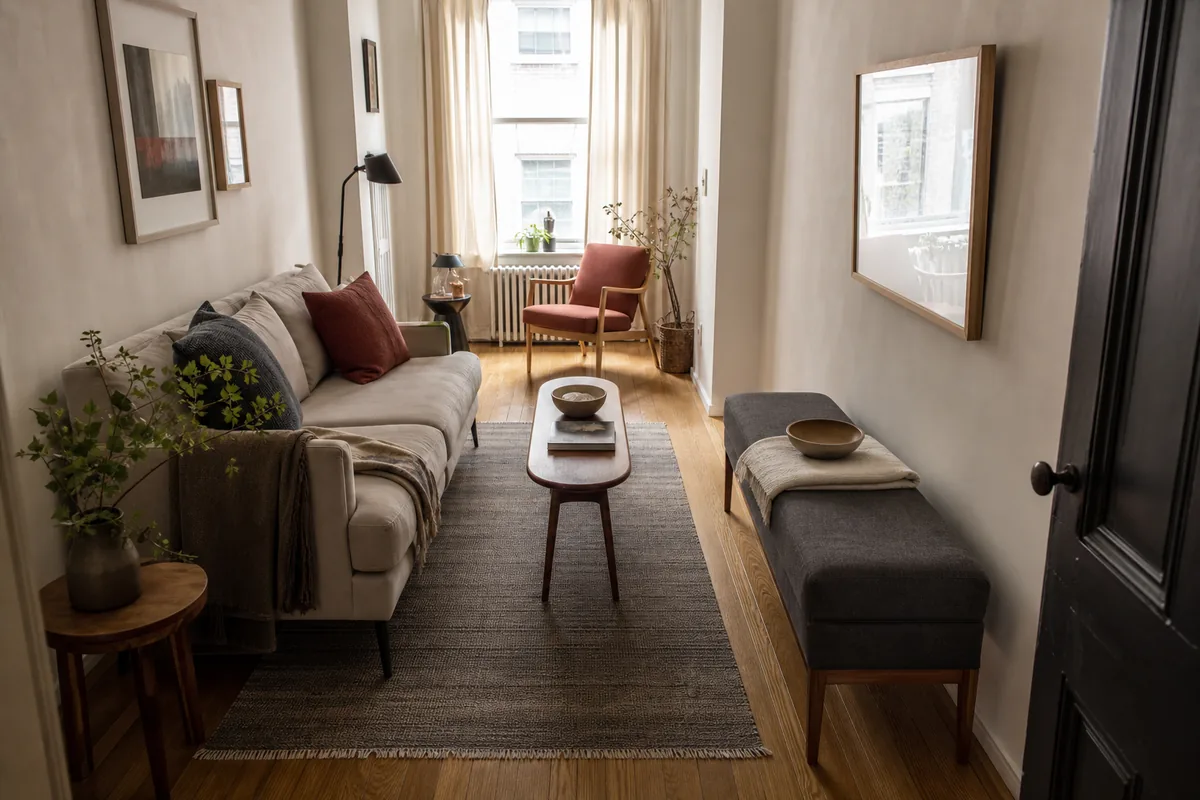
Forget the idea that every corner needs to be used. A small living room needs one clear route from the entry to wherever you’re going — the kitchen, the hallway, the window. If you have to turn sideways or step over something, the layout is wrong no matter how good the furniture is.
Measure 30 inches minimum for a comfortable walking path. If the room can’t give you that, it’s time to remove a piece — not rearrange.
15. Choose Art That Pulls the Eye Up
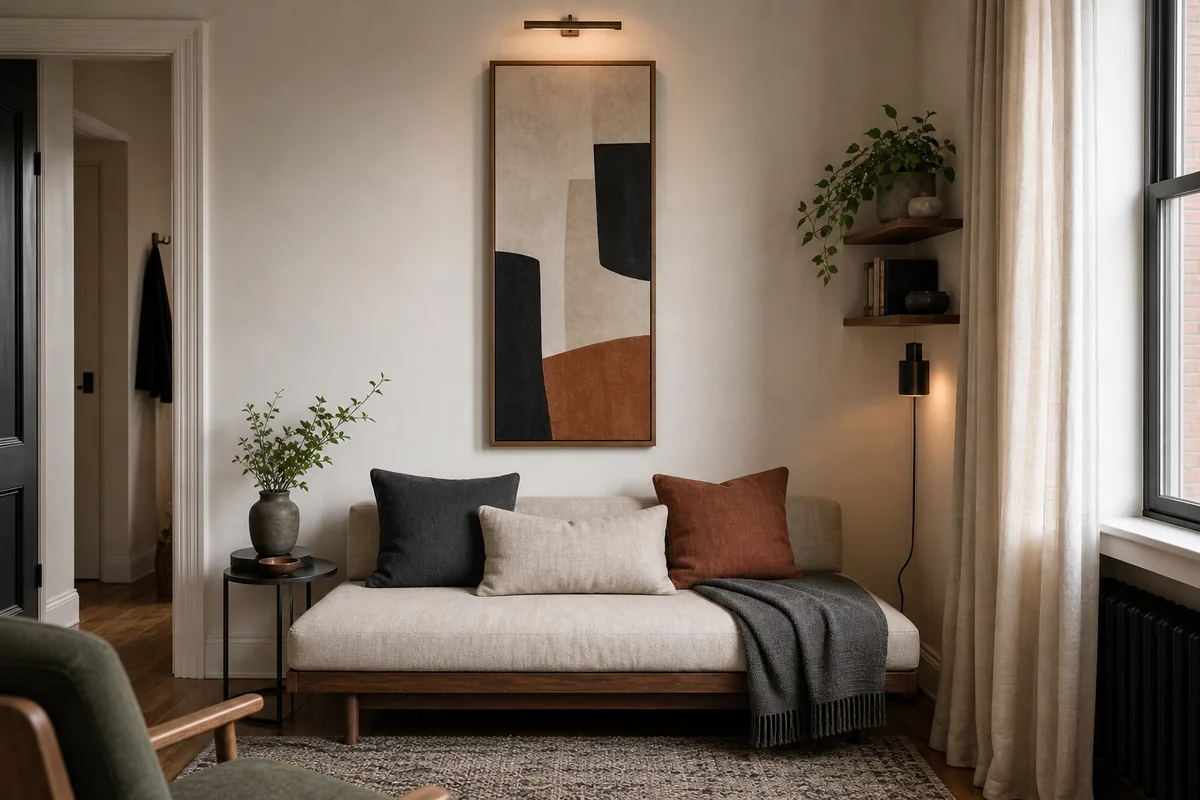
Vertical art above a low sofa or daybed makes the wall feel taller. One oversized piece or two stacked frames draw the eye toward the ceiling line, which is the one dimension in a small room that’s usually underused.
Skip the gallery wall if the room is under 150 square feet. Fifteen small frames on a short wall create energy, not height. Save that for a hallway or a room where you want visual activity, not calm.
The 4-Move Formula for Small Living Rooms
- 1LiftRaised legs, tall curtains, vertical art.
- 2LightReflect daylight, brighten corners, clear windows.
- 3ContainGive clutter a closed home before adding decor.
- 4EditOne path, one focal point, one purpose per corner.
styledhomenotes.com
16. Hide Everyday Items in Closed Baskets
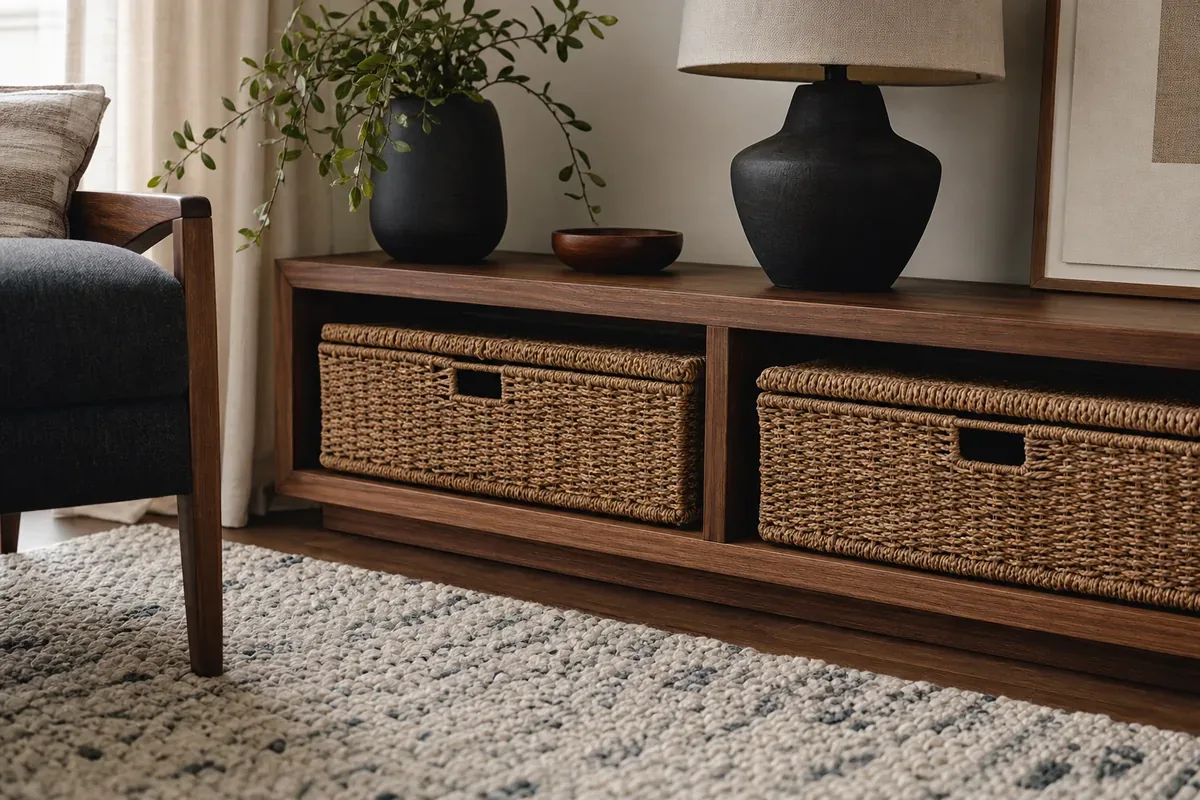
Open baskets are a styling lie. They look great in photos when they contain two folded blankets and a single candle, but in real life they fill up with phone chargers, dog toys, mail, and that random HDMI cable you might need someday.
Closed baskets — lidded, woven, tucked under a console or beside a chair — do the same job without broadcasting the contents. One basket per category. The moment a basket becomes “miscellaneous,” it’s already a junk drawer with better aesthetics.
17. Use a Small Bench as Extra Seating and Storage
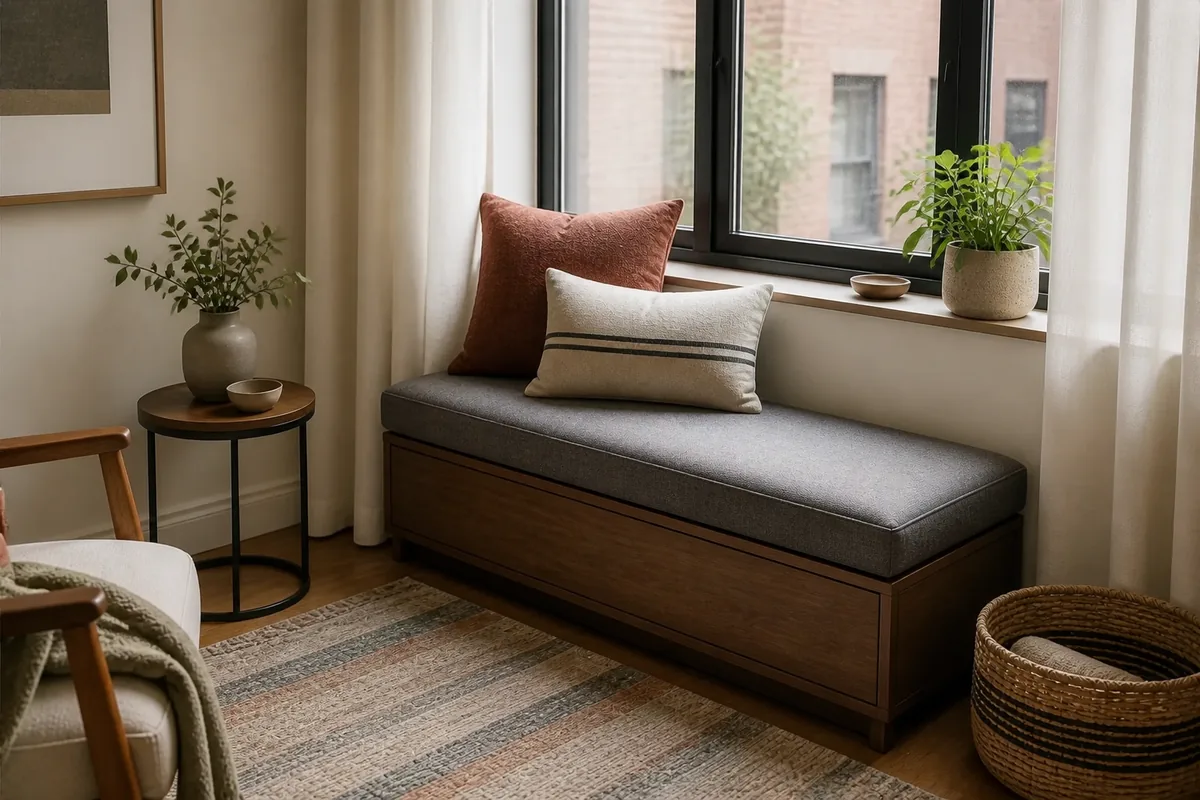
A window bench does three things at once: it gives you a place to sit, hides storage underneath, and turns dead space along a wall into something intentional. In a small living room where a second armchair would be too much, a bench with a cushion is the right-size alternative.
Keep it narrow — 14 to 16 inches deep is plenty for occasional seating. Deeper than that and it starts competing with the sofa for floor space.
18. Keep the TV Wall Simple
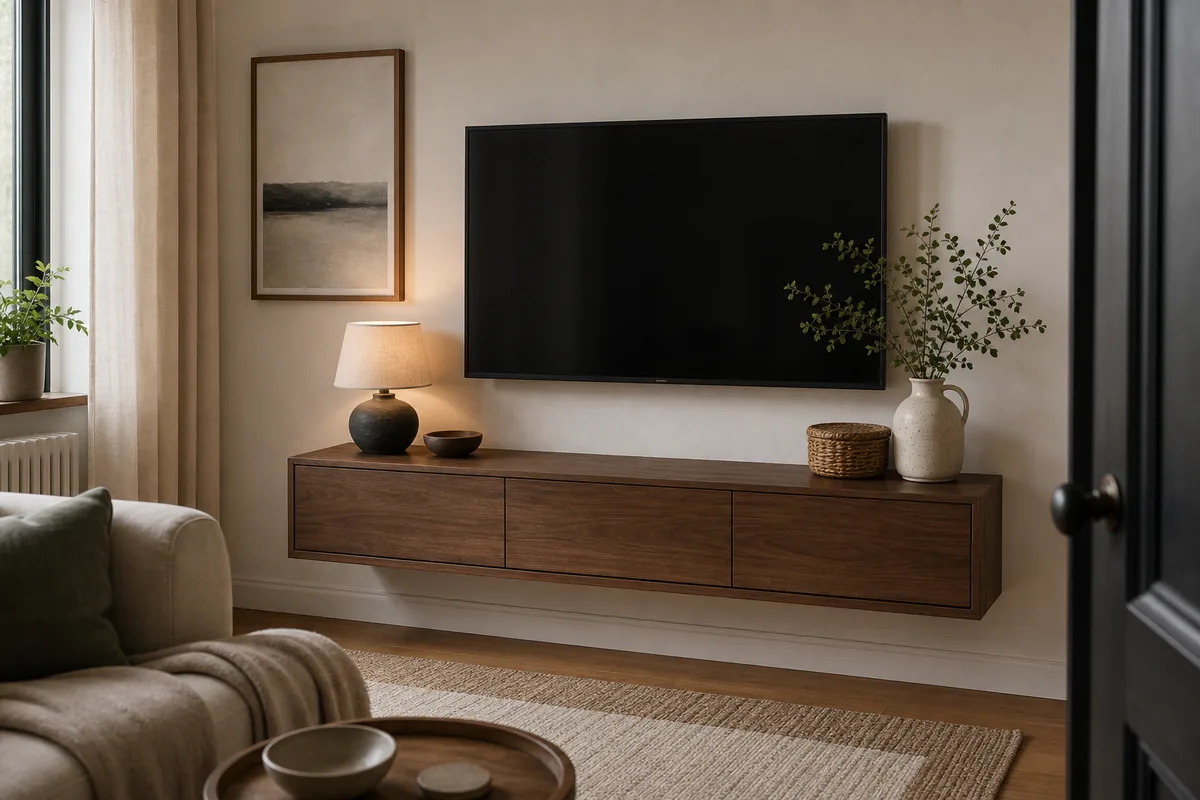
The TV is already the largest dark rectangle in the room. Surrounding it with crowded shelves, visible power strips, and decorative clutter turns that wall into the noisiest surface in the apartment.
Low cabinet. Hidden cables. One or two objects on the surface — a plant, a small tray, nothing more. Treat the TV wall as a quiet zone, not a display opportunity.
19. Add a Narrow Console Behind the Sofa
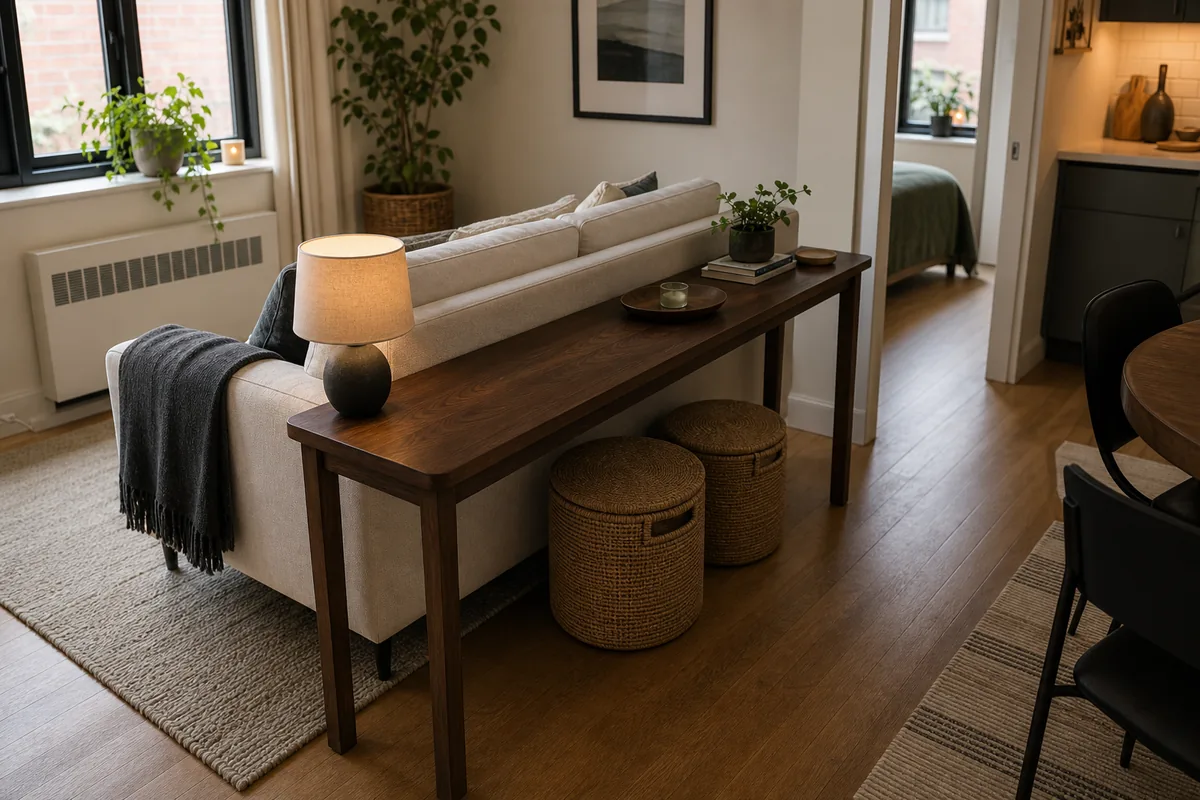
In studios and open-plan apartments where the sofa floats away from the wall, a narrow console behind it creates a natural divider between living and dining zones. It also gives you a place for a lamp that doesn’t require a side table.
Look for something 8–12 inches deep. Any deeper and it pushes the sofa forward into the room. The console should feel like a boundary, not a second piece of furniture you have to walk around.
20. Make Corners Work With One Purpose
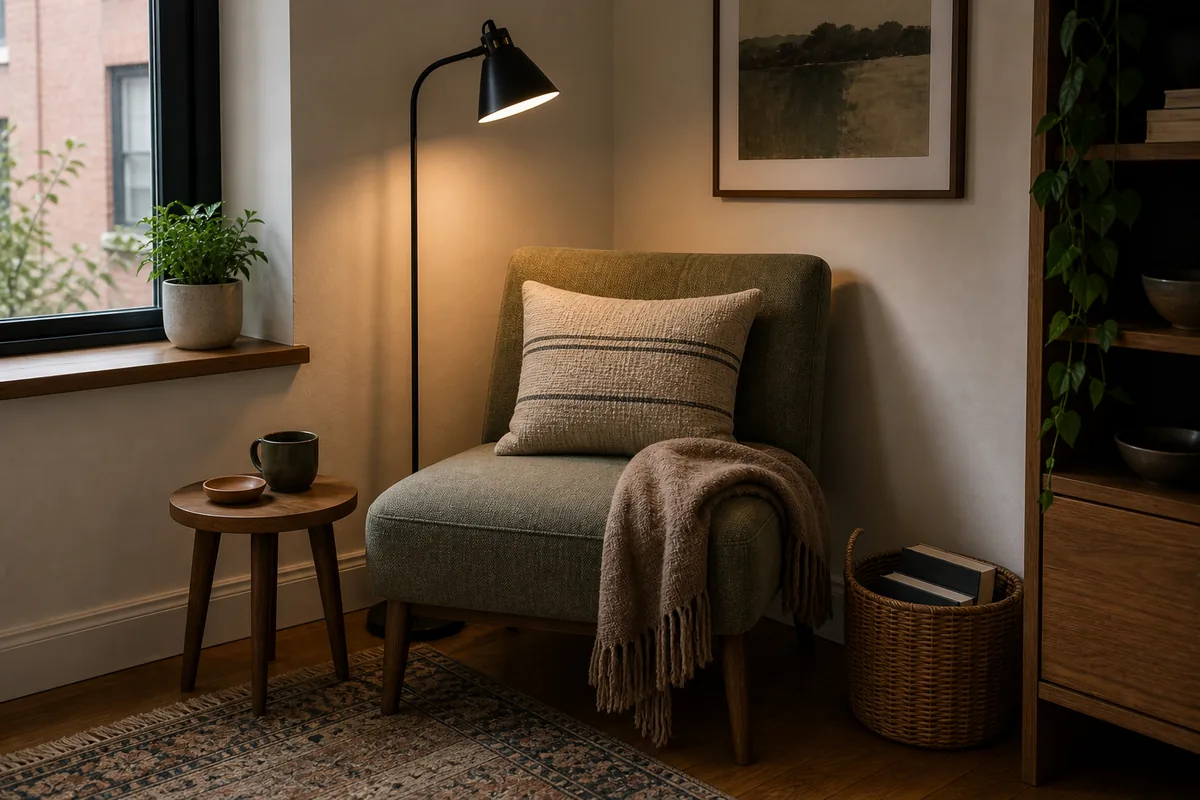
Empty corners collect things. A jacket ends up on a chair that was supposed to be decorative. A stack of books grows on the floor. A plant gets shoved in because the corner looked bare.
Give the corner one job and furnish it for that job only. A reading chair with a lamp. A plant on a low stand. A slim basket station. When the corner has a purpose, it stops becoming the room’s default landing zone for everything that doesn’t have a home.
21. Edit the Room Around One Focal Point
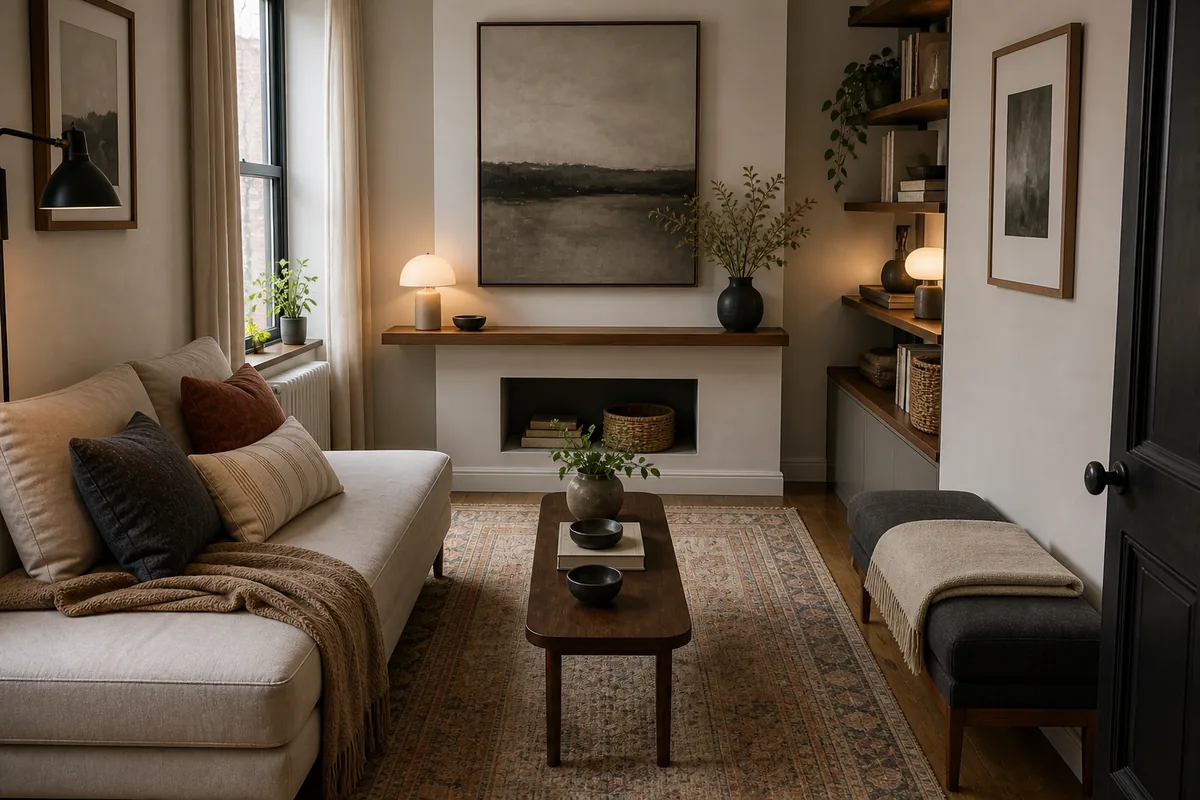
Every room has a natural center of attention — a fireplace, a large window, a piece of art above the sofa, even a well-styled shelf wall. In a small living room, pick one and let the rest of the space support it quietly.
The biggest design mistake in compact rooms isn’t choosing the wrong furniture. It’s giving every wall equal importance. When everything in the room is competing for your attention, nothing wins — and the space feels restless instead of finished.
Where to Start
You don’t need to do all 21. Walk into your living room, stand in the doorway, and notice the first thing that feels wrong. The sofa that’s too deep. The corner that collects clutter. The dark wall that makes the room shrink after sunset. Fix that one thing first. The room will tell you what it needs next.

Nora Ellis edits Styled Home Notes, where she shares practical decorating, organization, and small-space ideas for creating a more styled and functional home. Every article is reviewed for clarity, usefulness, image sourcing, and Pinterest-to-page alignment before publication. Visit the Nora Ellis author page.