How to Declutter a Small Home, Room by Room (One Room at a Time, No Lost Weekend)
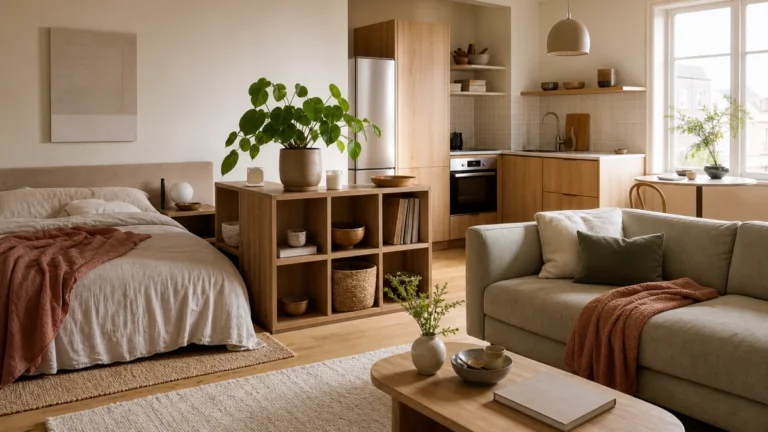
In a small home there is nowhere for clutter to hide. No basement, no spare room, no deep garage to absorb the overflow, so the place can read cluttered an hour after you cleaned it. The problem was never dust; it was volume.
The reason most people stall is overwhelm. The way through is to look at one room at a time, starting with the easiest, and to remember that the real work is deciding what stays, not organizing where it goes.
What follows is a four-box system, an order that builds momentum, and a clear what-leaves rule for each room. If you would rather blitz it all in one weekend, the one-weekend organization plan is the compressed version.
The fix for a cluttered small home is not more storage — it is less stuff, decided room by room. Set up a four-box system, work one room per sitting starting with the easiest, and use a clear what-leaves rule in each. Jump to the room you want to start with.
Start With a Four-Box System and the Right Order
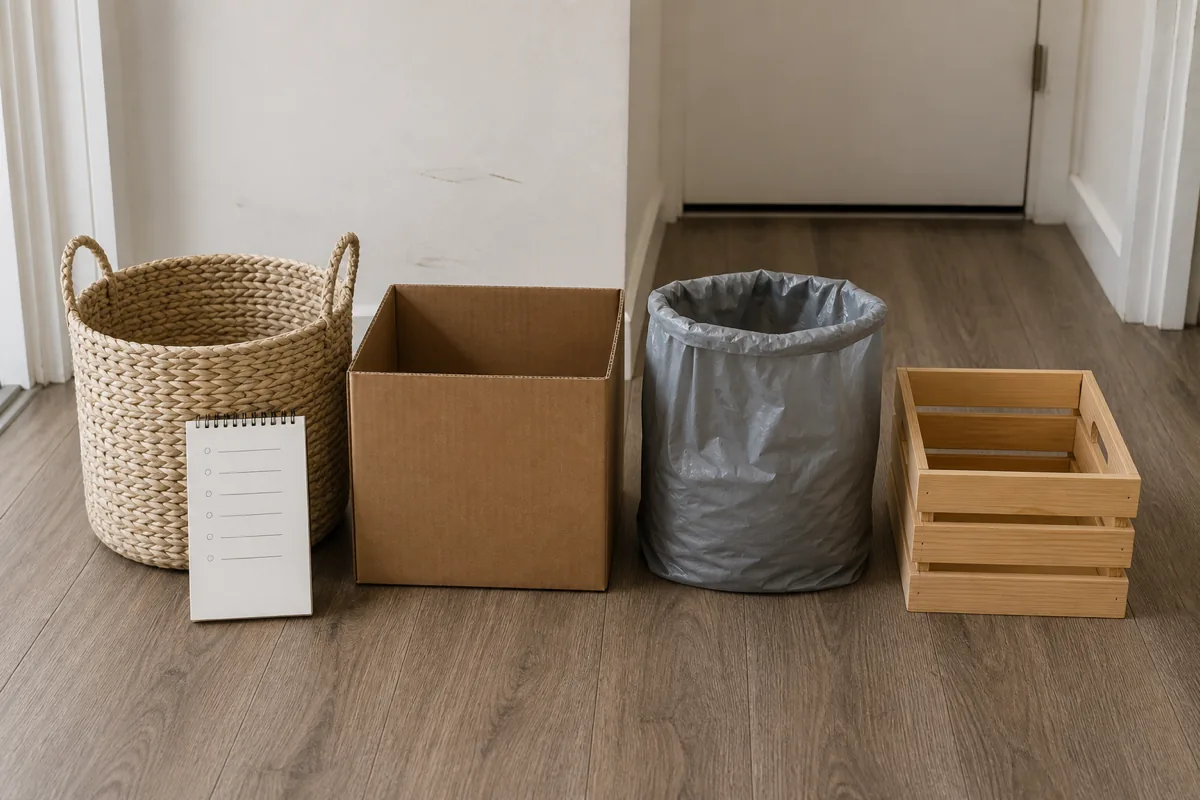
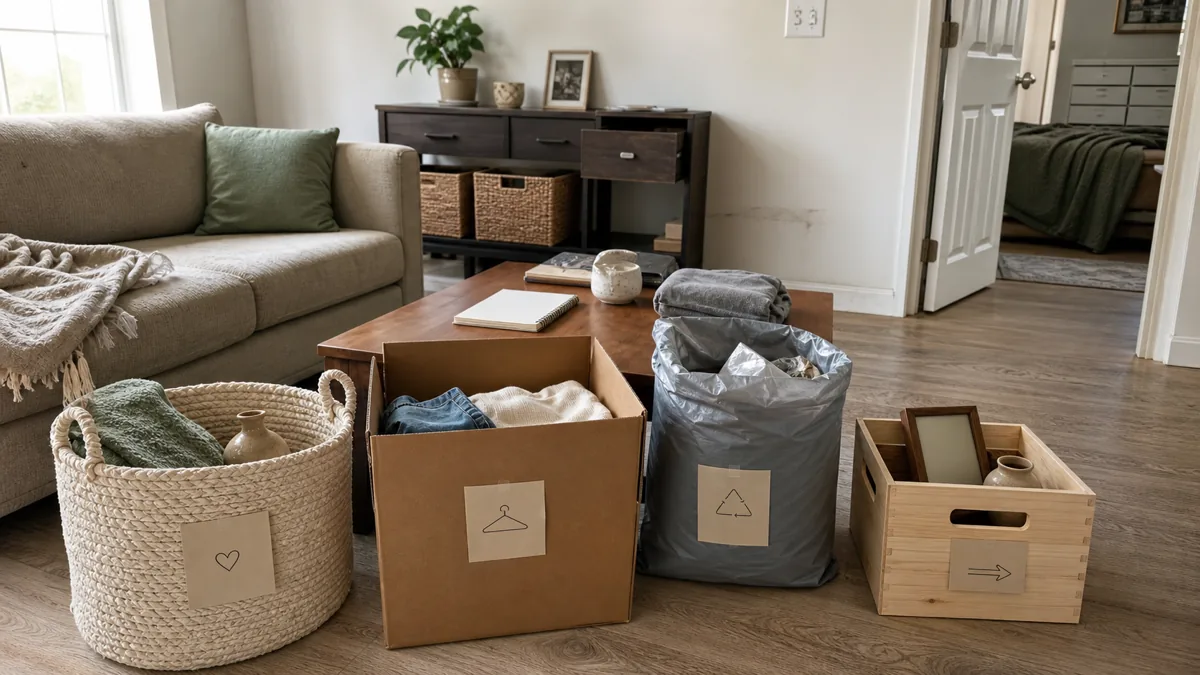
Two small decisions make every room manageable: a system so you never freeze on a single object, and an order so you never face the whole home at once. Set up four containers before you touch a thing, and the sorting becomes automatic.
The order matters as much as the system. Start with the least sentimental room and save the bedroom and anything sentimental for the end, when your decision muscle is warmed up. The relocate box is the quiet trick here, since boxing what belongs elsewhere keeps you in the room instead of wandering the house and losing the thread.
- Set up four containers first. Keep, Donate, Trash or recycle, and Relocate, before you pick up a single item.
- The Relocate box keeps you in the room. Box anything that lives elsewhere; carry it over only at the end of the sitting.
- Work one room per sitting. A sitting is 30 to 90 minutes, spread across evenings or weekends, never the whole home at once.
- Start with the least sentimental room. The bathroom or the entry finishes fast and builds the momentum for the rest.
- Decide, do not organize. Sort what stays from what goes first; finding homes for the keepers is a separate, later job.
- What leaves, leaves the same day. Empty the donate and trash, and walk the relocate box around, before you stop.
The Entryway
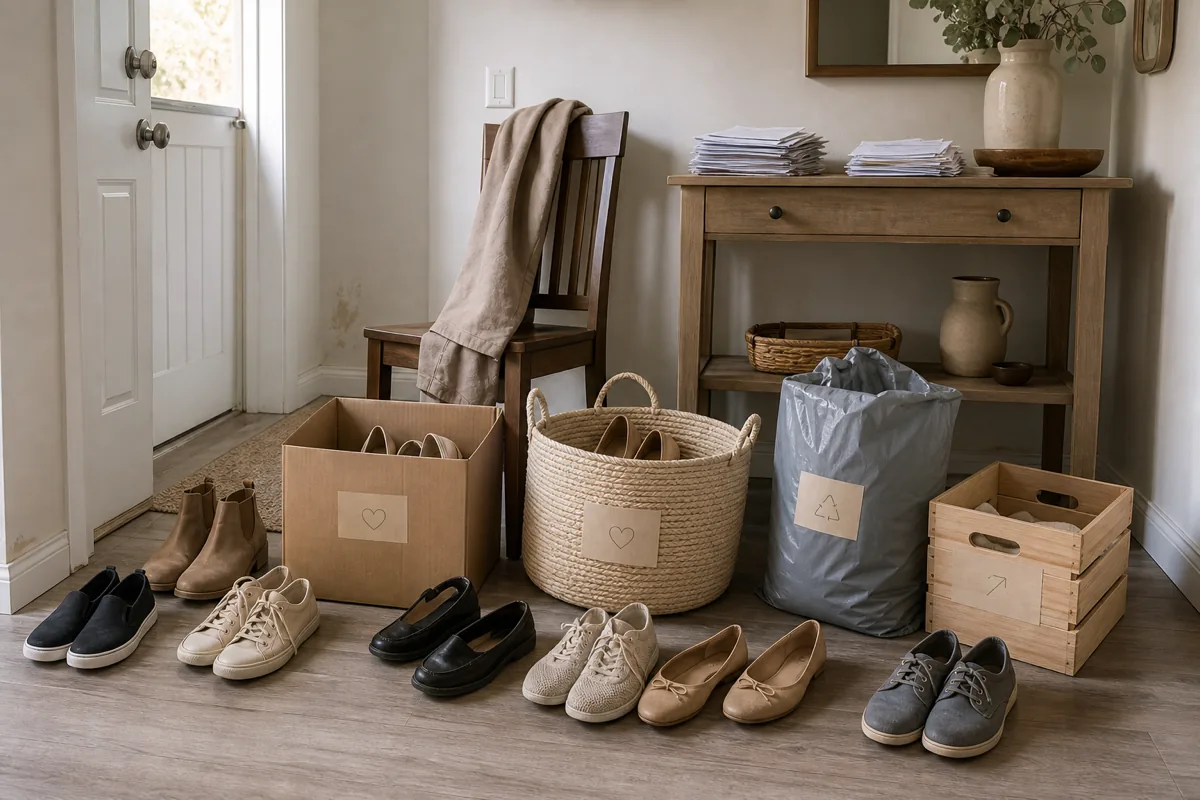
Start here because it is small, you pass through it constantly, and it finishes in under an hour. The entry quietly collects shoes you do not wear, coats from three seasons ago, and a mail pile that seems to breed overnight, so it is the ideal confidence-building first room.
- Shoes not worn in six months, or that hurt, go to Donate. Keep only the current rotation by the door.
- Off-season coats relocate; anything unworn for a year donates. A coat rack is not a closet.
- Mail older than two weeks gets recycled or shredded. Give the rest a single to-handle spot.
- Empty the by-the-door junk drawer. Dead pens, mystery keys, expired coupons all go.
- Finish-line test: the floor is clear and every surface holds only what you use this week.
You do not have to start with room one. The order in this guide runs easiest to hardest, but the best place to begin is wherever you will feel a win fastest. The four situations below cover the most common starting points.
The Living Room
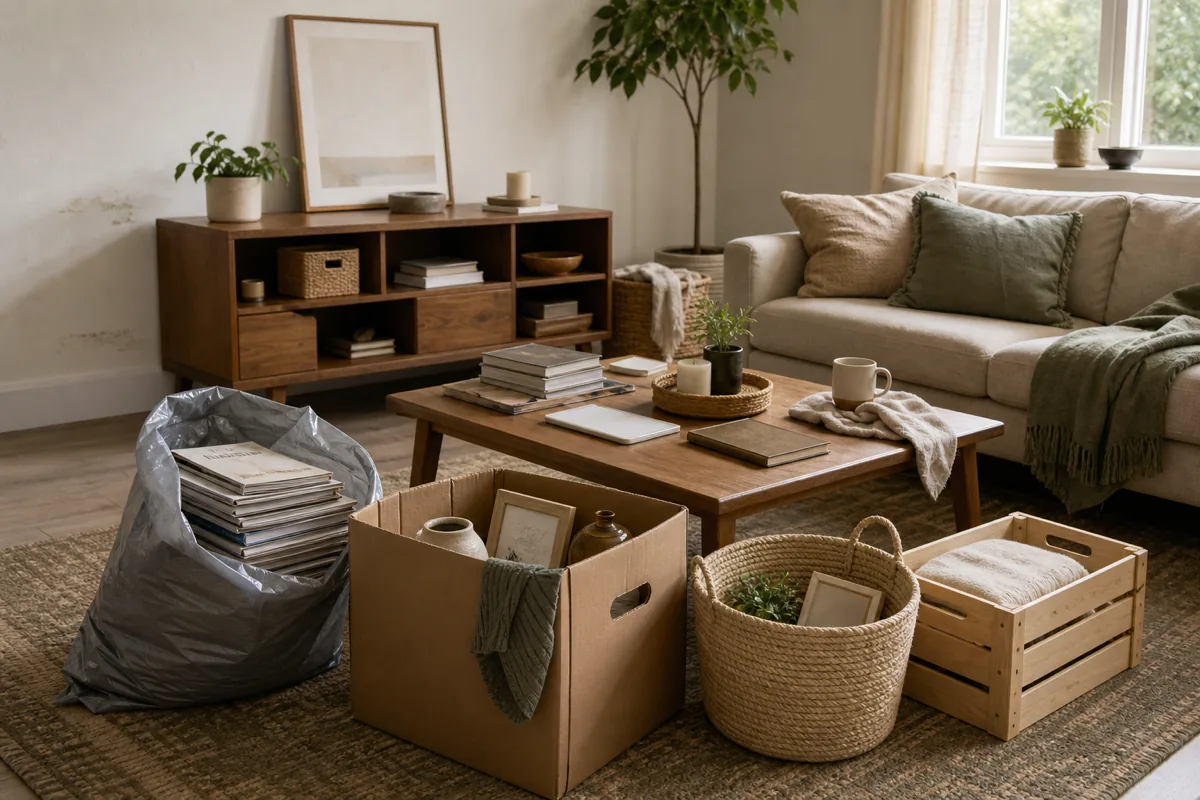
The living room is the most-seen room in a small home, so clearing it pays off visually faster than anywhere else. The clutter here is surface pile-up, leftover media, paper, and too much decor competing for the same shelf.
Work surface by surface, and aim to clear each one to about sixty percent, because an over-filled surface reads cluttered even when every object on it is tidy. Breathing room is the whole move.
- Clear every surface to about 60 percent. Breathing room is what makes a room read calm.
- Retire dead media. Old remotes, tangled cables, and discs you replaced with streaming go to trash or donate.
- Recycle finished paper. Read magazines, junk mail, and old catalogs leave; keep only the current issue.
- Thin the decor to the pieces you love. A few intentional objects beat a crowded shelf every time.
- Keep the pillows and blankets you actually use. Donate the extras crowding the sofa.
The Kitchen
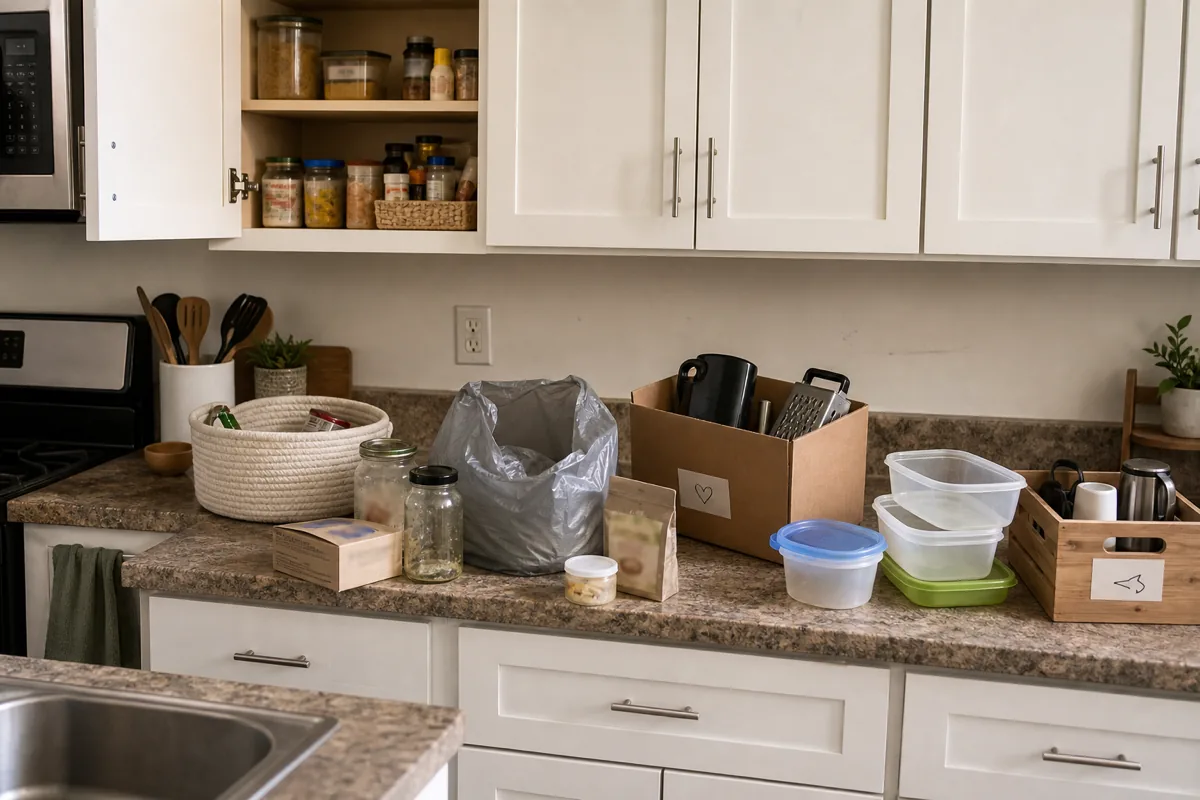
The kitchen fills up fast because almost everything in it is consumable or single-purpose. This block is a purge of the expired, the duplicated, and the broken, not the day you reorganize the cabinets, so resist the urge to start arranging.
Open the pantry and the fridge first, since clearing expired food alone usually frees a whole shelf and gives you fast momentum for the duplicates and unused gadgets that follow.
- Toss anything expired or stale. The pantry and fridge purge alone clears a shelf.
- Keep one of each duplicate. Two can openers and three spatulas become one; the rest donate.
- Trash any container missing its lid. Keep one set you genuinely use.
- Donate single-use gadgets unused in a year. The egg slicer and the avocado tool rarely earn their drawer.
- Stop at deciding. Reorganizing the cabinets is the next step, once there is less to organize.
Decluttering a small home is mostly about deciding, not arranging. These four rules are what keep the work from stalling halfway and what keep the rooms you clear from creeping back.
The Bathroom
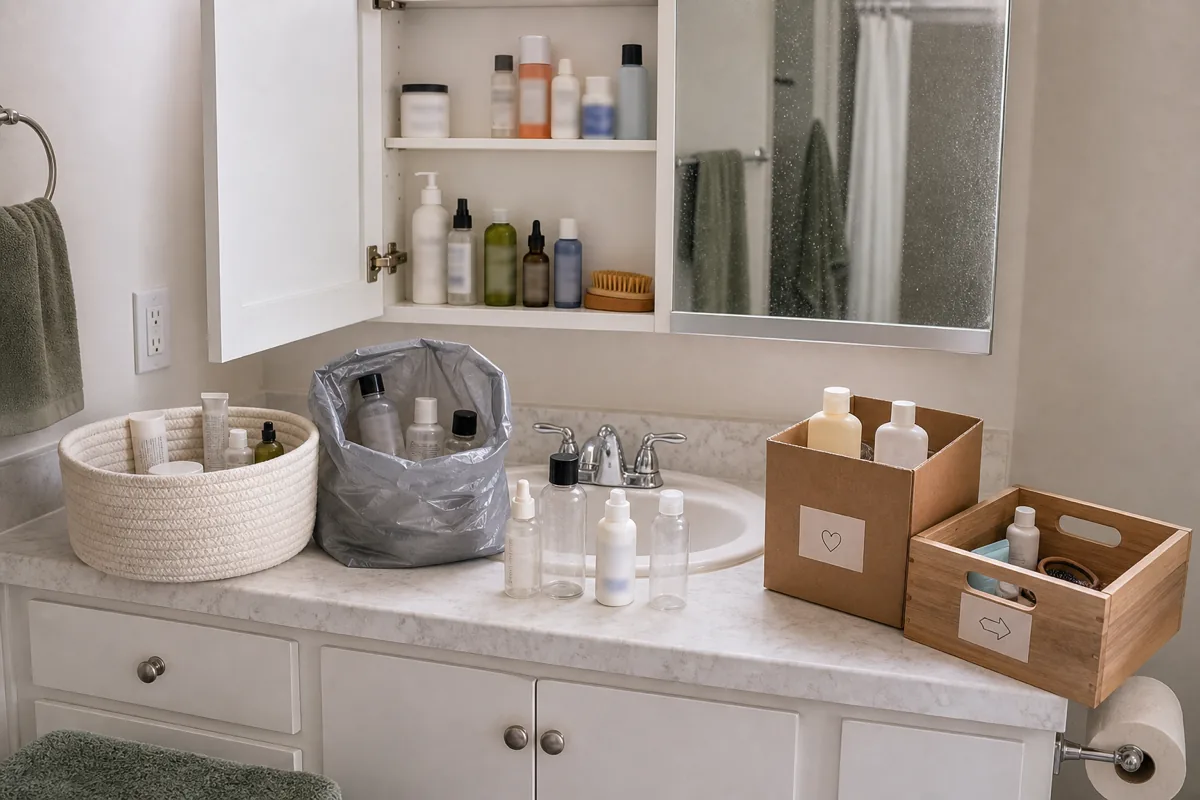
The bathroom is the quickest room in the home and a genuine confidence boost partway through the project. Almost everything in it is expired or empty, because products have shelf lives that most people never check.
The pace is fast because most calls are obvious once you look at a date or shake a near-empty bottle. The only slow part is medicine, which needs safe disposal rather than the trash.
- Retire old makeup and skincare. Mascara past three months, sunscreen past a year, and anything that smells off all go.
- Dispose of expired medicine safely. Use a pharmacy take-back; do not flush it.
- Trash samples you will never use and near-empty bottles. The travel-size graveyard counts.
- Move worn towels to the rag bag or donate. Keep only the sets you reach for.
- Reset the counter. Put back the daily handful; the rest goes to a drawer or out.
The Bedroom and Closet
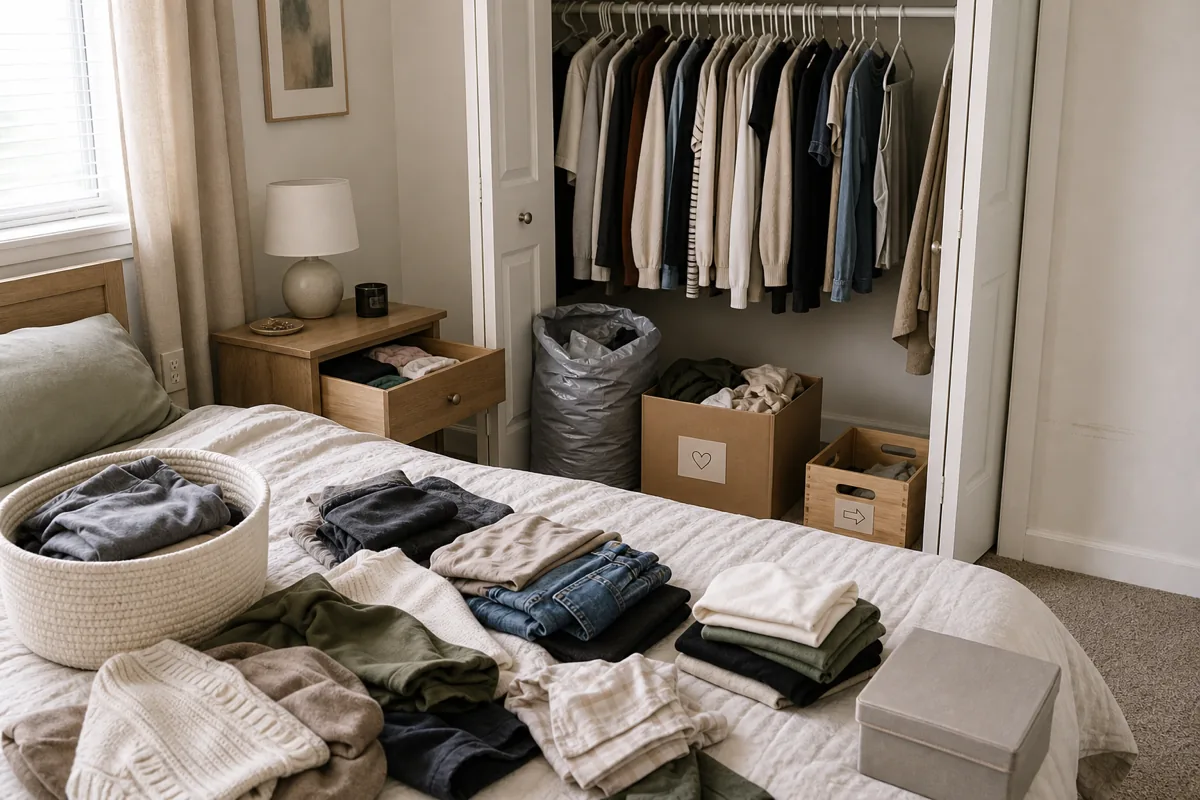
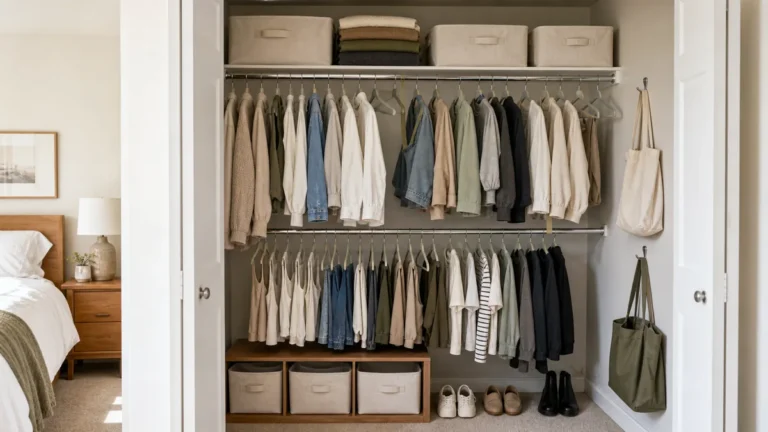
This room is harder because clothes carry stories: the piece you wore once, the size you are working back toward, the gift you feel guilty replacing. The decision here is only what stays, so sort by honest use rather than hope, and hand the question of fitting it all back to a later step.
The reverse-hanger trick makes honest use visible, and giving sentimental items one box keeps them from stalling the whole room while you decide the contents later.
- Clothes unworn in a year go to Donate. The reverse-hanger trick shows you what you actually wear.
- Let go of the “when I’m thinner” and “for a special occasion” pieces. Guilt every morning is not worth the hanger.
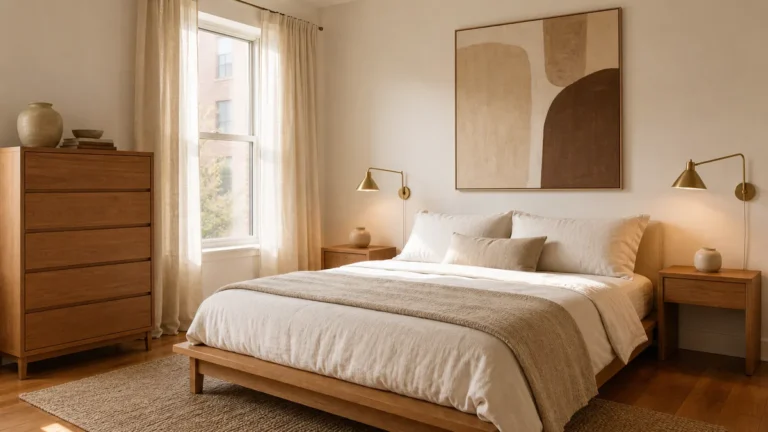
- Clear the nightstand and dresser top to a few things. A lamp, a book, one dish; the rest relocates or goes.
- Give sentimental items one memory box. Decide the contents later; do not let it freeze the room now.
- Once you know what stays, the small closet organization guide covers fitting it all in.
Room-by-Room Declutter Plan for a Small Home
- 1The four-box method — keep, donate, trash, relocateSet up four containers before you start, and the Relocate box keeps you in the room instead of wandering the house. Work one room per sitting, starting with the easiest. To blitz it all in one weekend instead, the one-weekend organization plan is the compressed version.
- 2The entryway — shoes, coats, mailStart here because it is small and fast. Shoes not worn in six months go to donate, off-season coats relocate to storage, and mail older than two weeks gets recycled or shredded. Finish line: a clear floor and only this-week items out.
- 3The living room — surfaces and decorClear every surface to about sixty percent so the room reads calm. Retire dead media and old cables, recycle finished magazines, thin the decor to the pieces you love, and keep only the pillows and blankets you actually use.
- 4The kitchen — expired and duplicatesA purge, not a reorganize. Toss anything expired or stale, keep one of each duplicate gadget, trash containers with no matching lid, and donate single-use tools unused in a year. Stop at deciding; arranging the cabinets comes later.
- 5The bathroom — old productsThe quickest room. Old makeup, sunscreen past a year, and anything that smells off go; expired medicine goes to a pharmacy take-back, not the trash. Clear samples and near-empty bottles, and reset the counter to the daily handful.
- 6The bedroom and closet — clothesClothes unworn in a year go to donate; let go of the "when I'm thinner" pieces; give sentimental items one memory box. This is deciding what stays — once you know, the small closet organization guide covers fitting it in.
- 7The home office — paper pilesPaper is the clutter that regrows, so use four fast lanes: shred the sensitive, file the must-keeps, recycle the large majority, and set aside a thin action stack. Recycle manuals and receipts that live online, and scan the keepers.
- 8Keep it decluttered — the habitOne-in, one-out is the rule that prevents re-cluttering; keep a donate box by the door and let it go when full. Re-walk one room a month. Then organize what is left with the small apartment organization guide.
styledhomenotes.com
The Home Office and Paper Piles
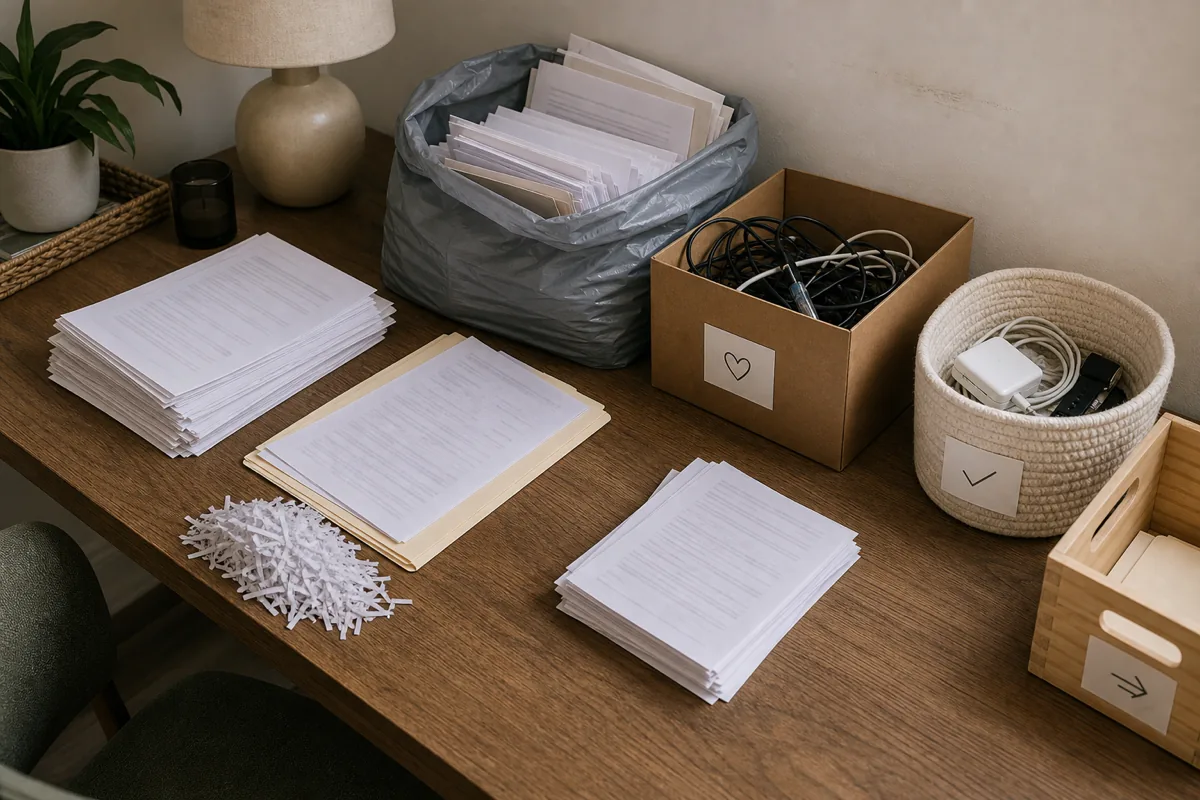
Even a desk in the corner counts as a room in a small home, and paper is its own beast. It is the clutter that regrows, so the decision rule matters more here than anywhere else, and sorting into fast lanes is what stops anything landing in a vague “deal with later” pile.
Most of what feels important is already online, which makes the recycle lane far bigger than people expect.
- Run every paper through four lanes: Shred sensitive, File must-keeps, Recycle the majority, Action a thin to-do stack.
- Recycle manuals and receipts. Nearly all of them live online; the paper copy is dead weight.
- Clear dead electronics and cables. Old chargers, dried-out pens, and tangled cords go to e-waste or trash.
- Keep a realistic quantity of supplies. You do not need forty pens; donate the overflow.
- Go digital where you can. Scan the keepers so the pile cannot grow back.
Keep It Decluttered, One Room at a Time
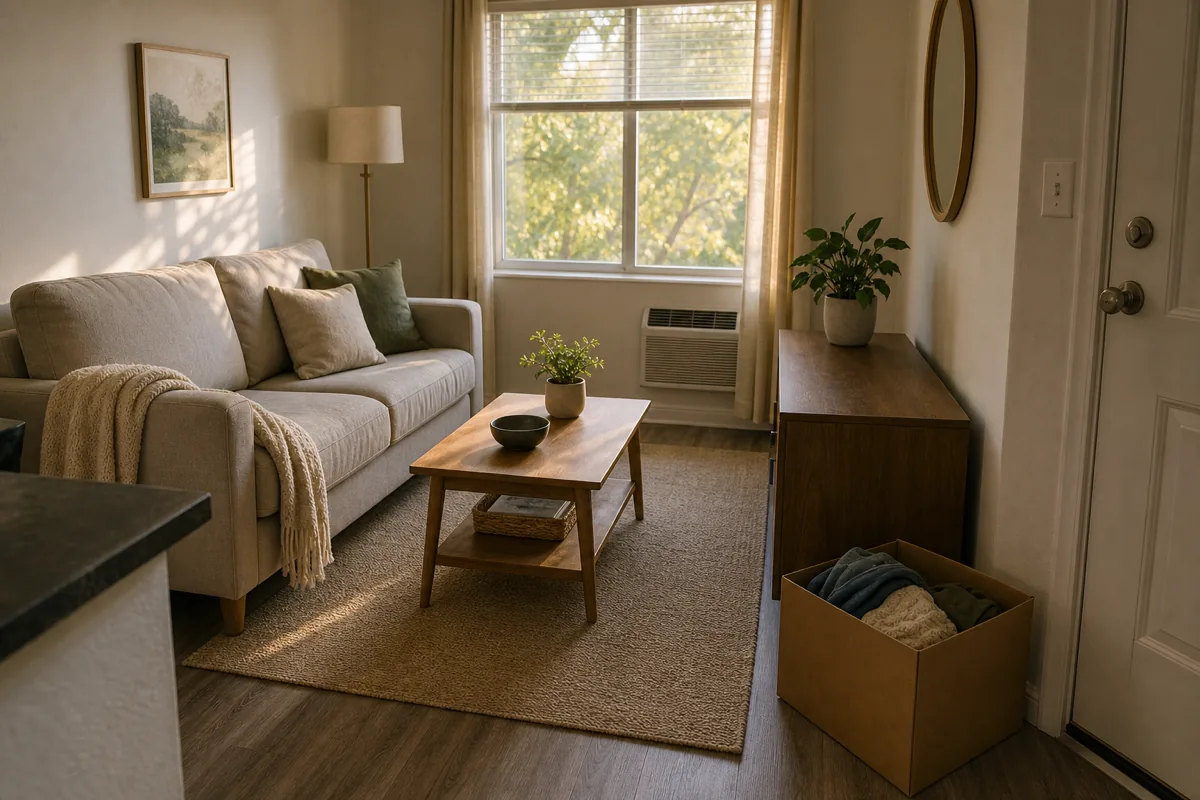
Decluttering a small home is not a one-time event. With no overflow storage, volume control is permanent, so the work shifts to keeping the rooms you cleared from filling back up. The habits below are small, and they are what make the whole project last.
The rule that does the most is one-in, one-out, backed by a permanent donate box by the door and a quick monthly re-walk of a single room, so you never face the whole home again.
- Live by one-in, one-out. Every new thing means an old one leaves; this single rule prevents re-cluttering.
- Keep a donate box by the door. When it fills, it goes, no waiting for a big trip.
- Re-walk one room a month. Rotate through the six for a 15-minute touch-up, not a full redo.
- Empty the relocate and donate boxes the day you fill them. Stuff left in a box migrates back out.
- Organize what is left. The small apartment organization guide is the next step once a room is down to what you use.
Six rooms, one at a time, starting with the easiest. That is the whole method. You do not need a free weekend or a storage haul, just a four-box system, an order, and a clear rule for what leaves each room.
The thing that keeps a small home calm is not a perfect organizing system. It is owning less than the space can hold, and the room-by-room declutter is how you get there without the overwhelm. When a room is down to what you actually use, that is when the organizing finally sticks.

Nora Ellis edits Styled Home Notes, where she shares practical decorating, organization, and small-space ideas for creating a more styled and functional home. Every article is reviewed for clarity, usefulness, image sourcing, and Pinterest-to-page alignment before publication. Visit the Nora Ellis author page.