12 Small Home Office Ideas That Fit Where You Already Have Room
A small apartment rarely has a spare room for an office. What it has are corners, closets, walls, and a window. Each one of those can become a real workstation if you treat it as a zone to engineer rather than a room to find.
Small home office ideas earn their place by fitting where you already have room. Not a desk that needs its own four walls, but a corner that becomes a desk, a closet that becomes a workstation, a wall that drops down for two hours, a corner that defines itself with one small rug.
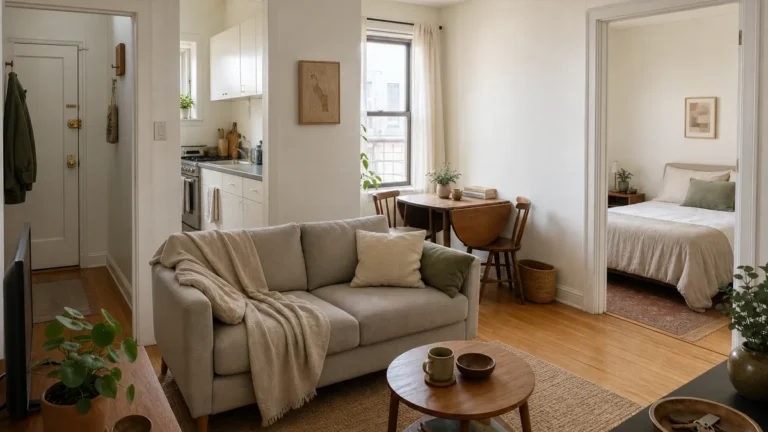
These twelve moves treat the home office as a zone, not a room. For the broader logic of decorating around a workstation in an open layout, our pillar guide on small living room ideas sets the same tone for the rest of the apartment.
From claiming a corner with an L-bracket floating desk to anchoring the zone with a small rug under just the chair, these twelve moves build a real workstation into the apartment you already have. Jump to the fix you need first.
- 1Claim a corner with an L-bracket floating desk
- 2Convert a closet into a cloffice you can close at 5pm
- 3Mount a drop-down wall desk that folds flat after work
- 4Float the desk away from the wall to face the window
- 5Skip cold overhead light; use one warm task lamp + one ambient
- 6Run a cable tray + one power strip under the desk
- 7Stack vertical storage above the desk, not beside it
- 8Pick a chair that slides fully under the desk
- 9Use a tray caddy to clear the surface in 30 seconds
- 10Park a rolling cart as the printer station
- 11Anchor the zone with a small rug under just the chair
- 12Add one plant + one framed print so it reads "home office"
Claim a Corner With an L-Bracket Floating Desk
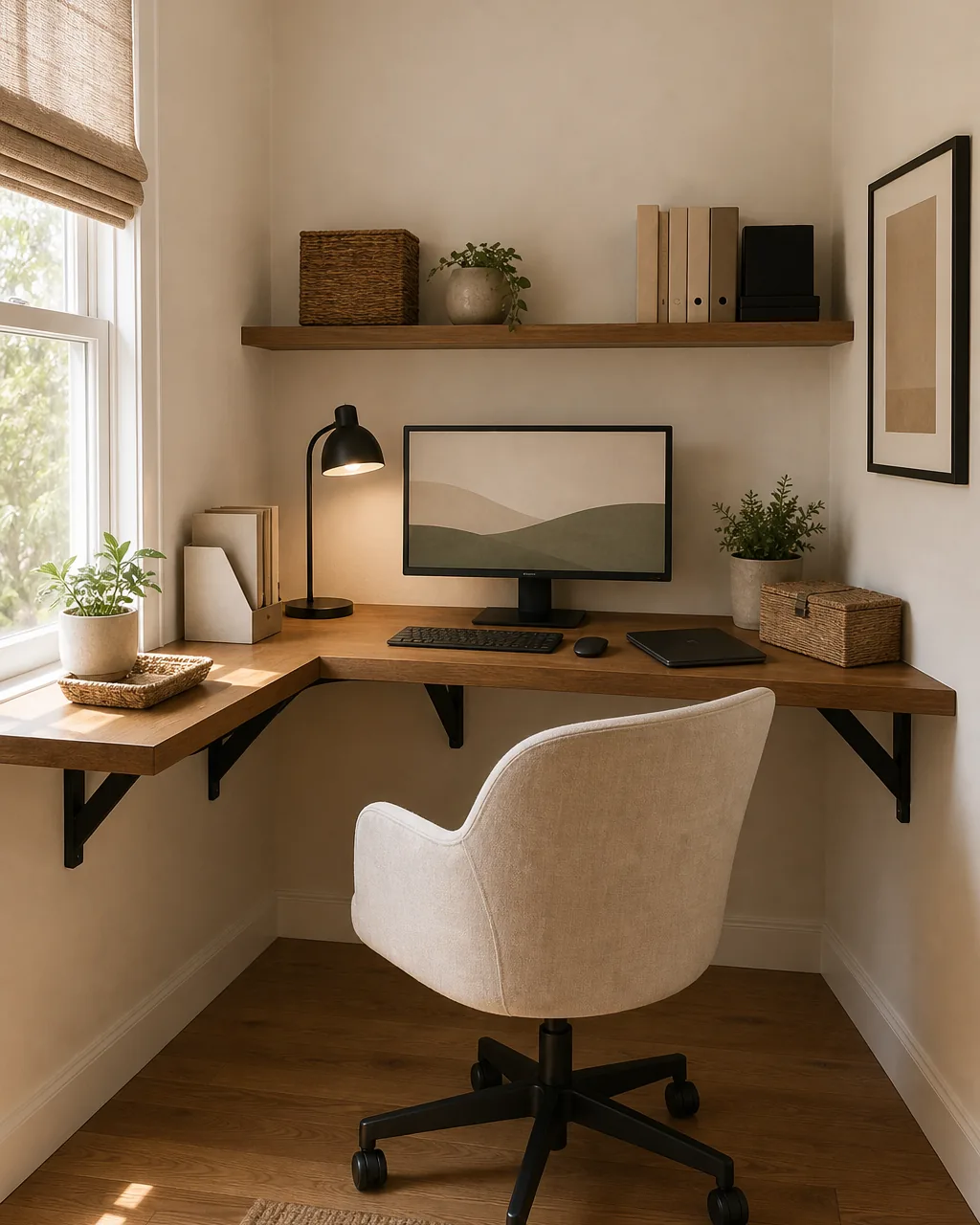
An empty corner is a desk waiting for you to claim it. Most apartments have at least one — the awkward angle between a sofa and a window, the dead spot beside a doorway, the inch of bedroom wall the dresser does not need.
An L-bracket floating desk turns that corner into a workstation with zero footprint on the floor. The desktop hugs two walls and the brackets disappear under the wood. The chair tucks in, the floor stays clear, and the corner reads as built-in instead of crammed-in.
- Pick a corner already protected from foot traffic so the chair does not block a walking path
- Use real two-arm L-brackets bolted into studs, not adhesive shelf hardware; a working desk takes lateral force every day
- Cap the desktop at twenty-four inches deep on each leg; deeper than that and the corner eats the room
- Match the desktop wood to one other warm wood already in the room so the corner reads on purpose, not stuck
- Run a single power strip under one leg of the L so the wall stays clean and cords have one destination
Convert a Closet Into a Cloffice You Can Close at 5pm
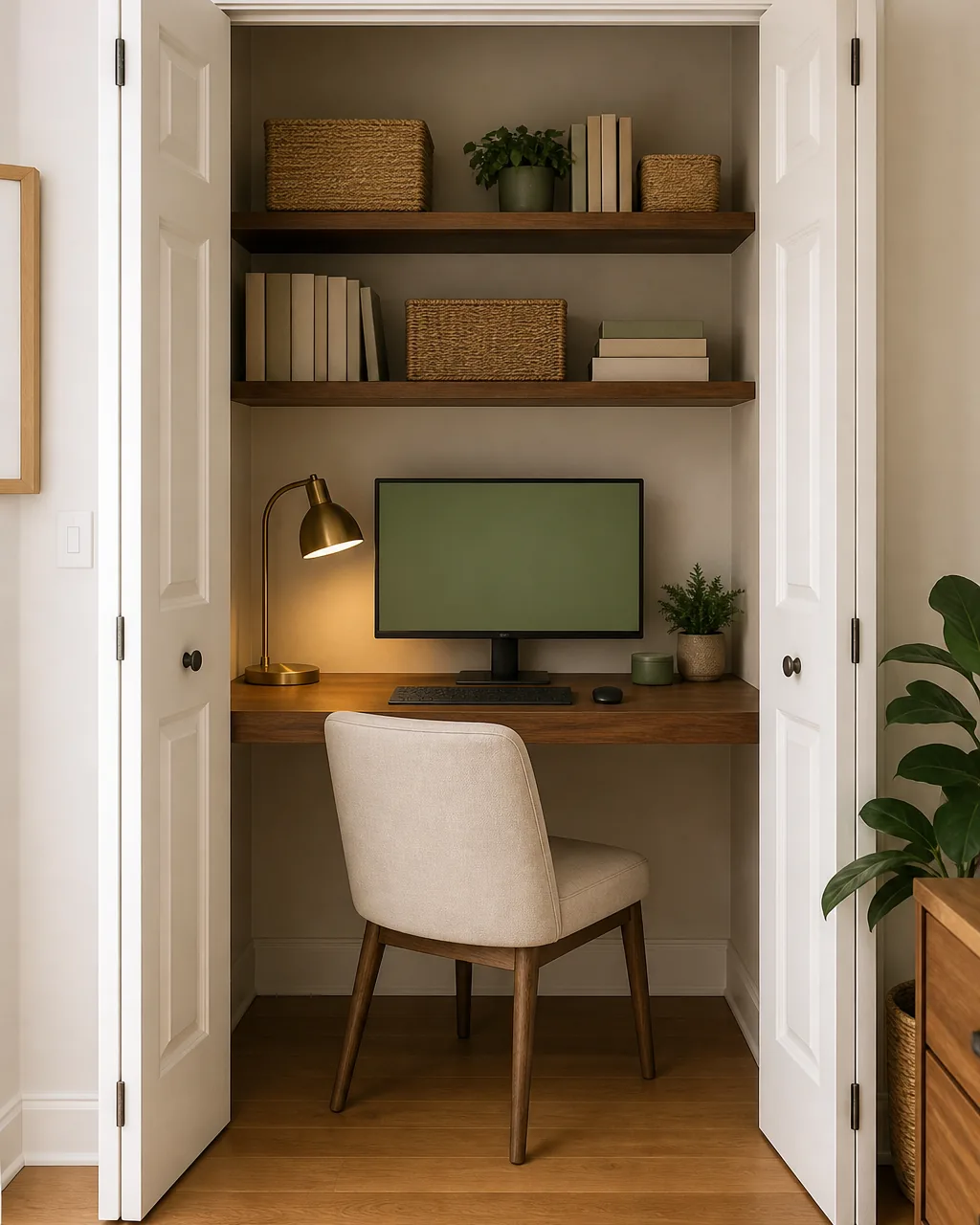
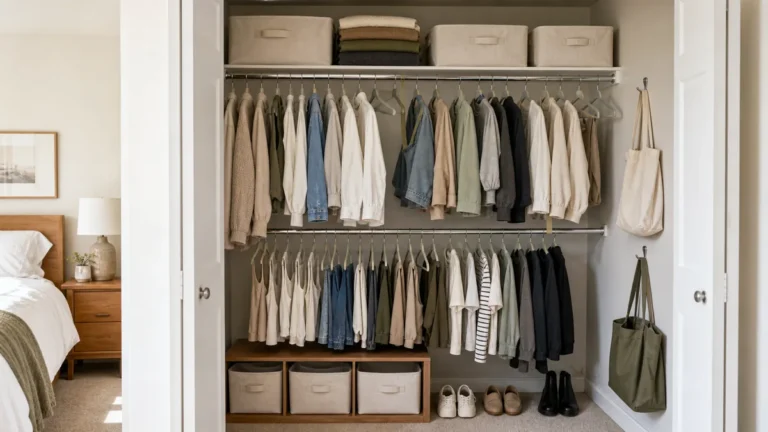
A spare hallway closet is the most under-used square footage in a small apartment. Strip the rod out, drop a shelf at desk height, and you have a real workstation with doors that close.
The closing doors are the point, not the desk. Closing the closet at five mentally ends the workday in a way an open desk in the corner of the living room never can. Our studio apartment ideas leans on this same dual-use logic for the rest of the room.
- Remove the closet rod and add a sturdy warm-wood shelf at twenty-nine inches off the floor for a sitting desk
- Add two more shelves above the desktop for closed lid boxes and open storage, going up instead of out
- Leave a four-inch cable port at the back corner of the desktop so cords drop down out of sight
- Pick a chair short enough to clear the bottom door track when it rolls out
- Use the closed doors to anchor end-of-day; if the doors stay open all evening, the cloffice is not working
Mount a Drop-Down Wall Desk That Folds Flat After Work
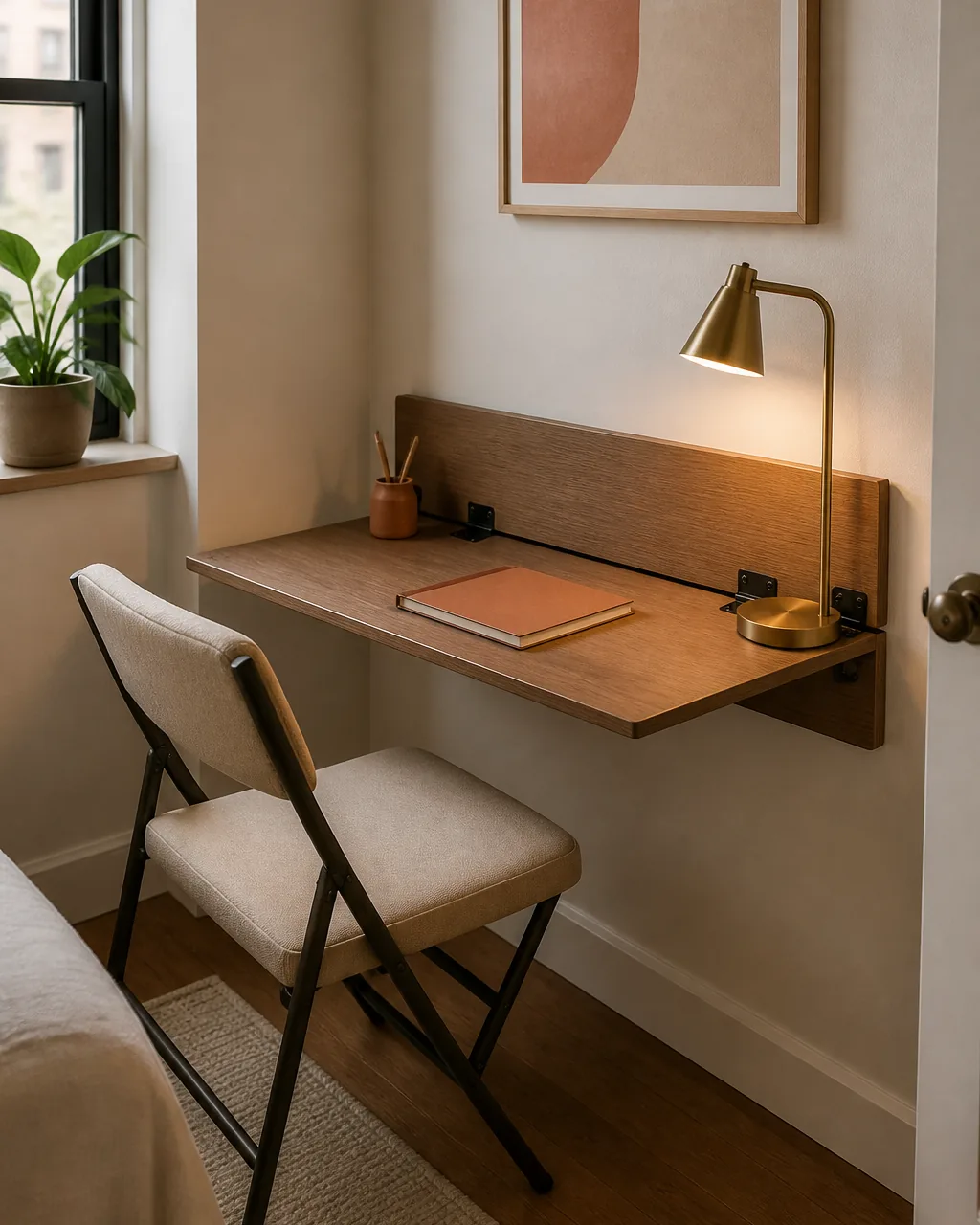
When the room cannot give up any floor at all, the desk has to live on the wall. A drop-down desktop hinged into the wall lowers into a flat work surface, then folds back flush against the wall when you stand up.
It is not a full desk, and it should not pretend to be one. It is a focused surface for a laptop and one notebook, used for two or three hours, then closed. The floor wins back the rest of the day.
- Bolt the hinge plate directly into wall studs, not drywall anchors; a desktop with a laptop on it pulls hard
- Cap the surface at sixteen inches deep when down; deeper than that and the folded desk juts into the room
- Add a small chain or fold-down support leg under the front edge to take the cantilever load off the hinges
- Keep one slim shelf above the desk for the items that live there permanently so the desktop stays clear
- Choose a folding chair light enough to lift with one hand and store flat beside the desk
You will not need all twelve. Find the situation below that matches your apartment today, and start with those two or three ideas.
Float the Desk Away From the Wall to Face the Window
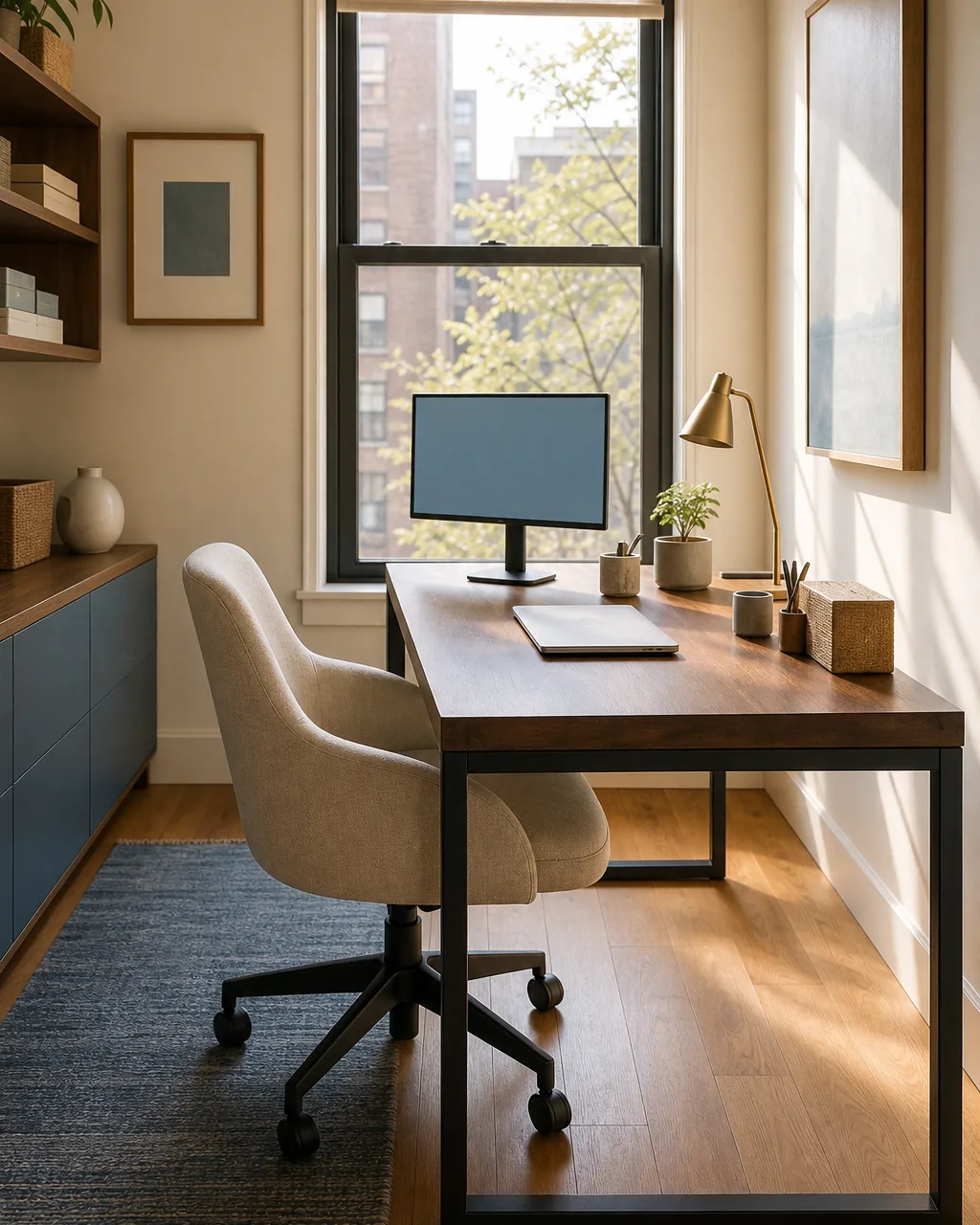
Pushing a desk against a wall is automatic. It is also a wasted move when there is a window doing nothing in the same room. Pulling the desk away from the wall to face daylight is a free upgrade nobody charges you for.
Daylight on a work surface lifts focus the way no lamp can. The view through the window costs you nothing once the desk is rotated. The back of the chair facing the room becomes a low visual divider that quietly signals work zone without building a wall.
- Position the desk perpendicular to the window so daylight crosses the surface from the side, not behind
- Leave eighteen inches of clearance between the back of the chair and any furniture behind it
- Mount the monitor on a slim adjustable arm so it tilts out of the daylight glare path
- Anchor the back side of the desk with one small plant or stack of books so the room-facing edge does not read raw
- Skip a rug under the desk if it is the only desk in an open room; a rug visually pins the desk back to the wall
Skip Cold Overhead Light; Use One Warm Task Lamp + One Ambient
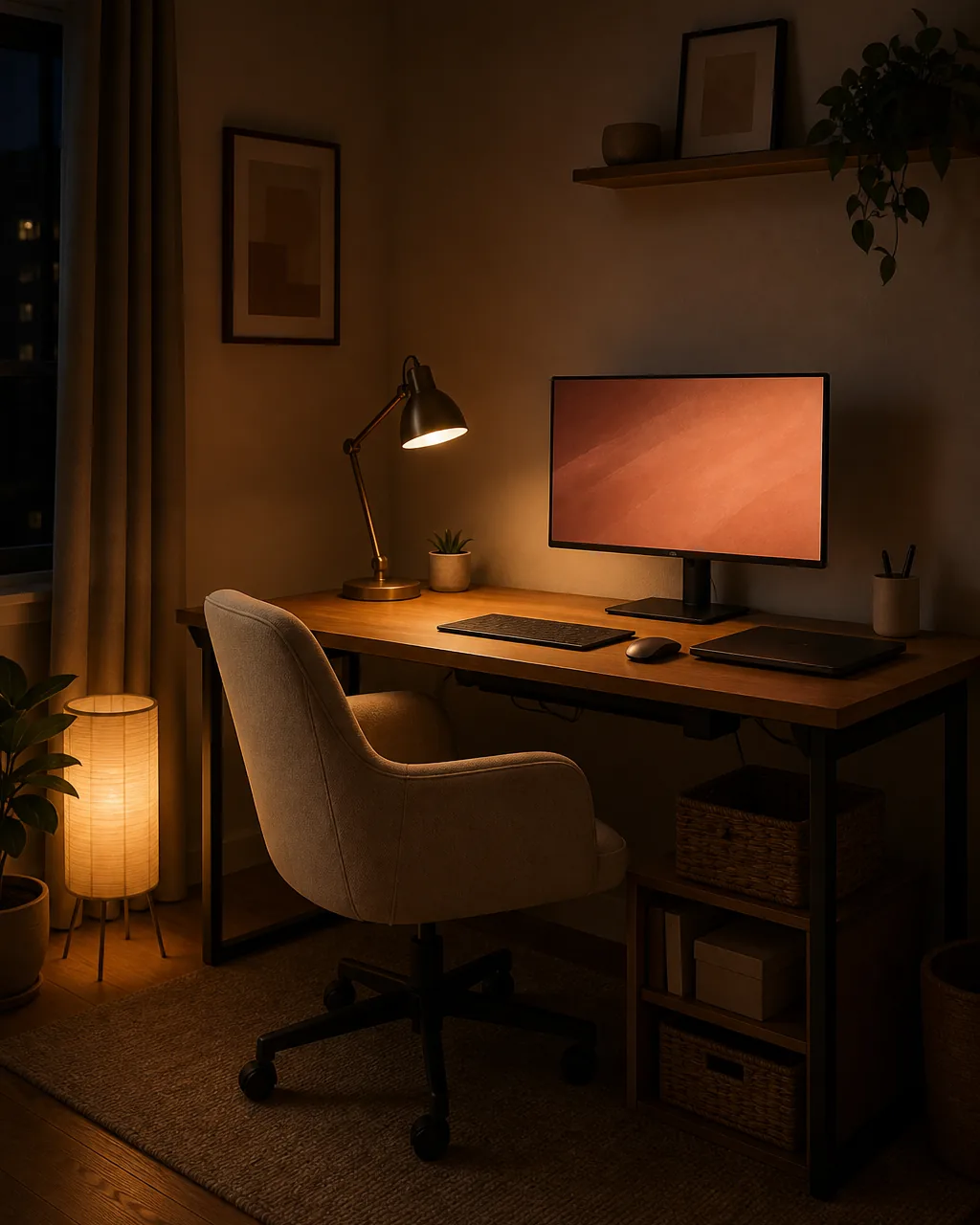
The default apartment overhead is the worst light source in the building. It is cold, bright, flat, and turns the rest of the room into a featureless background. It is also what most people work under by reflex.
Two warm pools of light beat one cold ceiling every time. A task lamp on the desk corner puts warm light on the work surface. A small ambient lamp behind the chair fills the room without flattening it. The ceiling stays off and the work corner reads calm instead of clinical.
- Pick bulbs warmer than 2700K for both lamps; cold daylight bulbs read like an office no matter the fixture
- Place the task lamp on the side opposite your writing hand so the shadow falls away from the page
- Aim the ambient lamp at a wall, not at the chair; bounced light is calmer than direct light
- Use a smart bulb or dimmer if either lamp will be on for more than four hours at a stretch
- Resist the urge to add a third lamp; two pools of light read calm, three reads staged
Run a Cable Tray + One Power Strip Under the Desk
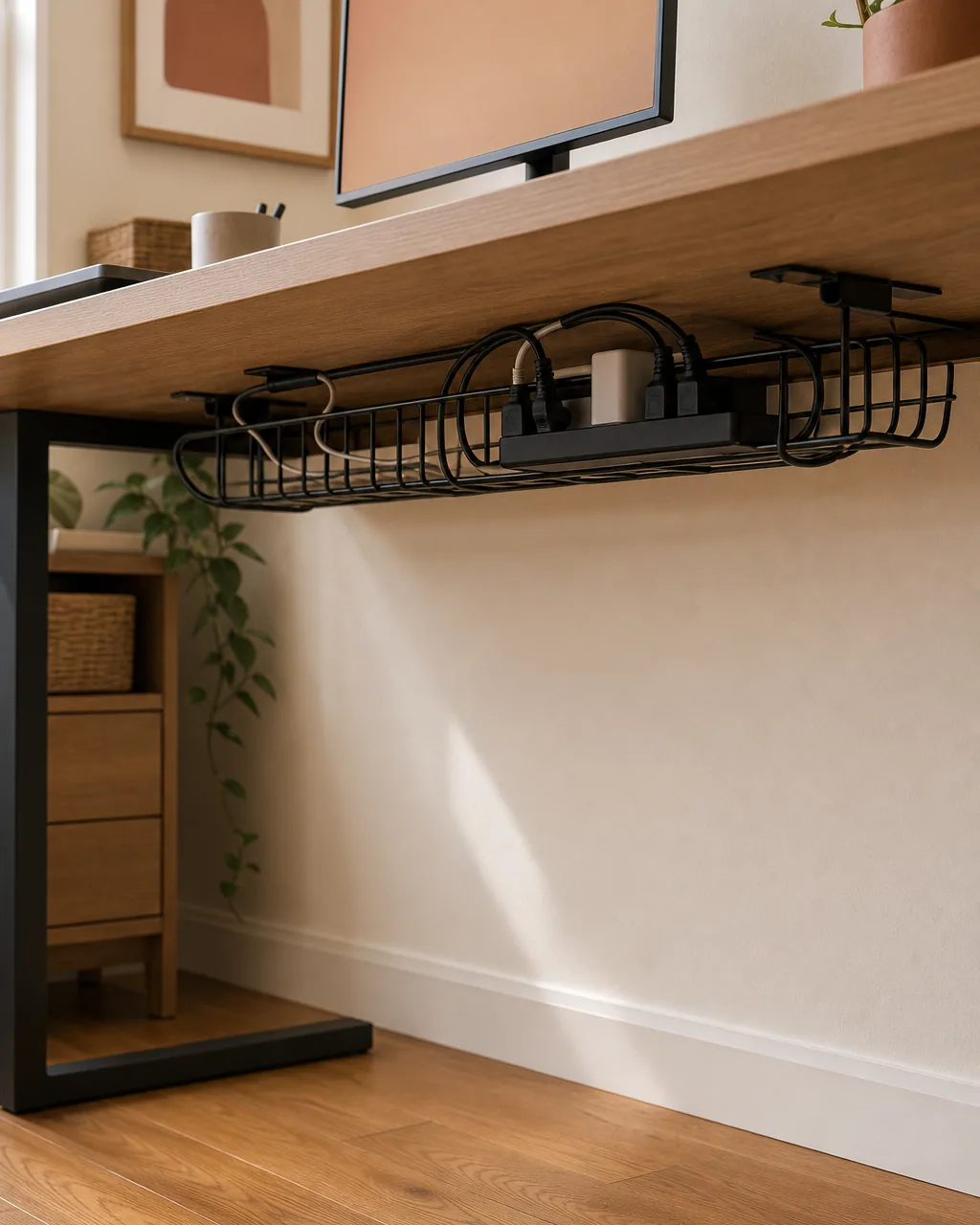
Loose cables drag the work corner down faster than any other single thing. Even an otherwise calm desk looks improvised the moment a charger snakes across the floor and a power strip sits on the rug.
A slim cable tray under the desktop fixes this in an hour. Every cord lifts off the floor and into the tray. A single power strip mounts to the underside of the desk so there is exactly one outlet, exactly one bundle. The floor goes back to being floor.
- Pick a wire tray about three inches deep; deeper trays catch dust and shallower ones lose cables
- Run cables along the back edge of the desk first, then drop into the tray; a clean back edge reads quietest
- Mount the power strip to the underside of the desktop with screws or strong double-sided tape, not loose
- Use velcro ties, not zip ties; cords get added and swapped often enough that you want easy access
- Aim for one cord visible at the wall outlet; everything else should disappear at the back edge of the desk
These four rules are what keep a small apartment workstation from sliding into a cluttered, dim corner you start avoiding.
Stack Vertical Storage Above the Desk, Not Beside It
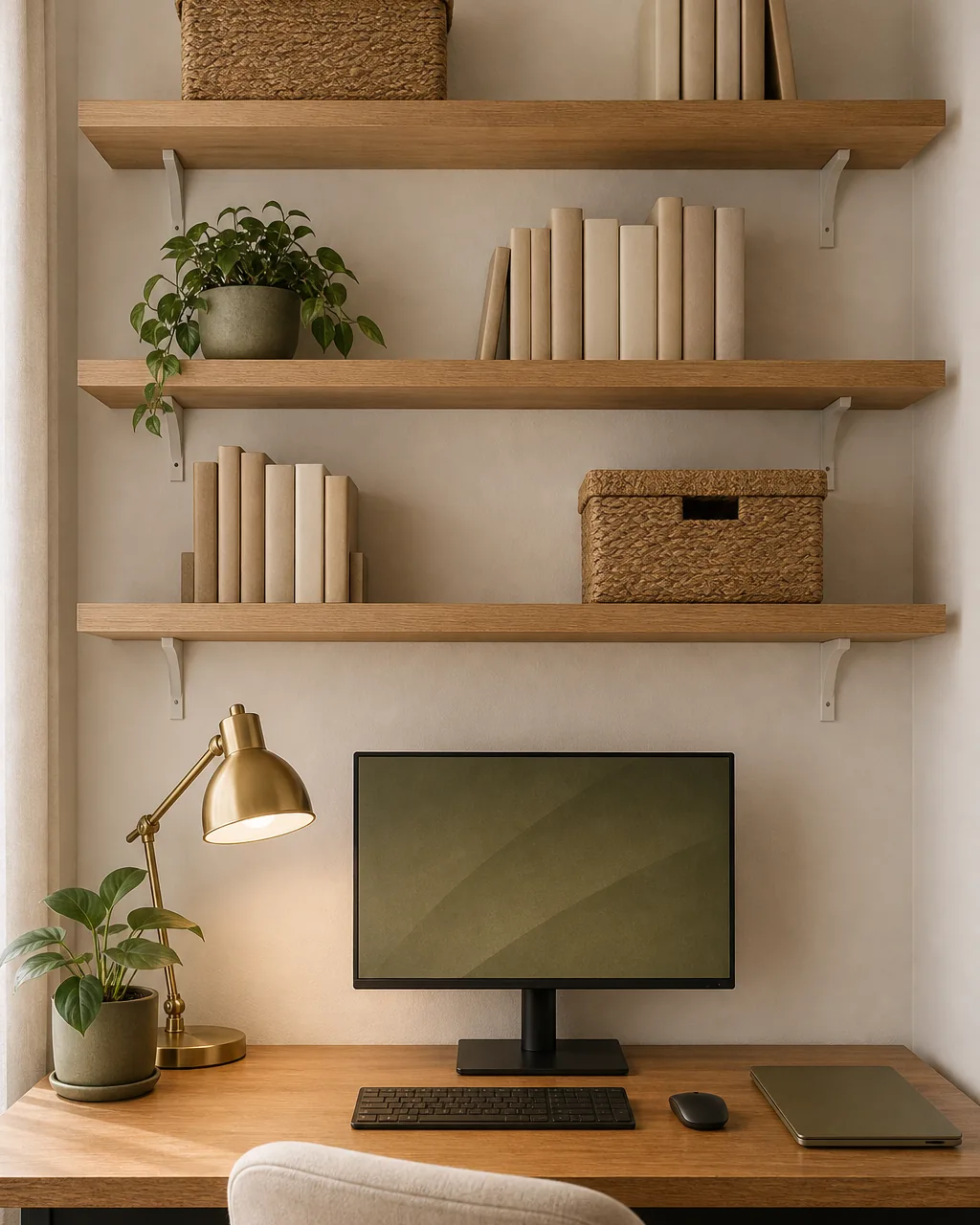
Sideways storage eats the room. A filing cabinet beside the desk, a credenza behind it, a second narrow shelf to the right; each one takes a piece of floor the apartment cannot afford to give.
Storage goes up the wall instead. Three open shelves above the desk hold more than a filing cabinet and take zero floor. The desk surface stays clear, the room stays open, and the work zone gains visual height instead of visual sprawl.
- Mount the lowest shelf at least sixteen inches above the desktop so a laptop screen does not hit it when open
- Mix open shelves and closed lid boxes; open for books and plants, closed for paper and chargers
- Limit the shelves to three levels; four reads heavy and starts blocking light from a window
- Anchor each shelf with one quiet object you do not move; a plant or a closed box that lives there permanently
- Keep the wall behind the shelves blank; gallery walls and shelves on the same wall fight each other
Pick a Chair That Slides Fully Under the Desk
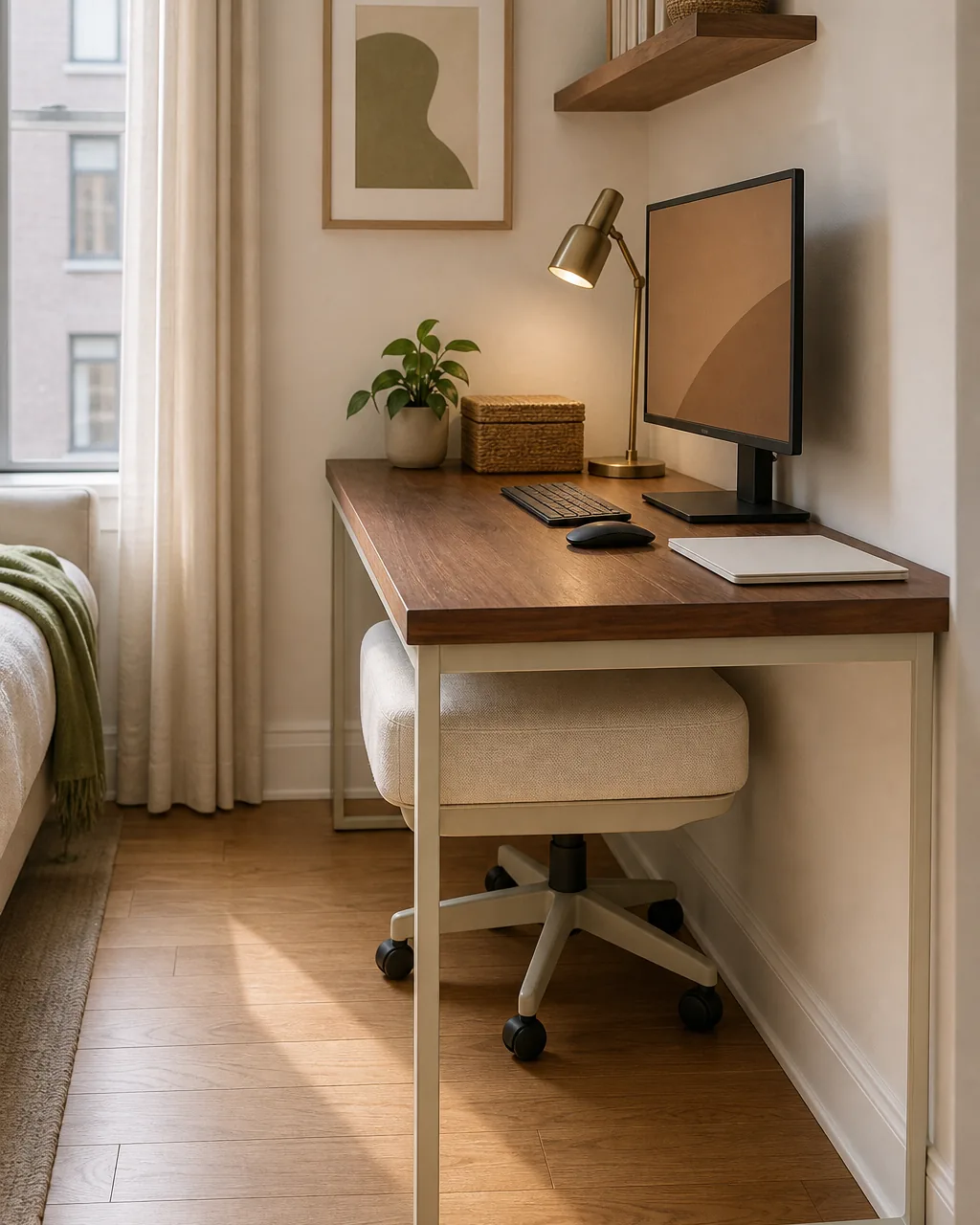
A desk chair that sticks out a foot from the desk at end of day is the single biggest reason small home offices read as cluttered. The seat blocks the floor, the back catches the eye, and the work zone never visually closes.
Switch to a chair small enough to slide completely under the desktop. The floor stays clear every evening, the chair seat disappears, and the desk reads as a clean shelf when no one is working. Our minimalist small space ideas covers the same one-in-one-out logic for the rest of the apartment.
- Measure the height under your desktop and pick a chair whose seat sits below that line at full height
- Choose an armless chair; armrests stop the chair from sliding all the way in every time
- Pick a chair with a back that is the same height as the desk edge or shorter, never taller
- Match the chair upholstery to one calm tone already in the room so it disappears when tucked
- Skip casters unless the desk is heavily used; static legs slide in cleaner and last longer on hardwood
Use a Tray Caddy to Clear the Surface in 30 Seconds
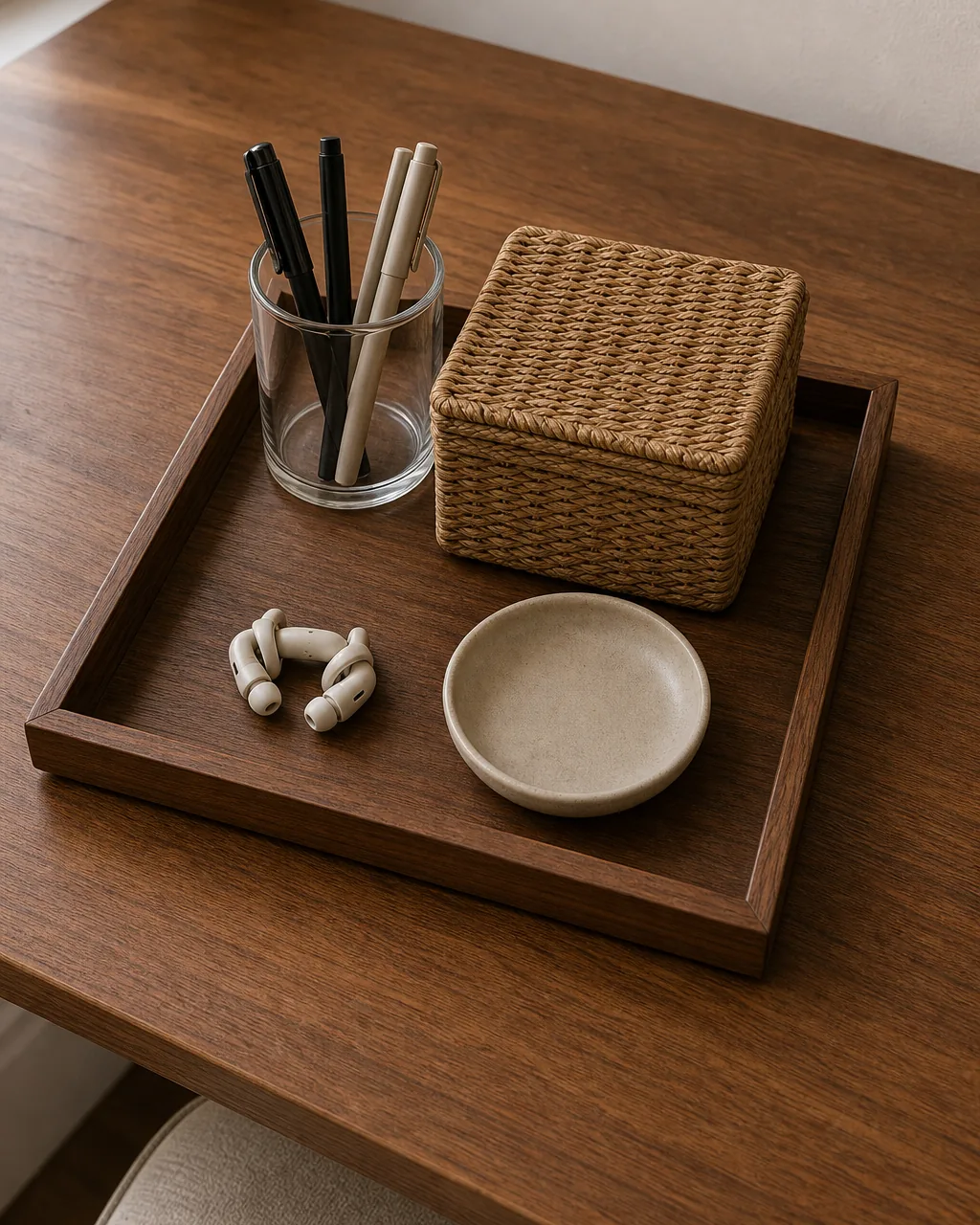
Daily desk tools spread out by gravity. A pen here, headphones there, a glass of water on the corner, a notebook somewhere underneath. Each one is small. Together they keep the desk from ever reading clean.
Park everything daily inside one shallow tray. Pen jar, dish for keys, earbud holder, small box for the in-progress notebook. To clear the desk at end of day, lift the tray off and set it on the shelf. The desktop is empty in thirty seconds without sorting anything.
- Pick a tray sized to roughly one third of the desktop; bigger than that and the tray becomes the desk
- Use a tray with a low lip; high walls fight the lift-and-clear motion every time
- Group items by use, not type; pen and notebook and earbuds belong together because they get used together
- Match the tray wood to the desktop or pick a contrasting matte black; chrome trays catch every fingerprint
- Refuse to put paper or mail in the tray; daily tools only, never temporary stacks
12 small home office moves, one system that actually works
- 1Claim a corner with an L-bracket floating deskBolt an L-shaped desktop into a room corner so the floor stays clear and the desk eats no walking space.
- 2Convert a closet into a cloffice you can close at 5pmBuild a shelf desk inside a closet so closing the doors at end of day mentally clocks you out.
- 3Mount a drop-down wall desk that folds flat after workA wall-hinged desktop drops down for work and folds flat after, returning the floor every evening.
- 4Float the desk away from the wall to face the windowPulling the desk off the wall to face daylight pulls work mode out of the corner and into open space.
- 5Skip cold overhead light; use one warm task lamp + one ambientTwo warm pools of light — task plus ambient — light the workstation without turning the room into an office.
- 6Run a cable tray + one power strip under the deskA slim under-desk tray and one shared strip get every cord off the floor and out of sight.
- 7Stack vertical storage above the desk, not beside itOpen shelves plus closed lid boxes mounted above the desk add storage without spreading sideways into the room.
- 8Pick a chair that slides fully under the deskAn armless chair that disappears under the desktop reclaims the floor and the room every evening.
- 9Use a tray caddy to clear the surface in 30 secondsPark daily tools in one shallow tray so lifting the tray off clears the whole desk in a single move.
- 10Park a rolling cart as the printer stationA two-tier cart with casters holds the printer and rolls into a closet when it’s not Tuesday.
- 11Anchor the zone with a small rug under just the chairA small rug sized to the chair zone defines the work area inside a larger room without building walls.
- 12Add one plant + one framed print so it reads "home office"One live plant and one framed print on the desk shelf signal home, not temporary setup.
styledhomenotes.com
Park a Rolling Cart as the Printer Station
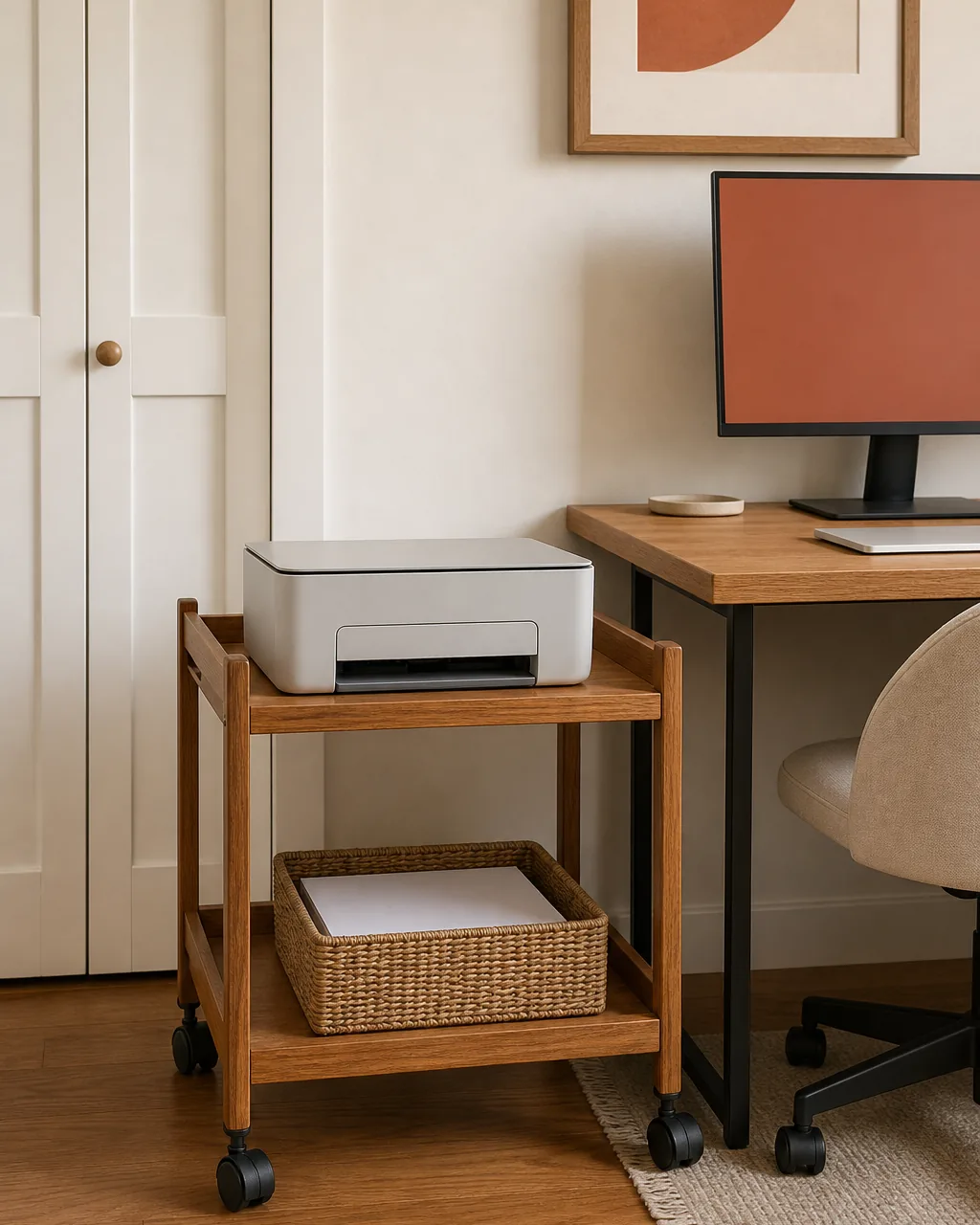
A printer is the single ugliest thing on most desks. It is also used twice a month at most. Letting it permanently camp on the desktop pays a daily visual cost for an occasional functional gain.
A small two-tier rolling cart fixes the math. The printer lives on the cart, the cart lives in a closet or beside the desk, and on the rare days you print something the cart wheels into reach. The desktop stays clear the other 28 days of the month.
- Pick a cart short enough to clear under a desk; cabinet-height carts cannot tuck away
- Real casters with a lock are worth the upgrade; lockless wheels drift on hardwood every time you press a button
- Add a sea-grass box on the lower tier for paper, envelopes, and labels so the cart holds the whole print station
- Stick a power strip to the back of the cart so plugging in once supplies the printer and any charger that travels with it
- Park the cart in the same exact spot every time so it disappears from the room rather than rotating
Anchor the Zone With a Small Rug Under Just the Chair
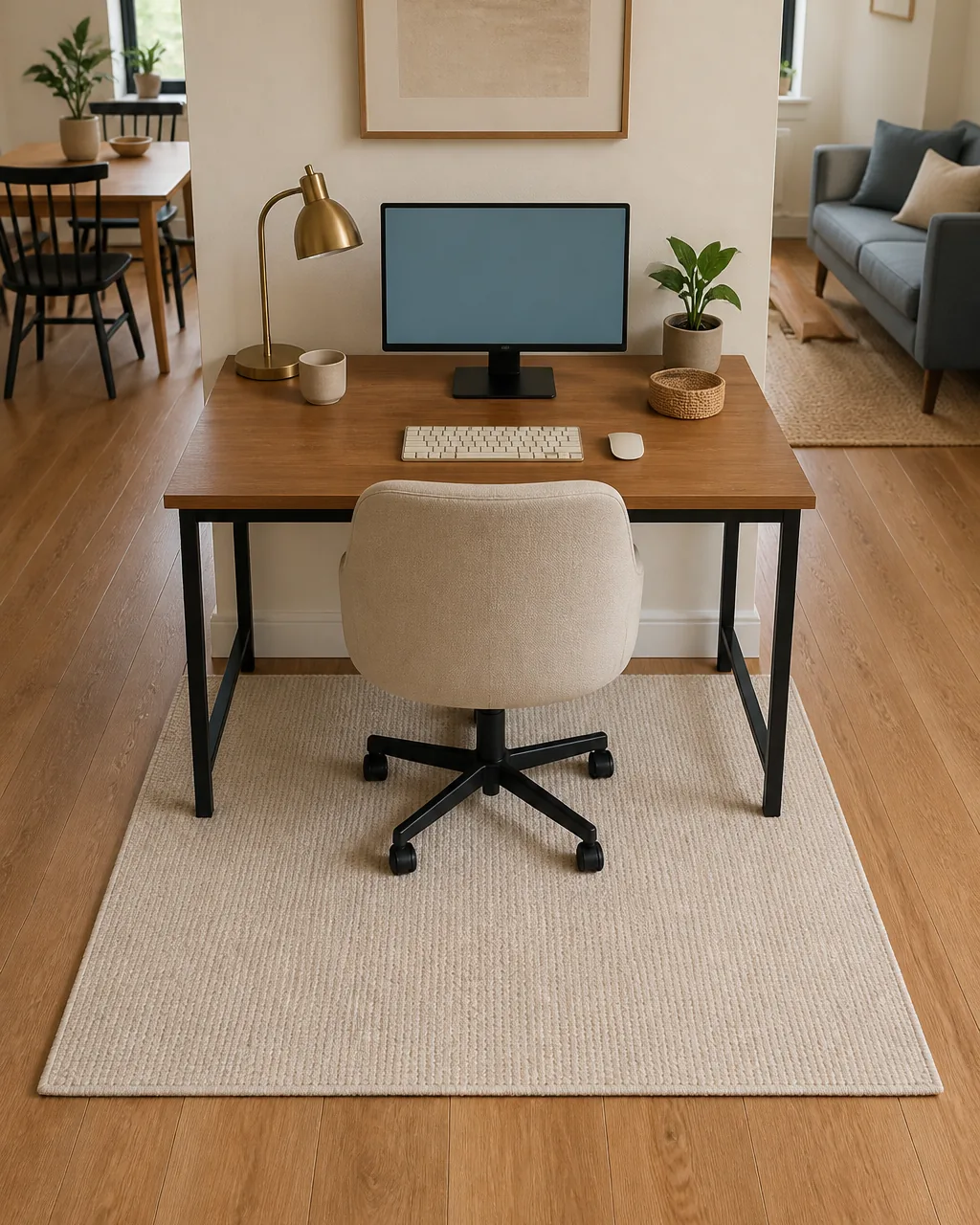
A workstation set in a corner of an open room with no rug under it reads as floating. There is no visual line that says the work zone starts here and ends there.
A small rug sized to just the chair plus the front of the desk legs solves it without building walls. The rug becomes the floor of the office. Step off the rug and you step out of work mode. It is the cheapest mental boundary in interior design.
- Pick a rug just large enough to hold the chair on its back legs and the front desk legs; bigger reads like a living room rug
- Stick with low-pile or flatweave; deep-pile rugs catch caster wheels and shed under a chair
- Match the rug to the wall color, not the floor; a quiet contrast makes the zone read intentional
- Avoid a runner or hallway shape; a small square or short rectangle holds a chair better than a long strip
- Add a rug pad even on a tiny rug; the chair will push the rug toward the desk all day without one
Add One Plant + One Framed Print So It Reads “Home Office”
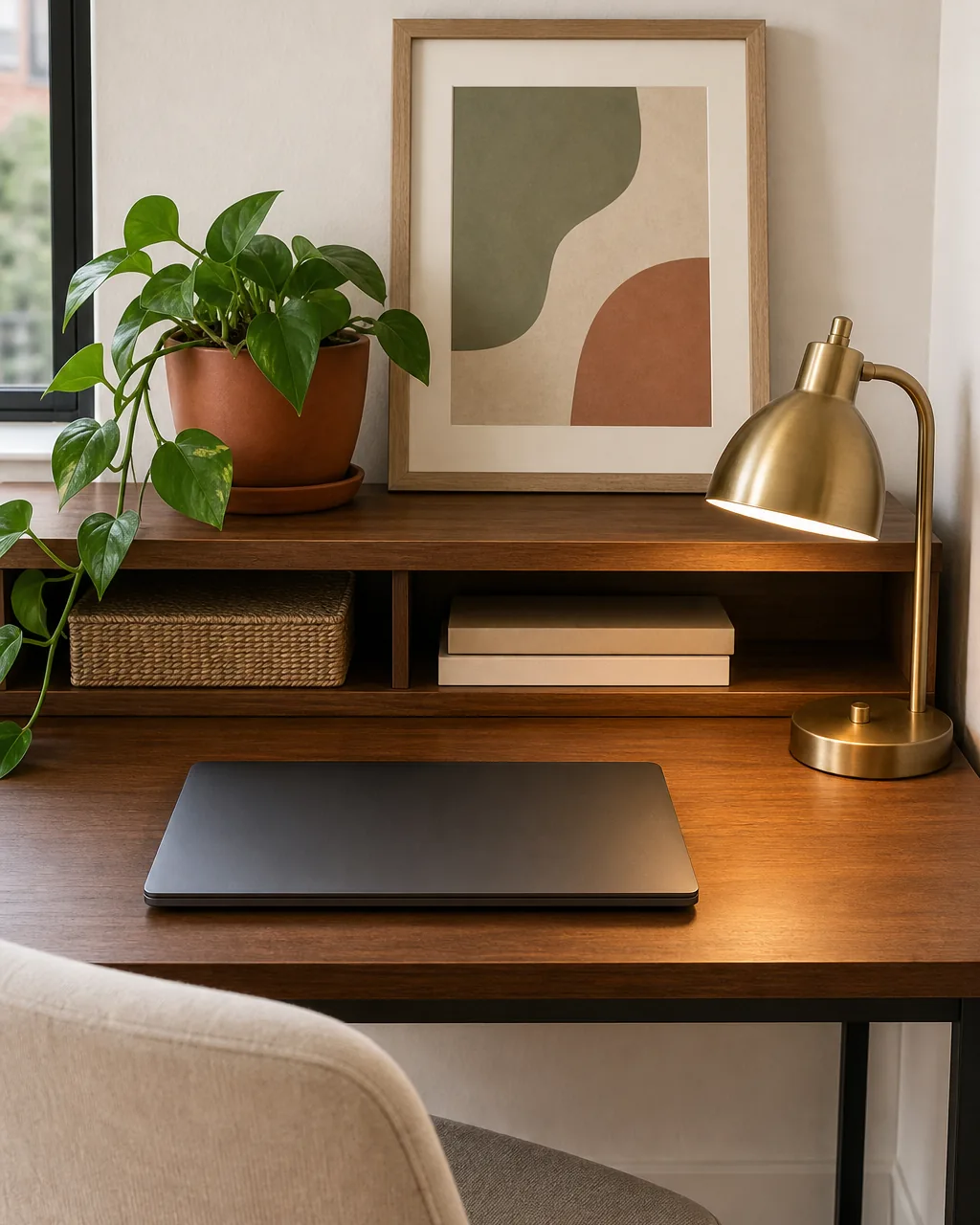
The line between a small home office that feels like a workstation and one that feels like a setup is shorter than you think. Two soft objects do most of the work.
One small live plant on the desk shelf and one framed print propped against the wall behind it. That is the whole list. The plant gives the corner movement and the print gives it a finished edge. Together they signal home, not temporary.
- Pick a low-maintenance trailing plant like pothos or philodendron; flowers and fussy succulents do not survive desk light
- Use one warm-tone pot, not white plastic; the pot reads as part of the room, not from the office supply aisle
- Lean the framed print rather than mounting it; a leaned print stays movable and reads softer than a hung one
- Choose abstract over typography; words on a desk wall age fast and start to read like a motivational poster
- Stop at two soft objects; three is staged, one is unfinished, two reads home
A small home office that feels improvised is rarely the room’s fault. It is the desk asked to fit nowhere and the chair asked to read as office furniture in the middle of a living room.
Once the workstation gets its corner or closet or wall, its one warm lamp, its rug, and its two soft objects, the same square footage stops feeling like a setup. It starts reading as a real room you walk into on Monday morning.

Nora writes about small, livable storage systems for real apartments. Her own desk is a 36-inch oak top wedged into the corner of a 600-square-foot living room — which is why every move in this guide gets pressure-tested against an actual Monday morning before it shows up here.
Nora Ellis edits Styled Home Notes. Visit the Nora Ellis author page. More from Nora: small living room ideas, studio apartment ideas, minimalist small space ideas.