11 Pantry Shelf Organization Ideas That Make Every Jar Findable
A pantry with deep shelves and no system turns into a place where food goes to expire behind other food. The back row disappears, labels face the wrong way, and you end up buying a second jar of cumin because you could not see the first one.
These eleven pantry shelf organization ideas each solve one specific problem between you and a shelf where every item is visible, reachable, and accounted for.
Each one targets a shelf, corner, or habit that is costing you groceries.
- 1Tiered Risers Along the Back
- 2Label Every Bin Same Font
- 3Turntable in Every Deep Corner
- 4Clear Stackable Containers
- 5Pull-Out Drawer on Lowest Shelf
- 6Shelf-Edge Baskets Underneath
- 7Group by Meal-Prep Zones
- 8Narrow Shelf on the Door Back
- 9Expiry Basket at Eye Level
- 10Stepped Insert for Cans
- 11Leave One Shelf Empty
1. Stack Tiered Risers Along the Back Wall
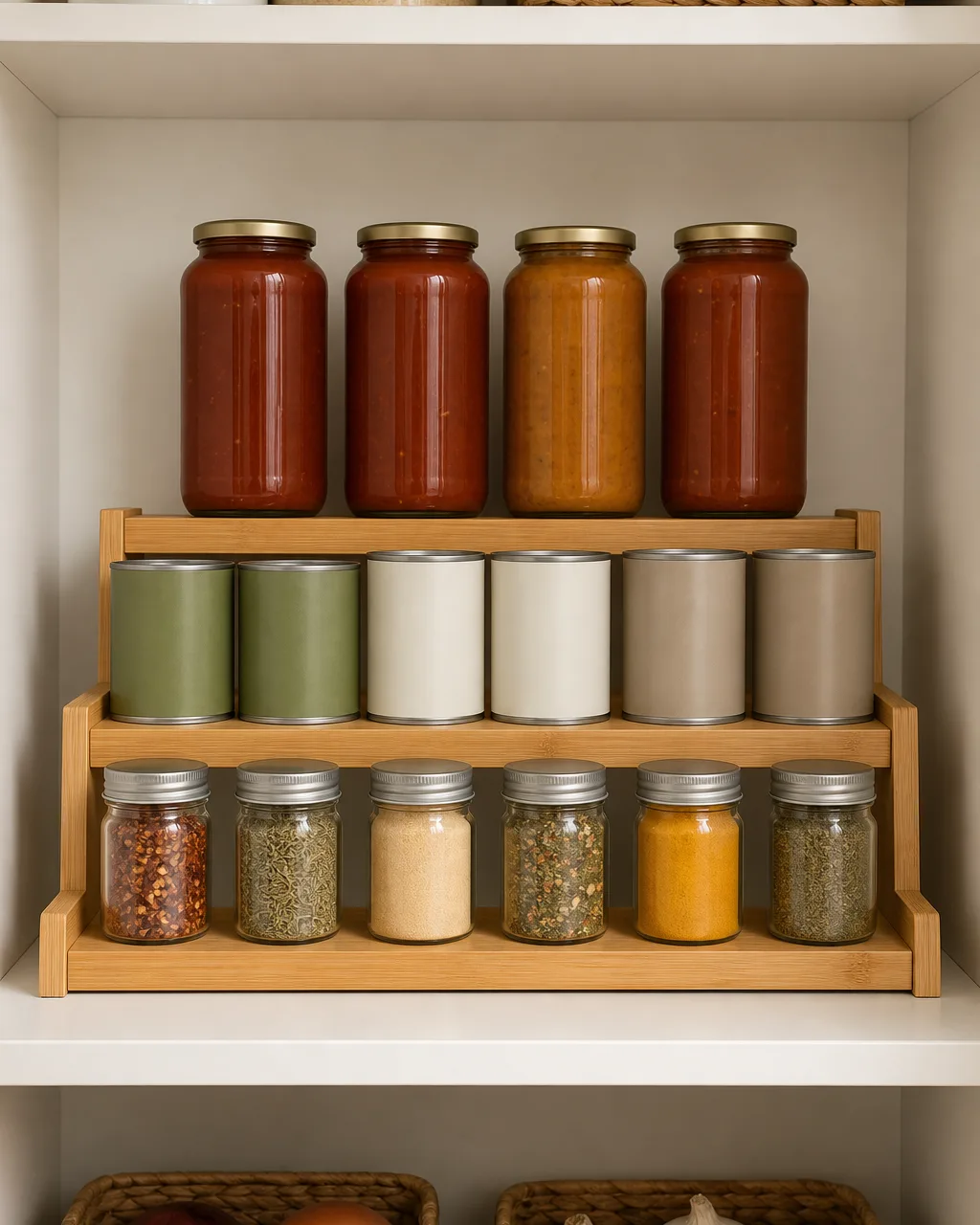
The back row of a pantry shelf is where food goes to be forgotten. A tiered riser lifts items into staggered rows so every label faces forward and nothing disappears behind anything else.
- Measure the shelf depth before buying so the riser sits flush against the back wall without hanging over the front edge
- Bamboo three-tier risers hold cans and jars at a weight most acrylic risers cannot match
- Reserve acrylic risers for lighter items like spice jars where you want to see through the shelf
- Place the tallest items on the top tier and shortest on the bottom so sight lines stay clear from the front
- Wipe each riser tier once a month when you rotate stock forward
Every disorganized pantry has one weak spot bleeding groceries. Start there.
2. Label Every Bin with the Same Font
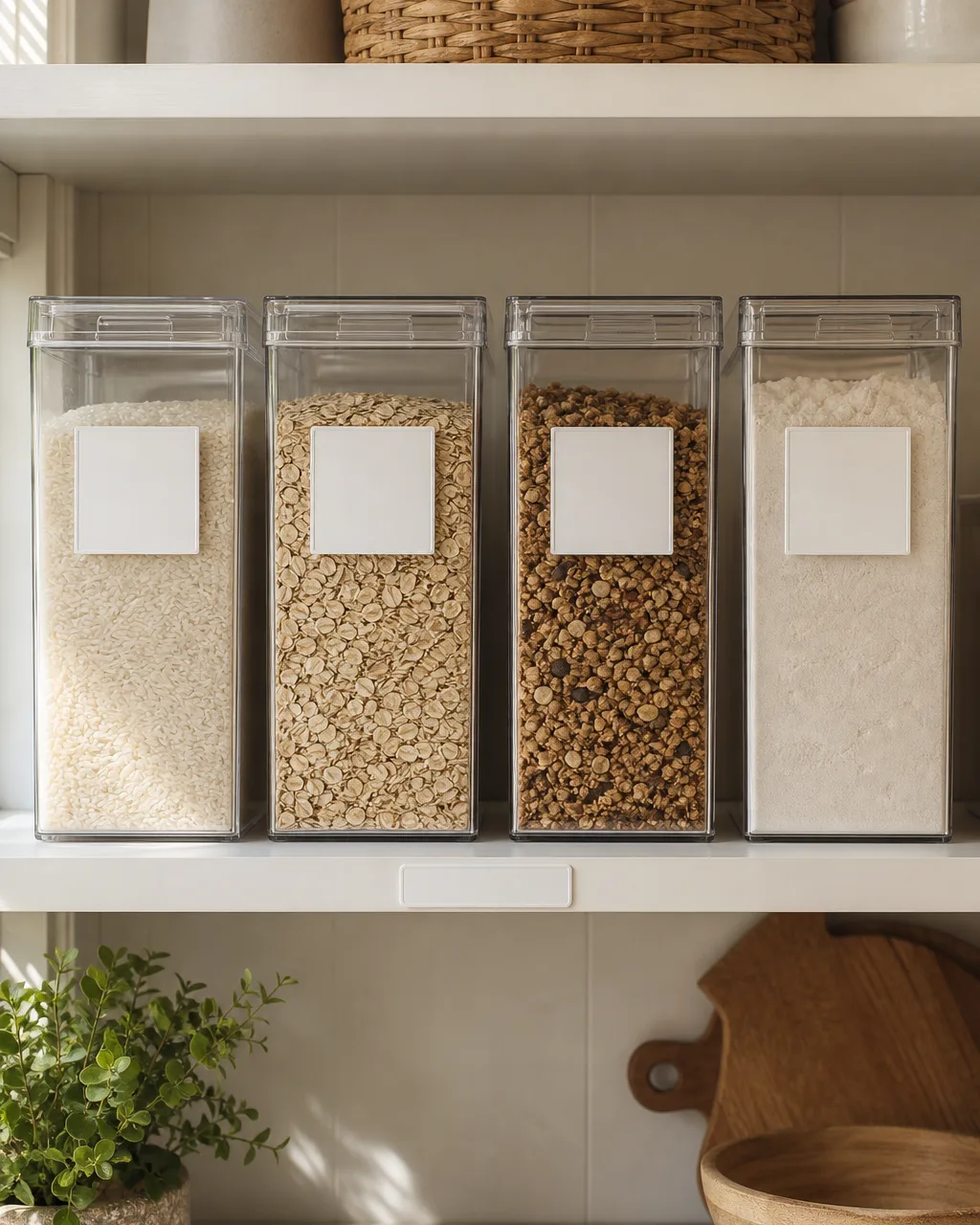
Matching labels turn a shelf of random containers into a system your eye can scan in seconds. When every bin carries the same typeface and placement, you stop reading shapes and start reading words.
- Pick one labeling method and commit to it across the entire pantry, whether that is a label maker, vinyl letters, or a paint marker on masking tape
- Label the shelf edge underneath each bin as a backup so you know what goes where even when the bin is out
- Add the month you opened or decanted each item so you can rotate stock without guessing
- Replace any label that has faded, curled, or peeled because a half-readable label is worse than no label
- Group label colors by category if your label maker supports it, for example blue for grains and green for baking
3. Add a Turntable to Every Deep Corner
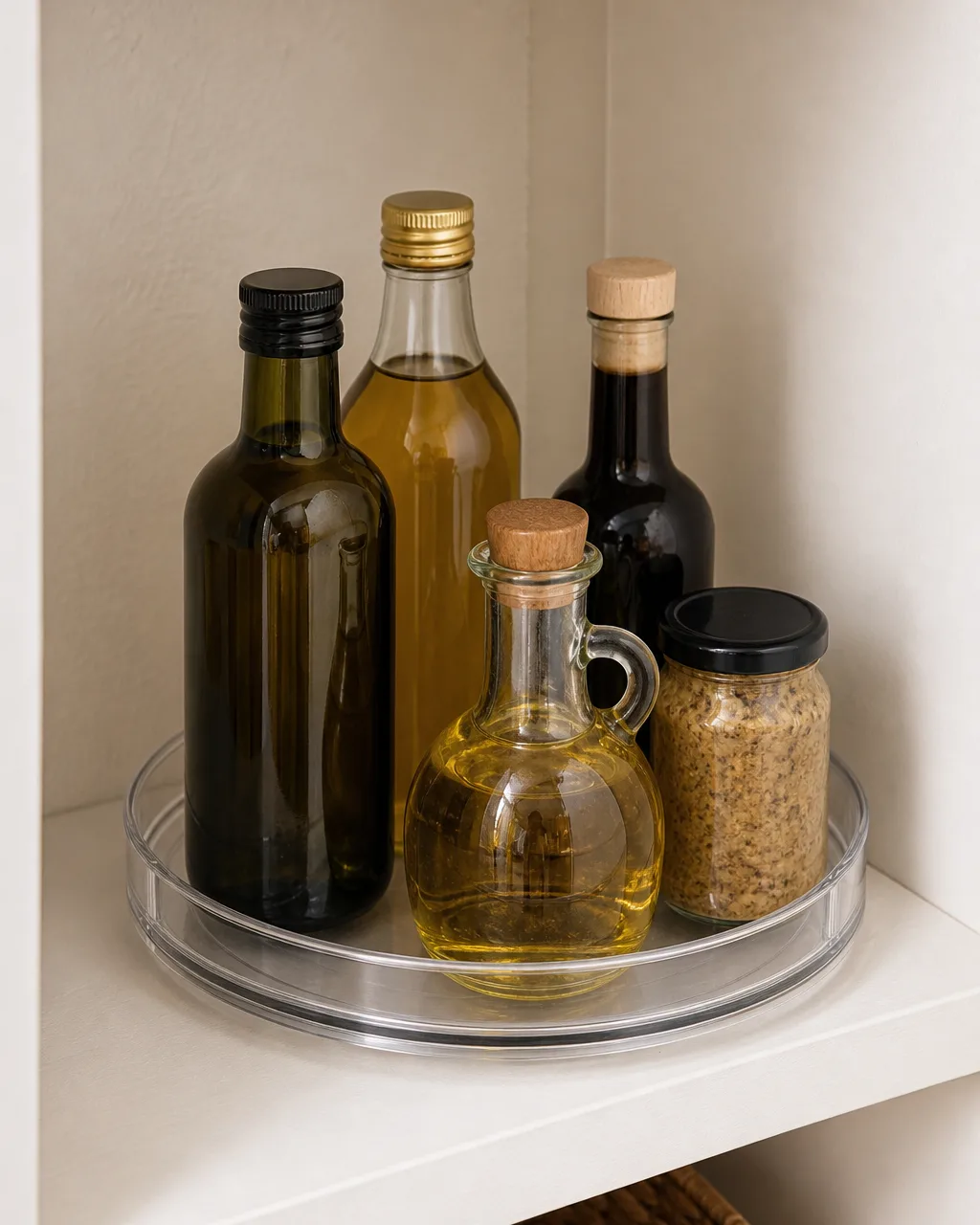
Deep pantry corners swallow bottles whole. A turntable spins everything into reach with one hand so you never have to move ten things to get to the one thing you need. If you are working with a deep pantry, turntables are the single most effective upgrade for corner access.
- A ten-inch diameter fits most standard pantry shelves without bumping into the sidewall
- Line the turntable base with a non-slip shelf liner so bottles stay upright when you spin
- Assign one turntable per meal category, such as oils and vinegars on one and breakfast condiments on another
- Acrylic turntables let you see contents from below when the shelf above is close, which is an advantage wood does not offer
- Pull the turntable out once a quarter to wipe underneath and check expiry dates on anything hiding behind taller bottles
These keep pantry shelf organization ideas from becoming a weekend project that unravels by Wednesday.
4. Swap Bags for Clear Stackable Containers
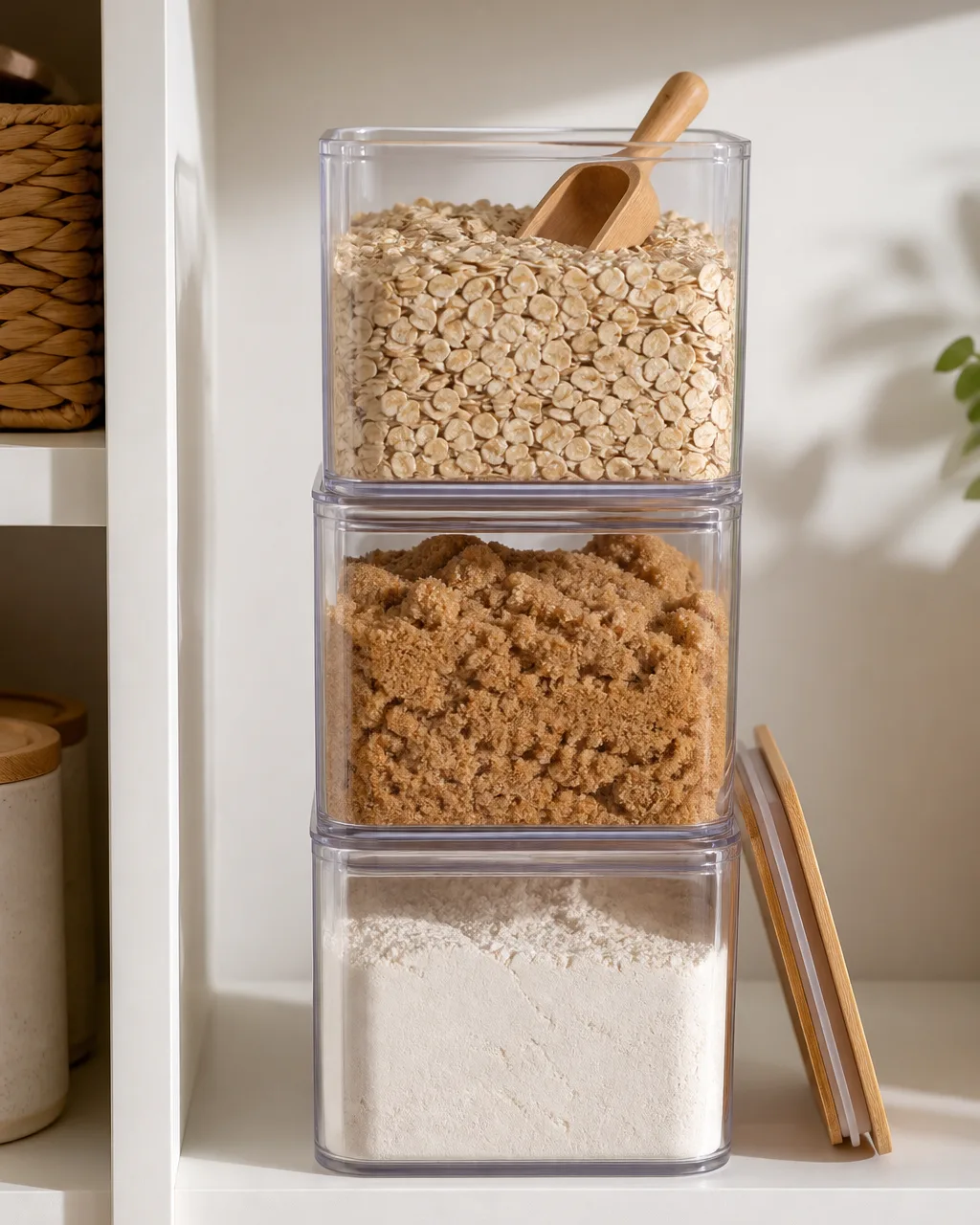
Original packaging wastes space, hides fill levels, and falls over. Transferring dry goods into uniform clear containers lets you see exactly how much flour, sugar, or rice you have left without opening anything.
- Square containers stack tighter than round ones because they eliminate the curved gaps between neighboring jars
- Choose containers with airtight snap or clamp lids to keep moisture, pantry moths, and staleness out
- Pour-spout lids on flour and sugar containers let you scoop or pour without removing the whole lid
- Leave a dedicated scoop or measuring cup inside each container so you never have to dig for one
- Only decant items you will use within two months to avoid tying up containers with slow-moving stock
5. Install a Pull-Out Drawer on the Lowest Shelf
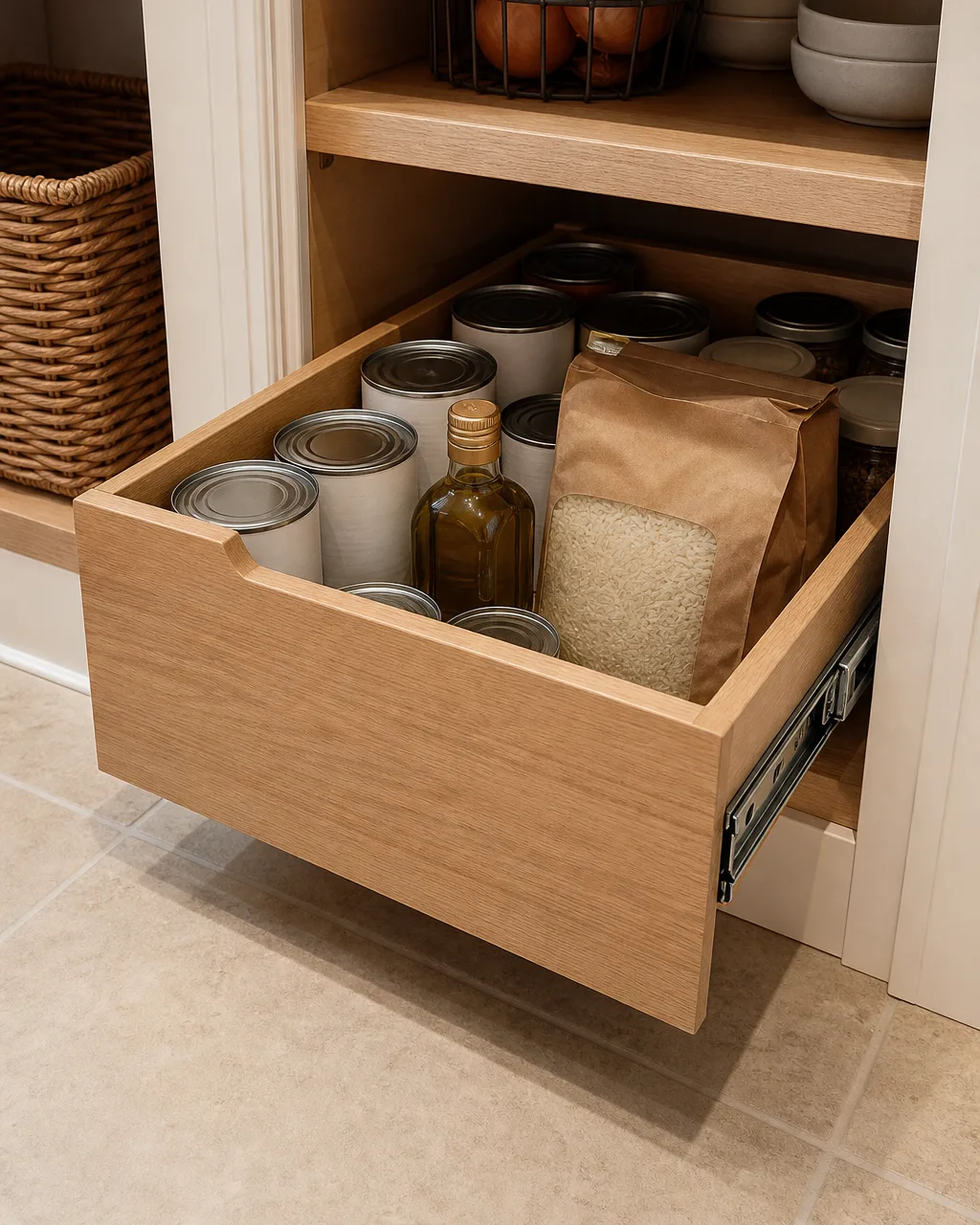
The bottom shelf of a pantry is prime real estate for heavy items but terrible for access. A sliding drawer insert on ball-bearing rails brings the entire shelf forward so you can see and reach everything without kneeling.
- Measure the inside width and depth of the shelf before ordering because even a quarter-inch gap lets the drawer rock under load
- Ball-bearing slides handle the weight of canned goods and glass bottles far better than friction slides
- Line the drawer floor with a non-slip mat so items stay in place when you push the drawer back in
- Store the heaviest items here, such as large oil bottles, rice bags, and bulk cans, to keep the pantry center of gravity low
- Label the front edge of the drawer so you know its contents at a glance without pulling it out first
6. Clip Shelf-Edge Baskets Under Each Shelf
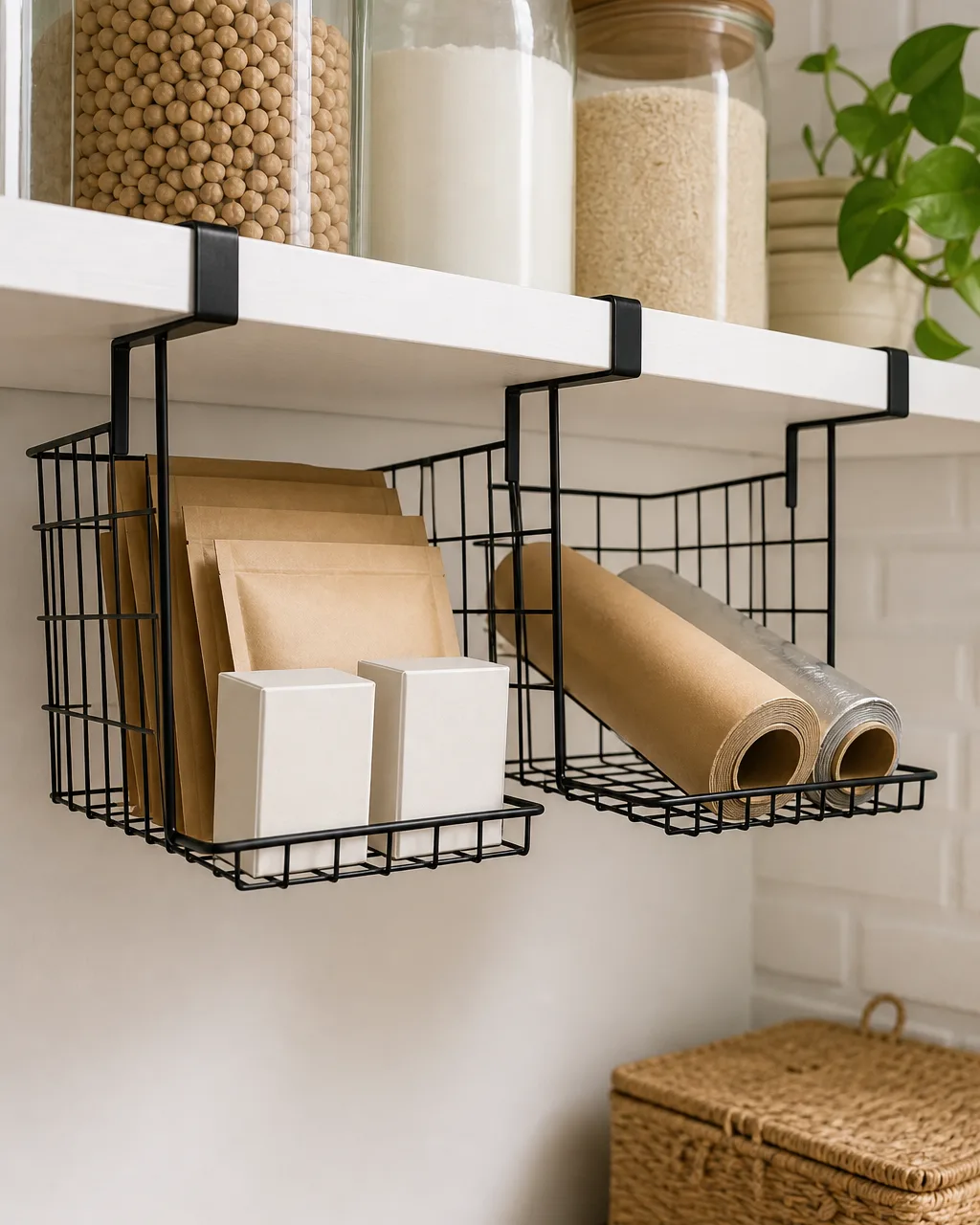
The vertical gap between the top of your items and the shelf above is wasted space. Under-shelf clip-on baskets turn that dead zone into extra storage for flat items that do not stack well on their own.
- Choose baskets that clip over the shelf edge without screws so you can reposition them as your layout changes
- Flat items like seasoning packets, tea boxes, and parchment paper rolls fit perfectly because they slide in horizontally
- Check the weight rating before loading because most clip-on baskets hold five to eight pounds at most
- Stagger baskets on alternating shelves so the pantry door still closes without hitting a basket edge
- Paint baskets the same color as the shelf if the industrial wire look clashes with your kitchen organization style
11 pantry shelf organization ideas that make every jar findable
- 1Tiered RisersStaggered rows along the back wall so every label faces forward.
- 2Uniform LabelsSame font on every bin turns scanning from guessing into reading.
- 3Corner TurntablesSpin deep-corner bottles into reach without moving anything.
- 4Clear ContainersSee fill levels and identify contents at a glance.
- 5Pull-Out DrawerBottom shelf slides forward on rails so nothing hides in the dark.
- 6Under-Shelf BasketsClip-on baskets turn wasted vertical space into flat-item storage.
- 7Meal-Prep ZonesOne spot per meal type means one grab per recipe.
- 8Door-Back ShelvingNarrow racks on the door hold daily-reach spices and extracts.
- 9Expiry BasketBright bin at eye level for anything approaching its date.
- 10Stepped Can InsertTiered steps show every can label without unstacking.
- 11One Empty ShelfLanding pad for grocery day so bags never pile on the counter.
7. Group Items into Meal-Prep Zones
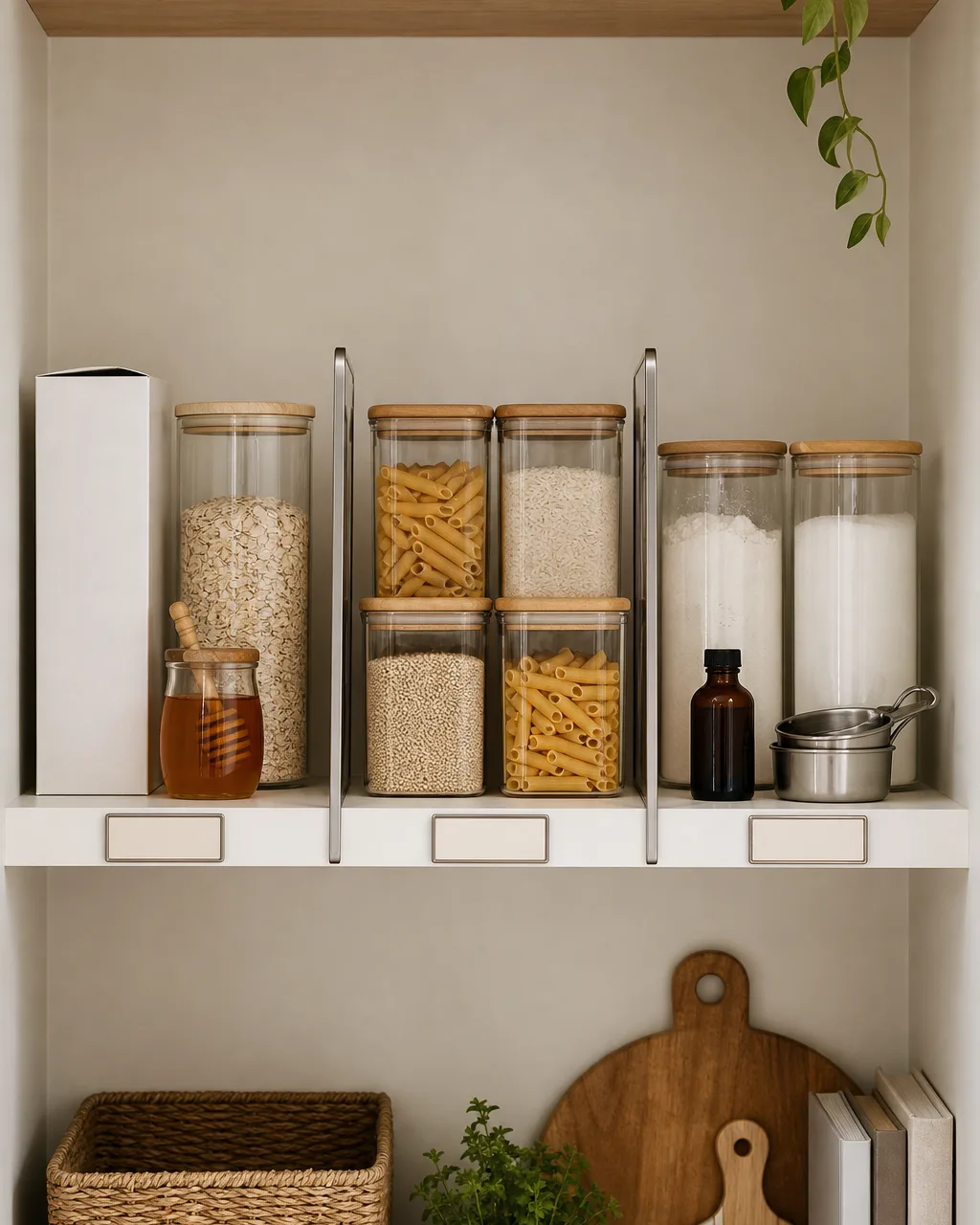
A pantry organized by food type scatters recipe ingredients across three shelves. Organizing by meal type puts everything for Tuesday night pasta in one spot, so cooking starts with one reach instead of a scavenger hunt.
- Dedicate one shelf or shelf section to breakfast items so the morning routine needs exactly one stop
- Group dinner bases together by starch type, such as all pasta on one side and all rice and grains on the other
- Place the snack zone at a height kids can reach on their own if you want them to self-serve without climbing
- Keep baking supplies near your measuring cups and mixing bowls so the entire baking workflow stays in one area of the kitchen
- Restock by zone after every grocery trip instead of putting items wherever there is room, because zones survive only if restocking respects them
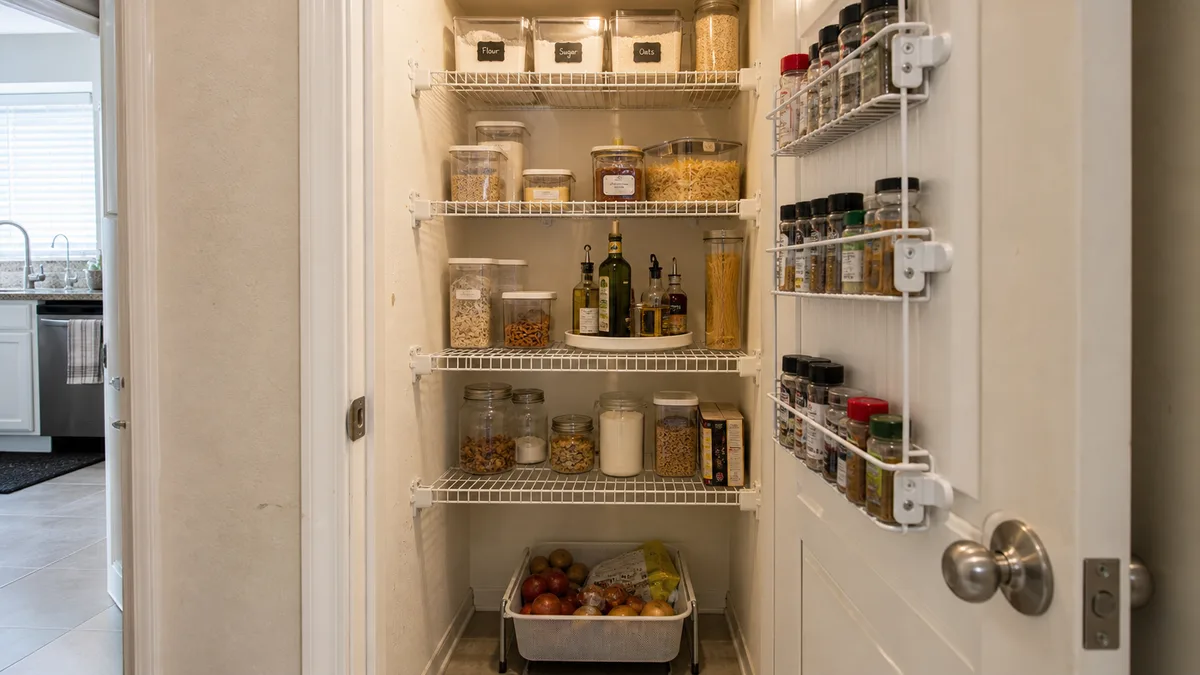
8. Run a Narrow Shelf Along the Door Back
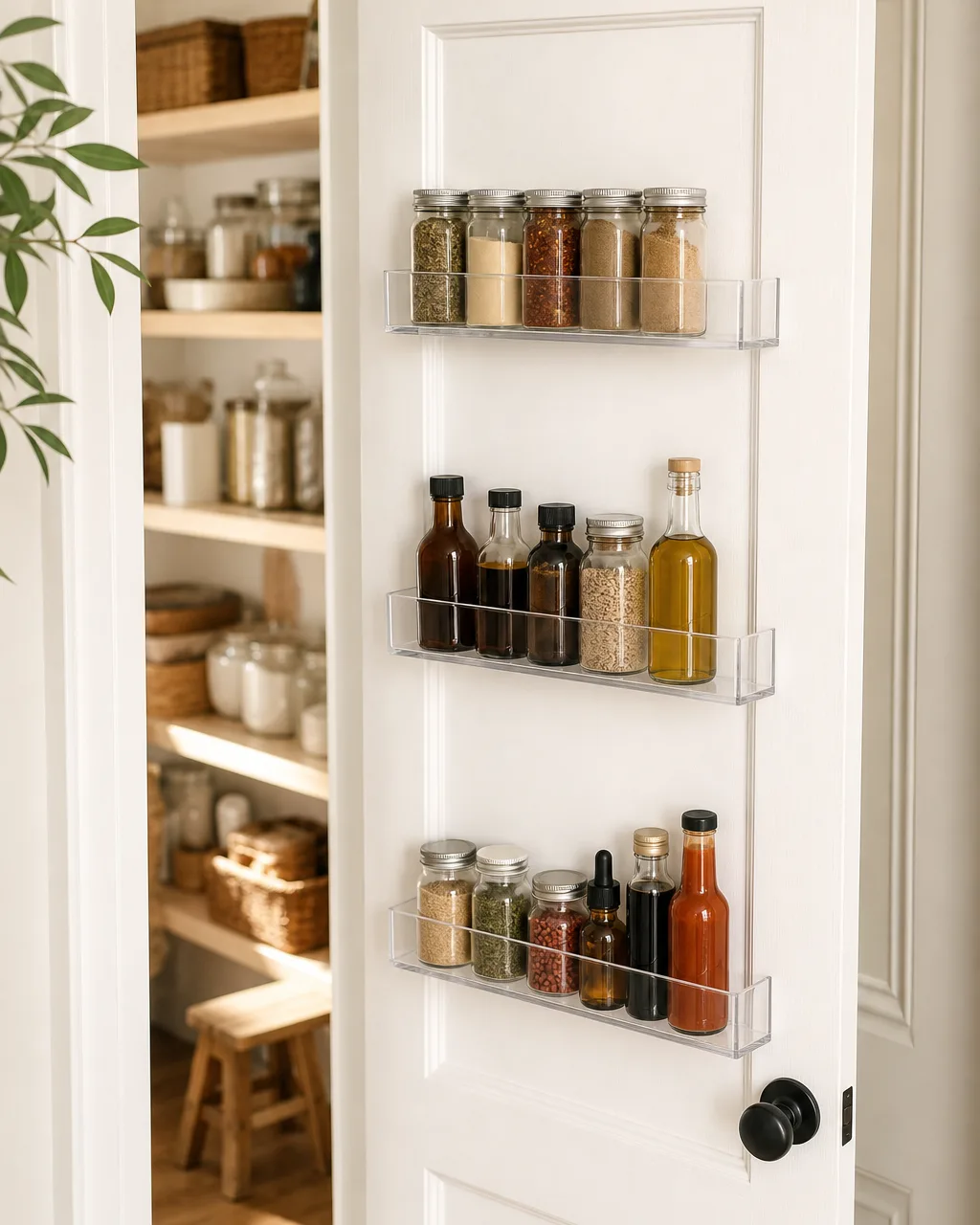
The back of the pantry door is unused wall space that can hold every small jar you reach for daily. Mounting narrow shelves there frees main shelves for bulk items while keeping spice rack essentials at arm's length.
- Acrylic or wire spice racks designed for door mounting keep jars visible and secure with a front lip
- Screw into the door frame or stile, not the thin center panel, so the mounting hardware holds weight over time
- Keep each item under one pound because door-mounted shelves carry less than fixed wall shelves
- Apply non-slip liner strips inside each shelf channel to stop jars from sliding every time the door swings
- Reserve this prime real estate for items you grab every single day, like cooking oils, salt, and pepper
9. Set a Basket-and-Label System for Expiring Items
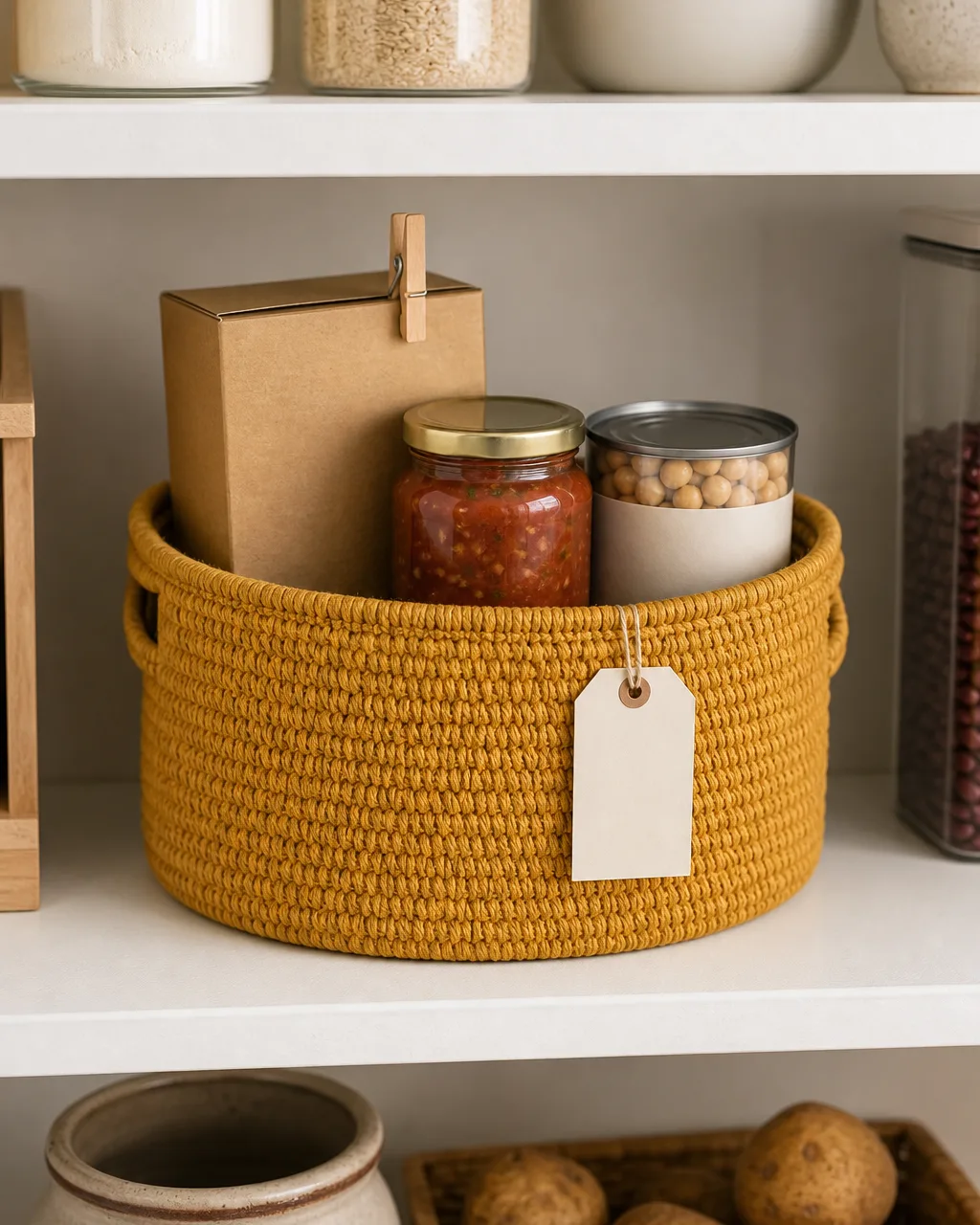
Food waste happens when near-expiry items sit behind newer purchases. A dedicated basket at eye level labeled as the use-first zone makes those items the first thing you see when you open the pantry door.
- Place the basket at eye level, front and center, so it is impossible to reach past it for something else
- Choose a bright or contrasting color so the basket stands out from the neutral tones of the rest of the pantry
- Check the basket and rotate items into it once a week during your regular meal planning session
- Clip the earliest expiry date to the front of the basket with a small wooden or magnetic clip so you know the deadline
- Move new purchases behind existing stock on every shelf so the pantry naturally pushes older items forward
10. Raise Canned Goods on a Stepped Insert
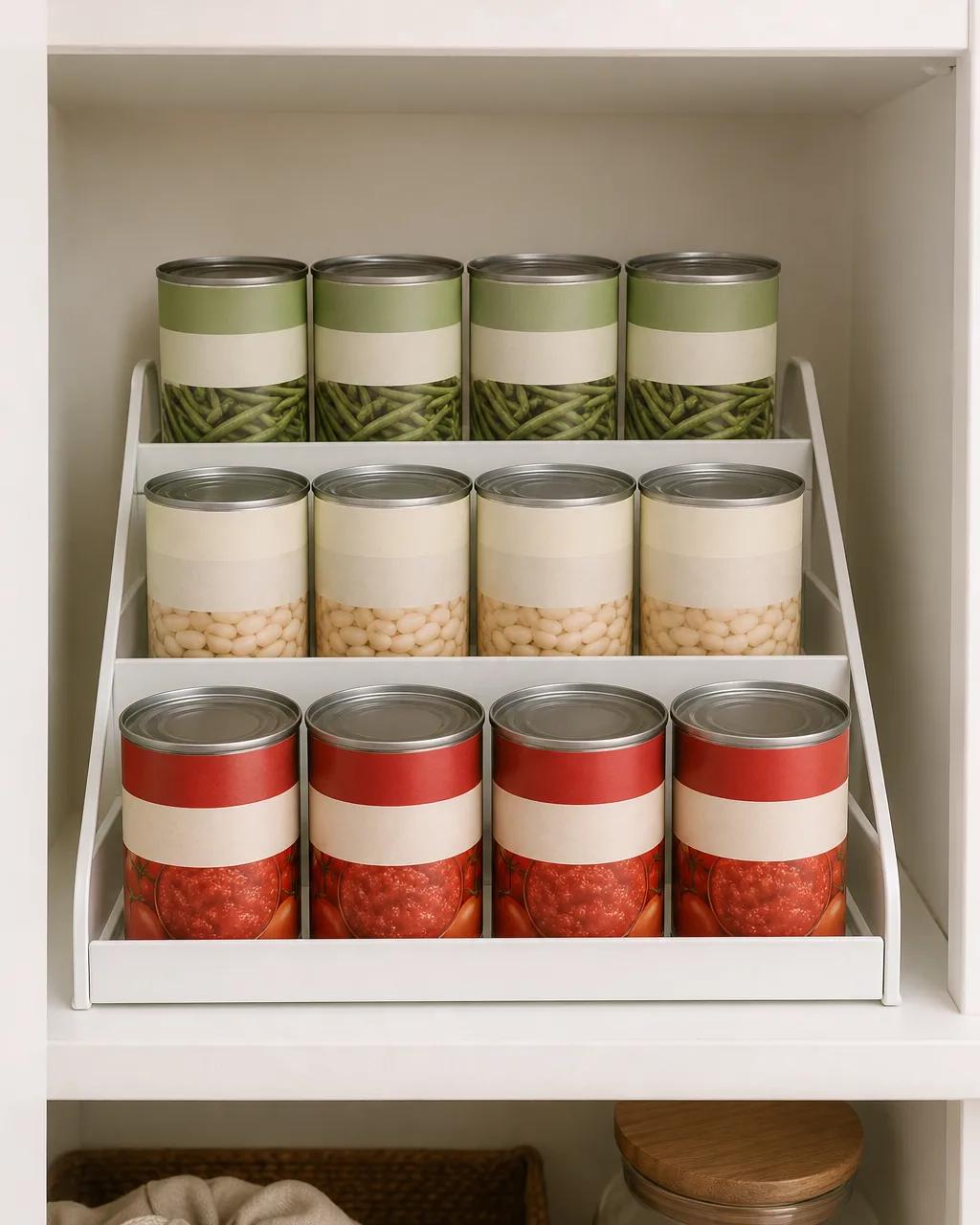
Cans stack neatly but their labels vanish behind the row in front. A stepped insert creates a stadium-seating effect where every can label is visible from the shelf opening, which means you stop pulling out three cans to find the one you need. Pair this with the cabinet organization approach for a consistent system across pantry and cabinets.
- Choose an expandable-width insert so you can adjust the fit if you rearrange shelves later
- Tilt the front row slightly forward for a gravity-feed effect so the next can slides into position after you grab one
- Group cans by type on each step, such as all tomato products on one tier and beans on another
- Follow a first-in-first-out rule by placing new cans at the back of each tier and pulling from the front
- Wipe each tier when you restock because can bottoms collect dust that transfers to the next tier below
11. Leave One Shelf Completely Empty
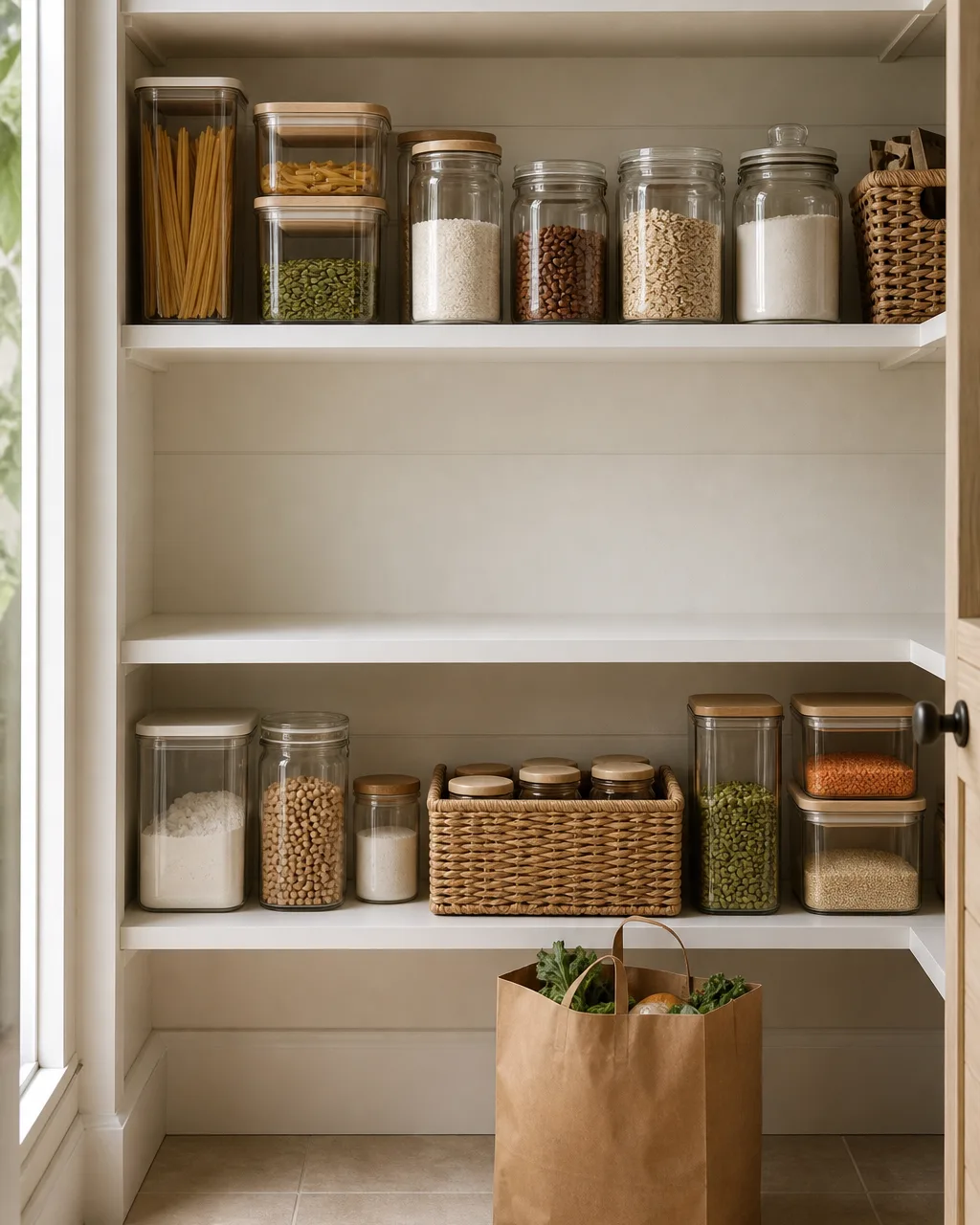
A pantry packed to capacity has no room for grocery day. Bags pile on the counter, items get shoved wherever they fit, and the system you spent an afternoon building falls apart in twenty minutes.
One intentionally empty shelf serves as a landing zone, a staging area, and a pressure valve that keeps the rest of the pantry honest.
- A middle shelf works best because it sits at a comfortable reach height for unloading bags quickly
- Use it as a sorting station where you unpack bags, check expiry dates, and route items to their assigned zones
- Clear it back to empty within two days of each grocery run so it stays a buffer and not another storage shelf
- The empty shelf itself acts as a check on overbuying, because if you cannot clear it in two days you bought too much
- A pantry with one open shelf looks calmer and more intentional even when the rest is fully stocked
The kitchen drawer organizers guide covers the same zone-and-label thinking applied to drawers, if your pantry connects to a prep area with shared workflow.