17 Storage Ideas for Small Spaces That Do Not Look Cluttered
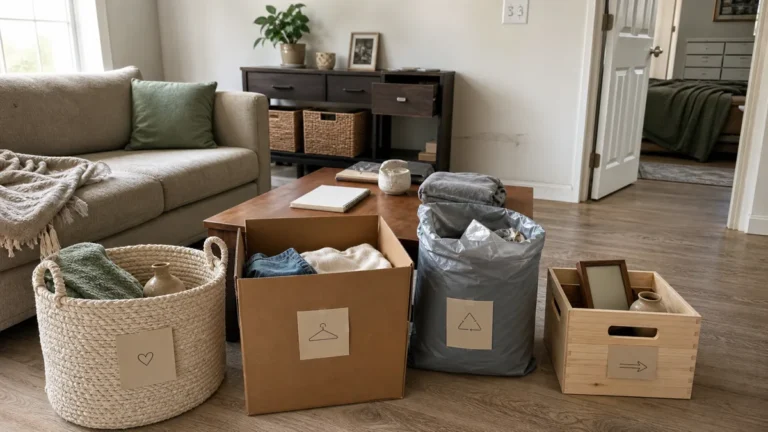
Here’s the trap: you run out of space, so you buy more storage, and now the room feels even smaller. The basket you brought home to fix the clutter becomes part of the clutter. The shelf you mounted is packed so tight it makes the wall look like a warehouse.
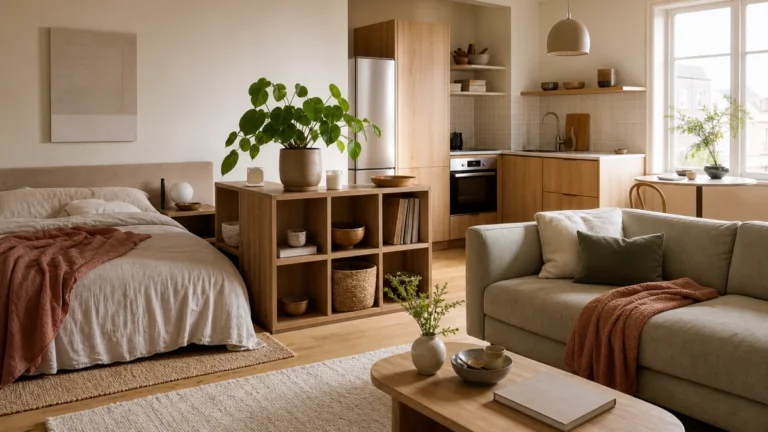
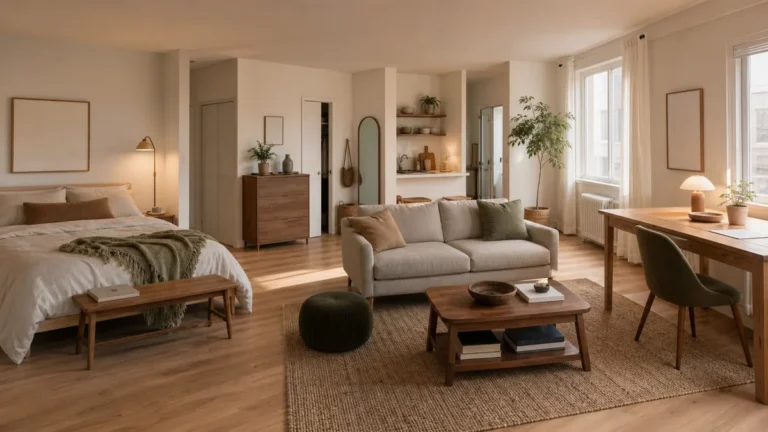
Good storage in a small home doesn’t announce itself. It absorbs the mess, keeps daily life reachable, and still lets the room look like a room — not a storage unit with a sofa in it.
1. Use Closed Baskets Where Clutter Collects First
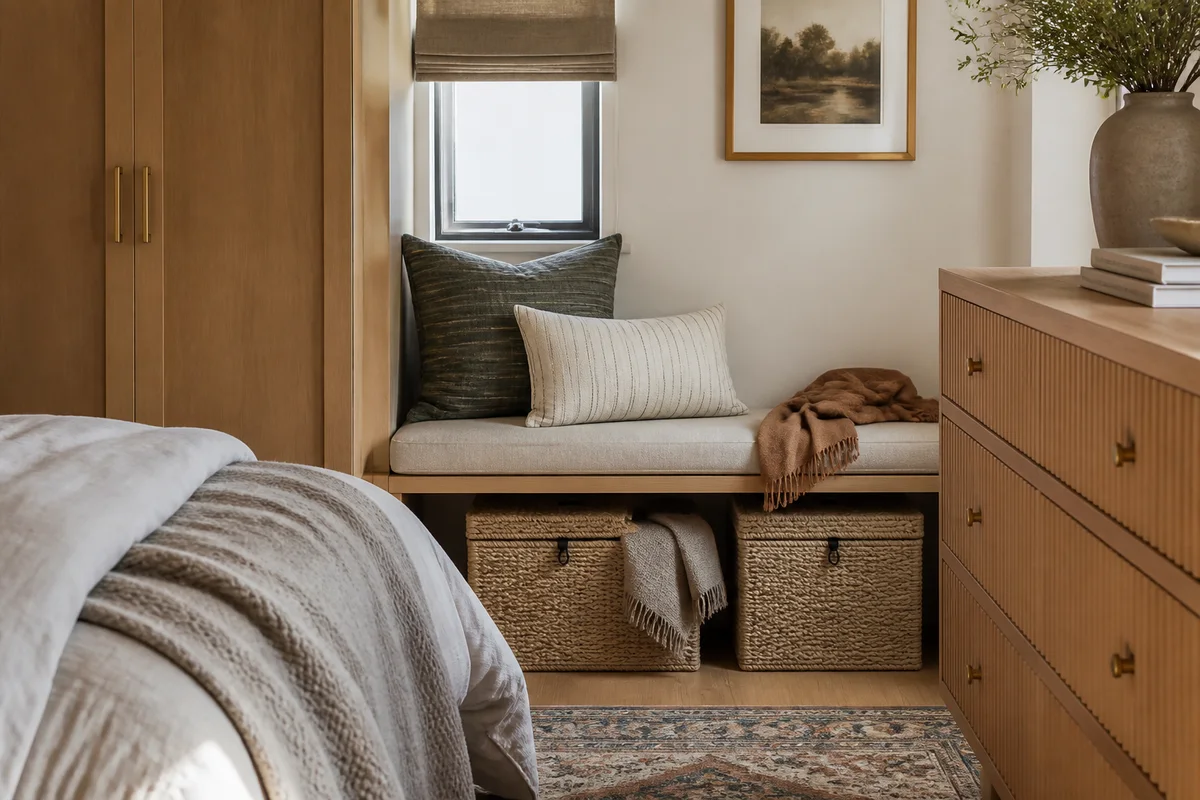
Every home has a clutter hotspot — that corner of the couch where the chargers pile up, the console table that collects mail, the spot by the bed where three books and a pair of headphones live permanently. That’s where a closed basket goes. Not on the shelf across the room. Right at the source.
Lidded or fold-over woven baskets hide the contents while still looking like they belong. One rule: one basket, one category. The moment a basket becomes “everything that doesn’t have a place,” it’s just a stylish junk drawer.
Start with the problem you see most, then keep scrolling for all 17 ideas.
2. Add a Storage Bench Near the Door
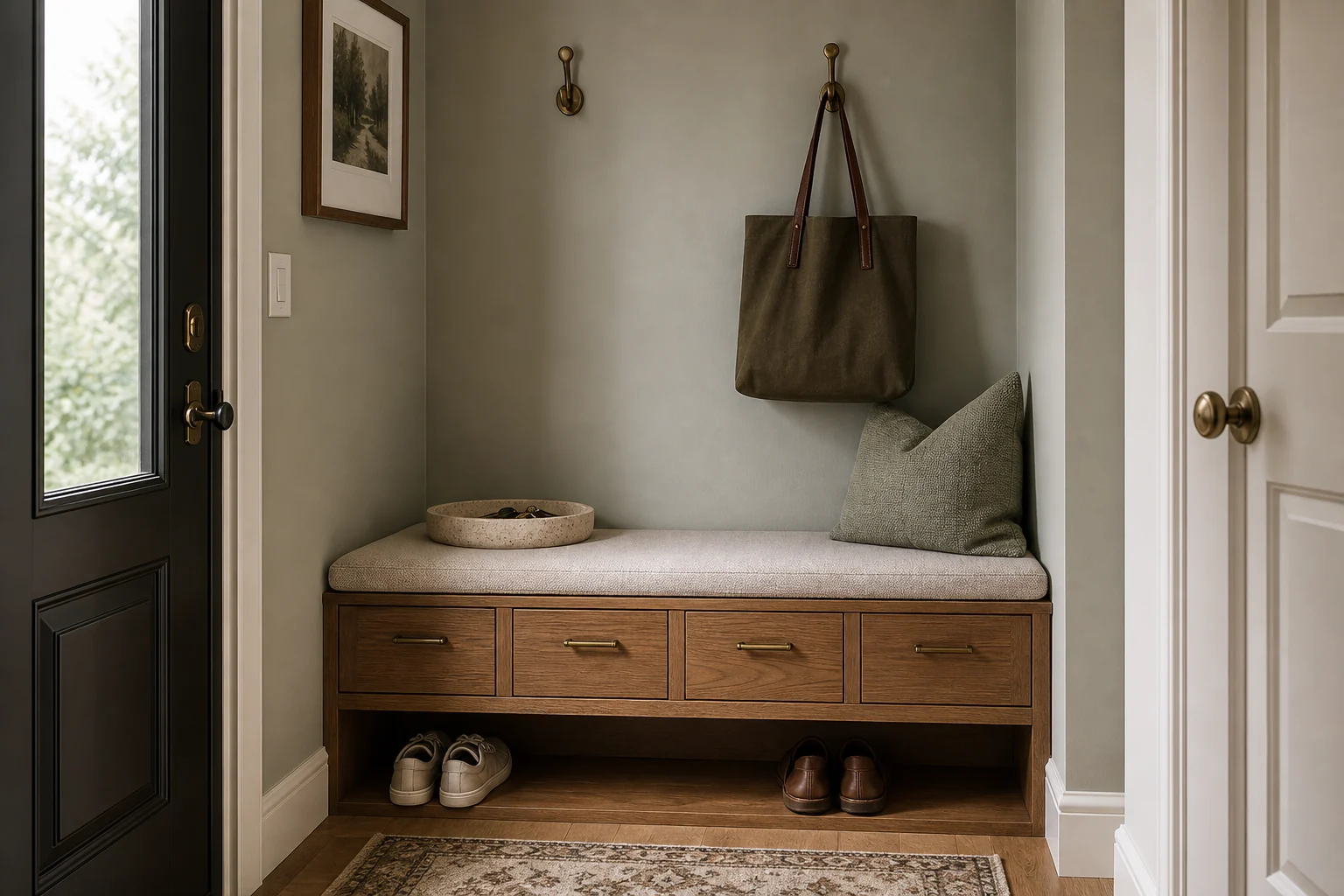
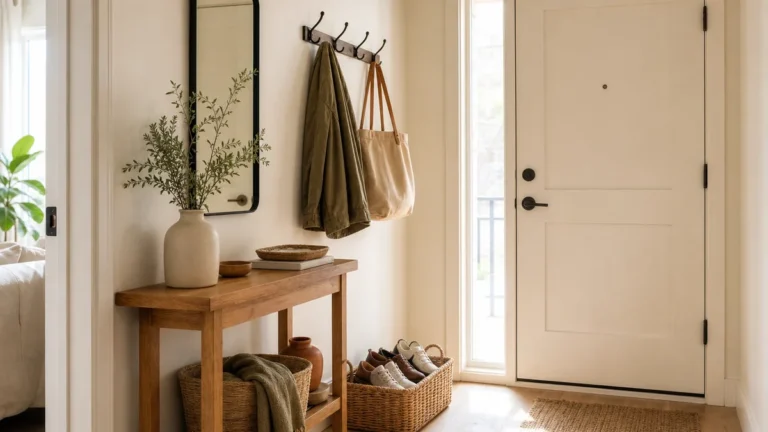
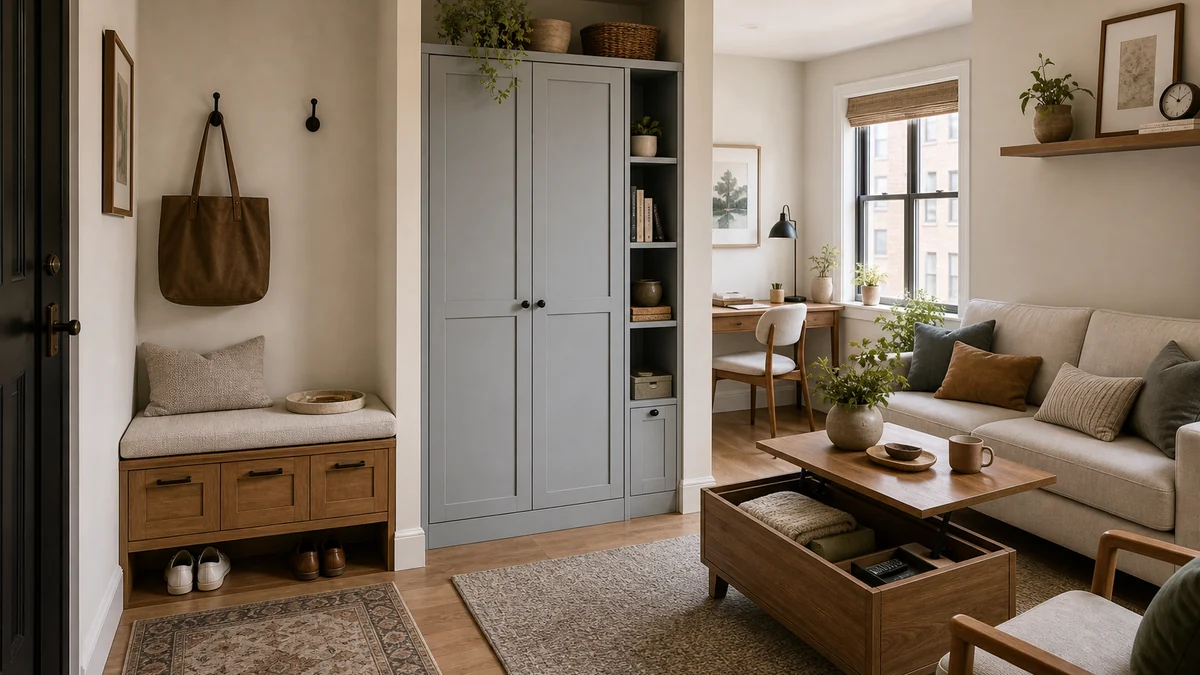
Shoes, bags, keys, sunglasses, mail — all of it hits the apartment the moment you walk in, and if there’s nowhere to put it, it spreads. A storage bench at the entry gives daily items a place to stop before they colonize the living room.
Closed storage underneath works best if the entry is visible from the main space. Open cubbies can work, but they require discipline — more than two pairs of shoes visible at once and it looks like a locker room. Keep it tight: one pair out, the rest inside.
3. Choose a Coffee Table With Hidden Storage
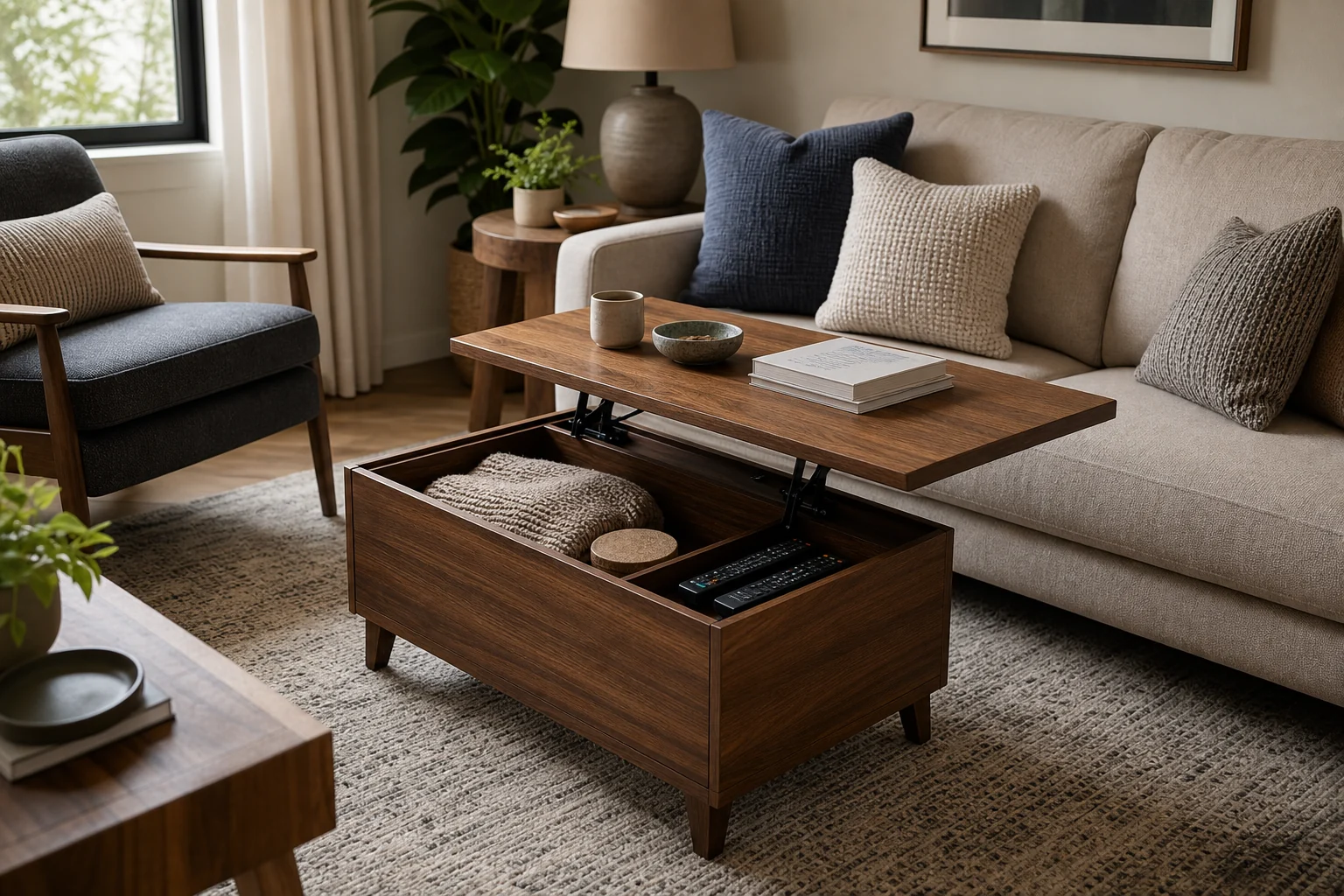
A lift-top or drawer coffee table earns its footprint twice. The surface handles drinks and books; the inside swallows remotes, coasters, chargers, notebooks, and the throw blanket that ends up balled on the sofa every morning.
The top stays edited — a tray, one small stack, maybe a candle. Everything else lives inside. That’s the whole point: the room keeps its calm surface while the practical mess disappears six inches below it.
For layout context, pair this with small living room ideas that make apartments feel bigger to make sure the table doesn’t crowd your walkway.
4. Use Wall Shelves With Breathing Room
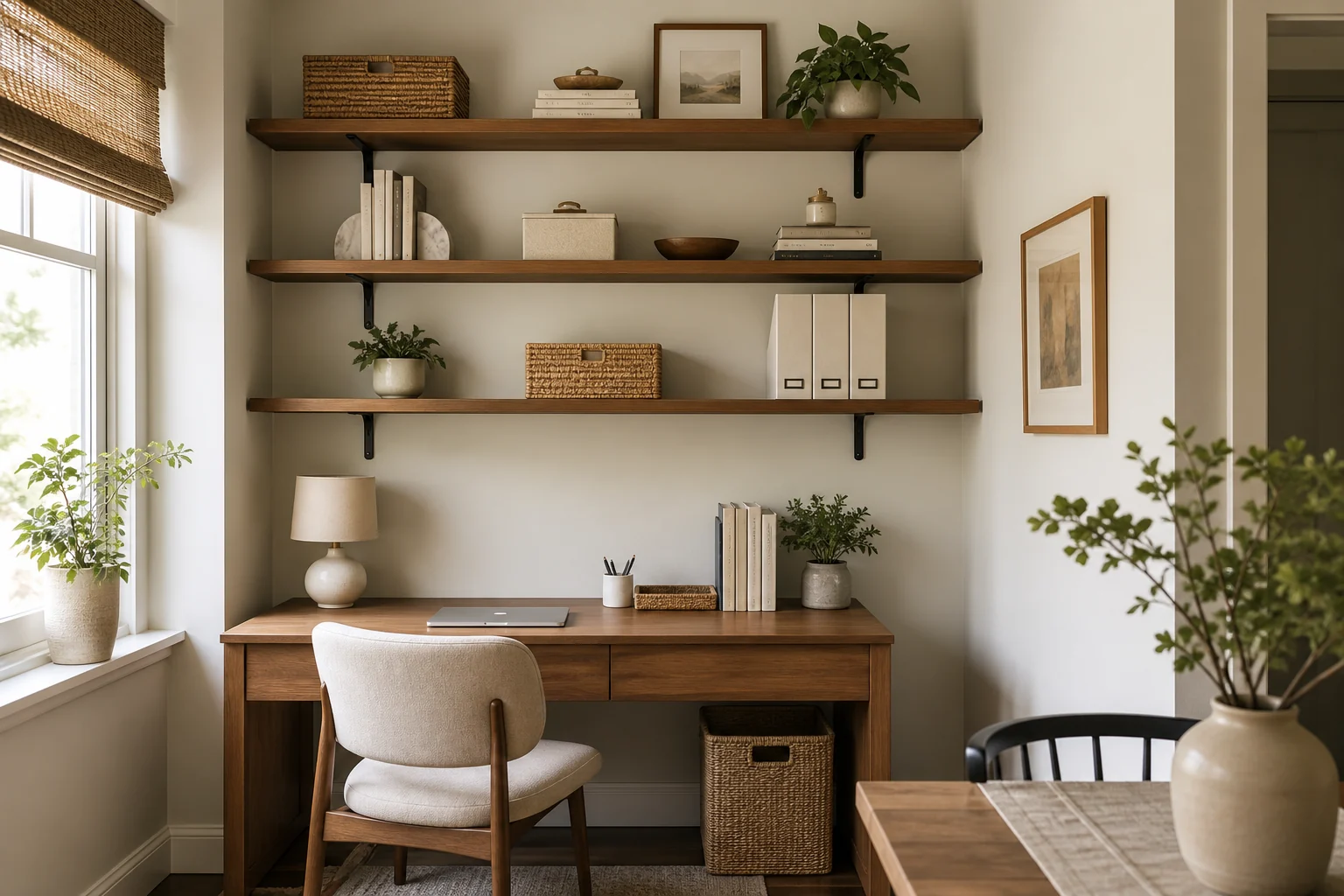
Wall shelves save floor space. Overstuffed wall shelves save floor space and ruin the wall. Same outcome as a cluttered table — you just moved the noise up by four feet.
The discipline is leaving gaps. Not every inch needs to be filled. A few books, one basket, a small plant, and an empty stretch of shelf that lets your eye rest. If you can’t see the wall behind the objects, you’ve gone too far. Take one-third of the items off before you decide the shelf needs a friend.
More storage is not always the answer. Match the clutter problem to the first useful move, then add only the pieces that solve that problem.
5. Turn One Tall Cabinet Into a Landing Zone
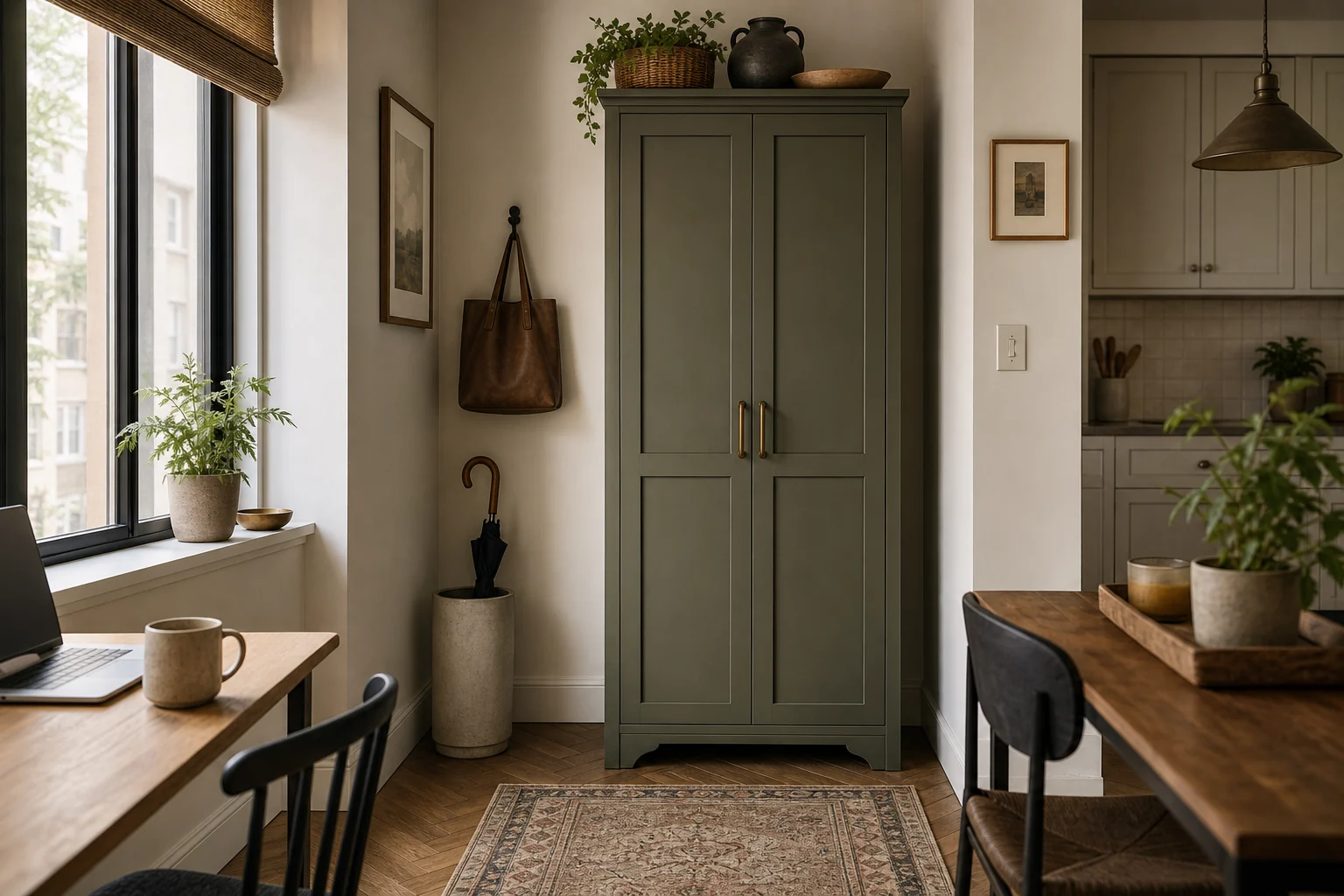
Three small storage units scattered across the room create three visual problems. One tall closed cabinet, tucked in a hallway nook, entry wall, or dining corner, replaces all of them with a single footprint.
Bags, paperwork, pet supplies, cleaning products, seasonal scarves — give it all one address behind closed doors. The outside stays simple: clean front, quiet hardware, no visible contents. The inside can be as practical and ugly as it needs to be. That’s the deal.
6. Slide Low Bins Under the Bed
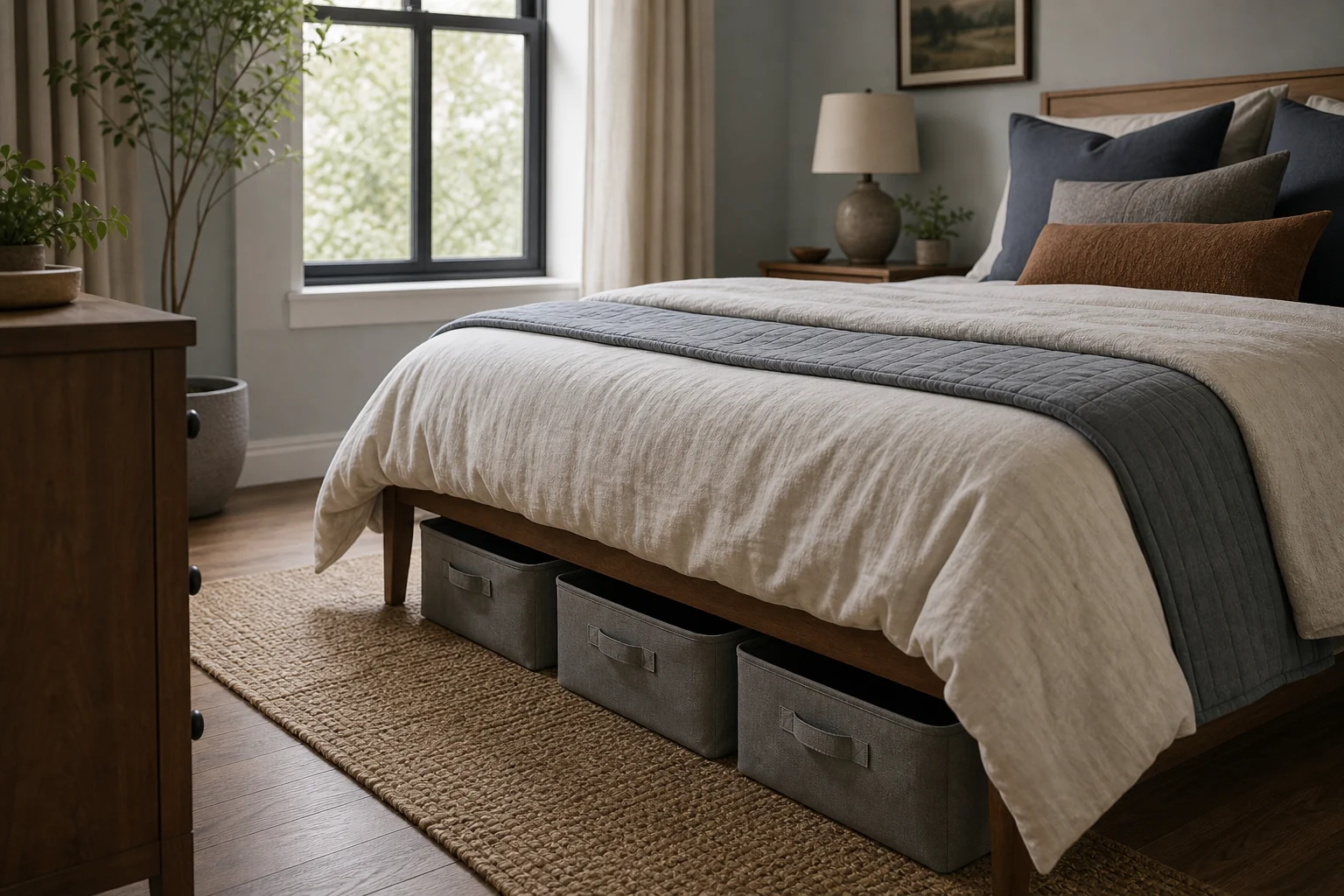
Under-bed space is free real estate that most people either ignore or turn into a graveyard of forgotten items. Use it on purpose: off-season bedding, guest linens, extra blankets, bulky sweaters. Flat, soft categories that don’t need daily access.
Rigid bins with lids beat soft bags — they slide easier, stack if needed, and keep dust out. The test: if you haven’t opened a bin in a full year, whatever’s inside should probably leave the apartment, not just hide under the mattress.
7. Use Hooks Behind Doors for Light Daily Items
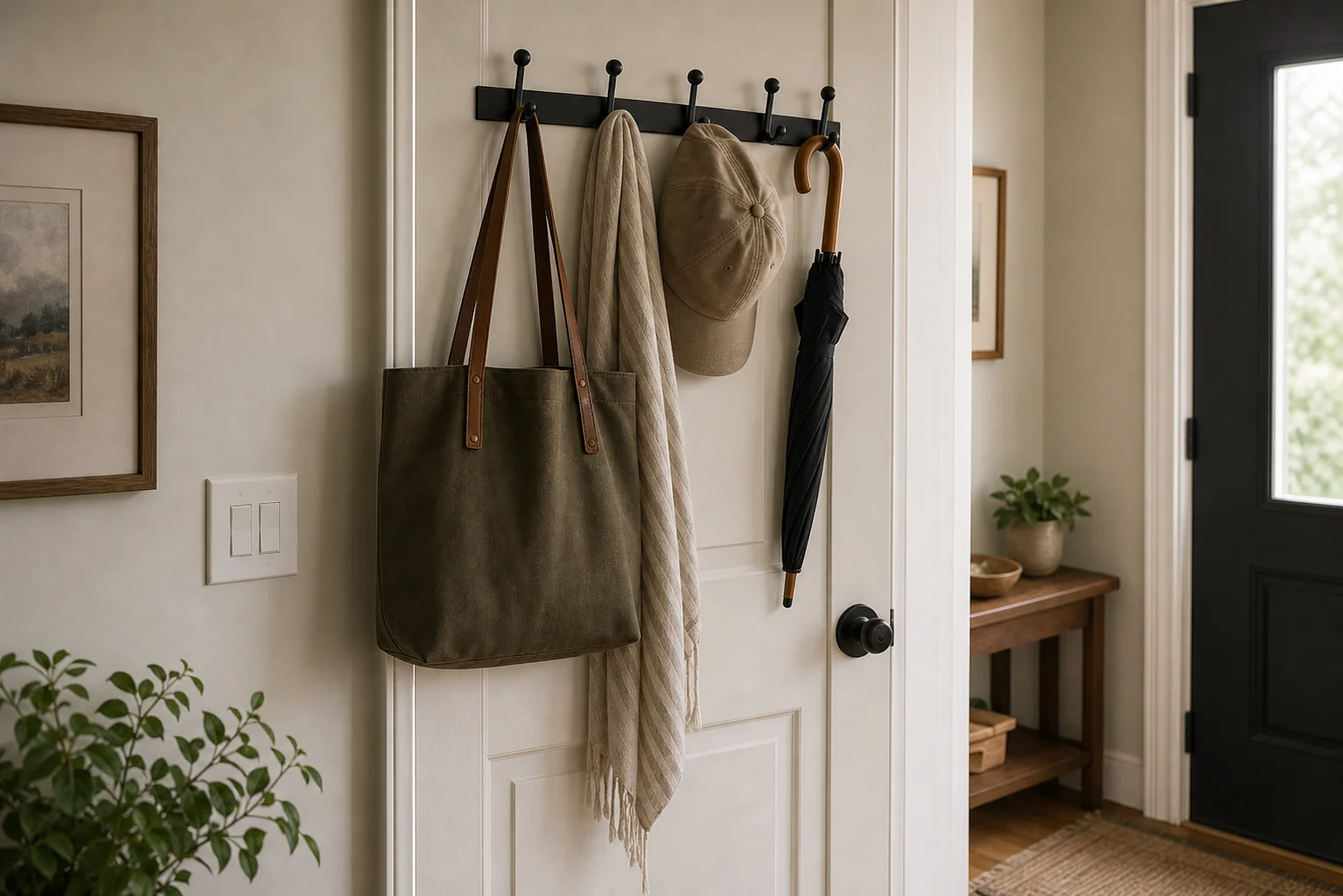
The back of a bedroom or bathroom door is storage space that costs nothing and takes nothing from the room’s footprint. Robe, daily jacket, tote bag, a couple of scarves — light, flexible items that you grab on the way out.
Two to four hooks is the sweet spot. More than that and the door becomes heavy, hard to close, and visually chaotic from the inside. This is a “grab and go” station, not a secondary closet.
8. Add a Slim Rolling Cart Where Cabinets Are Missing
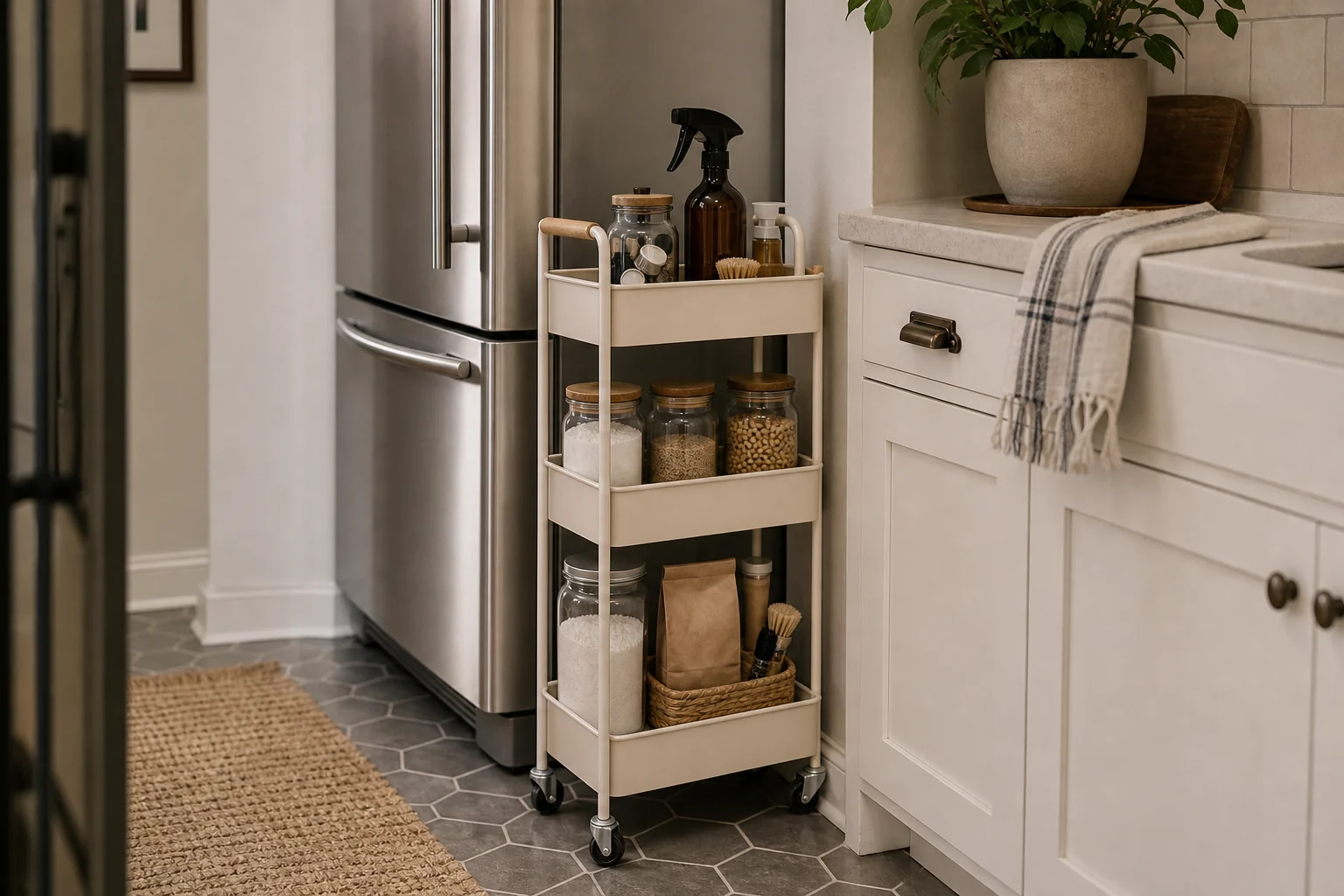
Rolling carts are the most useful — and most abused — storage piece in small apartments. Useful when it has one job: coffee station, pantry overflow, bathroom extras, cleaning supplies. Abused when it becomes a rolling junk pile because nobody decided what it’s for.
Name the job in three words before you buy the cart. “Coffee and tea.” “Cleaning supplies.” “Bathroom towels.” If you can’t name it, you don’t need the cart — you need to edit what you already own.
Small rooms look calmer when visible storage is edited and messy storage is hidden. Use this rule before adding another basket, bin, shelf, or cart.
9. Keep Open Storage to One Color Family
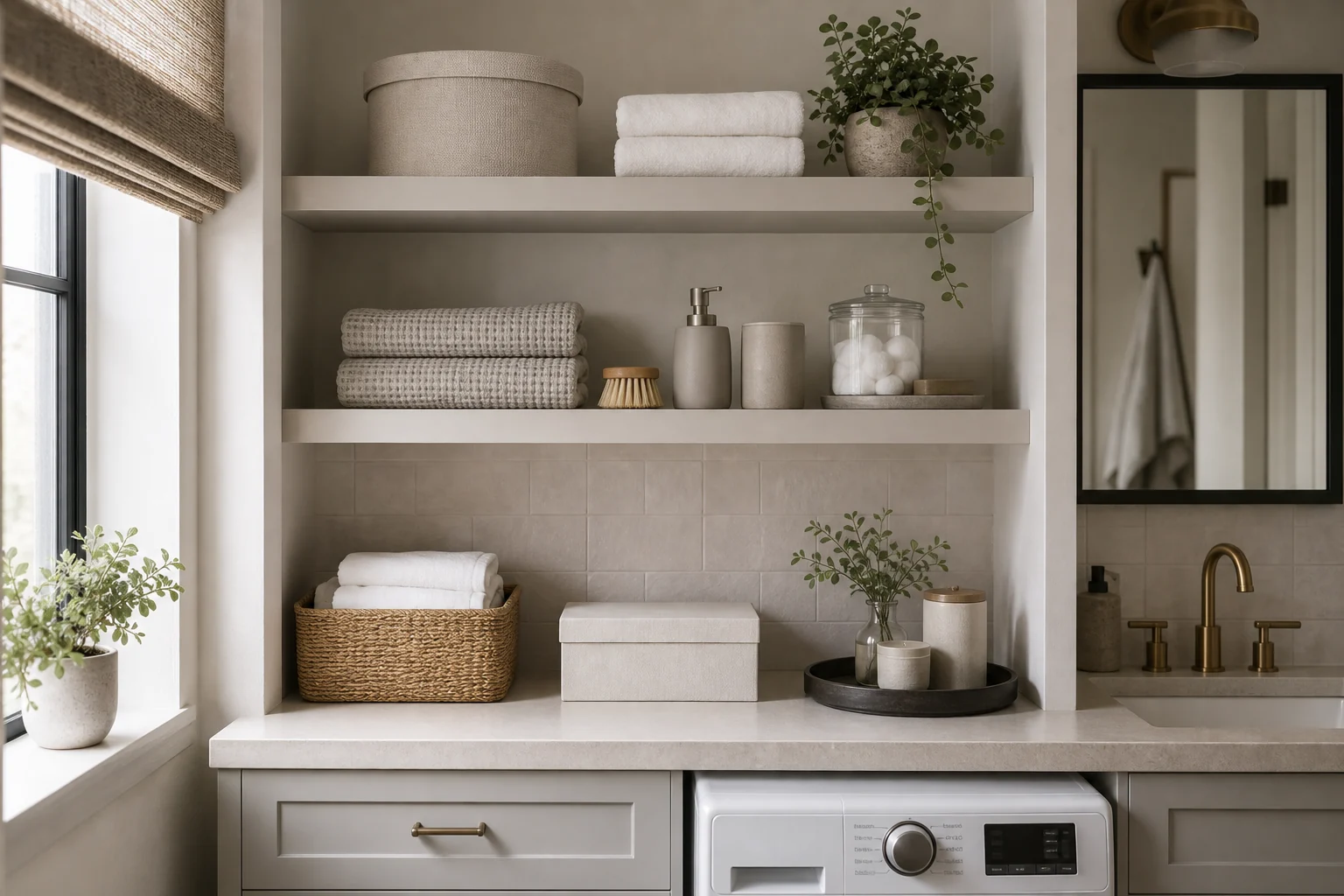
Open storage in a small room is an editing test. The contents are always visible, so they’re always part of the decor whether you planned it that way or not.
The simplest way to make open storage look intentional: keep the visible pieces in one color family. Warm neutrals, natural woven tones, muted wood, soft white. The items don’t need to match — they just need to feel related. A shelf of ten different colored bins looks like a daycare. A shelf of woven, cream, and wood looks like a room that someone thought about.
10. Use Drawer Dividers in Small Furniture
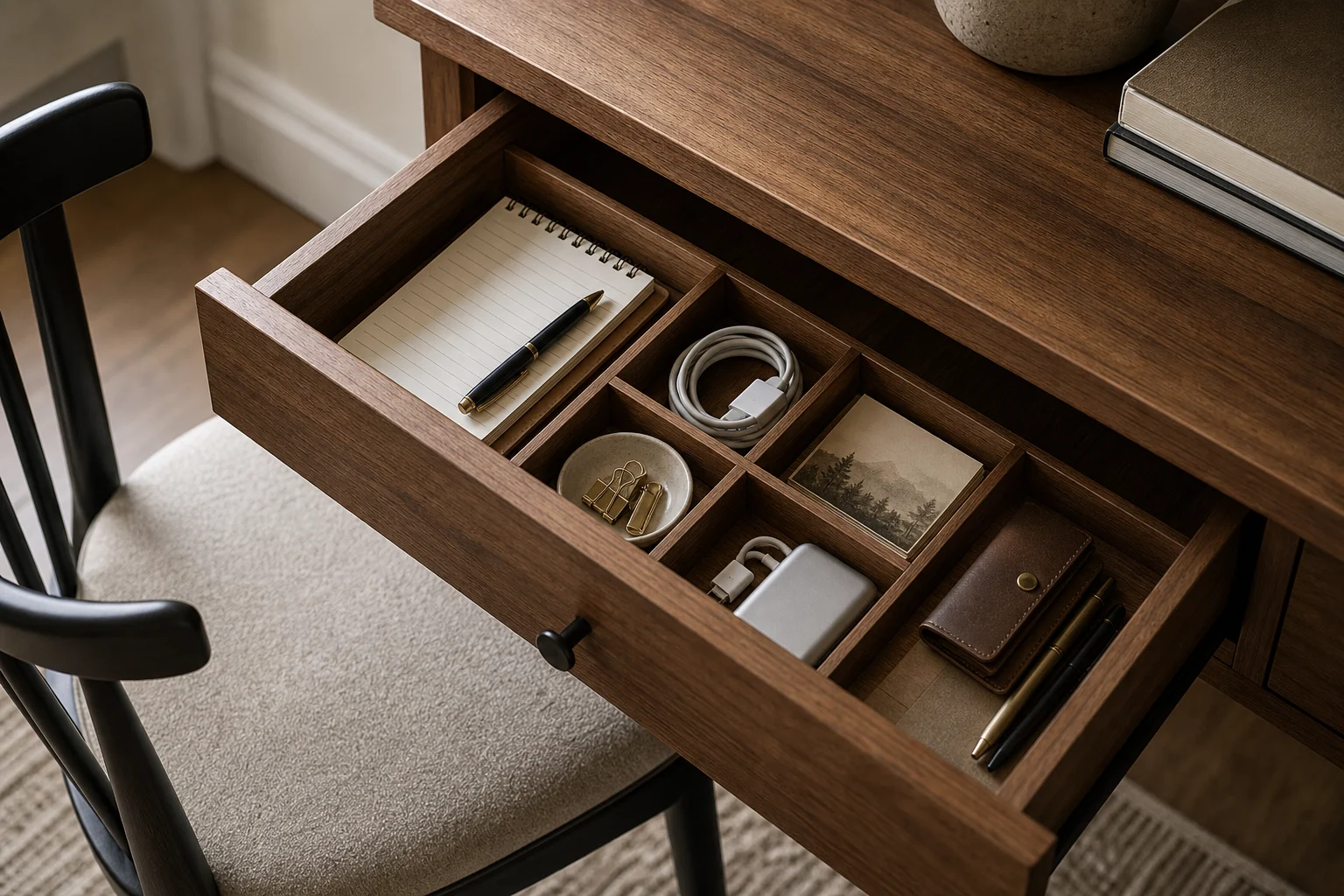
This is the least glamorous upgrade on the list and probably the most useful. A small drawer without dividers becomes a tangled mess of keys, pens, lip balm, cables, and batteries within a week. With dividers, each item has a lane — and putting things away takes two seconds instead of shoving and hoping.
Start with the drawer that annoys you most. Kitchen junk drawer, nightstand, entryway console. Bamboo or adjustable dividers, $10–15. The payoff-to-cost ratio is the best on this entire list.
11. Put Seasonal Items in High or Low Zones
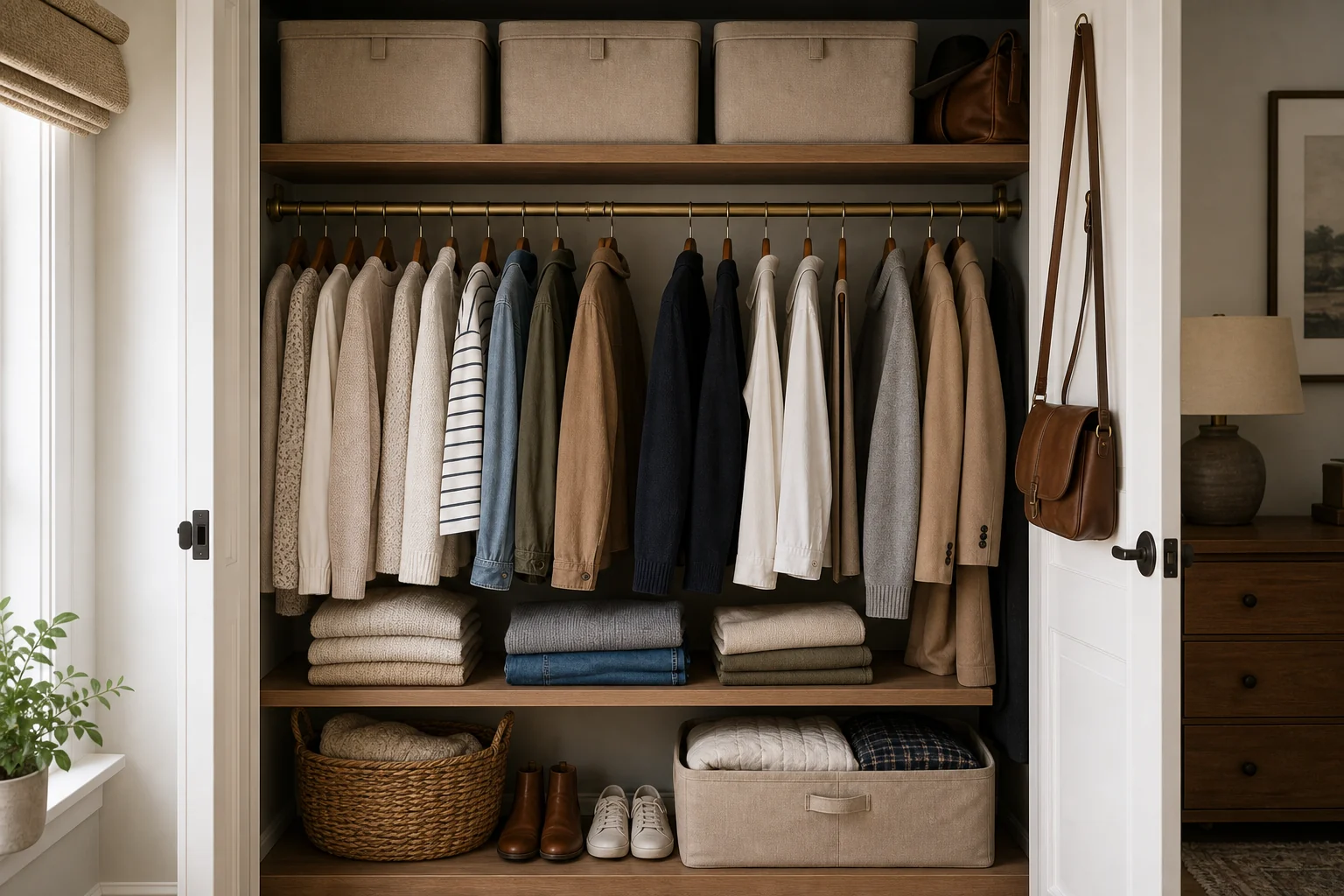
Prime storage — eye level, easy to reach, daily access — is limited in a small home. Don’t waste it on holiday decorations, guest bedding, or the winter coat you won’t touch until November.
Move seasonal categories to the top shelf of the closet, the back of a high cabinet, under the bed, or a low shelf behind closed doors. They’re harder to reach, and that’s fine — you only need them a few times a year. The convenient zones stay reserved for the stuff you actually touch every week.
12. Make the Back of a Closet Door Useful
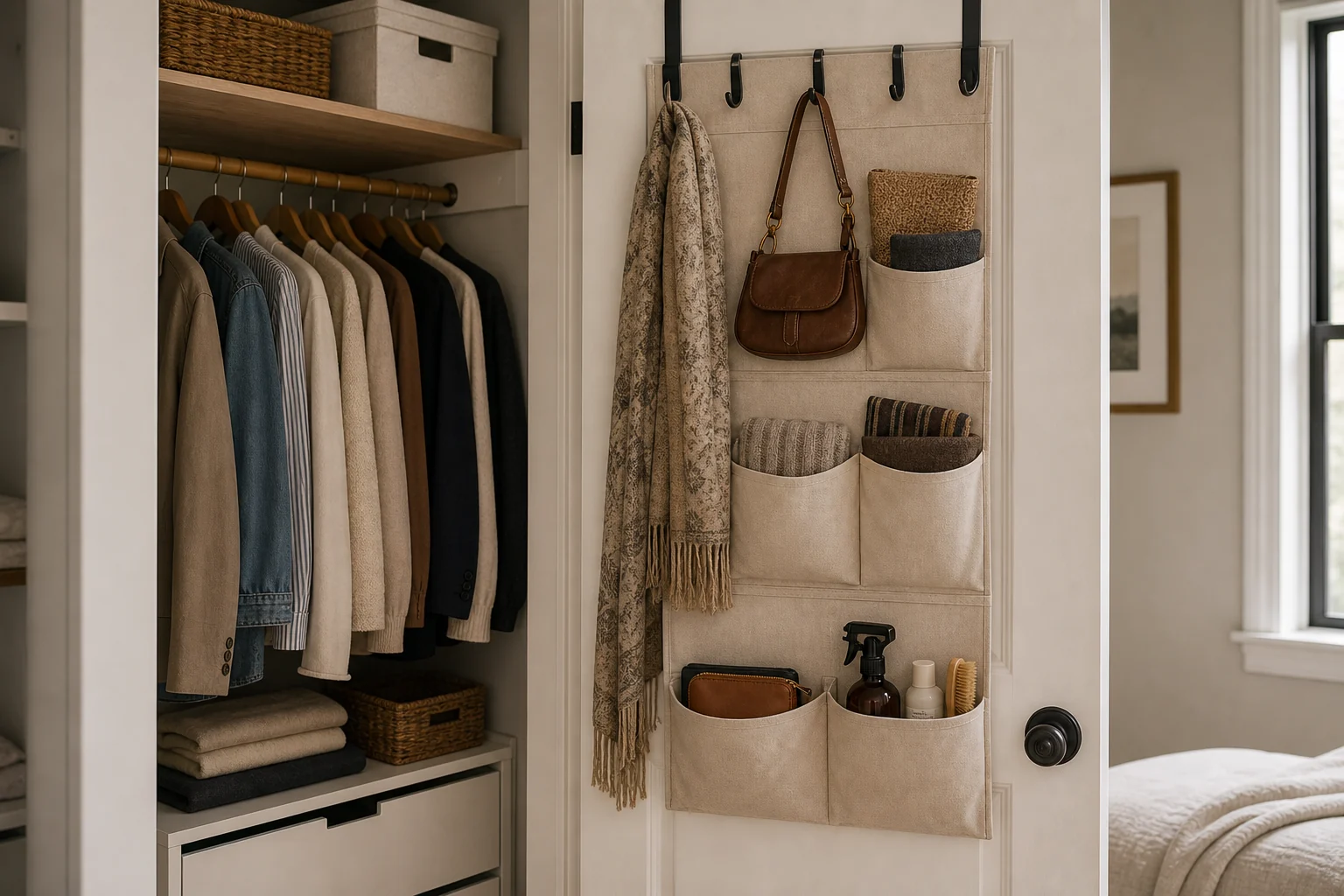
Same idea as behind the bedroom door, but for smaller items: belts, scarves, hair accessories, jewelry, cleaning cloths, small bags. A slim over-door organizer keeps these visible at a glance — no more buying a third pair of the same sunglasses because you forgot you had them.
Keep the depth shallow. If the organizer bumps against closet contents every time the door closes, it’s overloaded.
The 4 Rules for Storage That Stays Clean
- 1Hide loose itemsCords, papers, remotes, toiletries belong behind doors or in drawers.
- 2Show simple texturesBaskets, folded textiles, and trays can stay visible when colors are calm.
- 3Use clear bins insideClear containers are practical behind cabinet or closet doors.
- 4Edit before addingRemove items before buying another piece of storage.
styledhomenotes.com
13. Create One Drop Zone for Mail and Keys
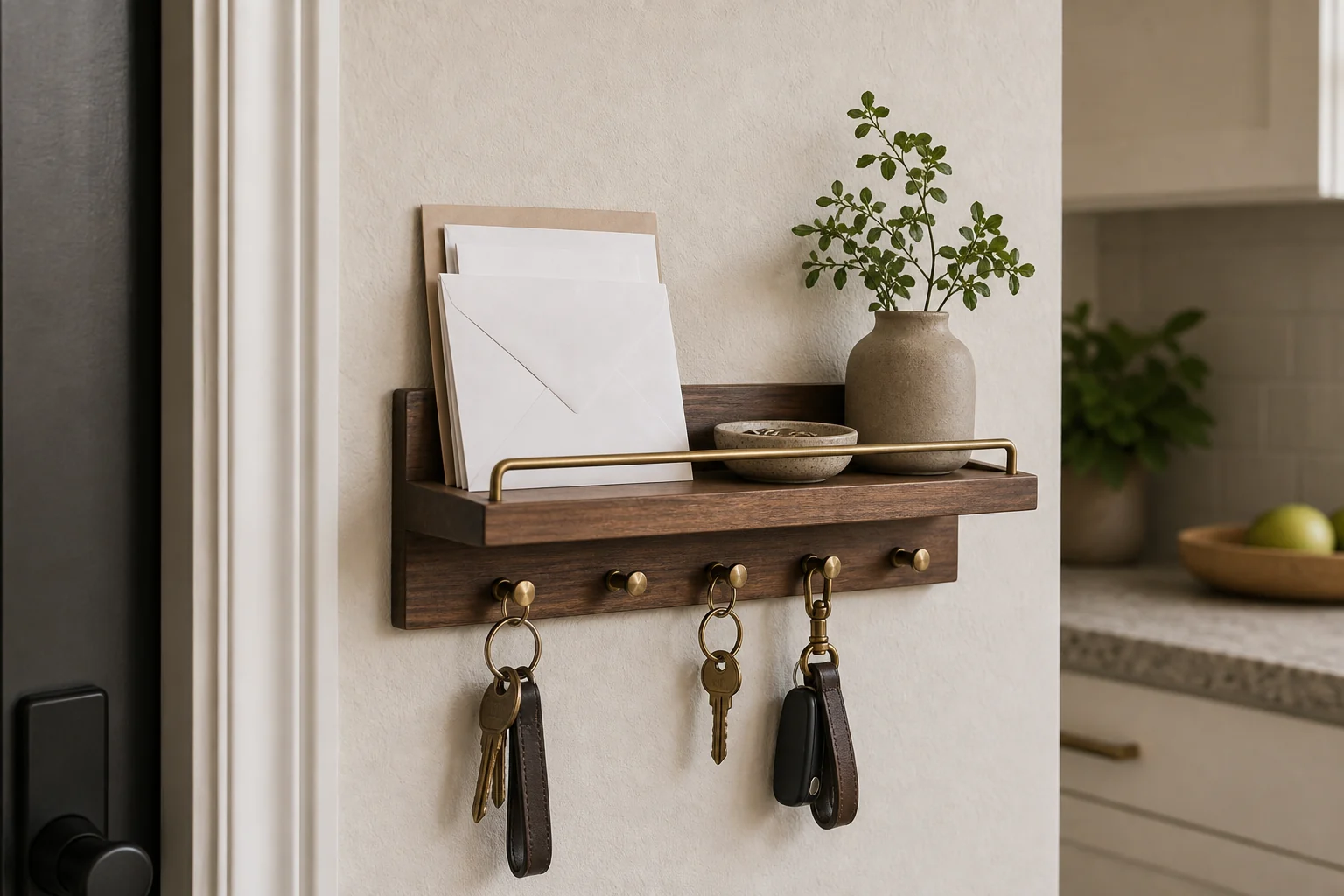
Mail on the dining table. Keys on the kitchen counter. Sunglasses on the sofa arm. Without a designated landing spot, incoming items scatter across the apartment and stay there until you need them — which is always when you’re already late.
A wall-mounted shelf with a small tray, a key hook, and maybe one shallow drawer. Not a storage system — a decision point. Items land here, and within a day they either get put away, filed, recycled, or thrown out. The drop zone works when it stays small and gets cleared regularly.
14. Use Clear Containers Only Inside Cabinets
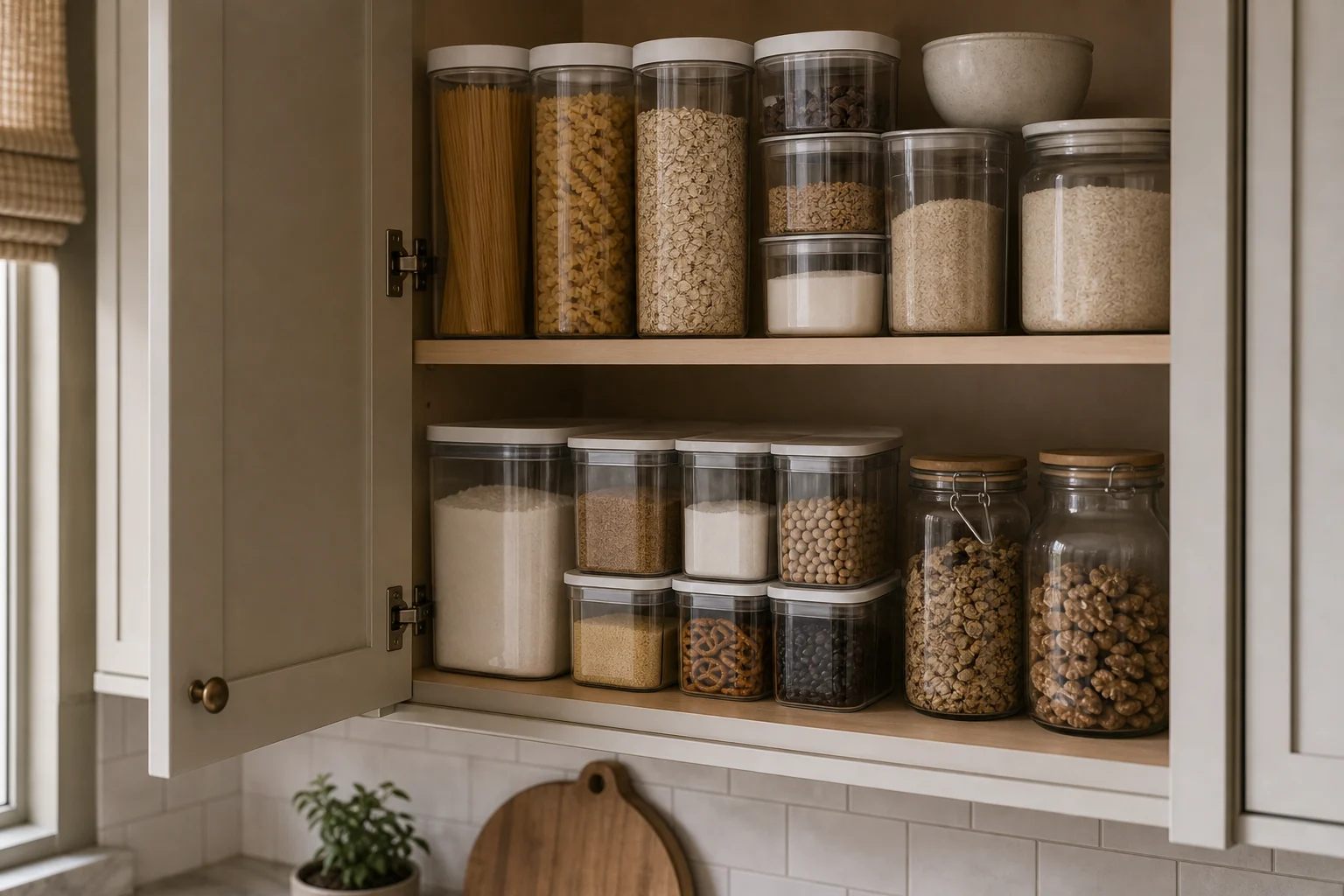
Clear containers on open shelves show you everything you own — including the visual chaos of mismatched labels, half-used products, and items you forgot you bought. Behind a cabinet door, that transparency becomes an advantage: you can find things instantly without opening three boxes.
Rule of thumb: clear inside, solid outside. Use clear bins in the pantry, bathroom vanity, linen closet, and under-sink area. On open shelves, switch to woven baskets, solid boxes, or anything with a front that doesn’t broadcast its contents to the room.
15. Store Throws and Pillows in Furniture, Not Another Basket
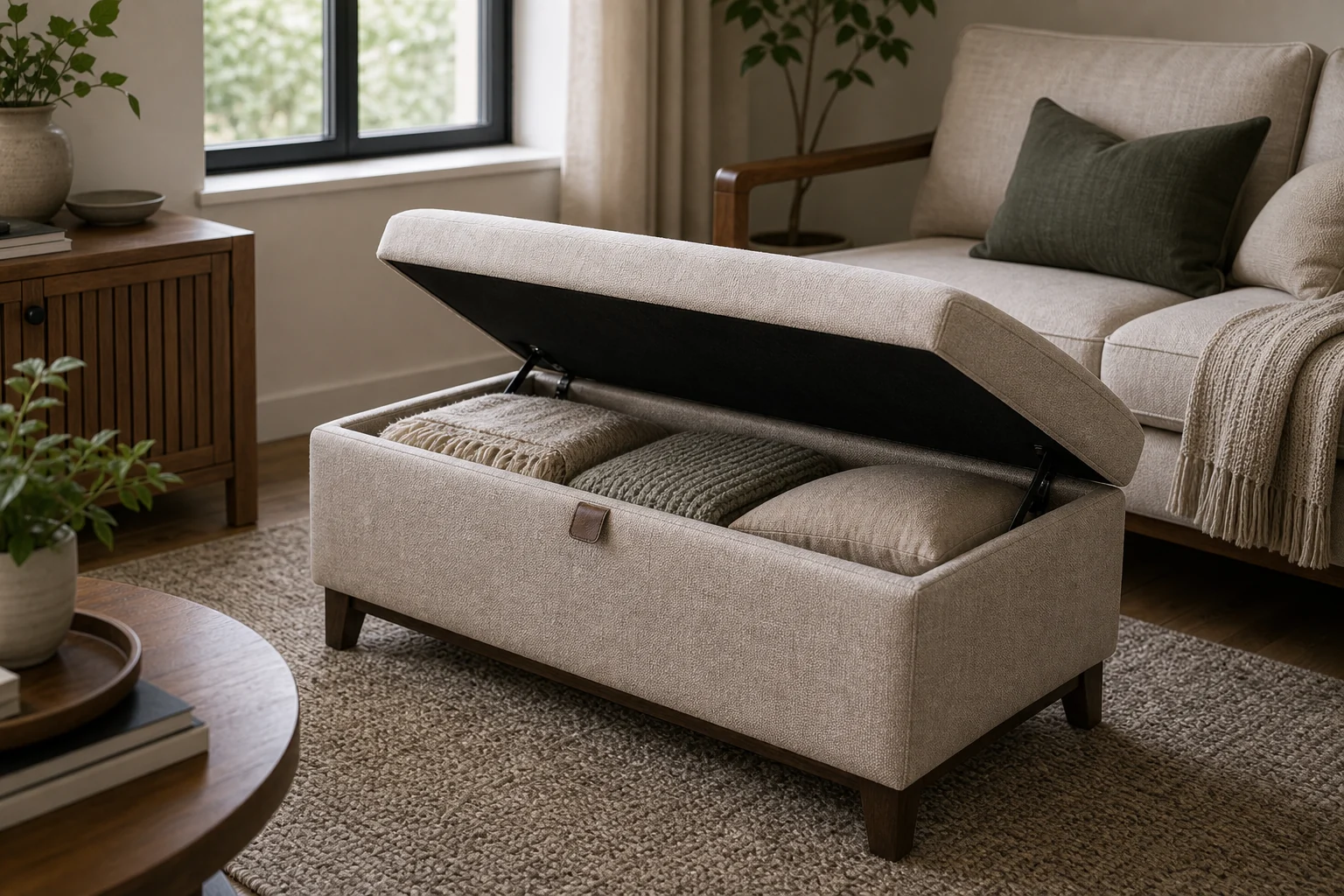
The floor basket full of throw blankets is a Pinterest cliché that works in photos and fails in apartments. In real life, the blankets get yanked out, half-stuffed back in, and the basket becomes a permanent soft-goods explosion next to the couch.
A storage ottoman or bench absorbs the same items behind a lid. No visible pile, no daily re-styling, and the piece does double duty as seating or a coffee table surface with a tray on top.
16. Choose Nightstands With Real Drawers
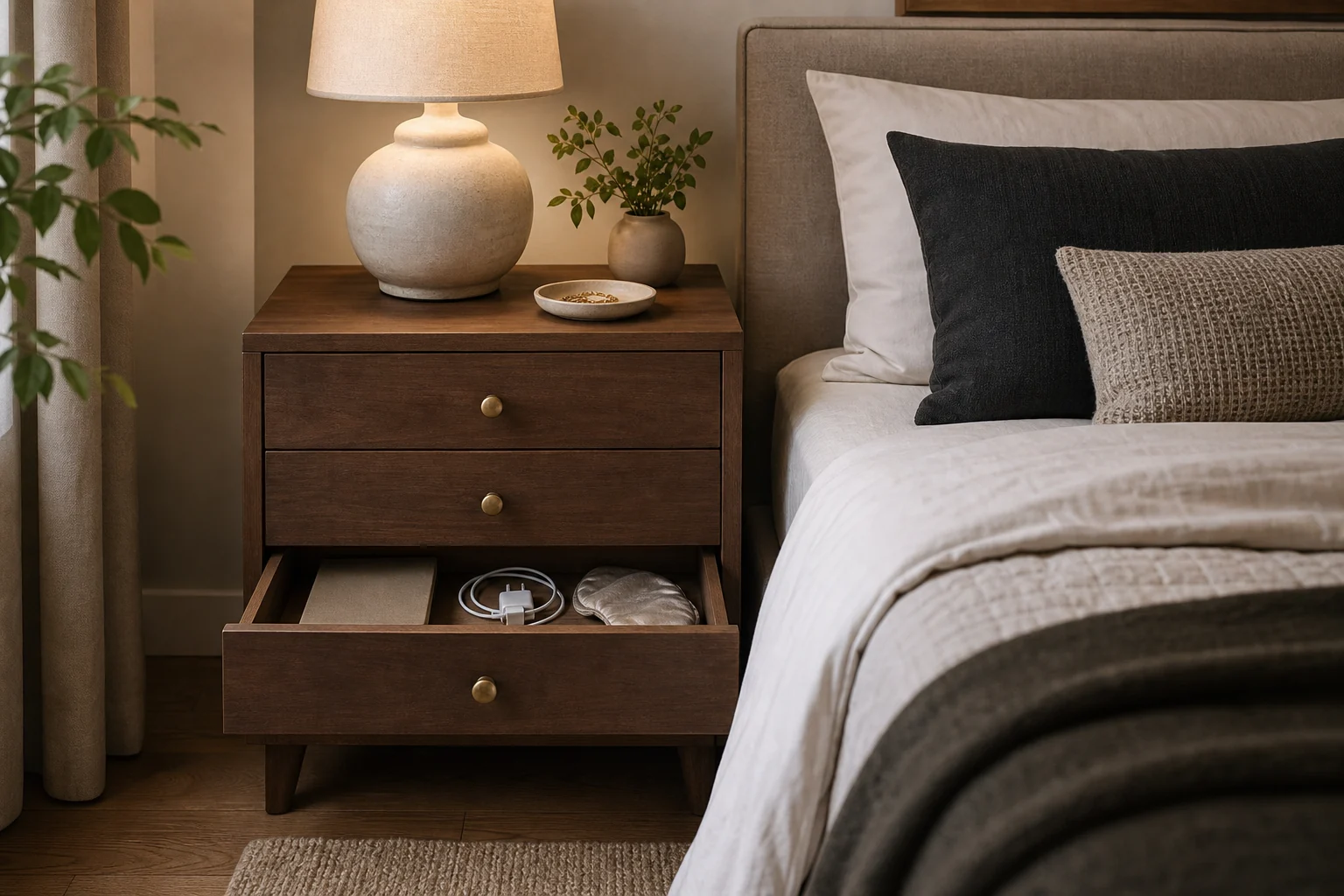
Open-shelf nightstands look light and airy in showrooms where the only items on display are a single book and an artfully placed candle. In a real bedroom, they display your retainer case, three half-read books, a phone charger, allergy pills, and a water glass with yesterday’s water in it.
A nightstand with one or two drawers hides the reality of bedtime routines. Keep the top surface to a lamp and one or two items. Everything else goes inside.
17. Edit Storage Before You Add More Storage
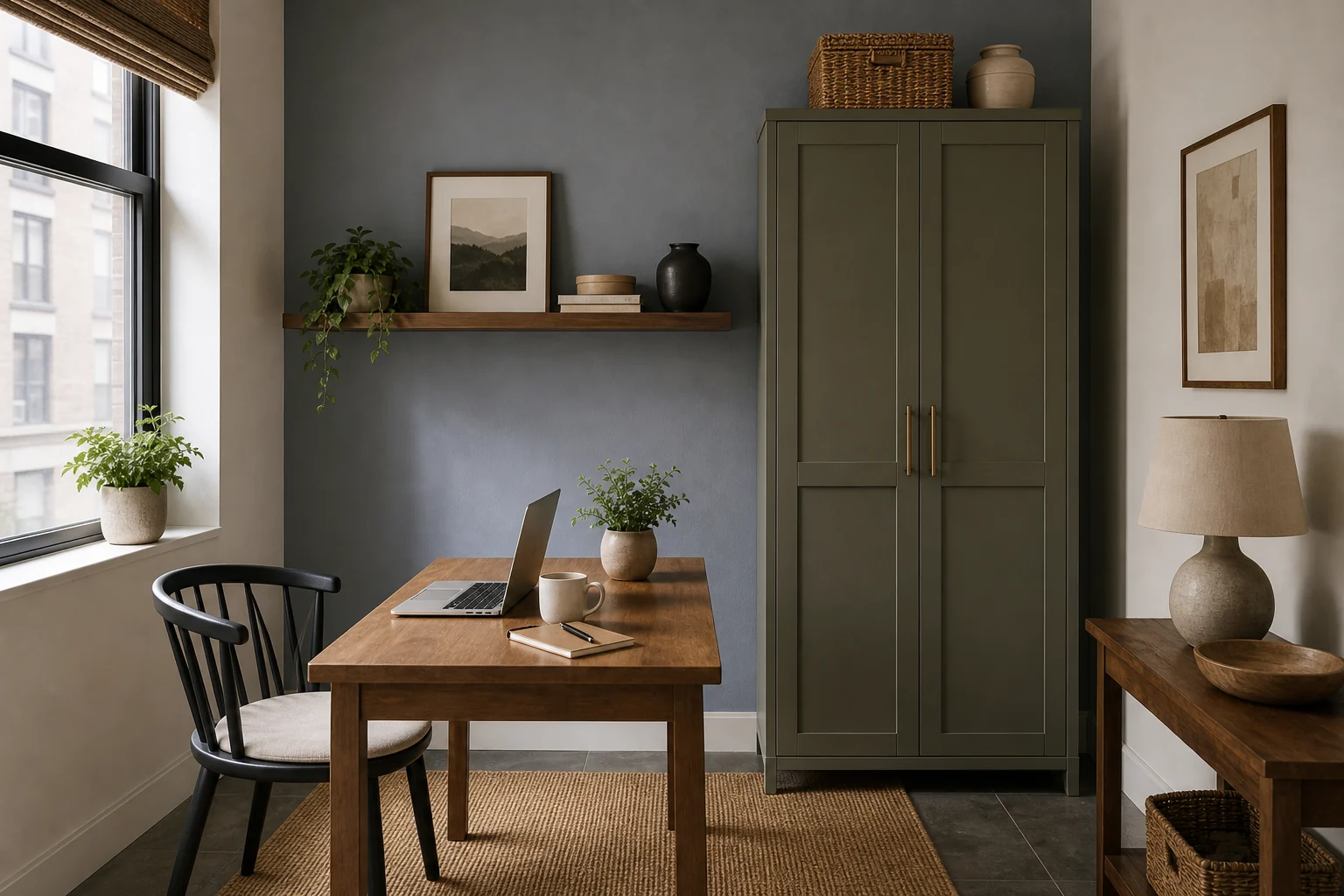
Before you buy another basket, shelf, or cart, try this: pick one storage zone and take everything out. Separate what you actually use from what you’re just keeping because it’s there. Put back only what earned its spot.
Most storage problems in small apartments aren’t really about not having enough containers. They’re about owning too many things for the space — and no amount of clever organizing fixes that. The room doesn’t need more storage. It needs less stuff and better decisions about where the remaining stuff lives.

Nora Ellis edits Styled Home Notes, where she shares practical decorating, organization, and small-space ideas for creating a more styled and functional home. Every article is reviewed for clarity, usefulness, image sourcing, and Pinterest-to-page alignment before publication. Visit the Nora Ellis author page.