13 Small Living Room Seating Ideas That Fit More Without Crowding
A small living room is not really a sofa problem. It is a seating math problem. The right answer is rarely one big couch with two armchairs squeezed in around it.
What works in a tight room is a smaller sofa, lighter accent chairs, and one or two pieces that quietly do two jobs. The goal is more seats with less visual weight, not more furniture pushed harder against the walls.
These thirteen moves come from the same playbook as our broader small living room ideas guide, but every one of them is about the seats themselves: how they sit, how they face each other, how they share the floor.
From a slimmer sofa to a swivel chair that flexes between sofa and TV, these thirteen moves seat more people in less space without the room feeling crowded. Jump to the fix you need first.
- 1Cap the sofa length at 80 inches
- 2Hug the corner with a right-size sectional
- 3Pick armless chairs to add seats without visual weight
- 4Float the sofa six inches off the wall
- 5Anchor every seat with one big rug
- 6Slip a backless bench under the window
- 7Use a storage ottoman as coffee table and extra seat
- 8Tuck nesting stools under a slim console
- 9Choose low-profile seating to lift the ceiling
- 10Face two chairs across the sofa, not an L
- 11Pull seats six to eight feet apart, not twelve
- 12Add a swivel chair that flexes between sofa and TV
- 13Park a deep bench behind the sectional for spillover
Cap the Sofa Length at 80 Inches
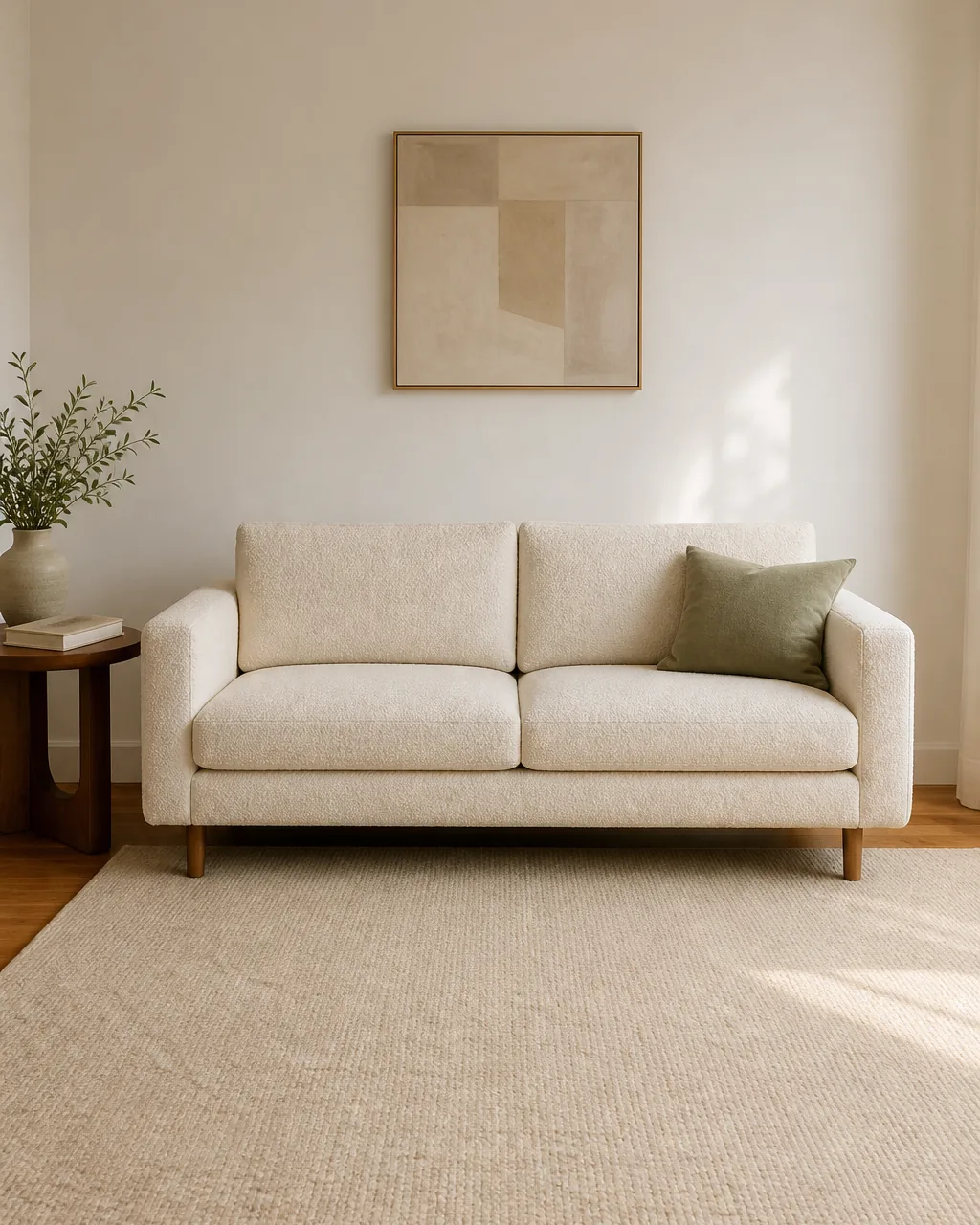
The single biggest mistake in a small living room is a sofa sized for a bigger one. A 90 inch couch in a 12 by 13 room eats the room before anything else gets a vote. An apartment sofa under 80 inches changes the geometry.
Skip the love seat instinct. It is finding a real three-seat sofa with a slimmer footprint, the kind sold as apartment scale. The difference of ten inches is what lets a side table and a chair fit on the same wall.
- Measure the longest unbroken wall first; aim for at least 18 inches of empty wall on each side of the sofa
- Look for apartment-scale or condo-scale labels, then verify with the tape measure, not the listing photo
- Choose tight-back cushions over loose feather-fill if the room is shallow; they hold their shape and read smaller
- Pick legs visible under the skirt, not a sofa that sits flush on the floor; the slice of floor visible underneath buys back depth
- Skip the chaise extension; in a small room it commits the whole sofa to one wall and one direction
Hug the Corner With a Right-Size Sectional
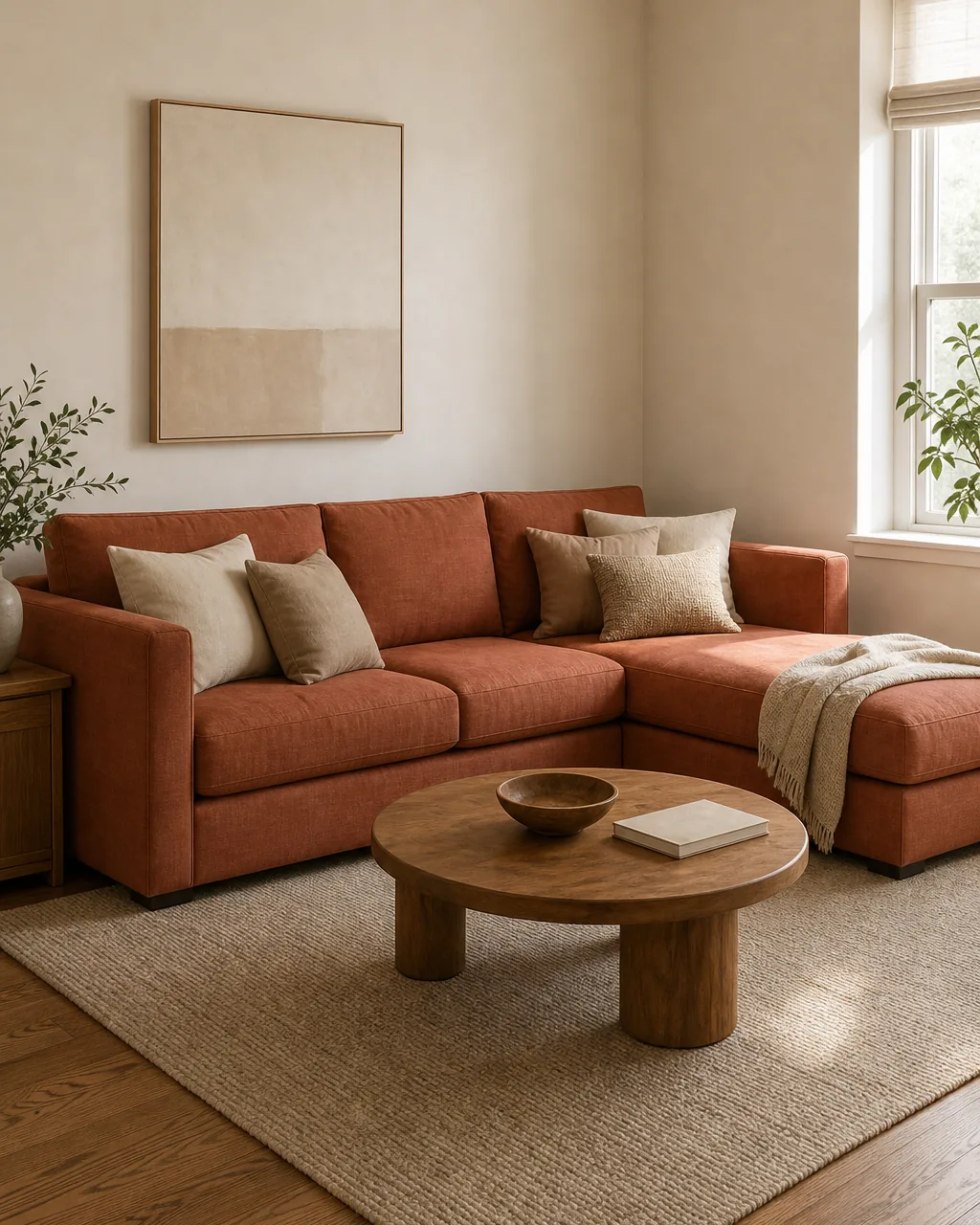
The other small-sofa option goes the opposite way: a small sectional that hugs an inside corner and claims real estate most rooms throw away. Two walls instead of one means more seats per square foot, and the corner stops being dead.
The catch is scale. A bulky modular set with two-foot-deep cushions is not a small-space move, it is a big sectional in disguise. Look for compact L sectionals at 84 by 60 or smaller, with a thinner cushion depth around 22 inches.
- Measure both walls; the short return should be at most two thirds the length of the long side or it looks lopsided
- Choose performance fabric in a muted color, not a saturated jewel tone, so the L does not visually shout
- Skip the chunky tufted style; clean straight or softly rounded arms read smaller in the corner
- Make sure the sectional comes apart for the door; many compact L pieces still ship as one piece
- Leave a foot of breathing room between the back of the sectional and the corner wall to avoid a wedged look
Pick Armless Chairs to Add Seats Without Visual Weight
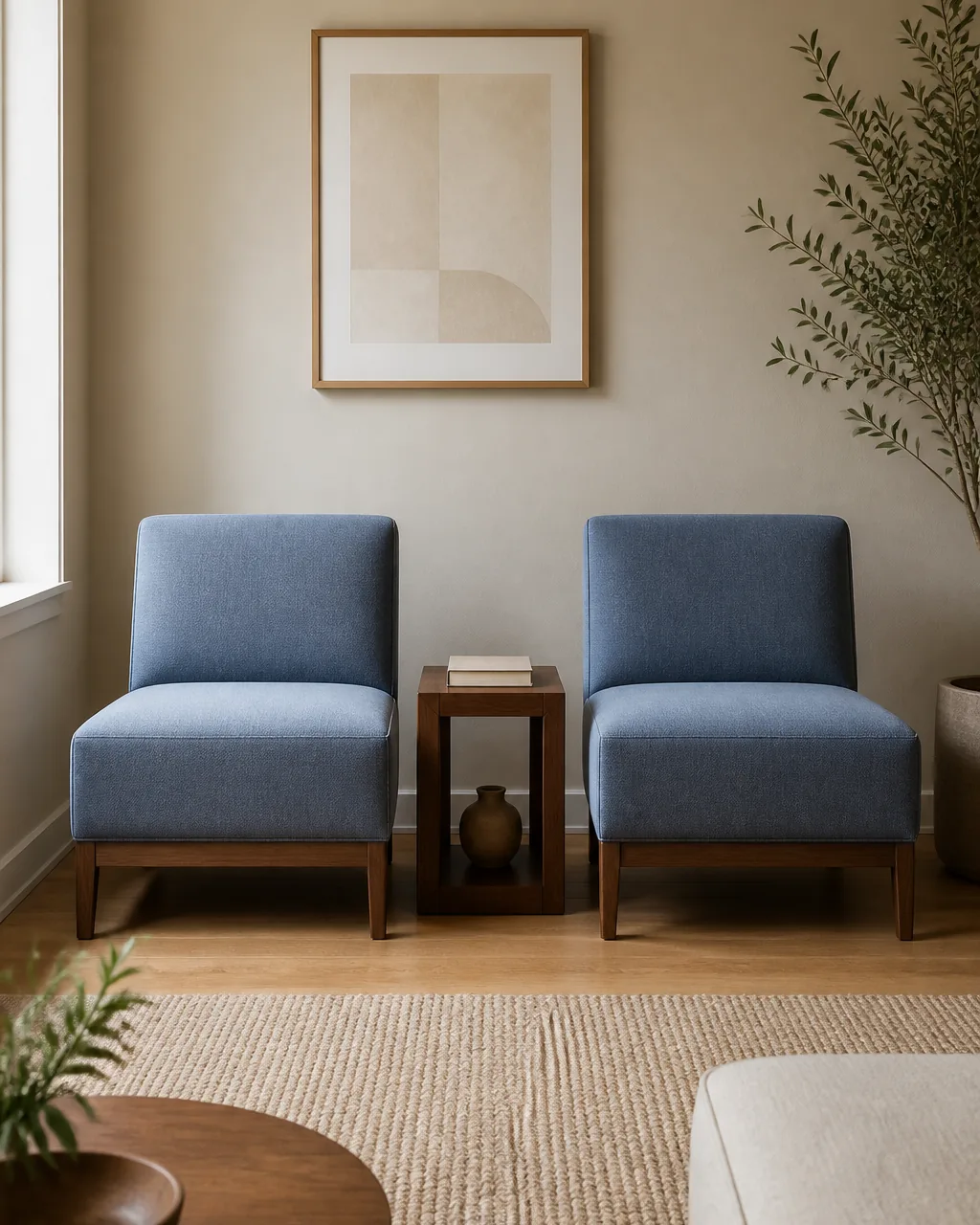
Arms are the heaviest thing about an armchair, both in inches and in how the eye reads them. An armless chair fits in slots an armchair will not, and two armless chairs side by side take up less visual room than one full armchair.
This is also the cheapest way to upgrade a small room. Two thrifted slipper chairs with the same low silhouette read intentional, even if the upholstery is different. Together they hold the same conversation as one big chair without dominating the corner.
- Buy a matched pair when you can; visually they read as one piece and feel calmer than two mismatched chairs
- Keep the seat height within an inch of the sofa cushion so the conversation line stays level
- Pick a tight upholstery, not loose pillow backs, so the slim profile holds up under daily use
- Place them at a slight angle toward the sofa, not parallel to a wall; angle implies talking, parallel implies waiting
- Look for chairs with exposed wood legs; the gap underneath gives the floor back to the room
You will not need all thirteen at once. Pick the problem below that matches your room today, and start with those two or three ideas.
Float the Sofa Six Inches Off the Wall
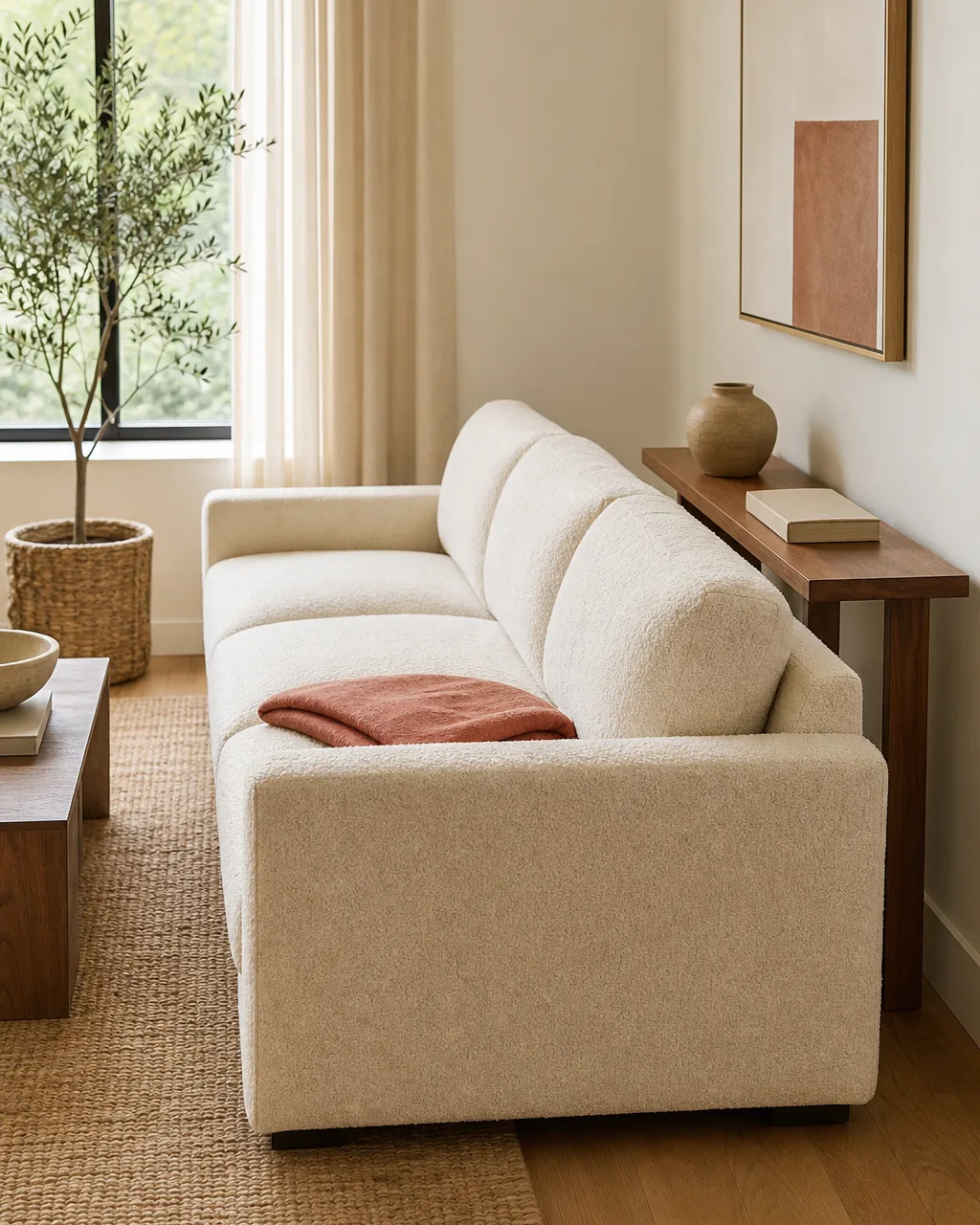
Pushing the sofa flat against the wall feels like it saves space. It does not. The wall stops the room from breathing, and the back of the sofa wears a permanent imprint of whatever vent or molding it was crushed against.
Floating it forward six inches lets the room exhale. The sofa stops fighting the baseboard, the back cushions stay full, and a slim console behind the sofa instantly adds a working surface without taking floor that you needed anyway.
- Six inches is the minimum; eight to twelve looks intentional in larger small rooms
- Pair the float with a slim console 8 to 10 inches deep so it tucks fully behind the sofa back
- Run a power strip along the gap if outlets sit behind the sofa; the float makes them reachable instead of buried
- Resist the urge to fill the gap with a long planter or basket row; the calm space is the point
- Reset the float after every vacuuming; sofas drift back toward the wall by half an inch a week
Anchor Every Seat With One Big Rug
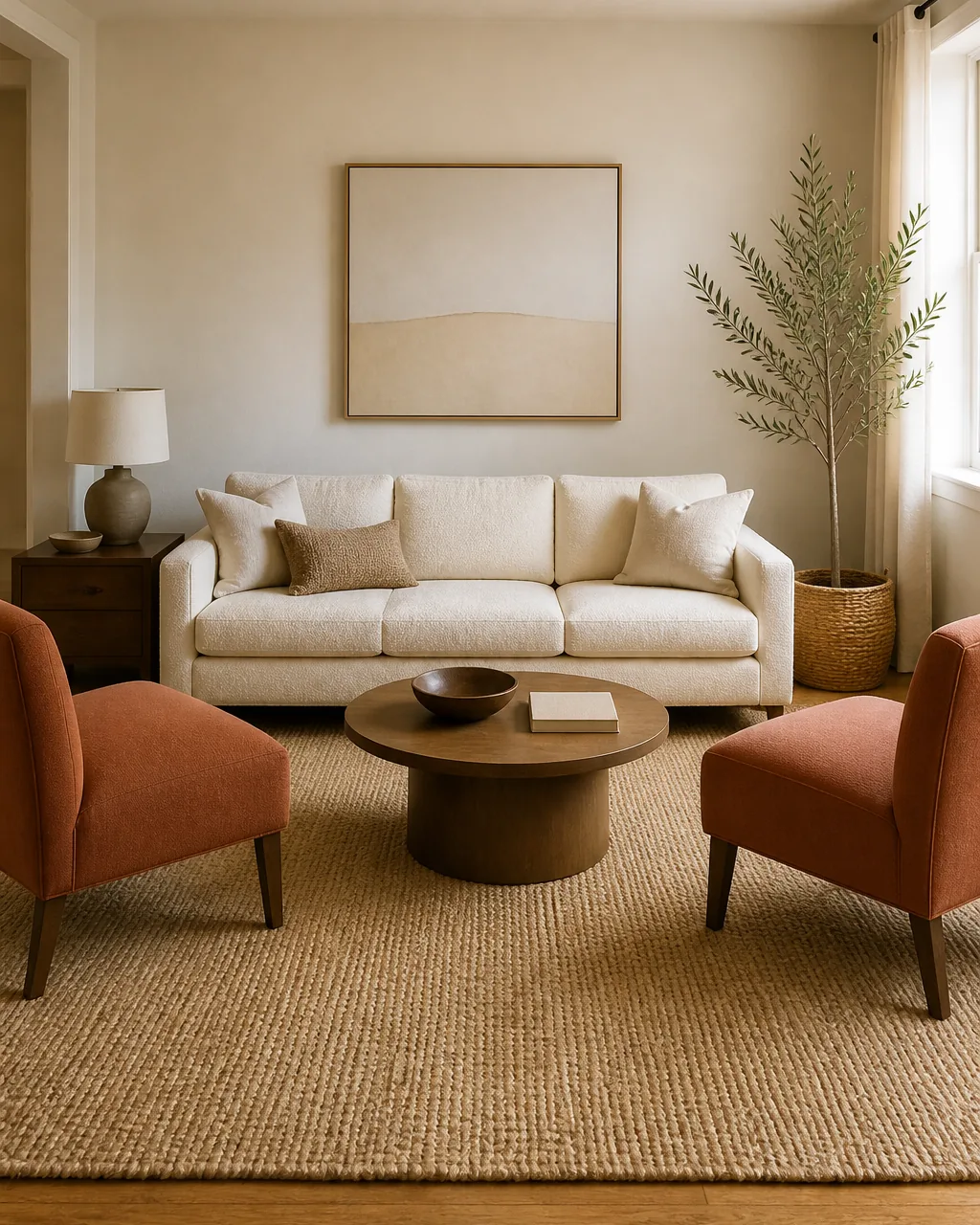
The most common small-room rug mistake is too small. A 5 by 7 rug floating in the middle of the floor with every furniture leg off it makes the room look smaller, not bigger, because it cuts the floor into puzzle pieces.
One big rug, with the front legs of every seat sitting on it, does the opposite. It draws an invisible boundary around the conversation area and unifies whatever the seating actually is. Mismatched chairs read as a set the second the rug binds them together.
- Buy the rug one size up from what feels right; 8 by 10 reads correct where 6 by 9 looks orphaned
- Aim for front legs on, back legs off as the minimum; all four legs on is even better if the floor allows
- Choose a low-pile natural fiber or muted wool; busy patterns shrink the room visually
- Layer a smaller patterned rug on top only after the big rug is in place; the order matters
- Keep one to two feet of bare floor showing around the rug edge; a wall-to-wall rug erases the room
Slip a Backless Bench Under the Window
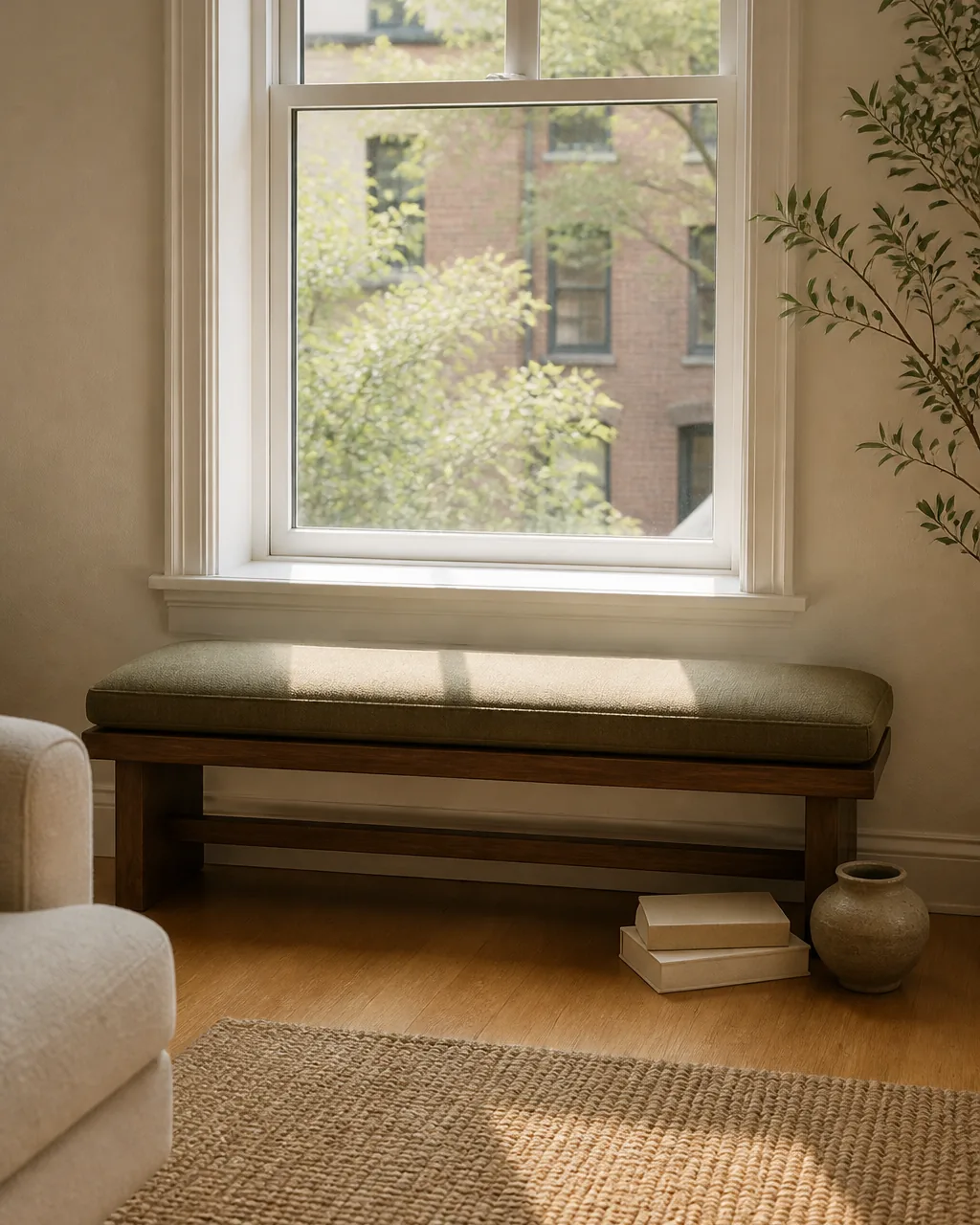
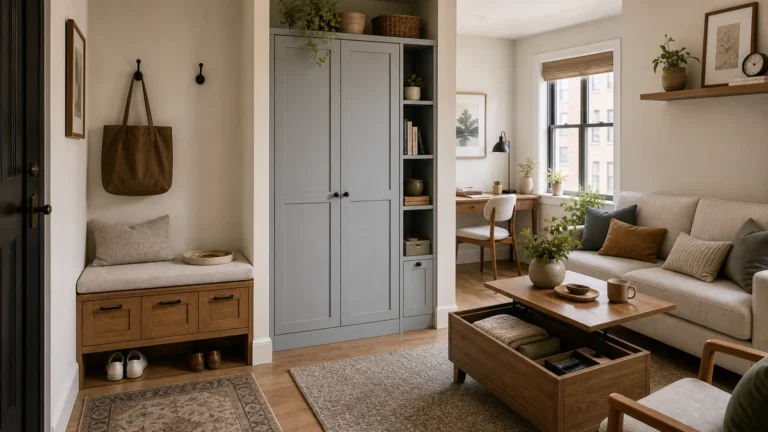
The window wall is usually wasted. A bench under the window adds two seats with almost no visual cost, because backless seating disappears against the wall instead of competing with the rest of the room for attention.
The bench is also the most flexible piece in the room. It pulls out for a coffee table when guests arrive, it parks at the end of the sofa for movie nights, and it stores under the window the rest of the time. One piece, three jobs.
- Match the bench length to the window width; a too-short bench looks accidental, a too-long bench blocks the wall
- Choose a soft loose cushion, not hard foam; people only actually sit on benches that look like they invite it
- Skip storage benches under windows where they block heating vents; the heat damages the lid and the cushion
- Keep the bench top empty except when guests are using it; benches collect drift faster than any other surface
- Look at the seat height; eighteen inches works for short windows, sixteen inches keeps tall windows feeling tall
A small living room is a seating math problem, not a sofa problem. These four rules are what keep a tight room from tipping over into a crowded one.
Use a Storage Ottoman as Coffee Table and Extra Seat
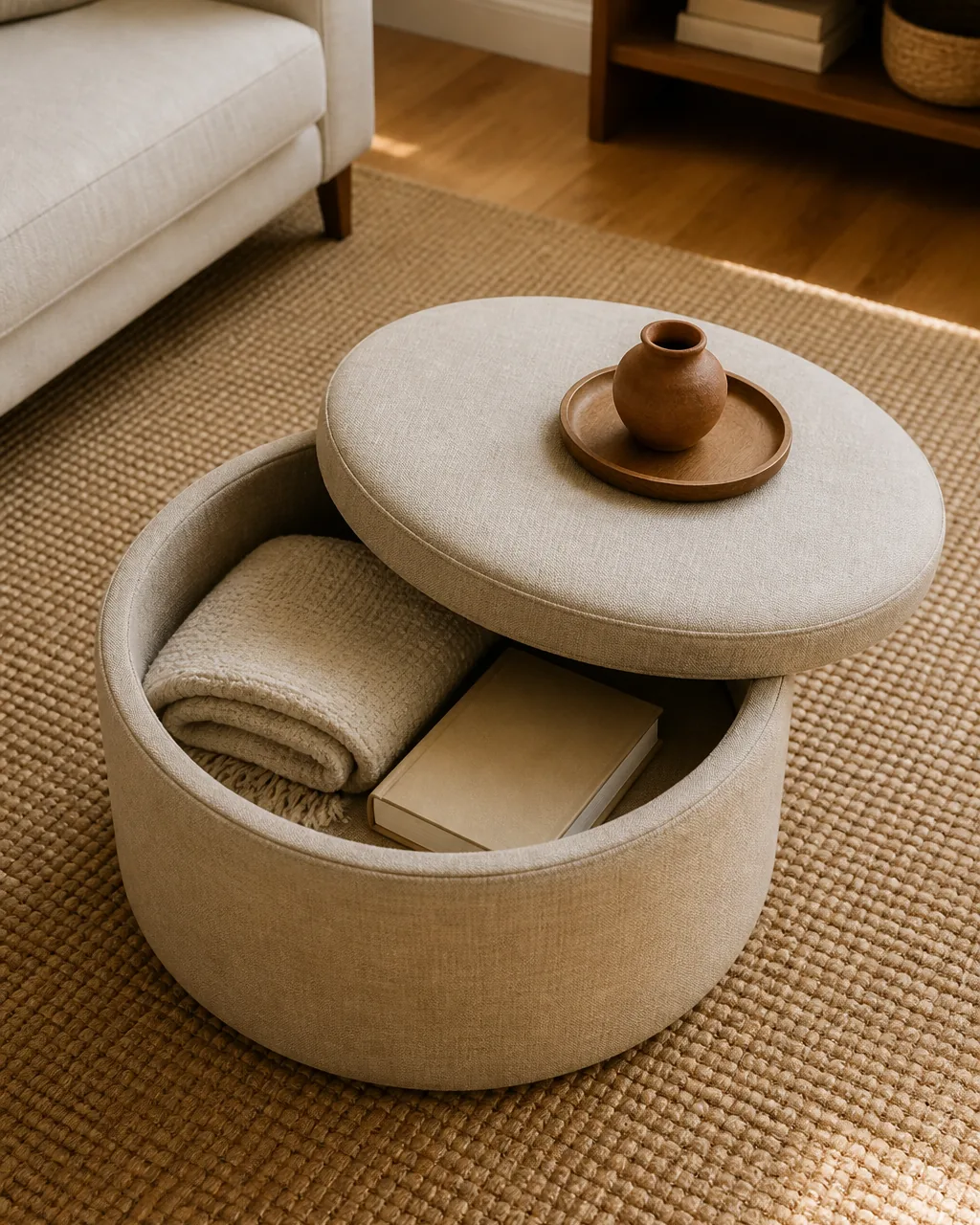
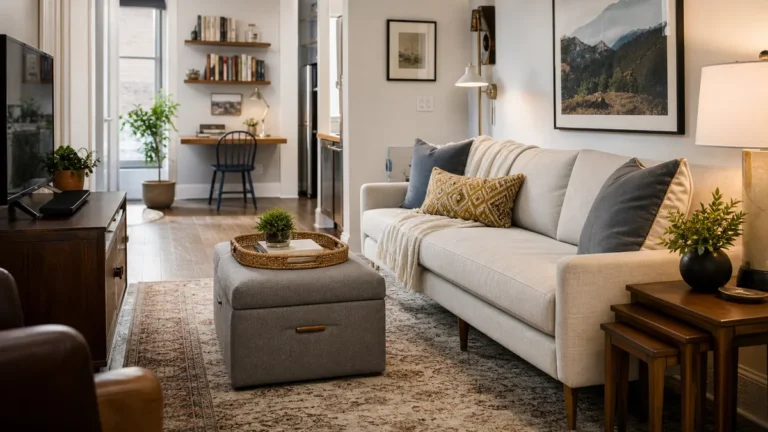
A coffee table eats square footage and only does one thing. A soft storage ottoman the same size does three: it holds throws and books, it serves as a coffee table when a tray sits on top, and it becomes an extra seat the moment company arrives.
Choosing one that does all three jobs well is what matters. Too soft and a tray slides off; too firm and no one wants to sit on it. A round oat or ivory linen ottoman with a hinged lid and a flat firm top hits the middle, and a wooden tray turns it into table-ready surface in a second.
- Choose round or oval, not square; rounded edges feel safer in a tight pass-around and add no real volume
- Buy one with a true lift-off or hinged lid, not the snap-on kind, so opening it is a one-handed move
- Match the height to the sofa seat within two inches so it can serve as overflow seating
- Keep a small wooden or rattan tray on top permanently; the tray is what makes it function as a coffee table
- Store only soft contents inside (throws, pillows, paperbacks); hard objects rattle and damage the lid hinge
Tuck Nesting Stools Under a Slim Console
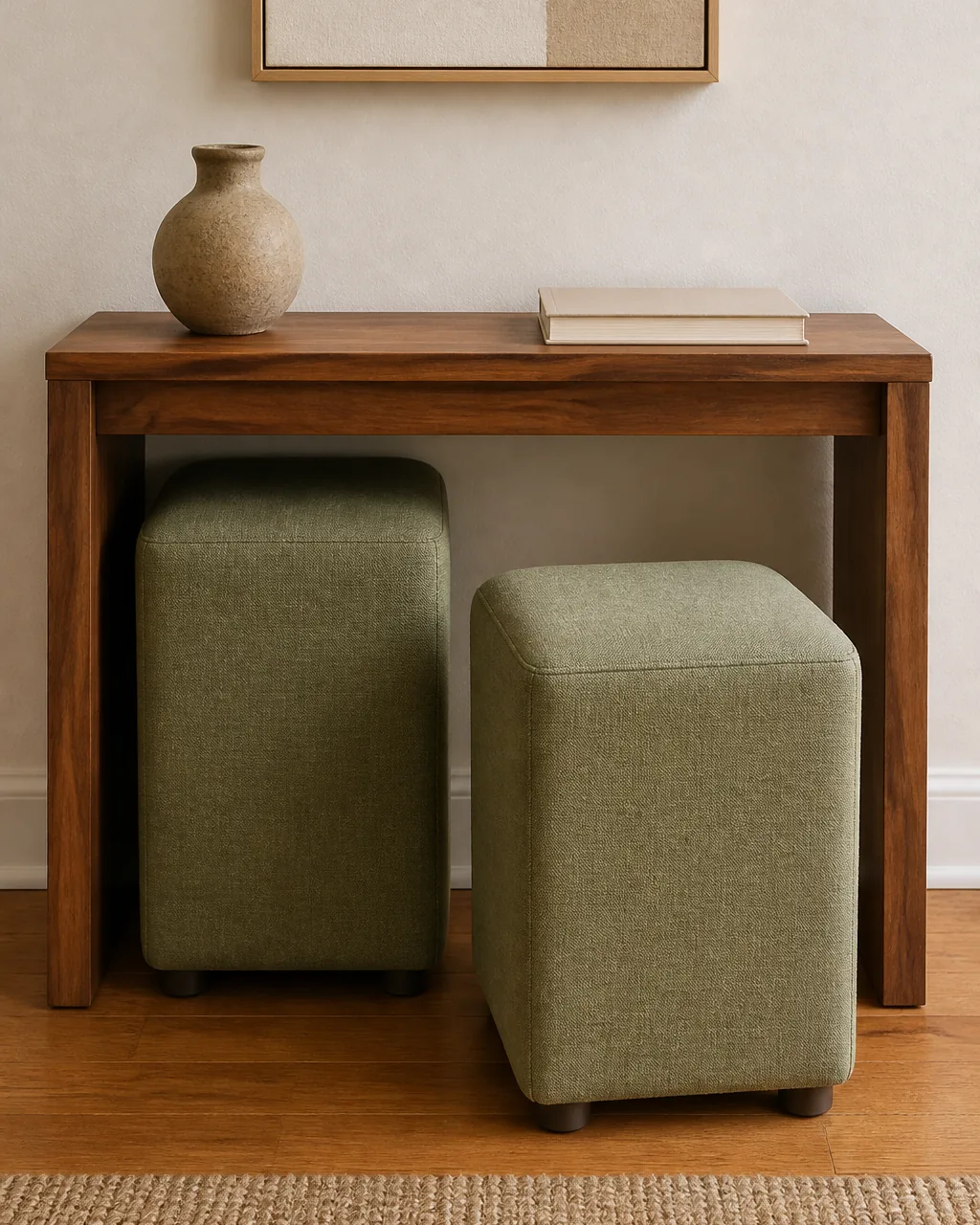
Nesting stools are the cheat code for a small room. Two small upholstered stools tucked under a console table take zero floor space when no one needs them and pull out as extra seats for two more people without a furniture re-arrangement.
This is the same logic as the storage furniture playbook, applied to seating. The stools are not your everyday chairs. They are the guest seats that live invisibly until the doorbell rings, then slide out, do their job, and slide back.
- Buy stools that fully tuck under the console; if any part sticks out, they read as furniture you forgot to put away
- Choose upholstered tops, not hard wood, so people actually want to sit on them for more than five minutes
- Match the upholstery to one accent color already in the room so they belong even when pulled out
- Skip stacking; nesting side by side under one console is faster than lifting one off another
- Look for stools with a structural frame, not just a fabric drum; small upholstered drums dent under repeated use
Choose Low-Profile Seating to Lift the Ceiling
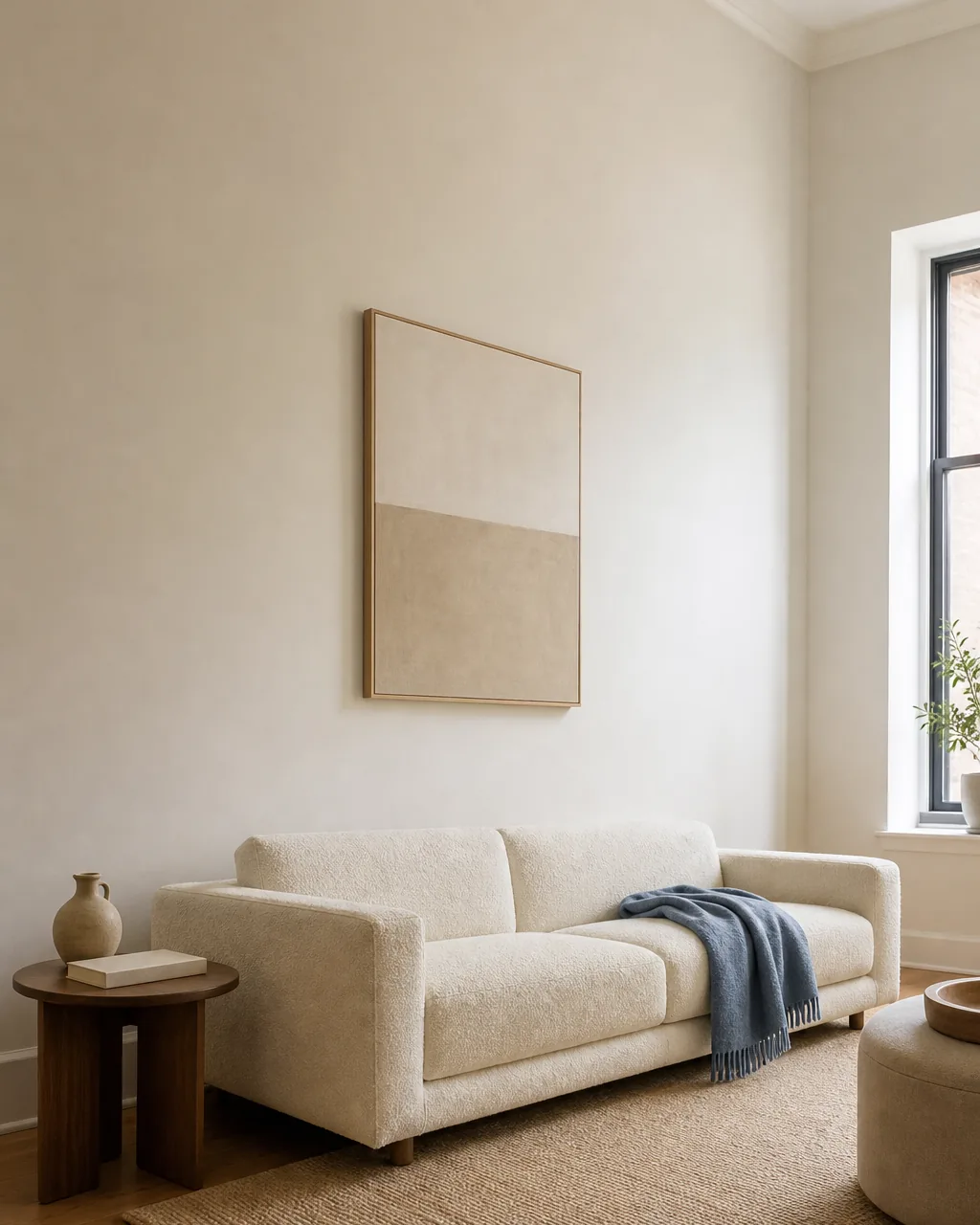
A low-back sofa makes a small room feel taller. A high-back sofa cuts the wall in half at eye level, and once that horizon line is too low, the ceiling visually drops with it. The exact same room can read tall or cramped depending on where the back of the sofa lands.
Buying a tiny couch is not the answer. It is buying one with a back height around 30 inches instead of 36. Six inches of empty wall above the cushions changes the room. The same idea works for accent chairs; armless and low-backed read like a generous ceiling, even when the ceiling is standard 8 feet.
- Aim for a sofa back height around 30 to 32 inches in a room with eight-foot ceilings
- Hang artwork above the sofa higher than instinct says; eight to ten inches above the back, not four
- Skip wing chairs and tall headrest models entirely; they erase the ceiling in two pieces
- Choose lamps that sit below the eye line of someone seated, not floor lamps that bring the ceiling down with them
- Paint the ceiling the same warm white as the walls or one shade lighter; a contrast color closes the room
13 seating moves, one calmer small living room
- 1Cap the sofa length at 80 inchesAn apartment-scale sofa under 80 inches changes the geometry and lets a side table and chair share the wall.
- 2Hug the corner with a right-size sectionalA compact L sectional claims a dead corner for more seats per square foot, as long as the scale stays small.
- 3Pick armless chairs to add seats without visual weightTwo armless chairs side by side take less visual room than one armchair and fit slots arms never could.
- 4Float the sofa six inches off the wallFloating it forward lets the room breathe and makes space for a slim working console behind the sofa.
- 5Anchor every seat with one big rugOne large rug under the front legs draws the conversation area together and makes mismatched chairs read as a set.
- 6Slip a backless bench under the windowA backless bench adds two seats on a wasted wall and pulls out as a coffee table or movie-night perch.
- 7Use a storage ottoman as coffee table and extra seatA soft ottoman with a tray holds throws, serves as a table, and becomes an extra seat when company arrives.
- 8Tuck nesting stools under a slim consoleUpholstered stools tuck fully under a console and slide out as guest seats without a furniture rearrangement.
- 9Choose low-profile seating to lift the ceilingA 30-inch sofa back leaves empty wall above the cushions, making a standard ceiling read taller.
- 10Face two chairs across the sofa, not an LTwo chairs squared off across the sofa with a center ottoman seat one more person and face the same center.
- 11Pull seats six to eight feet apart, not twelveSliding what you have closer to six to eight feet turns scattered seating into a real conversation circle for free.
- 12Add a swivel chair that flexes between sofa and TVA swivel parked between a corner TV and the sofa pivots to face either, the most flexible seat in the room.
- 13Park a deep bench behind the sectional for spilloverA deep bench behind a sectional uses bonus wall space and seats two more people on the nights you need it.
styledhomenotes.com
Face Two Chairs Across the Sofa, Not an L
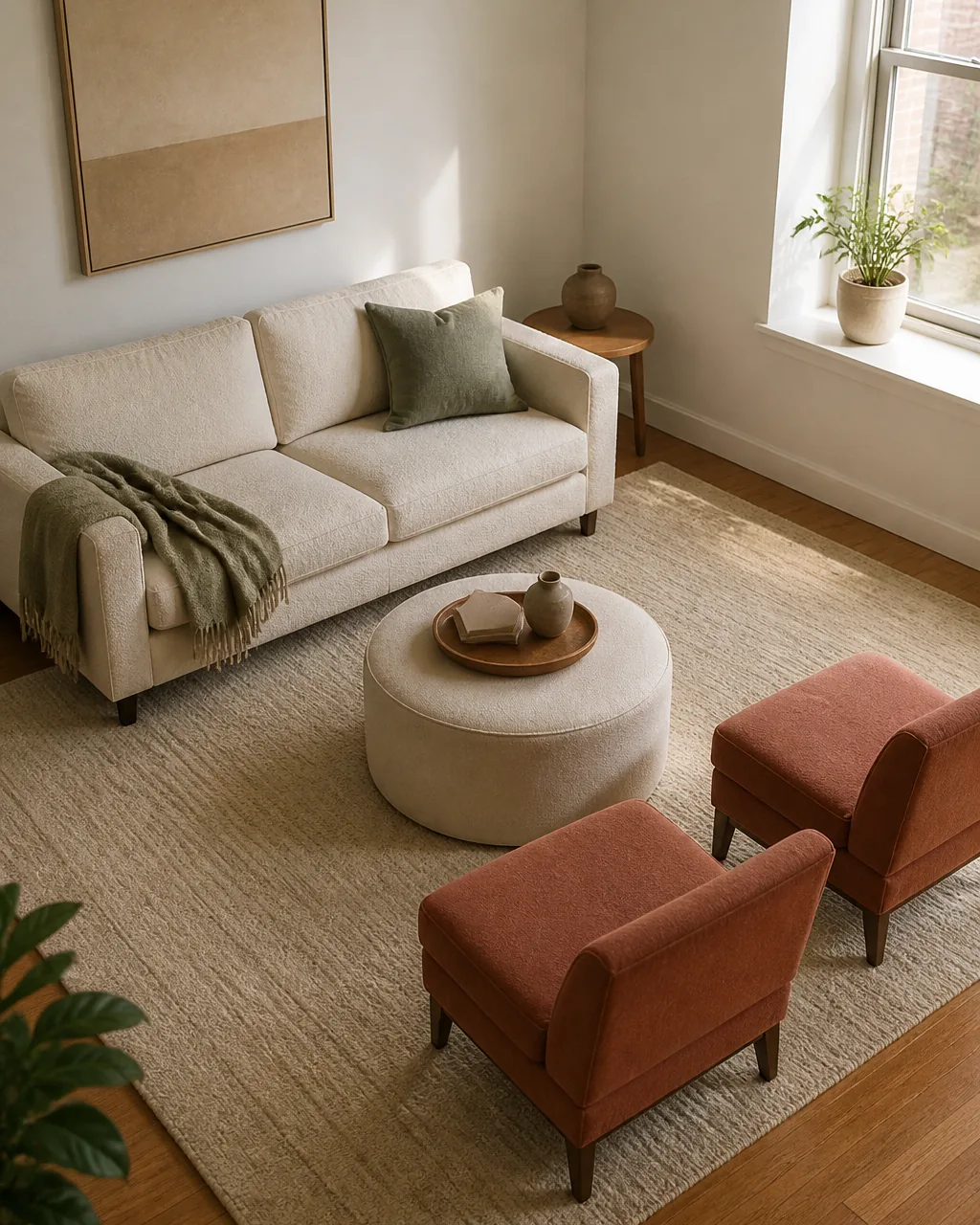
The default small-room layout puts the sofa on one wall and a single chair at a 90 degree angle, the so-called L. It works, but it strands one wall and forces every conversation to sit at right angles.
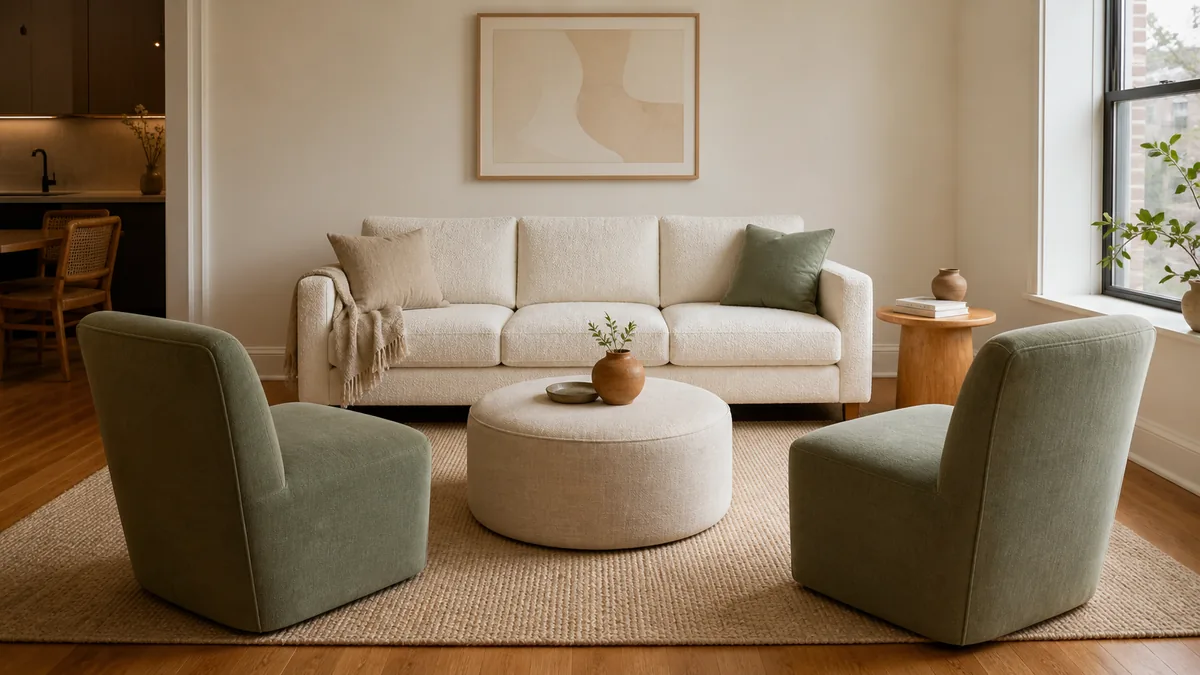
Two chairs directly across the sofa, with a low ottoman in the middle, fits the same footprint and seats one more person without the awkward turn. Everyone faces the same center. The room reads more like a small lounge than a corner waiting room.
- Aim for at most six feet between the sofa front and the chair fronts; further than that and the room feels like a hallway
- Use two matching armless or low-back chairs; mismatched chairs facing a sofa look like a waiting area
- Center the chairs on the sofa, not on the rug; the conversation line is what should be symmetric
- Skip the side table between the chairs if the room is tight; the middle ottoman serves all three seats already
- Try the layout for a weekend before buying chairs; an L room becomes a face-off room fastest with what you already own
Pull Seats Six to Eight Feet Apart, Not Twelve
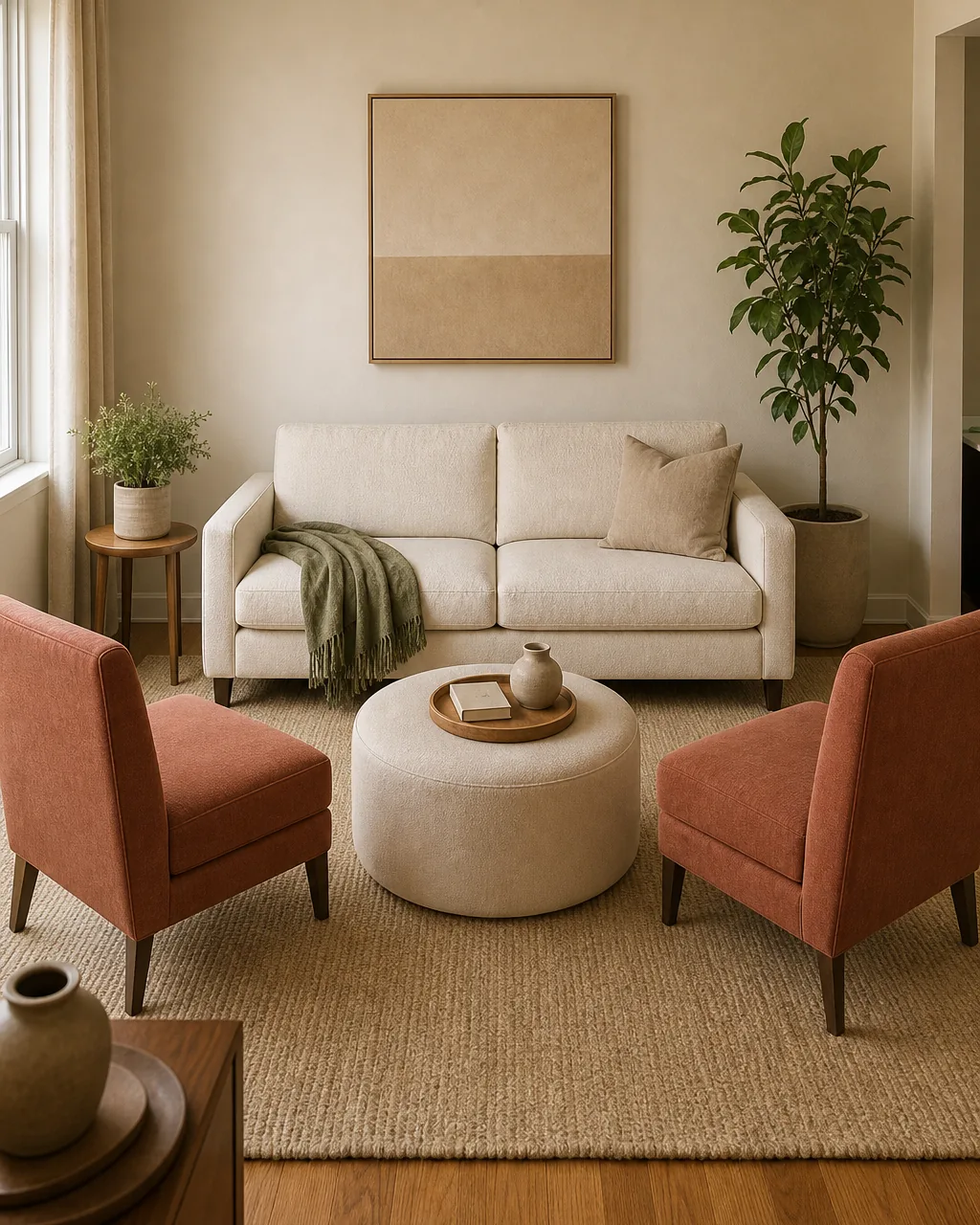
The instinct in any room is to push the seating to the walls. In a small room that is the same as saying you would rather have walking space than conversation. Six to eight feet between facing seats is the sweet spot for talking; twelve feet is for a doctor’s waiting room.
This is the move that costs nothing. You do not buy new furniture; you slide what you have closer together. The room loses no floor space because the seats were already there, but it gains a real conversation circle.
- Measure the distance with a tape from sofa front to chair front; aim for 6 to 8 feet, not 10 or more
- Pull the seating in toward the center of the rug, leaving the perimeter as walking lanes
- If the room is awkwardly long, place a console behind the sofa to define the conversation end of the room
- Allow at least 18 inches between the ottoman and any seat front so legs are not blocked
- Resist the urge to fill the new gap on the walls with furniture; empty wall is half the calm
Add a Swivel Chair That Flexes Between Sofa and TV
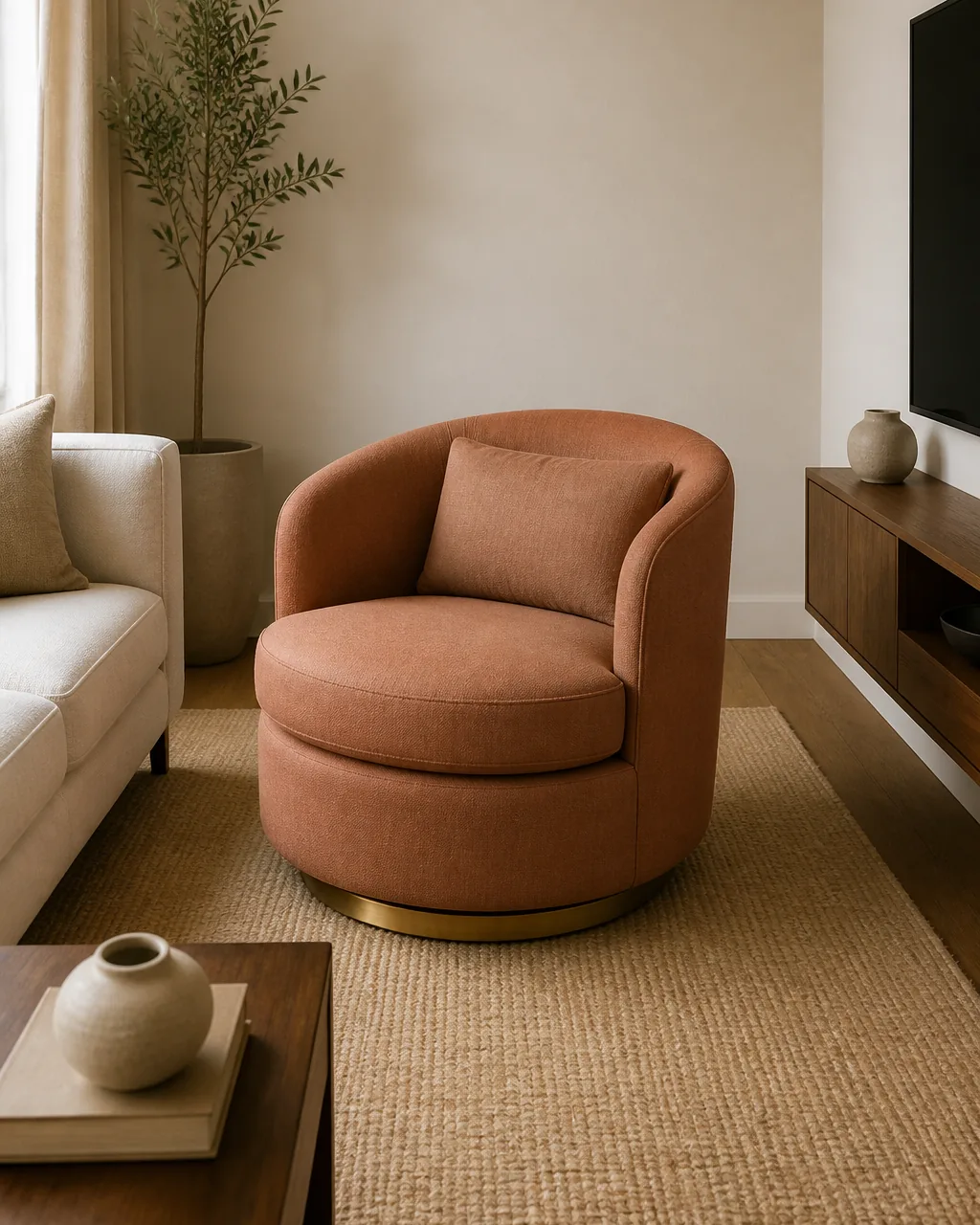
A swivel chair is the answer to the small-room argument every couple has: does the seating face the sofa for conversation or the TV for movie nights. A swivel says yes to both, on a five second pivot.
The piece works hardest in rooms with a corner TV and a sofa on a different wall. A swivel parked between them does not commit to either direction. It is not a luxury; it is the single most flexible seat in the room, and it lives well in spaces like a studio apartment where the same chair sometimes faces the kitchen too.
- Pick a swivel under 30 inches wide; wider models read as a barrier in the corner
- Choose a quiet base; metal disc bases are slim, four-prong wood bases visually anchor the chair
- Look for a smooth 360 rotation with a soft return-to-center if possible; constant repositioning gets old fast
- Place the swivel where two sight lines converge, not against a single wall; against a wall it stops swiveling
- Skip reclining swivels in a small room; the recline footprint defeats the small-room point
Park a Deep Bench Behind the Sectional for Spillover
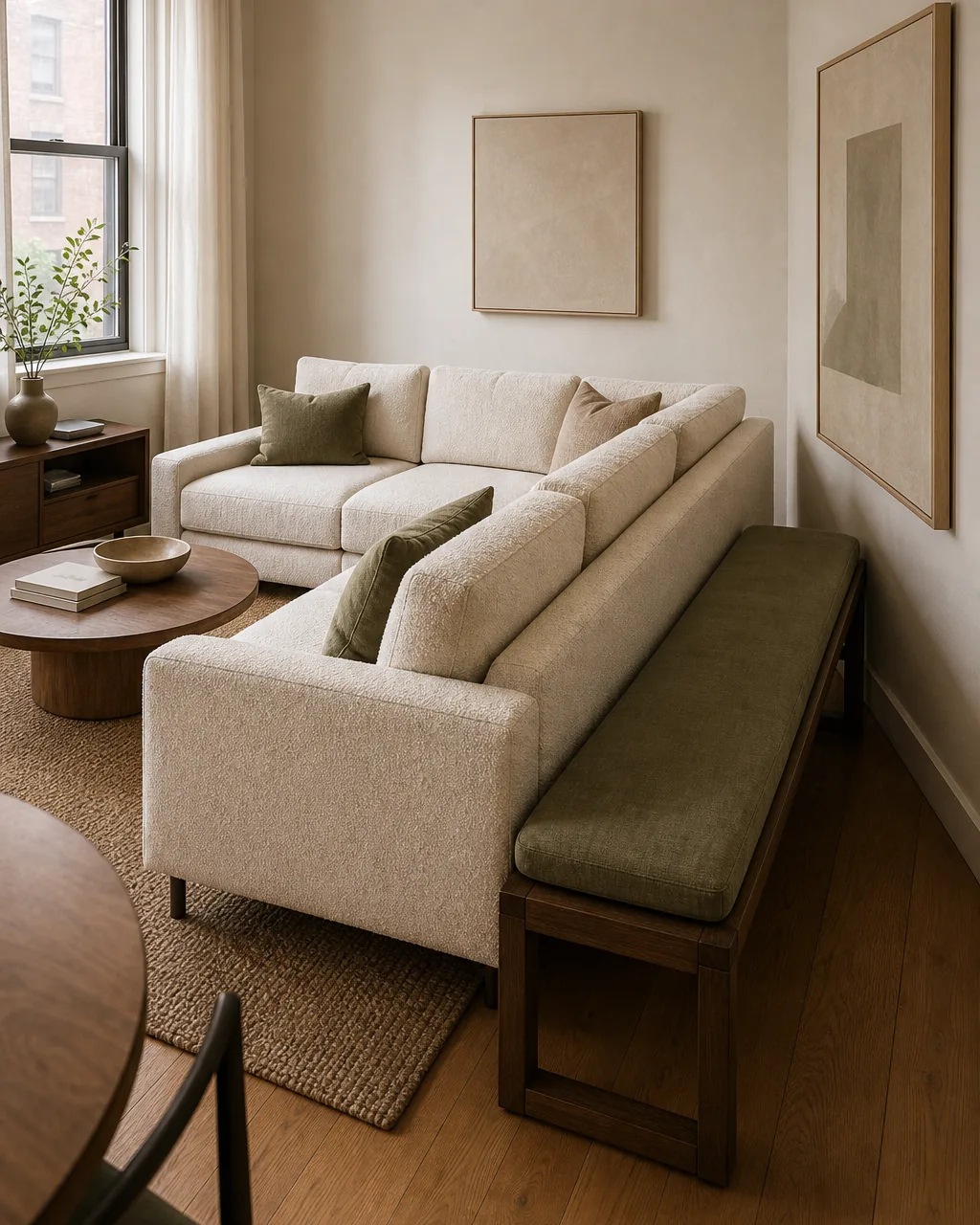
A long bench parked behind a sectional looks decorative most of the time. The hidden job is overflow seating the night you have six friends over and the sectional only seats four. The cushion is deep enough to face forward, and the back of the sectional becomes the backrest.
This works because the bench takes wall space the sectional already gave up. The wall behind a sectional is rarely usable, so the bench is bonus footprint. Most nights it holds a throw and a plant; one night a quarter it seats two more people.
- Make the bench deep enough to sit comfortably facing forward, at least 16 inches; shallower benches only work as side surfaces
- Match the bench height roughly to the back of the sectional, give or take an inch
- Use the bench top to stage a throw, one book, and one plant; resist treating it as full display shelving
- Add a small light over the bench area; lit benches read as seating, dark benches read as a shelf
- Keep the floor under the bench completely empty; bags or shoes under it cancel the spillover seat the moment you need it
The small living room playbook is not really about subtracting furniture. It is about choosing pieces that pull double duty and giving every seat a clear job. Start with a smaller sofa, one big rug, and chairs that actually face each other, and the room will seat more people the next time you have anyone over.