12 Coffee Table Styling Ideas for a Pulled-Together Living Room
A coffee table is the first thing the eye lands on in a living room, and it is usually either bare or buried under remotes and a stray mug. The styled, layered version you save on Pinterest is not luck. It follows a handful of rules.
The good news is the rules are simple, and you can do the whole thing with what you already own plus a tray and a few books. It is arranging, not shopping.
These twelve ideas are the moves designers actually use, from the tray that anchors everything to the breathing room that keeps it from looking cluttered. They work on any table, in any cozy living room.
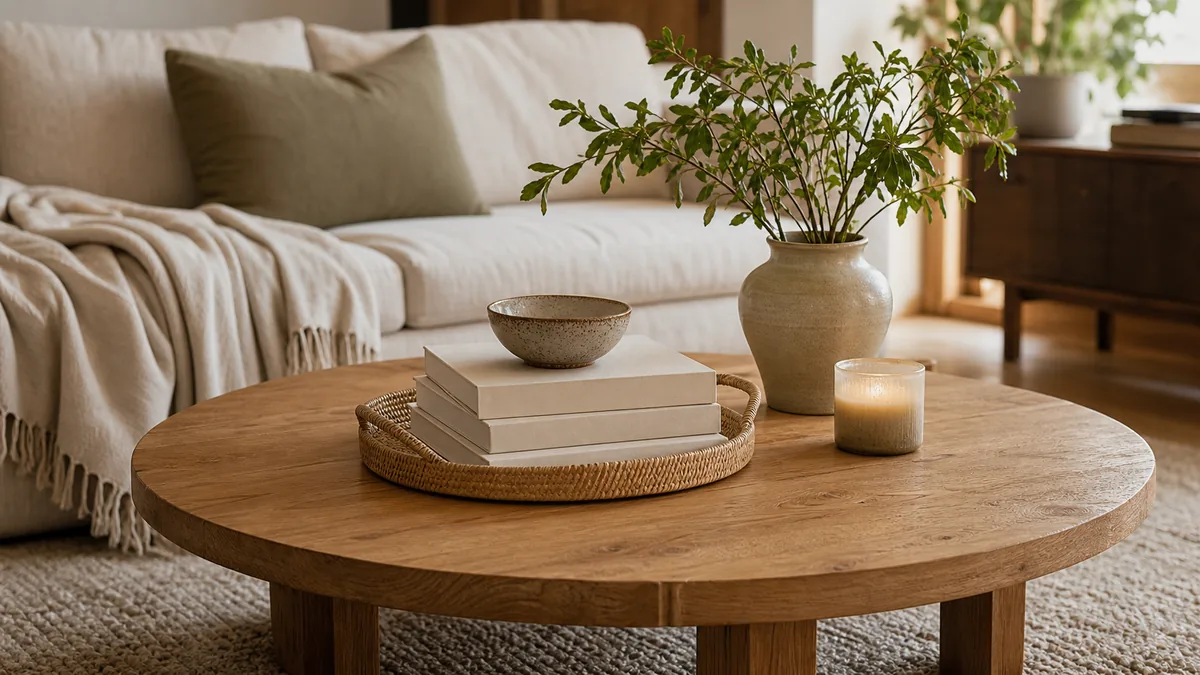
A coffee table looks designer when you follow a few simple moves: anchor it, layer some height, group in odd numbers, and leave room to breathe. Start with the tray and add the rest until it looks gathered, not staged.
- 1Anchor the look with a tray
- 2Build a base with a stack of books
- 3Add height with a vase of stems
- 4Add one sculptural object
- 5Vary the heights, tall to low
- 6Group your pieces in odd numbers
- 7Leave a clear zone for drinks
- 8Layer in natural texture
- 9Add a candle for a low glow
- 10Match the scale to your table
- 11Keep one cohesive palette
- 12Refresh it with the seasons
Anchor the Whole Look With a Tray
A tray is the single move that turns a scatter of objects into a styled vignette. It draws an edge around your grouping, so the styling reads as one intentional thing instead of clutter that drifted onto the table.
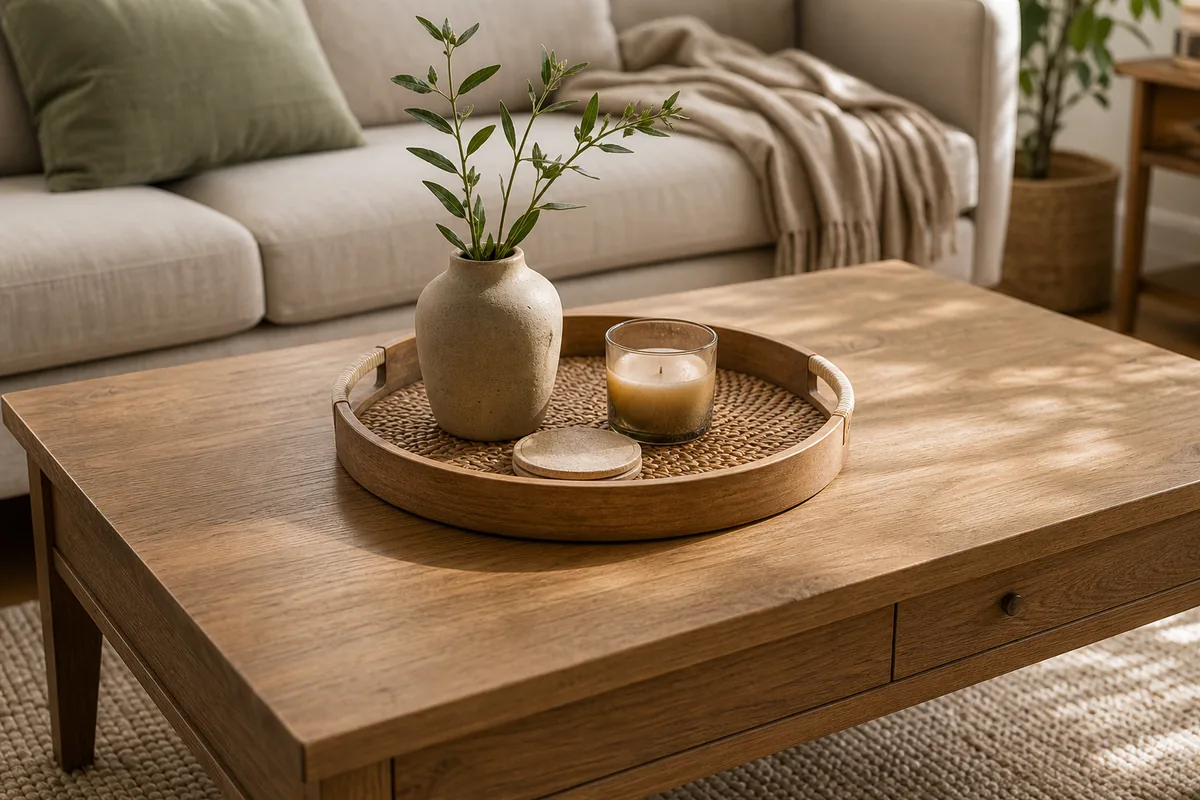
- Start with one tray, round or rectangular, as the base of the grouping.
- Keep the small wanderers, the remote, coaster, and matches, corralled inside it.
- Let the tray hold most of the styling so the rest of the table stays clear.
Build a Base With a Stack of Books
A stack of books is the workhorse of coffee table styling. It adds a low layer of height, fills space without clutter, and gives you a built-in pedestal to set a smaller object on top.
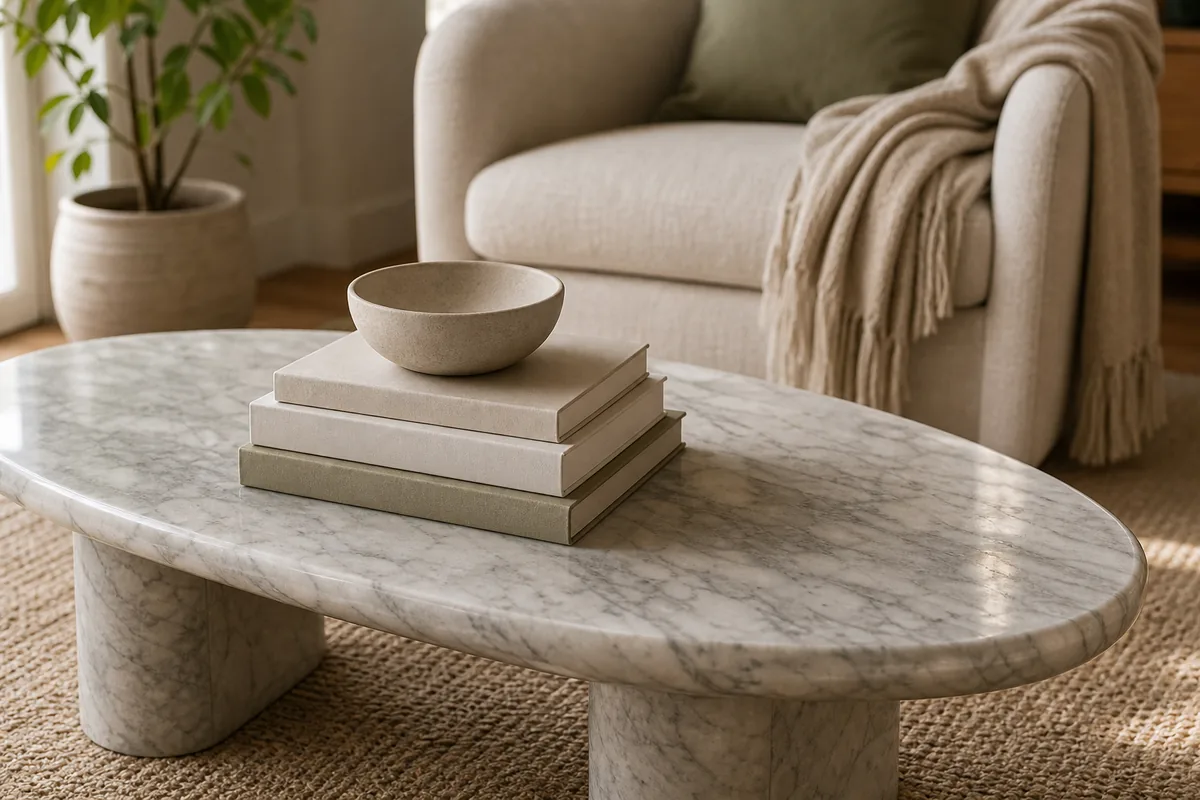
- Stack three or four hardcovers flat, largest on the bottom.
- Set one small object, a bowl or a candle, on top to finish it.
- Turn worn or loud spines inward so the stack reads calm and cohesive.
Add Height With a Vase of Stems
Every vignette needs one tall element to lift the eye, and a vase of fresh stems or branches is the easiest one. It brings life and a vertical line to a surface that is otherwise all low and flat.
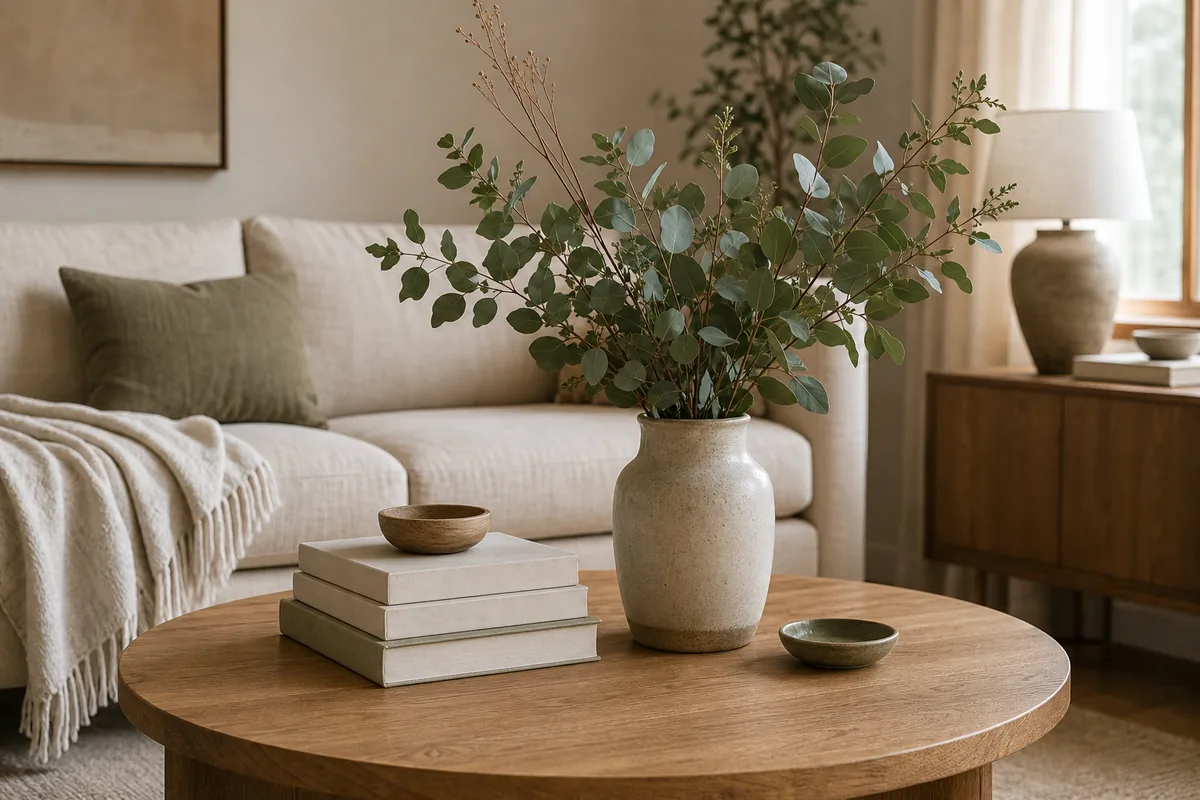
- Add one vase as the tallest piece in the grouping.
- Fill it with branches, eucalyptus, or a few seasonal stems.
- Keep the height roughly to the scale of the table, not towering over it.
You will not do all twelve moves at once. Pick the situation below that matches your coffee table right now, and start with those two or three ideas.
Add One Sculptural Object
One object with an interesting shape gives the eye somewhere to land and a little personality. A stone bowl, an abstract ceramic, or a wood sphere reads as considered without trying too hard.
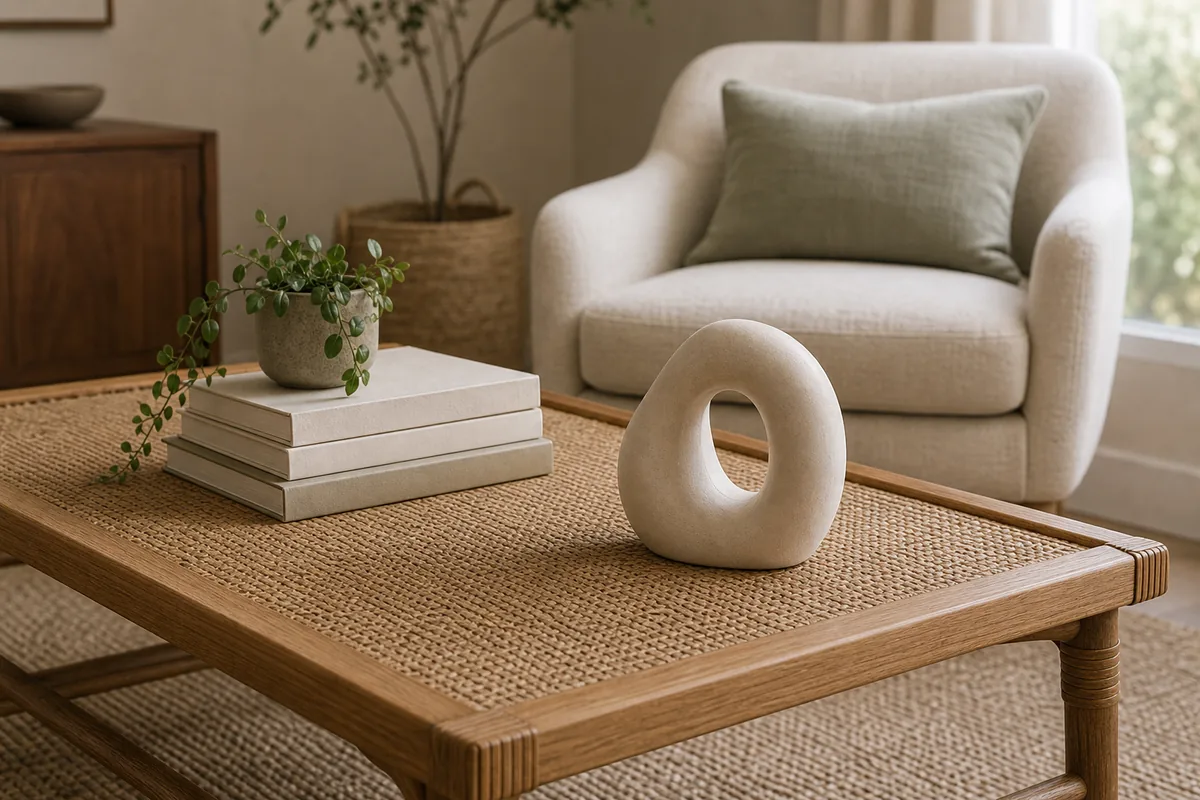
- Choose one sculptural piece as the quiet focal point.
- Let its shape do the work; skip anything fussy or busy.
- Set it where it has a little space around it to be seen.
Vary the Heights, Tall to Low
Flat and same-height is what makes a table look unstyled. A vignette comes alive when the eye can step down through three clear levels, from a tall vase to a medium candle to a low stack of books.
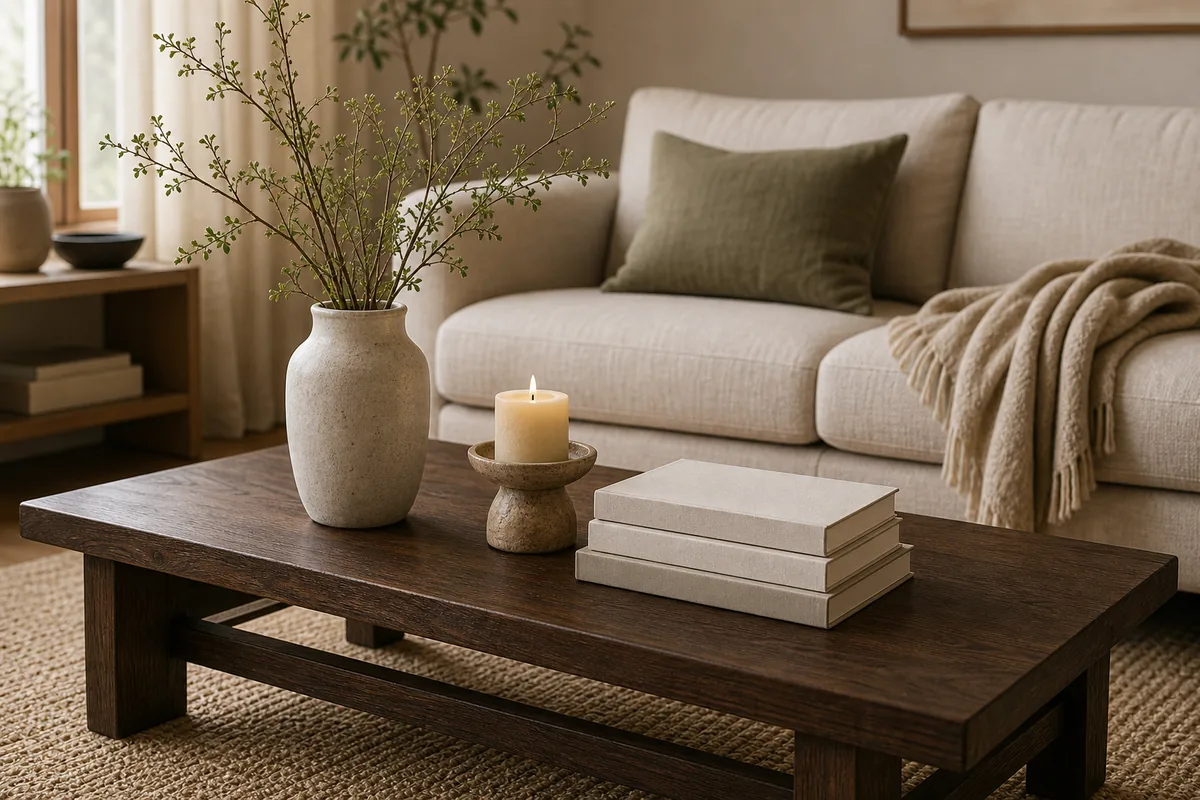
- Build in three height tiers: tall, medium, and low.
- Let the vase or stems be the high point and the books the low.
- Place the tiers close enough to read as one grouping, not three islands.
Group Your Pieces in Odd Numbers
Designers cluster in odd numbers because three or five objects feel more relaxed and collected than a stiff, even pair. Odd groupings read as gathered over time rather than placed by a rule.
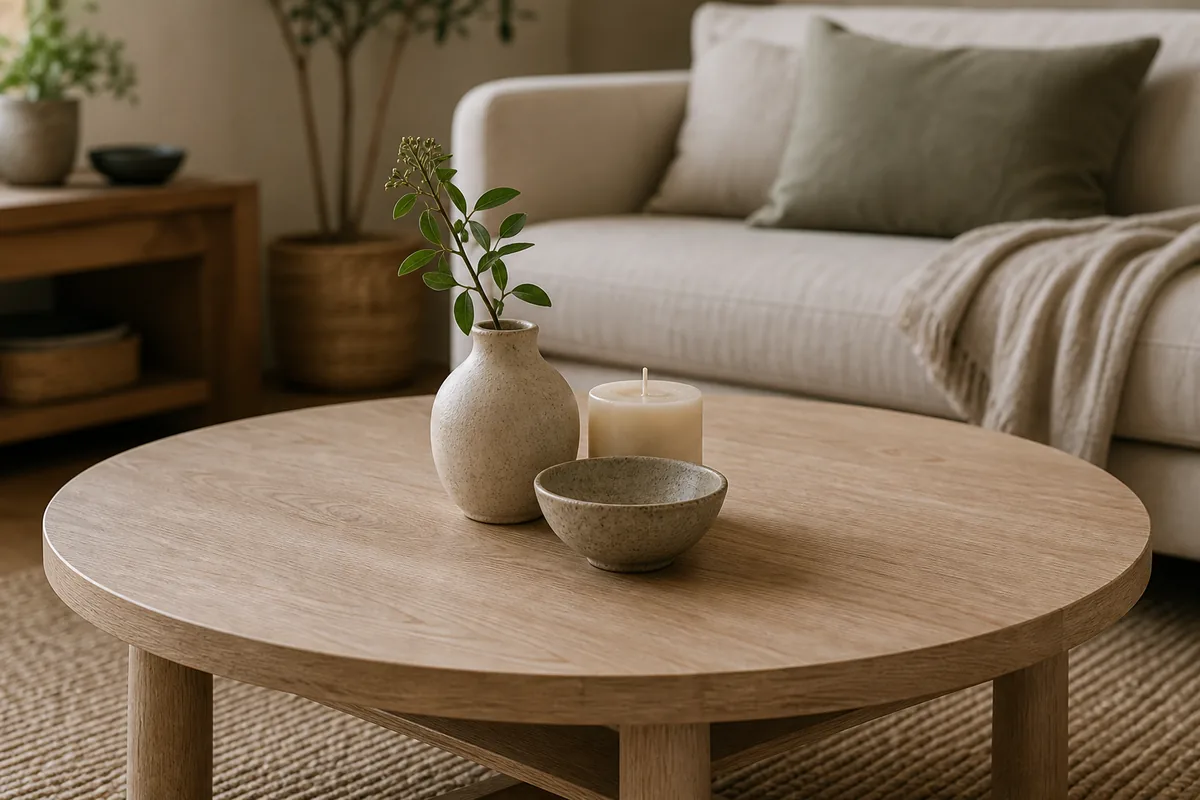
- Group objects in threes, or fives on a larger table.
- Cluster them close so they read as one collection.
- Vary the shapes within the group so nothing feels matched or stiff.
A styled coffee table is less about buying decor and more about a few rules for arranging it. These four are what make the twelve ideas come together instead of just crowding the surface.
Leave a Clear Zone for Drinks
A coffee table still has to work. Style only part of it and leave an open zone, so there is always room to set down a mug, prop up a book, or rest your feet without moving anything.
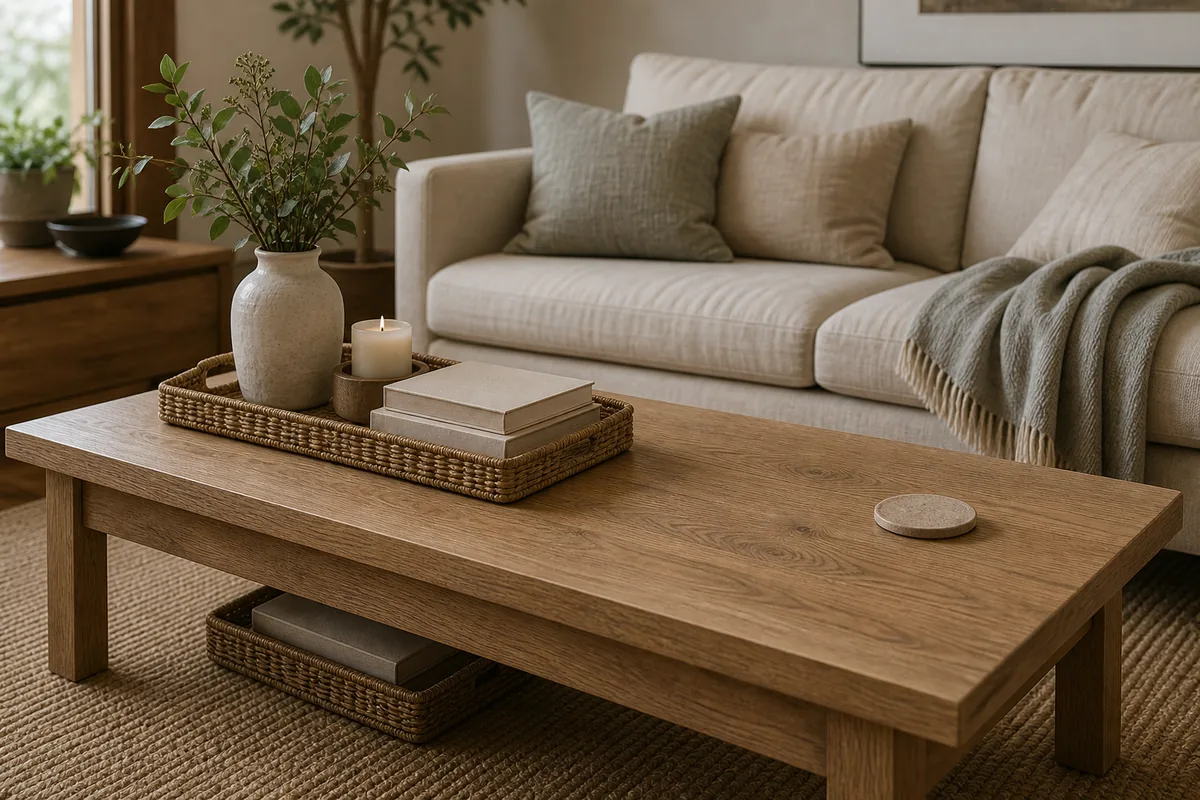
- Push the styling to one half or one corner of the table.
- Keep the other half clear with just a coaster ready.
- If you reach past the styling to set a cup down, it is too spread out.
Layer in Natural Texture
Texture is what keeps a neutral, pared-back table from feeling flat. A woven tray, a matte ceramic, a wood bowl, and a linen-bound book give the grouping warmth and depth without adding a single bold color.
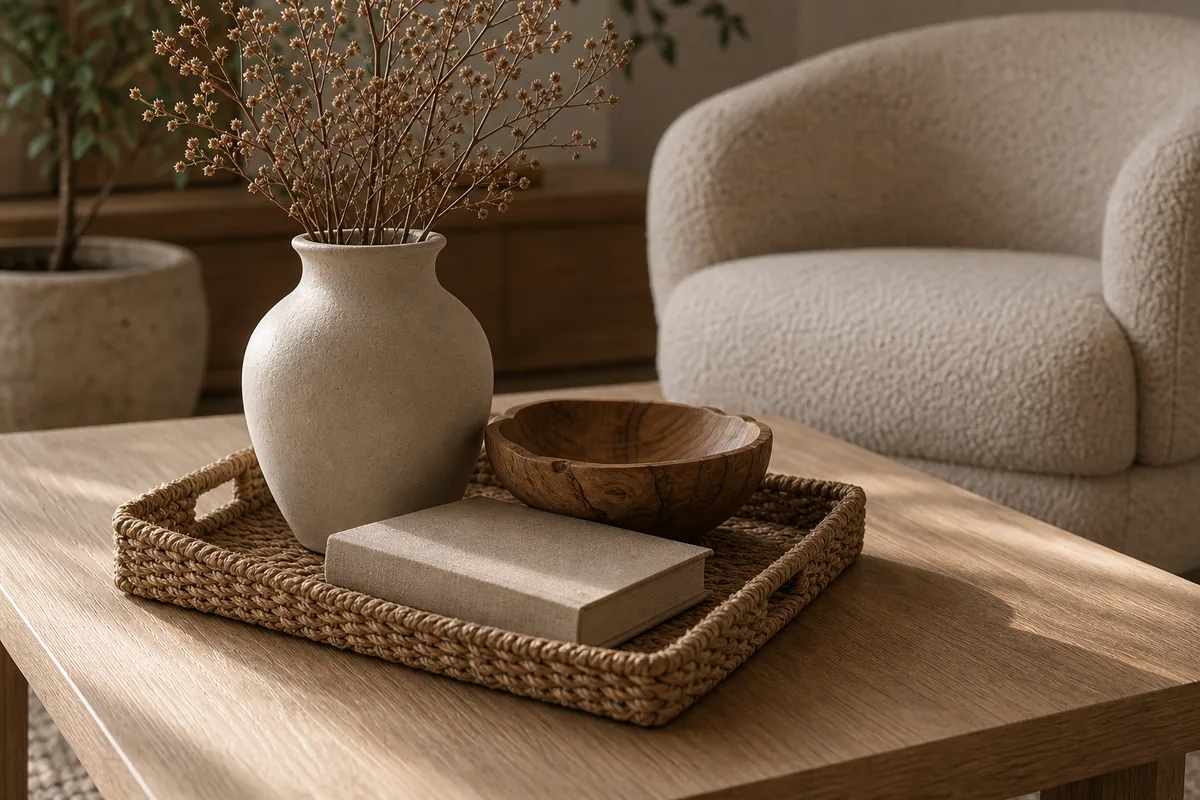
- Mix a few natural textures: wood, ceramic, woven, linen.
- Let the textures carry the interest so the palette can stay quiet.
- Lean on texture the way a boho living room does, just dialed back.
Add a Candle for a Low Glow
A candle is the low, warm anchor in a vignette and the one piece that earns its place by being used. It adds a soft light source at table level and a bit of scent to the room.
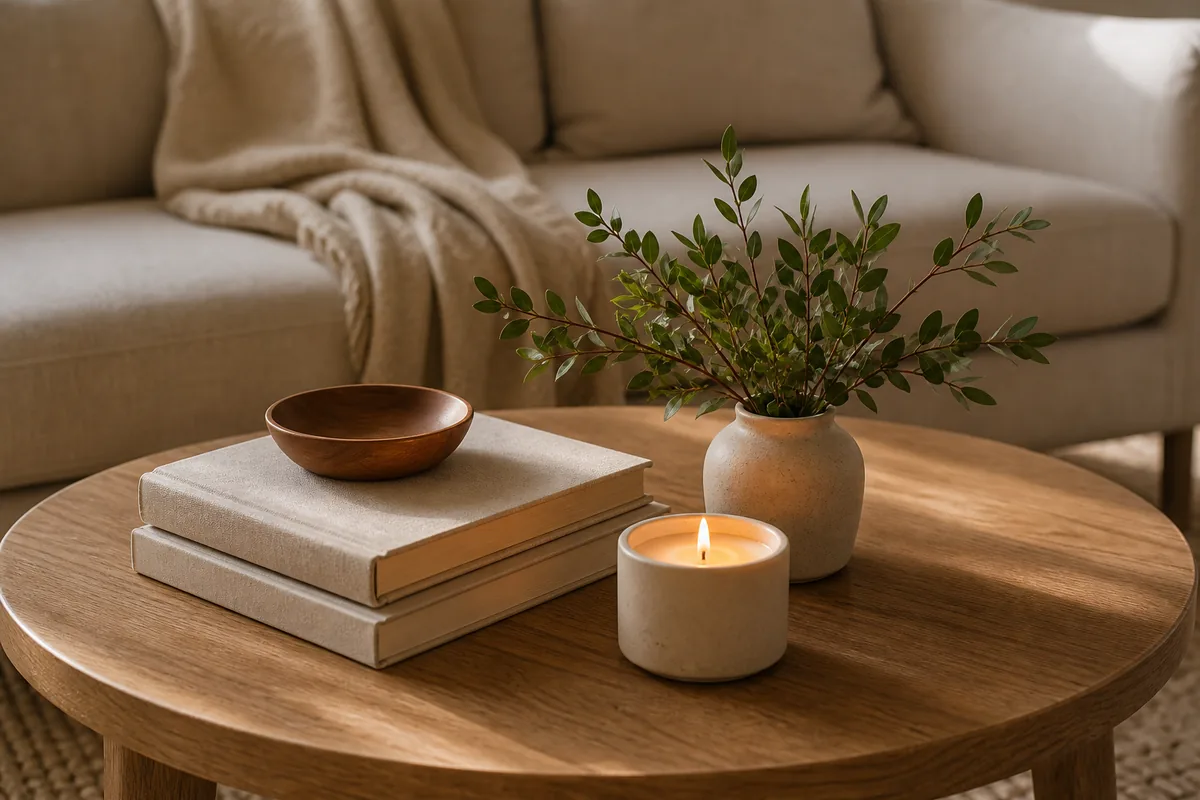
- Add one candle, a pillar or a filled vessel, low in the grouping.
- Pair it with the books or tray so it sits in the styling, not alone.
- Choose an unscented or quiet scent so it does not fight the room.
12 Coffee Table Styling Ideas for a Pulled-Together Living Room
- 1Anchor with a trayA tray draws an edge around your grouping so it reads as one intentional thing, not clutter that drifted onto the table. It is the backbone of a styled living room.
- 2Build a base with booksA flat stack of three or four hardcovers adds a low layer of height and gives you a pedestal to set a smaller object on top. Turn loud spines inward.
- 3Add height with a vase of stemsEvery vignette needs one tall element. A vase of branches or eucalyptus brings a vertical line and a little life to a flat surface.
- 4Add one sculptural objectA stone bowl, an abstract ceramic, or a wood sphere gives the eye a focal point and a bit of personality without trying too hard.
- 5Vary the heightsBuild in three tiers, tall to low, so the eye steps down through the grouping. Same-height and flat is what reads as unstyled.
- 6Group in odd numbersCluster pieces in threes or fives so they feel collected rather than matched. Odd groupings look gathered over time, not placed by a rule.
- 7Leave a clear zone for drinksStyle one part and leave the other half open, so there is always room for a mug, a book, or your feet without moving anything.
- 8Layer in natural textureA woven tray, a matte ceramic, a wood bowl, and a linen book add warmth and depth without a single bold color, the way a boho room does, dialed back.
- 9Add a candle for glowA candle is the low warm anchor of a vignette and the one piece that earns its place by being used. Keep the scent quiet.
- 10Match the scale to your tableSize the vase and tray to the table, bigger on a large one, lighter in a small living room, so nothing looks lost or crowded.
- 11Keep one cohesive palettePull two or three tones across the objects, letting wood and cream do most of the work, and a random collection starts to look curated.
- 12Refresh it with the seasonsKeep the tray, books, and vase year-round and swap one small thing, branches in fall, blooms in spring, so it always feels current.
styledhomenotes.com
Match the Scale to Your Table
Objects that are too small look lost and cluttered; too big and they crowd. Match the size of your pieces to the table so the vignette feels balanced, with a bigger vase and tray on a large table and a lighter touch on a small one.
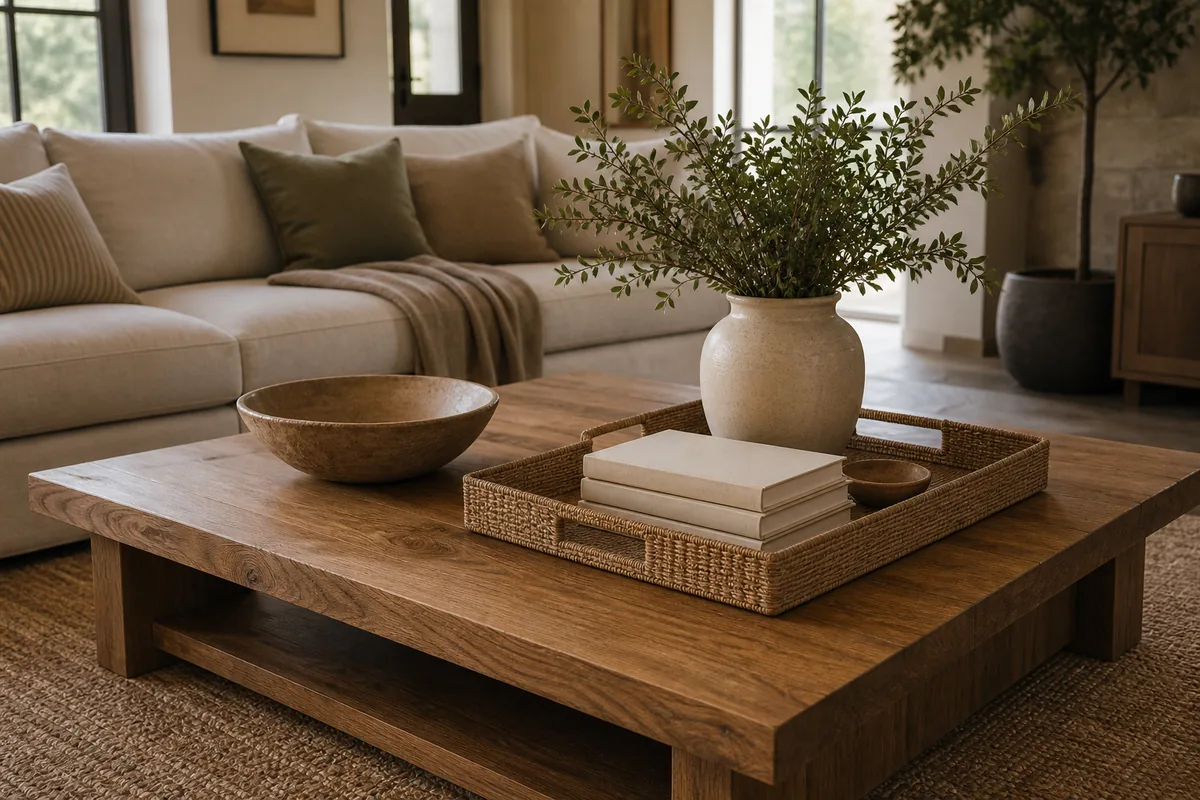
- Size the vase and tray to the table, not to a shelf.
- On a small table in a small living room, keep it to a few pieces.
- On a large table, go bigger and bolder so nothing disappears.
Keep One Cohesive Palette
A grouping clicks when the objects share one quiet palette. Pull two or three tones, cream, wood, a soft green, across the pieces, and a random collection starts to look curated.
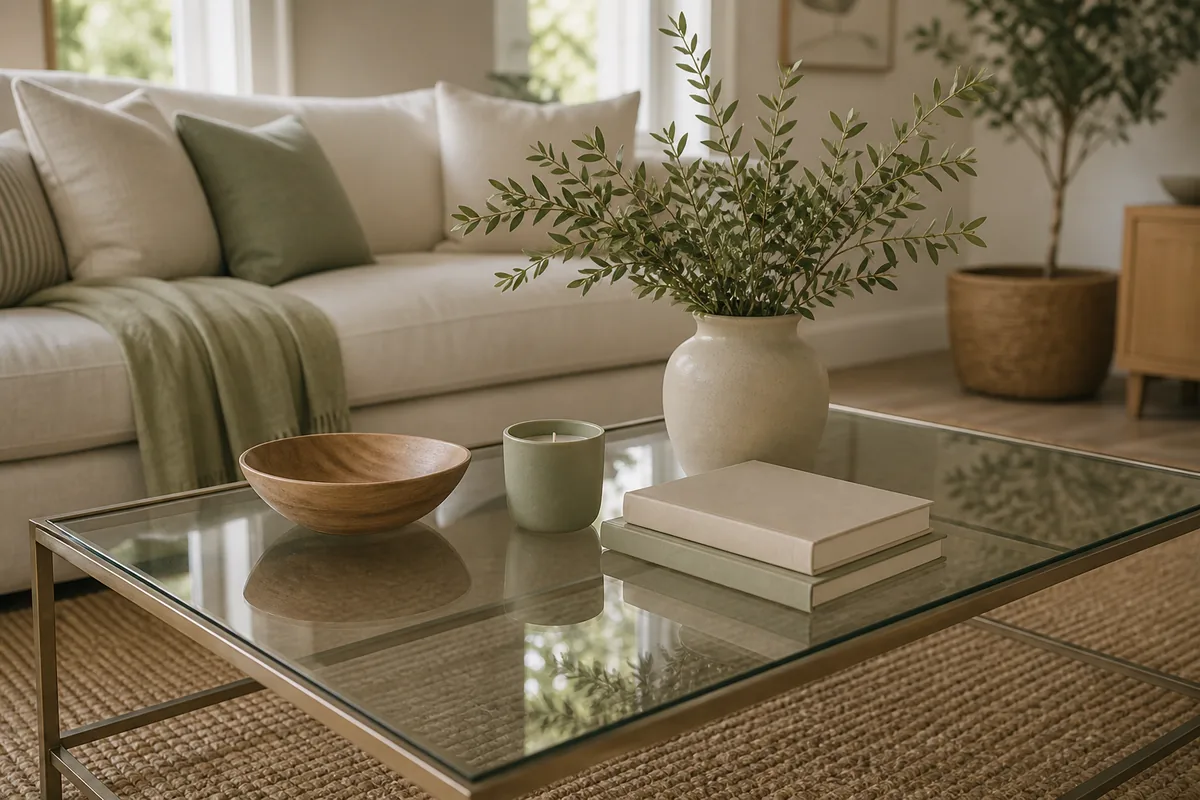
- Choose two or three tones and repeat them across the objects.
- Let wood and cream do most of the work, with one soft accent.
- Coordinate it loosely with the wall above so the room hangs together.
Refresh the Styling With the Seasons
The base, a tray, books, and a vase, can stay all year, and you swap one small thing with the seasons to keep it feeling current. Branches in fall, blooms in spring, a few stems of greenery the rest of the time.
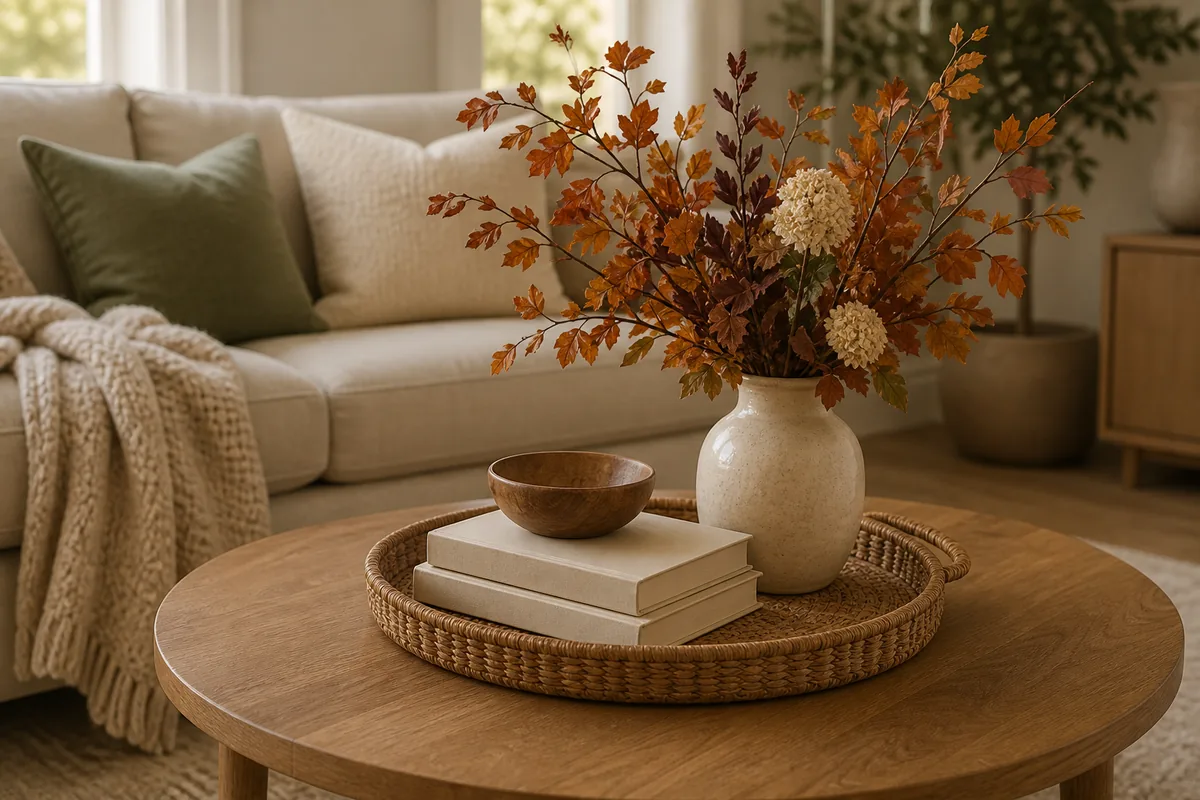
- Keep a permanent base and change only the stems or one object.
- Swap in seasonal branches, blooms, or greenery as the year turns.
- Edit as you go so a refresh never becomes another pile to clear.
A styled coffee table is really just a tray, a stack, a little height, and the restraint to stop before it gets crowded. Start with the tray and one grouping, then adjust until it looks gathered, not staged.

Nora Ellis edits Styled Home Notes, where she shares practical decorating, organization, and small-space ideas for creating a more styled and functional home. Every article is reviewed for clarity, usefulness, image sourcing, and Pinterest-to-page alignment before publication. Visit the Nora Ellis author page.