13 Small Apartment Living Room Ideas That Make a Rental Feel Bigger
Small apartment living rooms break the same way every time: a sofa shoved tight against the wall, a tiny floating rug, the wrong-shaped coffee table blocking the only walking path, and one overhead fixture nobody chose.
What changes the room is not new furniture. It is a handful of rental-grade decisions about placement, sight lines, and light that make 350 square feet read bigger, taller, and calmer without breaking the lease.
These thirteen moves work in any small apartment living room — studio, one-bedroom, rental, or owned. The broader logic of working with small footprints runs through our small living room ideas for apartments pillar guide.
From pulling the sofa off the wall to swapping the overhead for two warm table lamps — these thirteen moves are rental-grade decisions about placement, sight lines, and light. Jump to the fix you need first.
- 1Float the sofa a hand’s width off the back wall
- 2Pick a low-profile track-arm or armless sofa
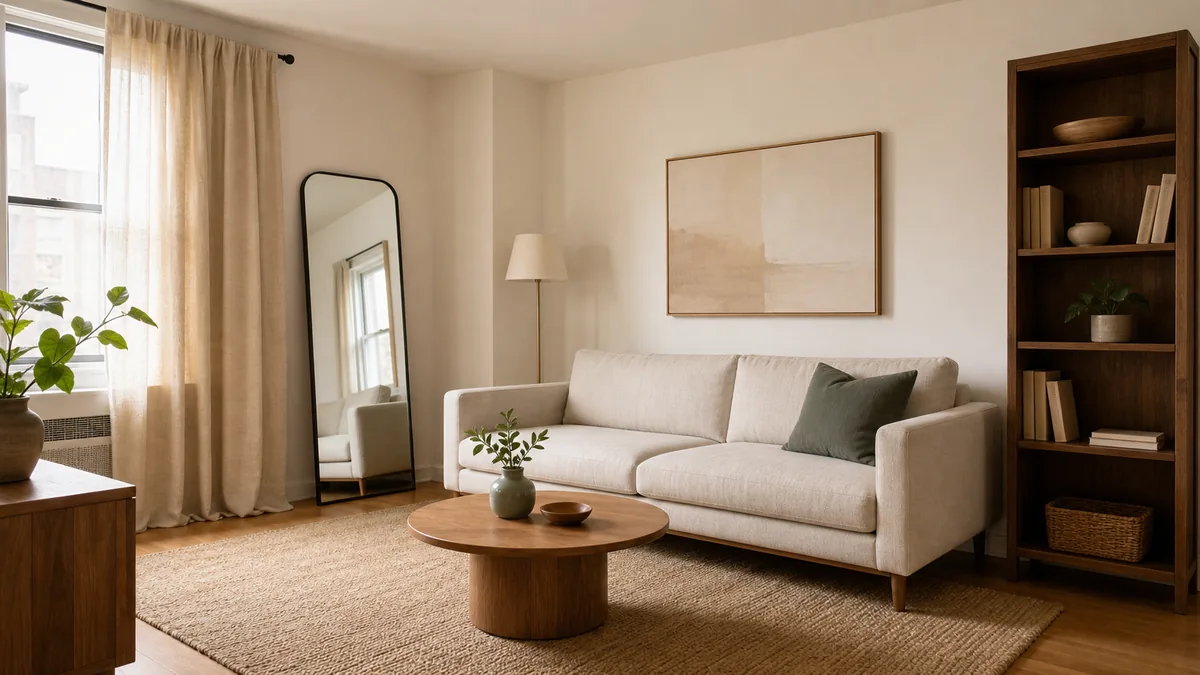
- 3Use a slim round pedestal coffee table so the path flows around
- 4Lean a tall floor mirror against the wall to double the daylight
- 5Mount a wall-wide curtain rod so panels stack off the glass
- 6Anchor with one large rug that fits all furniture legs on
- 7Choose pieces on visible raised legs so air shows through
- 8Stand a narrow tall bookcase as a vertical anchor
- 9Wall-mount the TV and add a slim floating shelf below
- 10Swap the second sofa for one swivel accent chair
- 11Slip a slim console behind the sofa for a lamp surface
- 12Hang one oversized art piece instead of a gallery wall
- 13Layer two warm table lamps and skip the overhead
Float the Sofa a Hand’s Width Off the Back Wall
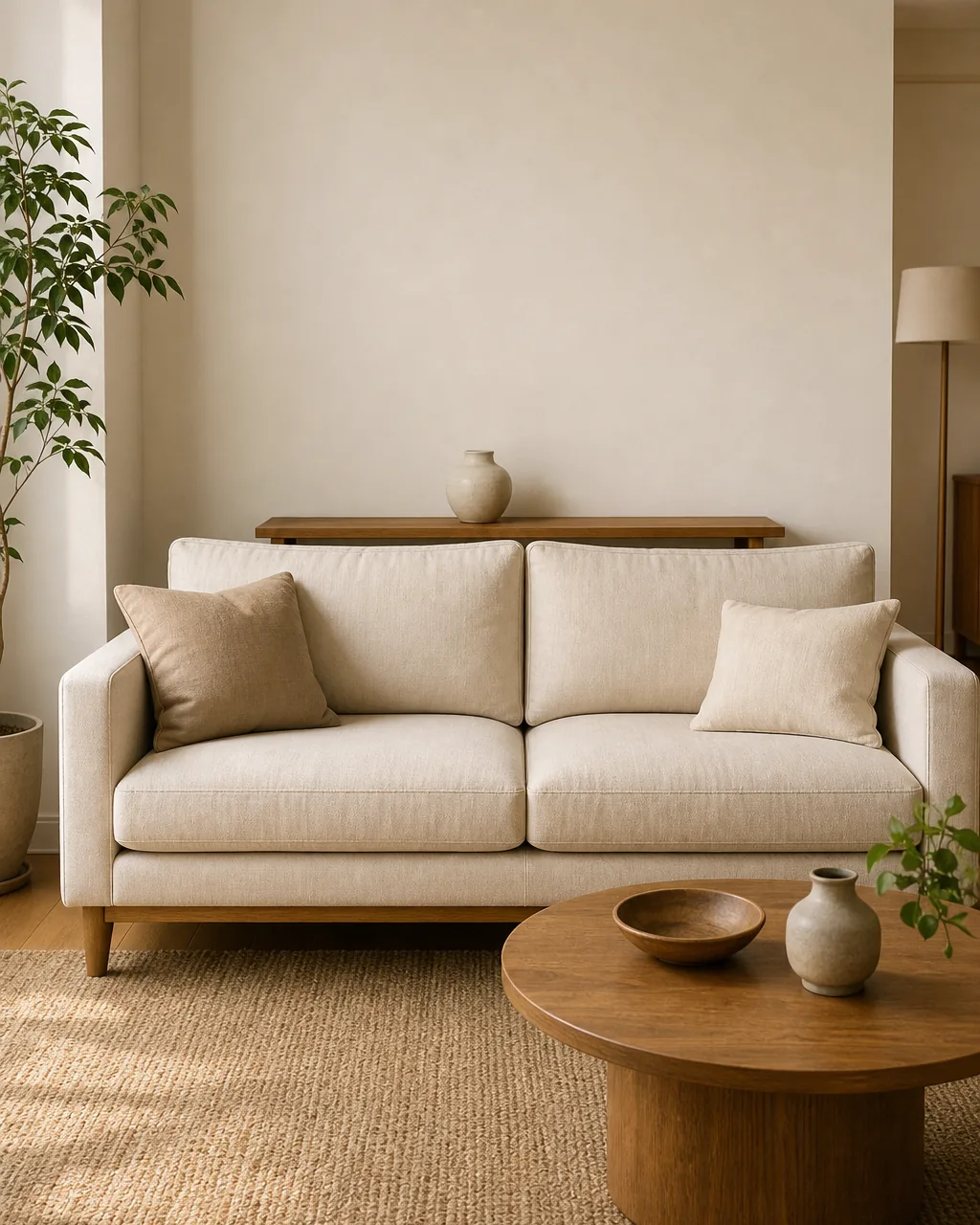
A sofa shoved tight against the back wall is the first move every renter makes and the first thing that makes a small living room feel even smaller. The wall and the sofa back read as one heavy slab, the room loses its depth, and the eye stops short of the corners.
Pulling the sofa four to six inches off the wall does the opposite. The gap is small enough that nobody walks behind, but the visible band of air behind the cushions tells the eye the room continues — and the whole space reads deeper than it measures.
- Measure four to six inches off the wall — any less and the eye loses the gap, any more and the room loses floor
- Slip a slim console or a single tall vase into the gap so the band of air looks intentional, not accidental
- Center the gap on the wall line, not on the rug, so the sofa back stays parallel to the wall
- Anchor a power strip on the back of the sofa frame so lamp cords run through the gap, not across the floor
- Re-check the gap after vacuuming; sofas slide an inch a week and the trick only works when the gap stays consistent
Pick a Low-Profile Track-Arm or Armless Sofa
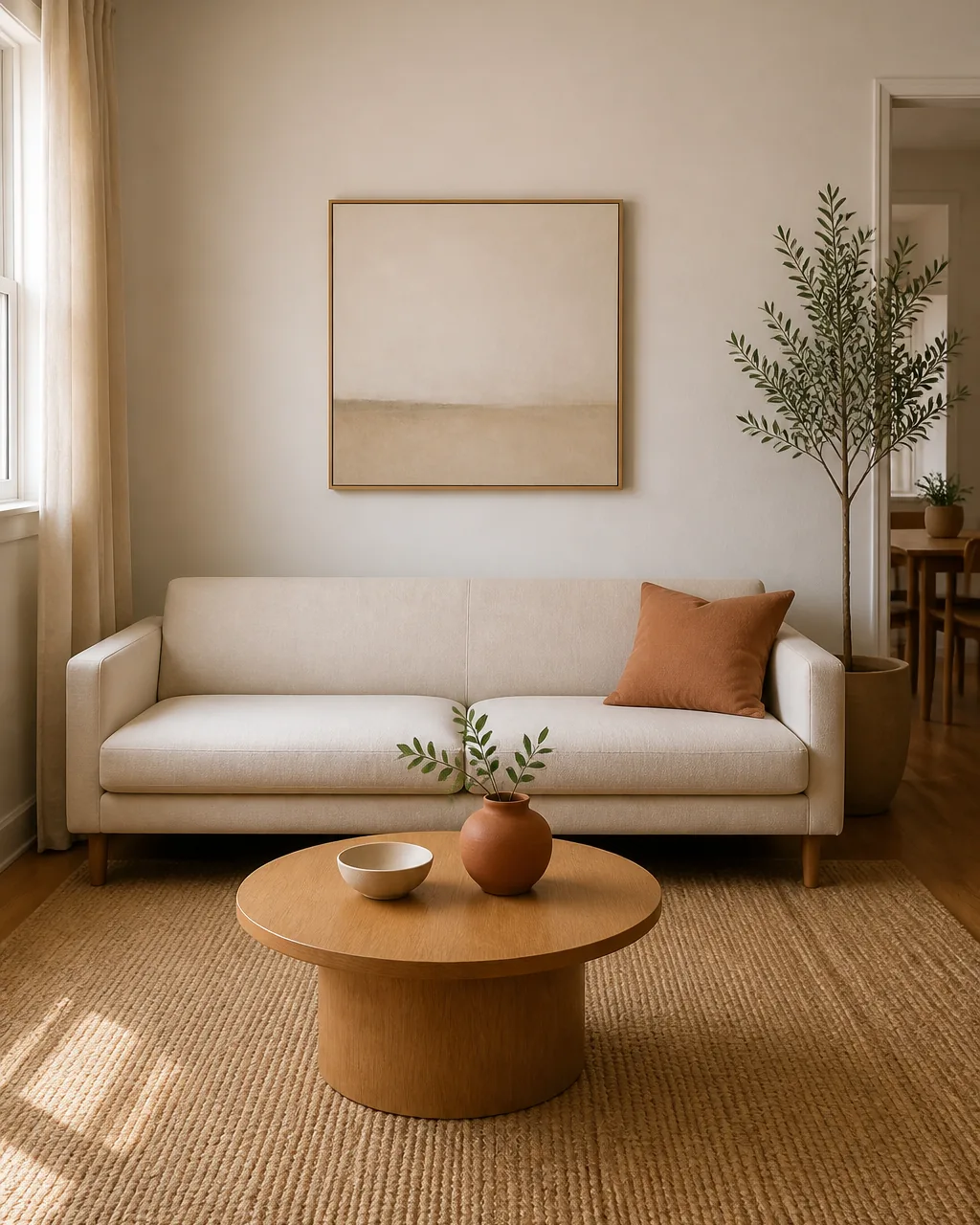
A tall-back overstuffed sofa eats every inch of vertical air in a small apartment living room. The arms reach the windowsill, the back blocks the wall line, and the room ends up cropped at chest height no matter how high the actual ceiling is.
A low-profile sofa with narrow track arms or no arms at all does the opposite — the visual line stays under thirty inches off the floor, the ceiling reads taller, and the wall behind the sofa stays available for art, a mirror, or a shelf.
- Cap the back-of-sofa height at thirty inches if the ceiling is eight feet — taller backs steal vertical air
- Pick track arms or no arms at all; rolled arms add six inches of width per side and read heavier
- Choose a single linen-toned upholstery so the sofa recedes; bold pattern doubles its visual weight
- Skip deep cushions over twenty-two inches; small rooms work better with twenty-inch seat depth
- Buy off the floor model when possible — small-apartment sofas need to be measured against your actual door frame, not the showroom one
Use a Slim Round Pedestal Coffee Table So the Path Flows Around
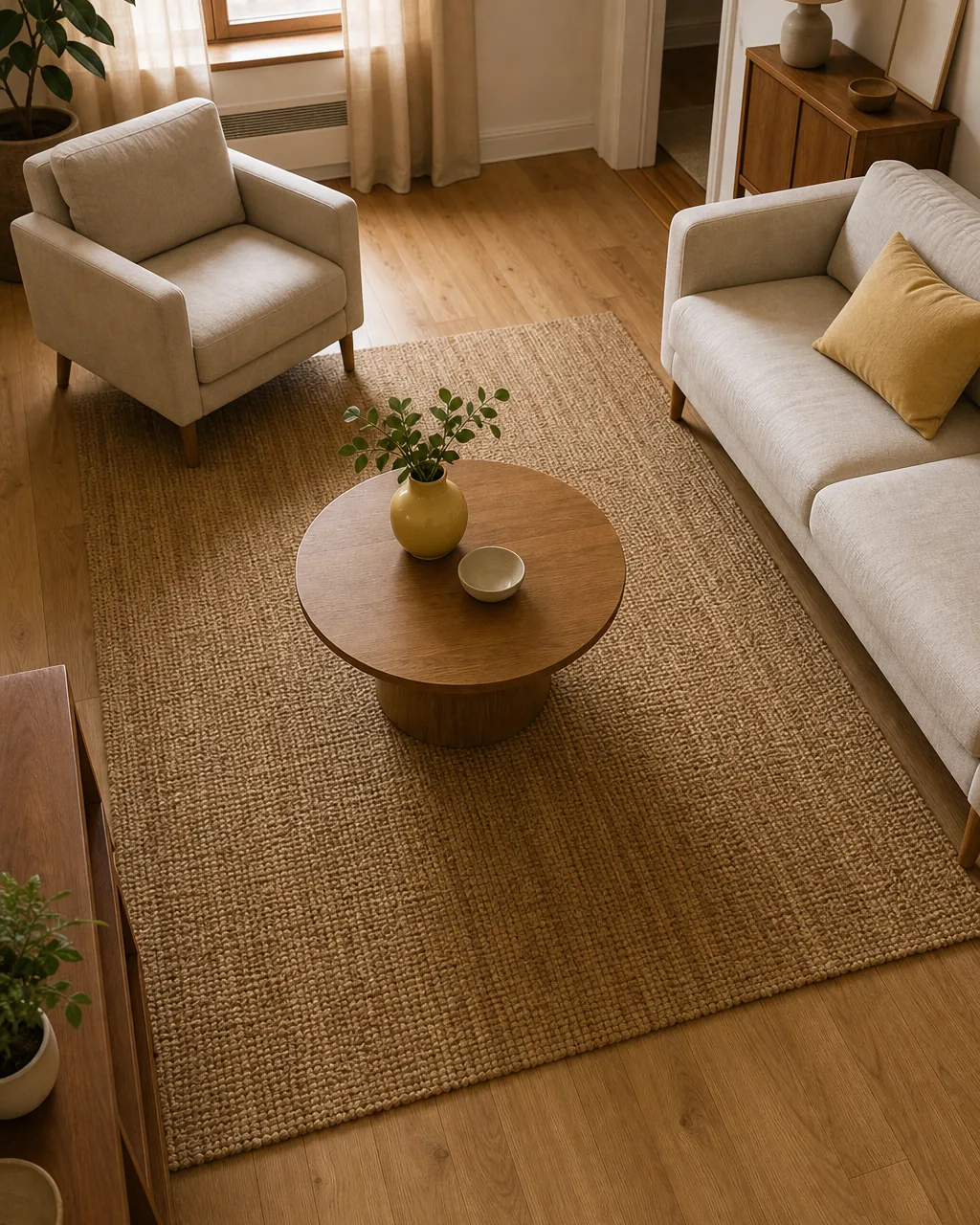
A rectangular coffee table with four legs creates four sharp corners and four walking paths a small room cannot afford. Every trip from the sofa to the kitchen catches a hip on the corner or a sock on a leg, and the room feels like an obstacle course.
A round pedestal table on a single center column has no corners and no four-leg footprint. The walking path flows around the curve, the floor under the table reads as one continuous open space, and the room feels twice as walkable.
- Cap the diameter at twenty-eight to thirty inches for a sofa under seventy-two inches; bigger tables crowd the path
- Pick a single-pedestal base — four legs add visual clutter and break the floor sweep
- Match the wood tone to the floor or the bookcase, not both; a third wood tone fights the room
- Skip glass tops in homes with pets or kids; smudges read louder on a round table than a rectangle
- Pair with a slim brushed-brass tray on top to hold a remote and a candle — the table needs one styling layer, not three
You will not need all thirteen. Find the situation below that matches your apartment today, and start with those two or three ideas.
Lean a Tall Floor Mirror Against the Wall to Double the Daylight
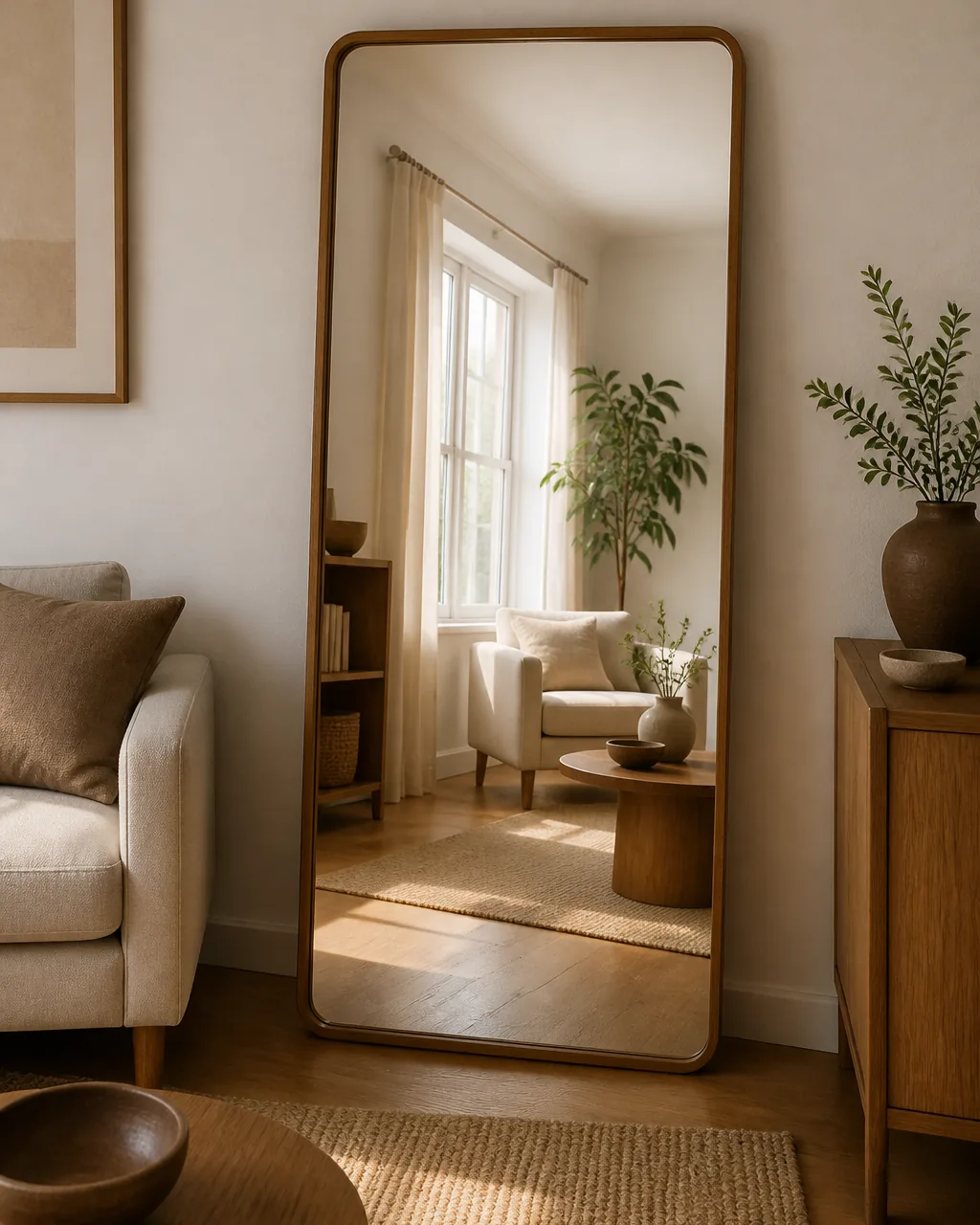
Most small apartment living rooms have one window doing all the lighting work. By three in the afternoon the window-side feels bright and the opposite wall feels gloomy, and no amount of overhead lighting fixes the contrast.
A tall leaning floor mirror on the wall directly opposite the window catches that single light source and bounces it back across the room. The room reads twice as bright at no rental cost — and because the mirror leans, the lease stays untouched.
- Pick a mirror at least sixty inches tall — short mirrors clip the reflection at hip height and waste the trick
- Lean against the wall opposite the largest window so the reflection captures the actual daylight, not a corner
- Choose a slim warm-oak or matte-black frame; ornate frames fight a calm room
- Use a furniture-grade leaning strap behind the frame if the apartment has kids or pets
- Wipe the mirror weekly — a dusty mirror returns gray light, not warm light
Mount a Wall-Wide Curtain Rod So Panels Stack Off the Glass
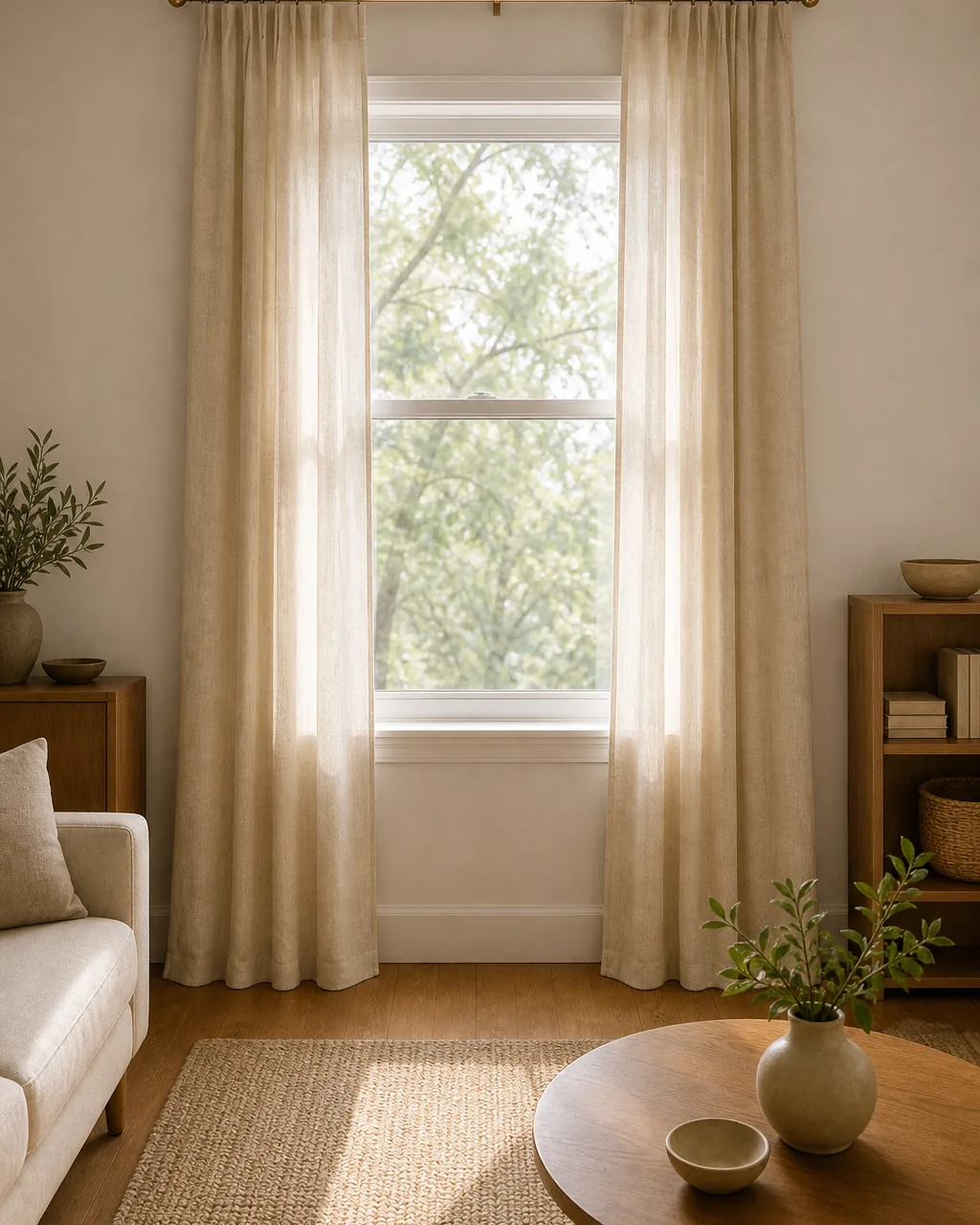
Standard rental windows are placed dead-center on a wall and framed in a way that wastes a foot of wall on each side. A short rod that ends right at the frame edge means open panels bunch on top of the glass and steal half the daylight the room actually has.
A wall-wide rod that runs ten to twelve inches past the frame on each side lets the open panels stack off the glass entirely. The full window is exposed during daylight hours, the wall reads continuous instead of chopped by a short rod, and the closed-curtain look stays balanced too.
- Measure the wall first, not the window — then extend the rod ten to twelve inches past the frame on each side so the panels stack off the glass
- Calculate panel width at two-and-a-half times the rod length so the closed curtain reads full, not stretched flat
- Skip the inside-mount rod that bunches the panels on the glass; outside-mount on the wall is the entire trick
- Pick a brushed-brass or matte-black slim rod under one inch in diameter; chunky rods read as the focal point instead of the window
- Tie the panels back at hip height with a slim leather strap during the day if the apartment skews dark; tieback opens the glass even more without removing the rod
Anchor With One Large Rug That Fits All Furniture Legs On
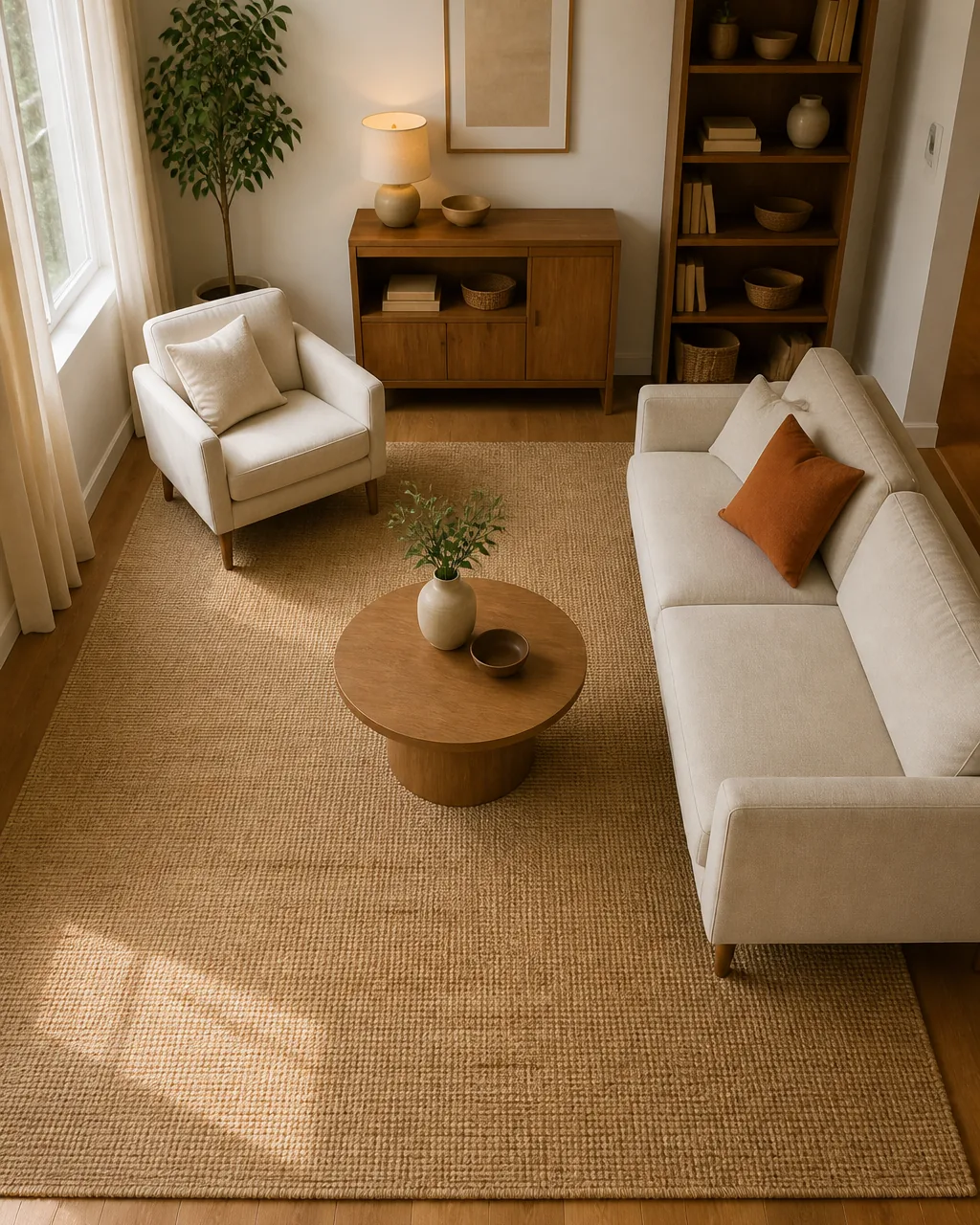
A small four-by-six rug floating under just the coffee table is the move most renters make and the move that shrinks a small living room hardest. The rug becomes an island, the sofa floats off to one side, and the floor reads as three disconnected patches instead of one space.
One single large rug sized so every furniture leg sits on it does the opposite. The seating zone reads as one unified room, the floor stops fighting the layout, and the rug visually pushes the walls outward.
- Size up to at least eight-by-ten for a standard small living room; smaller rugs work harder against the room
- Confirm every front leg of the sofa, every leg of the armchair, and the full coffee-table footprint sit on the rug before you buy
- Leave eighteen to twenty-four inches of bare floor between the rug edge and the wall on at least two sides
- Pick low-pile neutral weave — high-pile rugs crowd the room visually and trap dust in apartment HVAC
- Use a thin felt rug pad under it; a pad keeps the rug from sliding and adds the comfort underfoot a small apartment needs
These four rules separate a small apartment living room that holds together from one that just happens to have furniture in it.
Choose Pieces on Visible Raised Legs So Air Shows Through
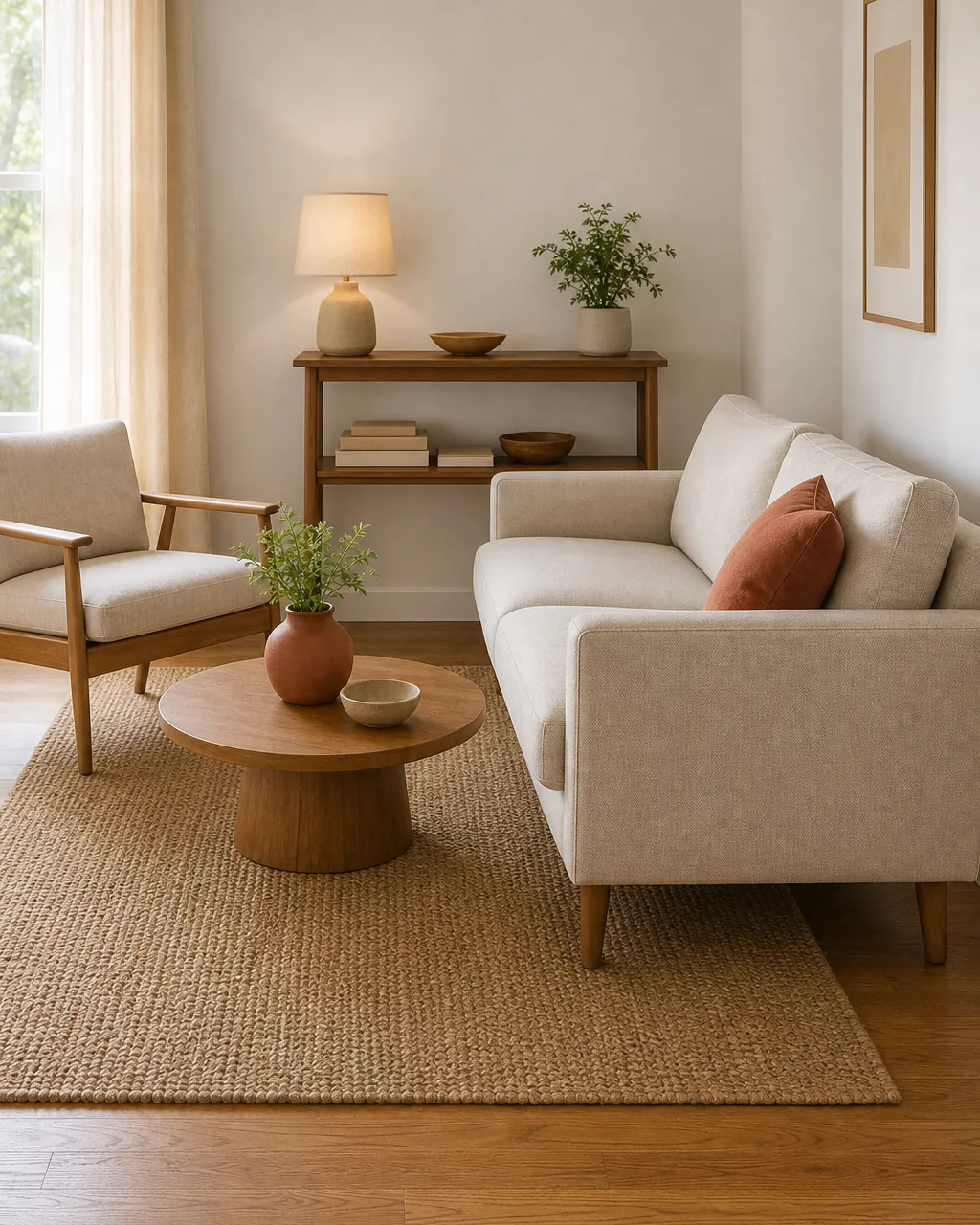
Skirted sofas and floor-flush consoles plant heavy visual mass on the floor and stop the eye where the piece starts. A room full of solid bases reads as a room full of walls, and the actual floor — the open part — disappears.
Picking sofa, chair, and console all on visible six-inch legs lets a continuous band of floor air show under every piece. The eye reads through the legs to the floor beyond, and the room feels larger than it measures even with the same furniture footprint.
- Confirm at least four to six inches of clearance under every major piece — sofa, armchair, console, side table
- Pick exposed wood or matte-black metal legs; chrome adds glare in a small room
- Skip skirted sofas, ottoman bases that meet the floor, and consoles with closed plinth bases
- Match leg finish across pieces — three different leg finishes fight; one finish lets the room breathe
- Keep the floor under raised pieces clean; the trick fails the second the band of floor air fills with dust bunnies
Stand a Narrow Tall Bookcase as a Vertical Anchor
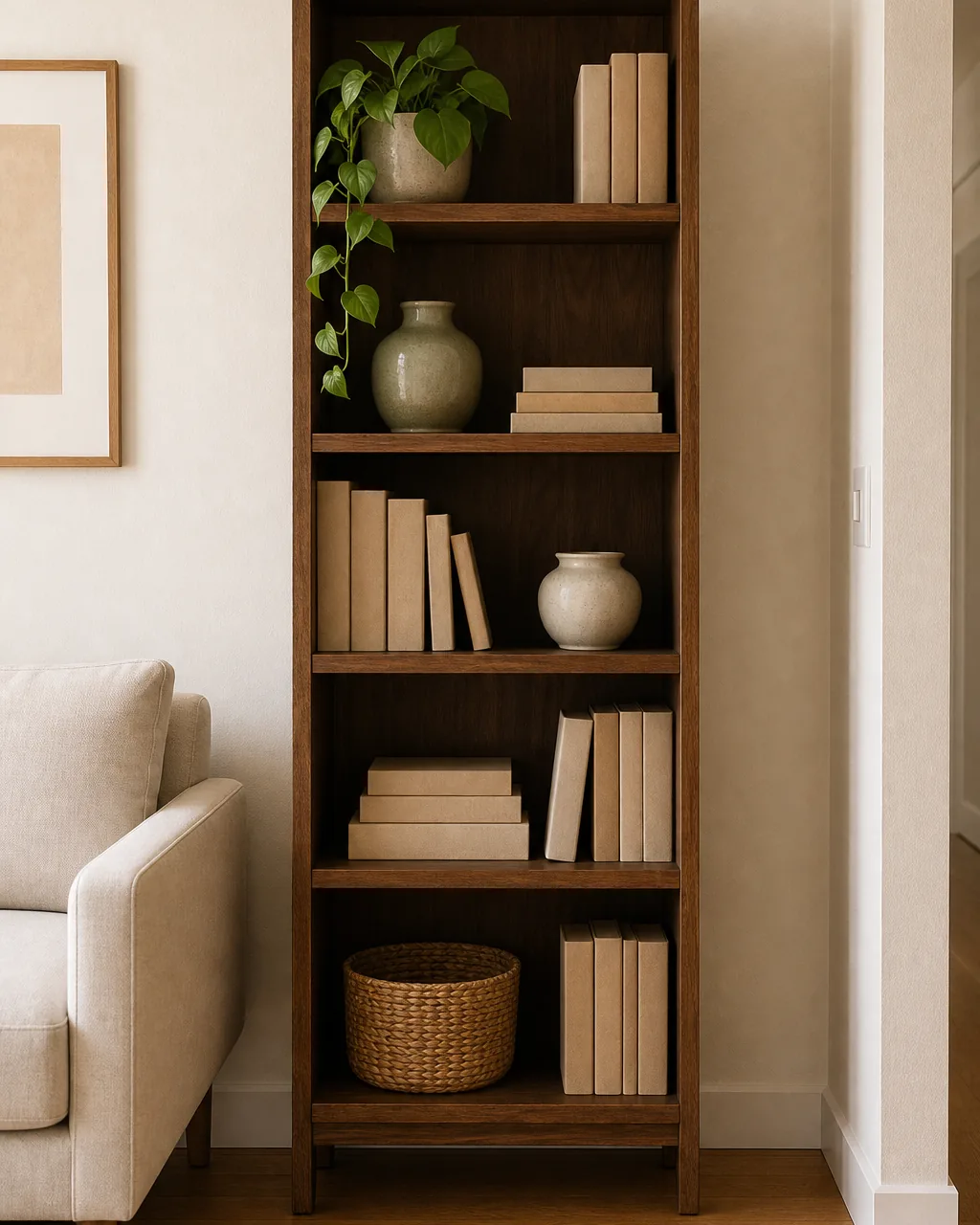
A short wide credenza eats floor space and offers nothing back to the eye. The shelf gives a small living room everything it cannot get from horizontal furniture — vertical anchor, storage capacity, and a styling surface — without taking more than two feet of floor.
A narrow tall bookcase reads the room upward. The eye follows the vertical line, the ceiling appears taller, and the bookcase holds the storage a small apartment usually has nowhere to put. Studio-grade layouts use the same vertical-stretch logic across rooms, as covered in our studio apartment ideas guide.
- Cap the bookcase width at twenty-four to thirty inches; wider bookcases revert to credenza problems
- Pick a height that ends within twelve inches of the ceiling so the wall above does not read as wasted
- Style with one tall plant on top so the eye reaches the ceiling line, not just the bookcase top
- Mix horizontal book stacks with vertical book runs and three to five non-book objects per shelf
- Anchor a tall bookcase to a stud or use a furniture strap behind it — small apartments often have pets and kids in tight space
Wall-Mount the TV and Add a Slim Floating Shelf Below
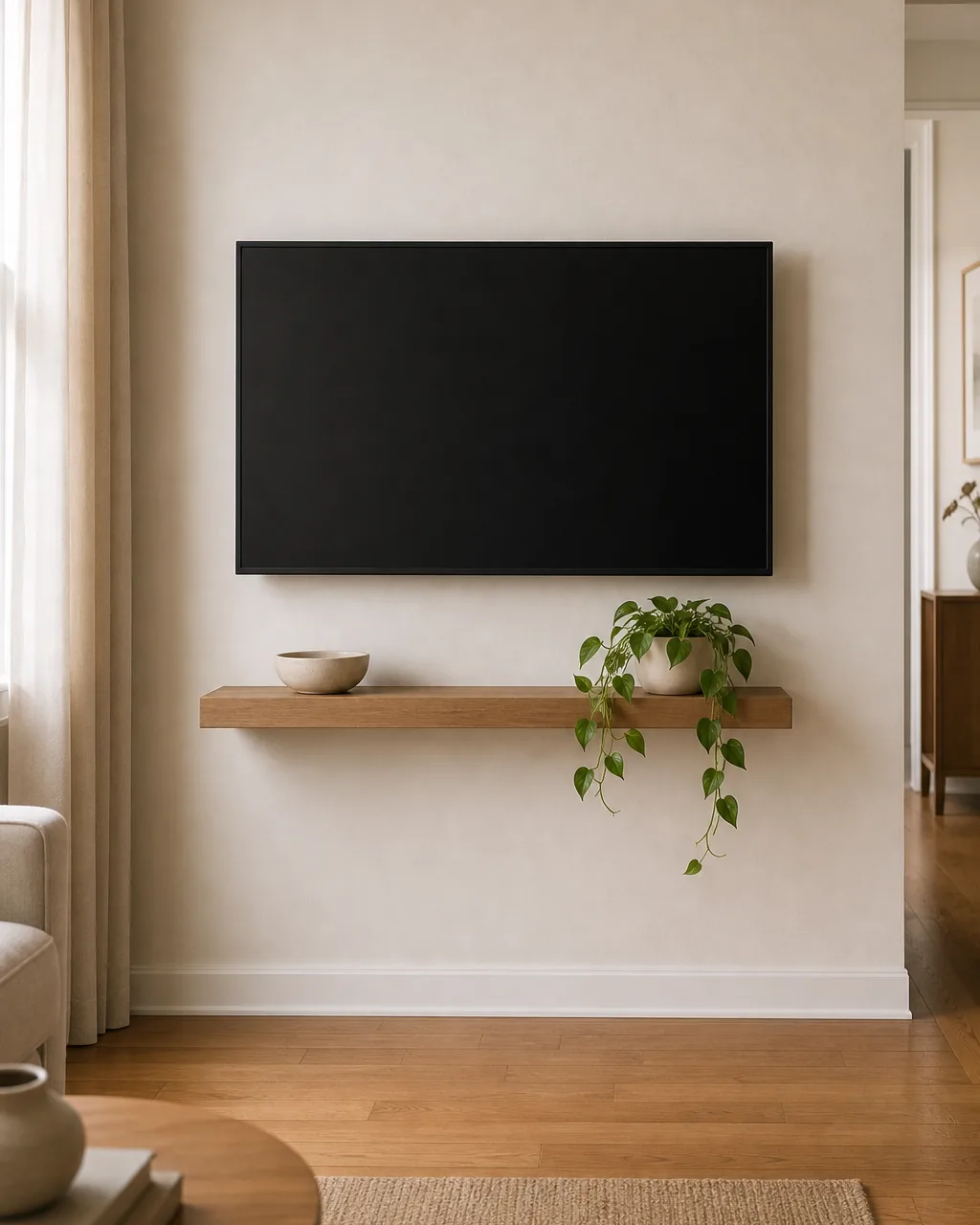
A media console eats the entire wall under the TV and steals the floor a small apartment cannot spare. Even a slim console is forty-eight inches wide and sixteen inches deep — that is eight square feet of floor disappearing under a piece of furniture that does one job.
Wall-mounting the TV and replacing the console with a slim floating shelf reclaims every inch of that floor. The shelf holds the soundbar, the remote, and one plant; the TV components hide behind the screen; the floor below stays open and the room reads bigger.
- Use a flat-profile TV mount that holds the screen within two inches of the wall — bulky mounts read as their own console
- Mount the floating shelf eight to ten inches below the TV — close enough to read as one zone, far enough that the shelf does not cut the screen
- Pick a single warm-oak or warm-walnut shelf no deeper than ten inches; deeper shelves invite clutter
- Run TV power and HDMI cables through an in-wall pass-through kit; visible cables undo the clean wall
- Confirm the landlord allows wall-mount before drilling; many leases require patch-and-paint on move-out — budget for it
13 small apartment living room moves, one system that makes a rental feel bigger
- 1Float the sofa a hand’s width off the back wallPulling the sofa four to six inches off the wall reveals a band of air behind the cushions that makes the whole room read deeper.
- 2Pick a low-profile track-arm or armless sofaA track-arm or armless sofa under thirty inches tall keeps the visual line low and lets the ceiling and walls read taller.
- 3Use a slim round pedestal coffee table so the path flows aroundA round pedestal table on a single column removes the four sharp corners and four legs that block a small room’s walking path.
- 4Lean a tall floor mirror against the wall to double the daylightA sixty-inch leaning mirror opposite the largest window bounces the daylight back across the room and doubles its brightness at no rental cost.
- 5Mount a wall-wide curtain rod so panels stack off the glassExtending the rod ten to twelve inches past the frame on each side lets open panels stack off the glass entirely and exposes the full daylight.
- 6Anchor with one large rug that fits all furniture legs onOne single eight-by-ten rug with every furniture leg sitting on it ties the seating zone into one space instead of three small floating islands.
- 7Choose pieces on visible raised legs so air shows throughPicking sofa, chair, and console all on six-inch raised legs reveals a continuous band of floor air and lets the room breathe.
- 8Stand a narrow tall bookcase as a vertical anchorA twenty-four-inch wide seventy-eight-inch tall bookcase pushes the eye upward and stores what a small apartment has no other place for.
- 9Wall-mount the TV and add a slim floating shelf belowWall-mounting the TV with a slim ten-inch floating shelf beneath kills the media console and reclaims eight square feet of floor.
- 10Swap the second sofa for one swivel accent chairOne barrel-back swivel chair where a second sofa wanted to go covers three orientations and never blocks the path to the kitchen.
- 11Slip a slim console behind the sofa for a lamp surfaceA ten-inch deep console slipped behind the sofa back gives a lamp surface and a styling layer without adding a single inch of floor footprint.
- 12Hang one oversized art piece instead of a gallery wallOne thirty-six-by-forty-eight art piece centered above the sofa tells the eye where to stop and the wall reads calm instead of busy.
- 13Layer two warm table lamps and skip the overheadTwo warm 2700K table lamps with linen shades give cozy ambient light no overhead can match and keep the ceiling calm and dark.
styledhomenotes.com
Swap the Second Sofa for One Swivel Accent Chair
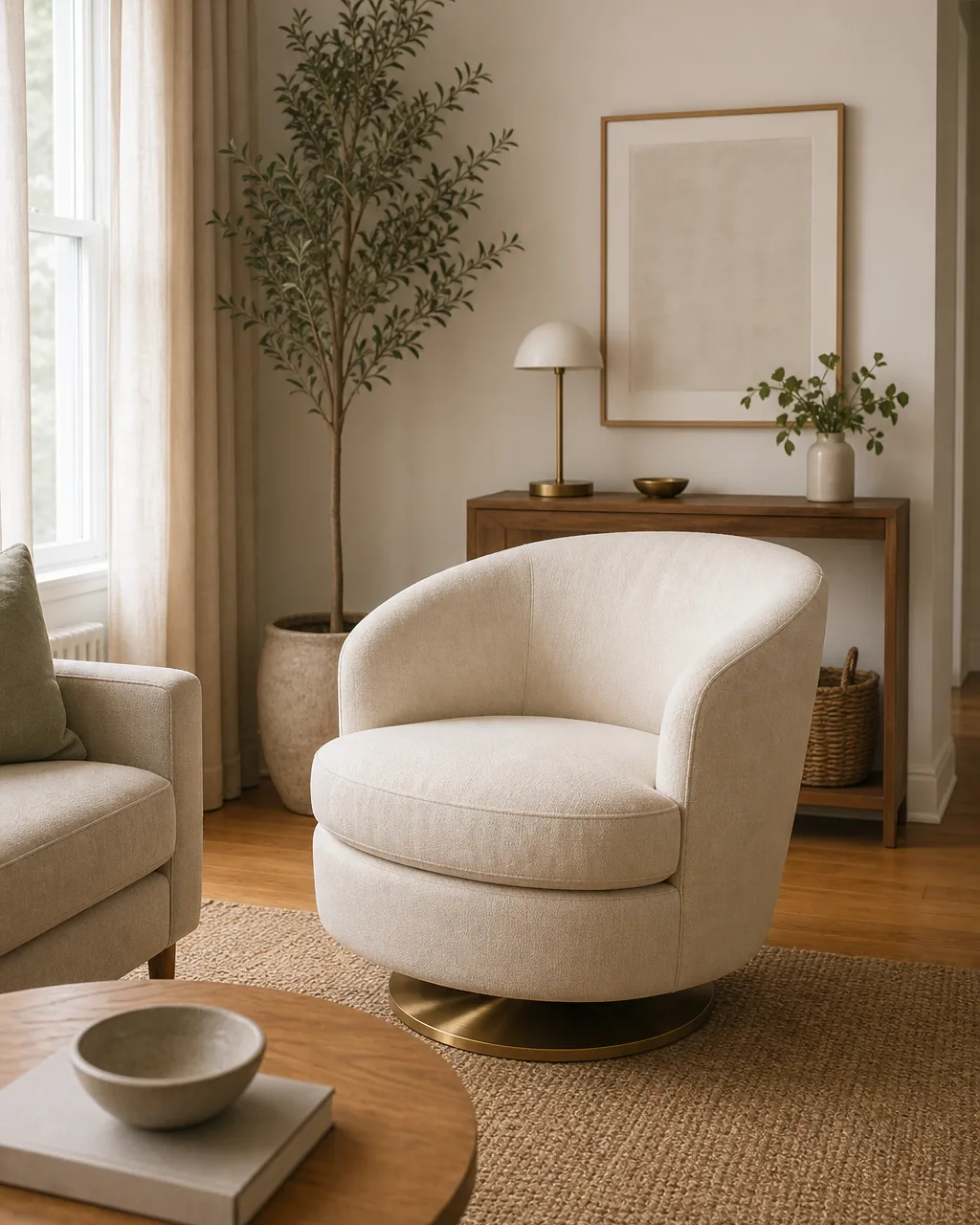
Two sofas in a small apartment is the layout most renters try first and abandon by month three. Either the second sofa blocks the path to the kitchen, or it forces the main sofa into a corner where nobody wants to sit, and the room loses its main seating to a piece that nobody uses.
A single swivel accent chair where the second sofa wanted to go does the job of two pieces at once. Turn it to face the TV during movie nights, swivel it toward the dining table during dinner, swivel it toward the window for the morning coffee — one chair, three rooms of use.
- Cap the chair footprint at thirty inches wide so it does not block the walking path between sofa and door
- Pick a true 360-degree swivel base, not a glider; swivel rotates the user, glider only rocks
- Choose a barrel-back or low-back profile; tall-back accent chairs revisit the visual-air problem of the second sofa
- Position the chair at a 45-degree angle to the sofa so swiveling gives access to all three orientations
- Test the swivel against the rug pile before buying; high-pile rugs lock swivel mechanisms and kill the trick
Slip a Slim Console Behind the Sofa for a Lamp Surface
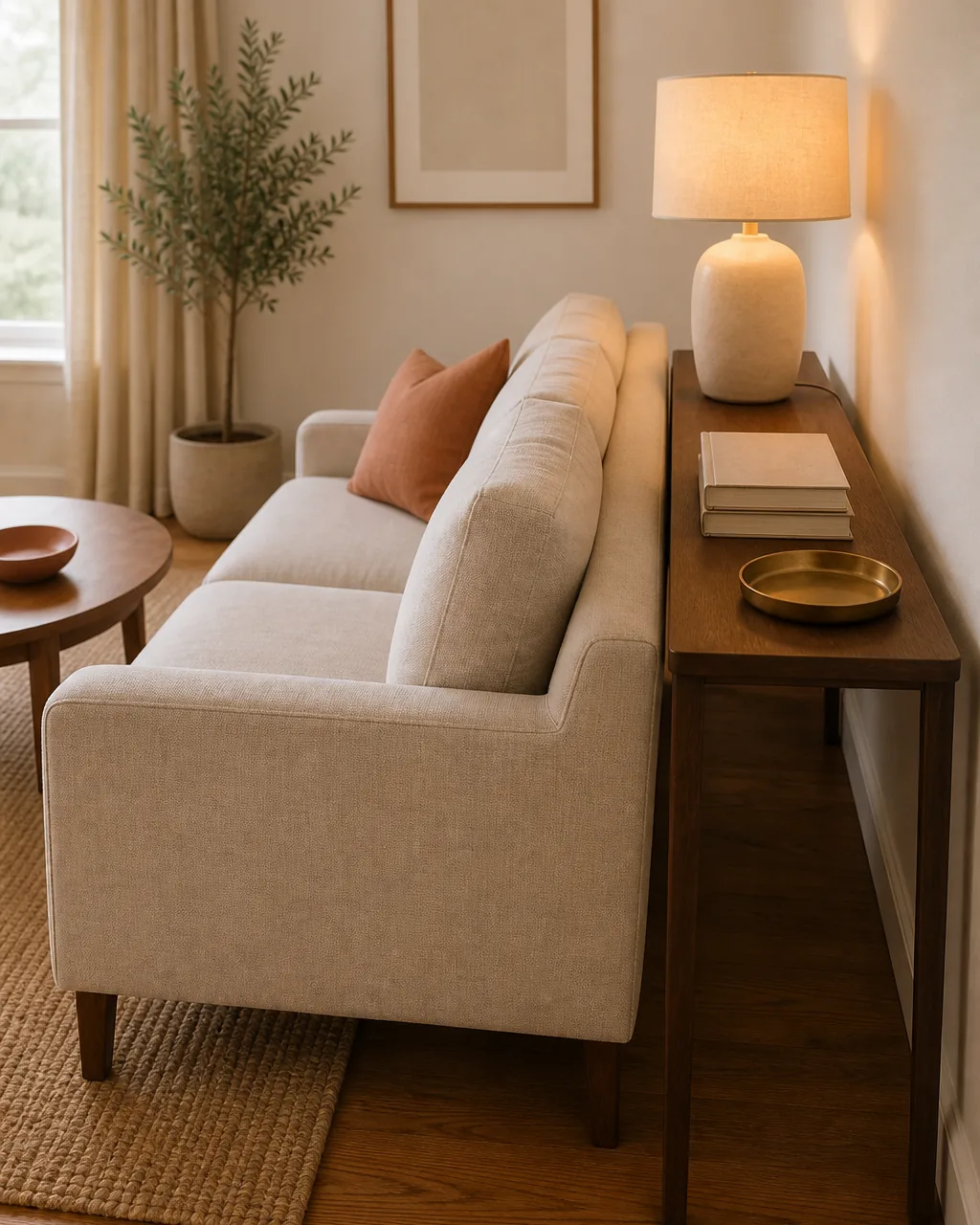
A sofa floating against the wall with no surface behind it leaves the lamp homeless. Most renters either skip the lamp entirely and live under the harsh overhead, or set the lamp on the floor where the cord runs across the path.
A slim console table behind the sofa solves the lamp problem and gives the small room a second styling surface without any new floor footprint. The console hides behind the sofa back, holds a lamp at the right height for reading, and turns the back of the sofa from dead space into a working zone.
- Cap the console depth at ten inches so it tucks behind the sofa back without sticking out into the wall gap
- Match the console height to within one inch of the sofa back top — too tall reads as a separate piece
- Pick a slim warm-walnut or matte-black metal console; thick farmhouse styles undo the slim trick
- Style with one lamp, two books, one small tray — three objects total, never more
- Run the lamp cord straight down the back of the console and along the floorboard, not across the rug
Hang One Oversized Art Piece Instead of a Gallery Wall
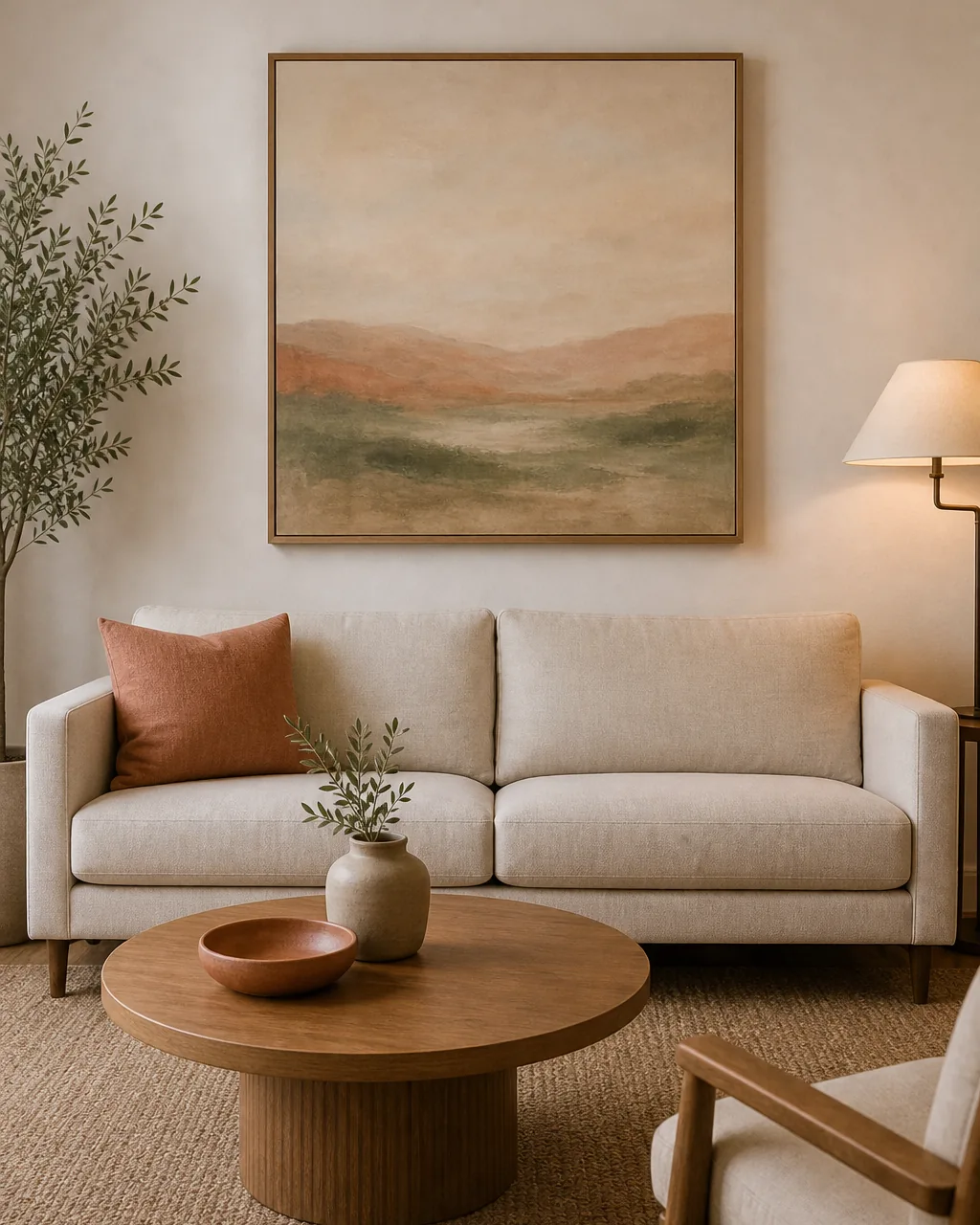
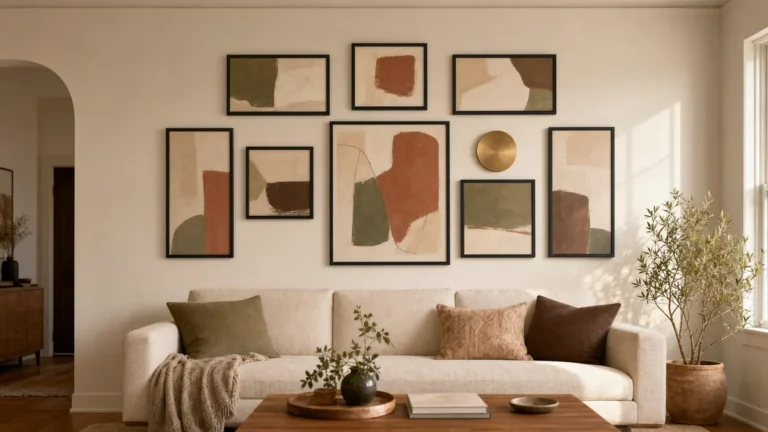
A gallery wall of twelve small frames over the sofa is the Pinterest reflex every small-apartment renter has to fight. The wall reads busy, the room reads small, and the rental holes punched in the wall multiply by twelve.
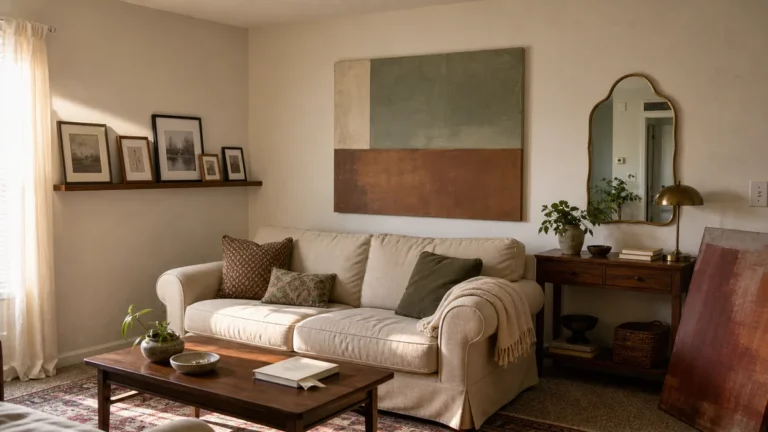
One oversized framed piece does what twelve small frames cannot: it tells the eye where to stop. The wall reads calm, the room reads larger by contrast, and the rental gets one hole instead of twelve — easy to patch and paint at move-out.
- Size the piece at least two-thirds the width of the sofa below it; smaller art floats and reads orphaned
- Center the piece six to nine inches above the sofa back, not higher; high-hung art breaks the room band
- Pick warm-toned abstract over busy figurative for a small room — abstract reads as a single tone, figurative reads as detail
- Use a slim warm-oak or matte-black frame under two inches wide; chunky frames bring back the visual-weight problem
- Anchor with a single heavy-duty picture hook rated for the frame weight; oversized pieces fall hardest from light hooks
Layer Two Warm Table Lamps and Skip the Overhead
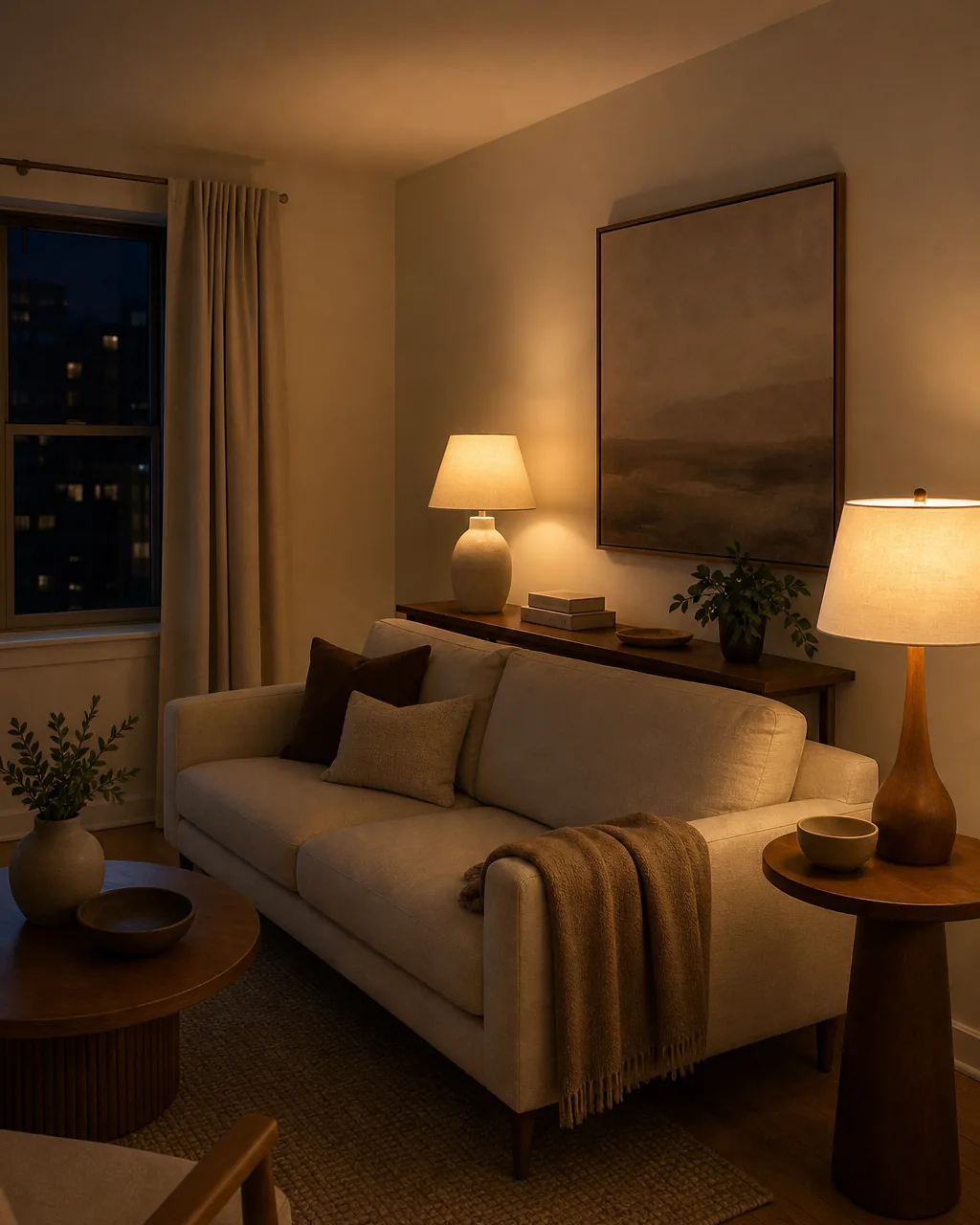
Most rental living rooms have one ugly overhead fixture nobody chose. Turning it on makes the room read flat and clinical at any hour, and turning it off leaves the room dim.
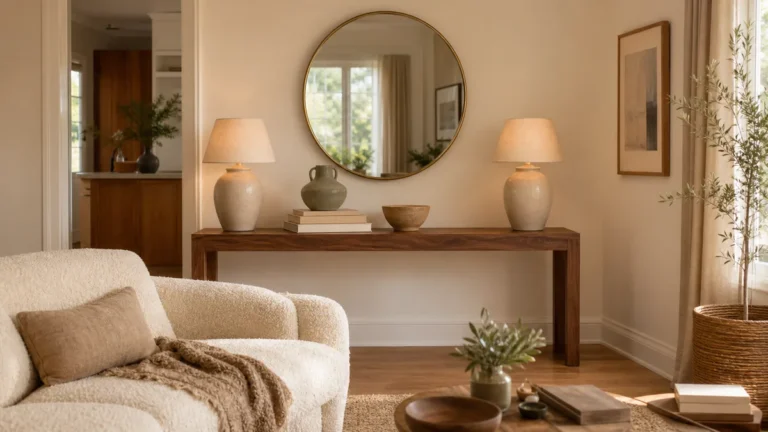
Two warm table lamps layered across the room give cozy ambient light no overhead can match. The corners stay soft, the ceiling stays calm and dark, and the rental reads styled even though the overhead fixture nobody likes is still up there untouched.
- Pick warm-temperature bulbs in the 2700K range; cool-white bulbs undo the entire layered-warmth trick
- Use two lamps minimum — one is a spotlight, two is ambient
- Position one lamp on a console behind the sofa and one on a slim side table at the opposite end
- Pick linen or paper drum shades; bare bulbs and glass shades throw glare across the small room
- Leave the overhead off completely in the evening — the trick fails the second you flip the wall switch
A small apartment living room that finally feels bigger is not the one with more stuff in it. Pick the two or three moves that match where your rental breaks down first — usually the sofa-to-wall gap and the undersized rug — and let the rest of the system pull itself into shape across the next few weekends.

Nora writes about small, livable systems for real apartments. Her own living room is a 320-square-foot rental with the sofa floated five inches off the wall, a single sixty-inch leaning mirror across from the window, and the overhead fixture left permanently off — which is why every move in this guide gets pressure-tested against a real lease, a single window, and a furniture footprint that has to actually fit through a Brooklyn doorway before it shows up here.
Nora Ellis edits Styled Home Notes. Visit the Nora Ellis author page. More from Nora: small living room ideas, studio apartment ideas, small living room seating ideas.