12 Modern Living Room Ideas for a Warm, Curated Space
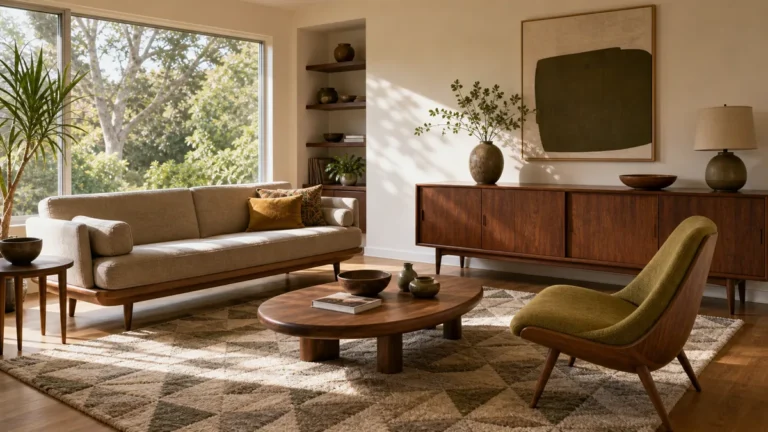
Modern living room still makes a lot of people picture a cold white box: sharp edges, gray everything, nothing soft to land on. That look is exactly what now reads as dated.
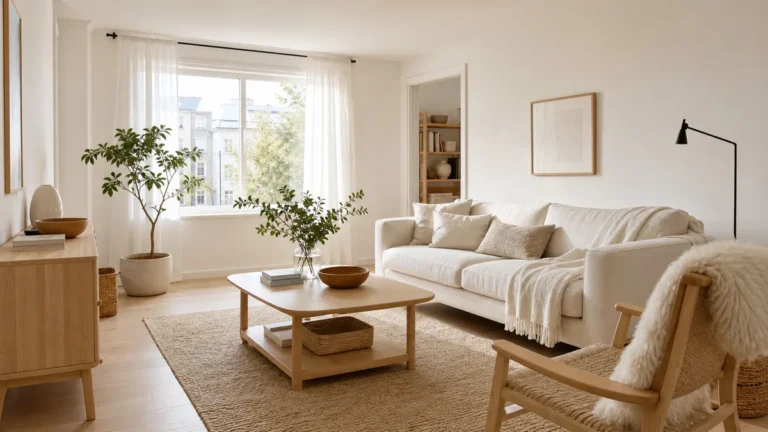
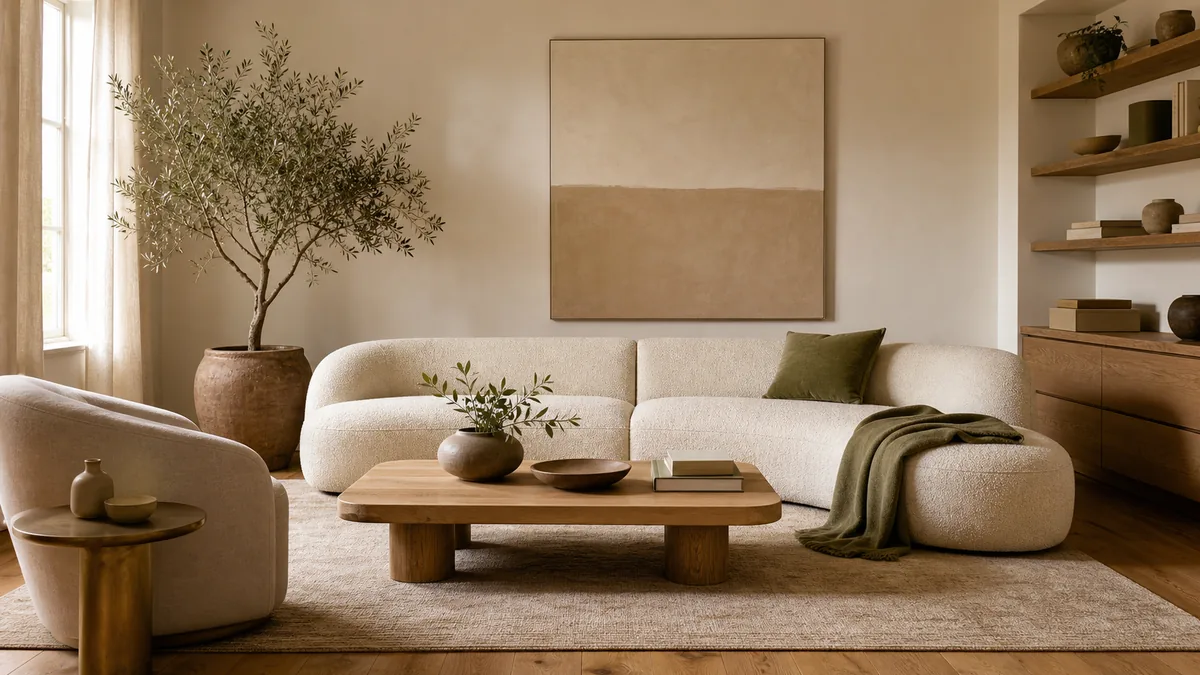
The 2026 version flips warm. It keeps the clean lines, a clear focal point, and the restraint to leave things out, but curved shapes, earthy color, matte materials, and soft light replace the cold minimalism.
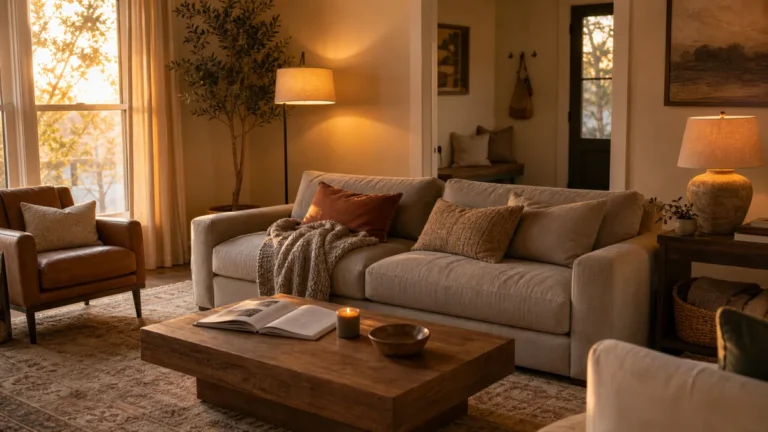
It lands closer to a cozy living room than to a showroom, just more edited. These twelve ideas keep the clean bones of modern and make the room warm and livable, mostly by choosing differently, not spending more.
From a soft sculptural sofa to a mixed, edited finish, these twelve moves keep the clean lines of modern design but make the room warm and livable. Jump straight to the fix you need first.
- 1Anchor with a soft, sculptural sofa
- 2Lose the handles, let storage vanish into the wall
- 3Build a warm neutral base, add one bold accent
- 4Mix warm metal, wood, and stone
- 5Choose honest materials over convincing fakes
- 6Layer matte textures within one quiet color
- 7Make the light fixture itself the sculpture
- 8Pick one focal point, let everything else quiet down
- 9Let one large, warm-toned piece own the wall
- 10Ground it with a tonal rug that carries the palette
- 11Round out the hard edges, sculpturally not scalloped
- 12Skip the matching set, mix and edit to breathe
Anchor With a Soft, Sculptural Sofa
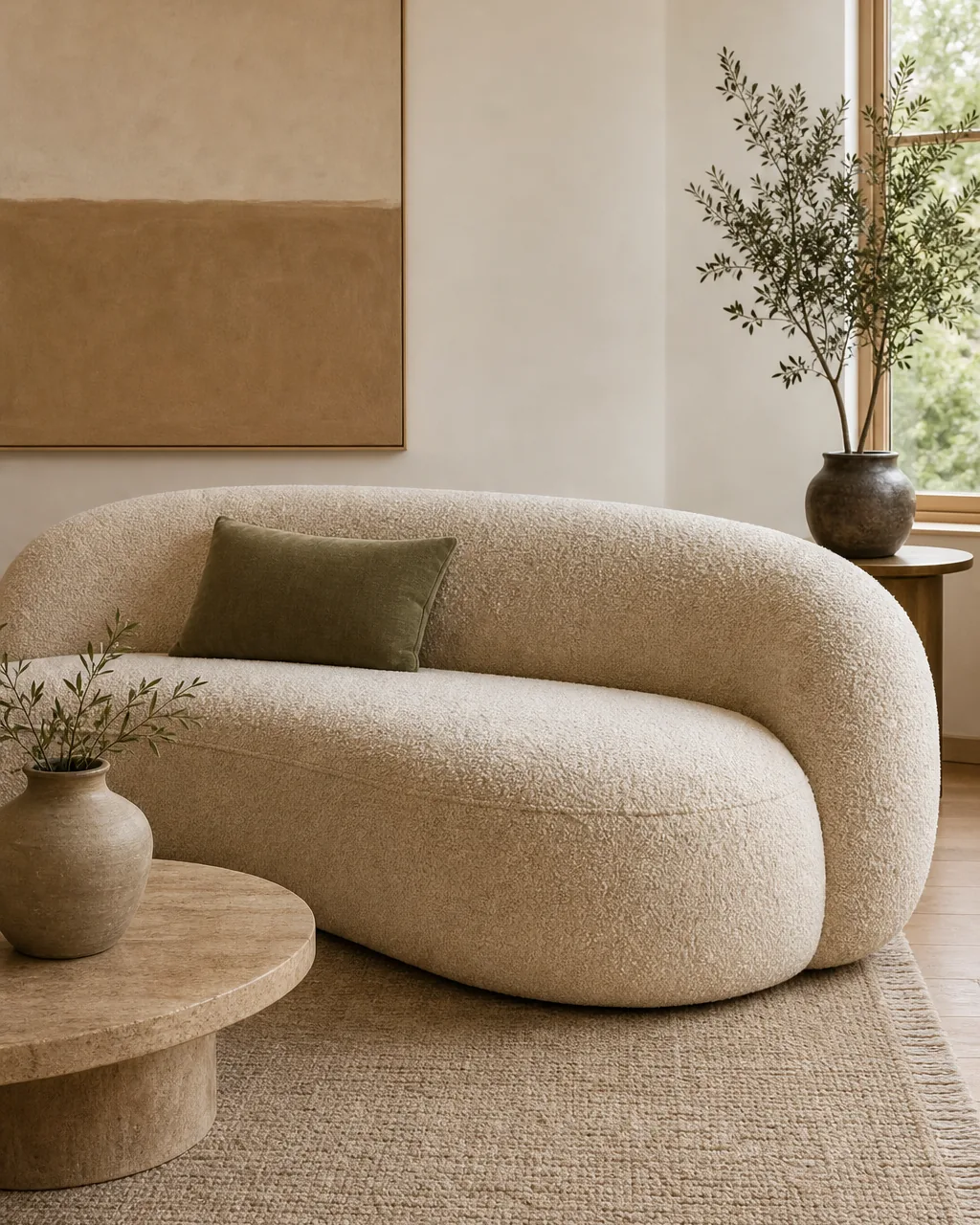
The fastest way to make a room read modern in 2026 is the sofa, and the shape has flipped. The slim-legged, right-angled sofa of a decade ago now looks dated; the modern anchor is a soft, low-slung, curved piece with an upholstered base that wraps to the floor. It still has clean, simple lines, but the rounded volume and a tactile boucle make it warm instead of severe.
This is where modern and cozy part ways: a cozy room piles on soft, matching seating, while a modern room lets one sculptural sofa carry the space.
- Choose a low, rounded silhouette with an upholstered base instead of thin metal or wooden legs
- Look for a tactile cover like boucle or a heavy linen in oatmeal, mushroom, or greige
- Keep the frame generic and simple so it reads sculptural, not like a branded designer icon
- Skip the oversized white cloud sofa, which already reads dated; choose a tighter, deliberate curve
- Let the sofa be the one statement and keep the rest of the seating quiet
Lose the Handles, Let Storage Vanish Into the Wall
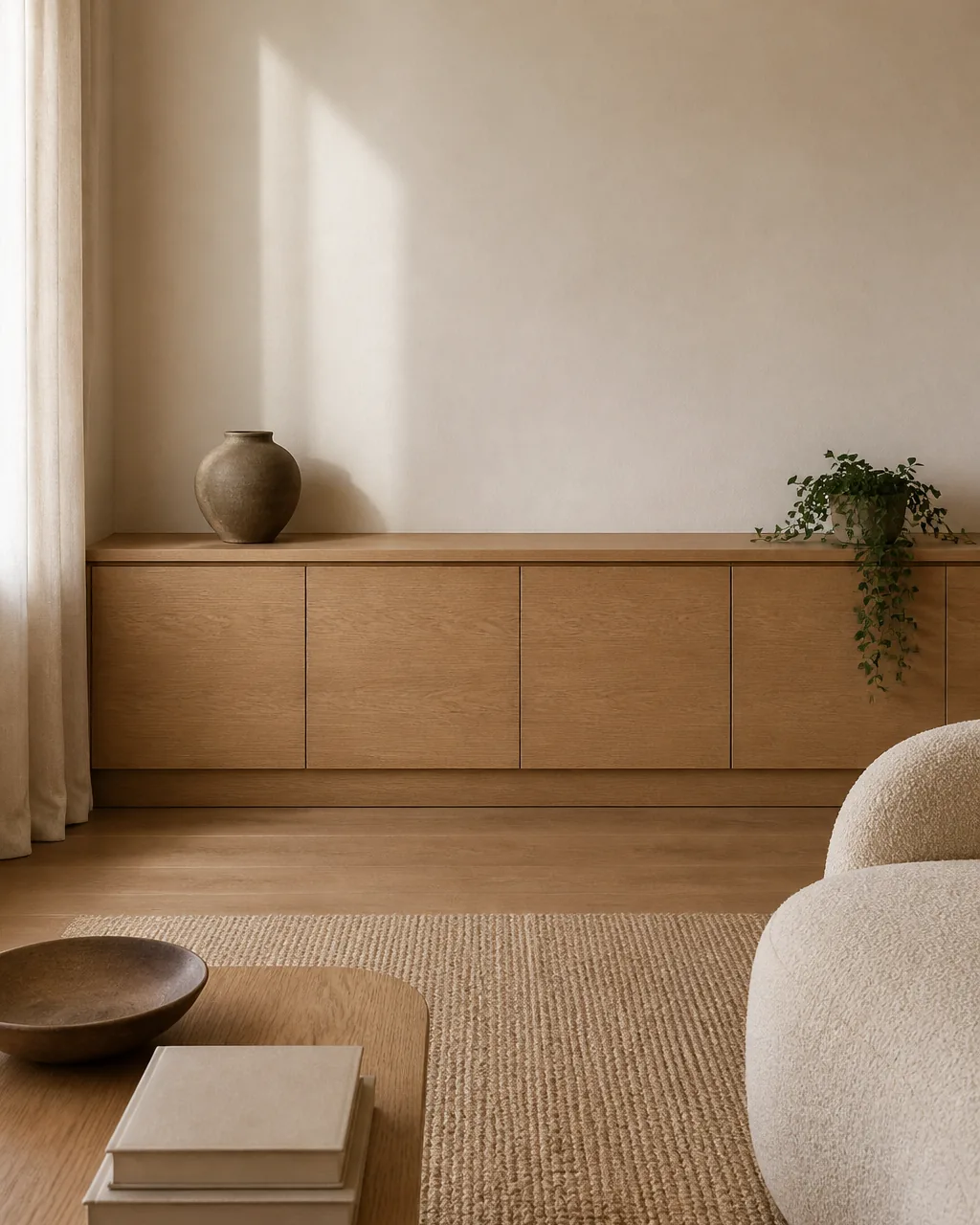
Modern lives or dies on clean surfaces, and the move is storage that hides in plain sight. A low media console with handleless, push-open doors and a front that sits almost flush to the wall reads as architecture, not as a piece of furniture parked in the room. The clutter, the cables, the remotes, all of it disappears behind a smooth line.
It is the same instinct behind a well-edited shelf, taken to the wall: show the calm, hide the mess.
- Choose closed storage with push-open or recessed handles so the front stays one clean line
- Keep it low and long to reinforce the horizontal, grounded feel of a modern room
- Run it close to the wall in a finish that blends with the floor or wall tone
- Leave the top almost bare: one ceramic object or a small plant, not a row of things
- Put anything with cords or clutter behind the doors, never on open shelves
Build a Warm Neutral Base, Add One Bold Accent
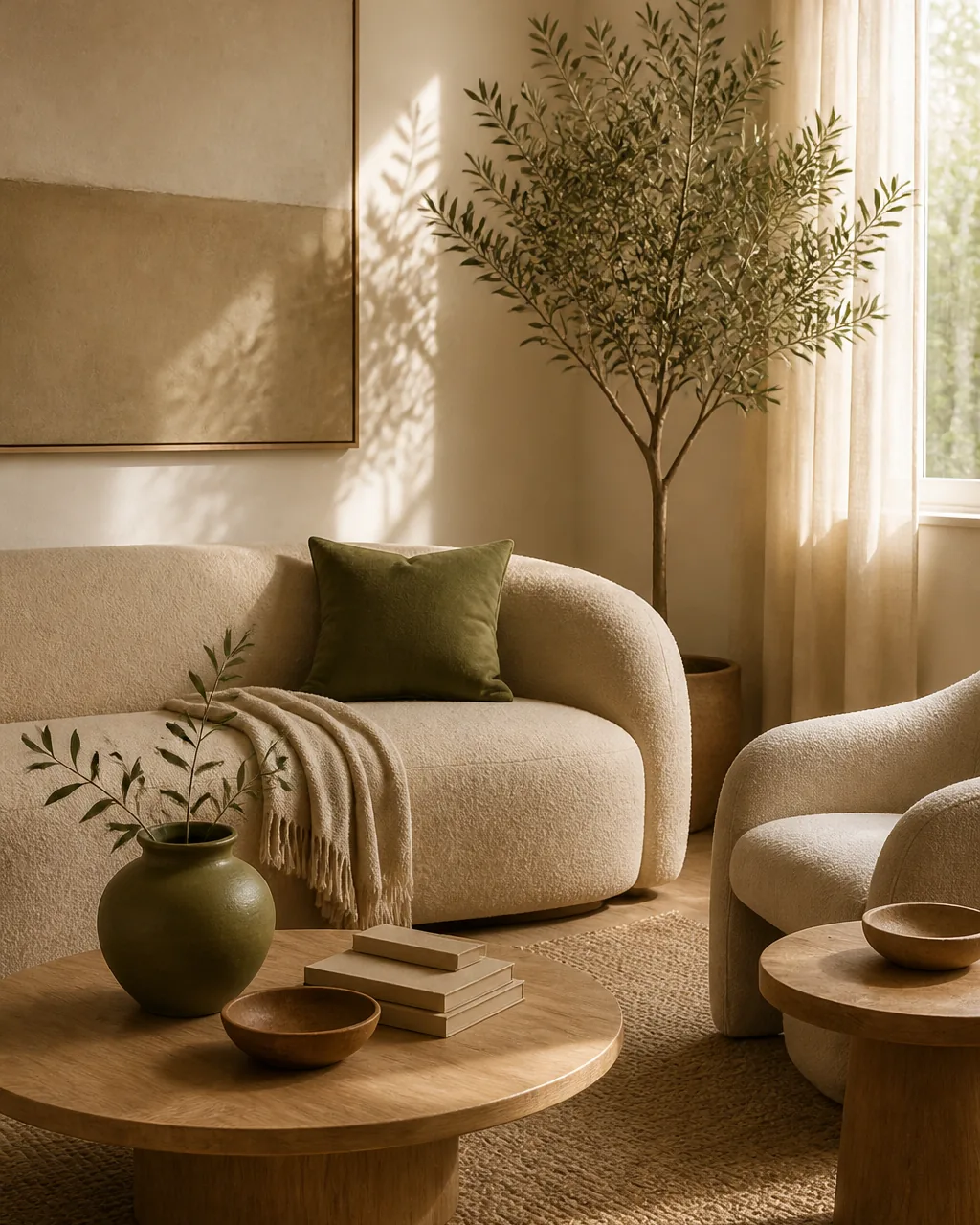
The palette is what separates 2026 modern from the cold, all-gray version before it. Build the room on a warm neutral base, white, oat, mushroom, and greige across the big surfaces, then add a single earthy accent and let it appear twice. One olive cushion and one olive vase, or a clay throw and a clay-toned artwork, is enough.
The restraint is the modern part; the warm, atmospheric color is what keeps it from reading as a sterile showroom. Nothing dates a modern room faster than a flat, gray, sad-beige scheme with no accent at all.
- Keep about 60 percent of the room a warm neutral: walls, the sofa, the rug
- Add one accent from the earthy family: olive, clay, caramel, or petrol blue
- Repeat that accent in at least two materials, a textile and a ceramic, so it reads deliberate
- Warm the base toward oat and greige instead of cold gray or stark white
- Resist a second and third accent; one is modern, three is busy
You will not need all twelve at once. Pick the problem below that matches your room today, and start with those two or three ideas.
Mix Warm Metal, Wood, and Stone
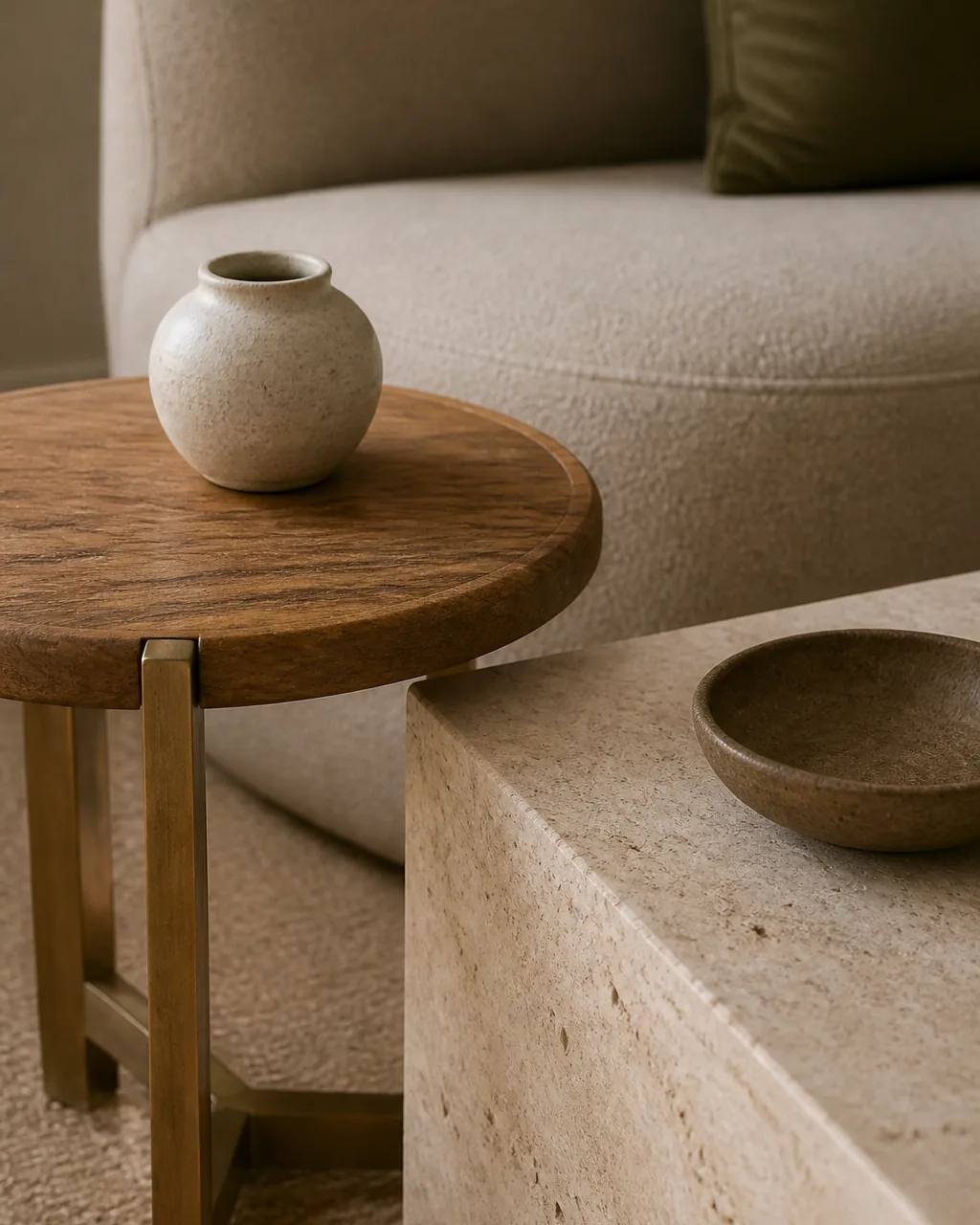
In a modern room the visual interest comes from materials, not from color or pattern. Set three warm ones against each other, burnished brass, visible-grain wood, and matte stone like travertine, and the contrast does the work a bold print would in another style.
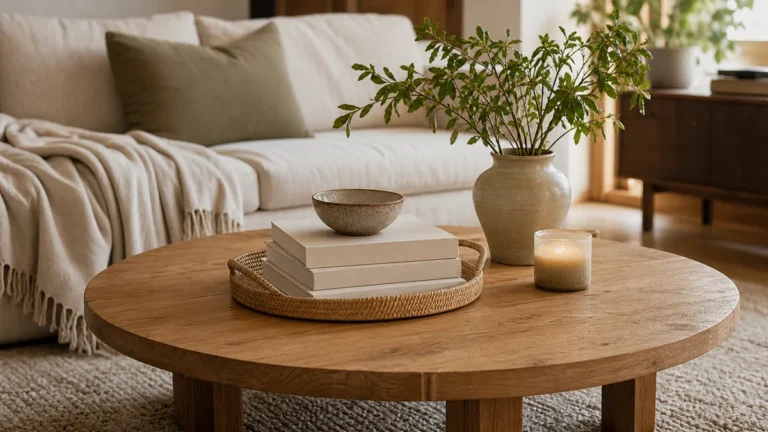
The key word is warm: reach for burnished or oiled finishes, not the cold chrome and high-gloss glass that made 2010s modern feel like an office. A low coffee table or a single side table is the easiest place to combine all three.
- Combine metal, wood, and stone in one spot, like a brass-legged table with a wood top beside a travertine block
- Choose burnished brass or bronze over shiny chrome; warm metal reads current, cold metal reads dated
- Pick woods with visible grain rather than flat, uniform veneer
- Add a matte stone, travertine or honed marble, for a third texture without a third color
- Keep every finish matte; high gloss is the fastest way to make modern feel cold
Choose Honest Materials Over Convincing Fakes
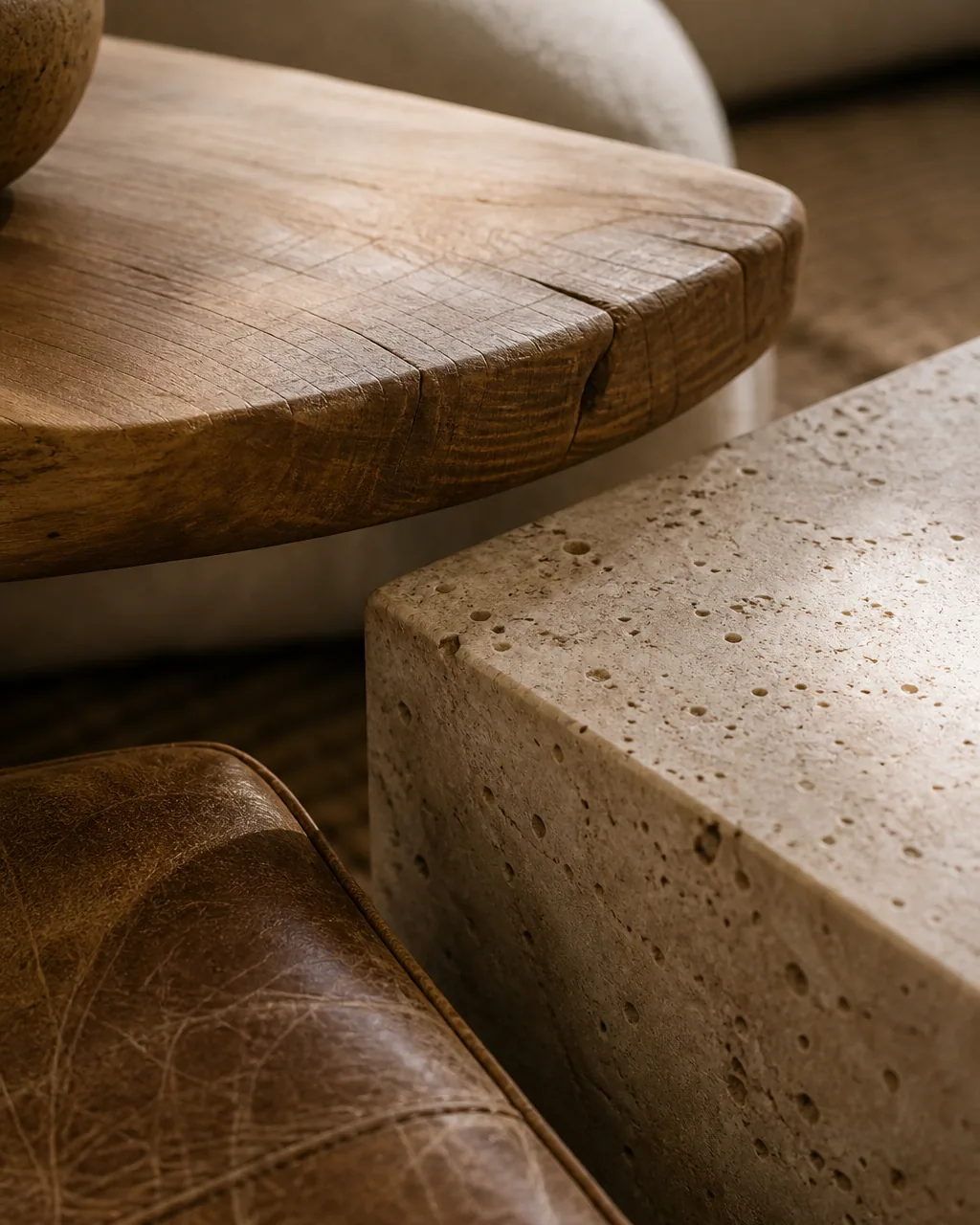
Modern rewards honest materials, and up close the fakes always show. A solid wood edge with real grain, a true stone surface with its natural pitting, a leather that creases and patinas, each reads richer than the printed-veneer and stone-look-laminate version, even when those photograph fine.
You do not need everything to be the real thing; one or two honest pieces anchor a room and make the rest feel intentional. This is where a smaller budget spent on one solid table beats a roomful of convincing imitations.
- Spend on one or two real materials, a solid wood table or a genuine stone top, over many fakes
- Check edges and undersides, where printed veneer and laminate give themselves away
- Choose leather that will crease and patina rather than a flat synthetic that stays plasticky
- Let natural variation, grain, knots, stone pitting, show instead of hiding it
- Pair one honest hero piece with simpler supporting ones so the budget goes where it counts
Layer Matte Textures Within One Quiet Color
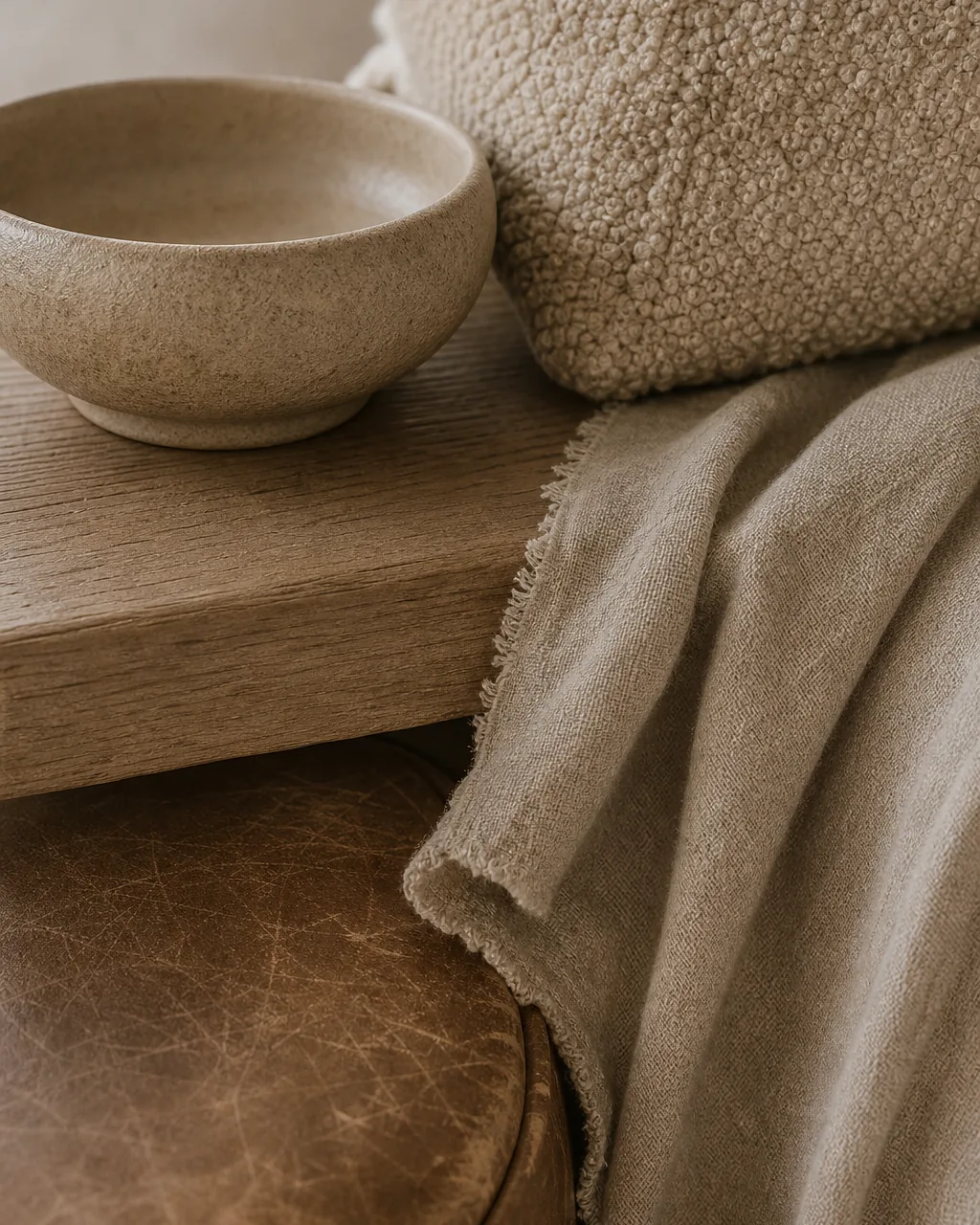
When the color story is quiet, texture is what keeps a modern room from feeling flat, and the rule is matte over gloss. Layer boucle, linen, oiled wood, matte ceramic, and a little leather, all in the same warm tone, and the eye reads depth through feel rather than through pattern.
It is a different move from a boho room, which layers prints and colors; here everything stays one quiet color and the surfaces do the talking. Matte finishes are also what make the 2026 version warm where the glossy 2010s version felt cold.
- Layer three or more textures in one tone: boucle, linen, oiled wood, matte stone, leather
- Keep every finish matte; gloss reads cold and dates a modern room fast
- Vary the feel, not the color, so the palette stays calm
- Work in one nubby, hand-feel fabric to break up the smooth surfaces
- Let texture, not a bold pattern, be where the room gets its interest
Modern does not have to mean cold. These four rules are what keep clean lines from tipping over into a sterile white box.
Make the Light Fixture Itself the Sculpture
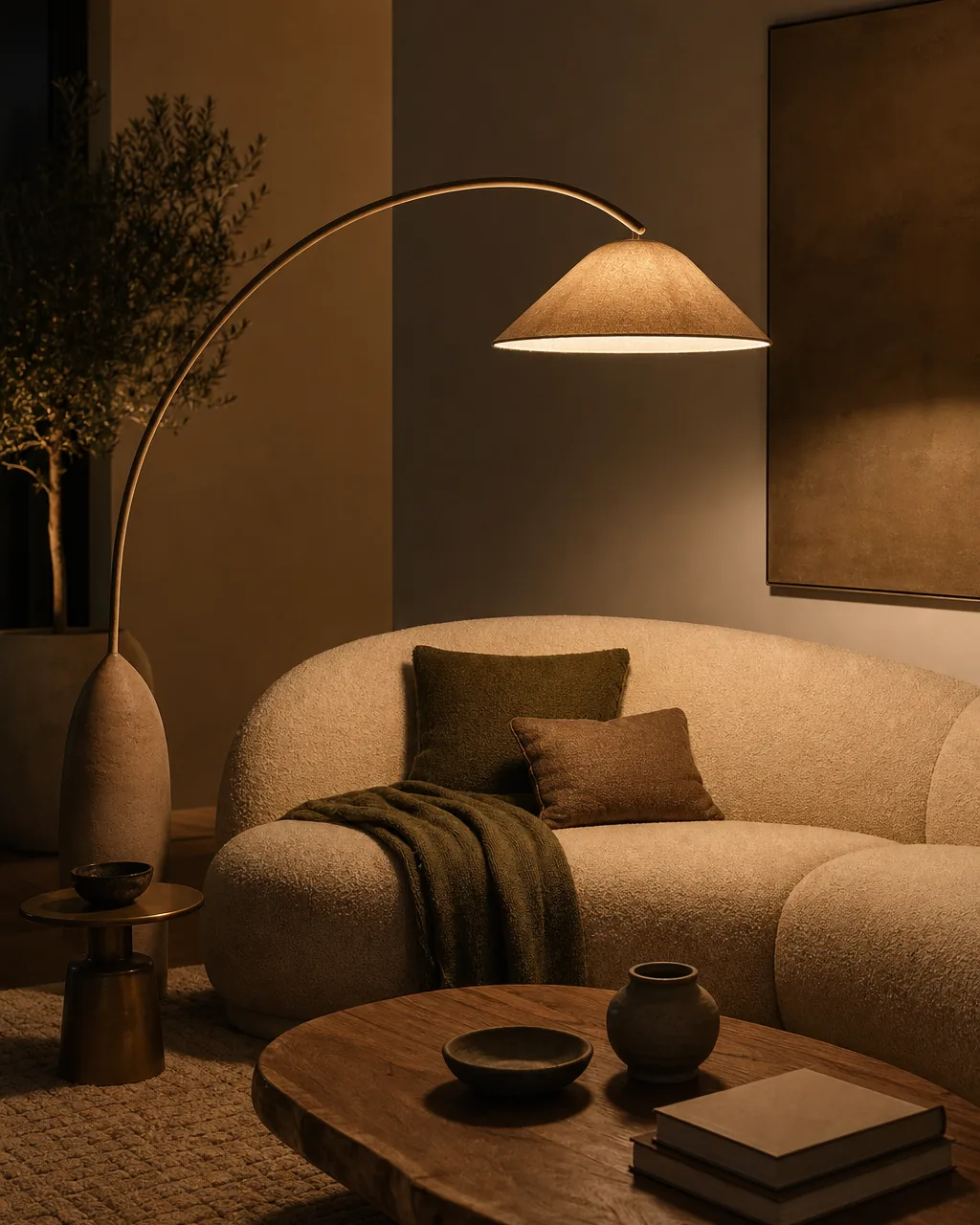
In a modern room the light fixture earns its place by being sculptural, something worth looking at even when it is off. An arc floor lamp with an organic curve, or a hand-shaped ceramic pendant, works as decor by day and a glowing focal point at night.
Pair it with a warm 2700K bulb, never a cold, clinical white, and the same fixture that reads as a sculpture also makes the room feel warm after dark. A single statement light does more than a ceiling full of cold downlights ever will.
- Choose one fixture with a strong, sculptural shape: an arc lamp, a ceramic pendant, an organic form
- Use warm 2700K bulbs throughout; cold white light is what makes a room feel sterile
- Add a dimmer so the same light can be bright by day and low and warm at night
- Layer in a lamp or two at eye level instead of relying on a single ceiling light
- Keep the fixture generic and sculptural, not a recognizable designer silhouette
Pick One Focal Point, Let Everything Else Quiet Down
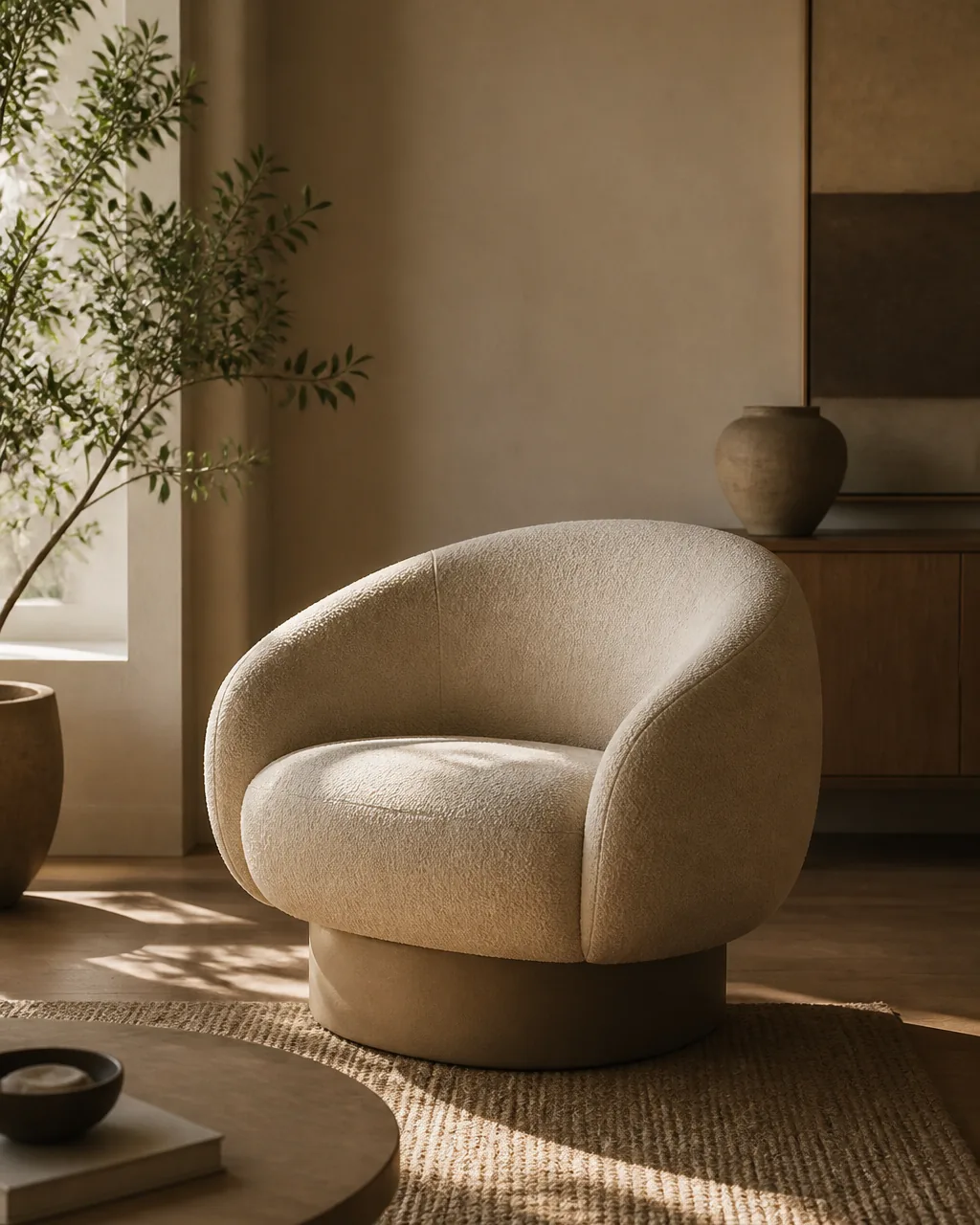
Modern depends on a clear hierarchy: one thing to look at, and everything else quiet around it. Pick a single sculptural piece, a curved statement chair, a striking light, one large artwork, and let it be the main character while the rest of the room stays low and calm.
The common mistake is giving every wall and every piece equal weight; when everything competes for attention, nothing wins, and the room reads busy instead of curated. Decide what the star is, then edit everything else down to support it.
- Choose one focal piece per room: a sculptural chair, a statement light, or a single large artwork
- Keep everything around it low, quiet, and neutral so the focal point reads clearly
- Resist surrounding the focal piece with several other loud pieces
- Place it where the eye lands first, across from the entry or the main seat
- When in doubt, remove a competing piece rather than adding another
Let One Large, Warm-Toned Piece Own the Wall
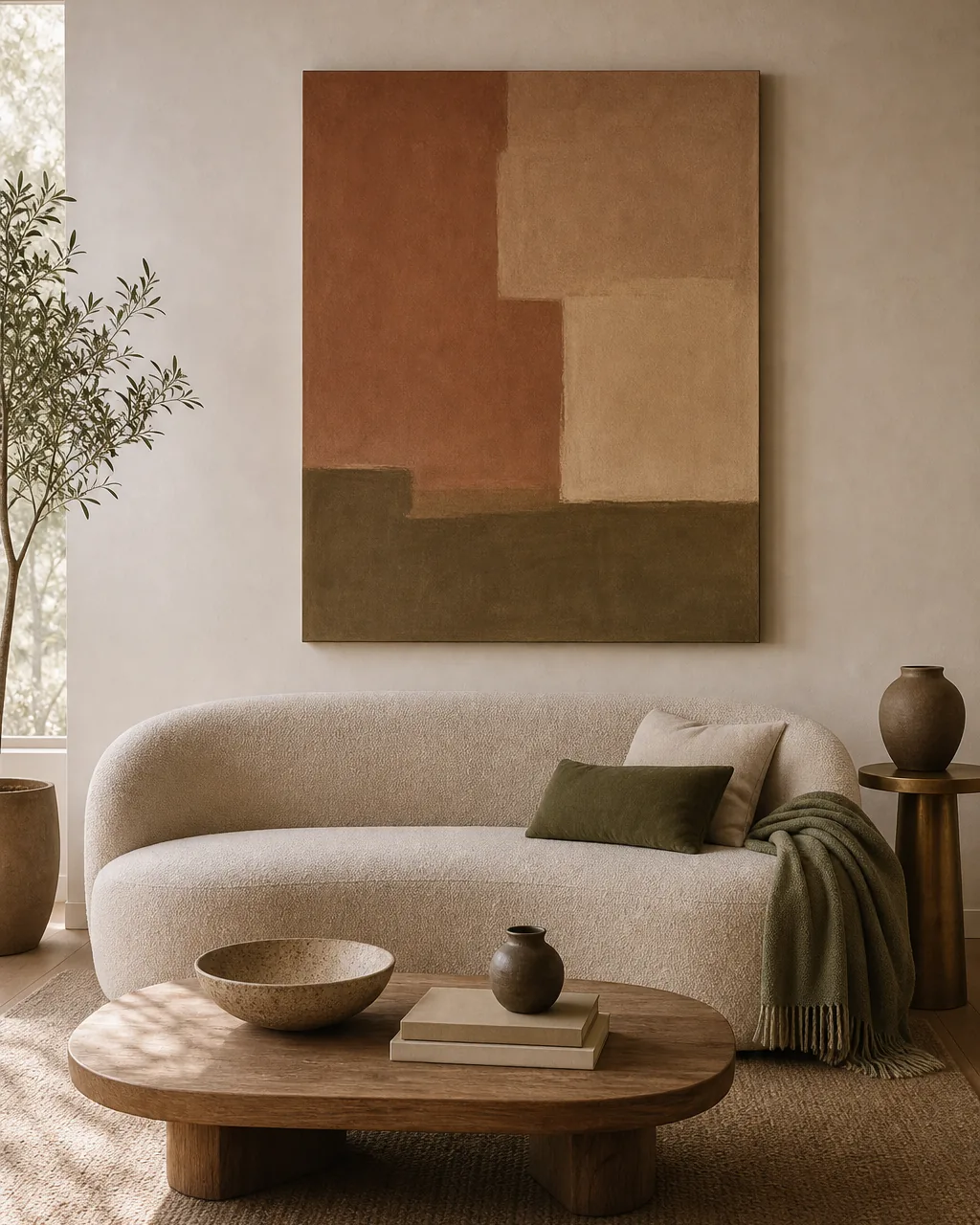
Modern walls are a less-is-more proposition: one large piece beats a wall of small frames. A single oversized canvas in warm, earthy tones, roughly two-thirds the width of the sofa below it, owns the wall and gives the room its color story in one move.
It is the opposite of the busy gallery wall, and it is the more modern choice: one confident statement instead of many competing ones. Keep the art abstract and quiet so it reads as a warm color field, not a focal fight.
- Hang one large piece, about two-thirds to three-quarters the width of the furniture below it
- Set the bottom edge a hand-width above the sofa back, with negative space around it
- Choose warm, earthy abstract tones that pull from the room’s accent color
- Skip the gallery wall; one large piece reads calmer and more modern
- Keep the frame simple, a thin wood or metal edge, or none at all
12 Modern Living Room Ideas for a Warm, Curated Space
- 1Anchor with a soft, sculptural sofaA curved, low-slung sofa in oatmeal boucle reads modern but invites you in, the opposite of a sharp, cold sectional.
- 2Lose the handles, let storage vanishA handleless, flush-fronted console hides clutter and keeps the clean horizontal line reading like architecture.
- 3Warm neutral base, one bold accentBuild on white, oat, and greige, then add a single olive or clay accent, the same warm restraint behind a cozy living room, just cleaner.
- 4Mix warm metal, wood, and stonePair burnished brass, oak, and matte travertine on a side or coffee table so the contrast comes from material, not color.
- 5Honest materials over fakesOne real wood edge or true stone surface reads richer than a whole room of printed veneer and stone-look laminate.
- 6Matte textures in one quiet colorLayer boucle, linen, oiled wood, and matte ceramic in a single warm tone so depth comes from feel, not pattern.
- 7Make the light fixture the sculptureAn arc lamp or hand-shaped ceramic pendant is decor by day and a glowing focal point at night.
- 8One focal point, everything else quietGive the room a single sculptural main character and let the rest stay low and calm. When everything competes, nothing wins.
- 9One large, warm-toned piece on the wallA single oversized canvas in earthy tones owns the main wall, the modern answer to a busy gallery wall.
- 10A tonal rug that carries the paletteA solid, low-pile rug in a warm neutral grounds the seating and ties the whole room to one quiet color story.
- 11Round out the hard edgesA round mirror, an arched table, a curved ottoman, organic curves not scalloped frills, soften the clean lines.
- 12Skip the matching set, edit to breatheMix vintage with contemporary, wood with metal, then remove the piece you keep hesitating over. Modern is restraint.
styledhomenotes.com
Ground It With a Tonal Rug That Carries the Palette
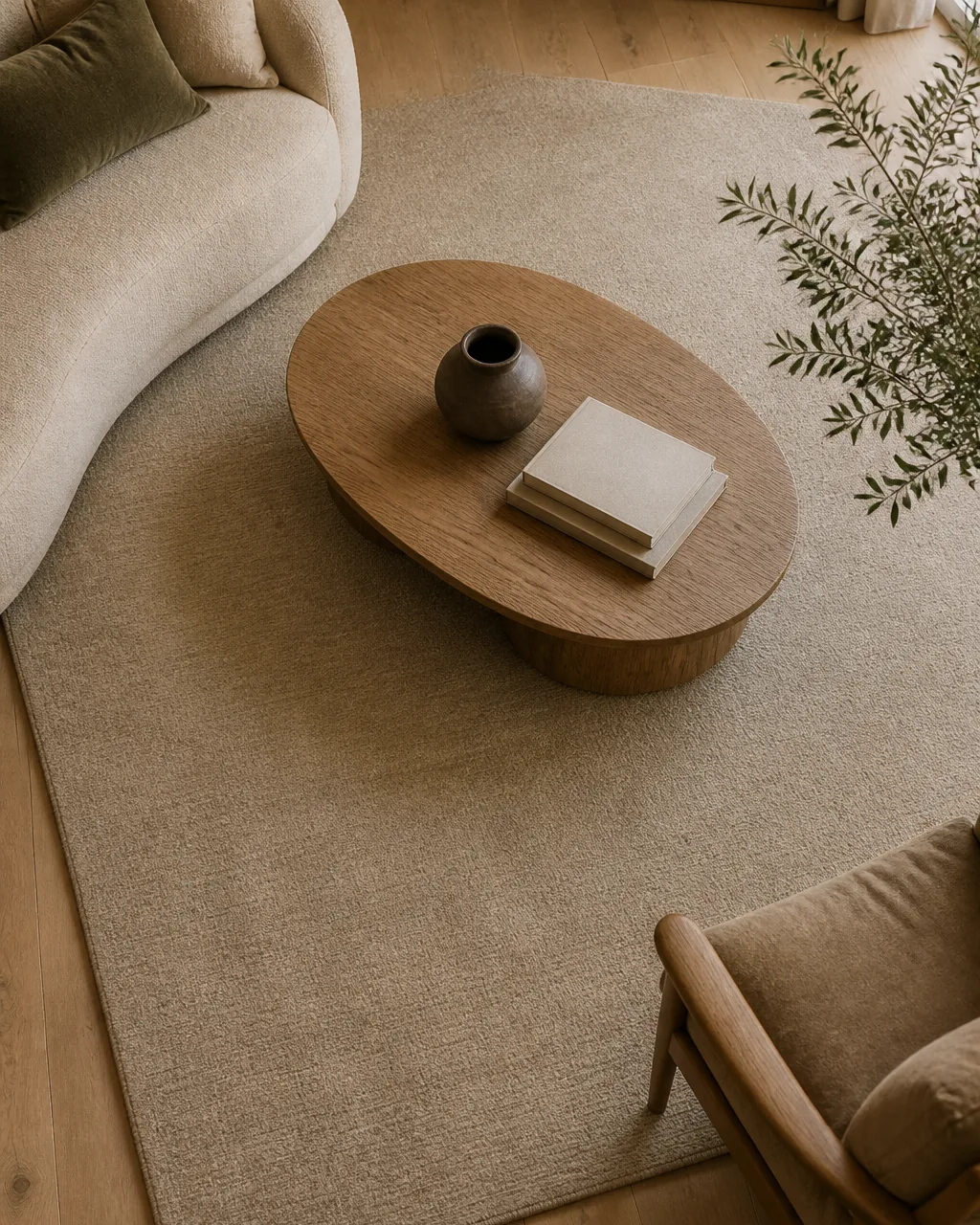
A tonal rug grounds a modern room and ties the whole palette together. Choose a solid, low-pile rug in a warm neutral that carries the room’s base color across the floor like a second, larger surface, and skip the busy pattern or tribal motif that would pull toward another style. Size it large enough to sit under the front legs of the main furniture so the seating reads as one connected zone.
The quiet floor is part of what lets the rest of the room feel calm and curated.
- Choose a solid or barely-there tonal rug, not a busy pattern, to keep the floor calm
- Pick a warm neutral that matches the base palette so it reads as one surface
- Size it so the front legs of the sofa and chairs sit on it
- Go low-pile and natural, wool or jute, for a matte, grounded texture
- Let the rug be the quiet anchor, not the loudest thing in the room
Round Out the Hard Edges, Sculpturally Not Scalloped
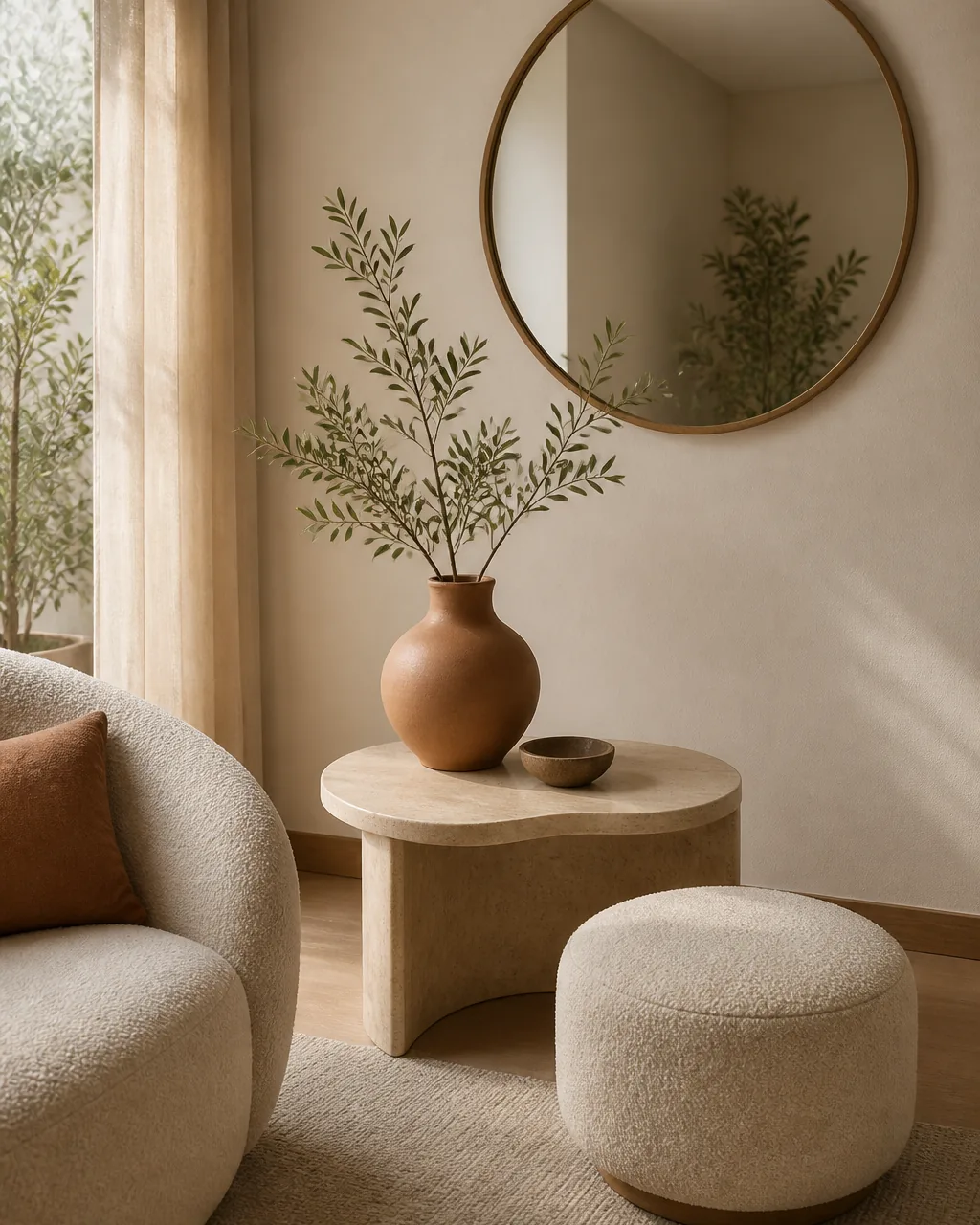
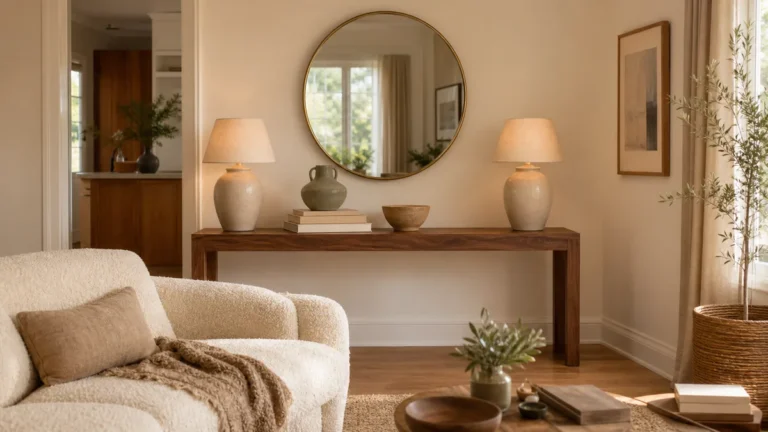
A room of straight lines can tip into cold, and the answer is to round a few edges, carefully. Echo a soft, organic curve in a couple of pieces, a round mirror, an arched or kidney-shaped side table, a low rounded ottoman, and the hard geometry softens without losing its modern bones.
The important distinction is that the curves should be sculptural and gradual, not the scalloped, wavy frills that already read as dated. Two or three curved pieces is plenty, and it is the same warmth that makes a cozy living room inviting, applied with a lighter hand.
- Add two or three curved pieces, a round mirror, an arched table, a rounded ottoman, to soften straight lines
- Keep the curves organic and gradual, not scalloped or wavy, which already reads dated
- Echo the same curve across a few pieces so it feels intentional
- Pair curves with the clean lines of the sofa and console, not in place of them
- Stop at a few; over-curving tips the room into a trend instead of a calm modern look
Skip the Matching Set, Mix and Edit to Breathe
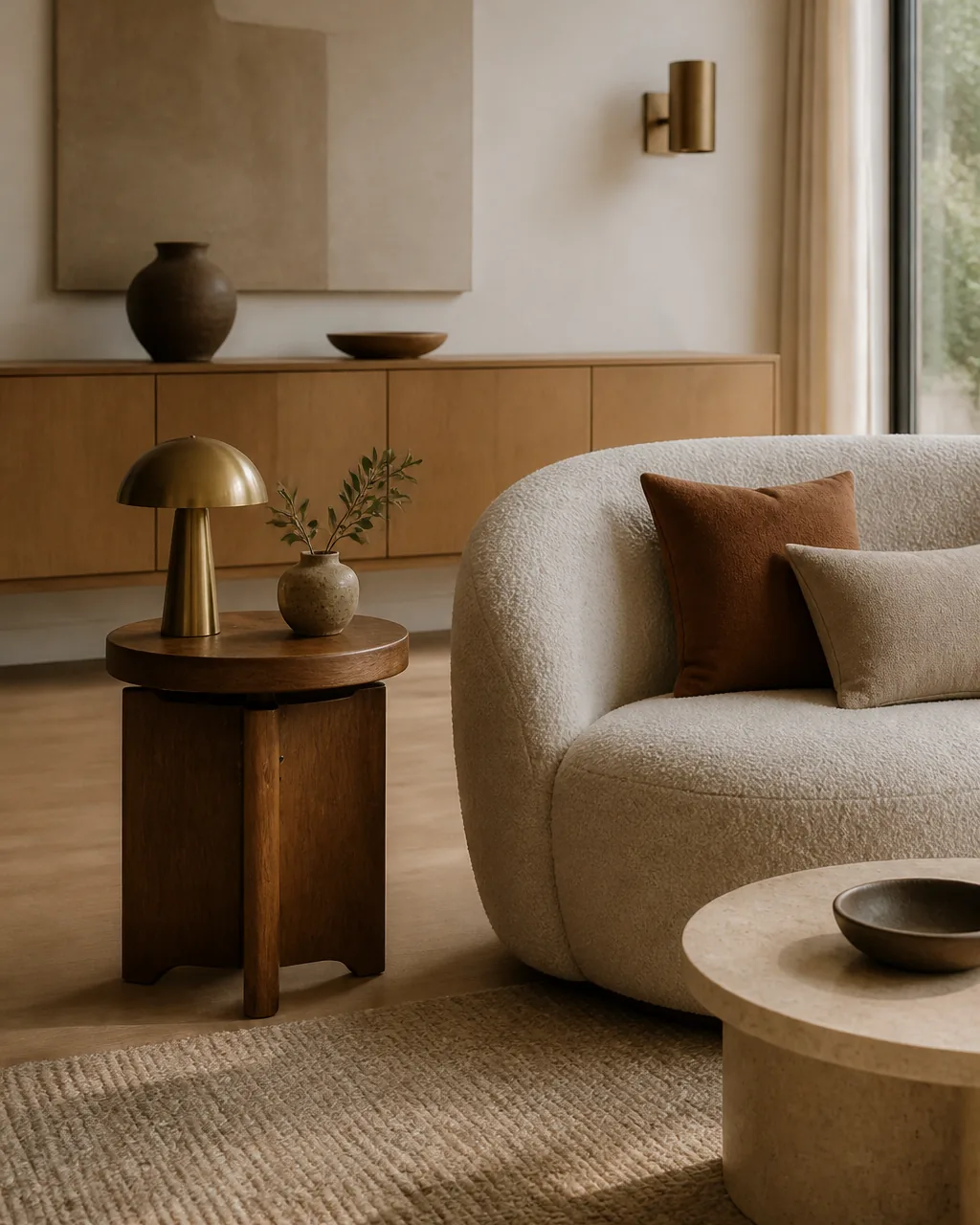
The last move is the most counter-intuitive: skip the matching set. A sofa-and-loveseat combo from one collection has no real modern character; the rooms that look designed mix a vintage piece with a contemporary one, wood with metal, old with new. Then they edit. Pull one thing out, leave real breathing room, and the mix reads as collected and intentional rather than cluttered.
The same restraint that makes a small living room feel bigger makes a modern one feel calm: fewer, better, warmer pieces with space to breathe.
- Mix rather than match: pair a vintage piece with a contemporary one, wood with metal
- Limit the room to two wood tones and one metal finish so the mix stays cohesive
- Leave real negative space; an empty stretch of wall or floor is part of the design
- Remove the piece you keep second-guessing rather than finding a place for it
- Aim for fewer, better, warmer pieces over a fully matched set
None of this requires gutting the room or buying a matched set. Start with the sofa and the palette, add one honest material and one sculptural light, then edit until the room breathes. That is really all modern is in 2026: clean lines, warm materials, and the confidence to leave things out.

Nora Ellis edits Styled Home Notes, where she shares practical decorating, organization, and small-space ideas for creating a more styled and functional home. Every article is reviewed for clarity, usefulness, image sourcing, and Pinterest-to-page alignment before publication. Visit the Nora Ellis author page.