13 Living Room Shelf Decor Ideas That Look Styled, Not Cluttered
Open shelves are the hardest surface in a living room to get right. Leave them bare and the room feels unfinished. Pile them high and the whole wall reads as clutter, no matter how nice each piece is on its own.
The shift that fixes both is small: treat the shelf itself as the thing you style, the way you would a coffee table or a gallery wall. It is less about buying more decor and more about how you arrange what you have.
These thirteen ideas cover the moves designers use, from building a base with books to editing the whole thing down by half. Most cost nothing, and it is the same restraint that makes a cozy living room feel settled, not busy.
From building a base with books to editing the whole thing down by half, these thirteen moves turn a stuffed or bare shelf into one that looks calmly, intentionally styled. Jump straight to the fix you need first.
- 1Build the base with books, two ways
- 2Style in odd groups at staggered heights
- 3Leave real negative space on every shelf
- 4Lean art at the back for depth
- 5Break the horizontal line with one tall piece
- 6Hide the clutter in matching baskets or boxes
- 7Echo one material or tone across the shelves
- 8Light the shelves so they glow at night
- 9Mix glossy, matte, and woven textures
- 10Add one trailing plant to soften the edges
- 11Vary the depth, front to back
- 12Keep the color story tight
- 13Step back and edit by half
Build the Base With Books, Two Ways
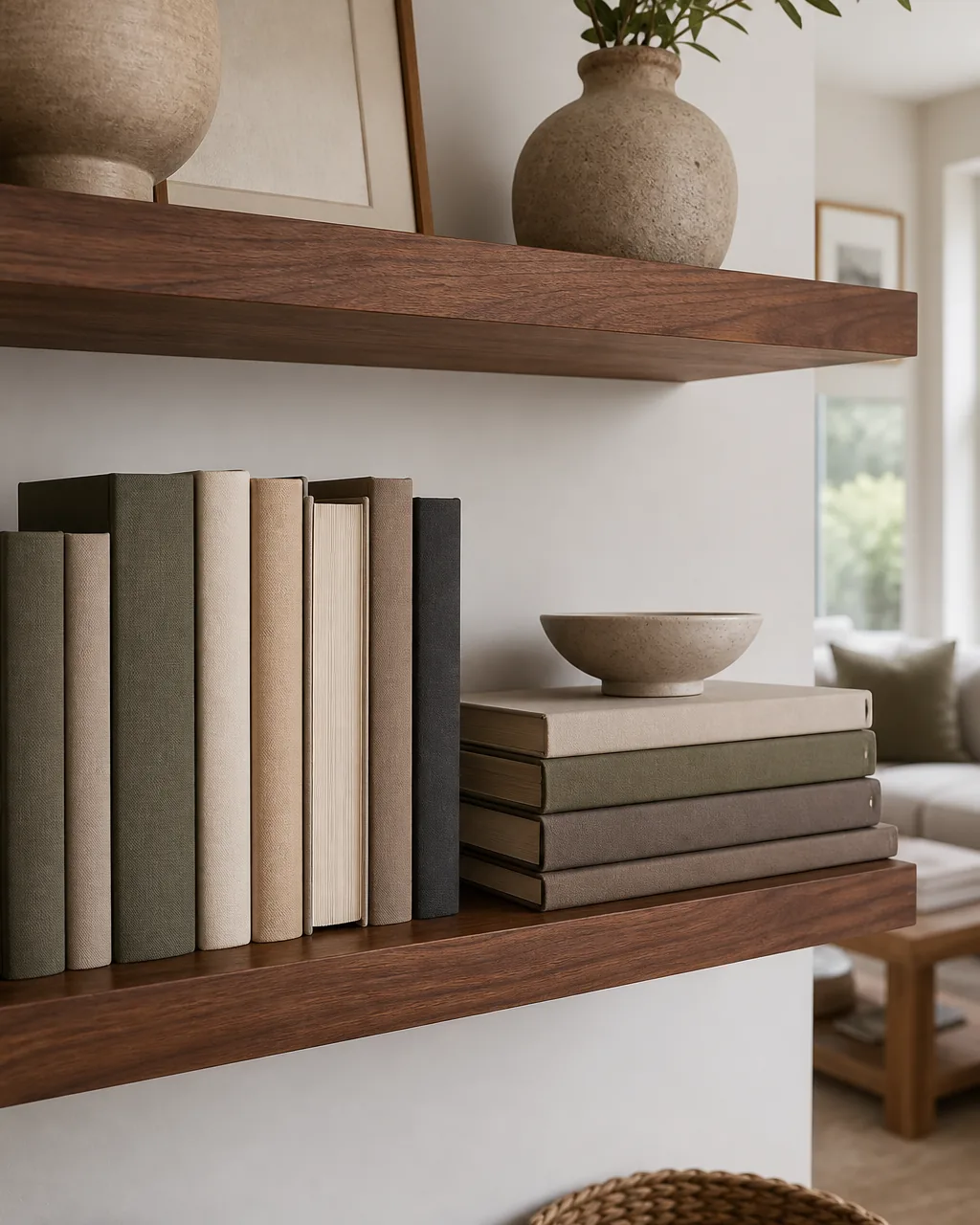
Books are the foundation of a good shelf, and the reason is that they work two ways at once. A run of upright spines fills space and gives the eye a quiet backdrop, while a flat stack becomes a little pedestal that lifts a bowl or a small object to a better height. Once the books are placed well, everything else has somewhere to sit. This is the same logic that anchors a well-styled coffee table.
- Stand a row of books upright and hold them in place with a heavier object at the end
- Lay three or four flat in a stack, then set a bowl or a small sculpture on top
- Turn a few spines to the wall, pages out, for a calmer color-free band
- Keep flat stacks low, two to five books, so they read as a base and not a tower
- Leave a little gap between the upright run and the stack so they feel deliberate
Style in Odd Groups at Staggered Heights
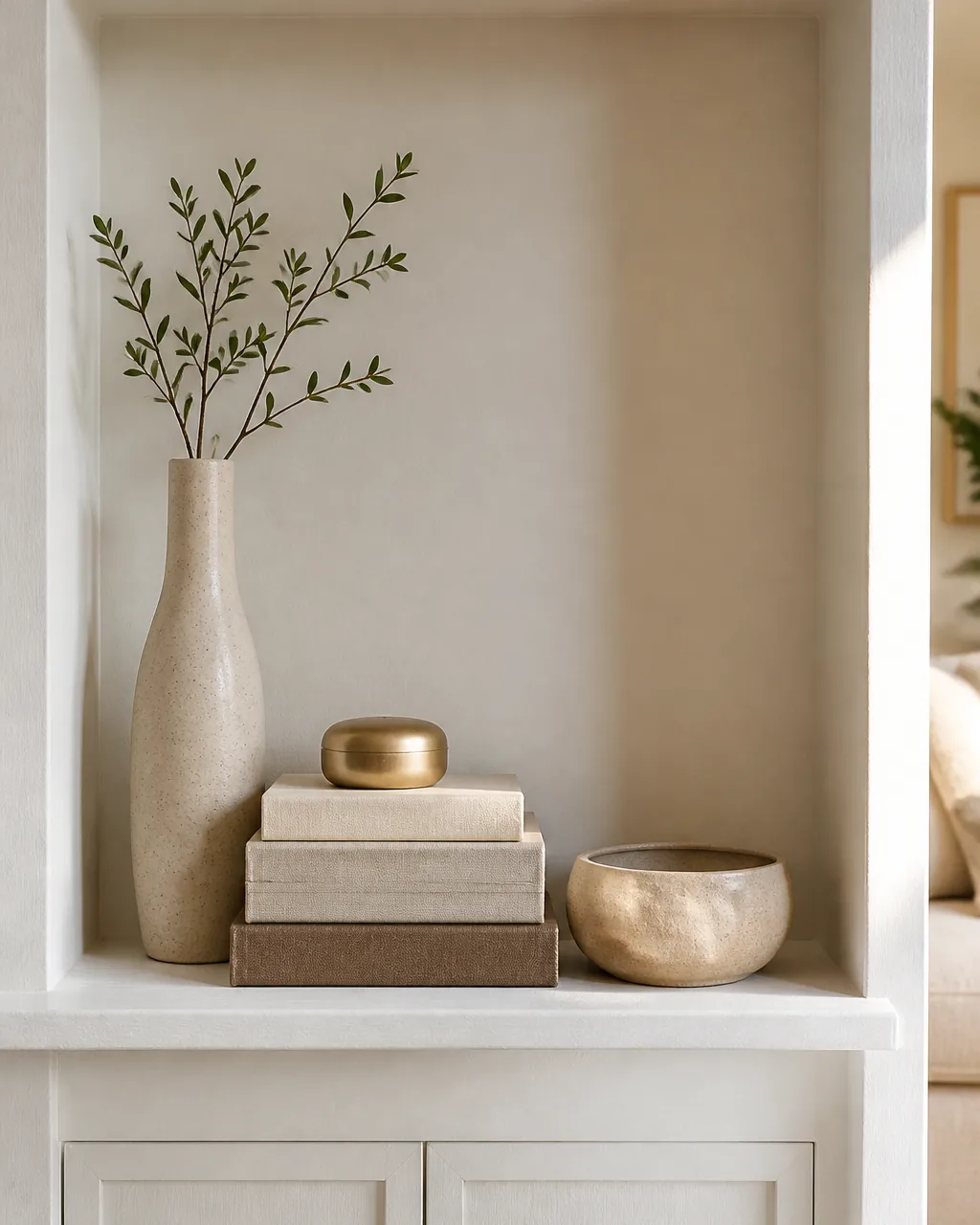
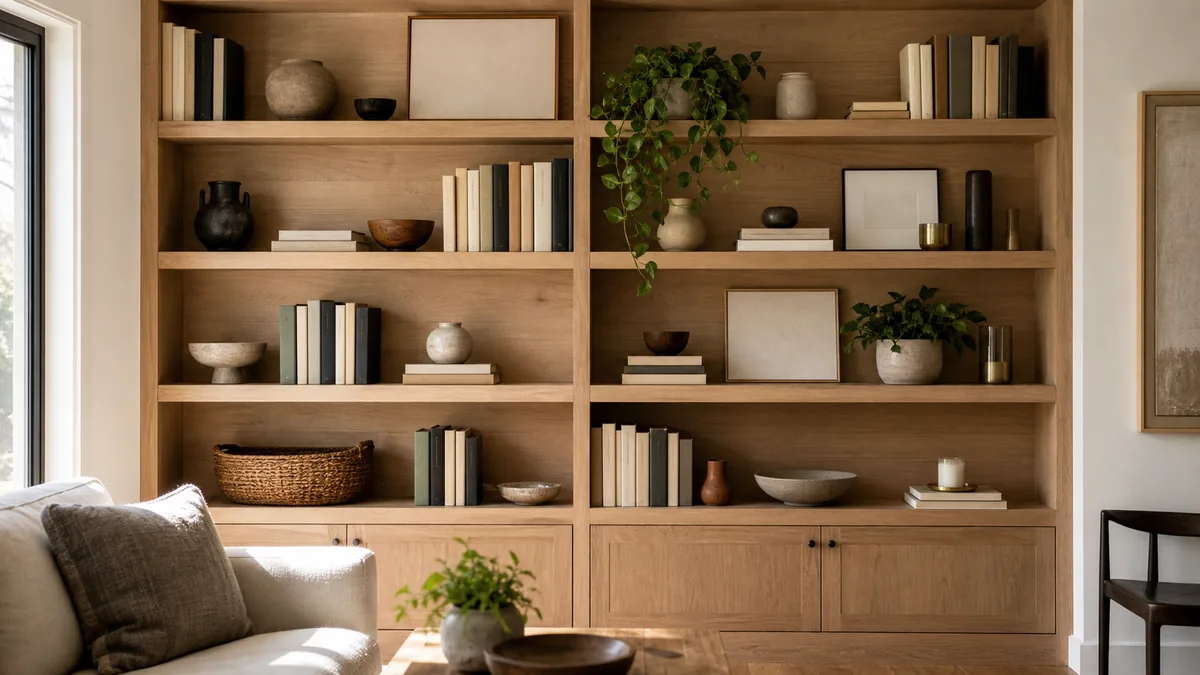
The eye settles when objects come in odd numbers at uneven heights. Group three pieces, one tall, one medium, one low, and the gaze travels up and down instead of scanning a flat row. Even pairs at the same height look staged and stiff; a staggered trio looks gathered. It is the single move that does the most to make a shelf feel arranged rather than lined up.
- Work in threes: pair a tall piece, a medium one, and a low one
- Let a flat stack of books supply the medium height in the group
- Cluster the trio toward one side of the shelf, not dead center
- Keep the tallest piece behind or beside the others, never hidden
- Repeat the grouping idea on each shelf so the whole unit feels related
Leave Real Negative Space on Every Shelf
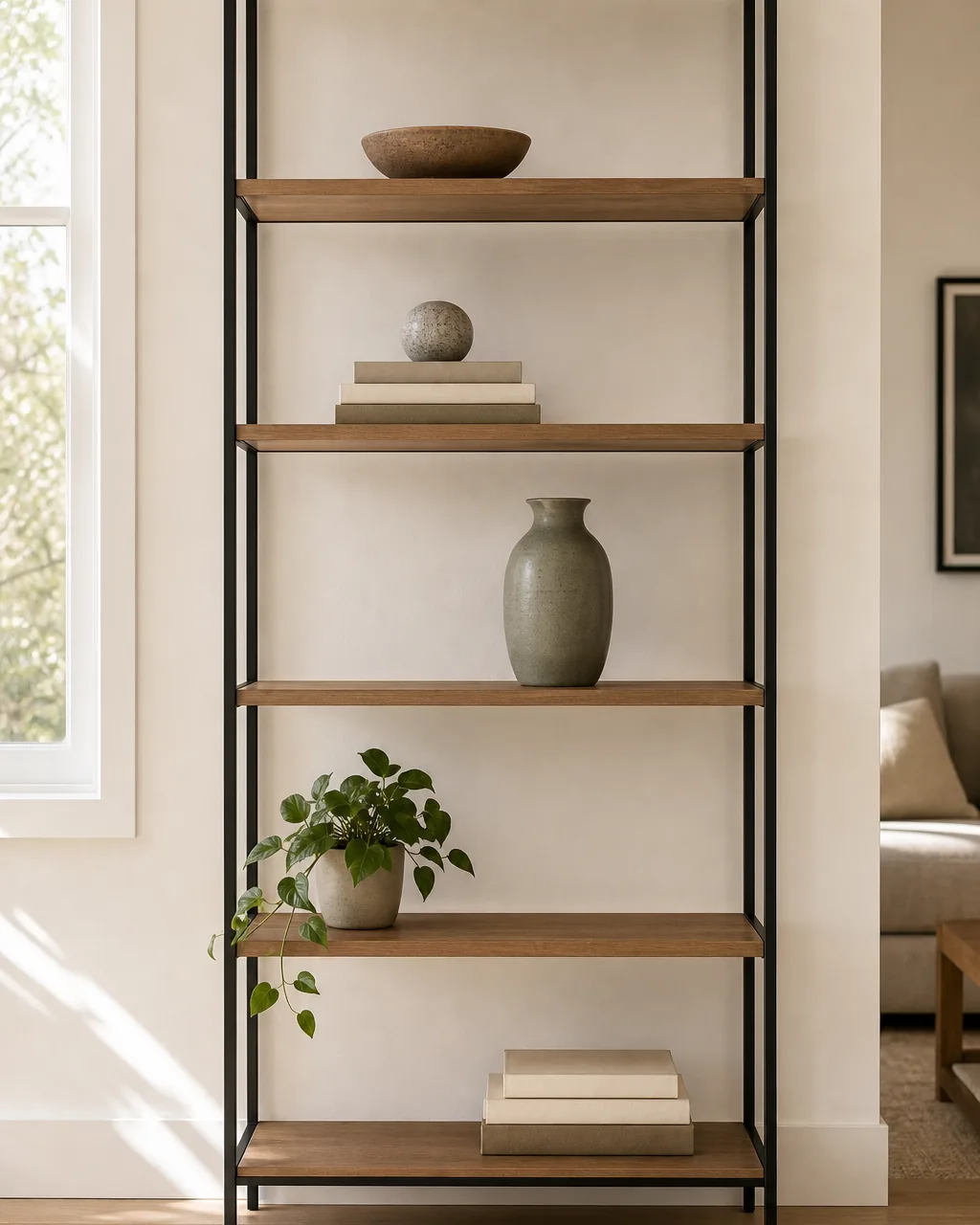
The line between styled and stuffed is the empty space around the objects. A shelf with a clear stretch reads as curated; one packed end to end reads as storage, even when every piece is lovely. Open shelving like this etagere only looks calm because so much of it is left bare. Aim to fill about two-thirds and let the rest breathe.
- Leave at least one clear stretch on every shelf
- Resist the urge to fill a gap the moment you notice it
- Give the tallest pieces some air above them, not a shelf pressing down
- When a shelf feels busy, remove a piece before you rearrange
- Let the wall show through open-backed shelving instead of blocking it
You will not need all thirteen at once. Pick the problem below that matches your shelves today, and start with those two or three ideas.
Lean Art at the Back for Depth
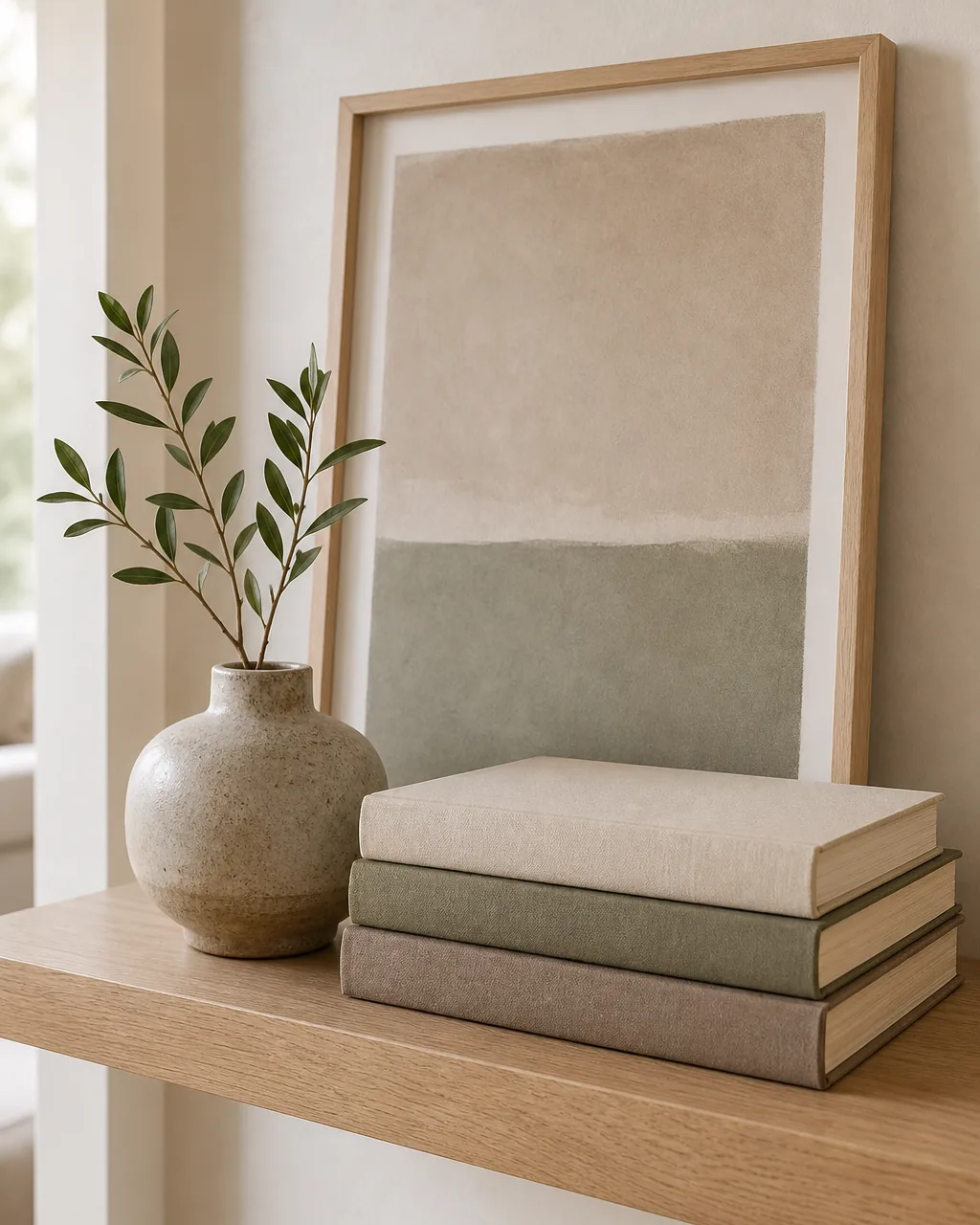
A small framed piece leaned against the wall at the back of a shelf adds depth that objects alone cannot. The flat art becomes a backdrop, and whatever sits in front of it reads as a layered little scene instead of a single row. It is the same depth trick that brings a neglected corner to life, and it gives a shallow shelf a sense of front and back.
- Lean a framed piece at the back rather than hanging it on the wall
- Overlap the bottom edge of the frame with a low vase or stack
- Use one larger piece per shelf instead of a row of tiny frames
- Let the frame or mat color echo something else on the unit
- Choose quiet, abstract art so it reads as texture, not a focal fight
Break the Horizontal Line With One Tall Piece
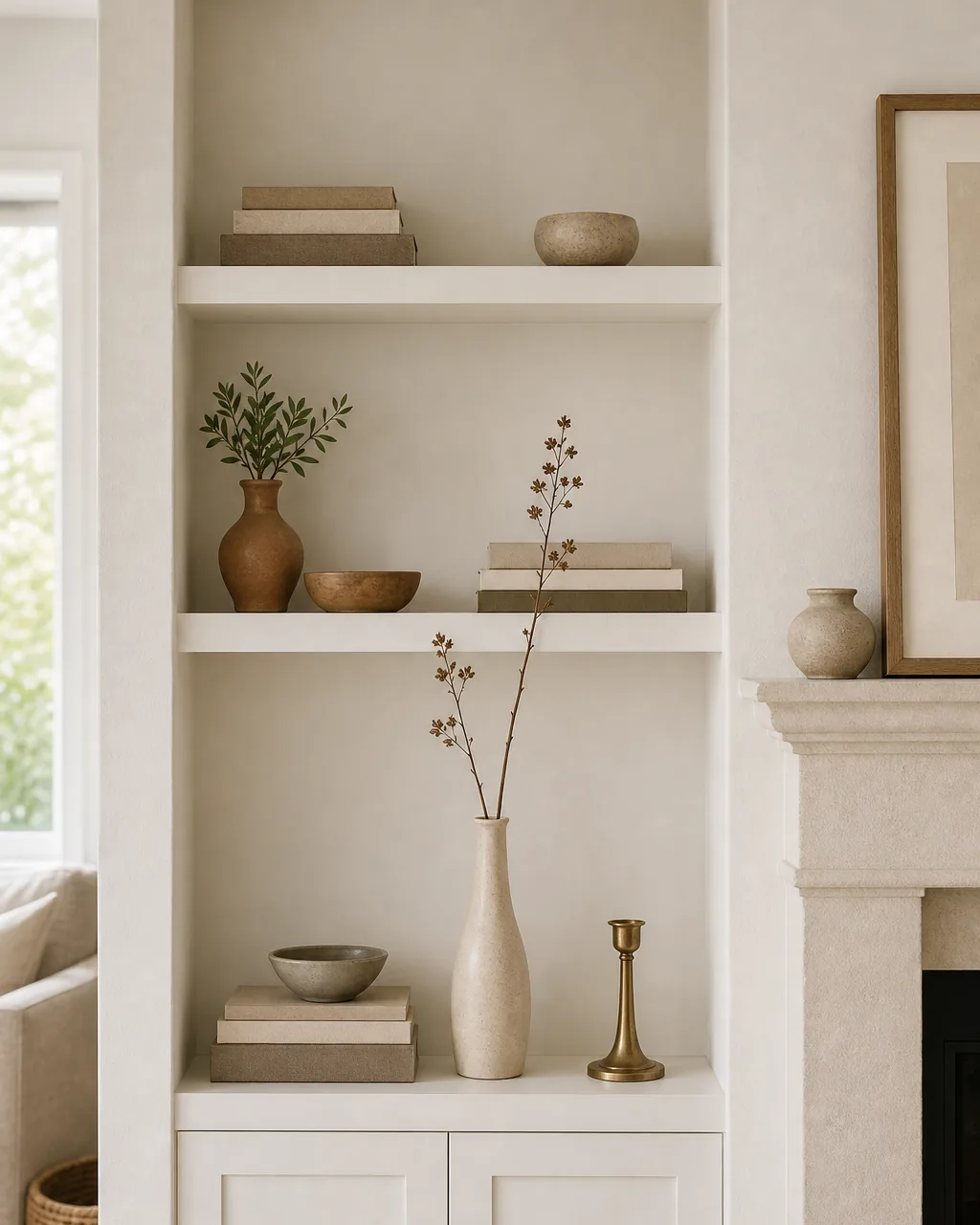
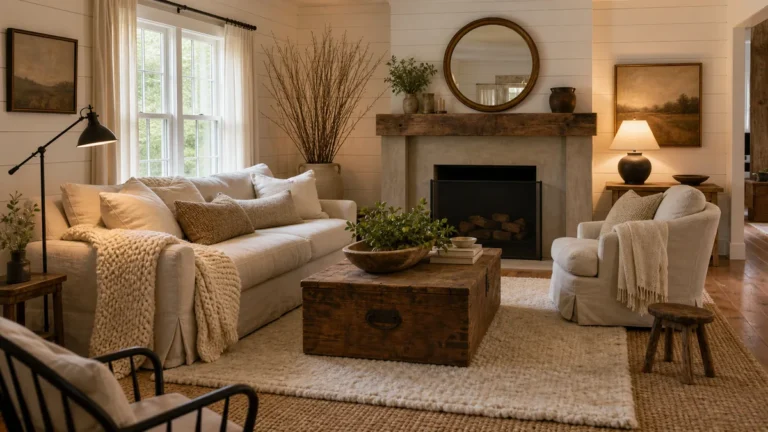
Shelves are nothing but horizontal lines, so one tall vertical piece keeps the wall from feeling flat and boxy. A slim vase with a few branches, a candlestick, or an upright sculpture draws the eye up and adds a little quiet drama. Set beside a fireplace like this, that single rising line is what stops the arrangement from reading as a tidy grid.
- Add one piece that clearly rises above the shelf line
- Place it off-center so it feels intentional, not symmetrical
- Keep it slim so it does not crowd the shelf above
- Pair it with low, rounded pieces so the height stands out
- Limit yourself to one tall accent per shelf
Hide the Clutter in Matching Baskets or Boxes
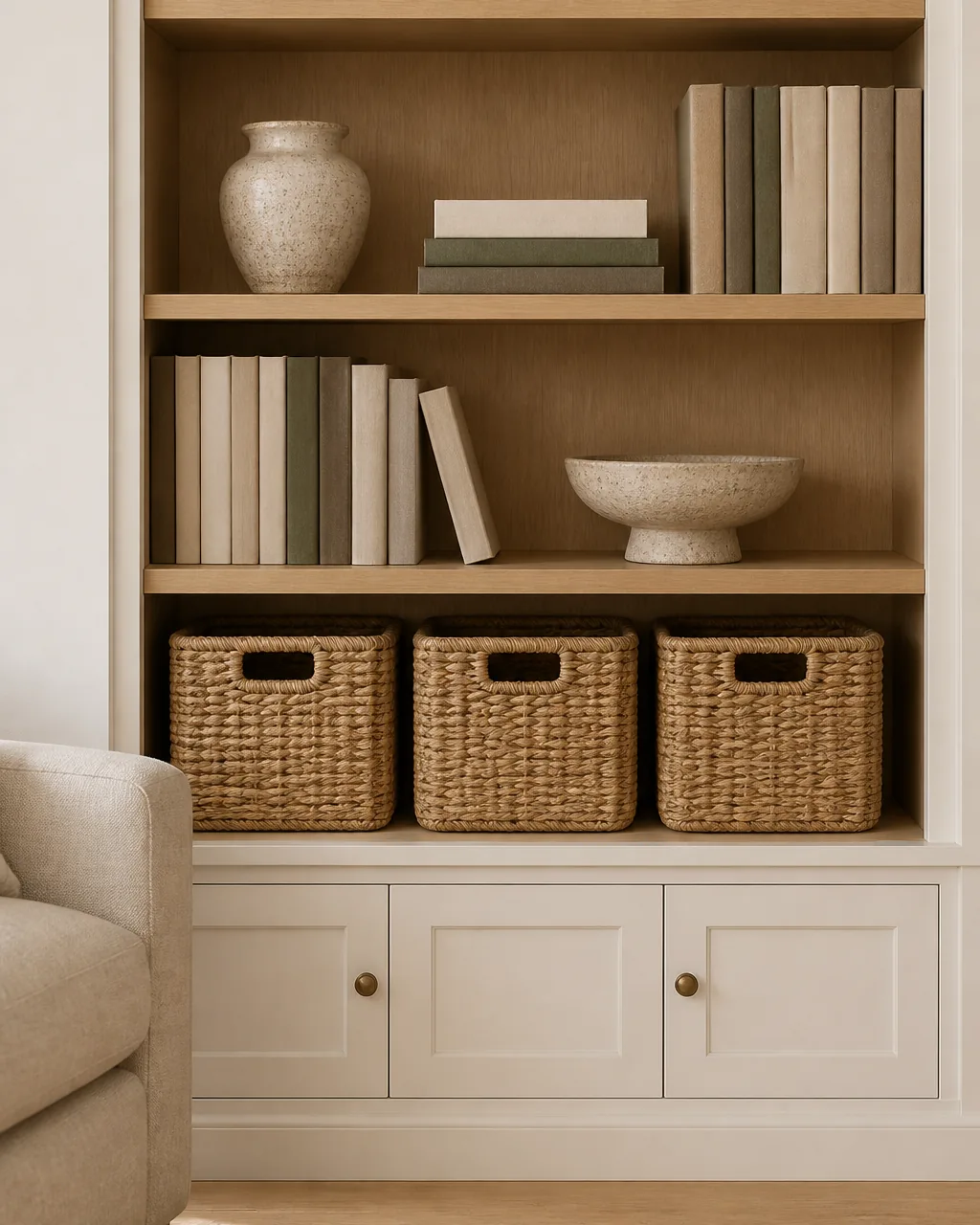
Open shelves expose everything, so the remotes, cords, and odds and ends need a place to disappear. Matching baskets or lidded boxes on the lower shelves swallow the mess and still look like part of the design. This is also how shelves earn their keep in a small living room, turning wall height into real storage without adding visual noise.
- Group two or three matching baskets on the lowest shelves
- Pick one material, woven or fabric or leather, and repeat it
- Keep the bottom shelf for the least pretty everyday clutter
- Save the shelves at eye level for the pieces you want seen
- Choose baskets deep enough to hide what is inside completely
A great shelf is less about buying more decor and more about a few habits of arranging. These four rules are what make the thirteen ideas hold together instead of sliding back into clutter.
Echo One Material or Tone Across the Shelves
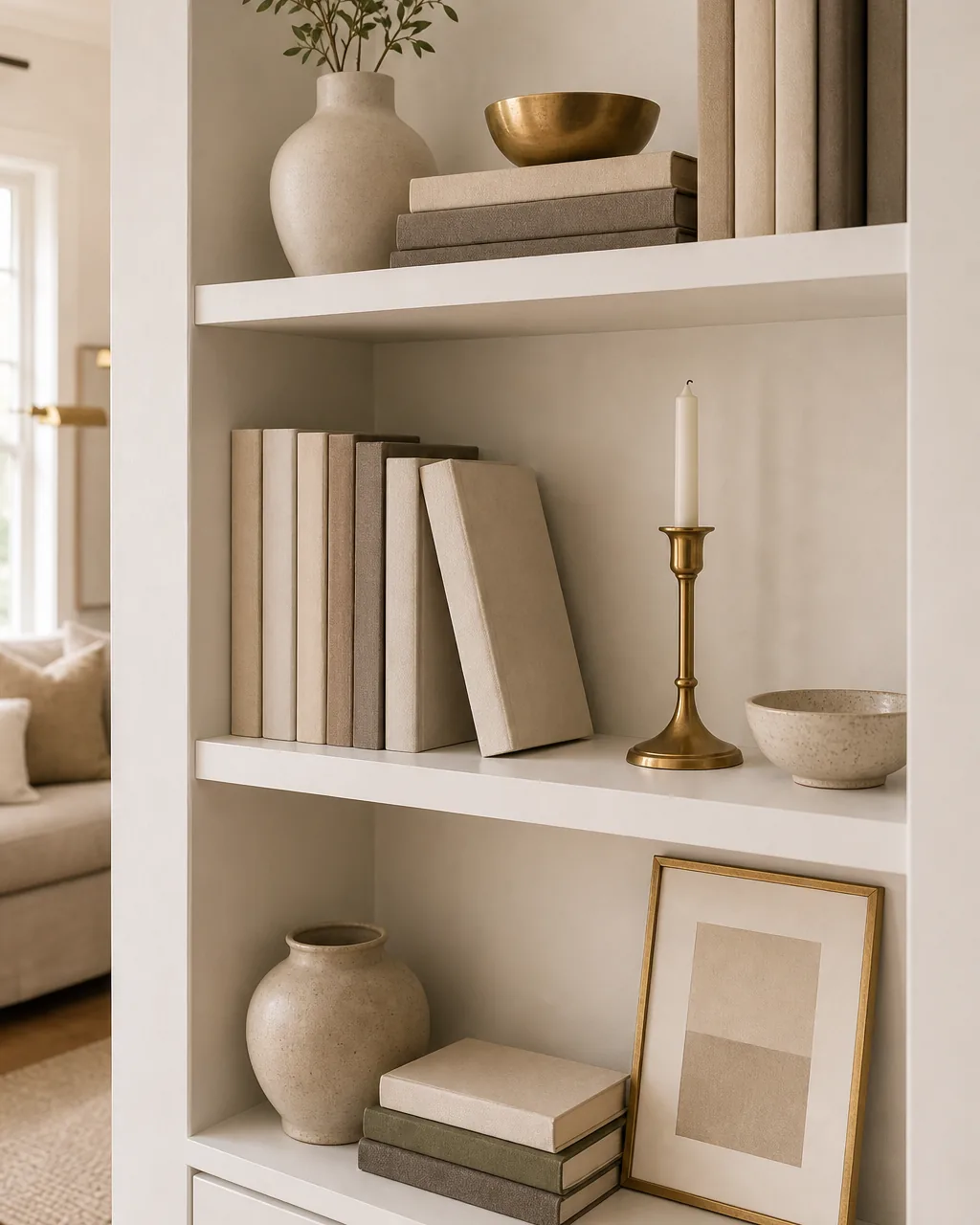
A wall of shelves reads as one composed piece when a single material or color repeats across it. A touch of brass on three different shelves, or one warm wood tone echoed in a bowl and a frame, threads the whole thing together so it feels collected rather than random. Repetition is the quiet trick that turns a pile of unrelated objects into a collection.
- Pick one accent material and place it on at least three shelves
- Echo a single wood tone in a few scattered objects
- Let one color run quietly from the top shelf to the bottom
- Keep the repeated element small so it reads as a thread, not a theme
- Balance the echoes so one shelf is not carrying all of them
Light the Shelves So They Glow at Night
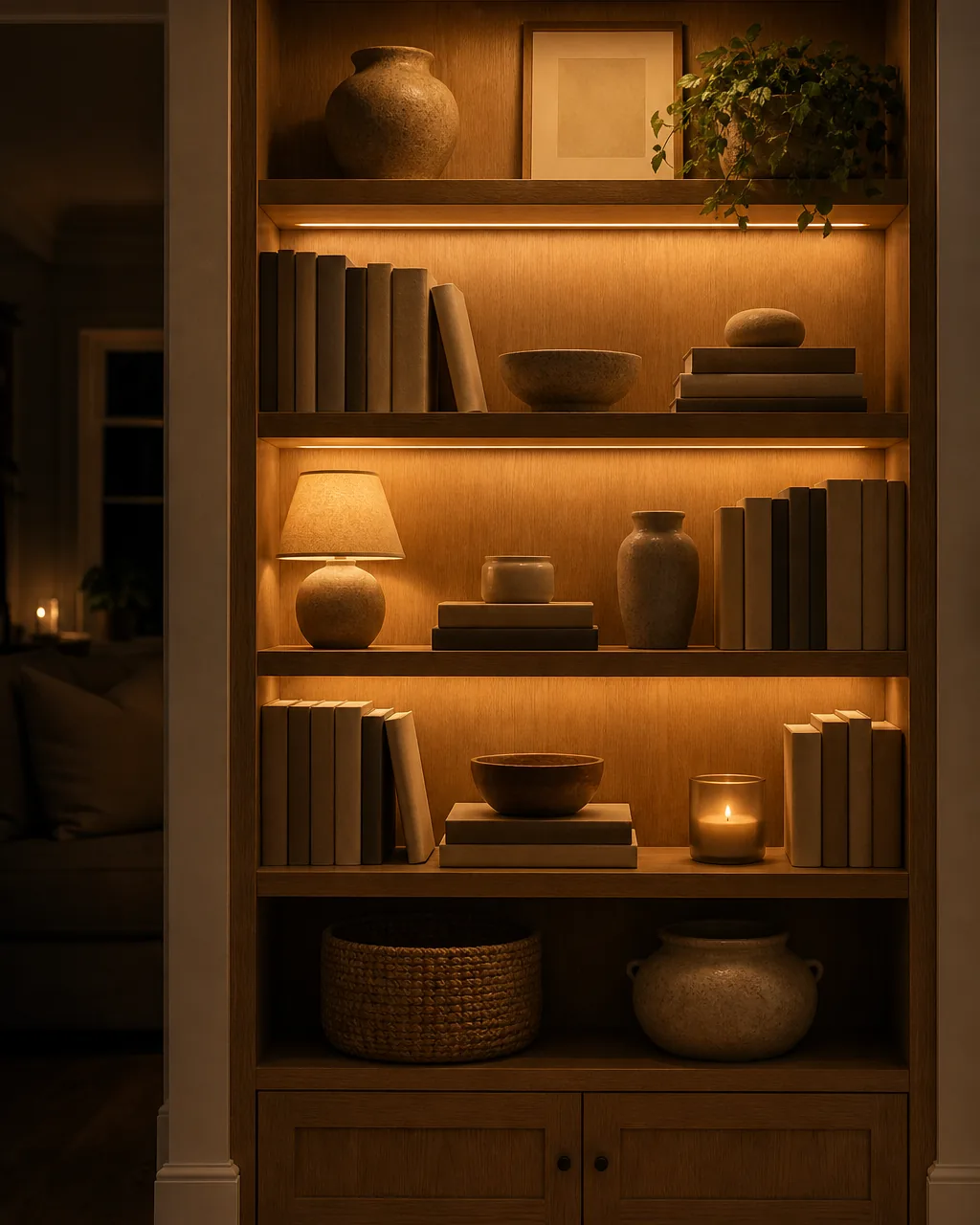
Shelves vanish into the wall after dark unless you light them. A slim picture light, a few hidden puck lights, or one small lamp on a shelf turns the whole unit from background into a focal point, and it makes the objects feel collected instead of just stored. Warm light is what gives a styled shelf its evening presence.
- Mount a slim picture light above a built-in or tall unit
- Tuck puck lights under shelves for a soft downward glow
- Set one low lamp on a shelf for warm pooled light
- Choose warm bulbs around 2700K to flatter wood and ceramics
- Put the lights on a dimmer so the shelves can shift with the room
Mix Glossy, Matte, and Woven Textures
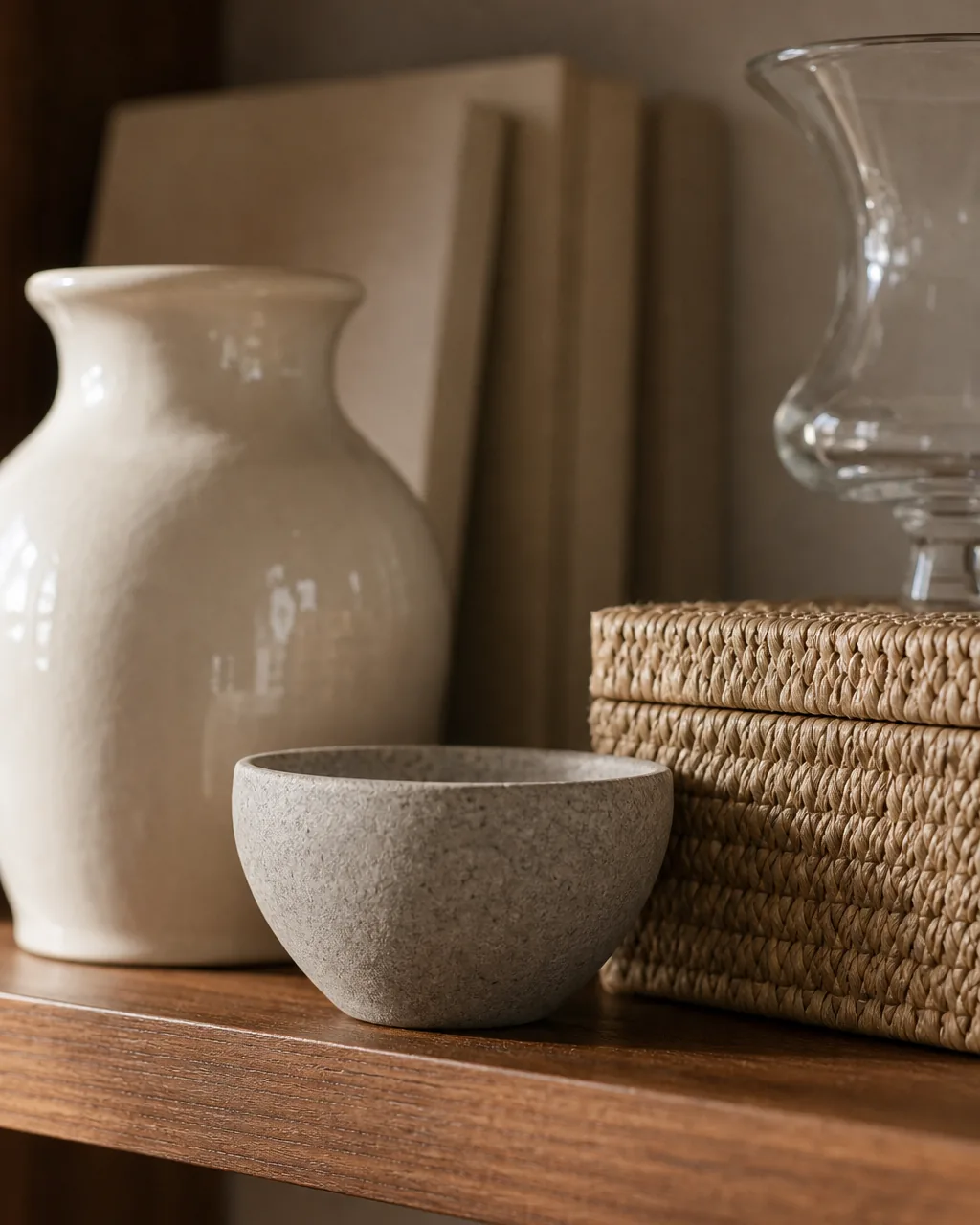
When the color story is quiet, texture does the work the color would. A glossy ceramic vase next to a matte stone bowl next to a woven box gives the eye something to feel, so an all-neutral shelf never looks flat or dull. The contrast between surfaces is what keeps a calm palette from going lifeless.
- Combine at least three textures: glossy, matte, woven, glass
- Set a shiny piece right beside a rough one for contrast
- Add one natural element, wood or stone or rattan, per shelf
- Vary the scale of the textures, not just the finishes
- Keep the colors close so the texture reads as the difference
13 Living Room Shelf Decor Ideas That Look Styled, Not Cluttered
- 1Build the base with books, two waysStand some hardcovers upright and lay others flat in short stacks that double as pedestals for a small object.
- 2Style in odd groups at staggered heightsCluster a tall, a medium, and a low piece so the eye zig-zags instead of scanning a flat line.
- 3Leave real negative space on every shelfFill about two-thirds and leave the rest open, the way you would when styling a coffee table.
- 4Lean art at the back for depthA small framed piece leaned at the back turns a single row into a layered little scene.
- 5Break the horizontal line with one tall pieceA slim vase or candlestick rising above the shelf line keeps the wall from feeling flat and boxy.
- 6Hide the clutter in matching baskets or boxesClosed storage on the lower shelves swallows the cords and odds and ends and still looks intentional.
- 7Echo one material or tone across the shelvesRepeat a touch of brass or one wood tone top to bottom so the whole unit reads as one piece.
- 8Light the shelves so they glow at nightA picture light, puck lights, or one small lamp turns the shelving from background into a focal point.
- 9Mix glossy, matte, and woven texturesWhen the palette is quiet, contrasting surfaces give the eye something to feel.
- 10Add one trailing plant to soften the edgesA pothos or ivy spilling over an edge breaks the straight lines and brings the shelf to life.
- 11Vary the depth, front to backPush some pieces to the wall and pull others to the lip so the arrangement has a front and a back.
- 12Keep the color story tightLimit the wall to two or three hues plus a neutral base and even a full shelf reads high-end.
- 13Step back and edit by halfStyle it, remove about half, and the lighter version almost always wins. The same restraint that activates a quiet corner.
styledhomenotes.com
Add One Trailing Plant to Soften the Edges
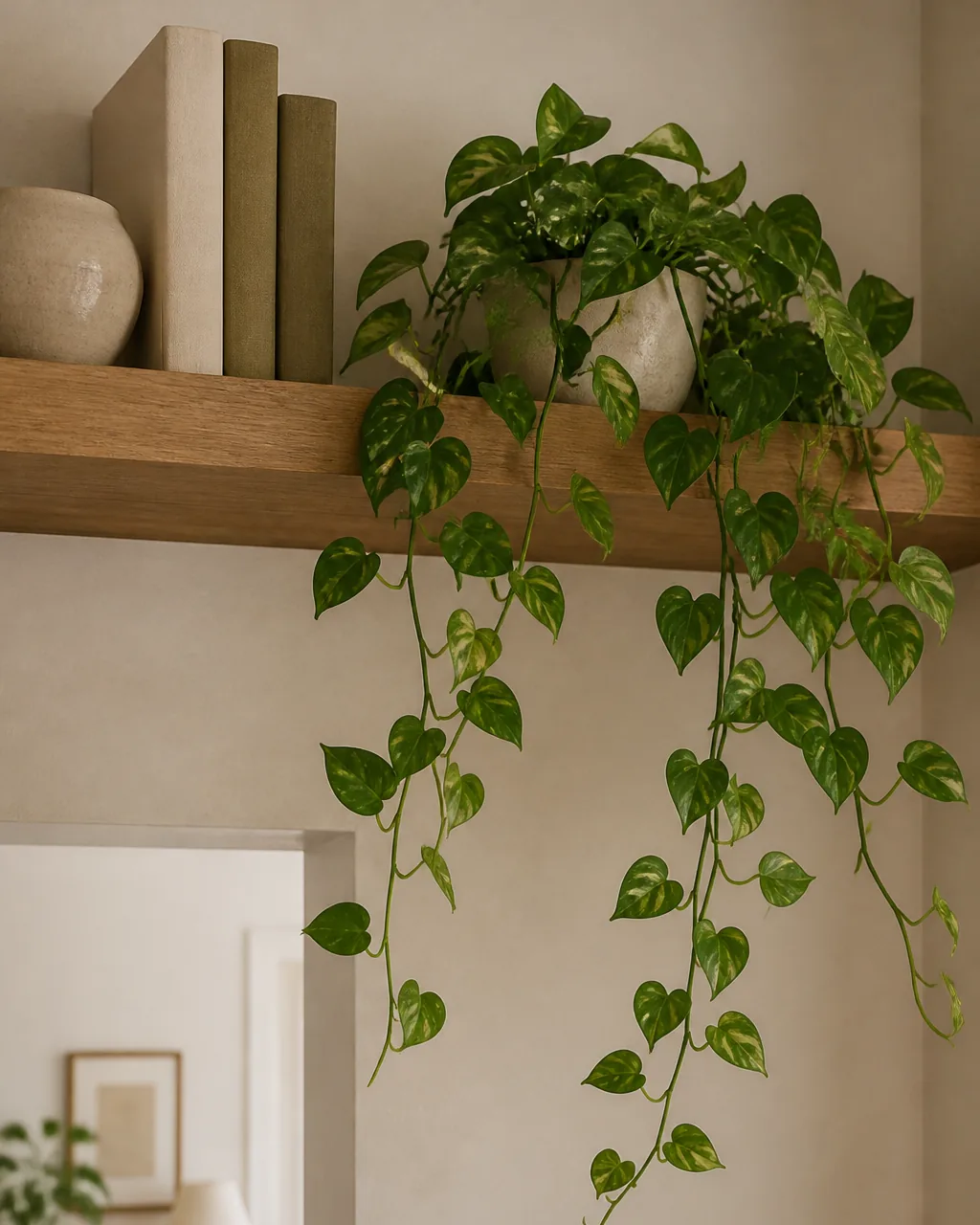
Every shelf is made of hard edges and right angles, so one soft living thing changes the whole feel. A trailing pothos or ivy spilling over the edge breaks up the straight lines and brings movement that no object can. Placed high, the vines have room to fall, and the green reads as life against all that wood and ceramic.
- Let one trailing plant drape over a shelf edge
- Choose forgiving trailers like pothos, ivy, or string of pearls
- Place it on a higher shelf so the vines have room to fall
- Pair it with a simple pot that stays out of the way
- Pick one real plant over a row of stiff faux stems
Vary the Depth, Front to Back
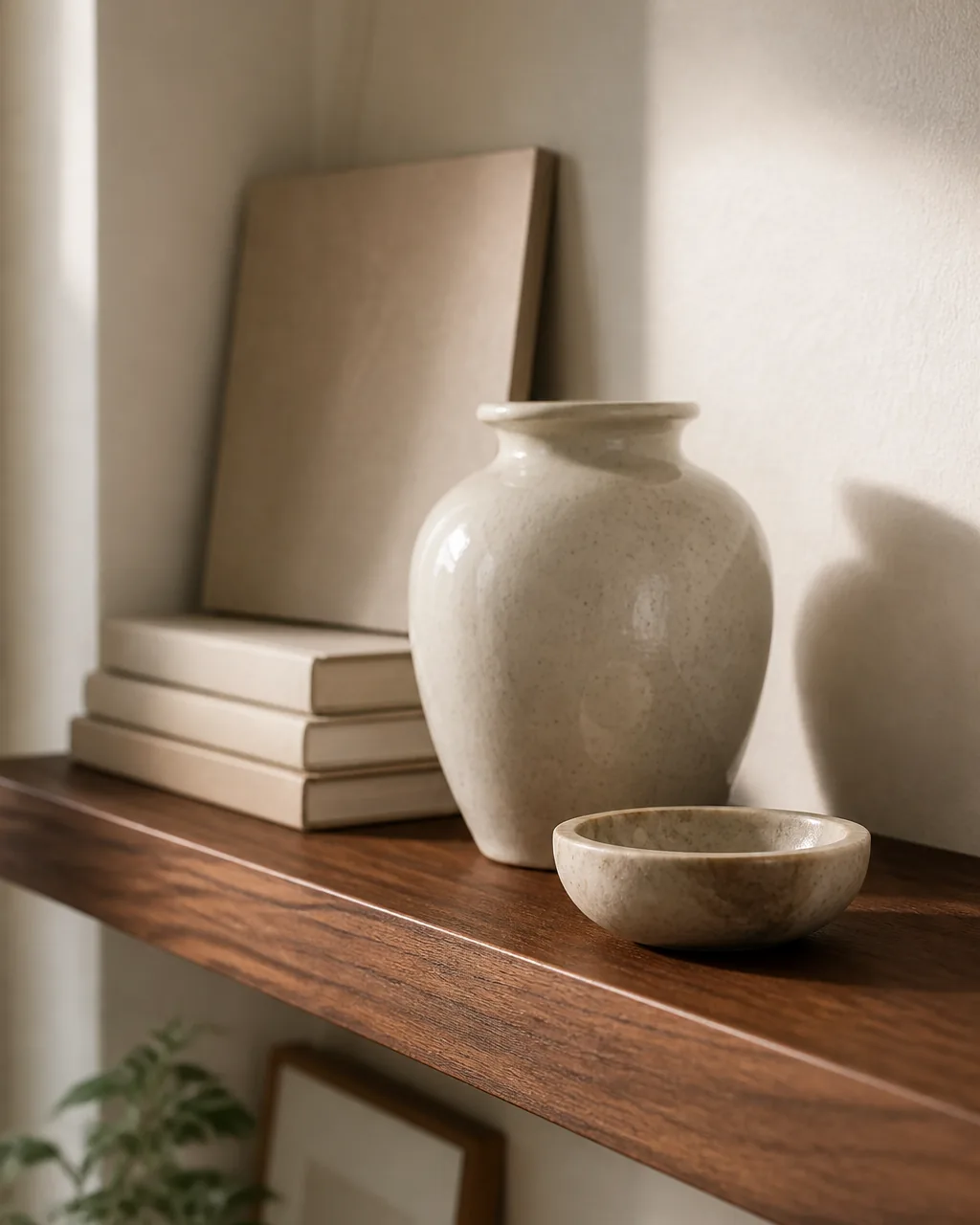
Pushing every object to the front edge flattens a shelf into a single line. Instead, set some pieces back against the wall and pull others forward to the lip, so the arrangement has a real front and back. That little bit of overlap, seen straight on, is what the eye reads as depth, and it is the difference between a styled shelf and a row on a ledge.
- Push taller and flat pieces back toward the wall
- Pull one or two small objects forward to the front edge
- Let pieces overlap slightly when you look at them head on
- Use a leaned frame at the back to start the layering
- Vary the depth shelf to shelf so it never lines up
Keep the Color Story Tight
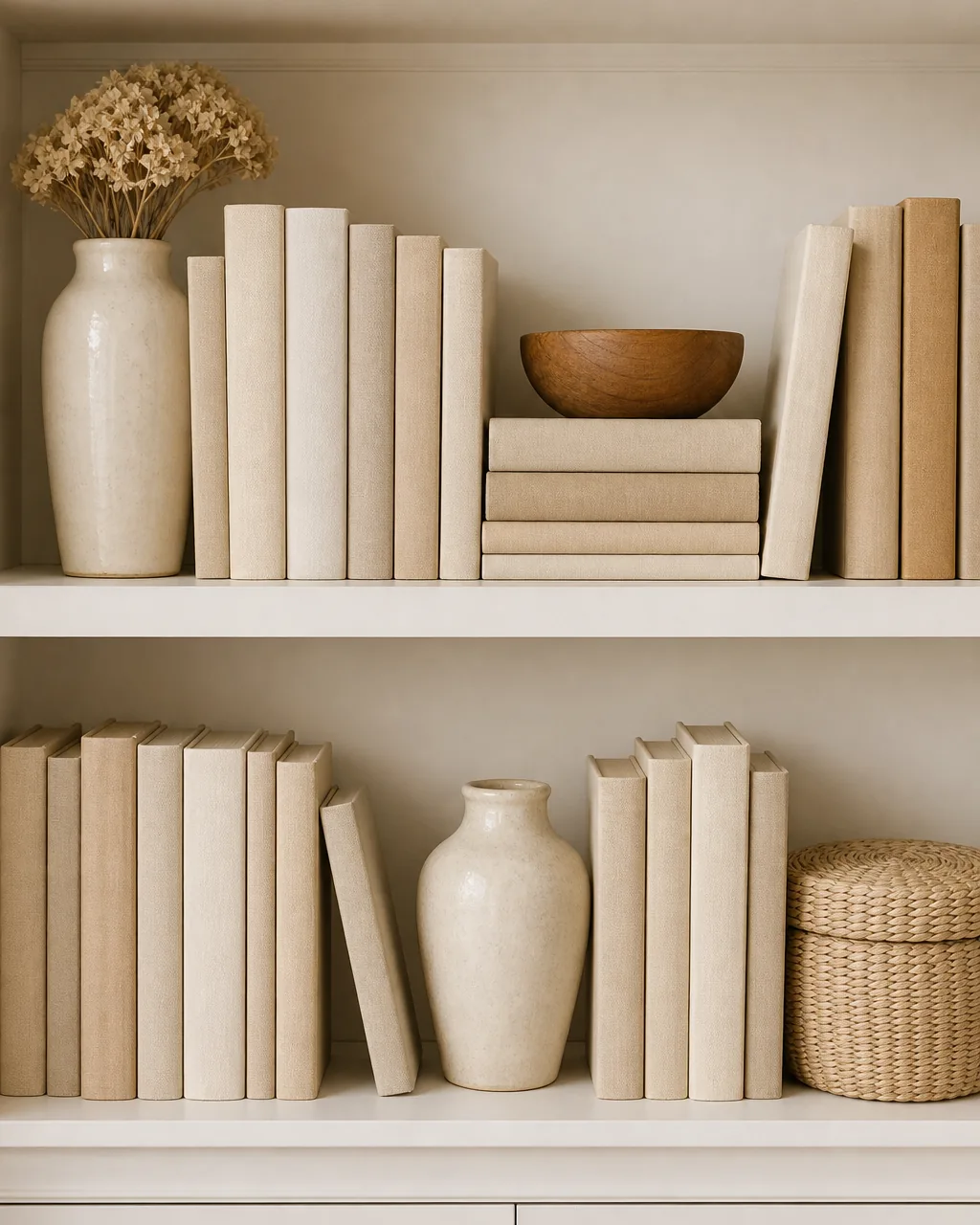
Shelves go busy fast when too many colors compete for attention. Limit the whole wall to two or three hues plus a neutral base and the arrangement instantly reads as calm and high-end, even when the shelves are densely filled. A tight palette is what lets you keep more on a shelf without it tipping into clutter.
- Choose two or three colors plus a neutral base
- Keep books spine-out only when their colors fit the palette
- Repeat each color in at least two spots across the wall
- Let texture carry the variety once the colors are locked
- Pull anything loud enough to break the color story
Step Back and Edit by Half
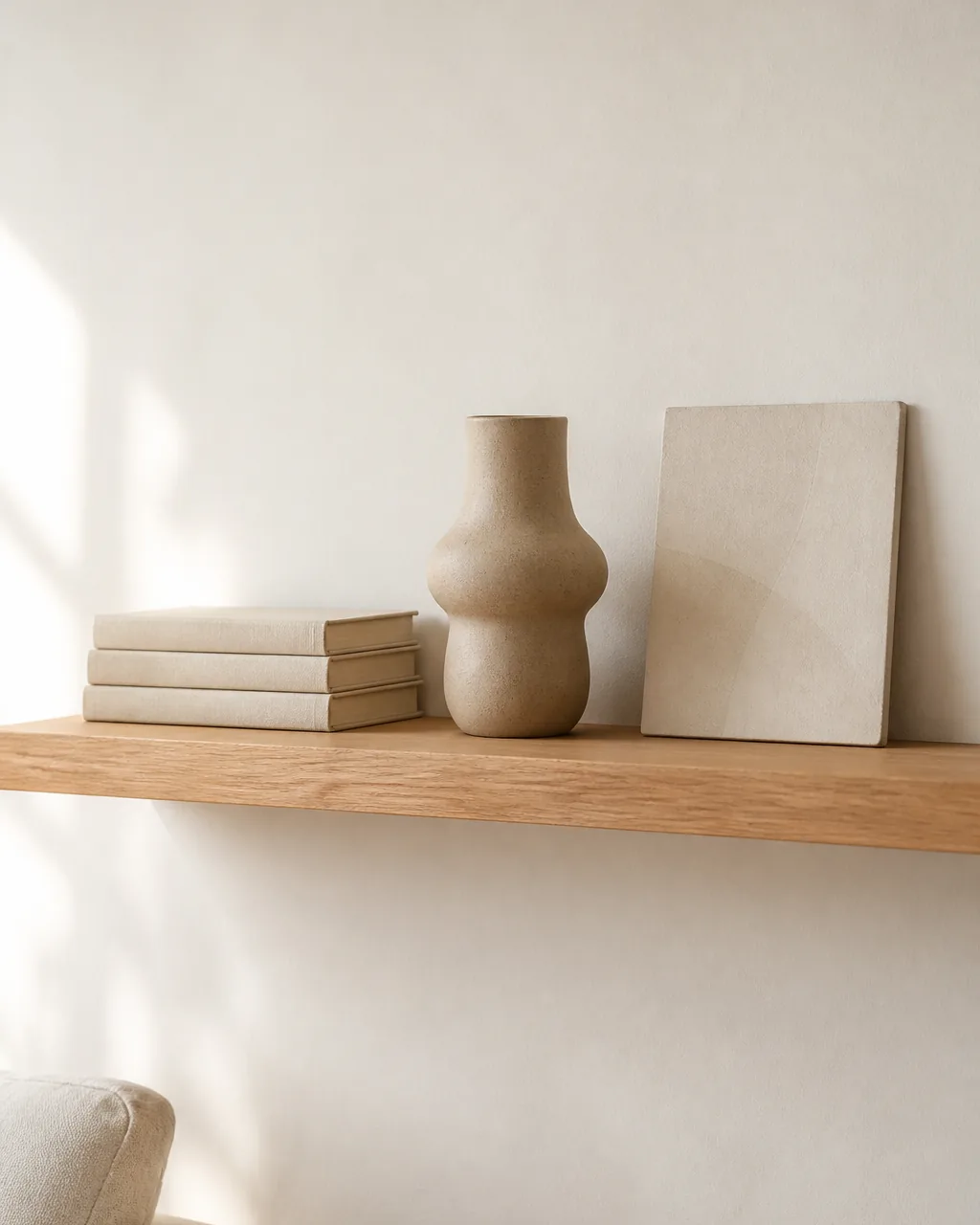
The last move is the most important, and it is to take things away. Style the shelf the way you like it, then remove about half of what you added and live with the lighter version for a day. The pared-back shelf almost always wins. Restraint, more than any single object, is what separates a styled shelf from a crowded one.
- Once it looks styled, remove roughly half and reassess
- Live with the lighter version for a day before adding anything back
- Keep only the pieces you genuinely love to look at
- Give one strong object room rather than three competing ones
- When a piece makes you hesitate, leave it off

Nora Ellis edits Styled Home Notes, where she shares practical decorating, organization, and small-space ideas for creating a more styled and functional home. Every article is reviewed for clarity, usefulness, image sourcing, and Pinterest-to-page alignment before publication. Visit the Nora Ellis author page.