13 Scandinavian Living Room Ideas That Make the Most of Natural Light
Scandinavian style gets flattened into “white walls and empty shelves.” The look actually started as a practical answer to short winter days — pale wood that reflects scarce daylight, furniture that earns its keep.
That’s the lens for every idea below: does it bounce more light into the room, or make a piece of furniture work harder? Skip what doesn’t fit your space and the room still reads as intentional.
You don’t need every idea at once. Solve your room’s actual light problem first, then layer in warmth.
From pale wood frames to a coffee table with real storage, these thirteen moves are built around one question: does it bounce more light into the room, or make a piece of furniture work harder? Jump to the one your room needs first.
- 1Pale Birch or Ash Wood Furniture Frames Instead of Dark Wood
- 2A Large Mirror Angled to Double the Room’s Only Light Source
- 3Sheer Linen Curtains That Filter Light Instead of Blocking It
- 4A Cluster of Candles for Hygge Light When the Sun Sets Early
- 5One Black Metal Accent for Graphic Contrast Against the Pale Palette
- 6A Storage Ottoman That Works as Seating, Table, and Hidden Storage
- 7Layered Textiles for Warmth Without Adding Visual Clutter
- 8A Sheepskin Throw Over One Chair for Instant Texture
- 9Simple Wood Shelving With Room Left Between Objects
- 10A Single Green Plant as the Room’s Only Organic Note
- 11A Woven Wool Rug in an Undyed Natural Tone Grounding the Room
- 12Thin Black Picture Frames Hung at Eye Level, Not in a Grid
- 13A Multi-Functional Coffee Table With a Lower Storage Shelf
Pale Birch or Ash Wood Furniture Frames Instead of Dark Wood
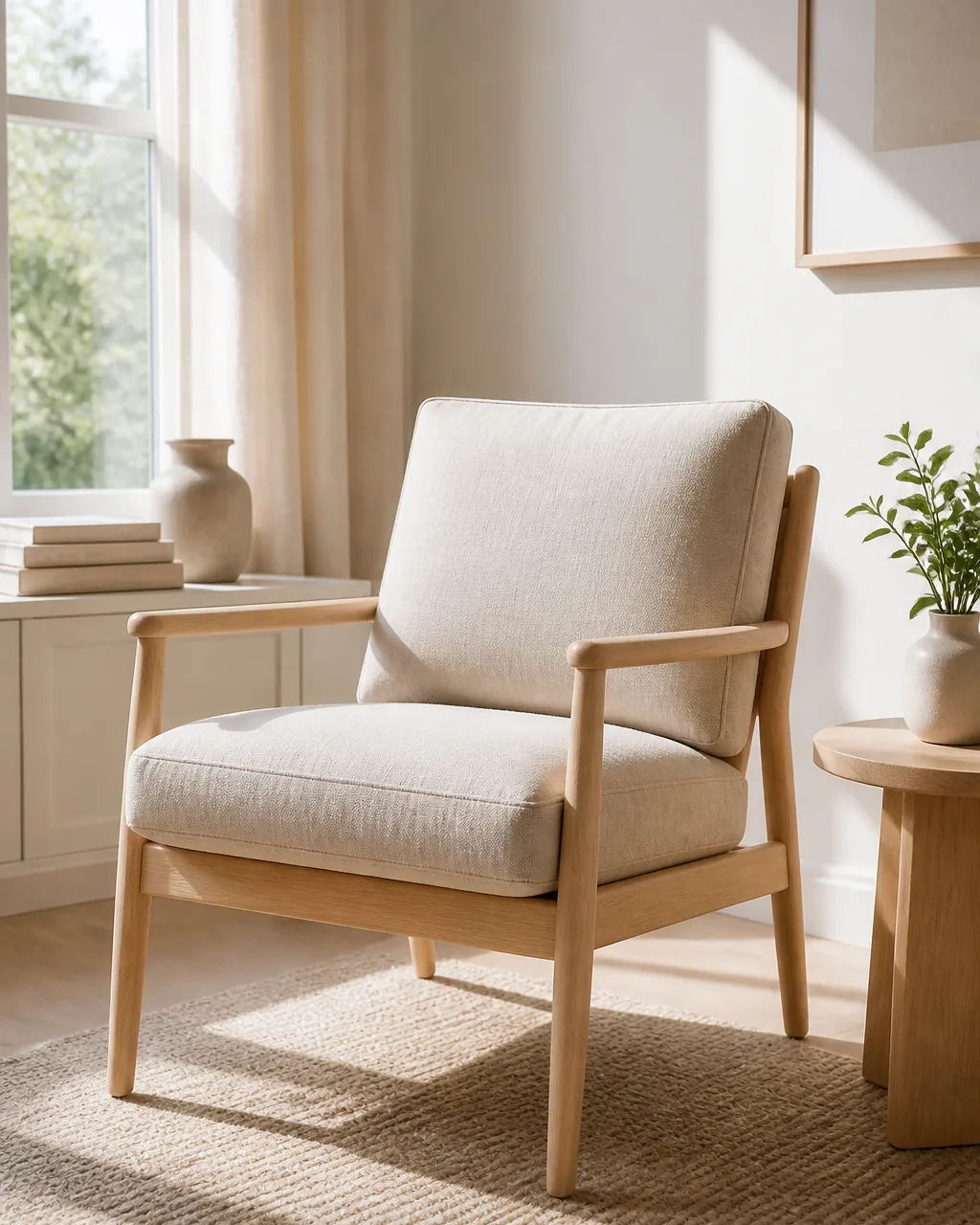
Dark wood absorbs light instead of bouncing it back into the room, which works against you in a space that’s already short on daylight for half the year. Pale birch or ash does the opposite — it reflects what light does reach it, so the wood itself becomes part of the room’s light source instead of a light sink.
The judgment call is finish, not species. A raw or lightly oiled surface keeps the reflective quality; a dark stain on the same birch frame kills it just as thoroughly as walnut would. Choose finish first, wood type second.
- Look for birch, ash, or beech frames with a raw or clear-oil finish
- Avoid walnut, mahogany, or dark-stained oak for major pieces
- Keep legs exposed and tapered rather than boxy and skirted
- Pair pale wood with black metal hardware for contrast
- Test the piece in your actual room light before buying
A Large Mirror Angled to Double the Room’s Only Light Source
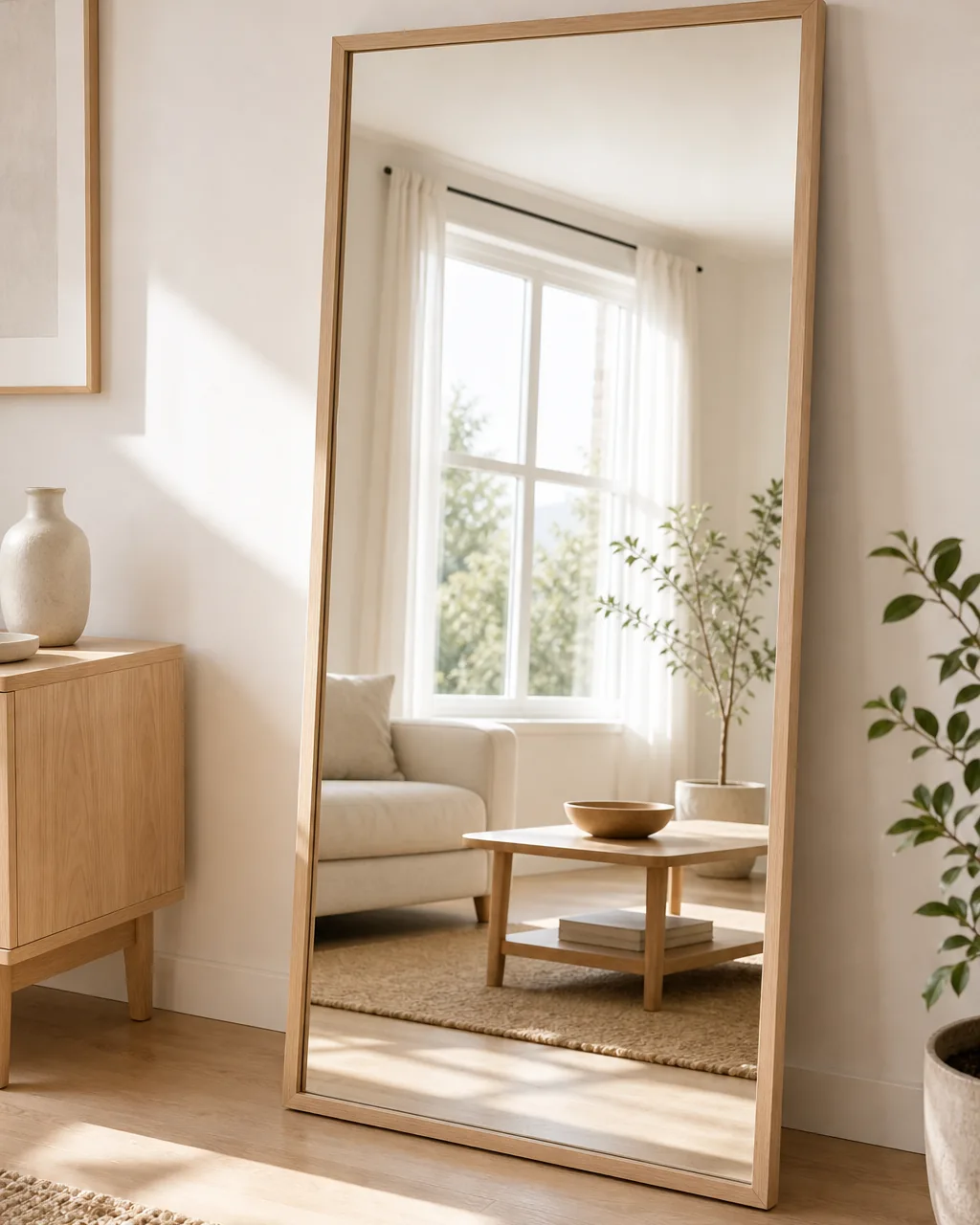
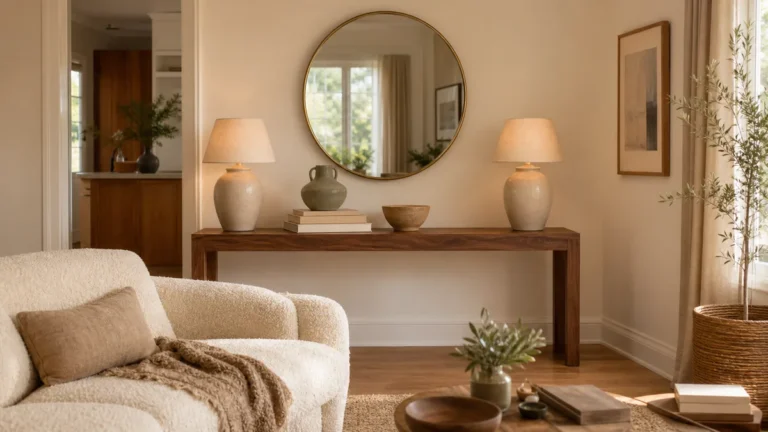
Most rooms only have one real light source — a single window or pair of windows — and once that light hits the opposite wall, it stops. A large mirror positioned directly across from the window catches that light before it dies and throws a second, reflected version of it back into the room.
Placement is what makes this work or fail. A mirror angled off to the side just reflects another wall or a doorway, which adds nothing. It has to face the window straight on to actually double the light, not just decorate the wall it’s hanging on.
- Size the mirror to roughly match the window’s width for a real doubling effect
- Position it directly opposite the window, not at an angle that wastes the reflection
- Choose a plain wood or black-framed mirror over an ornate gilt frame
- Avoid hanging it where it just reflects another wall or a dark hallway
- Skip a second large mirror elsewhere in the room; one is enough to read as intentional
Sheer Linen Curtains That Filter Light Instead of Blocking It
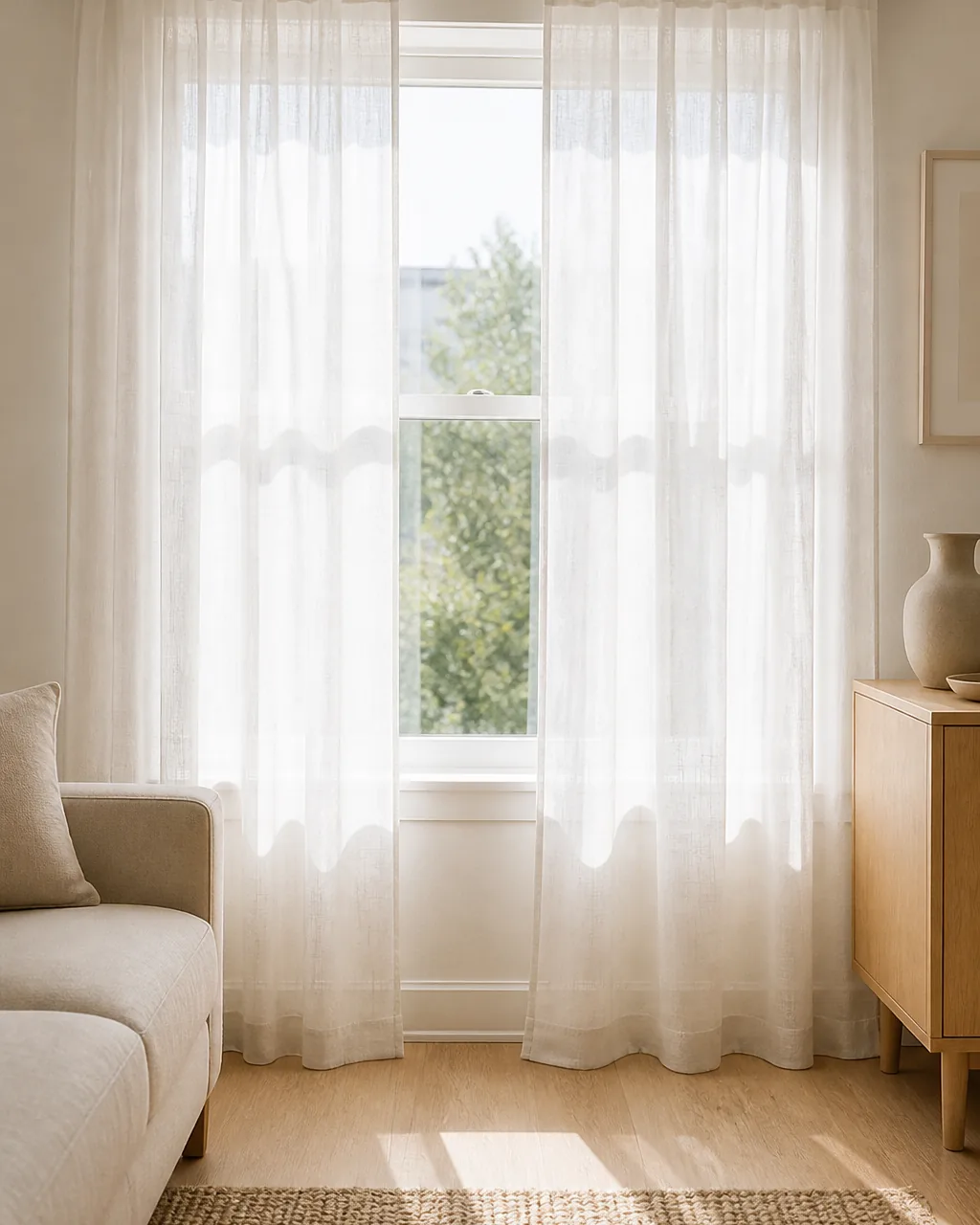
Heavy drapery is built to block light, which is exactly the wrong job for a window in a room that needs every bit of daylight it can get. Sheer linen does the opposite job: it softens and spreads the light across the room all day instead of stopping it at the glass or shutting it out completely when drawn.
The tradeoff is privacy after dark, which is why most rooms still need a backup layer for nighttime. Keep that layer separate and discreet so it doesn’t compete with the sheers during the day, when the diffused light is doing the actual work.
- Choose lightweight linen or linen-blend in white or natural
- Mount rods just below the ceiling to draw the eye up
- Let panels puddle slightly or hit just above the floor
- Skip patterned or heavy velvet drapery for the main window
- Layer a discreet blackout liner behind sheers only if needed for sleep
You will not need all thirteen at once. Find the situation below that matches your living room today, and start with those two or three ideas.
A Cluster of Candles for Hygge Light When the Sun Sets Early
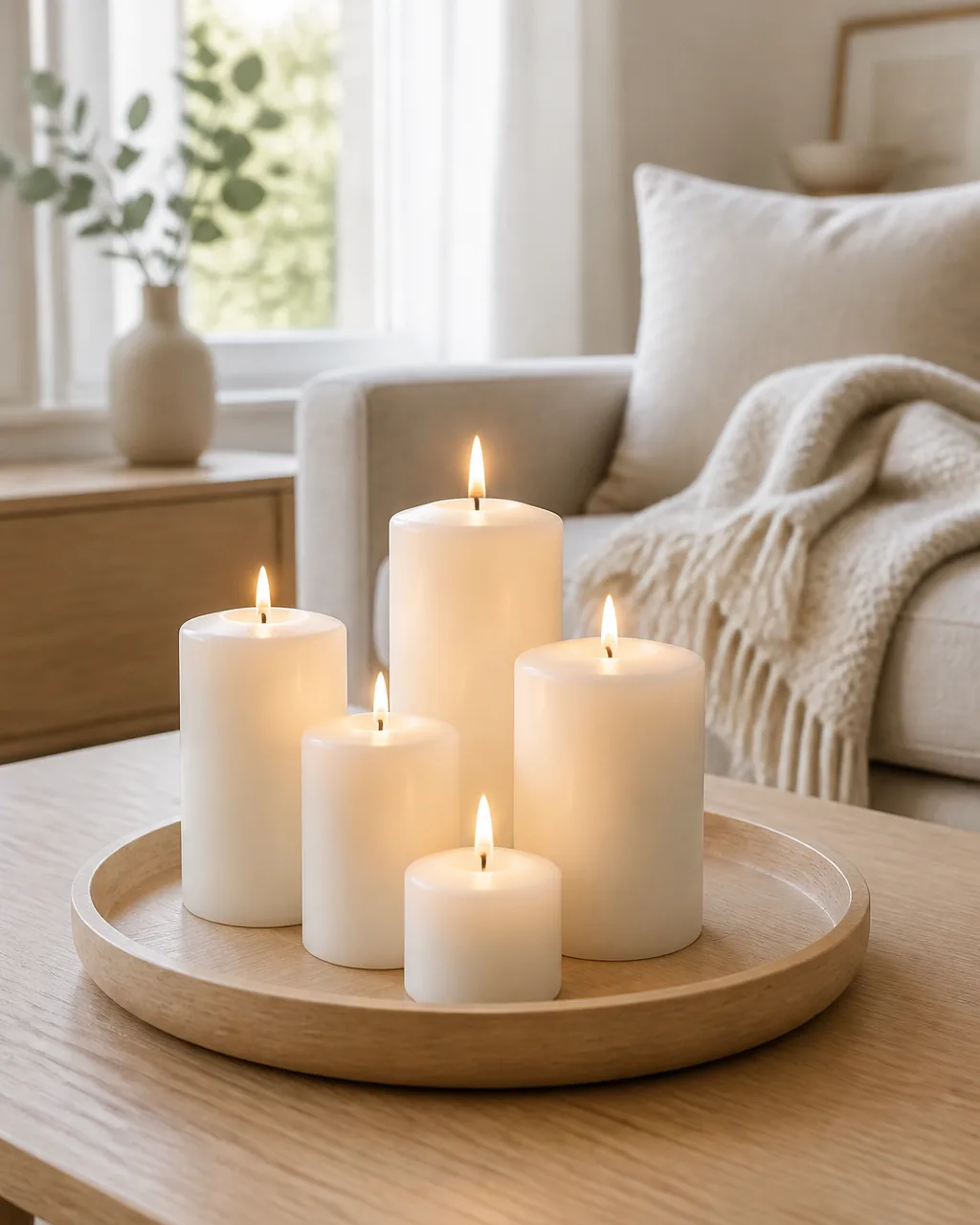
Once daylight fades early in winter, a single overhead fixture replaces it with flat, even light that has none of the warmth the room had an hour earlier. Candlelight fills that gap differently — it’s uneven and low, which is closer to what the room felt like in daylight than a ceiling fixture ever gets.
The cluster does more work than one candle would, because varying heights create the kind of layered glow a single flame can’t produce on its own. Treat it as a light source, not a centerpiece, and place it where you’ll actually see the light from where you sit.
- Cluster 3-5 candles of different heights on a metal or wood tray
- Choose unscented white or natural beeswax candles
- Place the cluster where it’s visible from the main seating spot
- Add a low-glow table lamp nearby for backup light
- Avoid colored or heavily scented candles that clash with the palette
One Black Metal Accent for Graphic Contrast Against the Pale Palette
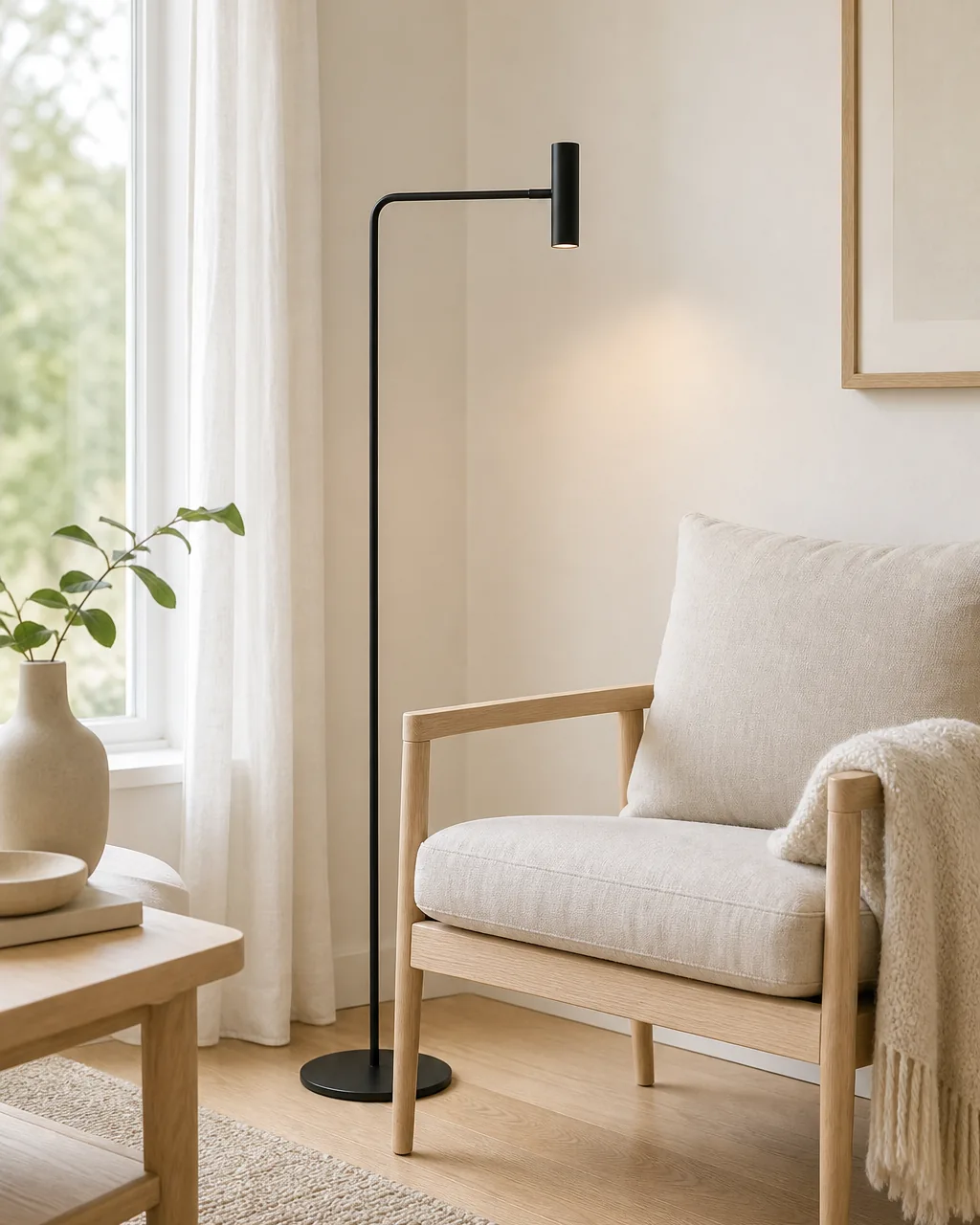
A room built entirely from pale wood and neutral textiles risks reading as flat instead of calm, because there’s nothing for the eye to land on first. One black metal piece breaks that — a thin, graphic silhouette against all that softness gives the room a single point of focus.
The discipline is in the word “one.” A second or third black piece stops reading as an accent and starts reading as a color scheme, which erases the contrast that made the first piece work in the first place.
- Pick one functional piece: floor lamp, shelf bracket, or table base
- Keep the silhouette thin and linear, not bulky
- Limit black accents to one or two pieces total in the room
- Avoid matte black appliances or large furniture in black
- Let the black piece sit where it draws the eye first
A Storage Ottoman That Works as Seating, Table, and Hidden Storage
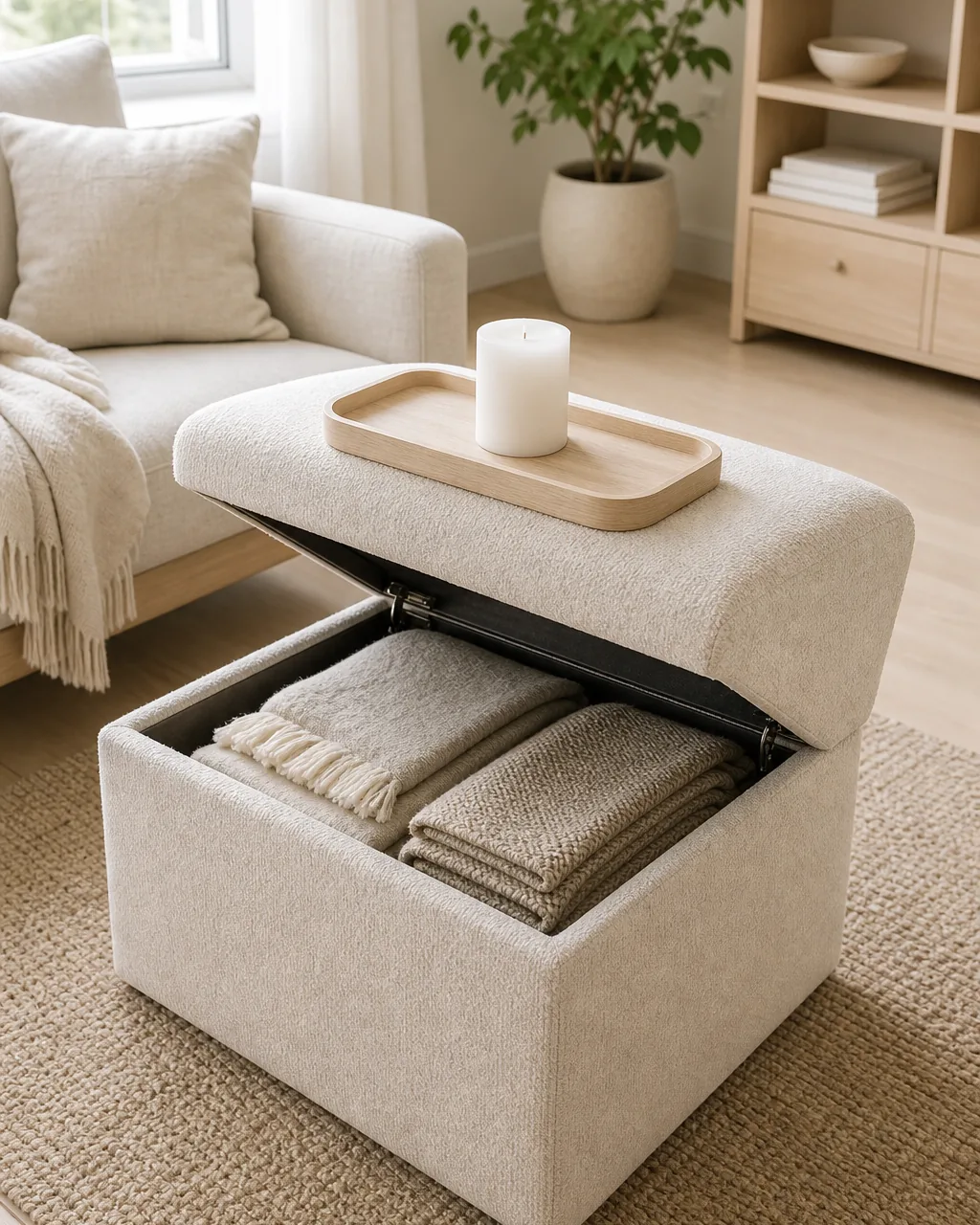
Scandinavian furniture earns its place by doing more than one job, and a purely decorative coffee table fails that test the moment you need extra seating or somewhere to hide the throws that pile up on the sofa. A storage ottoman covers all three needs in the same footprint.
The tray on top is what keeps it functioning as a table day to day, so the lid stays closed and the storage stays hidden until you actually need it. Without the tray, it reads as a stray piece of seating instead of the room’s central surface.
- Pick a lid or hinged-top ottoman sized for a tray on top
- Choose a natural boucle, linen, or leather cover
- Use the inside for throws, magazines, or off-season items
- Add a tray so it still functions as a table surface
- Size it to pull double duty as extra seating for guests
These four rules separate a Scandinavian room that’s genuinely built around daylight from one that’s just painted white and left empty.
Layered Textiles for Warmth Without Adding Visual Clutter
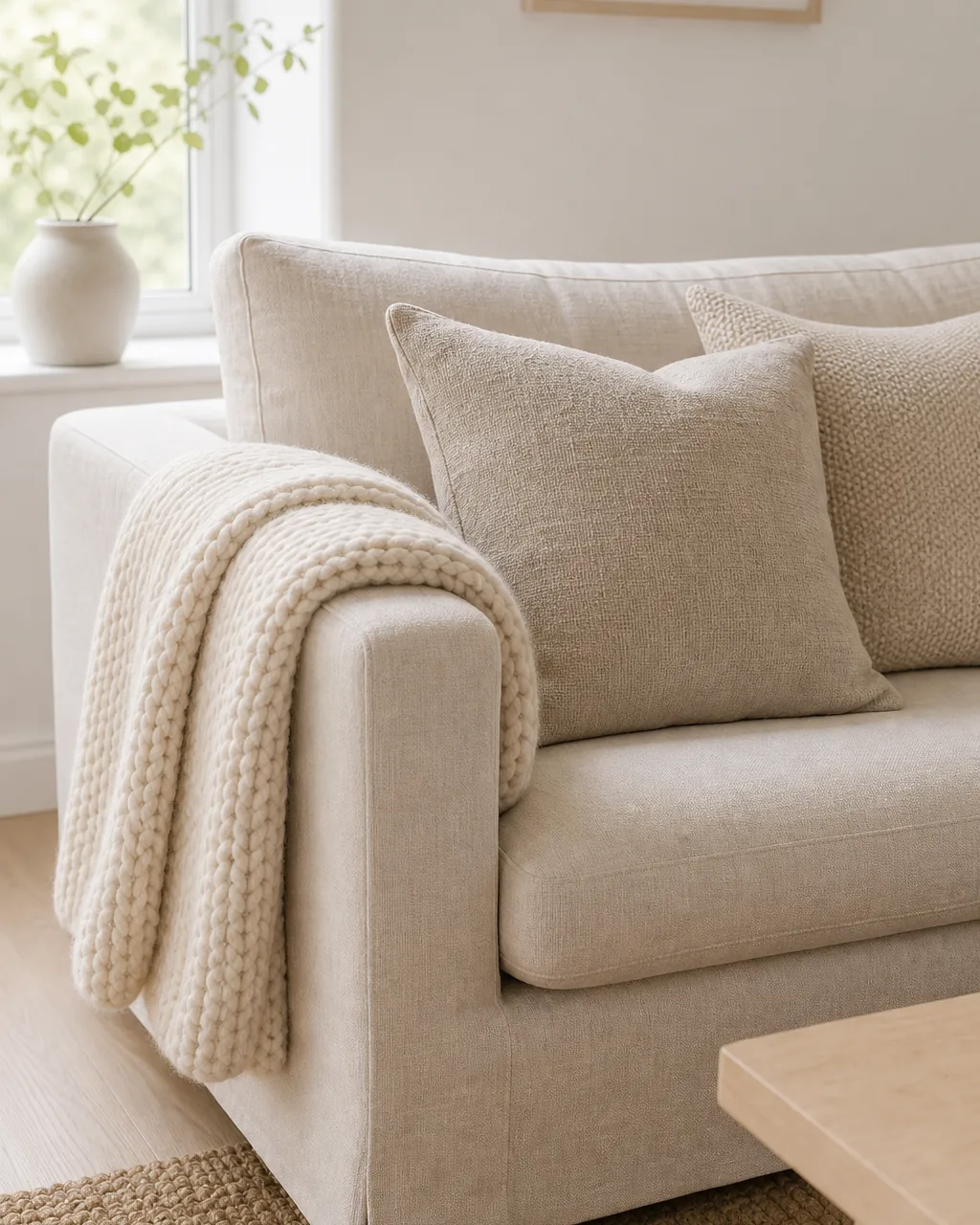
Warmth in a Scandinavian room comes from texture, not from adding more furniture or objects — a room can feel cozy and still be visually calm if the layers are fabric instead of clutter. Mixing two or three textures on the same sofa does that work without a single extra object entering the room.
The cap matters as much as the mix. Beyond two or three textures, or more than a couple of cushions per seat, the layering stops reading as warmth and starts reading as the exact clutter this idea is meant to avoid.
- Choose 2-3 textures max: knit, boucle, and linen
- Stick to natural or muted tones, not printed patterns
- Fold the throw once over the arm rather than draping it fully
- Limit cushions to 2-3 per sofa to avoid visual clutter
- Swap textures seasonally instead of adding new pieces
A Sheepskin Throw Over One Chair for Instant Texture
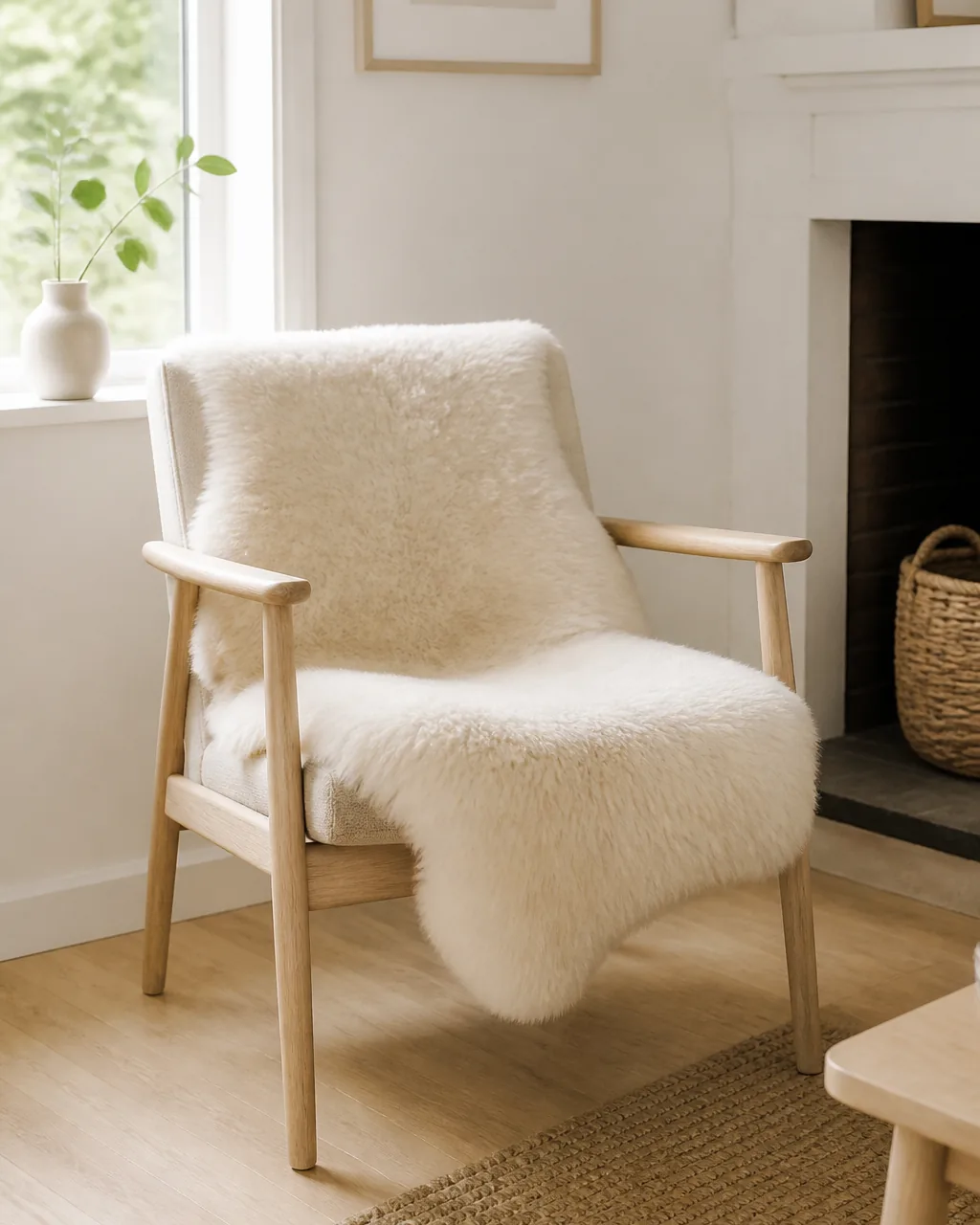
A full reupholster is the biggest lever for changing a chair’s texture, and also the most expensive and permanent one. A single sheepskin draped over one chair gets most of that same texture payoff — instant, tactile warmth — without touching the furniture underneath it.
Restraint is what keeps it looking intentional. One chair reads as a considered accent; sheepskin on every seat in the room starts to look like a theme rather than a detail, and loses the effect entirely.
- Choose one chair, not every seat, for the sheepskin
- Pick natural white or grey tone, not dyed colors
- Let it drape naturally rather than folding it flat
- Brush and air it out periodically to keep it looking fresh
- Skip faux versions with obvious synthetic sheen
Simple Wood Shelving With Room Left Between Objects
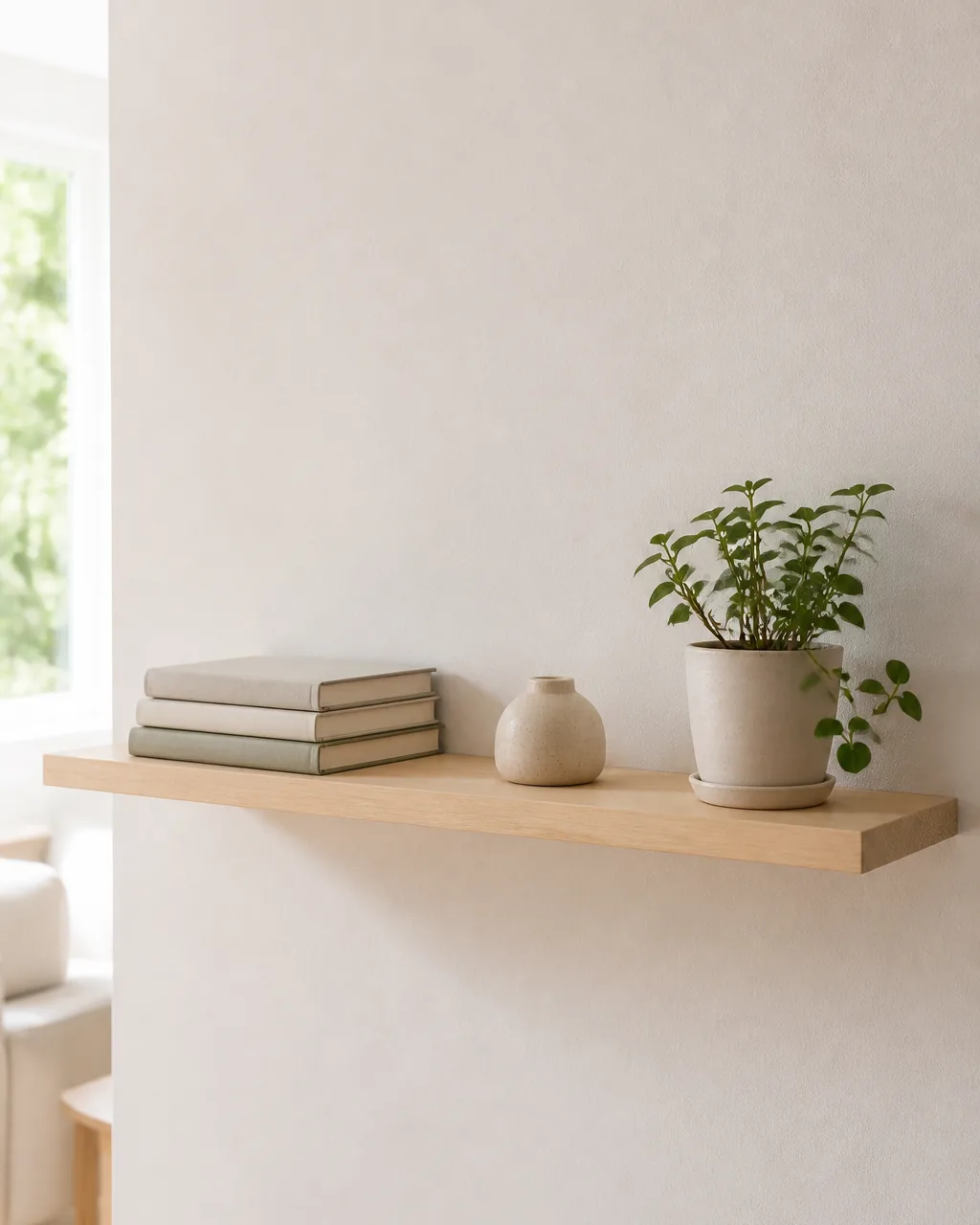
A shelf packed edge to edge reads as storage; the same shelf with visible gaps between object groups reads as curated. The negative space is doing as much work as the objects themselves, which is easy to lose sight of when the instinct is to fill every open inch.
Grouping in threes is what makes the gaps read as intentional instead of sparse. One book stack, one object, one small plant, each with breathing room around it, gives the eye clear stopping points instead of one long unbroken row.
- Use raw or pale-stained wood brackets and boards
- Group objects in threes with visible negative space between groups
- Mix one book stack, one object, one small plant per shelf
- Avoid filling every inch of shelf length
- Keep shelf depth shallow so items don’t get lost
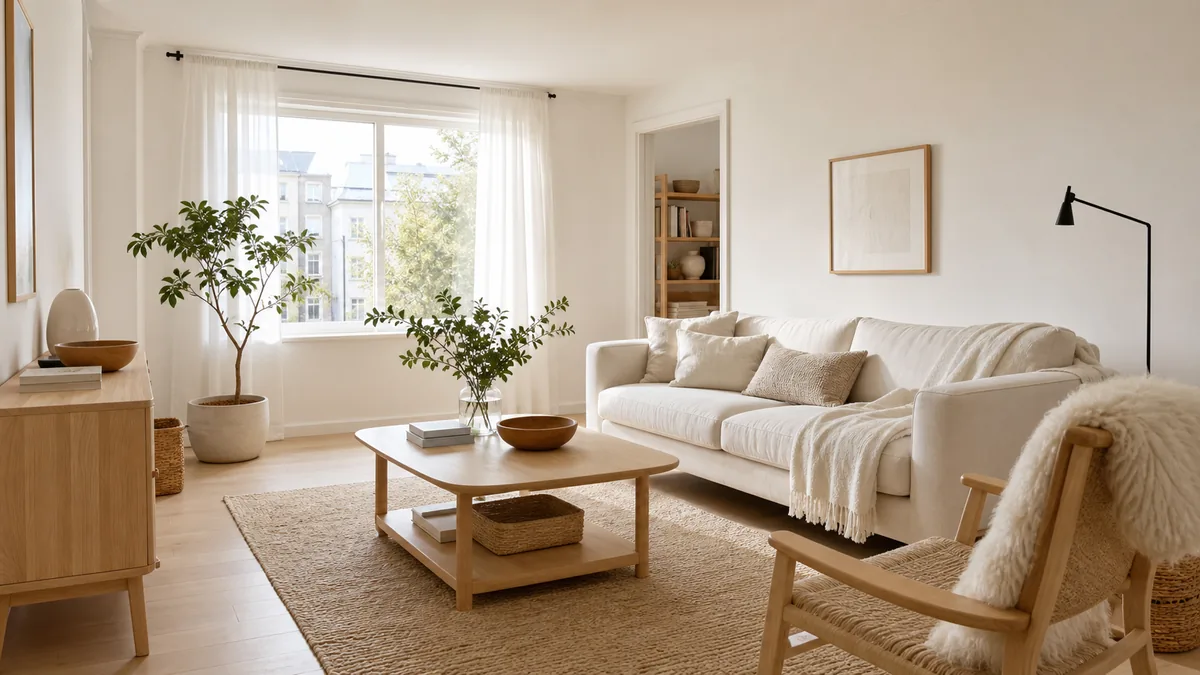
13 Scandinavian moves, one living room built around light instead of leftover space
- 1Pale Birch or Ash Wood Furniture Frames Instead of Dark WoodPale wood with a raw or oiled finish reflects daylight instead of absorbing it, turning the furniture itself into part of the room’s light source.
- 2A Large Mirror Angled to Double the Room’s Only Light SourceOne oversized mirror positioned straight across from the window catches daylight before it dies against the far wall and throws a second version of it back into the room.
- 3Sheer Linen Curtains That Filter Light Instead of Blocking ItSheer linen softens and spreads daylight across the room all day, instead of stopping it at the glass the way heavy drapery does.
- 4A Cluster of Candles for Hygge Light When the Sun Sets EarlyCandles at varying heights create the kind of layered, uneven glow a single overhead fixture can’t replicate once daylight fades.
- 5One Black Metal Accent for Graphic Contrast Against the Pale PaletteA single thin black piece gives an all-pale room one point of focus, without tipping into a second color scheme.
- 6A Storage Ottoman That Works as Seating, Table, and Hidden StorageOne hinged-top piece covers seating, a table surface, and hidden storage for throws, doing three jobs in the footprint of one.
- 7Layered Textiles for Warmth Without Adding Visual ClutterTwo or three textures on the sofa add warmth through fabric instead of through more furniture or objects entering the room.
- 8A Sheepskin Throw Over One Chair for Instant TextureA single sheepskin on one chair delivers most of the texture payoff of a full reupholster, without touching the furniture underneath.
- 9Simple Wood Shelving With Room Left Between ObjectsVisible gaps between grouped objects do as much work as the objects themselves, turning a shelf from storage into something curated.
- 10A Single Green Plant as the Room’s Only Organic NoteOne substantial plant reads as a deliberate organic note against pale wood and neutral fabric, where several small plants would compete for attention.
- 11A Woven Wool Rug in an Undyed Natural Tone Grounding the RoomAn undyed wool rug anchors the seating area without introducing a color that competes with the room’s pale, quiet palette.
- 12Thin Black Picture Frames Hung at Eye Level, Not in a GridA loose horizontal line of two or three thin frames reads as one considered gesture instead of a wall-sized gallery installation.
- 13A Multi-Functional Coffee Table With a Lower Storage ShelfAn open lower shelf keeps books and a basket in view instead of hiding function behind a solid tabletop with no storage.
styledhomenotes.com
A Single Green Plant as the Room’s Only Organic Note
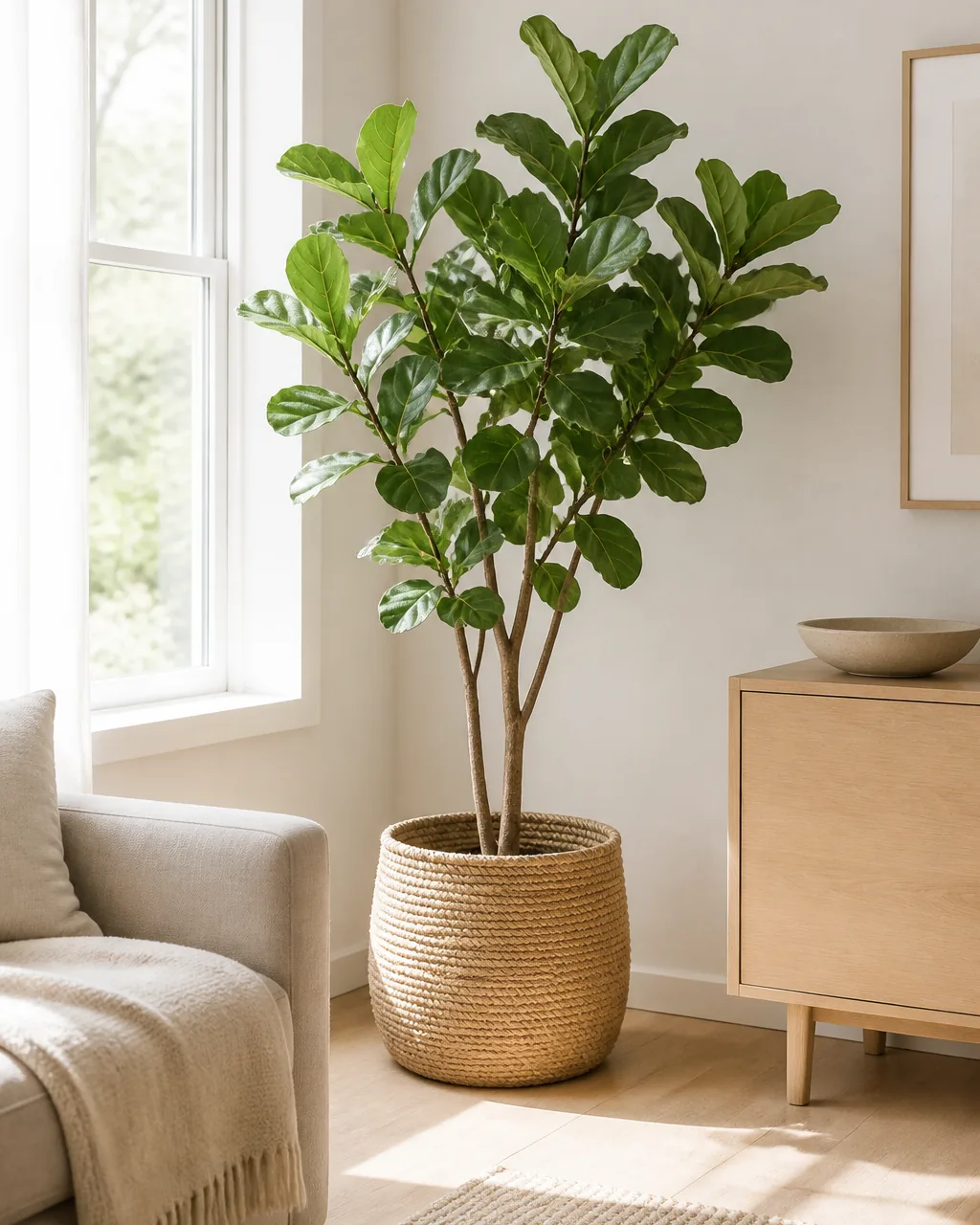
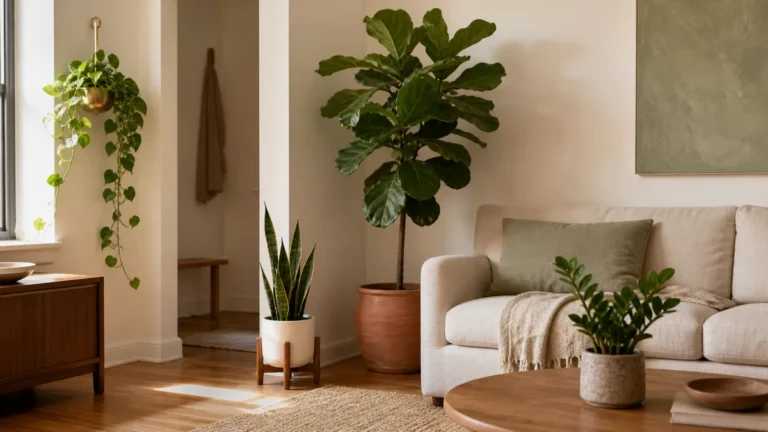
Several small plants scattered around a room compete with each other and with everything else for attention, which works against a palette built on restraint. One substantial plant does the opposite — it reads as a single deliberate organic note against all that pale wood and neutral fabric.
Light access decides whether this works long-term. A plant placed for looks but starved of light near the window will decline within a season, undermining the exact effect it was meant to create.
- Choose one larger floor plant over several small pots
- Pick a plain woven or terracotta planter, not patterned ceramic
- Place it near the window where it gets real light
- Skip faux plants if the real thing can survive the room’s light
- Resist adding a second large plant that competes for focus
A Woven Wool Rug in an Undyed Natural Tone Grounding the Room
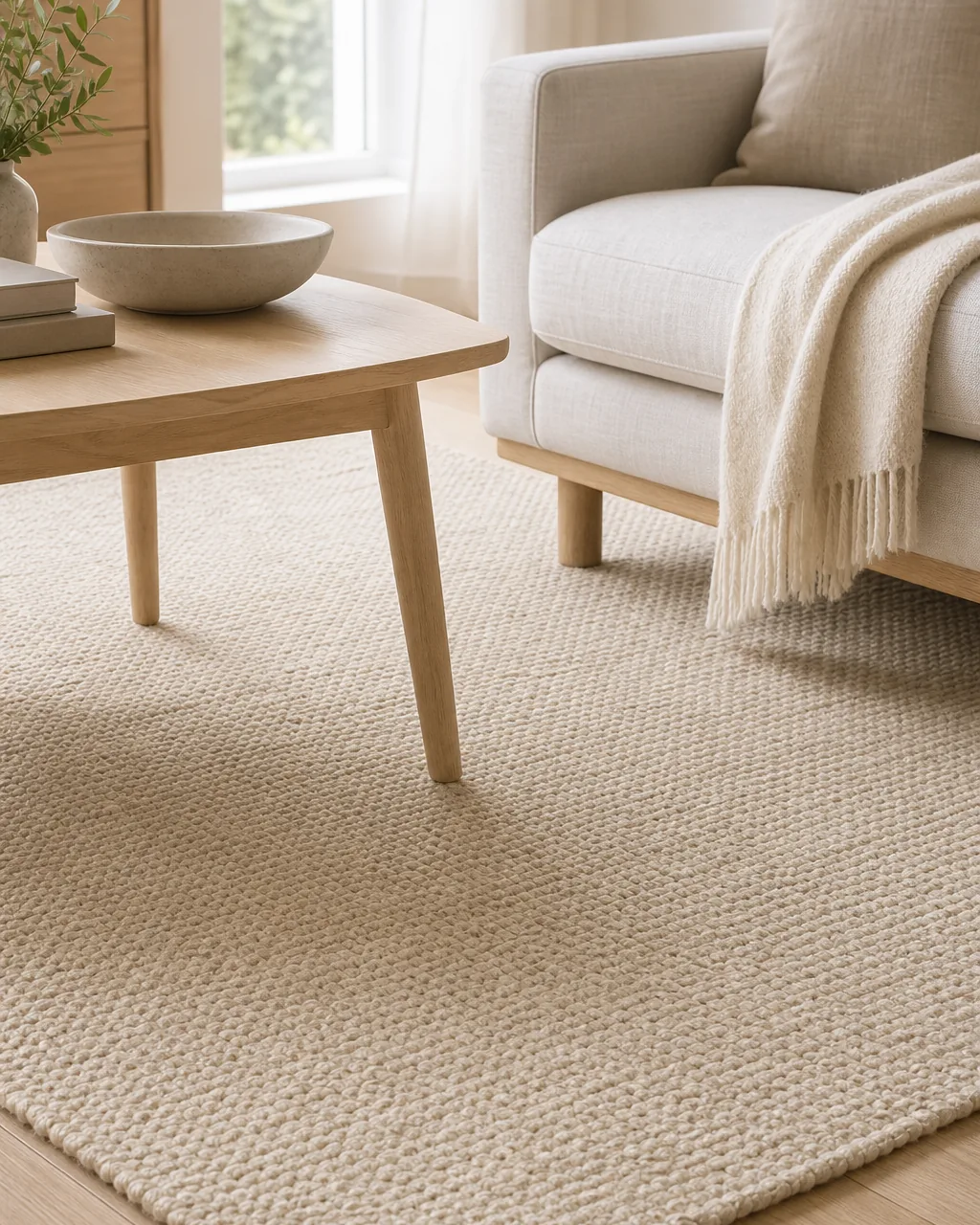
A patterned or brightly colored rug becomes the loudest thing in a room built on pale, quiet tones, which pulls focus away from the light-first logic everything else is following. An undyed wool rug grounds the seating area instead, without introducing a competing color.
Sizing decides whether it grounds the room or floats in the middle of it. A rug that only the coffee table sits on reads as too small; front legs of the major furniture pieces need to land on it for the room to feel anchored.
- Choose flatweave or low-pile wool in natural undyed tone
- Size the rug so front legs of major furniture sit on it
- Avoid bold geometric or bright-colored rug patterns
- Layer a smaller jute rug underneath for texture if the room allows
- Vacuum in the nap direction to keep the weave looking fresh
Thin Black Picture Frames Hung at Eye Level, Not in a Grid
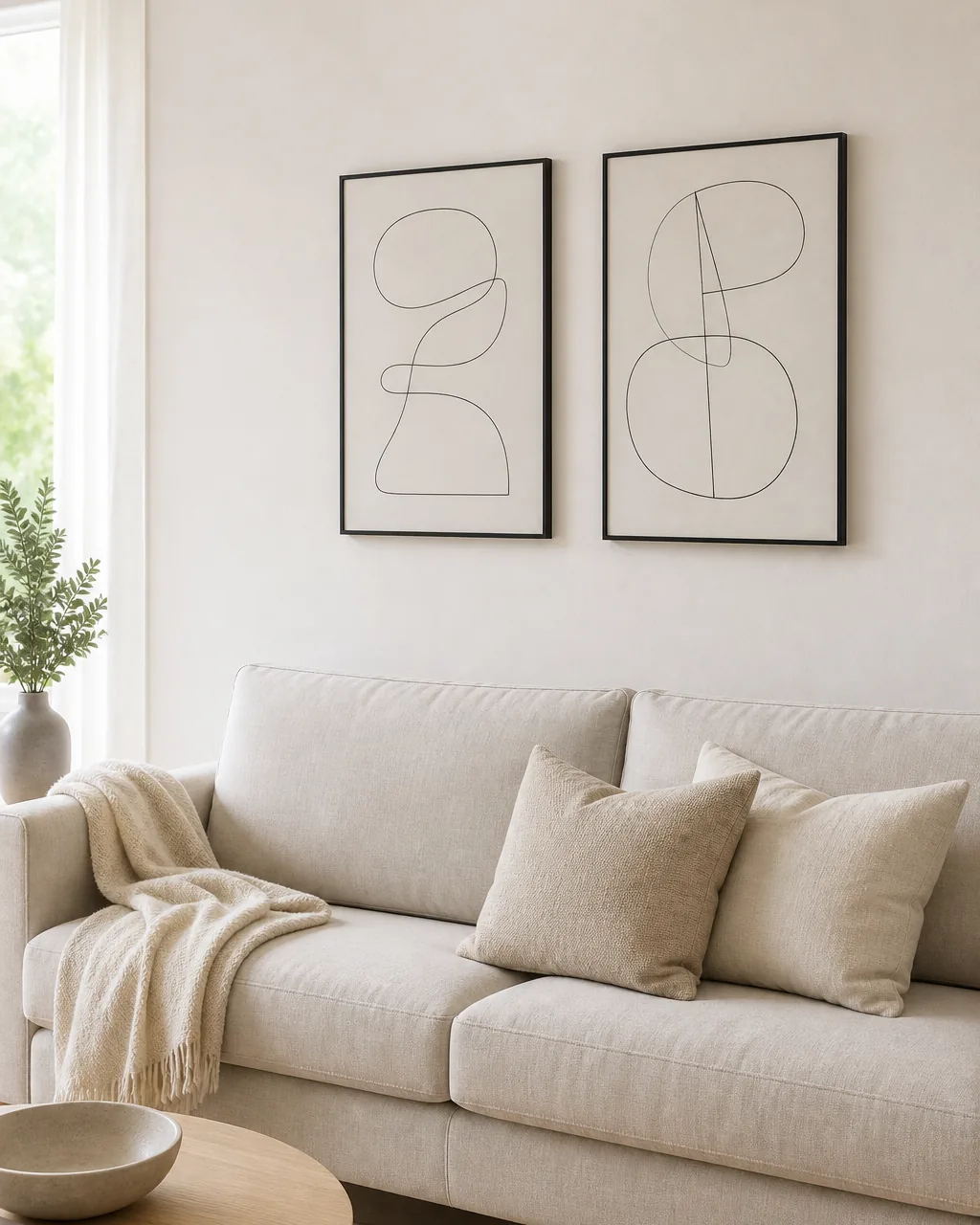
A dense gallery grid takes over a wall and demands attention the rest of a Scandinavian room is deliberately not asking for. Two or three thin black frames in a loose horizontal line does the opposite — it reads as one considered gesture instead of a wall-sized installation.
Eye level from the main seating spot is the anchor point, not the center of the wall itself. Hang the line where you’ll actually look at it while sitting down, and leave enough open wall around it that the frames still read as intentional rather than crowded.
- Use thin black metal frames, not thick wood mats
- Hang 2-3 pieces max in a single loose line, not a grid
- Center the line at eye level from the main seating spot
- Choose simple line art or black-and-white photography
- Leave generous wall space around the frames
A Multi-Functional Coffee Table With a Lower Storage Shelf
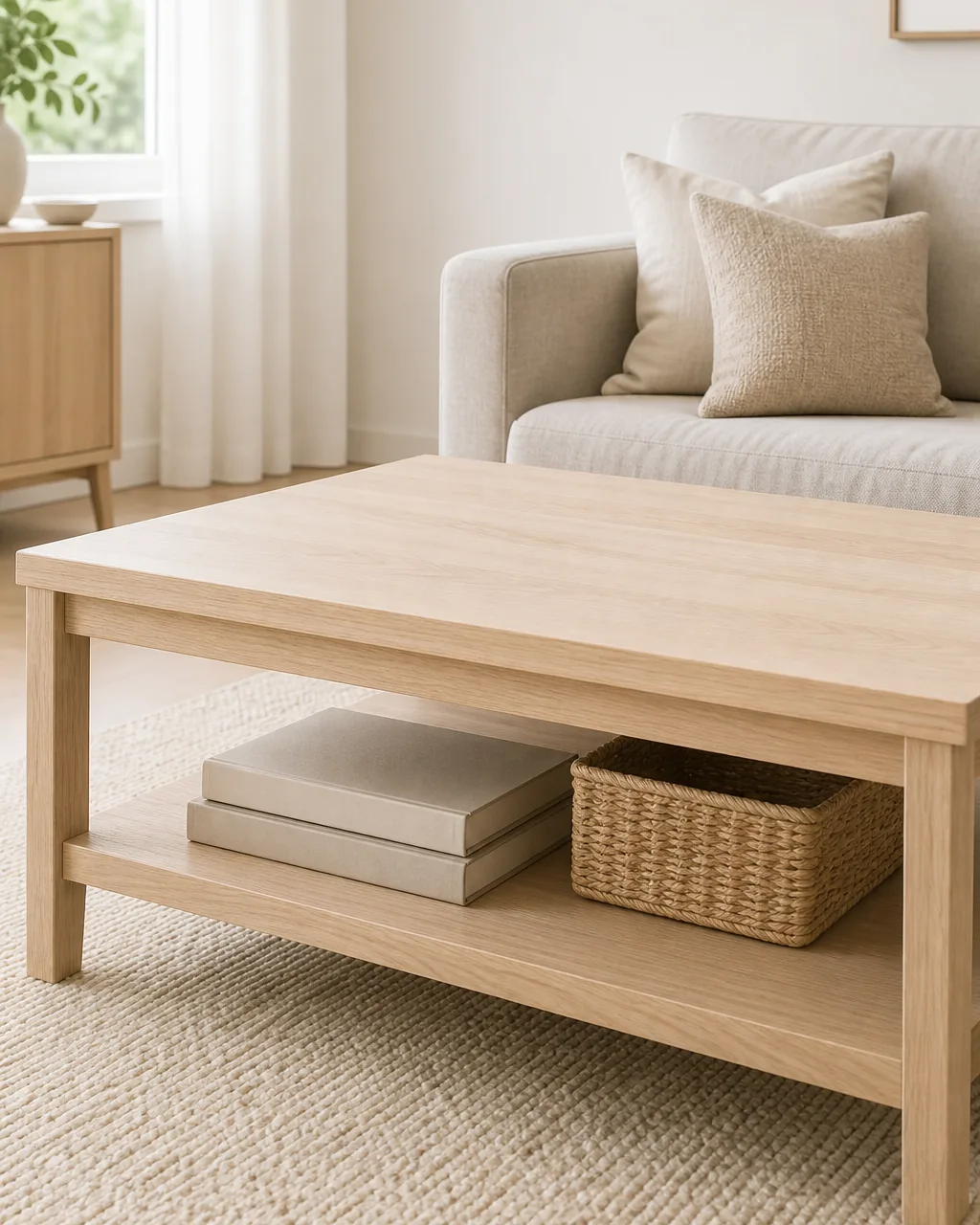
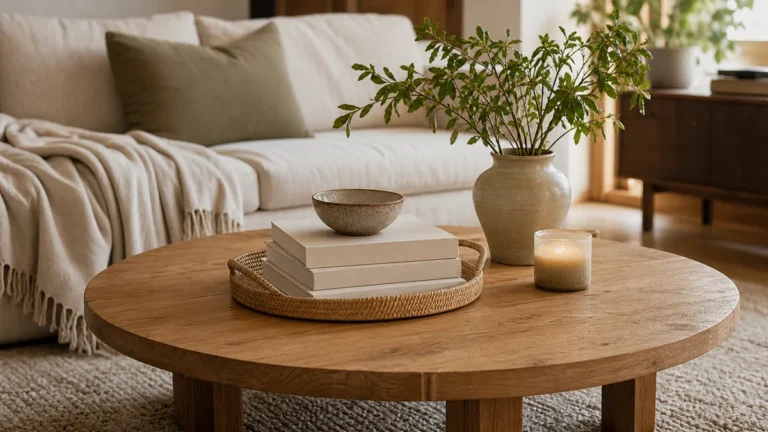
A solid coffee table with no storage hides its function behind a single flat surface, which wastes the space underneath entirely. An open lower shelf keeps that space in play — books and a basket sit in view instead of behind a closed panel, and the table earns the same “does more than one job” test as the rest of the room.
Restraint on the shelf itself is what keeps it from tipping into clutter. A few stacked books and one basket read as styled; anything more starts to compete with the tabletop above it for attention.
- Pick pale wood or a wood-and-black-metal frame
- Use the lower shelf for 2-3 stacked books and one basket
- Keep the tabletop mostly clear for daily use
- Avoid glass tops that show every fingerprint and reflection
- Size the table so there’s still walking room around it

Nora writes about small, livable rooms for real apartments. Her own living room gets barely three hours of direct winter light through one east-facing window, run on these same moves — pale birch furniture, a mirror angled straight at the glass, and a single black floor lamp that keeps the room from reading as flat. Every idea in this guide gets tested against a room that’s actually short on daylight, not a styled showroom.
Nora Ellis edits Styled Home Notes. Visit the Nora Ellis author page. More from Nora: modern living room ideas, minimalist living room ideas, farmhouse living room ideas.