12 Living Room Window Decor Ideas That Do More Than Hang a Curtain
Living room windows carry a lot of decorating weight at once — light, privacy, and the view the whole seating group faces every day. Most rooms settle for one pair of curtains and call it done.
Treating the window as its own design zone, with its own hardware, layering, and shading decisions, changes how the whole wall reads. These 12 ideas go past the single curtain panel.
Not a shopping list — a decision for each part of the window. Start with whatever's bothering you most.
- 1Layer a Sheer Panel Behind Solid Drapery
- 2Swap the Thin Rod for an Oversized Architectural One
- 3Add a Woven Roman Shade Under Floor-Length Drapery
- 4Build a Window Seat With a Fitted Cushion
- 5Hang Café Curtains on the Lower Half Only
- 6Let a Single Woven Shade Be the Only Treatment
- 7Build Storage Into the Window Seat
- 8Add Frosted Window Film to the Lower Panes Only
- 9Hang a Single Wide Panel to One Side
- 10Turn the Windowsill Into a Plant Shelf
- 11Install Wood Plantation Shutters
- 12Add a Valance or Cornice Box
1. Layer a Sheer Panel Behind Solid Drapery
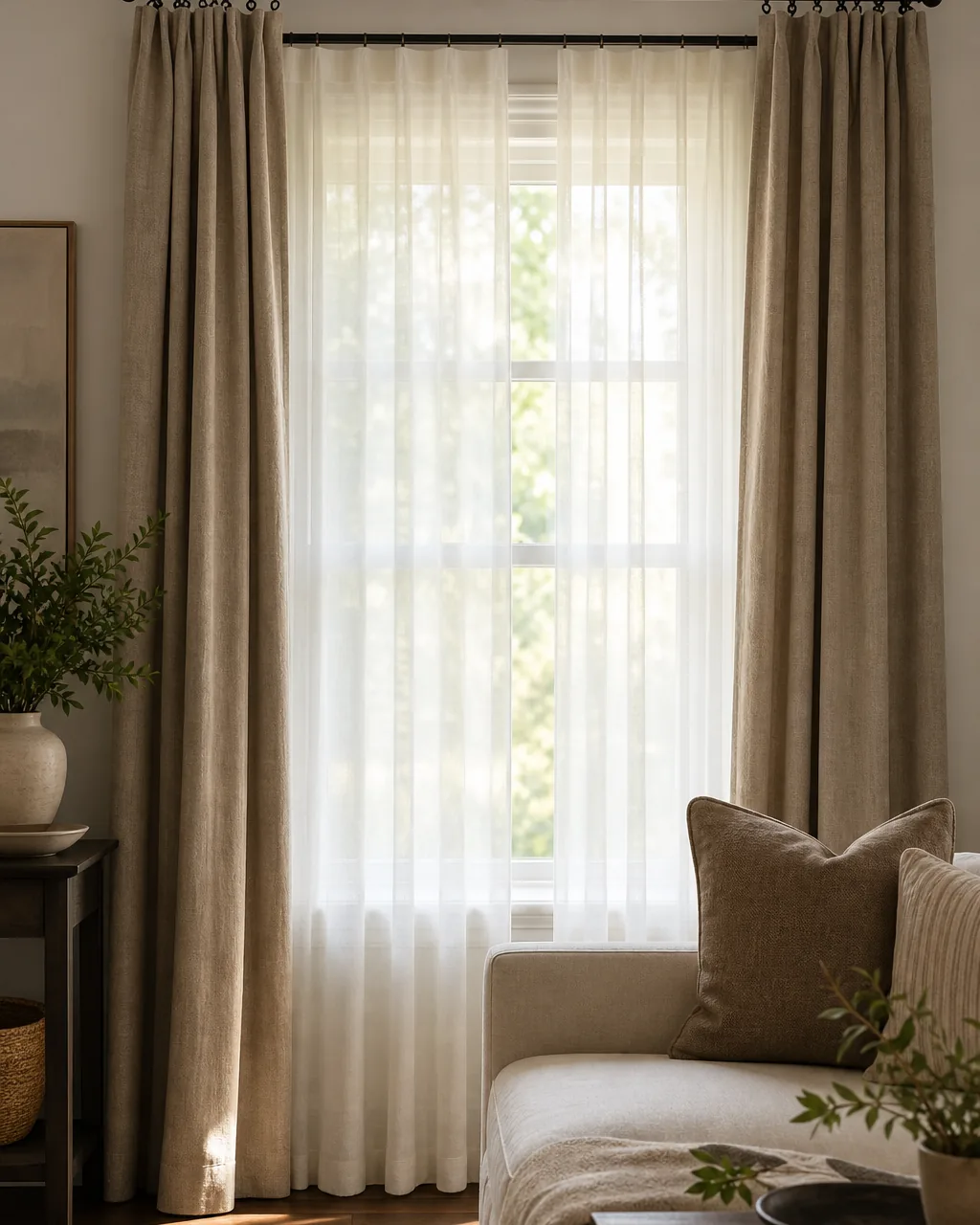
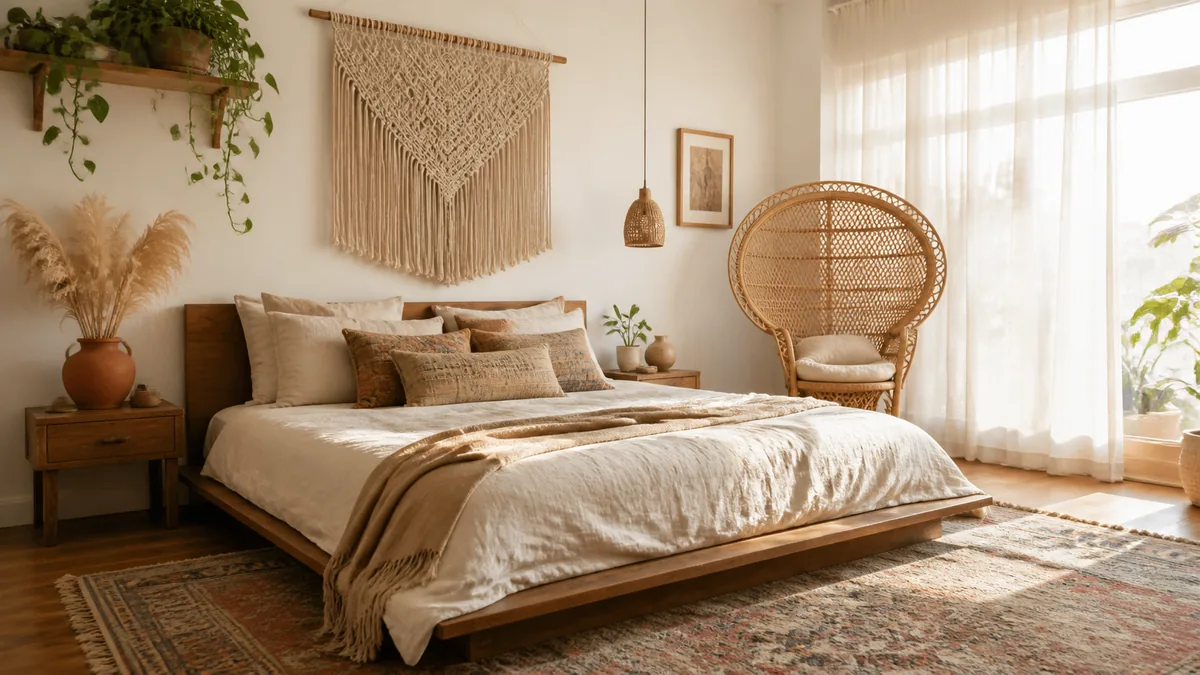
Hang a lightweight sheer panel on an inner rod, tucked behind heavier solid-color drapery on an outer rod. Close the sheer alone during the day for privacy and diffused light, then pull both closed at night. The two-rod setup is the lever — most living rooms only budget for one.
2. Swap the Thin Curtain Rod for an Oversized Architectural One
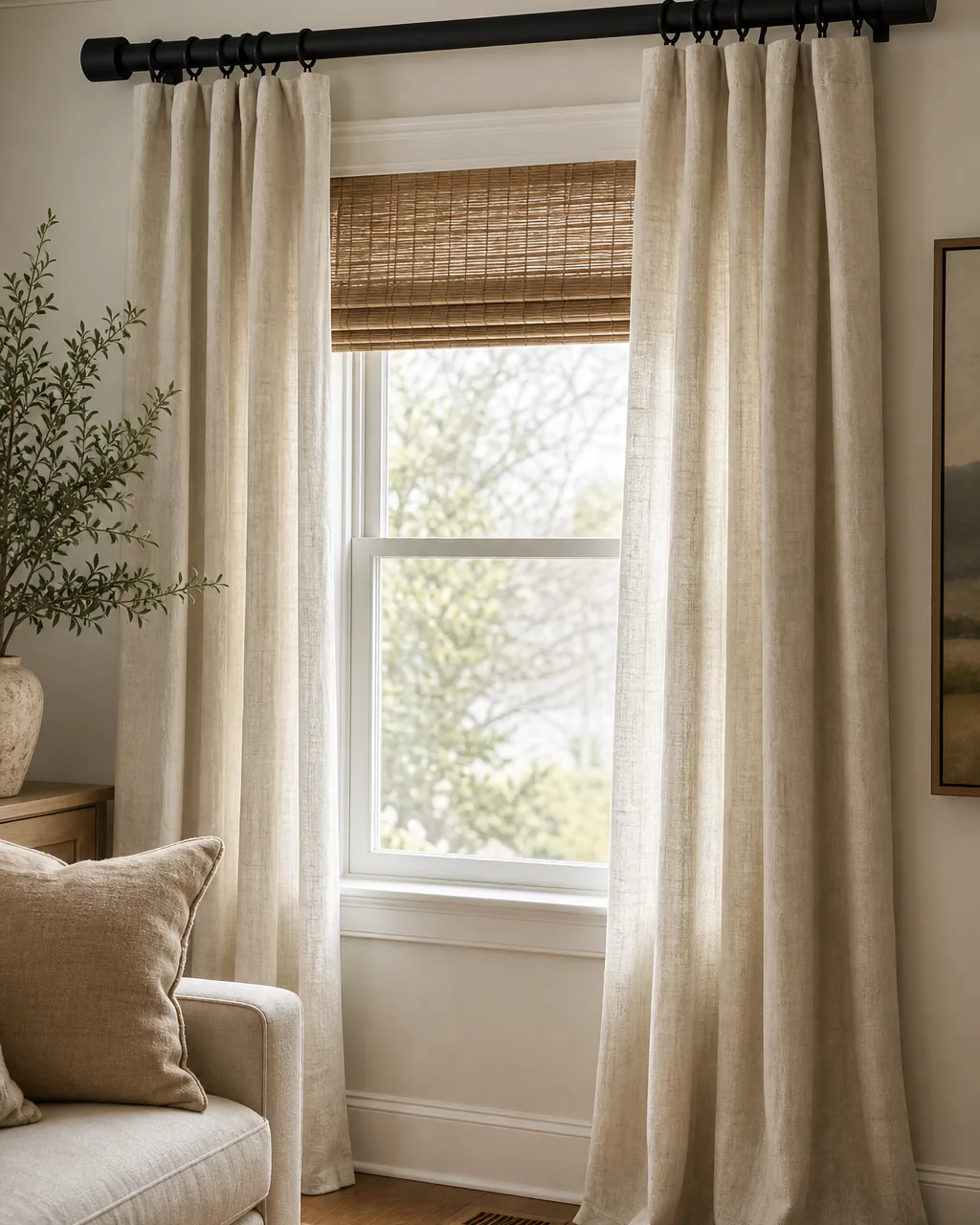
A slim wire rod disappears and reads cheap the moment anyone looks up. A rod an inch and a half or thicker, in matte black, brass, or wood with a real finial, becomes part of the room's hardware story instead of just a functional bar holding fabric.
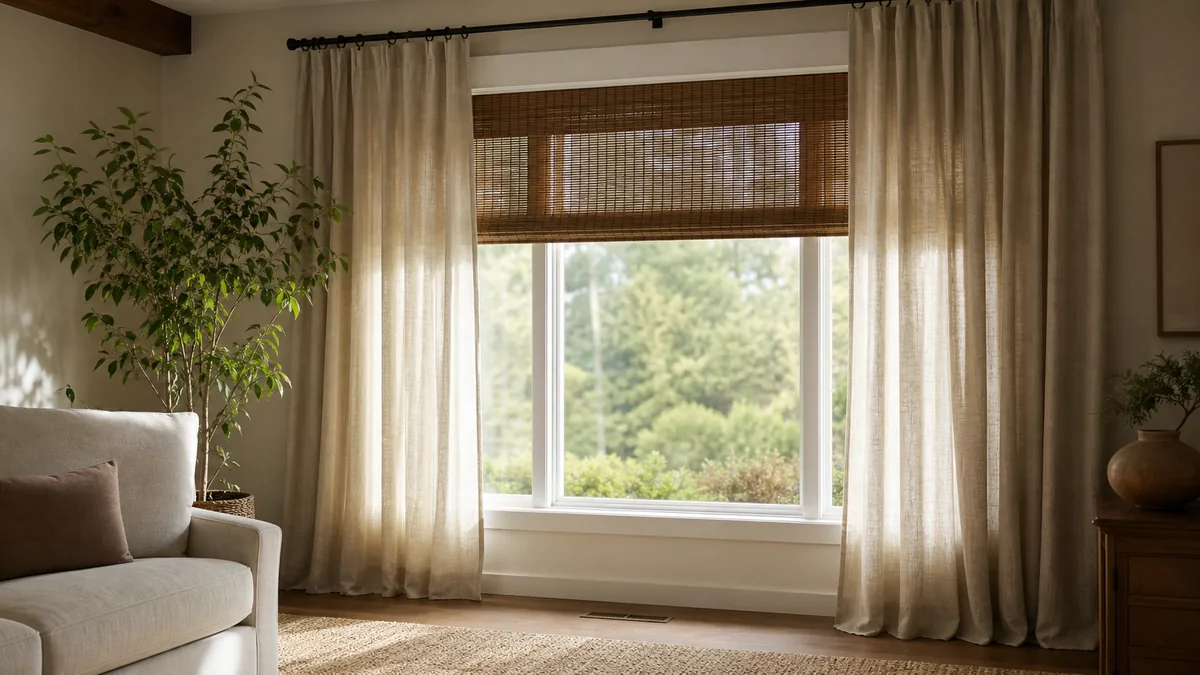
3. Add a Woven Roman Shade Under Floor-Length Drapery
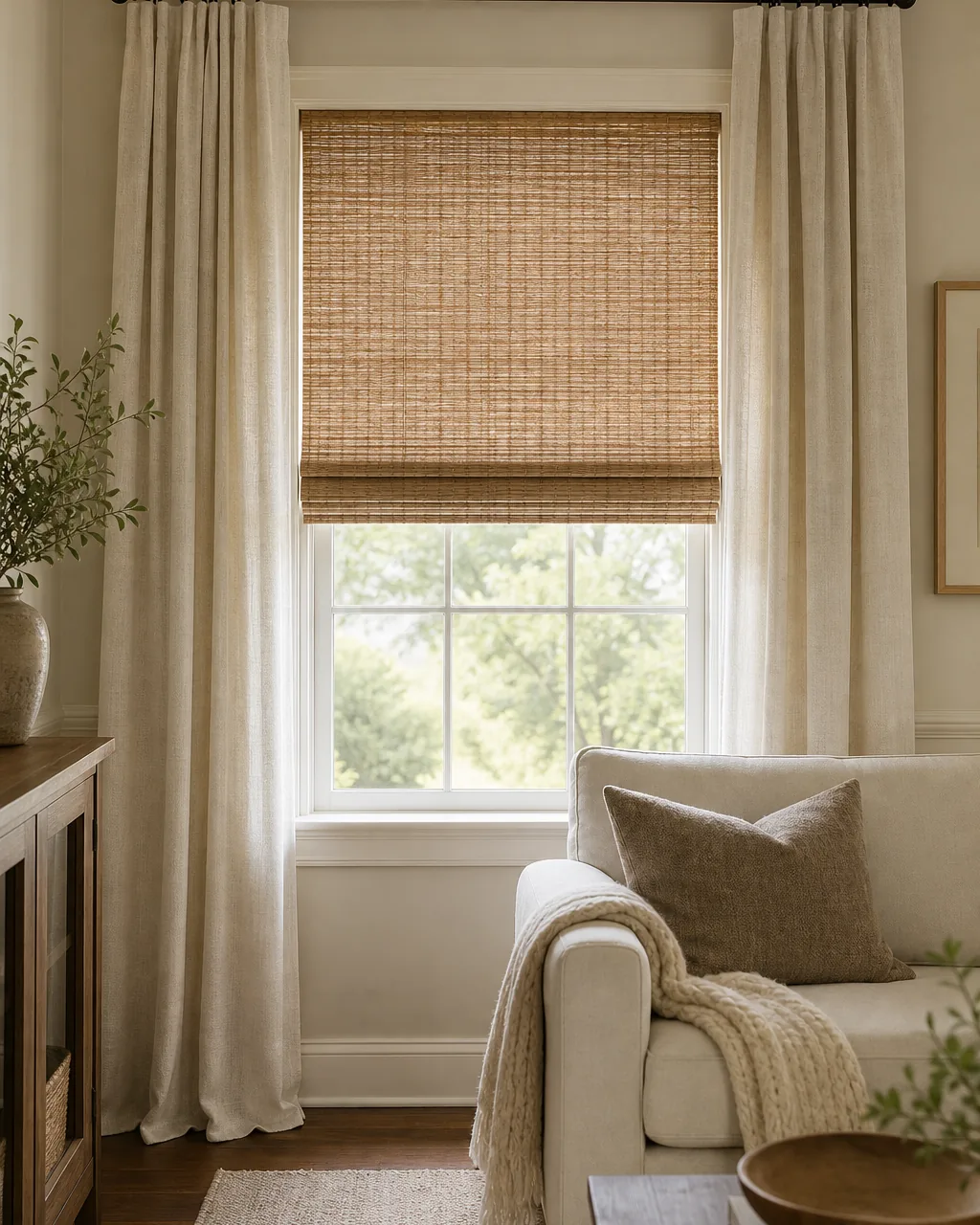
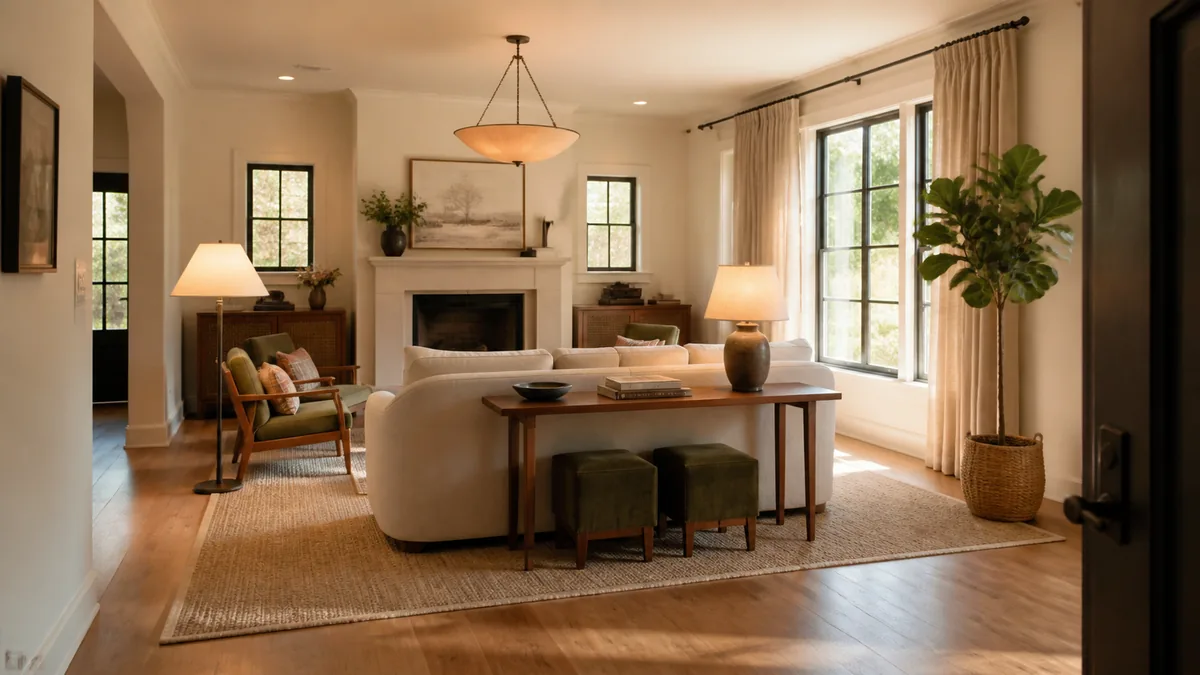
Mount a bamboo or woven-grass Roman shade inside the window frame, then hang floor-length drapery panels outside it on a separate rod. The shade handles daily light control; the drapery stays open as a soft frame, adding texture without doubling up on heavy fabric.
A bare window, a privacy problem, and an unused sill are three different problems with three different starting points.
4. Build a Window Seat With a Fitted Cushion and Lumbar Pillows
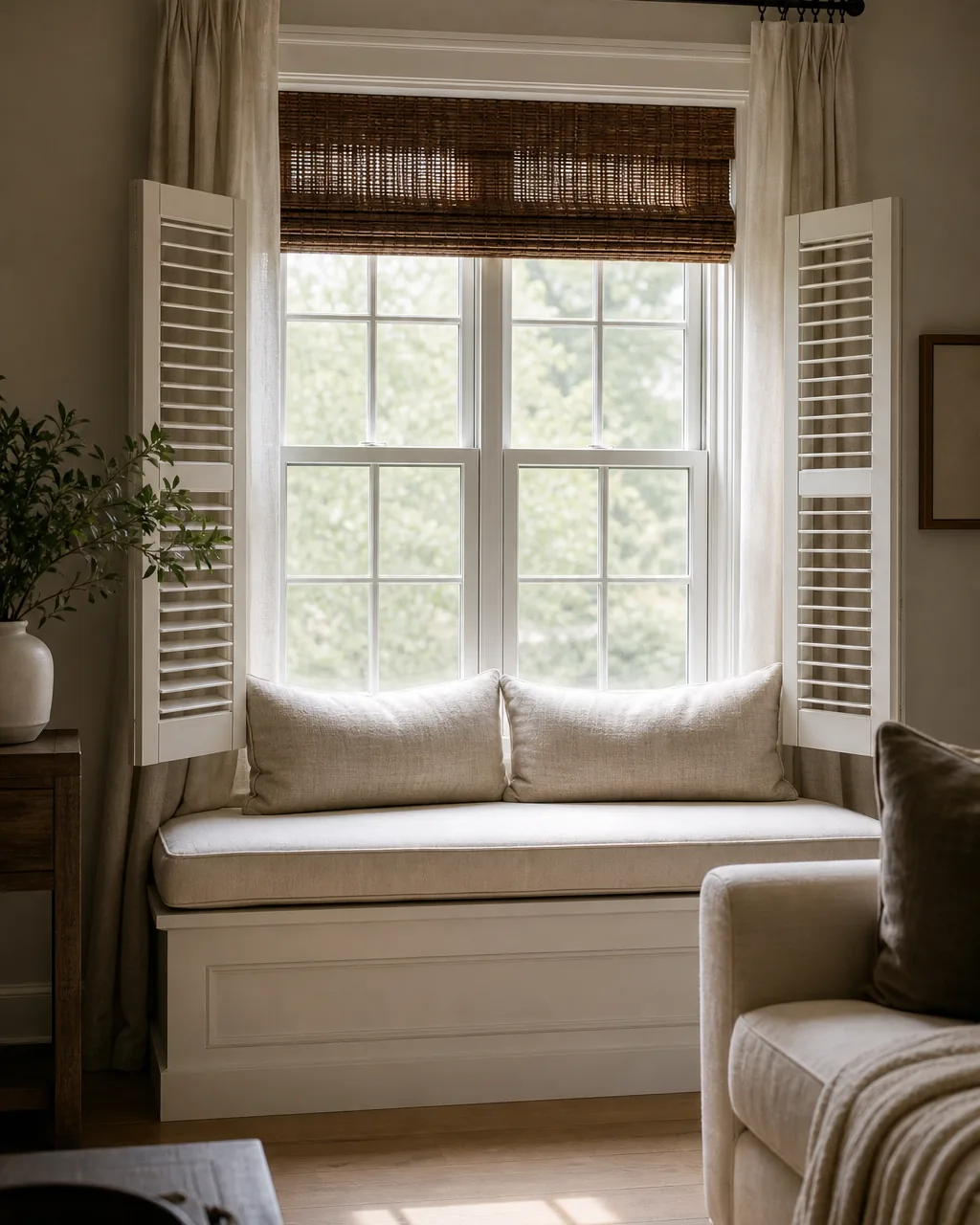
A deep sill or built-in ledge becomes a seat with a foam cushion cut to fit and two or three lumbar pillows leaned against the glass. It turns a pass-through wall into a spot someone actually sits, and it borrows almost no floor space from the rest of the room.
5. Hang Café Curtains on the Lower Half Only
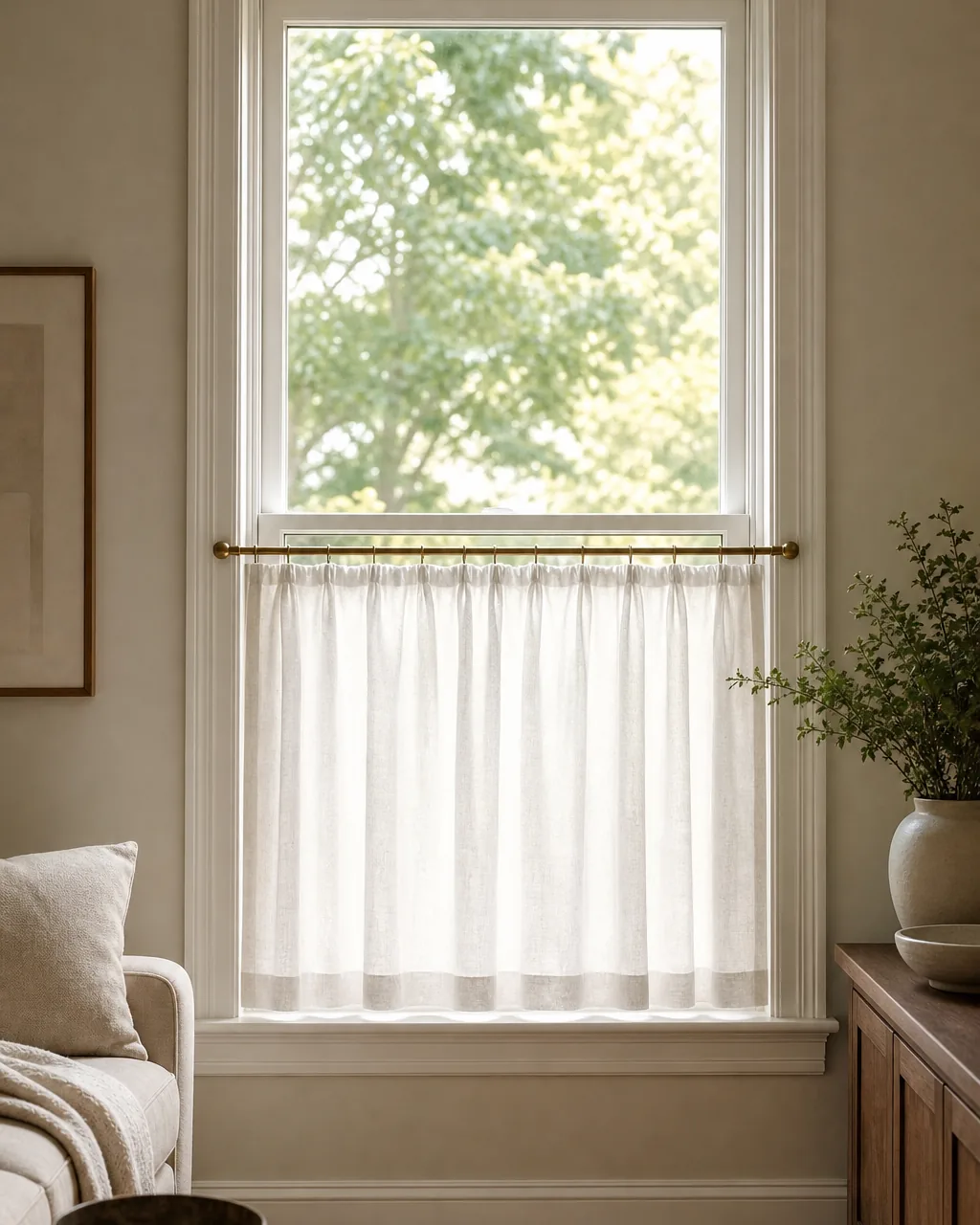
Mount a short rod at the window's midpoint and hang a half-length curtain that covers only the bottom sash. It blocks sightlines from the street or a neighboring unit while leaving the top half of the window open for light, useful for street-facing living rooms that don't want full coverage.
6. Let a Single Woven Shade Be the Only Window Treatment
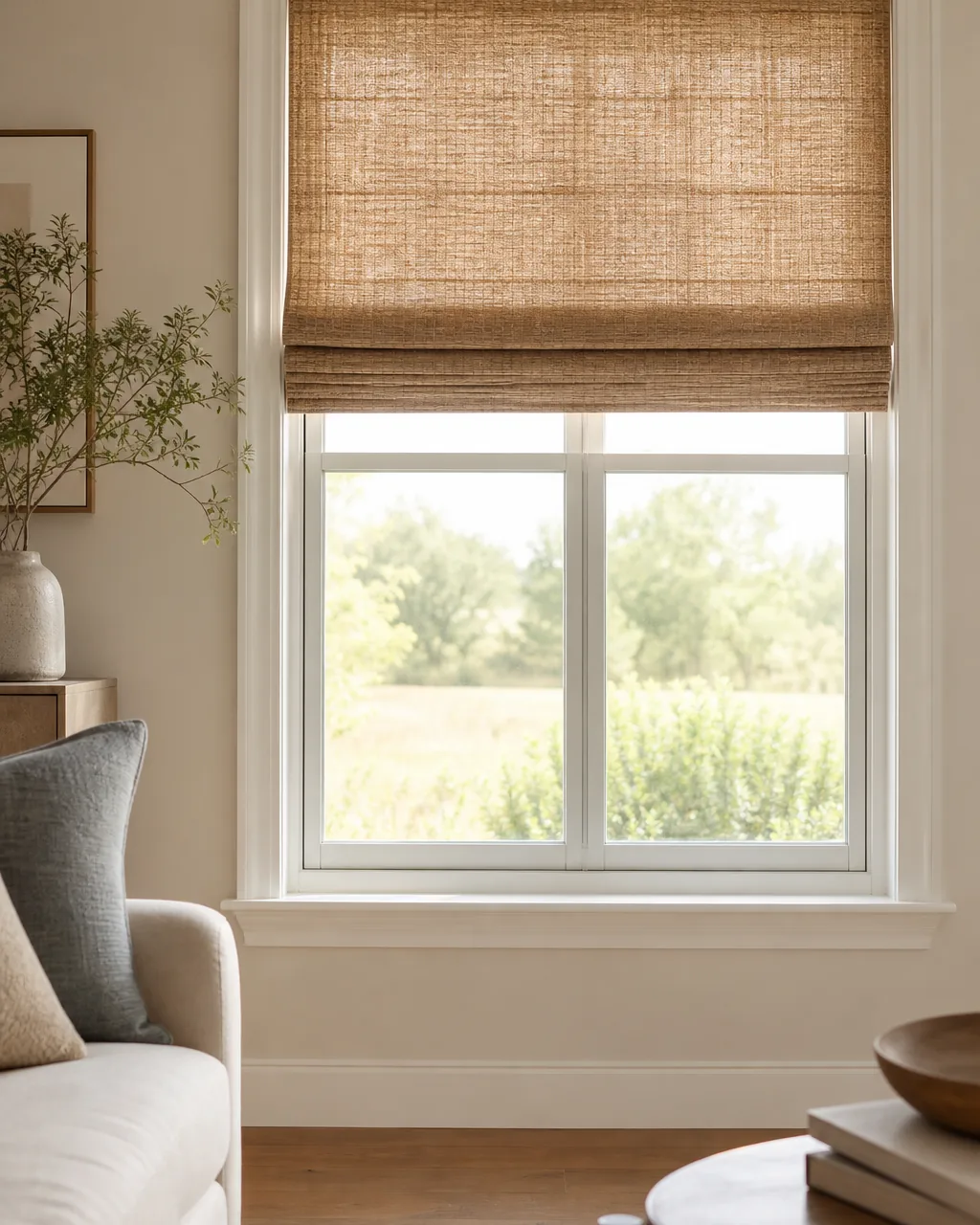
In a pared-back room, skip drapery panels entirely and let one woven or fabric Roman shade be the only window treatment. It keeps the wall line clean and reads more architectural than decorative, without losing the texture a bare window would leave behind.
These four rules separate a window treated as part of the room's design from one that's just functional fabric on a rod.
7. Build Storage Into the Window Seat
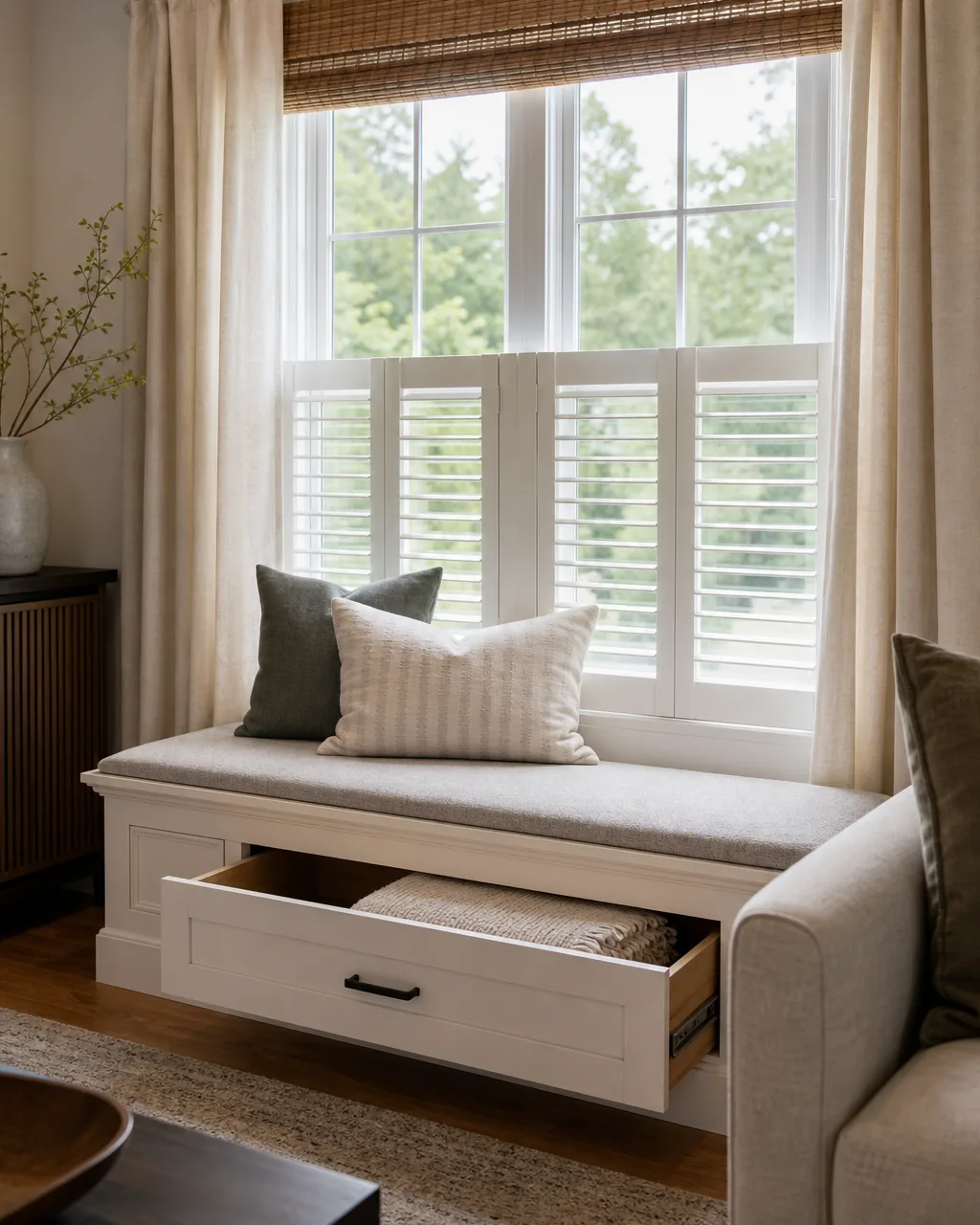
Where the sill drop allows it, build or buy a bench with a hinged lid or pull-out drawers underneath the cushion. Throw blankets, off-season pillows, or board games live under the seat instead of taking up a separate piece of furniture elsewhere in the room.
8. Add Frosted Window Film to the Lower Panes Only
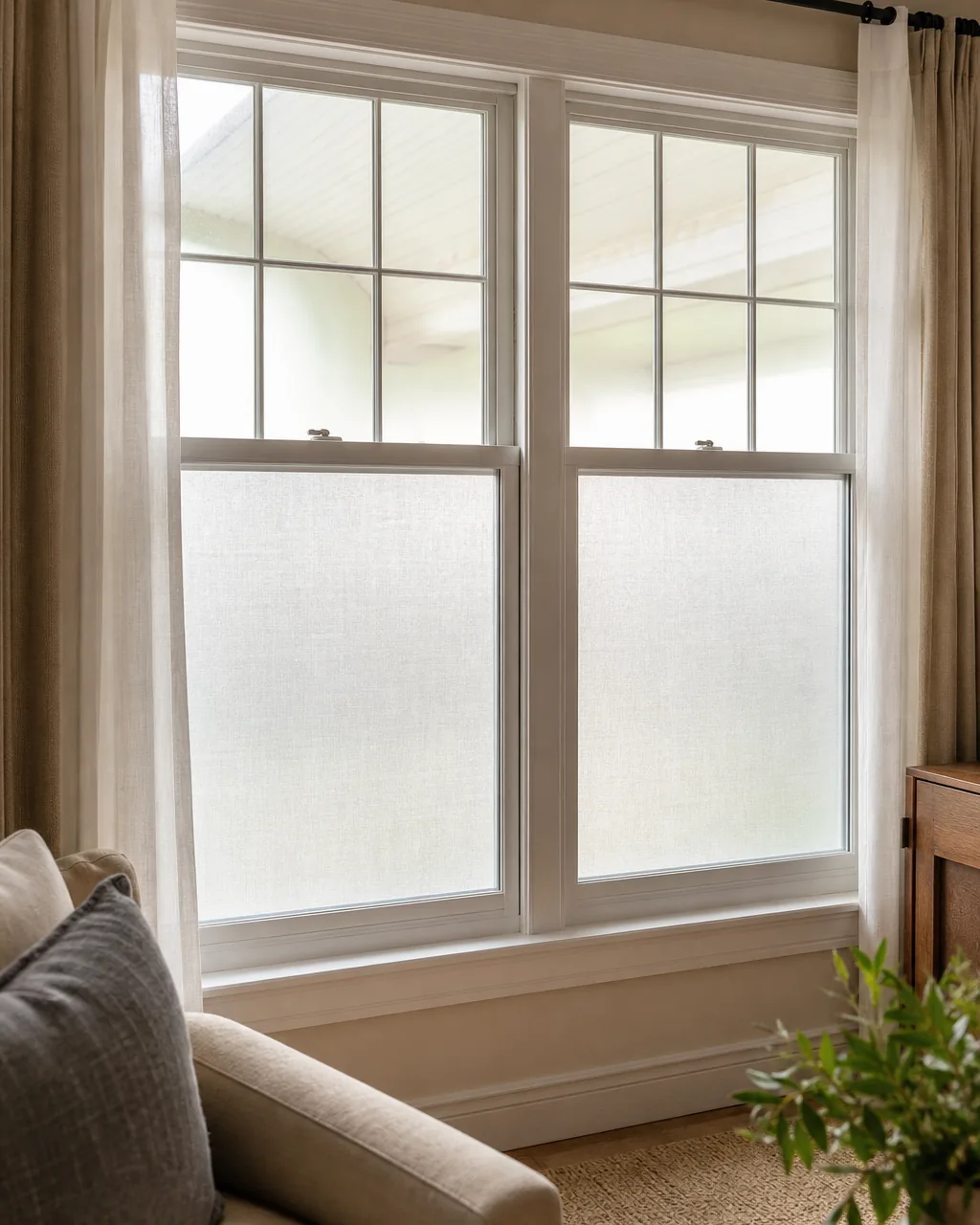
On a ground-floor or street-facing window, apply a frosted, linen-texture, or geometric static-cling film to the lower panes only. Light still comes through the top; the bottom stays private, and there's no fabric to close, open, or launder.
12 living room window decor ideas that do more than hang a curtain
- 1Layer a Sheer Panel Behind Solid DraperyClose the sheer alone by day, pull both closed at night.
- 2Swap the Thin Rod for an Oversized Architectural OneA thicker rod with a real finial becomes part of the hardware story.
- 3Add a Woven Roman Shade Under Floor-Length DraperyThe shade handles light control; the drapery stays open as a soft frame.
- 4Build a Window Seat With a Fitted CushionTurns a pass-through wall into a spot someone actually sits.
- 5Hang Café Curtains on the Lower Half OnlyBlocks sightlines while leaving the top half open to light.
- 6Let a Single Woven Shade Be the Only TreatmentKeeps the wall line clean and reads architectural, not decorative.
- 7Build Storage Into the Window SeatA drawer or hinged lid holds blankets without extra furniture.
- 8Add Frosted Window Film to the Lower Panes OnlyPrivacy on the bottom, light still coming through the top.
- 9Hang a Single Wide Panel to One SideReads as an asymmetric, editorial gesture instead of a standard pair.
- 10Turn the Windowsill Into a Plant ShelfSoftens the hard edge of the glass with something living.
- 11Install Wood Plantation ShuttersReads as a built-in feature with tilting light control.
- 12Add a Valance or Cornice BoxHides the hardware and finishes the top edge.
styledhomenotes.com
9. Hang a Single Wide Panel to One Side Instead of a Symmetric Pair
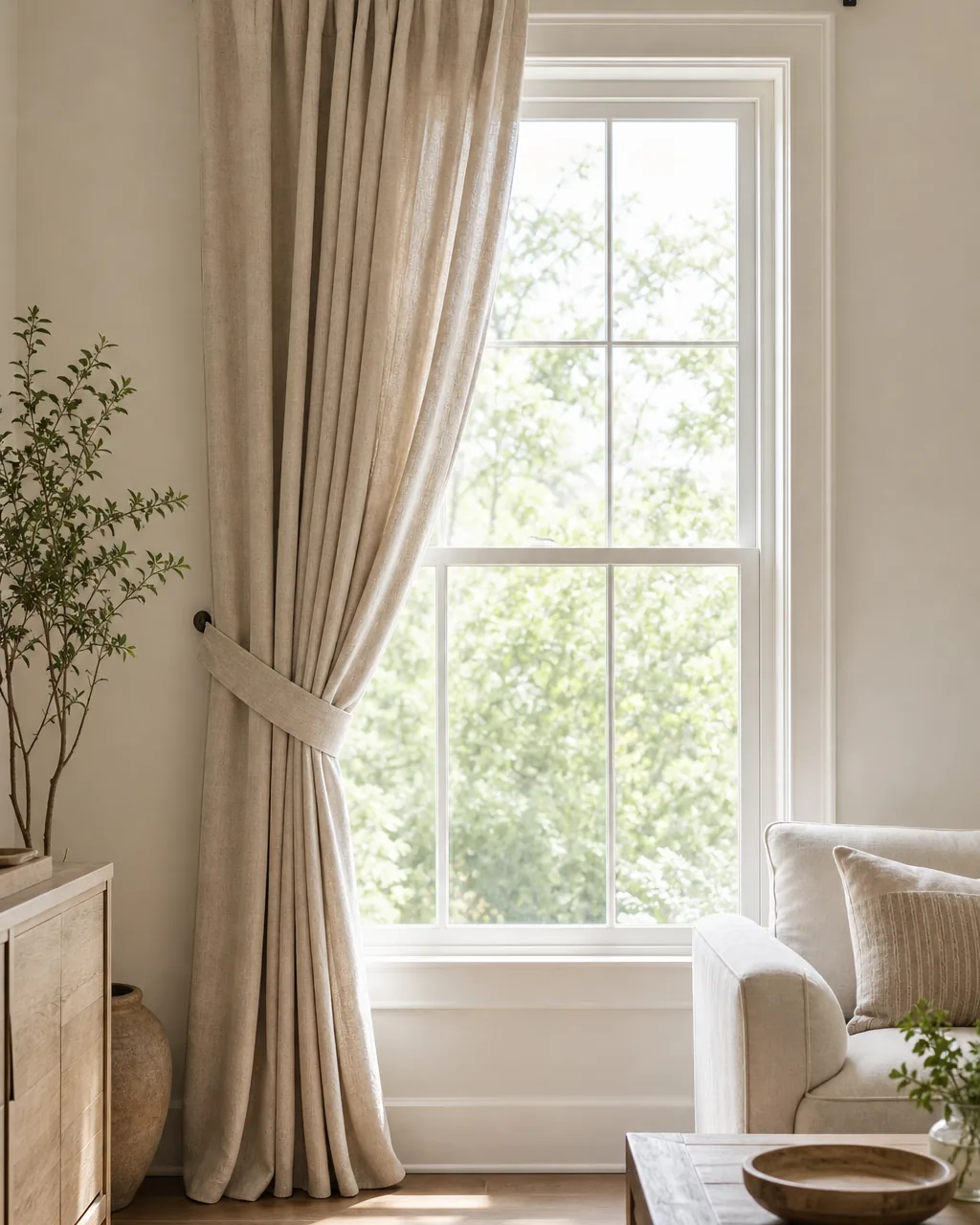
Rather than two curtain panels meeting in the middle, mount one oversized panel pulled fully to one side of the window and secured with a substantial tieback. It reads as an asymmetric, editorial gesture rather than standard-issue drapery hung out of habit.
10. Turn the Windowsill Into a Plant Shelf
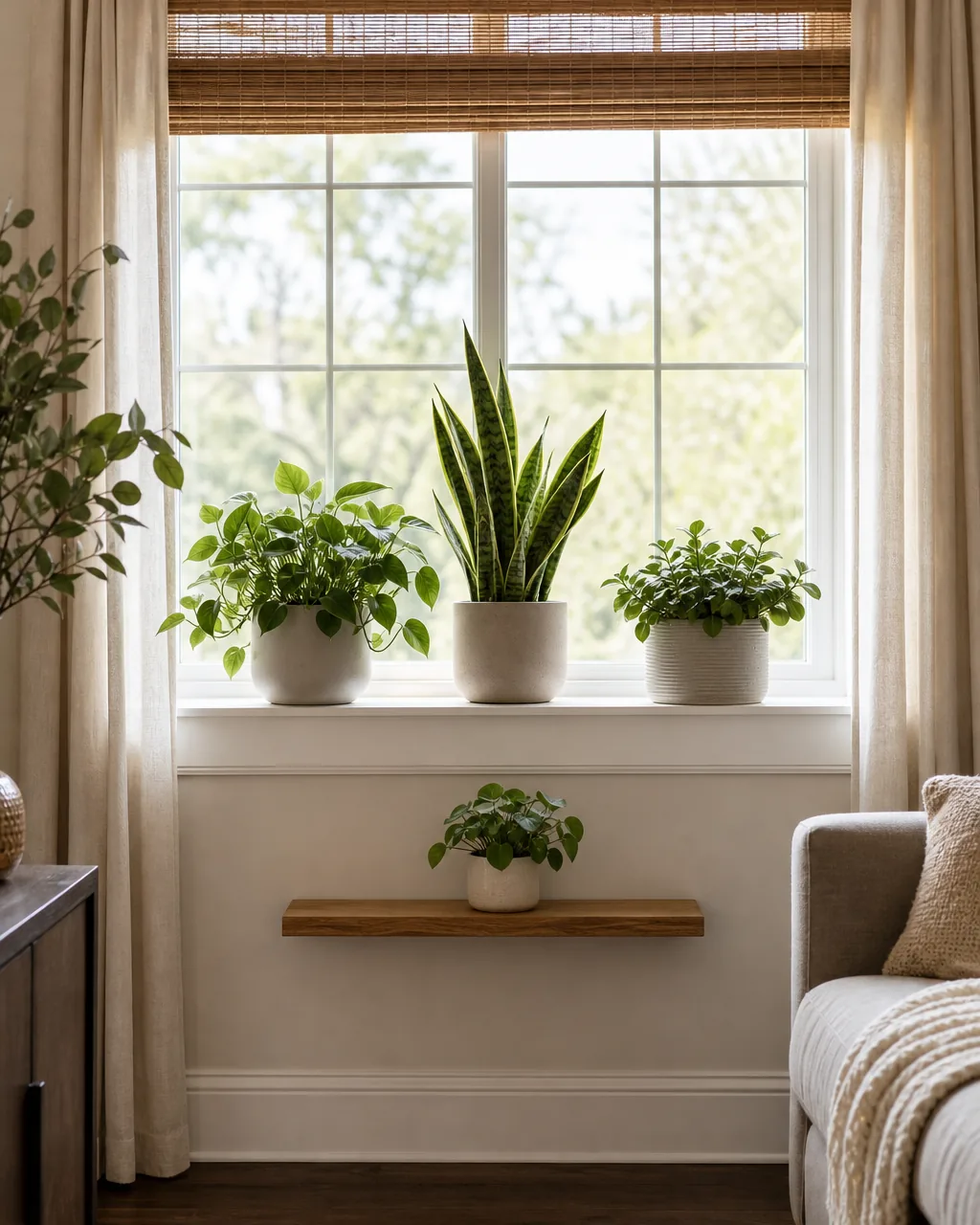
A bare sill is wasted real estate. Line it with two or three plants at different heights, or add a slim floating shelf just below the window for a second tier. The greenery softens the hard edge of the glass and gives the eye something living to land on.
11. Install Wood Plantation Shutters for an Architectural Upgrade
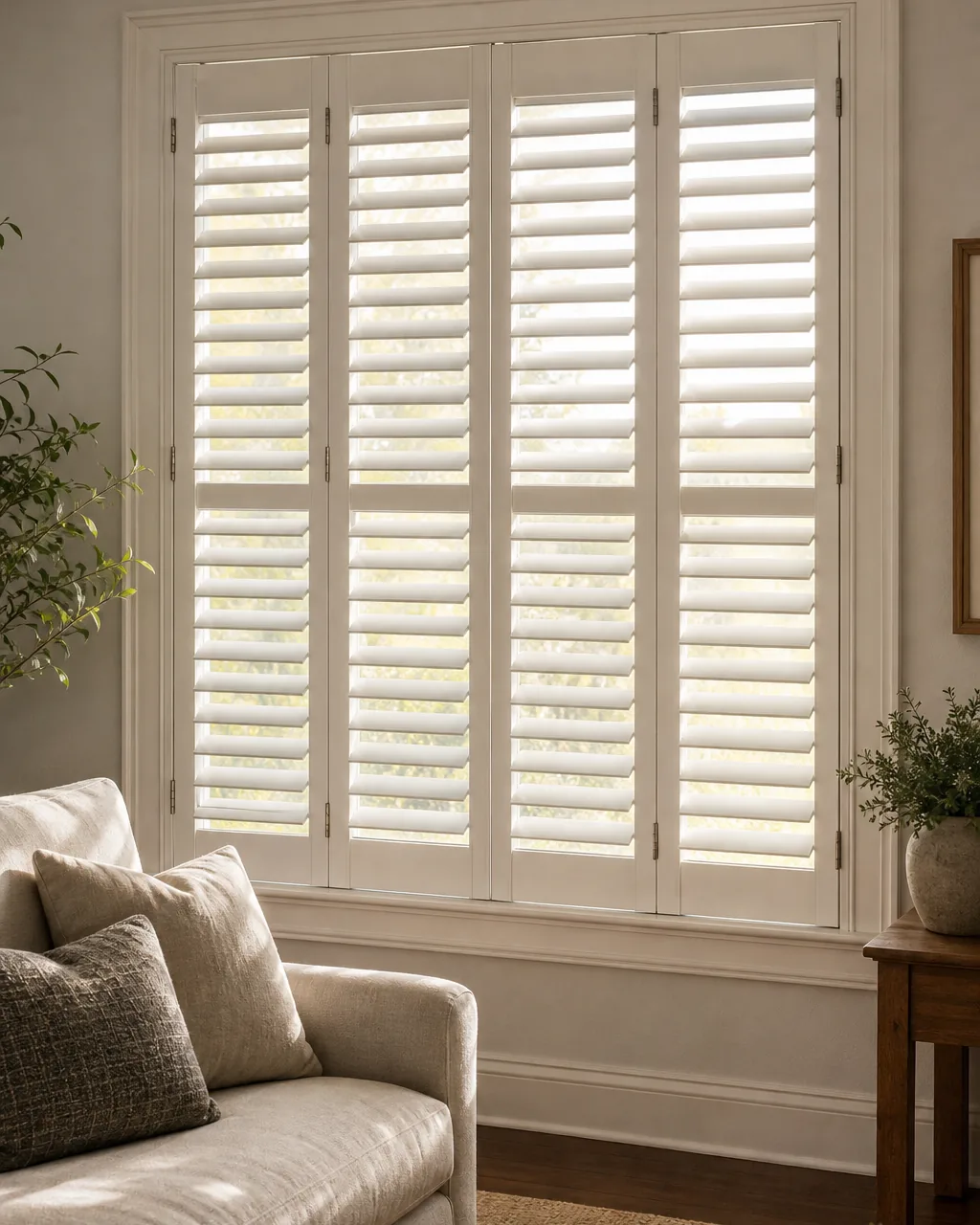
Plantation shutters read as a built-in feature rather than a swap-out textile. They adjust light in tilting slats rather than an all-or-nothing pull, and they work especially well on windows with an odd shape or a shallow depth that fights a curtain rod.
12. Add a Valance or Cornice Box to Hide the Hardware
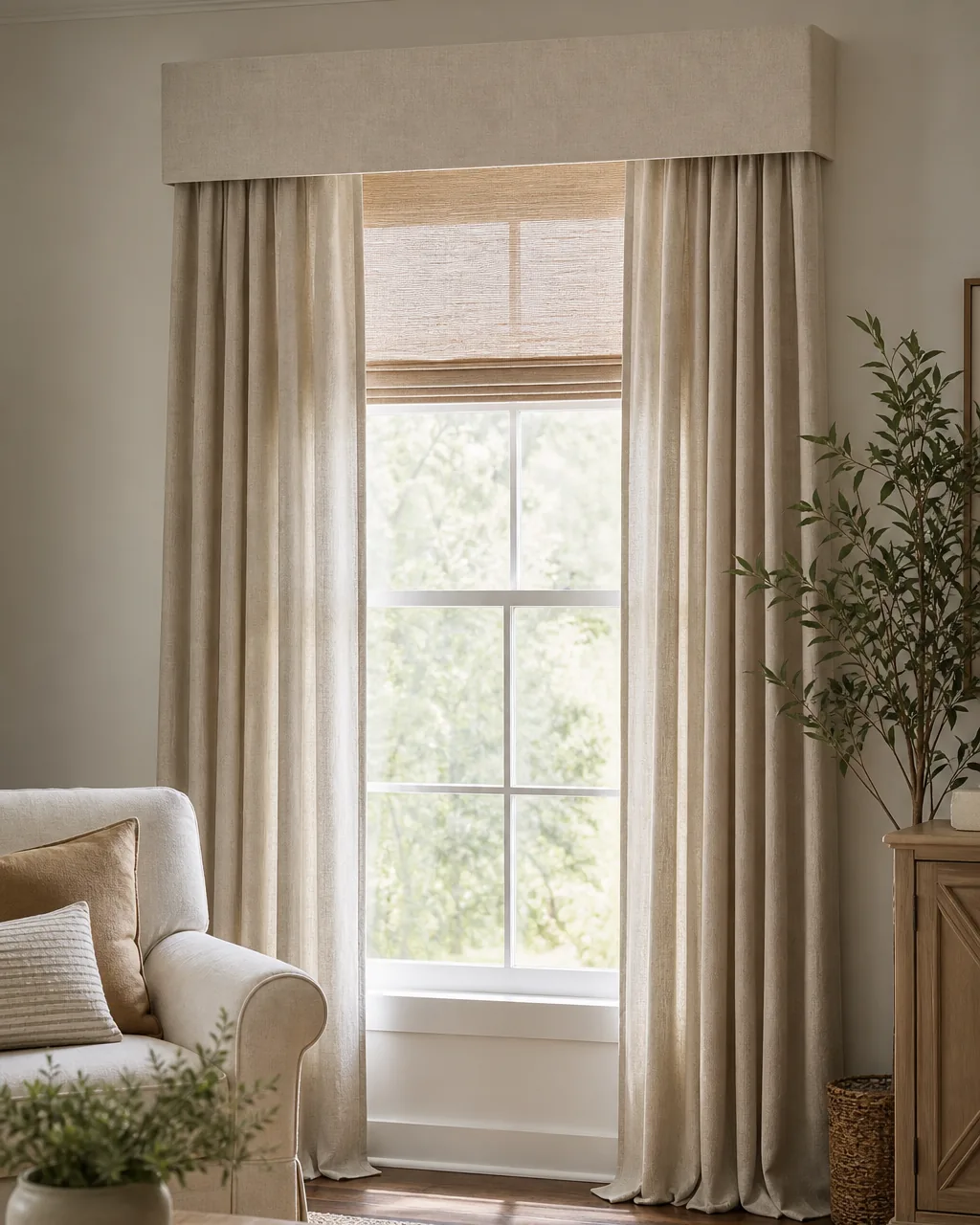
A fabric valance or a hard cornice box mounted above the rod conceals brackets and rod ends and gives the whole treatment a tailored, finished top edge, the detail that separates a styled window from one that just has curtains on it.
For the wall the seating group faces, see the TV wall decor ideas guide, or the living room wall decor ideas for styling the rest of the room around it.

Nora writes about small, livable rooms for real apartments. Her own living room window went through two rod swaps before the hardware finally matched the rest of the room instead of disappearing against the wall. Every idea here is tested against a real living room, not a showroom vignette.
Nora Ellis edits Styled Home Notes. More from Nora: TV wall decor ideas, living room wall decor ideas.