13 Living Room Console Table Decor Ideas That Balance Style and Function
- 1Layer a Leaning Art Piece Behind a Table Lamp
- 2Group Objects in Odd Numbers on a Tray
- 3Anchor One End with a Statement Lamp
- 4Stack Books Horizontally as a Riser
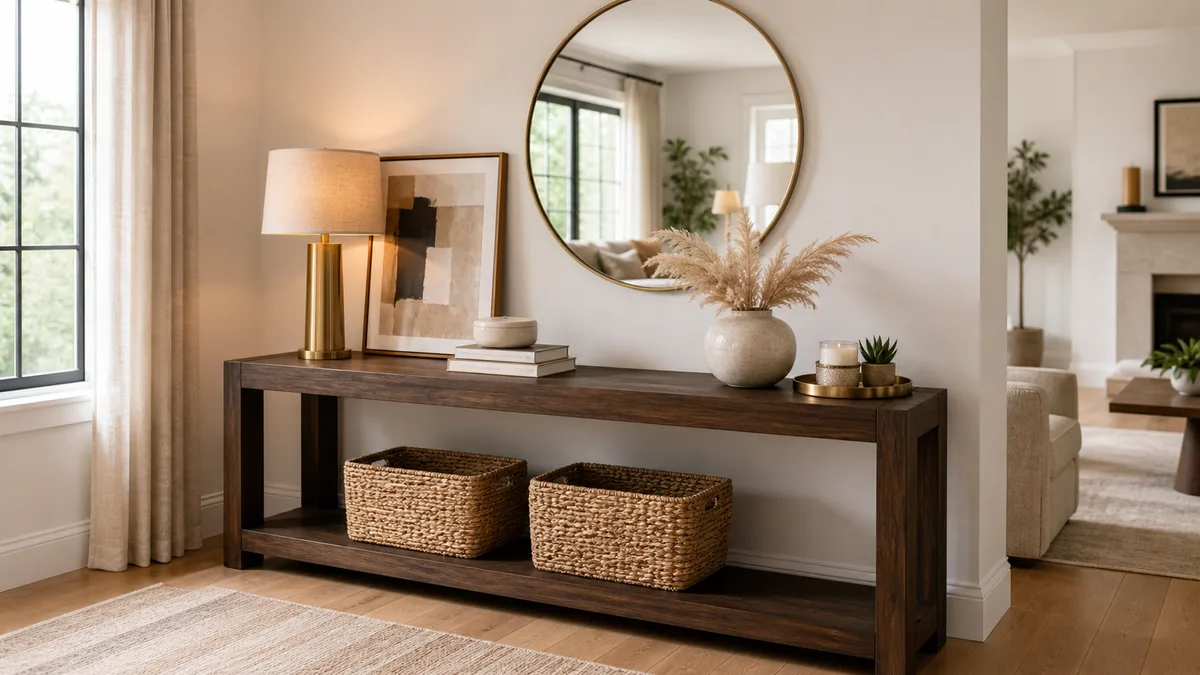
- 5Add a Round Mirror Above for Depth
- 6Place a Low Ceramic Vase with Dried Stems
- 7Use Matching Baskets Underneath for Hidden Storage
- 8Lean Two Frames at Different Heights
- 9Set a Sculptural Object as the Focal Point
- 10Add a Narrow Table Runner or Textile
- 11Incorporate One Living Element
- 12Create Symmetry with Matching Lamps
- 13Rotate One Seasonal Accent Quarterly
1. Layer a Leaning Art Piece Behind a Table Lamp
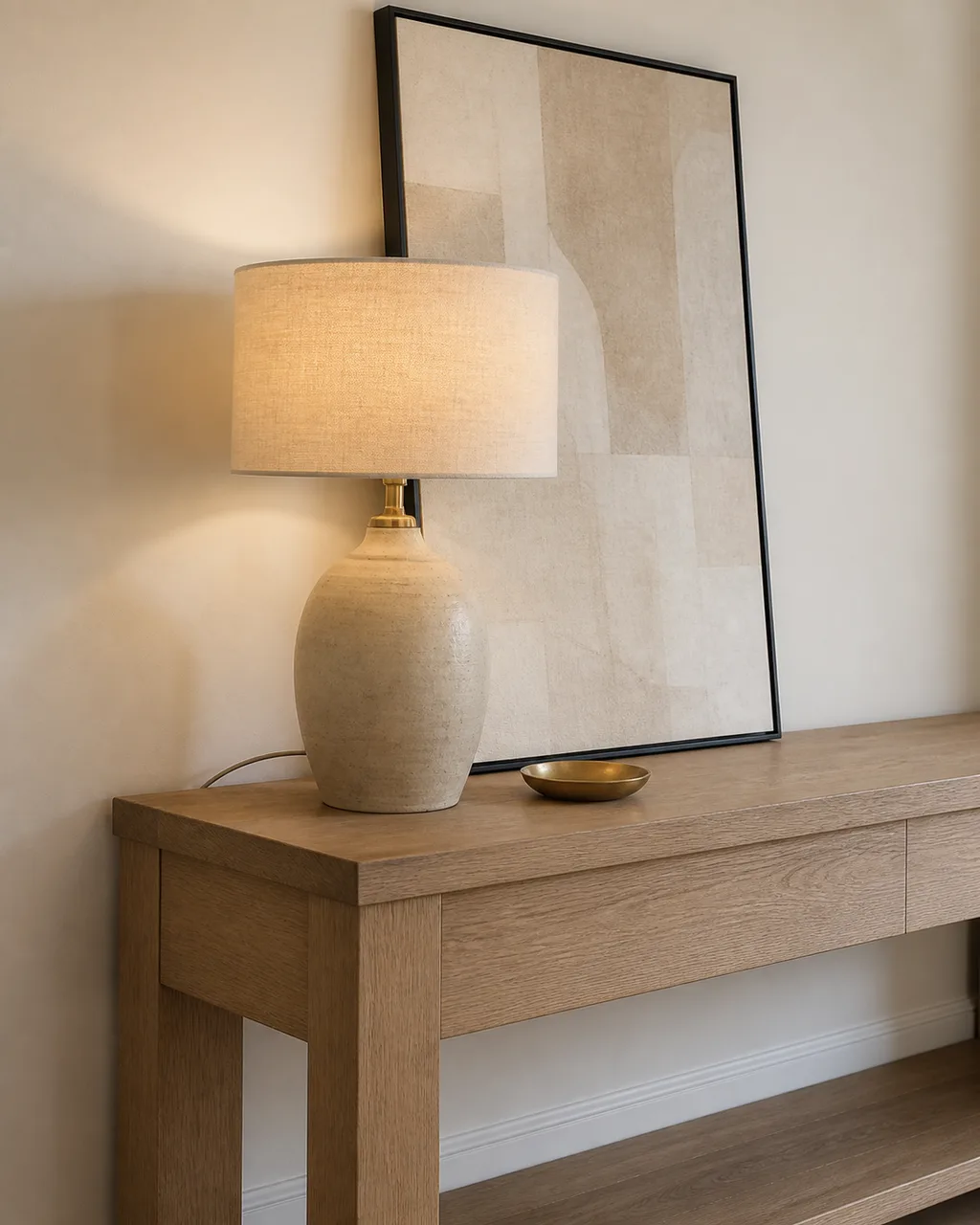
A tall vertical art piece leaned against the wall behind a table lamp creates an instant height anchor that makes even a narrow console feel intentional. The lamp lights the lower third of the art from below, drawing the eye upward and giving the corner a gallery-like presence without a single nail hole.
The reason this combination works is proportion. The art extends above the lampshade, so the two objects read as a single layered composition rather than two separate decorations competing for attention. That vertical pull is what turns a flat table into a styled moment.
- Choose art at least 8 inches taller than the lamp so it visibly extends above the shade
- Lean the frame at a gentle angle against the wall rather than hanging for a collected, relaxed feel
- Pick a frame finish that contrasts the lamp base — black frame with a white ceramic lamp, natural wood with brass
- Stick to one large piece instead of two small ones to avoid cluttering the sightline
- Abstract or botanical prints work well because they read at any distance across the room
2. Group Objects in Odd Numbers on a Tray
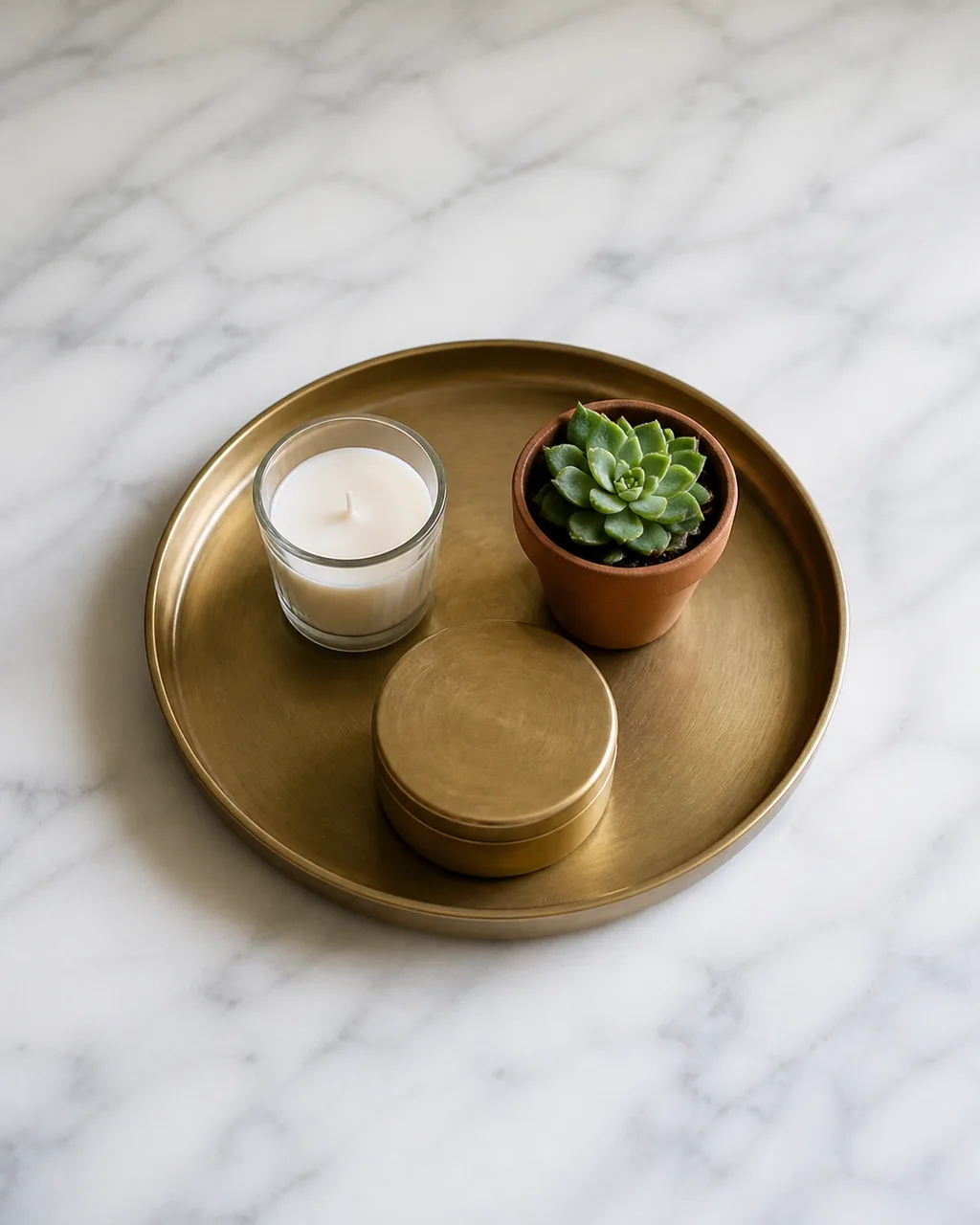
Three or five items corralled on a tray read as a curated vignette instead of scattered clutter. The tray draws a visible boundary that makes the grouping intentional, and odd numbers create visual rhythm that even numbers flatten into a lineup.
The tray also solves a practical problem. When you need to clean the surface, you lift one tray instead of relocating five objects. That single lift-and-wipe convenience is why trays show up on every styled surface in editorial photography — they make maintenance disappear.
- Use a round tray on a rectangular table for shape contrast that adds visual interest
- Include one tall item, one medium, one low to create a triangular silhouette
- Choose items from at least two different materials — ceramic, brass, glass — for texture variety
- Keep the tray no wider than one-third of the table length so it does not dominate
- Edit down to three items before considering a fourth — restraint photographs better
3. Anchor One End with a Statement Lamp
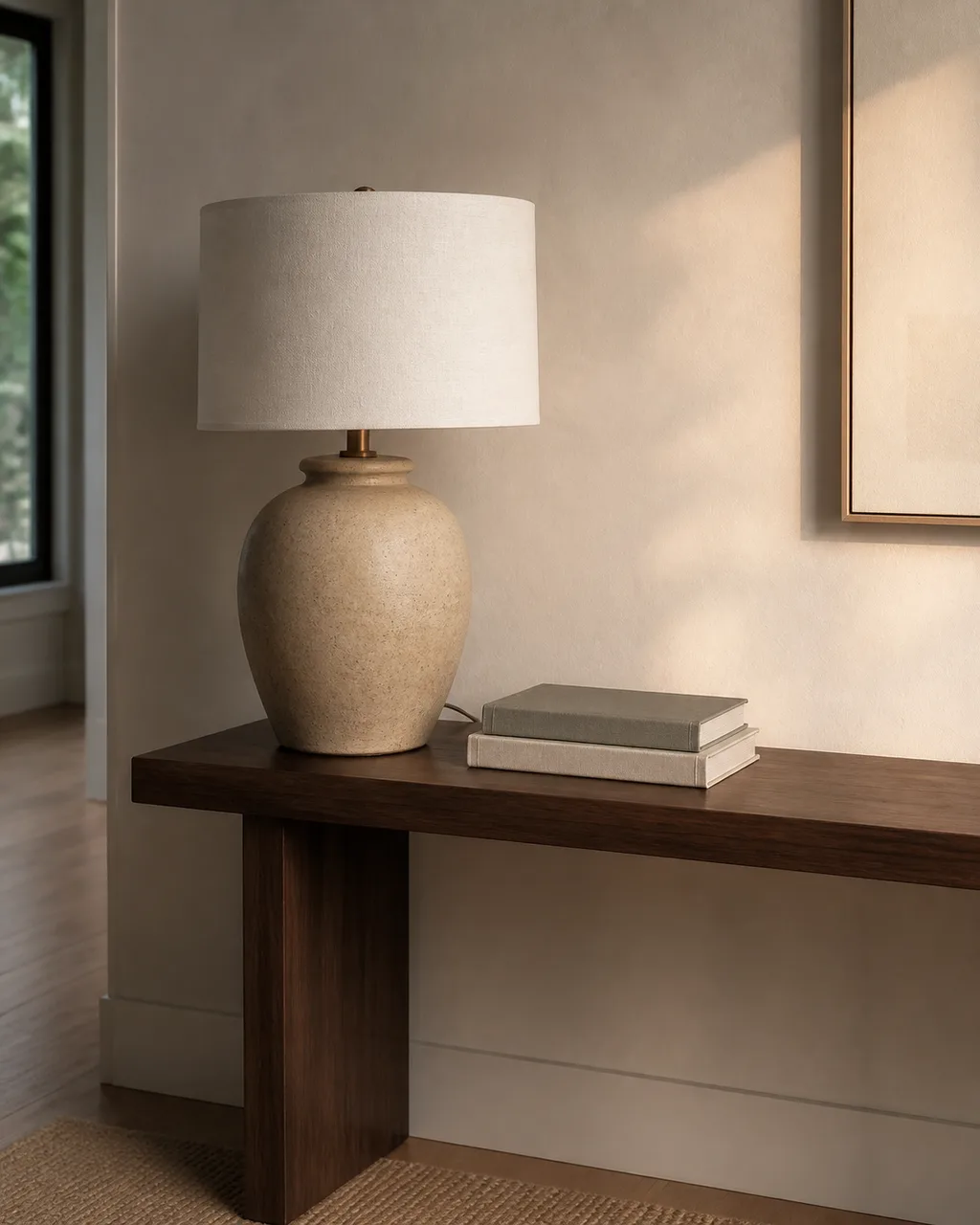
One oversized table lamp placed at either end of the console grounds the entire composition. The lamp gives the eye a stopping point and provides ambient light after dark, which means the table works in the evening just as well as it does during the day.
The anchor effect comes from mass. A small accent lamp blends in. A substantial base — ceramic, turned wood, or solid brass — commands the end of the table and lets the remaining two-thirds breathe. That breathing room is what makes the rest of the decor feel deliberate rather than squeezed.
- Place the lamp at the end nearest a power outlet to keep the cord invisible behind the table
- Pick a lamp with a base diameter under 8 inches so it sits on the surface without crowding
- A drum or empire shade suits most console widths without adding visual bulk
- Match the shade color to your wall tone for a seamless backdrop
- If you already have leaning art, offset the lamp to the opposite end for balance
4. Stack Books Horizontally as a Riser
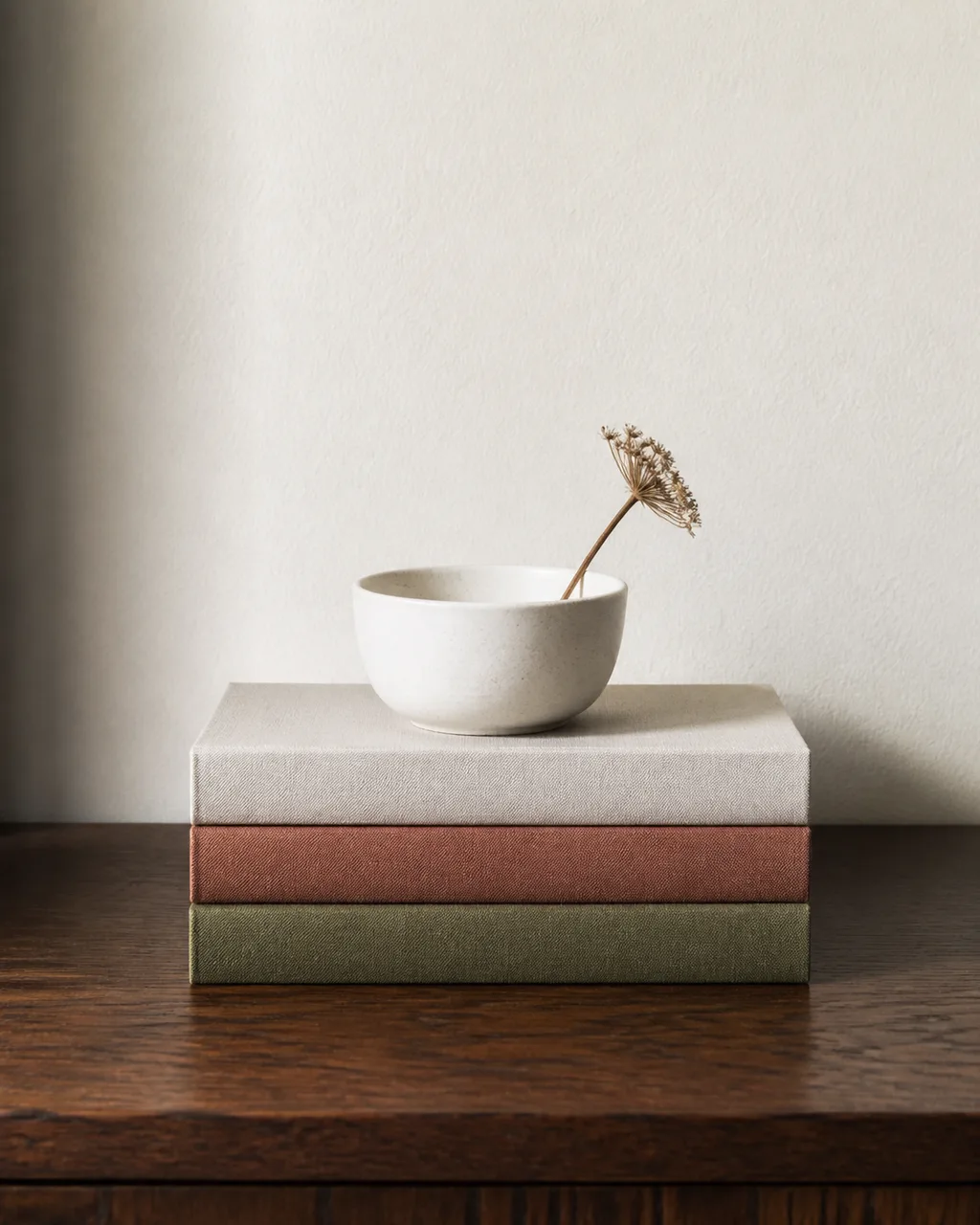
Two or three coffee table books stacked flat become a pedestal for a smaller object — a candle, a small box, a ceramic figure. The stack adds height variation to your arrangement without buying another decorative piece, and the spine colors contribute to the palette.
Books work as risers because they introduce a second material plane. A ceramic bowl sitting directly on wood reads differently when it sits on a linen-covered hardcover three inches higher. That small elevation shift creates depth across the surface that flat-only arrangements cannot achieve.
- Choose books with spine colors that complement your room palette — neutrals, earth tones, muted greens
- Stack no more than three because four or more reads as storage rather than display
- Place a small object on top to justify the stack as a design element, not a shelf
- Rotate books seasonally so the visible spines match your current accent color
- Hardcovers only — paperbacks buckle under weight and look unfinished on display
5. Add a Round Mirror Above for Depth
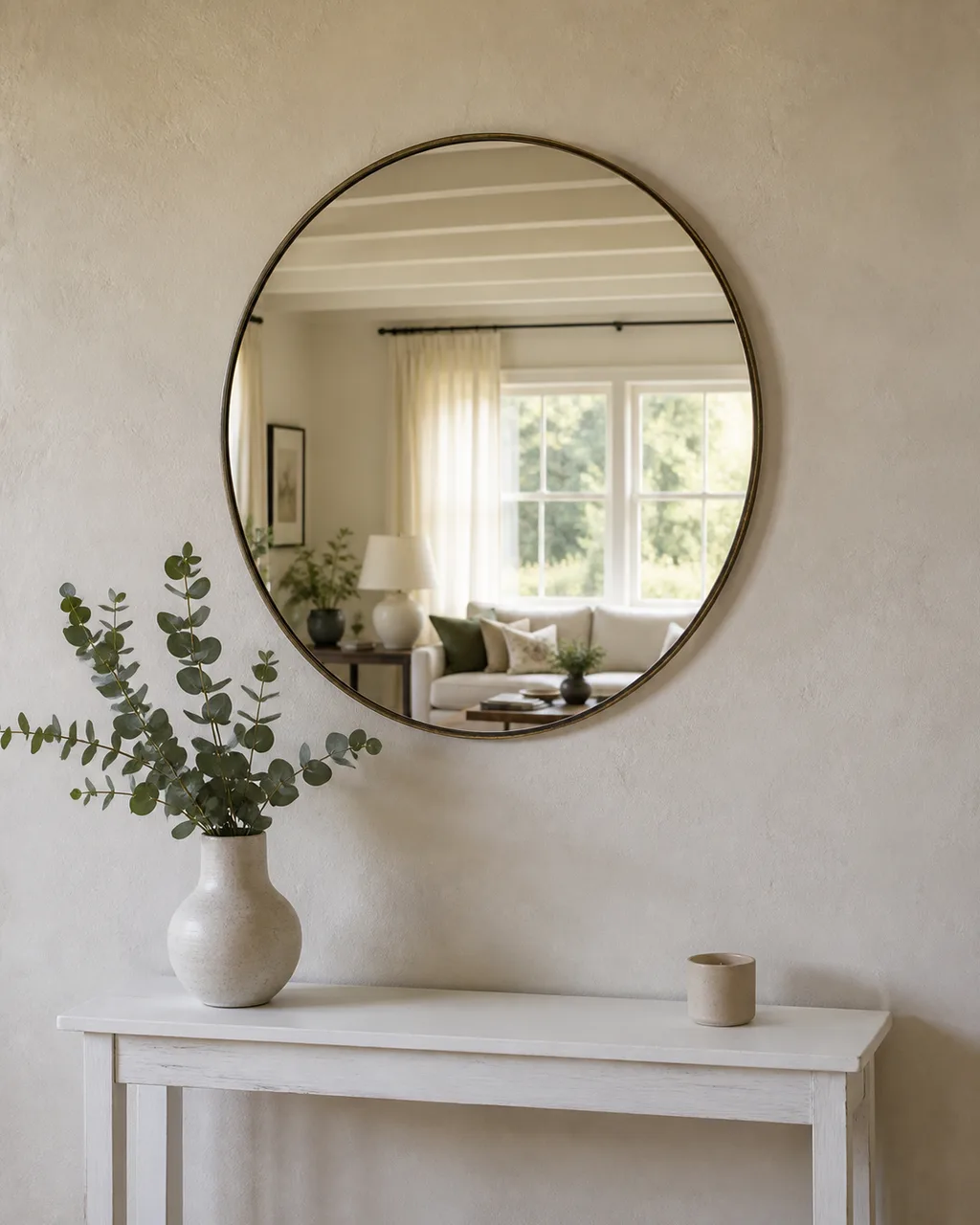
A round mirror hung above the console breaks the long horizontal line of the furniture and bounces light back into the room. The circular shape softens the angular geometry of most consoles and gives visitors a focal center the moment they enter the space.
Mirrors above consoles work especially well in entryways and behind sofas where natural light comes from one direction. The reflection doubles the brightness and creates a sense of depth that makes the wall behind the table feel like a window rather than a flat plane.
If you are adding wall art to your living room, pairing a mirror on one wall with art on the flanking wall avoids visual repetition and gives each surface its own personality.
- Hang the mirror 4 to 6 inches above the table surface so it connects visually to the console below
- Choose a diameter roughly two-thirds the width of the table for balanced proportion
- A thin metal frame in brass or black keeps the look clean without competing with items on the table
- Angle the mirror slightly downward if your room has interesting ceiling detail worth reflecting
- Avoid centering the mirror over a lamp — offset it slightly to prevent a visually heavy stack
6. Place a Low Ceramic Vase with Dried Stems
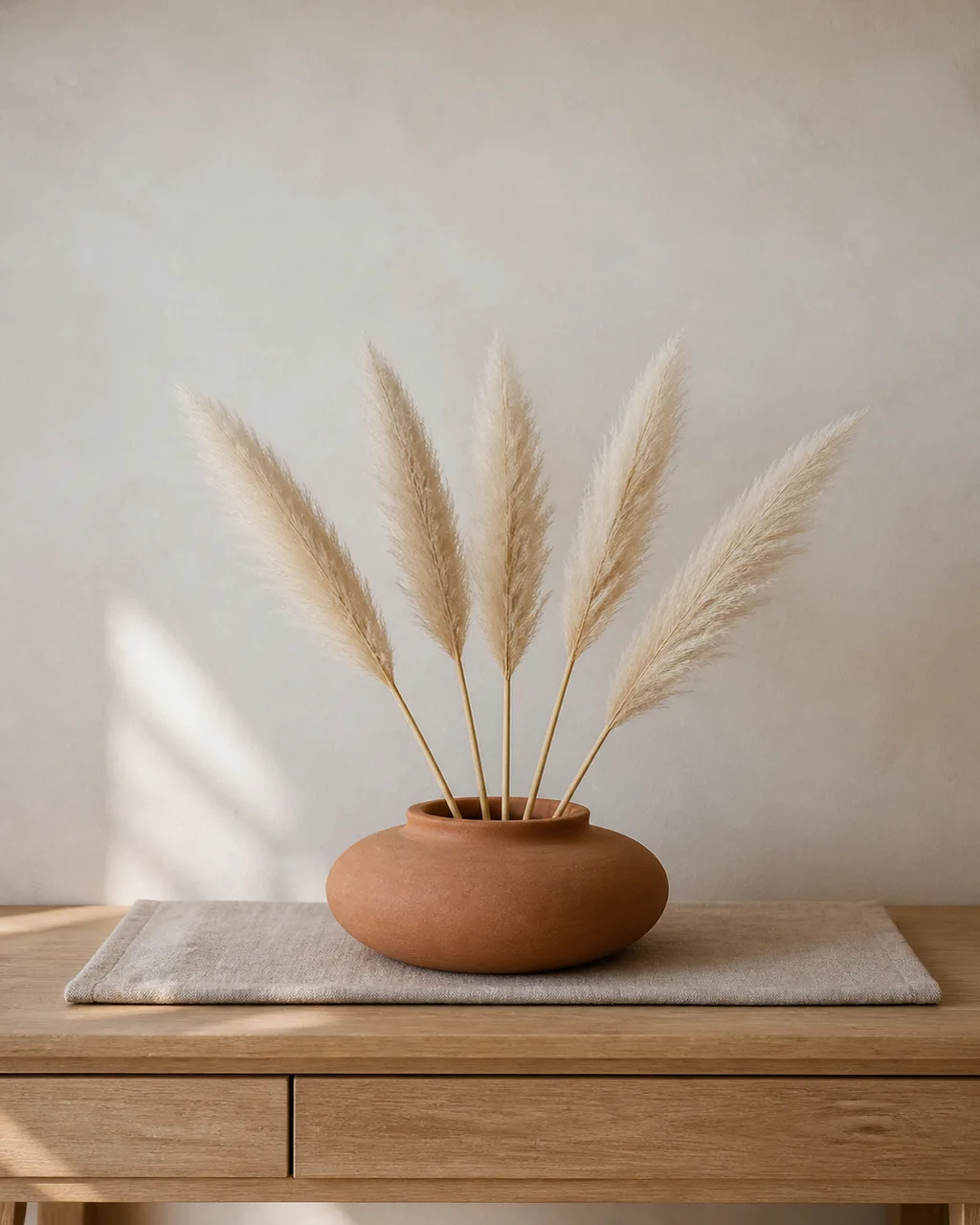
A low wide-mouth vase with dried pampas, eucalyptus, or wheat stems brings organic texture to the console without any watering schedule. The vase stays grounded on the surface while the stems extend upward, creating height through material rather than through another hard object.
Dried stems last months with zero maintenance, which makes them the most practical living-look element you can put on a console table. They add movement — each stem curves slightly differently — and that imperfection is what keeps a styled surface from looking like a catalog page.
- Choose stems that reach 12 to 18 inches above the vase mouth for visible proportion
- Matte or textured ceramic finishes in neutral tones read quieter than glossy glazes
- Three to five stems is enough — too many and the arrangement looks like a prop wall
- Refresh dried stems every six months because dust dulls the color and they start to shed
- Place the vase off-center to leave room for other elements on the same half of the table
7. Use Matching Baskets Underneath for Hidden Storage
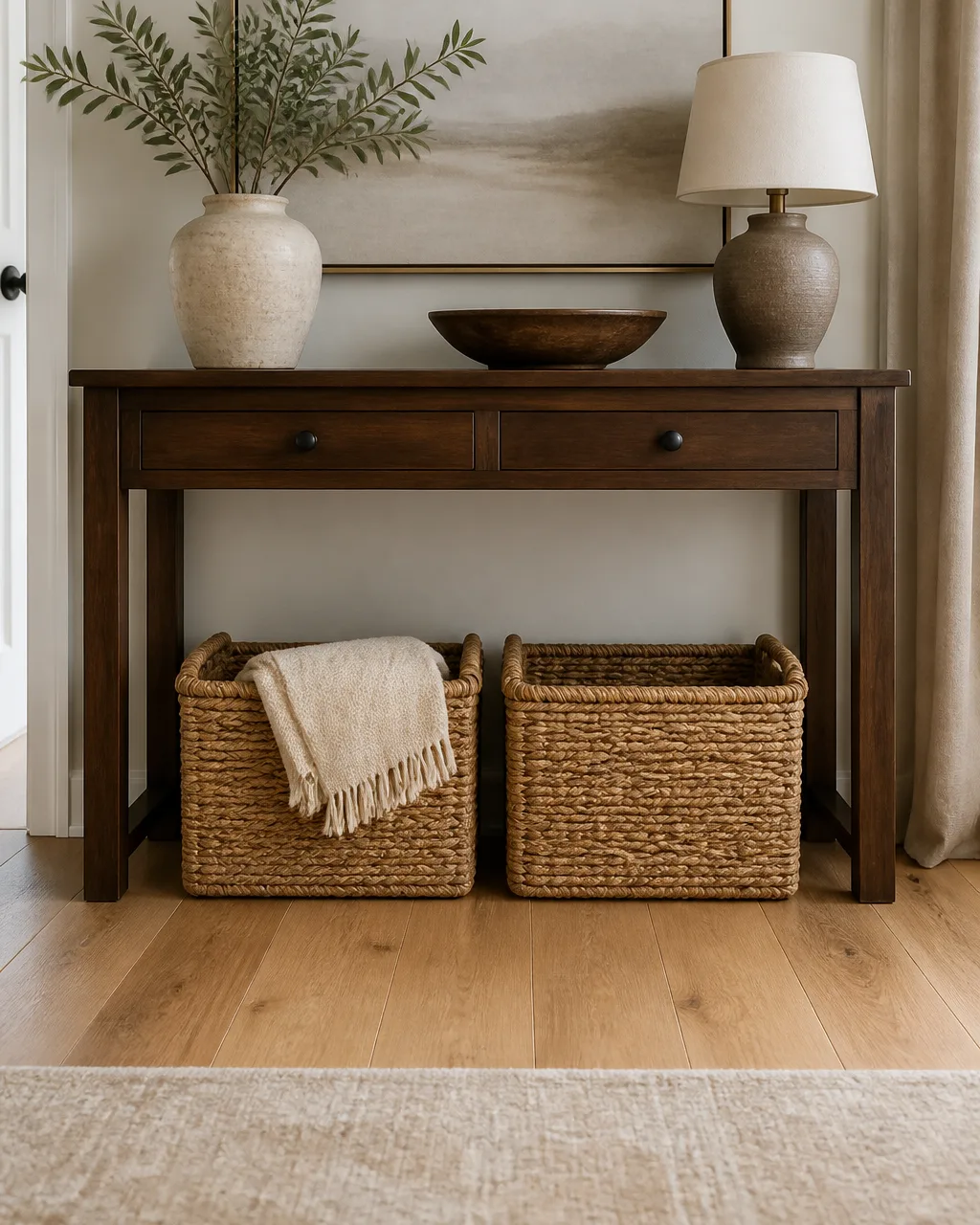
Two or three woven baskets tucked under the console table hide blankets, magazines, or remote controls while adding texture at floor level. Matching baskets read as intentional furniture, not overflow bins pushed out of sight.
The space below a console table is often wasted or becomes a graveyard for shoes and bags. Baskets convert that dead zone into styled storage. The texture of seagrass or rattan against the table legs adds visual warmth and makes the table feel anchored to the floor rather than floating.
- Choose baskets with flat tops if you want to stack items, or open tops for quick grab-and-go access
- Match basket color to the table legs or floor tone for visual grounding
- Keep baskets at least 2 inches shorter than the table apron so they tuck fully under the surface
- Use basket liners for anything dusty like shoes or pet toys to keep the baskets clean
- Two baskets centered looks cleaner than three crowding the full span underneath
8. Lean Two Frames at Different Heights
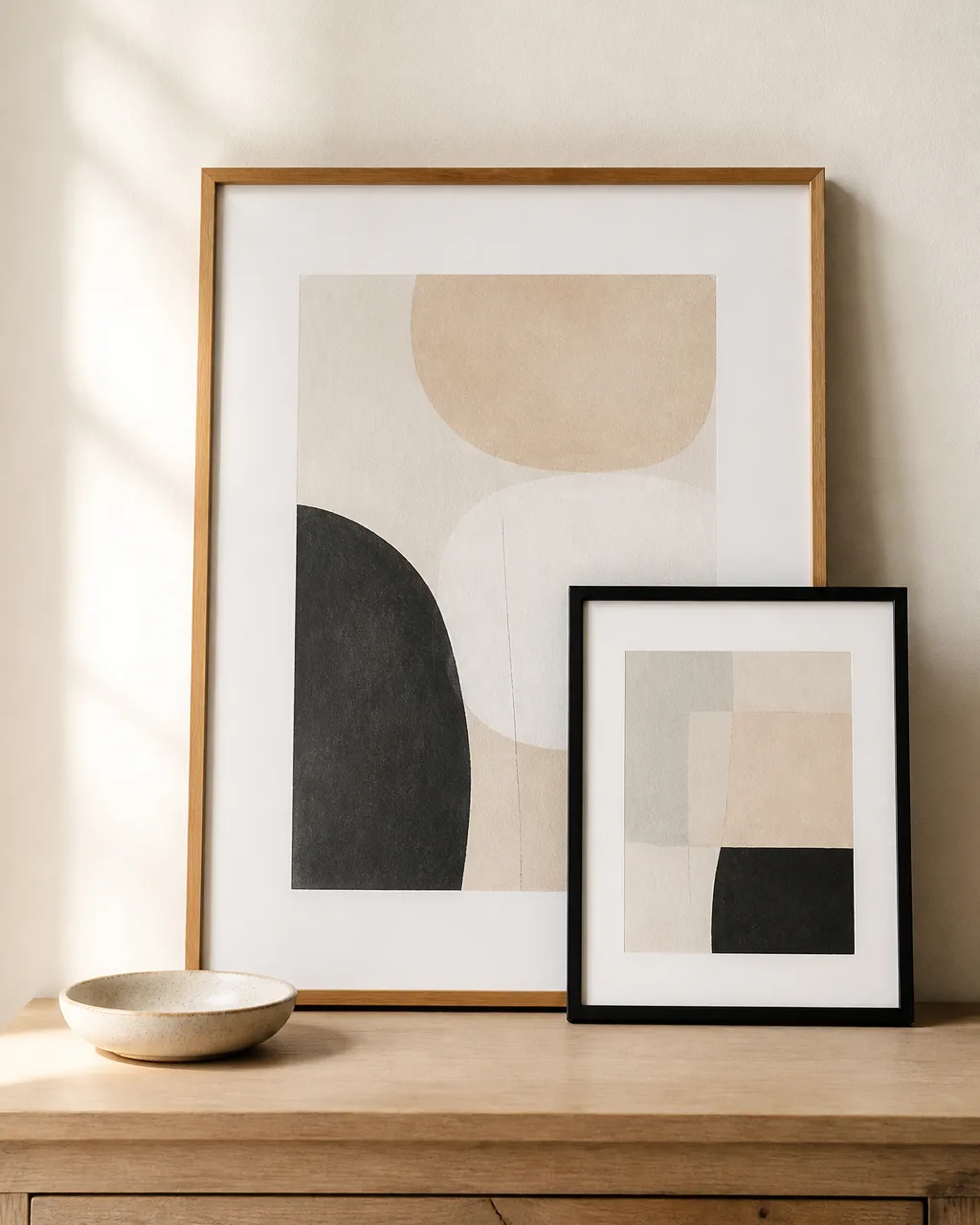
Two frames leaned against the wall at overlapping heights feel collected and personal, like you gathered them over time rather than buying a matched set. The layered overlap creates depth that a single flat-hung frame cannot, and leaning means no wall holes.
This approach suits console tables in rental apartments or rooms where you rotate decor seasonally. Swap one frame, change the mood. The lean is inherently casual, which makes the surface feel lived-in rather than staged for a photograph.
- Use frames in two different sizes with at least a 4-inch height difference for clear layering
- Overlap slightly so the smaller frame sits in front of the larger one, creating visible depth
- Mix mediums — a photograph behind a botanical print — for visual interest in each reveal
- Keep frames in the same color family so they read as a collected pair, not a mismatch
- Leave one side of the table open when using leaned frames to avoid a crowded ledge effect
9. Set a Sculptural Object as the Focal Point
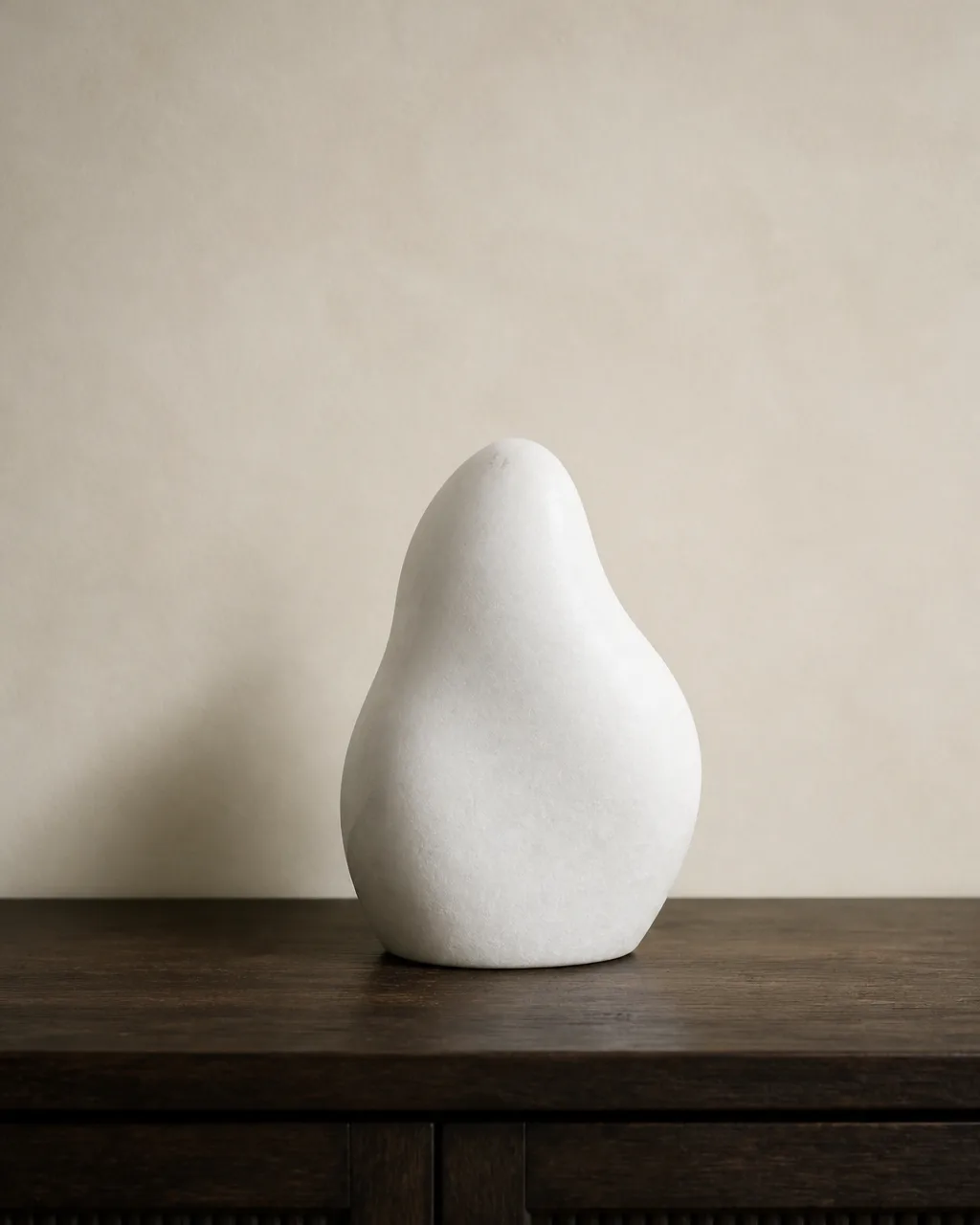
One bold piece — a stone bust, a hand-carved bowl, or a brass geometric form — commands attention and gives the whole table a single anchor. The sculpture works because it sits alone in breathing room, not crowded by accessories.
Scale is the key decision. The object should be visible from across the room but not so large that it overpowers the lamp or the mirror above. If your space leans toward a Japandi living room aesthetic, a wabi-sabi ceramic with visible glaze marks fits the mood and adds handmade texture.
- Place the sculpture at center or slightly off-center for a natural draw across the table length
- Choose a material that contrasts the table finish — stone on wood, brass on marble, ceramic on glass
- Avoid sets of three identical sculptures — one strong piece reads bolder than a matched trio
- Give the sculpture at least 6 inches of clear surface on each side so it breathes
- Light the piece from above or from the side with a nearby lamp to create shadow depth
13 console table decor ideas at a glance
- 1Leaning art + lampHeight anchor from overlapping vertical art and warm lamplight
- 2Odd-number tray groupThree or five items on a tray read curated, not cluttered
- 3Statement lampOne oversized lamp grounds the whole composition from one end
- 4Horizontal book stackTwo or three books become a pedestal for a smaller accent
- 5Round mirror aboveBreaks the horizontal line and bounces light back into the room
- 6Ceramic vase + dried stemsOrganic texture without watering — refreshed every six months
- 7Baskets underneathHidden storage that adds floor-level texture, not overflow bins
- 8Leaning framesTwo frames at different heights feel collected over time
- 9Sculptural focal objectOne bold piece in breathing room anchors the entire surface
- 10Table runnerTextile underneath adds warmth and prevents surface scratches
- 11Living elementOne plant or fresh-cut stem brings movement to a still arrangement
- 12Symmetry with matching lampsTwin lamps at each end frame the table formally
- 13Seasonal accent rotationSwap one piece quarterly to keep the surface fresh year-round
10. Add a Narrow Table Runner or Textile
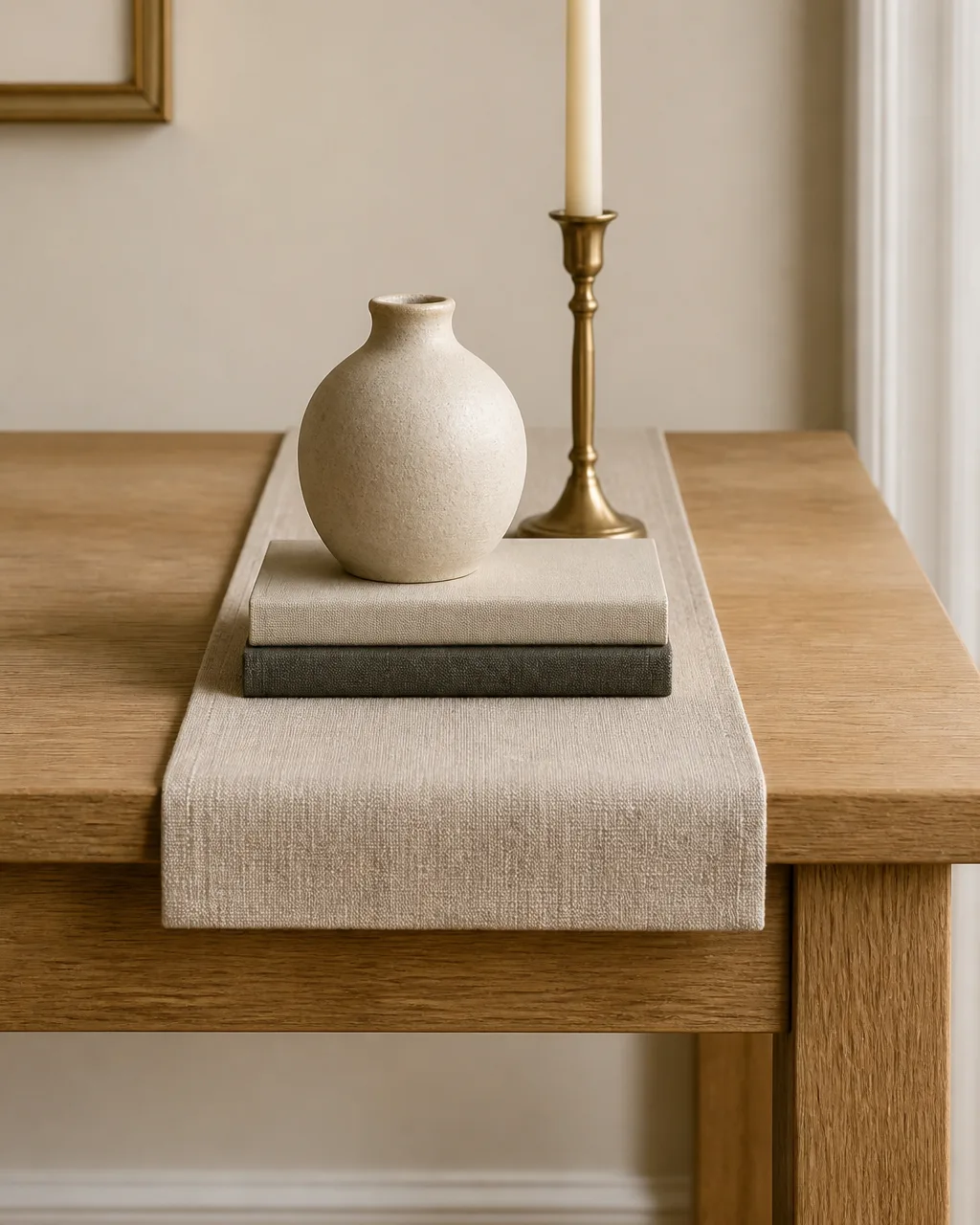
A narrow runner or folded textile placed under the vignette prevents surface scratches and adds a warm layer beneath the hard objects. The textile softens the long straight line of the table and introduces woven pattern or fringe texture that no amount of ceramics can replicate.
Runners work on console tables the same way they work on dining tables — they define a zone. Objects placed on the runner belong together. Objects placed on the bare table edge belong to a different grouping. That visual boundary makes even a five-item arrangement read as organized.
- Choose a runner width that leaves 3 to 4 inches of bare table visible on each side for clean framing
- Linen and cotton runners drape naturally; felt and wool sit flat without shifting over time
- Let the runner overhang the front edge by 2 inches for a finished tailored look
- Match the runner tone to your curtains or throw pillows for a threaded palette across the room
- Swap the textile seasonally — linen in summer, wool in winter — for a low-effort refresh
11. Incorporate One Living Element
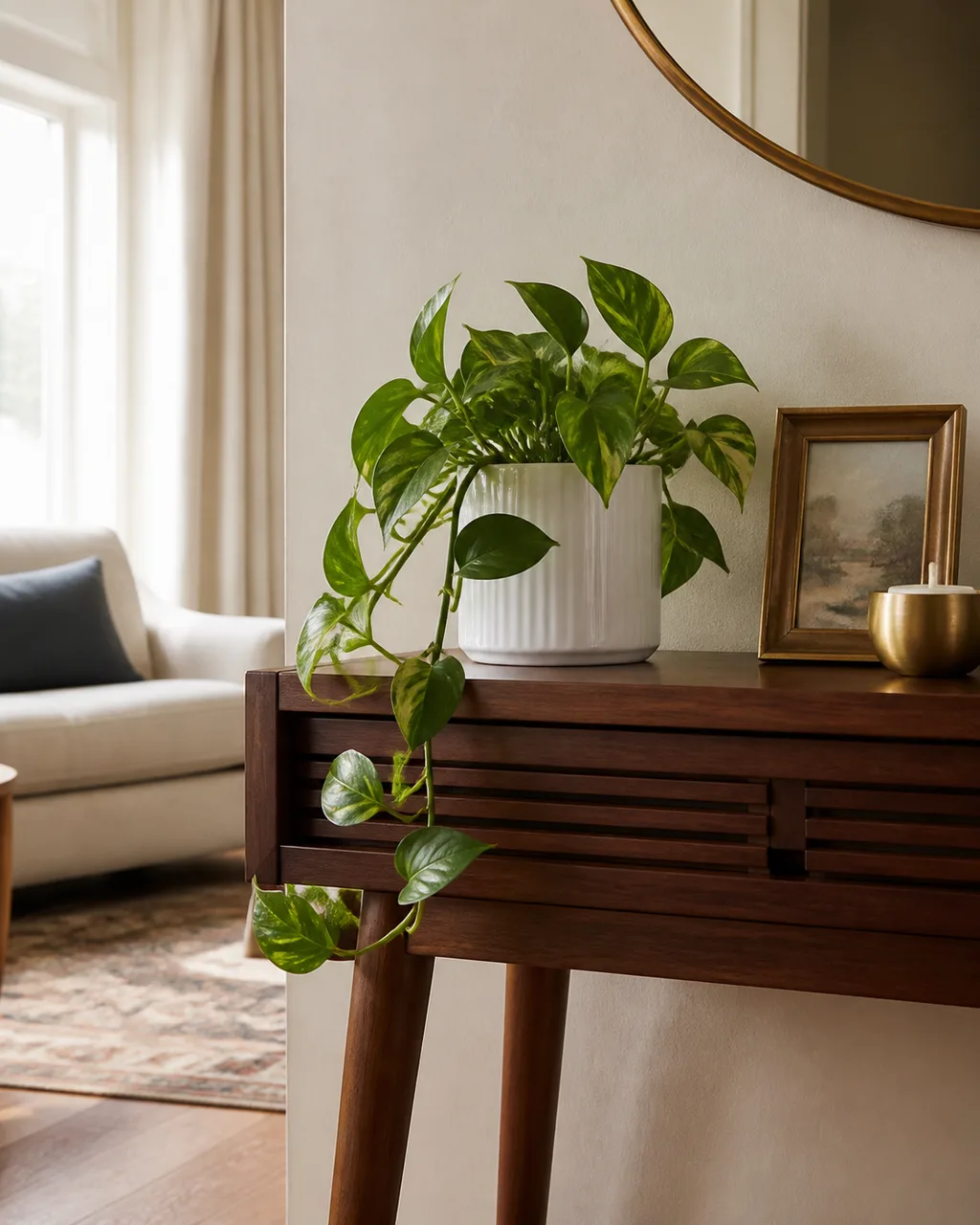
A single potted plant, a small succulent, or a glass vase with fresh-cut stems brings movement and life to an otherwise still arrangement. Living elements change over time — a new leaf, a wilting petal — and that subtle evolution keeps the surface from feeling frozen in place.
One living element is enough. Two or more turns the console into a plant shelf, which is a different look entirely. The goal is contrast: hard ceramics and metal beside one organic form that breaks the perfection. If your apartment living room gets minimal natural light, dried stems rotated monthly achieve a similar effect.
- Choose a plant that tolerates low indirect light since most consoles sit against a wall
- A trailing pothos in a ceramic pot softens the table edge beautifully as vines cascade
- Fresh-cut stems in a clear glass cylinder add life without the commitment of keeping a plant alive
- Repot into a decorative vessel that matches your palette rather than leaving a plastic nursery pot
- Water carefully on console tables — a drip tray or saucer inside the pot prevents water rings
12. Create Symmetry with Matching Lamps
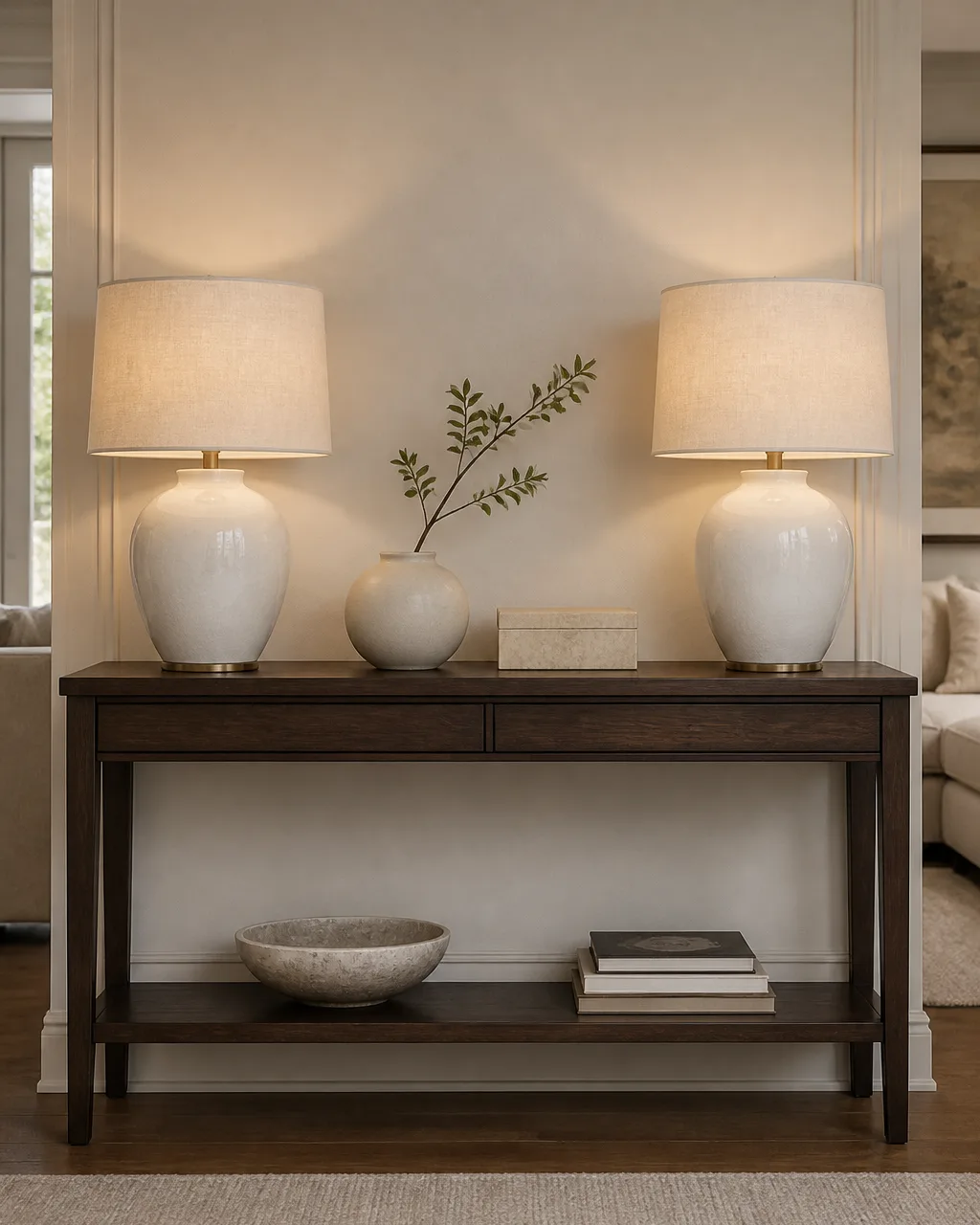
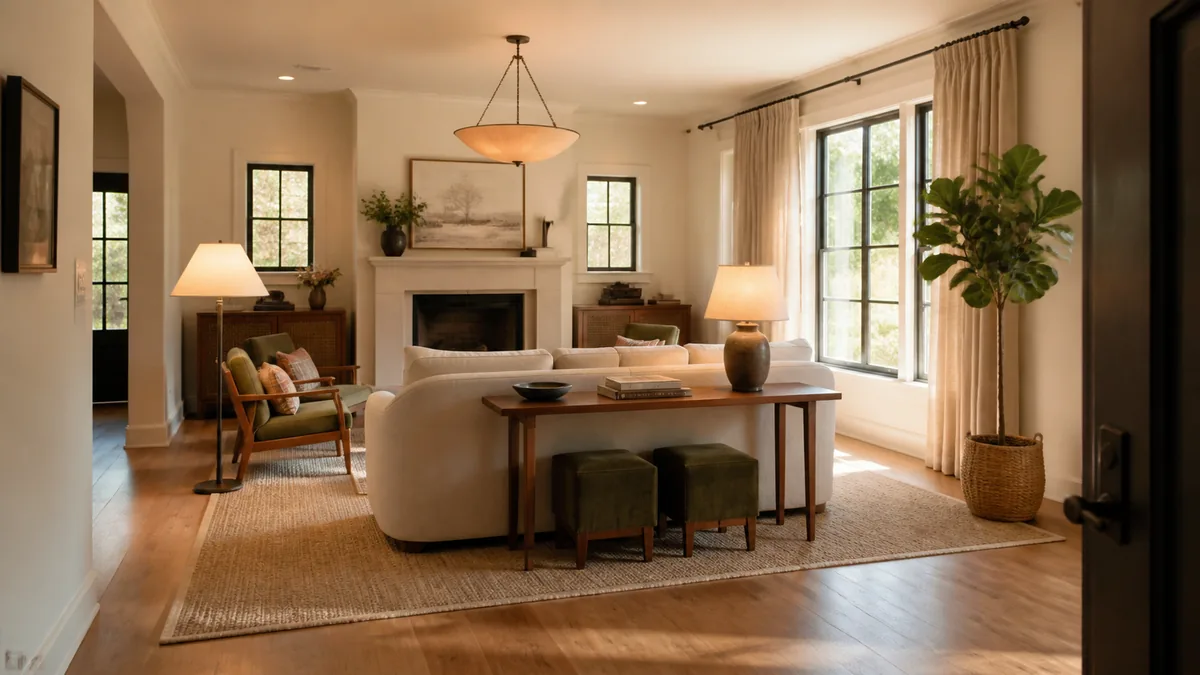
Twin lamps placed at each end of the console table create formal, balanced framing that works especially well behind a sofa or in an entryway. Symmetry gives the eye a clear structure, and the two pools of light in the evening make the whole wall glow evenly.
This approach suits traditional and transitional rooms where order and repetition feel deliberate. The center third of the table stays open for a focal vignette — a single vase, a sculptural object, or a framed photograph — framed by the matching lamps on each side.
- Choose lamps under 24 inches tall so they do not block window views or art above the table
- Matching shades matter more than matching bases — unified shade color and shape tie the pair
- Place each lamp 4 to 5 inches from the table edge so both sit squarely and do not overhang
- Leave the center third of the table open for a curated vignette or a single bold object
- Skip symmetry if your space is deliberately eclectic — asymmetry serves bohemian and collected styles better
13. Rotate One Seasonal Accent Quarterly
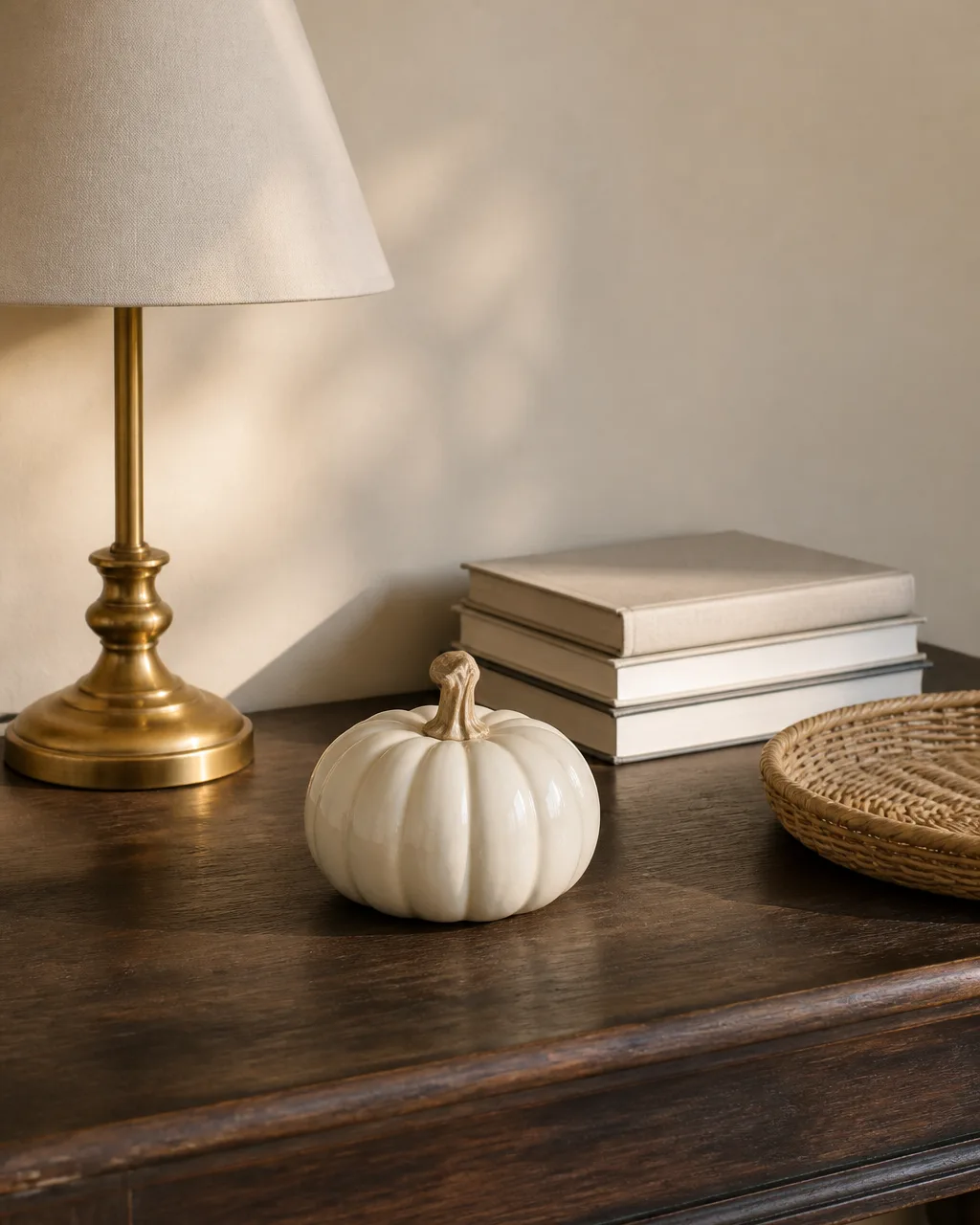
Swap a single accent piece — a candle, a small vase, a ceramic pumpkin, a spring branch — four times a year to keep the console feeling current without redesigning the whole arrangement. The permanent scaffold stays year-round. Only the seasonal slot changes.
This rotation trick is how editorial stylists keep photographed rooms feeling fresh across issues. The base pieces (lamp, books, tray, mirror) are the constants. One designated spot on the table is the variable. Each swap takes sixty seconds and the surface looks newly styled without any of the actual restyling effort.
- Designate one specific spot on the table as the seasonal slot — the front-center of a tray works well
- Keep a small box of seasonal accents in a closet so quarterly swaps are a reach, not a shopping trip
- Neutral base pieces in brass, wood, and linen stay relevant year-round as your permanent scaffold
- Change the accent when you swap curtains or throws to keep the whole room cohesive
- Photograph your favorite seasonal arrangement so you can recreate it next year without guessing
A console table that works does not need thirteen ideas at once. Pick the one that solves your biggest gap — height, clutter, empty wall, storage — set it up this weekend, and leave the rest for later. One strong anchor changes how the whole entry or living room reads.