12 TV Wall Decor Ideas That Make the Screen Part of the Design
Most living rooms are built around one dark rectangle that nobody decorated on purpose. The sofa gets a rug, the shelves get styled, and the TV wall gets whatever leftover furniture was already in the room.
Treating the TV wall as its own composition, not a hole to hide, changes how the whole room reads. These 12 ideas work with the screen instead of around it.
Not a shopping list — a decision for each part of the wall. Start with whatever's bothering you most.
- 1Size the Media Console to the TV, Not the Wall
- 2Frame the Screen With a Color-Matched Surround
- 3Flank the TV With Symmetrical Floating Shelves
- 4Build a Slatted Wood Panel Behind the TV's Footprint
- 5Mount Sconces at Seated Eye Level
- 6Run Cords Through an In-Wall Channel
- 7Anchor the Wall With One Rug Sized to the Seating Group
- 8Let Two Asymmetrical Bookshelves Flank the TV
- 9Add One Floating Shelf Above the TV for Rotating Objects
- 10Paint a Contained Color-Block Panel Behind the TV
- 11Layer Three Materials So the TV Isn't the Only Texture
- 12Let the Screen Show Art When It's Off
1. Size the Media Console to the TV, Not the Wall
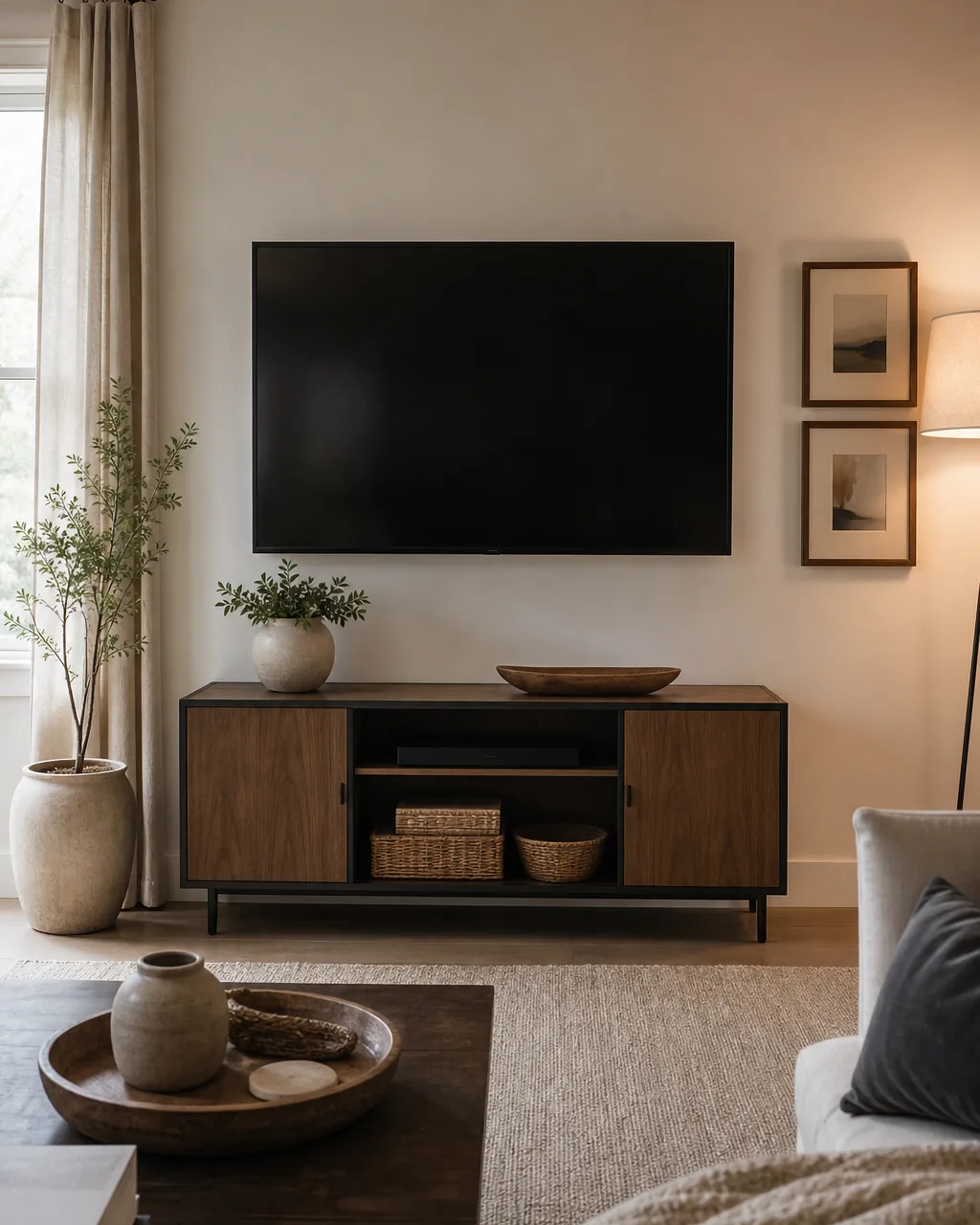
A console that runs the full width of the wall makes a 55-inch TV look small and lost in the middle of it. Keep the console within a few inches of the screen's own width on either side, so the TV and its stand read as one grouped object instead of a wide piece of furniture with a screen floating somewhere above it.
2. Frame the Screen With a Color-Matched Surround So It Reads as One Object
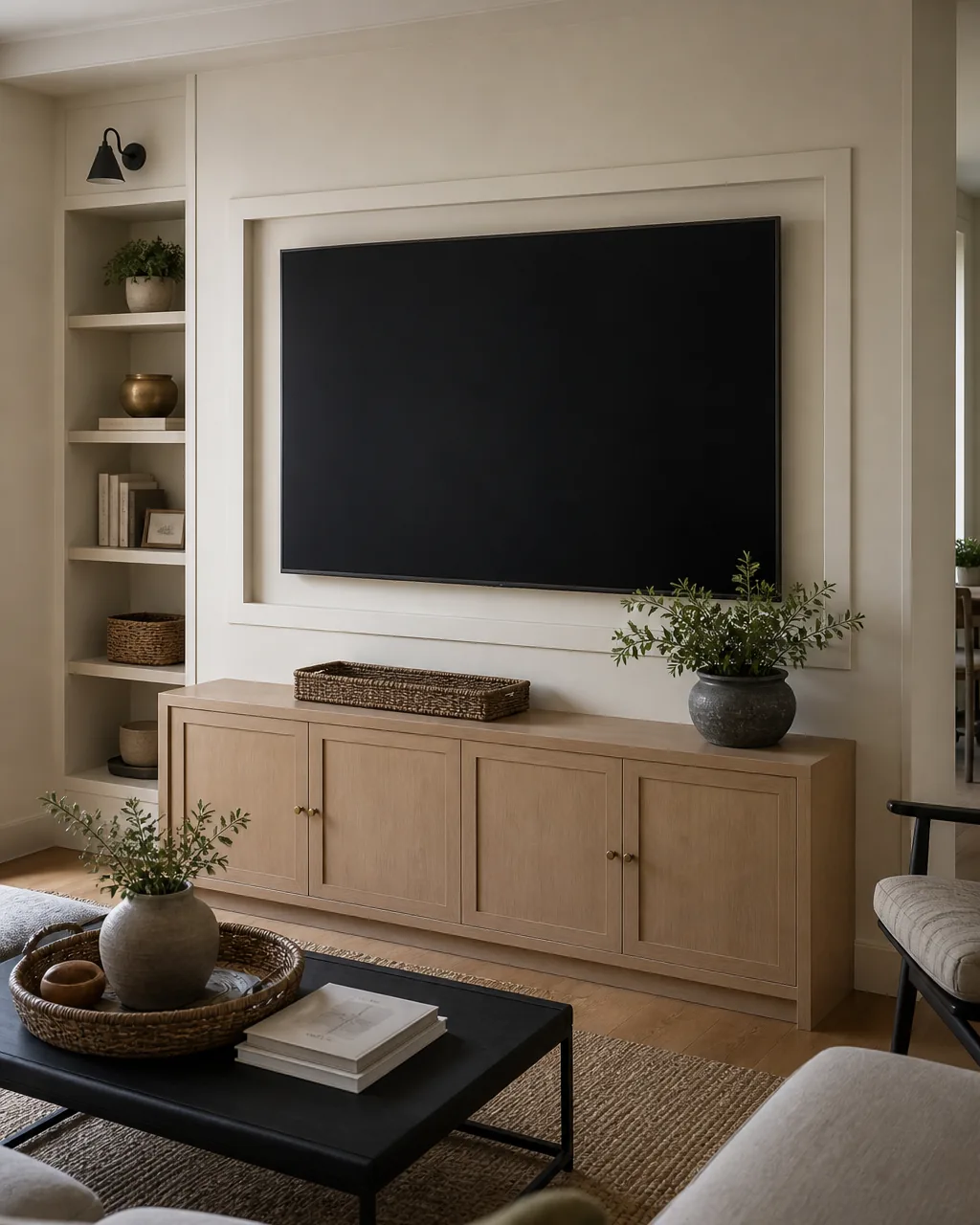
A black screen against a light wall always reads as a hole. A thin built-out frame painted or stained to match the wall around it closes that gap, so the eye sees one deliberate panel instead of a bare rectangle interrupting a plain surface. The frame only needs to be an inch or two deep to change the read.
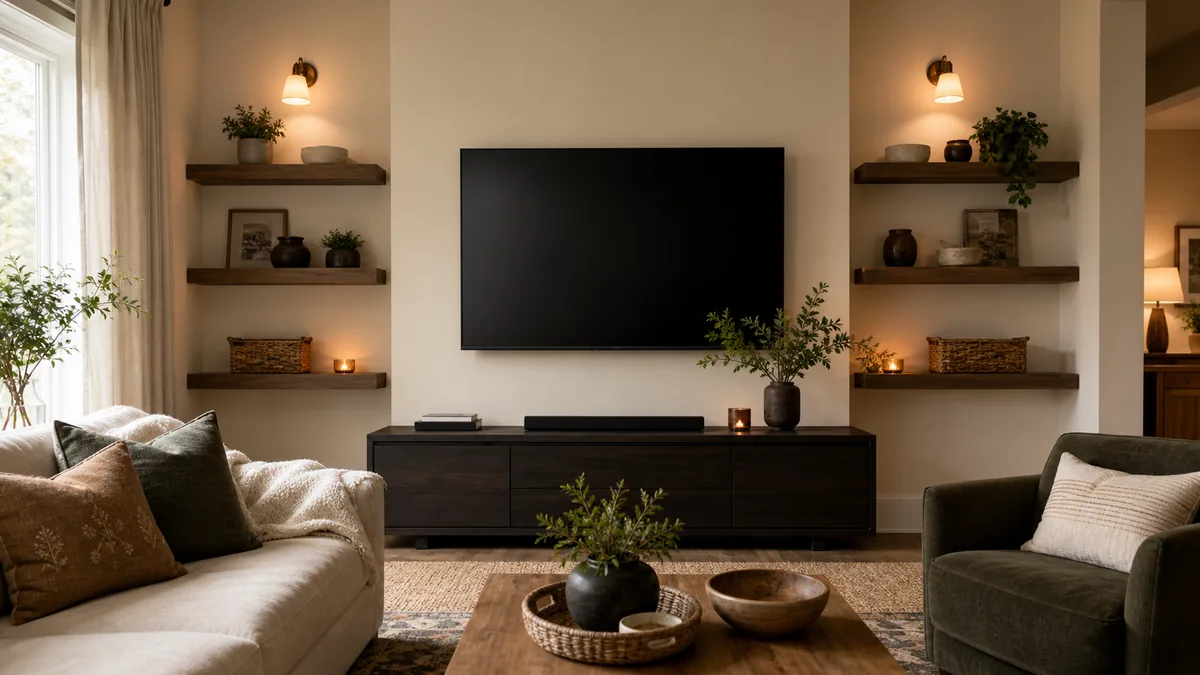
3. Flank the TV With Symmetrical Floating Shelves at the Same Height
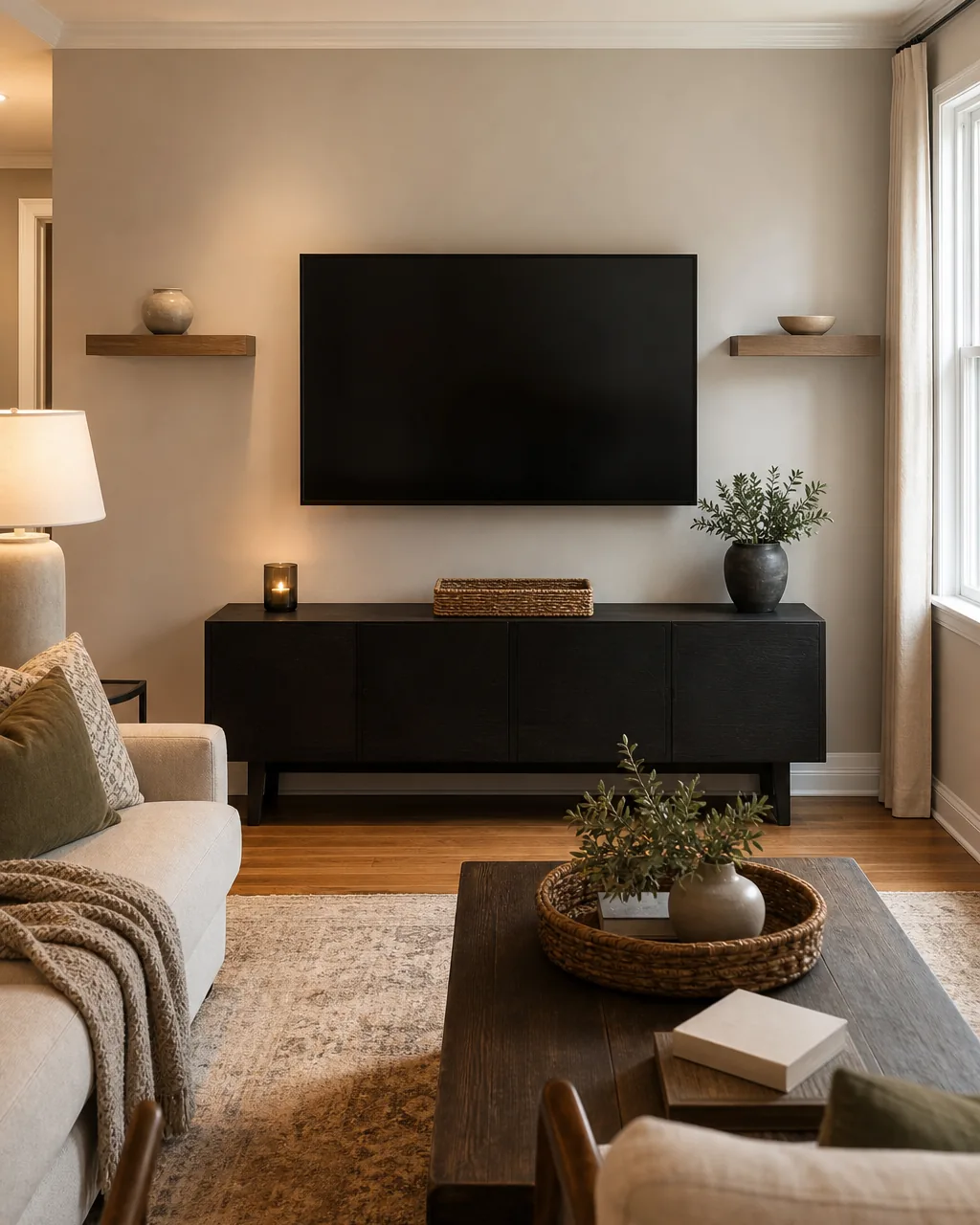
A single shelf on one side of the TV pulls the eye off center every time the screen is on. Two shelves, mounted at the exact same height and depth, keep the wall balanced whether the screen is showing something or sitting dark. Match the bracket color to the wall so the shelves read as built-in, not added on.
A blank wall, a busy wall, and a wall with visible cords are three different problems with three different starting points.
4. Build a Slatted Wood Panel Sized Just Behind the TV's Footprint
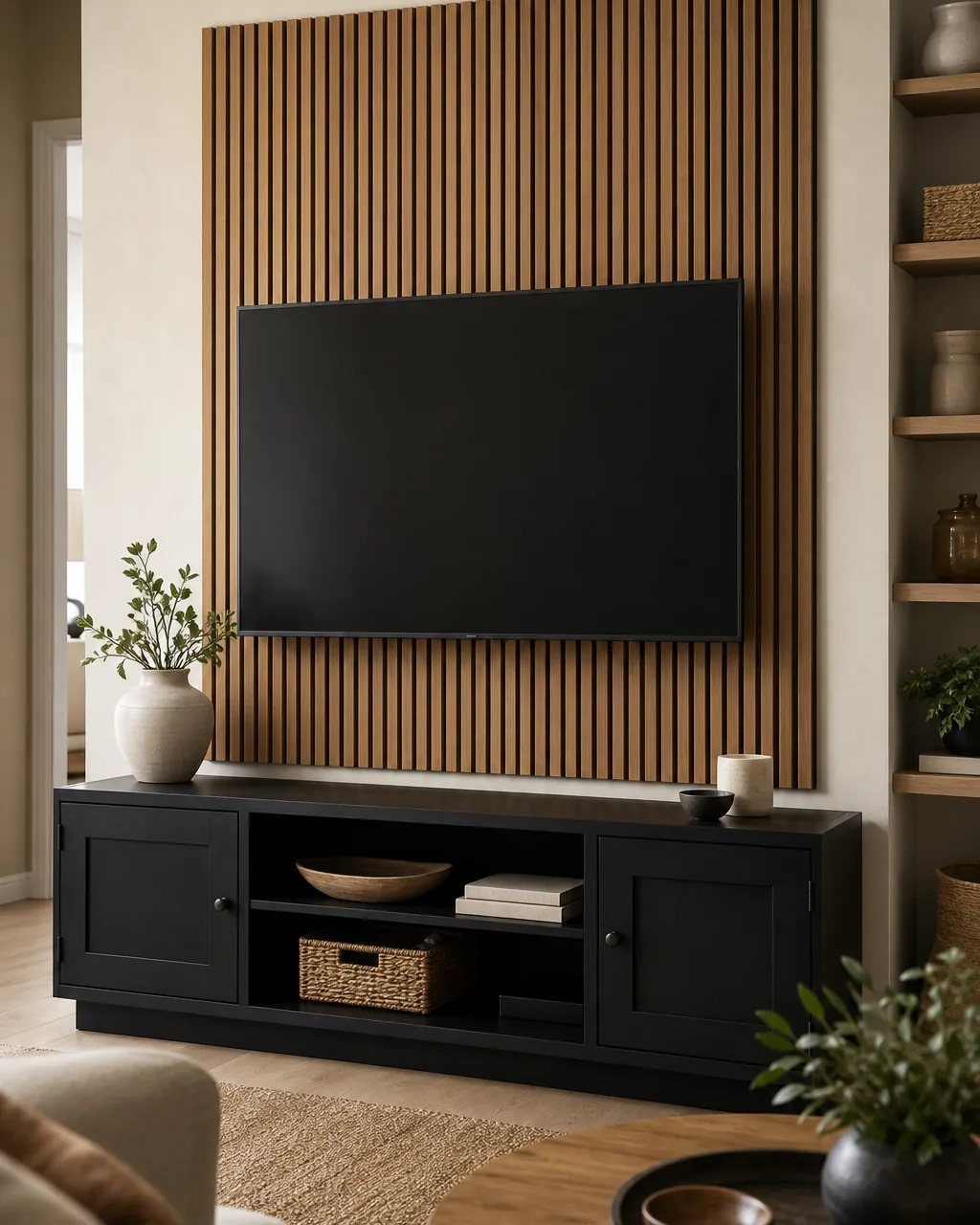
A slatted panel cut a foot or so wider and taller than the screen gives the wall texture without turning into a backdrop that competes with whatever's on screen. Keep the slats running vertically, since a vertical grain makes a low ceiling read taller and gives the mount something solid to sit against instead of bare drywall.
5. Mount Sconces at Seated Eye Level Instead of Relying on One Overhead Light
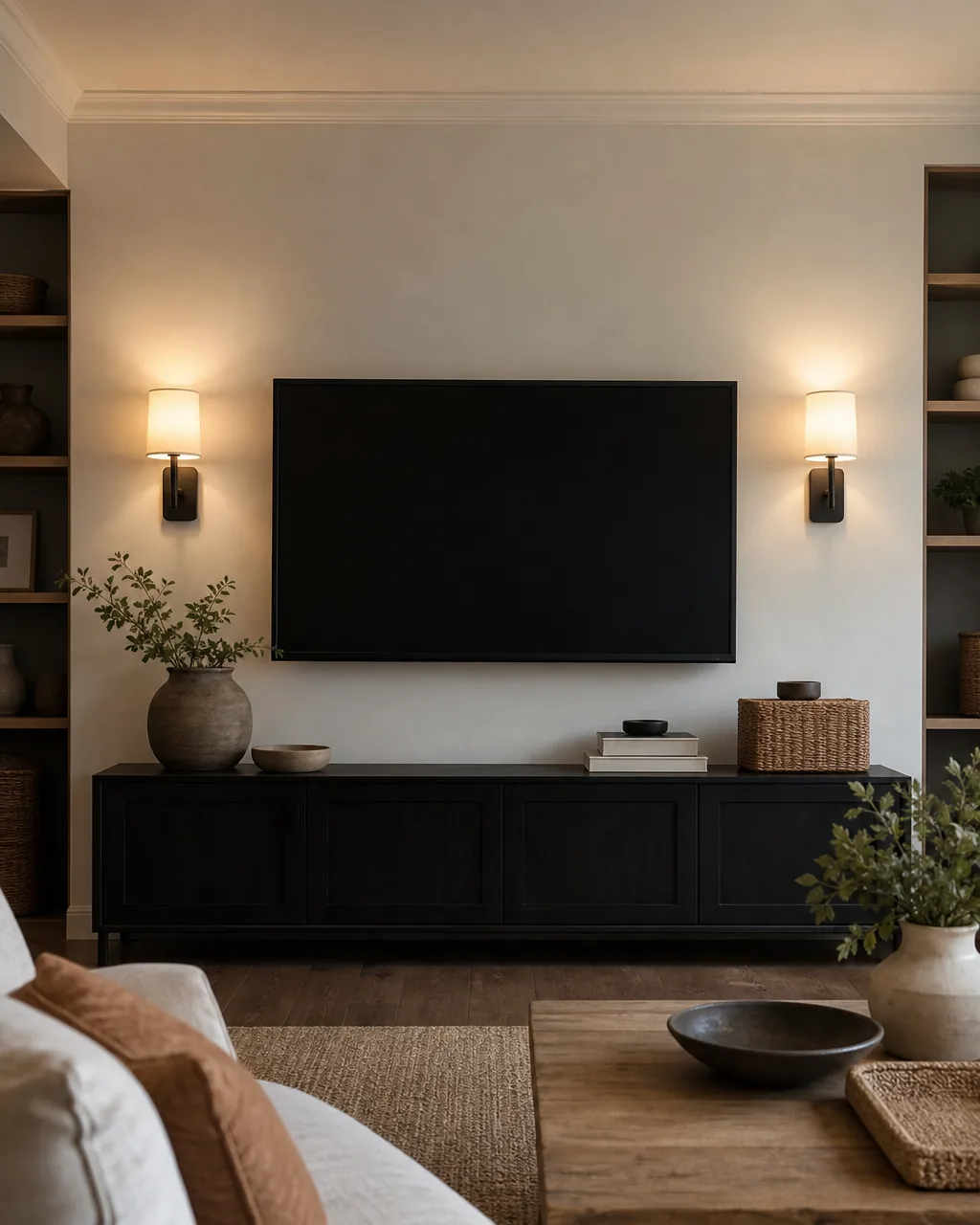
An overhead fixture washes the whole wall in flat light and throws glare straight onto the screen. Sconces mounted at the height of someone's head while seated on the sofa put light where people actually look, softly lighting the wall around the TV without bouncing back off the glass.
6. Run Cords Through an In-Wall Channel So Nothing Hangs Behind the Screen
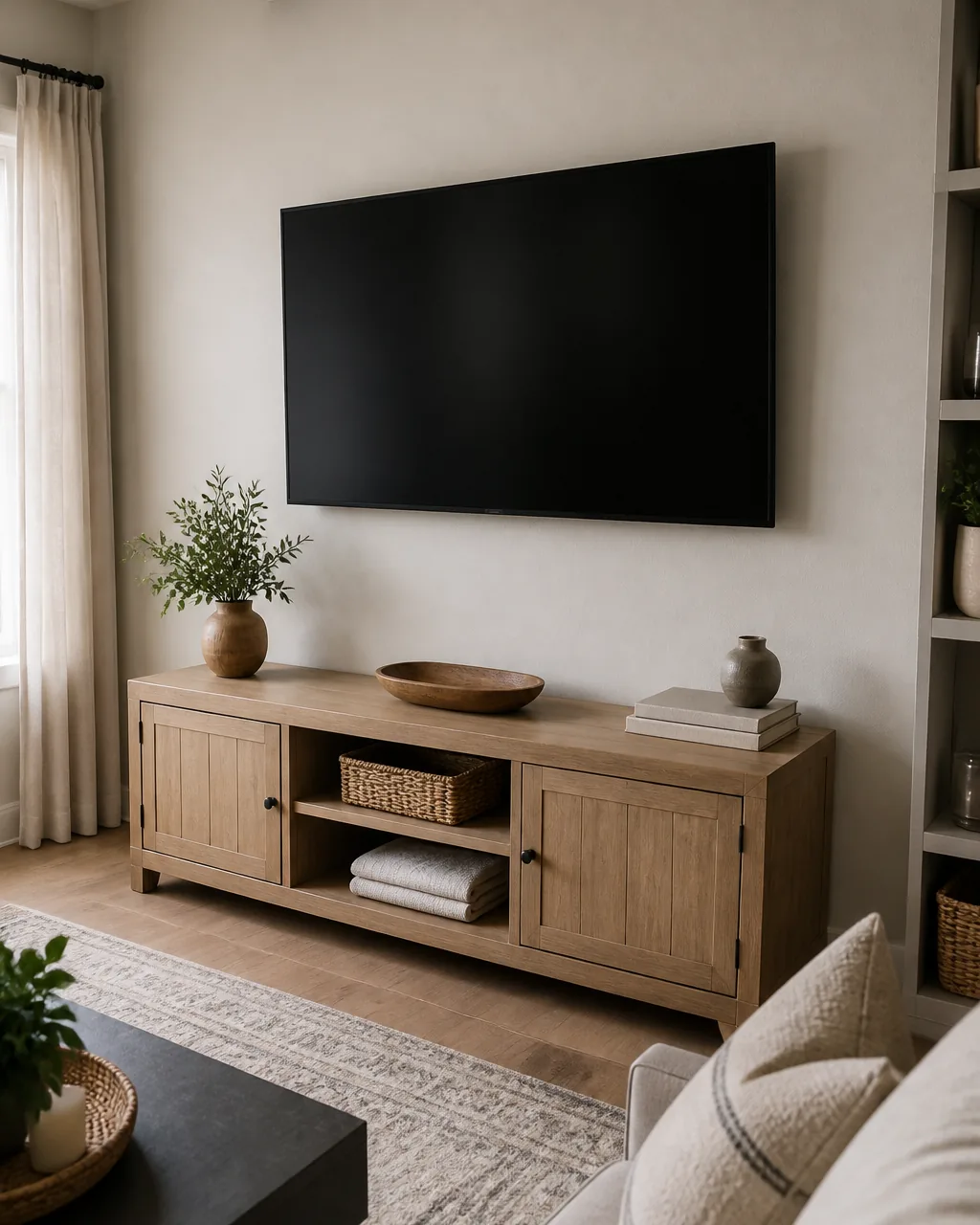
A single black cord hanging from a wall-mounted TV undoes every other decision made about that wall. An in-wall cord channel kit routes the power and cable lines down to an outlet near the console, so the wall between the screen and the furniture below it stays completely clean.
These four rules are what separate a living room where the TV disappears into the design from one where it dominates it.
7. Anchor the Wall With One Rug Sized to the Whole Seating Group
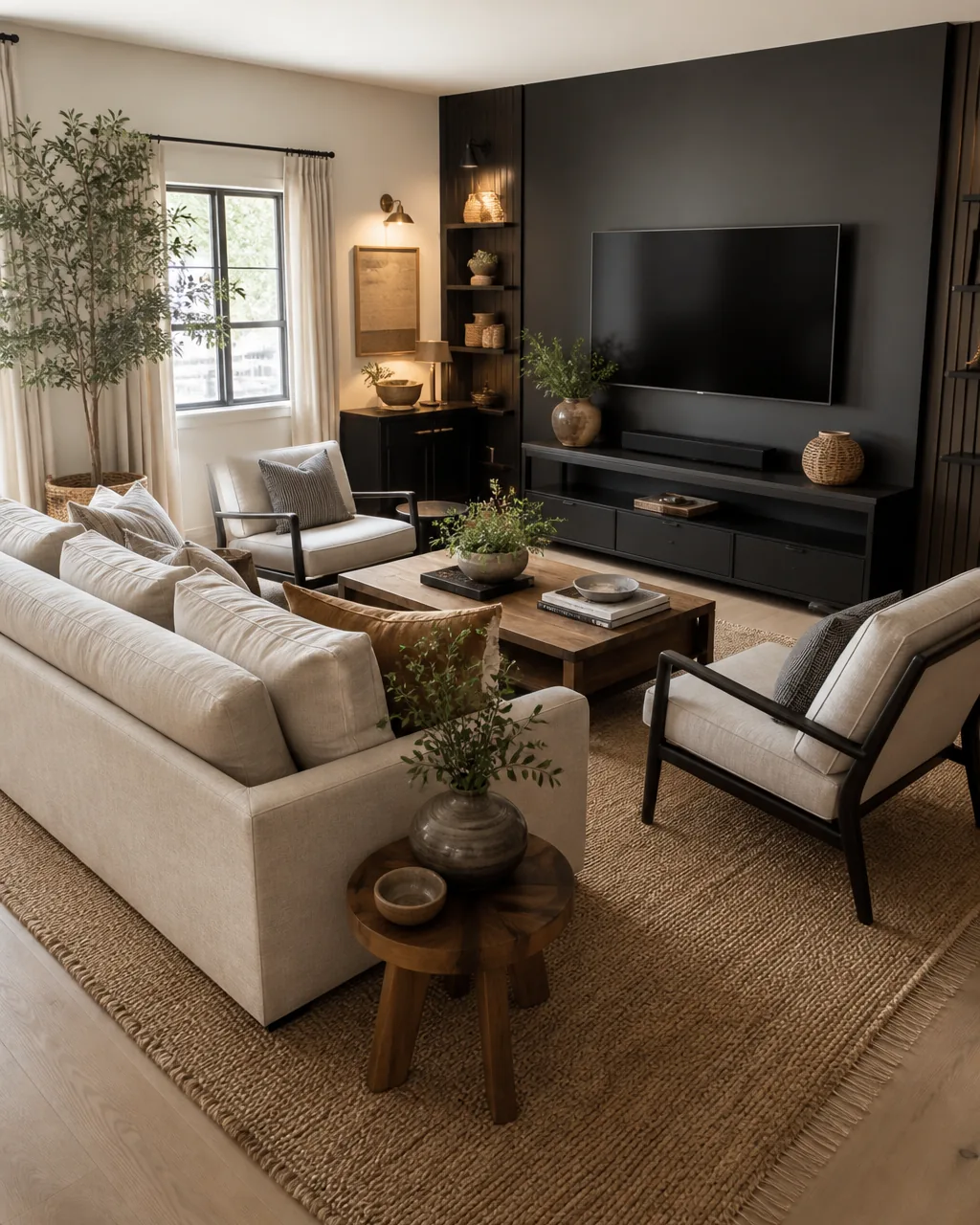
A small rug that only reaches partway under the sofa leaves the TV wall feeling disconnected from the seating across from it. One rug sized so every piece of seating has at least its front legs on it ties the whole layout together, including the wall the room is facing.
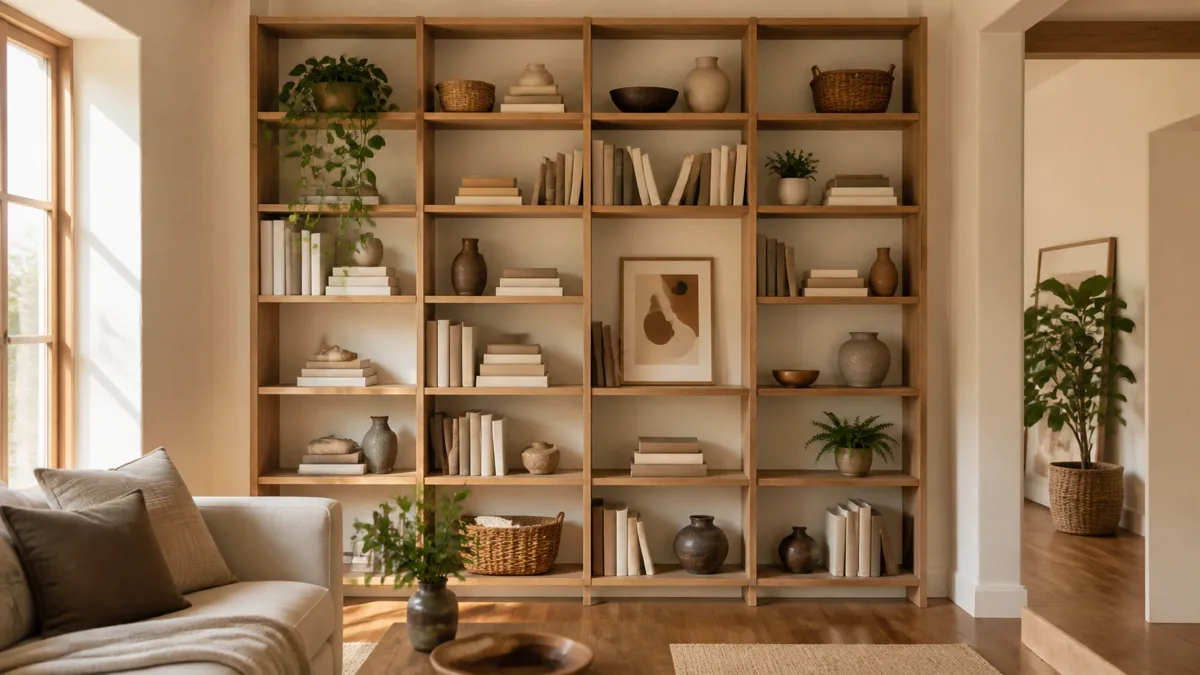
8. Let Two Asymmetrical Bookshelves Flank the TV Instead of Matching Consoles
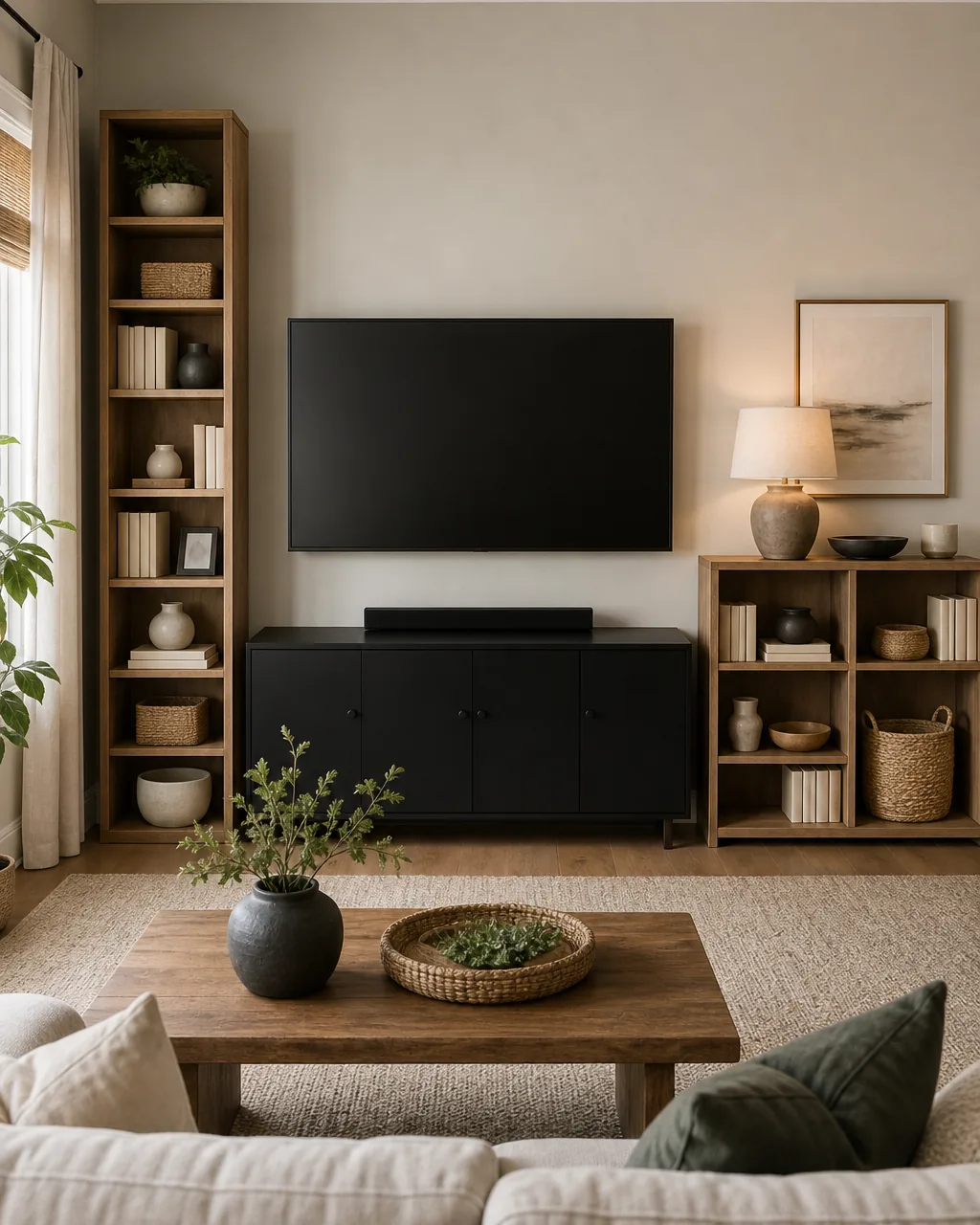
Matching furniture on both sides of a TV isn't the only way to balance the wall. A tall narrow shelf on one side and a lower wider one on the other can carry equal visual weight without being identical, which reads as considered rather than a matched furniture set built around a screen.
9. Add One Floating Shelf Above the TV for Rotating Objects, Not Storage
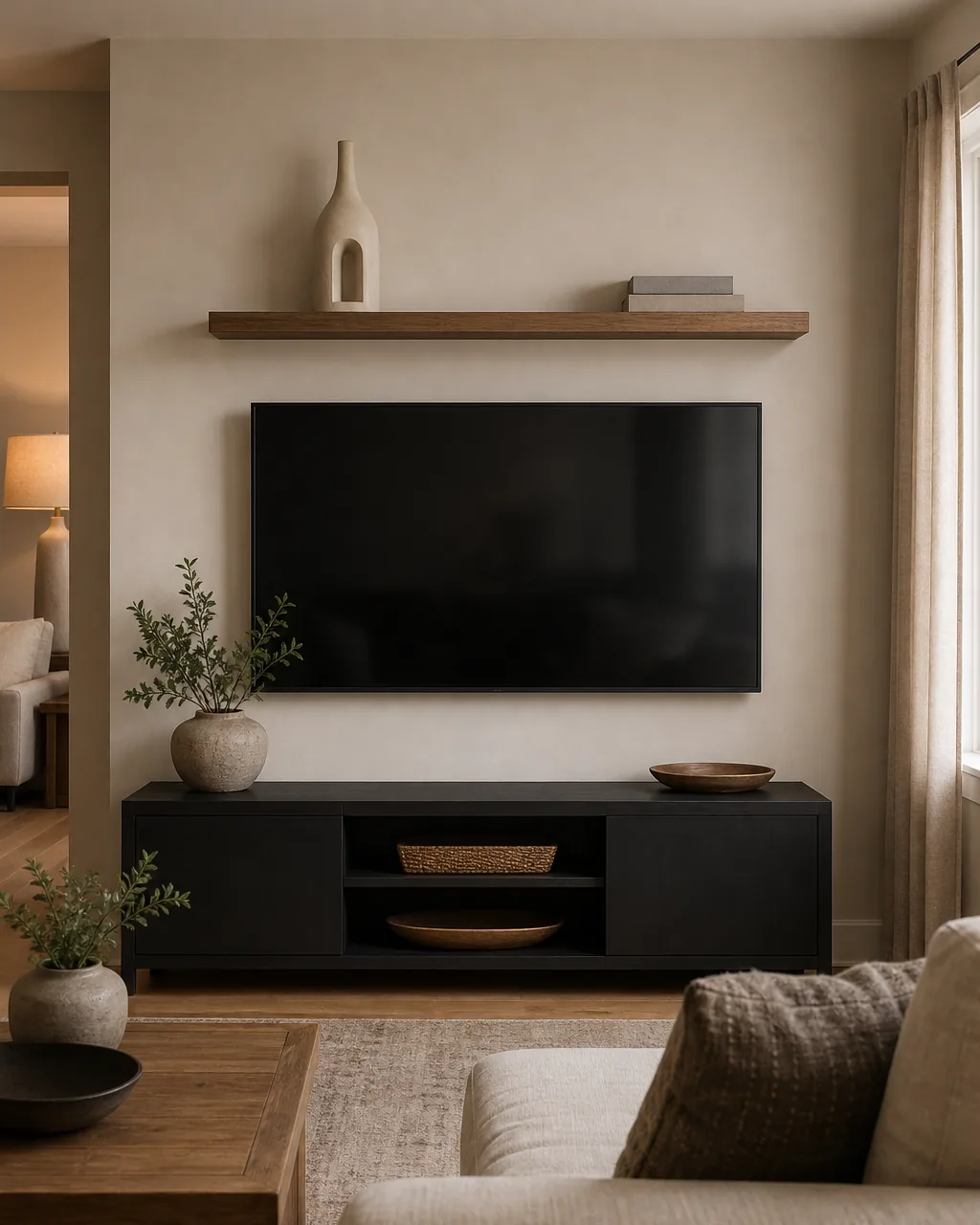
A shelf directly above the screen works as a display ledge, not another spot for baskets and books. One or two sculptural objects and something with real height, a small vase or a stack of two objects, keep the eye moving up past the screen instead of stopping cold at the top edge of the TV.
12 TV wall decor ideas that make the screen part of the design
- 1Size the Media Console to the TV, Not the WallKeep the console within a few inches of the screen's own width.
- 2Frame the Screen With a Color-Matched SurroundA thin built-out frame closes the gap between the bezel and the wall.
- 3Flank the TV With Symmetrical Floating ShelvesTwo shelves at the same height keep the wall balanced whether the screen is on or off.
- 4Build a Slatted Wood Panel Behind the TV's FootprintA panel sized just larger than the screen gives the wall texture without competing.
- 5Mount Sconces at Seated Eye LevelSconces put light where people look without bouncing back off the glass.
- 6Run Cords Through an In-Wall ChannelRoute power and cable lines down to an outlet so nothing hangs visible.
- 7Anchor the Wall With One Rug Sized to the Seating GroupOne rug under every seating piece ties the layout to the wall it faces.
- 8Let Two Asymmetrical Bookshelves Flank the TVA tall narrow shelf and a lower wide one carry equal weight without matching.
- 9Add One Floating Shelf Above the TV for Rotating ObjectsA display ledge, not more storage, keeps the eye moving past the screen.
- 10Paint a Contained Color-Block Panel Behind the TVA bounded painted panel gives the wall shape without covering the whole surface.
- 11Layer Three Materials So the TV Isn't the Only TextureWood, stone, and metal on the same wall keep the screen from reading as the lone focal texture.
- 12Let the Screen Show Art When It's OffA rotating still-image mode keeps the wall from going dead black between uses.
styledhomenotes.com
10. Paint a Contained Color-Block Panel Behind the TV Instead of the Whole Wall
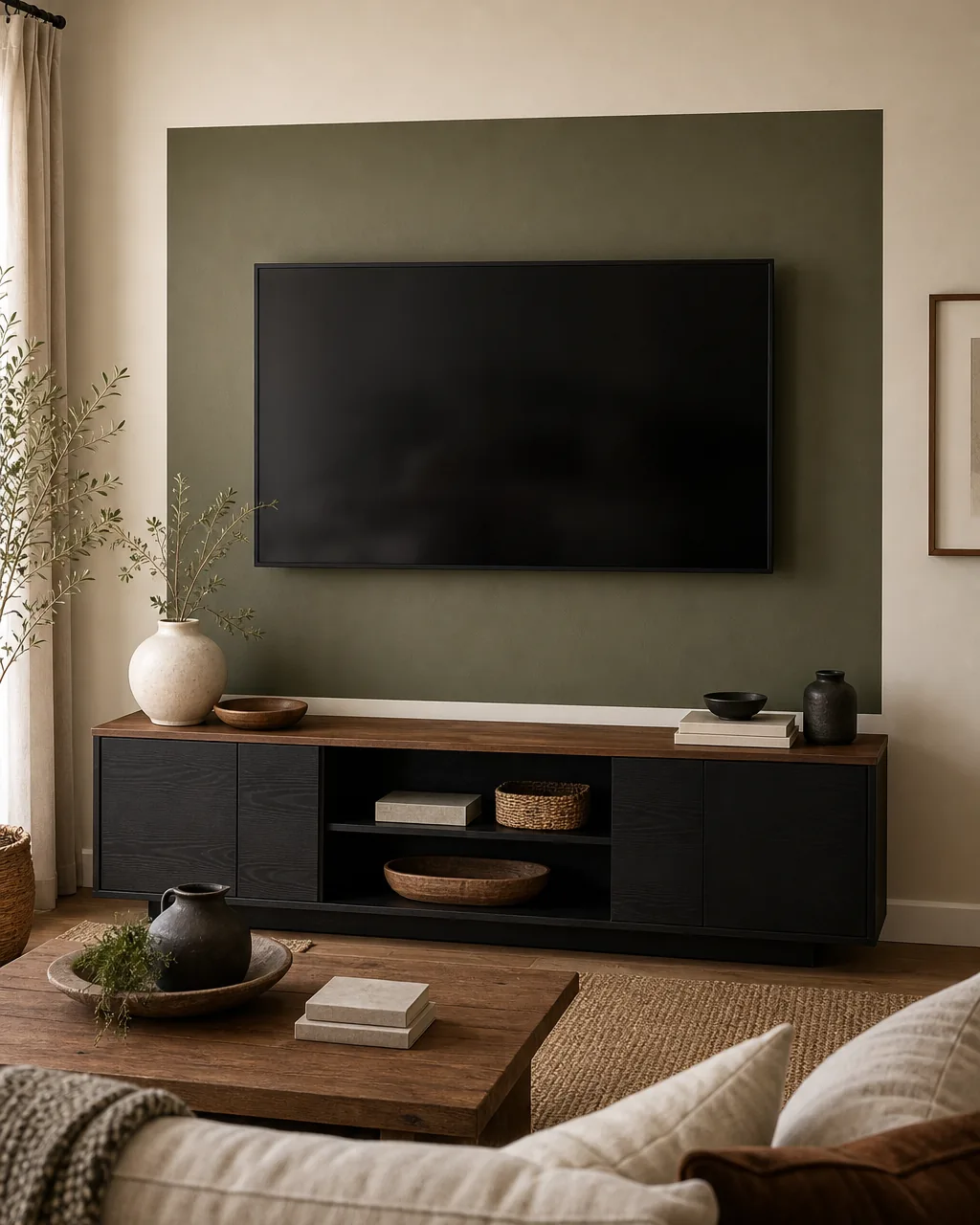
Painting an entire wall a deep color behind a TV can make the room feel smaller than it is. A bounded rectangle of color, sized a foot or two past the screen on every side and taped off with a clean edge, gives the wall depth and a sense of intention without darkening the whole room.
11. Layer Three Materials on the Wall So the TV Isn't the Only Texture
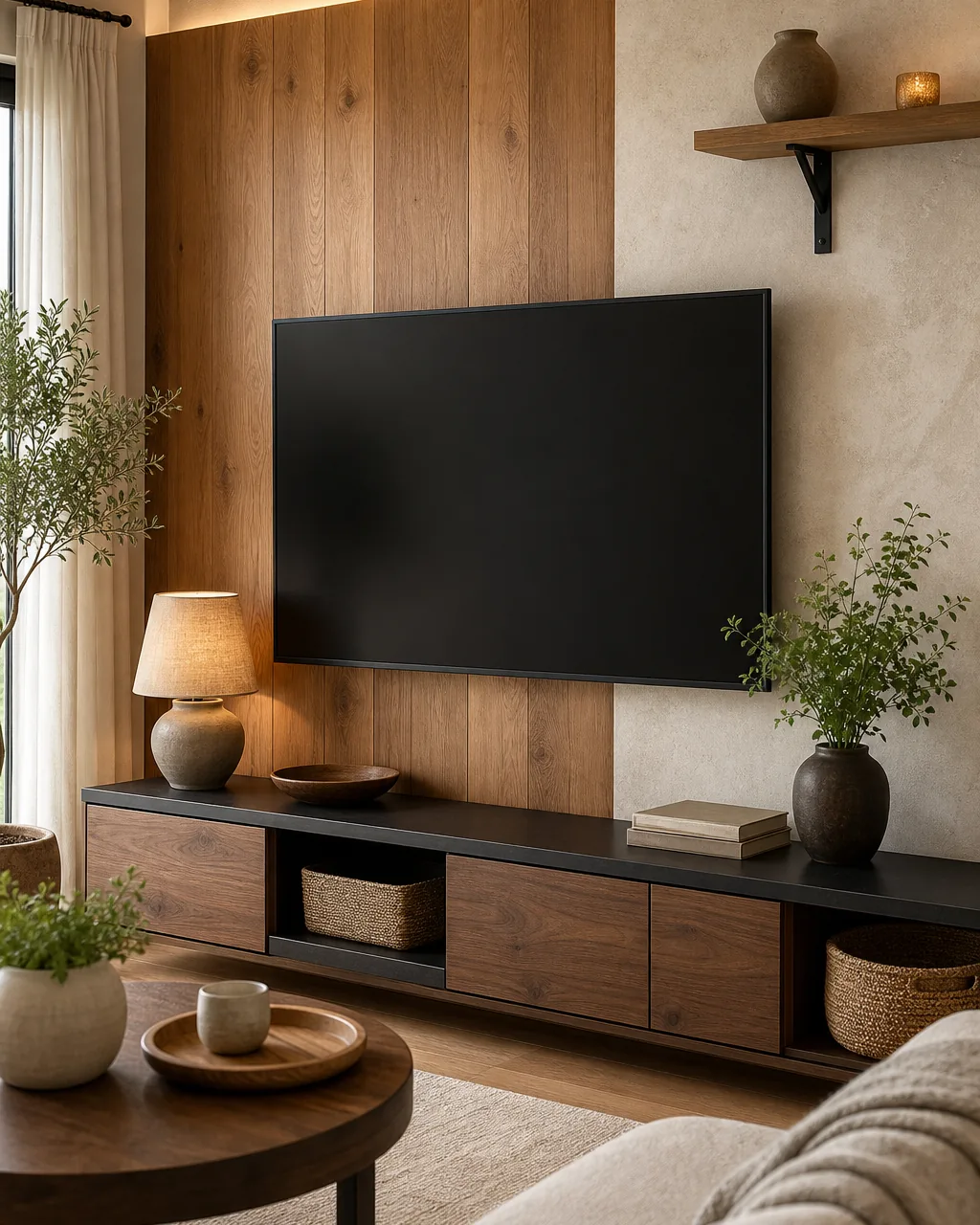
A flat painted wall with a TV mounted on it has exactly one texture: the screen's glass. Bringing in wood paneling, a plaster or stone-look panel section, and one metal element, a shelf bracket or a light fixture, gives the eye three other surfaces to read besides the screen itself.
12. Let the Screen Show Art When It's Off Instead of a Dead Black Rectangle
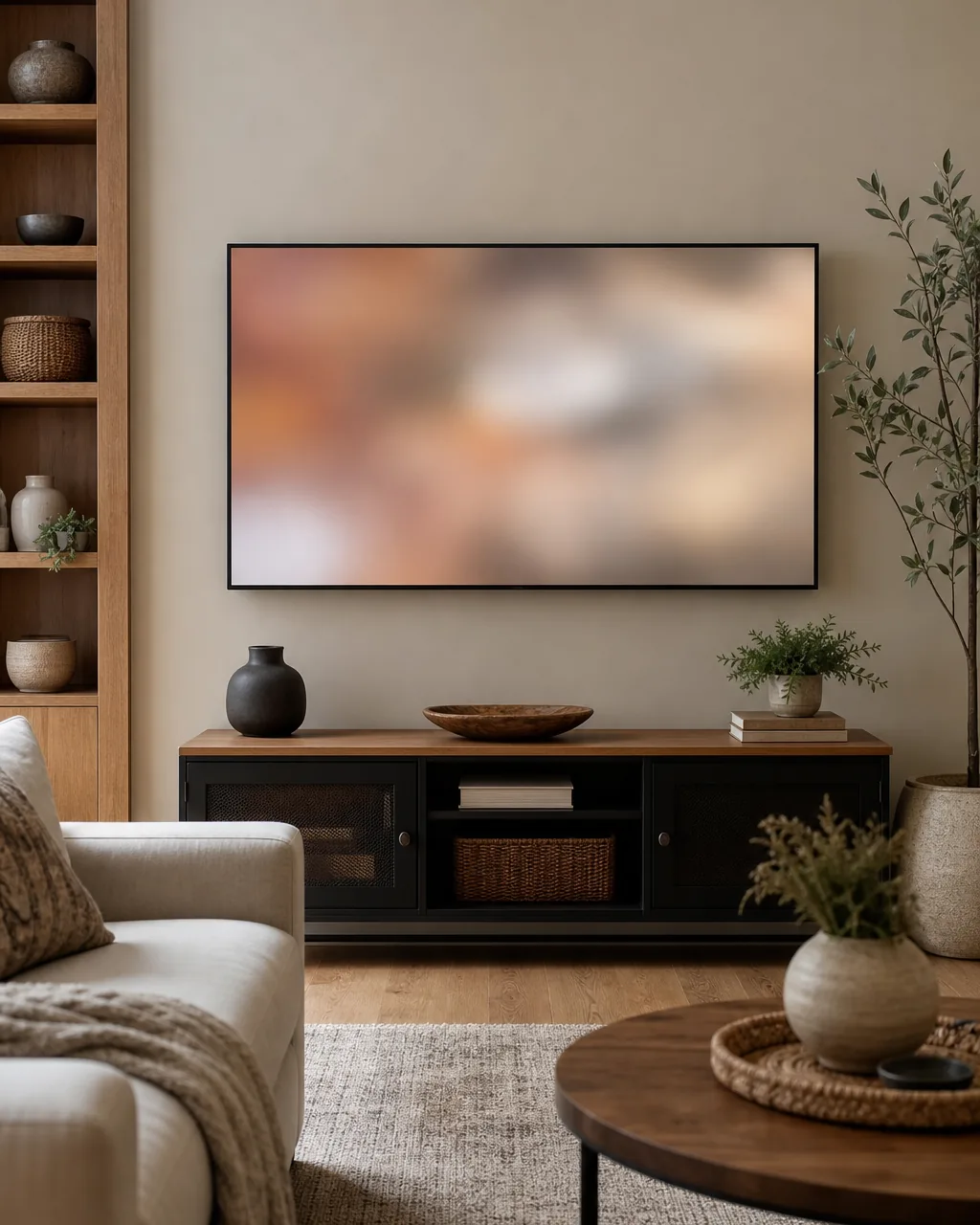
A screen that goes fully black the moment it's off turns back into the one thing this whole wall was designed around avoiding. A rotating still-image or art mode, set to something that fits the room's palette, keeps the screen from reading as a dead rectangle every time nobody's watching anything.
For the furniture that sits below this wall, see the living room console table decor guide, or the living room shelf decor ideas for styling the shelves that flank it.

Nora writes about small, livable rooms for real apartments. Her own TV wall went through three console sizes before one finally matched the screen instead of swallowing it. Every idea here is tested against a real living room, not a showroom vignette.
Nora Ellis edits Styled Home Notes. More from Nora: living room console table decor, living room shelf decor ideas.