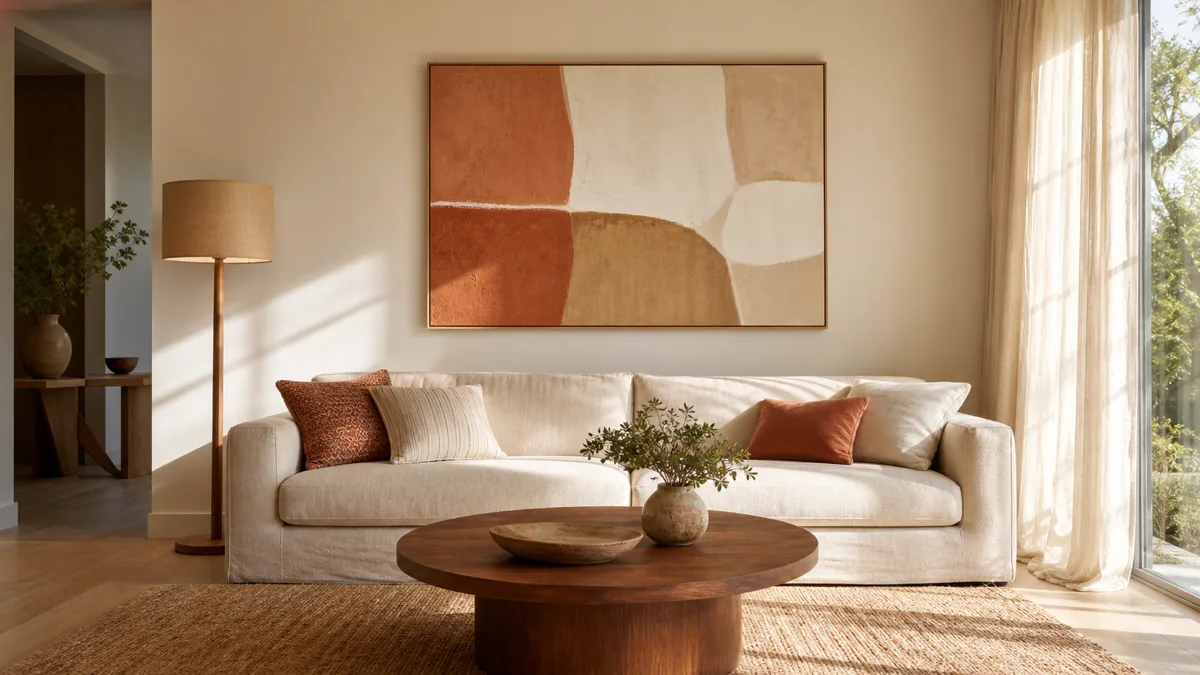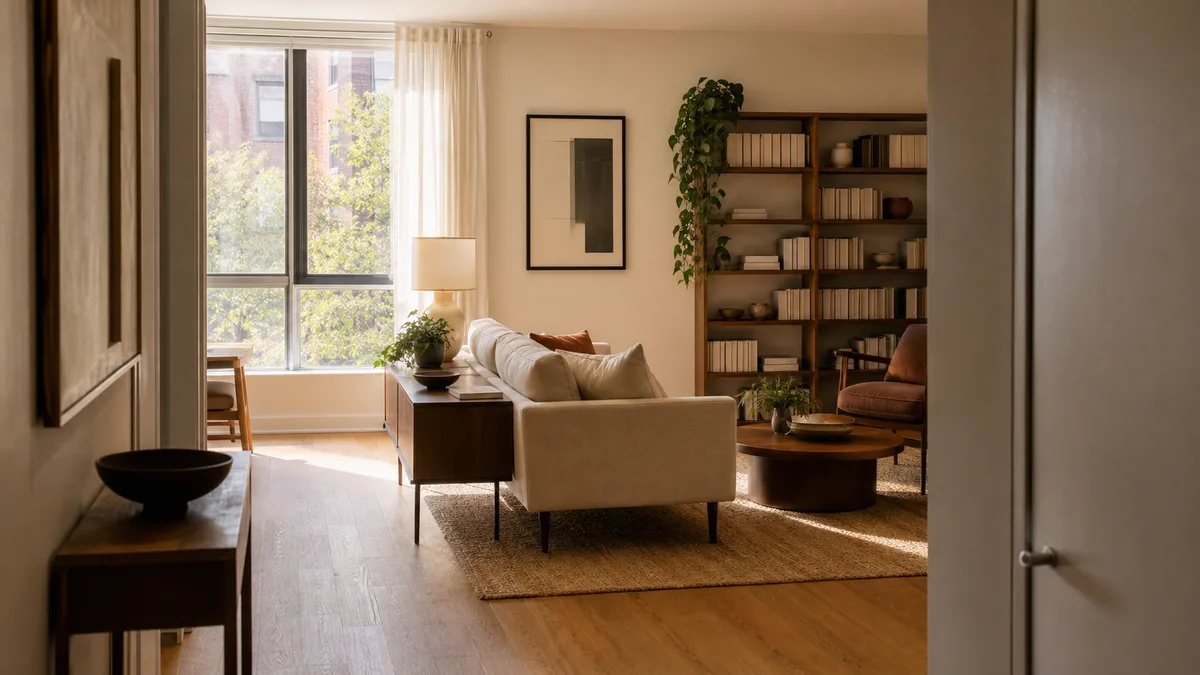
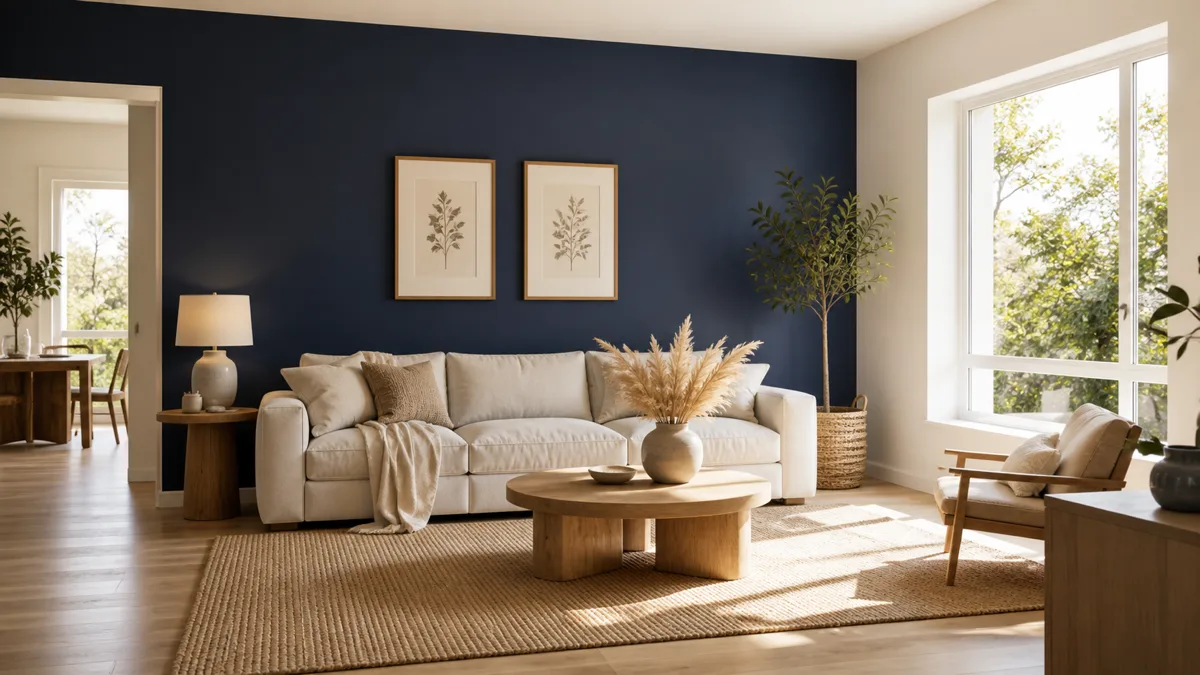
12 Living Room Accent Wall Ideas That Give the Room a Focal Point
An accent wall is the simplest way to tell a living room where to look. Four identical walls leave the eye wandering. One wall that stands apart anchors the furniture, sets the palette, and tells the room what it is about.
The ideas here range from a can of paint and a free afternoon to wood slats, stone veneer, and hand-applied plaster that stays for years. Pick the one that matches your budget and lease.
For more ways to dress the walls around the room, see our roundup of living room wall decor ideas.
1. Dark Paint Behind the Sofa
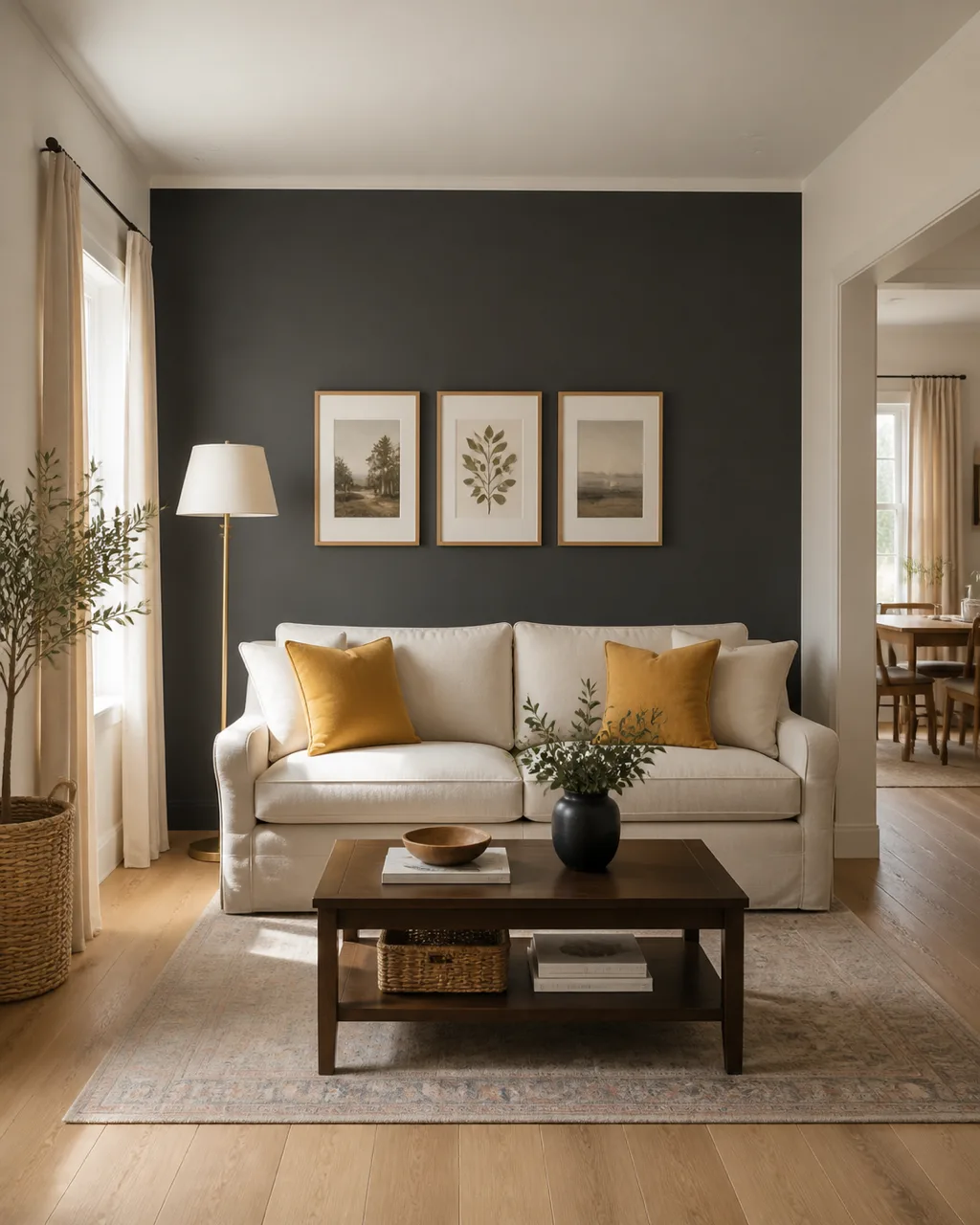
One wall in a deep charcoal, navy, or forest green behind the main seating creates instant contrast. The sofa reads as lighter and the room gains depth without moving a single piece of furniture. Dark paint absorbs light in a way that makes the wall recede slightly, which can actually make a room feel larger, not smaller.
- Choose a color at least four or five shades darker than the other three walls for clear separation
- Use a flat or matte finish to absorb light and reduce glare from table lamps
- Tape off the ceiling line and trim carefully because dark paint shows every wobble
- Pull one accent color from the dark wall into throw pillows or a rug to connect the palette
- Test with a sample pot painted on a two-by-two-foot square before committing to a full gallon
2. Peel-and-Stick Wallpaper Feature
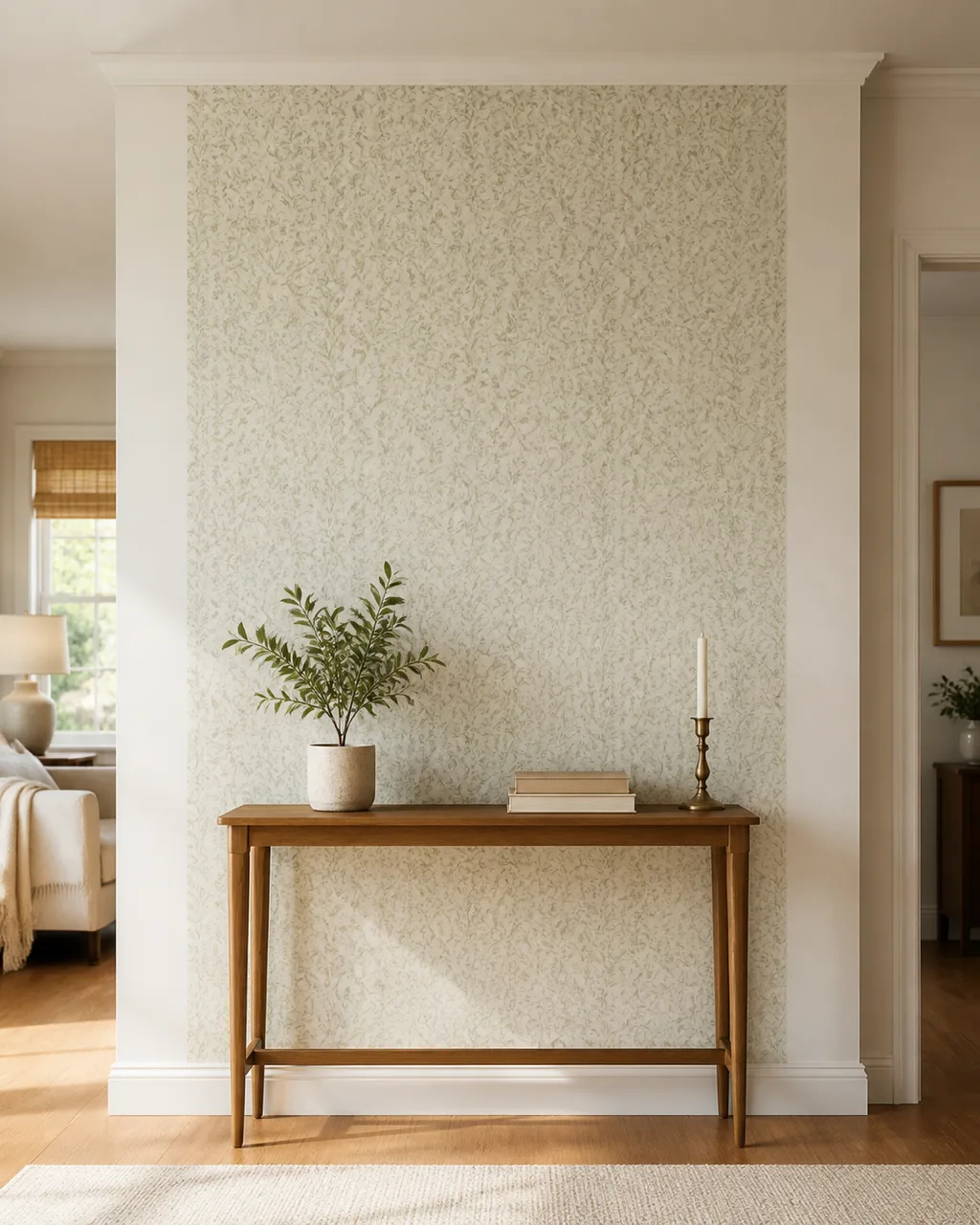
Removable wallpaper gives a wall pattern and personality without permanent change. A botanical or geometric print behind a console or TV stand adds a layer of interest that paint alone cannot achieve.
The wallpaper peels off cleanly when the lease ends or the mood shifts. For pattern options and application tips, our peel-and-stick wallpaper ideas guide covers what works on different wall surfaces.
- Pick a pattern with at most two dominant colors so the room stays calm around it
- Smooth the surface with a damp cloth and let it dry completely before applying
- Overlap each strip by about one-eighth of an inch and trim the excess with a sharp blade
- Swap the print seasonally or whenever the mood changes without leaving residue
- Pair with solid-color furniture in front of the wallpapered section so the pattern stays the focus
3. Wood Slat Panel Wall
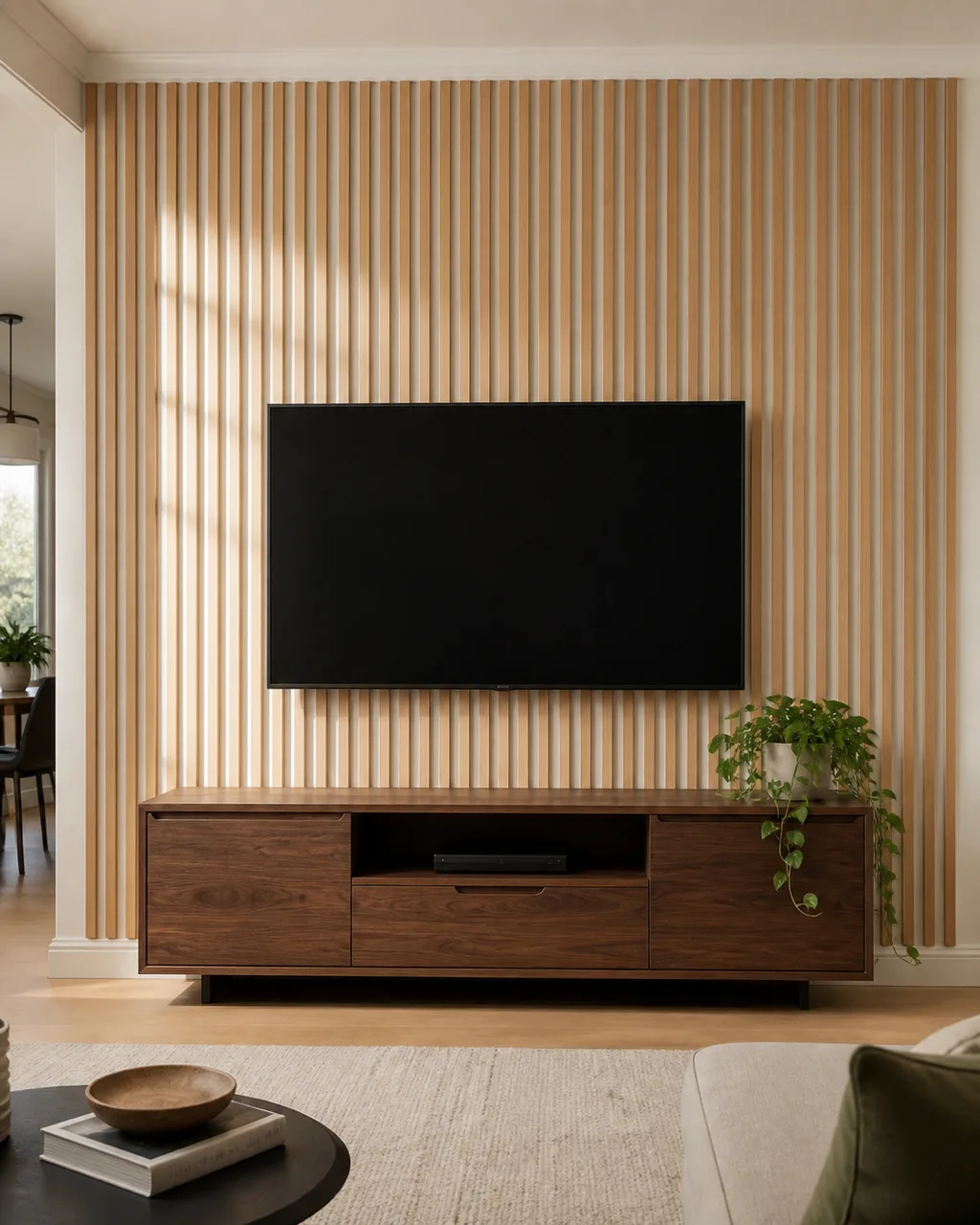
Vertical or horizontal wood slats mounted on a single wall bring texture and warmth that paint cannot replicate. The slats cast thin shadows that shift through the day as light moves across the room. Pre-made panels simplify the installation, or individual furring strips give full control over spacing and wood choice.
- Space slats about one to one-and-a-half inches apart for a clean, modern rhythm
- Sand and seal raw wood to prevent warping in rooms with variable humidity levels
- Mount on a plywood backer board so individual slats stay perfectly straight over time
- Choose a warm oak or walnut tone that picks up the color of existing flooring or trim
- Run slats floor to ceiling for full impact or stop at chair-rail height for a subtler effect
4. Floor-to-Ceiling Stone Veneer
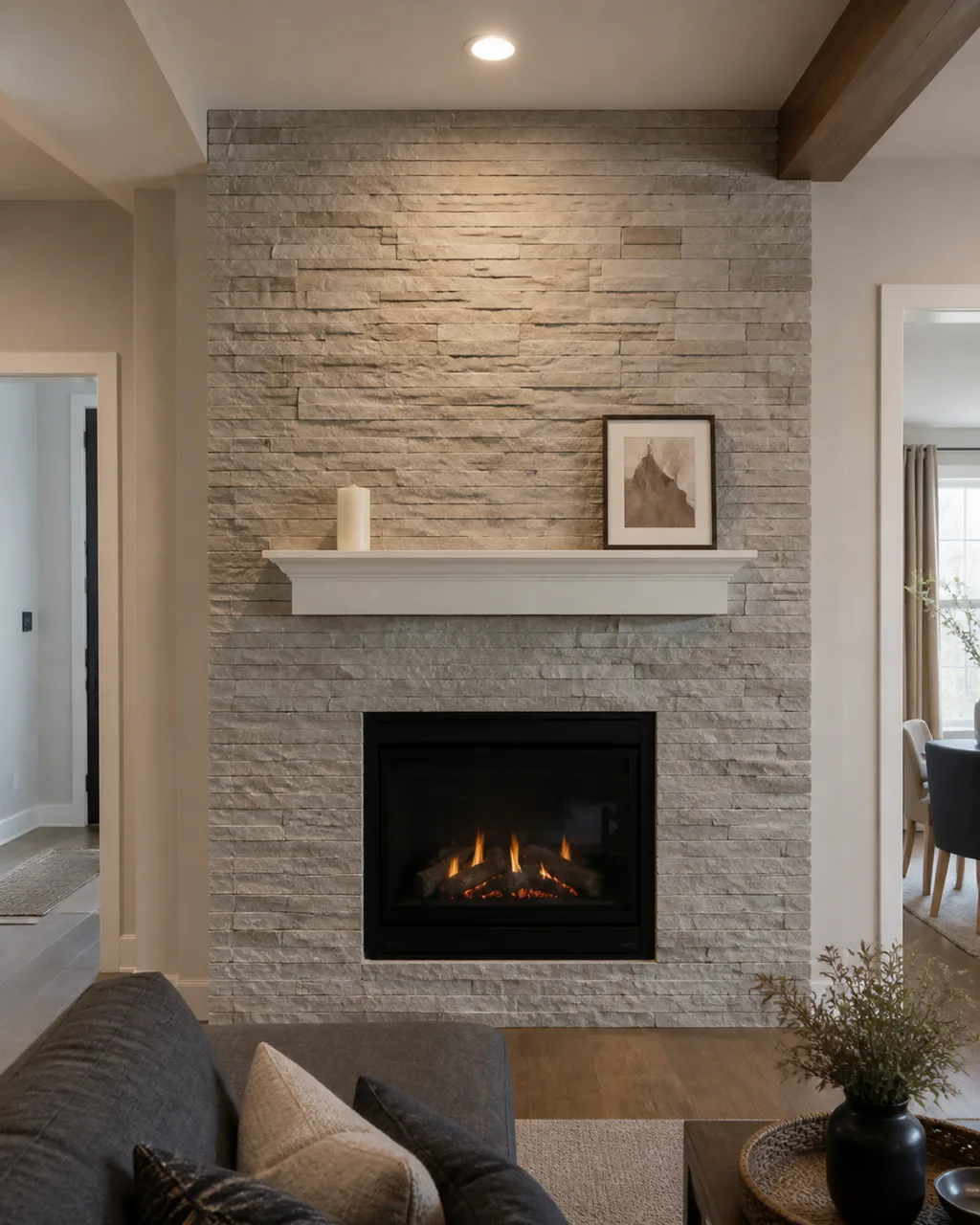
Thin stone panels or faux stone tiles on a fireplace wall or the wall behind a TV bring a raw, earthy weight to the room. The variation in stone color and texture creates visual depth that a flat painted surface cannot match. Modern veneer panels weigh a fraction of real stone and install directly over drywall with construction adhesive.
- Select a stone color that ties into the room's existing neutral tones so it grounds rather than clashes
- Stagger the panel joints so no two horizontal seams line up across the wall
- Seal the stone surface with a matte sealant to prevent dust from settling in porous crevices
- Light the wall with a recessed downlight or sconce to show off the texture after dark
- Keep furniture and decor near the stone wall minimal so the surface reads as the main event
5. Board and Batten Treatment
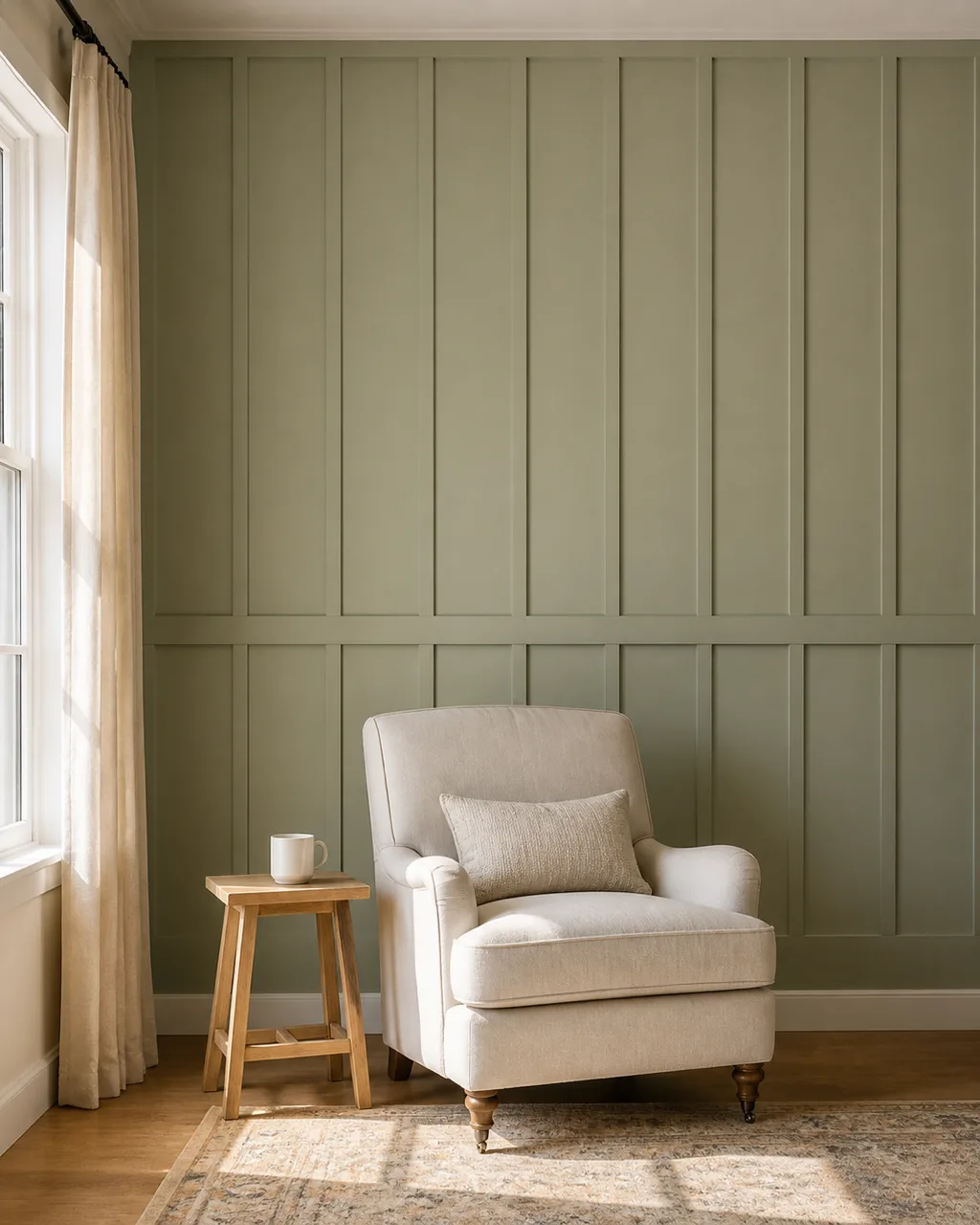
Vertical battens with a horizontal rail turn a flat builder-grade wall into something with architectural character. The shadow lines between battens create a rhythm that makes the wall feel crafted. Board and batten works in traditional, transitional, and modern farmhouse rooms.
- Measure and space battens evenly at twelve to sixteen inches on center for a balanced look
- Use a nail gun and construction adhesive together for a solid hold that resists settling
- Caulk every seam where battens meet the rail before painting for a seamless finish
- Paint the battens and wall behind them the same color for a tonal, textured effect
- Pair with a clean-lined sofa or console in front so the wall treatment, not the furniture, leads
6. Gallery Wall as Accent
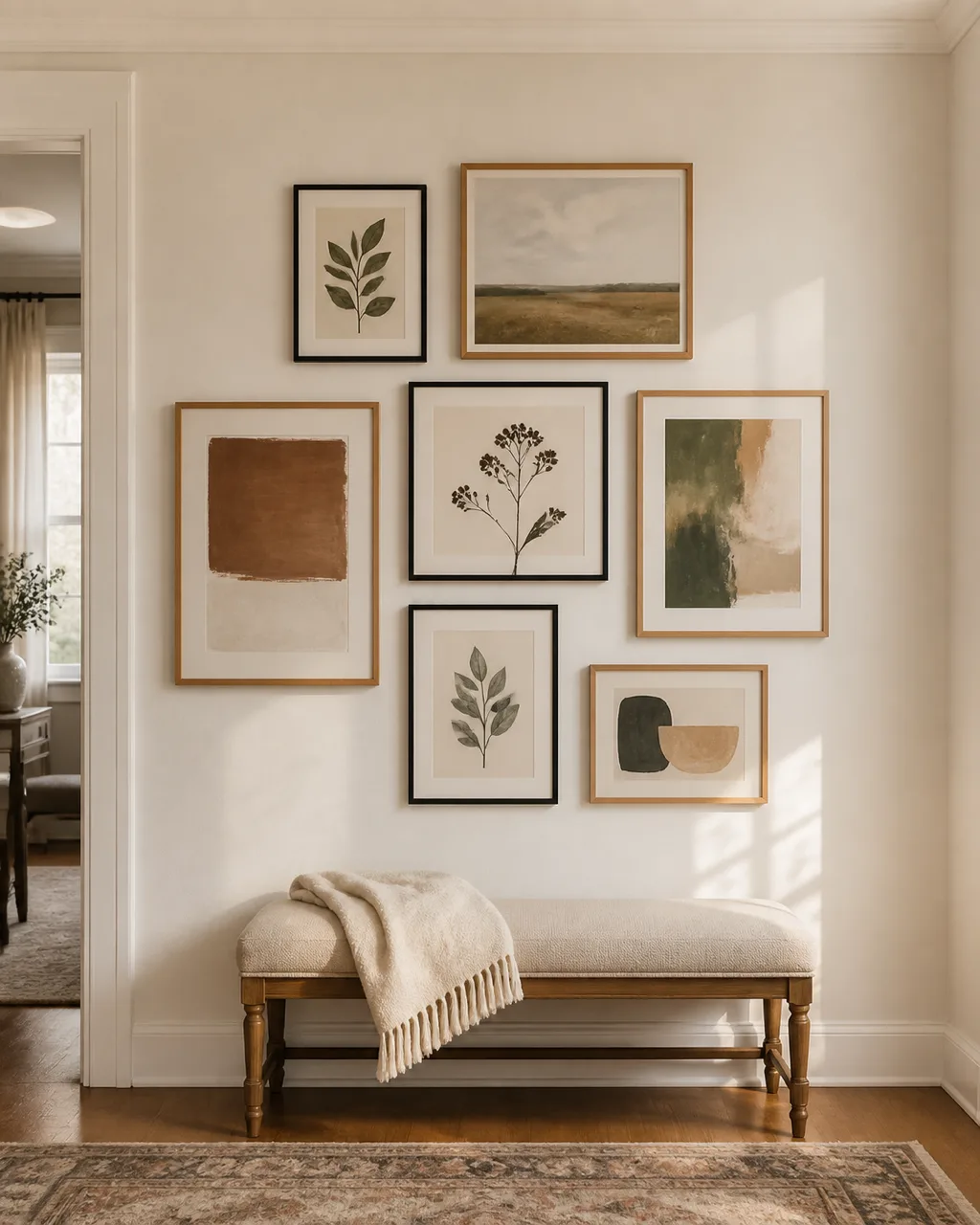
A curated cluster of framed art, prints, and photographs turns a blank wall into a visual anchor without changing the wall surface at all. The density of frames and mats creates enough visual weight to read like an accent wall.
For renters, this is one of the strongest options because the frames come down and the nail holes fill in thirty seconds. See our guide to living room gallery wall ideas for layout tips.
- Mix frame sizes but limit finishes to two or three tones for cohesion across the cluster
- Lay the full arrangement on the floor first and trace each frame on kraft paper before nailing
- Hang the center of the grouping at eye level, roughly fifty-seven inches from the floor
- Include at least one piece noticeably larger than the rest to anchor the composition
- Swap prints seasonally by reusing the same nail holes instead of patching and rehanging
7. Painted Arch or Color Block
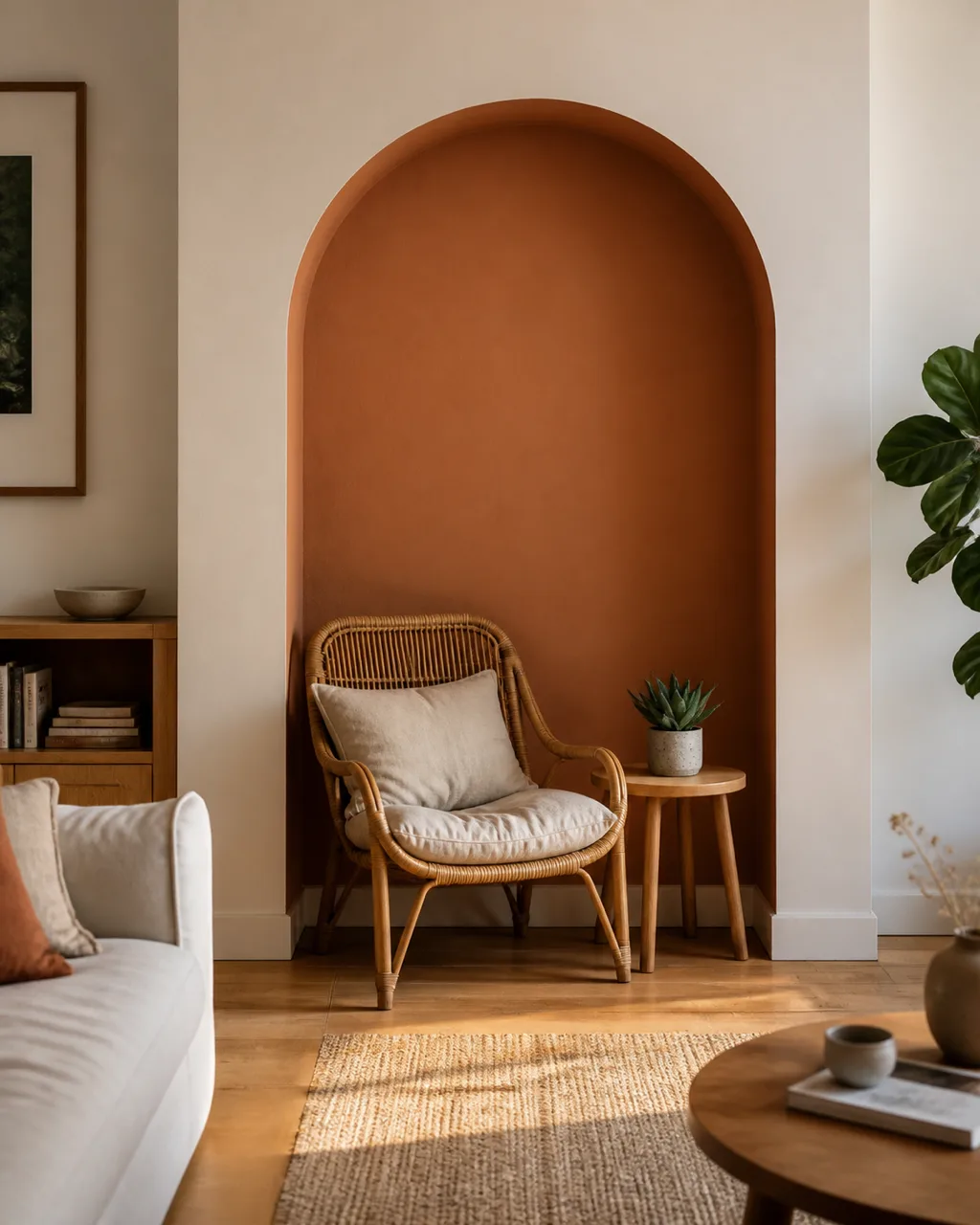
A painted arch or geometric color block behind a reading chair or bookshelf creates a soft focal point without committing an entire wall. The arch frames whatever sits in front of it and draws the eye to a specific zone. It uses leftover paint and a couple of hours.
- Trace the arch with a pencil tied to a string anchored at the base center for a smooth curve
- Use a small angled brush for the curve and a mini roller for the flat interior section
- Pick a color that already appears somewhere in the room so the arch feels connected, not random
- Keep the arch height taller than the furniture it frames to maintain visual proportion
- Layer a wall-mounted shelf or sconce inside the arch to add depth within the frame
8. Textured Plaster or Limewash Finish
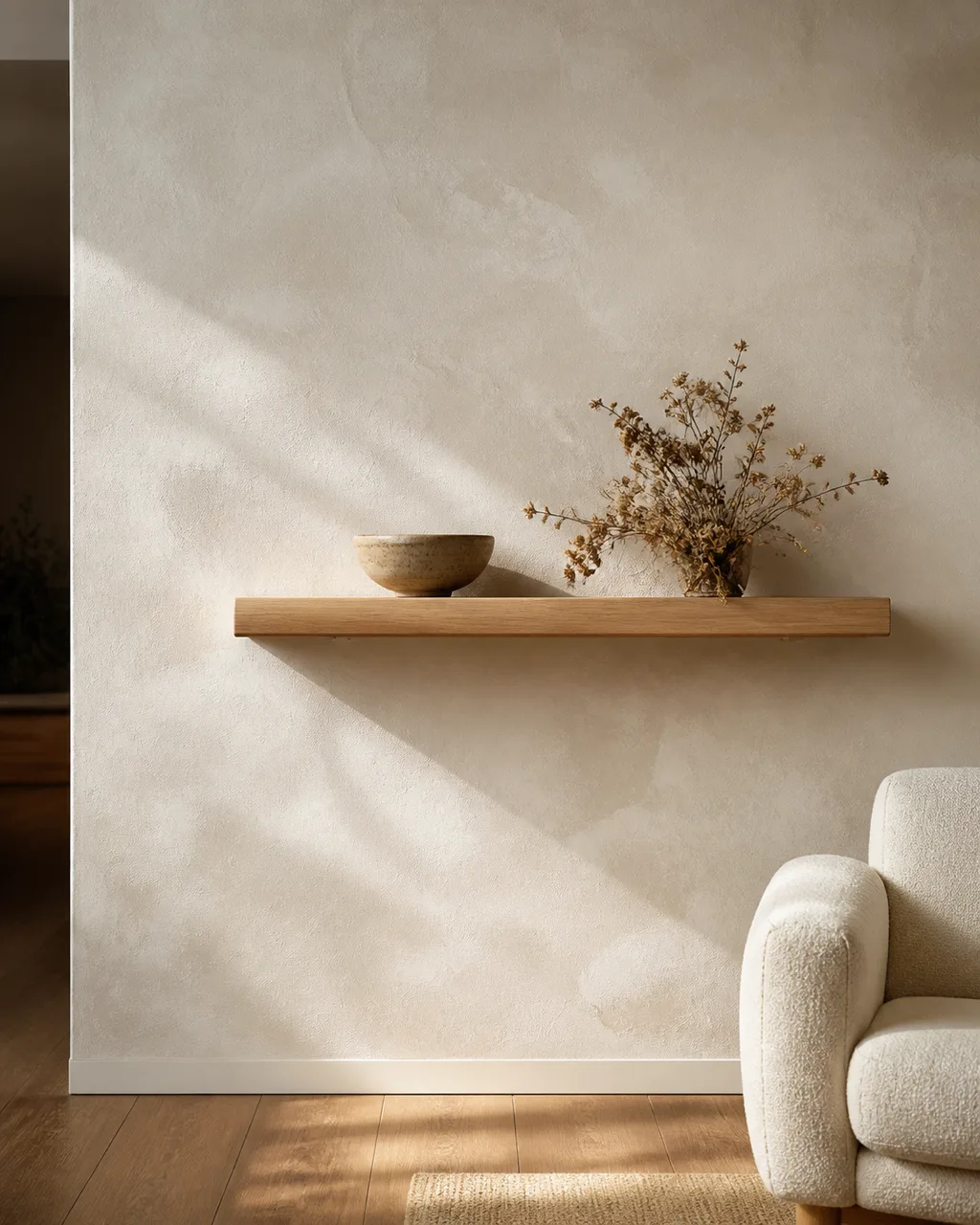
A hand-applied limewash or Roman clay finish on one wall creates depth and movement that flat paint cannot. The surface shifts in tone as light moves across it, revealing brush strokes and trowel marks that give the wall a handmade, European quality. The finish is subtle enough to work as a neutral but has enough variation to hold attention.
- Apply in thin, overlapping strokes using a Japanese trowel or a wide natural-bristle brush
- Build up two to three coats, letting each dry fully before adding the next layer
- Work in small sections so the wet edges blend seamlessly without visible seams
- Choose a warm white or clay tone for understated depth that reads in both daylight and lamplight
- Seal with a clear matte wax to protect the finish from fingerprints and scuffs
9. Wainscoting or Full-Height Paneling
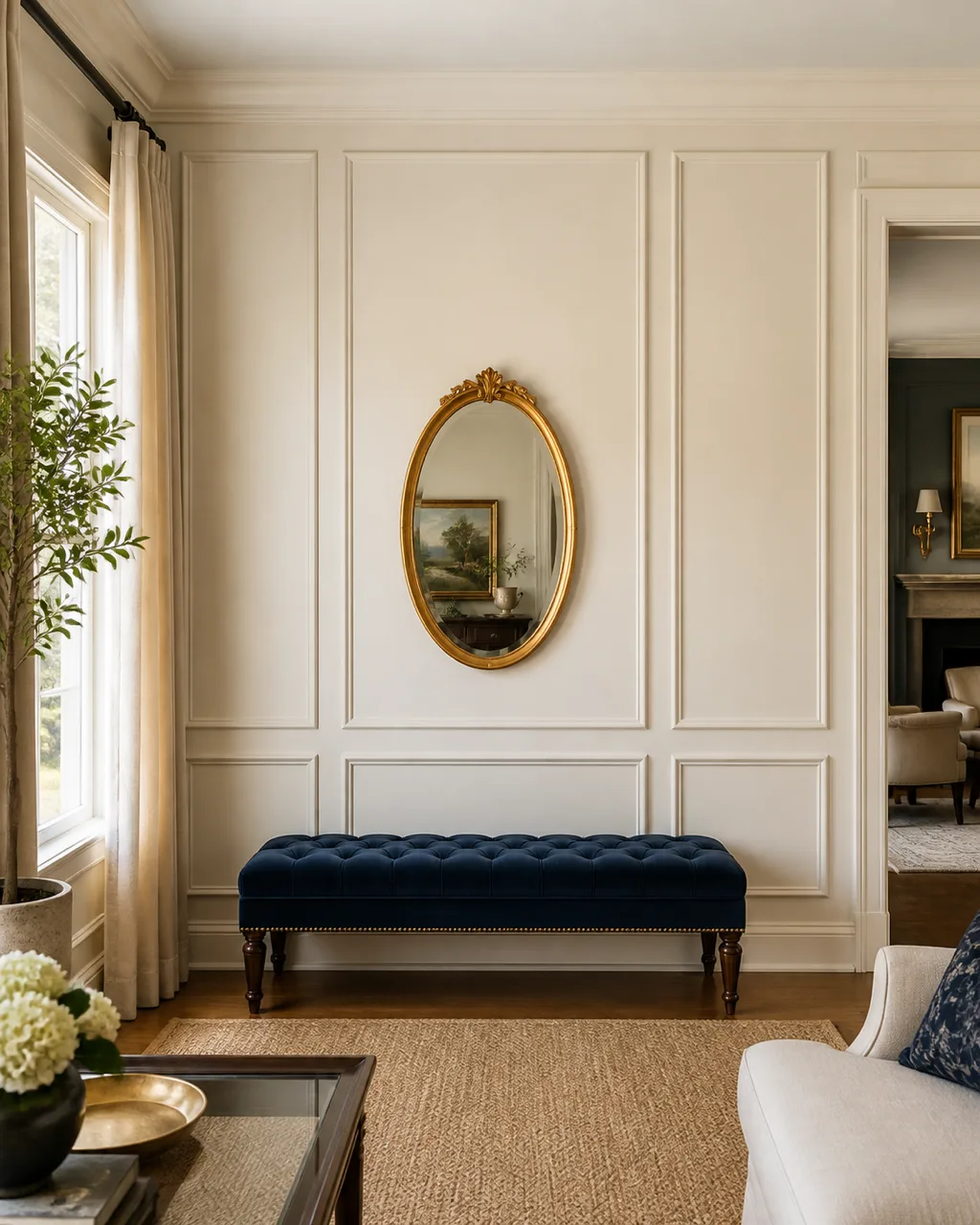
Half-wall wainscoting or full-height paneling in a contrasting color adds dimension and a sense of craftsmanship that flat drywall lacks. The shadow lines between panels create a subtle grid that makes the wall feel deliberate. In rooms with high ceilings, paneling adds horizontal structure that brings the scale down to a comfortable proportion.
- Set the rail height at one-third of the wall for classic proportion in half-wall installations
- Use MDF panels for a smooth, paintable surface that resists warping and takes primer well
- Fill every nail hole and sand smooth before the final coat of paint for clean lines
- Paint the wainscoting a shade darker or lighter than the upper wall for tonal contrast
- Add a flat cap rail wide enough to display small frames, a candle, or a trailing plant
12 accent wall ideas at a glance
- 1Dark PaintOne can of deep charcoal, navy, or forest green behind the sofa creates instant depth.
- 2Peel-and-Stick WallpaperRemovable botanical or geometric print, renter-friendly and swap-ready.
- 3Wood Slat PanelVertical slats add texture and warmth without a drop of paint.
- 4Stone VeneerThin panels or faux stone tiles bring earthy weight to a fireplace or TV wall.
- 5Board and BattenVertical battens and a rail turn a flat wall into architectural character.
- 6Gallery WallA curated cluster of frames that reads like an accent wall without touching the surface.
- 7Painted ArchA soft focal point behind a chair or shelf using leftover paint.
- 8Limewash PlasterHand-applied texture that shifts in tone as light moves through the day.
- 9WainscotingPaneling adds dimension, shadow lines, and a crafted feel to any wall.
- 10Brick ExposureOriginal brick or thin veneer panels bring industrial warmth and character.
- 11Patterned TileCement or ceramic tile around a fireplace adds color and pattern with zero upkeep.
- 12Oversized ArtOne large painting or mural that acts as both art and accent wall in one move.
10. Brick Exposure or Faux Brick
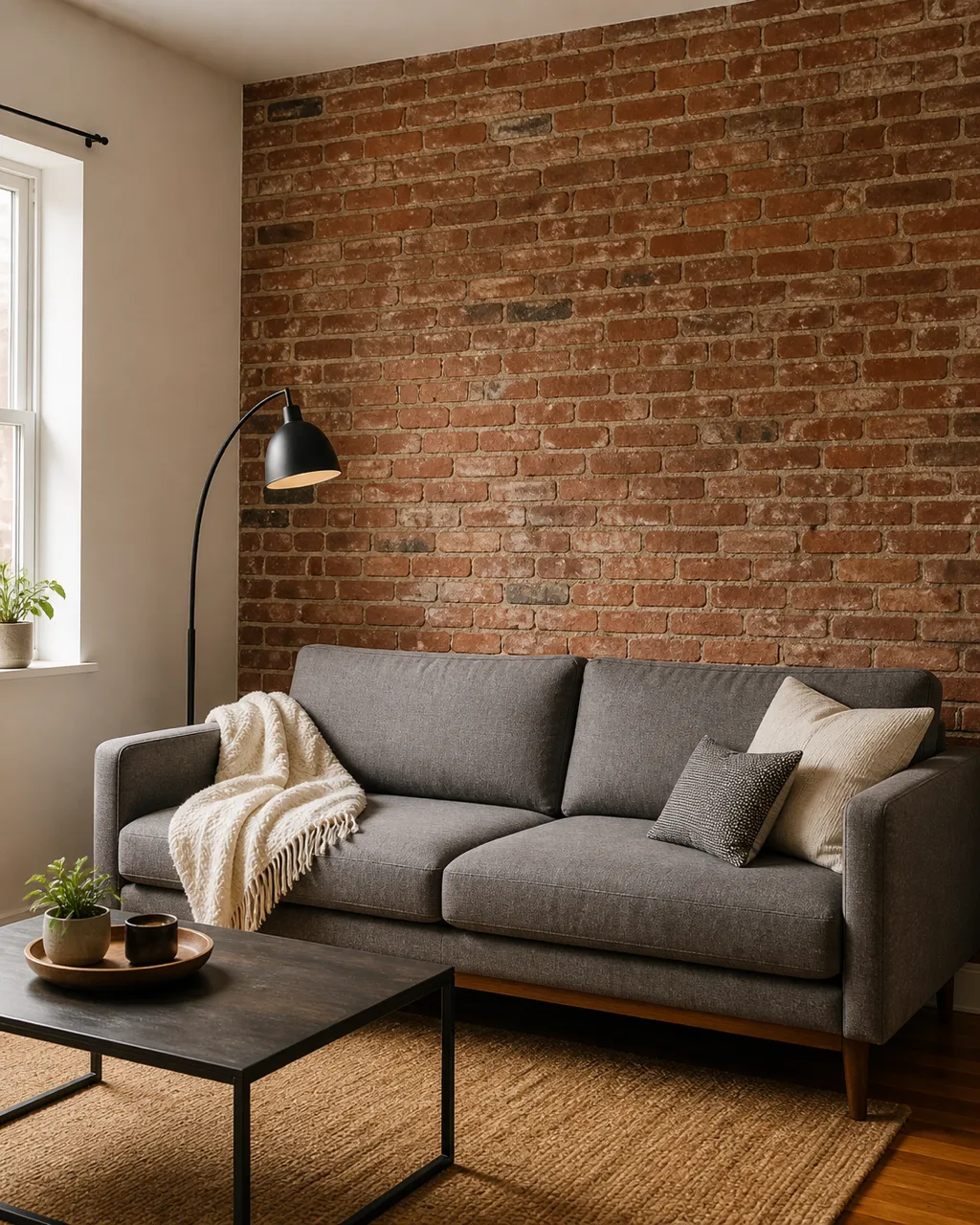
Exposing original brick behind plaster or applying thin brick veneer panels brings industrial warmth and raw character that no other finish replicates.
Brick catches light differently throughout the day, and the mortar lines create a natural grid that adds rhythm to the wall. In a room full of smooth surfaces, brick is the textural contrast that makes everything else look more intentional.
- Test a small section first to check whether the brick underneath is in good enough shape to display
- Seal exposed brick with a matte sealant to lock in dust and even out the color without adding shine
- Install faux brick panels with construction adhesive on clean drywall for a faster alternative
- Leave mortar lines visible and uneven for authenticity rather than painting everything one flat color
- Balance the hard texture with soft furnishings like linen curtains, wool throws, or a plush rug
11. Bold Patterned Tile Accent
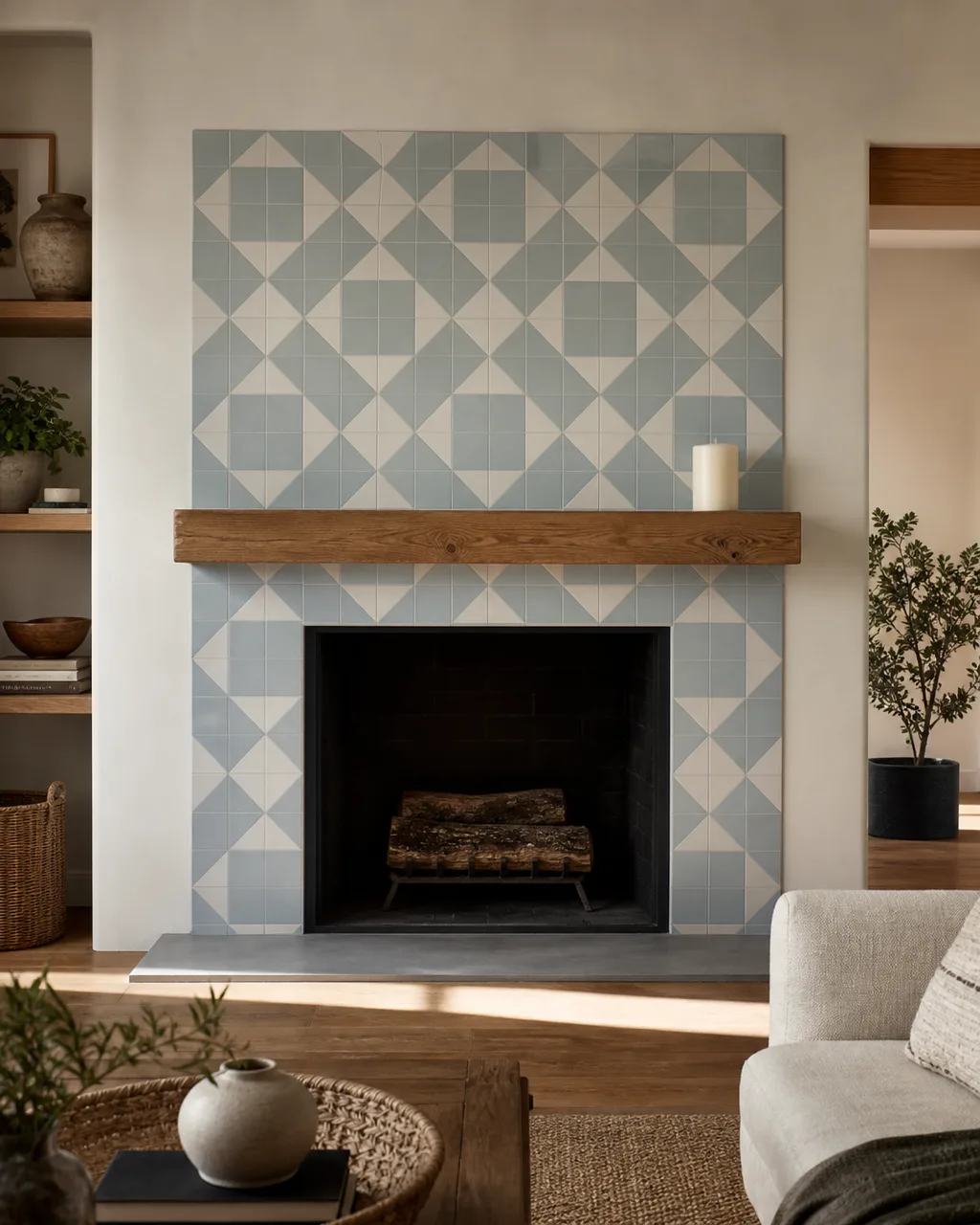
Decorative tiles applied to a fireplace surround, a short section of wall, or the area behind a bar cart add color and pattern with close to zero maintenance. Cement tiles, ceramic tiles, or peel-and-stick tile decals all work. The tile surface wipes clean, never needs repainting, and brings a handmade quality that paint alone cannot achieve.
- Choose a tile with a matte or satin finish to reduce glare from living room lighting
- Install over cement board or a tile-ready backer for a lasting bond that does not crack
- Use a contrasting grout color to make the geometric pattern stand out against the tile
- Limit the tiled area to one focal section so the pattern reads as a curated accent, not a kitchen backsplash
- Wipe tiles with a damp cloth for easy upkeep without repainting, retouching, or re-sealing
12. Oversized Art or Wall Mural
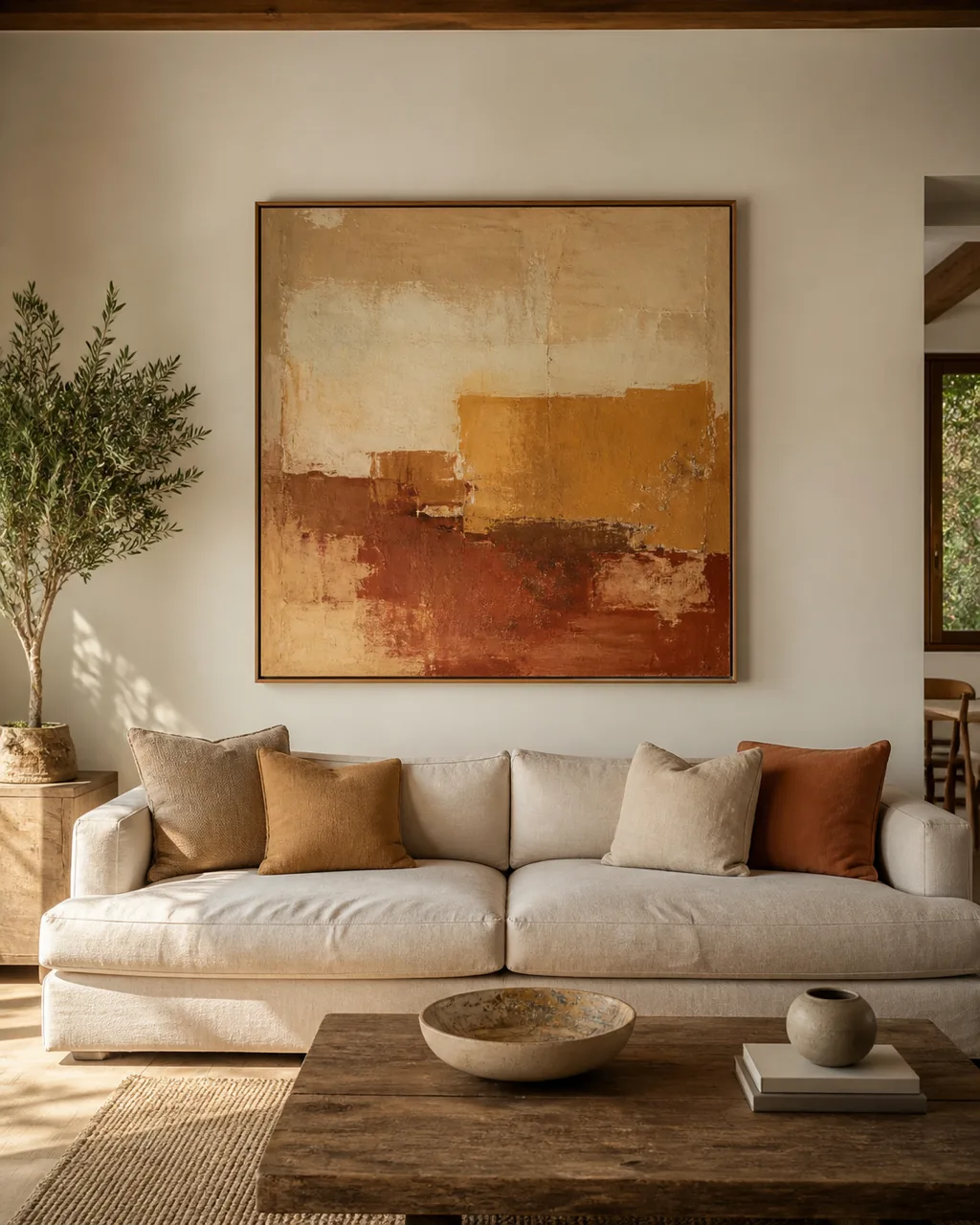
One large painting, photographic print, or wall mural that covers most of a single wall acts as both art and accent wall at the same time. The piece commands attention without any paint, wallpaper, or surface treatment.
For renters, a single large canvas on two hooks is one of the most impactful accent walls that comes down in thirty seconds. For more ideas on choosing statement pieces, see our guide to living room wall art ideas.
- Scale the piece to at least two-thirds the width of the sofa or furniture below it
- Hang the center of the artwork at seated eye level, around fifty inches from the floor
- Choose a mural or print with a matte finish to prevent glare from overhead or window light
- Frame oversized prints in a slim float frame so the edge reads as clean, not bulky
- Leave the surrounding wall blank so the piece has room to breathe without visual competition
Start with the option that matches your commitment level. A single can of paint or a roll of removable wallpaper is enough to test whether an accent wall changes how the room feels. If it works, the more permanent treatments are always waiting.