14 Apartment Decor Ideas That Look Expensive on a Normal Budget
Most apartment decor advice tells you to spend money you do not have on furniture you cannot keep. The reality is that a rented space can look polished and personal with pieces you already own or can pick up without a second thought.
The gap between an apartment that looks thrown together and one that looks designed usually comes down to a few deliberate choices. A mirror placed right, a color repeated across rooms, hardware that matches. Small things, done on purpose.
These fourteen ideas each cost less than a piece of furniture, and none of them require a drill, a landlord's permission, or a weekend of assembly.
Each idea makes a rented space look intentional without permanent changes.
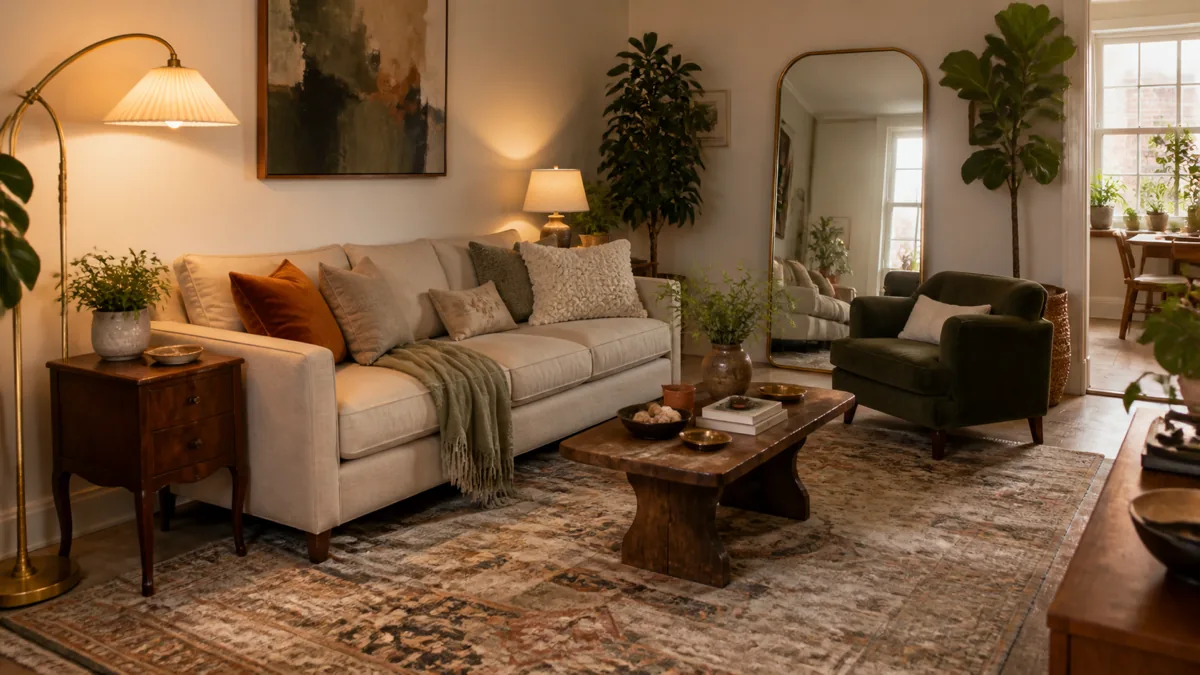
1. Lean an Oversized Mirror Against One Wall
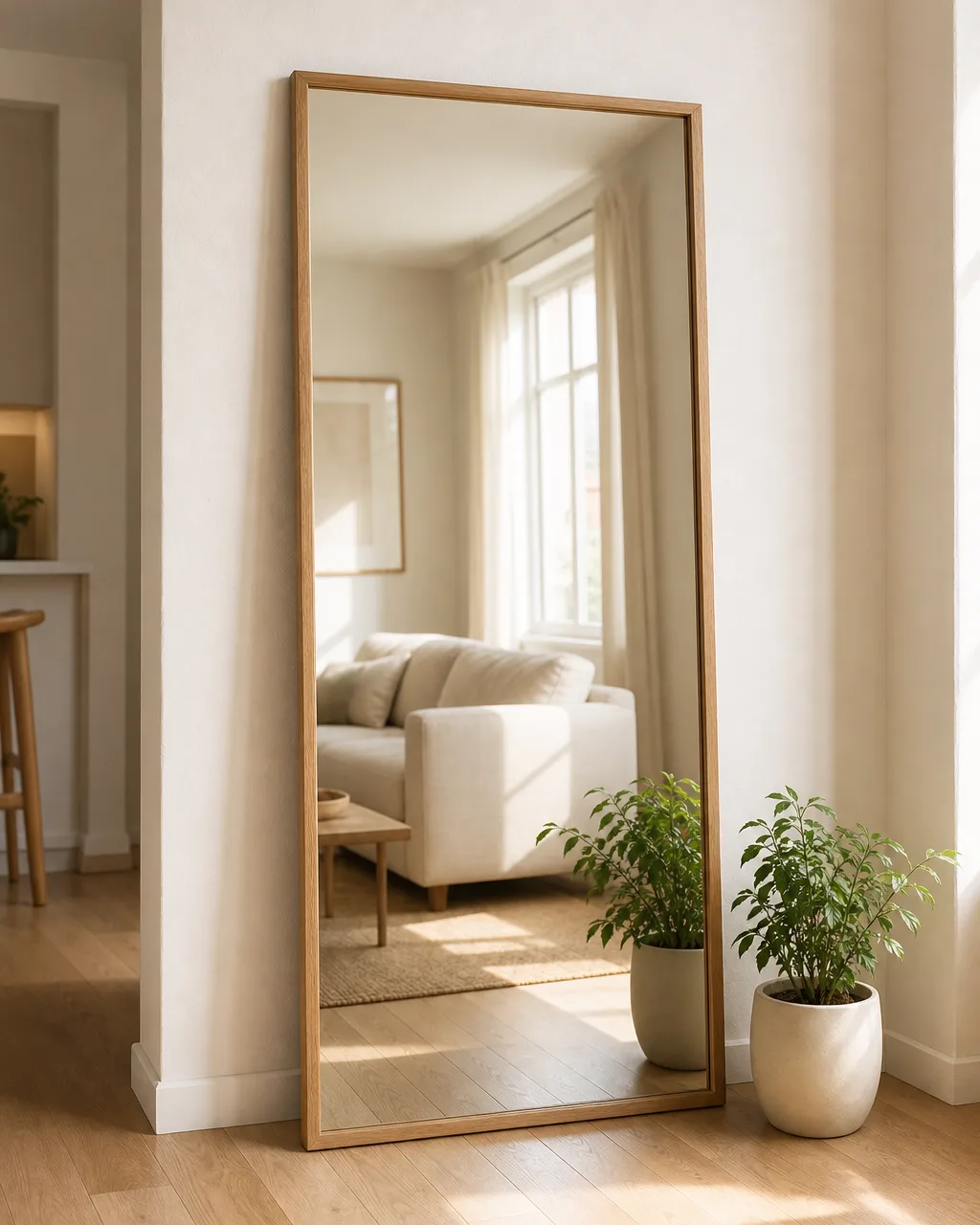
A large leaning mirror does two things at once: it reflects natural light deeper into the room, and it doubles the visual depth of even the smallest wall. The reflected space tricks the eye into reading the room as larger than it actually is.
- Choose a frame material that already exists somewhere in the room, like light oak or matte black metal
- Lean the mirror at a very slight angle so it catches overhead light and bounces it across the floor
- Place a low object next to the base, like a potted plant or a short stack of books, so the mirror looks anchored
- Position it opposite or adjacent to the largest window for maximum light return
- Skip hanging it entirely, which avoids wall damage and lets you reposition on move-in day
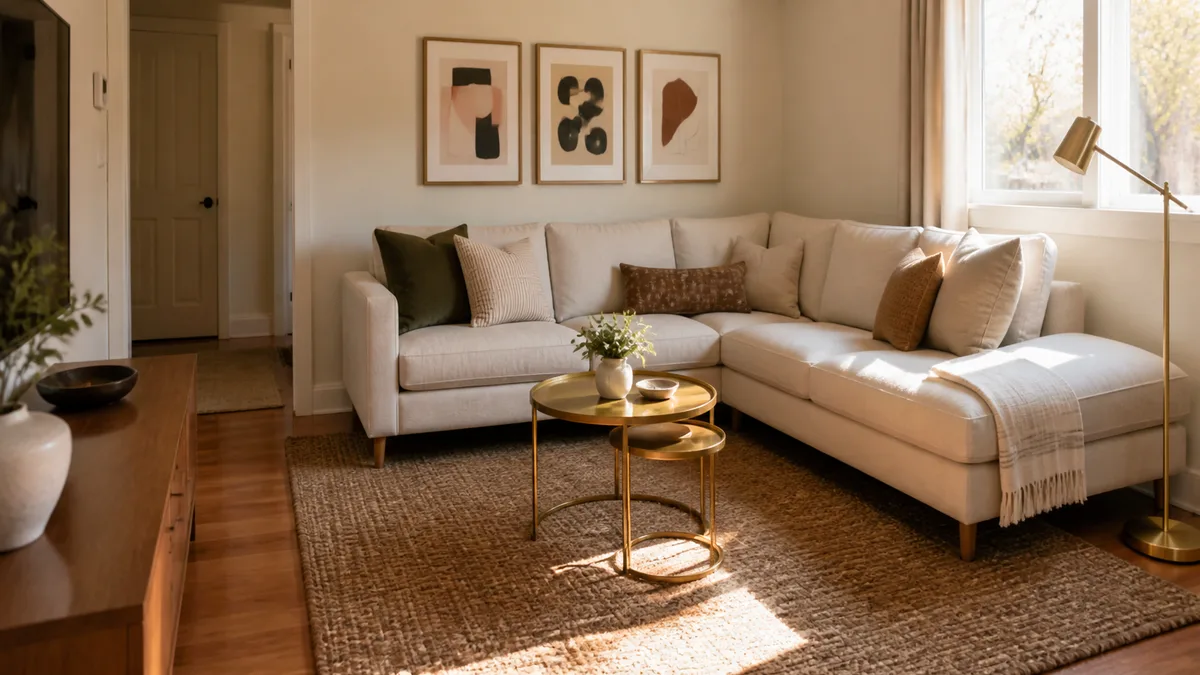
2. Layer Textured Throws on a Neutral Sofa
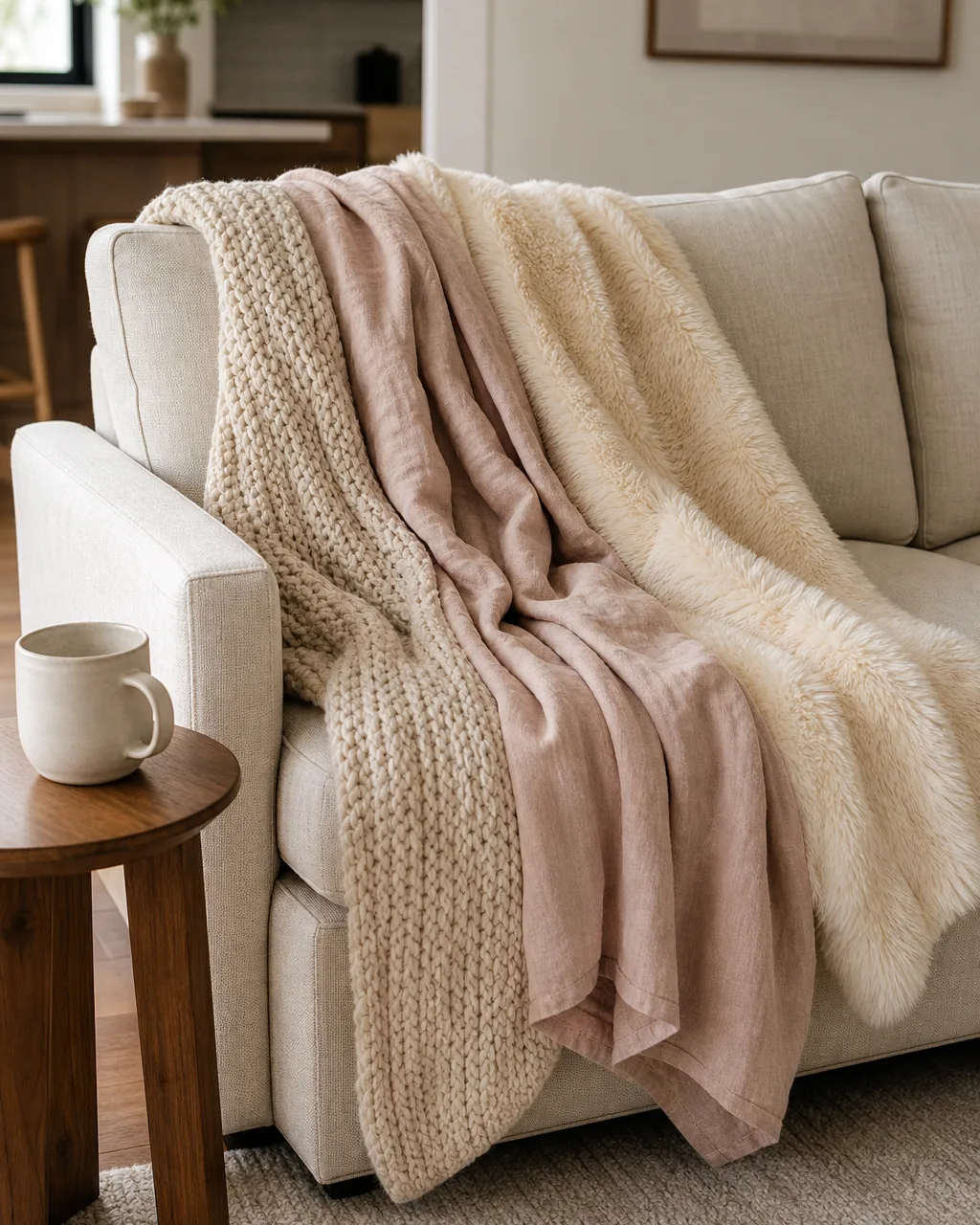
A plain sofa becomes furniture worth photographing the moment you drape two or three throws with different textures across it. Chunky knit next to smooth linen next to something with a slight pile creates the kind of depth that reads as expensive without replacing a single cushion.
- Start with a chunky knit in a warm neutral as the base layer draped over the back
- Add a lighter linen piece across one arm so both textures are visible at the same time
- Fold the third throw, something softer like faux fur, at the seat corner
- Keep all three within the same color family so the layers build rather than compete
- Swap one throw seasonally to shift the mood without rethinking the whole arrangement
3. Anchor the Room with a Statement Arc Floor Lamp
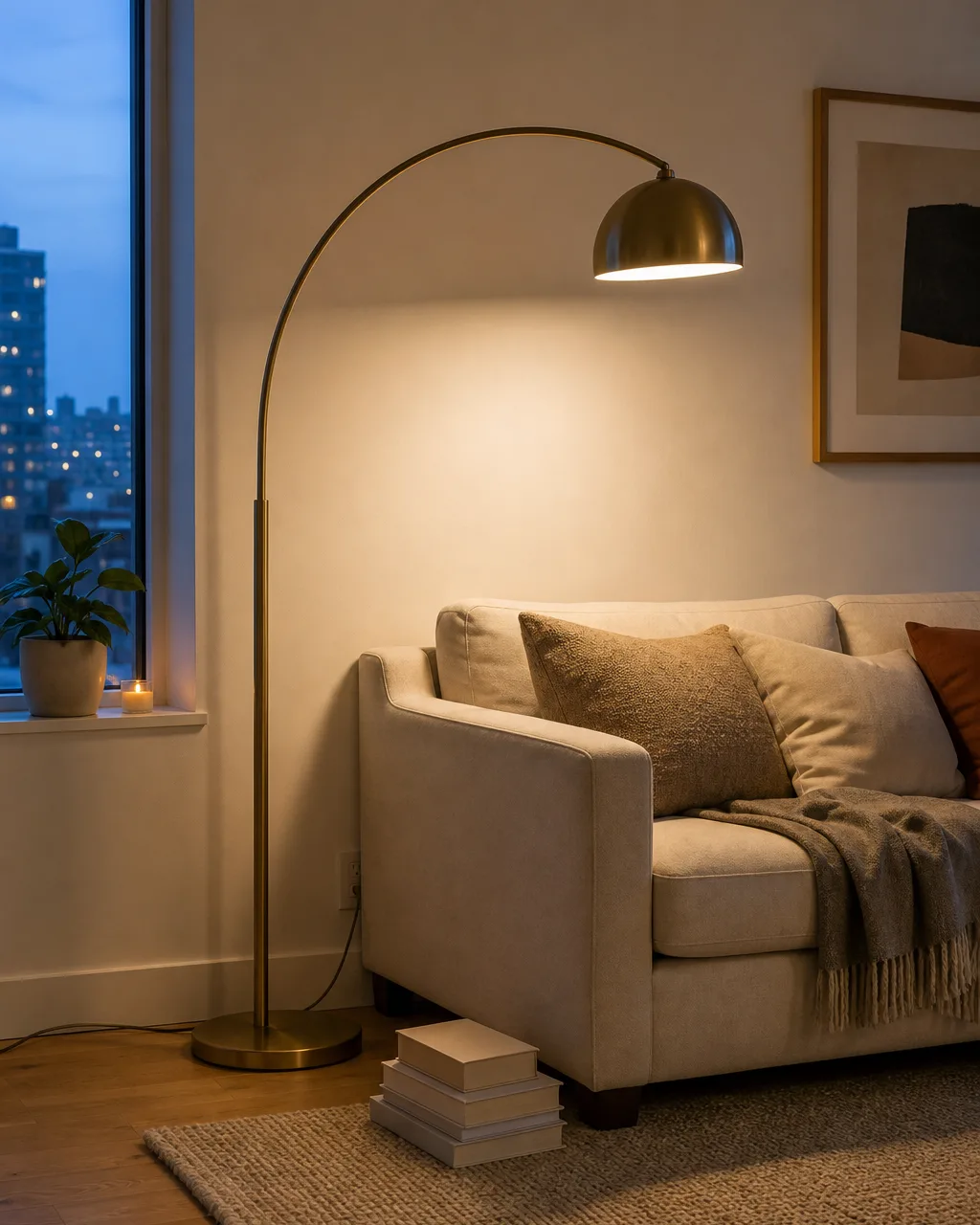
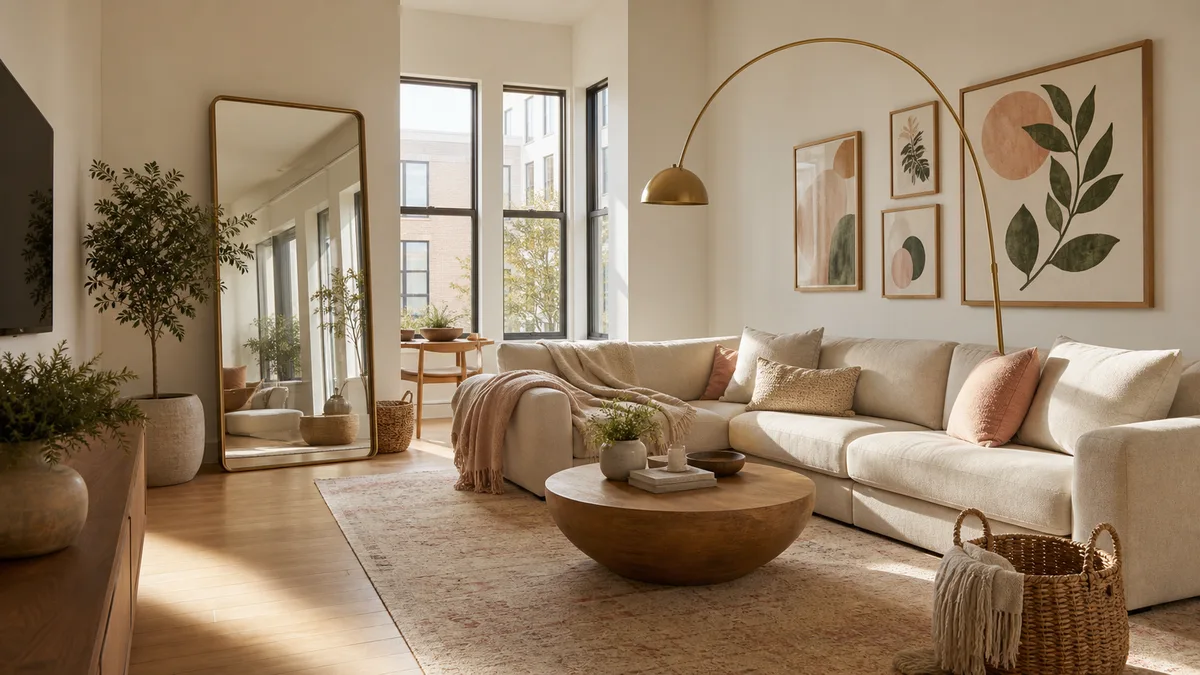
One well-chosen floor lamp can change how the entire room feels after dark. An arc lamp curves light downward over the seating area, creating a warm pool that replaces the flat wash of a ceiling fixture and makes the corner feel intentional.
- Pick a matte brass or brushed nickel finish that complements other metal accents in the room
- Position the base behind the sofa arm so the arc extends over the seat without blocking walkways
- Use a warm-toned bulb, around 2700K, so the light reads as golden rather than clinical
- Let the lamp be the tallest object in that corner to give the eye a vertical anchor point
- Leave the overhead light off when the lamp is on, because the contrast between lit and unlit zones is what makes the room feel layered
Put your budget toward the pieces that shape how the room feels, and save on everything decorative.
4. Display Art on Floating Shelves Instead of Nailing Frames
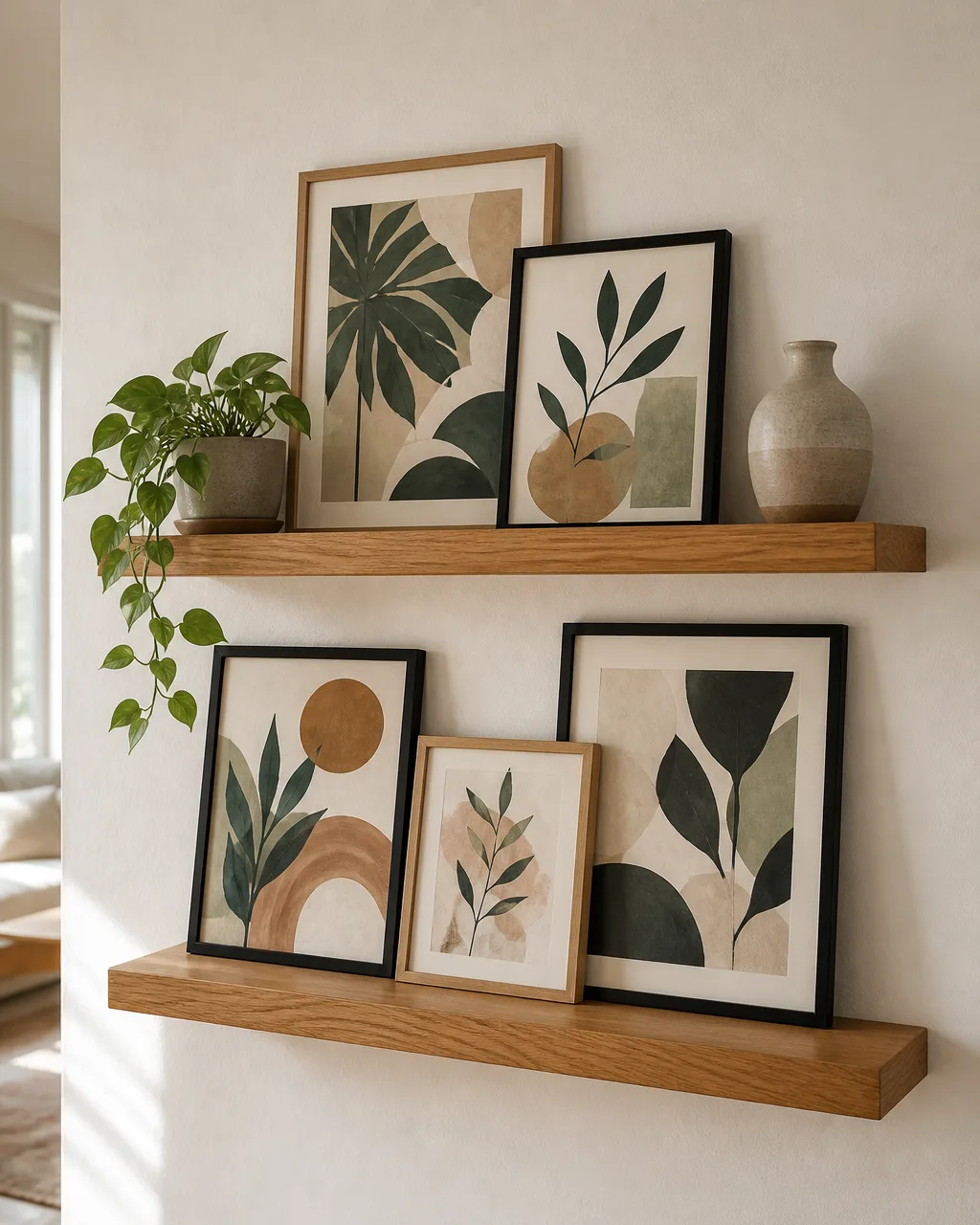
Floating shelves solve the renter's dilemma of wanting art on the walls without committing to a nail grid that needs patching at move-out. Leaning prints on a narrow ledge means you can rotate pieces whenever you find something new, and the shelf itself becomes part of the display.
- Mount two shelves at different heights to create visual rhythm rather than a flat line
- Mix frame sizes and materials on the same shelf so it looks collected, not catalog-ordered
- Tuck a small trailing plant between frames to break the rectangular pattern
- Lean larger prints at the back and smaller ones in front for layered depth
- Leave some open space on each shelf so the display breathes
5. Use Woven Baskets for Storage That Doubles as Decor
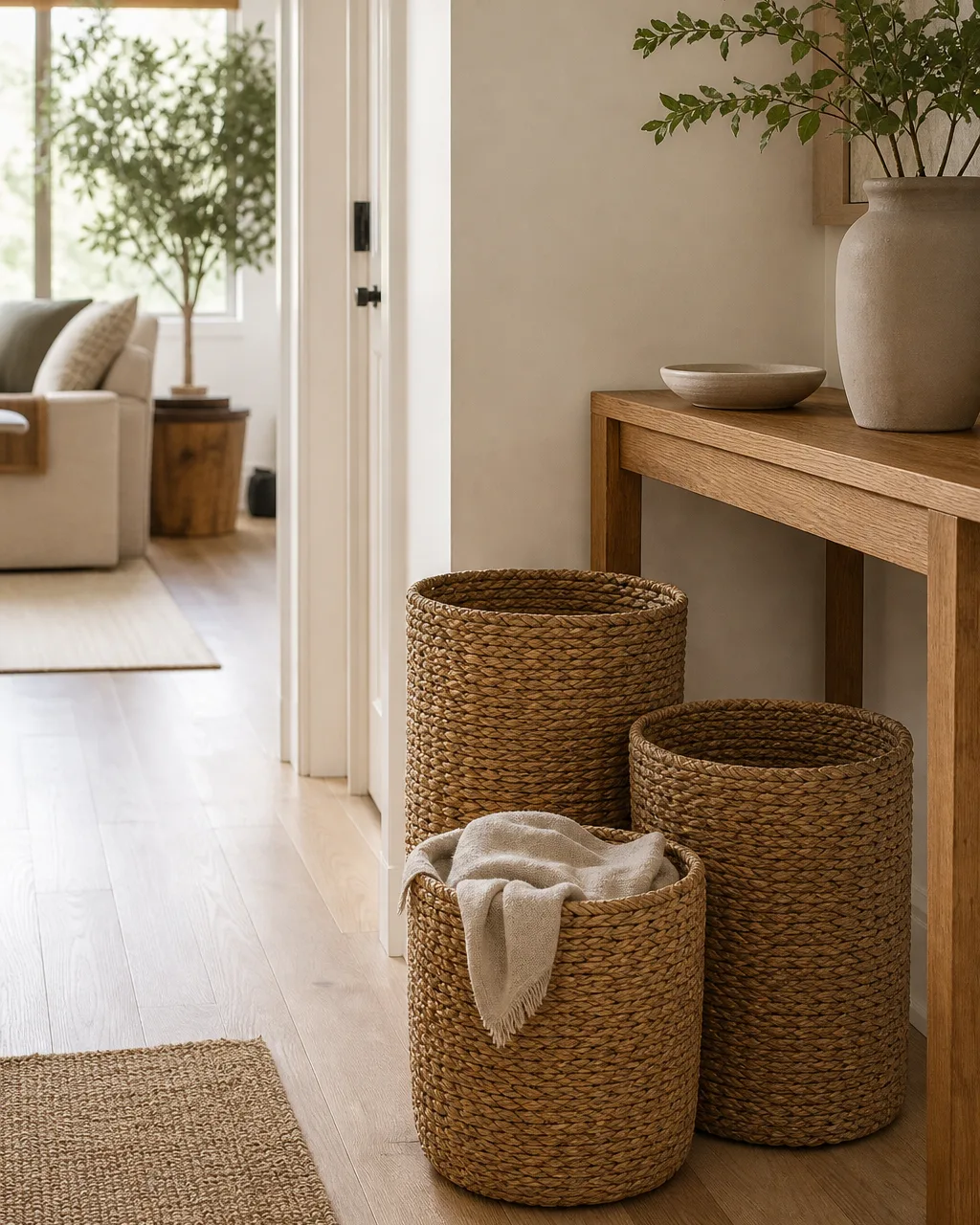
Woven baskets hide the clutter that every apartment generates while adding a texture that most small spaces need. A seagrass or jute basket beside the sofa holds throw blankets, remotes, and magazines without looking like a storage bin.
- Group baskets in odd numbers, three works best, in slightly different heights for visual interest
- Place the tallest basket at one end so the group has a natural high point
- Let the contents peek out slightly so the basket reads as active rather than decorative
- Choose a weave pattern that contrasts with the furniture finish, like a light seagrass against dark wood
- Use open-top baskets rather than lidded ones so grabbing what you need stays effortless
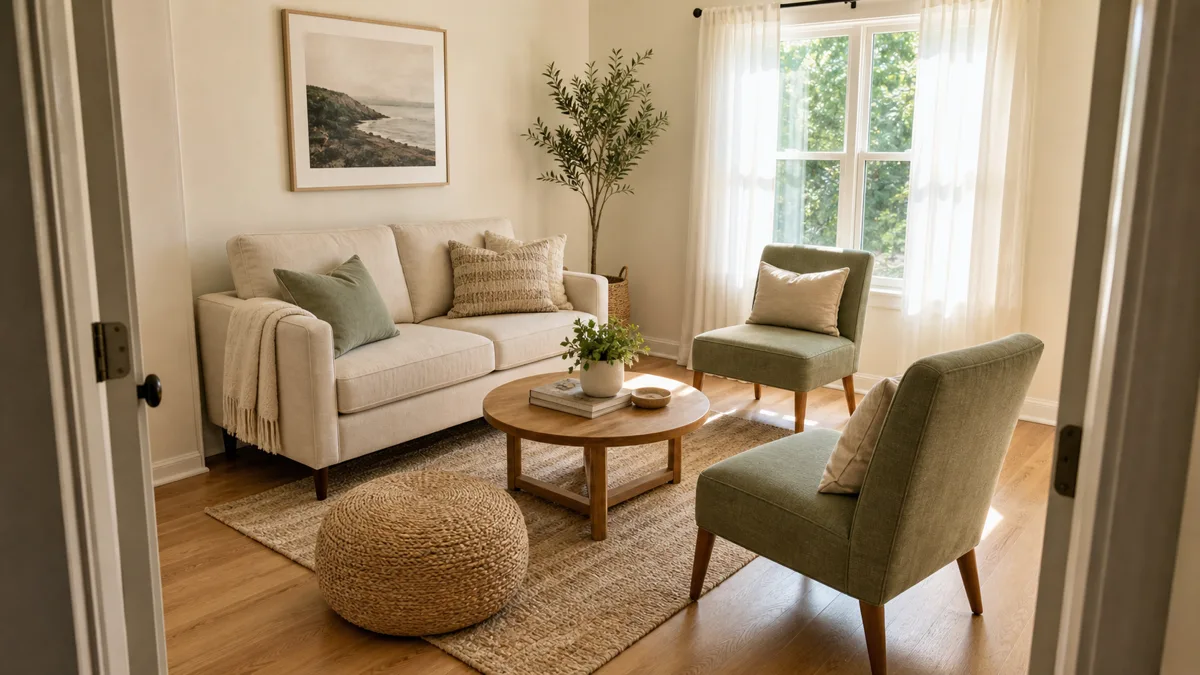
6. Fill an Empty Corner with One Tall Plant
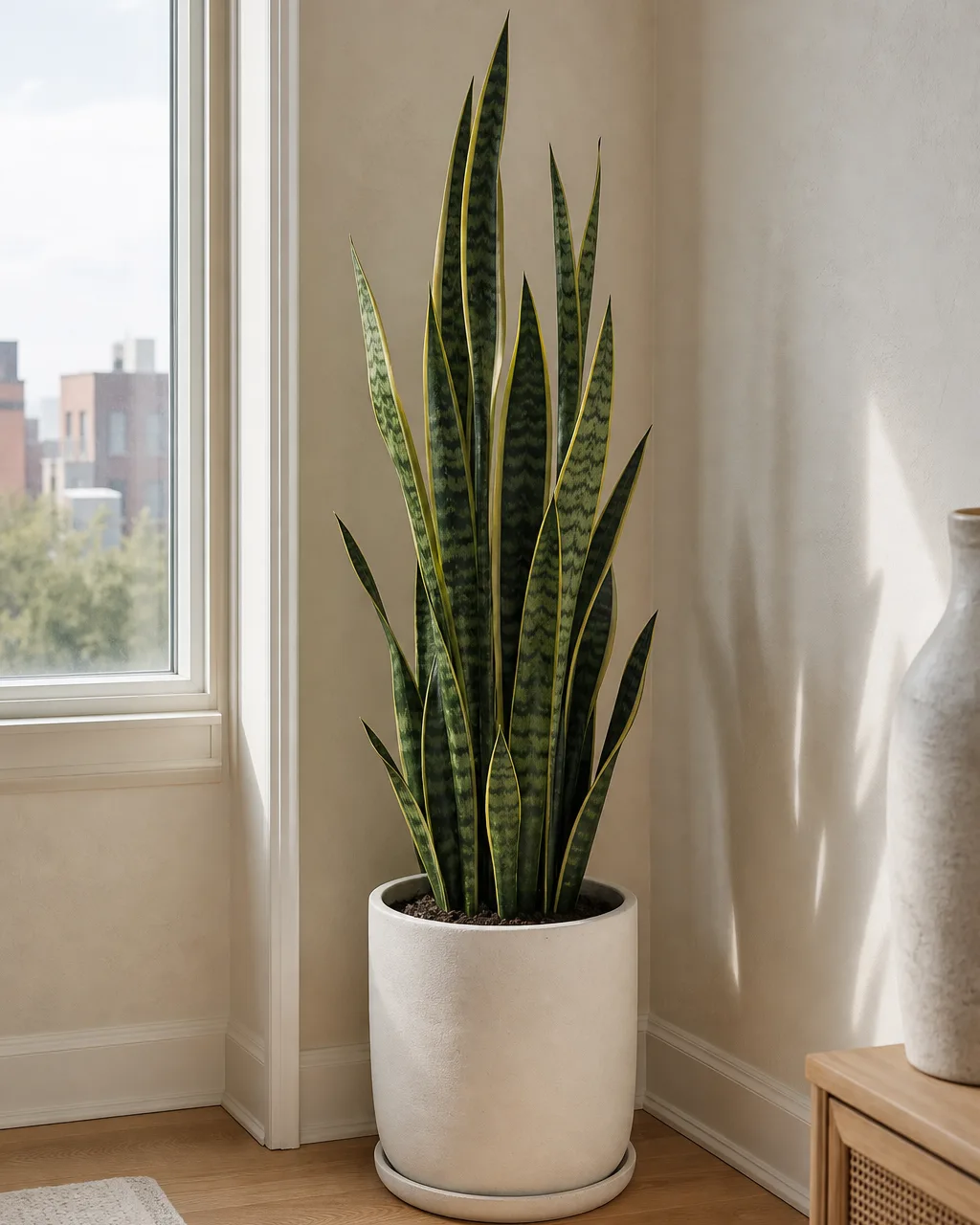
Every apartment has at least one corner that collects nothing useful. A single tall plant fills that dead zone with height, color, and organic shape that no piece of furniture can match. The vertical line breaks up the wall-floor junction and draws the eye upward.
- Pick a plant that tolerates your light conditions honestly: snake plants for low light, fiddle-leaf figs for bright indirect
- Choose a planter that sits flat on the floor with a clean profile, no ornate detailing, so the foliage stays the focus
- Place the pot where it catches at least some natural light from a nearby window
- Let the leaves create their own shadow pattern on the wall rather than adding supplemental decor around the base
- Water on a consistent schedule and wipe dust off the leaves monthly so the green stays vivid
7. Tie the Space Together with a Three-Tone Color Palette
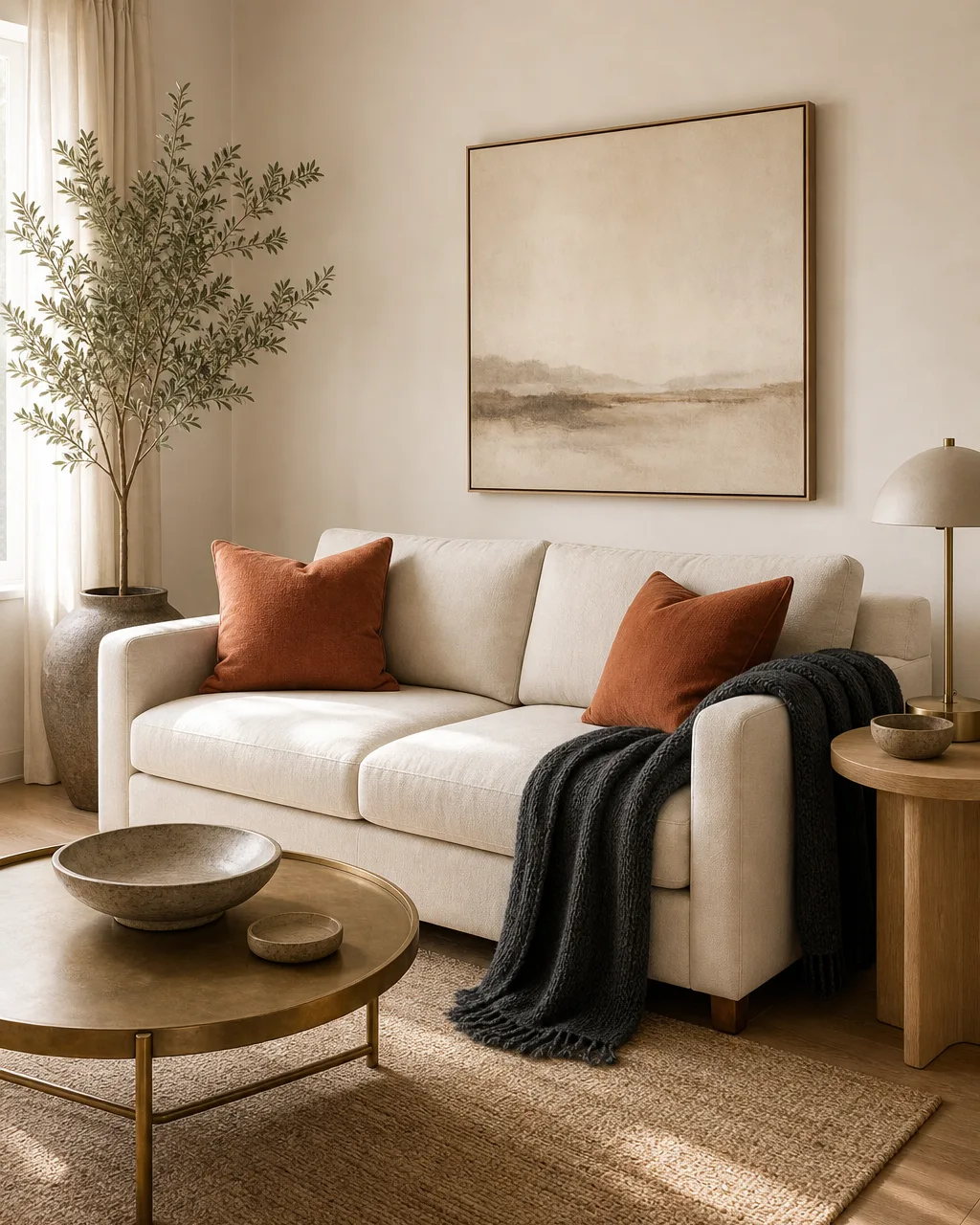
Apartments feel scattered when every surface introduces a new color. Picking three tones, one neutral base, one warm accent, and one dark grounding shade, then repeating them across pillows, frames, and accessories makes the whole space look like someone planned it.
- Start with the largest surface color as your base, usually the wall or sofa shade
- Choose a warm accent that appears in at least three places across the room: a pillow, a candle, a frame mat
- Add a darker grounding tone for small hits like a blanket edge, a plant pot, or a lamp base
- Keep metallics to one finish, brushed brass or matte black, so they reinforce the palette rather than competing
- Test the palette by standing at the room entrance and scanning: if your eye moves smoothly without snagging on an outlier, the colors are working
Follow these principles and every new piece you add will look like it belongs.
8. Add a Peel-and-Stick Accent Wall Behind the Bed or Sofa
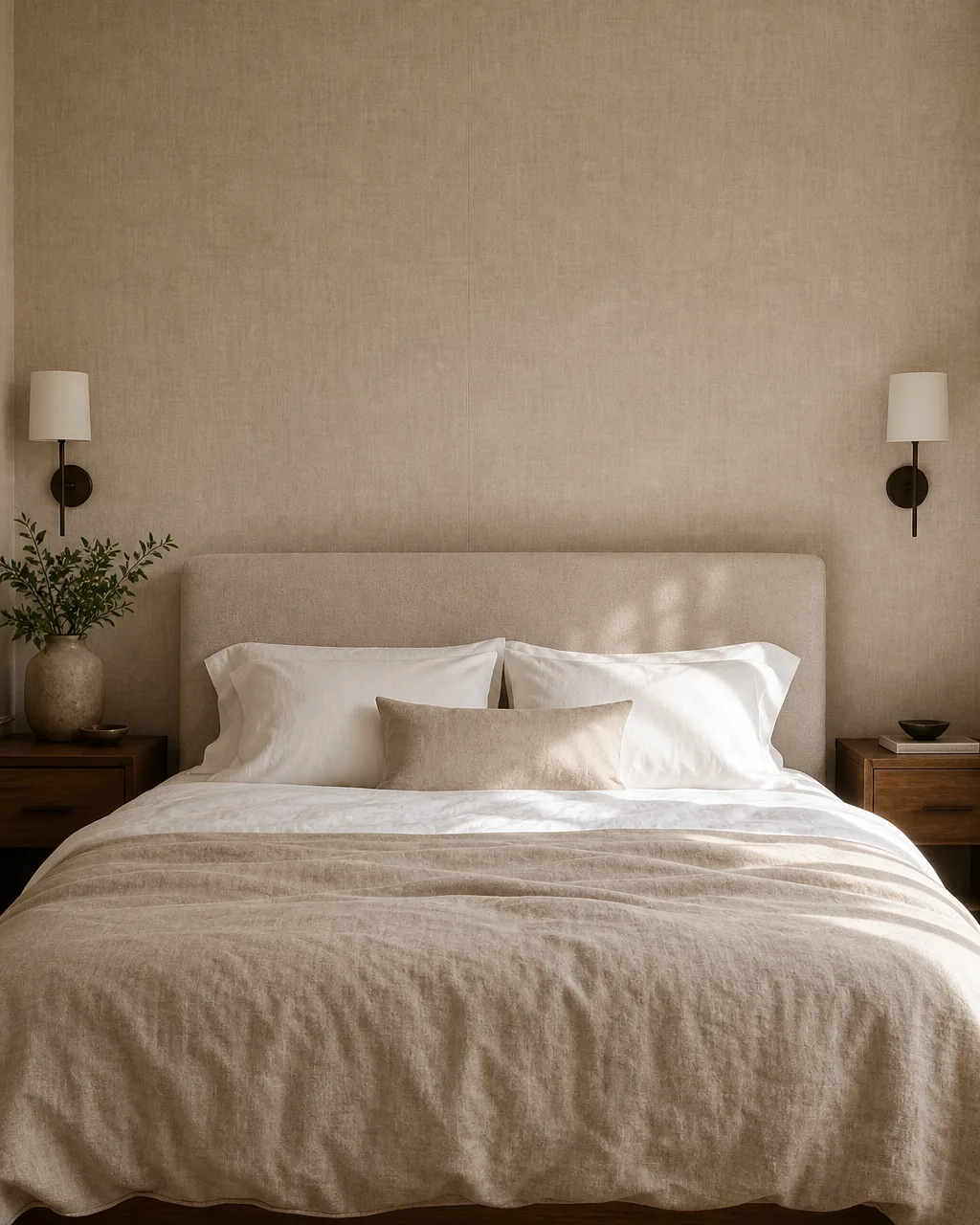
One accent wall can anchor an entire room. Peel-and-stick wallpaper gives you the visual weight of texture or pattern without any permanent damage, and the best part is that it peels off cleanly when the lease ends.
- Choose a subtle texture, like a linen weave or a soft grasscloth pattern, rather than a bold graphic that might tire quickly
- Apply it to the wall directly behind the headboard or the sofa since that focal wall gets the most visual attention
- Smooth from center outward with a plastic scraper to avoid air bubbles under the adhesive
- Match the wallpaper tone to your existing palette so it enhances rather than resets the room
- Start with one wall only, because the point is a focal accent, not a full-room takeover
9. Place a Console Table Behind the Sofa
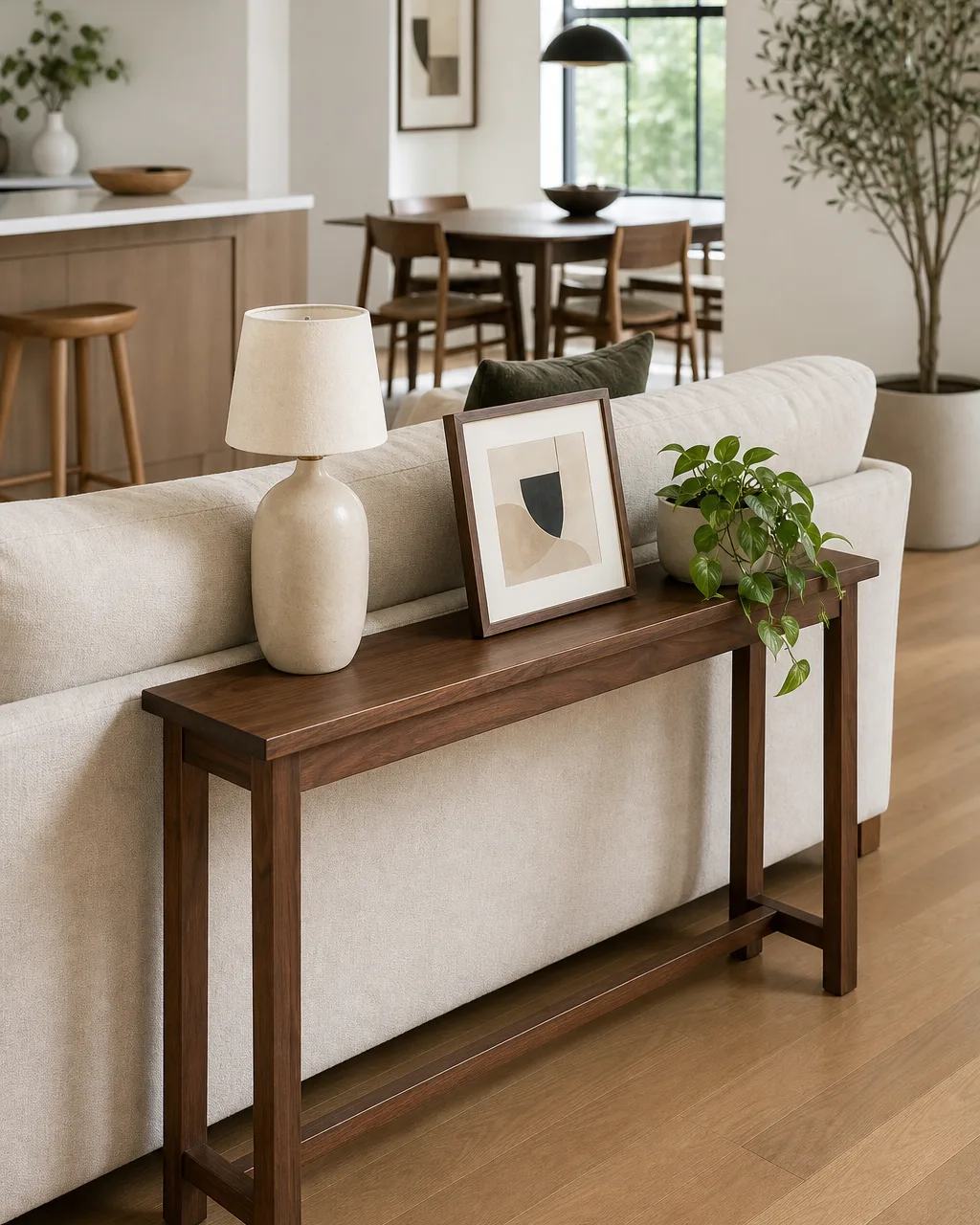
In open-plan apartments where the sofa floats in the middle of the room, a narrow console table behind it solves three problems at once. It gives you lamp height for evening light, display surface for a few objects, and a visual room divider that separates living and dining zones without a wall.
- Measure the sofa length and pick a console that runs about two-thirds of it so the table looks proportional
- Keep the console no deeper than 12 inches so it does not eat into walkway space behind the sofa
- Place a lamp at one end and lean a small print at the other to create asymmetric balance
- Leave the center of the console open or with one low object so the display does not become a wall of clutter
- Route any lamp cord behind the console leg and along the baseboard so cables stay invisible
10. Hang Curtains from Ceiling Height
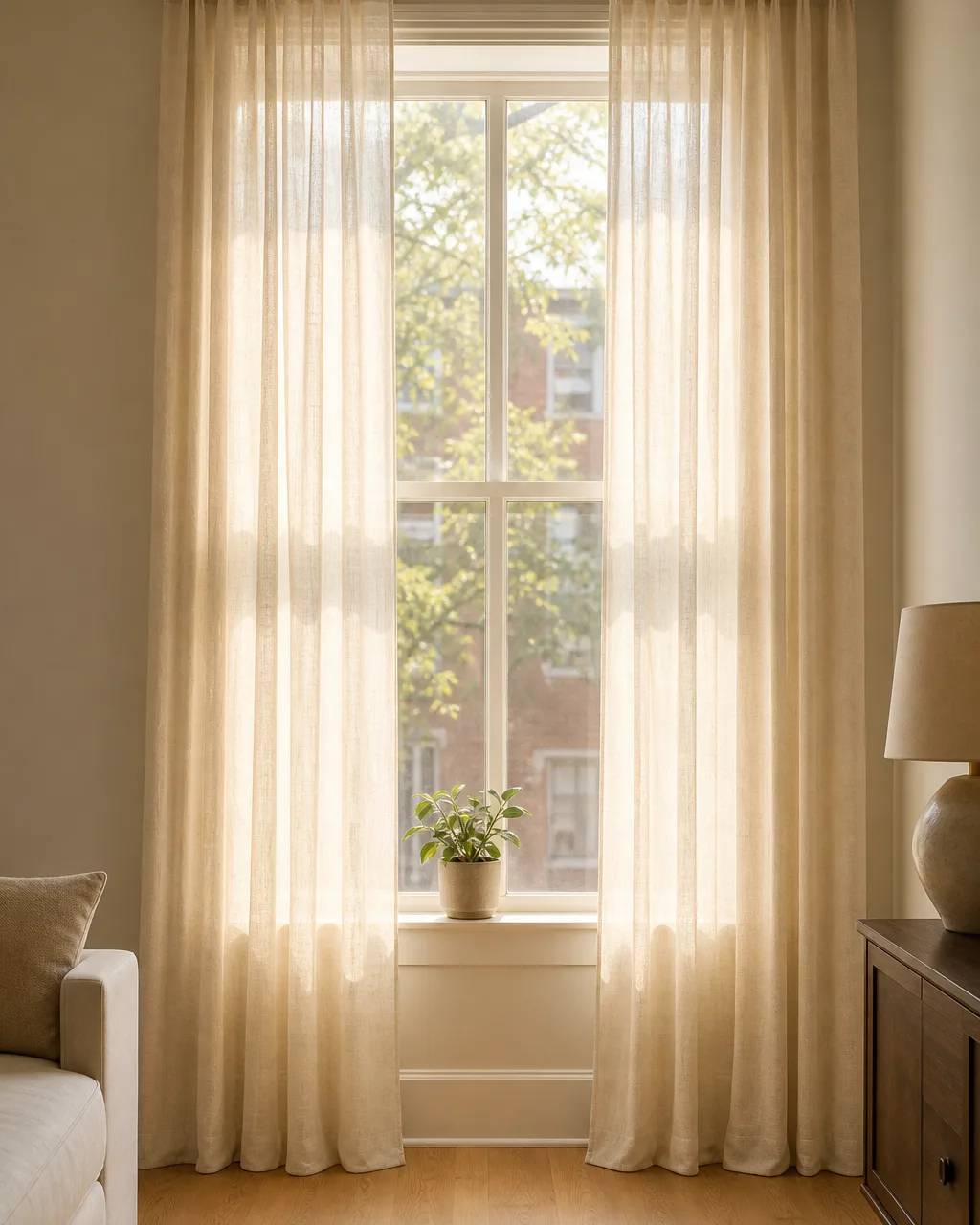
The cheapest way to make a room feel taller is to mount the curtain rod as close to the ceiling as possible and let the fabric run all the way to the floor. The unbroken vertical line tricks the eye into reading the wall as taller than it is, and the extra fabric that puddles slightly at the base adds a sense of luxury.
- Mount the rod 2 to 4 inches below the ceiling line rather than at the window frame top
- Choose a lightweight fabric like linen or cotton voile that drapes softly and filters light without blocking it
- Let the curtain length hit the floor and pool about half an inch so it looks deliberate, not short
- Use the same curtain style in every room to create continuity as you move through the apartment
- Pick a rod finish that matches your other metal accents for one more repetition of your chosen palette
Apartment Decor Starter Checklist
- 1Oversized MirrorLean a tall mirror against the wall opposite the biggest window to double light and depth.
- 2Layered ThrowsDrape two or three textured throws on the sofa in tonal neutrals for instant warmth.
- 3Arc Floor LampReplace overhead light with one warm-toned floor lamp to anchor the seating area.
- 4Art ShelvesMount floating shelves and lean prints rather than nailing frames to the wall.
- 5Three-Tone PalettePick one neutral, one warm accent, and one dark tone, then repeat across rooms.
- 6Matching HardwareSwap mismatched pulls and rods for one metal finish to thread a design line everywhere.
- 7Ceiling-High CurtainsMount rods near the ceiling and let fabric puddle at the floor for instant height.
11. Style a Tray on the Coffee Table
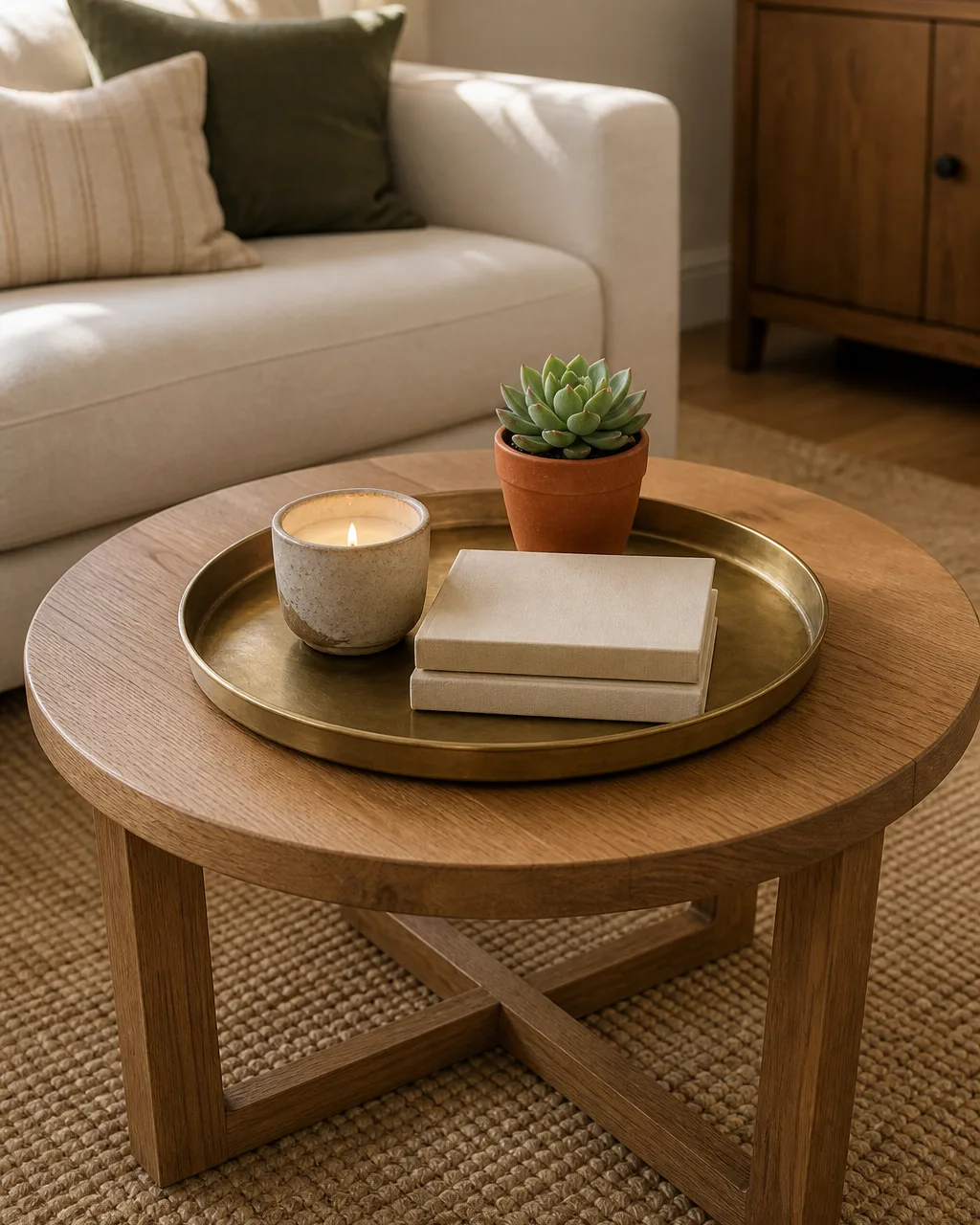
A coffee table without a tray looks like a surface waiting for someone to dump mail on it. A round tray with three intentional objects, a candle, a small plant, and a book, turns that flat plane into a contained vignette that stays neat even when the rest of the room is lived in.
- Use a tray with a lip so the objects stay grouped and the vignette reads as one unit
- Pick three objects in different heights: one tall like a candle, one medium like a book stack, one short like a small plant
- Choose materials that echo your room palette, like brass, ceramic, and natural fiber
- Leave space between the objects so each one registers individually rather than looking crowded
- Refresh the book or the candle scent seasonally so the tray feels alive rather than staged
12. Swap All Hardware for One Matching Finish
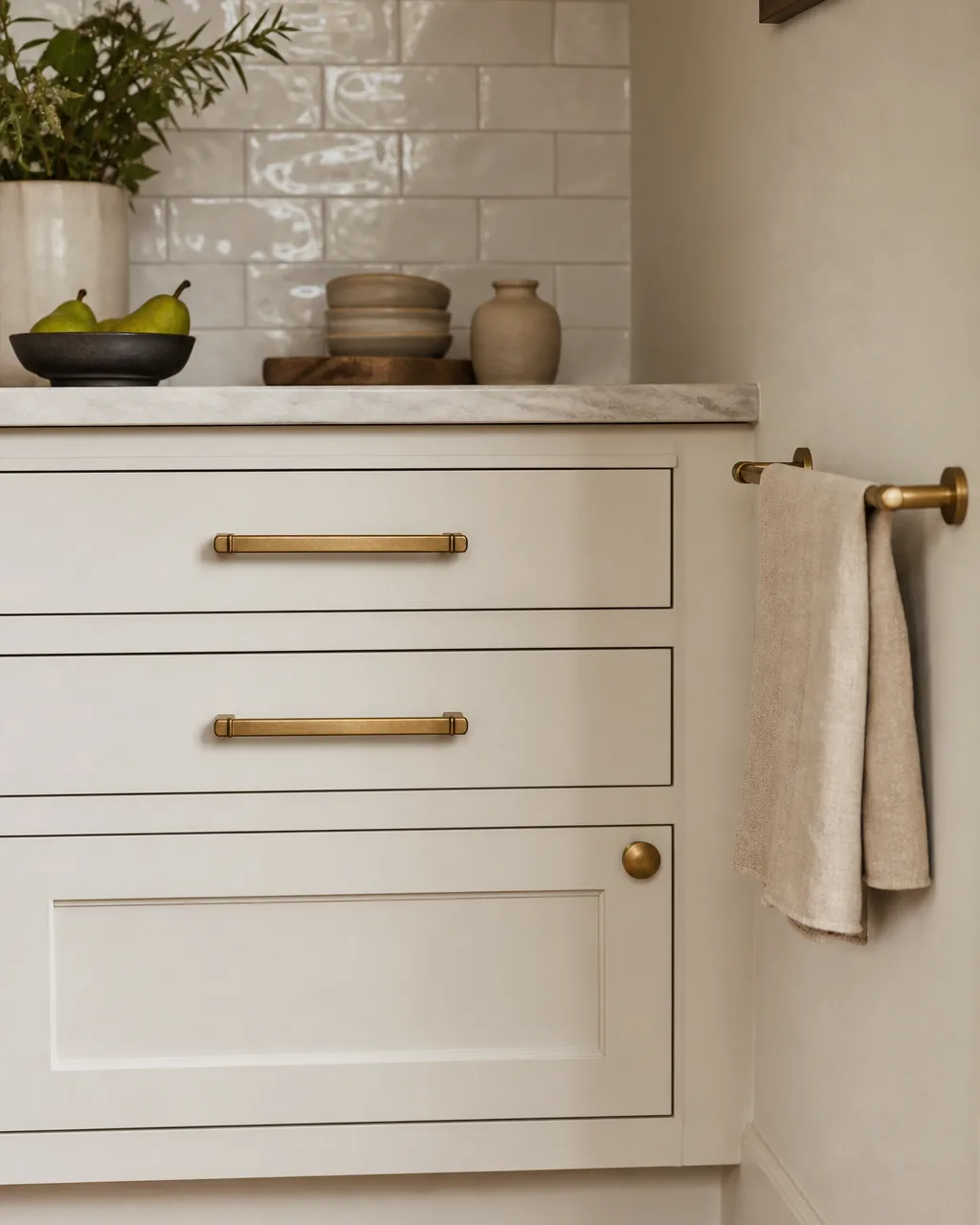
Mismatched hardware is one of the most common reasons a well-decorated apartment still feels disjointed. Swapping cabinet pulls, towel bars, and curtain rod finials for one consistent finish, brushed brass or matte black, threads a design line through every room that reads as intentional.
- Buy hardware in bulk from one manufacturer so the finish shade matches exactly across pieces
- Start with the kitchen and bathroom since those are the rooms where hardware is most visible
- Keep the receipt and the original pulls in a bag so you can swap back at move-out
- Match the hardware finish to your lamp bases and frame accents for one more palette repetition
- Choose pulls with a simple profile so they disappear into the cabinet face rather than drawing attention
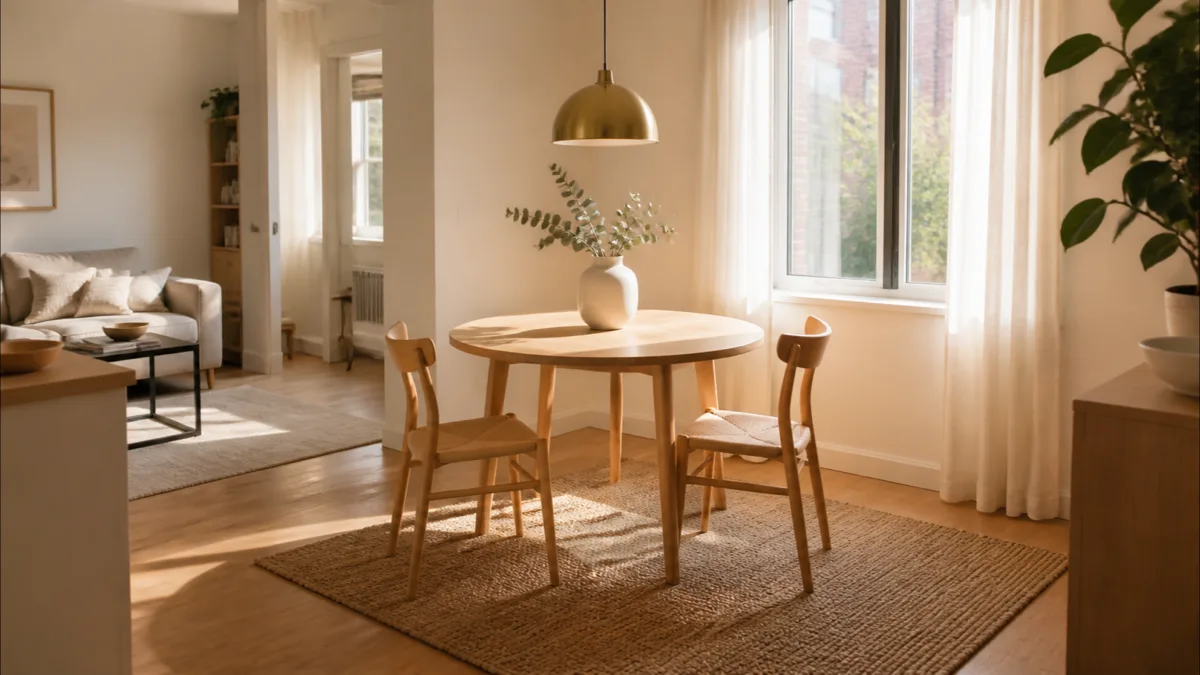
13. Layer an Area Rug Under the Coffee Table or Dining Set
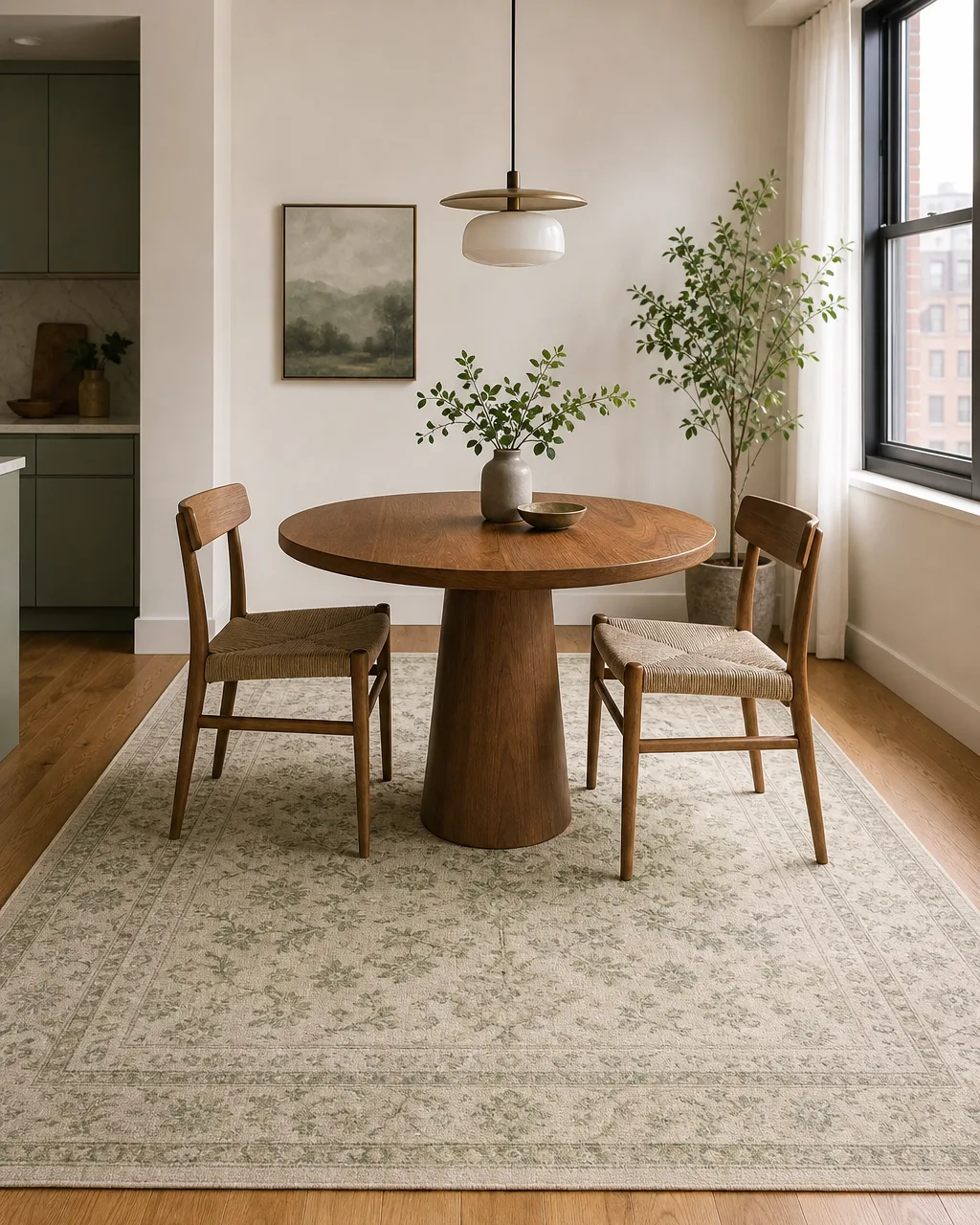
An area rug anchors a furniture grouping the way a frame holds a photograph. Without it, chairs and tables float on a blank floor. With it, the same pieces suddenly belong to a zone, and the rug's pattern or texture introduces visual interest that paint or furniture alone cannot provide.
- Size the rug so all front legs of the sofa or all chair legs sit on it, anchoring the grouping as one unit
- Pick a low-pile or flatweave rug for high-traffic zones so it lies flat and cleans easily
- Choose a pattern that contains one color from your three-tone palette as a subtle tie-in
- Layer a smaller rug on top of wall-to-wall carpet to define a seating zone in carpeted apartments
- Use a rug pad underneath to prevent slipping and add cushion that absorbs foot noise for downstairs neighbors
14. Hang a Cluster of Framed Botanical or Line-Art Prints
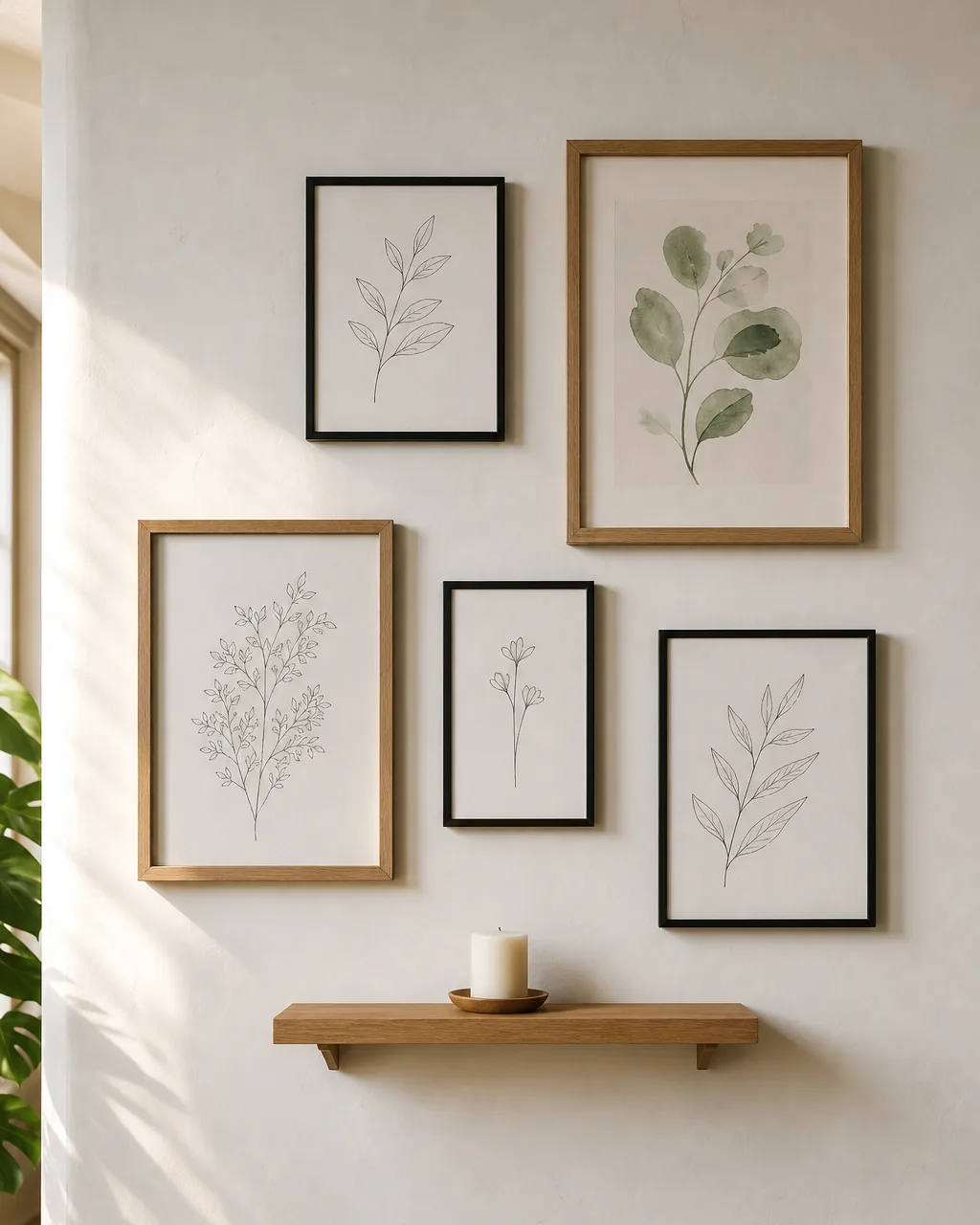
A gallery wall does not need twenty frames and a laser level. Three to five simple prints arranged in a loose cluster on one wall creates presence without the fuss, and the slightly imperfect spacing makes it look collected over time rather than ordered from a catalog.
- Mix two frame finishes, like thin black and natural wood, for visual variety within the grouping
- Choose prints with a shared color thread, like green botanicals and warm-toned line art, so they read as a set
- Lay the arrangement on the floor first and photograph it with your phone before committing to wall placement
- Space frames 2 to 3 inches apart for a cohesive cluster rather than a scattered look
- Start with the largest print at center height and build outward so the cluster has a natural center of gravity
The best apartment decor decisions share one quality: they look deliberate. A small apartment does not need more stuff. It needs fewer things, chosen on purpose, placed where they serve both function and visual rhythm.
If your living room still feels unfinished, start with the mirror and the lamp. Those two pieces alone change how light moves through the room, and everything else will build from that foundation. For more layout strategies, see these small apartment living room ideas and one bedroom apartment ideas.