12 Small Apartment Ideas That Make Every Square Foot Count
A small apartment does not need more storage bins or a second closet system. It needs a handful of decisions about light, layout, and furniture placement that make the whole space work harder without adding anything to it.
The twelve ideas here each target one thing you can change in a weekend or less. None of them require a renovation, and most of them cost under fifty dollars.
Start with whichever one addresses the thing that bothers you most about your apartment right now.
Each one targets a specific surface, fixture, or habit that is holding your apartment back.
- 1Zone the Floor Plan With Rugs
- 2Hang Curtains at Ceiling Height
- 3Keep One Wall Completely Clear
- 4Hang a Ceiling-Mounted Curtain Divider
- 5Put the Biggest Mirror Opposite the Window
- 6Mount Hooks on Every Door Back
- 7Light Three Separate Zones
- 8Choose All Furniture on Legs
- 9Build Storage Into Dead Corners
- 10Run One Color Palette Through Every Room
- 11Replace Swinging Doors With Sliders
- 12Create a Drop Zone by the Door
1. Zone the Floor Plan With Rugs Instead of Walls
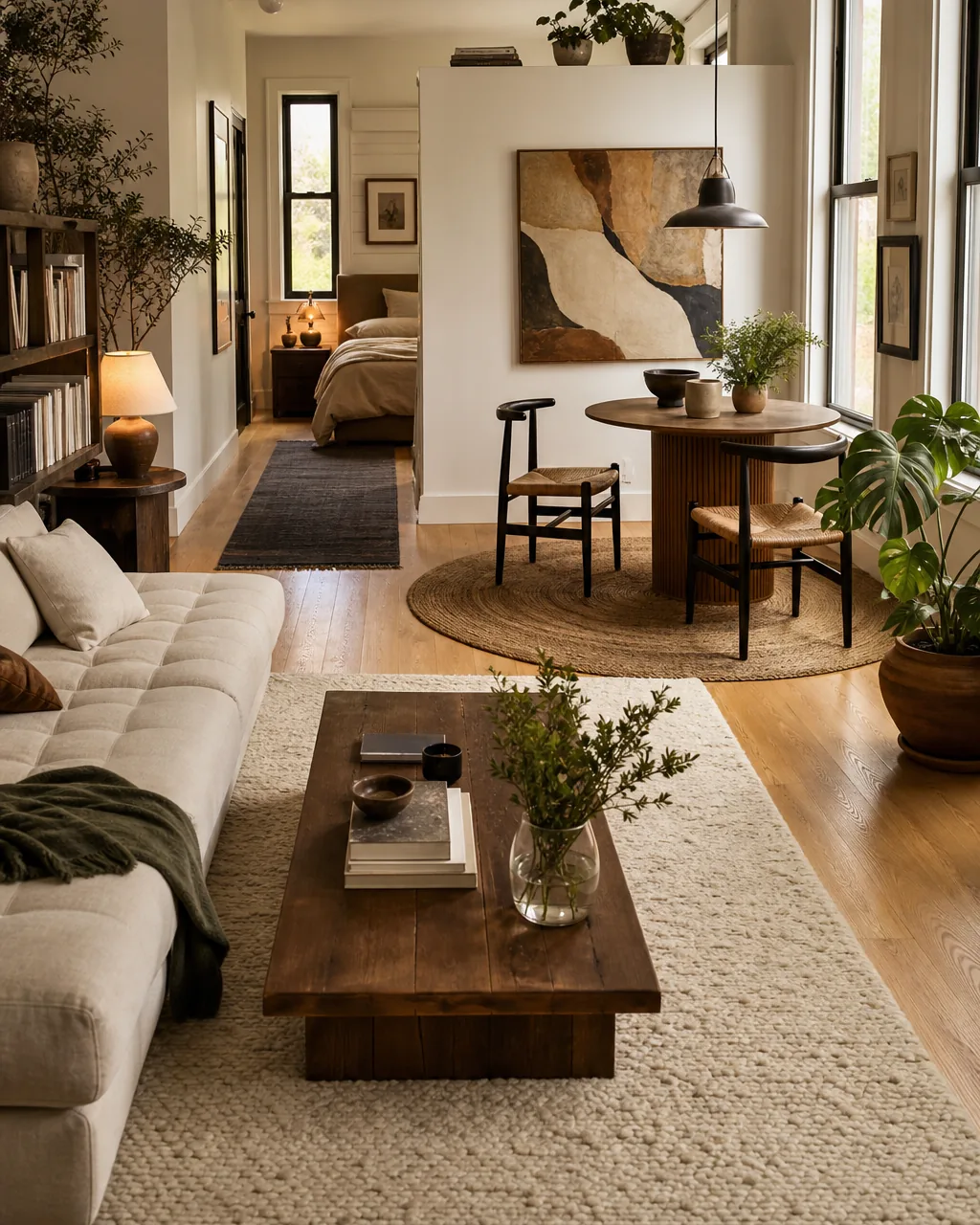
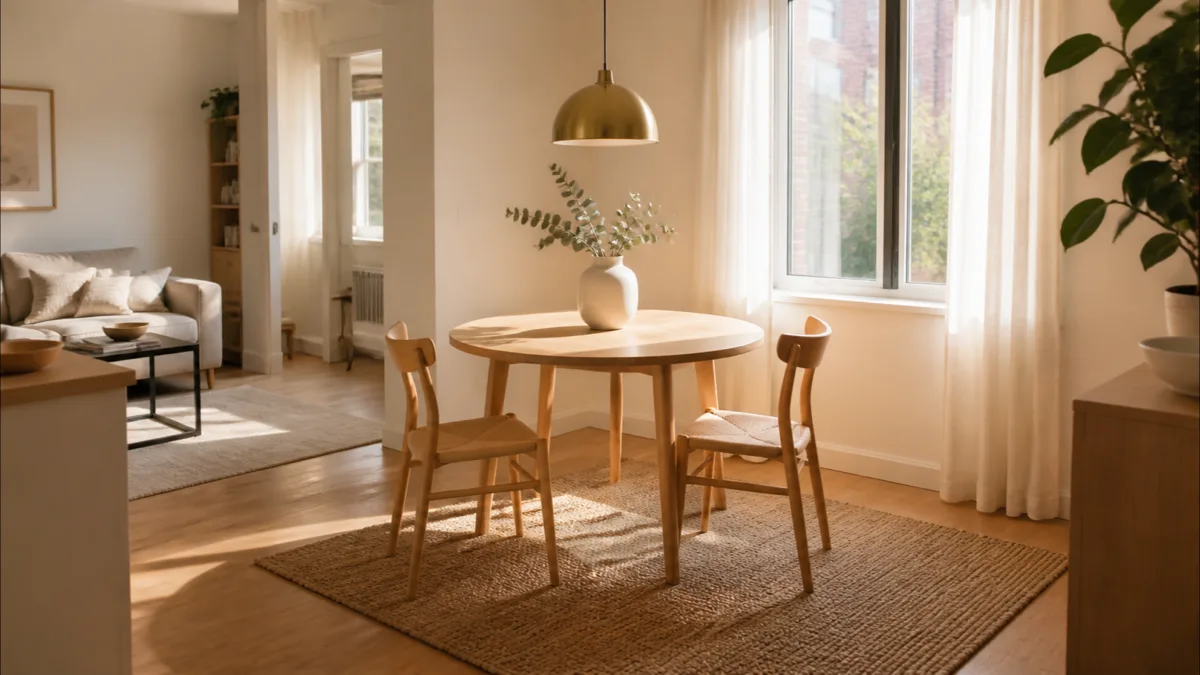
An open floor plan without visual boundaries reads as one big undefined space. Area rugs anchor each zone to the floor and tell the eye where the living room ends and the dining area begins, without blocking any light or sight lines.
- Pick rugs that share one color thread so the zones connect visually even though they are separate
- Leave six to eight inches of bare floor between rugs so each zone has a clear boundary
- In a studio apartment, the largest rug goes under the bed area since that is the zone you want to feel most enclosed
- Layer a smaller accent rug on top of a larger neutral base to add depth without shrinking the room
- Jute or sisal for the living zone, a softer wool or cotton under the bed where bare feet land
2. Hang Curtains at Ceiling Height to Stretch the Walls
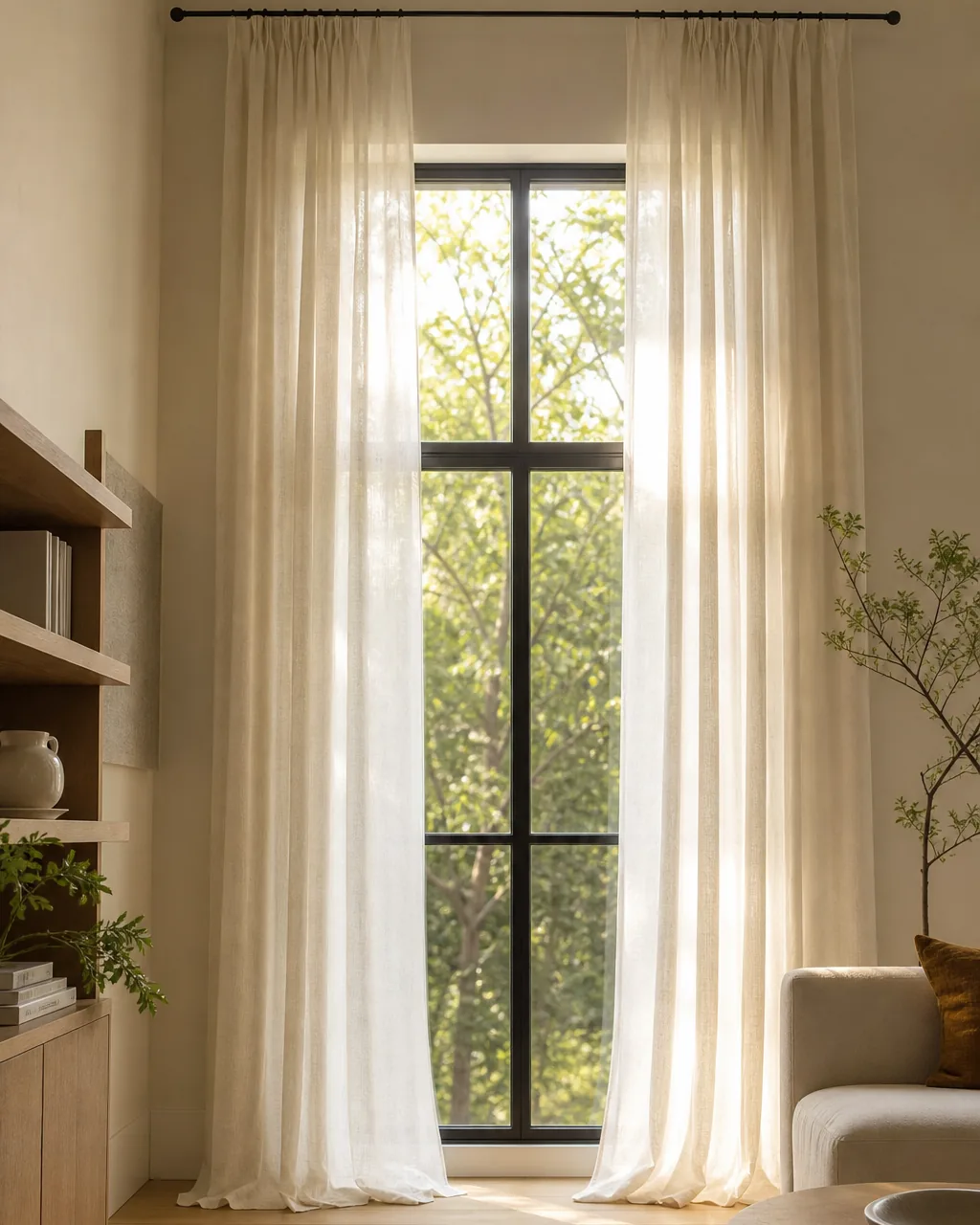
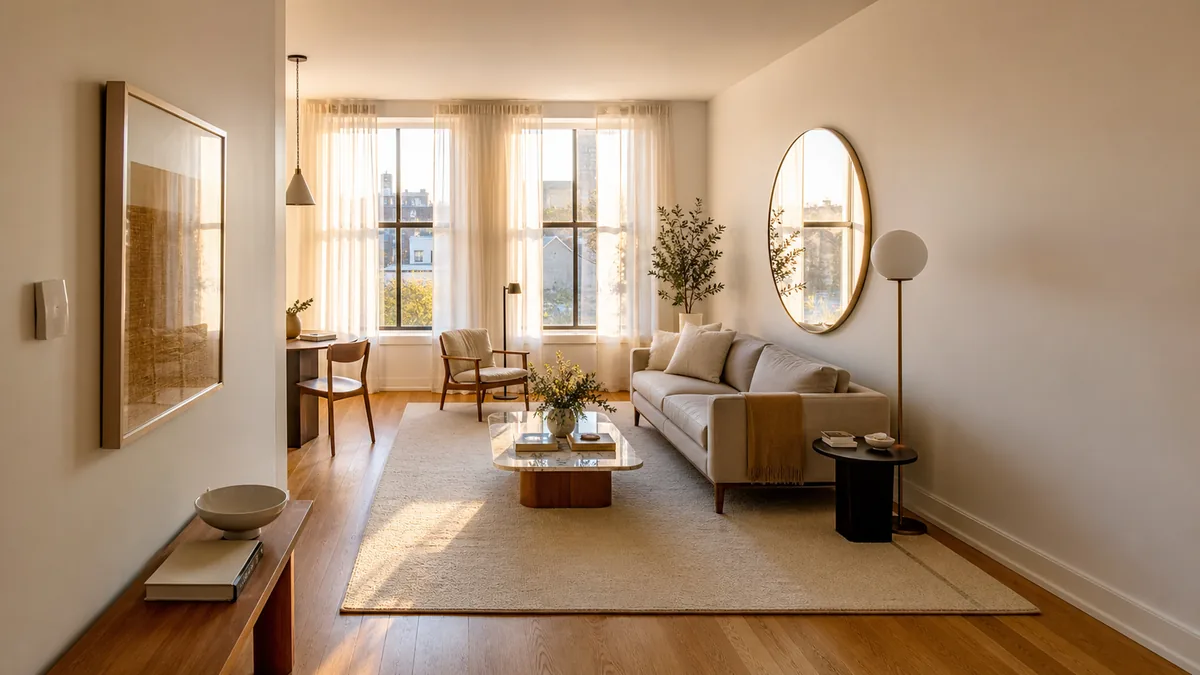
Mount curtain rods flush against the ceiling instead of just above the window frame. The extra fabric length pulls the eye upward and makes eight-foot ceilings feel closer to ten.
- Choose lightweight linen or sheer panels that filter light without blocking it
- Extend the rod eight to twelve inches past each side of the window so the panels stack on the wall, not the glass
- Stick with one curtain color for every window in the apartment to keep sight lines calm
- Floor-length is non-negotiable since curtains that stop at the sill reverse the height trick
- Ceiling-mount brackets are renter-friendly when paired with adhesive strips rated for the rod weight
3. Keep One Wall Completely Clear
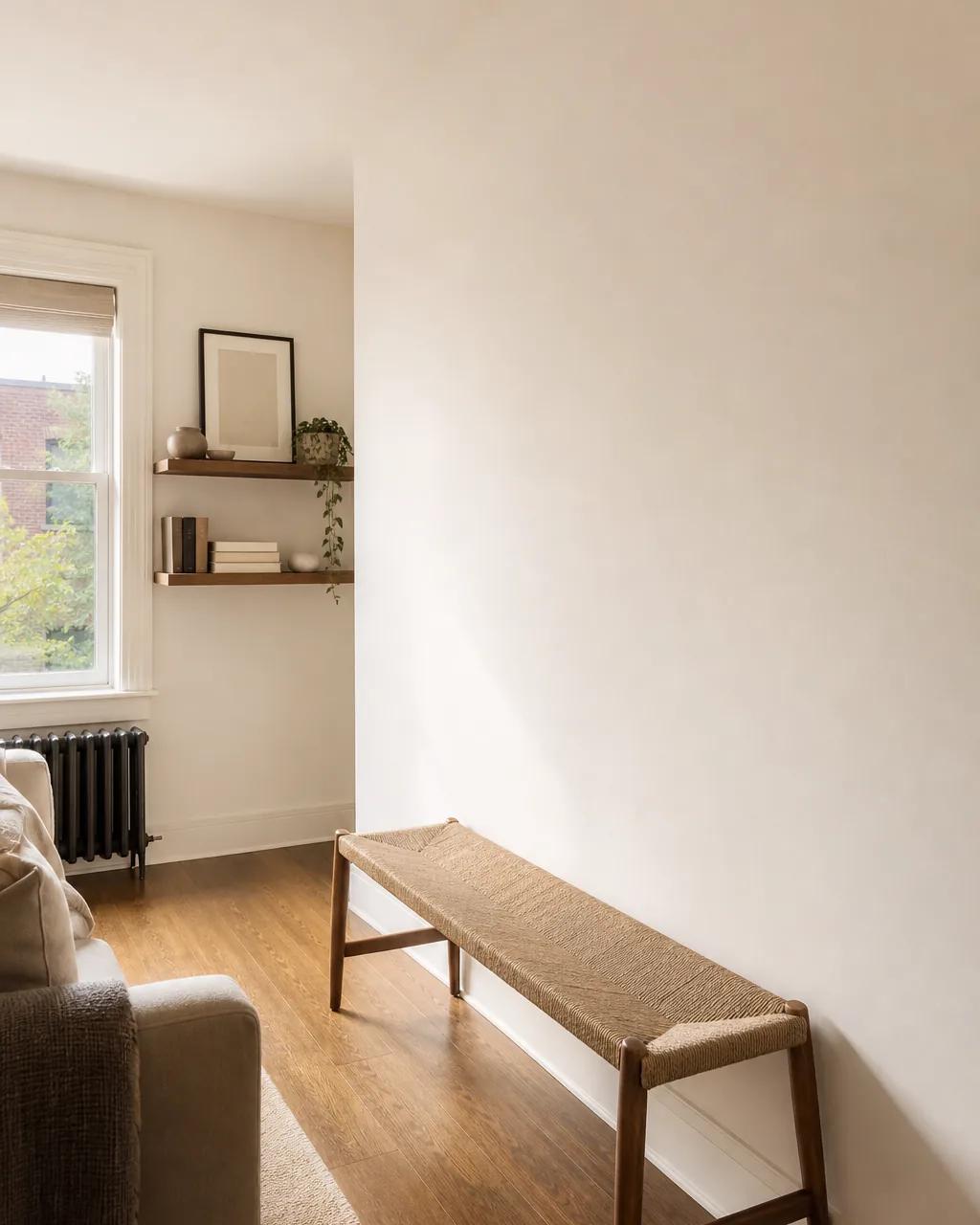
Resist the urge to fill every vertical surface. One blank wall gives the room a visual exhale and makes the decorated walls feel intentional rather than cluttered.
Every small apartment has one thing dragging the whole space down. Start there.
- The wall opposite the main window works best since light bounces off an unbroken surface
- Paint it the same color as the other walls so it reads as a deliberate pause, not an unfinished project
- If you need something there, a single piece of oversized art is one object, not clutter
- Move the furniture away from this wall by at least six inches to reinforce the breathing room
- The clear wall also doubles as projection screen territory for movie nights
4. Hang a Ceiling-Mounted Curtain to Divide the Room
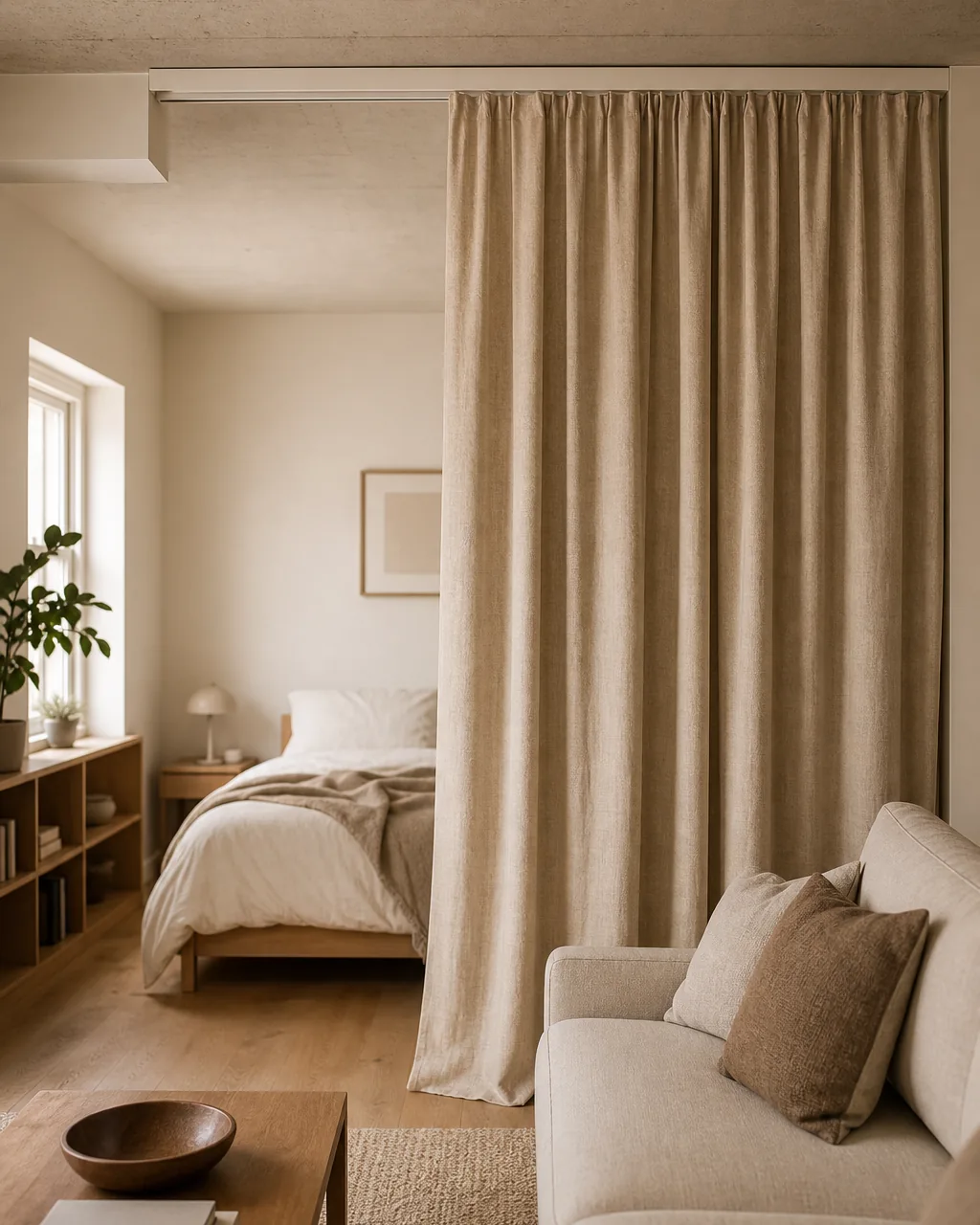
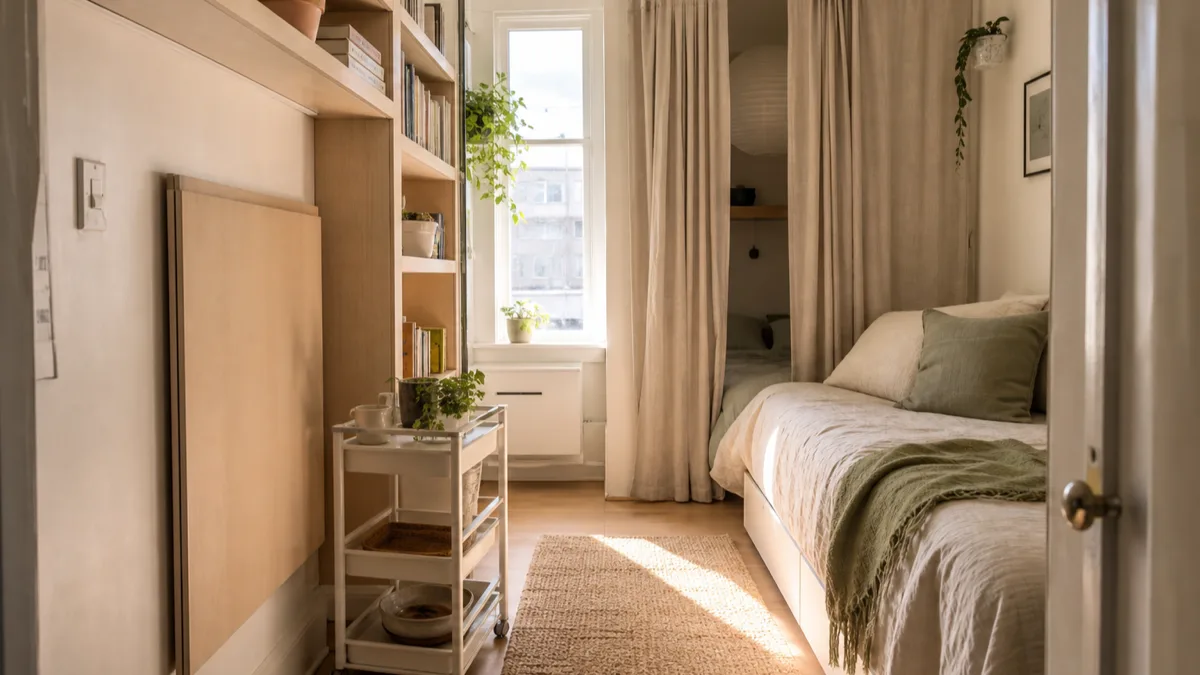
A floor-to-ceiling curtain on a ceiling track separates the bedroom from the living area without eating any floor space at all. Pull it closed for privacy at night and tie it back during the day so the apartment reads as one open room again.
- Install a ceiling-mounted curtain track so there is no visible rod and the curtain slides flush against the ceiling plane
- Choose a heavy linen or thick cotton panel that blocks sight lines without looking like a hospital partition
- Tie it back during the day with a single leather strap so the fabric stacks neatly against the wall
- A curved track lets you wrap the curtain around a corner to screen an L-shaped sleeping nook
- This works in studios, railroad apartments, and any open layout where a wall would kill the light
5. Put the Biggest Mirror Opposite the Window
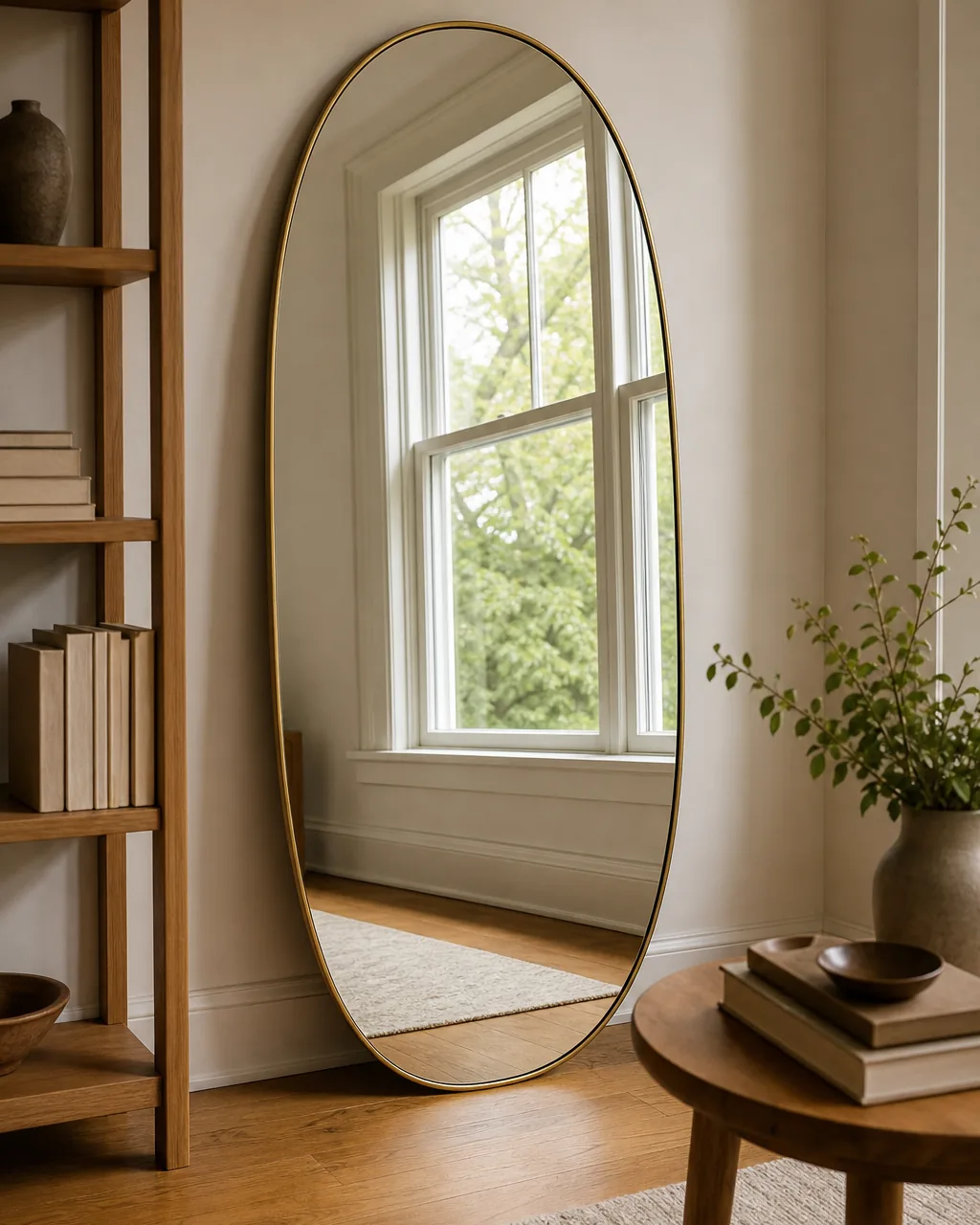
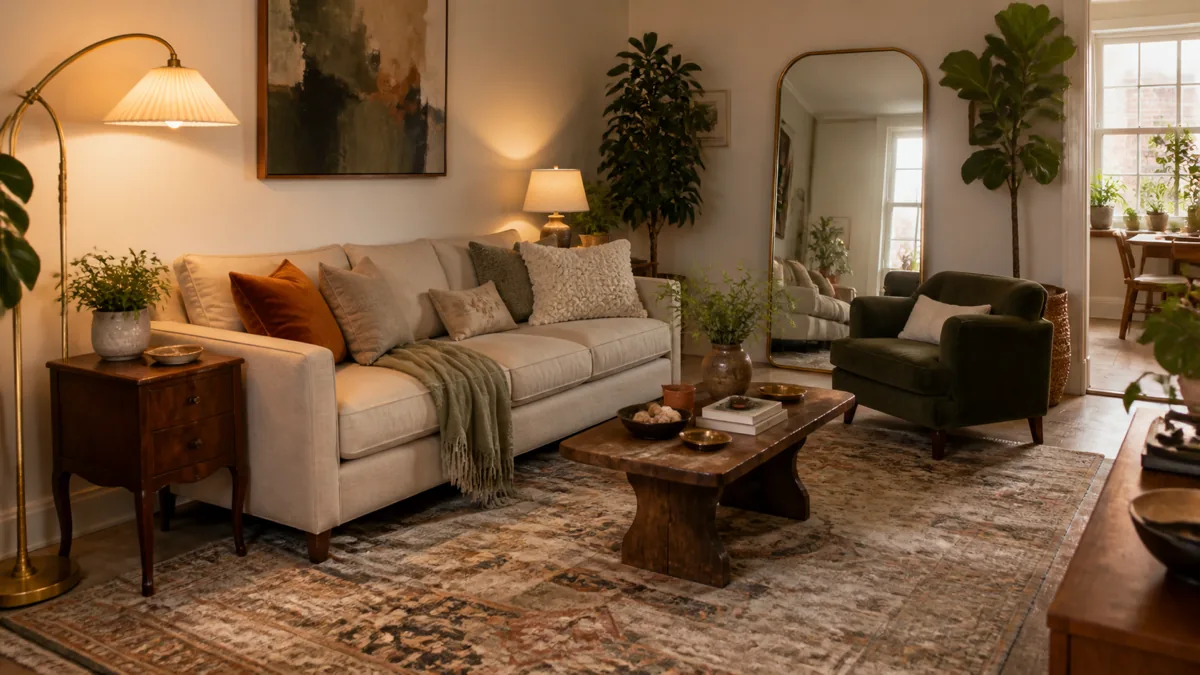
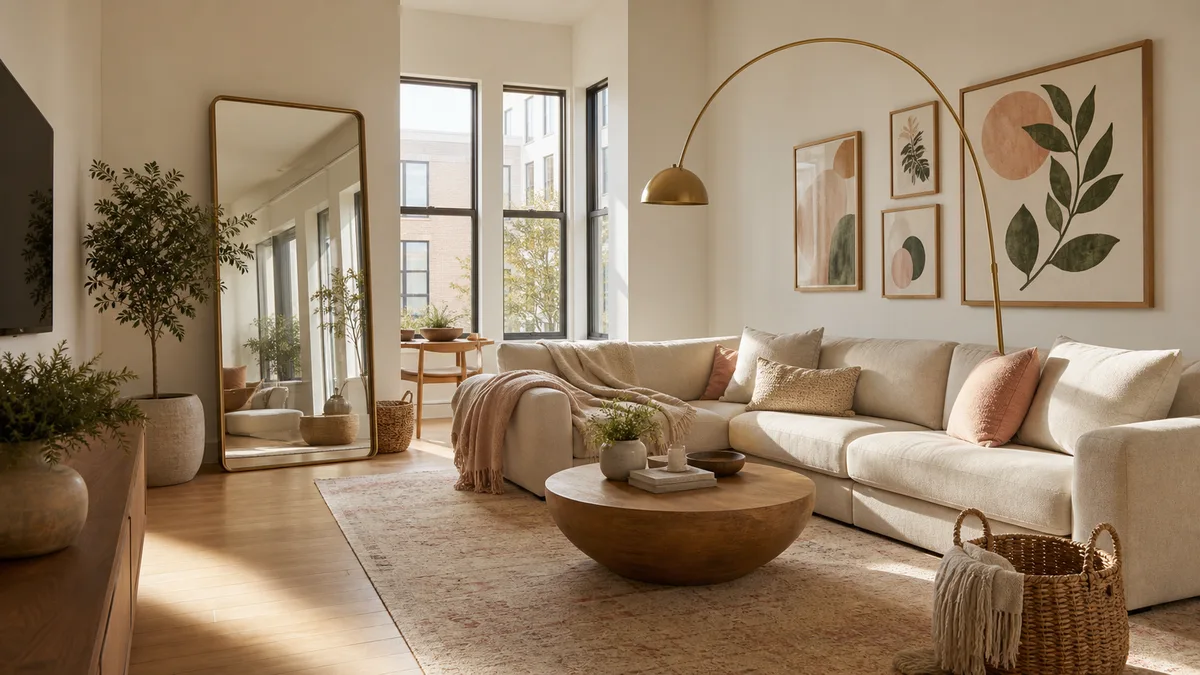
A large mirror facing the main window doubles the perceived depth of the room and bounces natural light into the corners that daylight never reaches on its own.
- Lean a floor-length mirror against the wall rather than hanging it for a casual editorial look
- Position it directly across from the window for maximum light reflection
- A thin wood or metal frame keeps the mirror from competing with the room around it
- Avoid placing mirrors opposite clutter since they double whatever they reflect
- In a narrow hallway or galley kitchen the same trick stretches the space laterally
6. Mount Hooks on Every Door Back
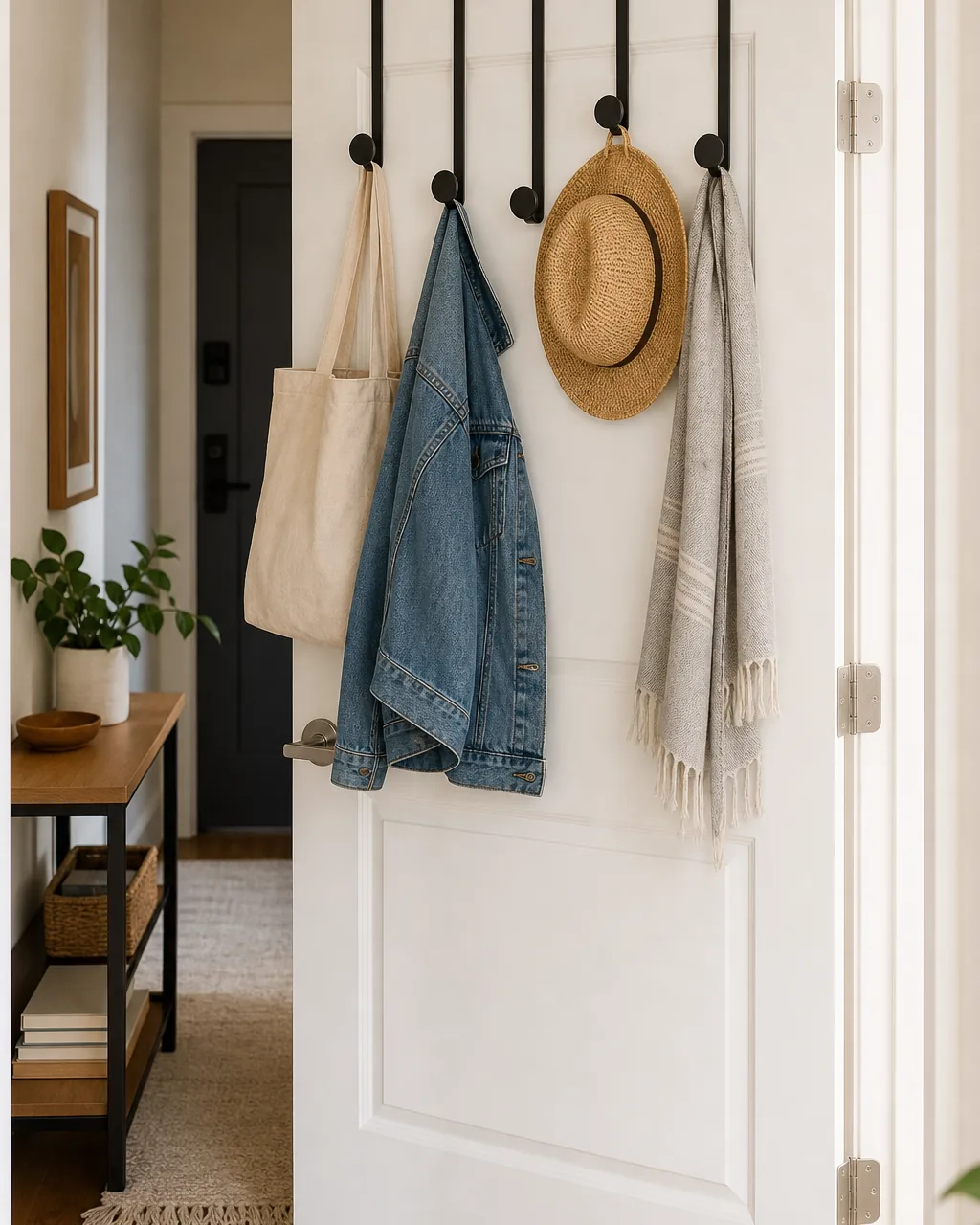
The back of every door in a small apartment is unused vertical storage hiding in plain sight. Hooks turn bathroom doors into towel racks, bedroom doors into jacket stations, and closet doors into bag organizers.
These keep small apartment ideas from becoming a list of things you bought that still did not fix the room.
- Over-the-door hook racks need no drilling and come off clean for renters
- Space hooks eight inches apart so coats and bags hang without bunching
- Assign one door to everyday grab-and-go items like keys, sunglasses, and tote bags
- Use the pantry or closet door back for cleaning supplies on a short rail
- Adhesive hooks rated for five pounds handle most daily-carry items
7. Light Three Separate Zones Instead of One Overhead
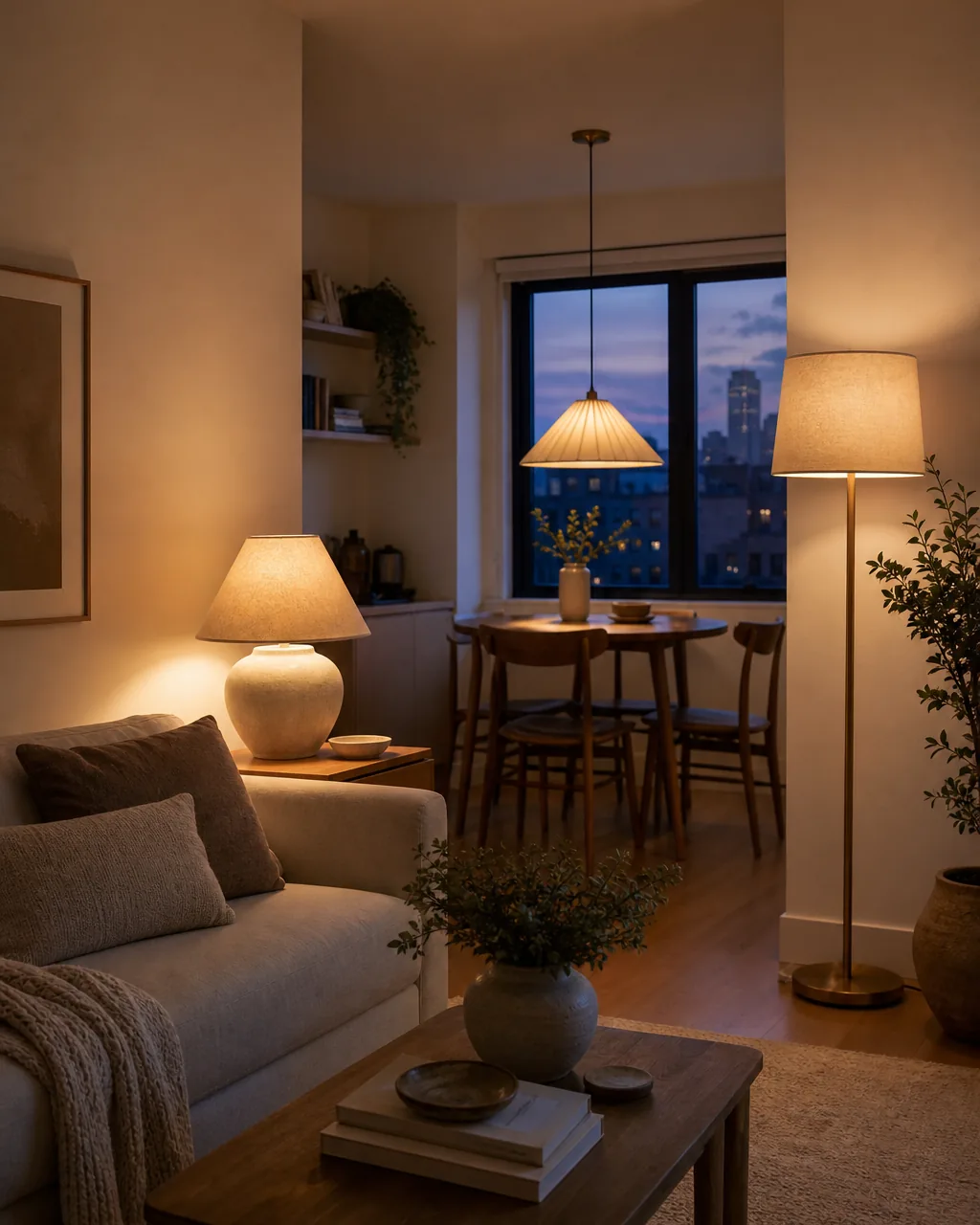
One ceiling light flattens a room and makes it feel like a dorm. Three separate light sources at different heights create pockets of warmth that make a small apartment feel like an intentional home instead of temporary housing.
- Table lamp on the side table or console for mid-level ambient light
- Floor lamp in the reading corner for task lighting that anchors that zone
- Under-cabinet puck lights or a pendant over the dining spot for functional glow
- Plug-in sconces eliminate the need for hard-wiring in a rental
- Put all three on a single smart plug so one switch dims the apartment to evening mode
8. Choose All Furniture on Legs
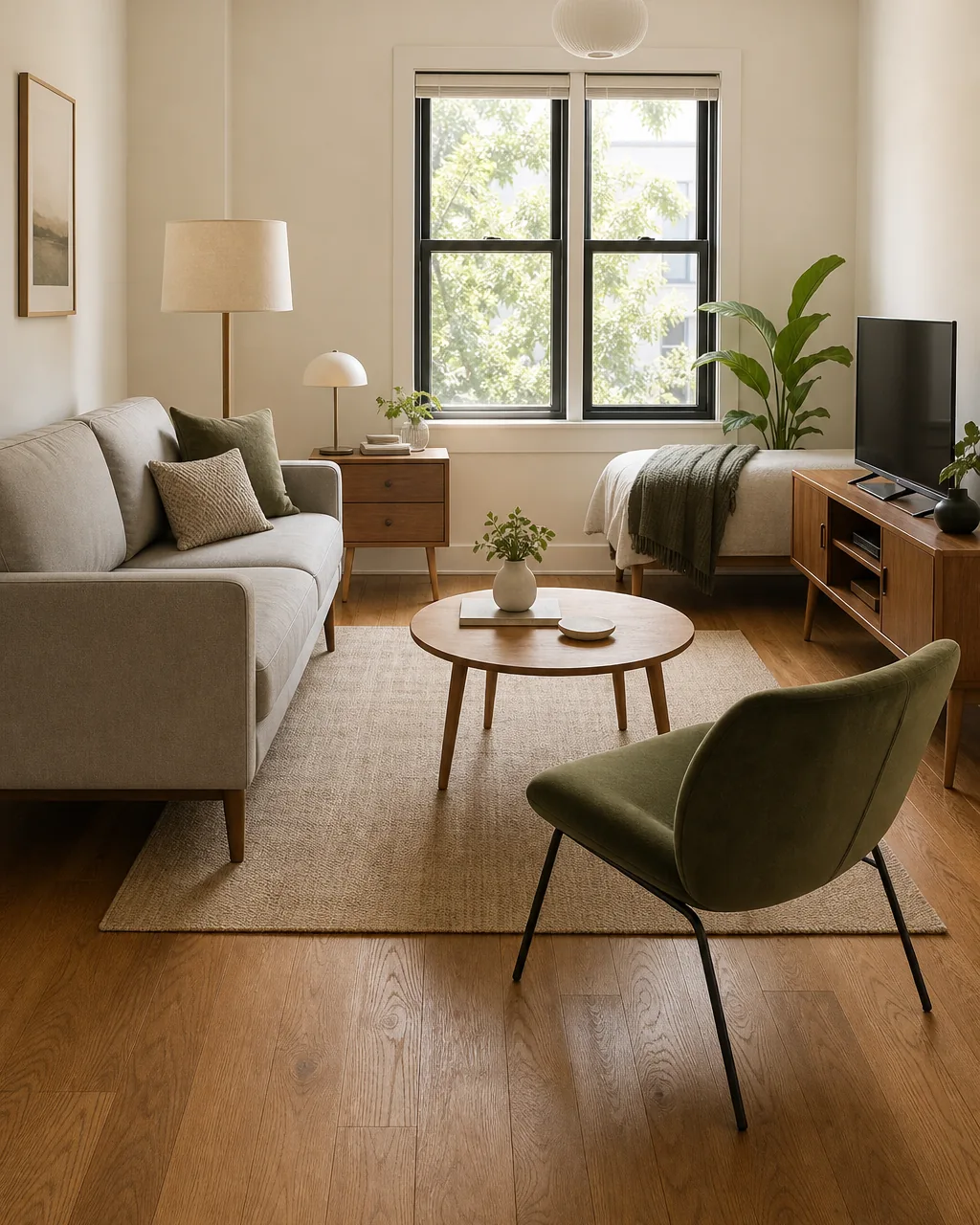
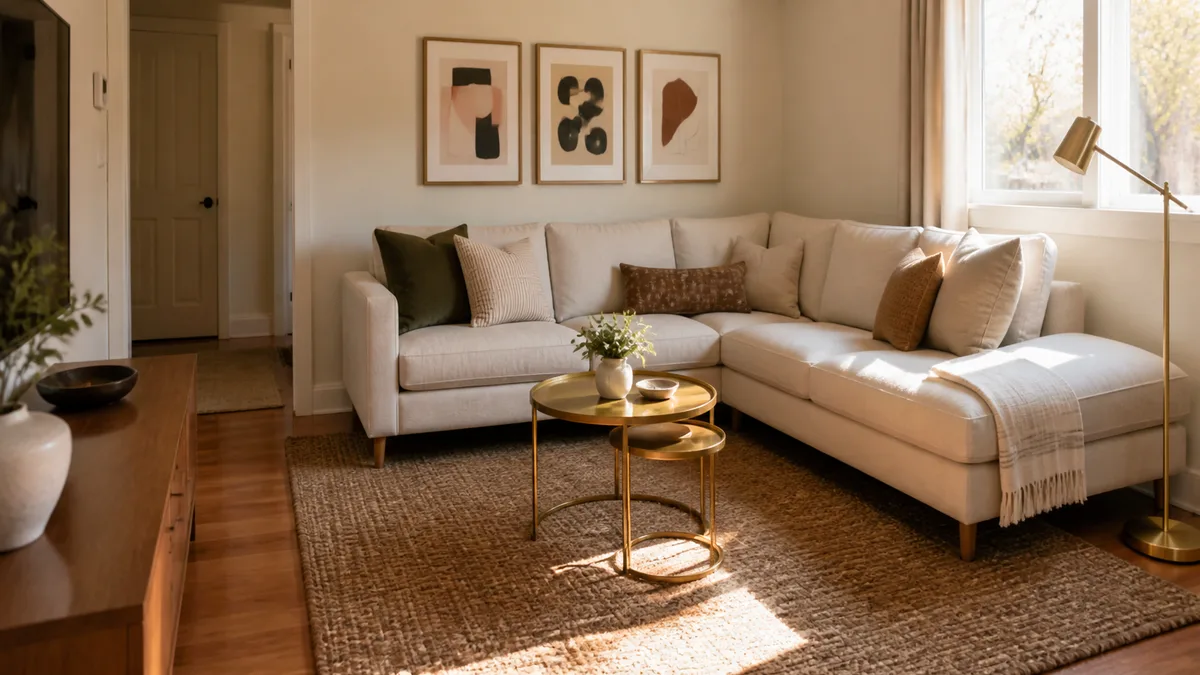
Visible floor beneath sofas, beds, chairs, and storage pieces tricks the brain into reading more open area. Skirted furniture and pieces that sit flat on the floor visually shrink the room.
If you are furnishing a small apartment from scratch or replacing one piece at a time, legs are the single most effective filter to apply. The same principle drives our small space furniture guide.
- Six-inch legs are the sweet spot for showing floor without looking unstable
- Tapered mid-century legs are the easiest style to find in compact furniture lines
- Storage baskets slide under a leggy sofa to use that visible floor for function too
- Applies to nightstands, TV consoles, and bathroom vanities as well
- When shopping, filter for leg height in the specs since product photos can be misleading
9. Build Storage Into Dead Corners With Tall Narrow Shelving
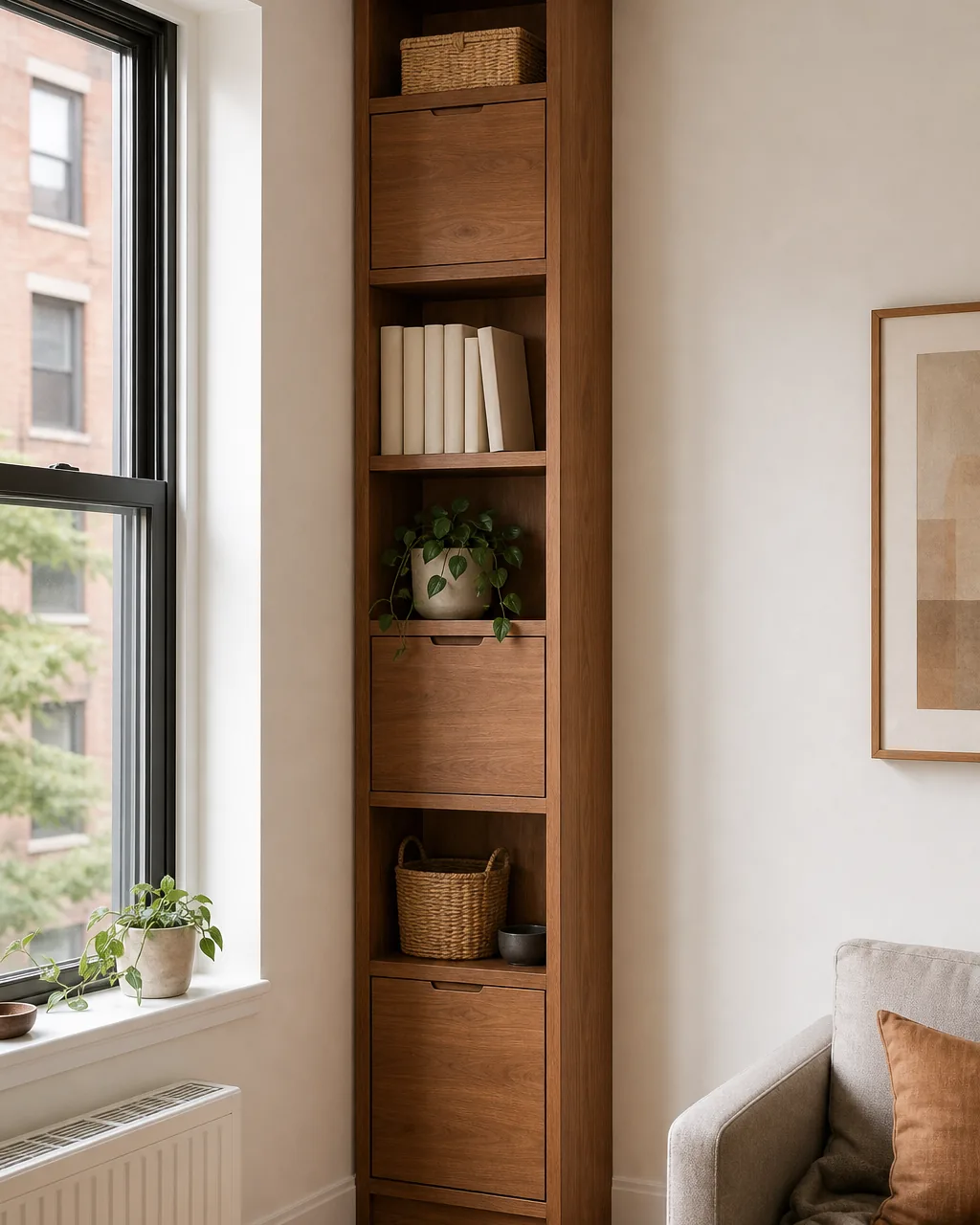
Corners are the most wasted area in small apartments. A tall, narrow shelf unit that fits into a ninety-degree angle turns dead space into vertical storage for books, plants, or kitchen overflow without blocking either adjacent wall.
12 small apartment ideas that make every square foot count
- 1Zone With RugsArea rugs define living, sleeping, and dining zones without blocking light.
- 2Ceiling-Height CurtainsMounting at the ceiling makes eight-foot walls read closer to ten.
- 3One Clear WallA blank wall gives the room a visual exhale and makes everything else look placed.
- 4Curtain Room DividerCeiling-mounted track splits the room at night, opens it back up by day.
- 5Mirror Opposite the WindowDoubles perceived depth and bounces light into dark corners.
- 6Hooks on Every Door BackTurns unused door backs into towel, jacket, and bag storage.
- 7Three Light SourcesTable lamp, floor lamp, and pendant replace the flat overhead with warm layers.
- 8Furniture on LegsVisible floor beneath every piece makes the room read bigger than it is.
- 9Tall Corner ShelvingFloor-to-ceiling shelves turn dead corners into vertical storage.
- 10One Color PaletteShared tones across every room make the apartment feel like one unified space.
- 11Sliding or Open DoorsReclaims the swing radius that standard doors eat from the floor plan.
- 12Drop Zone by the DoorShelf, hooks, and tray contain the daily clutter in under twelve inches.
- Corner-specific shelves taper to fit the angle without blocking either adjacent wall
- Go floor-to-ceiling so the unit looks built in rather than temporary
- Alternate closed boxes and open shelves to break up visual weight
- The kitchen corner between counter and wall is a prime spot for a slim rolling cart
- Anchor tall shelving to the wall with anti-tip hardware even in a rental
10. Run One Cohesive Color Palette Through Every Room
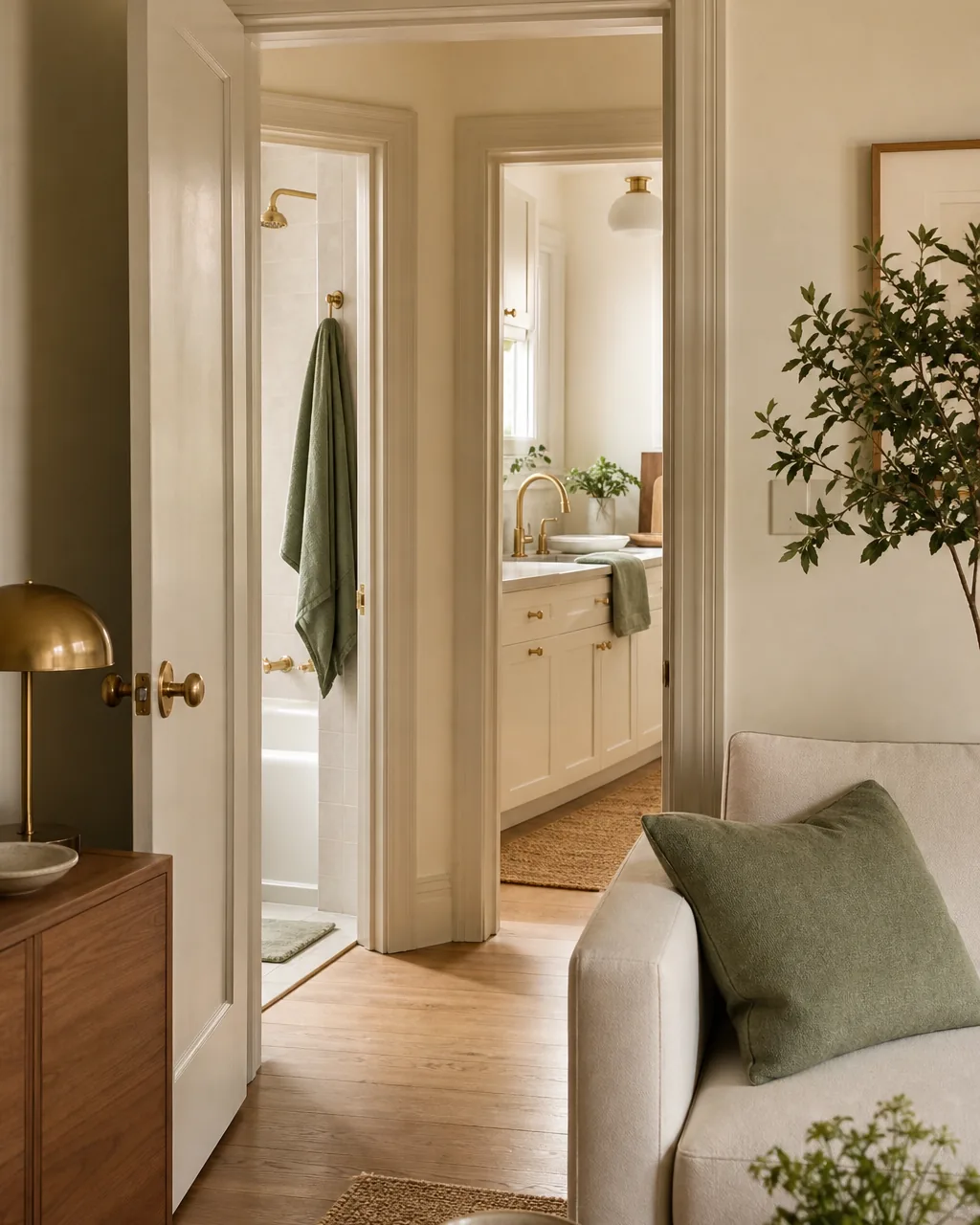
Visual continuity makes disconnected rooms feel like a single space. When the bedroom, bathroom, and kitchen share two or three colors, the apartment reads larger because the eye moves through it without stopping at a color change.
- Pick one neutral base, one warm accent, and one cool accent as the apartment palette
- Towels, throw pillows, dish towels, and candles are the easiest way to thread the palette through every room
- Paint every wall the same shade or stay within the same strip on the paint card
- Repeat one metal finish for hardware, fixtures, and frames to reinforce the thread
- A mood board with physical swatches keeps impulse buys from breaking the palette
11. Replace Swinging Doors With Sliders or Open Archways
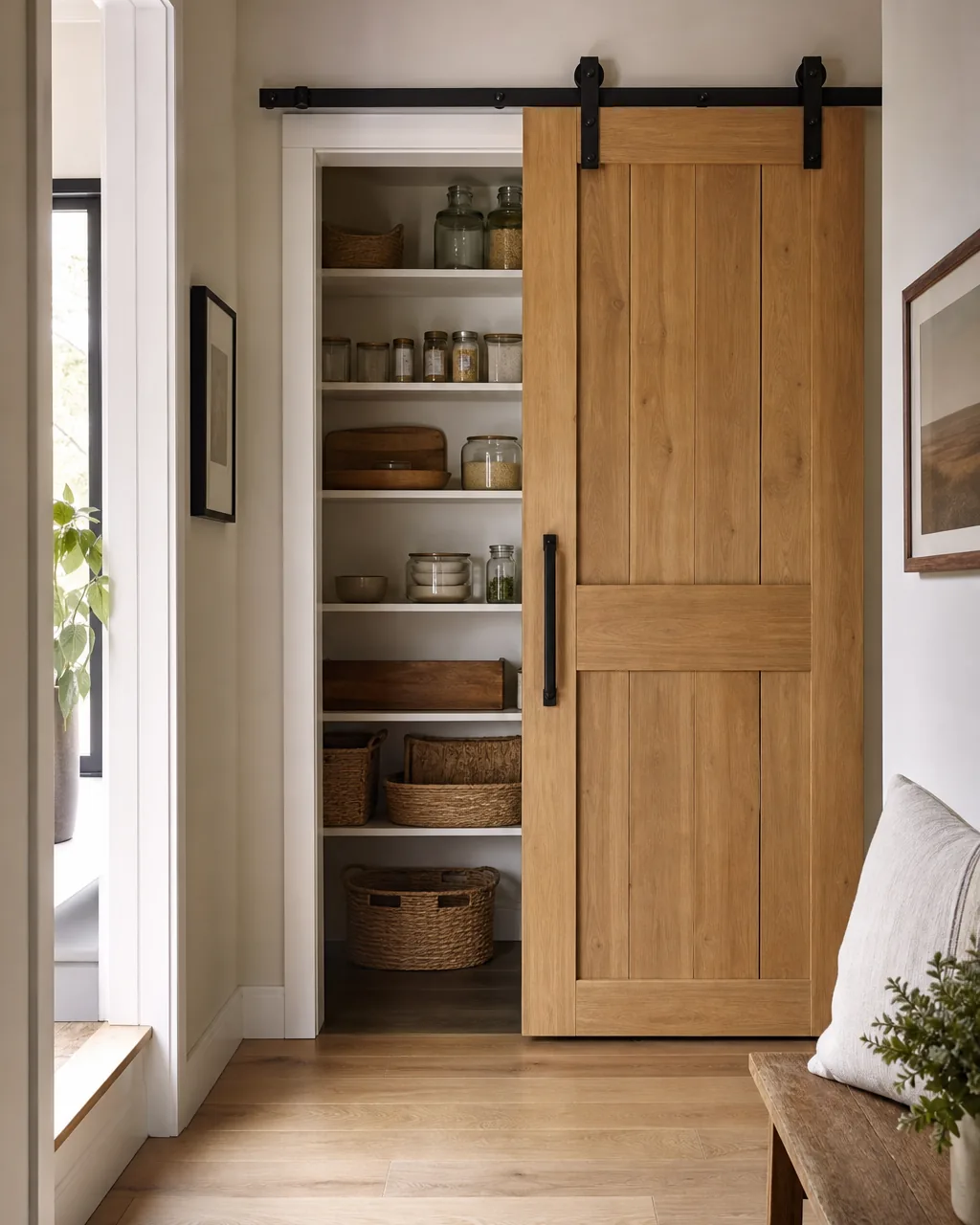
A standard door needs roughly nine square feet of clear floor to swing open. In a small apartment that space adds up fast.
Barn-style sliders, pocket doors, or removing the door and leaving the casing as an archway reclaims every inch of that swing radius. If you have been looking at one-bedroom apartment ideas, this is the single change that recovers the most usable floor area.
- Barn-door hardware mounts above the frame and slides along the wall
- Pocket doors disappear into the wall cavity and free up both sides
- Removing a door entirely works for closets, pantries, and pass-throughs where privacy is not needed
- A curtain panel on a tension rod is the renter-friendly version of all three
- Keep the existing door stored in a closet so you can reinstall at move-out
12. Create a Drop Zone by the Door That Fits in 12 Inches
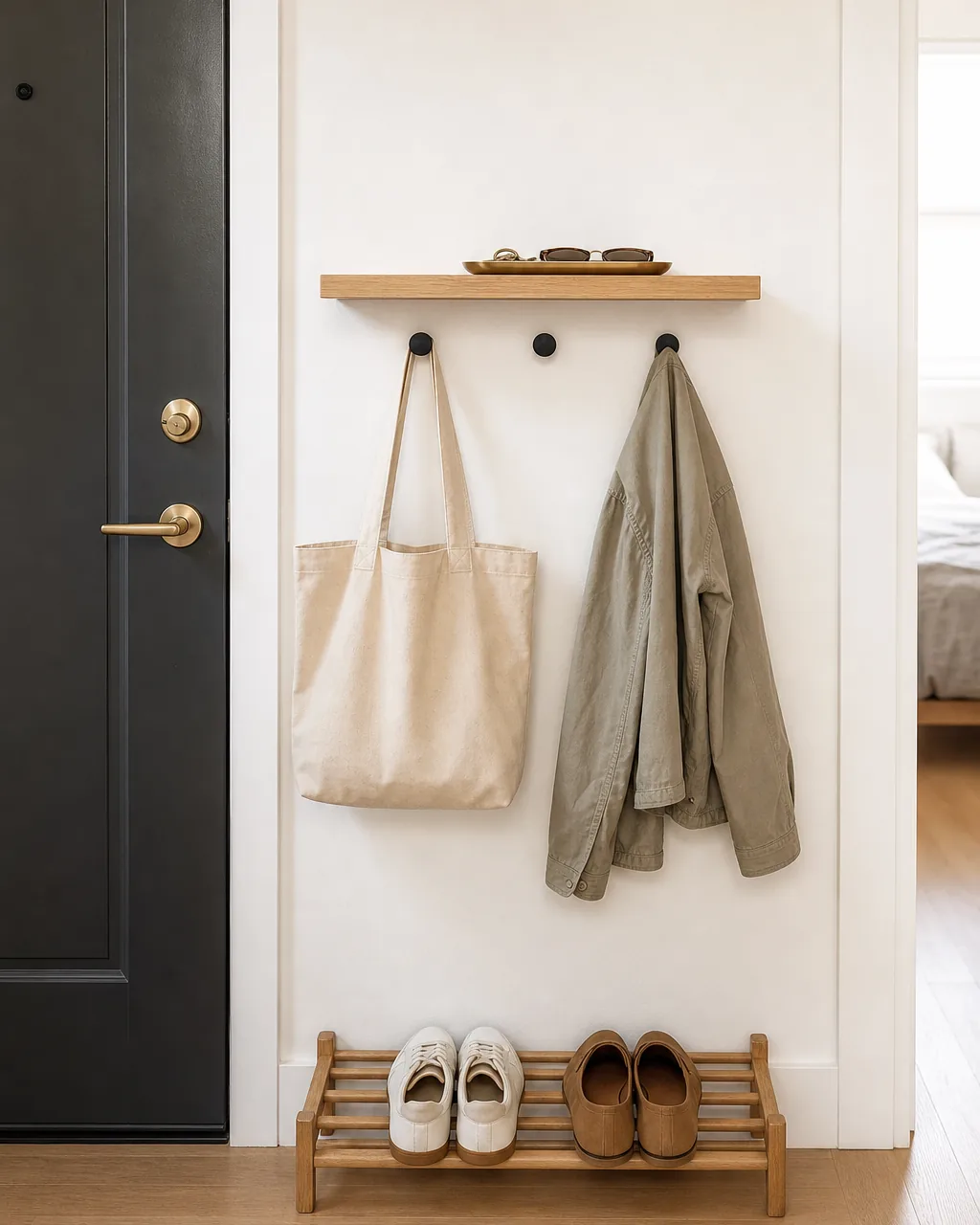
Every small apartment needs a landing pad by the front door. Without one, keys, mail, and shoes scatter into the living space and the whole apartment starts to feel cluttered within days.
A slim floating shelf, a row of hooks, and a shallow tray contain the daily chaos in under twelve inches of wall depth. The small entryway ideas guide goes deeper on layout options.
- Mount a floating shelf at waist height and add two or three hooks directly below
- A shallow ceramic or brass tray on the shelf catches keys, coins, and earbuds
- Keep one small basket underneath for sunglasses or dog leashes
- Shoes go on a boot tray or slim rack tucked against the wall below the hooks
- Limit the drop zone to three feet wide so it stays purposeful and does not creep into decor territory