11 Small Space Ideas That Actually Make Tight Rooms Work Harder
Living in a small space is not a phase. It is the apartment that stays yours for years, and around month three the charm of cozy wears off and the squeeze becomes the thing you notice every morning.
The reflex is to buy organizers, but the larger wins live in how a room is structured: which surfaces do double duty, where the eye travels, and what stays out of the way until you need it.
These eleven ideas change the daily math of tight rooms without a full renovation.
Each idea targets one surface, zone, or fixture that earns back real floor or visual room.
1. Mount a Fold-Down Desk That Disappears
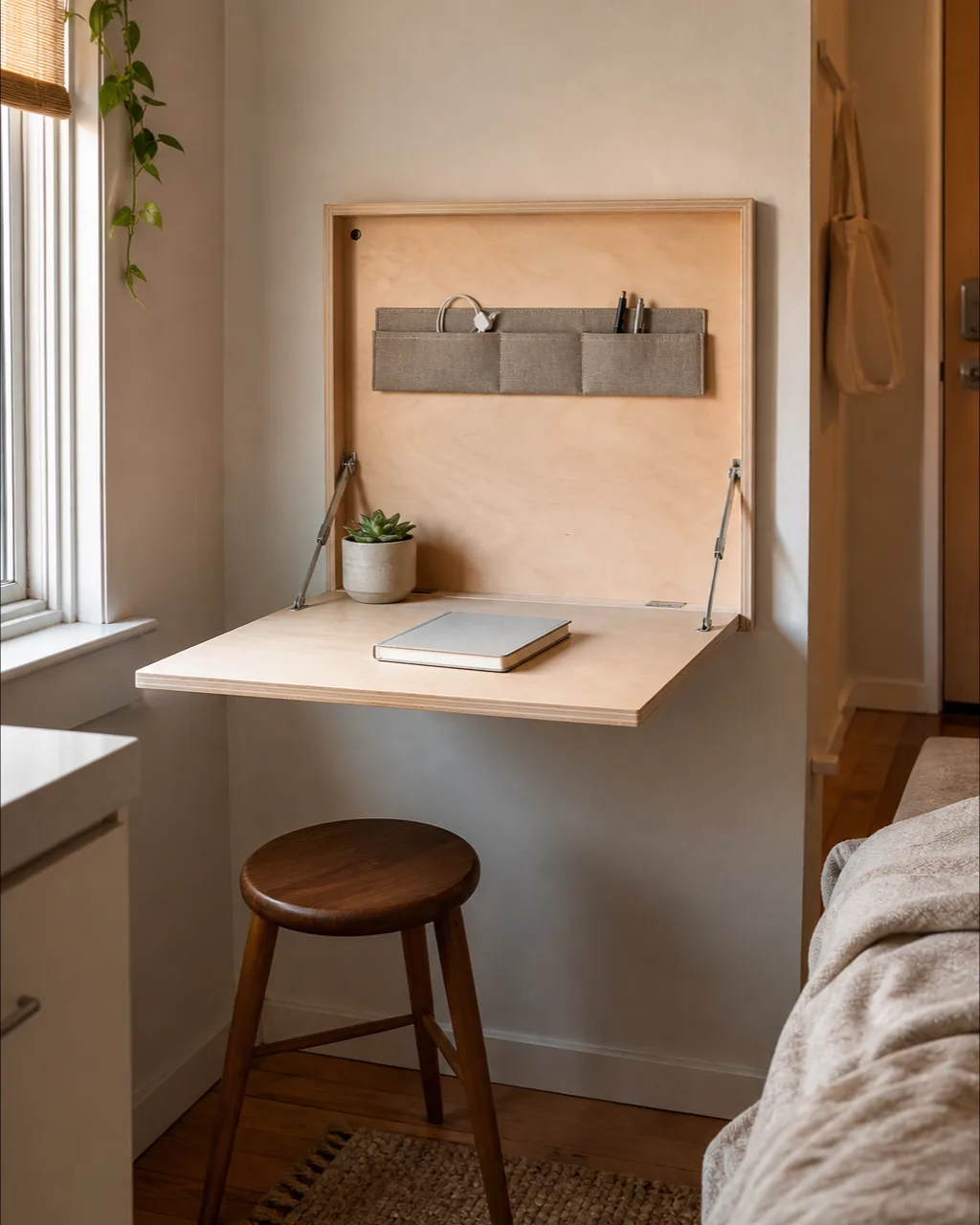
A permanent desk claims six square feet of floor whether you are sitting at it or not. A fold-down panel gives you the same work surface at elbow height and folds flat against the wall in three seconds, returning the floor to the room for the other twenty hours of the day.
The hinge is the whole design. A piano hinge along the bottom edge and a single folding bracket on each side hold the panel level when open and tight to the wall when closed, with no visible hardware in either position.
- Mount into studs at elbow height using a full-width piano hinge along the bottom edge
- Add one folding bracket per side that locks the panel level and tucks flat when you close it
- Screw a narrow ledge along the top edge to keep pens and cables from sliding off
- Seal the surface with matte polyurethane so it wipes clean without needing a desk pad
- Hang a slim fabric wall pocket above for notebooks and chargers when the desk folds up
2. Run Shelves All the Way to the Ceiling
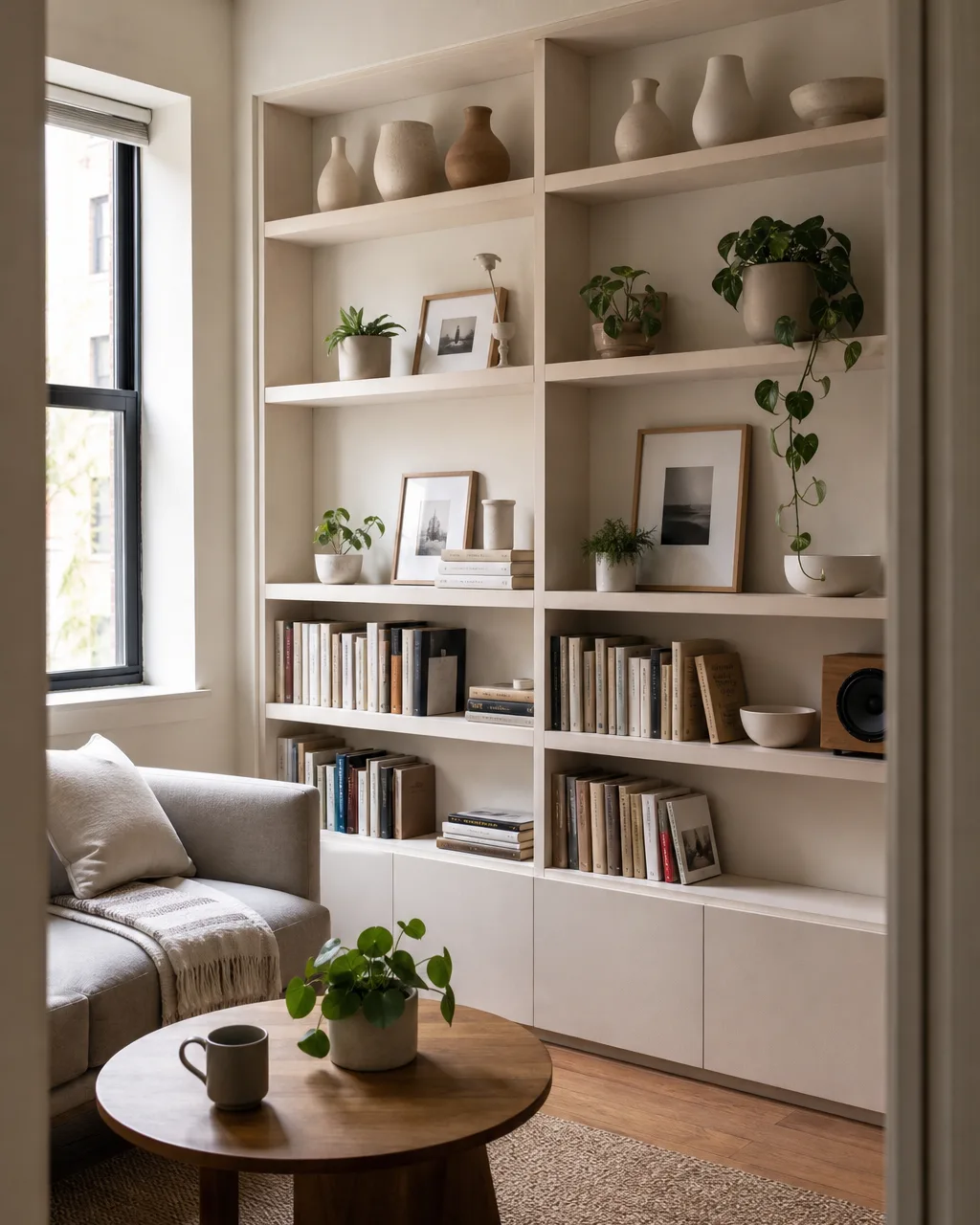
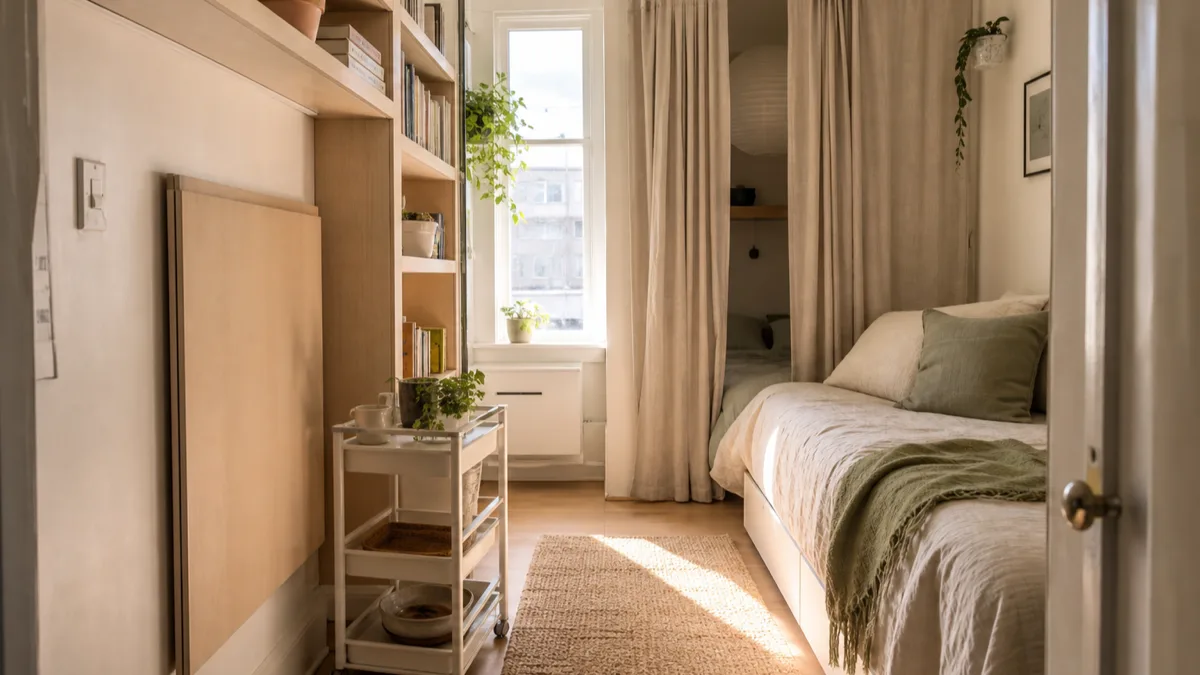
A bookshelf that stops at shoulder height wastes the upper third of the wall and sends a signal that the room is short. Running shelves to the ceiling pulls the eye upward, uses every vertical inch for storage, and turns one wall into architecture instead of a piece of furniture leaning against it.
The grouping matters more than the shelves themselves. Heavy daily items stay low, display objects climb, and the top shelf holds lightweight pieces you rarely touch but always see.
- Space brackets every 24 inches and use 10-inch-deep boards for the upper shelves
- Keep the bottom two shelves for daily items: books, a speaker, a mug you reach for often
- Group the middle section by function: one shelf for plants, one for photos, one for baskets
- Reserve the top shelf for lightweight decorative ceramics that draw the eye up
- Paint the shelves and the wall behind them the same color so the unit reads as one surface
3. Use a Rolling Cart as a Nightstand
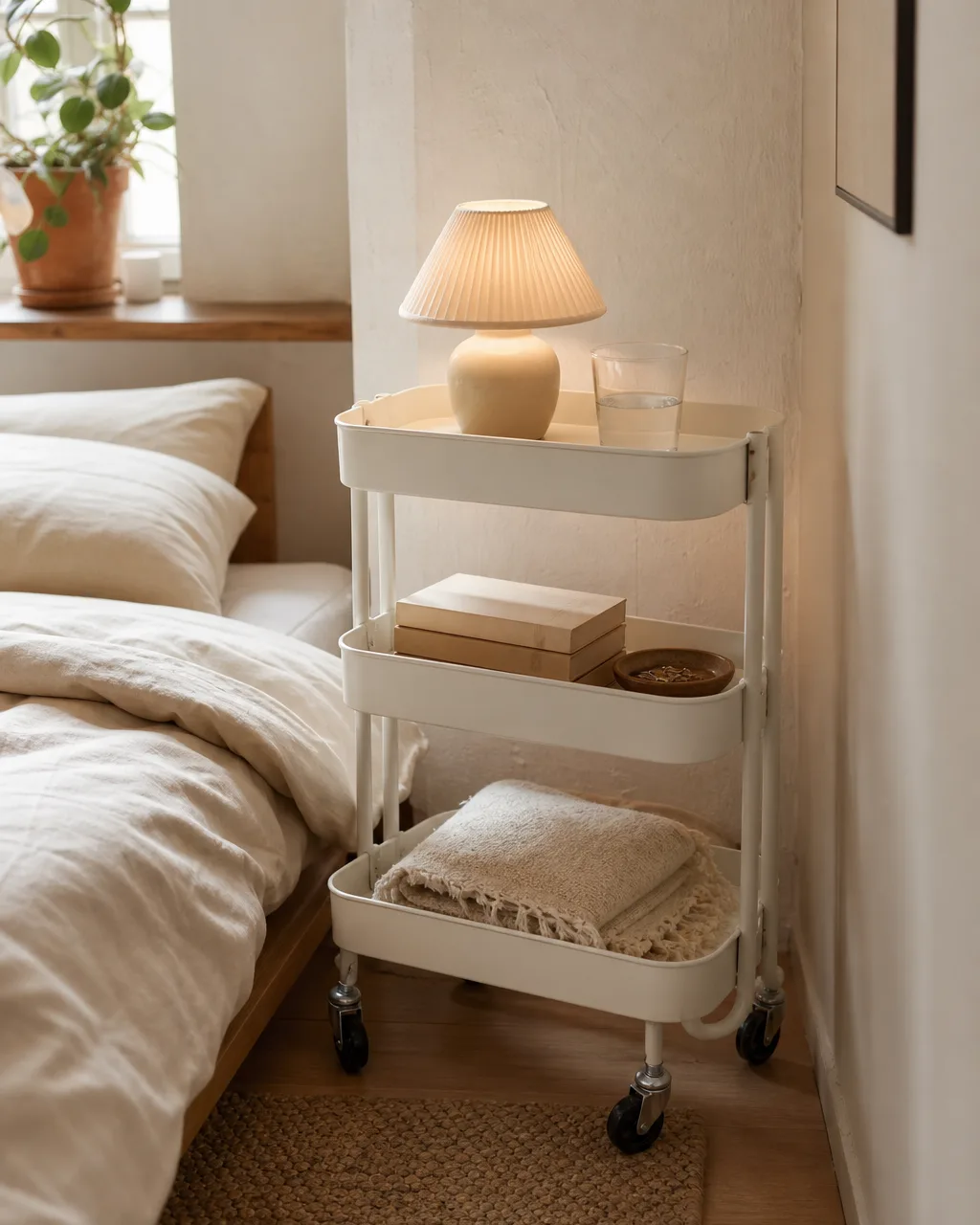
A nightstand is furniture that does one job and never moves. A three-tier rolling cart does the same job at the bedside and rolls out to the living area during the day when you need the floor space for a yoga mat or a clear path to the closet.
The three tiers are the advantage over a flat nightstand. Top tier is the lamp and phone. Middle tier is books and a catchall tray. Bottom tier is a folded throw or a small basket. Three surfaces in the footprint of one, and the locking casters keep it still when you reach for the alarm.
- Pick a cart with locking casters so it stays put while you reach for your phone at night
- Keep the top tier clear except for a lamp, phone, and water glass
- Use the middle tier for two or three books and a small tray for earbuds
- Store a folded throw blanket or bedtime essentials basket on the bottom tier
- Roll the cart to the living area during the day if you need the bedroom floor open
Not every idea fits every apartment. Start with the room where the squeeze hurts the most.
4. Divide a Room With a Curtain Instead of a Wall
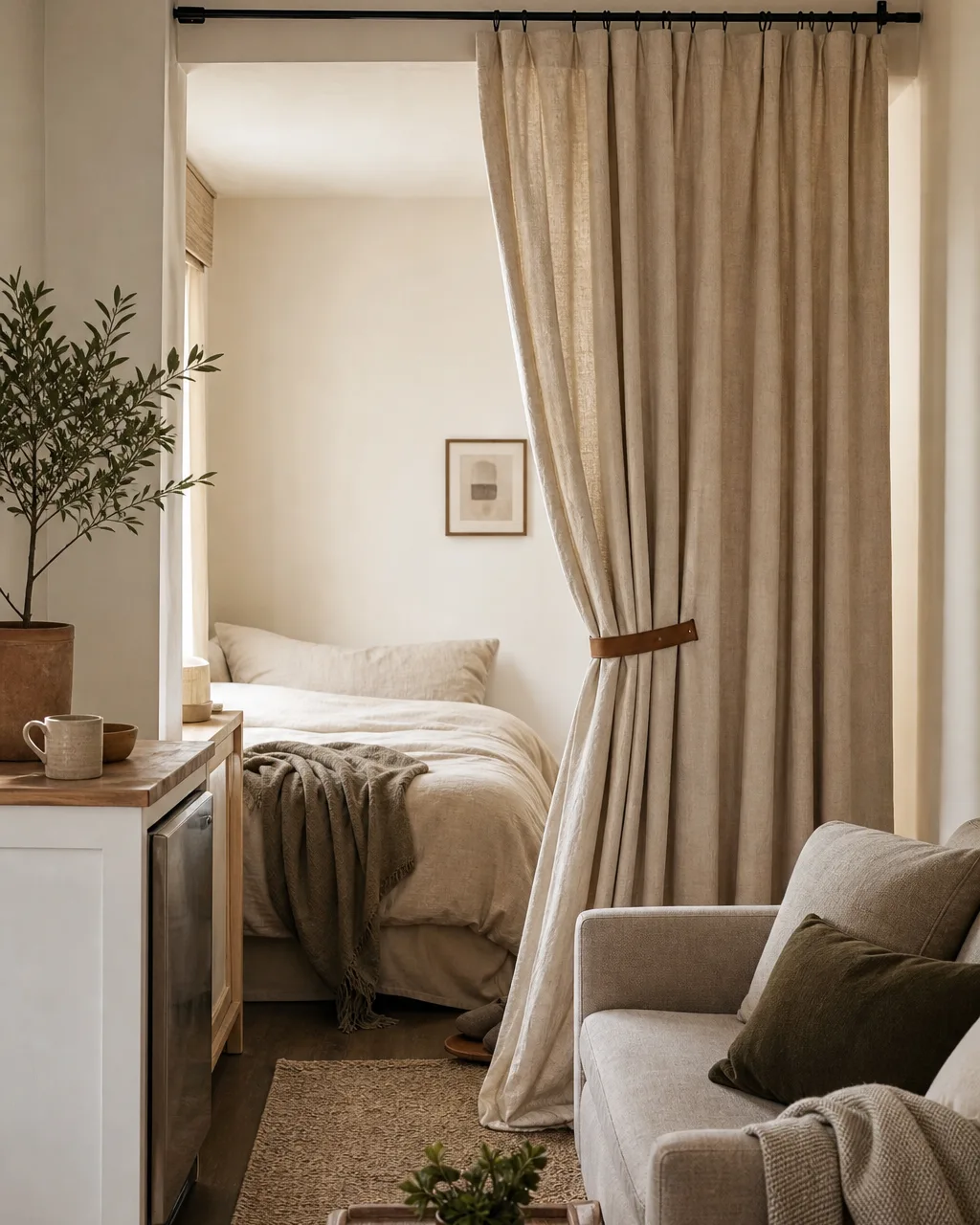
A studio apartment that reads as one open box loses the feeling of having rooms, but a permanent wall eats floor and blocks the light. A ceiling-height curtain on a tension rod splits sleeping from living without holes, construction, or giving up the option to open the room back up in three seconds.
The material is the decision. Heavyweight linen or cotton hangs straight and absorbs sound. Sheer fabric divides visually but not acoustically, which defeats the point at bedtime.
- Choose a heavyweight linen or cotton panel that hangs straight without billowing
- Mount the tension rod at the ceiling line for full-height separation
- Cut the curtain four to six inches wider than the opening so it gathers slightly when closed
- Tie it back with a leather strap during the day to keep the sightline open through the apartment
- Pick a color one shade darker than the wall so the divider reads as intentional, not temporary
5. Put a Pegboard on the Kitchen Wall
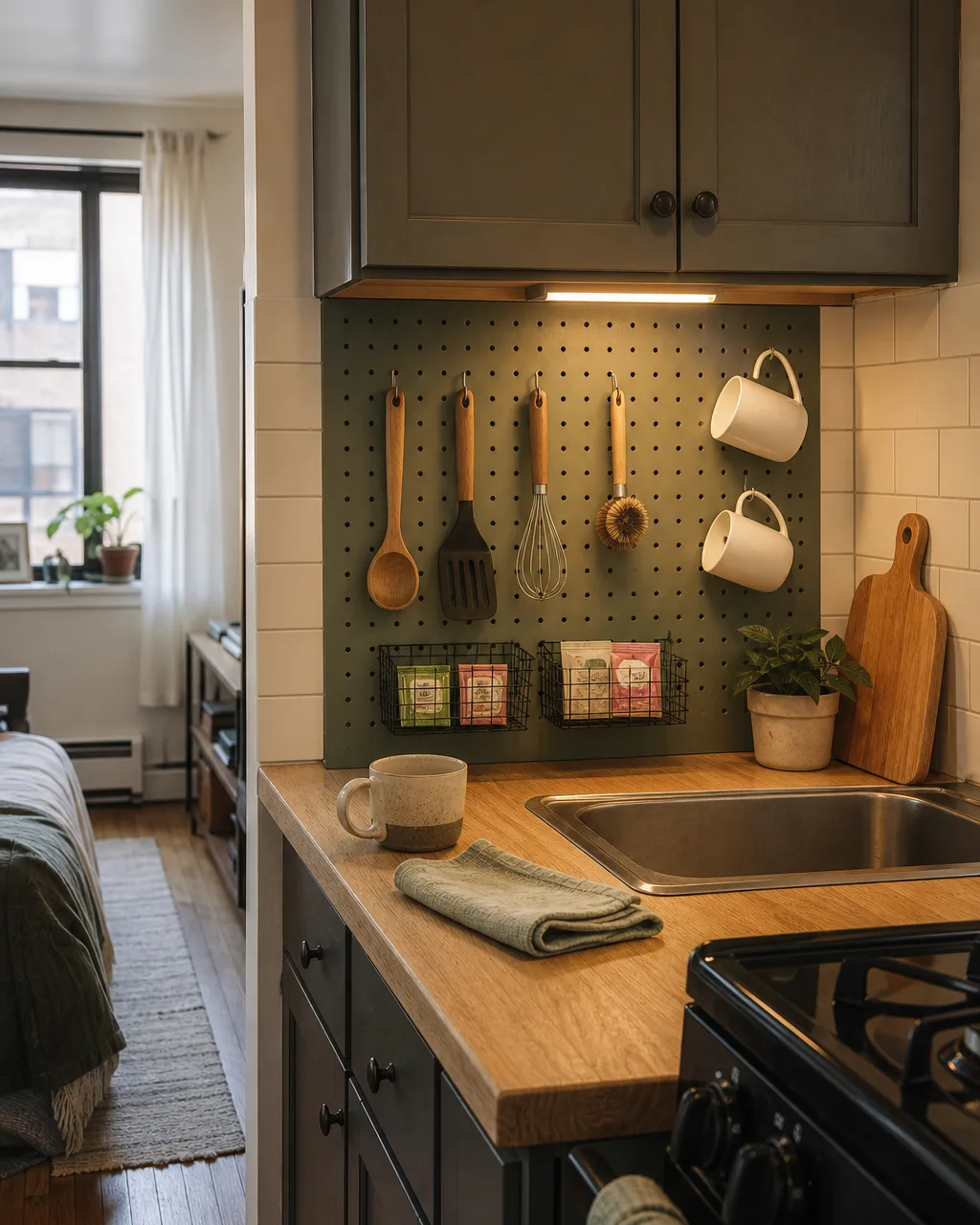
Drawer space in a small kitchen is a zero-sum game. Every utensil in a drawer is one less thing the drawer can hold. A painted pegboard between the counter and upper cabinets moves the five most-used tools to the wall, frees an entire drawer slot, and rearranges in seconds when your cooking habits change.
The trick with pegboard is restraint. Fill every hole and it reads as a garage wall. Leave twenty percent of the holes empty and it reads as a curated display where everything has its place.
- Cut the board to fit the backsplash area and mount it with standoff spacers so hooks seat fully
- Paint the board to match the cabinets or the wall so it blends into the kitchen
- Hang the five utensils you grab daily within arm's reach of the stove
- Add two small wire baskets for spice packets, tea bags, or small bottles
- Leave a fifth of the holes empty so the board breathes instead of looking packed
6. Store Blankets Inside the Ottoman
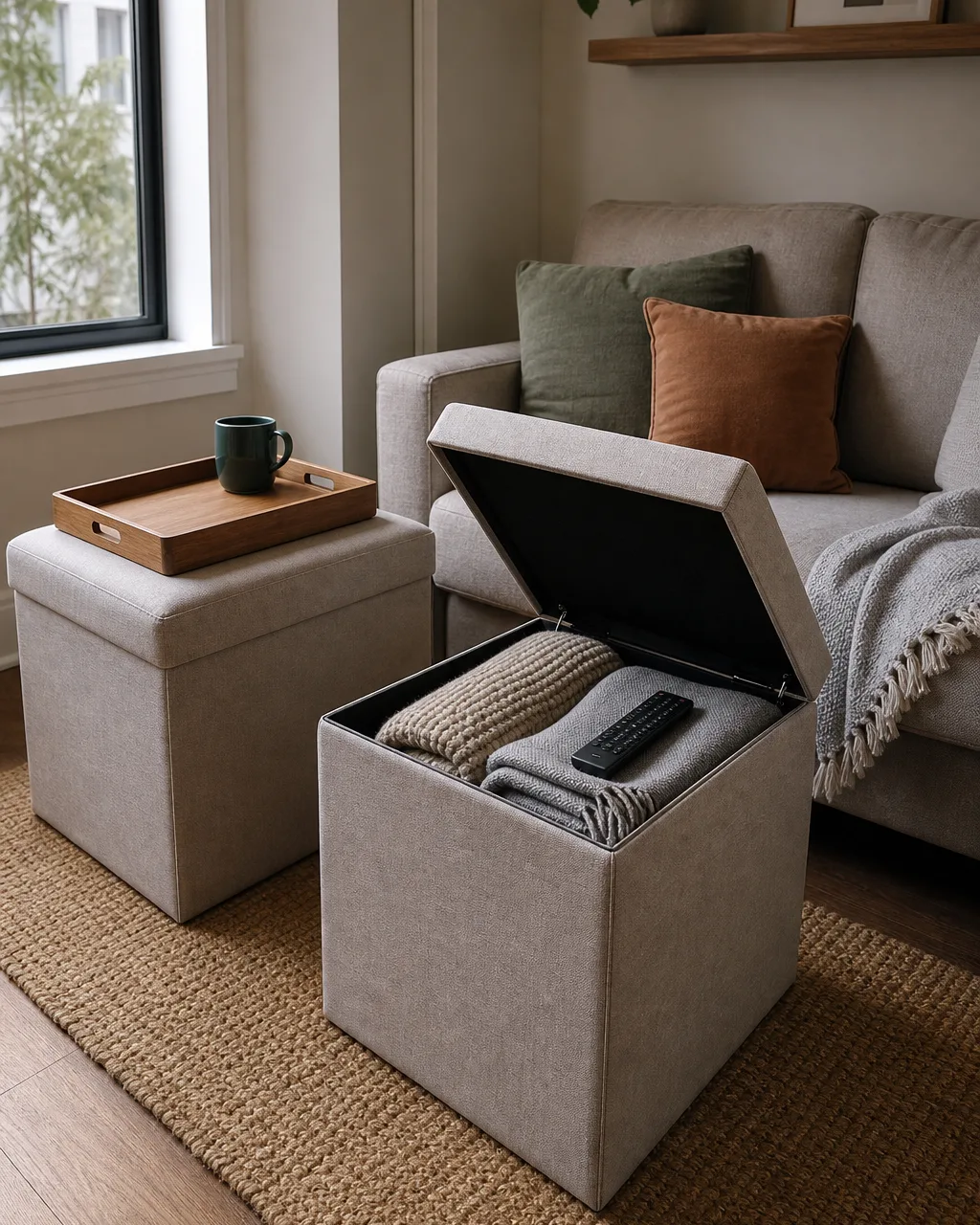
A living room ottoman already claims floor space. A storage ottoman claims the same footprint and hides a throw blanket, a stack of magazines, and every remote in the apartment inside the seat. It does three jobs — footrest, extra seat, storage — while looking like it does one.
Choose a firm-top version. A firm lid doubles as a tray surface for drinks and snacks when you set a small board on top, which turns it into a coffee table substitute on nights when the real table is pushed aside.
- Choose a firm-top ottoman so a wooden tray sits level and serves as a coffee table surface
- Line the inside with a fabric bag to keep stored items from scratching the frame
- Store daily-reach items on top inside the lid: throw blanket, remote, tablet
- Keep seasonal pieces at the bottom: extra pillow covers, candles, guest blankets
- Place the ottoman within arm's reach of the sofa so it replaces a side table, not just a footrest
The specific ideas change. The rules underneath them do not.
7. Hang an Over-the-Door Organizer for More Than Shoes
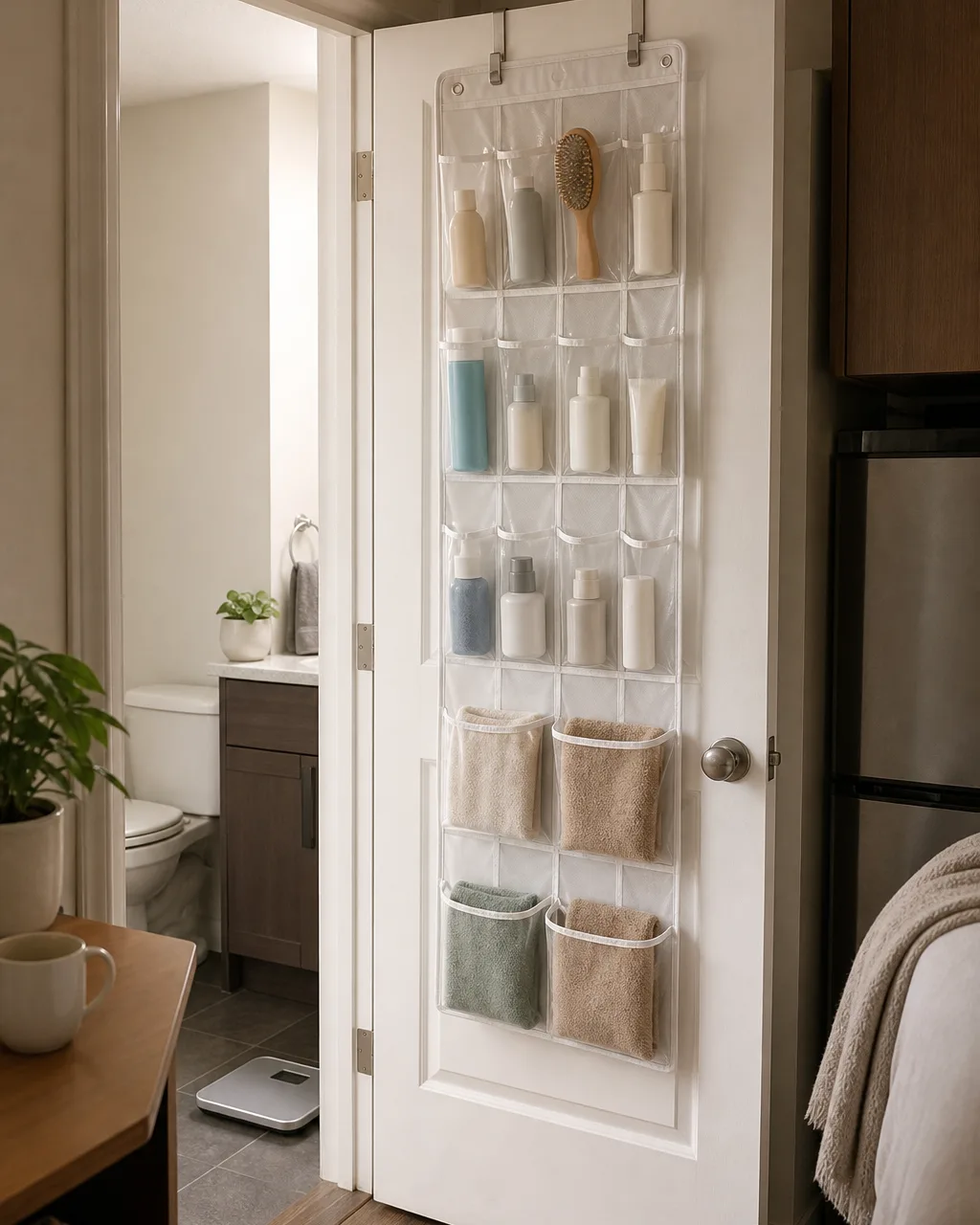
The back of a door is dead real estate in most apartments. A clear-pocket over-the-door organizer turns that panel into vertical storage for cleaning supplies, bathroom extras, or craft materials without taking up a single inch of shelf or floor.
The clear-pocket version is the one that works. Opaque pockets hide what is inside, which means you rummage. Clear pockets put every item at a glance, which means you grab and go.
- Pick a clear-pocket organizer so you see every item without opening pouches
- Dedicate one door to cleaning supplies: sponges on top, spray bottles on the bottom
- Use another door for bathroom overflow: travel toiletries, first-aid items, hair tools
- Trim the organizer if pockets hang below the handle and block the door swing
- Wipe the pockets monthly — clear ones show grime fast, which keeps the system honest
8. Lean a Tall Mirror at the End of a Short Hallway
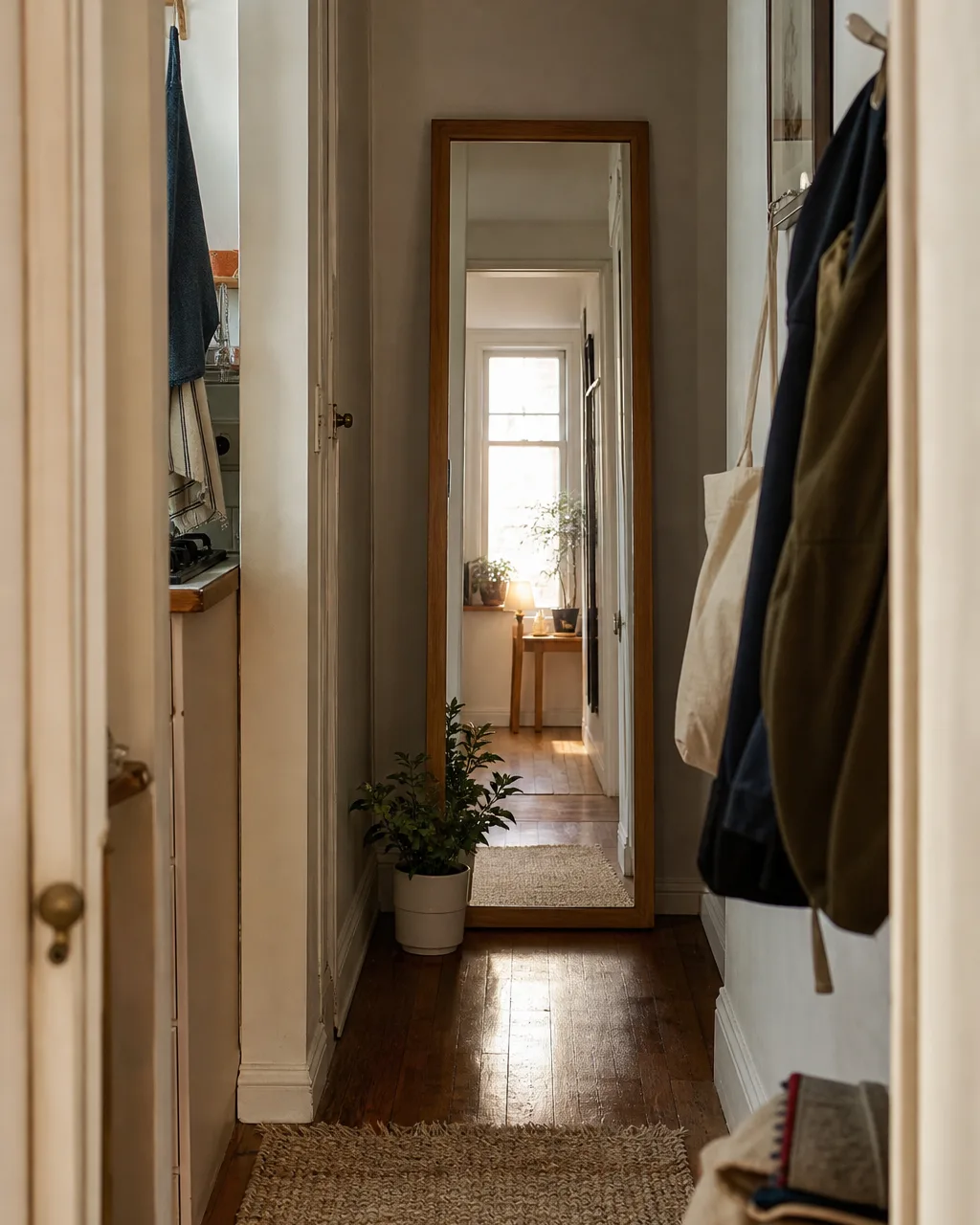
A narrow hallway that ends at a blank wall feels like a dead end. A tall leaning mirror at that wall reflects the window behind you, doubles the visual depth of the hall, and turns the dead end into a through-line the eye follows twice as far.
Lean it rather than mount it. A leaning mirror is easier to reposition, requires no anchoring, and can angle slightly inward to catch ceiling light that a flat-mounted mirror would miss.
- Lean the mirror against the end wall rather than hanging it — no holes, easy to reposition
- Choose a frame that matches the hallway trim so the mirror reads as a window, not decor
- Angle the base about two inches out from the wall to catch reflected ceiling light
- Place a small plant or low stool in front to anchor the base and keep it from sliding
- Clean the glass weekly — smudges break the depth illusion faster than anything else
9. Replace the Coffee Table With Nesting Tables
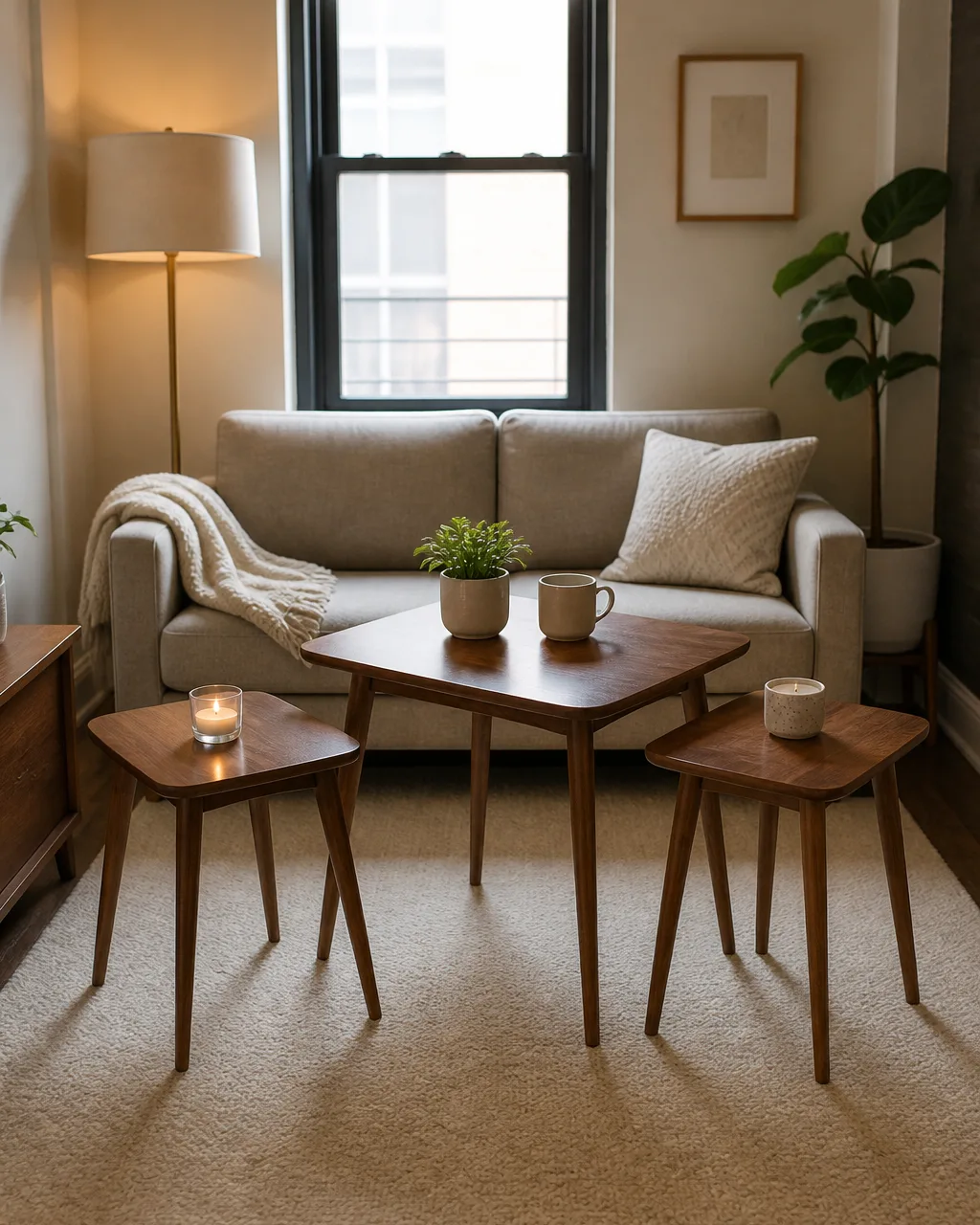
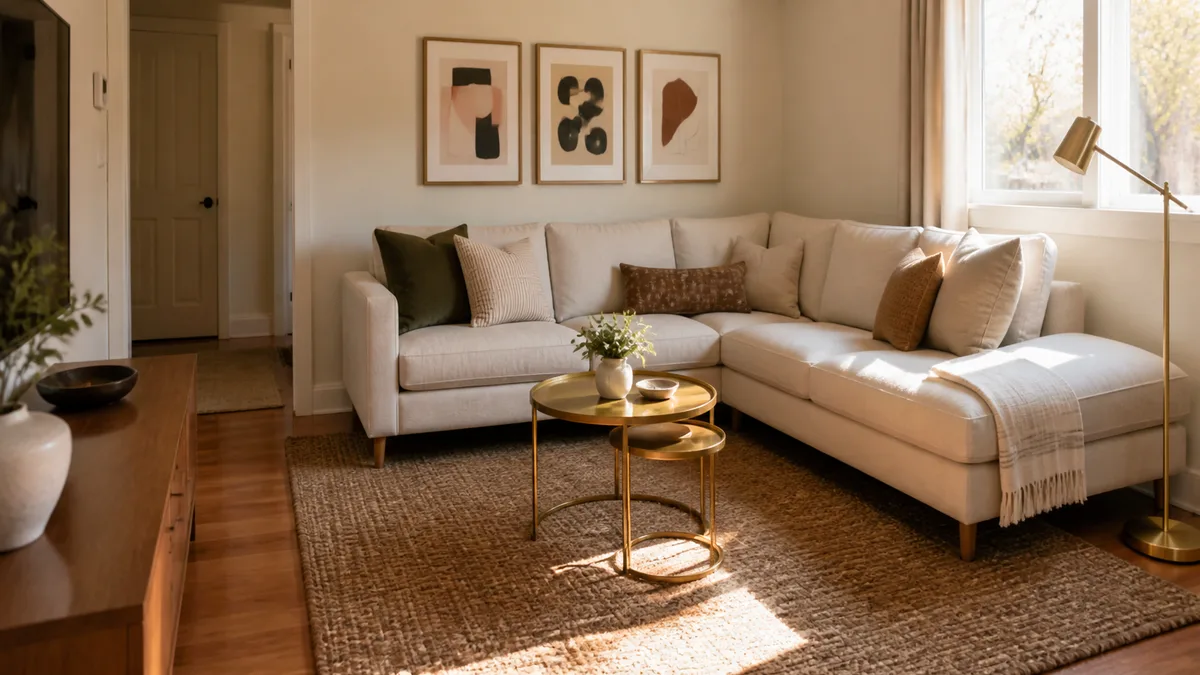
A coffee table is the largest piece of furniture between you and the door, and in a small living room it blocks the path every time you stand up. A set of two or three nesting tables does the same job and tucks back into one footprint when the floor needs to be open.
The daily version is one table in front of the sofa. The hosting version is all three fanned out as drink stations. The cleaning version is all three stacked against the wall while you vacuum. One purchase, three configurations, one footprint stored.
- Pick tables with at least a three-inch height difference so they nest without wobbling
- Use the largest daily and pull the smaller ones out only when guests arrive
- Choose slim tapered legs — bulky bases make nesting impossible and block the floor visually
- Place the middle table beside the sofa as a drink stand during movie nights
- Stack all three against the wall when you need open floor for exercise or cleaning
The 11 ideas at a glance
- 1Fold-Down DeskA hinged panel that gives you a real work surface and folds flat to return the floor.
- 2Ceiling-Height ShelvesRun shelves to the ceiling to use every vertical inch and make the room feel taller.
- 3Rolling Cart NightstandThree tiers of bedside storage on wheels — roll it out when you need the floor.
- 4Curtain Room DividerSplit sleeping from living with linen and a tension rod. No holes, no construction.
- 5Pegboard Kitchen WallMove your five most-used utensils to the wall and free an entire drawer.
- 6Storage OttomanA seat that hides blankets, remotes, and magazines inside. Three jobs, one footprint.
- 7Over-the-Door PocketsTurn dead door space into vertical storage for supplies, toiletries, or craft gear.
- 8Hallway MirrorA tall leaning mirror at the end of a short hall doubles the visual depth.
- 9Nested TablesTwo or three tables that fan out for guests and stack into one footprint when you clean.
- 10Magnetic Spice RailStick spice jars to the fridge side and free an entire cabinet shelf.
- 11Floating Entry ShelfKeys, wallet, and jacket handled in twelve inches of wall. No coat rack, no console.
10. Stick a Magnetic Spice Rail on the Fridge Side
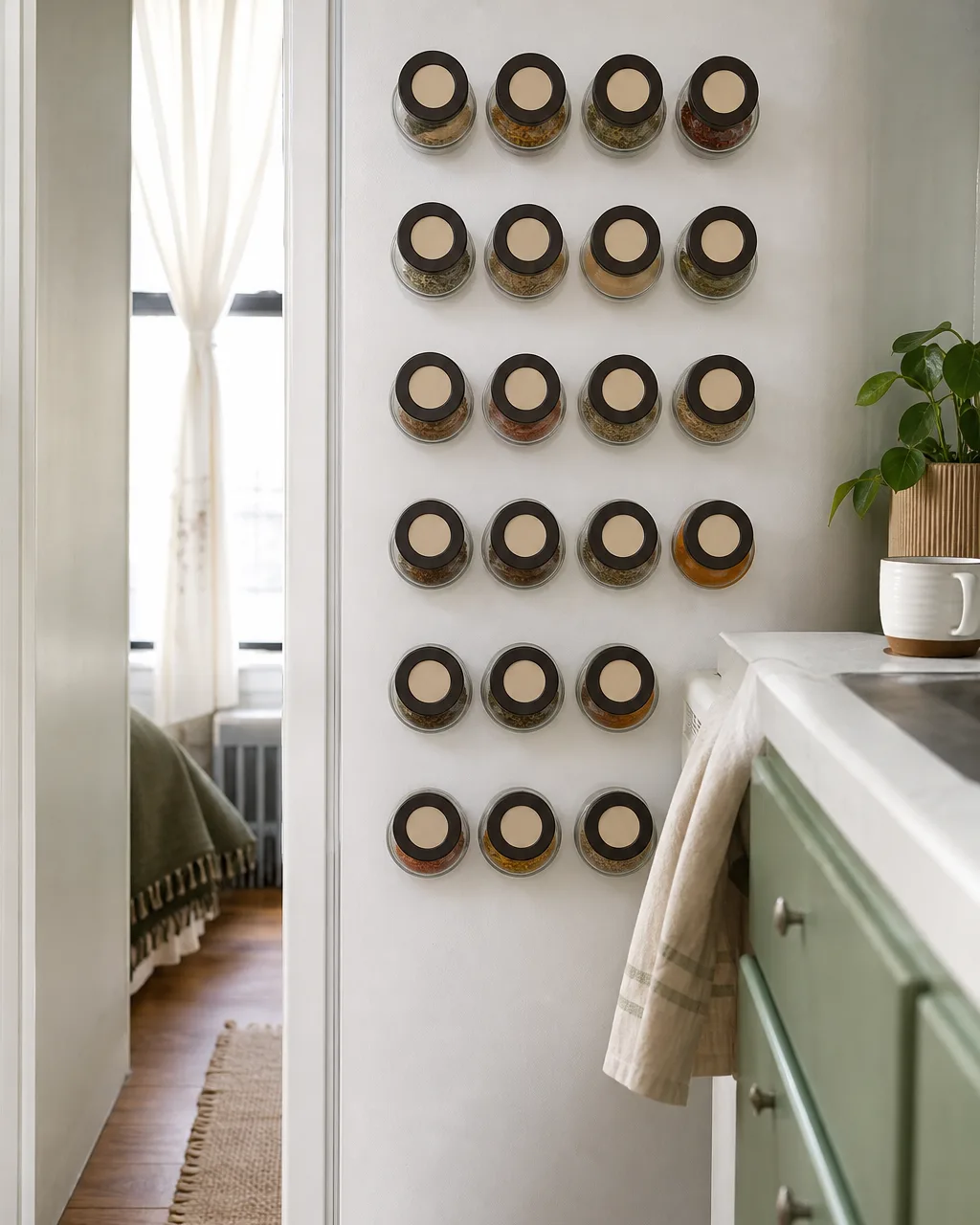
The side panel of a fridge is empty real estate in almost every kitchen layout. Small magnetic-lid jars stuck to that panel hold every spice you own and give back an entire cabinet shelf for plates or glasses — the kind of trade that changes the daily math of a small kitchen.
Arrangement matters. The five spices you grab daily sit at eye level. Everything else fills in below. A two-inch gap between rows keeps the jars from knocking each other loose when the compressor vibrates, and a wipe-down before sticking ensures the magnets hold at full strength.
- Buy small magnetic-lid jars that hold two to three ounces each
- Label each jar on the lid with a waterproof marker so you read them from above
- Put the five daily-use spices at eye level and everything else below
- Leave a two-inch gap between rows so vibration does not knock jars loose
- Wipe the fridge side with a damp cloth before sticking — grease weakens the hold
11. Install a Floating Shelf With Hooks by the Door
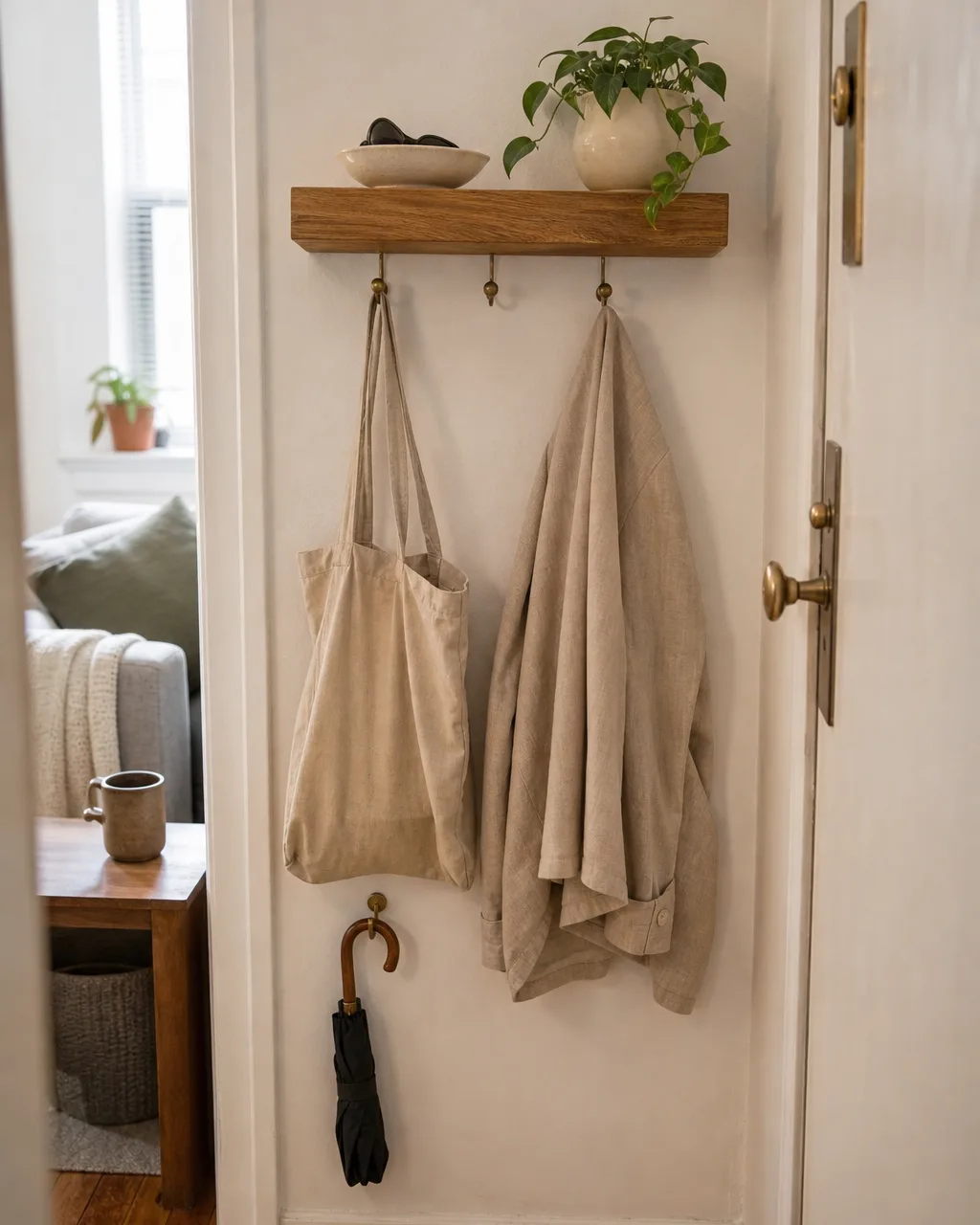
A coat rack and a console table together claim three square feet of entryway floor, which in a small apartment is the difference between walking in the door and squeezing past furniture. A floating shelf with hooks beneath it handles keys, wallet, jacket, and bag in twelve inches of wall space and zero inches of floor.
Mount it into studs at chest height. The shelf holds a shallow tray for pocket items and the hooks underneath take a jacket, a bag, and a leash. One board, three hooks, and the entire landing zone fits on a stretch of wall too narrow for any piece of freestanding furniture.
- Mount into studs with concealed brackets so the shelf looks like it floats
- Keep the shelf depth to five inches — enough for keys, sunglasses, and a small dish
- Install three hooks underneath spaced eight inches apart for a jacket, bag, and leash
- Add a small command-strip hook on the underside for an umbrella or reusable bag
- Place a shallow ceramic dish on the shelf surface so pocket items land in one spot
A small apartment does not become a bigger apartment. It becomes a well-used one, where every surface earns its keep and every piece of furniture does at least two jobs.
If the squeeze is in the kitchen, the pegboard and the spice rail free real cabinet space this weekend. If the squeeze is in the living room, the nesting tables and the space-saving furniture give the floor back on demand.
For more ways to get tight rooms working harder, see our full guide to storage ideas that keep small spaces open.