12 Kitchen Drawer Organizer Ideas That Actually Fit the Drawer You Have
Most drawer organizer advice treats every drawer like it's the same size and holds the same stuff. Drop in an expandable tray, done. That works for one drawer in your kitchen and fails for the other three.
A shallow utensil drawer, a deep pot-and-pan drawer, the junk drawer, and the knife drawer each need a different system, not the same tray in a different color.
These 12 ideas match the organizer to the drawer, not the other way around.
Not a shopping list — a decision for each drawer type. Find your drawer and start there.
- 1Measure the Drawer Before Buying Any Organizer, Not the Other Way Around
- 2Use an Expandable Tray Only in Shallow Utensil Drawers
- 3Fit Deep Drawers With Stacked Peg Boards Instead of a Flat Tray
- 4Give the Junk Drawer Zones, Not One Big Bin
- 5Store Knives Flat in a Slotted Drawer Insert Instead of a Block
- 6Keep Spice Jars Out of the Utensil Drawer — Give Them Their Own Tiered Drawer
- 7Use Adjustable Bamboo Dividers for Drawers That Don't Fit a Standard Tray
- 8Store Pot Lids Upright With a Vertical Drawer Divider
- 9Reserve the Drawer Nearest the Stove for Daily-Use Tools Only
- 10Line Every Organizer Tray With a Non-Slip Mat Before Loading It
- 11Group by Task, Not by Item Type, in Multi-Use Drawers
- 12Leave One Empty Row in Every Drawer for What You'll Buy Next
1. Measure the Drawer Before Buying Any Organizer, Not the Other Way Around
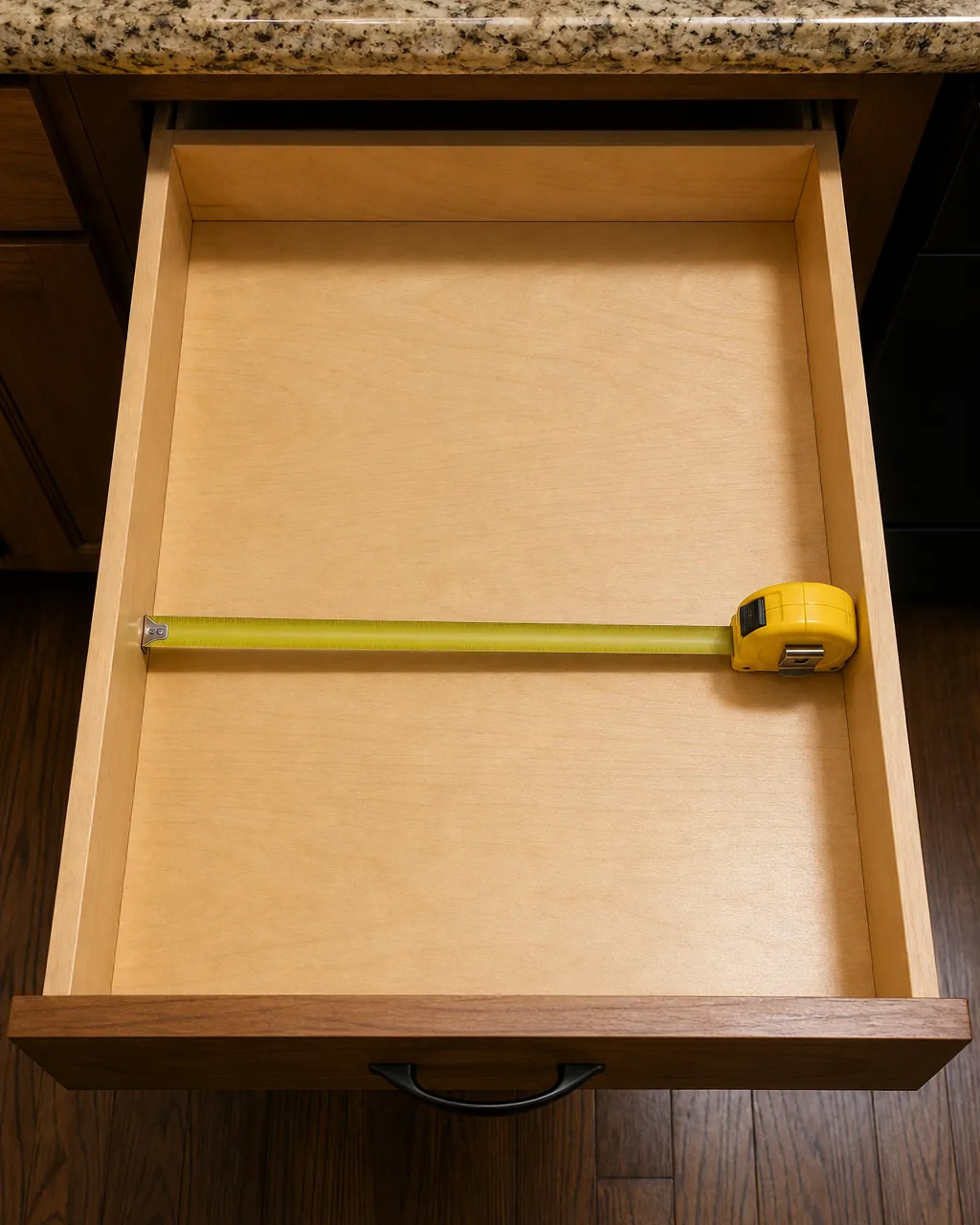
Interior drawer depth, width, and height vary more than people expect, especially once you account for the lip at the front and any rails or soft-close hardware at the back. Measure the actual usable interior before ordering anything adjustable, because a tray that's a half-inch too long will bow the drawer front every time you close it.
2. Use an Expandable Tray Only in Shallow Utensil Drawers
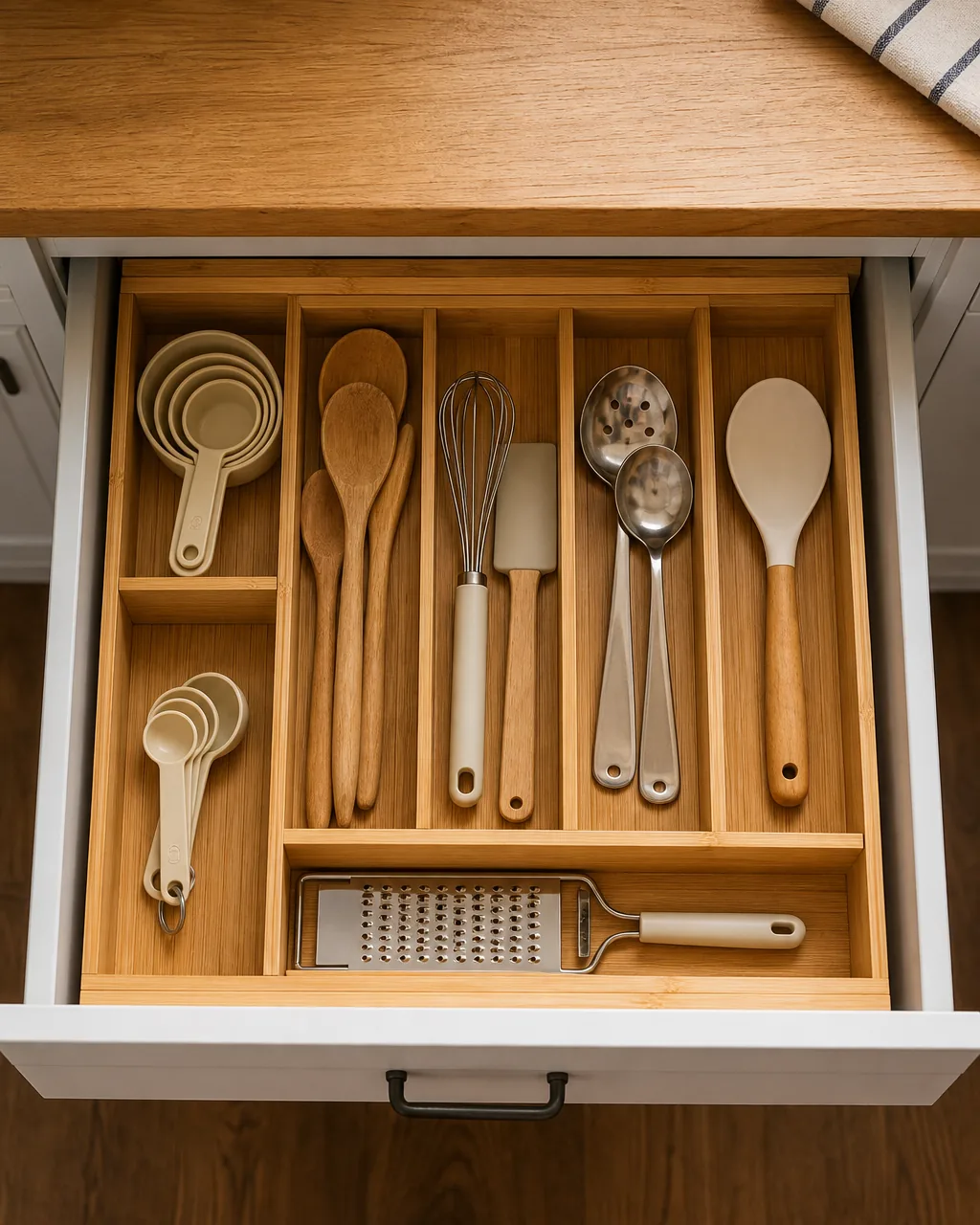
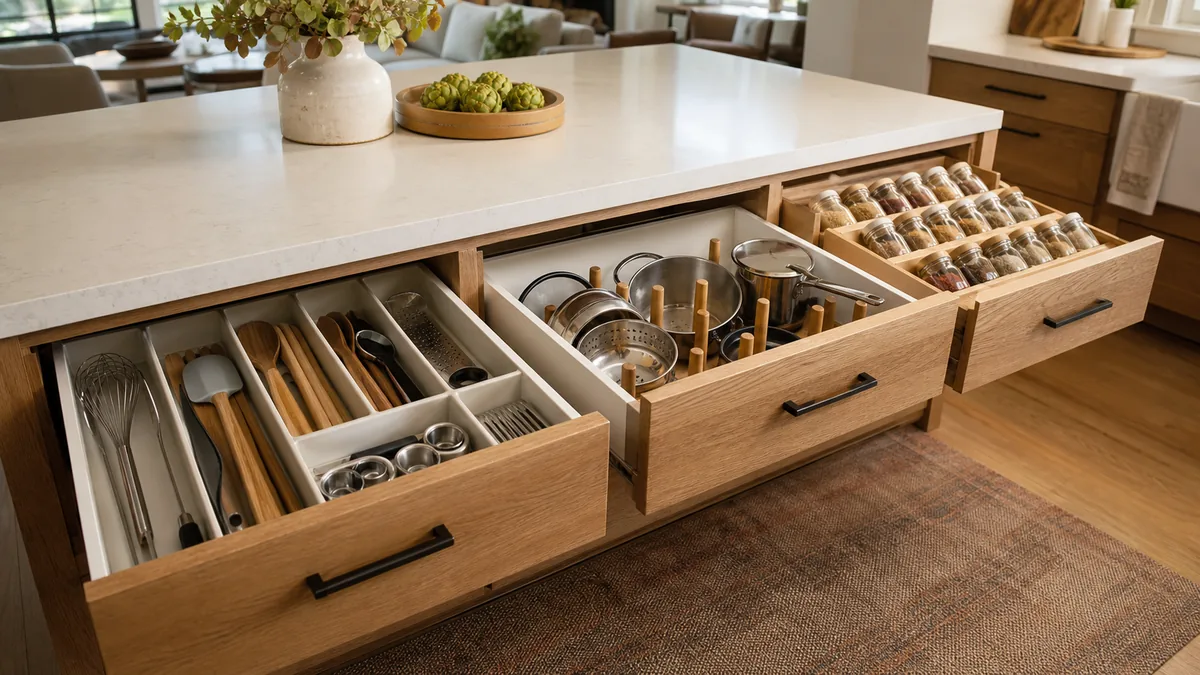
Expandable trays are built for shallow drawers, roughly two to three inches deep, holding spoons, spatulas, and measuring cups on a single flat layer. Put the same tray in a deep drawer and you waste the entire bottom half of the space it was never designed to use.
3. Fit Deep Drawers With Stacked Peg Boards Instead of a Flat Tray
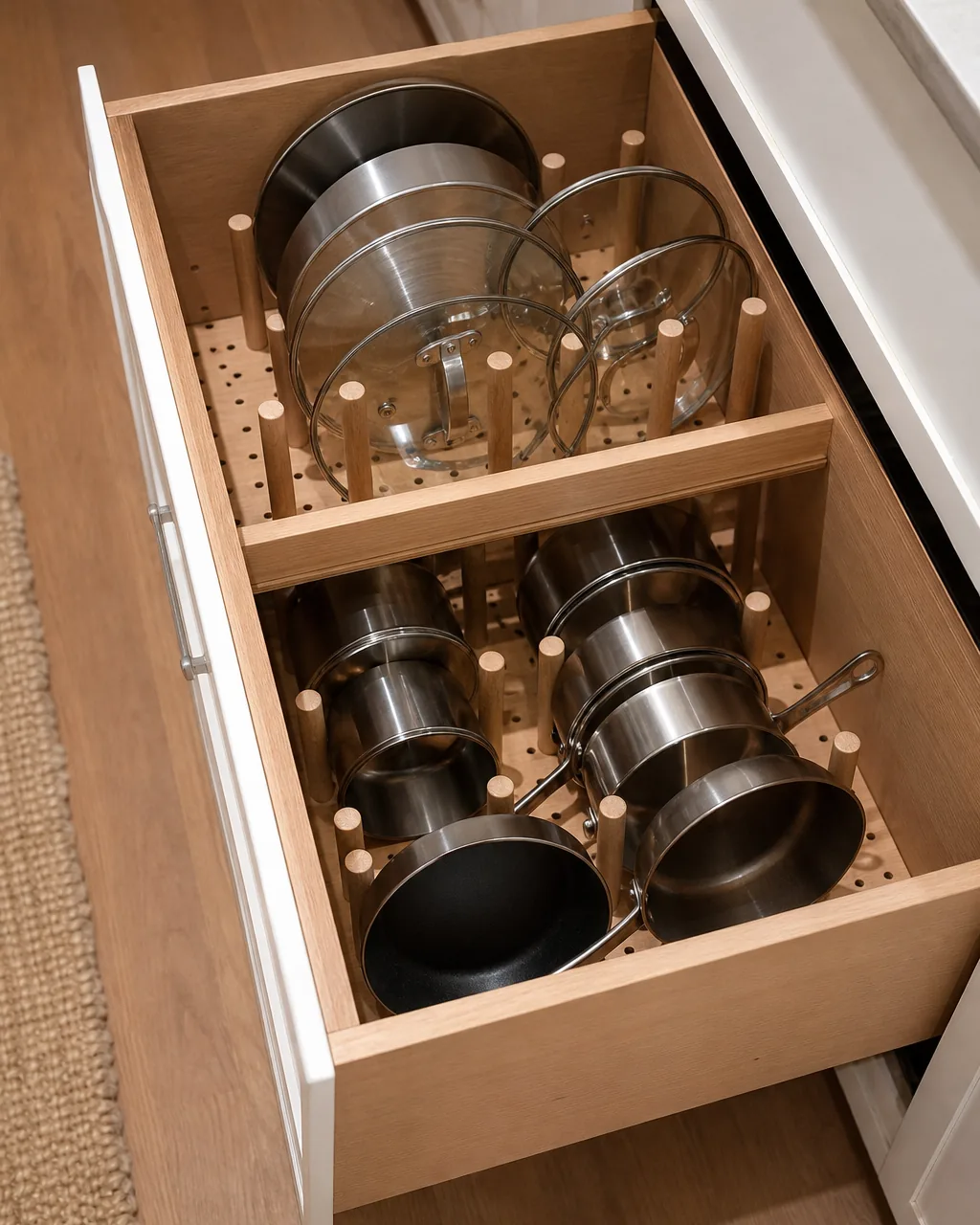
A deep drawer under the cooktop needs vertical structure, not a flat tray floating on top of unused depth below it. A stacked peg-board system, pegs slotted into a base board with a second tier above, holds pots and pan lids upright and uses the full depth instead of the top third.
The right organizer depends entirely on which drawer you're fixing — a shallow drawer and a deep drawer are two different problems, not one problem in two sizes.
4. Give the Junk Drawer Zones, Not One Big Bin
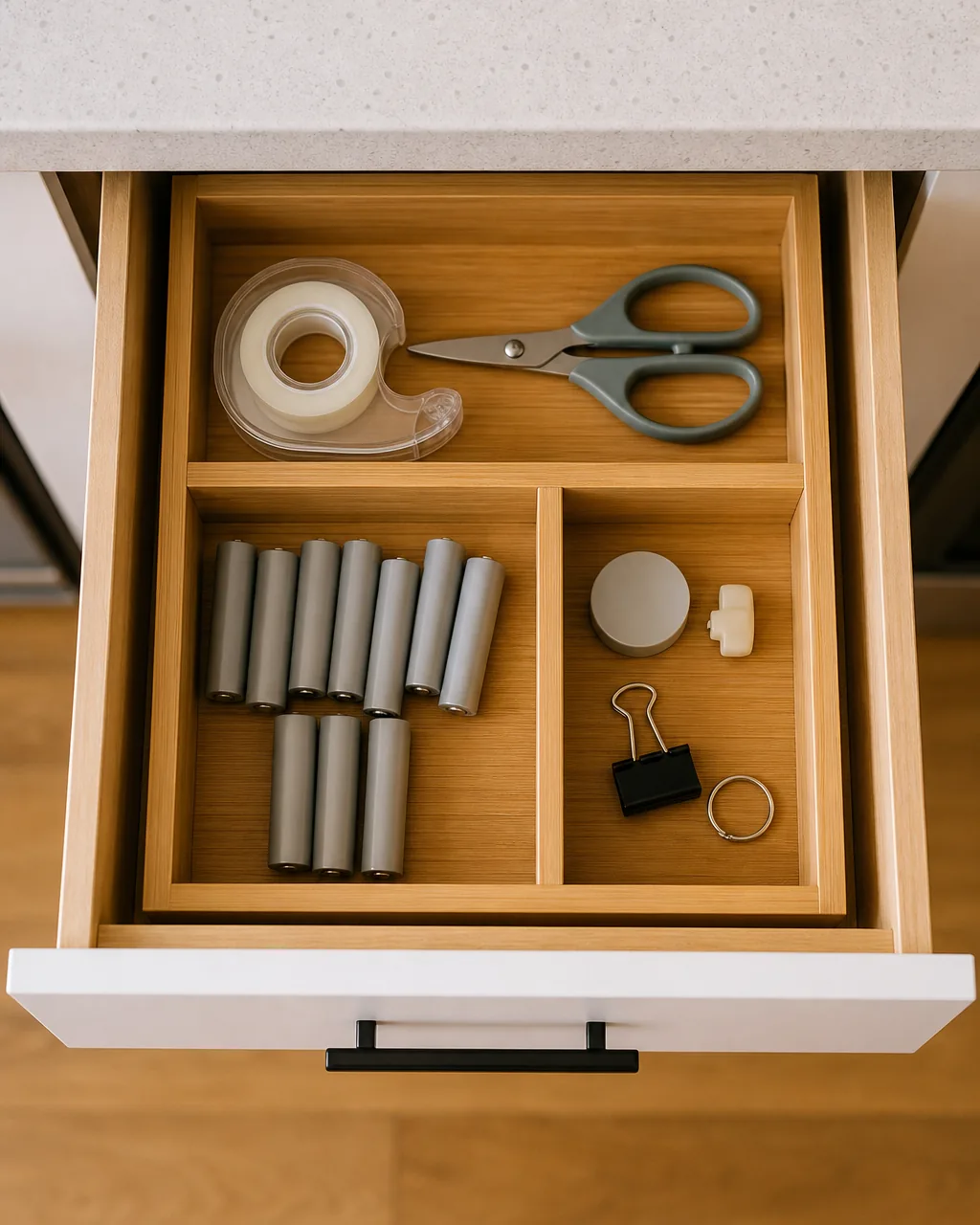
A junk drawer stays a junk drawer when everything shares one open bin. Split it into small zones with low dividers, tape and scissors in one, batteries in another, odds and ends in a third, so finding something means opening one zone instead of digging through all of it.
5. Store Knives Flat in a Slotted Drawer Insert Instead of a Block
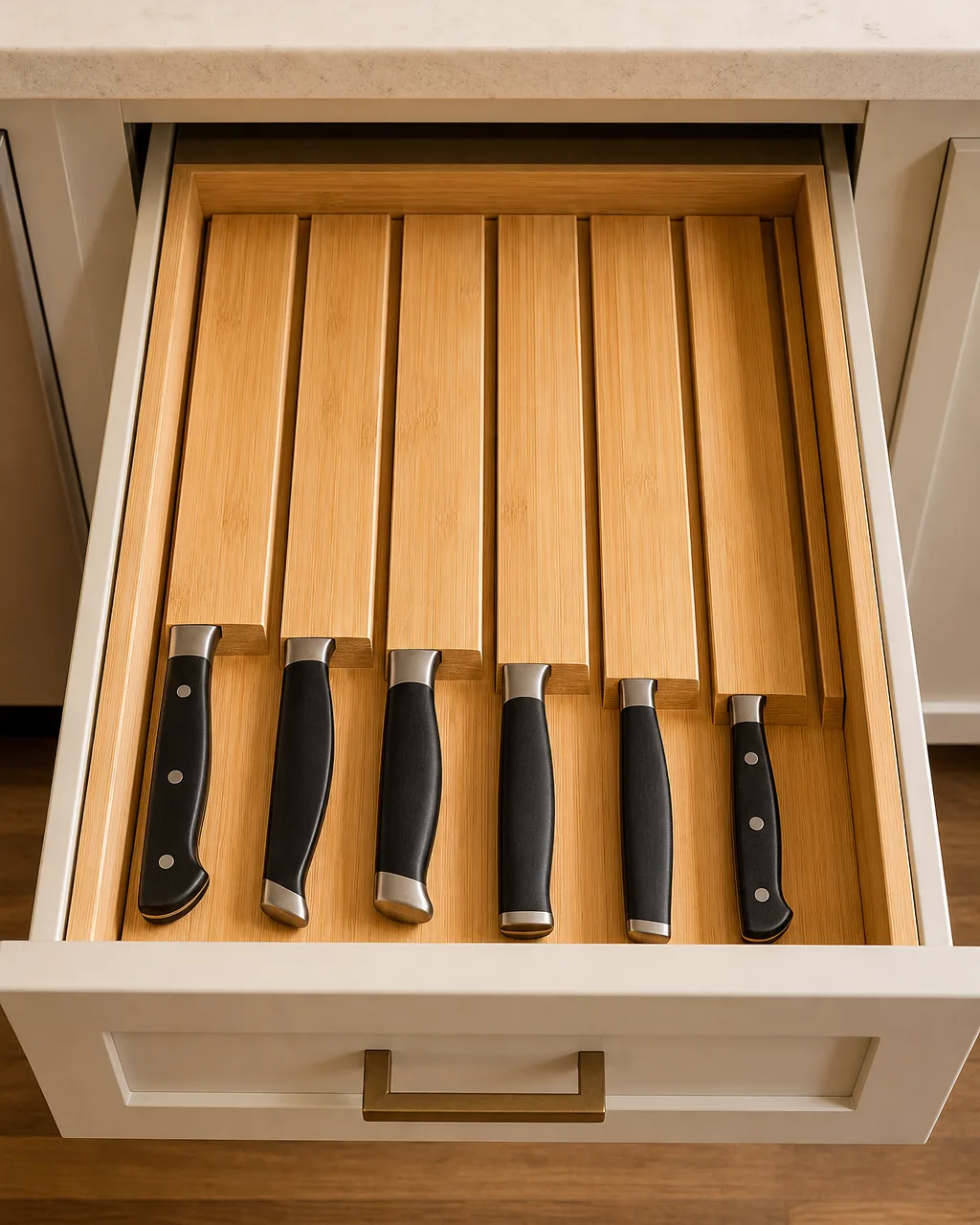
An in-drawer knife tray with individual slots keeps blades flat, separated, and off the counter, which frees counter space a block takes up and keeps small hands away from exposed edges. Each knife gets its own slot, so pulling one out doesn't mean reaching past three others.
6. Keep Spice Jars Out of the Utensil Drawer — Give Them Their Own Tiered Drawer
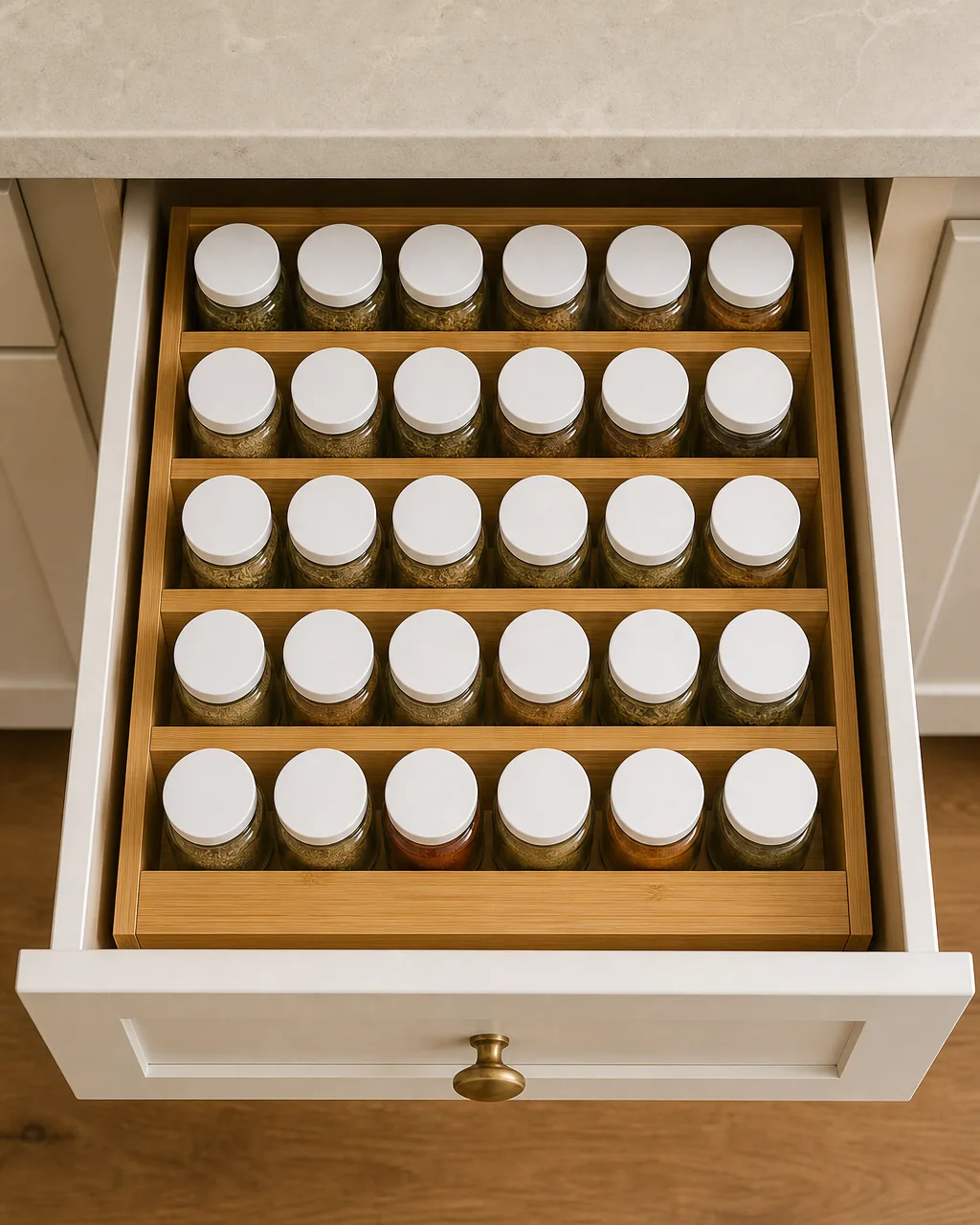
Spice jars in a utensil drawer end up buried under spoons within a week. A shallow drawer near the stove fitted with a tiered riser insert keeps every jar label visible from above, which is the whole point of a spice drawer in the first place. For the full spice-drawer system, see the spice drawer organization guide.
These four rules are what separate a drawer organizer that lasts from one that gets abandoned within a month.
7. Use Adjustable Bamboo Dividers for Drawers That Don't Fit a Standard Tray
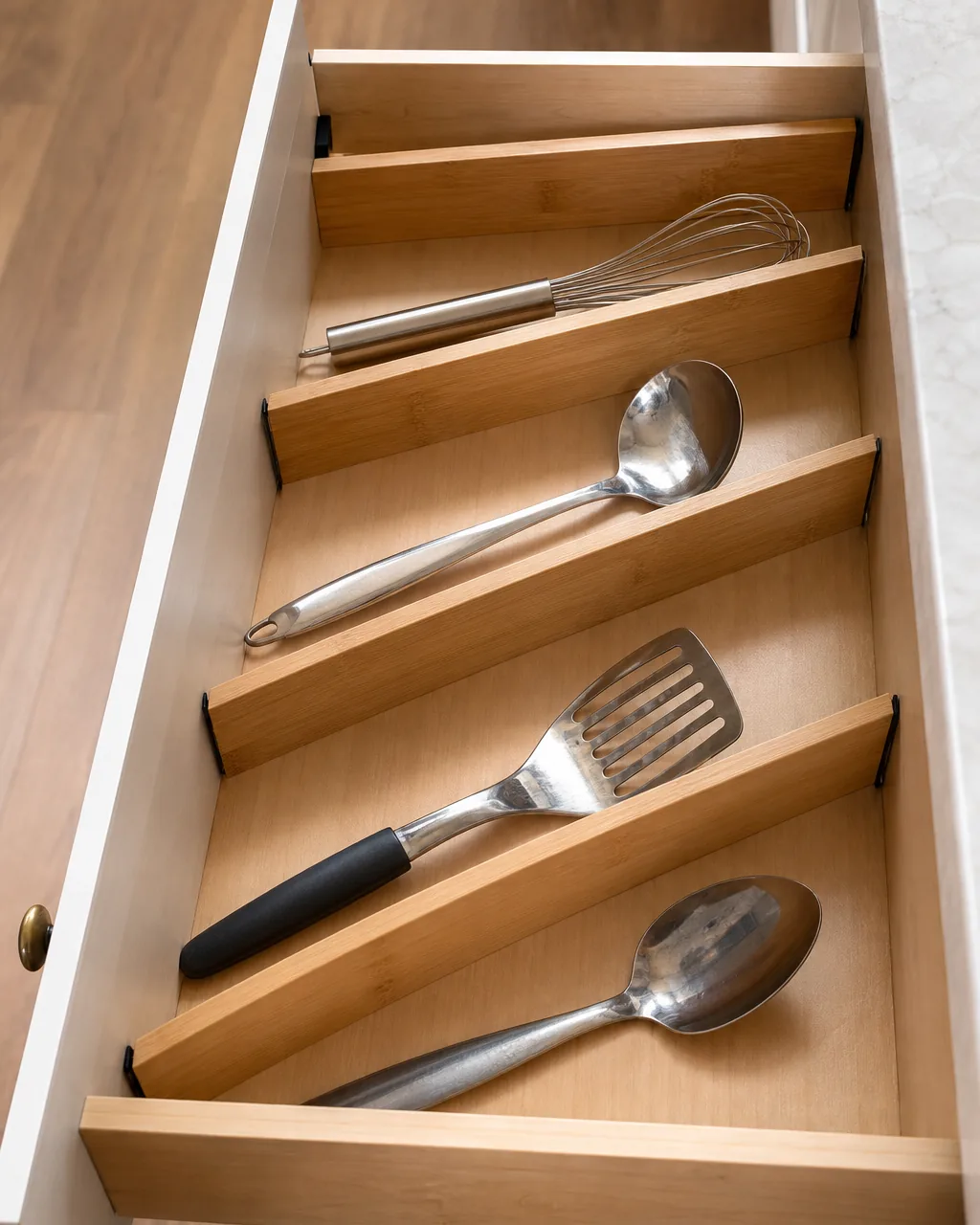
Older kitchens and apartment rentals often have drawers that don't match any standard tray size. Adjustable spring-loaded divider strips solve this by tensioning between the drawer's actual walls instead of assuming a size, so an oddly narrow or extra-deep drawer still gets real structure instead of staying empty because nothing fit.
8. Store Pot Lids Upright With a Vertical Drawer Divider
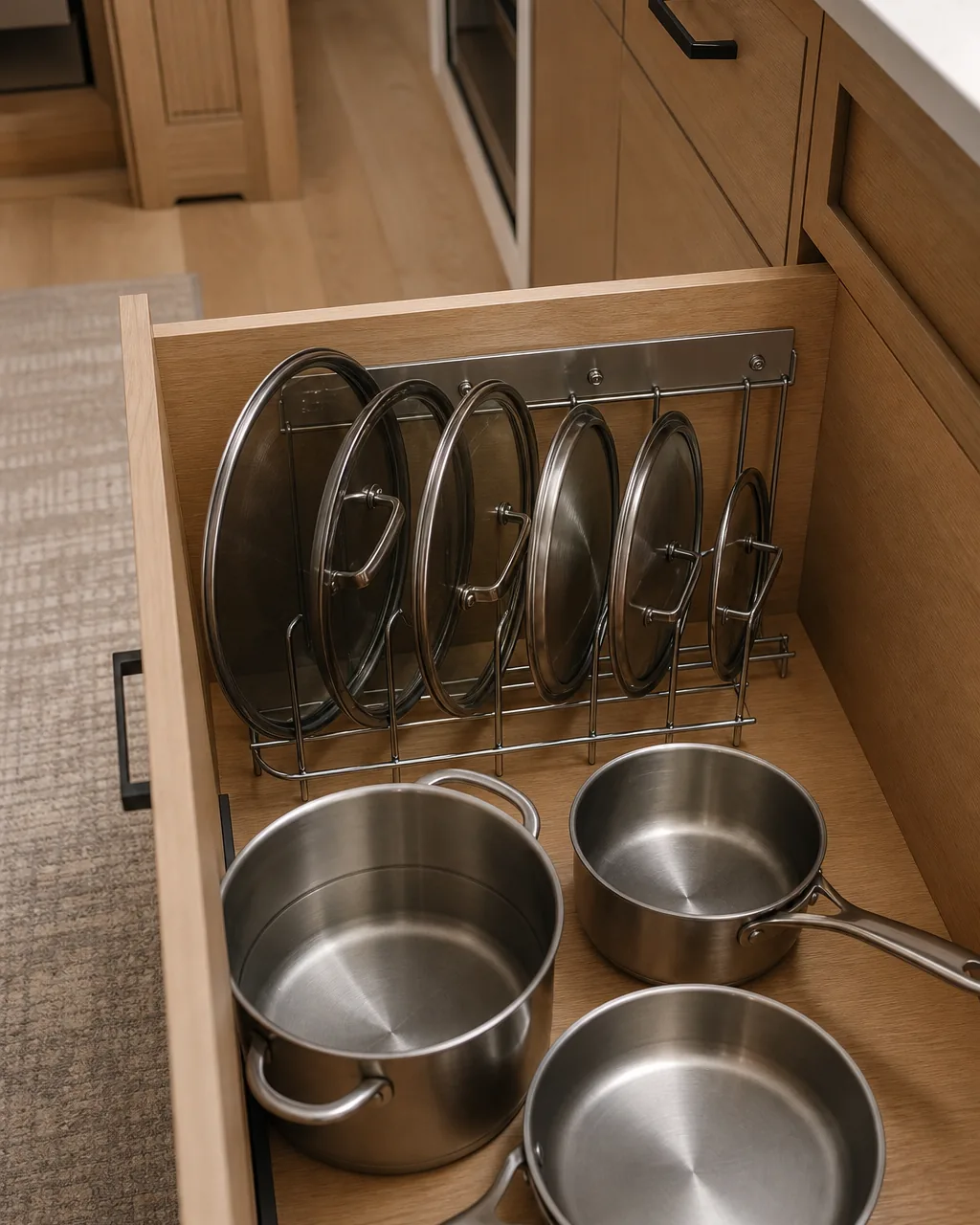
Pot lids stacked flat slide and clatter every time the drawer opens. A vertical wire or bamboo divider mounted at one end of a deep drawer lets lids stand on their rims instead, so grabbing the one you need doesn't mean lifting three others off first.
9. Reserve the Drawer Nearest the Stove for Daily-Use Tools Only
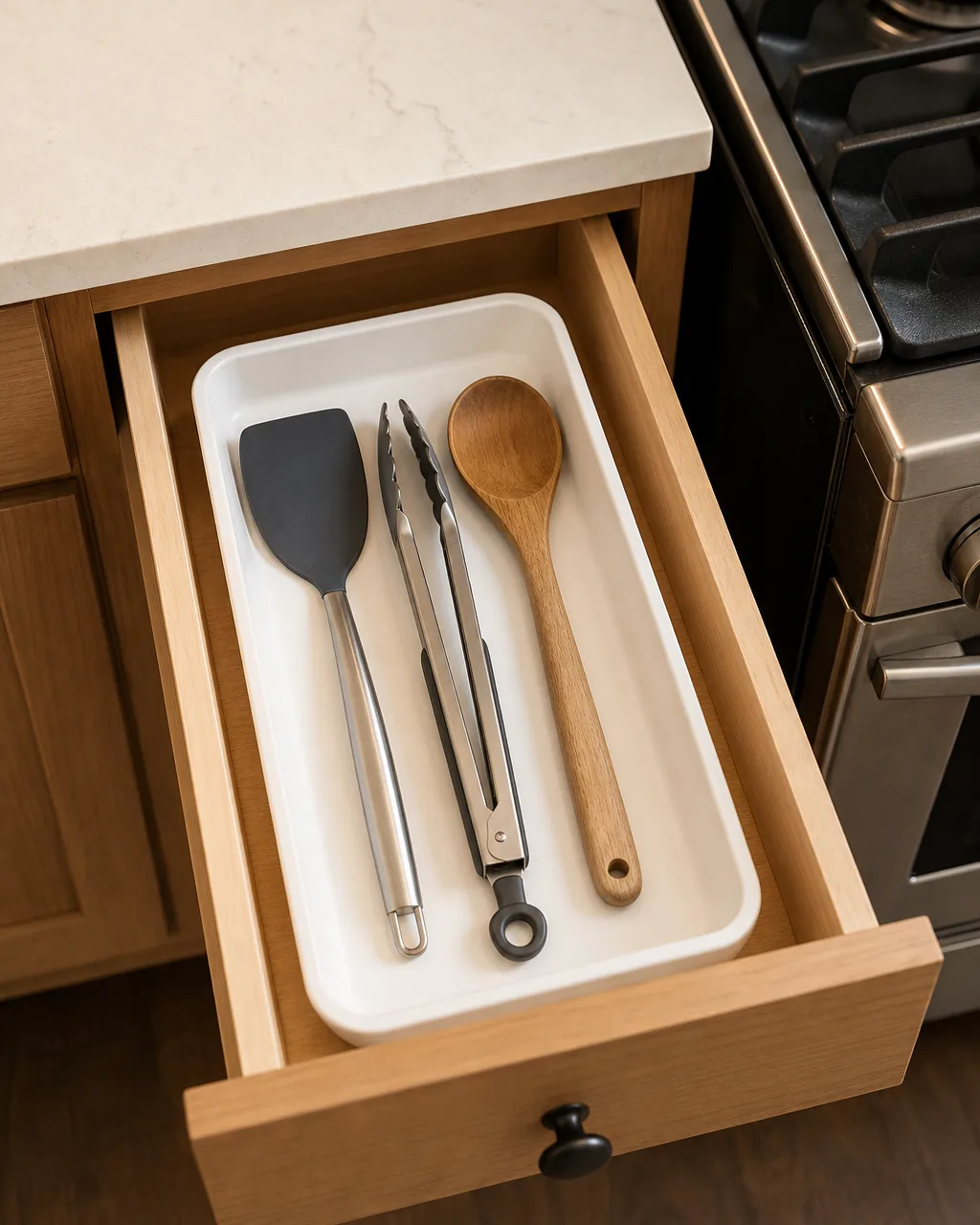
The drawer closest to the cooktop should hold only what gets used while something is actively cooking: a spatula, tongs, a wooden spoon, an instant-read thermometer. Everything else, even useful tools, belongs one drawer over, so the reach-without-looking drawer never has to be searched mid-recipe.
12 drawer organizer ideas, matched to the drawer you have
- 1Measure the Drawer Before Buying Any Organizer, Not the Other Way AroundMeasure the actual usable interior before ordering anything adjustable.
- 2Use an Expandable Tray Only in Shallow Utensil DrawersExpandable trays are built for shallow drawers, roughly two to three inches deep.
- 3Fit Deep Drawers With Stacked Peg Boards Instead of a Flat TrayA stacked peg-board system uses the full depth instead of the top third.
- 4Give the Junk Drawer Zones, Not One Big BinSplit it into small zones with low dividers instead of one open bin.
- 5Store Knives Flat in a Slotted Drawer Insert Instead of a BlockAn in-drawer knife tray keeps blades flat, separated, and off the counter.
- 6Keep Spice Jars Out of the Utensil Drawer — Give Them Their Own Tiered DrawerA tiered riser insert keeps every jar label visible from above.
- 7Use Adjustable Bamboo Dividers for Drawers That Don't Fit a Standard TraySpring-loaded divider strips tension between the drawer's actual walls.
- 8Store Pot Lids Upright With a Vertical Drawer DividerA vertical wire or bamboo divider lets lids stand on their rims instead of stacking flat.
- 9Reserve the Drawer Nearest the Stove for Daily-Use Tools OnlyThe reach-without-looking drawer should hold only active-cooking tools.
- 10Line Every Organizer Tray With a Non-Slip Mat Before Loading ItA thin liner keeps the whole insert from sliding forward every time the drawer opens.
- 11Group by Task, Not by Item Type, in Multi-Use DrawersGroup by what you're doing when you open it, not by category alone.
- 12Leave One Empty Row in Every Drawer for What You'll Buy NextOne reserved row means the next new tool has a home instead of getting wedged sideways.
styledhomenotes.com
10. Line Every Organizer Tray With a Non-Slip Mat Before Loading It
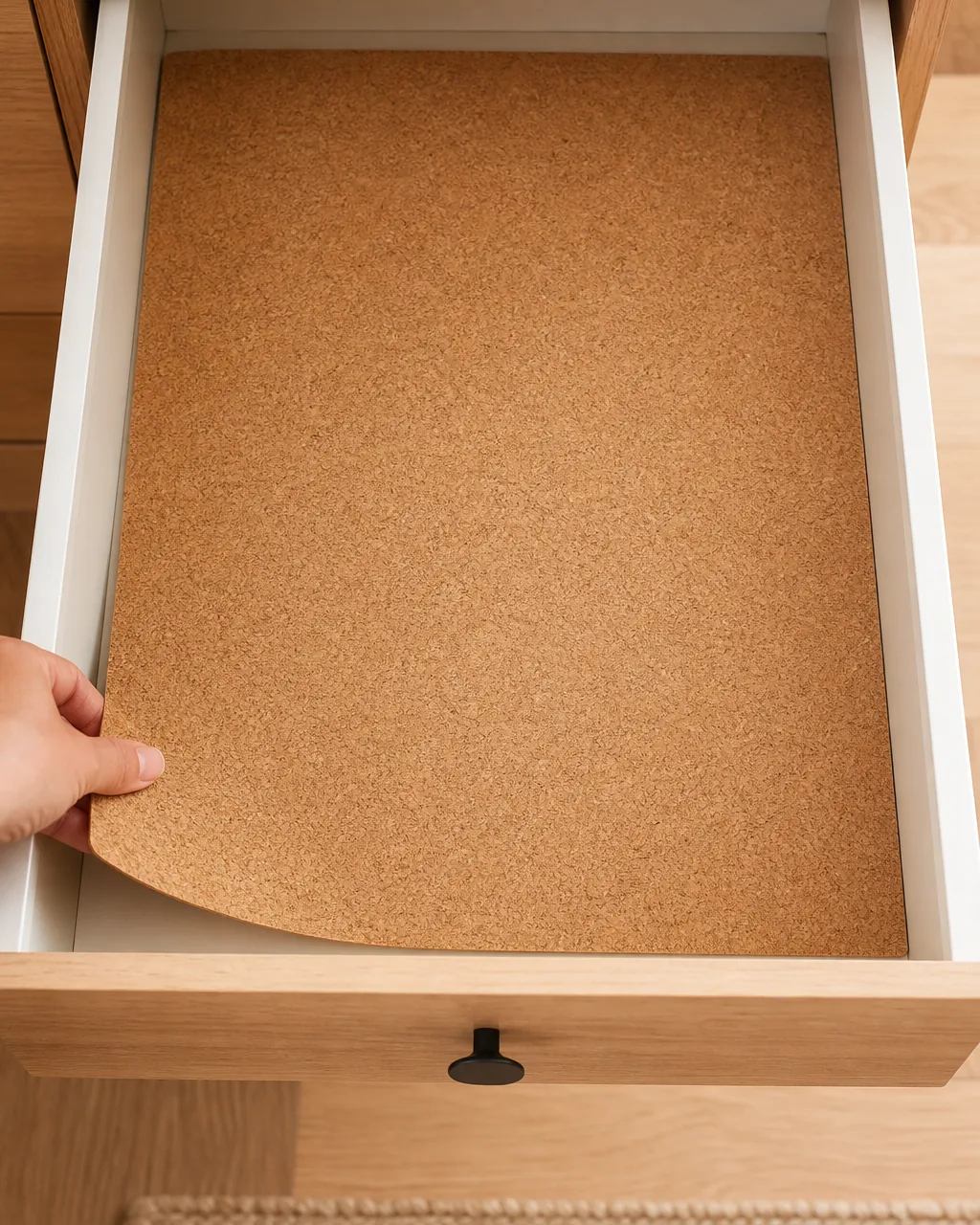
A thin rubber or cork liner under any tray or divider keeps the whole insert from sliding forward every time the drawer opens, which is what eventually cracks a tray against the front panel. It also cushions the base of the drawer itself, since most inserts sit on bare laminate or wood.
11. Group by Task, Not by Item Type, in Multi-Use Drawers
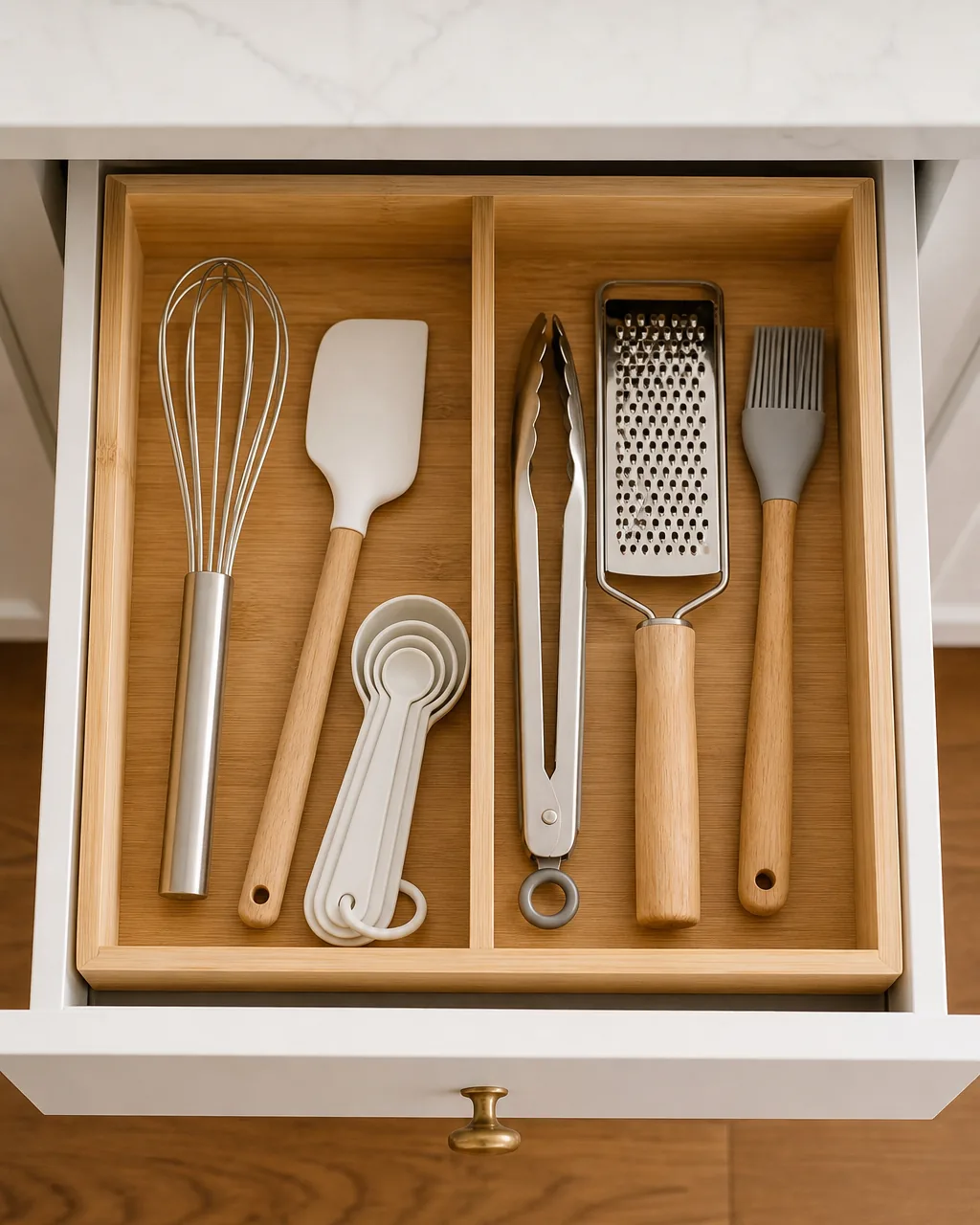
When one drawer has to hold a mix of tools, group by what you're doing when you open it, baking tools together, grilling tools together, rather than by category alone. A drawer organized by task means you open it once for a job instead of pulling from three different type-sorted sections.
12. Leave One Empty Row in Every Drawer for What You'll Buy Next
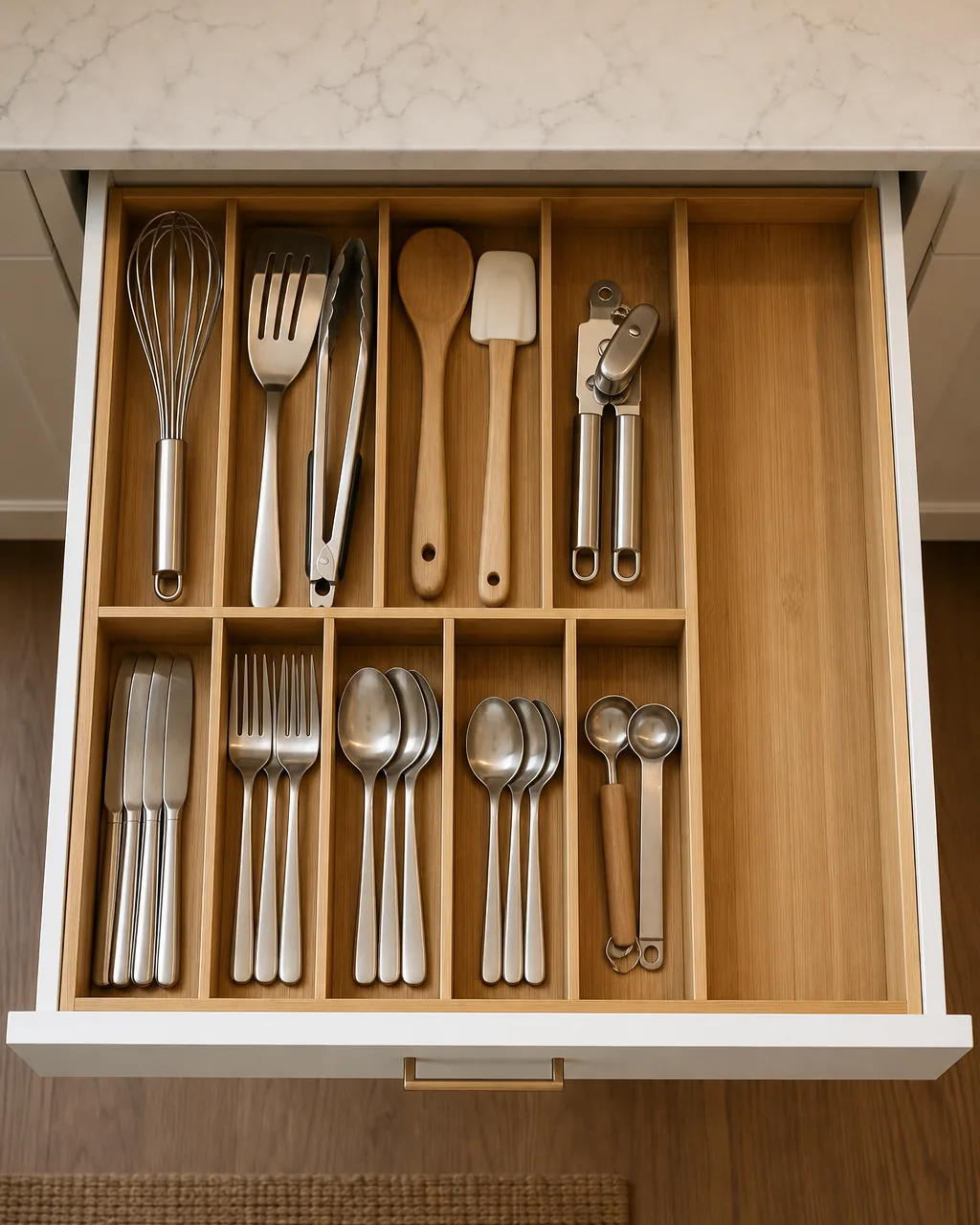
Every drawer system eventually gets one more gadget than it was built for. Leaving one row or slot intentionally empty when you first set up an organizer means the next new tool has a home instead of getting wedged sideways across two other slots.
For a wider system that ties every drawer back into the rest of the kitchen, see the kitchen organization ideas for easier cooking guide, or the kitchen cabinet organization ideas for the storage right above these drawers.

Nora writes about small, livable rooms for real apartments. She's rebuilt her own kitchen drawers three times in four years, once for each apartment, and learned the hard way that the same tray never fits the next drawer. Every idea here is tested against a real drawer, not a catalog photo.
Nora Ellis edits Styled Home Notes. More from Nora: kitchen utensil organization ideas, spice drawer organization ideas.