12 Deep Pantry Organization Ideas for Shelves You Can't See the Back Of
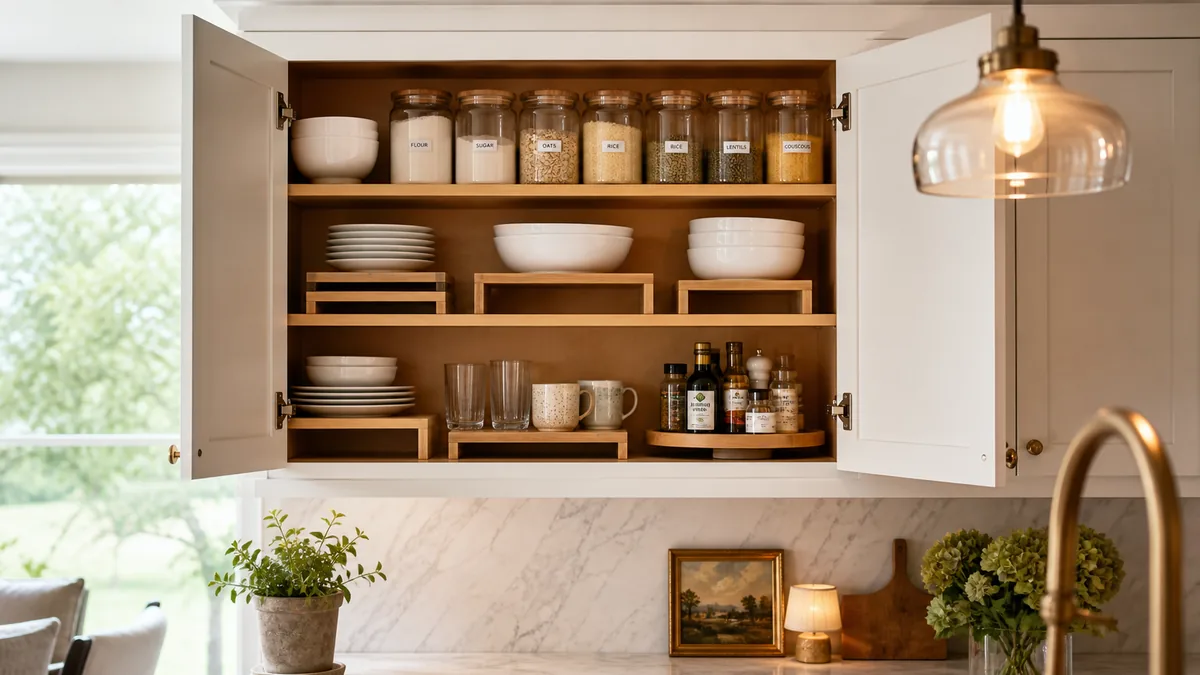
If your pantry is deep enough that the back third disappears into shadow, the usual advice about bins and labels solves the wrong problem. Depth is what's failing you, not clutter — cans get pushed back and forgotten there.
The fix isn't tidier containers. It's a system for the part of the shelf you can't see or reach without bending your whole arm in.
These 12 ideas zone each shelf front-to-back, light the back wall, and pull things forward instead of making you dig through them.
Not a shopping list — specific zoning, lighting, and retrieval calls. Find the decision your deepest shelf is missing and start there.
- 1Split Every Shelf Into Front, Middle, and Back Zones by How Often You Reach There
- 2Install Battery Motion-Sensor Lights Aimed at the Back Wall
- 3Retrofit Full-Extension Drawer Slides Under the Deepest Shelves
- 4Swap Fixed Back Shelving for Slide-Out Wire Baskets
- 5Angle a Small Mirror at the Back So You Can See Without Reaching In
- 6Reserve the Full Back Depth for Backstock Only, Never Daily Items
- 7Add a Rolling Step Stool for Floor-to-Ceiling Depth You Can't Reach Standing
- 8Group Tall Items in the Back Where Height Won't Block Your Sightline
- 9Run a First-In-First-Out Rule on Every Deep Shelf So Nothing Expires Unseen
- 10Hang a Second Rail Mid-Depth for Bags That Get Lost Behind Cans
- 11Choose Clear Deep Bins With a Handle So You Pull the Whole Bin, Not Dig
- 12Skip Wall-to-Wall Shelving and Add a Center Aisle Unit for Two-Sided Access
1. Split Every Shelf Into Front, Middle, and Back Zones by How Often You Reach There
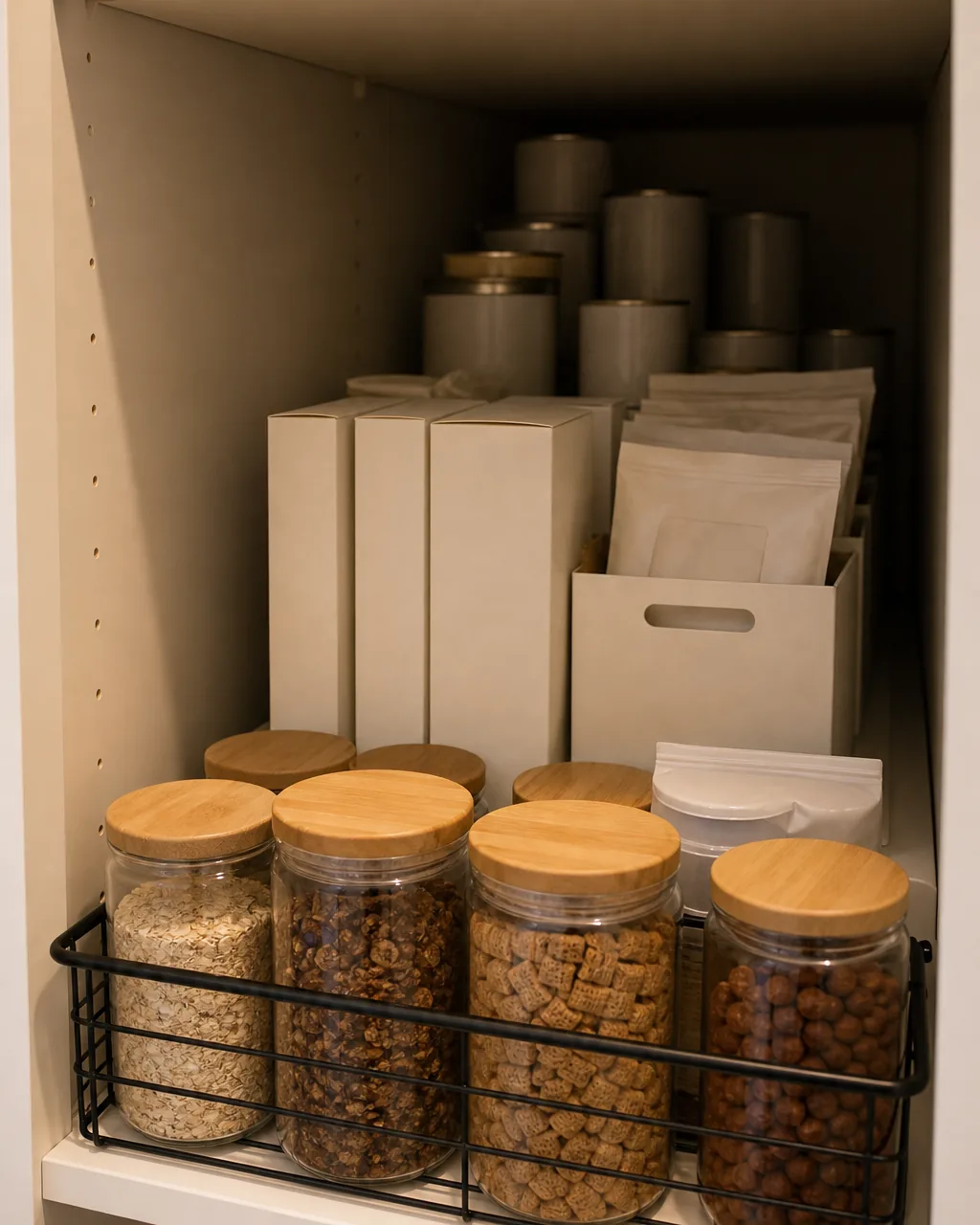
Instead of loading a shelf by category alone, divide it front-to-back by reach frequency: daily items live within arm's length at the front, weekly items sit in the middle, and true backstock claims the back third you can't see without bending. This turns one long shelf into three honest zones instead of one deep guessing game.
2. Install Battery Motion-Sensor Lights Aimed at the Back Wall
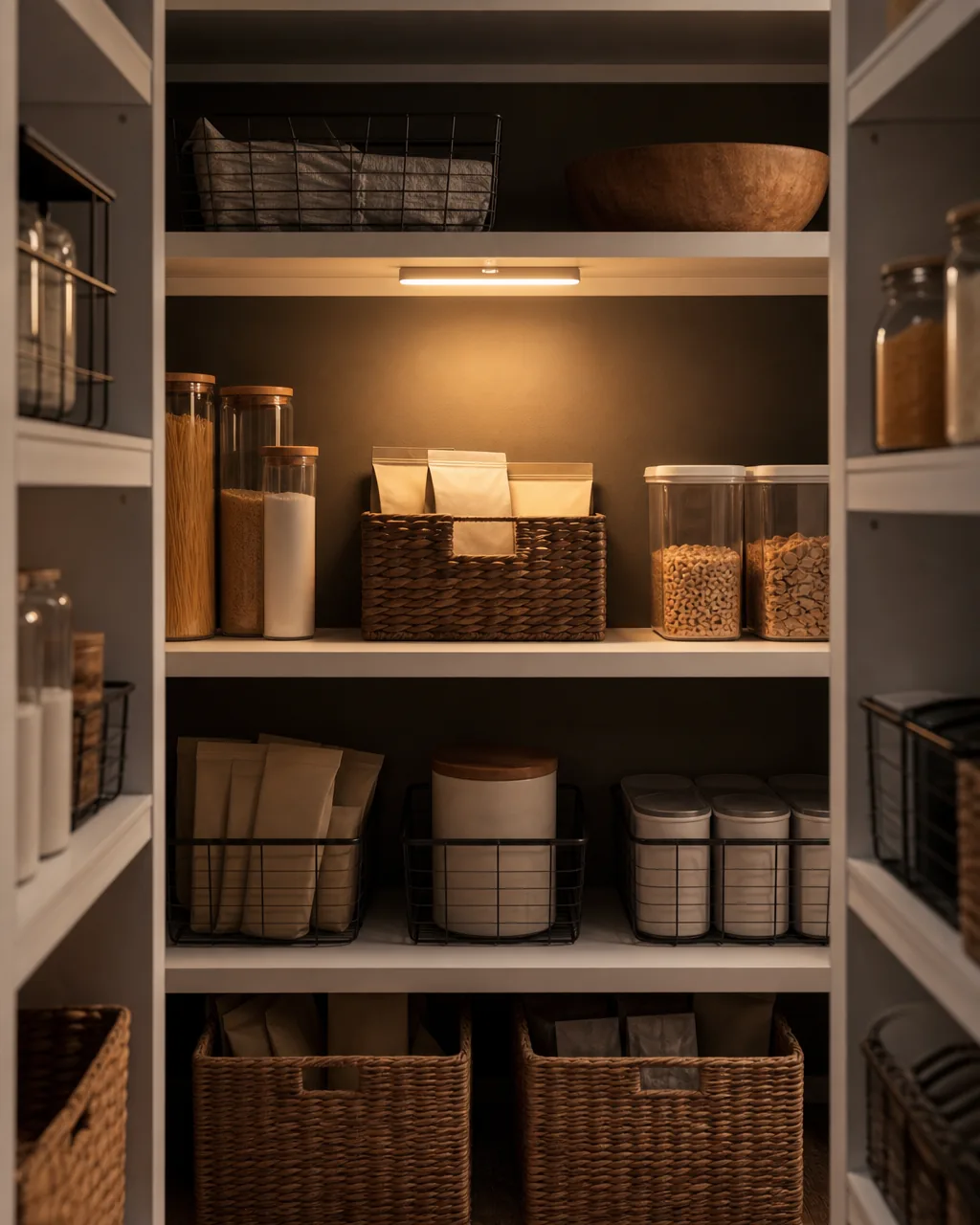
A stick-on motion-sensor light angled at the rear wall solves the visibility half of the depth problem in minutes, no wiring required. Warm-toned strips work better here than cool white ones — they read as part of the kitchen instead of a flashlight beam pointed into a closet.
3. Retrofit Full-Extension Drawer Slides Under the Deepest Shelves
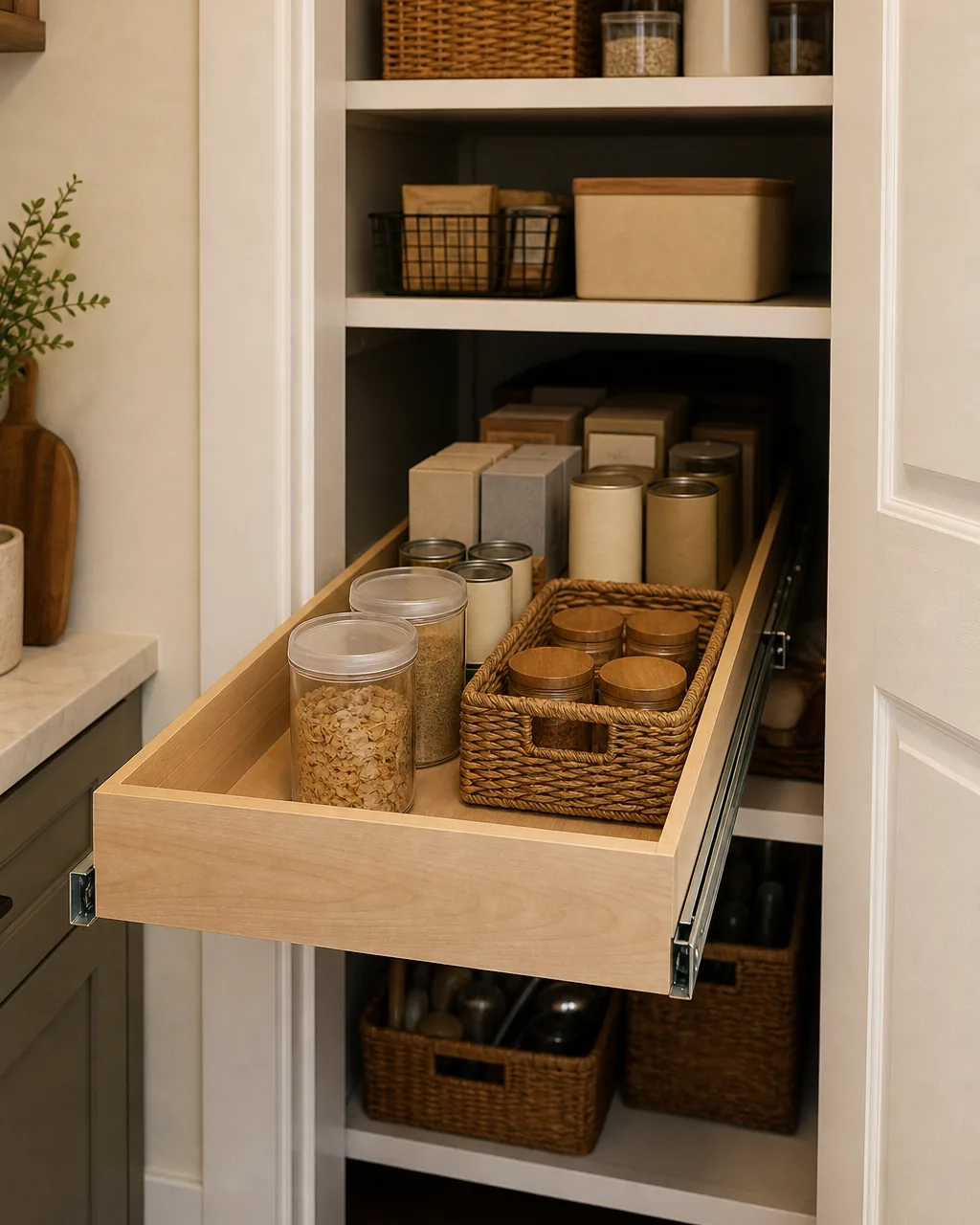
For the one or two shelves that are genuinely too deep to search by hand, full-extension drawer slides turn the whole shelf into a pull-out tray. Everything on it, front, middle, and back, arrives at once, which matters more the deeper the shelf actually runs.
The right first move depends on which part of the depth problem is actually failing right now: seeing, reaching, or remembering what's back there.
4. Swap Fixed Back Shelving for Slide-Out Wire Baskets
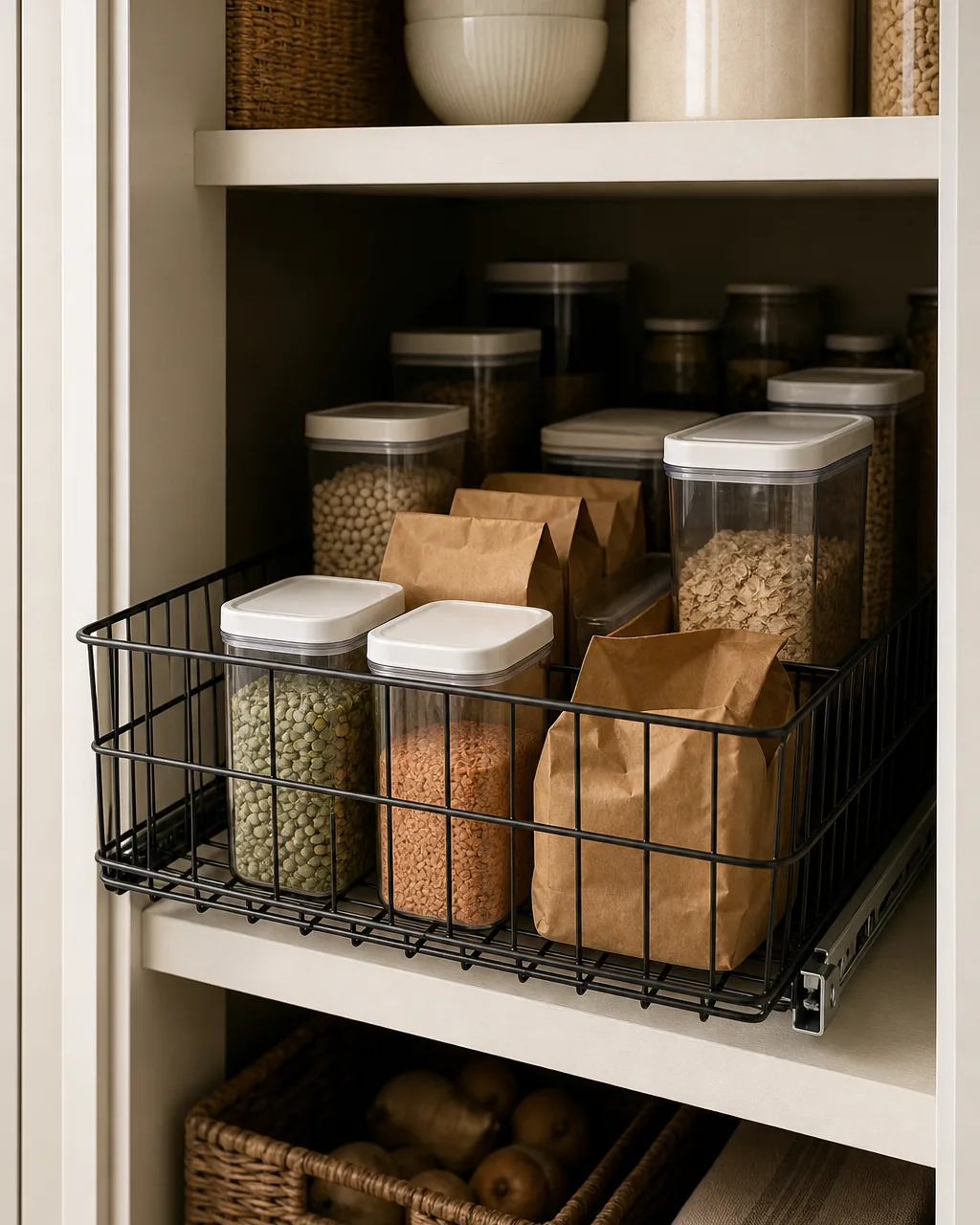
Where a full slide retrofit isn't practical, a slide-out wire basket sized to the shelf's back half does a smaller version of the same job. It brings the unreachable zone forward on its own track instead of asking you to reach past the front row every time.
5. Angle a Small Mirror at the Back So You Can See Without Reaching In
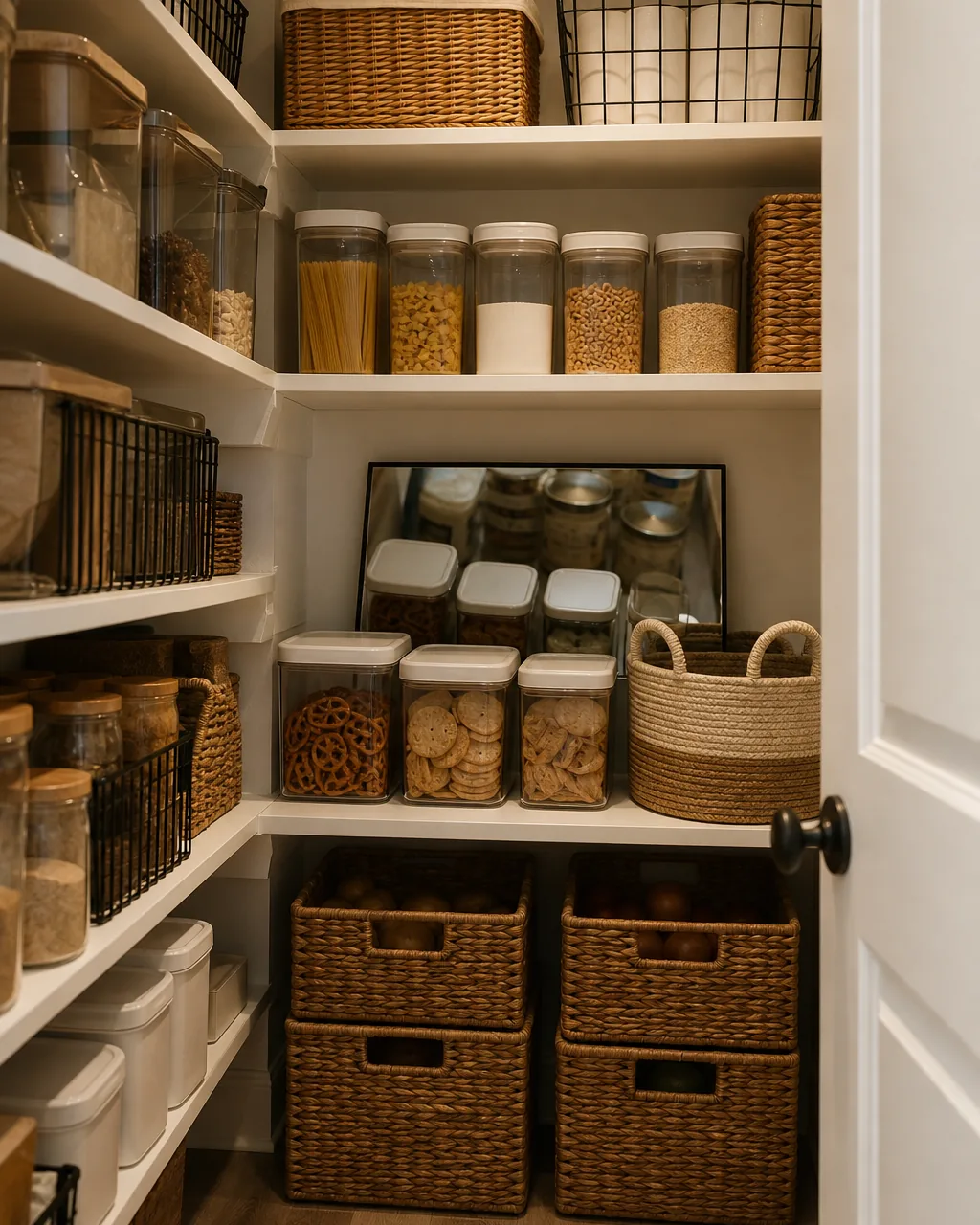
A small mirror propped or mounted at the back of a deep shelf, angled slightly downward, lets you check what's back there without leaning your whole arm in. It's a low-effort fix for shelves too shallow to justify a slide but still too deep to see into at a glance.
6. Reserve the Full Back Depth for Backstock Only, Never Daily Items
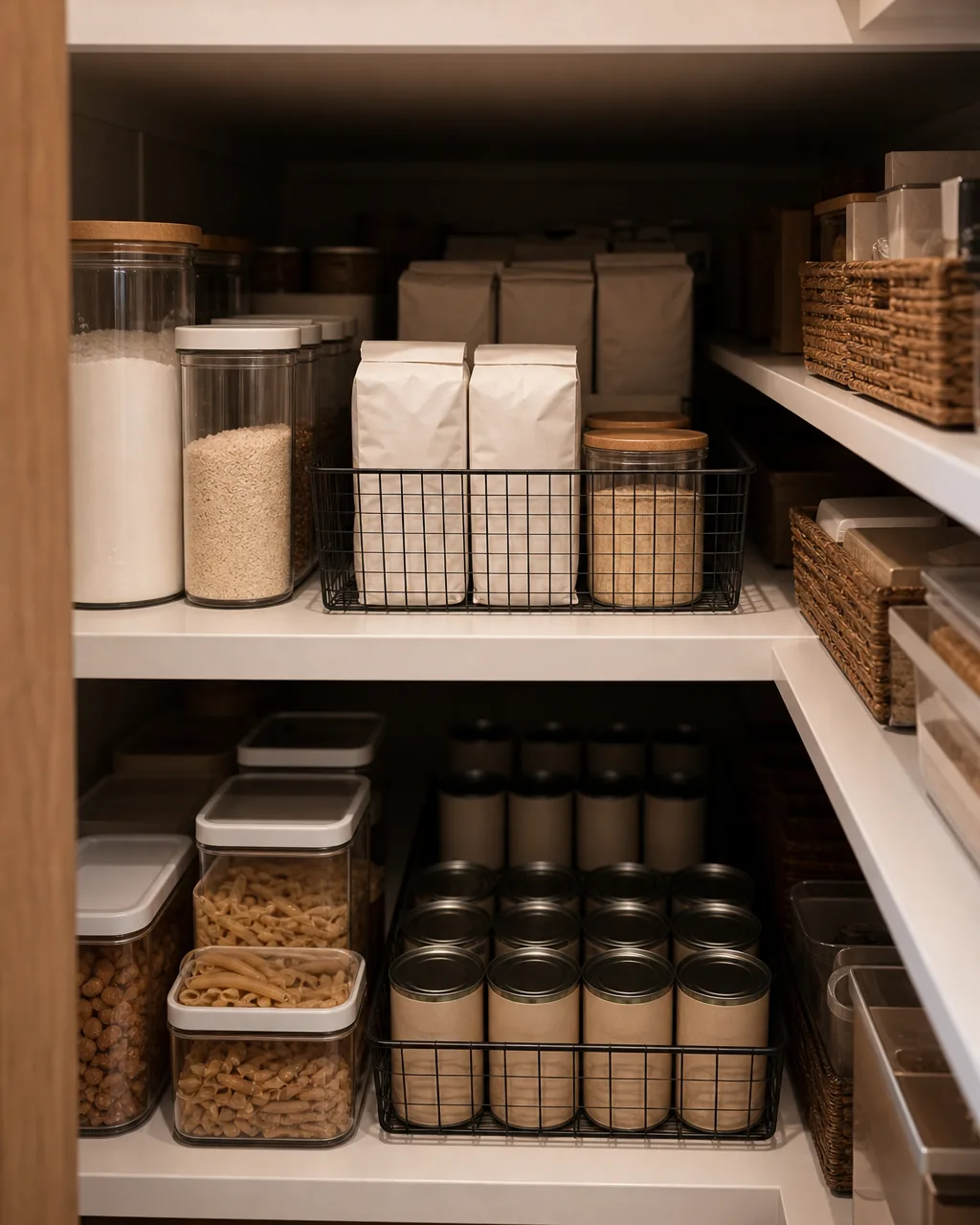
Once a zone is established as "back," the rule that keeps it working is simple: nothing goes back there that you'd want this week. Backstock only, the extra bag of flour, the case of canned tomatoes, items where being out of sight for weeks is fine by design, not by accident.
If your pantry is too narrow rather than too deep, the backstock problem looks different — see this small pantry guide instead.
These four rules are what separate a deep pantry that stays usable from one where the back wall becomes a graveyard of forgotten cans.
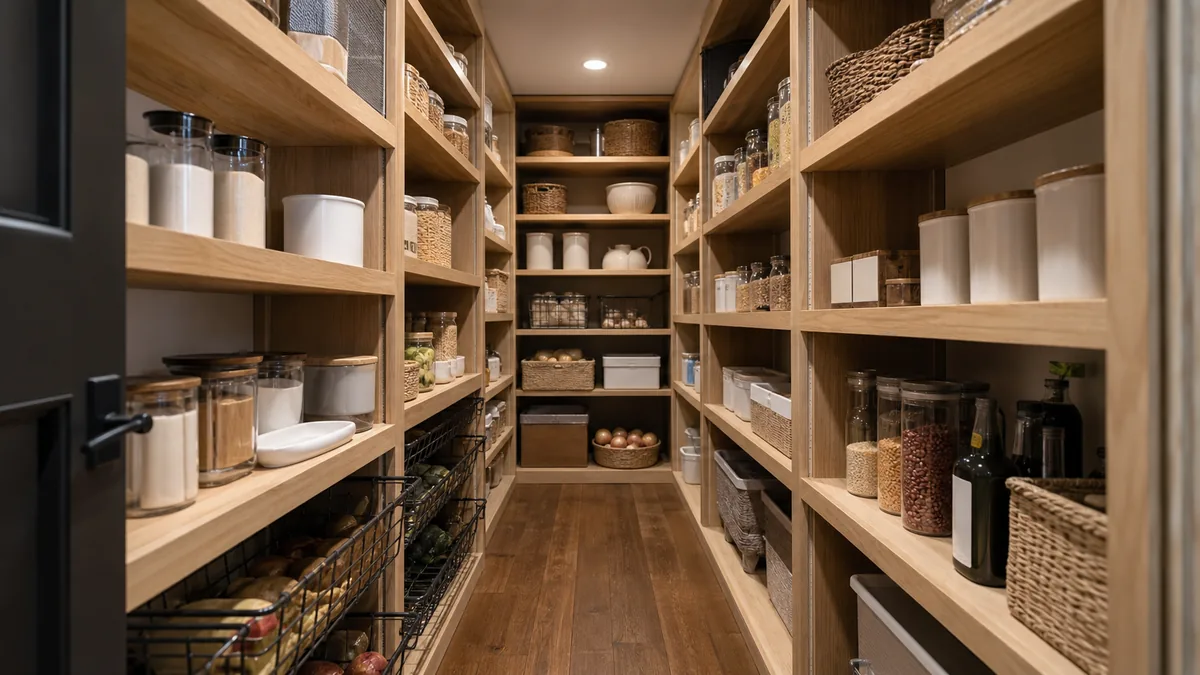
7. Add a Rolling Step Stool for Floor-to-Ceiling Depth You Can't Reach Standing
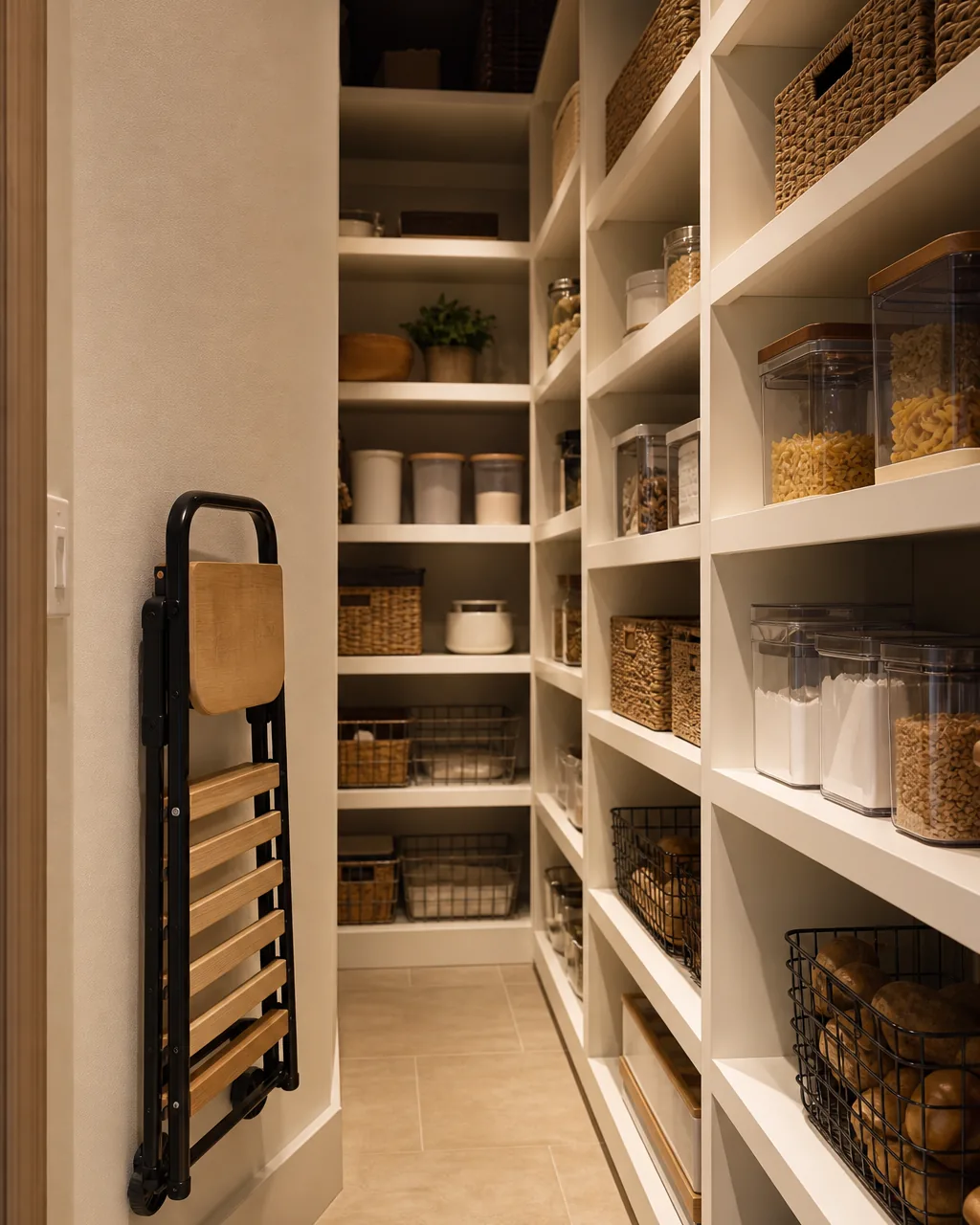
In a walk-in pantry with shelving that runs to the ceiling, the top shelves have the same depth problem as the back of a shelf, just vertically. A small rolling step stool stored flat against a side wall solves it without permanently mounting a ladder rail.
8. Group Tall Items in the Back Where Height Won't Block Your Sightline
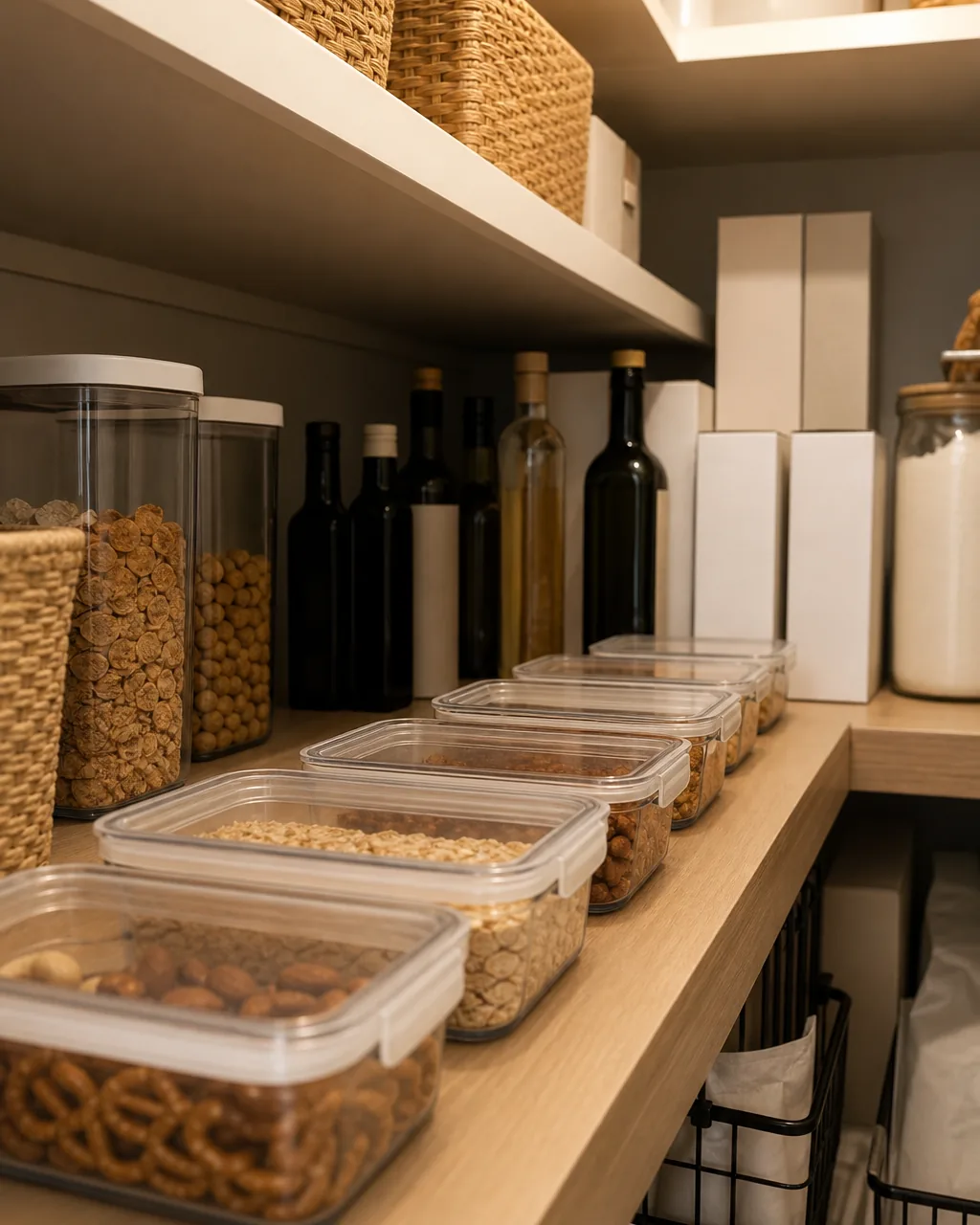
Tall boxes and bottles placed in the front row block your view of everything behind them. Moving tall items to the back and keeping short, flat items up front means you can actually see past the first row instead of staring at a wall of cereal boxes.
9. Run a First-In-First-Out Rule on Every Deep Shelf So Nothing Expires Unseen
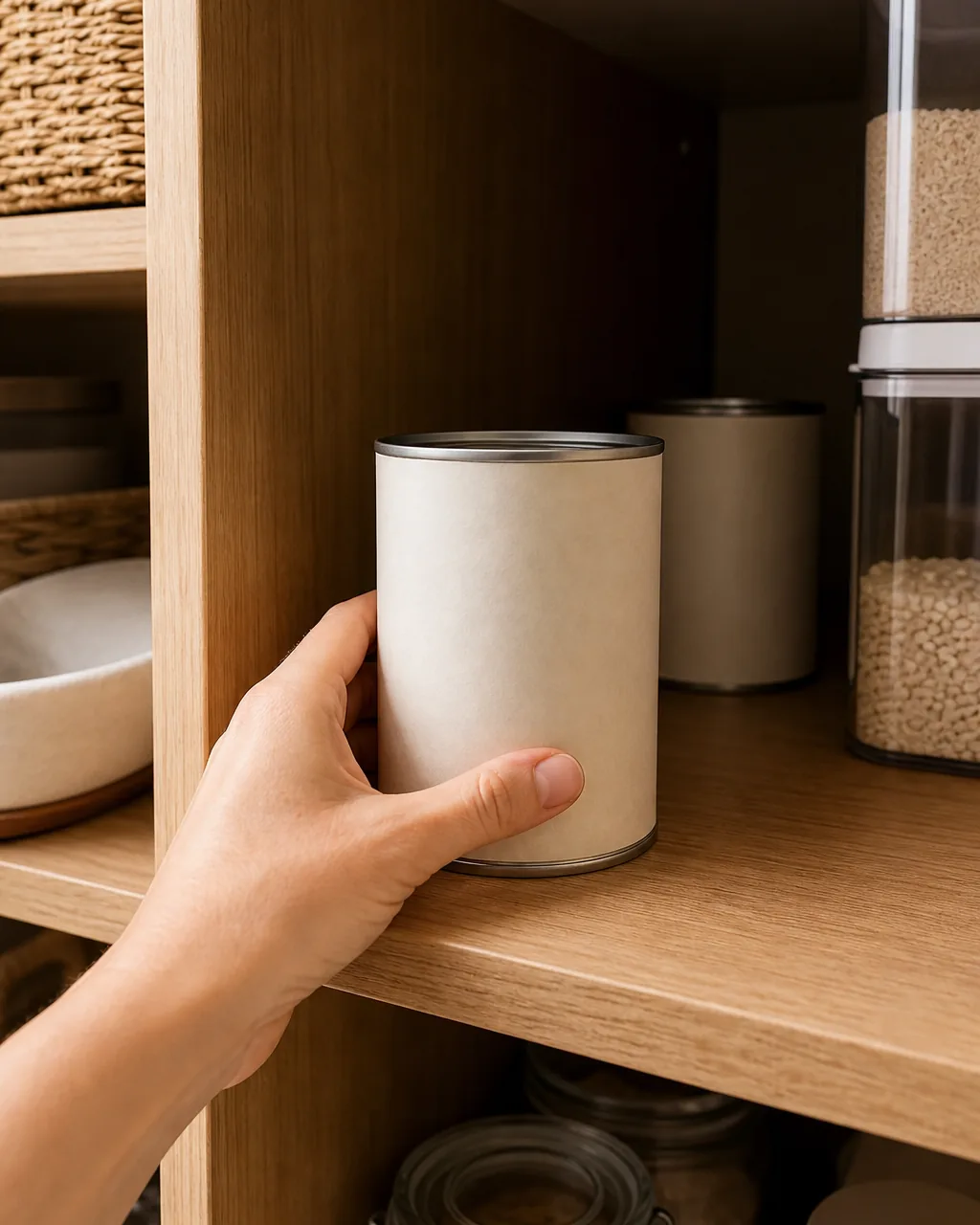
Every time you restock, new cans go to the back and existing stock moves forward, the same rotation grocery stores use. On a deep shelf where the back is genuinely out of sight, this is the difference between food getting used and food quietly expiring behind newer purchases.
12 depth-zoning decisions, one pantry you can actually see into
- 1Split Every Shelf Into Front, Middle, and Back Zones by How Often You Reach ThereDivide each shelf front-to-back by reach frequency instead of loading it by category alone.
- 2Install Battery Motion-Sensor Lights Aimed at the Back WallA stick-on motion-sensor light angled at the rear wall solves the visibility half of the depth problem in minutes.
- 3Retrofit Full-Extension Drawer Slides Under the Deepest ShelvesFull-extension drawer slides turn the whole shelf into a pull-out tray for the shelves genuinely too deep to search by hand.
- 4Swap Fixed Back Shelving for Slide-Out Wire BasketsA slide-out wire basket sized to the shelf's back half brings the unreachable zone forward on its own track.
- 5Angle a Small Mirror at the Back So You Can See Without Reaching InA small mirror propped at the back of a deep shelf lets you check what's there without leaning your whole arm in.
- 6Reserve the Full Back Depth for Backstock Only, Never Daily ItemsNothing goes in the back zone that you'd want this week — backstock only, by design.
- 7Add a Rolling Step Stool for Floor-to-Ceiling Depth You Can't Reach StandingA small rolling step stool solves the vertical version of the depth problem in a walk-in pantry.
- 8Group Tall Items in the Back Where Height Won't Block Your SightlineMoving tall items to the back and keeping short items up front keeps the sightline to the rear open.
- 9Run a First-In-First-Out Rule on Every Deep Shelf So Nothing Expires UnseenNew stock goes to the back, existing stock moves forward, every time you restock.
- 10Hang a Second Rail Mid-Depth for Bags That Get Lost Behind CansA mid-depth rail gives soft bagged goods their own clip point instead of getting shoved flat behind rows of cans.
- 11Choose Clear Deep Bins With a Handle So You Pull the Whole Bin, Not DigA handled clear bin sized to the full shelf depth lets you pull the whole bin forward and see everything at once.
- 12Skip Wall-to-Wall Shelving and Add a Center Aisle Unit for Two-Sided AccessA freestanding center unit turns one very deep run of shelving into two shallower, fully reachable ones.
styledhomenotes.com
10. Hang a Second Rail Mid-Depth for Bags That Get Lost Behind Cans
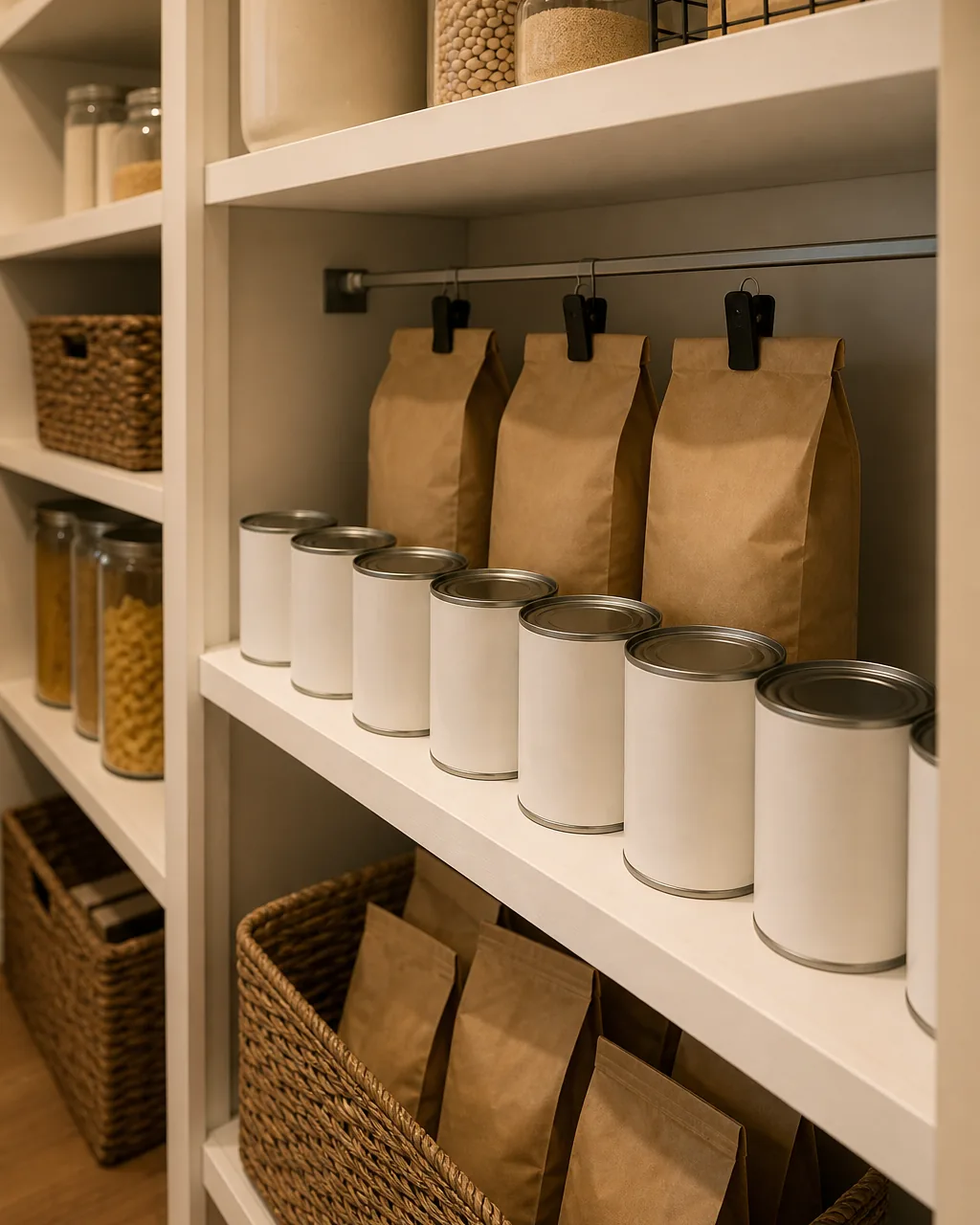
A second hanging rail installed partway back on a deep shelf gives soft bagged goods, chips, dried pasta, snack bags, their own hook or clip point instead of getting shoved flat behind rows of cans, where they're impossible to feel for or see.
11. Choose Clear Deep Bins With a Handle So You Pull the Whole Bin, Not Dig
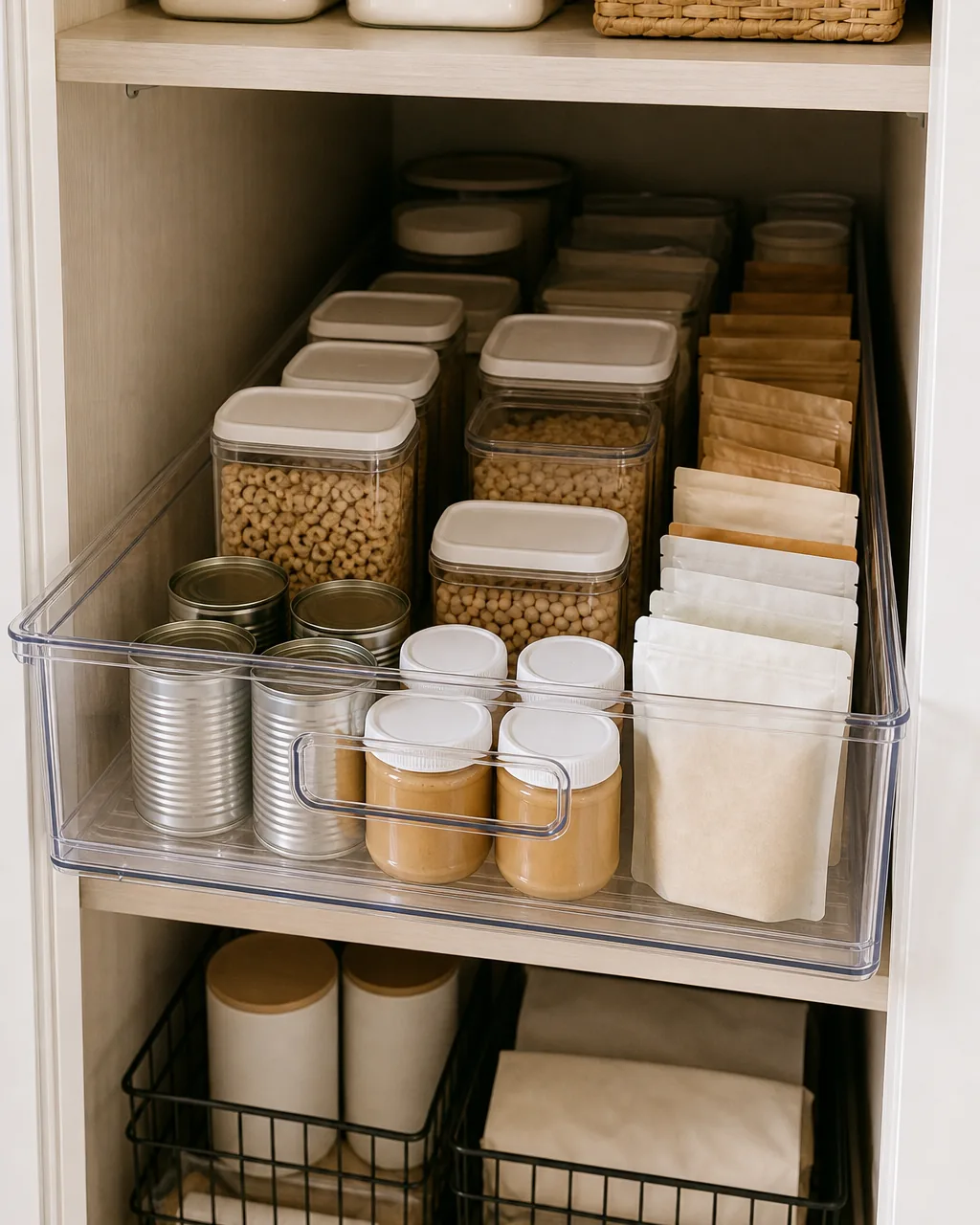
On shelves too deep to retrofit slides, a handled clear bin sized to the full depth does similar work manually: grab the handle, pull the whole bin forward, see everything in it at once, push it back. The handle is what makes this work — without one, a deep bin is just a smaller version of the same reaching problem.
12. Skip Wall-to-Wall Shelving and Add a Center Aisle Unit for Two-Sided Access
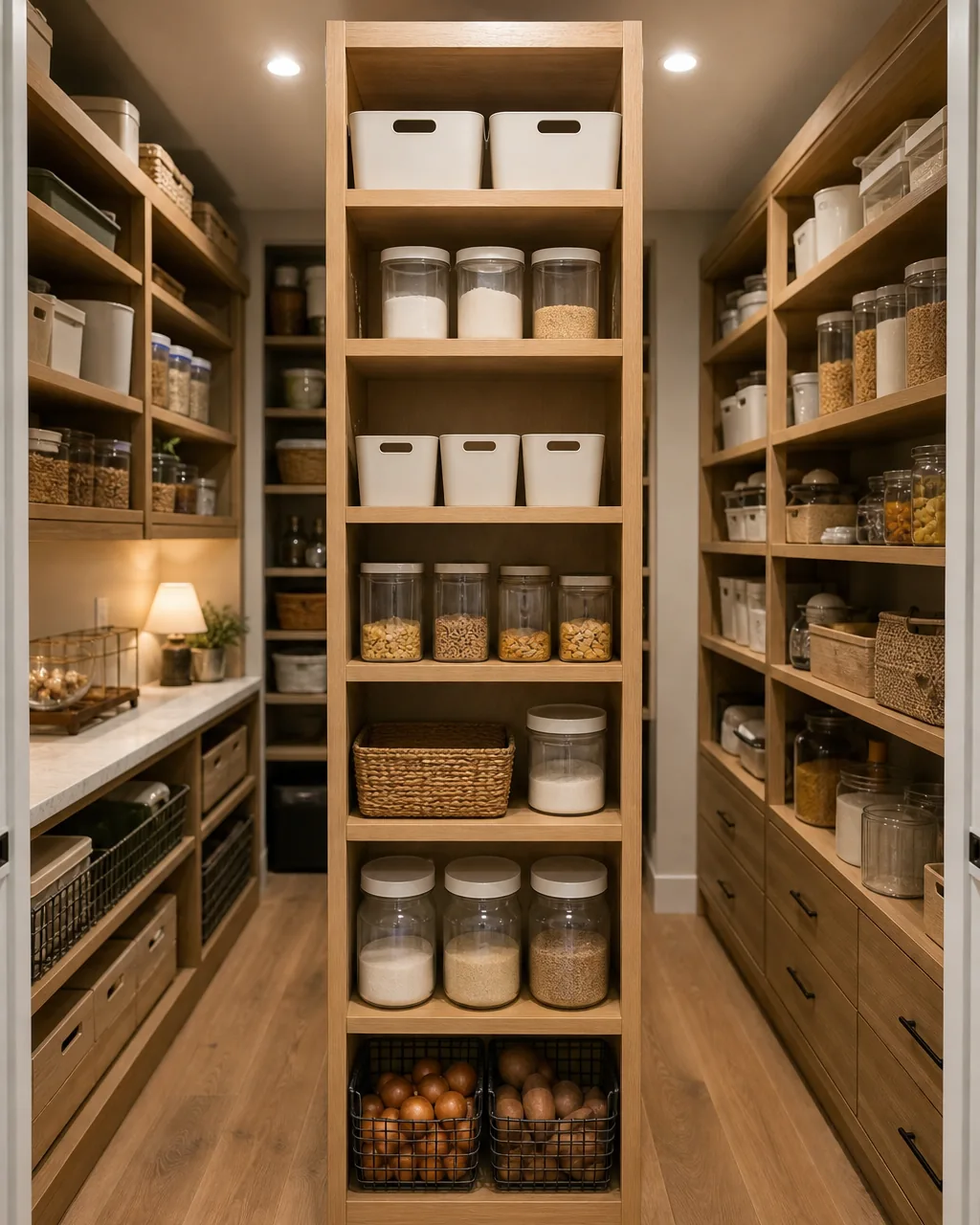
In a walk-in deep enough to fit one, a freestanding center unit with shelving on both sides turns one very deep run of wall shelving into two shallower, fully reachable runs. It costs floor space, but it eliminates the depth problem at the layout level instead of managing around it shelf by shelf.
Once the depth problem is solved, a lighter touch handles the rest: see how a single shelf gets engineered for height and bin alignment, or check the coffee station guide for the same zone-and-workflow thinking applied to a countertop instead of a shelf.

Nora writes about small, livable rooms for real apartments. The walk-in pantry in her current place is deep enough that she lost an entire bag of rice behind a row of canned tomatoes for two months, which is exactly the kind of problem this list is built to prevent. Every move here is tested against a real, deep shelf, not a styled catalog shot.
Nora Ellis edits Styled Home Notes. More from Nora: pantry shelf organization ideas, small pantry organization ideas.