11 Spice Rack Organization Ideas That Actually Let You Find What You Need
Most spice cabinets work against you. Jars hide behind other jars, labels face the wrong direction, and everything ends up in a single deep shelf where the back row might as well not exist.
The problem is never how many spices you own. It is always how they are stored: which direction the labels face, how deep you have to reach, and whether you can see everything without moving something else first.
These 11 ideas fix spice storage at the structural level so you grab what you need in one motion.
Each one solves a specific visibility or access problem in your spice storage.
- 1Tiered Shelf Insert Inside the Cabinet
- 2Uniform Square Jars With Top Labels
- 3Magnetic Strip on the Cabinet Door
- 4Pull-Out Drawer Insert at Eye Level
- 5Angled Dividers in a Deep Drawer
- 6Floating Ledge Above the Stove
- 7Cuisine-Grouped Acrylic Bins
- 8Lazy Susan on a Pantry Shelf
- 9Wire Rack on the Pantry Door
- 10Test-Tube Wall Rack for Whole Spices
- 11Date-First Labeling System
1. Use a Tiered Shelf Insert Inside the Cabinet
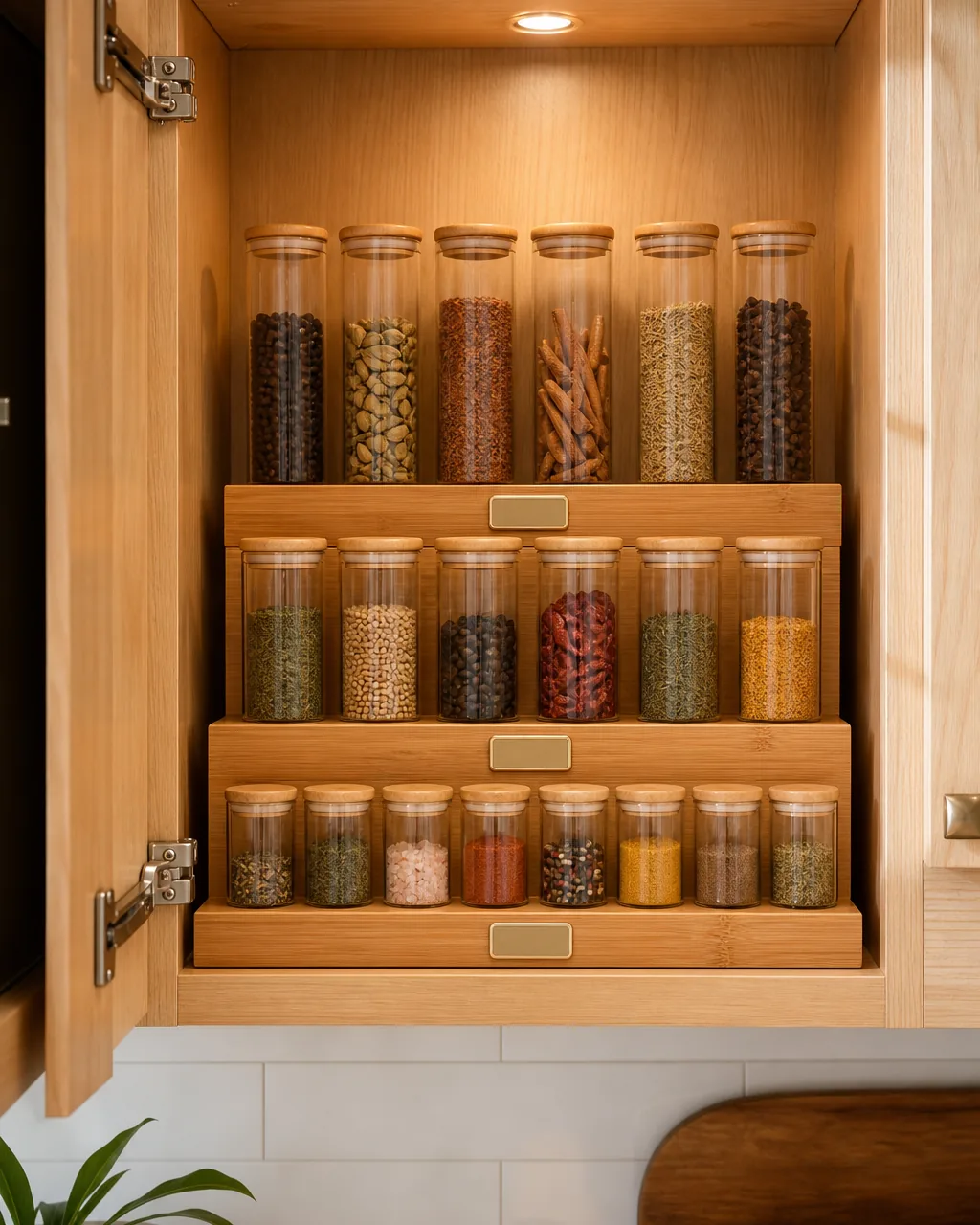
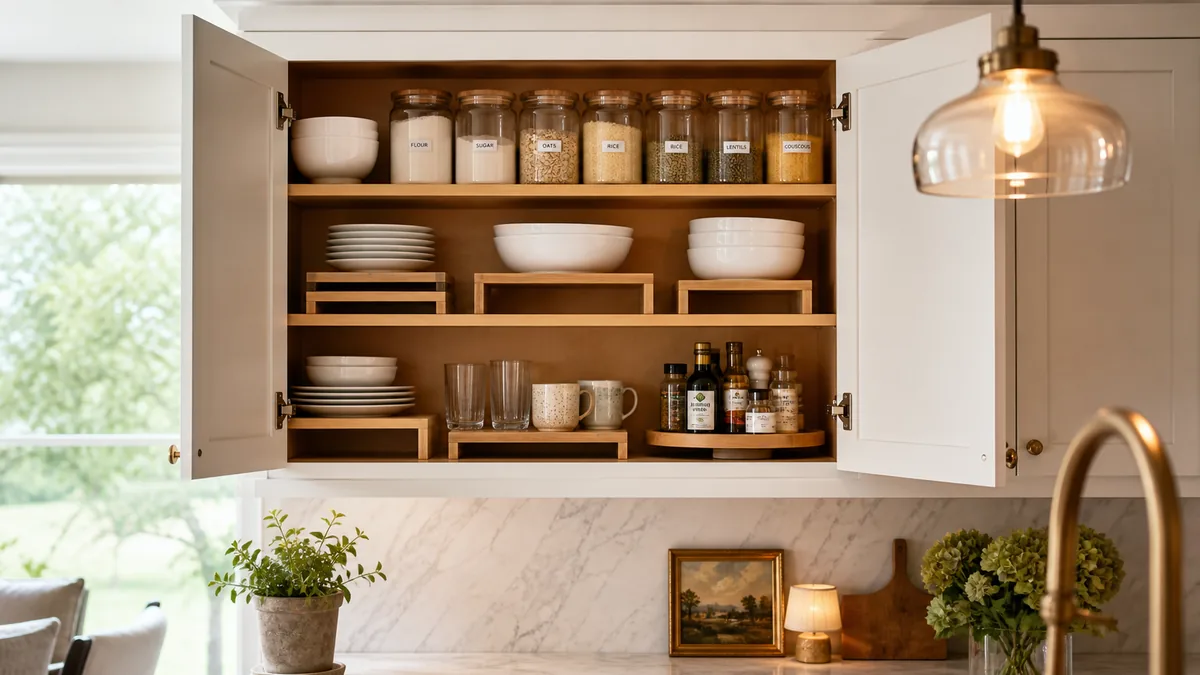
A tiered riser turns one flat shelf into three visible rows. Every jar label faces you directly because no jar sits behind another at the same height. You scan the whole collection without reaching in.
- Install a three-tier bamboo or metal riser on the existing cabinet shelf
- Place tallest bottles on the back tier, shortest on the front
- Leave 2 inches of clearance above the top tier for easy grabbing
- Group by frequency: daily spices at eye level, baking spices one shelf up
- Wipe the riser monthly to catch any powder that drifts between jars
2. Switch to Uniform Square Jars With Top Labels
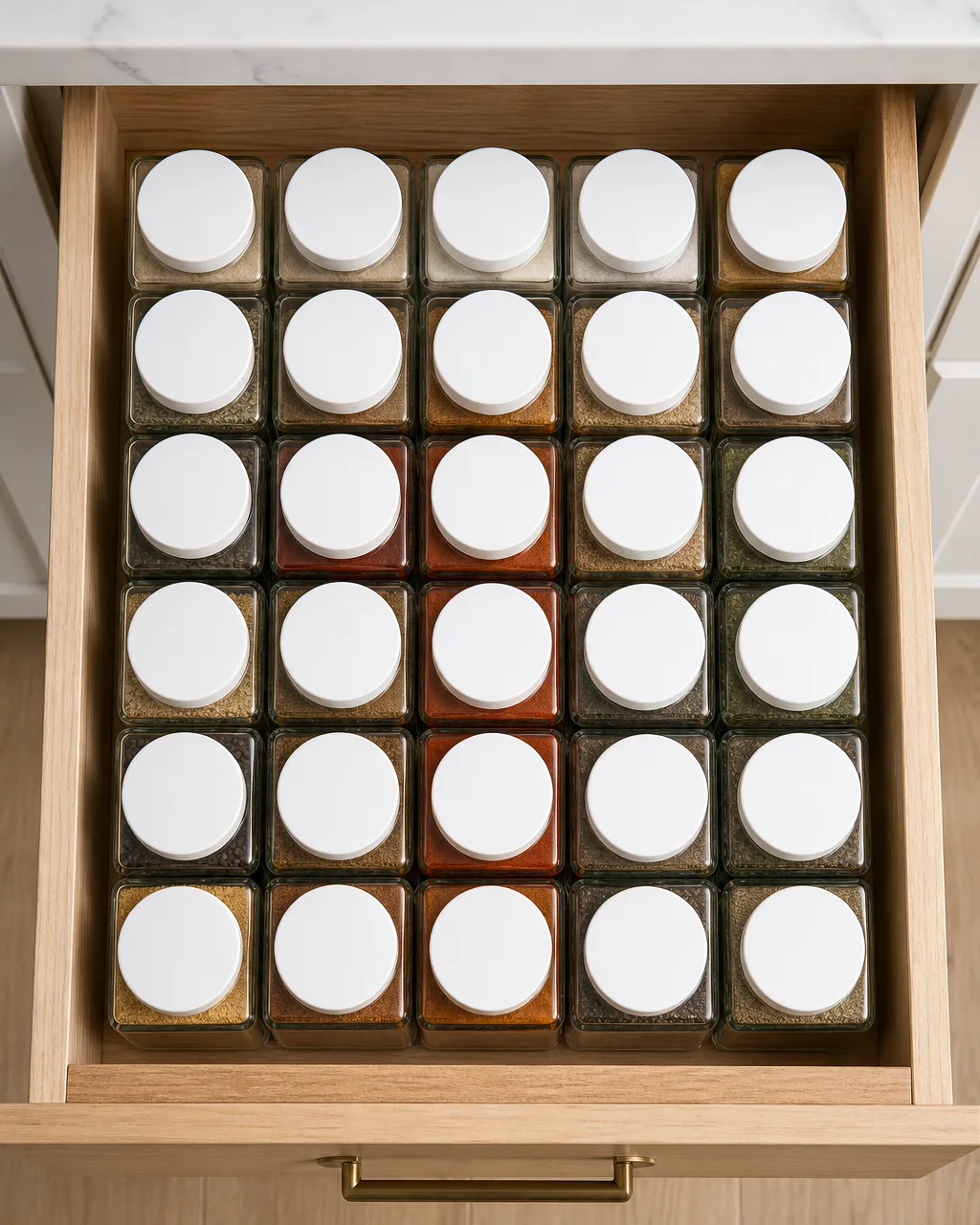
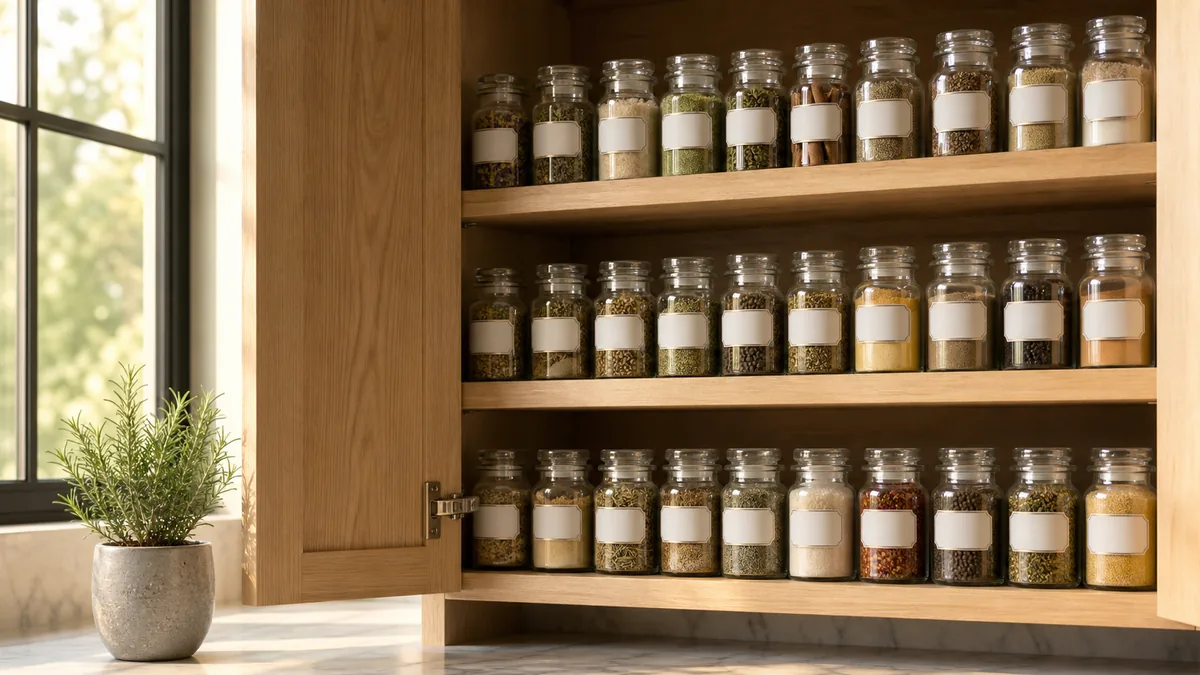
Round jars leave crescent-shaped gaps that waste shelf depth. Square jars tessellate perfectly, and a label on the lid means you read names from above without pulling anything forward.
- Choose 4 oz square glass jars for ground spices, 8 oz for bulk items
- Print labels with dark text on white waterproof vinyl for contrast
- Fill only to the shoulder so the label stays powder-free
- Arrange alphabetically within each cuisine group for faster scanning
- Refill from bulk bags and recycle the original packaging immediately
3. Mount a Magnetic Strip on the Inside of a Cabinet Door
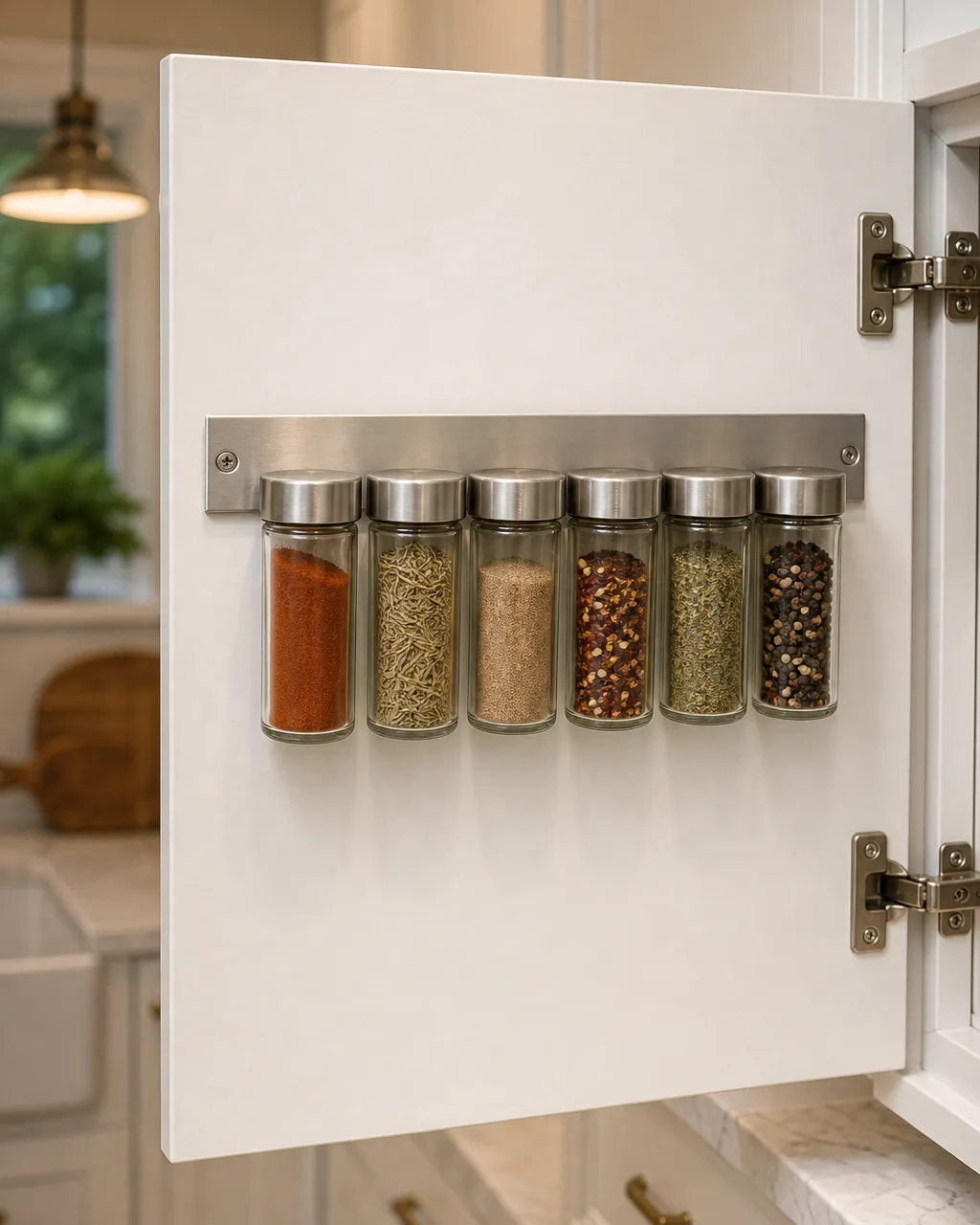
A magnetic knife strip on the inside of a cabinet door holds metal-lid jars flat against the surface. They hang in plain sight when you open the door and take zero shelf space from the cabinet interior.
- Use a 12-inch stainless strip rated for at least 5 lbs total hold
- Check that your jar lids are magnetic (tinplate works, aluminum does not)
- Space jars 1 inch apart so you can grip each one cleanly
- Mount at chest height inside the door to avoid bending
- Add a second strip below if you run out of room on the first
Match your available space to the right approach.
4. Install a Pull-Out Drawer Insert at Eye Level
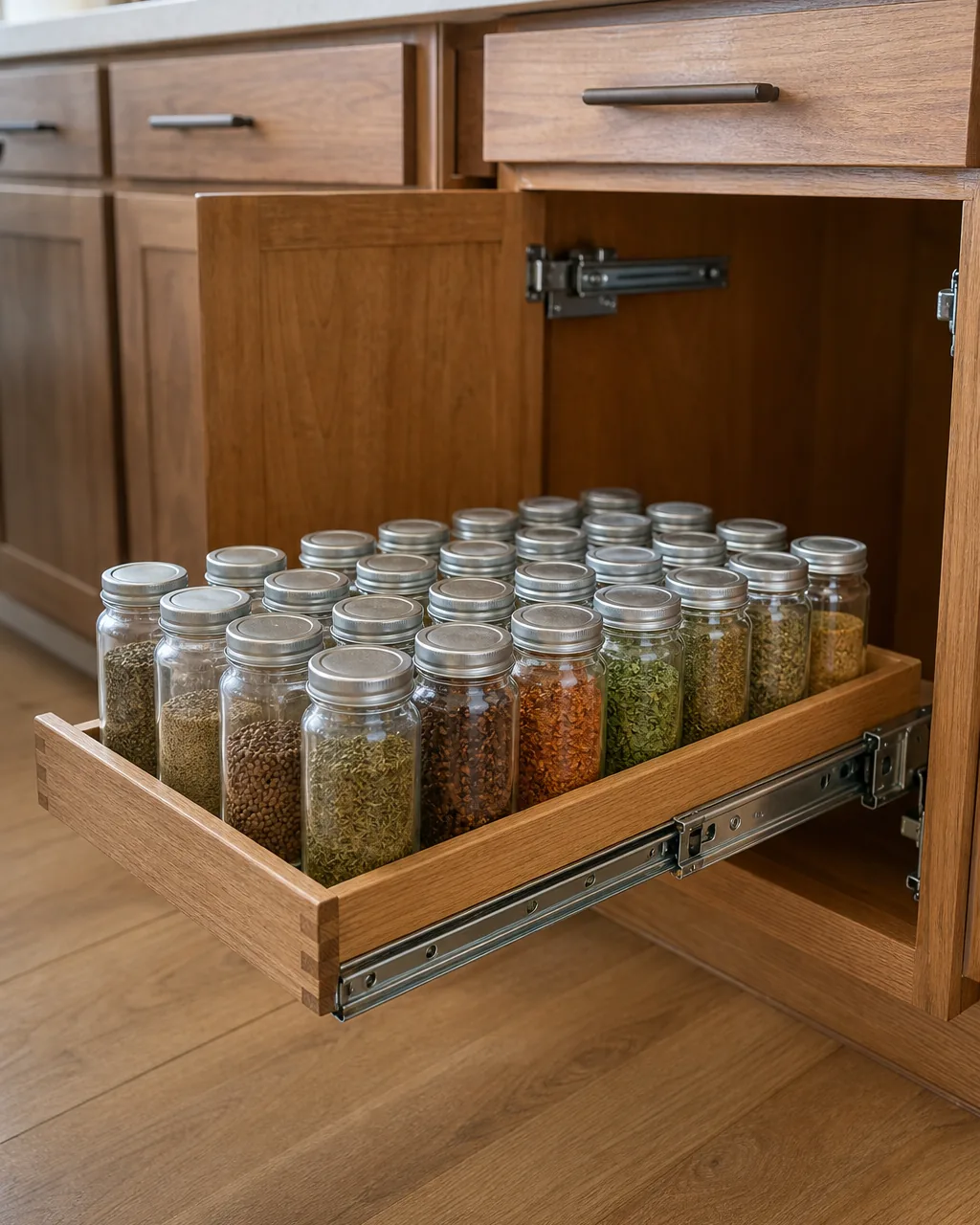
A full-extension slide-out tray converts a deep cabinet into a scannable spice drawer. Pull it toward you, grab what you need, push it back. No more reaching into dark corners where jars hide.
- Buy a retrofit slide kit that fits your cabinet width (most adjust 14 to 21 inches)
- Mount at a height where you read labels without bending or stretching
- Line the tray bottom with non-slip liner so jars stay put during slides
- Face all labels the same direction for faster scanning
- Keep the tray under 80 percent full so jars do not crowd together
5. Line a Deep Drawer With Angled Dividers
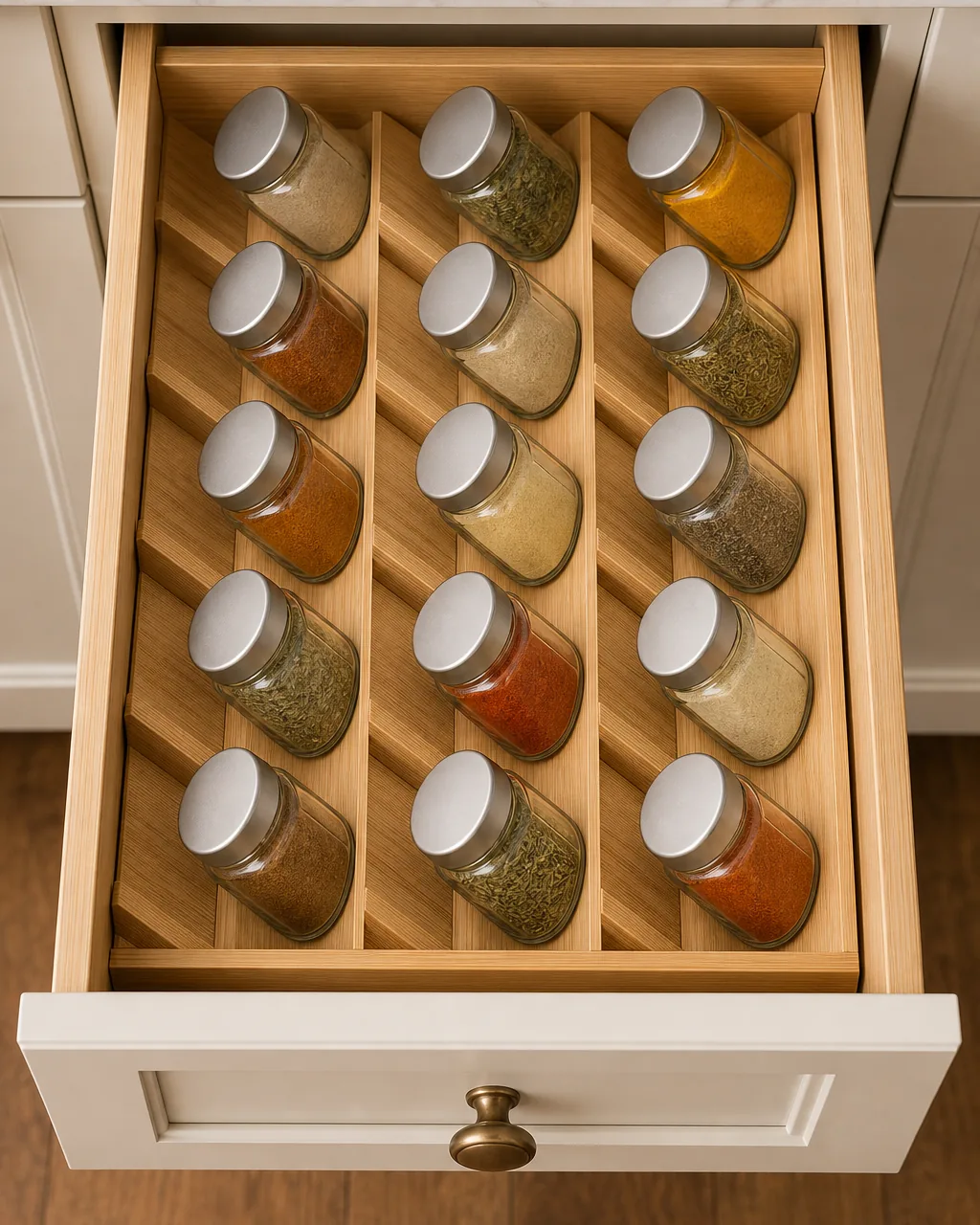
Tilted insert slots hold jars at a 45-degree angle so labels face straight up when you open the drawer. You see every name at once without lifting or rearranging a single jar.
- Choose an expandable bamboo insert that fits standard 15 to 24 inch drawers
- Set the tilt angle between 30 and 45 degrees for best label visibility
- Place taller jars in back rows, shorter in front
- Leave one empty slot as a landing zone when you pull a jar for cooking
- Wipe divider grooves quarterly since spice dust collects in the channels
6. Add a Narrow Floating Ledge Above the Stove
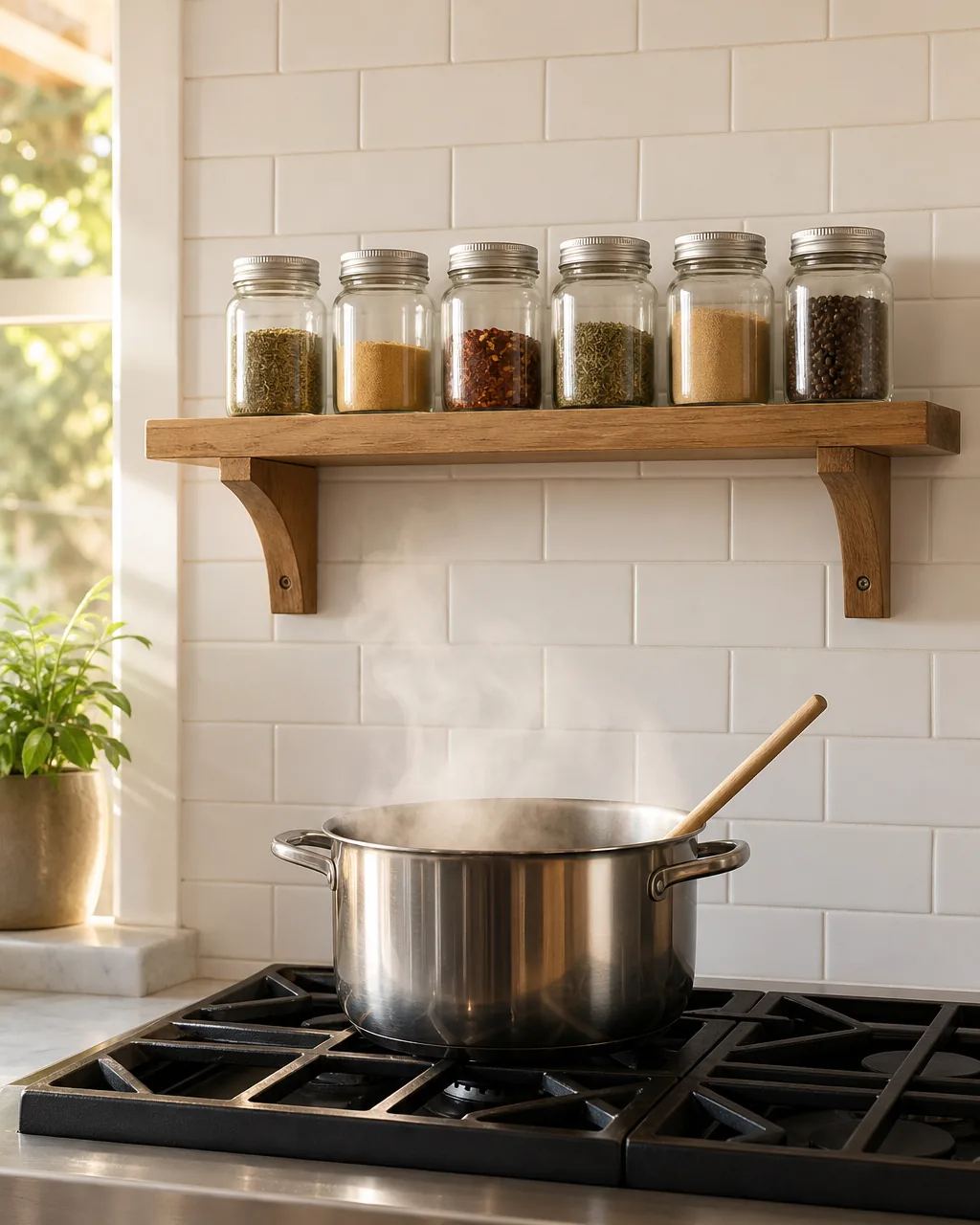
A slim shelf 18 inches above the burners keeps your six most-used spices within arm's reach while you cook. No stepping away from a hot pan to dig through a cabinet across the room.
- Use a ledge no deeper than 4 inches to avoid blocking the vent hood
- Mount into studs or use heavy-duty anchors rated for 15 lbs or more
- Keep only daily-rotation spices here (salt, pepper, garlic, paprika, cumin, red pepper)
- Wipe jars weekly since cooking steam deposits a thin grease film
- Avoid plastic containers on this shelf because rising heat warps lids over time
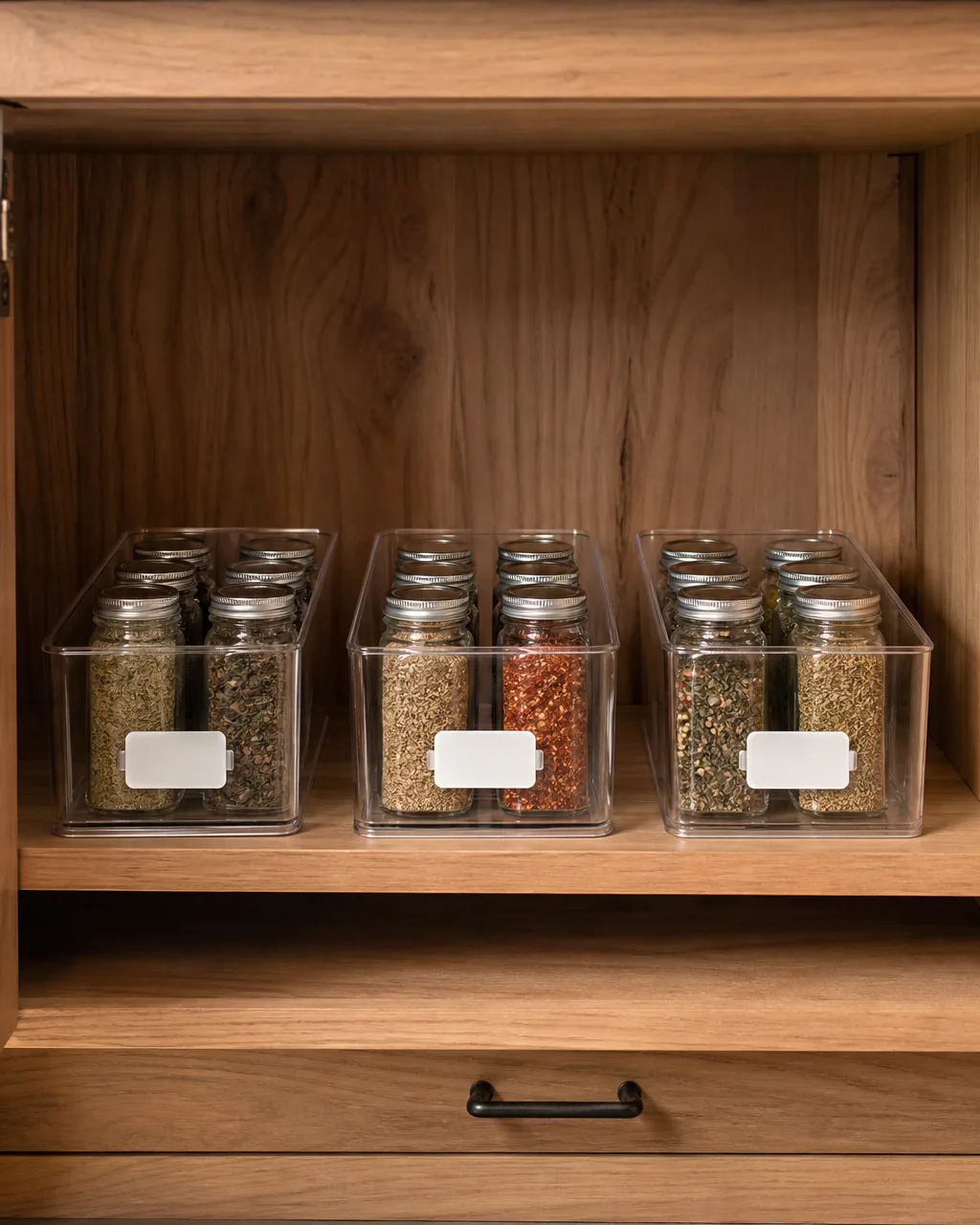
7. Group by Cuisine Inside Clear Acrylic Bins
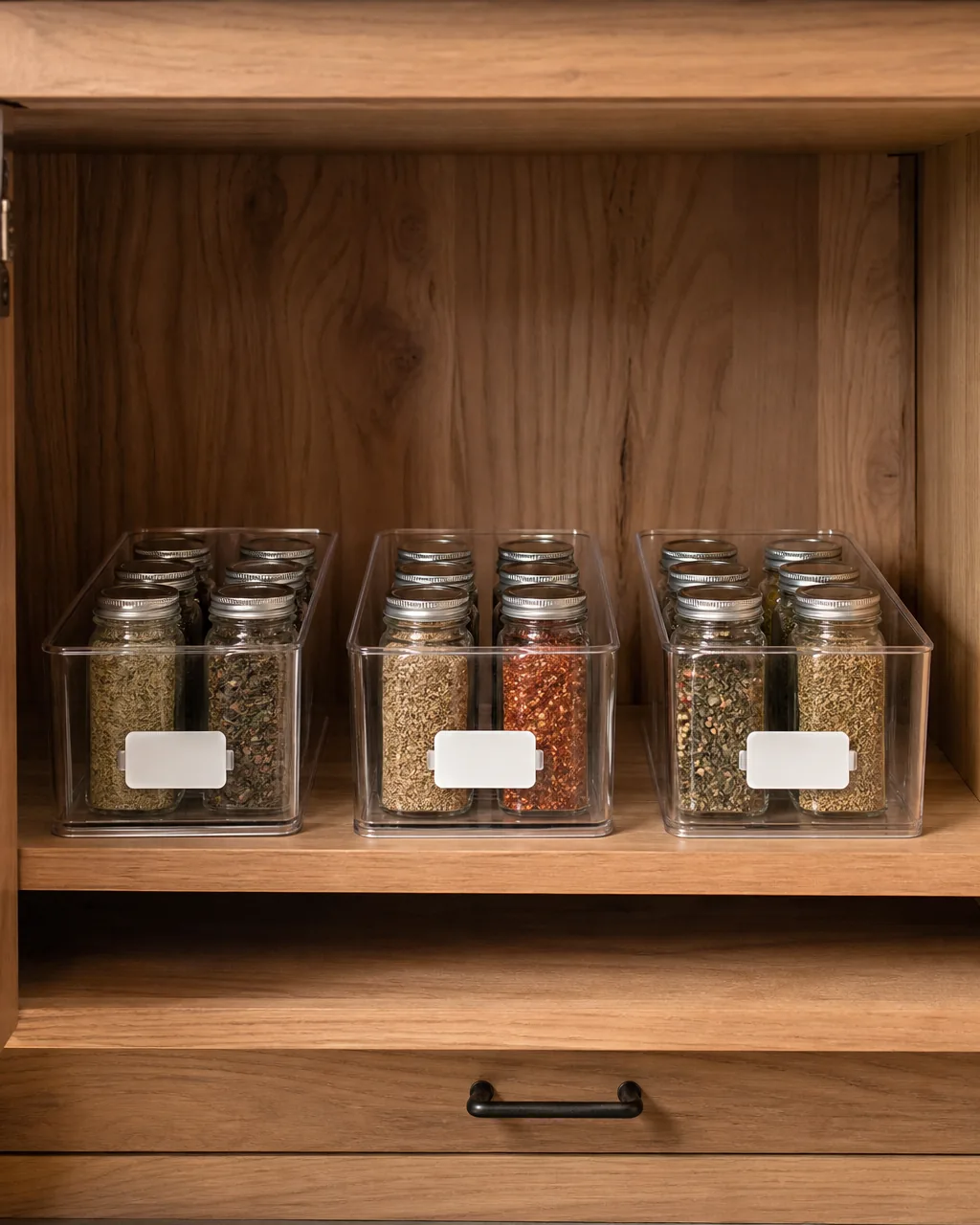
One labeled bin per cuisine cluster means you grab the Italian bin for pasta night instead of hunting five separate jars across three shelves. The bin goes on the counter while you cook, then slides back.
- Use clear stackable bins sized 6 by 10 inches to fit standard cabinet depth
- Label the front face of each bin (Italian, Mexican, Indian, Asian, Baking)
- Keep no more than 8 jars per bin so it stays liftable with one hand
- Nest bins two deep on a shelf with cuisine labels facing outward
- Review bin contents seasonally and move rarely-used spices to long-term storage
8. Stack a Lazy Susan on a Pantry Shelf
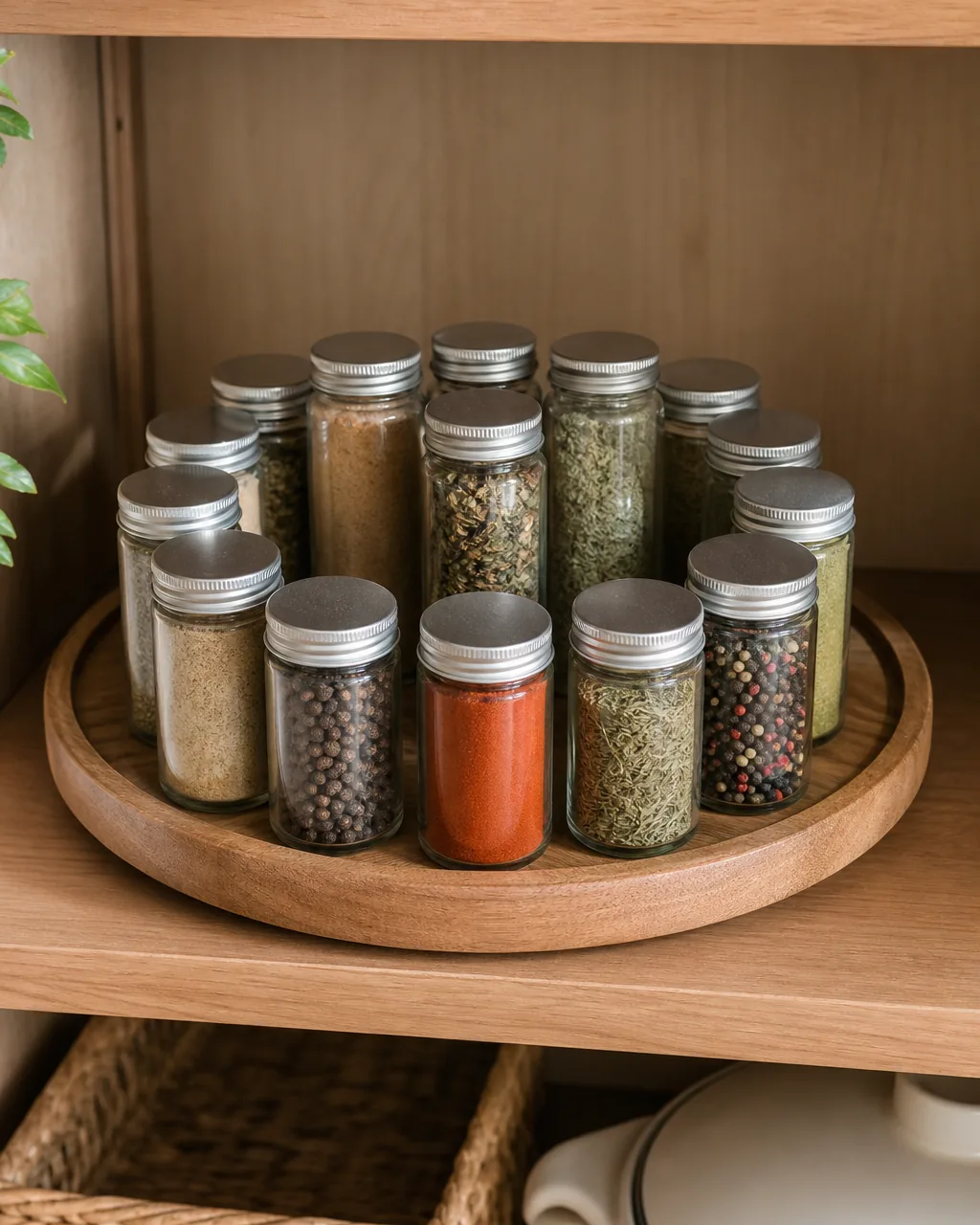
A single turntable on a deep pantry shelf lets one spin reveal 20 jars. The back row that normally disappears behind cans comes to you with a quarter turn instead of a full arm reach.
- Choose a 12-inch diameter turntable with a raised lip to prevent jars rolling off
- Place it on the deepest shelf where back-row visibility is worst
- Arrange tallest jars in the center, shortest on the outside perimeter
- Add a non-slip pad underneath so the turntable stays put on smooth shelves
- Spin a full rotation before every grocery run to catch empties before they pile up
If you are also organizing the rest of your kitchen for easier daily cooking, a turntable works the same way for oils and vinegars on a different shelf.
The 11 spice storage upgrades at a glance
- 1Tiered shelf insertThree visible rows from one flat shelf.
- 2Uniform square jarsTessellate with no wasted gaps.
- 3Magnetic door stripJars hang, zero shelf space used.
- 4Pull-out drawer trayFull-extension slides at eye level.
- 5Angled drawer dividersLabels face up at 45 degrees.
- 6Floating stove ledgeSix daily spices within arm's reach.
- 7Cuisine acrylic binsGrab one bin, get the whole flavor set.
- 8Lazy Susan turntableOne spin reveals 20 deep-shelf jars.
- 9Pantry door wire rackVertical grid turns dead door space into storage.
- 10Test-tube wall rackSealed tubes keep whole spices fresh longer.
- 11Date-first labelsFreshness visible at a glance.
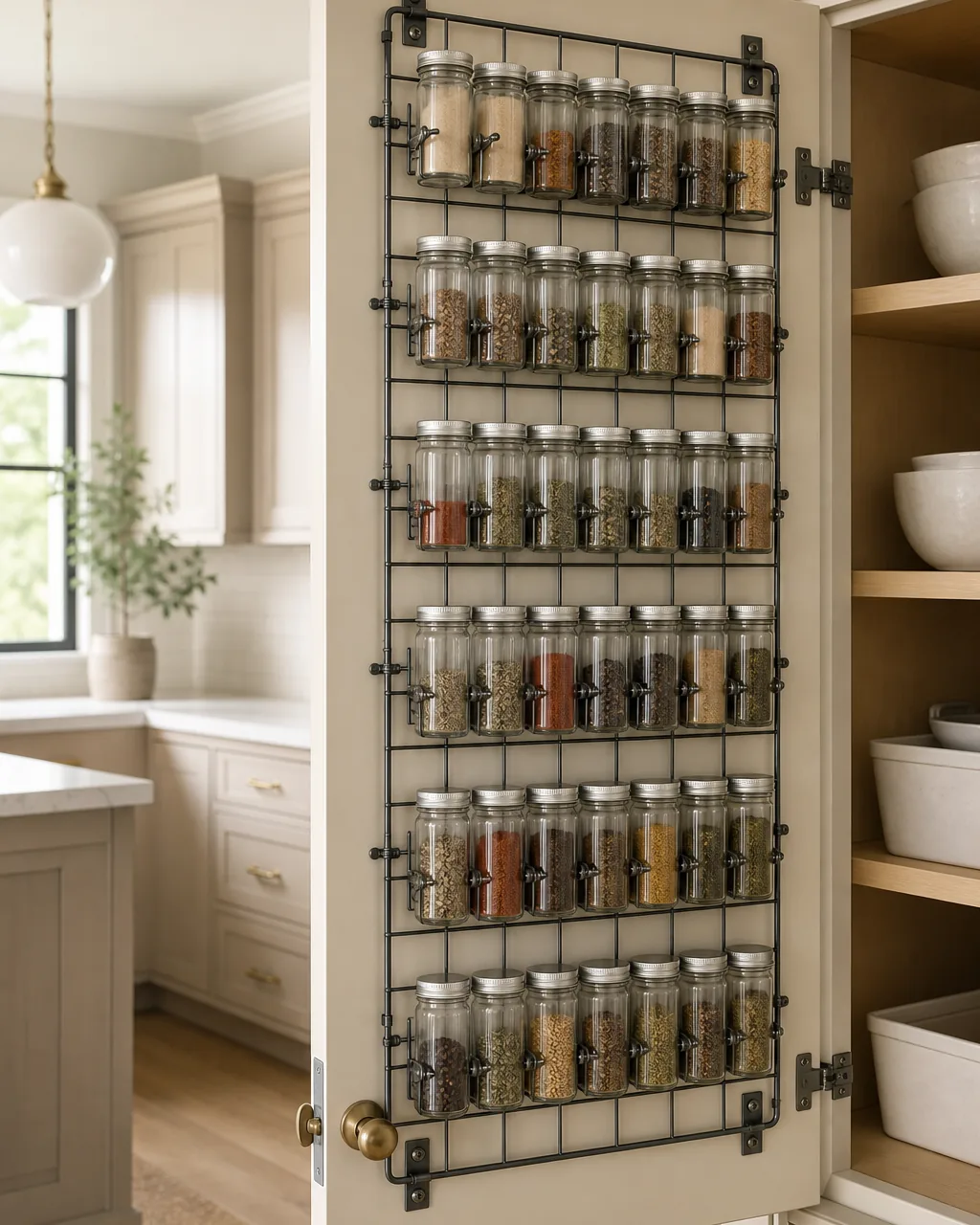
9. Clip Spice Jars to a Wire Rack Hung Inside the Pantry Door
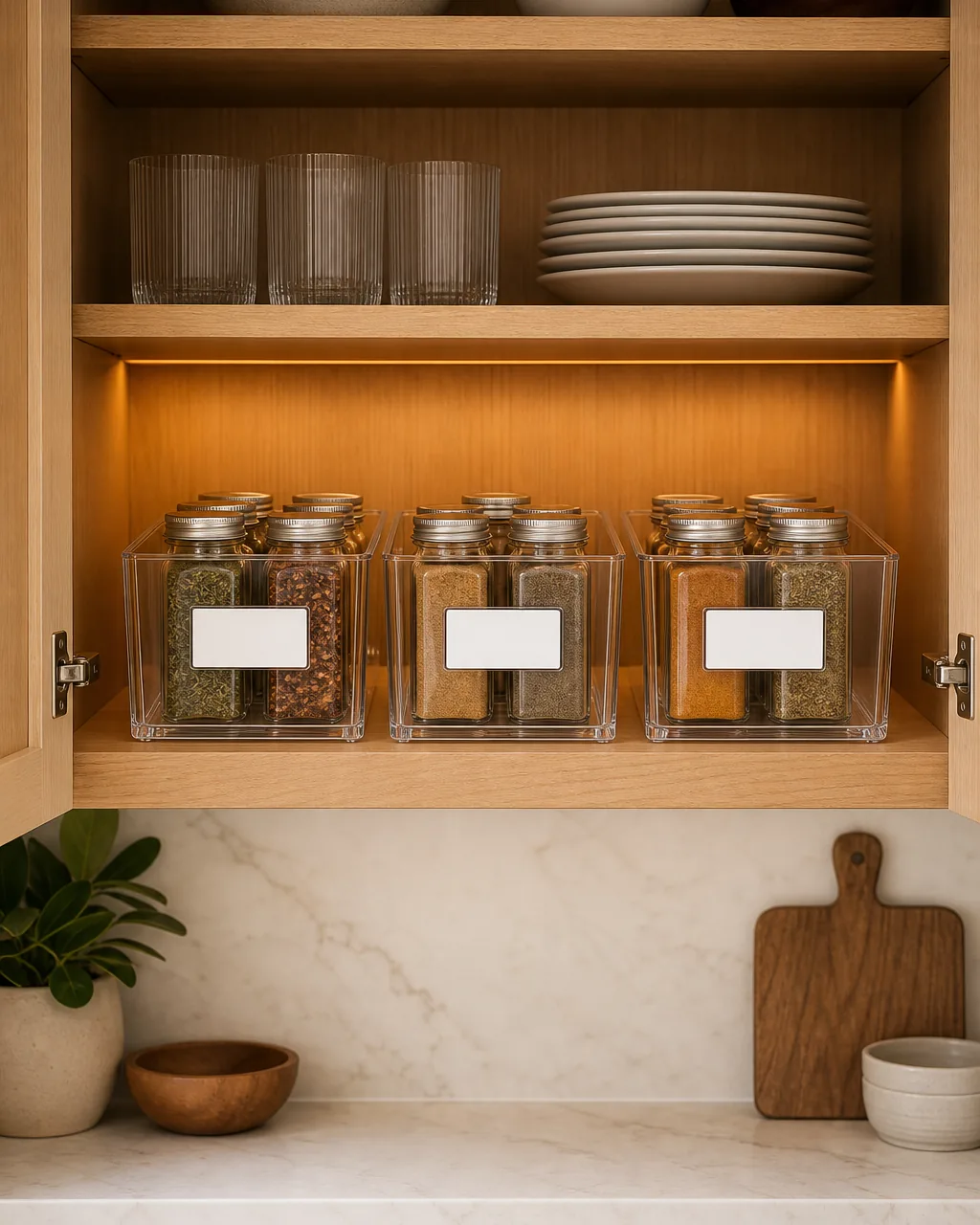
A vertical wire grid on the inside of the pantry door turns dead door space into visible storage for 30 or more jars. Each jar clips into a spring holder, and you see the whole collection the moment the door swings open.
- Use an over-door or screw-mount wire grid rated for the combined weight
- Pick spring-clip holders sized for your jar diameter (most are 1.75 to 2 inches)
- Arrange top to bottom by frequency, daily spices at eye level
- Check door swing clearance so the rack does not hit shelves when closing
- Tighten mounting hardware after the first month since door vibration loosens screws
10. Build a Test-Tube Wall Rack for Whole Spices
Sealed glass tubes with cork stoppers keep whole seeds, pods, and bark fresher than open bags sitting in a drawer. Mounted on a wall-hung wooden rack, they display like a spice library and let you check fill levels from across the room.
- Use 6-inch borosilicate tubes with natural cork for a food-safe airtight seal
- Mount a hardwood rail with drilled holes at 2-inch spacing
- Reserve tubes for whole spices only (cardamom pods, cinnamon sticks, star anise, peppercorns)
- Label each tube position with a small tag or directly on the rail below
- Replace corks annually since they compress and eventually lose their seal
For more ways to keep kitchen drawers organized with the right inserts, the same principle of one-item-per-slot applies to utensils and tools.
11. Label Everything With a Date-First System
Writing the open date before the spice name on every label means you toss expired jars on sight without the sniff test. Ground spices lose punch after about 6 months, and this system makes that deadline visible instead of invisible.
- Format as year-month on every jar the day you open or refill it
- Use a fine-tip permanent marker on painter's tape for easy re-labeling
- Set a phone reminder every 6 months to scan for anything older than a year
- Toss or compost anything with faded aroma regardless of the written date
- Keep a running restock list on the pantry door so empties get replaced at the next trip
The common thread across all 11 ideas is the same: every jar should be visible and reachable in one motion. If you have to move something to find something else, the system is costing you time every single day. Pick the one upgrade that matches your worst visibility problem, start there, and expand only after the first fix sticks.