12 Coffee Station Ideas That Work in Kitchens With Zero Extra Counter Space
A coffee station sounds like a small, easy add until it starts eating the counter one appliance at a time. A grinder shows up, then a second mug rack, then a tray of syrups nobody planned for, and suddenly it's the messiest corner in the kitchen.
The fix isn't more organizing bins. It's treating the station as its own small zone with a boundary, a workflow order, and a materials plan, the same way you'd plan a real appliance zone instead of a leftover corner.
These 12 ideas are single decisions, not a full remodel. Pick the ones your setup is missing. For the wider counter approach, see this countertop organization guide.
Not a shopping list — specific boundary, workflow, and storage calls. Find the decision your setup is missing and start there.
- 1Anchor the Station to One Countertop Zone, Not a Random Corner
- 2Group Equipment in Ritual Order: Grinder, Machine, Mugs, Syrups
- 3Contain Loose Bottles and Syrups on a Single Tray
- 4Mount a Floating Shelf Above for Mugs Instead of a Full Cabinet
- 5Choose a Vertical Pod Drawer Insert Over a Basket
- 6Keep the Kettle and Machine Near an Outlet, Not Just Near the Sink
- 7Add a Small Bar Cart When There's Zero Spare Counter Space
- 8Store Backup Beans and Filters Inside a Cabinet, Not on Display
- 9Match the Station's Materials to the Rest of the Kitchen
- 10Use a Small Filter Pitcher Instead of Waiting on a Plumbed Line
- 11Keep a Dedicated Mug Rack Separate From the Everyday Dish Cabinet
- 12Add a Small Label or Sign Only When It Serves a Function
1. Anchor the Station to One Countertop Zone, Not a Random Corner
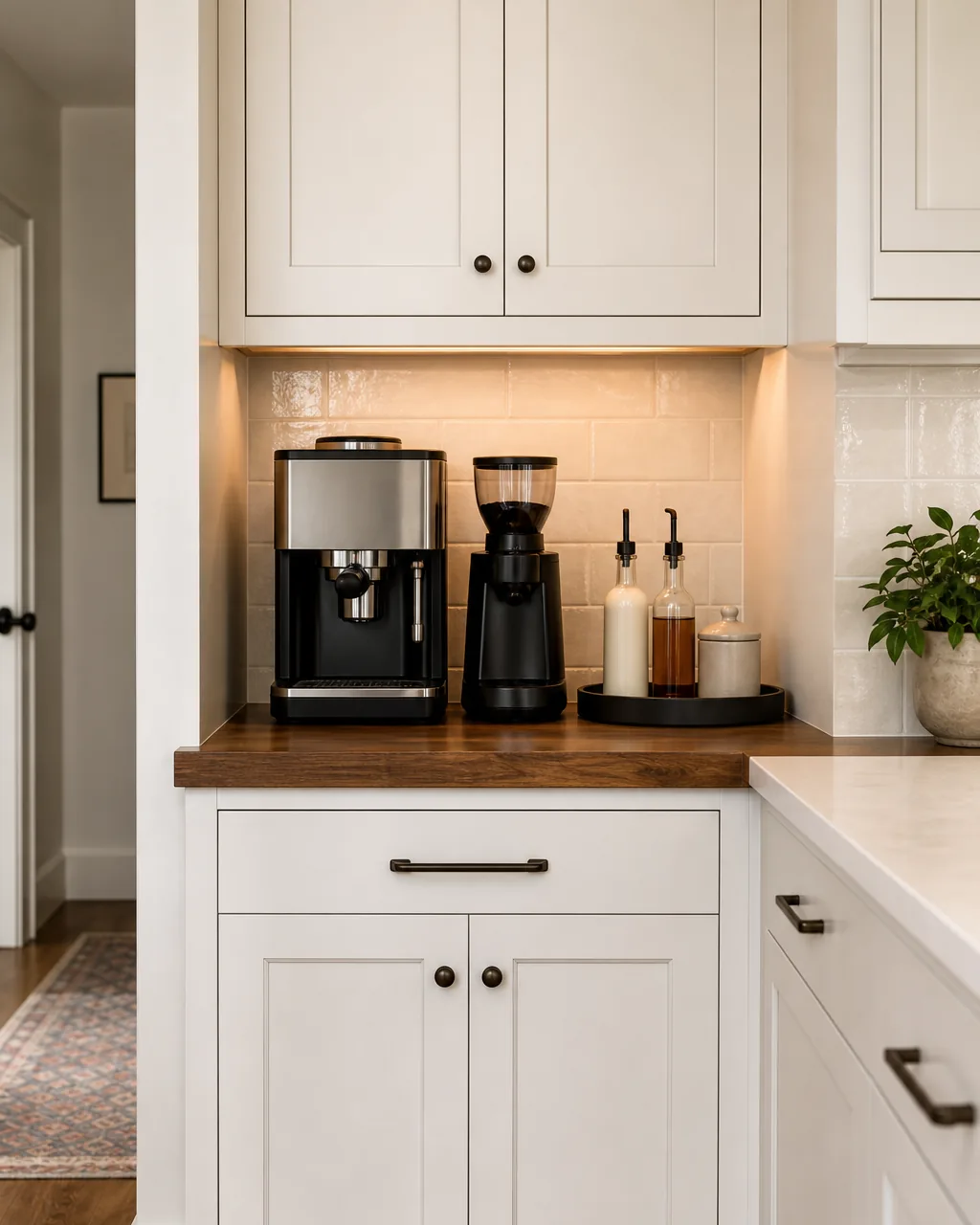
Pick one defined stretch of counter, a shelf, or a cart and commit the whole coffee routine to it instead of letting equipment drift across the kitchen. A clear boundary, even just the width of one cabinet run, makes the zone read as intentional and keeps the rest of the counter free for actual cooking.
2. Group Equipment in Ritual Order: Grinder, Machine, Mugs, Syrups
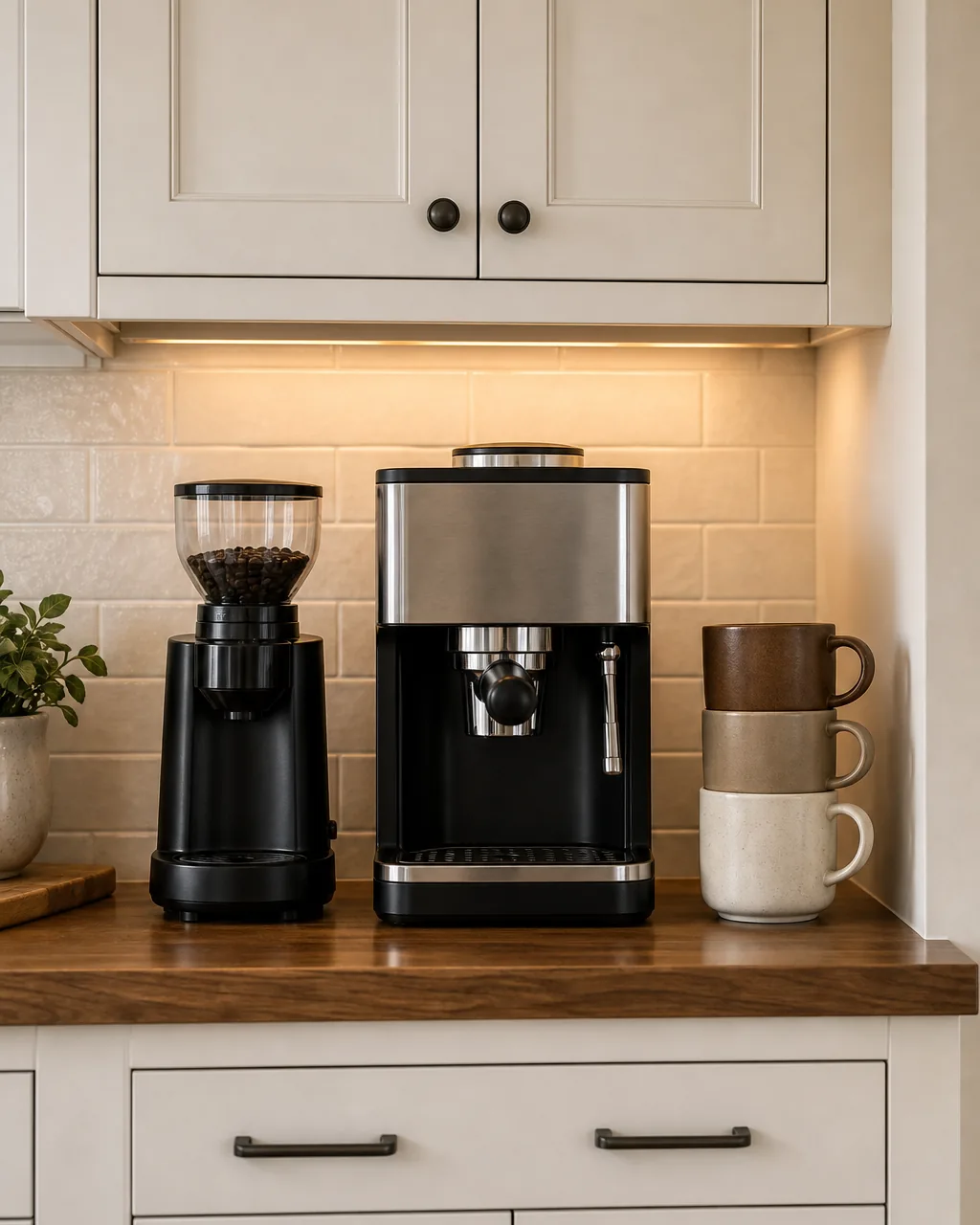
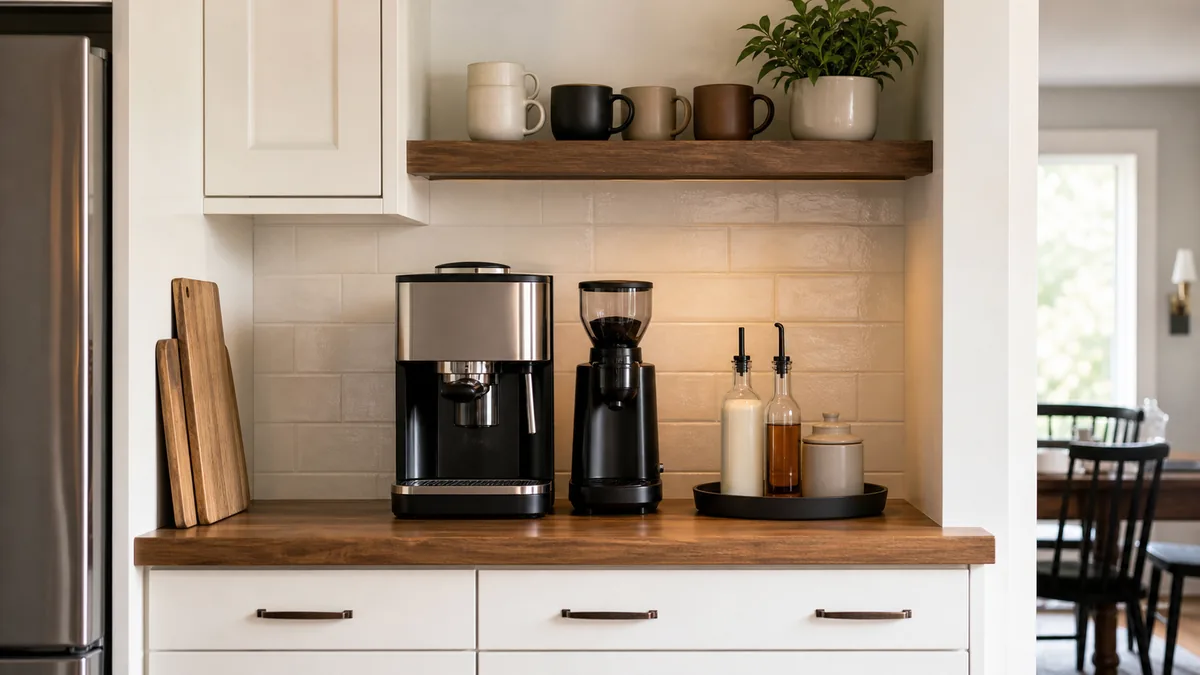
Line up gear in the order it gets touched during the pour, left to right or back to front, instead of grouping by shape or size. Grinder first, machine next, mugs within reach, syrups last. The station gets faster to use every morning and looks deliberate rather than cluttered.
3. Contain Loose Bottles and Syrups on a Single Tray
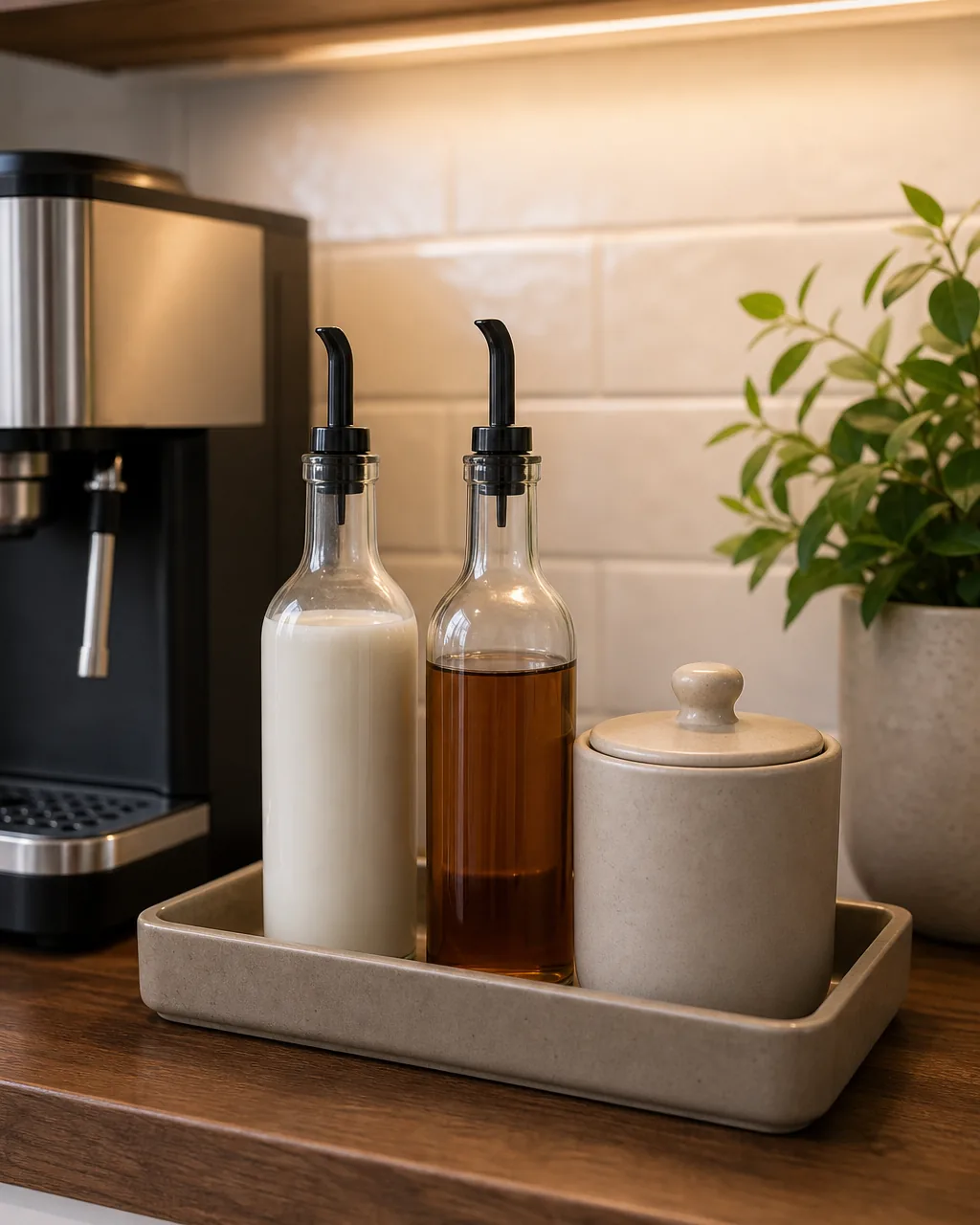
Corral creamers, syrups, and sweeteners onto one tray instead of leaving bottles scattered across the counter. The tray becomes a visual boundary on its own, and it lifts out whole for a quick wipe-down instead of you moving five sticky bottles one at a time.
The right first move depends on what's actually failing about your setup right now, not a wish list of new gear.
4. Mount a Floating Shelf Above for Mugs Instead of a Full Cabinet
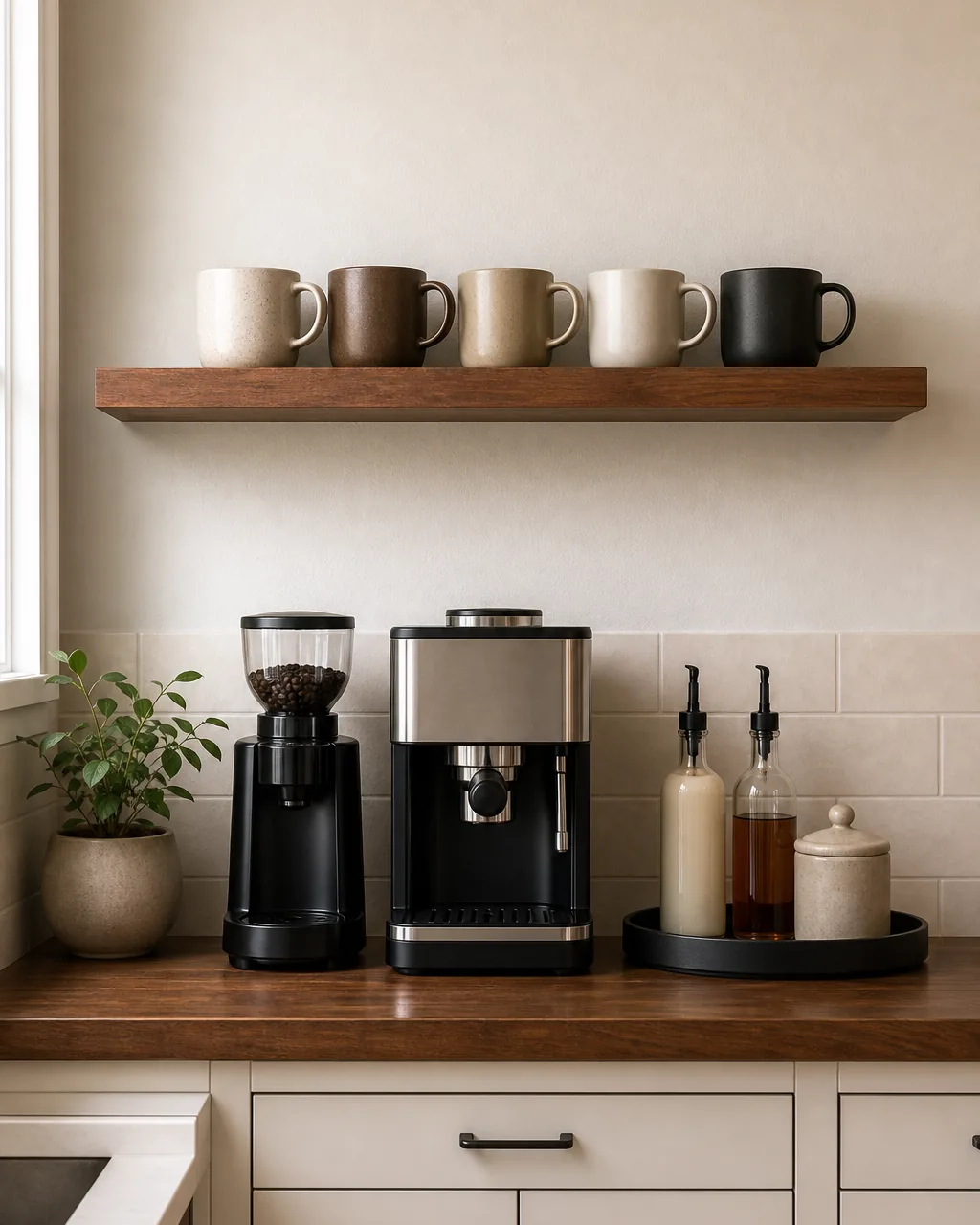
A single floating shelf holds a mug collection in view without committing a full upper cabinet to it. It keeps the footprint small in kitchens that can't spare a whole cabinet run, and it puts the mugs exactly where the machine needs them instead of two rooms away.
5. Choose a Vertical Pod Drawer Insert Over a Basket
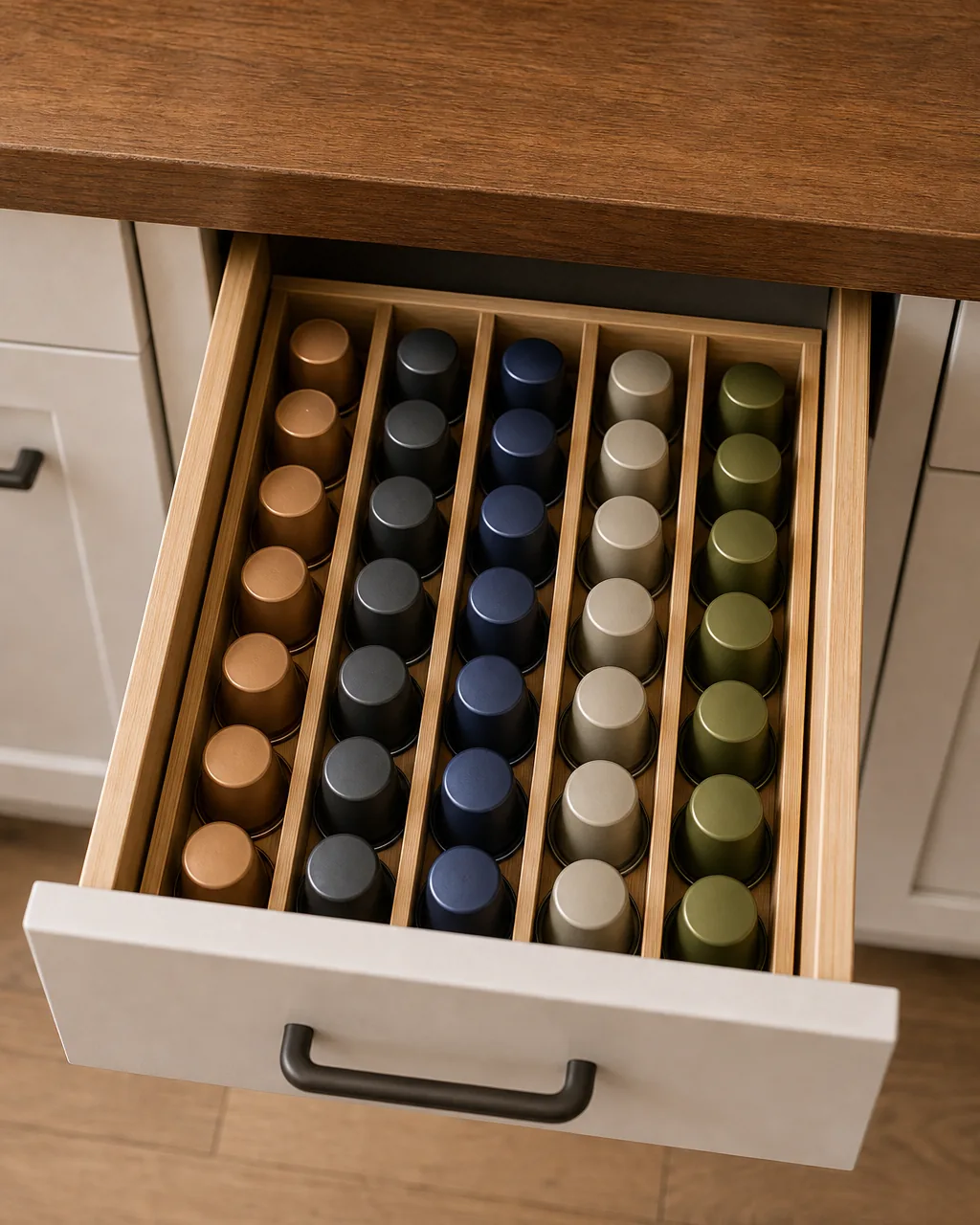
A vertical slotted insert stores more pods in the same drawer footprint than a basket ever could, and it keeps flavors sorted instead of jumbled in a pile you have to dig through. It also closes the drawer flush, so nothing sits out on the counter at all.
6. Keep the Kettle and Machine Near an Outlet, Not Just Near the Sink
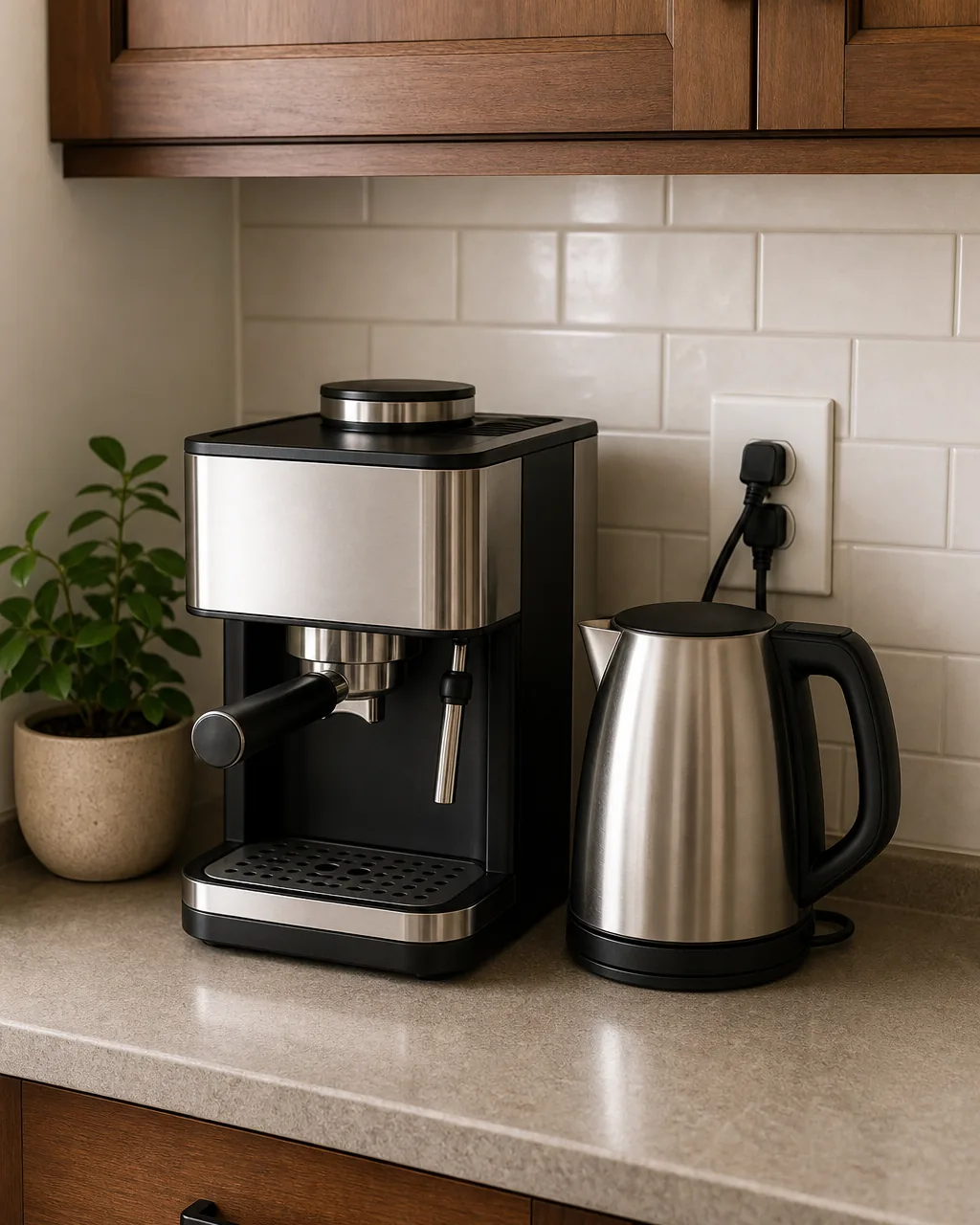
Plan the station around where the outlet actually is, not just proximity to water. Reaching across the counter for a cord every morning, or running one behind a canister, undoes the convenience the station is supposed to add in the first place.
These four rules are what separate a coffee station that stays contained from one that slowly takes over the kitchen.
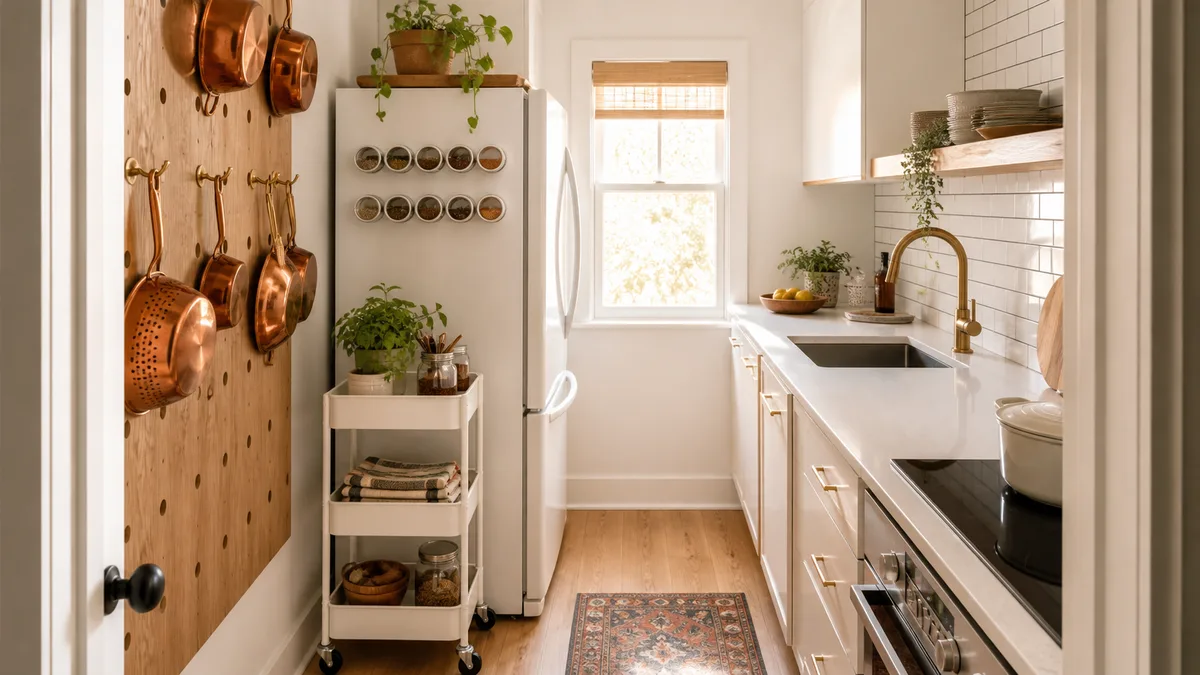
7. Add a Small Bar Cart When There's Zero Spare Counter Space
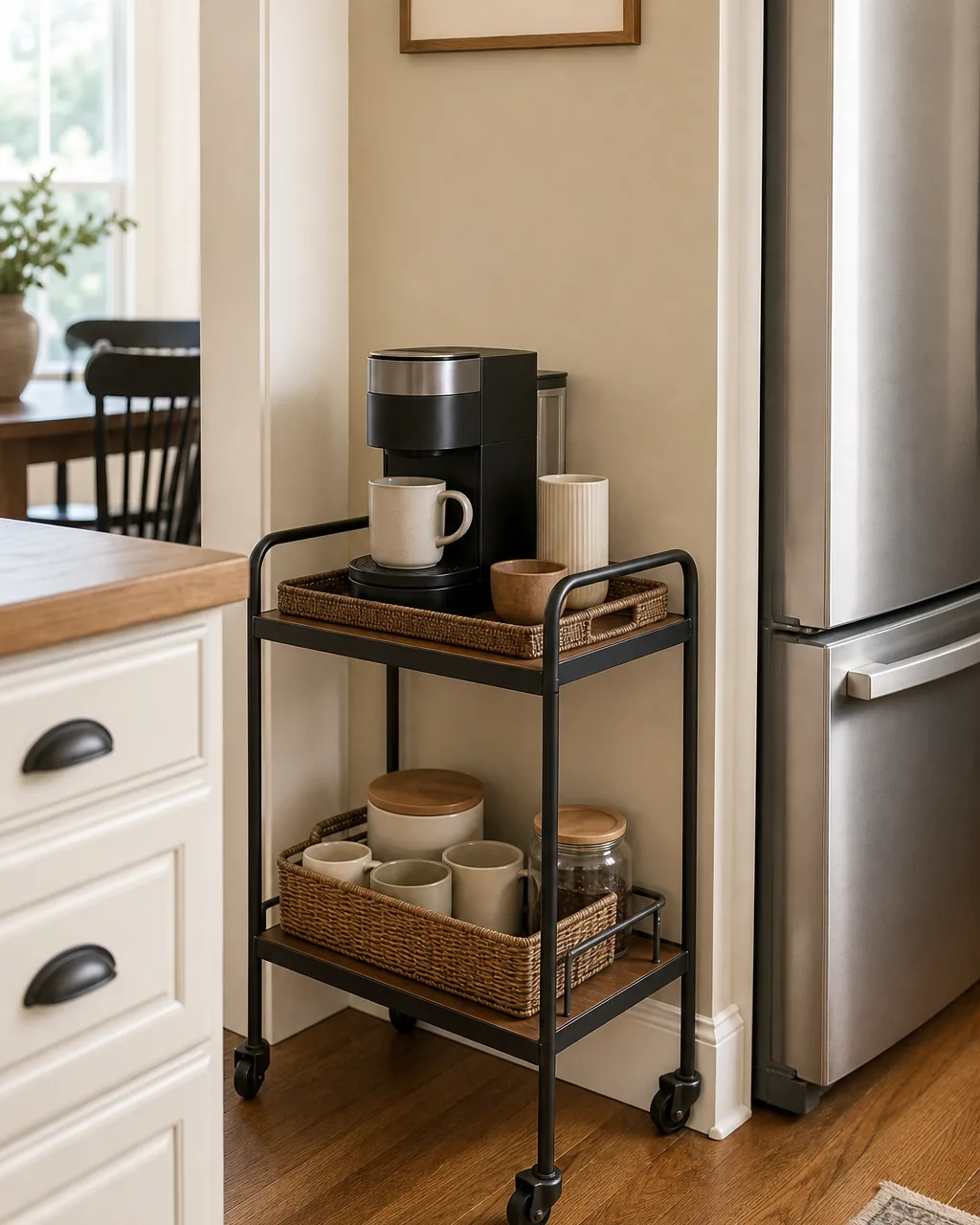
A narrow rolling cart tucked beside the fridge or in a nearby nook gives a coffee routine a home without stealing an inch of fixed counter. It rolls out of the way entirely when it's not in use, which matters most in a galley kitchen or a studio with almost no spare counter.
8. Store Backup Beans and Filters Inside a Cabinet, Not on Display
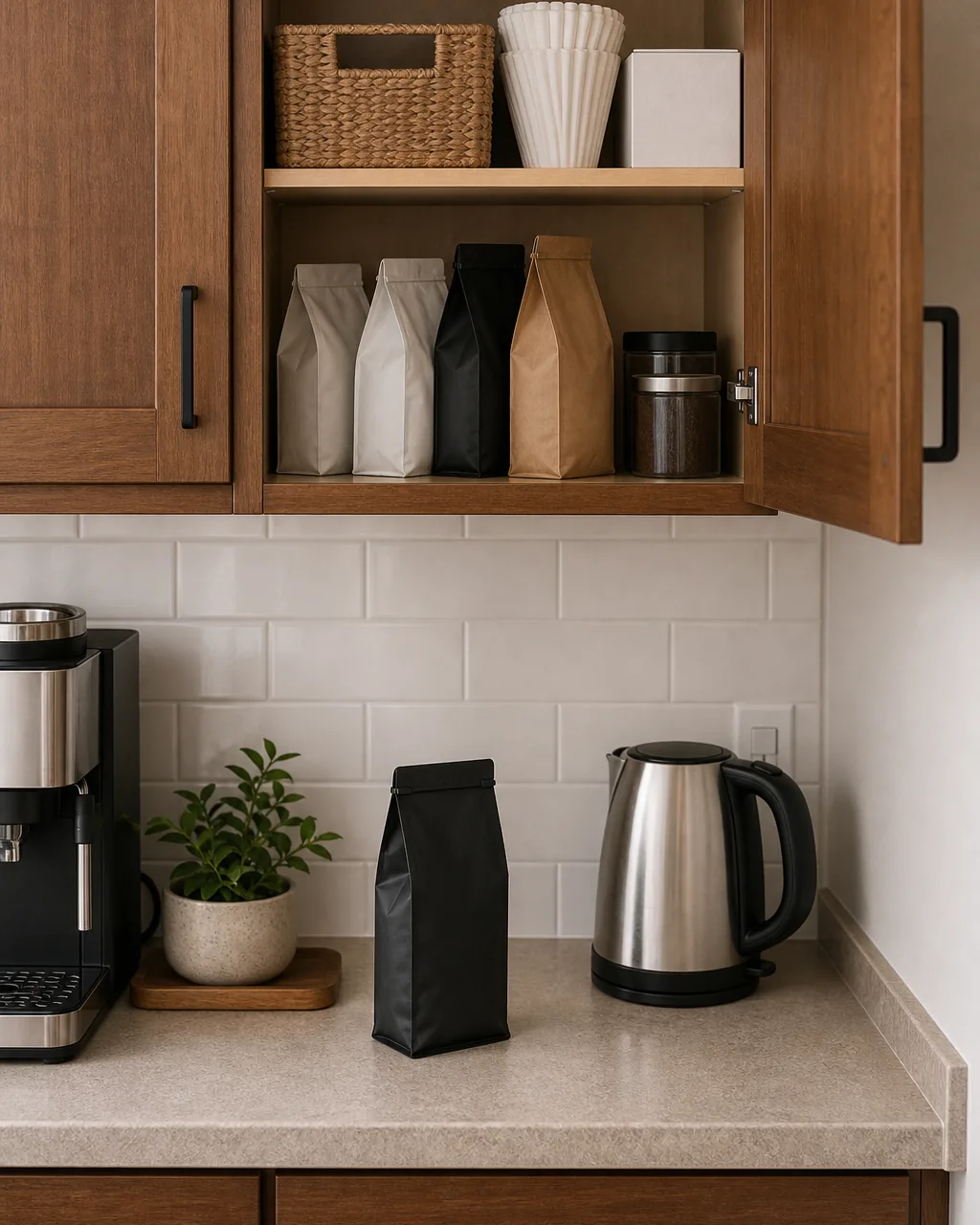
Keep only this week's bag and a working stack of filters out on the counter. Backup stock goes behind a door so the visible station stays small instead of turning into a pantry display every time someone walks into the kitchen.
9. Match the Station's Materials to the Rest of the Kitchen
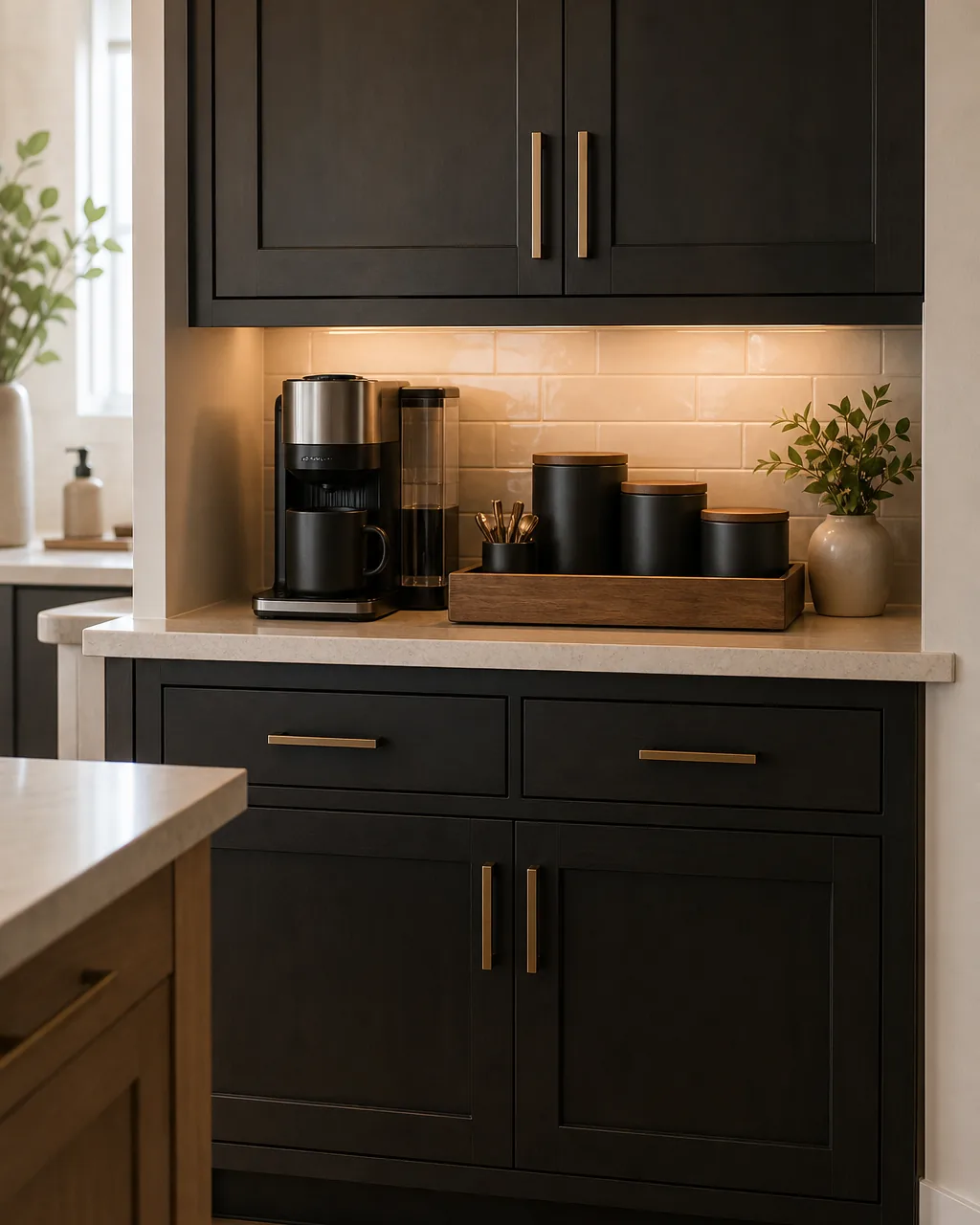
Pick trays, canisters, and bins in the same tones and finishes already in the kitchen instead of introducing a separate coffee-shop theme. The station reads as part of the room this way, not as a bolt-on display competing with the cabinetry for attention.
12 zone and equipment decisions, one coffee station that works
- 1Anchor the Station to One Countertop Zone, Not a Random CornerPick one defined stretch of counter, a shelf, or a cart and commit the whole coffee routine to it instead of letting equipment drift across the kitchen.
- 2Group Equipment in Ritual Order: Grinder, Machine, Mugs, SyrupsLine up gear in the order it gets touched during the pour, left to right or back to front, instead of grouping by shape or size.
- 3Contain Loose Bottles and Syrups on a Single TrayCorral creamers, syrups, and sweeteners onto one tray instead of leaving bottles scattered across the counter.
- 4Mount a Floating Shelf Above for Mugs Instead of a Full CabinetA single floating shelf holds a mug collection in view without committing a full upper cabinet to it.
- 5Choose a Vertical Pod Drawer Insert Over a BasketA vertical slotted insert stores more pods in the same drawer footprint than a basket ever could, and it keeps flavors sorted instead of jumbled in a pile you have to dig through.
- 6Keep the Kettle and Machine Near an Outlet, Not Just Near the SinkPlan the station around where the outlet actually is, not just proximity to water.
- 7Add a Small Bar Cart When There's Zero Spare Counter SpaceA narrow rolling cart tucked beside the fridge or in a nearby nook gives a coffee routine a home without stealing an inch of fixed counter.
- 8Store Backup Beans and Filters Inside a Cabinet, Not on DisplayKeep only this week's bag and a working stack of filters out on the counter.
- 9Match the Station's Materials to the Rest of the KitchenPick trays, canisters, and bins in the same tones and finishes already in the kitchen instead of introducing a separate coffee-shop theme.
- 10Use a Small Filter Pitcher Instead of Waiting on a Plumbed LineIn a rental or apartment without a plumbed water line, a small filter pitcher parked next to the machine solves the water problem without a fridge dispenser or a hardware project.
- 11Keep a Dedicated Mug Rack Separate From the Everyday Dish CabinetA rack just for coffee mugs, hung or shelved near the station, keeps them from getting buried behind everyday dishware in a shared cabinet.
- 12Add a Small Label or Sign Only When It Serves a FunctionA label calling out a grind setting or a dose amount earns its spot on the counter because it saves a real decision every morning.
styledhomenotes.com
10. Use a Small Filter Pitcher Instead of Waiting on a Plumbed Line
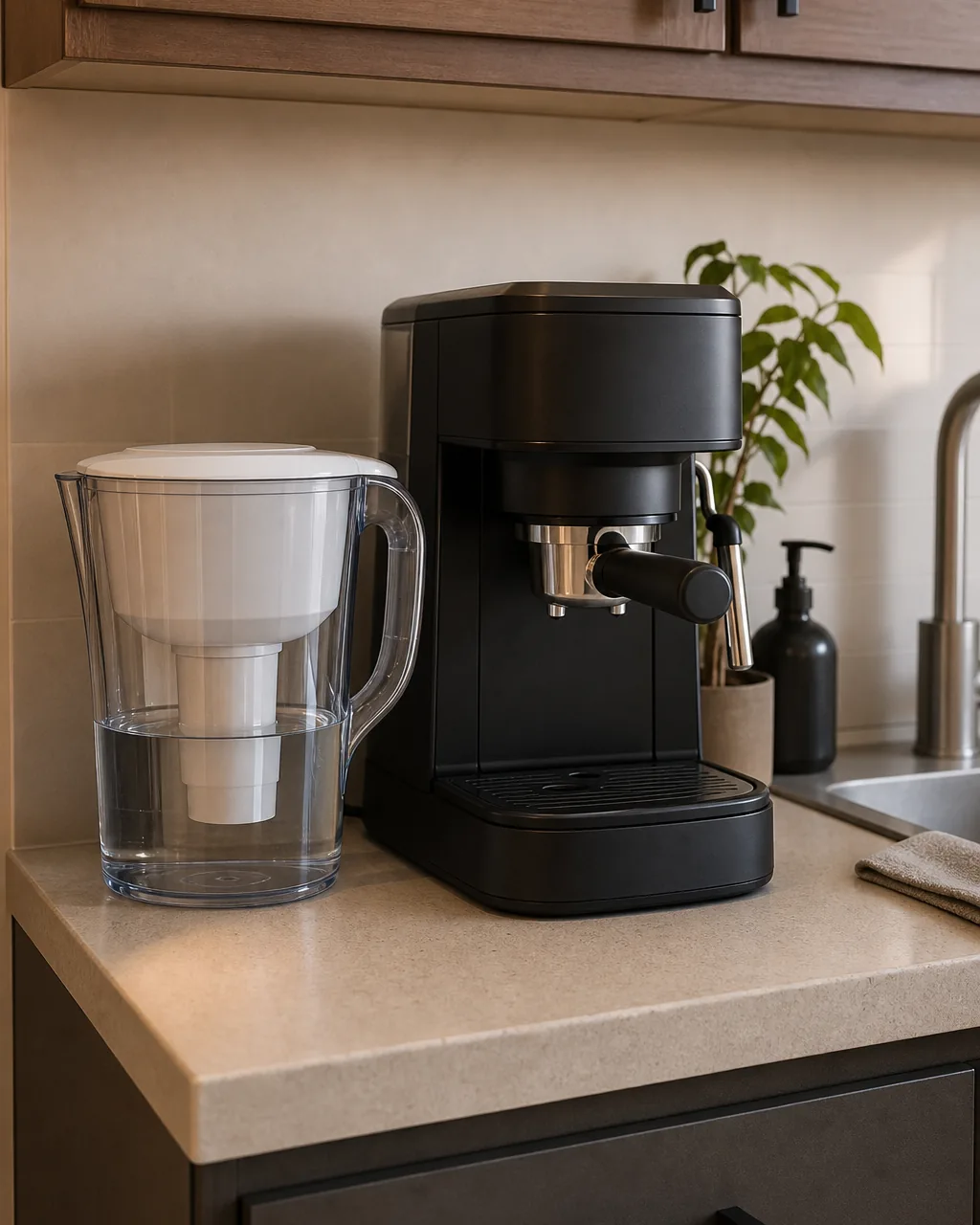
In a rental or apartment without a plumbed water line, a small filter pitcher parked next to the machine solves the water problem without a fridge dispenser or a hardware project. It's the fastest fix for anyone who doesn't own the plumbing.
11. Keep a Dedicated Mug Rack Separate From the Everyday Dish Cabinet
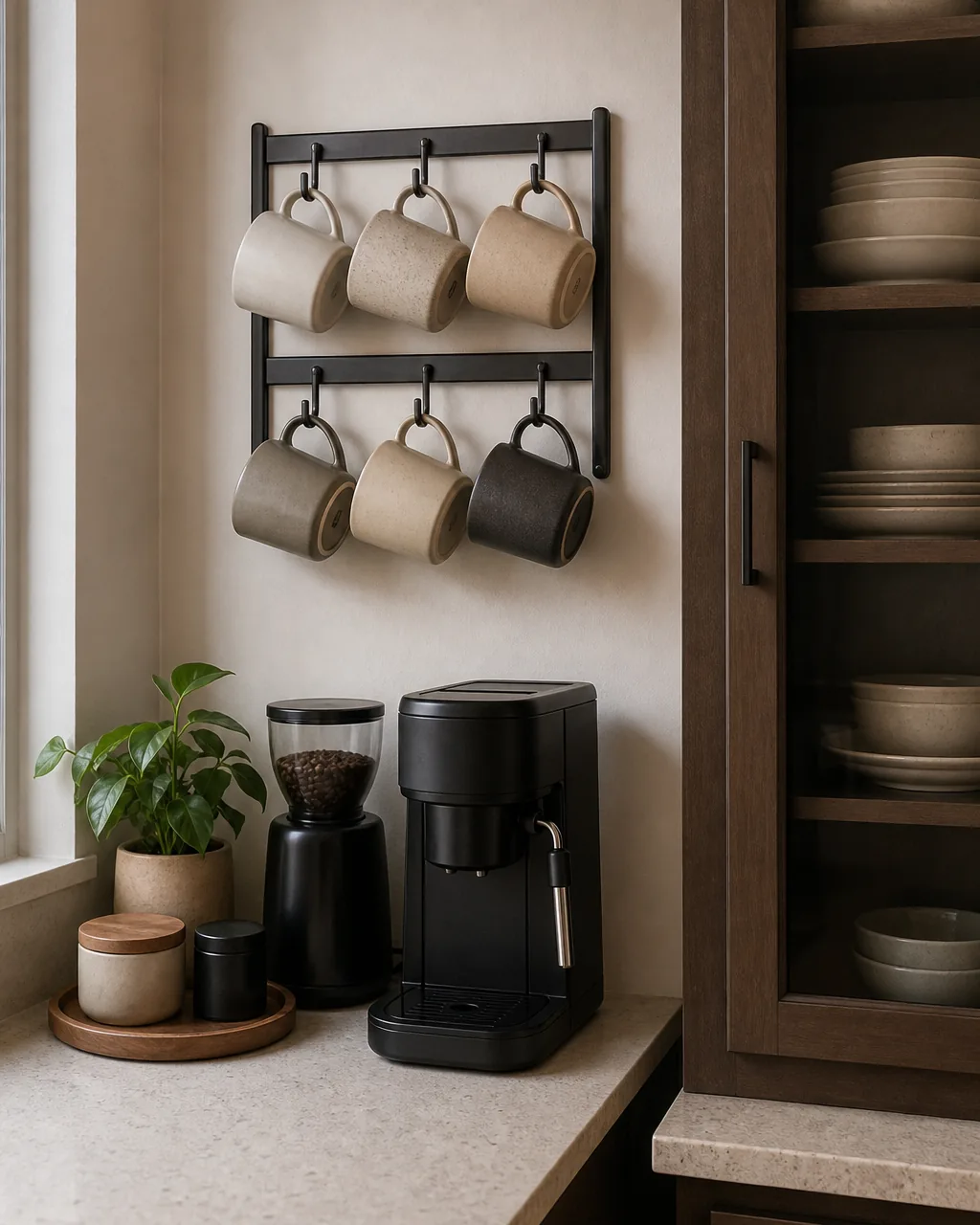
A rack just for coffee mugs, hung or shelved near the station, keeps them from getting buried behind everyday dishware in a shared cabinet. It speeds up the morning routine because the mug you want is never stacked under six bowls.
12. Add a Small Label or Sign Only When It Serves a Function
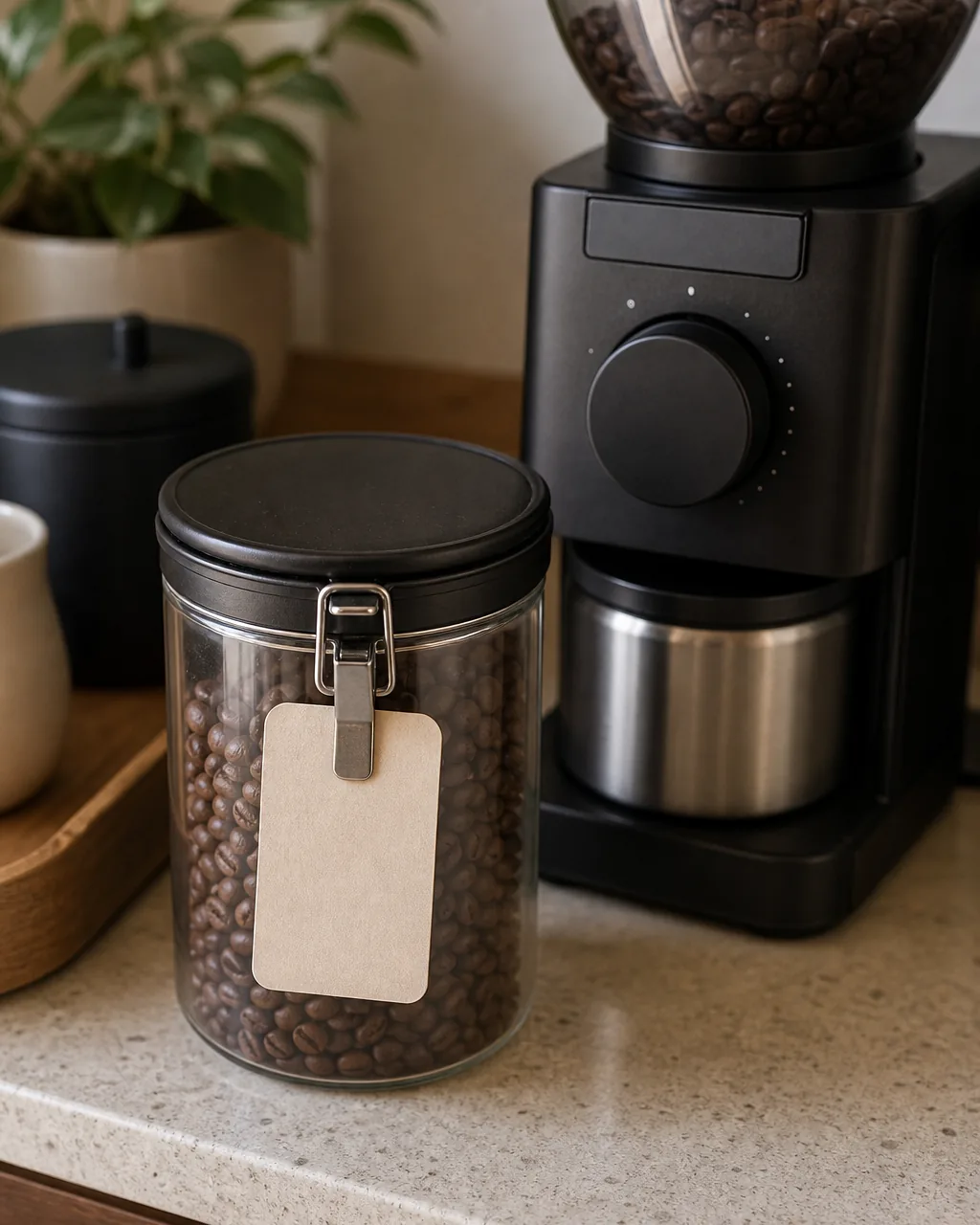
A label calling out a grind setting or a dose amount earns its spot on the counter because it saves a real decision every morning. A sign that's purely decorative just adds visual noise to a small zone that works better minimal.
Once the zone and workflow are set, see how a kitchen cabinet organization approach handles the storage behind it, or check a corner kitchen cabinet fix if the station itself sits in a dead corner.

Nora writes about small, livable rooms for real apartments. Her own coffee station started as a grinder balanced on a windowsill, and she spent a year fixing it one decision at a time until it stopped taking over the counter. Every move here is tested against a real kitchen, not a styled catalog shot.
Nora Ellis edits Styled Home Notes. More from Nora: kitchen cabinet organization ideas, kitchen countertop organization ideas.