13 Apartment Living Room Ideas That Make a Rental Feel Like Yours
An apartment living room comes with rules you did not write. The walls belong to the landlord, the ceiling light was chosen by someone who moved out in 2019, and the layout is a rectangle you cannot knock down.
None of that stops the room from feeling like yours. It is about where the sofa sits, what the light does after sunset, and which surfaces earn their place in the room.
These thirteen ideas work in standard apartment living rooms where the challenge is style, not survival.
Each idea targets one piece, surface, or habit that shifts how the room feels day to day.
1. Float the Sofa Away From the Wall
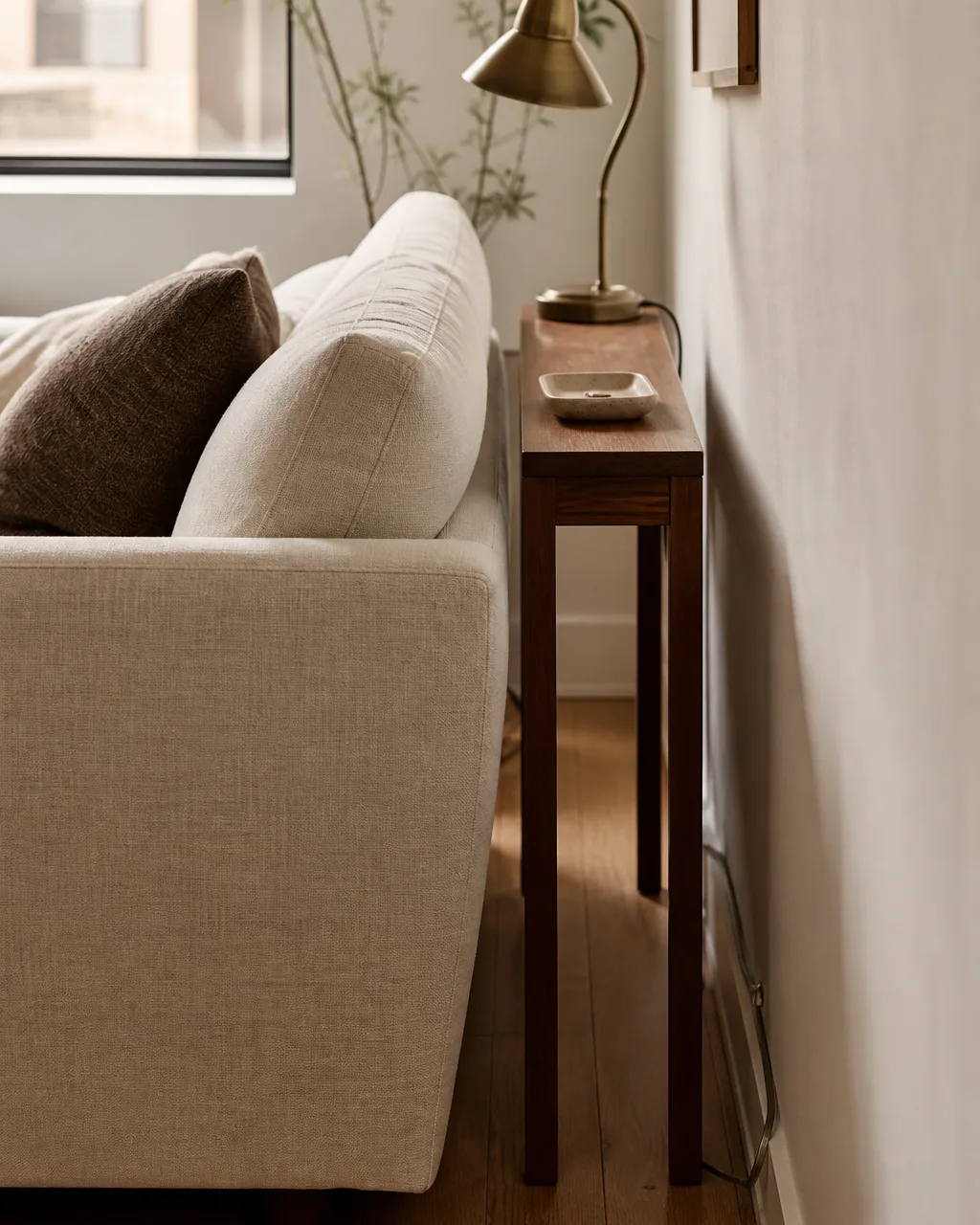
Pushing the sofa against the wall feels natural in an apartment because it looks like it saves space. In most cases it does the opposite. The room looks flat, the sofa back becomes a dead zone, and the whole seating area feels pinned down instead of composed.
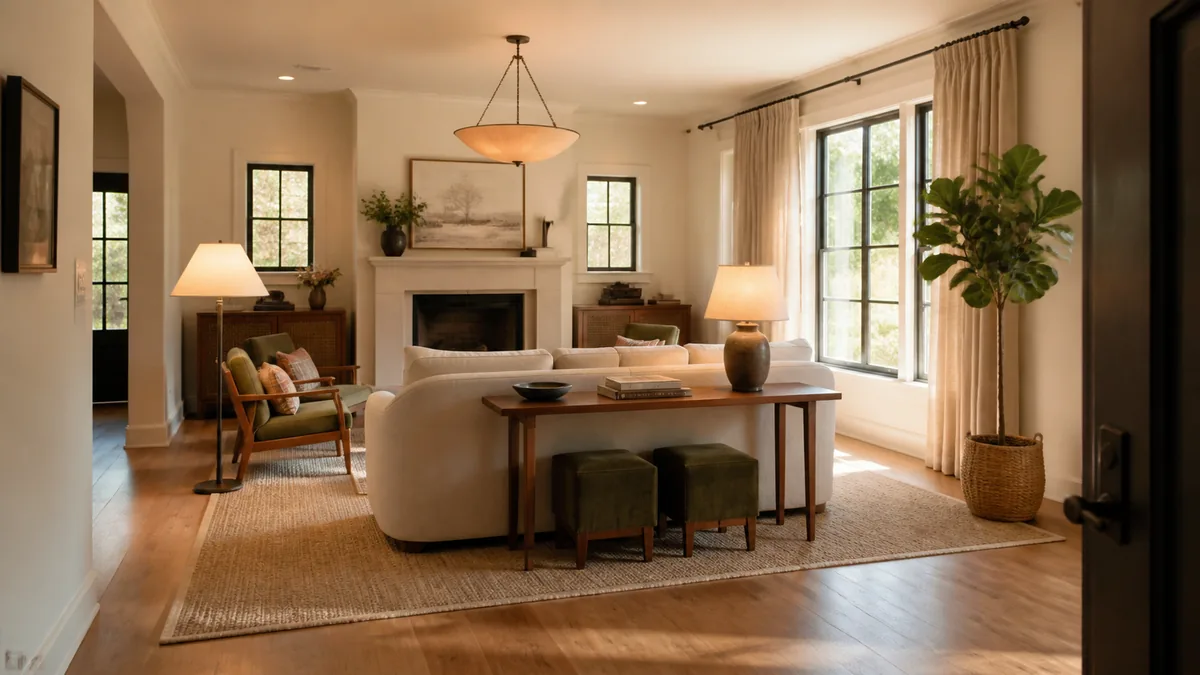
Pull the sofa forward six to eight inches and the room gains depth you can feel from the doorway. The gap behind it handles a slim console table, a cord run for the floor lamp, or a shallow shelf for books that would otherwise pile on the arm.
- Place a narrow console behind the sofa to hold a lamp and a small catch-all tray
- Route power strips along the baseboard behind the sofa so cords stay hidden
- Add a thin runner rug behind the sofa if the bare gap feels unfinished
- Angle the sofa slightly toward the window to open the conversation path
- Keep the sofa back clean-lined because it is now visible from the hallway
2. Anchor the Zone With a Layered Rug
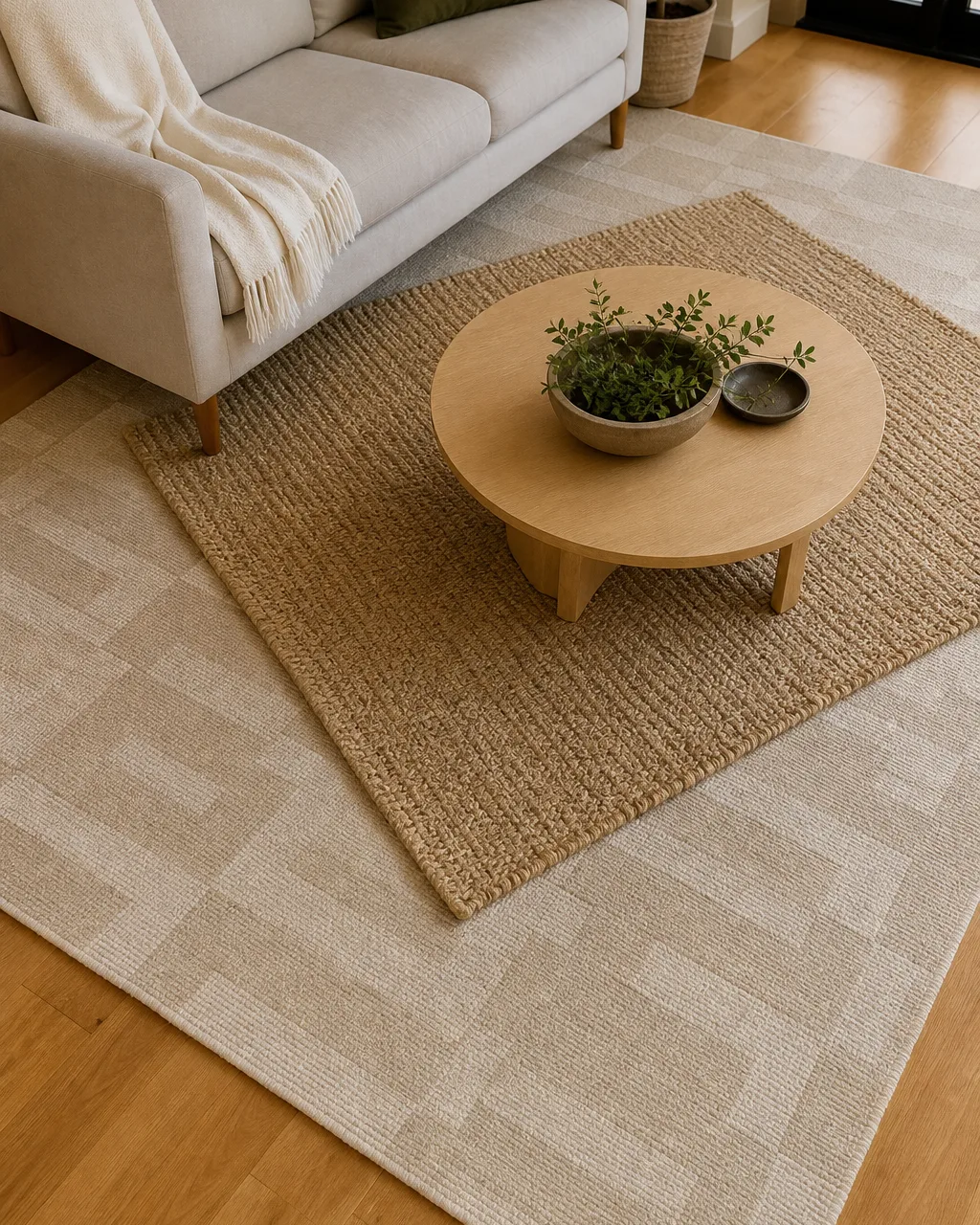
A rug does more than cover bad flooring. It draws a border around the living area and tells the eye where the room starts, which matters in an open-plan apartment where the dining table is eight feet away and the kitchen counter is visible from the sofa.
A five-by-eight or eight-by-ten flat-weave rug under the front legs of the sofa anchors the seating zone without the permanent commitment of wall-to-wall carpet. Layer a smaller textured rug on top at a slight angle and the floor gains depth without a second piece of furniture.
- Choose a flat-weave or low-pile rug that sits flat on apartment carpet or hardwood
- Let the rug extend past the coffee table on all sides by at least six inches
- Layer a smaller jute or textured rug on top at an angle for visual depth
- Use rug tape underneath to keep edges from curling on smooth floors
- Pick a neutral base with a subtle pattern so it survives a seasonal pillow swap
3. Replace the Overhead With a Floor Lamp Trio
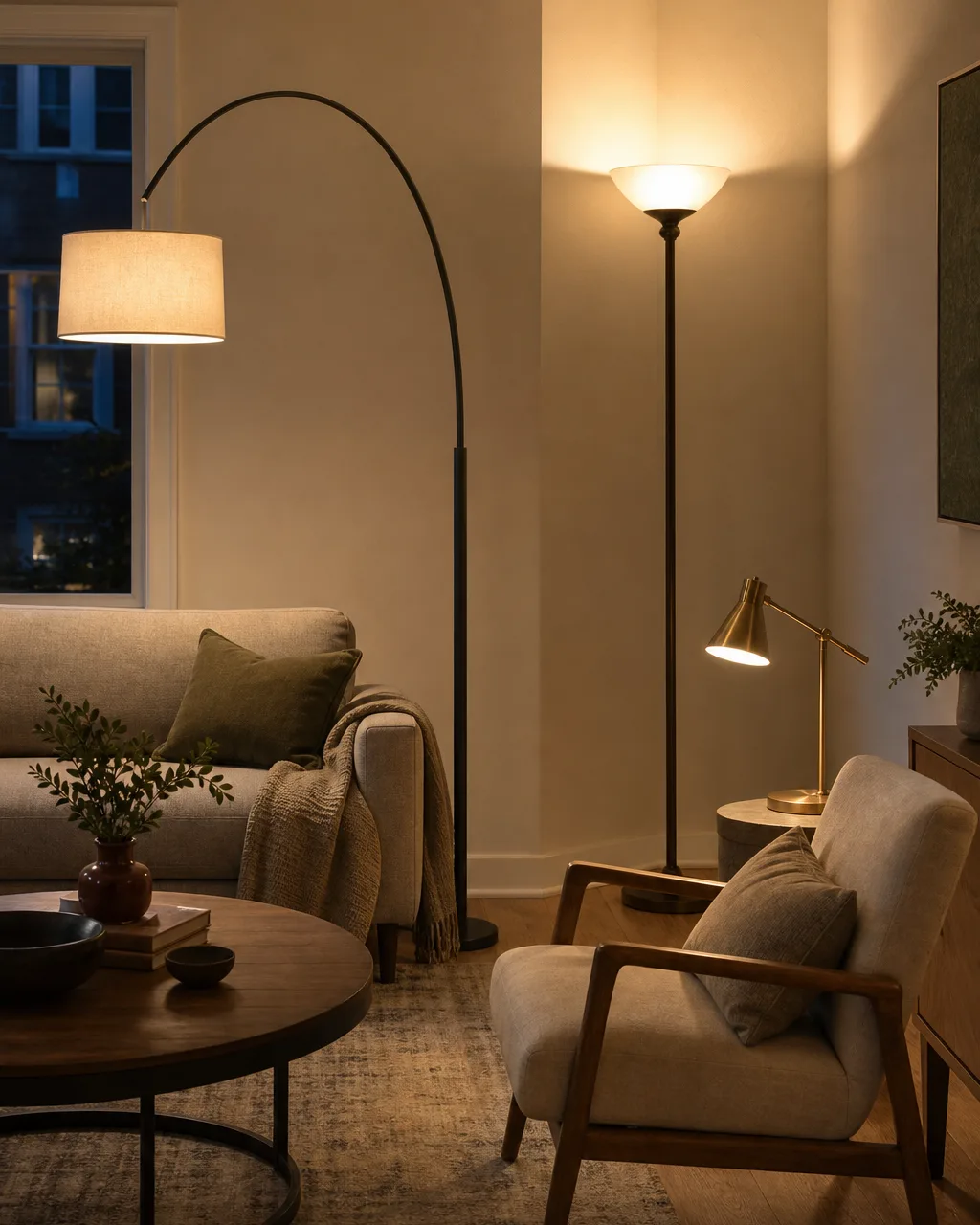
The ceiling fixture in most apartments is a single flush-mount that washes the room in flat overhead light. It does the job of a warehouse, not a living room. Three floor lamps at different heights replace that one source and let you control the mood zone by zone.
An arc lamp behind the sofa handles reading. A torchiere in the far corner washes the ceiling for ambient glow. A short task lamp beside the armchair gives focused light for close work. Wire all three into one smart plug and the whole room goes dark with a single tap at bedtime.
- Place an arc lamp behind the sofa for reading-height light that follows the seat
- Set a torchiere in the far corner to bounce ambient light off the ceiling
- Add a short task lamp beside the armchair for focused, close-range light
- Wire all three into one smart plug for a single switch-off at night
- Choose warm bulbs around twenty-seven hundred kelvin for a living room temperature
Not every apartment living room needs the same fix. Start with the frustration you notice every day.
4. Lean Art on a Picture Ledge
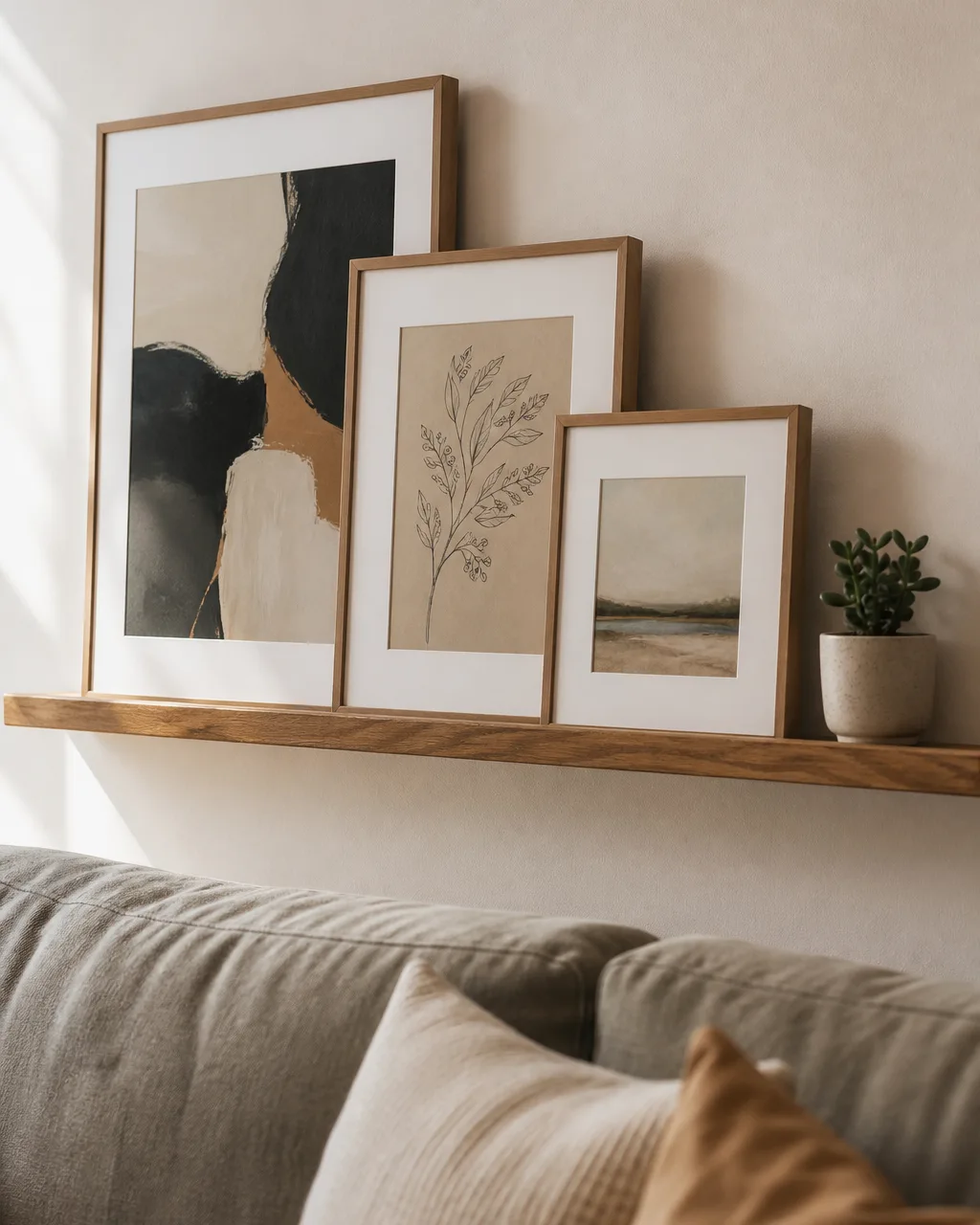
Hanging art in a rental means committing to nail holes you will have to spackle before the deposit comes back. A picture ledge solves that problem by holding frames, postcards, and small objects on a shallow shelf you can mount with Command strips.
The real value is rotation. A ledge lets you swap prints whenever you find something new, shift the lineup for a season, or lean a postcard from a trip without drilling a second hole. The wall stays flexible and the art stays fresh.
- Install a forty-eight-inch ledge with Command strips rated for the combined frame weight
- Lean frames of different heights and overlap them slightly for a layered gallery look
- Mix one large piece with two or three smaller prints and a small plant or object
- Swap the lineup seasonally or whenever you find a new print worth displaying
- Mount the ledge at eye level or just above the sofa back line for natural sightline
5. Hang an Oversized Wall Clock as the Focal Point
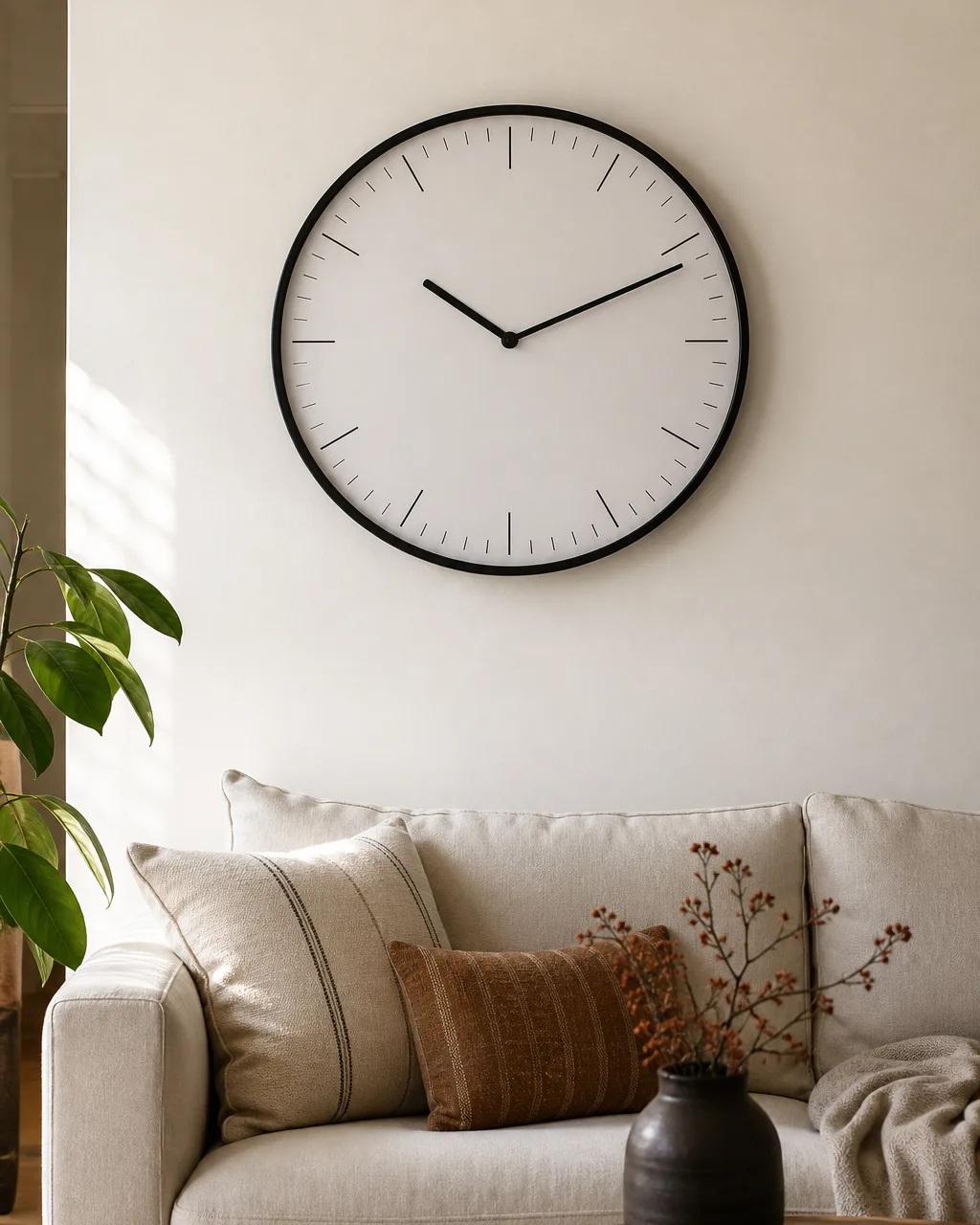
A blank wall above the sofa is the most common unfinished surface in an apartment living room. One oversized clock handles it with a single adhesive hook and no gallery-wall planning. At thirty inches or larger, the clock commands attention the way a statement print would but reads as functional instead of decorative.
The key is restraint. Let the clock be the only thing on that wall so the scale does the work. A slim metal frame keeps the look clean, and minimal markings let the piece read as design first and timekeeper second.
- Choose a clock with a slim metal frame so the wall color shows through the edges
- Hang it on a single adhesive hook rated for the weight to avoid drilling into the wall
- Center it above the sofa midline at roughly sixty inches from the floor
- Pick a design with line markers or no numbering so it reads as decor, not office supply
- Pair it with nothing else on that wall section so the scale reads as intentional
6. Rotate Statement Throw Pillow Covers
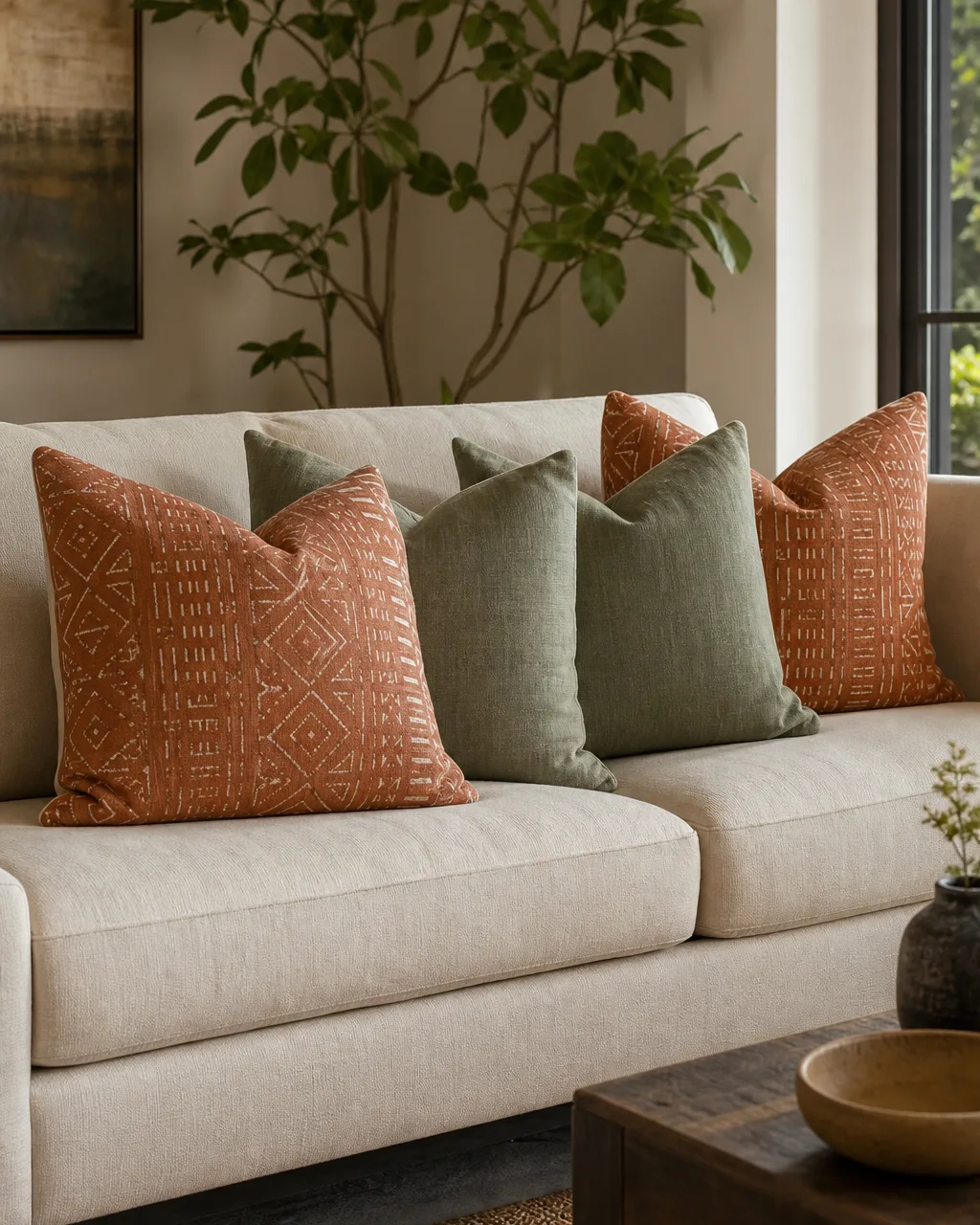
Repainting is off the table in most rentals, and new furniture costs more than a seasonal mood shift is worth. Four throw pillow covers swapped out each season change the palette of the entire sofa zone for the price of a dinner out.
Keep the inserts in a standard twenty-inch size so every cover fits. Store off-season sets flat in a zippered bag under the bed. Two patterned and two solid per rotation keeps the sofa interesting without looking like a craft fair.
- Keep pillow inserts in a standard twenty-inch square so all covers interchange
- Store off-season covers flat in a zippered bag under the bed or in a closet
- Choose two patterned and two solid covers per rotation for balanced visual weight
- Pull the accent color from the rug or a piece of art already in the room
- Pick linen or cotton covers that wash well and develop a relaxed texture over time
The individual ideas change with your taste. The rules underneath them stay the same.
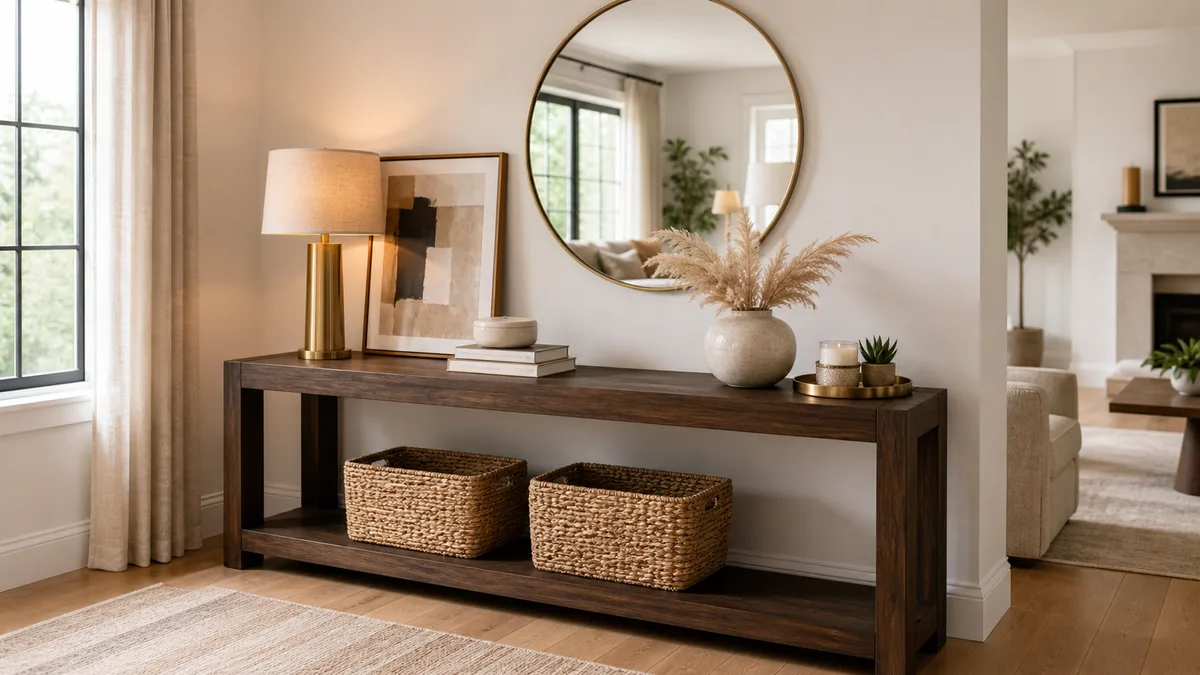
7. Place a Console Table Behind the Sofa
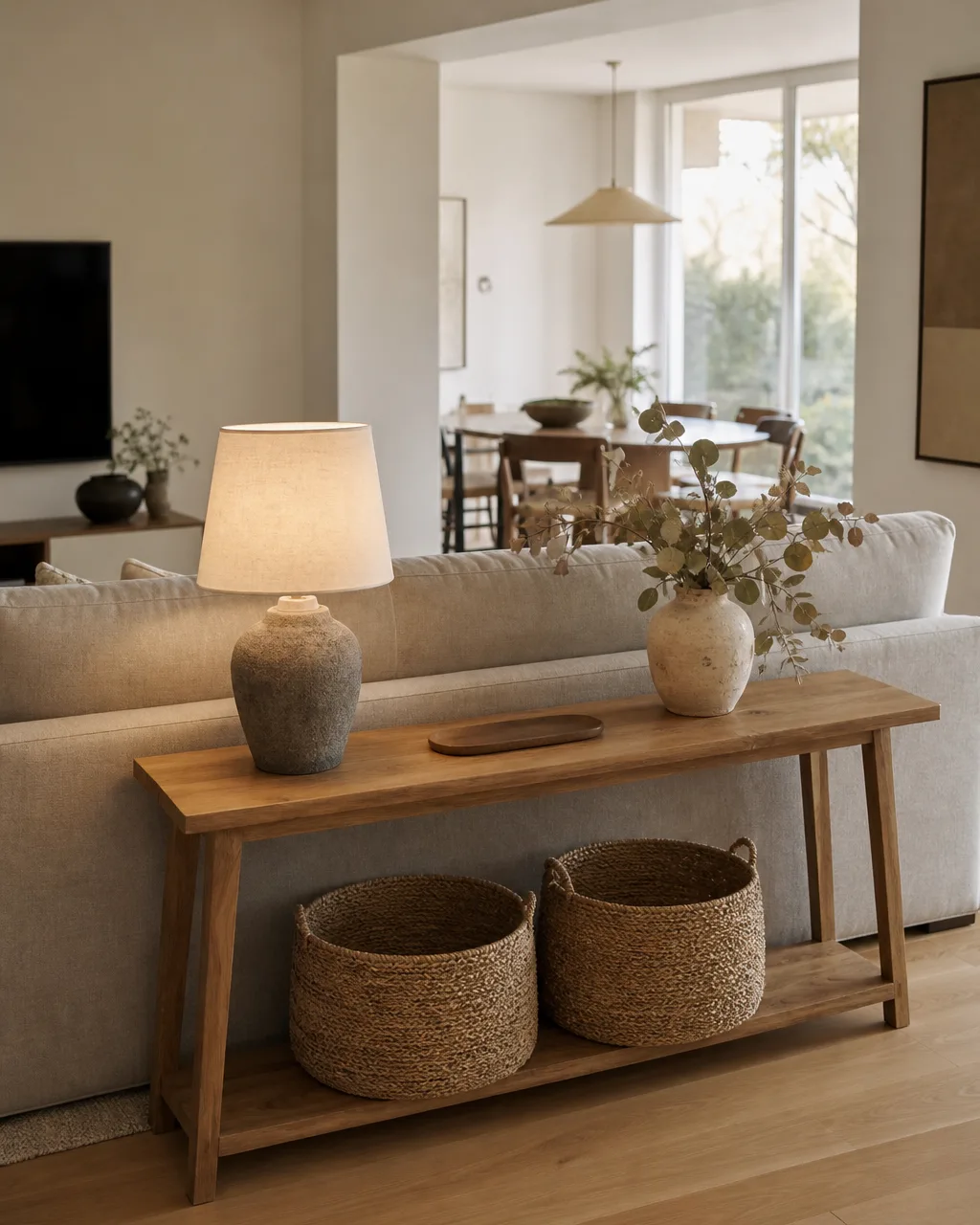
A console behind the sofa does three jobs at once. It holds a lamp so you do not need a side table. It gives you a surface for a vase or a tray so the sofa back is not staring at the dining area. And in an open-plan apartment, it draws a soft line between living and dining without a wall or a room divider.
Match the console height to the sofa back within two inches so the top surface reads as a natural extension. Keep the profile slim, no deeper than twelve inches, so walkways stay clear. Store baskets underneath for blankets or overflow that would otherwise pile on the sofa arms.
- Match the console height to the sofa back within two inches for a clean sightline
- Use the surface for a table lamp, a small tray, and one decorative object
- Store woven baskets underneath for throw blankets or shoe overflow near the door
- Choose a slim profile no deeper than twelve inches to keep walkways clear
- Use the console as a dividing line between living and dining in a studio or open plan
8. Swap the Rectangle for a Round Coffee Table
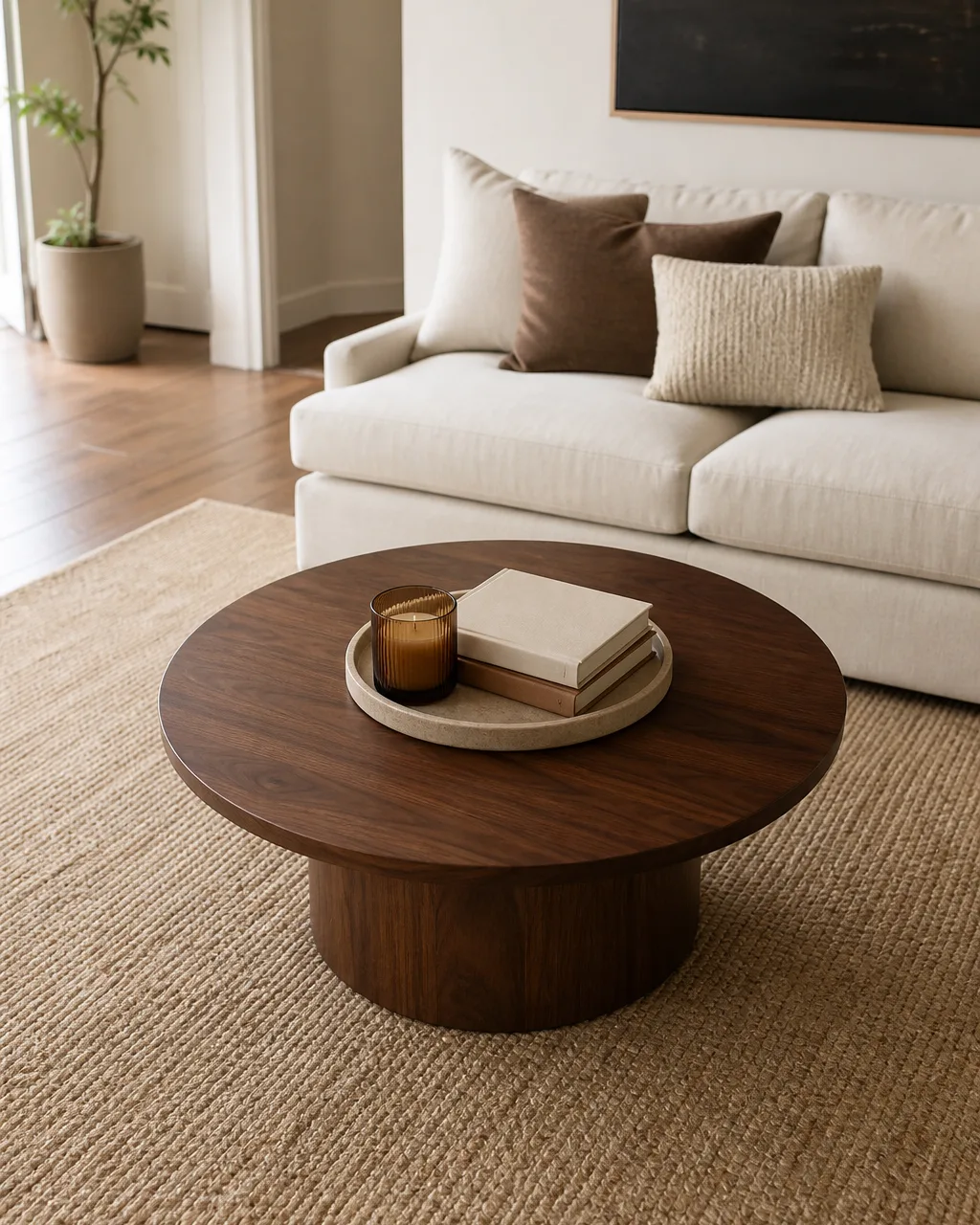
Apartment layouts are rectangles. The sofa is a rectangle. The rug is a rectangle. A rectangular coffee table doubles down on a grid that already feels rigid, and in tight quarters the sharp corners catch shins every time someone walks past.
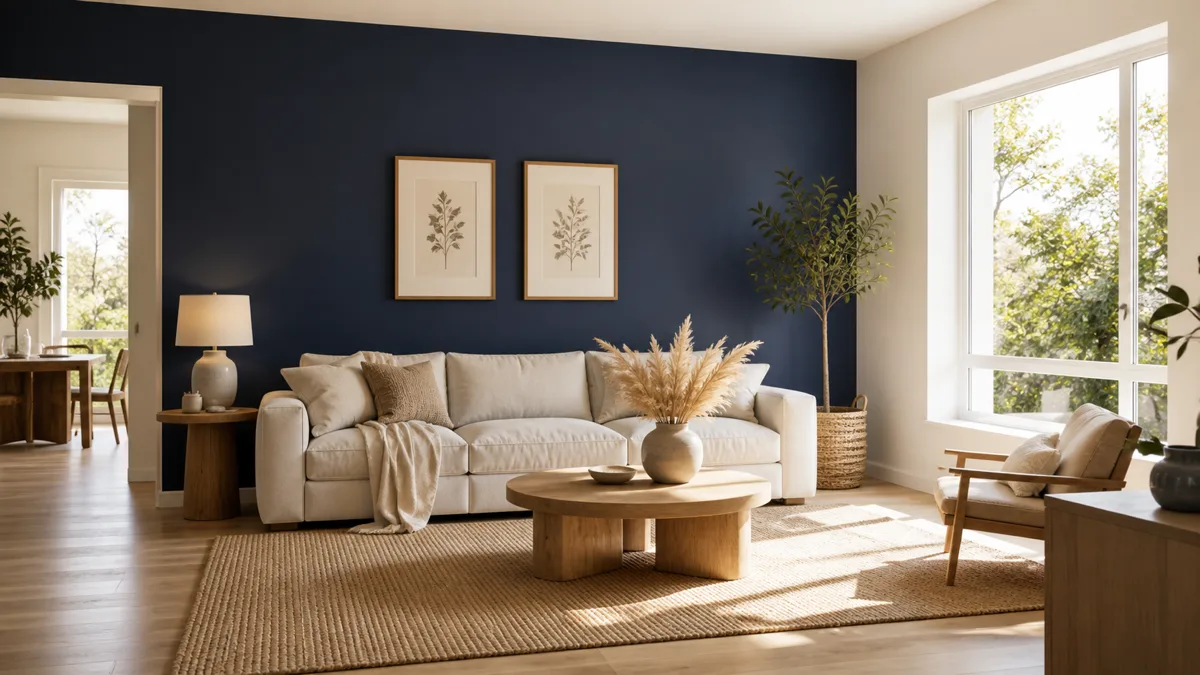
A round coffee table breaks that pattern and opens traffic flow around the seating area. A pedestal base eliminates the leg-bump problem entirely, and the curved edge gives everyone on the sofa equal reach to the center tray.
- Choose a diameter that leaves at least eighteen inches between the table edge and the sofa
- Pick a pedestal base so there are no legs to bump in tight quarters
- Use a tray on top to corral remotes, coasters, and a candle into one visual cluster
- Consider a nesting set where the smaller table tucks under when not in use
- A round table with a shelf underneath doubles the surface without claiming extra floor
9. Use a Tall Bookshelf as a Vertical Anchor
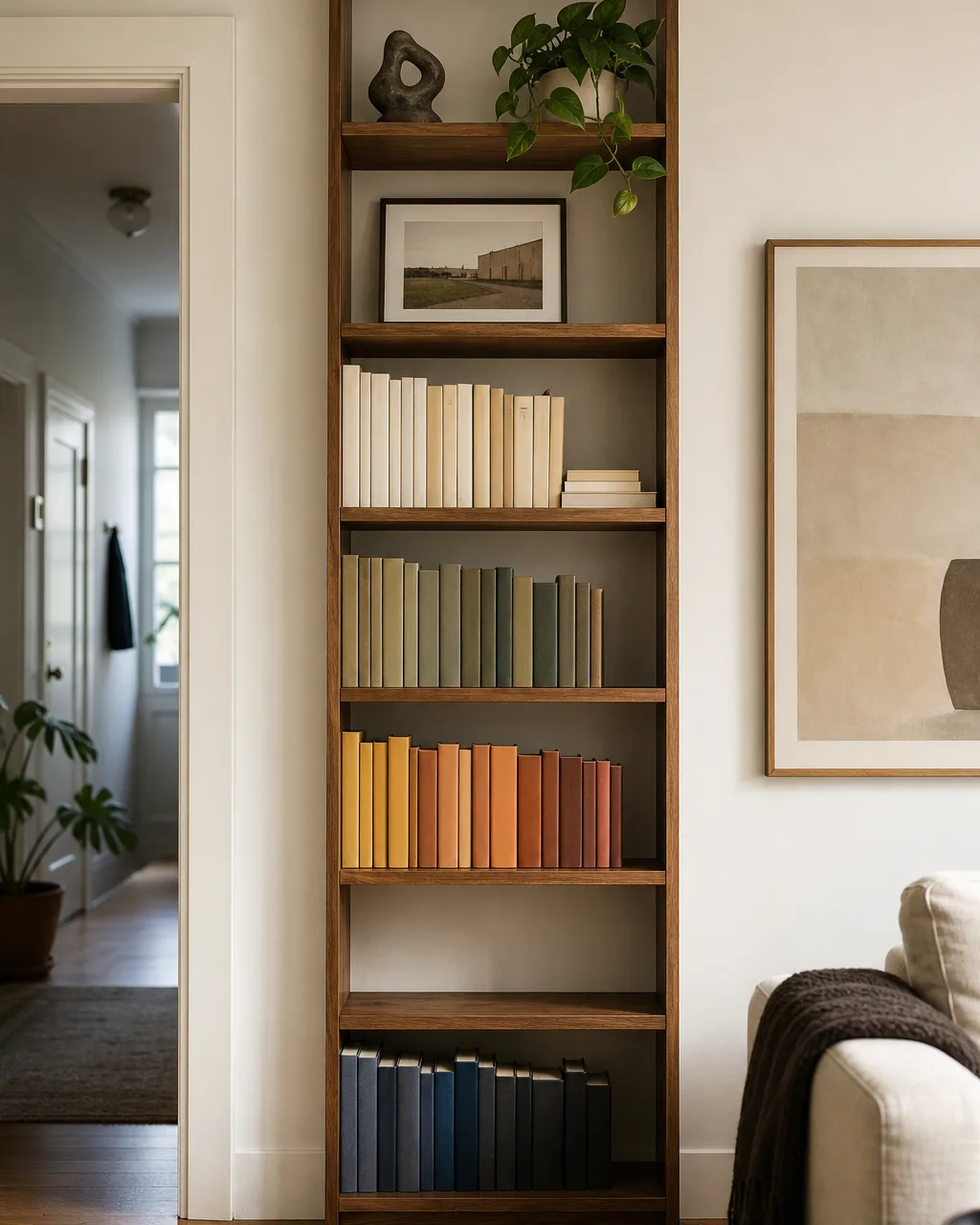
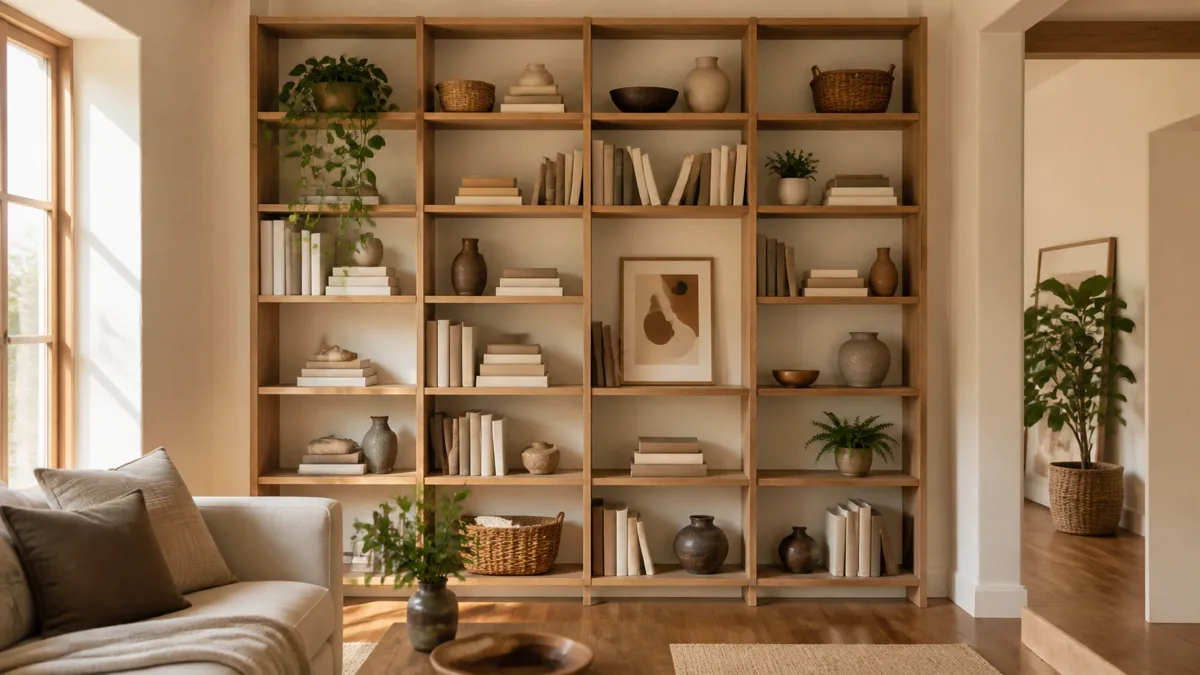
A short wide bookcase spreads across the wall without giving the room much visual height. A tall narrow bookshelf does the opposite: it draws the eye upward, stores more per square foot, and gives the room a focal wall that reads as intentional rather than furnished.
Secure it to the wall with an anti-tip strap even in a rental. Fill the top two shelves with objects and a plant. Leave one shelf partially empty so the unit does not turn into a storage wall. Place it on the wall you see first when entering the room so it anchors the space from the doorway.
- Secure the bookshelf to the wall with a furniture strap to prevent tipping
- Fill the top two shelves with decorative objects, framed photos, and a trailing plant
- Leave one shelf partially empty so the unit breathes instead of looking overstuffed
- Group books by color or size in clusters of five to seven for visual rhythm
- Place the shelf on the wall you see first when entering the room for maximum impact
10. Lean a Full-Length Mirror in the Corner
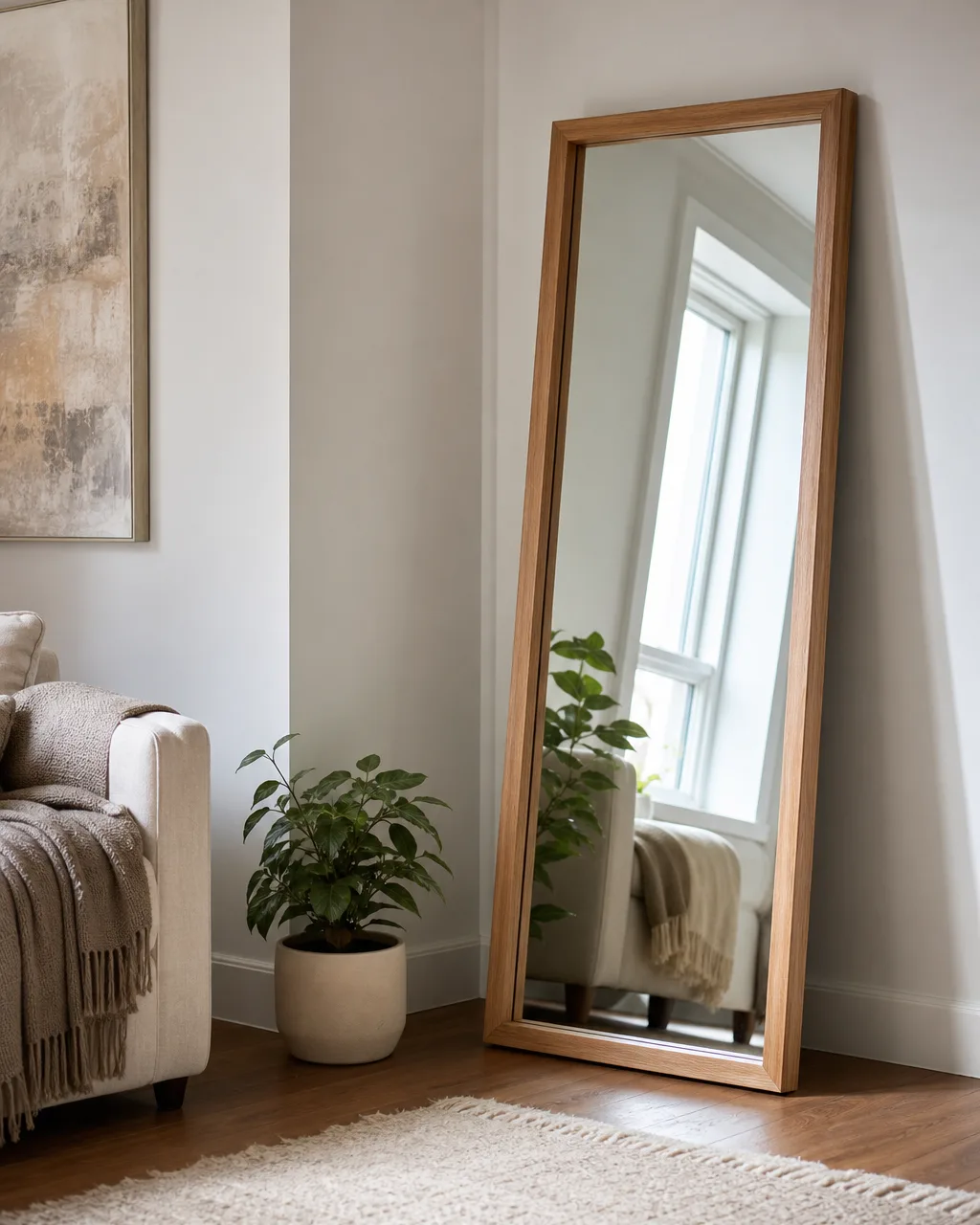
A mirror does not add square footage, but it fakes it well enough that the room feels bigger the moment you walk in. A floor-leaning mirror propped in the corner nearest the entryway reflects the window, doubles the sightline, and serves as a last-glance check before heading out the door.
Lean it at a slight angle and strap the top to the wall with a furniture bracket so it cannot tip forward. A frame in raw wood or matte black matches apartment hardware without trying to look like a statement art piece.
- Choose a mirror at least sixty inches tall so it captures the room from mid-wall up
- Lean it in the corner diagonally to catch light from two directions at once
- Secure the top to the wall with a furniture strap so it cannot tip forward
- Frame it in raw wood or matte black to match standard apartment door handles and fixtures
- Keep the floor in front clear so the reflection shows open space, not a pile of shoes
The 13 ideas at a glance
- 1Float the SofaPull it six inches off the wall to add depth and create a slim console zone behind it.
- 2Layered RugA flat-weave base rug under the sofa legs anchors the zone; a smaller rug on top adds texture.
- 3Floor Lamp TrioThree lamps at different heights replace one flat ceiling fixture and give you mood control.
- 4Picture LedgeLean and rotate art without nail holes. Command strips hold the ledge; the lineup stays flexible.
- 5Oversized ClockOne big clock on one adhesive hook fills the wall above the sofa with zero gallery planning.
- 6Pillow CoversSwap four covers each season to shift the palette without buying new furniture.
- 7Console Behind SofaA slim table behind the sofa holds a lamp, anchors a tray, and divides the open plan.
- 8Round Coffee TableA curved table breaks the rectangle grid and opens traffic flow around the seating area.
- 9Tall BookshelfA ceiling-height shelf draws the eye up, stores more per square foot, and anchors the room.
- 10Floor MirrorA leaning mirror in the corner reflects the window and doubles the sightline from the door.
- 11Pouf SeatingLightweight flex seating that tucks away when guests leave, saving permanent floor space.
- 12Basket ClusterThree woven baskets corral blankets, remotes, and magazines without a storage unit.
- 13Plant CornerOne tall plant plus one trailing plant on a stool creates a living corner from a bare wall.
11. Add a Pouf for Flex Seating
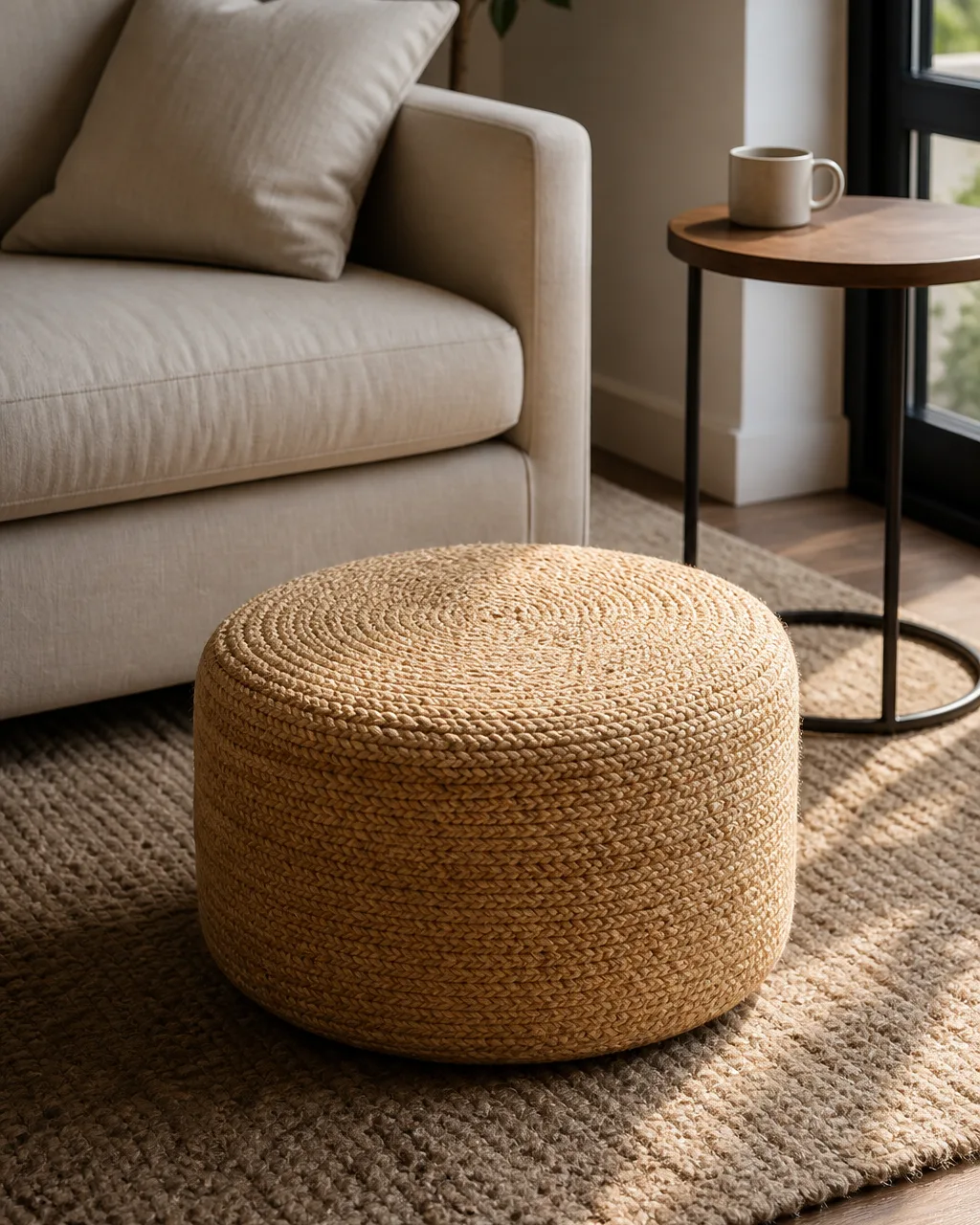
A pouf is the furniture equivalent of a utility player. It sits beside the sofa as a footrest during the week, slides out as extra seating when friends visit, and tucks under a console table when the room needs its floor space back.
Choose a structured pouf with a flat top so it doubles as a stable seat. A leather or jute version adds texture without competing with upholstered pieces, and anything under twenty inches in diameter fits between furniture without blocking the walkway.
- Choose a structured pouf with a flat top that doubles as both footrest and seat
- Pick a fabric that complements the rug to tie the seating area together visually
- Use the pouf as extra seating for guests and stow it after they leave
- A leather or jute pouf adds texture without competing with the sofa upholstery
- Keep the diameter under twenty inches so it fits between furniture without blocking paths
12. Corral Clutter in a Woven Basket Cluster
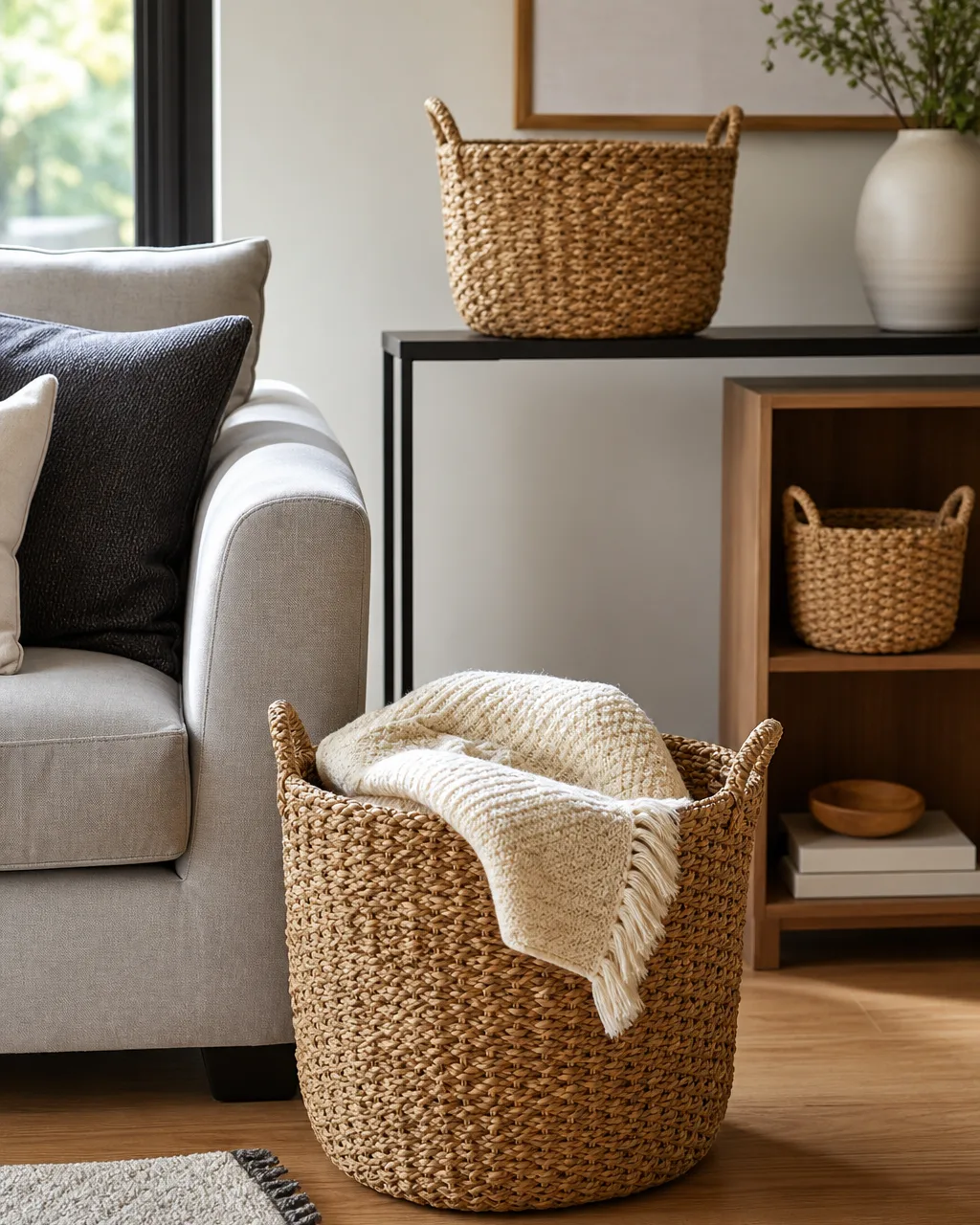
A living room without storage becomes a living room with visible clutter within a week. Three woven baskets of descending size handle blankets, remotes, and magazines without the visual weight of a storage unit or a media cabinet.
Place the largest basket beside the sofa for throw blankets. Set the medium one on the console table for mail and keys. Tuck the smallest on a bookshelf as a catch-all for chargers and pens. One material, one color family, and the three baskets read as a set rather than a collection of random containers.
- Place the largest basket beside the sofa for throw blankets and extra pillows
- Set a medium basket on the console for mail, keys, and small daily items
- Tuck the smallest on a bookshelf shelf as a catch-all for chargers and pens
- Choose baskets with lids if you prefer a cleaner visual line across the room
- Stick to one material like seagrass or rattan so the set reads as intentional
13. Build a Plant Corner With a Tall and a Trailing
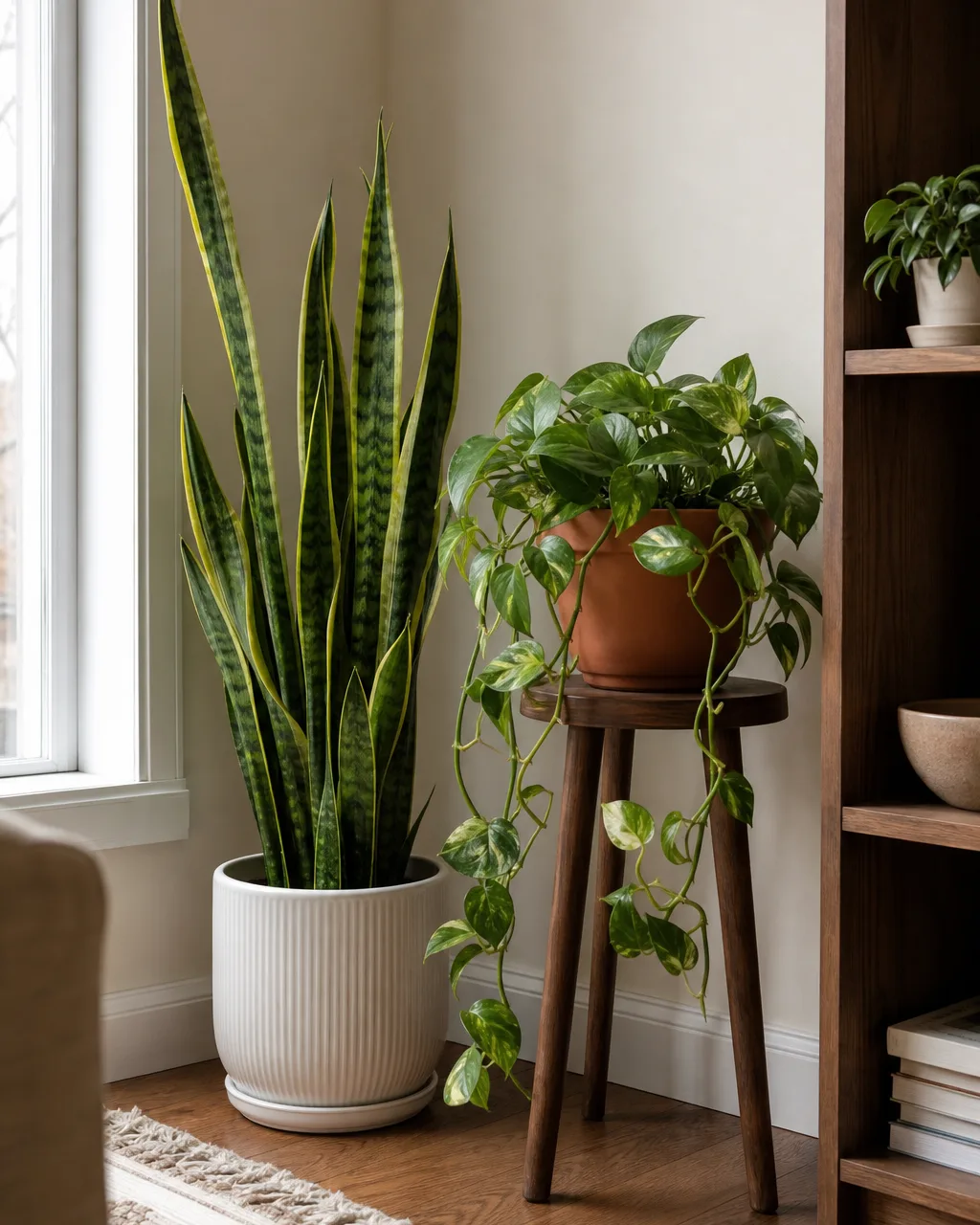
A single potted plant on a windowsill is easy to overlook. Two plants at different heights in a corner create a living vignette that softens a bare wall, adds color year-round, and gives the room a focal point that changes with the season as the trailing vines grow longer.
Place a tall snake plant on the floor in a simple ceramic or basket planter. Set a trailing pothos on a stool at hip height so the vines cascade downward. Position the pair near the window but not in direct afternoon sun, and water both on the same weekly schedule so neither gets neglected.
- Place the tall plant on the floor in a simple ceramic or woven basket planter
- Set the trailing plant on a stool or small side table at hip height for cascading vines
- Position the pair near the window but out of direct afternoon sun
- Water both on the same weekly schedule so neither gets forgotten
- Echo the green across the room with a third small plant on a bookshelf or ledge
An apartment living room is never really finished. The lease changes, the taste shifts, and the layout that worked for two years stops working the day a reading habit replaces a TV habit.
What stays consistent is the approach: reversible upgrades, layered light, and surfaces that earn their keep. Start with the idea that solves the thing you notice every morning, and let the rest follow when it is ready.
If your apartment living room is on the smaller side, small apartment living room ideas covers space-saving strategies for tighter layouts. For broader apartment styling, apartment decor ideas picks up where this list leaves off.
And if your windows need attention, living room curtain ideas walks through fabric, length, and mounting that work in rentals.