11 Living Room Curtain Ideas That Frame the Room, Not Just the Window
Curtains do more work than any other single element in a living room. The wrong pair chops the wall in half and makes the ceiling look lower. The right pair adds height, softens sound, and frames the view like an editorial spread.
The difference usually comes down to where the rod sits, how wide the panels are, and whether the fabric has enough weight to hang with intention. None of these changes require a sewing machine or a contractor.
These eleven ideas each take an afternoon, and most of them work in rentals.
Each idea targets a specific curtain decision that shifts how the living room reads.
1. Hang Floor-Length Linen Panels That Puddle Slightly
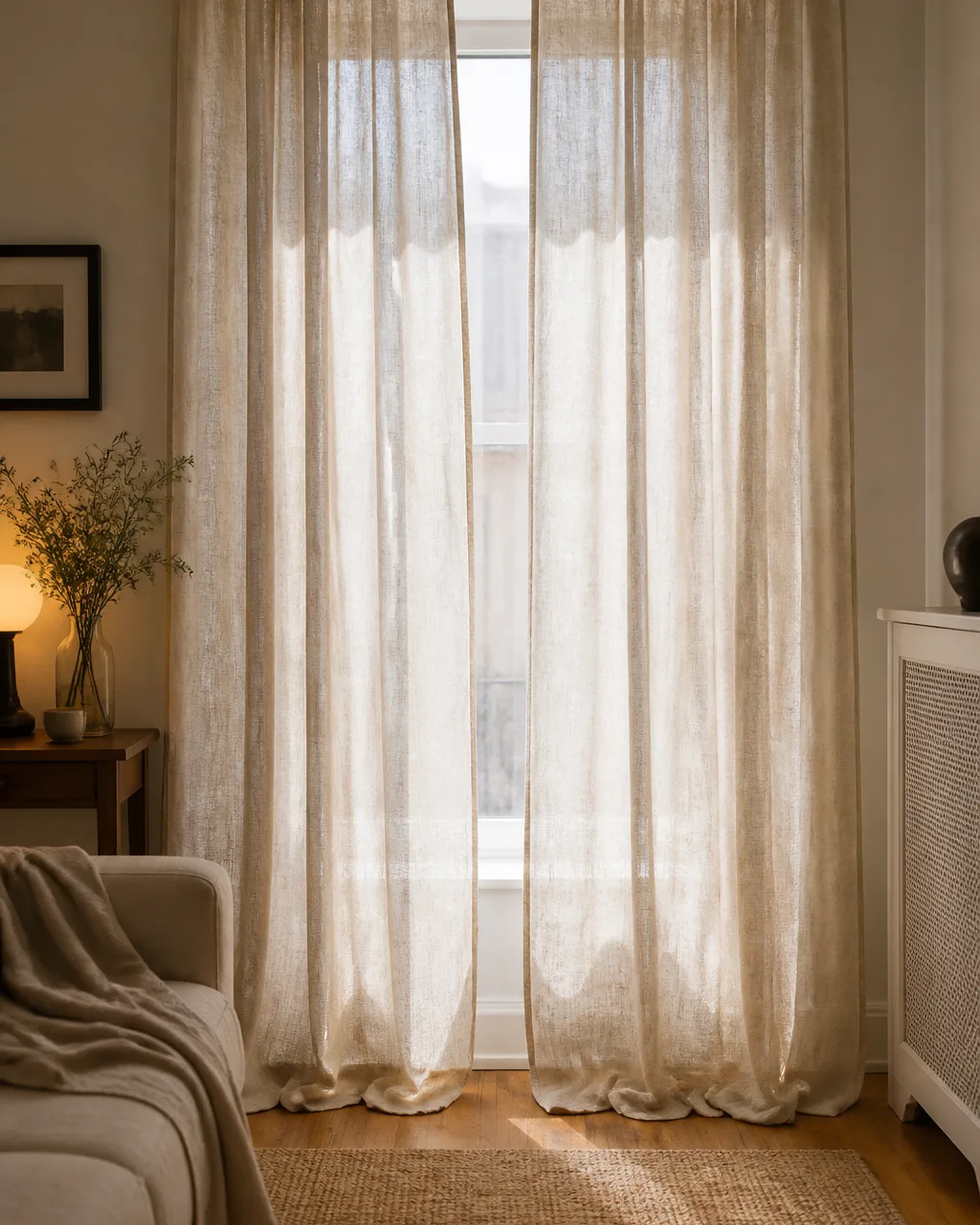
Curtains that stop at the sill chop the wall in half and make the window feel shorter than it is. Floor-length linen that barely touches or puddles one inch on the floor creates one continuous vertical line from rod to ground, which makes the entire wall feel taller and softer.
- Measure from the rod to the floor and add one to two inches for a gentle break
- Choose a medium-weight linen that holds its own shape without looking stiff
- Steam the panels after hanging instead of ironing so the texture stays relaxed
- Pick a color one shade warmer than the wall so the panel reads as intentional
- Avoid polyester blends that puddle into a glossy heap instead of a soft fold
2. Mount the Rod at Ceiling Height, Not at the Frame
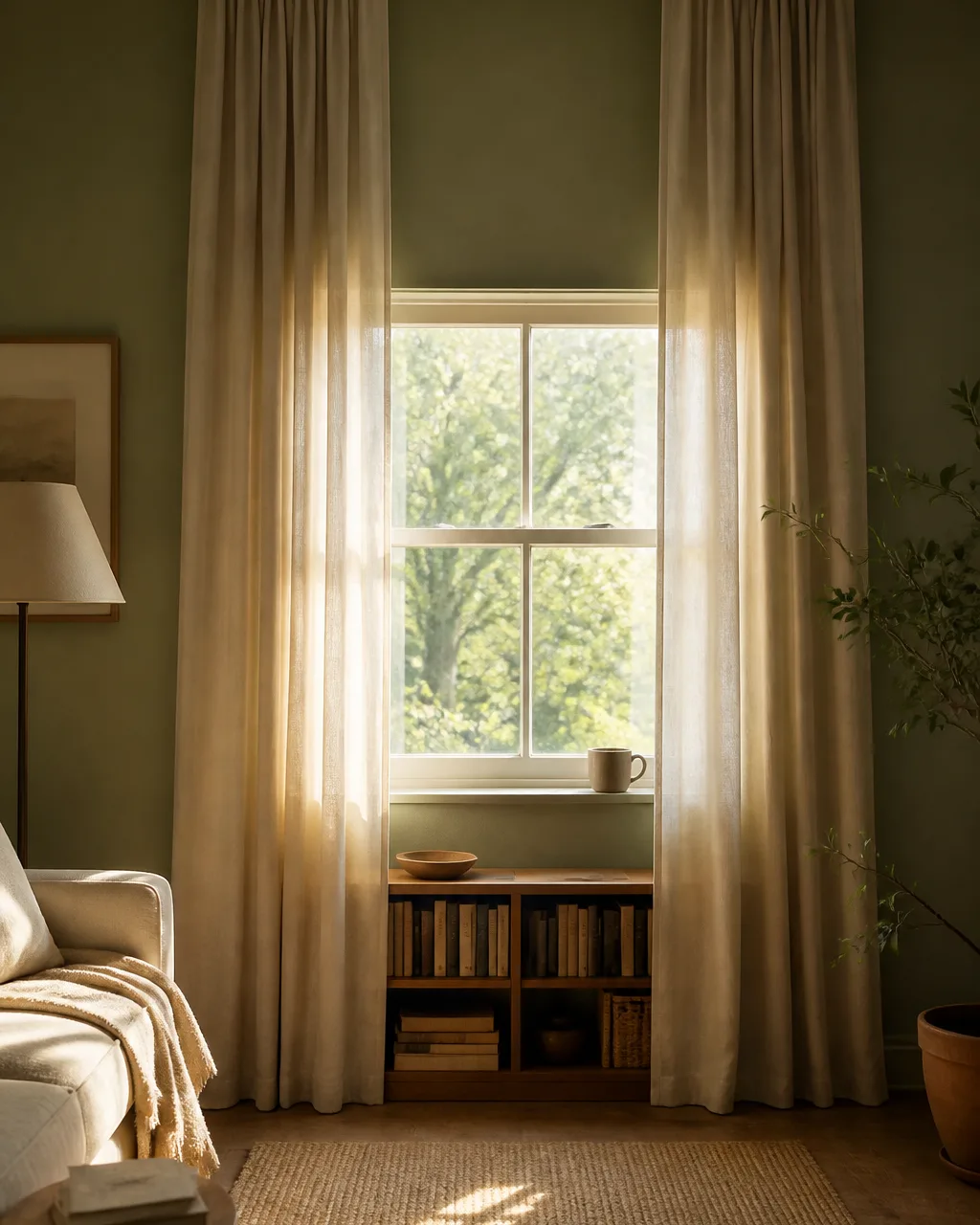
Hanging rods just above the window frame is the default that most people never question. Pushing the rod all the way to the ceiling or crown molding adds perceived height to the entire room because the eye follows the fabric line upward rather than stopping at the frame.
- Use ceiling brackets or mount the rod within two inches of the ceiling line
- Extend the rod at least four inches past each side of the window frame
- Choose a rod diameter that matches the panel weight so it does not sag in the center
- Anchor the brackets into studs or use toggle bolts rated for the combined fabric weight
- Step back and check the line from the doorway before drilling the second bracket
3. Layer Sheer Curtains Behind a Heavier Panel
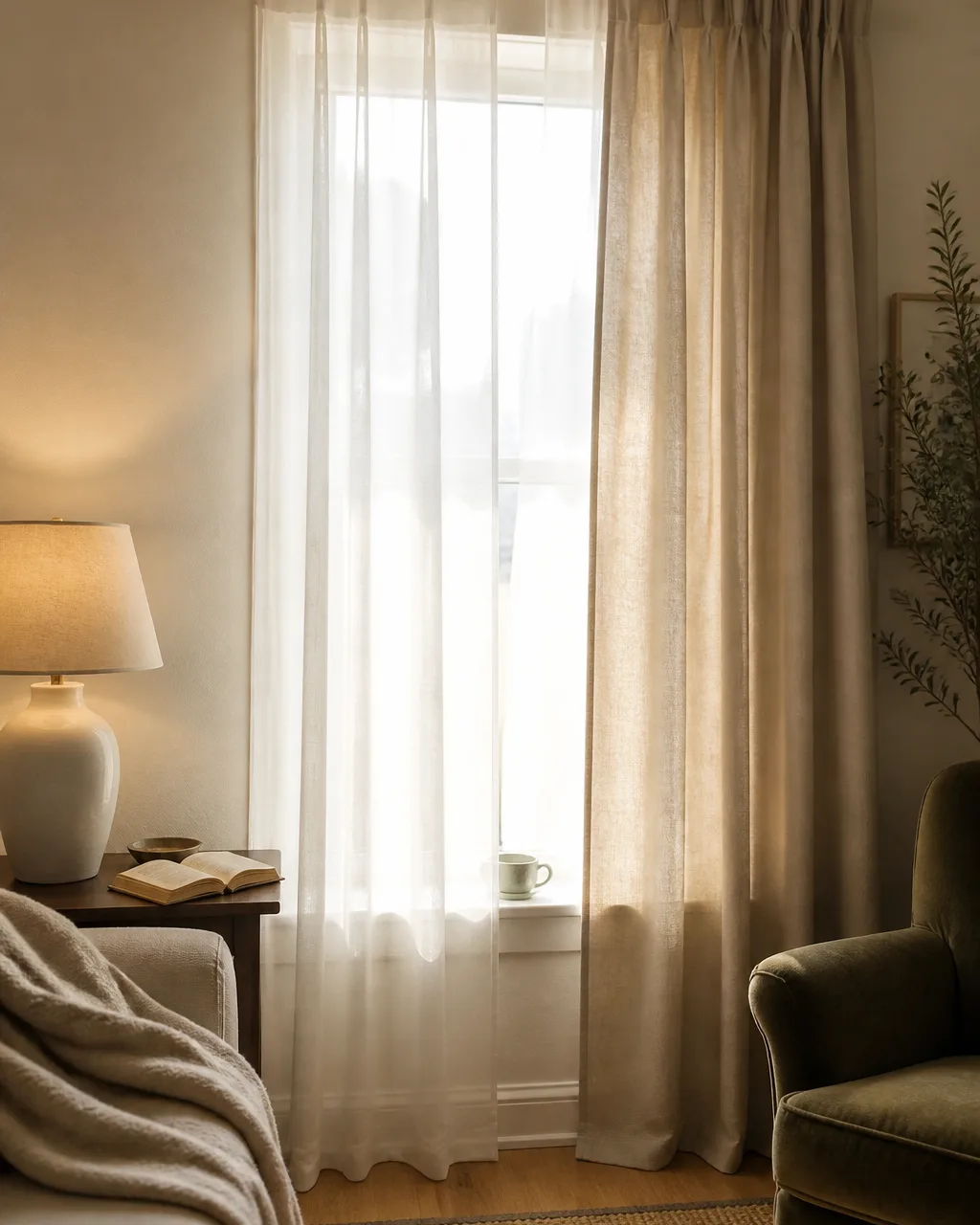
A single-layer curtain gives you privacy or light, never both at the same time. A sheer underneath plus a heavier linen or cotton on top lets you control both registers independently, and the layered depth makes the window wall look intentionally designed rather than just covered.
- Install a double rod or a rod with an inner track so each layer slides independently
- Pick a sheer that diffuses light without tinting it yellow or blue
- Coordinate the sheer color with the heavier panel rather than defaulting to white
- Close only the sheer during the day to soften direct sun while keeping the room bright
- Pull the heavier panel across at night for full privacy and a warmer visual weight
Spend first on changes that affect how the room feels daily. Decorative details can wait.
4. Choose a Contrast Rod That Reads as Furniture
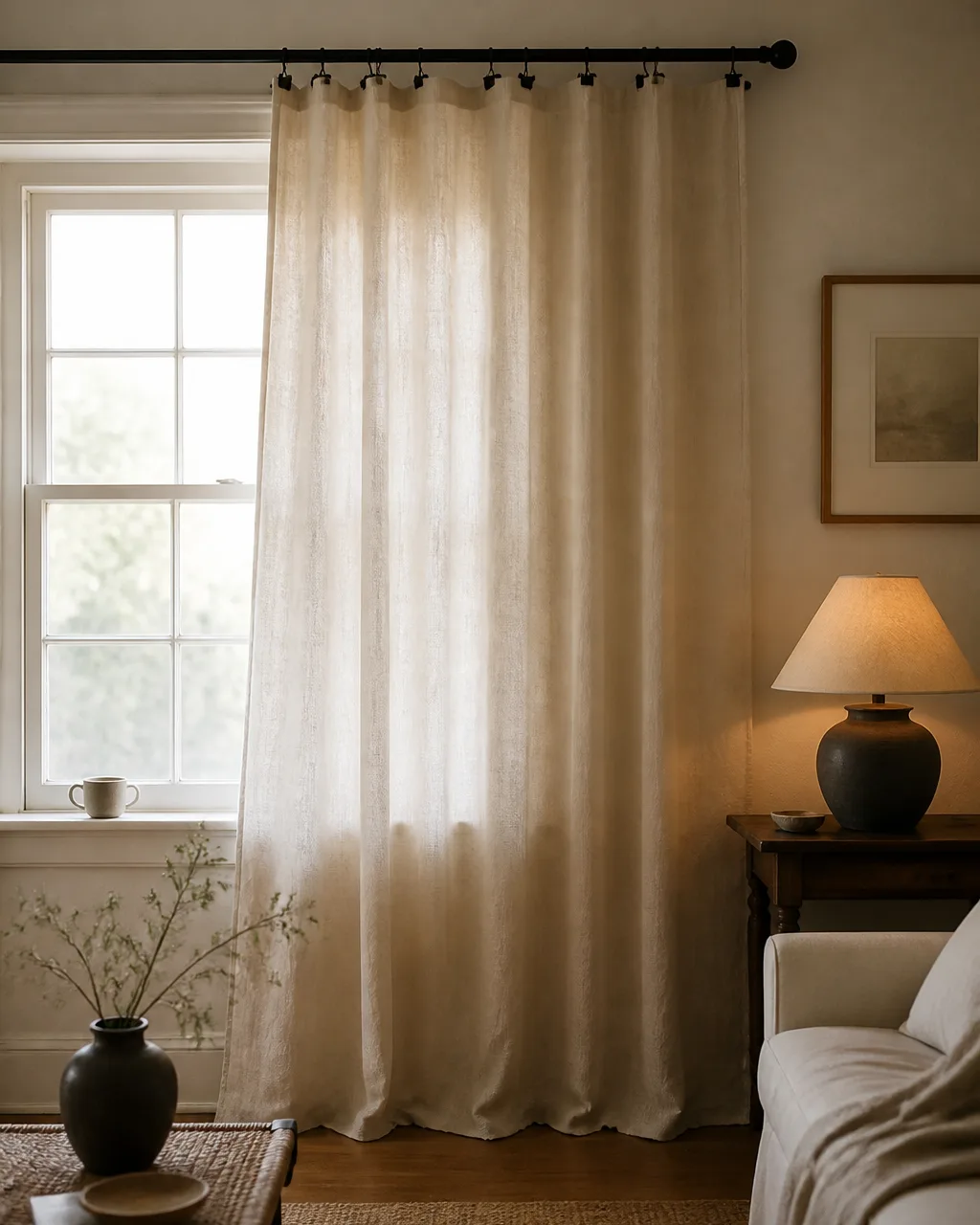
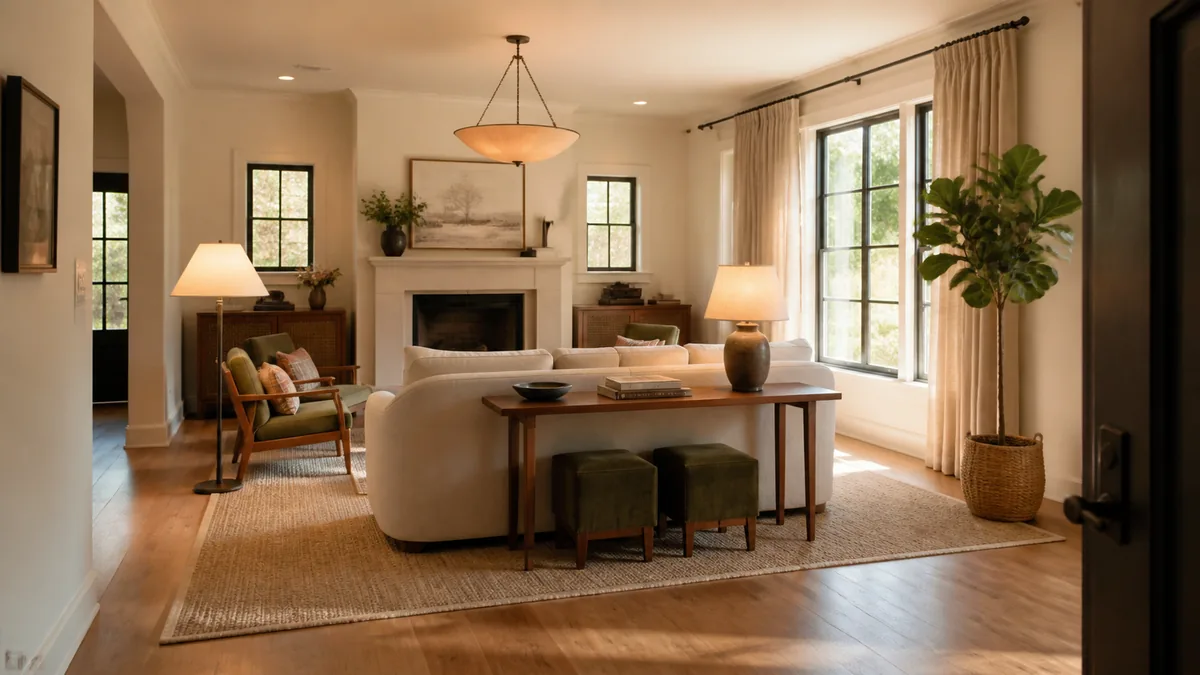
A curtain rod that matches the wall color disappears completely, which sounds clean but wastes a design opportunity. A matte black iron rod against cream curtains turns the hardware into a deliberate architectural line that functions like a picture rail, giving the eye a strong horizontal anchor at the top of the wall.
- Matte black or brushed brass work in most living rooms without fighting existing hardware
- Match the rod finish to one other metal in the room, like a floor lamp base or a picture frame
- Skip ornate finials and use simple ball or cylinder caps that stay quiet
- Check the rod thickness so it does not overpower a lightweight sheer panel
- Test the rod against a fabric swatch before buying so the contrast reads as crisp
5. Use Wide Panels That Stack Past the Frame
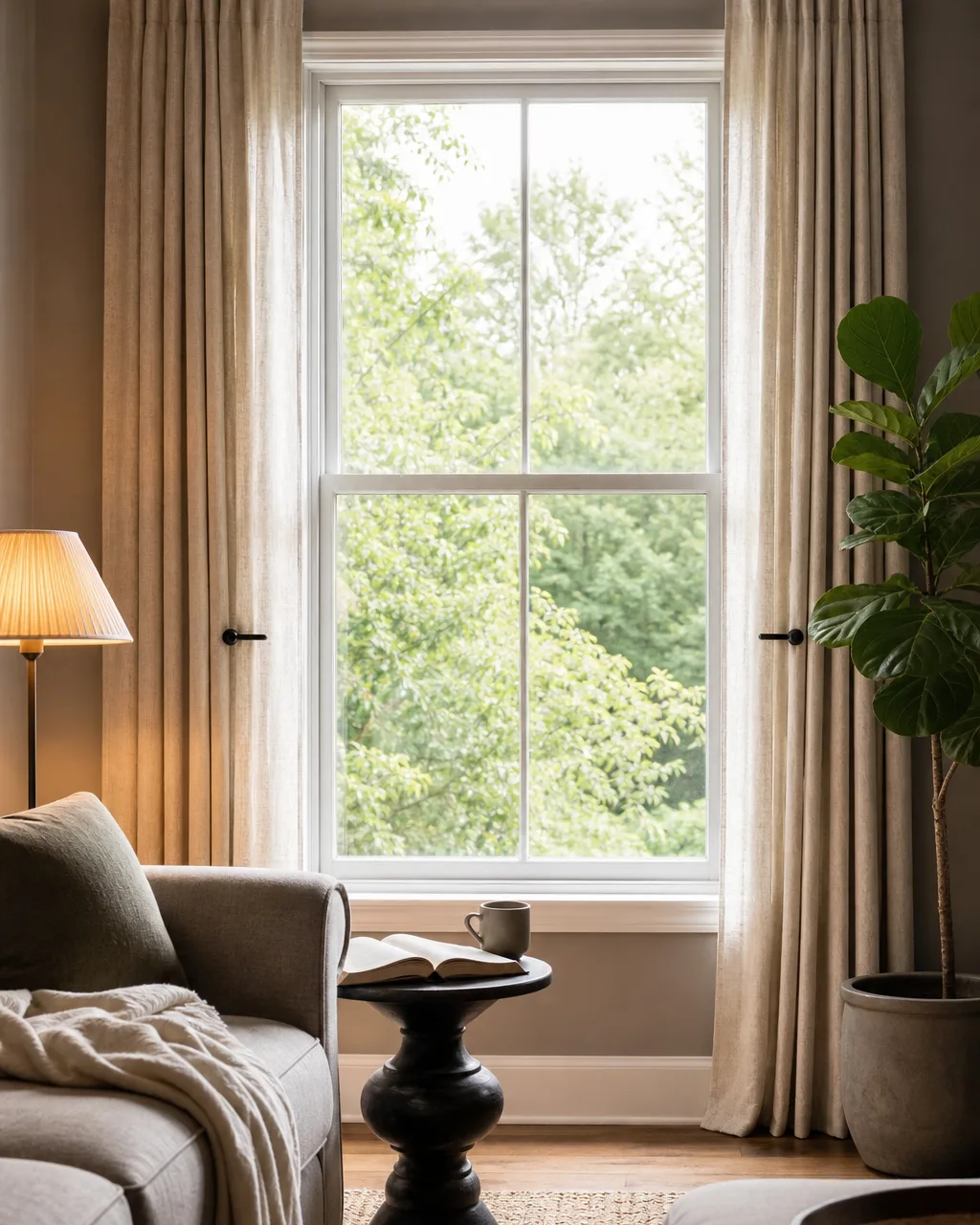
Panels that only cover the glass block a surprising amount of light when pulled open because they stack over the window instead of beside it. Panels wide enough to stack completely past the frame reveal the full window and let maximum daylight through, which makes the room feel larger even with the curtains technically in the way.
- Each panel should be at least one and a half times the width of the window it covers
- Extra fullness creates deeper folds that look richer even in an inexpensive fabric
- Pin the stack-back point with a holdback or small wall hook so the panel stays clear
- In a narrow room, wide panels that frame a view window make the wall look wider
- Avoid skimpy single-width panels that hang flat and lifeless
If your living room windows need more than curtains, start with the panel width and build outward from there.
These principles keep any curtain setup looking designed, not default.
6. Try Color-Blocked Curtains with a Banded Hem
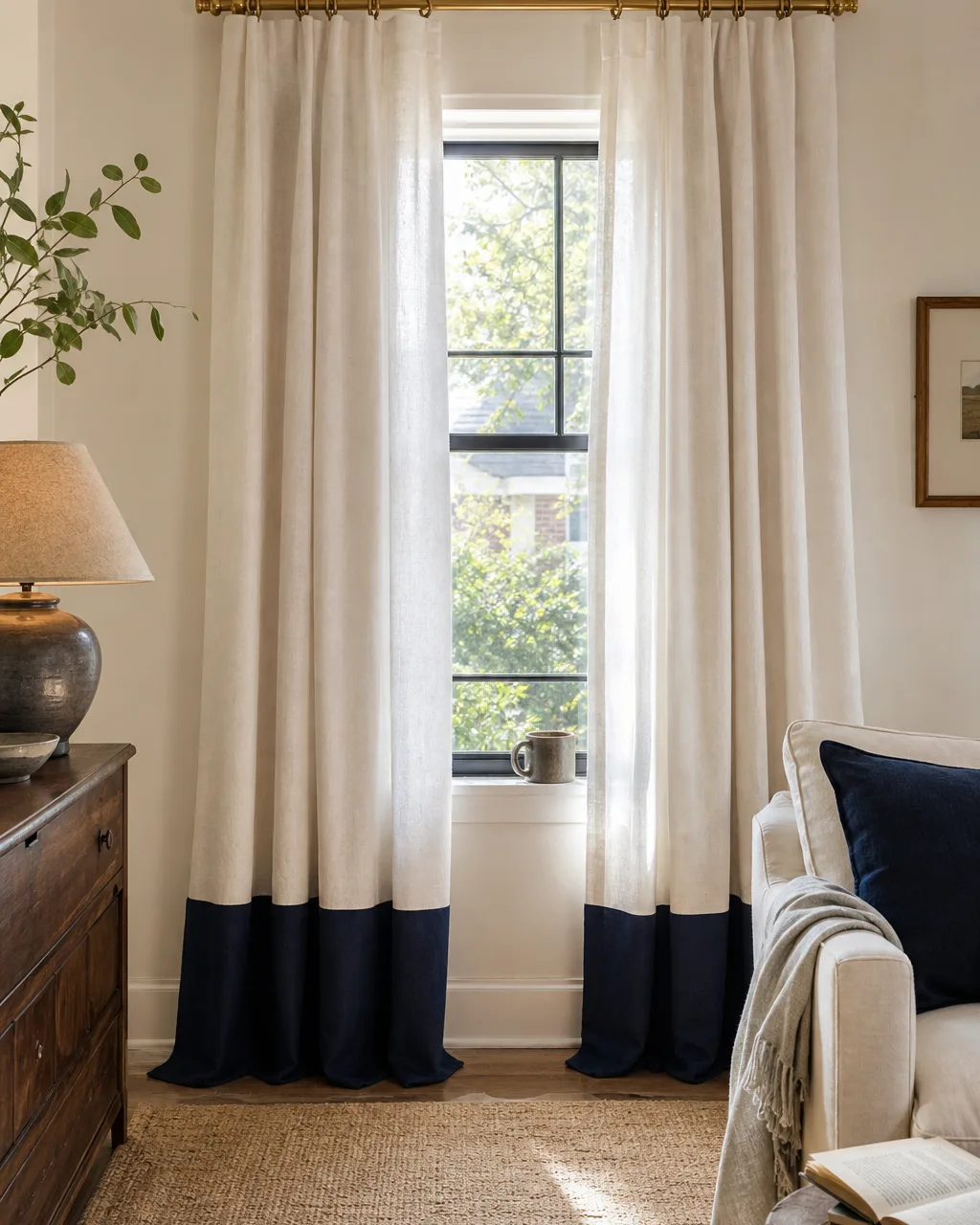
A solid white panel can flatten against a white wall until it barely registers. A six-inch band of navy or olive at the bottom hem adds a furniture-weight accent that grounds the curtain without patterning the entire wall, and it anchors the room visually the same way a dark baseboard does.
- Choose a band color from the rug, a pillow, or the sofa frame to lock it into the palette
- Keep the band between four and eight inches deep so it reads as intentional
- Sew the band on or use iron-on hemming tape for a no-sew version that holds in the wash
- Place the band at the very bottom so it grounds the panel visually
- Pair the banded hem with a matching or tonal tieback for a pulled-together look
7. Replace Standard Rings with Clip Rings for a Relaxed Pleat
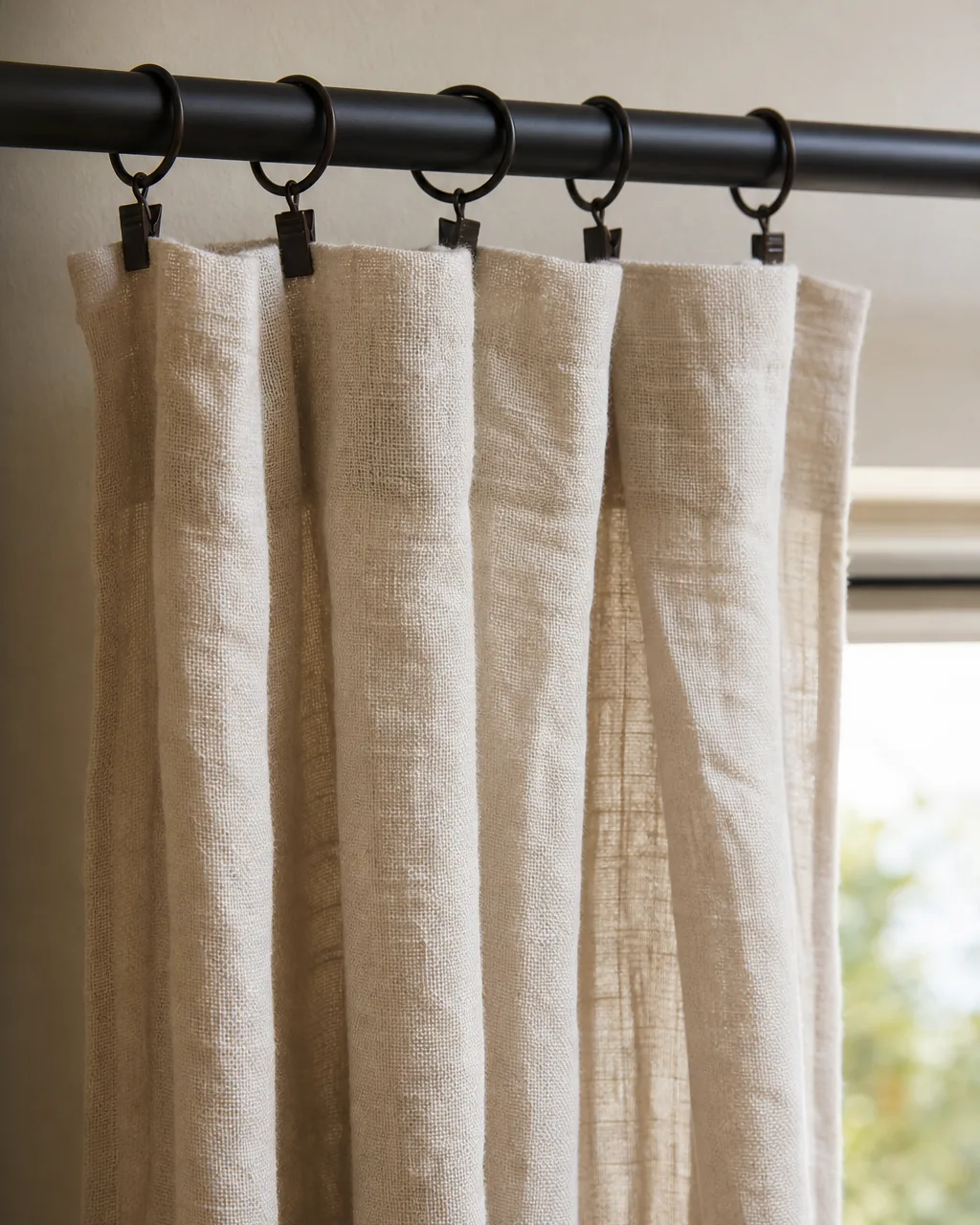
Clip rings create an unforced, slightly gathered heading that reads casual-editorial rather than formal. The clip spacing controls the pleat depth without sewing, so you can adjust the look after hanging by simply moving clips closer together or farther apart.
- Space clips every five to seven inches for a soft, even gather across the panel
- Use clips with a felt or silicone lining so they grip without marking the fabric
- Hang the panel so the top edge sits just below the ring, not folded over
- Adjust the clip count after hanging to even out the folds by eye
- Skip clip rings on very heavy fabrics that pull the clips open over time
8. Add a Curtain Tieback at the Right Height
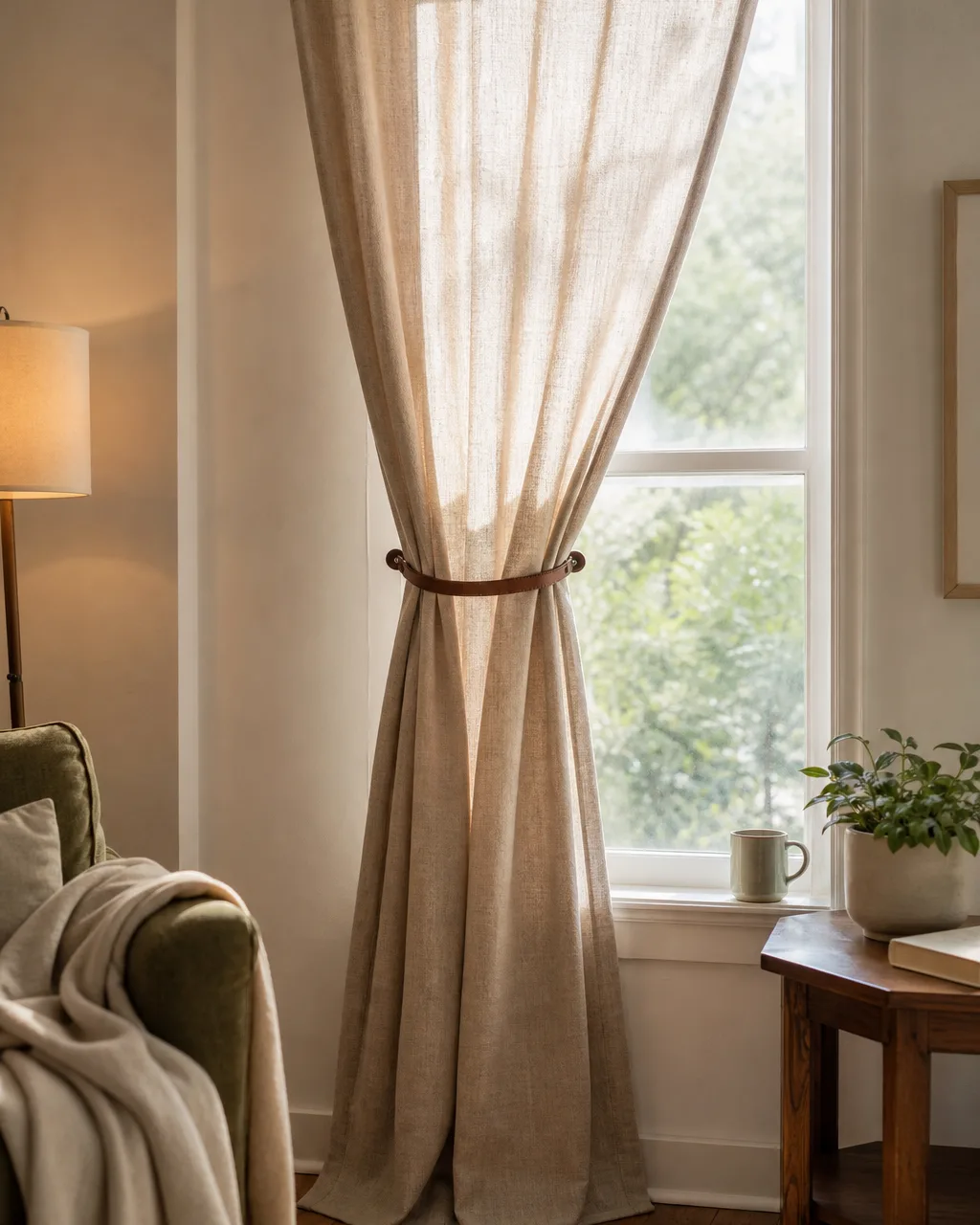
A tieback placed too high pinches the fabric awkwardly, and one placed too low makes the curtain look like it is being dragged down. At roughly two-thirds up the panel, a tieback creates a gentle hourglass shape that lets light in through the upper portion while the lower fabric hangs full and soft.
- Measure from the floor to two-thirds of the panel length and mark the wall there
- Use a linen loop, a leather strap, or a brass hook depending on the room style
- Pull only enough fabric into the tieback to create a soft curve, not a tight cinch
- Install the hook or cleat on the wall rather than on the window trim for a cleaner line
- Remove the tieback entirely on overcast days to let the panel hang full for warmth
Curtain Upgrade Checklist
- 1Ceiling RodMove the rod to within two inches of the ceiling line for instant height.
- 2Floor-Length PanelsSwap sill-length curtains for panels that touch or puddle on the floor.
- 3Wide PanelsGet panels at least 1.5x the window width so they stack clear of the glass.
- 4Contrast RodSwitch to matte black or brushed brass to turn the hardware into a design line.
- 5Textured LinenReplace flat cotton with a slub-weave neutral that catches side light.
- 6Clip RingsSwap sewn headers for clip rings to get a relaxed pleat you can adjust by hand.
9. Pick a Textured Neutral That Reads as Warm, Not Blank
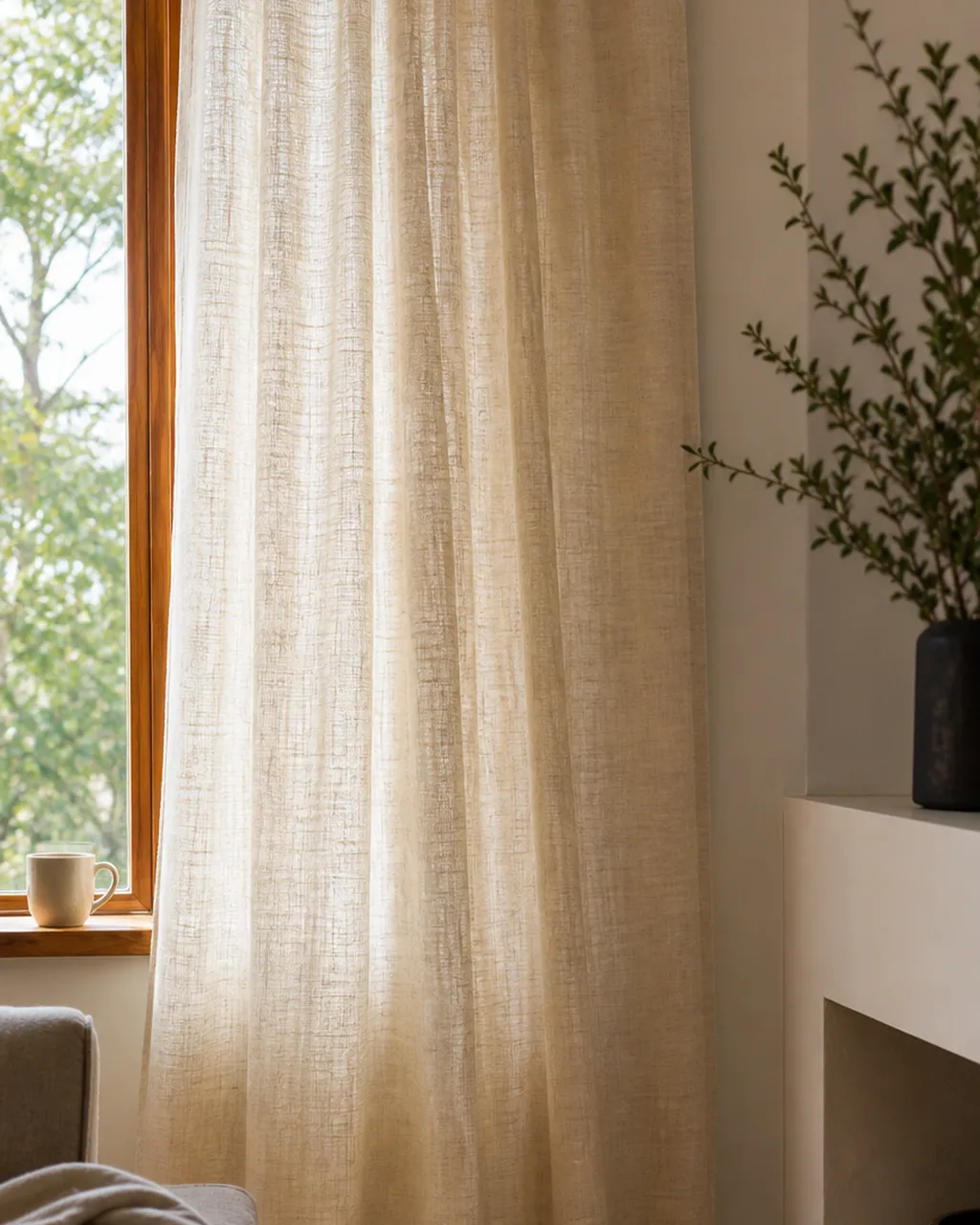
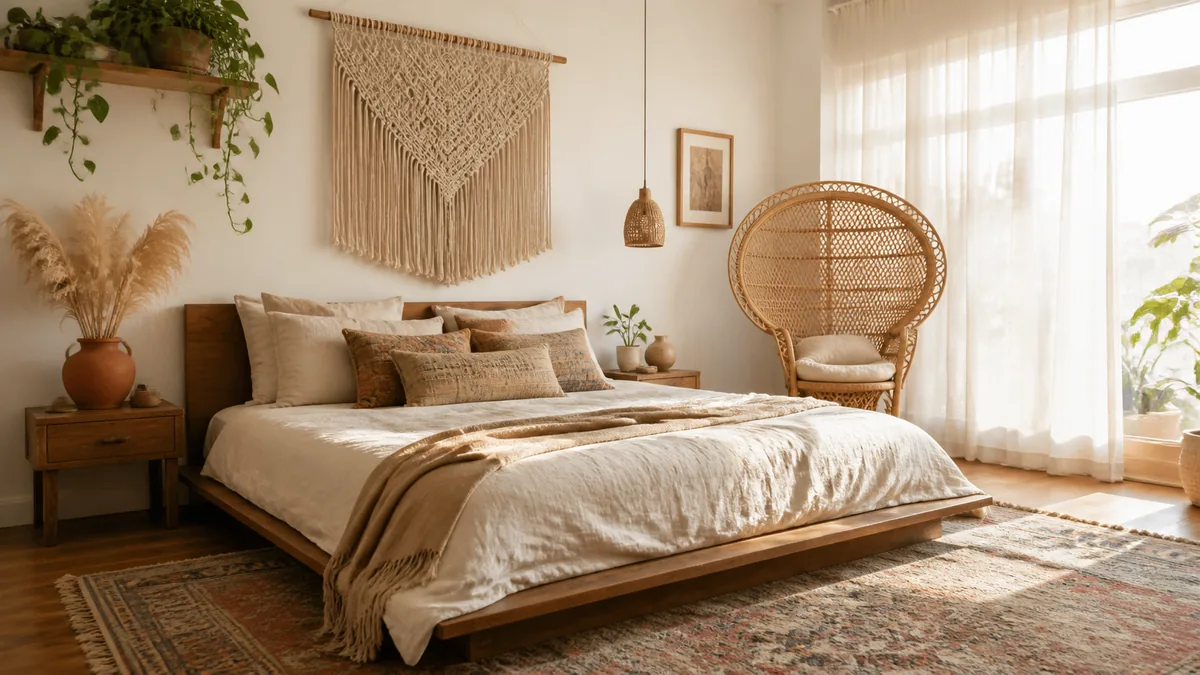
Plain white cotton curtains can look institutional under certain lighting because the flat weave reflects light uniformly. An oatmeal linen or a slub-weave cream has visible texture that catches side light at different angles, creating subtle shadows and highlights that make the window wall feel layered rather than blank.
- Hold the fabric up to the window during the day to see how light passes through the weave
- Oatmeal, flax, and warm ivory read softer than optical white in most palettes
- A slub weave creates subtle stripes of thick and thin yarn that add depth without pattern
- Pair the textured panel with smooth hardware so the rod does not compete with the fabric
- Avoid shiny or brushed synthetics that catch light differently from natural fibers
A Japandi-style living room pairs especially well with slub-weave linen because the material echoes the wabi-sabi attention to natural imperfection.
10. Run One Continuous Rod Across Two Adjacent Windows
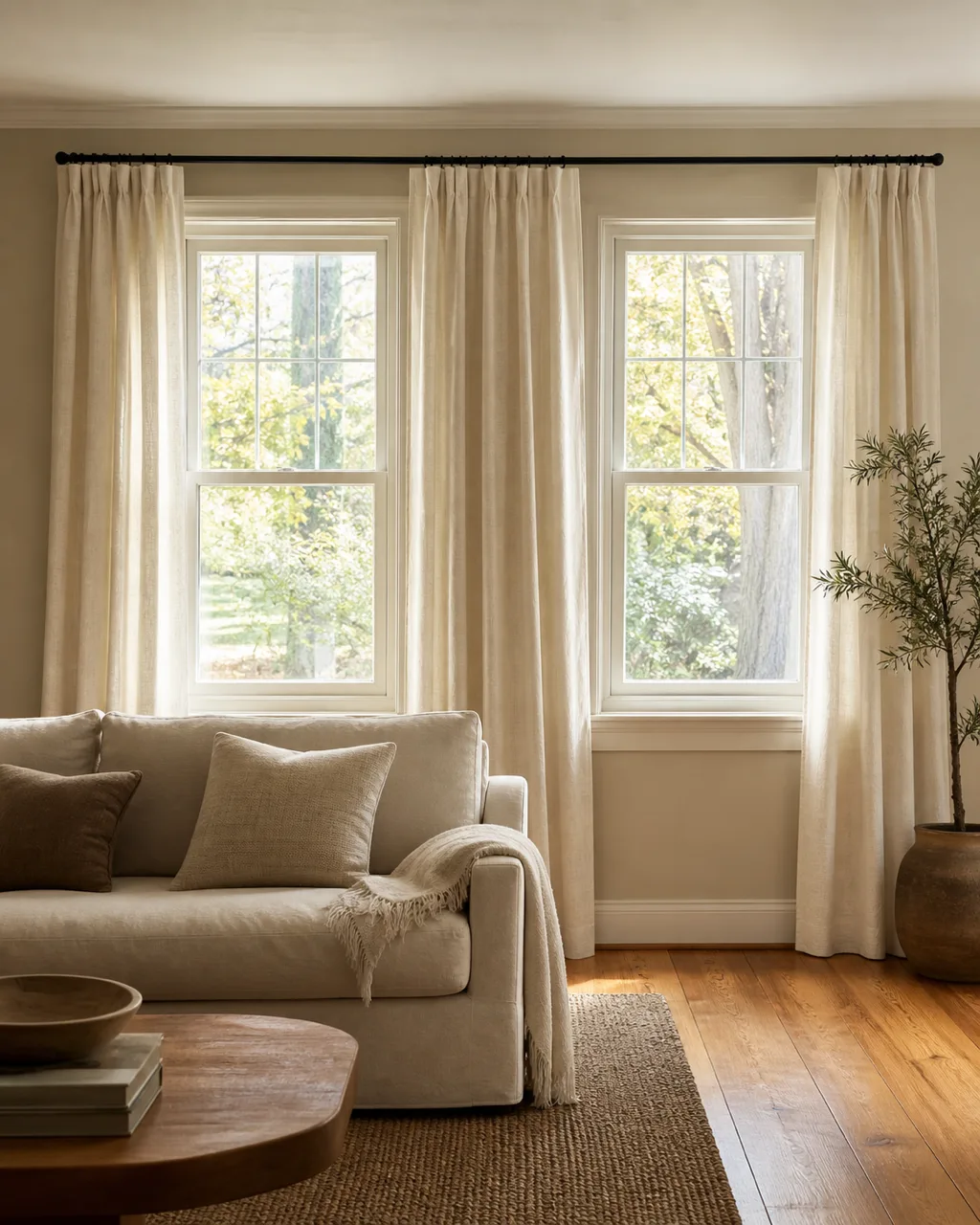
Two separate rods with a gap in between draw attention to the wall segment and make each window look smaller than it is. One long rod with three panels, one on each outside edge and one shared in the center, treats the window pair as a single architectural feature and makes the entire wall read as wider.
- Measure wall to wall and order a rod or a telescoping pair that spans the full distance
- Hang one shared panel in the center and one on each outside edge for clean symmetry
- Use a center support bracket for any span over six feet so the rod does not bow
- Match the bracket finish to the end caps so the support reads as part of the design
- Check that all three panels are the same dye lot so there is no color shift across the wall
11. Swap Heavy Drapes for Pinch-Pleat Linen in a Small Room
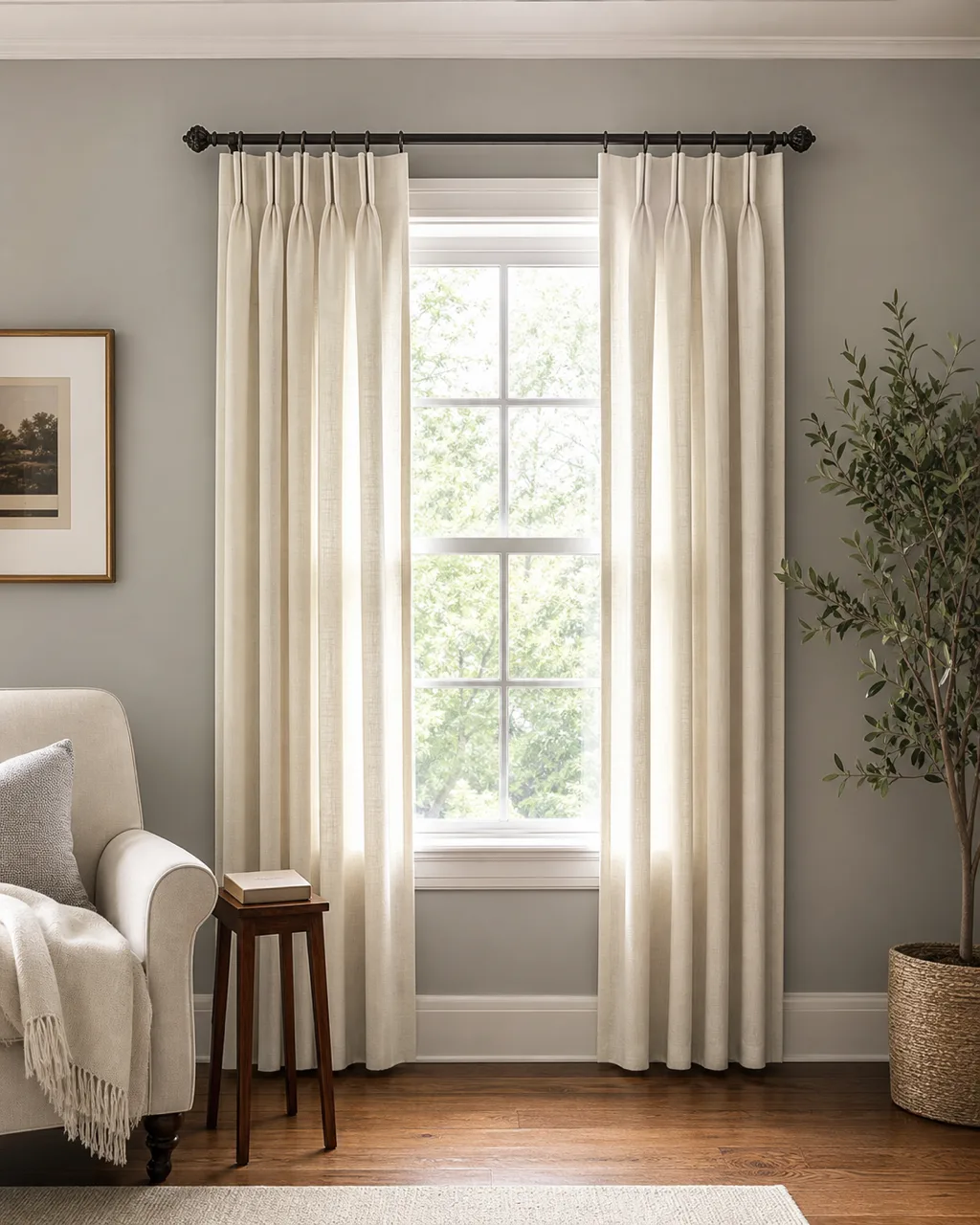
Thick velvet or blackout drapes eat visual floor space and make a small living room feel closed in before you even sit down. A tailored pinch-pleat linen panel gives the same structured look with a fraction of the bulk, and because pinch pleats use less fabric than a rod-pocket heading, the panels hang closer to the wall and take up less depth.
- Choose a light to medium linen weight that holds the pleat without adding thickness
- Have the pleats sewn at a workroom or use pinch-pleat hooks on a standard heading tape
- Keep the color light to match or complement the wall so the panels recede visually
- Add a blackout roller shade behind the linen for darkness without sacrificing the look
- In a room with shelf decor, lighter curtains keep the visual weight balanced