18 Thrift Store Home Decor Ideas That Look Expensive
An expensive-looking room has little to do with how much you spent. It comes down to what the pieces are made of, and that is exactly what a thrift store is full of for a few dollars: solid wood, real brass, cut glass, and natural linen all turn up secondhand.
The work splits in two, hunting and fixing: knowing what to look for on a crowded shelf, and the small fix that lifts a found piece. For the buy-it-new versions, the budget home decor ideas and dollar store home decor ideas guides cover those routes.
The eighteen ideas below run from the big furniture finds down to the small accents, and each one lists exactly what to look for. You will not need all of them, so pick the few that match what your room is actually missing.
Making thrift look high-end is half hunting and half fixing — knowing what to look for (solid wood, real brass, natural fiber, cut glass) and the cheap fix that lifts a found piece (swap the hardware, repaint, re-mat, re-shade). Pick the finds that match what your room is missing and skip the rest.
- 1Spot solid wood — the #1 expensive tell
- 2Swap dated hardware — instant upgrade
- 3Test brass with a magnet — real metal
- 4Repaint in one modern color
- 5Swap the lampshade — keep the base
- 6Reframe art with a wide mat
- 7Hunt an ornate vintage mirror
- 8Paint mismatched frames one color
- 9Cut glass — heirloom barware
- 10Curate mismatched china
- 11Group ceramic vases in odd numbers
- 12Natural fiber, not polyester
- 13Woven baskets and rattan
- 14Vintage books — jackets off
- 15A solid tray to corral a surface
- 16Reupholster a solid-frame chair
- 17Cluster brass candlesticks
- 18Edit hard — let it breathe
Hunt for Solid Wood and Learn to Spot It

Solid wood is the single biggest tell of an expensive-looking room, and thrift stores are full of it because solid pieces outlast the trends that sent them there. A real wood dresser reads warm and substantial in a way no printed-laminate piece ever will, and it often costs less secondhand than a flat-pack version does new.
The one dated detail on a solid piece, an old finish or ugly hardware, is exactly what you can fix later, so buy for the bones and worry about the surface at home. The checks below take about ten seconds at the shelf.
- Pull a drawer and check the corners for dovetail joints, the sign of real construction
- Look for continuous wood grain on the top and sides, not a printed photo layer
- Lift one end: solid wood is heavy, while particleboard feels suspiciously light
- Walk past anything with laminate peeling or bubbling at the edges
- A solid frame is worth buying even when the finish or hardware looks dated
Swap the Dated Hardware on a Dresser or Cabinet

A solid dresser with ugly, dated knobs is frequently the best deal in the store, because the only thing wrong with it is the hardware. The frame is solid and the drawers slide, so the single dated detail is the exact thing you can change in an afternoon.
Warm brass cup-pulls or simple round knobs read high-end against a calm painted drawer front, the way the sage piece in the photo does. It is the cheapest upgrade with the biggest visible payoff, as long as you measure before you buy.
- The hardware is usually the only dated thing on an otherwise solid piece
- Swap in warm brass or ceramic knobs and pulls for an instant lift
- Measure the existing hole spacing so new pulls line up
- Fill, sand, and re-drill if the new hardware has a different spread
- A handful of new knobs costs a few dollars and changes the whole piece
Test for Real Brass with a Magnet, Then Polish It

Real solid brass reads expensive in a way that thin brass-plated steel never does, and the tarnish that scares other shoppers off is exactly what keeps the price low. A dark, dull candlestick is often solid brass hiding under decades of patina.
A few minutes of polishing brings it back to a warm golden glow, and the magnet test below tells you which pieces are worth it before you buy. Leave a little patina in the recesses so it reads vintage rather than brand new.
- Carry a small magnet: it sticks to plated steel and slides off solid brass
- Buy solid brass even when it is tarnished, since that keeps the price down
- Polish it back to a soft warm glow with basic brass cleaner
- Leave a little patina in the recesses so it reads vintage, not new
- Candlesticks, bowls, trays, and bookends are the easiest brass finds
Repaint a Solid Piece in One Modern Color

A solid-wood piece in an orange-toned varnish or a dark dated stain has good bones and a finish nobody wants, which is why it sits unsold and cheap. A single calm color of paint is all it takes to turn it into something that looks bought new.
Soft sage, warm charcoal, and creamy off-white all read current and let the piece blend into a styled room. The turned legs in the photo give away that it is an older find, but the smooth even color reads deliberate and high-end, as long as you keep it to one color instead of a busy two-tone.
- Sand lightly first so the paint actually grips the old finish
- Choose one calm modern color: sage, charcoal, or warm off-white
- Use thin even coats and let each dry fully to avoid a tacky finish
- Skip heavy distressing, which reads craft-fair instead of expensive
- A small can covers a side table, nightstand, or small dresser
You will not chase all eighteen at once. Thrifting works best when you shop with one goal per trip — pick the situation below that matches what your room is missing and start with those two or three finds.
Swap a Lamp’s Shade and Keep the Good Base

Thrift stores overflow with lamps that have a great heavy base and a terrible shade. The base is the part that matters, a solid glazed-ceramic or real-brass column with weight and character, hiding under a yellowed, dented shade that makes the whole thing look dated.
Buy it for the base alone and plan to throw the old shade away. A fresh cream linen or paper drum shade costs little and instantly modernizes the lamp, the way the blue ceramic base reads rich under its new shade in the photo.
- Judge the base, not the shade, since the base is the keeper
- Look for heavy glazed ceramic or solid brass with real weight
- Add a fresh linen or paper drum shade in a neutral tone
- Match the shade width to the base so the proportions look right
- A new shade costs a fraction of a whole new lamp
Reframe Thrifted Art in a Fresh Mat

A real oil painting or a good print stuck in a cheap, scratched frame is a steal, because the art is the value and the frame is the part you replace. Most shoppers walk past it for the bad frame, which is exactly why it is cheap.
A wide mat is what does the work. The generous empty space around a small picture makes it read like expensive framed art instead of a yard-sale find, the way the muted landscape over the console in the photo earns its spot from the cream mat as much as the painting.
- Buy for the art, not the frame, which you will swap anyway
- Re-mat with a wide border to give the piece gallery-style breathing room
- Use a simple thin frame in black or natural wood
- Muted landscapes, still lifes, and abstracts are easy wins
- A standard-size frame and mat from a craft store finishes it cheaply
Hunt for an Ornate Vintage Mirror

Old gilt and carved-wood mirrors turn up constantly secondhand, and they read far more expensive than anything you could buy new at the same price. A new mirror with that much detail would cost a fortune, while the vintage one carries real age and character for very little.
Beyond looks, a mirror earns its place by working. Hung where it catches a window, like the gilt mirror over the console in the photo, it bounces daylight around and makes a small room feel brighter, adding the one slightly fancy note a plain rental box is usually missing.
- Look for aged gilt or carved-wood frames with real detail
- Hang it across from a window so it bounces daylight into the room
- A little wear in the gilt reads as character, not damage
- One ornate mirror gives a plain rental its missing decorative note
- Check the glass is sound, since the frame is the part you are buying
Paint a Wall of Thrifted Frames One Color

Thrift stores have endless bins of mismatched frames for a dollar or two each, in every size, shape, and level of ugly. On their own they look like clutter, but one shared coat of paint turns the whole pile into a collection.
Matte black or antique gold both work, like the black gallery wall over the sofa in the photo, where the varied frame shapes only add interest once the color unifies them. This is the rental-friendly cousin of a bigger refresh, and the peel and stick wallpaper ideas guide covers another removable way to give a wall character.
- Collect a dozen mismatched frames, the cheaper and odder the better
- Spray them all one color: matte black or antique gold
- The single shared color is what turns clutter into a collection
- Mix in a couple of mirrors and some muted prints for variety
- Lay the grid out on the floor first, then hang it
Collect Cut Glass and Crystal Barware

Vintage cut-glass decanters, coupes, and tumblers cost a few dollars secondhand and read like inherited heirlooms. The deep faceting catches light and throws it back the way flat new glass cannot, which is what gives crystal its expensive sparkle.
You do not need a matching set. Collecting a few odd pieces over several visits looks more like a real bar built up over time, the way the decanter and coupes group on the brass tray in the photo.
- Look for deep-cut faceted glass that throws back the light
- Decanters, coupes, and tumblers are the most common finds
- Skip the matching set and collect odd pieces over time
- Group them on a tray or shelf so they read as a styled bar
- Hold each piece to the light to check the rim for chips
Making secondhand look high-end is not about luck or digging for hours. It comes down to buying the right materials, fixing the surface, unifying the mismatch, and editing hard. These four rules are what make the eighteen finds actually read expensive.
Mix Mismatched China into an Intentional Set

You will almost never find a full matching china set secondhand, and that is the opportunity rather than the problem. A stack of mismatched plates collected on purpose reads curated, as long as one shared note ties them together.
The plates in the photo are different floral patterns, but they all share gold rims and a soft palette, so the mix reads deliberate instead of random. Gold edges, a blue-and-white theme, or one repeating flower all work as the connector.
- Choose one shared thread: gold rims, a blue palette, or a single motif
- Different patterns are fine as long as that thread runs through them
- Stack some flat and stand one or two upright for display
- A plate rail or shelf turns the collection into wall decor
- Faint crazing and soft wear read as age, not damage
Group Ceramic Vases in Odd Numbers

Heavy glazed ceramic and stoneware vases, often handmade, are cheap and everywhere secondhand. The weight and the glaze are what read expensive, so the heft in your hand and a real hand-finished surface are what separate them from thin molded ones.
How you group them matters more than the vases themselves. A tight cluster of three or five at clearly different heights reads designed, the way the trio on the console in the photo does, while a row of evenly spaced matching vases just looks like a store display.
- Look for heavy glazed ceramic and stoneware, often handmade
- Group in odd numbers, three or five, not even rows
- Vary the heights so the cluster has a natural rhythm
- Set them close together rather than evenly spaced out
- A few dried stems add height without looking fussy
Look for Natural-Fiber Textiles, Not Polyester

Real linen, wool, and cotton drape softly, age beautifully, and read expensive, while polyester looks flat and cheap no matter what it cost. Secondhand is a great place to find the real thing, since natural-fiber throws and pillow covers turn up often once you know to check.
Your hands do the sorting. The weight and a visible weave, like the slubby linen and wool stacked on the chair arm in the photo, give natural fiber away, and a thrifted linen throw washes up fresh at home.
- Feel for weight and a visible, textured weave
- Check the fiber tag for linen, wool, or cotton over polyester
- Slubs and soft wrinkles in linen are features, not flaws
- Throws, pillow covers, and tablecloths are common finds
- Wash secondhand textiles before they go on the sofa or bed
Hunt for Woven Baskets and Rattan

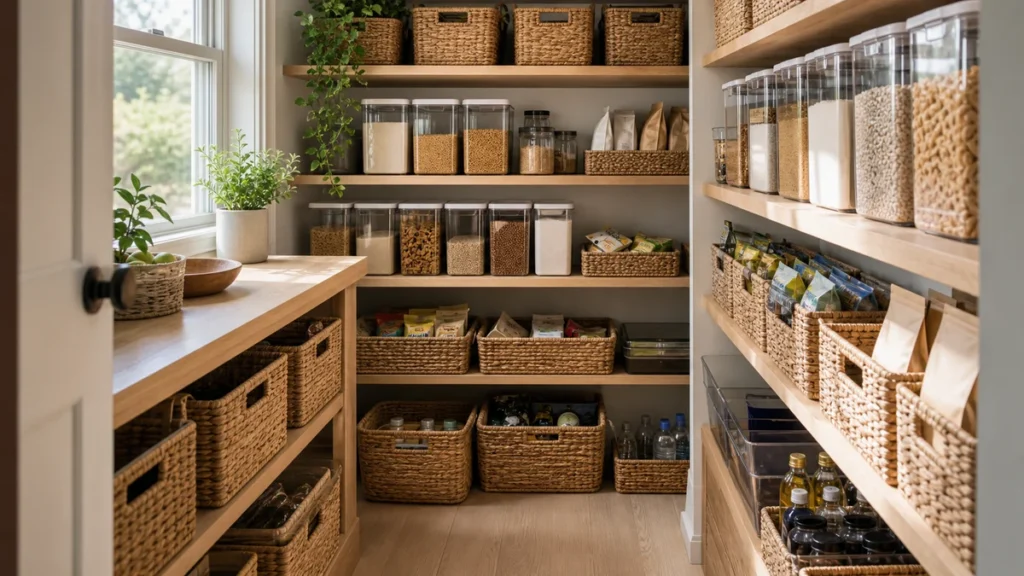
Natural seagrass, rattan, and wicker baskets do two jobs at once. They add warm texture to a room and they hide clutter, and they are abundant and cheap secondhand because they never really wear out.
A real woven basket reads warm and expensive standing next to a plastic bin, so it earns a spot anywhere you would otherwise reach for plastic, the way the baskets by the sofa in the photo hold a blanket and magazines as part of the decor.
- Choose real seagrass, rattan, or wicker over plastic bins
- Use them for blankets, magazines, toys, or laundry
- The natural texture warms up a room instantly
- Check the weave and handles are sound before buying
- Air out a musty basket in the sun before bringing it inside
18 Thrift Store Home Decor Ideas That Look Expensive
- 1Spot solid wood — the expensive tellSolid wood is the number-one tell of an expensive room, and thrift stores are full of it. Check for dovetail drawer joints, real end grain, and real weight, and skip anything with a printed-laminate wood grain peeling at a corner.
- 2Swap dated hardwareA solid dresser with ugly dated knobs is the best deal in the store, because the only thing dated is the hardware. Unscrew the old pulls and swap in brass or ceramic, and an old solid frame reads high-end fast.
- 3Test brass with a magnetSolid brass reads expensive, plated does not. A magnet grabs plated steel and slides off solid brass, so carry one. Buy the solid piece even if it is tarnished and polish it back to a warm glow.
- 4Repaint in one modern colorA solid piece in a dated orange-oak finish has good bones. Sand lightly and repaint in one calm modern color — sage, charcoal, warm cream — and it looks bought new. For more pieces that punch above their price, the budget home decor ideas guide is the broader playbook.
- 5Swap the lampshade, keep the baseThrift lamps have great heavy ceramic or brass bases under a yellowed shade. Buy it for the base alone, toss the old shade, and add a fresh linen drum shade. The heavy base is the part that reads expensive.
- 6Reframe art with a wide matA nice print in a cheap frame is a steal, because the art is the value. Re-mat it with a wide border in a simple frame — the generous mat is the gallery trick that makes a small piece read expensive.
- 7Hunt an ornate vintage mirrorOld gilt and carved-wood mirrors cost little secondhand and read far more expensive than anything new. They bounce light around a room and add the one ornate note a plain rental needs.
- 8Paint mismatched frames one colorBuy a dozen mismatched frames and spray them all one color — matte black or antique gold. The unifying coat of paint turns clashing junk frames into a gallery wall that looks deliberate.
- 9Cut glass — heirloom barwareVintage cut-glass decanters, coupes, and tumblers cost a few dollars and read like inherited crystal. The faceted glass catches light on a bar cart or open shelf the way flat new glass cannot.
- 10Curate mismatched chinaYou rarely find a full set secondhand, so curate the mismatch on purpose. Plates that share one note — gold rims or a blue-and-white palette — read collected and intentional, not random.
- 11Group ceramic vases in odd numbersHeavy glazed ceramic and stoneware vases are cheap and plentiful secondhand. Group three or five of varied height close together — odd-number clustering is the styling rule that reads designed.
- 12Natural fiber, not polyesterReal linen, wool, and cotton drape and age beautifully, while polyester reads cheap at any price. Check the fiber tag and feel the weight on thrifted throws, tablecloths, and pillow covers.
- 13Woven baskets and rattanSeagrass, rattan, and wicker baskets add warm texture and hide clutter at once, and they are everywhere secondhand. Real woven material reads expensive standing next to a plastic bin.
- 14Vintage books, jackets offOld hardcovers cost almost nothing by the bag. Strip the dust jackets and the faded cloth spines stack into expensive-looking decor. For more no-cost styling, see the dollar store home decor ideas guide.
- 15A solid tray to corral a surfaceA heavy brass or carved-wood tray corrals the clutter on a coffee table or counter and elevates whatever sits on it. Grouping a few things onto a real tray reads styled instead of messy.
- 16Reupholster a solid-frame chairA solid-wood chair with an ugly seat is worth grabbing, because the frame is the value. Staple a yard of new fabric over the drop-in seat or drop a slipcover over the whole thing.
- 17Cluster brass candlesticksSingle brass, wood, and glass candlesticks turn up for a dollar or two and never need to match. Cluster a mix of heights together and the varied group reads collected, warm, and expensive.
- 18Edit hard, let it breatheRestraint is what separates expensive thrift from a pile. Bring home less than you want and give each real find room to breathe — negative space is what signals expensive, not a packed shelf.
styledhomenotes.com
Style Vintage Books by Taking Off the Jackets

Old hardcover books cost almost nothing by the bag at a thrift store, and stripped of their busy dust jackets they become genuinely expensive-looking decor. The cloth bindings underneath come in soft, faded colors that stack and shelve beautifully.
Jacket-off and grouped by color, the muted spines in the photo read collected and well-read, which is exactly the look interior shoots buy stacks of old books to fake.
- Take the dust jackets off to reveal the soft cloth spines
- Group loosely by color for a calm, collected look
- Stack some flat as risers under a vase or a small object
- Older cloth bindings in muted tones work best
- A few dollars buys a whole bag, enough for several surfaces
Corral a Surface with a Solid Metal or Wood Tray

A heavy brass, silver-plate, or carved-wood tray found secondhand is one of the most useful styling pieces you can own. It corrals the clutter on a coffee table, ottoman, or counter and quietly elevates whatever sits on it.
Gathering a few things onto a real tray is what makes a surface look styled instead of scattered, the way the wood tray in the photo pulls a candle, a bud vase, and a short book stack into one tidy group. Weight and material are what to look for, since real metal or wood reads far richer than plastic.
- Look for solid brass, silver-plate, or carved wood with real weight
- Use it to group a few objects into one tidy arrangement
- Keep the surface around the tray clear so the grouping stands out
- Trays corral remotes and clutter on a coffee table or ottoman
- Real metal or wood reads far richer than plastic
Reupholster or Slipcover a Solid-Frame Chair

A solid-wood accent chair with a worn or ugly seat is worth grabbing, because the hardwood frame is the value and the fabric is the easy part. A sturdy older frame is built to last, while the dated upholstery is the only thing holding it back.
A drop-in seat recovers with a yard of fabric in under an hour, and a fuller chair takes a clean slipcover with no tools at all. The wood-frame chair in the photo reads like a real, considered furniture piece thanks to its fresh oatmeal-linen seat, not a thrift cast-off.
- Buy for a sturdy solid-wood frame and ignore the old fabric
- Recover a drop-in seat with a yard of fabric and a staple gun
- Use a slipcover for a fuller chair with no tools needed
- Choose a natural fabric like linen or cotton for an expensive look
- A wobbly frame is a pass, since the structure is the real value
Cluster Brass and Wood Candlesticks

Single brass, wood, and glass candlesticks turn up everywhere secondhand for a dollar or two, and the best part is that they never need to match. A mismatched group reads more collected and interesting than any matching pair from a store.
Gathered at different heights, like the mix of brass, wood, and glass in the photo, the group gets a natural rhythm, and simple cream taper candles tie it together. Warm metal and real wood read richer than anything new at the price.
- Collect single candlesticks in brass, wood, and glass
- Mismatched is the goal, so they never need to match
- Cluster a handful at clearly different heights for rhythm
- Plain cream taper candles unify the mixed materials
- A dollar or two each adds up to a warm, collected group
Edit Hard and Let Each Piece Breathe

The one habit that separates an expensive-looking thrifted room from a cluttered one is restraint. A thrift store tempts you to grab everything because it is all so cheap, but a surface crammed with finds reads like a thrift pile no matter how good each piece is.
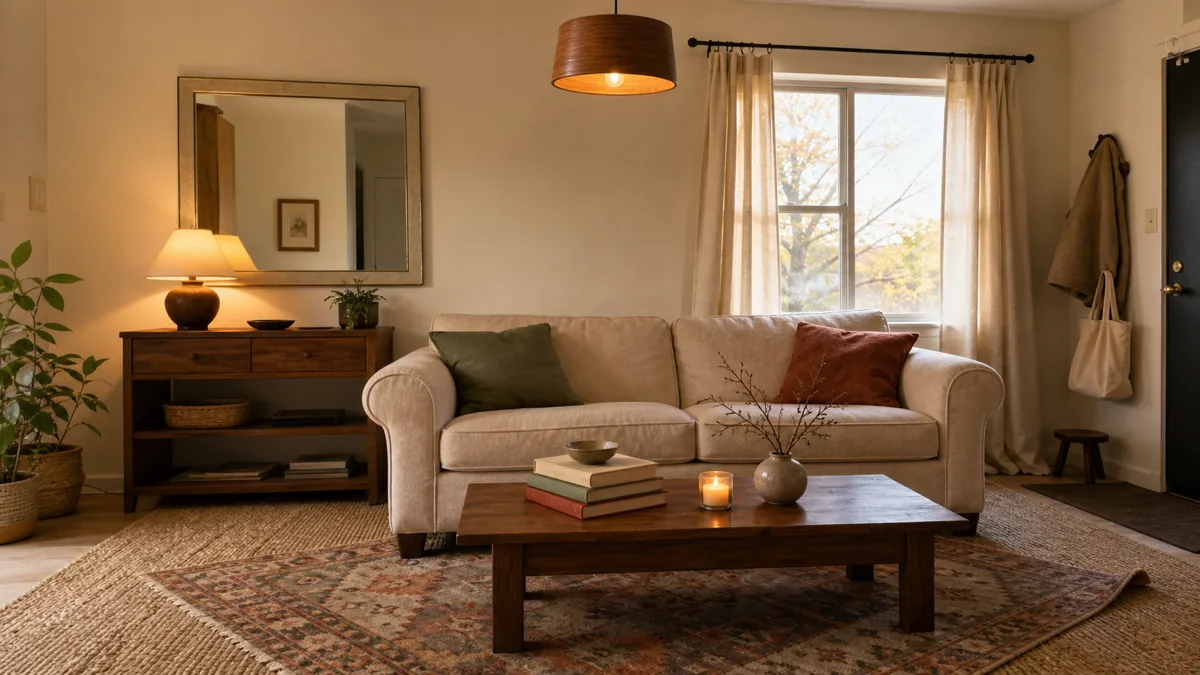
Give each real find room to breathe, the way the console in the photo holds only a few pieces with generous empty space around each. That breathing room is exactly what signals expensive.
A good way to use everything above is to shop with one goal at a time: a single statement piece, a few quick brass and glass accents, or one bare wall to fill, then stop. Real materials and a light touch are the whole formula, and the thrift store is just where you find them cheaply.
- Buy less than you are tempted to, since restraint reads as expensive
- Give each piece visible empty space instead of crowding shelves
- Negative space is what signals high-end, not a packed surface
- Shop with one goal per trip: a piece, an accent, or a wall
- Store or pass on the overflow rather than displaying all of it