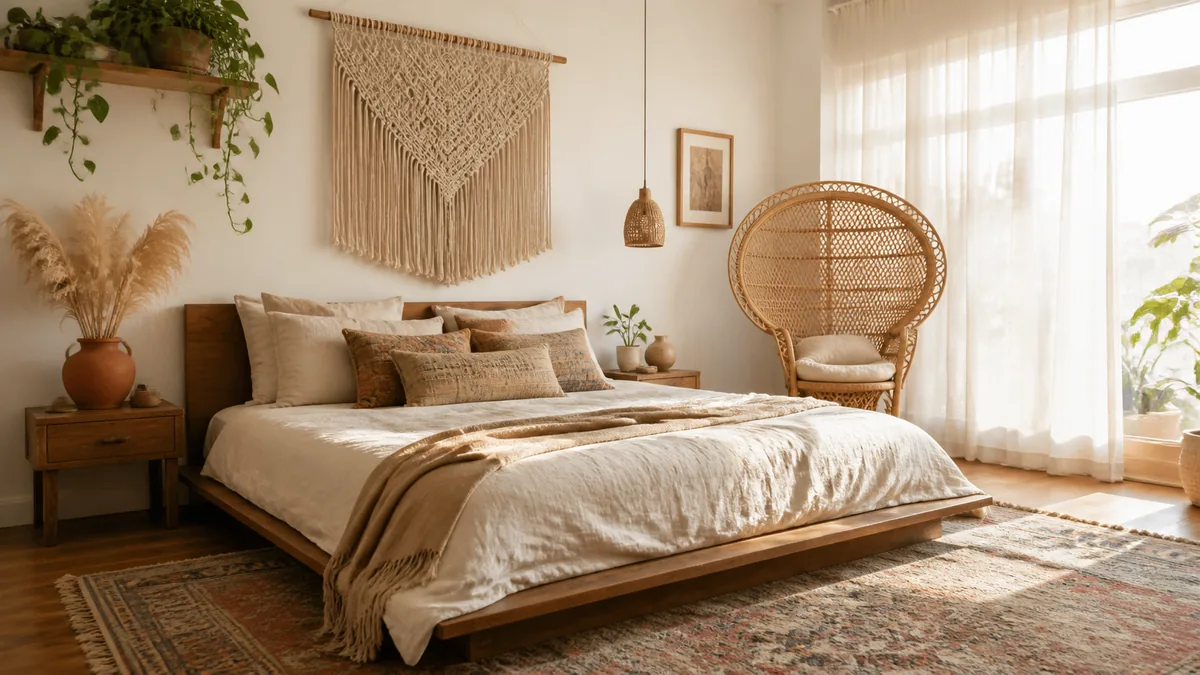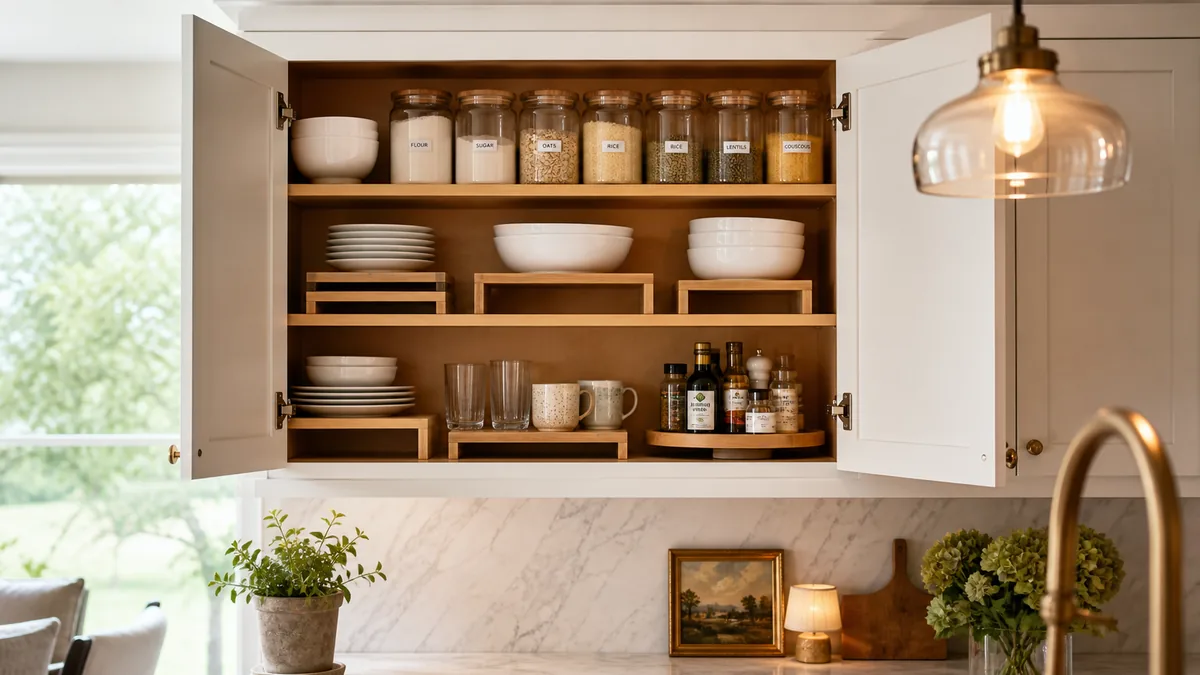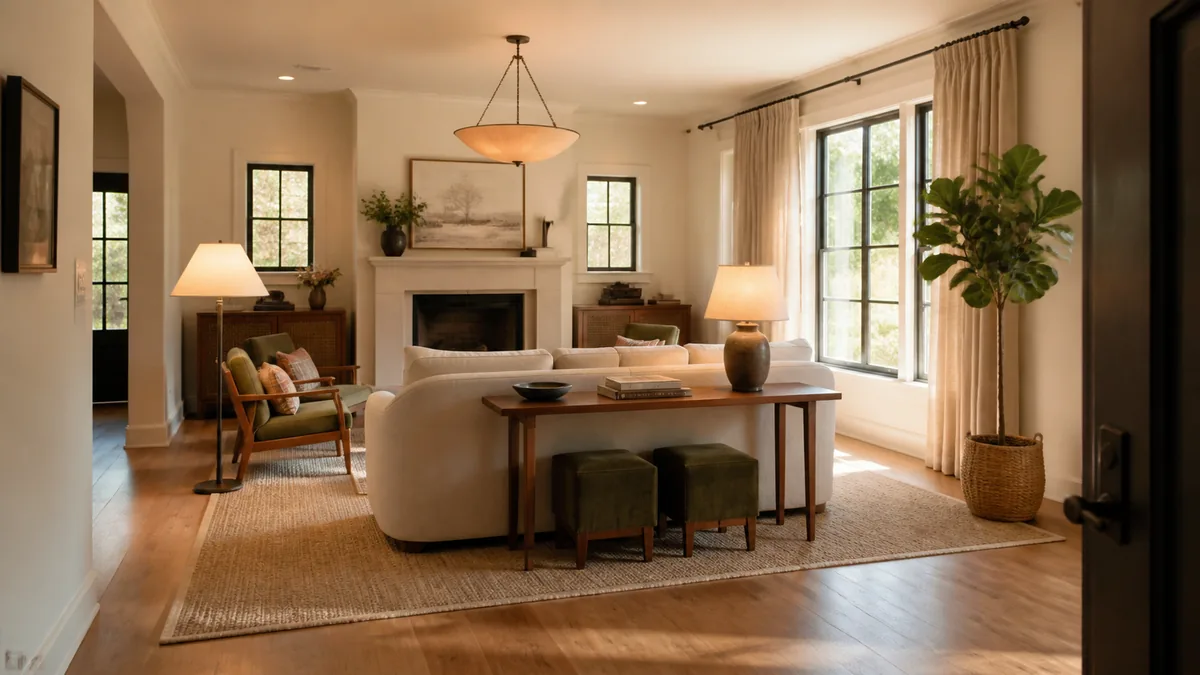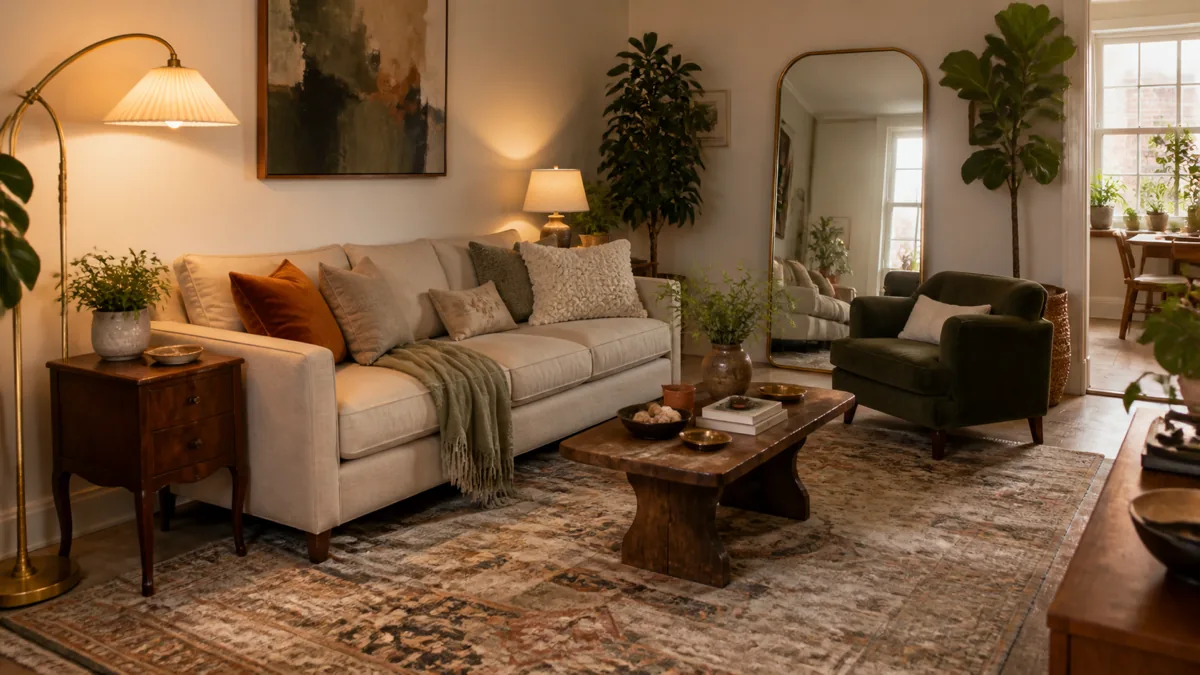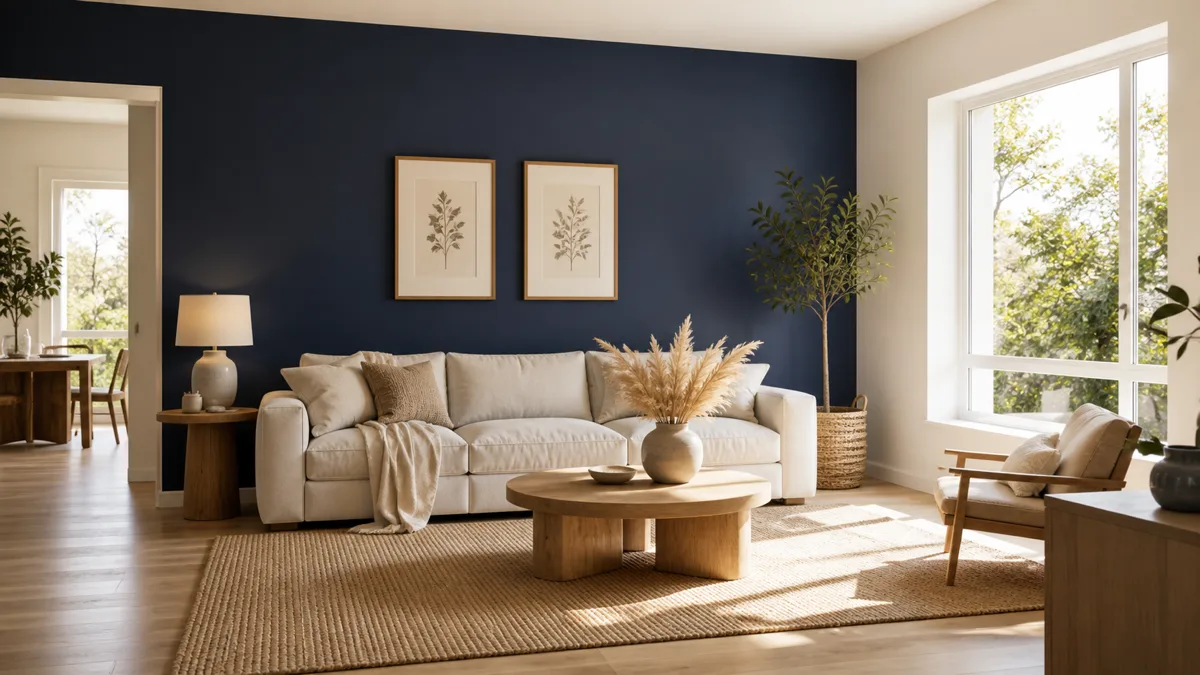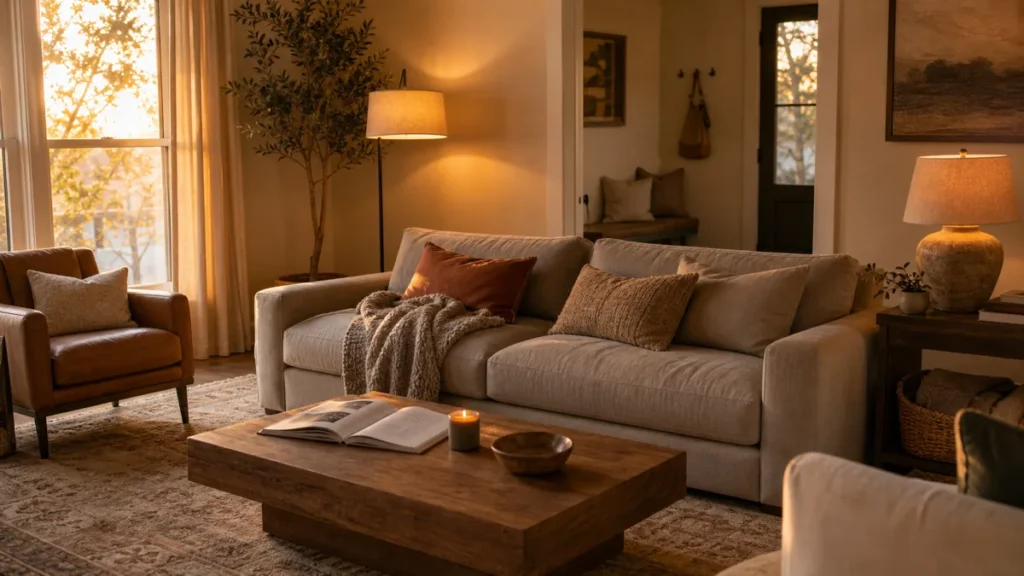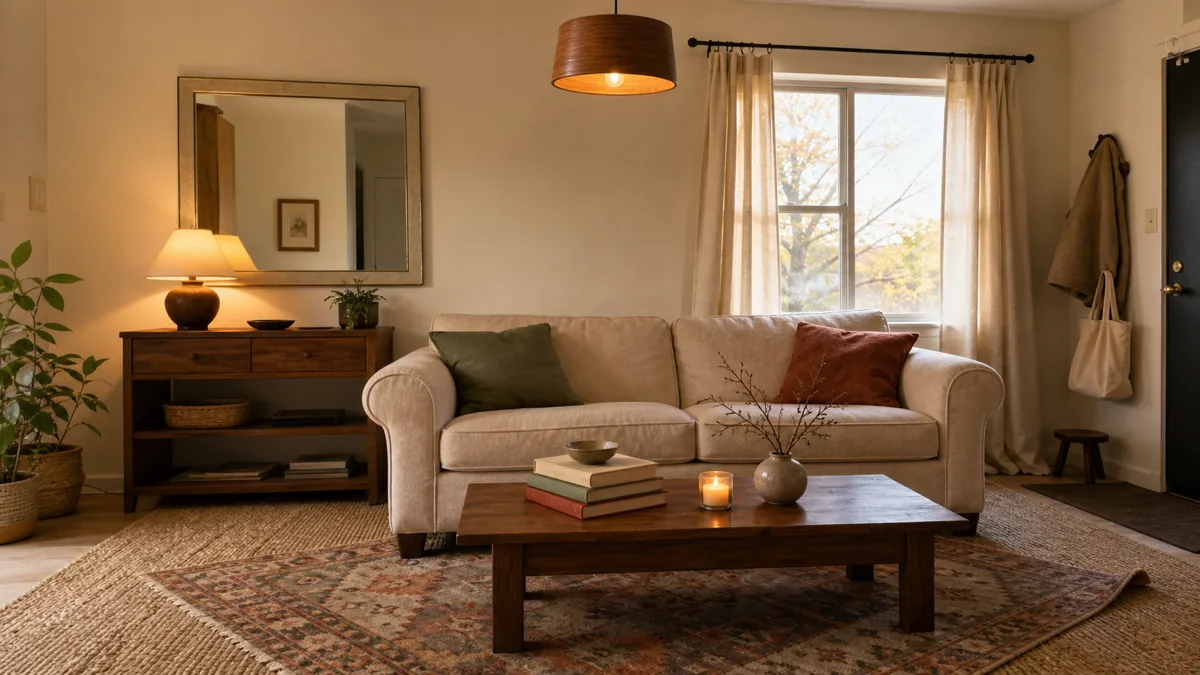
A calm minimalist small living room in soft daylight: a low plain sofa raised on slim wood legs with a linen throw and one sage cushion, a light-oak table holding a single vase, mostly bare surfaces and open floor

12 Minimalist Small Space Ideas for a Calm, Organized Home

A small space gets loud fast. Every surface fills, every wall fights for attention, and a room that should feel restful starts to feel like a to-do list you live inside.

Minimalism is the fix, but not the cold, empty version. The goal is fewer things you actually love, more bare surface, and a room that breathes, the kind of calm you feel the second you walk in instead of a white box you are afraid to touch.

Start by clearing out what you do not use, room by room (a proper declutter comes first). Then these twelve ideas keep a small space minimal, warm, and easy to keep that way.

Jump to the minimalist idea
12 ways to keep a small space calm

A small space feels minimalist when you own fewer things you love, protect the empty space, and give the rest a quiet home. Start with the one idea that fixes what bugs you most, and add the others over time.

Treat Empty Space as the Point, Not a Problem

A slim light-wood console against a warm-white wall holding only one small terracotta plant pot, with a wide stretch of deliberately empty surface and bare wall around it

In a small room the instinct is to fill every gap, but empty surface is exactly what makes a space feel calm and look bigger. Negative space is the design, not a hole waiting for more stuff.

  • Leave one clear zone on every surface and protect it.
  • Resist filling a gap just because it opened up.
  • Judge a room by what is not there, not how much fits.

Pick One Quiet Palette and Stop There

A small living-room corner in one restrained palette of warm white, natural wood, and a single sage-green accent repeated across a cushion, a ceramic, and a stem

A small room wearing five colors reads as busy before you put a single thing down. One restrained palette of a warm neutral, a wood tone, and a single soft accent lets the eye glide instead of catching on every object.

  • Build on one base neutral plus one wood tone.
  • Add a single accent color and repeat it two or three times, no more.
  • Let texture carry the interest so you do not reach for more color.

Clear Every Surface, Then Add Back Just One Thing

A cleared pale-wood nightstand holding a single small matte-black lamp and nothing else, beside a calm white linen-dressed bed

The fastest calm in a small space is a bare surface. Reset a counter or table to empty, then return only the one object that earns its spot, whether that is a lamp, a vase, or a single stack of books.

  • Take everything off, wipe it down, then add back one piece.
  • Send the rest to a closed home instead of back on display.
  • Rotate that one object now and then rather than stacking on more.
Pick what is actually bugging you — start there, add the rest over time
Where should you start?

You will not do all twelve at once. Pick the situation below that matches what your small space feels like right now, and start with those two or three ideas.

Every surface is always clutteredClear and contain. Start at Idea 3 Clear the Surface, Add Back One Thing, give the daily handful Idea 9 a Single Tray, and protect the result with Idea 1 Empty Space on Purpose.
The room feels cramped and heavyLighten it. Start at Idea 4 Furniture on Legs to show floor, let Idea 8 Light Be the Decoration, and open it up with Idea 1 Negative Space.
It looks busy and you cannot relaxQuiet it down. Start at Idea 2 One Quiet Palette, hide the noise with Idea 5 Closed Storage, and give the eye one place to land with Idea 7 a Single Statement Piece.
It gets minimal, then fills back upMake it stick. Start at Idea 12 a One-In, One-Out Rule, size your keep to Idea 10 the Storage You Have, and keep open shelves at Idea 6 Half Full.

Choose Furniture That Floats on Legs

A small minimalist living room shot low to show pale wood floor visible beneath a sofa and console that both stand on slim tapered legs, with one dusty-blue cushion

Furniture raised on slim legs shows the floor beneath it, and visible floor reads as more room. Low blocks that sit flat on the ground swallow square footage a small space cannot spare.

  • Favor sofas, chairs, and consoles lifted on legs over floor-hugging blocks.
  • Choose glass, acrylic, or open frames that the eye sees straight through.
  • Keep one clear sightline across the floor so the room feels open; the right small-space furniture does the rest.

Hide the Everyday Behind Closed Doors

A low greige cabinet with plain closed doors and two lidded woven rattan baskets concealing the everyday, its top holding just one ceramic and a small plant

Open shelves of daily clutter read as noise even when they are tidy. Closed cabinets and lidded baskets give the eye somewhere to rest, which is the whole point of a calm room.

  • Put the everyday behind closed fronts instead of open shelving.
  • Drop daily clutter into lidded baskets so it disappears at a glance.
  • Reserve any open surface for the few calm things worth seeing; this is also smarter small-space storage.

Style Open Shelves With Breathing Room, Not Stuff

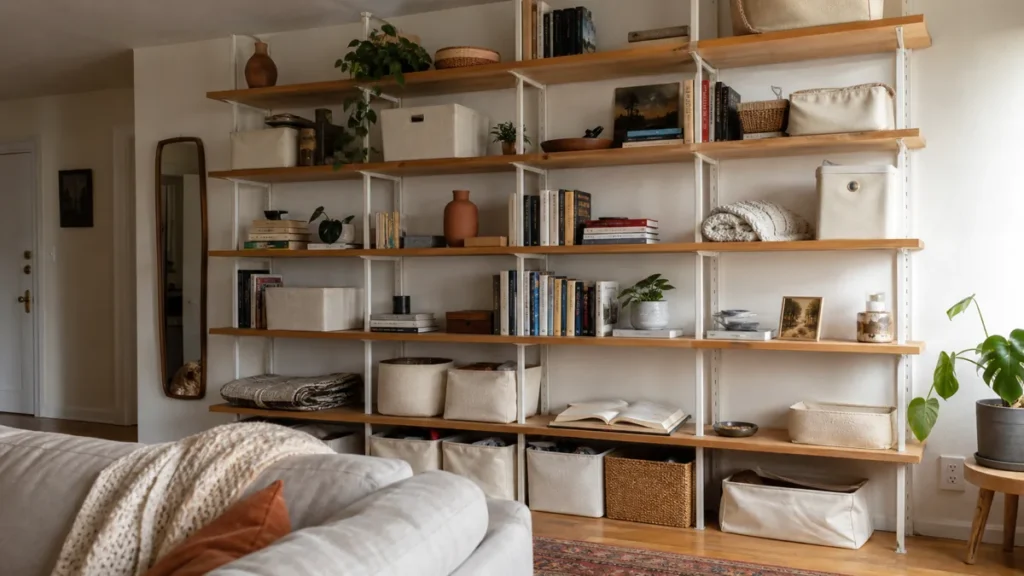
Open light-wood wall shelves styled sparsely with a flat stack of plain books under a ceramic, one sculptural object, and a plant, and clear empty gaps between each grouping

For the shelves you do keep open, the empty space between things is the styling. A shelf packed wall to wall looks like storage; a shelf half full looks intentional and calm.

  • Fill about half of each shelf and leave the rest open.
  • Group items in odd numbers with clear space around each cluster.
  • Lay a couple of books flat as a small pedestal instead of a wall of spines.
What separates a small space that stays calm from one that’s cluttered again a week later
A 4-rule system for a calm minimalist space

Minimalism in a small space is less about buying clever storage and more about a few rules that keep the room owning less and breathing more. These four are what make the twelve ideas actually stick.

Subtract before you addThe first move is always to remove, not to buy. A new shelf or bin only relocates the clutter; taking things away is what actually opens up a small room. Before any organizer goes in the cart, pull the duplicates, the not-quite-right, and the things you keep out of guilt. A space edited down to what you genuinely use and love is already most of the way to minimalist — then arrange what is left.
Protect the empty spaceIn a small room, the bare surface and the open stretch of floor are the design, not a gap to fill. Empty space is what reads as calm and makes the room feel bigger than its square footage. Once a surface is clear, defend it: a new object has to earn its spot by replacing something, not by squeezing in beside it. The restraint is the whole look.
One palette, warmed by textureA small space goes quiet when the color does. Hold to one neutral base, one wood tone, and a single soft accent, and the eye glides instead of catching on every object. Then keep it from feeling cold the way minimalism can: layer real texture — linen, wood, ceramic, a chunky knit — so the room feels warm and lived-in without adding a single competing color or pattern.
Give everything a home, mostly hiddenCalm is what you do not see. Everything you own needs one defined home, and for the everyday stuff that home is behind a closed door, in a lidded basket, or in a single tray — not stacked on an open surface. Conceal the working clutter and reserve what stays on view for the few quiet things worth looking at. Out of sight is most of what makes a minimalist room feel restful.

Let One Piece Be the Star and Everything Else Recede

A small minimalist living room with one large abstract terracotta-and-cream art print as the single hero on a bare white wall, surrounded by quiet plain furniture

A small room needs one thing to look at, not ten competing for the glance. Give a single statement piece room to breathe, whether a large print, a sculptural lamp, or one bold chair, and the rest of the room can stay quiet.

  • Choose one hero per room and build the calm around it.
  • Keep its surroundings plain so it actually reads as the focal point.
  • Skip a second statement piece in the same sightline.

Make Light the Decoration

A small room where warm golden daylight pours through sheer white curtains and a round mirror bounces it deeper in, with minimal furniture and a clear windowsill

In a minimalist room, light does the work that clutter used to. Soften a window with sheers instead of heavy drapes, bounce daylight with a mirror, and the room feels warm and full without a single extra object.

  • Trade heavy curtains for sheers or bare panes where privacy allows.
  • Place a mirror to throw daylight deeper into the room.
  • Keep the windowsill clear so nothing blocks the light coming in.

Corral the Daily Few Into a Single Tray

A bare pale-wood dresser top with a single shallow rattan tray corralling a daily handful of reading glasses and an amber glass candle, a small vase beside it and the rest of the surface left clear

You cannot have nothing out, but you can contain it. One tray or shallow bowl holds the daily few, the glasses and candle and small bits you reach for every morning, so the rest of the surface stays clear and the stuff still has a home.

  • Give the daily handful one tray or bowl and nothing more.
  • Send anything that will not fit to a home somewhere else.
  • Empty and reset the tray the moment it starts to overflow.
Save this for later

12 Minimalist Small Space Ideas for a Calm, Organized Home

  1. 1Treat empty space as the pointIn a small room, bare surface and open floor are the design, not a gap to fill. Start by clearing out what you do not use with a room-by-room declutter, then protect the empty space.
  2. 2Pick one quiet paletteOne neutral base, one wood tone, and a single soft accent let the eye glide. Color restraint is what makes a small space read calm instead of busy.
  3. 3Clear surfaces, add back one thingReset a counter or table to bare, then return only the one object that earns it. Everything else goes to a closed home, not back on display.
  4. 4Furniture that floats on legsPieces raised on slim legs show the floor beneath them, and visible floor reads as more room. Glass and open frames disappear; heavy blocks swallow space.
  5. 5Hide the everyday behind doorsOpen shelves of daily clutter read as noise even when tidy. Closed cabinets and lidded baskets give the eye somewhere to rest.
  6. 6Open shelves, half fullFor shelves you keep open, the empty space between things is the styling. Fill about half, group in odd numbers, and leave real gaps.
  7. 7Let one piece be the starA small room needs one thing to look at, not ten competing. Give a single statement piece room to breathe and the rest can stay quiet.
  8. 8Make light the decorationSoften a window with sheers, bounce daylight with a mirror, and light does the work clutter used to. The room feels full with almost nothing in it.
  9. 9Corral the daily few into a trayYou cannot have nothing out, but you can contain it. One tray holds the daily handful so the rest of the surface stays clear.
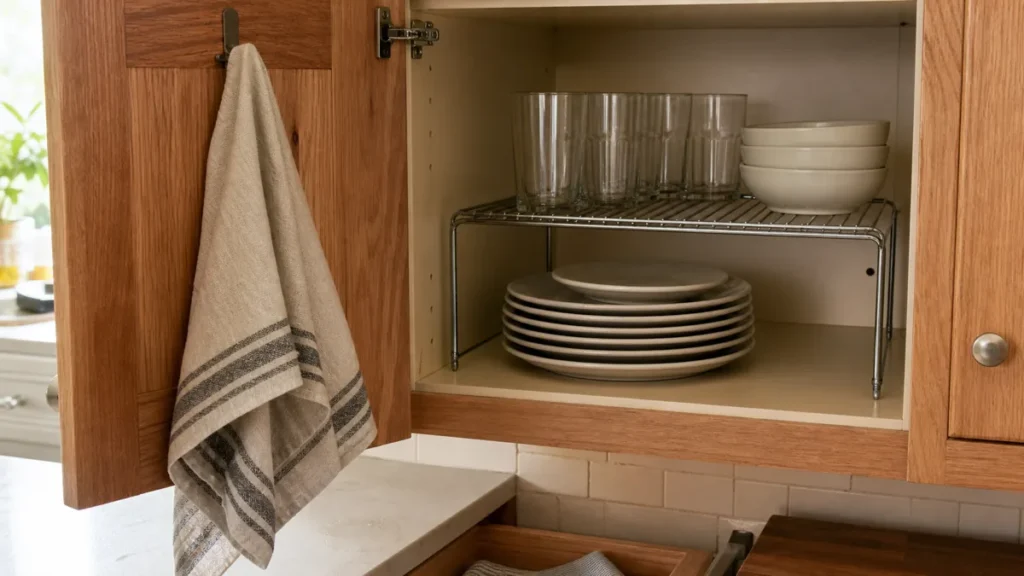
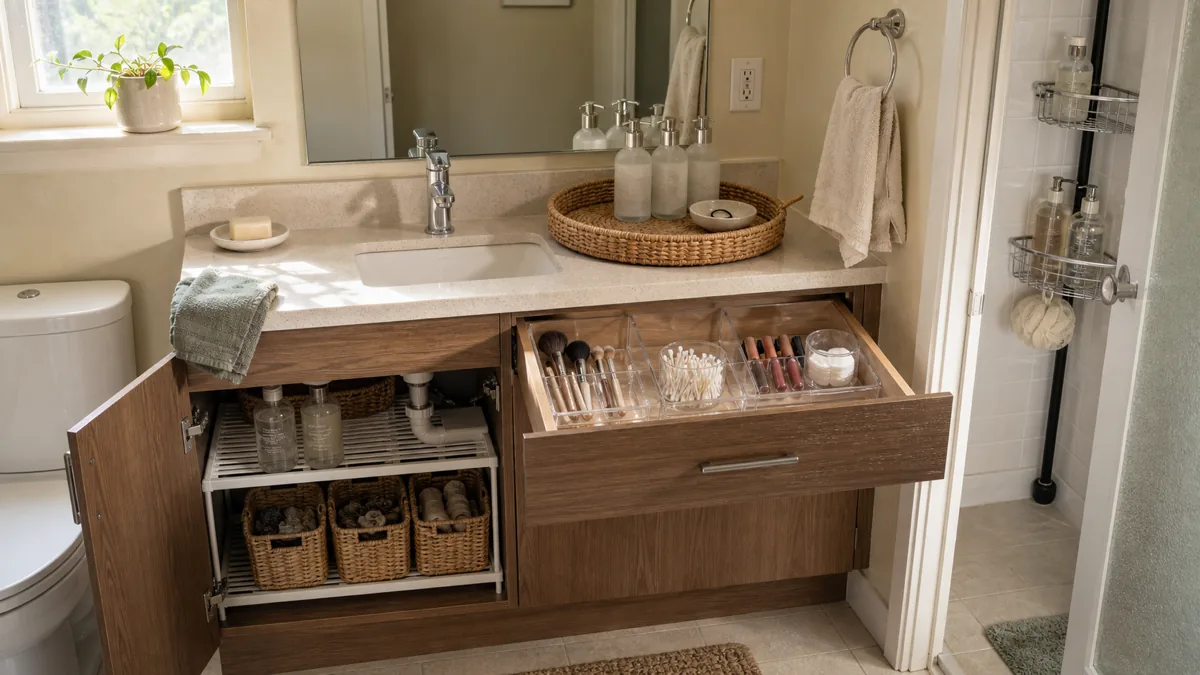
  10. 10Match storage to what you ownOwn to fit your space, not the other way round. When the amount you keep matches the storage you have, nothing spills and you stop buying bins.
  11. 11Trade pattern for quiet textureMinimalist need not mean cold. Linen, wood, ceramic, and a chunky knit add warmth without the visual noise of a busy print.
  12. 12Keep it minimal: one in, one outA small space stays minimal only with a habit. Each new thing in sends an old thing out, so the same less-is-more thinking scales to your whole small apartment.

styledhomenotes.com

Match Your Storage to What You Actually Own

A small open closet of pale-wood shelves holding neatly folded neutral textiles and a few sage and cream fabric bins that fit with a little empty room to spare on every shelf

Minimalism is owning to fit your space, not buying another bin. When the amount you keep matches the storage you have, nothing spills onto the floor or the counter — and you stop shopping for organizers you do not need.

  • Size what you keep to the storage you already have, not the reverse.
  • If a shelf overflows, edit the things before you buy a bin.
  • Leave a little empty room in every drawer so it never jams.

Trade Bold Pattern for Quiet Texture

A tight close-up layering neutral textures in a small living room: a linen throw, an oatmeal boucle cushion, raw light wood, and a matte cream ceramic, with no bold pattern

Minimalist does not have to mean cold. Texture like linen, wood, ceramic, or a chunky knit adds the warmth a small calm room needs without the visual noise of a busy print.

  • Layer natural textures in place of bold patterns.
  • Keep every texture inside the one quiet palette you chose.
  • Mix matte and soft surfaces so the room feels warm, not bare.

Keep It Minimal With a One-In, One-Out Rule

A nearly bare pale-wood entry bench with one folded sage throw, and beside it a small open woven basket holding one or two outgoing items waiting to be donated

A small space only stays minimal if a habit protects it. Let every new thing that comes in send an old thing out, and the room can never quietly fill back up to where it started.

  • When something new arrives, something old leaves the same day.
  • Keep a small donate basket going so outgoing things have somewhere to wait.
  • Walk each room once a month for whatever has crept back onto the surfaces.

A minimalist small space is not a one-time purge — it is a handful of habits that keep the room breathing long after the first clear-out. Keep going and the same less-is-more thinking scales to the whole apartment.

About the author
Nora Ellis

Nora Ellis edits Styled Home Notes, where she shares practical decorating, organization, and small-space ideas for creating a more styled and functional home. Every article is reviewed for clarity, usefulness, image sourcing, and Pinterest-to-page alignment before publication. Visit the Nora Ellis author page.

Similar Posts