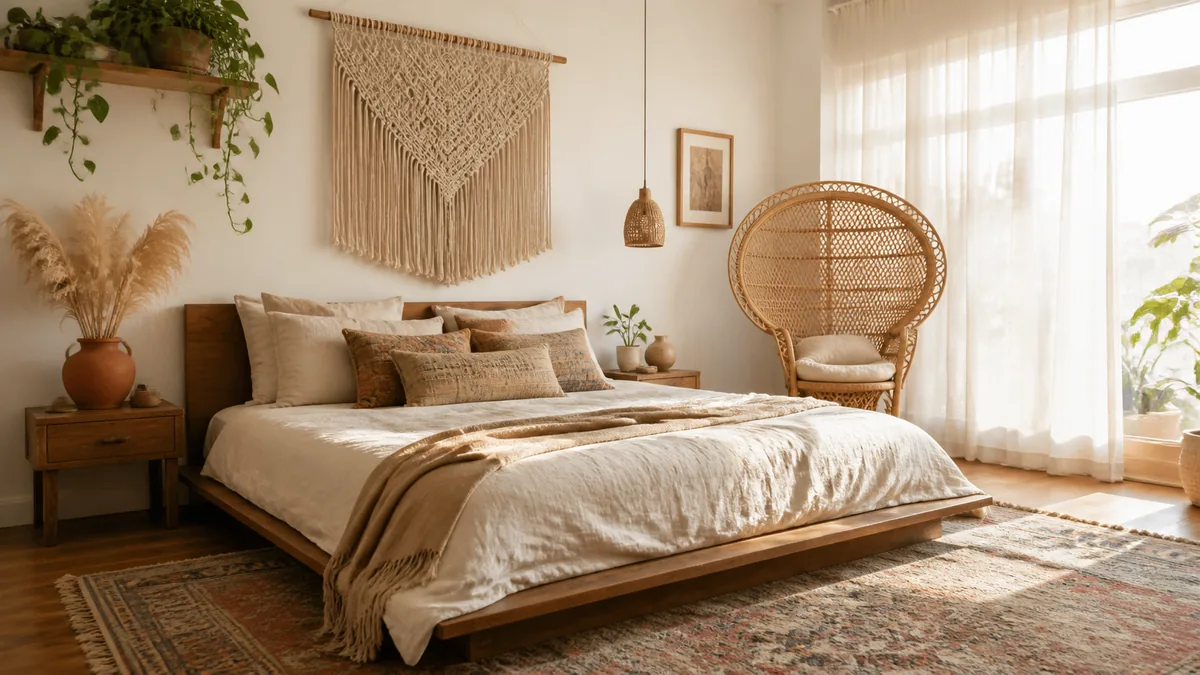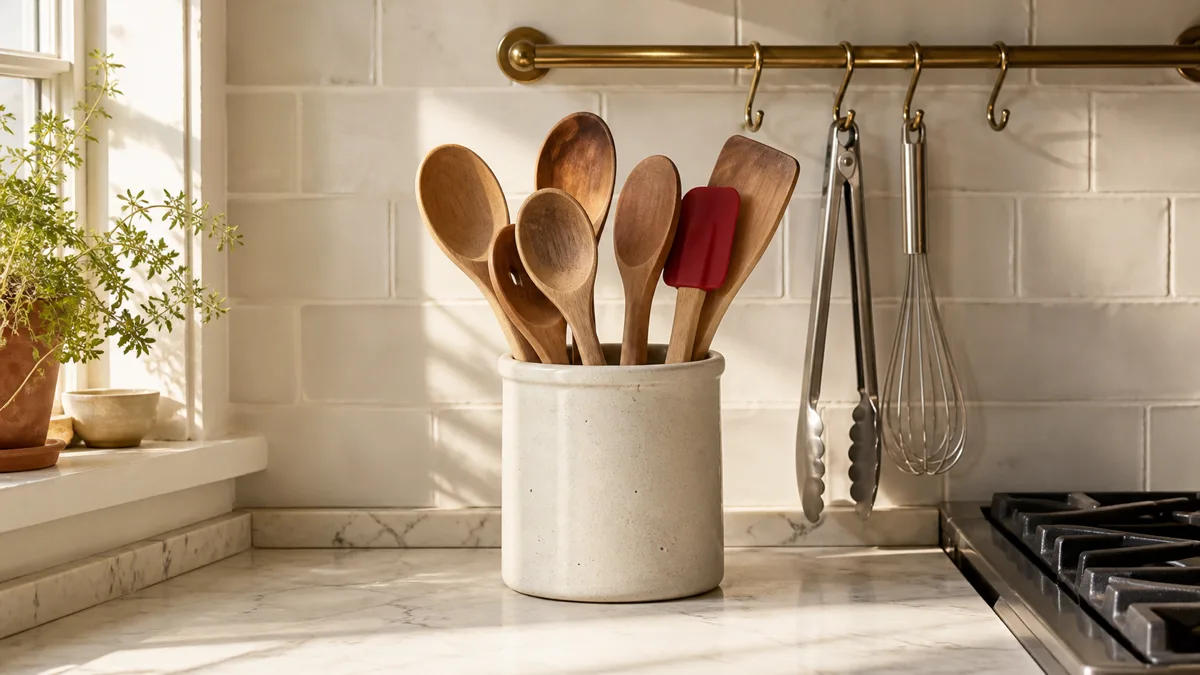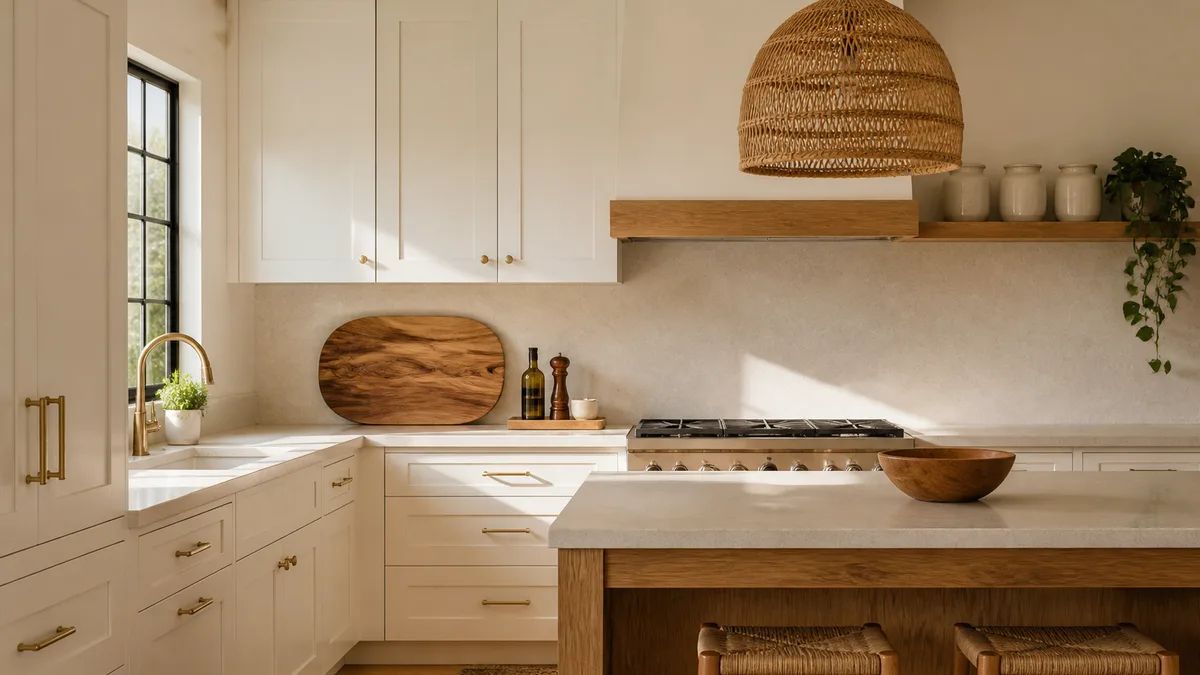
A calm, well-zoned home kitchen in soft daylight: a clear light-wood prep counter with a cutting board and a bowl of lemons, a stove with a crock of utensils and a tray of oils within reach, and a tidy sink, with warm-white and sage cabinets

10 Kitchen Zones That Make Cooking and Cleanup Easier

Most kitchen frustration is not a storage problem. It is a layout problem. You criss-cross the room for a spoon, hunt for the cutting board with a pan already hot, and cleanup feels like starting a whole second job.

Stop organizing your kitchen by where things fit, and start grouping it by what you actually do. Carve the room into zones, and keep every tool within arm’s reach of the task it belongs to.

These ten zones cover a normal kitchen from prep to cleanup. You do not need a big kitchen for them, just a clear sense of what happens where. Start with the whole-kitchen reset, then carve it into these zones.

Jump to the zone
10 kitchen zones to set up

A kitchen flows when it is grouped by what you do, not just where things fit, and every tool lives within arm’s reach of its task. Start with the zone that frustrates you most and add the rest over time.

Set Up a Prep Zone Where You Do the Chopping

A kitchen prep zone on a long clear butcher-block counter: a wooden cutting board with a chefs knife, two nested mixing bowls, a set of measuring cups, and a small scrap bowl grouped within reach, a bowl of vegetables beside it

Your prep zone is the busiest stretch of counter, ideally between the fridge and the sink. Everything you reach for while chopping and measuring should live here, so you are not crossing the kitchen mid-recipe.

  • Claim the longest clear run of counter as the prep zone.
  • Keep cutting boards, knives, and mixing bowls within one step of it.
  • Park a small bin or compost bowl here for scraps as you go; a clear counter is what makes the zone work.

Build a Cooking Zone Within Arm’s Reach of the Stove

A kitchen cooking zone at the stove: a ceramic crock of wooden utensils, a small tray of plain oil bottles and a dish of salt and spice jars, and a linen pot holder and towel on a rail, all within arms reach of the burners

Once a pan is hot you cannot go hunting. The cooking zone keeps everything you grab while the heat is on right at the stove, so you stir, season, and flip without stepping away.

  • Stand cooking utensils in a crock right beside the burners.
  • Keep oils, salt, and your everyday spices on a small tray within reach.
  • Hang pot holders and a towel where your hand lands, not in a far drawer.
Pick what is actually slowing you down — start there, add the rest over time
Where should you start?

You will not set up all ten zones at once. Pick the situation below that matches what frustrates you most in the kitchen right now, and start with those two or three zones.

You criss-cross the kitchen mid-recipeShorten the trips. Start at Zone 1 the Prep Zone, set up Zone 2 the Cooking Zone at the stove, and put Zone 4 Everyday Dishes by the dishwasher.
Cooking feels chaotic with a hot pan goingBring it to the stove. Start at Zone 2 the Cooking Zone, feed it with Zone 1 the Prep Zone beside it, and keep Zone 3 the Cleanup Zone ready at the sink.
The counters are buried in appliances and stuffReclaim the surface. Start at Zone 8 the Small-Appliance Zone, move the morning rush to Zone 6 a Coffee Station, and clear a real Zone 1 Prep Zone to work in.
Cleanup is a mess and you buy duplicatesClose the loop. Start at Zone 3 the Cleanup Zone, group food in Zone 5 the Dry-Food Zone so you shop your shelves, and sort the in and out at Zone 10 Landing and Recycling.

Keep a Cleanup Zone at the Sink

A kitchen cleanup zone at the sink: a caddy holding a plain dish-soap bottle, brush, and sponge, a folded linen towel on a bar, and a pair of slim trash and recycling bins tucked beside the sink cabinet

Cleanup goes faster when everything for it lives in one wet zone around the sink and dishwasher. When the soap, the brush, and the bin are all here, wiping down is a few steps instead of a lap of the kitchen.

  • Corral dish soap, a brush, and a sponge in one caddy at the sink.
  • Keep trash and recycling paired right beside it, ideally a pull-out.
  • Stash the spare sponges and cleansers in the cabinet under the sink.

Store Everyday Dishes by the Dishwasher

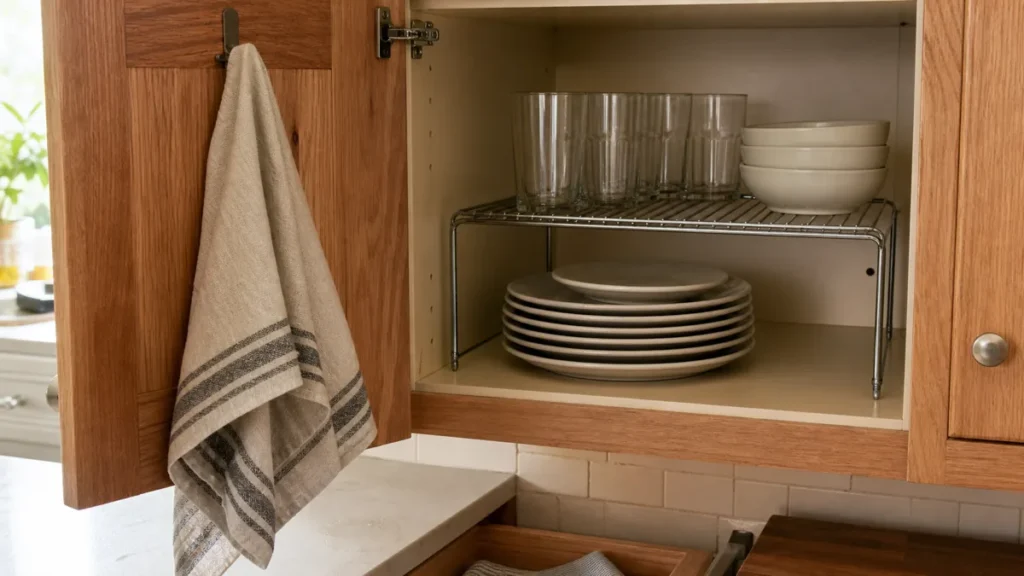
An open kitchen cabinet of everyday plates, bowls, glasses, and mugs in neat stacks right beside the dishwasher, plain white and natural-toned dishware

The dishes you use every day should live in the cabinet or drawer closest to the dishwasher. Then unloading is one short turn, and setting the table is a single trip, not a scavenger hunt.

  • Put everyday plates, bowls, and glasses nearest the dishwasher.
  • Keep the special and rarely used pieces somewhere higher or farther.
  • Store mugs and cups by the spot you actually fill them, not by tradition.

Group Dry Food in One Pantry Zone

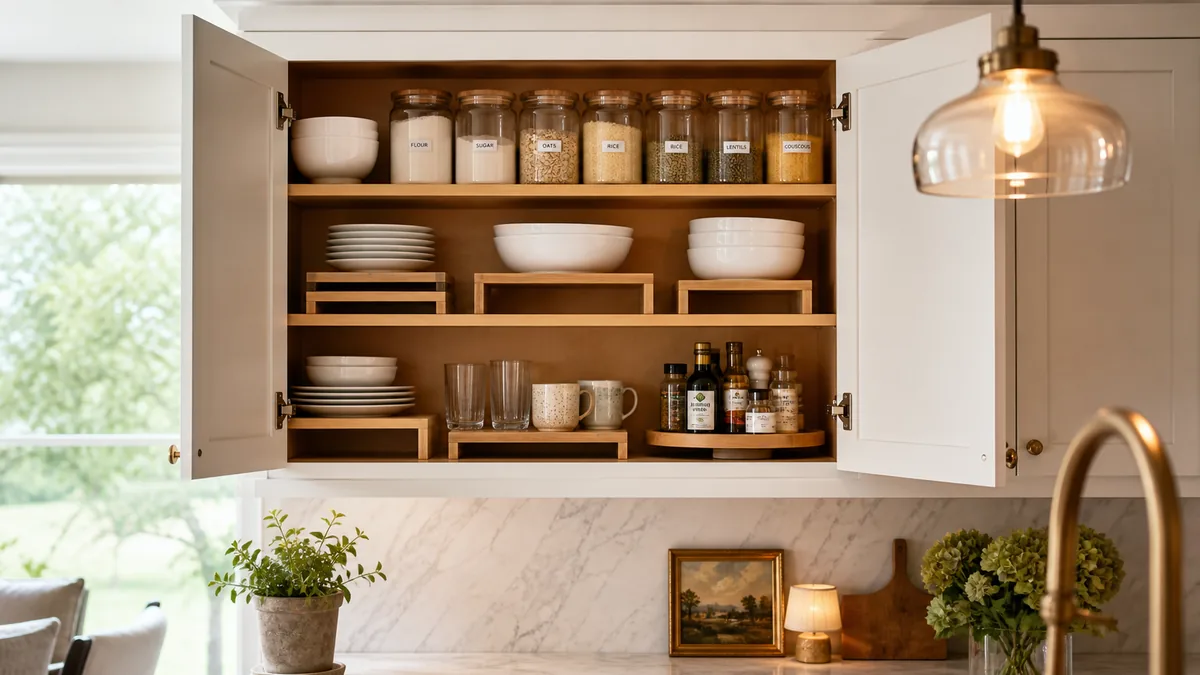
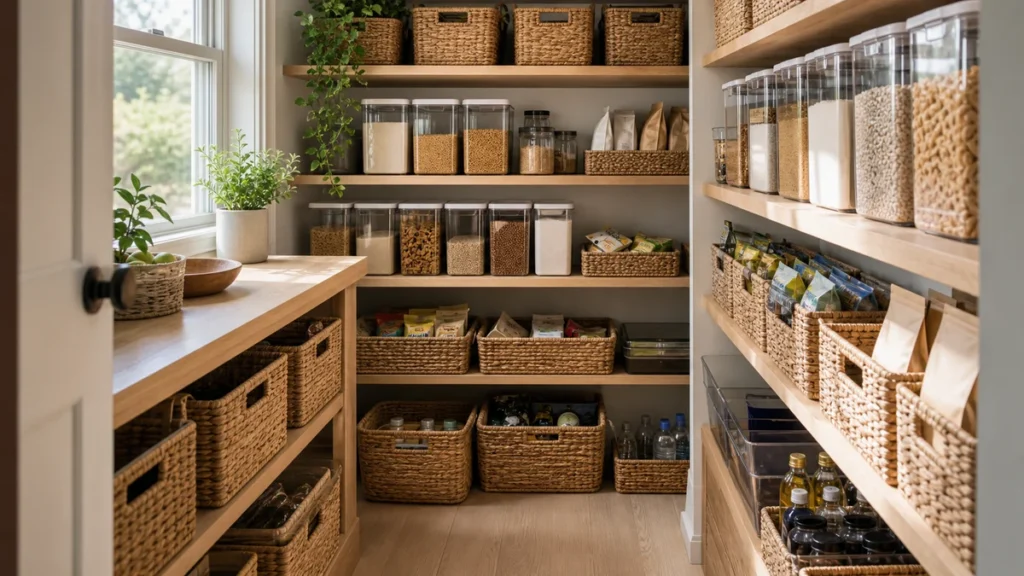
An open pantry cabinet set up as one dry-food zone, staples grouped by type in clear glass canisters and woven baskets with blank labels, everyday items at eye level

Scattered food is forgotten food. One dry-food zone, grouped by type, means you shop your own shelves before the store and stop buying a third jar of something you already have.

  • Gather all shelf-stable food into one cabinet or pantry zone.
  • Group it by type so like lives with like; a deeper pantry system takes it further.
  • Keep the everyday staples at eye level and the backstock up high.
What separates a kitchen that flows from one that fights you every meal
A 4-rule system for zoning a kitchen

A kitchen that works is less about a bigger space and more about a few rules for grouping it by task. These four are what make the ten zones actually flow instead of just looking tidy.

Group by task, not by where it fitsMost kitchens are organized by where there happened to be room, which is why you cross the floor for a spoon. Flip it: decide what task happens where — prep, cooking, cleanup, coffee — and let that decide where each tool lives. When the layout matches what you do, the steps between jobs get short and the kitchen stops sending you on laps.
Keep each tool within arm’s reach of its taskA zone only works if its tools are actually in it. The cooking utensils belong at the stove, not in a drawer across the room; the cutting boards belong on the prep counter; the dish soap belongs at the sink. Store each thing where you first reach for it, and you stop interrupting one job to go fetch the tool for it. Reach, do not walk.
Match the zones to how you actually cookThere is no universal kitchen layout, so do not copy one. A daily baker needs a real baking zone; a coffee household needs a serious coffee station; a small kitchen may fold prep and cooking into one. Build the zones you use every week and shrink or skip the ones you do not. The right map is the one that fits your real meals, not a magazine’s.
Keep traffic and the in/out flow out of the work zonesThe jams happen when the coffee crowd, the snack run, and the grocery drop all cut through where you are trying to cook. Push those to the edges: a coffee station off the main path, a low snack zone the kids can self-serve, and a landing-and-recycling spot by the door. Protect the prep and cooking zones, and the busiest moments stop colliding.

Tuck a Coffee and Beverage Station Off the Main Path

A coffee and beverage station in a kitchen corner off the main path: a plain coffee maker, a row of mugs on hooks, a canister of beans, a small caddy of teas, and a dish of spoons, all clustered together

A coffee station pulls the morning crowd out of your prep and cooking zones. Put the maker, the mugs, and the coffee together in one corner away from the main work path, and the traffic jam at 7 a.m. disappears.

  • Cluster the coffee maker, mugs, and beans or tea in one corner.
  • Choose a spot off the main prep and stove path so it never blocks cooking.
  • Keep sugar, sweeteners, and spoons right at the station so nothing wanders.

Pull a Baking Zone Together in One Spot

A kitchen baking zone gathered in one spot: clear canisters of flour and sugar, nested measuring cups, a plain stand mixer, and a stack of sheet pans and bowls grouped on one shelf

Baking touches a dozen things at once, so scatter them and you spend the first ten minutes just gathering. Keep the whole kit in one spot and you can pull it out together and start.

  • Group flour, sugar, and leaveners with your measuring cups and spoons.
  • Keep the mixer, sheet pans, and bowls in the same cabinet or shelf.
  • Site the zone near a clear counter so you have room to roll out and fill.
Save this for later

10 Kitchen Zones That Make Cooking and Cleanup Easier

  1. 1The prep zoneClaim the longest clear counter for chopping, and keep boards, knives, and bowls within one step. It is the backbone of a wider kitchen reset.
  2. 2The cooking zoneKeep a crock of utensils, oils, salt, and everyday spices, and a pot holder right at the stove. Once a pan is hot you cannot go hunting.
  3. 3The cleanup zoneGroup dish soap, brush, sponge, and a paired trash and recycling bin at the sink. Cleanup is a few steps when everything for it lives in one wet zone.
  4. 4Everyday dishes by the dishwasherStore the plates, bowls, and glasses you use daily in the cabinet nearest the dishwasher, so unloading is one short turn.
  5. 5One dry-food zoneGather all shelf-stable food into one spot, grouped by type, so you shop your own shelves first; a deeper pantry system takes it further.
  6. 6A coffee station off the pathCluster the maker, mugs, and beans in one corner away from the work path, and the 7 a.m. traffic jam in your prep zone disappears.
  7. 7A baking zone in one spotKeep flour, sugar, measuring cups, the mixer, and sheet pans together so you pull the whole kit out at once instead of gathering it.
  8. 8Corral the small appliancesLeave only the two or three you use daily on the counter near an outlet; the rest earns its keep in a cabinet or gives up its spot.
  9. 9A grab-and-go snack zoneKeep kid snacks, lunch supplies, and water bottles in one low, easy-reach drawer so the rest of your zones stay the way you set them.
  10. 10A landing and recycling zoneGive groceries a spot to land and sort recycling, trash, and compost together near the door, so arriving and discarding stay out of the cooking zones.

styledhomenotes.com

Corral the Small Appliances You Actually Use

A small-appliance zone in a kitchen corner: a plain blender, a two-slot toaster, and a simple kettle grouped on a clear counter near a wall outlet, the rest of the counter clear

Small appliances multiply until they own the counter. Keep only the two or three you reach for most out, near an outlet and where you use them, and the rest earns its keep in a cabinet or gives up its spot.

  • Leave only the daily appliances on the counter, near a free outlet.
  • Store the once-a-month ones in a cabinet and pull them as needed.
  • Be honest about the gadget you have not touched in a year and let it go.

Carve Out a Grab-and-Go Snack Zone

A low kitchen drawer pulled open at kid height as a grab-and-go snack zone: single-serve snacks in plain wrappers, stacked reusable containers, and a couple of water bottles, all easy to reach

A snack and lunch zone makes the kitchen self-serve. When kids and busy mornings have one low, easy-reach spot, the rest of your zones stay the way you set them.

  • Keep kid snacks and lunch supplies in one low drawer or basket.
  • Add the reusable containers and water bottles to the same spot.
  • Stock it on shopping day so the grab-and-go habit actually sticks.

Set a Landing and Recycling Zone by the Door

A landing and recycling zone at the end of a kitchen near the door: a counter end with cloth grocery bags and a basket, three slim sorted recycling, trash, and compost bins against the wall, and reusable bags on a hook

The way in and the way out need a home too. A landing spot for groceries and a sorted recycling and trash zone near the door keeps the mess of arriving and discarding out of your cooking zones.

  • Clear a counter end or shelf near the door for groceries to land.
  • Sort recycling, trash, and compost together so taking it out is one trip.
  • Keep reusable bags hung right here so they leave with you next time.

Zoned this way, a kitchen stops fighting you: every task has a home, and the tools for it are already there when you reach. Set up the zones that match how you cook, and tune the rest over a few weeks of real meals.

About the author
Nora Ellis

Nora Ellis edits Styled Home Notes, where she shares practical decorating, organization, and small-space ideas for creating a more styled and functional home. Every article is reviewed for clarity, usefulness, image sourcing, and Pinterest-to-page alignment before publication. Visit the Nora Ellis author page.

Similar Posts