12 Small Entryway Ideas to Make the Most of a Tiny Front Door
The first few feet inside your front door set the tone for the whole home, and in a small apartment they are usually the most neglected. Keys land wherever, shoes pile up, and a bare wall greets you every time you walk in.
A small entryway does not need square footage to work. It needs one clear job for the door: somewhere to drop your keys, hang your coat, and shed your shoes, plus a little warmth so coming home feels like coming home.
The same trick that makes a small living room feel bigger works in the entry too. Here are twelve ways to claim those first few feet, even if your door opens straight into a room.
From a slim mirror that bounces light to a rug that carves an entry out of thin air, these twelve moves give a small front-door zone storage, function, and a welcome. Jump straight to the one your entry needs first.
- 1Hang a slim wall mirror
- 2Float a narrow console table
- 3Mount a row of wall hooks
- 4Slide in a shoe storage bench
- 5Carve out a no-entryway zone with a rug
- 6Stand a tall narrow shoe cabinet
- 7Set out a catchall tray for keys
- 8Layer in warm entry light
- 9Float a wall shelf for grab-and-go
- 10Hang a coat rack or pegboard
- 11Tuck a basket for shoes and umbrellas
- 12Make a first impression with art or a plant
Hang a Slim Wall Mirror
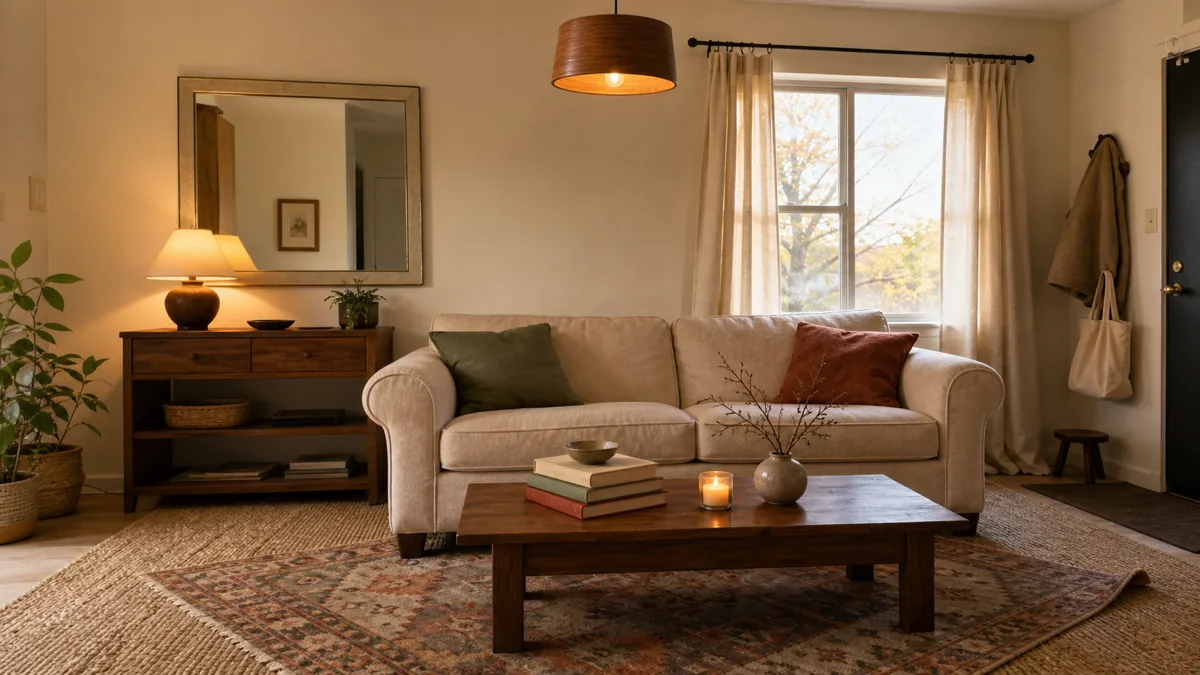
A mirror is the highest-leverage thing you can hang in a dim, narrow entry. It bounces whatever daylight reaches the door deeper into the space and visually doubles the depth, so the entry reads brighter and bigger than it is. The bonus is purely practical: it catches you for one last look on the way out.

- Hang a simple rectangular mirror on the entry wall, above the console or beside the hooks.
- Position it to face a window or the door’s sidelight so it spreads the light, not the wall.
- Keep the frame thin and plain so the reflection does the work.
Float a Narrow Console Table
A narrow console is the entryway’s landing pad, the surface where keys and mail come to rest instead of scattering across the kitchen. The whole point is depth: shallow enough to pass without turning sideways in a tight hall, but enough top for a lamp and a tray and a shelf below for a basket.

- Measure the walkway first and pick a console shallow enough to leave a clear path.
- Put a lamp and a catchall tray on top for light and a place to drop keys.
- Use the lower shelf for a basket so the floor stays clear.
Mount a Row of Wall Hooks
When there is no coat closet, a row of hooks turns a bare stretch of wall into the closet. It is the cheapest, most renter-friendly storage in the entry, and because everything hangs in plain sight, you actually use it instead of letting coats land on a chair.

- Mount a hook rail at shoulder height on the wall by the door.
- Space the hooks far enough apart that a coat and a bag do not crowd each other.
- Reserve one hook just for keys so they always land in the same spot.
You will not need all twelve in a few feet of entry. Pick the problem below that matches your front door right now, and start with those two or three ideas.
Slide In a Shoe Storage Bench
A storage bench solves two entry problems with one piece: somewhere to sit while you wrestle off your shoes, and somewhere to hide them once they are off. It is the difference between a tidy threshold and a heap of shoes you step over.

- Fit a bench with open cubbies snug against the entry wall.
- Drop a couple of woven baskets into the cubbies to corral the shoes.
- Soften the top with a cushion or a throw so it reads as a seat, not a shelf.
Carve Out a No-Entryway Zone With a Rug
When the front door opens straight into the living room, you make an entryway by drawing a border rather than building a wall. A small rug at the threshold plus one piece of furniture tells the eye that this is where outside ends and home begins, the same way studio apartment zones split one room into areas.

- Lay a durable doormat-sized rug just inside the door to mark the arrival spot.
- Set one slim console or cabinet beside it to anchor the zone.
- Keep the palette a little different from the room so the threshold reads as its own area.
Stand a Tall Narrow Shoe Cabinet
A tall flip-drawer shoe cabinet is the move when shoes are the whole problem and floor space is the whole constraint. It hides a household’s worth of shoes behind a slim front, using vertical inches a wide dresser would waste, and gives you a small surface on top for a plant.

- Choose a slim flip-drawer cabinet that stands flush against the wall.
- Put it where the floor is tightest, since its footprint is barely there.
- Style the top with one small thing so it reads as furniture, not an appliance.
Making a few feet of entry work is less about square footage and more about giving the door a job in the right order. These four rules are what make the twelve ideas come together instead of just crowding the threshold.
Set Out a Catchall Tray for Keys
A catchall tray is the smallest idea here and one of the most useful. Give keys, sunglasses, and loose change one shallow dish by the door and they stop migrating to the kitchen counter, the sofa, and the bottom of your bag, the same one-home logic that keeps a small apartment kitchen sane.

- Set a shallow tray or dish on the console within reach of the door.
- Make dropping everything into it the first thing you do walking in.
- Keep it small so it stays a drop zone, not another clutter pile.
Layer In Warm Entry Light
A single overhead bulb makes an entry feel like a hallway you pass through. A small lamp or a plug-in sconce makes the same few feet feel like a welcome, and a warmly lit entry reads bigger and softer than a flatly lit one. It is the cheapest way to make the door feel like home.

- Add a compact lamp on the console or a battery sconce on the wall.
- Choose a warm bulb so the entry glows amber instead of glaring white.
- Switch it on as you come and go so the door is never dim.
Float a Wall Shelf for Grab-and-Go
When even a narrow console will not fit, a single floating shelf does the same job on a sliver of wall. Mounted at hand height just inside the door, it holds the few things you grab on the way out, so nothing important lives anywhere but right by the door.

- Mount a narrow shelf at hand height immediately inside the door.
- Keep it to grab-and-go items: mail, keys, a small plant.
- Leave it uncrowded so it reads as intentional, not a catch-all ledge.
12 Small Entryway Ideas to Make the Most of a Tiny Front Door
- 1Hang a slim wall mirrorA mirror bounces daylight into a dim entry and doubles its depth, the same space-stretching trick that helps a small living room feel bigger, plus a last look on the way out.
- 2Float a narrow console tableA shallow console gives keys and mail a landing surface without eating the walkway, with a basket on the shelf below.
- 3Mount a row of wall hooksWhen there is no closet, a hook rail turns bare wall into coat, bag, and key storage right by the door.
- 4Slide in a shoe storage benchA bench lets you sit to put shoes on while hiding them inside, so the entry floor stays clear.
- 5Carve out a zone with a rugWhen the door opens into a room, a rug and a console draw a border that marks an entryway, the same way studio apartment zones split one room into areas.
- 6Stand a tall narrow shoe cabinetA slim flip-drawer cabinet hides a household of shoes in a footprint a wide dresser cannot match.
- 7Set out a catchall trayOne tray gives keys, sunglasses, and change a home by the door, the same multitask thinking as a small apartment kitchen.
- 8Layer in warm entry lightA small lamp or plug-in sconce turns a hallway-feeling entry into a spot that welcomes you home.
- 9Float a wall shelfA narrow floating shelf holds the mail, keys, and a plant you grab on the way out, where a console will not fit.
- 10Hang a coat rack or pegboardA freestanding rack adds flexible hanging storage with no built-ins, the same renter-friendly logic as small apartment organization.
- 11Tuck a basket for shoesA floor basket corrals shoes, umbrellas, and leashes into one tidy spot instead of a pile by the door.
- 12Make a first impressionOne framed print or a single plant turns a blank entry wall into a deliberate welcome the moment the door opens.
styledhomenotes.com
Hang a Coat Rack or Pegboard
A freestanding coat rack or a wall pegboard adds hanging storage with zero built-ins and zero commitment, which is exactly what a rental entry needs. It flexes with the seasons and moves with you, holding coats, hats, and bags without a single hole in a closet you do not have, the same renter-friendly thinking behind good small apartment organization.

- Stand a slim coat rack in the corner by the door where it wastes no wall.
- Or hang a pegboard you can rearrange as coats and bags change with the season.
- Keep it from toppling by loading the heaviest coat low and centered.
Tuck a Basket for Shoes and Umbrellas
A floor basket is the catch-all for the messy stuff that has no other home: muddy shoes, a dripping umbrella, the dog’s leash. Instead of a pile by the door, it all goes in one woven bin that looks like decor while doing the work of a mudroom you do not have.

- Tuck a sturdy woven basket beside the console or under the hooks.
- Use it for the wet and muddy things you do not want on a shelf.
- Pick one big enough that things go in rather than landing beside it.
Make a First Impression With Art or a Plant
The last move is the one that turns storage into a welcome. One framed print leaned on the console or a single potted plant by the door tells anyone walking in that this home was decorated on purpose, starting at the threshold. It costs almost nothing and changes the whole first impression.

- Lean one piece of art on the console instead of drilling the wall.
- Add a single low plant by the door for something green and alive.
- Keep it to one or two pieces so the small space stays calm.
A tiny entryway stops feeling like an afterthought the moment it has somewhere to drop your keys, hang your coat, and catch the light. Pick the moves that fit your door, and let the first few feet of home work as hard as every room past them.