A shallow kitchen drawer organized with spices in matching clear jars set into a stepped tiered insert, every blank-label lid facing up and visible at a glance

11 Spice Drawer Organization Ideas for a Tidy, Fast Kitchen

A drawer of leaning, half-empty spice bottles is the small clutter you fight every single time you cook. Pulling those jars off the counter and into one shallow drawer is one of the fastest wins in the whole kitchen.

The reason a drawer beats a rack or a deep cabinet shelf is the view. Looking straight down, you see every jar at once, so you reach for cumin without knocking over three other things first.

These eleven ideas are all about earning that one-glance view, from the insert that lifts the back row to the way you sort the jars. Start with the one that fixes your drawer today.

Jump to the spice drawer idea
11 ways to organize a spice drawer you can read in one glance

From a tiered insert that lifts the back rows into view to dating your jars so the tired ones go, these eleven moves turn a pile of leaning bottles into a drawer where you find any spice in one look. Jump straight to the fix you need first.

Start With a Tiered Insert So Every Label Shows

A flat drawer hides its back row, so the spices you forget you own are the ones stuck behind the front line. A tiered insert that steps each row higher than the one ahead of it pulls those back jars up into view, which is the whole reason a drawer can beat a crowded shelf.

A spice drawer seen from a low angle showing a tiered insert that steps each row of clear jars higher than the one in front, so the back labels sit up in view
  • Set a tiered insert into the drawer before you add a single jar.
  • Put your most-used spices on the front, lowest step for the fastest grab.
  • Let the back rows sit highest so their lids stay in plain sight.
  • Measure the drawer’s depth first so the top step still clears when it shuts.
  • Pick a wood or bamboo insert that matches your jars for a calm look.

Decant Into One Set of Matching Clear Jars

Store bottles come in ten shapes and sizes and waste all the room between them, while one matching set of clear jars packs tight and holds far more in the same drawer. Clear glass does a second job, showing you how much is left so you stop buying paprika you already have three of.

A straight-down view of a spice drawer filled with one matching set of clear square jars packed tightly in even rows, dry spices in reds, yellows, and browns inside
  • Decant into one set of identical jars so they line up with no gaps.
  • Choose clear glass over tinted so you can read the levels at a glance.
  • Pick a square jar over a round one to waste even less room between them.
  • Keep a few spares so a new spice never breaks the matching set.
  • Funnel straight from the original packet to keep the decanting clean.
Pick what is wrong with your spice drawer right now, start there, and add the rest later
Where should you start?

You will not need all eleven at once. Pick the problem below that matches your drawer today, and start with those two or three ideas.

The back row disappears and you digEarn the one-glance view. Start with Idea 1 a Tiered Insert, switch to Idea 2 Matching Clear Jars, and Idea 3 Label the Lids.
Mismatched bottles waste the spaceMake it fit. Start with Idea 2 Matching Clear Jars, size it with Idea 6 an Expandable Insert, and protect it with Idea 5 a Drawer Liner.
You hunt while the pan is already hotCook from it. Start with Idea 7 a Spot by the Stove, Idea 4 Sort by How You Cook, and pen off Idea 8 a Baking Zone.
No drawer, or it fills back upKeep it working. Try Idea 10 a Cabinet Pull-Out, split Idea 9 Actives from Backstock, and Idea 11 Date Every Jar.

Label the Lids, Not the Sides

When the jars sit in a drawer you look down at their tops, not their sides, so a label on the lid is the only one your eye actually lands on. Side labels make you lift and turn each jar to find the right one, which quietly undoes the speed the drawer was supposed to give you.

A close overhead view of spice jar lids in a drawer, each flat top marked with a plain blank label so the spice can be read from above without lifting the jar
  • Put the spice name on the top of each lid, where you look first.
  • Keep the lettering large and plain so it reads from standing height.
  • Use one label style across the jars so the drawer looks like a set.
  • Add a side label too only if you also keep jars on an open shelf.
  • Re-label when you refill so an old name never sits on a new spice.

Sort Spices the Way You Cook, Not A to Z

Alphabetical order looks tidy in a photo but scatters the spices you reach for together, so grouping by how you cook keeps a fast hand even faster. Put salt, pepper, and chili up front, the baking set in its own block, and one cuisine’s spices together, and your hand finds the right jar on muscle memory.

A wide spice drawer grouped into blocks, everyday jars at the front, a baking cluster to one side, and a cuisine set together, sorted by how the cook reaches for them
  • Group the everyday spices at the front edge where you reach first.
  • Keep a single cuisine’s spices together so a recipe is one grab.
  • Pull the baking spices into their own block away from the savory ones.
  • Leave a little room in each group for the next jar you add.
  • Sort by how often your hand goes there, not by the first letter.

Line the Drawer So Spills Wipe Clean

Loose spice is messy and turmeric stains for good, so a wipeable liner under the jars keeps one leaked lid from coloring the whole drawer. A grippy liner earns its place a second way, holding the jars still instead of letting them slide into a heap each time the drawer opens and shuts.

A corner of an open spice drawer fitted with a wipeable grippy liner under the jars, with a faint dusting of spice on the liner showing how a spill stays contained
  • Lay a wipeable liner across the drawer bottom before the jars go in.
  • Choose a grippy texture so the jars stay put when you open the drawer.
  • Cut it to size so it sits flat with no curling edges.
  • Wipe it down whenever a lid leaks instead of scrubbing bare wood.
  • Pick a calm color so spilled spice shows up and gets cleaned fast.
What separates a spice drawer you can read at a glance from one you dig through
A 4-rule system for a spice drawer

A great spice drawer is less about buying organizers and more about earning one thing: a clear look straight down at every jar. These four rules are what make the eleven ideas hold together instead of sliding back into a pile.

Earn the one-glance viewThe whole reason a drawer beats a rack is that you see every jar from above at once, so protect that view above all else. Step the back rows up with a tiered insert, switch to one matching set of jars, and the drawer stops being a place you dig and becomes a place you read. Lose the overhead view and you lose the point of a drawer.
Match the storage to how you look at itYou look down at a drawer, not at it from the side, so the label belongs on the lid where your eye actually lands. Side labels make you lift and turn every jar, which undoes the speed the drawer is supposed to give you. Matching the label to the angle is the small shift that makes the system fast.
Put it where you cook and sort it how you cookA spice drawer only saves time if it sits where the cooking happens, so the drawer nearest the stove is the one that should hold them. Then group the jars by how you reach for them, everyday up front and baking in its own block, instead of alphabetically. Placement and grouping together are what cut the steps and the hunting.
Keep only the actives, and keep them freshA drawer should hold just the jars you cook from, so backstock and bulk buys belong out in the pantry, not crowding the lineup. Date each jar as you fill it so the faded ones get tossed instead of cooked with. Editing to actives and dating for freshness is what stops a tidy drawer from quietly filling back up.

Fit the Drawer Exactly With an Expandable Insert

Drawers come in odd widths, and a too-small tray leaves a gap where jars drift and tip every time you bump the drawer. An expandable insert that adjusts to fill yours edge to edge closes that gap, so the whole lineup holds its shape instead of sliding to the back when you push the drawer shut.

An adjustable bamboo drawer insert expanded edge to edge to fill a wide drawer, holding rows of clear spice jars with no leftover gap at the sides
  • Measure the drawer’s width before you buy any insert.
  • Choose an expandable insert that adjusts to fill it edge to edge.
  • Set the rows snug so no jar has room to slide or tip.
  • Run the rows front to back so you pull the whole line out at once.
  • Add a second insert crosswise if one leaves a gap at the end.

Keep It Within Arm’s Reach of the Stove

An organized spice drawer only saves time if it sits where you actually cook, so the drawer closest to the stove is the one that should hold them, even if that means moving something else out. The same within-reach logic that keeps pots near the cooktop puts your spices a single step from the pan.

A wider kitchen view of an open spice drawer pulled out in the cabinet run right beside the cooktop, the jars a single step from the pan on the stove
  • Claim the drawer nearest the stove for spices, even if you move utensils out.
  • Keep oil and salt in the same reach so seasoning is one motion.
  • Skip the drawer right against the heat if it runs warm.
  • Leave the far drawers for tools you reach for less often.
  • Cook one meal from the new spot before you commit the layout.

Give Baking Spices Their Own Zone

Cinnamon, nutmeg, cloves, and vanilla get used together and almost never with a weeknight dinner, so penning them into their own block lets you grab the whole baking set in one motion. Keeping them apart also stops you reaching past the sweet jars for the cumin when you are only making soup.

A warm-toned section of a spice drawer set aside for baking, holding cinnamon sticks, star anise, nutmeg, and clove in clear jars grouped apart from the savory spices
  • Cluster all of your baking spices into one corner of the drawer.
  • Keep them clear of the savory jars you reach for most nights.
  • Add whole spices like cinnamon sticks and star anise to the same block.
  • Drop in a small divider to hold the baking group together.
  • Keep extracts and sprinkles nearby so the whole set lives in one place.
Save this for later

11 Spice Drawer Organization Ideas for a Tidy, Fast Kitchen

  1. 1Start with a tiered insert so every label showsStep the back rows higher than the front so you read the whole drawer from above instead of digging.
  2. 2Decant into one set of matching clear jarsUniform jars pack tight with no wasted gaps, and clear glass shows what is running low.
  3. 3Label the lids, not the sidesIn a drawer you see the tops, so a lid label is the one you actually read at a glance.
  4. 4Sort spices the way you cook, not A to ZEveryday jars up front, baking in its own block, so your hand goes straight to the right one.
  5. 5Line the drawer so spills wipe cleanA wipeable, grippy liner keeps turmeric from staining and stops the jars sliding into a heap.
  6. 6Fit the drawer exactly with an expandable insertAn adjustable insert fills odd widths edge to edge so jars stay in their rows instead of drifting.
  7. 7Keep it within arm’s reach of the stoveThe drawer nearest the cooktop is the one to use, the same within-reach logic that puts pots by the pan.
  8. 8Give baking spices their own zonePen cinnamon, nutmeg, and cloves together so you grab the whole baking set in one motion.
  9. 9Keep actives in the drawer, backstock in the pantryHold only the jars you cook from and store refills out in the pantry so the lineup stays tight.
  10. 10No spice drawer? Build one in a cabinetA shallow pull-out on a cabinet shelf gives you the same look-down view a drawer would.
  11. 11Decant, then date every jarNote the fill date so faded, year-old spices get tossed instead of cooked with as dust.

styledhomenotes.com

Keep Actives in the Drawer, Backstock in the Pantry

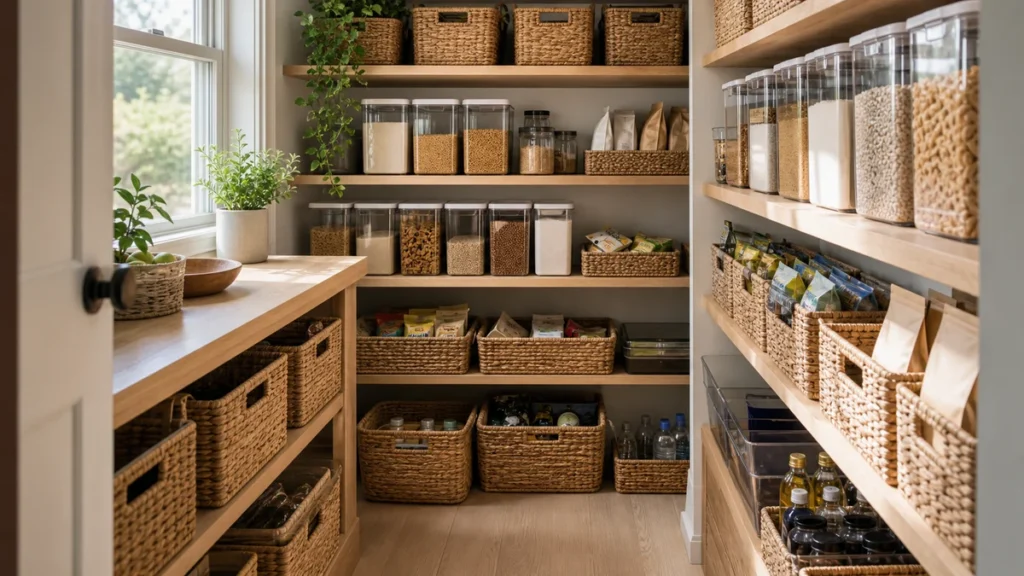
A drawer should hold only the jars you are cooking from now, so the refill bags and bulk buys belong out in the pantry, not crowding the lineup. Topping a jar up from backstock keeps the drawer tight while you still get the bigger, cheaper bag.

A pantry shelf beside the kitchen holding refill pouches and bulk spice jars as backstock, kept off the main drawer so only the in-use jars stay in the lineup
  • Keep only the in-use jars in the drawer and move refills to the pantry.
  • Top a jar up from backstock instead of opening a second one.
  • Store the bulk bags upright in a bin out of the drawer.
  • Check backstock before a grocery run so you never double-buy.
  • Refill a drawer jar only once it actually runs low.

No Spice Drawer? Build One in a Cabinet

Not every kitchen has a drawer to spare, but the look-down view that makes a drawer work can come from a shallow basket or a pull-out tray on a cabinet shelf. Slide the whole lineup out, read it from above, and a cabinet does the same job a drawer would.

A shallow pull-out basket on a cabinet shelf holding clear spice jars in rows, sliding out so the lineup can be read from above the way a drawer would
  • Set a shallow basket or bin on a cabinet shelf for the spices.
  • Choose a pull-out tray so you can slide the lineup out and look down.
  • Keep the basket shallow so no jar hides behind another.
  • Add a tiered riser inside the cabinet to lift the back row.
  • Put it on the shelf you reach without a stool.

Decant, Then Date Every Jar

Ground spices fade in about a year and turn to flavorless dust, so noting the date when you fill a jar tells you which tired ones to toss instead of cooking with. Dating as you decant also keeps you from rebuying a spice that is sitting right there, just old.

A few clear spice jars in a drawer marked on the lid with a small blank date dot, set apart to show which jars are fresh and which are due to be replaced
  • Write the fill date on each jar as you decant it.
  • Toss ground spices past about a year and whole ones past two or three.
  • Mark a small dot on the lid if you would rather not write a full date.
  • Smell a jar you are unsure about; no aroma means no flavor left.
  • Buy small for spices you rarely use so they never go stale first.

A spice drawer earns its keep the moment you can find any jar in a single glance. Tier the back rows, match the jars, label the lids, and sort the way you actually cook, and the smallest drawer in the kitchen turns into the one that saves you the most time at the stove.

About the author
Nora Ellis

Nora Ellis edits Styled Home Notes, where she shares practical decorating, organization, and small-space ideas for creating a more styled and functional home. Every article is reviewed for clarity, usefulness, image sourcing, and Pinterest-to-page alignment before publication. Visit the Nora Ellis author page.

Similar Posts