12 Living Room Plant Decor Ideas That Look Styled, Not Stuffed
Plants in a living room go wrong in a predictable way. Someone buys three from the nursery, drops one in each empty corner, and a year later the room reads stuffed, not styled. The plants grew. The room never grew around them.
Plant decor that works treats every plant as a styling decision. Each one earns its spot through scale, container, light zone, and the company it keeps. Twelve well-placed plants read calmer than five plants nobody planned.
These twelve moves build a plant plan around the room you already have. Our guide on living room wall decor ideas sets the visual vocabulary the plants then layer onto.
From building a four-tier scale ladder of plant heights to swapping one seasonal element so the arrangement stays alive, these twelve moves treat plants as the styling decision. Jump to the fix you need first.
- 1Build a scale ladder: floor, mid, tabletop, hanging
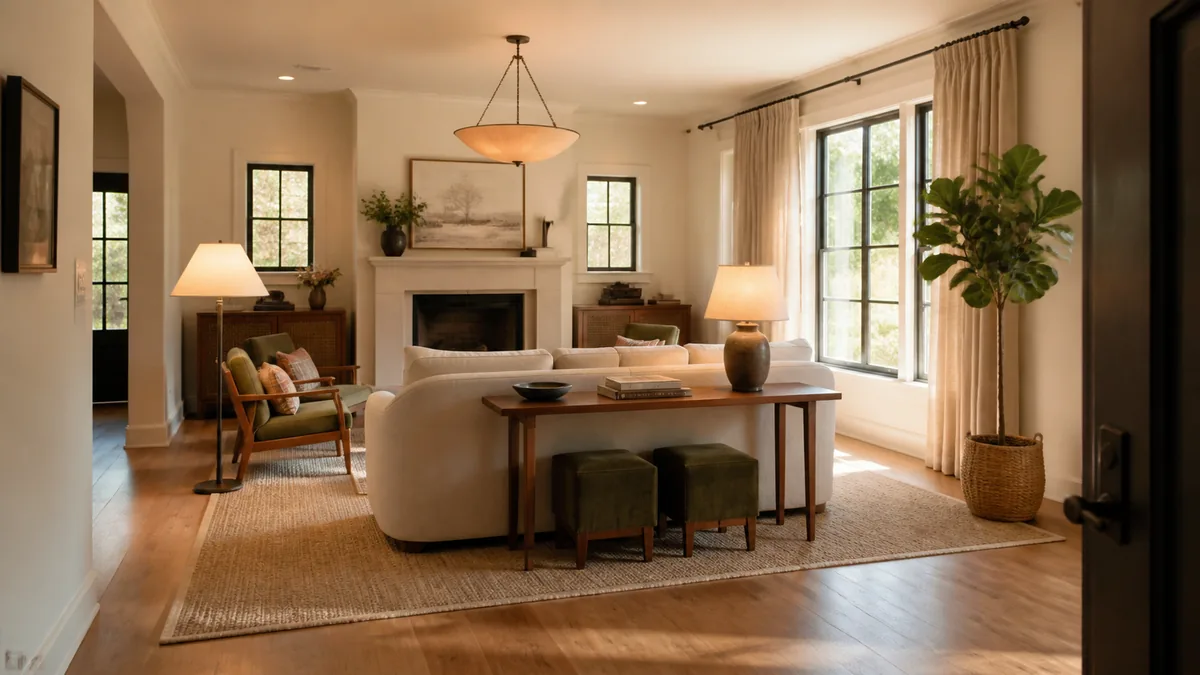
- 2Anchor an empty corner with one oversized statement tree
- 3Cluster in odd numbers (3 or 5), stagger heights
- 4Mix three leaf shapes for visual rhythm
- 5Unify pots in one material family
- 6Layer a trailing plant over a shelf edge
- 7Style a single sculptural plant on the coffee table
- 8Match plant light needs to the room's natural light zones
- 9Repeat one plant across the room to tie it together
- 10Label pet-safe vs toxic in your plant plan
- 11Be honest: real vs high-quality faux in low-light spots
- 12Swap one plant element seasonally to keep it alive
Build a Scale Ladder: Floor, Mid, Tabletop, Hanging

Most living rooms with plants fail the same way. Every plant sits at roughly the same height — mid-thigh — because that is the height plants come at from the store. The room reads middle-heavy and the plants read like clutter even when there are only four of them.
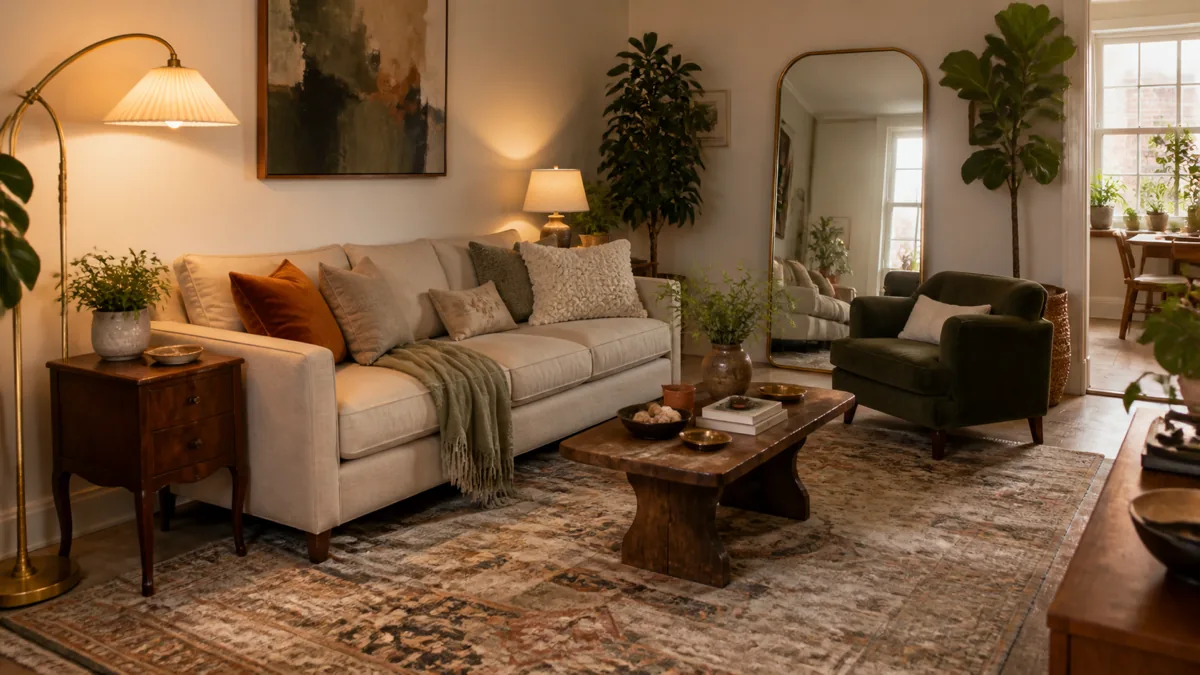
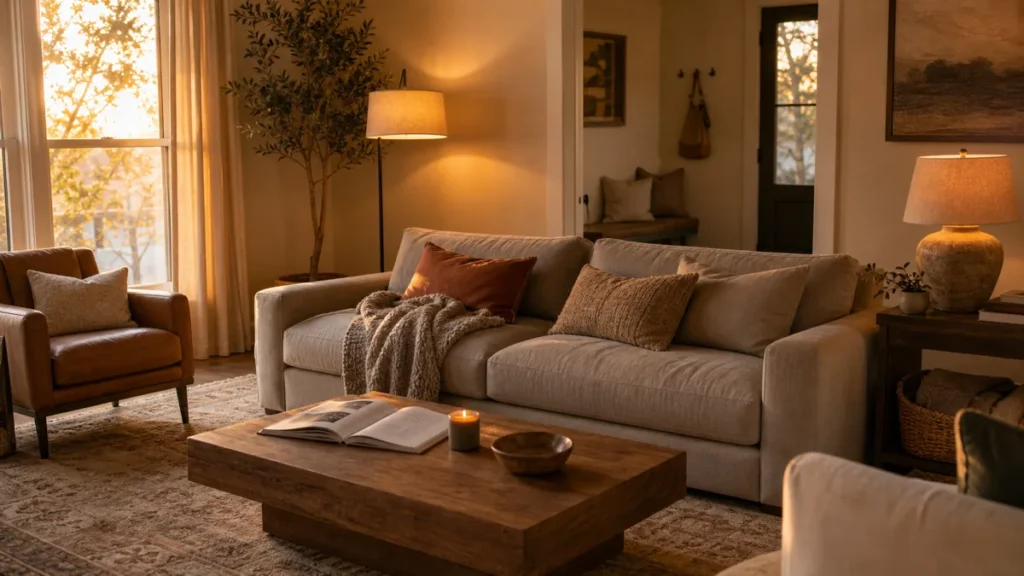
A deliberate scale ladder fixes this without buying more plants. Pull one plant up to floor-anchored statement height, push another down to coffee-table sculptural, and pull a third up to the ceiling on a trailing hook. The eye now travels floor to ceiling instead of stalling at the middle.
- Start with one tall floor plant five feet or taller; a fiddle-leaf fig, olive tree, or bird-of-paradise sets the anchor
- Add one mid-height plant between two and three feet : a snake plant, rubber plant, or parlor palm works
- Drop one sculptural plant onto a tabletop at coffee-table or side-table height so the eye reaches down
- Hang one trailing plant near the ceiling : a pothos, ivy, or string-of-pearls on a brushed-brass hook
- Treat any plant you already own at mid-height as the mid; rebuy only the missing tier instead of replacing the room
Anchor an Empty Corner With One Oversized Statement Tree

An empty corner is the most expensive square footage in a living room. It reads as wasted, dead, awkward. The reflex move is to fill it with a cluster of small plants on a tiered stand. The cluster reads worse than the empty corner.
One oversized tree in a single beautiful pot commands the corner the way five smaller plants never can. The eye reads one strong vertical instead of five competing shapes. For the broader logic of activating a corner with one decisive object instead of a cluster, our guide on living room shelf decor ideas applies the same principle to shelves.
- Pick a tree at least five feet tall the day you bring it home; smaller trees never grow fast enough to fix the corner
- Match the species to the corner’s actual light : fiddle and olive want bright, kentia palm and bird-of-paradise tolerate medium
- Choose the largest pot the corner can take; an undersized pot makes a big tree look temporary
- Skip the tiered stand and the cluster of small companions; the tree alone is the move
- Leave at least six inches of breathing room between the pot and the two walls so the tree reads anchored, not crammed
Cluster in Odd Numbers (3 or 5), Stagger Heights

Two plants side by side read as a forced pair. Four read as a row. Three or five read as a vignette — the eye groups them as one composition rather than counting them.
The odd number is half the trick. The other half is height. Three plants at the same height read as triplets; three plants staggered tall-mid-low read as one styled moment. The room earns the cluster instead of just hosting it.
- Stick to 3 or 5 plants per cluster; pairs and even groups read pose-y even when the species are beautiful
- Stagger heights distinctly , roughly 50%, 75%, and 100% of the tallest , so the difference is unmistakable
- Use a small riser, a stack of books, or an upturned woven basket to lift the shortest plant if needed
- Cluster on the floor or one table, not strung across the room; a vignette has one center of gravity
- Let one plant be the obvious tallest : no two should compete for the same height in the cluster
You will not need all twelve. Find the situation below that matches your room today, and start with those two or three ideas.
Mix Three Leaf Shapes for Visual Rhythm

A room of all broad-leaf plants reads heavy. A room of all feathery ferns reads frilly. A room of all spiky succulents reads like a cactus shop. The shape repeats and the room flattens.
Three contrasting leaf shapes in the same vignette gives the eye something to do. Broad oval next to feathery pinnate next to needle-thin reads as rhythm. Each shape makes the others look more itself.
- Pick one broad-leaf , rubber plant, monstera, fiddle-leaf, or peace lily , for visual weight
- Pair it with one feathery , boston fern, parlor palm, asparagus fern , for softness
- Add one fine or sculptural , rosemary, ponytail palm, snake plant , for line
- Avoid two plants from the same shape family in the same vignette; the contrast is the point
- Repeat the same three-shape rule in every cluster across the room so the whole space reads tuned
Unify Pots in One Material Family

Different plants in twelve different pots is what makes a living room read like a clearance shelf. The eye reads each pot separately and the room never settles. The plants get blamed for clutter the pots created.
Unifying the pots — all terracotta, all matte cream ceramic, all woven seagrass — pulls every unrelated plant species into one cohesive arrangement. The plants now read as a collection instead of an accumulation.
- Pick one material family for the whole room : warm terracotta, matte cream ceramic, or woven seagrass each work
- Vary the size and shape within the family freely; same material, different proportions reads collected, not matched
- Sleeve every plastic nursery pot inside a chosen container; never let a black plastic pot show
- Drop a saucer or felt pad under each pot to protect floor finishes without breaking the material story
- If a single specialty pot is gorgeous, give it solo placement on a separate table so it stops competing with the family
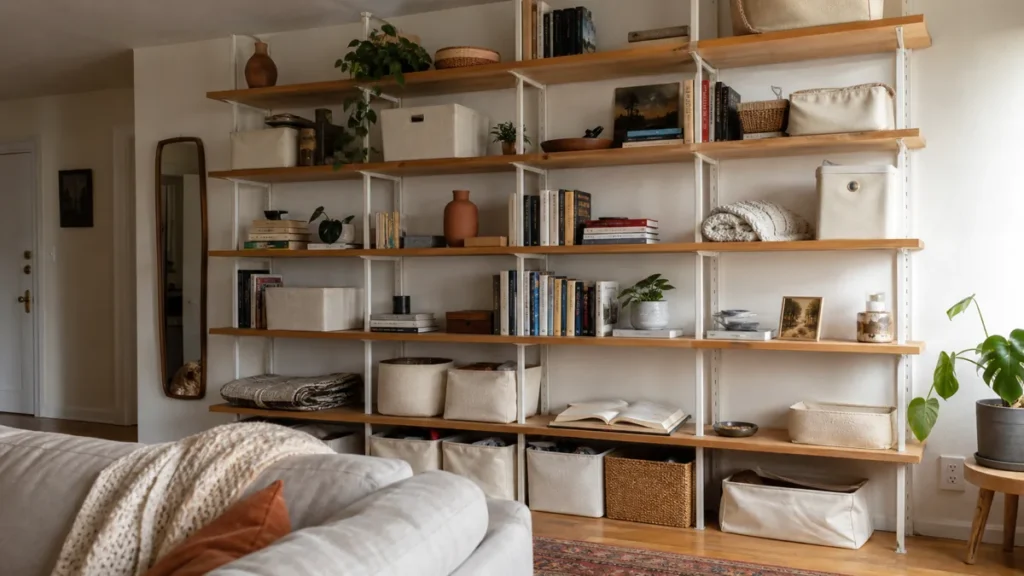
Layer a Trailing Plant Over a Shelf Edge

Hard horizontal shelf edges are the unsung culprit behind rooms that feel rigid. Books and frames sit on them, the edge stays a straight line, the wall reads architectural in a bad way.
A trailing plant on the top shelf softens that edge without adding more objects. The drape interrupts the horizontal cleanly. For the broader system of styling open shelves so they read curated, our guide on living room shelf decor ideas puts trailing plants in context with the rest of the shelf moves.
- Place the trailing plant on the top shelf only; lower shelves cannot fall far enough to soften their own edge
- Pick a fast trailer that already has 18 inches of growth at purchase : pothos, ivy, philodendron, string-of-pearls
- Position the pot so the longest vines drape over the front edge of the shelf, not the side
- Avoid placing books or frames where the trailing vines will block them as the plant grows
- Rotate the pot a quarter turn every two weeks so the trailing growth stays even on both sides
These four rules separate a styled room with plants from a room that just happens to have a lot of plants in it.
Style a Single Sculptural Plant on the Coffee Table

Coffee tables collect — a stack of books, a tray of remotes, a candle, a vase of flowers nobody refreshed last week. The collection reads as life, but it can also read as drift.
One sculptural plant at the center replaces the cut-flower vase that always dies. It stays sculptural year-round, asks for almost nothing, and gives the table one strong center of gravity. For more on building a calm coffee-table vignette around one anchor, our coffee table styling ideas walks through the rest of the surface.
- Pick a sculptural species , zz plant, small fiddle, sansevieria, ponytail palm , that reads as an object first
- Choose a pot proportioned to the table; a tiny pot on a big table reads timid, an oversized pot reads cramped
- Place it slightly off-center, balanced against a low stack of books or a small tray on the opposite side
- Skip any cut flowers in the same vignette; the sculptural plant wants to be the only botanical voice
- Wipe the leaves with a damp cloth monthly; dust on a sculptural plant kills the sculpture
Match Plant Light Needs to the Room’s Natural Light Zones

Half the plants in most apartments are slowly dying because someone put a bright-light plant in a north corner. The fiddle-leaf fig stops growing, drops three leaves, and turns brown in slow motion. The blame goes to the plant or the owner; the real culprit is the placement.
Walking the room once and naming the light zones — bright south window, medium east, dim north corner — turns plant-buying into a matching exercise instead of a wishlist. Bright zones get fiddle and olive. Dim zones get zz, snake, pothos. Every plant survives because the room told you what it could take.
- Walk the room at noon and at 4pm and label each zone bright / medium / low based on actual hours of direct sun
- Reserve bright zones , within four feet of a south or west window , for fiddle-leaf, olive, bird-of-paradise, ficus
- Use medium zones , east windows, four to eight feet from south windows , for parlor palm, rubber plant, monstera
- Fill low zones , north windows, deep room corners , with zz plant, sansevieria, pothos, cast-iron plant
- If you fall for a bright-light plant for a low-light spot, put it on a rotating schedule and accept it as cut flowers, not a tenant
Repeat One Plant Across the Room to Tie It Together

Twelve different species in a living room is a botanical garden, not a styled room. The eye never groups them because nothing repeats. Each plant reads alone and the room reads busy.
Picking one species and letting it appear two or three times across the room — at different sizes, in different containers — ties the whole space together. The repeat becomes the rhythm. Everything else can be different and the room still reads cohesive.
- Pick one easy-care species , snake plant, pothos, or zz plant are forgiving repeats , to appear in three spots
- Vary the size and the container so the repeat reads as a theme, not a duplication
- Place the three instances roughly equidistant : one floor, one mid-height surface, one elevated shelf
- Let every other plant species in the room appear only once; the single repeat is the binding agent
- Pick the repeat species early; if the room already has eight species, identify the one easiest to clone in two more spots
12 living room plant moves, one system that actually works
- 1Build a scale ladder: floor, mid, tabletop, hangingPlants at four clearly different heights from floor tree to ceiling trailer read deliberate, not random.
- 2Anchor an empty corner with one oversized statement treeA single five-foot tree commands an empty corner better than five medium plants ever will.
- 3Cluster in odd numbers (3 or 5), stagger heightsThree plants staggered tall-mid-low read as a vignette; pairs and even numbers read as forced symmetry.
- 4Mix three leaf shapes for visual rhythmBroad-leaf, feathery, and fine-leaf side by side keeps the eye moving; all the same shape reads like mass planting.
- 5Unify pots in one material familyAll terracotta or all woven ties unrelated plants into one cohesive arrangement.
- 6Layer a trailing plant over a shelf edgeA pothos draping over the front of a shelf softens the hard horizontal line cheaper than any styling object.
- 7Style a single sculptural plant on the coffee tableOne zz or small fiddle on the coffee table replaces a vase of cut flowers and lasts all year.
- 8Match plant light needs to the room's natural light zonesBright-light plants near the south window, low-light plants in dim corners; the plan keeps every plant alive.
- 9Repeat one plant across the room to tie it togetherThe same species appearing two or three times at different sizes pulls a busy room into one cohesive whole.
- 10Label pet-safe vs toxic in your plant planKeeping toxic plants high and pet-safe plants low protects cats and dogs without giving up your favorite species.
- 11Be honest: real vs high-quality faux in low-light spotsA good faux in the impossible corner beats a real plant slowly dying for half a year.
- 12Swap one plant element seasonally to keep it aliveChanging one piece each season — dried branches, a bulb forcing, fresh greens — keeps the arrangement fresh without redoing the whole room.
styledhomenotes.com
Label Pet-Safe vs Toxic in Your Plant Plan

Plant collections and curious pets share more rooms than the internet admits. Most of the trendy houseplants — pothos, philodendron, monstera, lily, fiddle-leaf — are actually toxic to cats and dogs. The plant guides rarely mention it; the vet bill does.
A simple plan keeps both the plants and the pets safe without giving up favorite species. The ASPCA maintains a free list of which plants are toxic to which animal. Cross-check what is in the room, then assign low spots to pet-safe and high spots to toxic. The collection survives. So does the cat.
- Cross-check every plant in the room against the ASPCA toxic-plants list before adding more, free at aspca.org
- Keep pet-safe plants at floor and low-surface level : parlor palm, boston fern, spider plant, calathea, prayer plant
- Move toxic plants to high shelves, hanging hooks, or rooms the pet does not enter : pothos, philodendron, monstera, lily, fiddle-leaf, peace lily
- Skip any toxic plant the pet can still reach when fully grown; cats jump and trailing vines drop within reach
- If a pet keeps chewing leaves regardless, swap that one plant for a pet-safe substitute and stop fighting the problem
Be Honest: Real vs High-Quality Faux in Low-Light Spots

Some corners of an apartment will not grow a plant. The deep north corner away from every window. The interior hallway with no daylight. The bookshelf eight feet from any light source. A real plant in any of those spots is a six-month slow death.
A high-quality faux plant in those impossible spots is the honest move. The cheap plastic-leaf faux from a decade ago is not the option here. New natural-fiber faux with real soil topping reads convincing from across the room, takes zero care, and never browns. Honesty about which corners can grow plants is what keeps the rest of the room alive.
- Reserve faux for genuinely low-light corners that no live plant tolerates : under four hours of indirect light per day
- Pick natural-fiber faux with subtle color variation in the leaves; uniform-green plastic reads fake from ten feet
- Plant the faux in real soil with a top dressing of real moss covering the pot rim; the soil-line is what gives away a fake
- Wipe dust off faux leaves monthly; dust kills the realism faster than the manufacturer ever could
- Mix in one or two real low-light plants nearby , zz or snake , so the corner does not read entirely synthetic
Swap One Plant Element Seasonally to Keep It Alive

Year-round plant arrangements read static after the third month. Swapping the entire room every season is exhausting and expensive. Both extremes lose.
Swapping one single element each season — one branch arrangement, one forced bulb, one bowl of greens — keeps the whole room reading fresh while the rest of the plant base stays put. Restraint is the point. One swap per season, not five. The base does the heavy lifting; the swap signals the time of year.
- Keep the room’s plant base year-round : the floor tree, the trailing shelf plant, the sculptural coffee-table piece all stay
- Add one fresh seasonal element each quarter : dried eucalyptus in autumn, forced bulbs in winter, fresh branches in spring, dried grasses in late summer
- Place the seasonal swap near the sculptural anchor , coffee table or console , so the change is noticeable
- Resist swapping more than one element; multiple swaps undo the calm the base built
- Compost the seasonal element when the next one arrives; dried branches do not improve with another month indoors