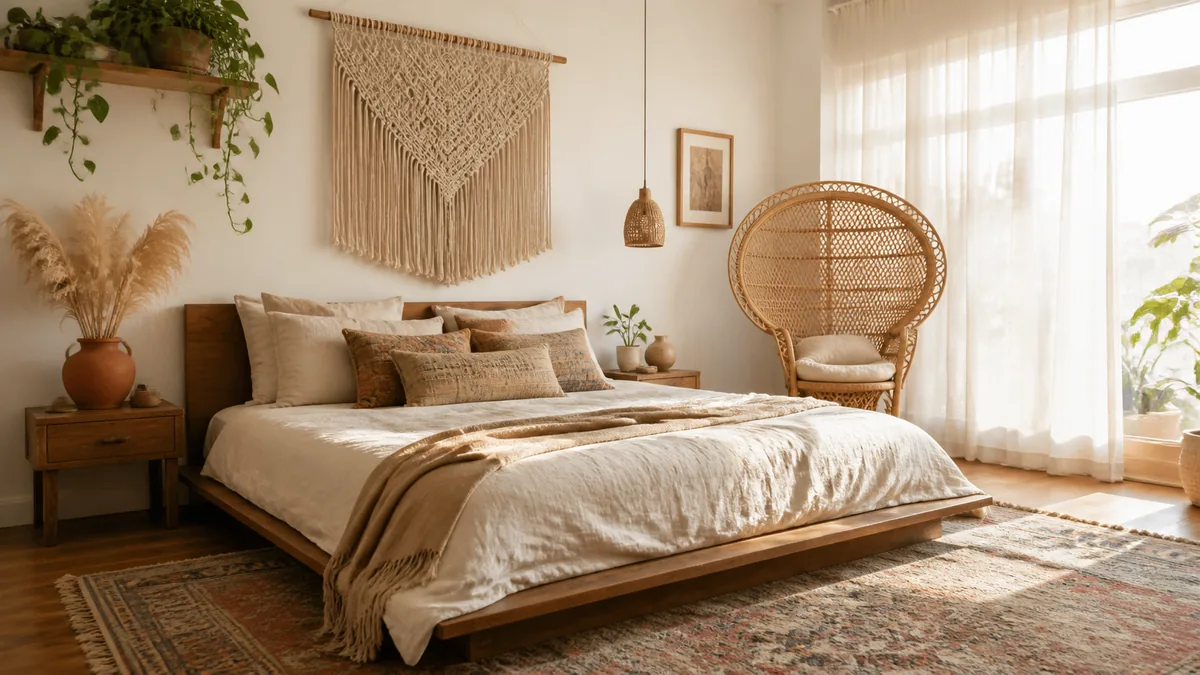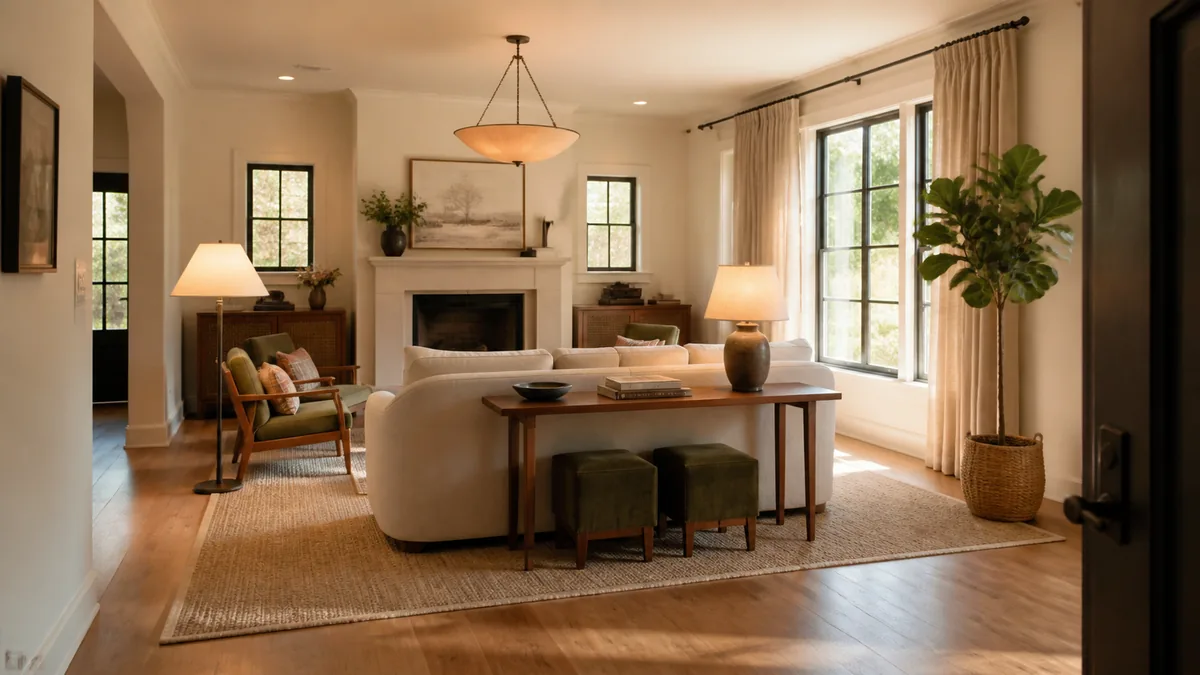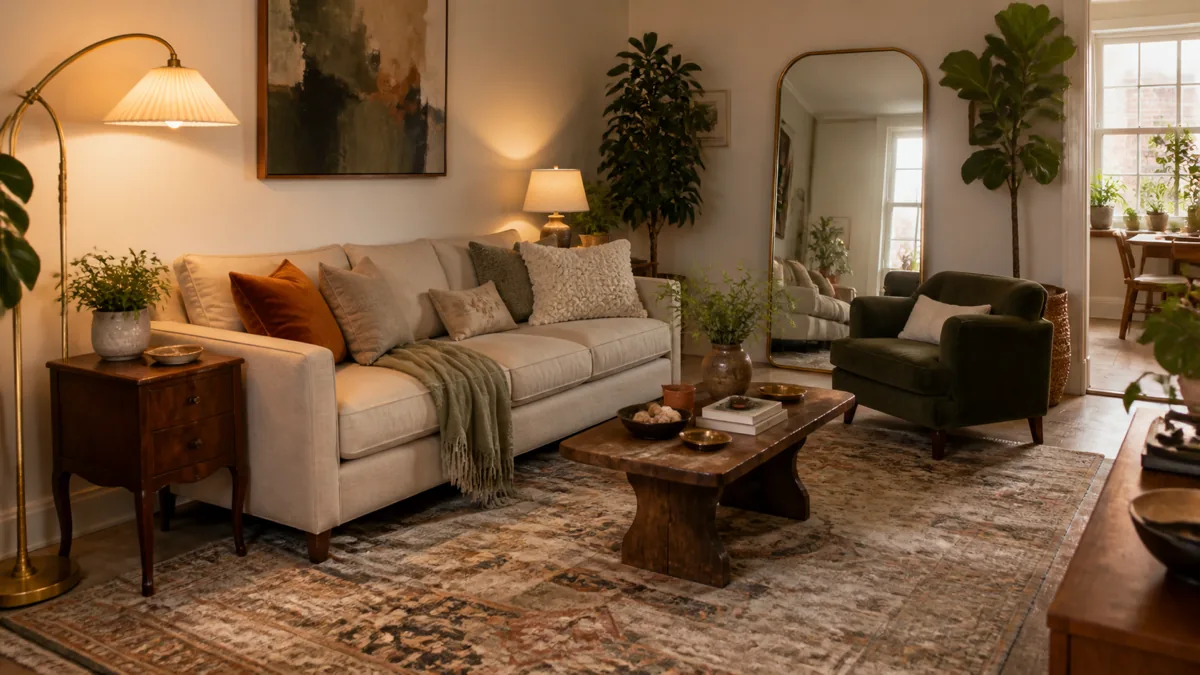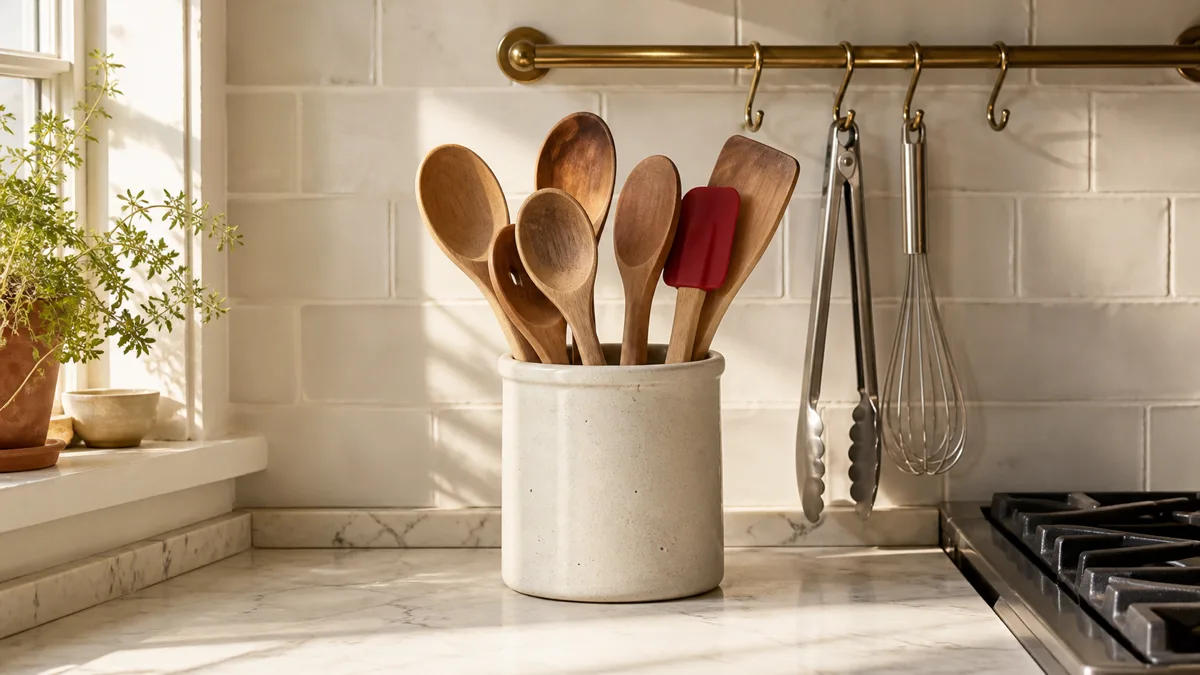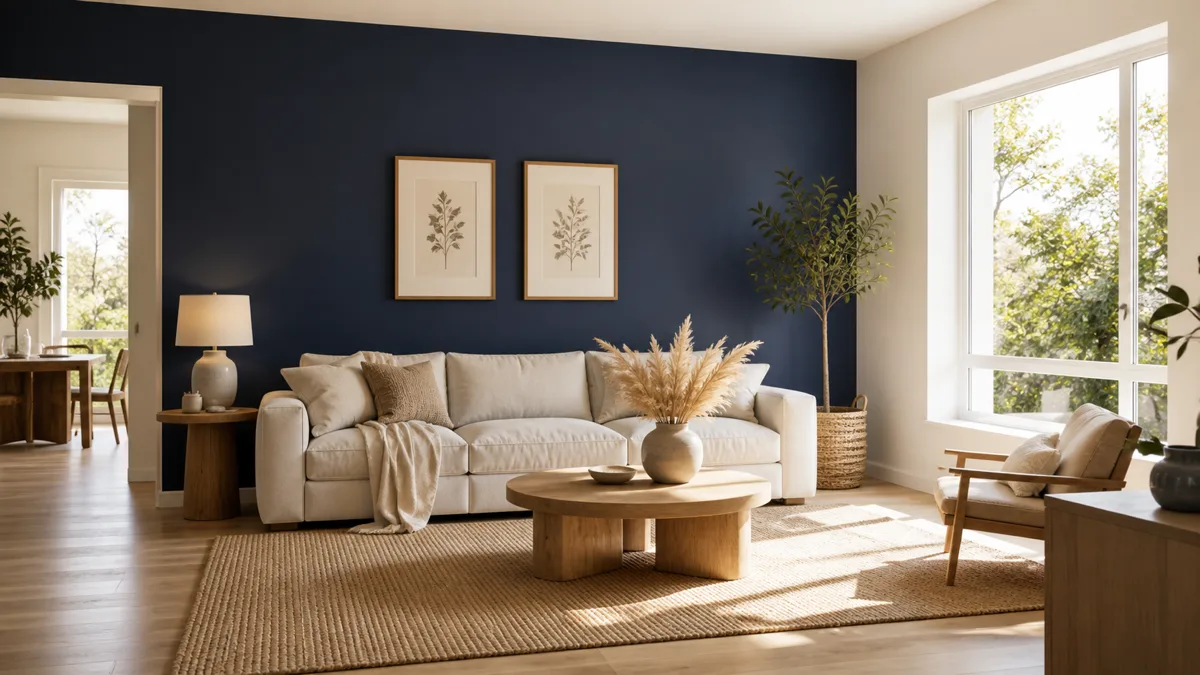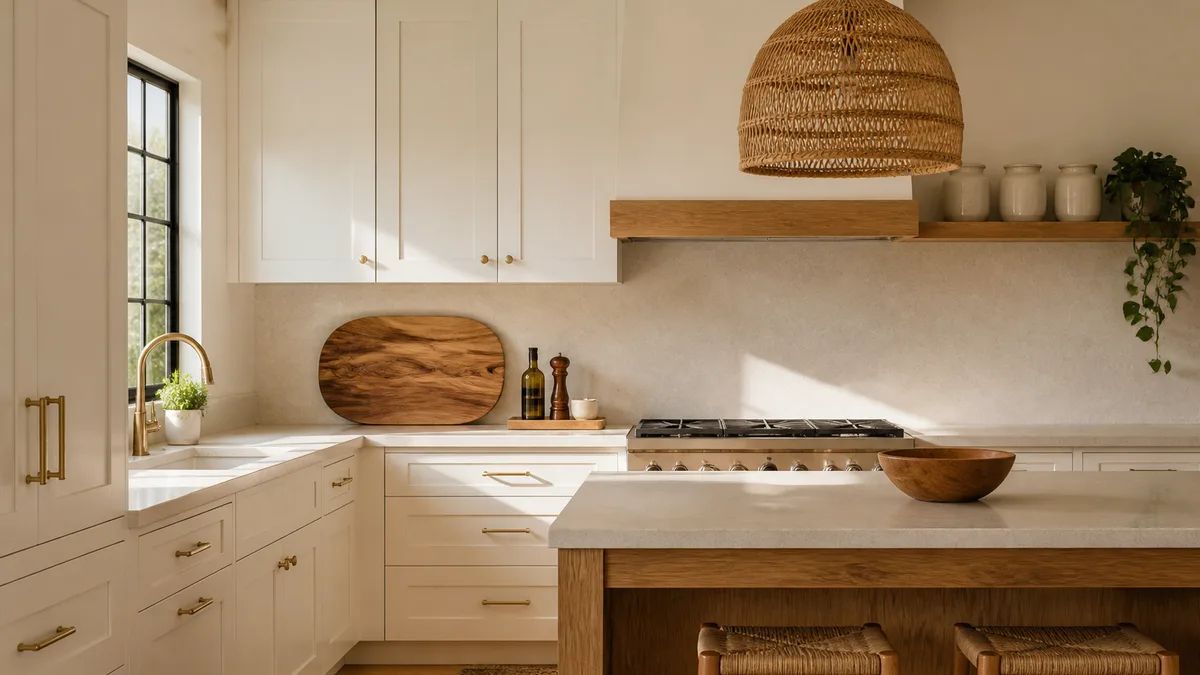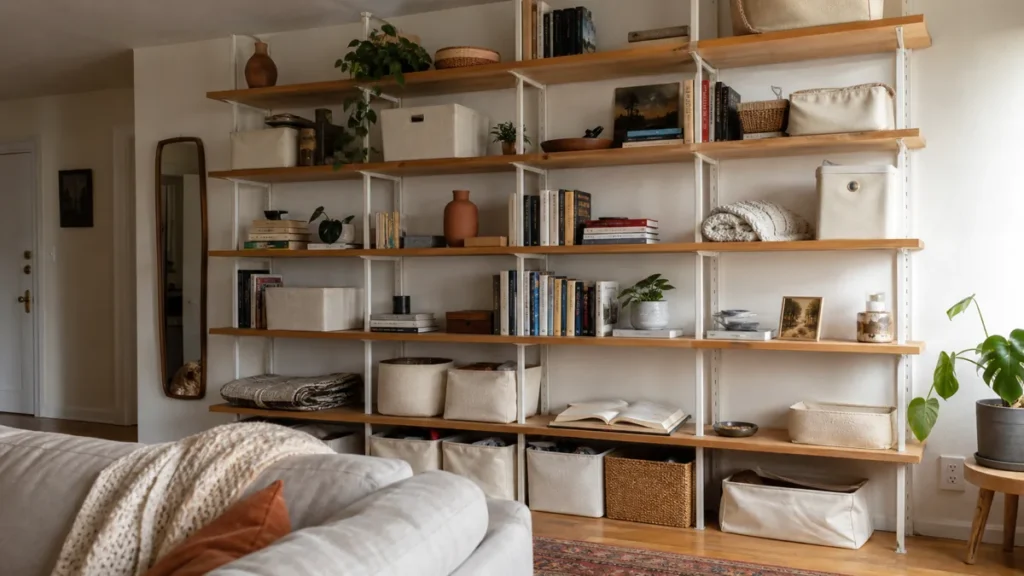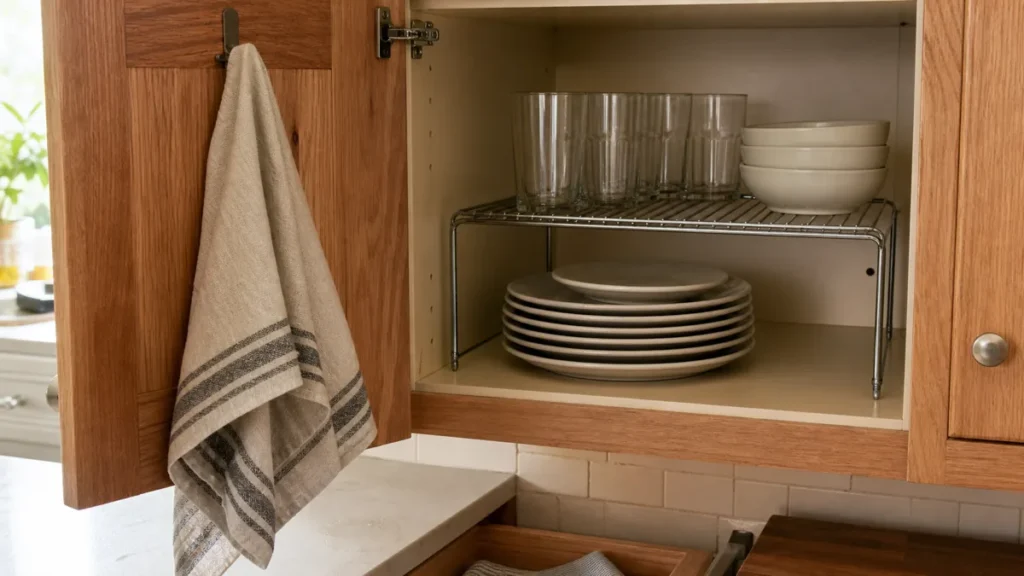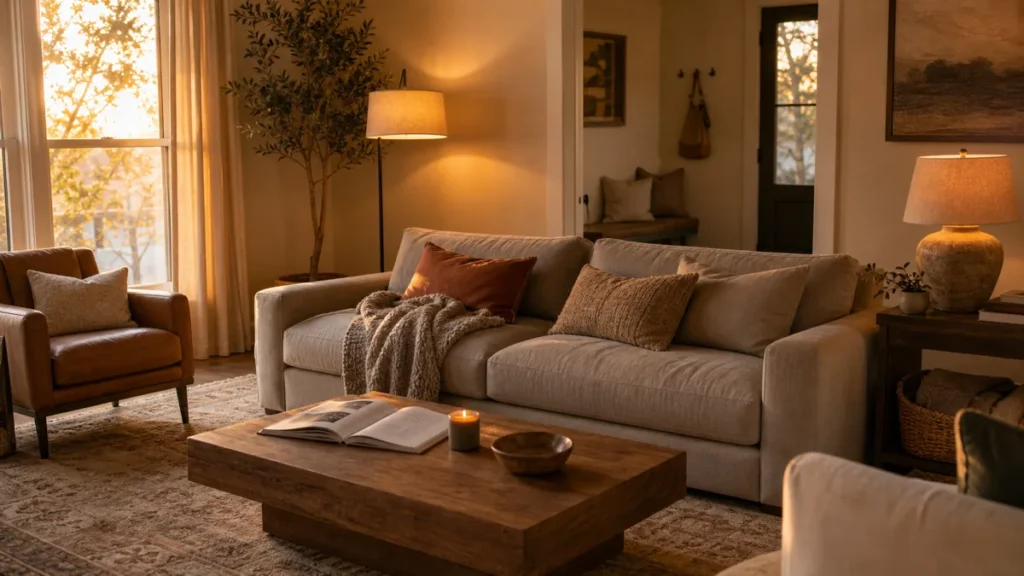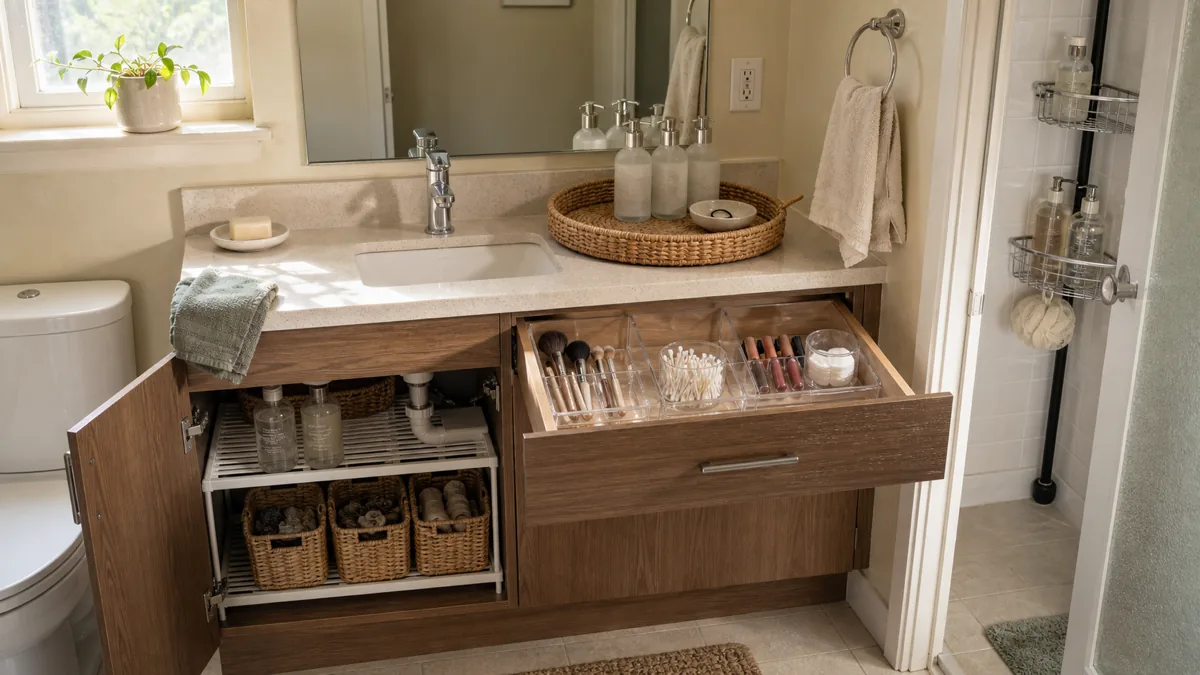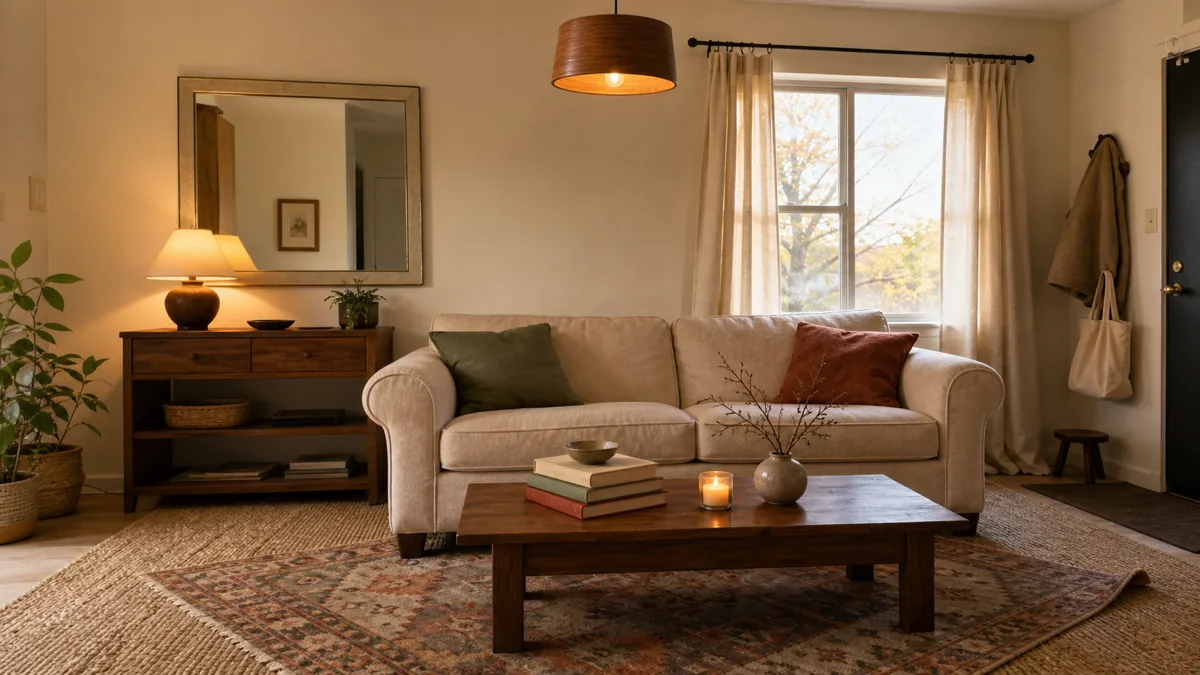
Small apartment living area with slim furniture, open walkways, and storage pieces chosen for small spaces.

Best Furniture for Small Spaces That Actually Saves Room

The furniture store doesn’t know your floor plan. That convertible table that looked brilliant on the showroom floor might block your bedroom door when extended. The “apartment-size” sofa might still be four inches too deep for your walkway. Size labels lie. Your tape measure doesn’t.

This guide is a decision filter — 17 furniture moves tested against the one question that matters in a small home: does this piece make the room easier to live in every day, or just easier to photograph?

1. Choose a Slim Sofa With Visible Legs

Small living room with a slim sofa on visible legs and open floor space around the seating area.

The sofa is the largest piece of furniture in most living rooms, and in a small apartment, it sets the tone for everything else. A sofa with visible legs — 5 to 6 inches of clearance — lets the floor read as continuous, which is the fastest way to make a room feel less packed.

Target 72–80 inches wide, arms under 4 inches, seat depth around 21 inches. These aren’t arbitrary numbers — they’re the range where most adults sit comfortably without the sofa eating the walkway. If you have to choose between a deeper seat and a clear path to the kitchen, choose the path. You’ll stop noticing the seat depth in a week. You’ll never stop noticing the tight squeeze.

Start here
Choose the piece your room actually needs

If walkways feel tight, start with sofa and chair scale. If storage is the main pain, jump to multi-job pieces. Use this guide to find the furniture move that solves your specific problem.

2. Use a Storage Ottoman Instead of a Solid Coffee Table

Small living room with a storage ottoman used instead of a solid coffee table.

A storage ottoman does three jobs: surface (with a tray on top), hidden storage (throws, games, remotes), and extra seating when people come over. A solid coffee table does one job and has sharp corners you’ll hit with your knee.

The tradeoff is sturdiness — you can’t set a heavy dinner plate on a soft top the way you can on a wood table. If you eat dinner on the couch regularly, a lift-top coffee table might be the better call. But for most apartment living rooms where the coffee table is mostly holding a candle and a remote, the ottoman wins.

For room-level layout planning, see small living room ideas that make apartments feel bigger.

3. Pick Nesting Tables That Tuck Away

Compact seating area with nesting tables that tuck together beside a sofa.

The best thing about nesting tables is that they’re only big when you need them to be. Pull the smaller one out for a drink, a laptop, or a guest’s plate — then tuck it back in and get the floor space back.

Two things to check before buying: the smaller table should slide in and out without scraping, and the height difference should be enough that the set looks intentional when nested. If the tables are nearly the same size, they’ll look like a mistake instead of a design choice.

Quick fit check
Before a piece earns space, check these five things

Small-space furniture should make the room easier to use, not just smaller on a product page.

DepthDoes it leave a normal walking path after drawers, doors, chairs, or extensions open?
ClearanceCan you use it without moving another piece first?
StorageDoes it hide a category you actually use in that exact spot?
Visual weightDoes the floor, wall, window line, or main sightline still feel open around it?
Weekly useWill it solve a real weekly problem, not just a rare hosting or overflow moment?

4. Add a Wall-Mounted Desk for Occasional Work

Apartment work corner with a shallow wall-mounted desk and compact chair.

Not every apartment needs a full desk taking up floor space all week. A wall-mounted fold-down or floating shelf desk gives occasional work — emails, bills, a Zoom call — a real surface without permanently converting a bedroom corner into an office.

The critical measurement isn’t the desk width. It’s the desk depth with the chair pulled out and you sitting in it. If that position blocks a closet door, hallway, or bed access, the setup doesn’t work no matter how compact the desk looks when it’s empty.

5. Use an Extendable Dining Table Only If It Collapses Small

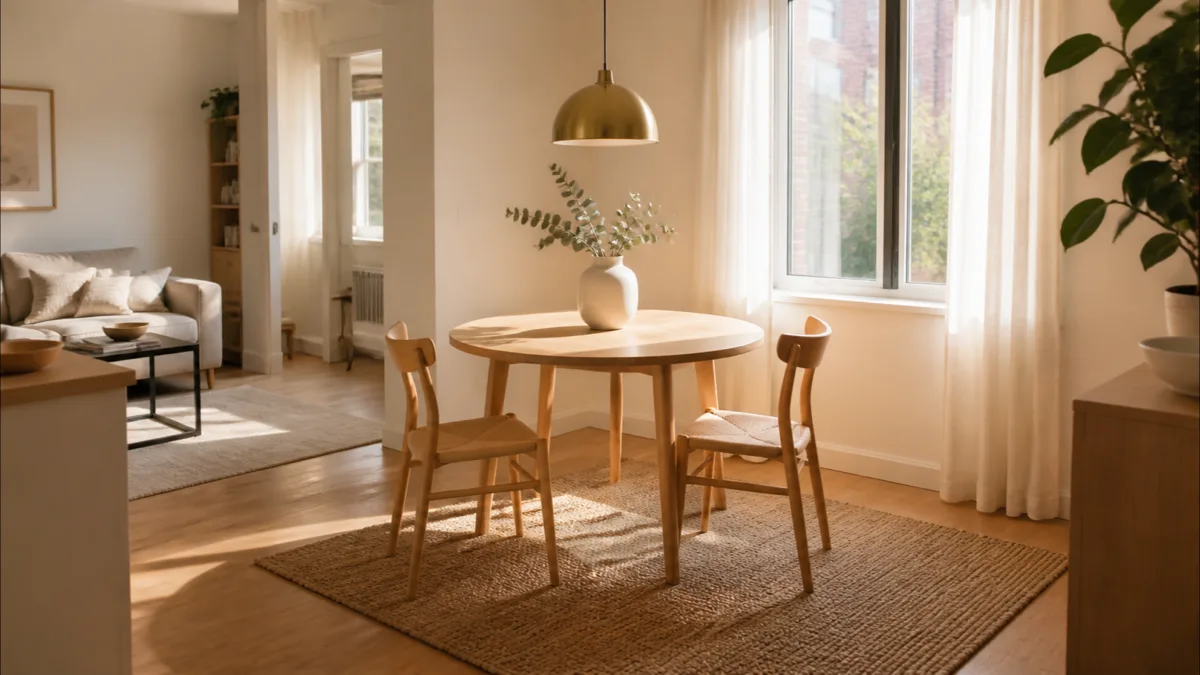
Small dining nook with an extendable table collapsed to a narrow everyday footprint.

An extendable table is the poster child for “smart small-space furniture,” and half the time it’s a trap. The selling point is the extended size — seats six for Thanksgiving. The living reality is the collapsed size — the footprint your room deals with 360 days a year.

Measure the collapsed table, add the depth of a pulled-out chair on each side, and check if you can still walk behind the chairs without turning sideways. If you can’t, the table is too big for the room — regardless of what it does when you pull the leaves out.

6. Choose Stackable or Folding Dining Chairs

Compact dining area with stackable chairs stored neatly near the table.

Four permanent dining chairs in a small apartment means four pieces of furniture sitting there full-time for a meal that lasts 30 minutes. Keep two out for daily use. The other two should fold flat or stack and live in a closet, against a wall, or behind a door until you need them.

The real test isn’t how the chairs look at the table — it’s where they go when dinner’s over. If the answer is “nowhere, they just stay there,” you’ve bought the wrong chairs for the space.

Best for / skip if
Use the furniture only where it solves the right problem

The same piece can be smart in one small room and frustrating in another. Use this as a quick filter before buying.

Furniture move Best for Skip if
Slim sofa with legs Rooms where the sofa visually dominates The seat is too shallow for real daily use
Storage ottoman Throws, games, soft items, and tray use You need a hard surface for meals or work every day
Wall-mounted desk Occasional laptop work in a tight corner The chair blocks a door, closet, or walkway
Extendable table Small dining zones that host sometimes The collapsed size still crowds the room
Tall closed cabinet Replacing several small storage pieces It blocks light, windows, or natural movement
Storage bed Bedrooms with enough drawer or lift clearance You cannot open the storage without moving furniture

7. Use a Narrow Console Where a Dresser Would Be Too Deep

Small entryway with a narrow console that keeps the walkway open.

A console table at 8–12 inches deep gives you a landing zone — lamp, keys, mail tray, one closed basket — without the 18-inch depth of a dresser pushing into the hallway.

This is especially useful in entries, behind floating sofas, and in narrow hallways where you need a surface but can’t afford the depth. One warning: a narrow console with too many items on top defeats the purpose. Tray, lamp, done. It’s a landing zone, not a display shelf.

8. Choose Tall Storage Furniture Instead of Several Short Pieces

Tall closed storage cabinet used in a compact home instead of several shorter storage pieces.

Three short bookshelves take up three sections of wall and create three separate visual events. One tall closed cabinet takes up one section and hides everything behind doors.

Vertical storage uses the one dimension small rooms usually have to spare: height. A 72-inch cabinet with a 15-inch depth takes about 6 square feet of floor and can hold what would otherwise require three separate pieces scattered around the room. Consolidate up, not out.

9. Pick a Bed With Drawers Only When the Room Has Pull-Out Clearance

Compact bedroom with a storage bed that has enough clearance for the drawers to open.

A storage bed sounds perfect until the drawers can’t open. If the bed sits tight against a wall, radiator, or closet door, those side drawers become decorative panels you’ll never use.

Before buying, measure the drawer depth plus 18 inches for your body kneeling beside it. That’s the clearance you need on the drawer side. No clearance? Skip the drawers and look at a lift-up bed instead — same storage concept, access from the top, no side room required.

For broader storage thinking, see storage ideas for small spaces to plan around the bed, not just the bed itself.

10. Use a Lift-Up Storage Bed for Rooms With Tight Side Clearances

Small bedroom with a lift-up storage bed used where side drawer clearance is tight.

Where drawer beds fail in tight rooms, lift-up beds succeed. The entire mattress platform hinges up, giving you access to the full under-bed area without needing side clearance at all.

Best for bulky, soft items you don’t need daily: spare duvets, guest bedding, seasonal clothes, luggage. The tradeoff is effort — lifting a mattress platform is more work than pulling a drawer, so this isn’t the place for things you reach for every morning. Think of it as a bedroom-size closet shelf that happens to be under your mattress.

Simple furniture rules
What makes furniture actually save room?

Use these rules when a piece looks promising online but may not work once it is open, pulled out, filled, or used every day.

Measure openMeasure the drawer, chair, leaf, lift, or door in use, not only the closed footprint.
Store on purposeChoose hidden storage only for categories you will actually use in that room.
Keep floor visibleWhen a room already feels heavy, raised legs and open edges matter.
Go taller carefullyUse tall storage to replace several small pieces, not to add more overflow.
Let occasional pieces moveFurniture used sometimes should fold, stack, nest, or roll away easily.
Skip rare-use clutterA piece that solves one rare problem but creates a daily obstacle is not saving space.

11. Replace Bulky Nightstands With Floating or Slim Bedside Storage

Small bedroom with floating bedside storage that keeps floor space open beside the bed.

Traditional nightstands are often 20–24 inches wide. In a narrow bedroom, that’s enough to make the gap between bed and wall feel like a squeeze. A floating shelf or wall-mounted drawer holds the essentials — phone, glasses, book, water — at half the footprint.

Keep the bedside surface minimal. If the nightstand needs to hold a full lamp, a stack of books, a water bottle, skincare products, a charging station, and a sound machine, it’s doing the work of a dresser. Offload the extras somewhere else and let the bedside be just that.

12. Choose Armless Accent Chairs When Walkways Are Tight

Compact room with an armless accent chair placed near an open walkway.

Chair arms add 4–6 inches of width on each side. In a room where inches matter, an armless chair gives you a usable seat at a tighter overall footprint.

This works best for occasional seating — a reading corner, a bedroom chair, a living room accent seat that isn’t the primary lounging spot. Check the profile from the side, not just the front. A narrow chair with a deep reclined back can still push further into the room than you’d expect.

13. Use a Bench With Hidden Storage at the Foot of the Bed

Small bedroom with a hidden storage bench at the foot of the bed and room to walk around it.

A bench at the foot of the bed gives you a place to sit while putting on shoes, a surface for a folded throw, and hidden storage for spare bedding or pillows — three functions in a piece that’s usually under 48 inches wide.

The non-negotiable: the bench must be narrower than the bed and shallow enough to walk around without turning sideways. If you have to shimmy past it to reach the closet, it’s too big for the room, regardless of how useful the storage is.

Save this for later

The 5-Point Furniture Fit Check

  1. 1DepthDoes it leave a normal walking path after drawers or doors open?
  2. 2ClearanceCan you use it without moving another piece first?
  3. 3StorageDoes it hide a category you actually use in that spot?
  4. 4Visual weightDoes the floor and main sightline still feel open around it?
  5. 5Weekly useWill it solve a real weekly problem, not just a rare moment?

styledhomenotes.com

14. Add a Rolling Cart Only When It Has One Clear Job

Slim rolling cart organized for one clear small-space storage job.

Rolling carts thrive with constraints and collapse without them. A cart labeled “coffee station” stays organized. A cart labeled “kitchen stuff” becomes a three-tier junk pile on wheels within a month.

Name the job before you buy the cart. If the job can’t be described in three words, the cart will fail. It’ll start as “bathroom extras,” evolve into “bathroom extras plus cleaning supplies plus that box of lightbulbs,” and end up as the thing you roll into the corner and pretend isn’t there.

15. Choose Modular Cube Storage Carefully

Modular cube storage in a small room with closed bins and edited open shelves.

Modular cubes are flexible, affordable, and the single easiest piece of furniture to make look terrible in a small room. The problem is that they’re a grid — and a grid packed with visible contents reads as a wall of stuff.

The fix is discipline: closed bins in at least half the cubes, a limited color palette for the visible ones, and a few cubes left deliberately lighter or empty. Cube storage that looks good has less in it than you think it should.

16. Measure Walkways Before Buying Another Multi-Use Piece

Small room furniture layout with open walkway clearance around multi-use pieces.

Multi-use furniture gets a free pass it doesn’t deserve. “It converts!” is not a defense if the room only works when the piece is in its smallest configuration and nobody’s using it. A sofa bed that blocks the bathroom door when unfolded. A desk that can’t be used with the chair pulled out. A table that extends into a wall.

Before any new piece comes home, mark the footprint on the floor with painter’s tape — in both the closed and open positions. Live with the tape for a day. Walk around it at night in the dark. If it’s already annoying as tape, it’ll be worse as furniture.

17. Skip the Piece That Solves Only One Rare Problem

Edited small room with practical furniture, open walking space, and no extra rarely used pieces.

The guest-only armchair. The expandable table you pull out twice a year. The specialty storage piece for a hobby you haven’t touched since March. Small homes fill up with furniture bought for rare occasions that takes up space during ordinary life.

Every piece in a compact room should earn its spot every week — not every holiday. If you need guest seating twice a year, buy two folding chairs and store them in the closet. If you host dinner four times a year, borrow a table instead of owning one that crowds the kitchen daily.

The best furniture for small spaces isn’t the cleverest. It’s the most honest about how you actually live.

Quick Decision Filter

Before any piece of furniture enters a small home, run it through five questions:

1. Does the walkway stay clear when the piece is in use? Drawers open, chairs pulled out, doors swung wide — measure the active footprint, not the showroom footprint.
2. Will you use it every week? If it solves a monthly or yearly problem, find a temporary alternative instead.
3. Can you see the floor around it? Visible floor is what makes small rooms feel open. If the piece hides it, that’s a cost.
4. Does it replace something, or just add to the pile? Every new piece should retire an old one.
5. Would the room feel better without it? If you hesitate, the room already answered.

About the author
Nora Ellis

Nora Ellis edits Styled Home Notes, where she shares practical decorating, organization, and small-space ideas for creating a more styled and functional home. Every article is reviewed for clarity, usefulness, image sourcing, and Pinterest-to-page alignment before publication. Visit the Nora Ellis author page.

Similar Posts